
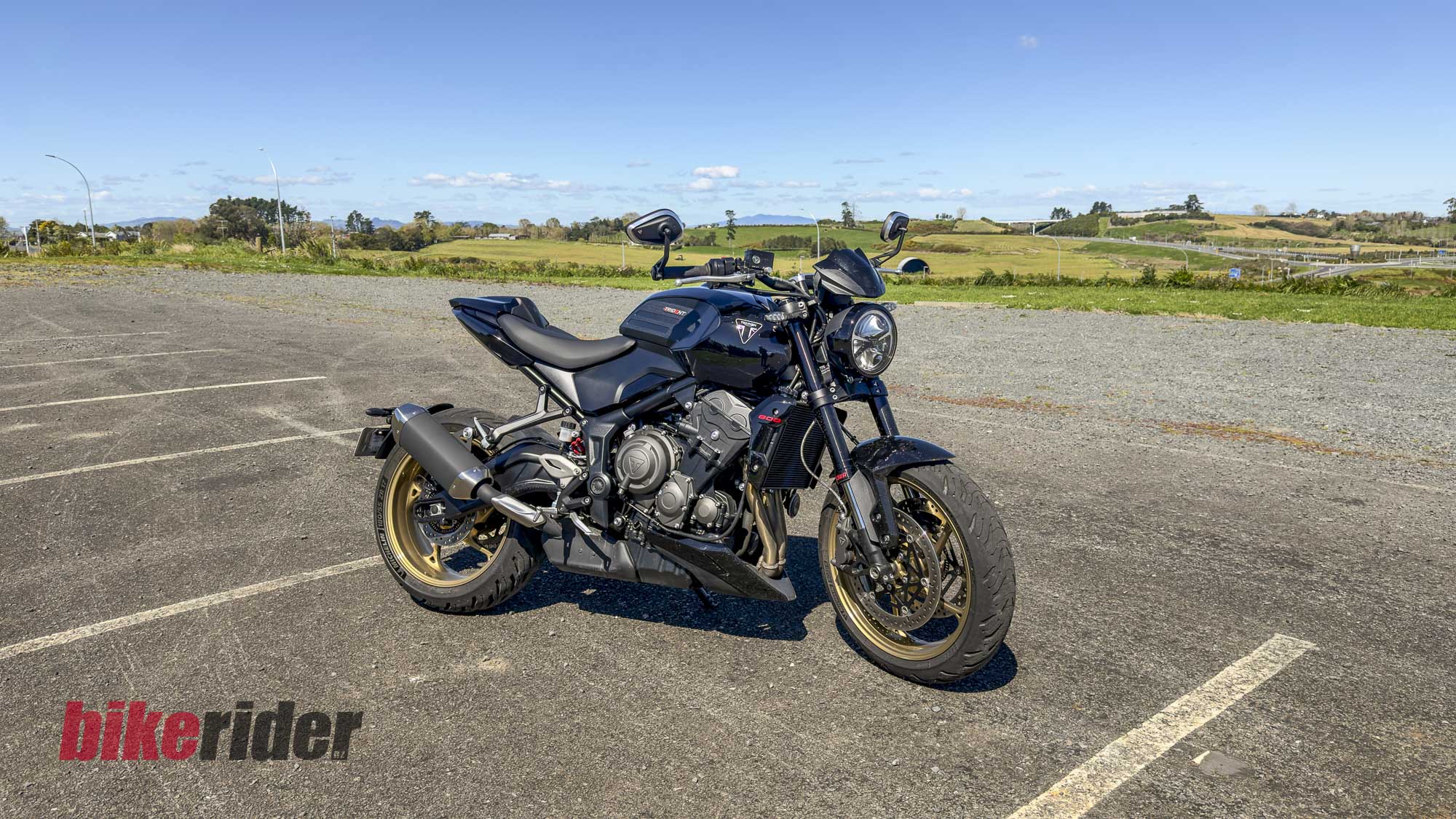
BRM brought you the world’s first Triumph Trident 800 review when New Zealand dealers received bikes ahead of the international press launch. That first ride was brief, with photos and video to turn around quickly. Now Neil has spent a week discovering how the bigger Trident handles everyday Kiwi riding.
- The 798cc triple blends useful low-down pull with a lively top end.
- Relaxed ergonomics and predictable handling suit commuting and Kiwi backroads.
- A smooth quickshifter, quality equipment and approachable character round out a versatile everyday package.
Quick Facts | Triumph Trident 800
Engine | 798cc inline triple
Power | 113bhp / 84.6kW
Torque | 84Nm
Wet weight | 198kg
Seat height | 810mm
NZ price | From $17,490 plus on-road costs
The Trident 660 has done an excellent job as Triumph’s accessible middleweight roadster, accounting for more than half of the company’s middleweight naked sales. Move further up the range and you get the Street Triple 765 RS, RX and Moto2 Edition — all fantastic motorcycles, but considerably more focused and aggressive than what many road riders actually need.
That is where the Trident 800 comes in.
Rather than simply being a softer version of the Street Triple, Triumph has taken the basic Trident formula and given it more performance, more equipment and a larger engine, while retaining the approachable character that made the 660 so appealing.
Power comes from a 798cc inline-three-cylinder engine closely related to the unit used in the Tiger Sport 800. It has its own mapping and tune for the Trident, producing 113bhp and 84Nm of torque, with an 11,500rpm redline.
MORE ARTICLES
On paper, that puts the Trident 800 right into an interesting part of the middleweight naked-bike market. At $17,490 plus on-road costs, it lines up against bikes such as the Ducati Monster V2, Yamaha MT-09 and Kawasaki Z900, while the Honda CB1000 Hornet SP is another alternative.
But numbers only tell part of the story. After spending time with the Trident 800, I think its real strength is how well it balances performance and accessibility. While we had a quick ride the last time around, we spent a bit more saddle time with the 800 on this occasion to answer the question: why should you buy the Trident 800?
Styling
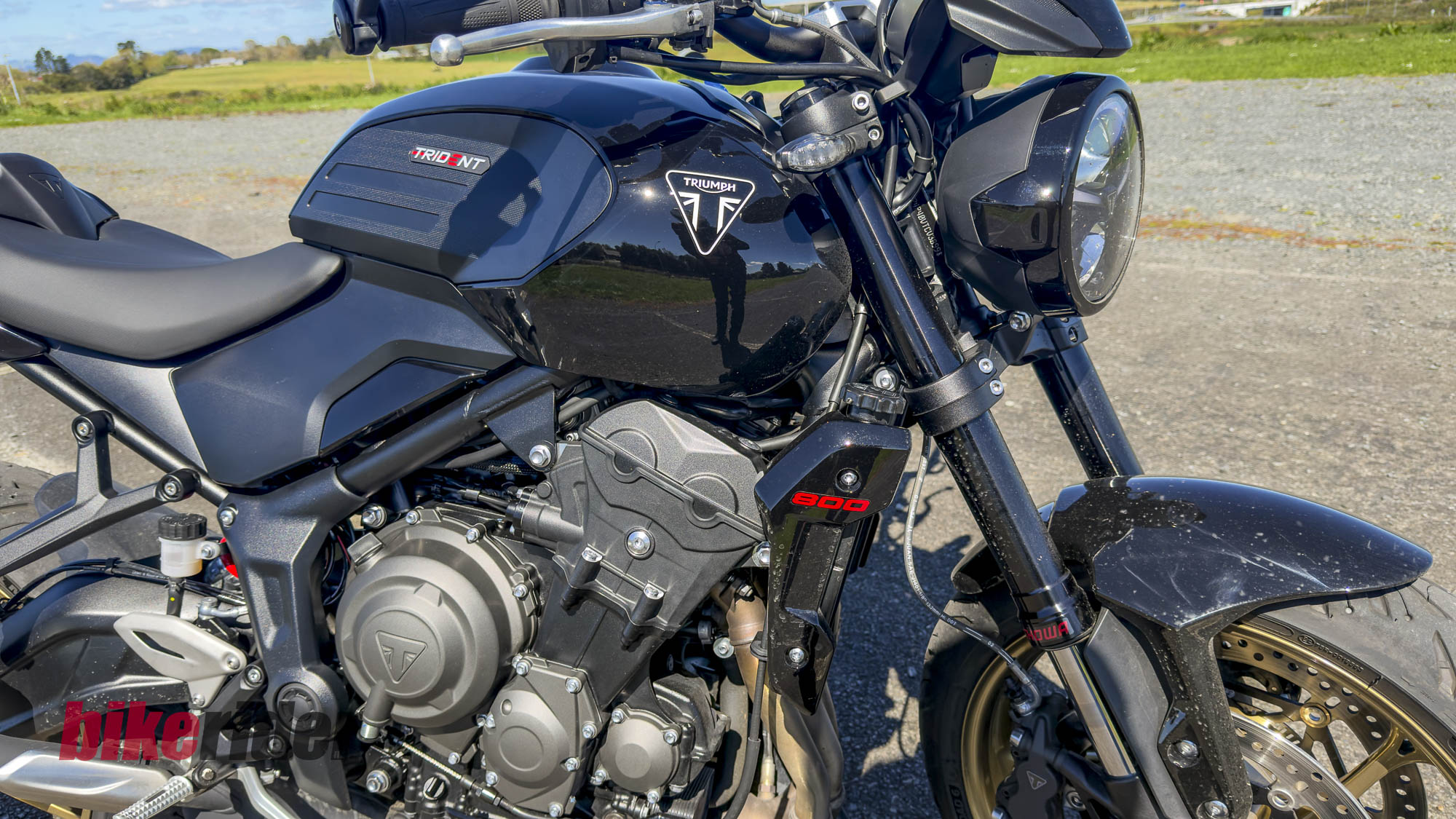
Before we get into that, let’s start with the exterior. The Trident 800 retains the neo-retro character that has become central to the Trident family, but the larger engine and more substantial hardware give it a more mature presence than the 660.
It manages to look sporty without going down the aggressive, angular route of the Street Triple. That suits the personality of the bike perfectly.
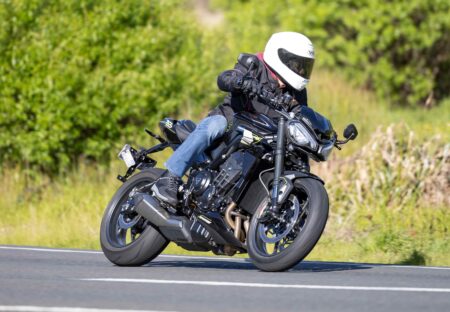
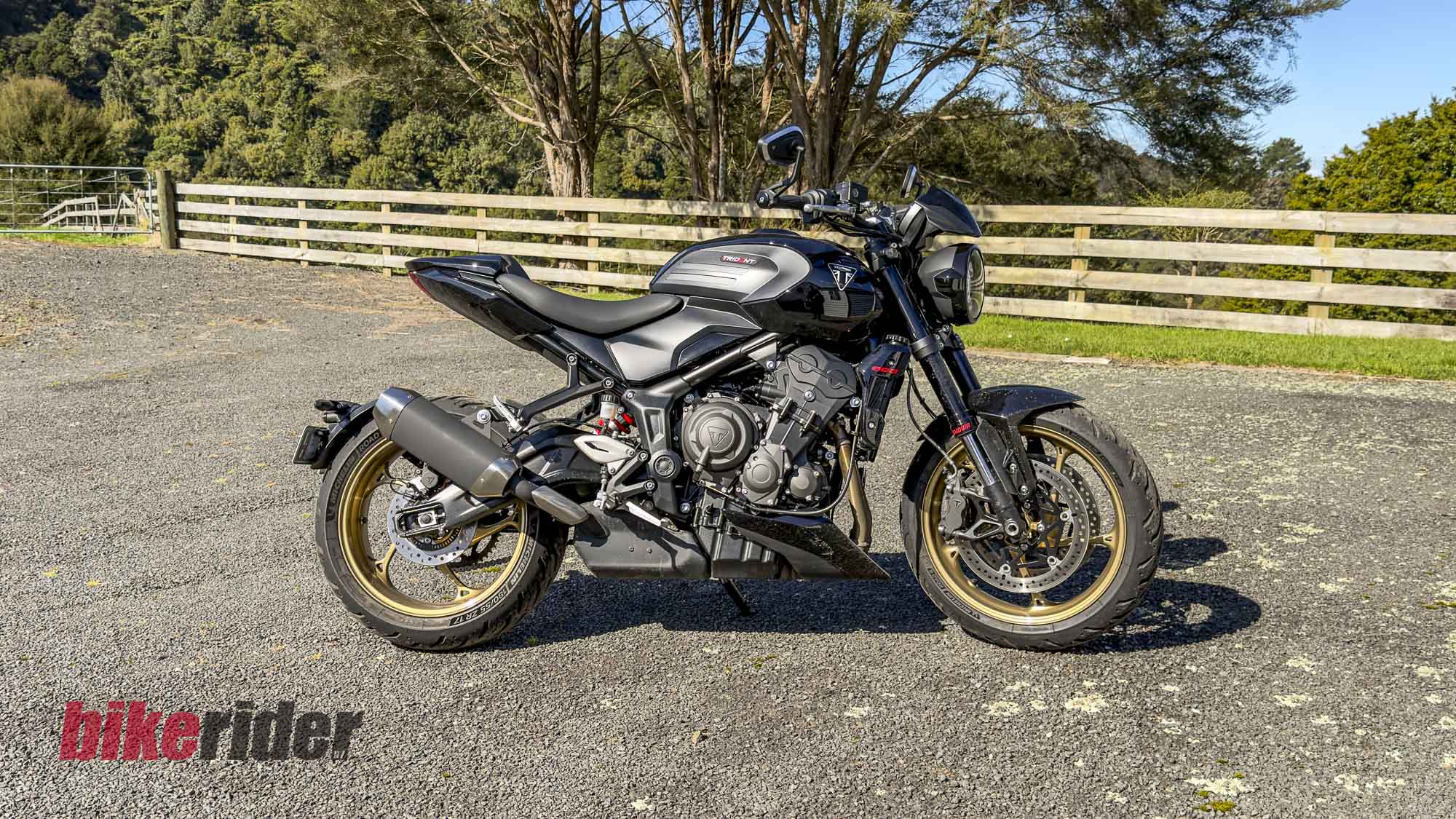
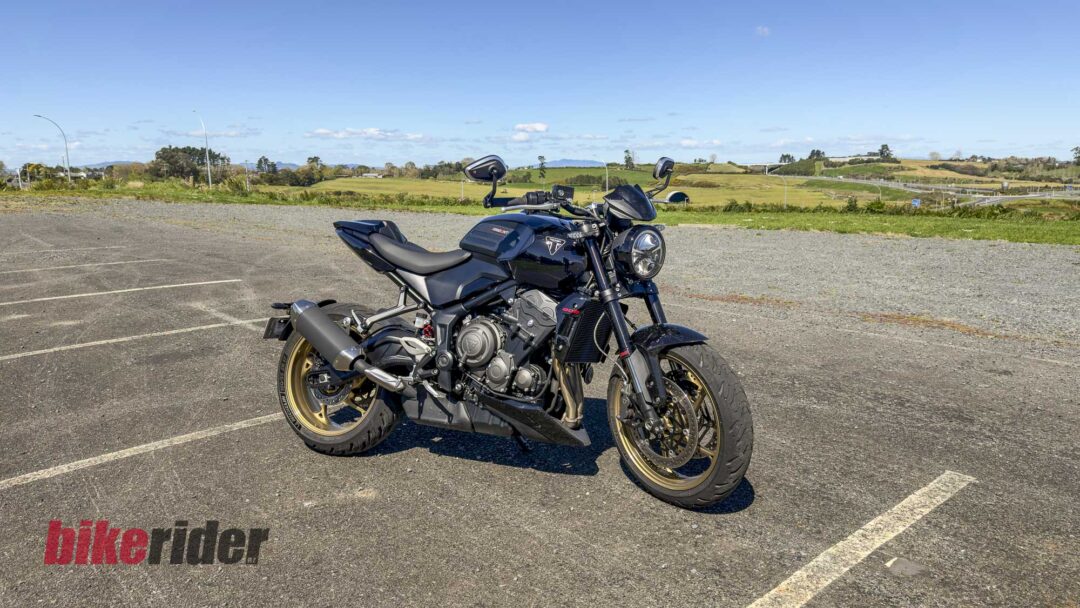
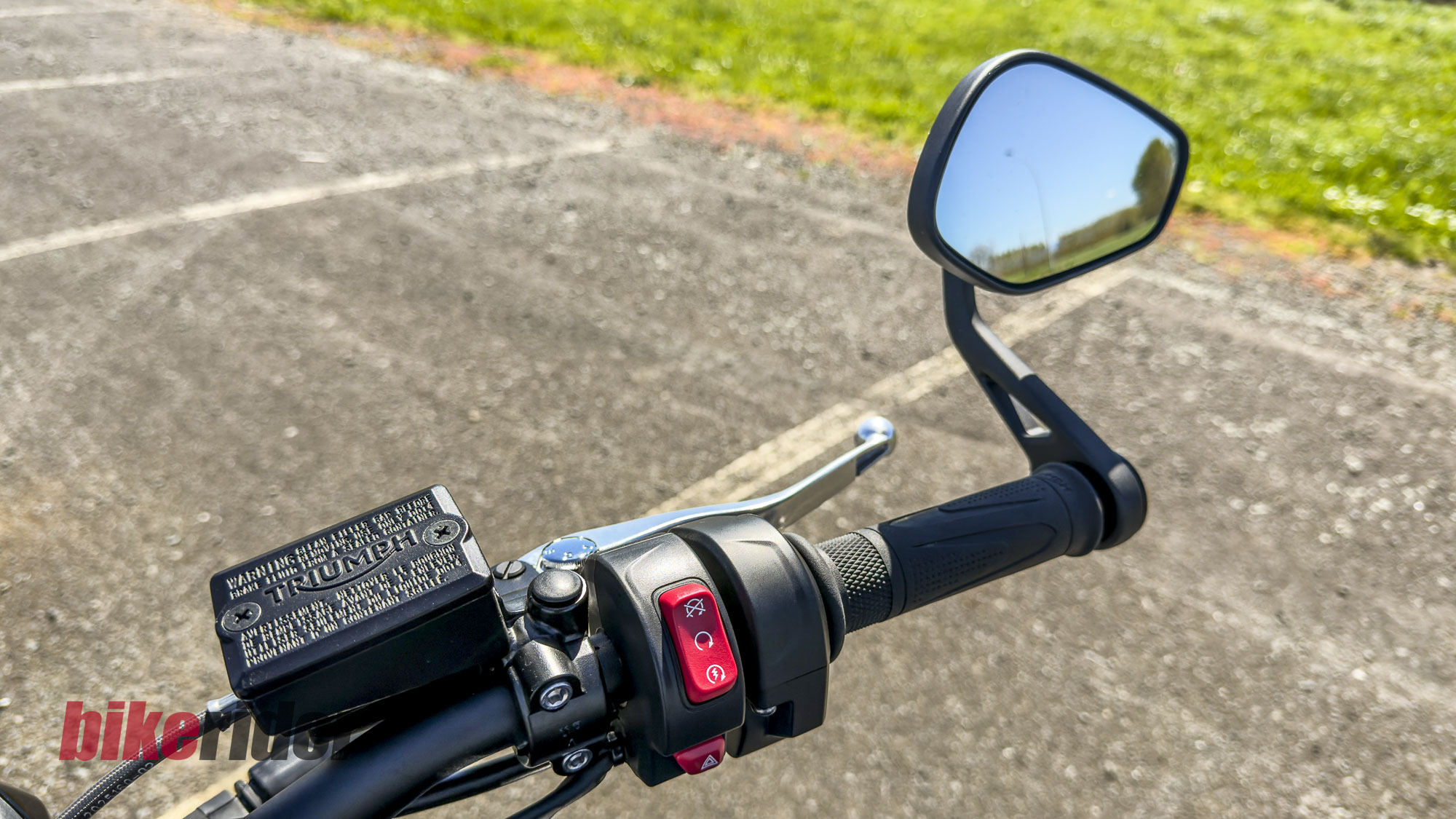
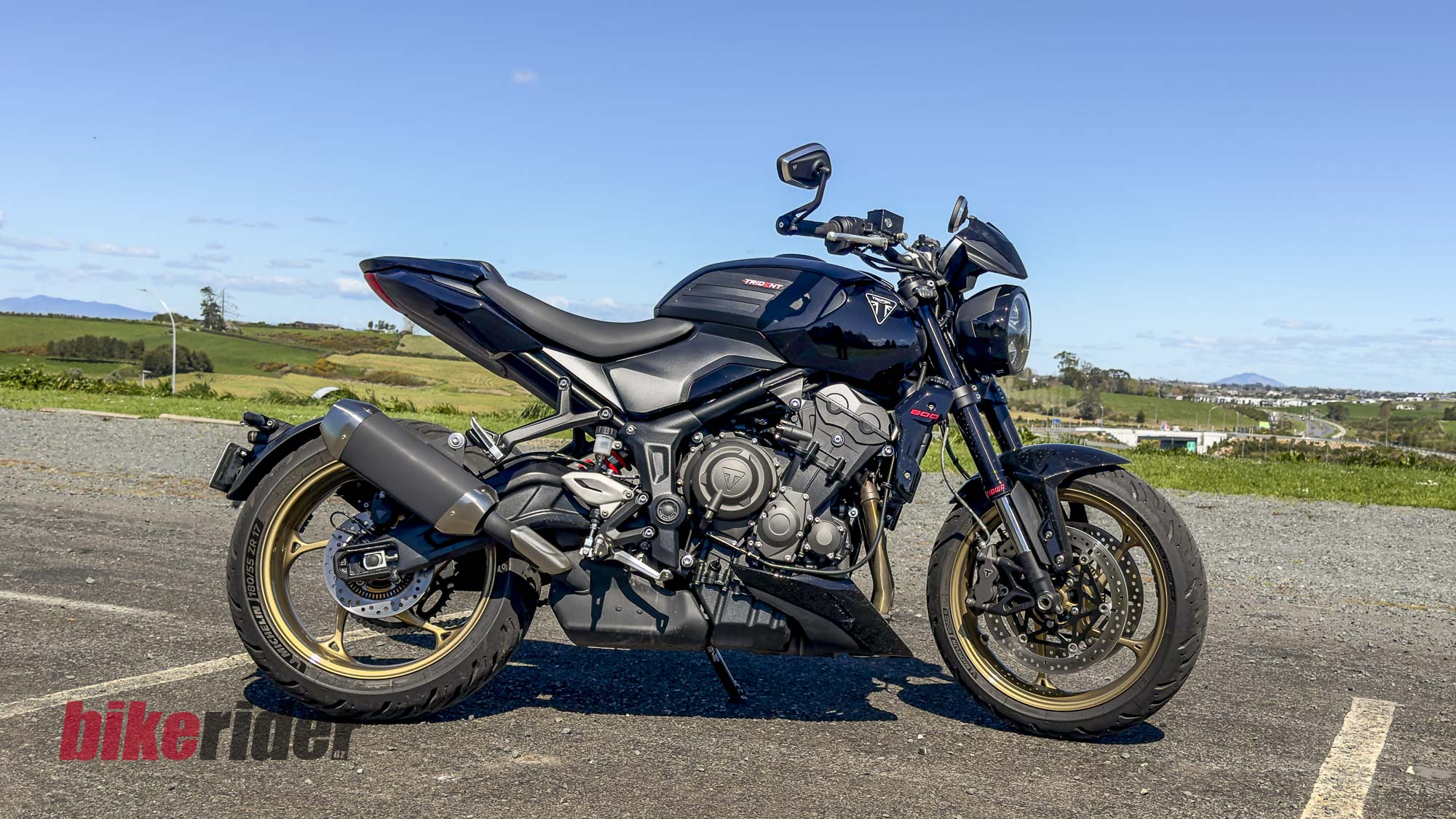
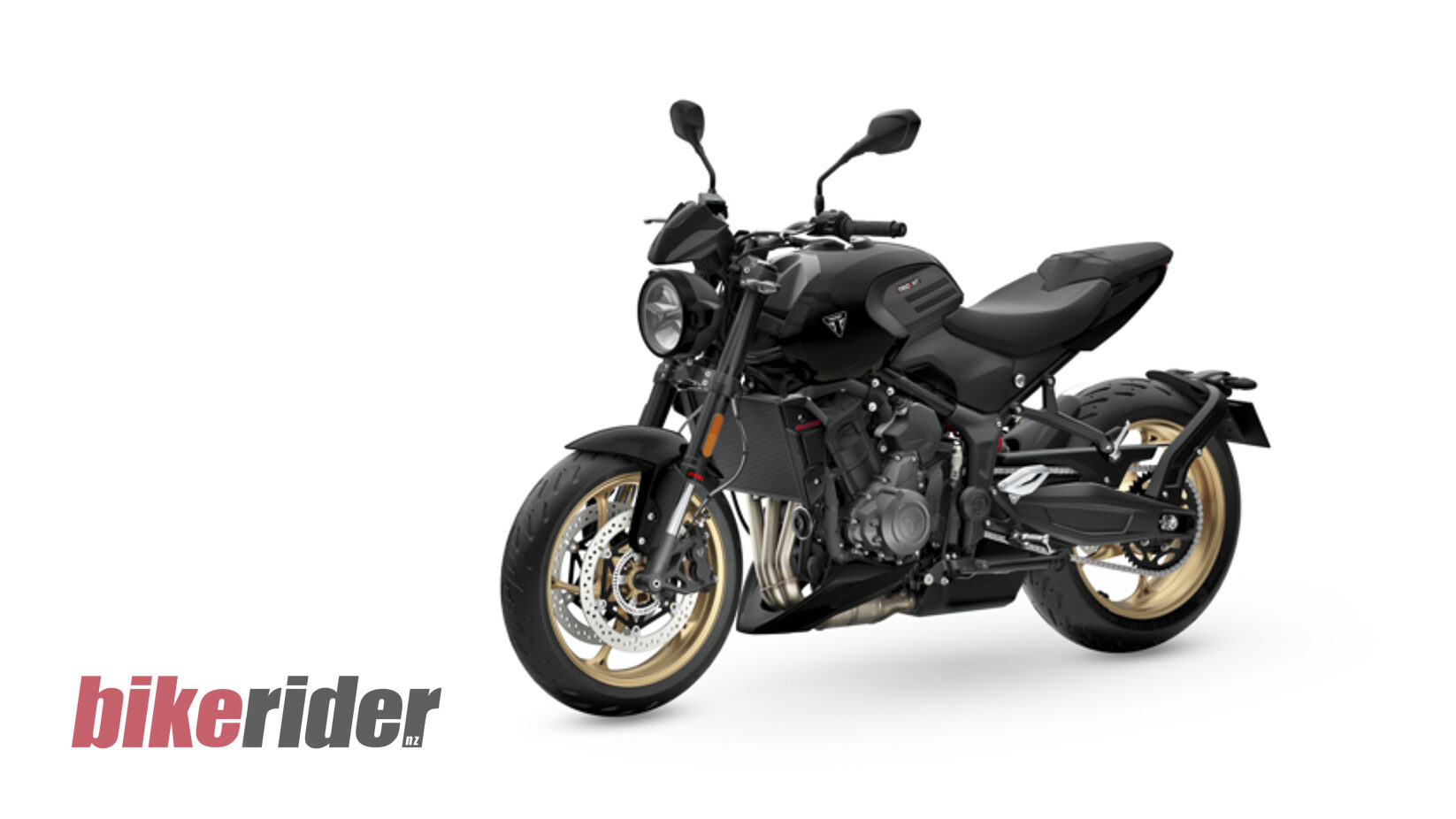
There are three colour choices: Ash Grey with Diablo Red detailing, Carnival Red with Graphite accents and Jet Black. The latter combination is the one I rode, and it gives the bike a particularly understated but sporty appearance. Thankfully, all three versions come with gold wheels. I am not sure there is a motorcycle on which gold wheels don’t improve the overall look, and the Trident is no exception. This one also came fitted with a seat cowl and bar-end mirrors that are part of Triumph’s optional extras.
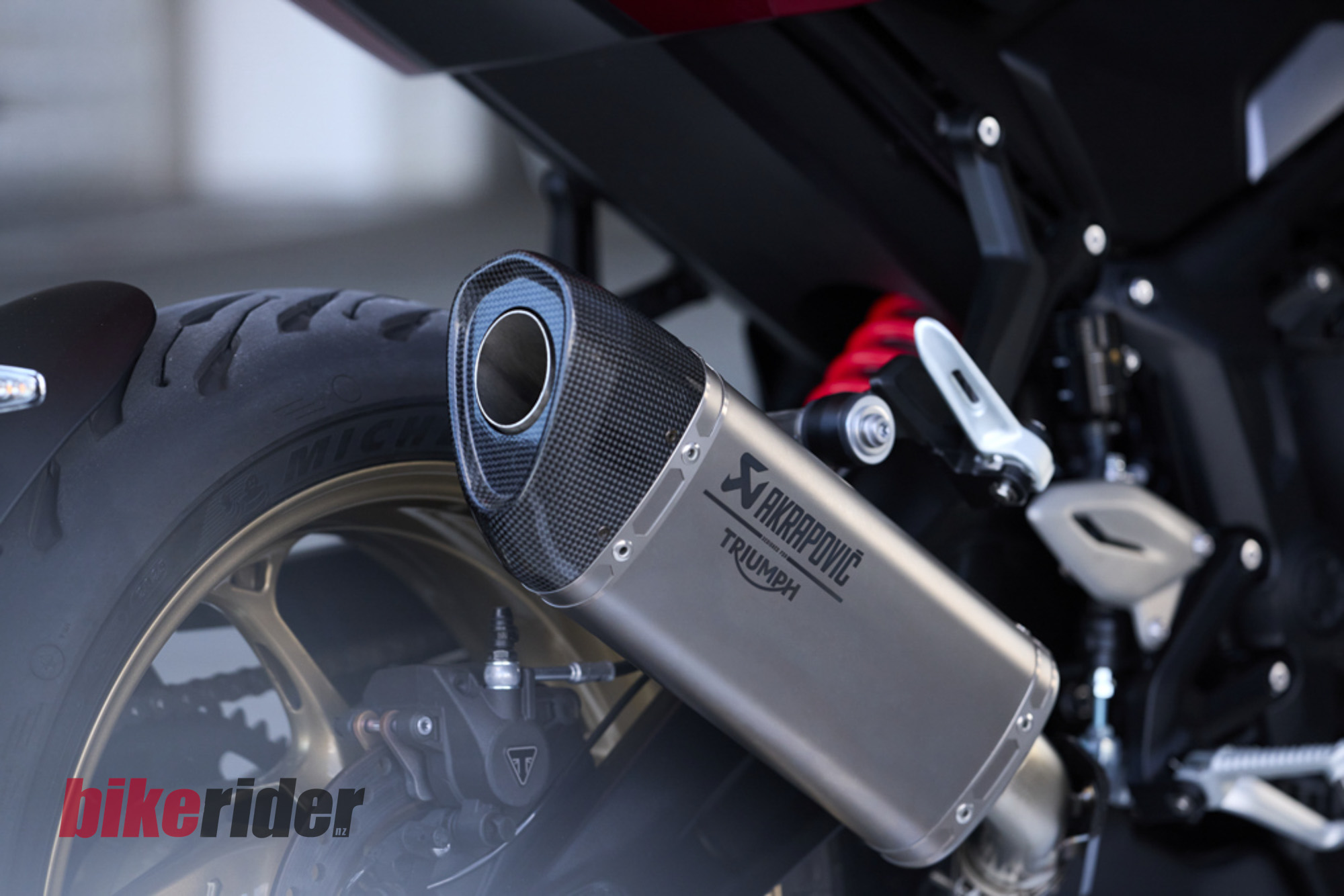
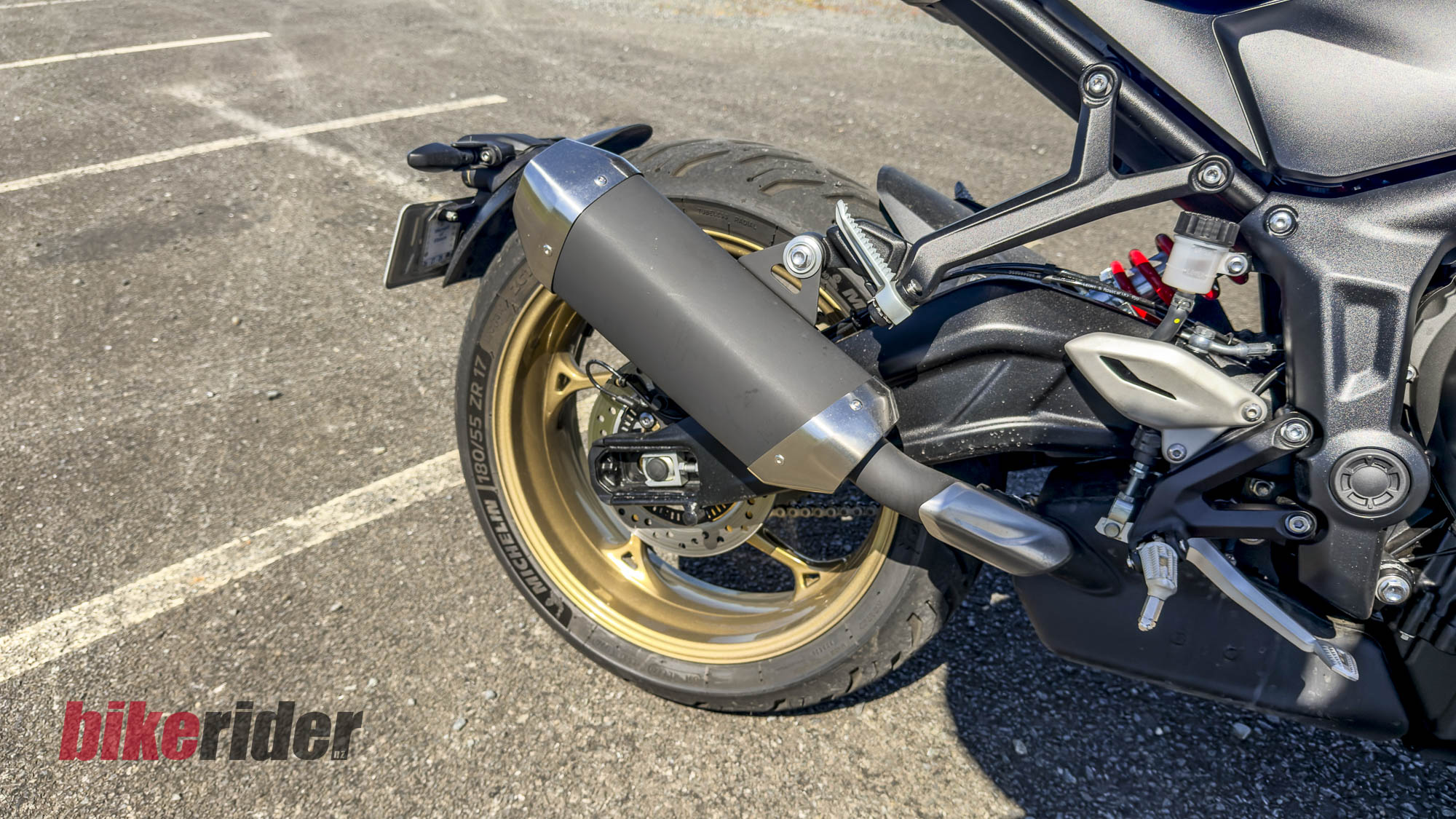
The one styling element I struggle with is the standard exhaust. It works perfectly well and sounds good, but visually, I think Triumph could have done much better. It has the appearance of something designed to encourage owners to tick the box for the optional Akrapovič system.
That aside, the Trident 800 has a classy appearance and doesn’t try too hard to look fast. I think that works in its favour.
Ergonomics
The riding position is one of the things I like most about the Trident 800.
If you’ve ridden the Trident 660, very little will feel unfamiliar. The riding position is upright and relaxed, but there is a noticeable difference compared with the Street Triple.
If you haven’t ridden either of those, allow me to explain. The wider bars on the Trident 800 provide plenty of leverage, especially at lower speeds and through tighter corners. The footpeg position is comfortable without compromising ground clearance, so despite the relaxed riding position, I never found myself scraping parts of the bike through corners.
It feels like a motorcycle designed around real-world riding rather than trying to replicate the ergonomics of a supersport machine.
The bike is 815mm wide, and its handlebars sit higher and closer to the rider than those on the Street Triple. The seat height is 810mm, while the wet weight is 198kg. That last figure is particularly impressive because the Trident 800 is only around 3kg heavier than the Trident 660.
How is it to ride?
Around town, the Trident is light, unintimidating and extremely easy to manage. The steering is light without feeling vague, the clutch requires little effort and the throttle response is smooth and predictable.
The easiest way I can describe it is as a Trident 660 that has been given a serious fitness programme. It retains the 660’s friendly nature but adds considerably more performance. There is stronger torque through the middle of the rev range, more acceleration when you open the throttle and a much stronger top-end rush as the revs build.
The relaxed geometry is particularly useful in the city. It doesn’t tip into corners with the immediacy of a Street Triple, but neither does it feel slow or reluctant to change direction. U-turns are easy, filtering through traffic is straightforward and the wide bars make low-speed manoeuvres almost effortless.
The real transformation happens once you leave the city.
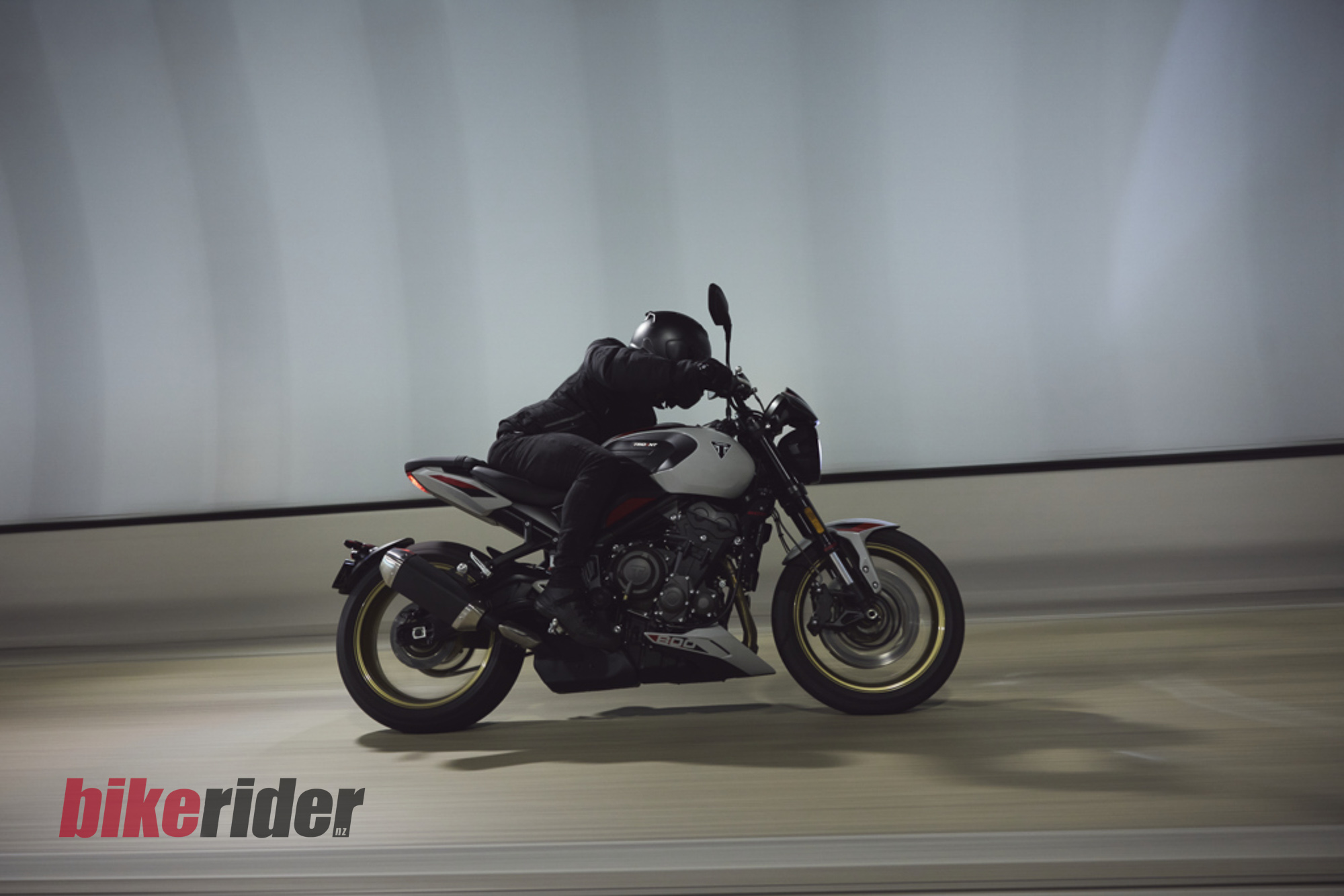
The suspension feels noticeably firmer and has a sportier tune than the 660. The entire motorcycle feels more planted and composed, particularly when the pace increases.
It is still not as aggressive as a Street Triple. The Street Triple constantly seems to encourage you to ride harder, whereas the Trident 800 feels calmer and more measured. For everyday road riding, I actually think that is a strength.
The steering isn’t racer-sharp, but the bike remains agile. It rolls naturally into both slow and fast corners, changes direction quickly without feeling nervous and remains stable when the speed rises.
The Michelin Road 6 tyres deserve plenty of credit here as well. They performed impressively in everything from wet roads and standing water to completely dry tarmac.
That level of confidence is important on a road bike. The Trident 800 gave me plenty of reassurance when conditions weren’t perfect, and that makes it easier to enjoy the motorcycle rather than constantly worrying about what the tyres or chassis are doing.
“The easiest way I can describe it is as a Trident 660 that has been given a serious fitness programme.”
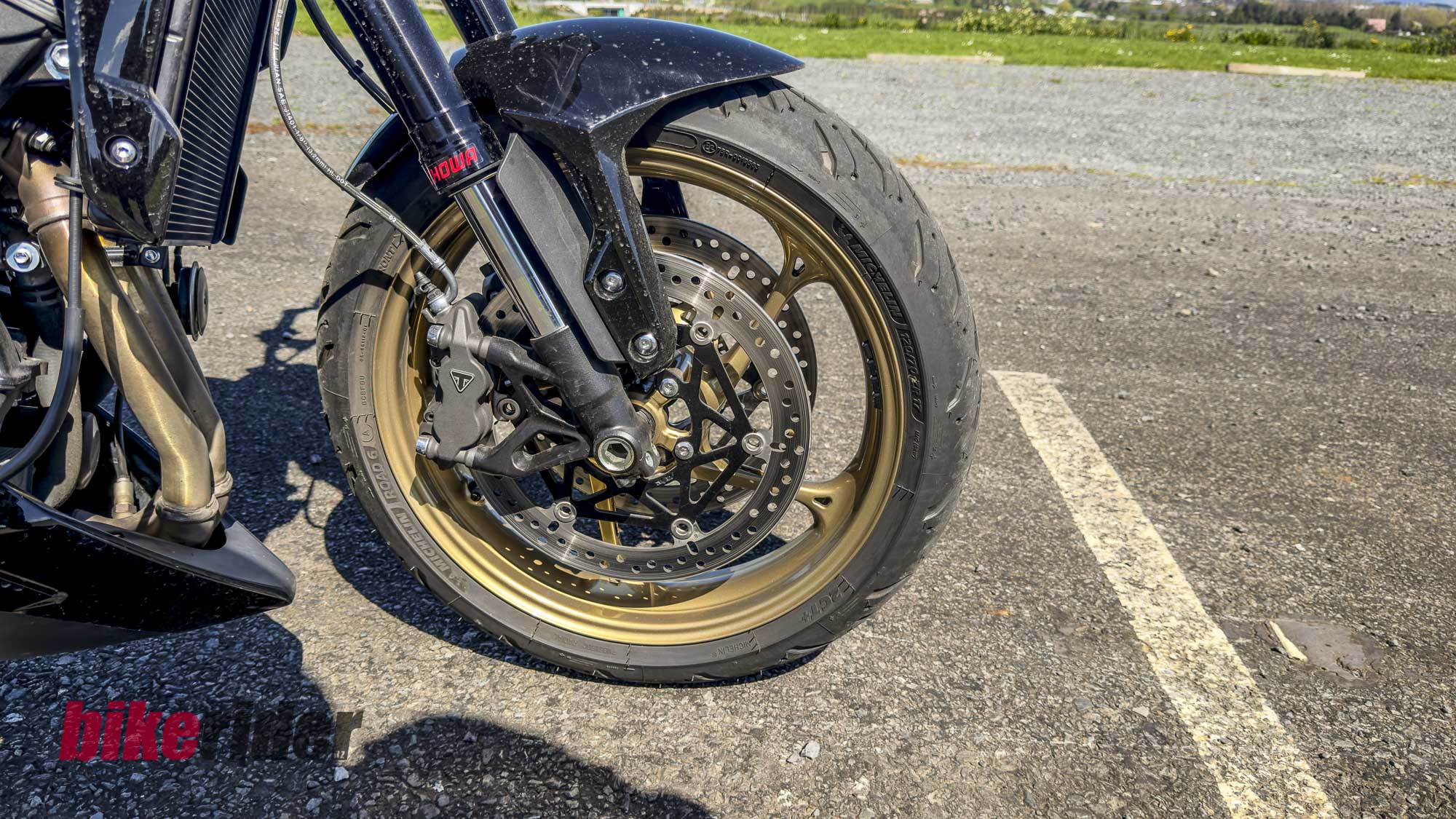
The brakes are powerful but progressive, rather than grabby, and the throttle is similarly easy to control. The quickshifter works well whether I’m simply making relaxed gear changes or pushing the engine hard towards its 11,500rpm redline. And then there is the engine.
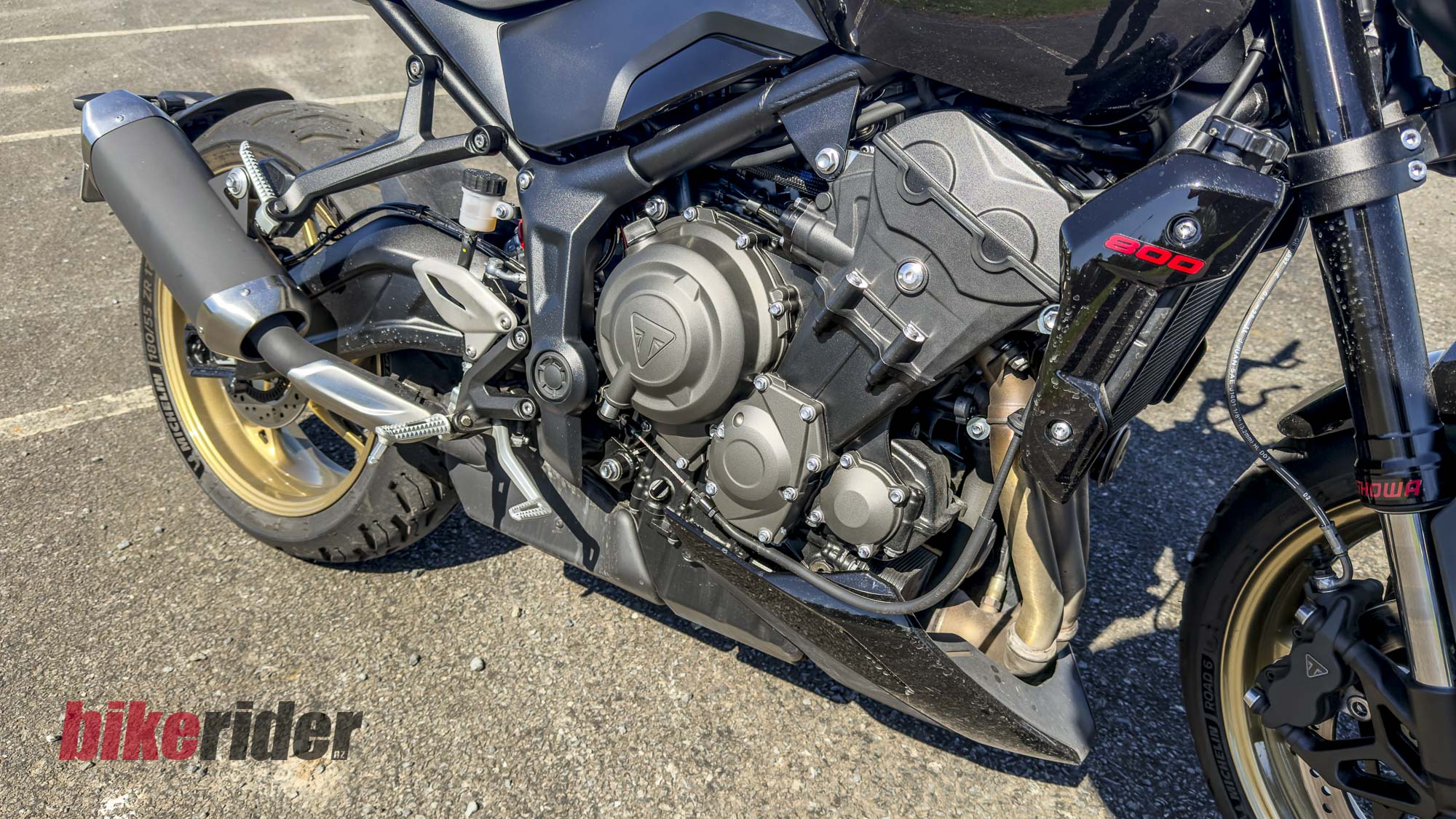
This 798cc triple is probably my favourite part of the motorcycle. It is exceptionally smooth, well fuelled and has plenty of character. The power delivery feels natural rather than artificially aggressive.
There is useful pull from low revs, a strong and enjoyable midrange, and enough enthusiasm at the top end to make chasing the redline worthwhile.
Importantly, Triumph hasn’t softened the character of the engine simply because it has been put into the more approachable Trident platform. If anything, the naked-bike layout makes the triple feel even more prominent.
It is fast enough to be genuinely exciting, but it never feels like it is trying to intimidate you.
That is probably the biggest difference between the Trident 800 and something like the Street Triple. The latter always feels ready for more. The Trident 800 is happy to give me as much performance as I want without constantly demanding that I use it.
Features
The Trident 800 gets a level of equipment that makes sense for its position in the range, and the overall quality of the motorcycle feels very good for the money.
The suspension, brakes, electronics and chassis all contribute to a bike that feels considerably more sophisticated than its approachable personality might suggest.
Traction control and wheelie control are linked; there is no completely independent wheelie-control system. In normal riding, this works perfectly well, but I do think Triumph missed an opportunity here.
The latest Speed Triple has a much more sophisticated wheelie-control system that allows the rider to properly exploit the engine’s performance while keeping the experience controlled. Having something similar on the Trident 800 would have given the bike a unique selling point in this segment.
The quickshifter is another highlight. It is smooth during normal riding but equally happy to deal with aggressive shifts when the engine is being pushed hard.
The Michelin Road 6 tyres are also a significant part of the overall package, adding another layer of confidence to a motorcycle that already has an extremely predictable chassis.
Build quality is also impressive. The equipment level feels appropriate for the price, and there is nothing about the motorcycle that gives me reason to question its long-term durability.
“The Trident 800 is happy to give me as much performance as I want without constantly demanding that I use it.”
What could be better
There are really only a couple of things I would change.
The first is the exhaust. Mechanically, there is nothing wrong with it. It sounds good and does its job, but I simply don’t think it looks particularly attractive. The optional Akrapovič system is a much nicer solution, although that means spending extra money to get the exhaust the bike arguably should have had from the beginning.
The second is the electronics.
I really wish Triumph had fitted the more advanced wheelie-control system from the Speed Triple. The Trident 800 has enough performance and chassis capability to make proper use of it, and being able to deliberately lift the front wheel in a controlled manner would have added another dimension to the bike.
There is also some harshness over larger bumps. Overall ride quality and stability are excellent, but the suspension isn’t completely immune to big impacts, particularly when the road surface gets rough.
Beyond those points, I don’t have many complaints. The Trident 800 feels like a well-developed motorcycle rather than a collection of compromises.
Who should buy the Trident 800?
The Trident 800 is an interesting proposition because it doesn’t fit neatly into just one category.
You could compare it with the Trident 660 as an upgrade, the Street Triple as a less aggressive alternative, or bikes such as the Yamaha MT-09, Kawasaki Z900 and Ducati Monster V2 based on performance and price.
In reality, I think it makes sense against all of them.
“I’d choose it because the combination of performance, accessibility, comfort and character makes sense for the kind of riding most people actually do on the road.”
For someone moving up from a Trident 660, this is probably the most natural progression in Triumph’s range. You get considerably more power and torque, stronger performance, better equipment and more technology, but without losing the easy-going nature that made the 660 attractive in the first place.
It also makes sense for riders who want a proper road-focused middleweight but don’t need the aggressive personality of a Street Triple.
The Yamaha MT-09 is an obvious rival because it also uses an inline-three engine, while the Kawasaki Z900 brings similar four-cylinder performance to the conversation. The Ducati Monster V2 is another premium alternative with a similar engine capacity.
However, the Triumph’s triple has a stronger low- and mid-range character, while the overall motorcycle feels more considered and refined. The neo-retro styling will also appeal to riders who want something with a little more personality.
For New Zealand riders, I think that is ultimately the key point.
The Trident 800 isn’t a motorcycle I’d choose because its specification sheet beats every competitor. It doesn’t. I’d choose it because the combination of performance, accessibility, comfort and character makes sense for the kind of riding most people actually do on the road.
For someone looking for a motorcycle that can commute during the week, tackle twisty back roads at the weekend and still have enough performance to keep things interesting, the Trident 800 makes a very strong case for itself.
What Triumph has created is something that sits neatly between the friendly Trident 660 and the much more aggressive Street Triple. It is approachable enough for riders stepping up from a smaller bike, yet capable enough to keep experienced riders entertained.
Verdict
The Trident 800 combines a flexible, entertaining triple with relaxed ergonomics and predictable handling. It makes a convincing step up from the 660 and a less aggressive alternative to the Street Triple, with the suspension simply needing a little dialling in to get it right for the rider and the roads.
Likes: Flexible triple engine; relaxed riding position; smooth quickshifter and confident handling.
Fine-tuning: Dial in the suspension to suit the rider and the roads. Neil would also welcome independently adjustable wheelie control.
Related read: 2026 Triumph Trident 660 Review: More Revs, More Fun
Specifications | Triumph Trident 800
| NZ price | From $17,490 plus on-road costs |
|---|---|
| Engine | 798cc liquid-cooled inline triple |
| Power | 113bhp / 115PS / 84.6kW at 10,750rpm |
| Torque | 84Nm at 8,500rpm |
| Transmission | Six-speed; Triumph Shift Assist up/down quickshifter |
| Suspension | Showa 41mm SFF-BP forks with compression and rebound adjustment; Showa rear shock with preload and rebound adjustment |
| Brakes | Twin 310mm front discs with four-piston radial calipers; 220mm rear disc |
| Tyres | Michelin Road 6 |
| Seat height | 810mm |
| Wet weight | 198kg |
| Fuel tank | 14 litres |
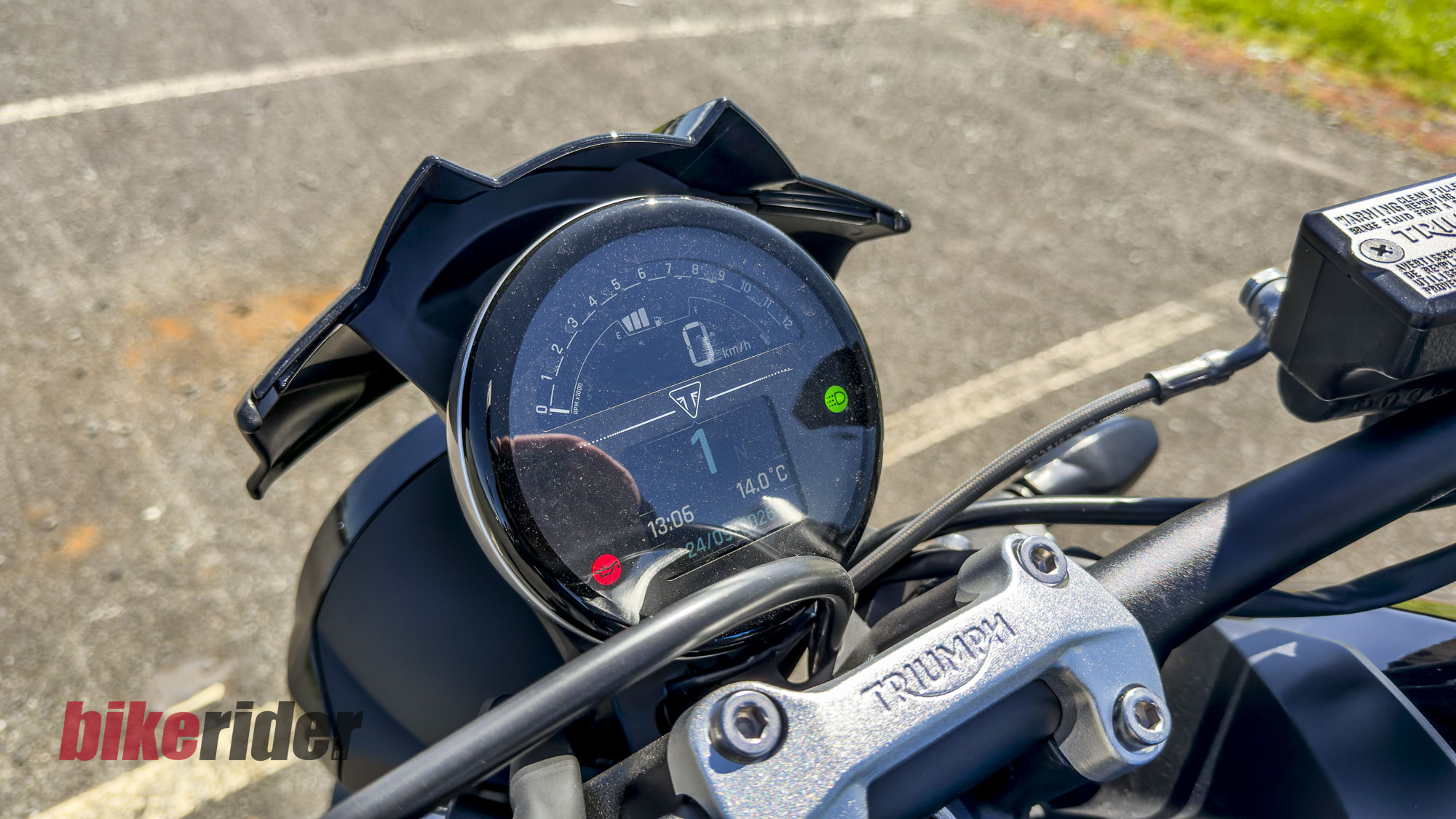
| Standard equipment | Road, Sport and Rain modes; cornering ABS; lean-sensitive traction control; cruise control; MyTriumph connectivity |
| Instruments | LCD with integrated colour TFT |
Test bike fitted with optional seat cowl and bar-end mirrors.

BRM Verdict
A flexible, entertaining triple, relaxed ergonomics and confident handling make the Trident 800 a compelling everyday middleweight. It strikes a rewarding balance between performance and approachability, with the suspension simply needing a little dialling in to suit the rider and the roads.