

- 2026 Triumph Bonneville T100 & T120 – Key Updates
- New six-axis IMU adds cornering ABS and traction control
- Engines unchanged with 64hp (T100) and 79hp (T120)
- Classic styling retained with modern touches like LED lighting and USB-C charging
Triumph has updated its iconic Bonneville range for 2026, giving the T100 and T120 new lean-sensitive rider aids while retaining the classic styling that has made the British twin a motorcycling legend.
Triumph Bonneville T100 & T120
Key Numbers
| Bonneville T100 | Bonneville T120 |
| Power | 64hp | Power | 79hp |
| Torque | 80Nm | Torque | 105Nm |
| Weight | 233kg | Weight | 233kg |
Heritage Meets Modern Tech
Is there a more enduring name in motorcycling than Bonneville? A bike from Britain’s Midlands became more famous than the Utah salt flats it was named after. Those flats were a 20th-century mecca for land-speed records, and when Triumph launched its high-performance 650cc twin in 1959, Bonneville was the perfect name.
The T120 soon became the bike of choice for speed seekers and icons like Elvis, Steve McQueen and Evel Knievel, who made his Caesar’s Palace jump aboard one. It was fast, and it was cool.
Today’s 1200cc T120 and 900cc T100 echo the Meriden machines of the ’60s and ’70s, blending classic style with modern engineering. For 2026, both gain a six-axis IMU, adding cornering ABS and traction control, alongside Euro5+ compliance and optional A2 restrictor kits, with power unchanged.
We headed to California to see if these updated Bonnevilles still deliver the ultimate retro ride.
“Stand back, and you could easily mistake either for a bike of yesteryear.”
It’s hard to talk about these Bonnies without resorting to cliché. No matter how much I try to avoid using words like iconic, legendary and charismatic, these are the ones that come to mind as both parallel twins rest on their stands beside the beach, their rich paintwork gleaming in the California sunshine. As the surf crashes onto the sand, I half expect the Beach Boys to start playing in the background.
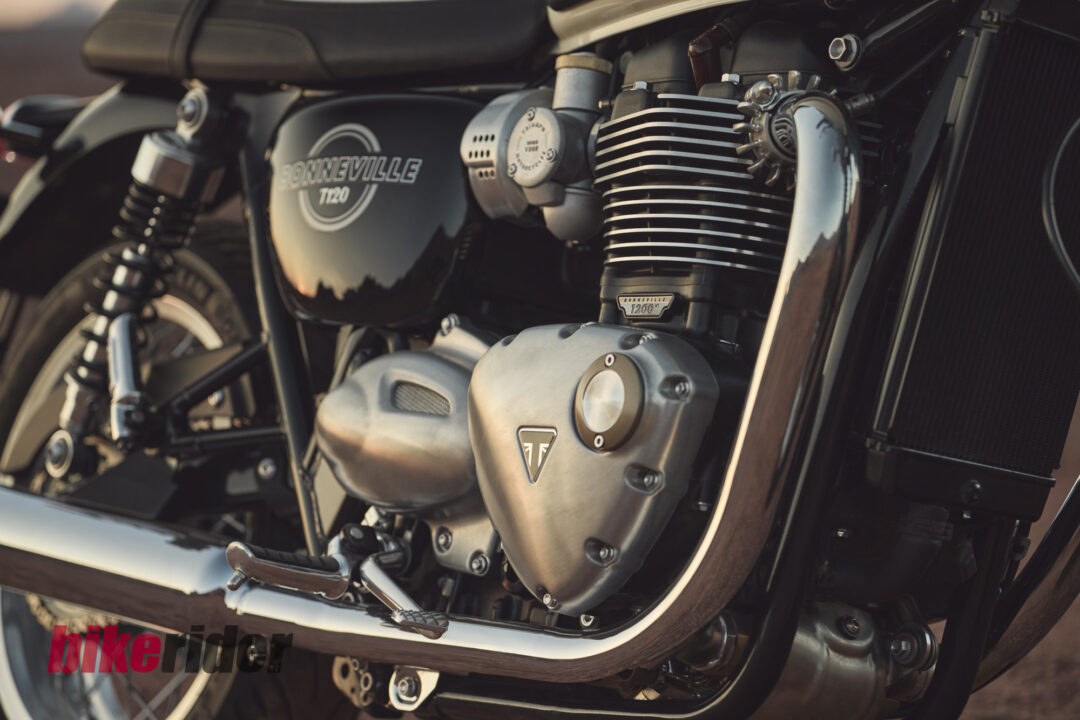
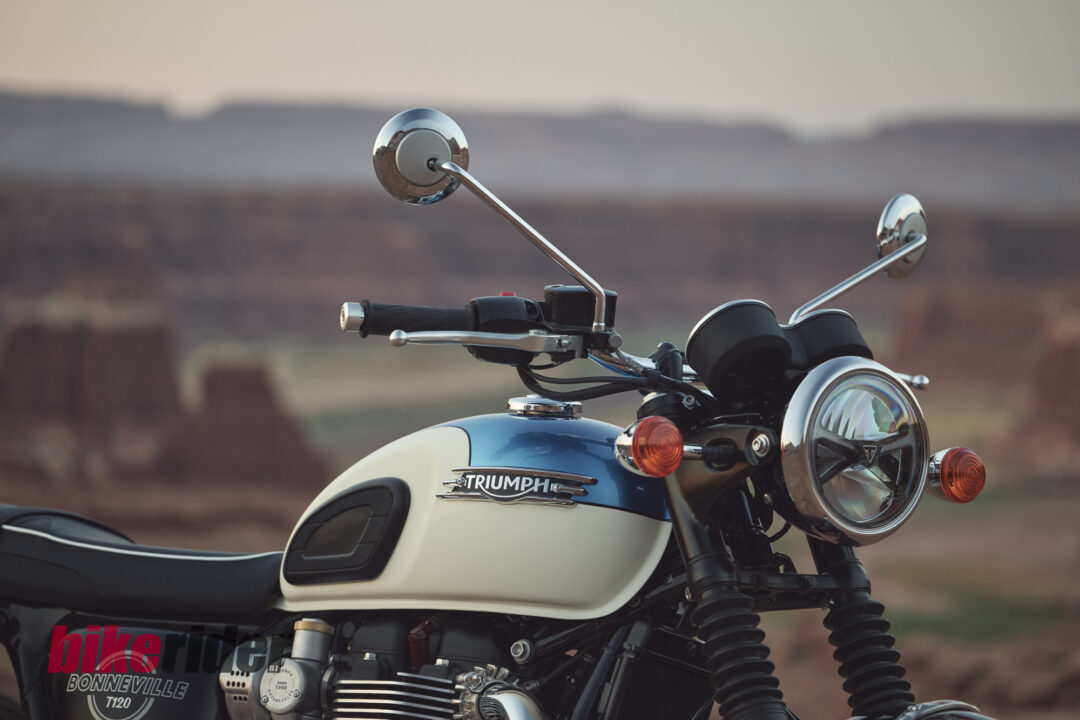
Despite their classic styling, complete with dummy carbs and cylinder finning, both bikes are water-cooled, fuel-injected and have two riding modes, Road and Rain. Radiators have been blended into the lines of the bike and are hardly noticed. There are no unsightly hoses or plumbing on show. Both bikes may now have lean-sensitive or ‘cornering’ rider aids but you can’t see the extra wiring, sensors and IMU that make it all happen.
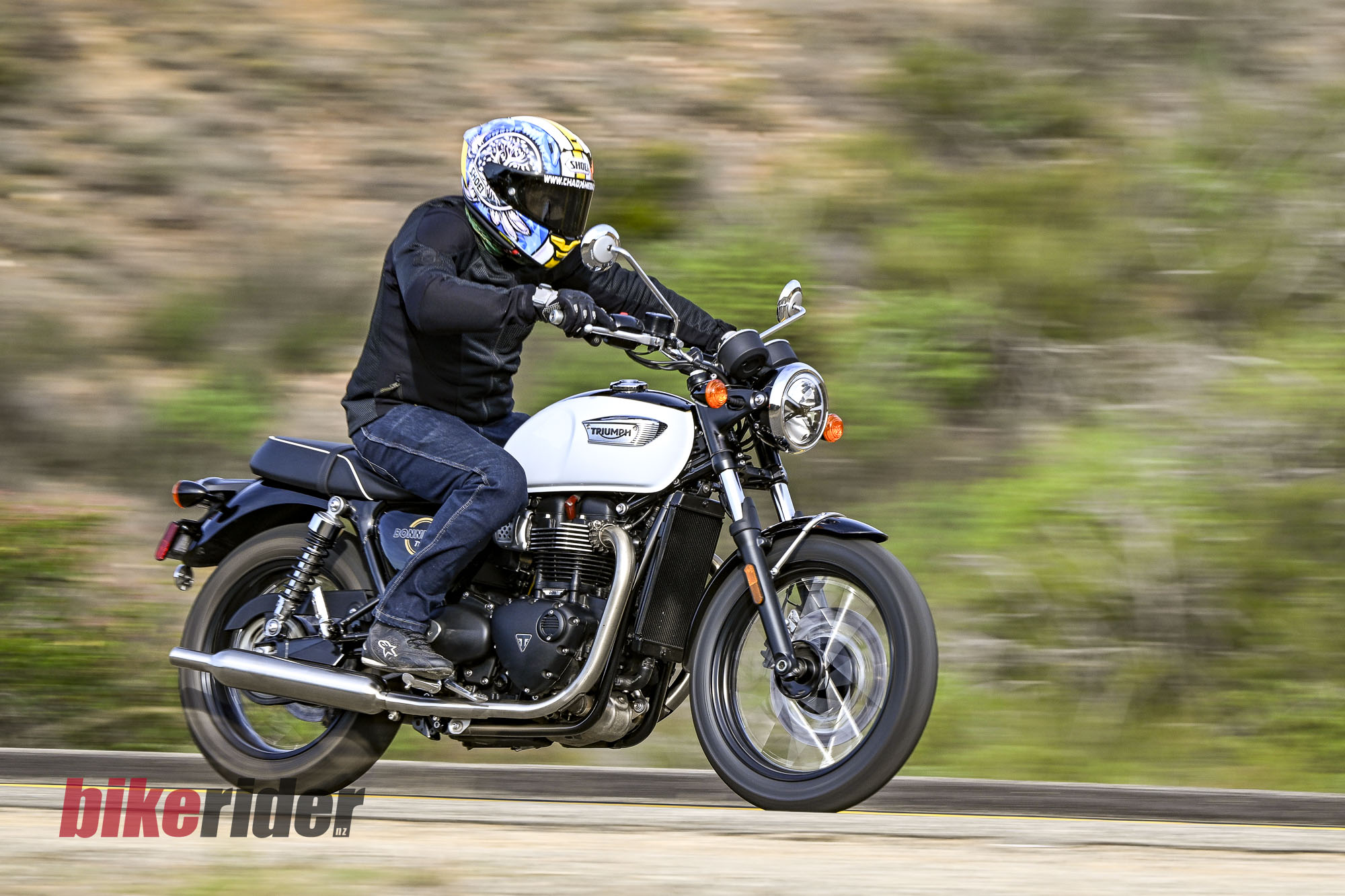
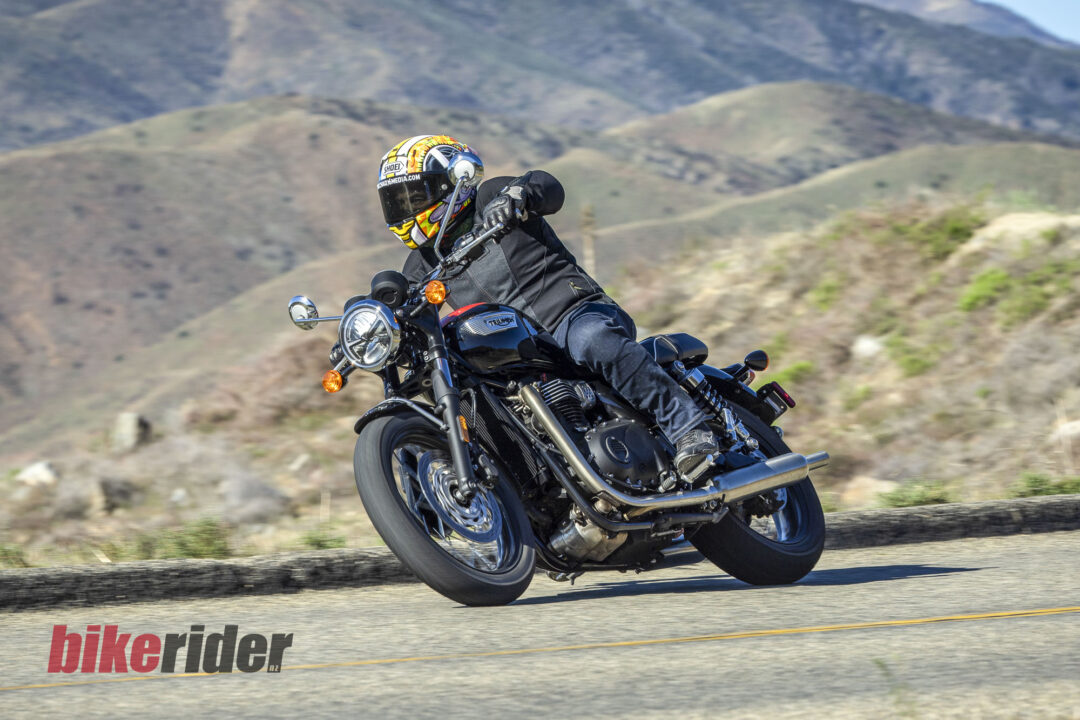
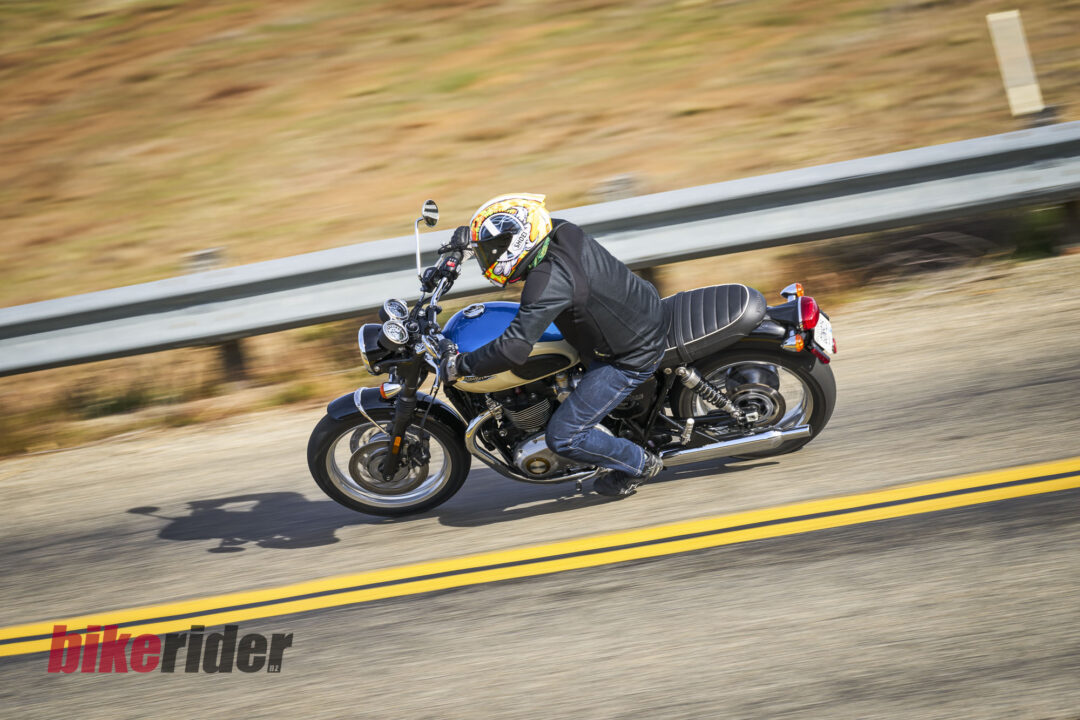
Stand back, and you could easily mistake either for a bike of yesteryear. Both look stunning; the only immediately obvious difference between the two is the single front disc brake on the T100 as opposed to the twin disc braking on the T120.
Power and Performance
I’ve ridden 2025 versions of both bikes, so I had a good indication of what to expect, but I’d never ridden both back-to-back, and certainly not in the perfect environment of a Californian winter.
The smaller capacity T100 makes a peak of 64 bhp while the T120 pumps out 79 bhp at 6500 rpm, 500 rpm earlier than the T100. The gap in peak torque is more sizable: 80 Nm at 3750 on the T100 and 105 Nm at just 3500rpm on the bigger 1200 Bonnie.
(Incidentally, the original T120 was so named because it could hit 120mph on the Bonneville salt flats, and plenty of owners tried for the same speed on London’s North Circular back in the café racer heyday.)
Shared Chassis, Different Character
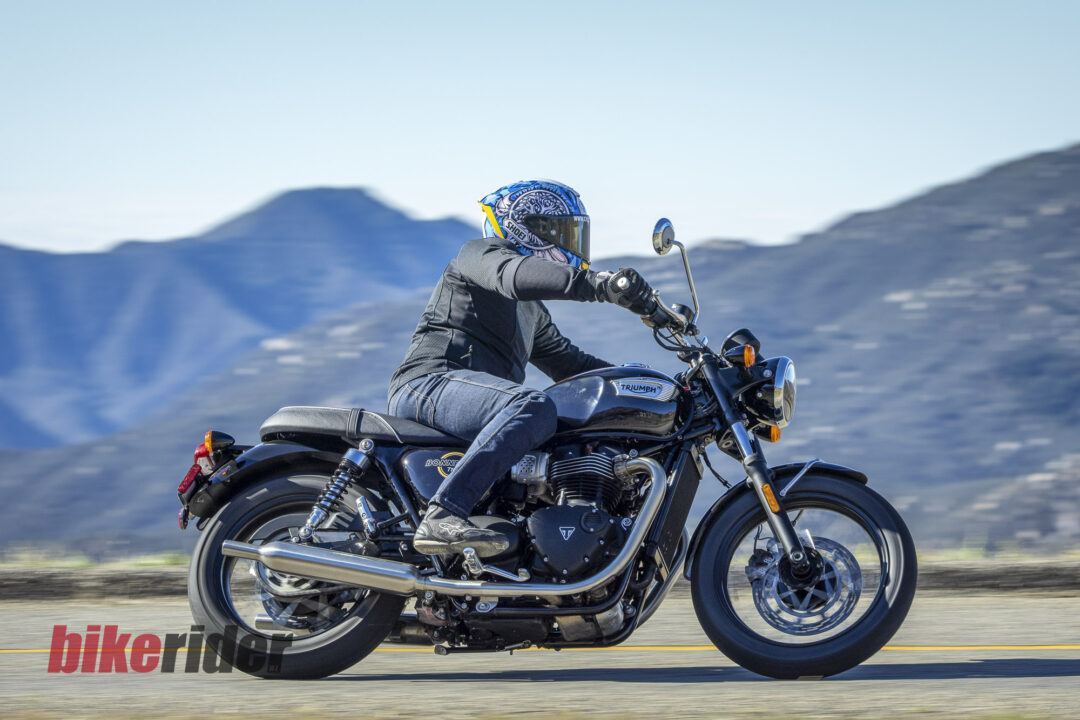
Chassis-wise, both bikes are very alike. According to Triumph, they both weigh 233kg, have the same frame, same 790mm seat height, wheelbase, rake and trail.
Both models use KYB 41mm-diameter conventional forks and twin rear shocks with slightly different settings. Wheel rims are steel on the T100 and aluminium on the T120, with those front twin discs and Brembo calipers on the larger Bonnie, a single Nissin caliper on the T100.
While both bikes have the new lean-sensitive rider aids, different settings and algorithms align to the bikes’ different power and braking performance – it’s not a case of just bolting on the new tech.
Triumph may also have added state of the art goodies like a new LED headlight with DRL light, and even a USB-C charging point, but thankfully has not added a fancy TFT iPad-style dash. Instead, there are two old-school dials (and some no-nonsense switchgear). For me, there remains a certain magic to seeing a rev counter rise and fall between smooth gear changes.
Easy Going Road Manners
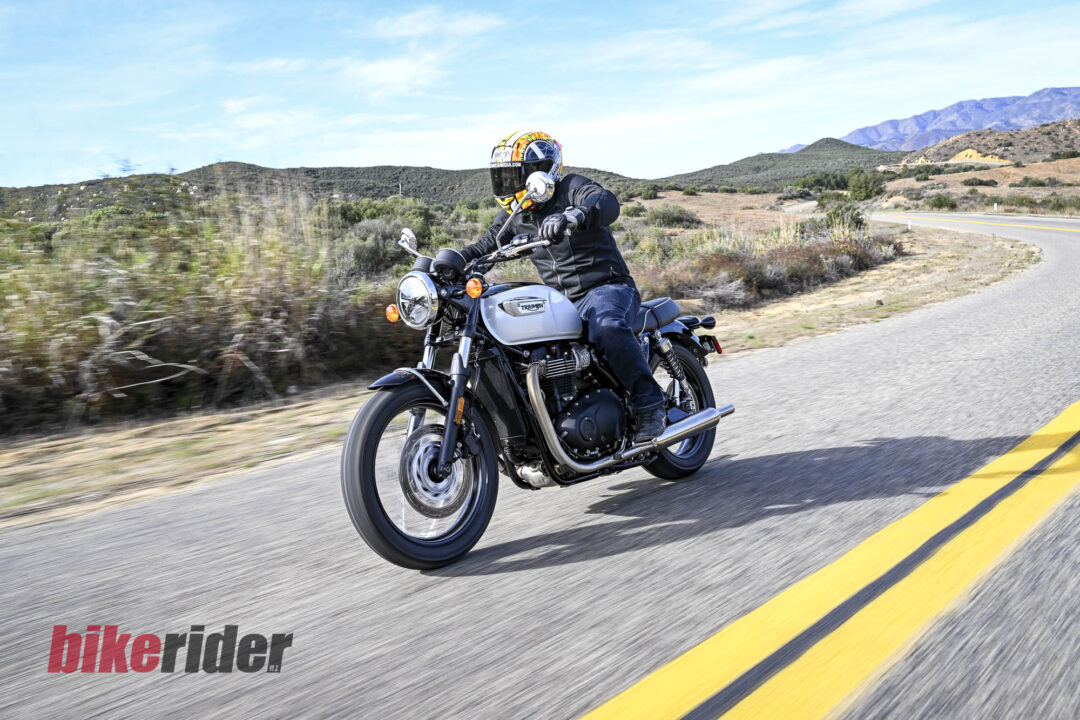
As you would expect, both bikes are easy-going, with lovely smooth fuelling, and a doddle to ride – so easy in fact that some might question the need for the separate Rain mode.
Low down there isn’t much between the two Bonnies but once above 2500 rpm there is a noticeable difference in torque, the larger 1200 Bonnie having considerably more drive from low down. That said, the T100 is no slouch and has a broad spread of torque that’s not quite as meaty as the T120’s.
“The sweet spot is between 3000rpm and 5000rpm, where both bikes deliver perfectly.”
The T100 revs a little higher and feels a fraction sportier, but if you feel the need to rev a Bonnie hard and are spending your time near the top of the power curve, you’ve possibly missed the point.
The sweet spot is between 3000rpm and 5000rpm, in the thick of that torque, where both bikes deliver perfectly.
The T120 can truly pick-up and run – it is a genuine 120mph machine these days – but the T100 isn’t a million miles behind, not in the real world. Both are backed up by a wonderfully old-school soundtrack from their twin exhausts.
Classic Feel, Modern Control
While their near-identical chassis look like something your parents and grandparents would have enjoyed swinging through the bends back in the day, both have the control, comfort and versatility of very modern machines.
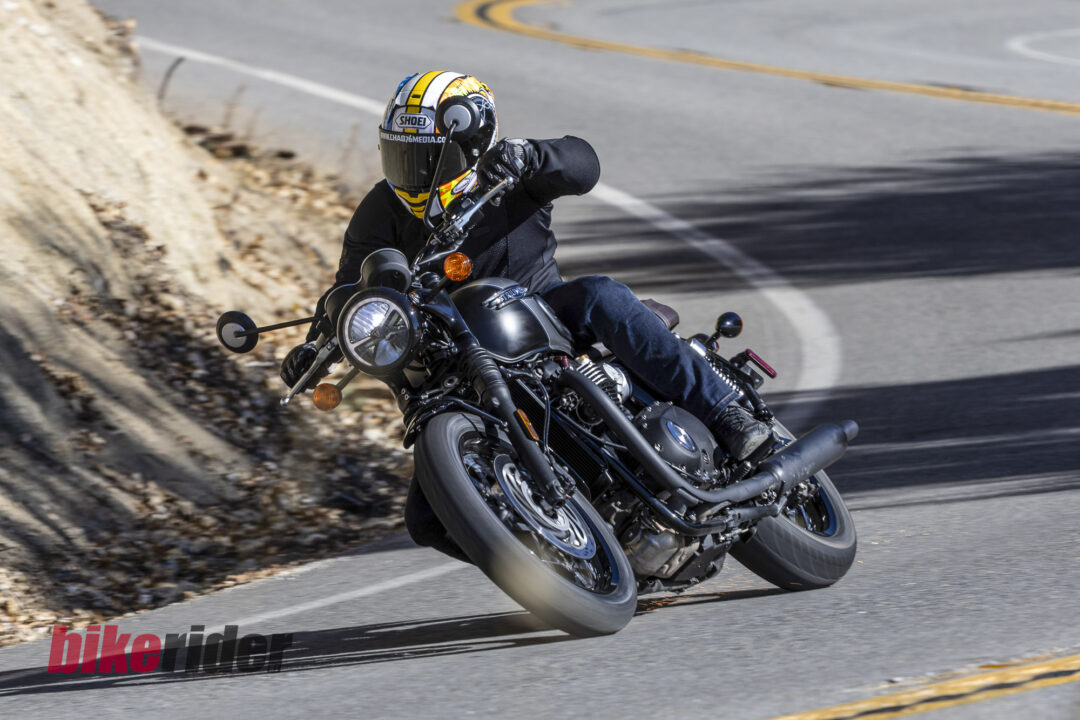
They are capable of cutting it on a challenging road and dragging their pegs in relative safety. We hit some great 30mph-to-60mph roads in Southern California featuring endless twisty sections, and both Bonnies revelled in the flow of smooth tarmac.
The most notable difference between the two is the superior stopping power of the twin-disc T120. The T100’s single disc is asked to do more with the same weight and therefore requires more of a pull on the lever.
It’s worth noting that the lean-sensitive ABS is excellent on both models. You can feel it occasionally working the rear, but not the front, even when ridden briskly.
Lean-sensitive TC is standard on both models and can be removed should you wish. Like the Rain mode, you could argue that TC isn’t needed, especially on the T100, but both have enough torque to spin the rear on a cold, wet evening in town.
Both Bonnies are deliberately pared back nakeds but comfort is actually rather good, and the wide bench seat is easily accessible for a pillion too.
Touring or Back-Road Cruising?
If you want to churn out more miles, the T120 is the preference. Cruise control comes as standard, it has a six-speed gearbox opposed to the five ratios on the T100, meaning fewer revs at high speed, and the increase in torque makes more sense when you add a pillion or luggage.
Verdict
Like much of the planet, I have always had a soft spot for the Bonneville, and that’s not because I’m old. I don’t remember the 1960s or 70s but I think they look fantastic.
You don’t have to have drooled over the original to appreciate the detailing and authenticity of both bikes. There are lots of ‘retro’ bikes on the market, but the Bonneville has to be one of the best on looks alone.
Triumph hasn’t rewritten the script for 2026, just given both bikes more appeal and safety, with much improved rider aids. You could argue that they are not needed, but why not? I would rather climb with a rope than without.
The T100 is likely to also appeal to a younger, possibly less experienced audience, despite the retro looks. Younger riders are now growing up with rider aids, even learning on bikes with TC, so why wouldn’t they want the added extra security?
If money were no object, I would choose the T120 every time, but as a small and light rider who mainly rides solo and doesn’t cover too many motorway miles, I’d probably opt for the T100 if it were my cash on the table.
But whichever bike you opt for, you won’t be disappointed. These Bonnies may be packing a raft of 2026 tech but remain as cool and satisfying as any retro on the market.
T100 vs T120 Quick Comparison
| T100 | T120 | |
| Engine | 900cc | 1200cc |
| Power | 64hp | 79hp |
| Torque | 80Nm | 105Nm |
| Gearbox | 5-speed | 6-speed |
| Front Brakes | Single disc | Twin discs |
| Cruise Control | No | Yes |
Accessories
Triumph lists over 100 official accessories, and says over 80% of Bonnevilles don’t leave the showroom standard when purchased.
The list is almost endless, from crash protection like sump and engine guards, to luggage options including panniers and tank bags. You can change seats, pegs, rear suspension, mirrors and badges.
And then there is Triumph’s extensive catalogue of heritage clothing.
There is, alas, no official aftermarket exhaust yet.
The Benchmark
Triumph has continually tweaked and polished their range of modern classics until they've arguably become the benchmarks of the genre. The sound, the styling, the ride – there is just something about riding a Bonne. With the inclusion of lean-sensitive rider aids, the old looking machines and now thoroughly modern, yet still manage to make you smile every time you hit the starter.Key specifications for the 2026 Triumph Bonneville T100 and T120 are listed below.
Specifications
| Triumph Bonneville | T100 |
|---|---|
| Capacity | 900cc |
| Type | Liquid-cooled, 8-valve SOHC parallel twin |
| Bore x Stroke | 84.6 x 80mm |
| Compression Ratio | 11.0:1 |
| Fuel System | Multipoint sequential electronic fuel injection |
| Transmission | Five-speed, chain drive |
| Clutch | Wet multi-plate slip & assist |
| Power | 47.8kW (64hp) @ 7,250rpm |
| Torque | 80Nm @ 3,250rpm |
| Top Speed | 115mph (est) |
| Fuel Consumption | 4.4L/100km |
| Riding Modes | Road, Rain |
| Rider Aids | Cornering ABS, traction control |
| Frame | Tubular steel cradle |
| Rake | 25.5° |
| Trail | 105.2mm |
| Wheelbase | 1450mm |
| Front | KYB 41mm forks, non-adjustable, 120mm travel |
| Rear | KYB twin shocks, preload adjustable, 120mm travel |
| Front Wheel | 18-inch steel rim (32-spoke) |
| Rear Wheel | 17-inch steel rim |
| Tyres | Michelin Road Classic |
| Front Tyre | 100/90-18 |
| Rear Tyre | 150/70-17 |
| Front Brake | 310mm disc, Nissin two-piston caliper |
| Rear Brake | 255mm disc, Nissin two-piston caliper |
| Weight | 233kg (wet) |
| Seat Height | 790mm |
| Fuel Capacity | 14.5L |
| Service Interval | 16,000km / 12 months |
| Warranty | 24 months |
| Price | $19,495 + ORC |
| Triumph Bonneville | T120 |
| Capacity | 1200cc |
| Type | Liquid-cooled, 8-valve SOHC parallel twin |
| Bore x Stroke | 97.6 x 80mm |
| Compression Ratio | 10.0:1 |
| Fuel System | Multipoint sequential electronic fuel injection |
| Transmission | Six-speed, chain drive |
| Clutch | Wet multi-plate slip & assist |
| Power | 58.8kW (78.9hp) @ 6,505rpm |
| Torque | 105Nm @ 3,500rpm |
| Top Speed | 125mph (est) |
| Fuel Consumption | 4.4L/100km |
| Riding Modes | Road, Rain |
| Rider Aids | Cornering ABS, traction control |
| Frame | Tubular steel cradle |
| Rake | 25.5° |
| Trail | 105.2mm |
| Wheelbase | 1450mm |
| Front | KYB 41mm forks, non-adjustable, 120mm travel |
| Rear | KYB twin shocks, preload adjustable, 120mm travel |
| Front Wheel | 18-inch aluminium rim (32-spoke) |
| Rear Wheel | 17-inch aluminium rim |
| Tyres | Michelin Road Classic |
| Front Tyre | 100/90-18 |
| Rear Tyre | 150/70-17 |
| Front Brake | 2 x 310mm discs, Brembo two-piston calipers |
| Rear Brake | 255mm disc, Nissin two-piston caliper |
| Weight | 233kg (wet) |
| Seat Height | 790mm |
| Fuel Capacity | 14.5L |
| Service Interval | 16,000km / 12 months |
| Warranty | 24 months |
| Price | $23,495 + ORC |
| Contact | triumphmotorcycles.co.nz |
Triumph Bonneville T100 & T120 Summary
Triumph has updated its Bonneville T100 and T120 for 2026 with the addition of a six-axis IMU, bringing cornering ABS and traction control to the classic British twins. The engines remain unchanged, producing 64hp in the T100 and 79hp in the T120, while the bikes continue to blend retro styling with modern reliability and easy-going road manners.