

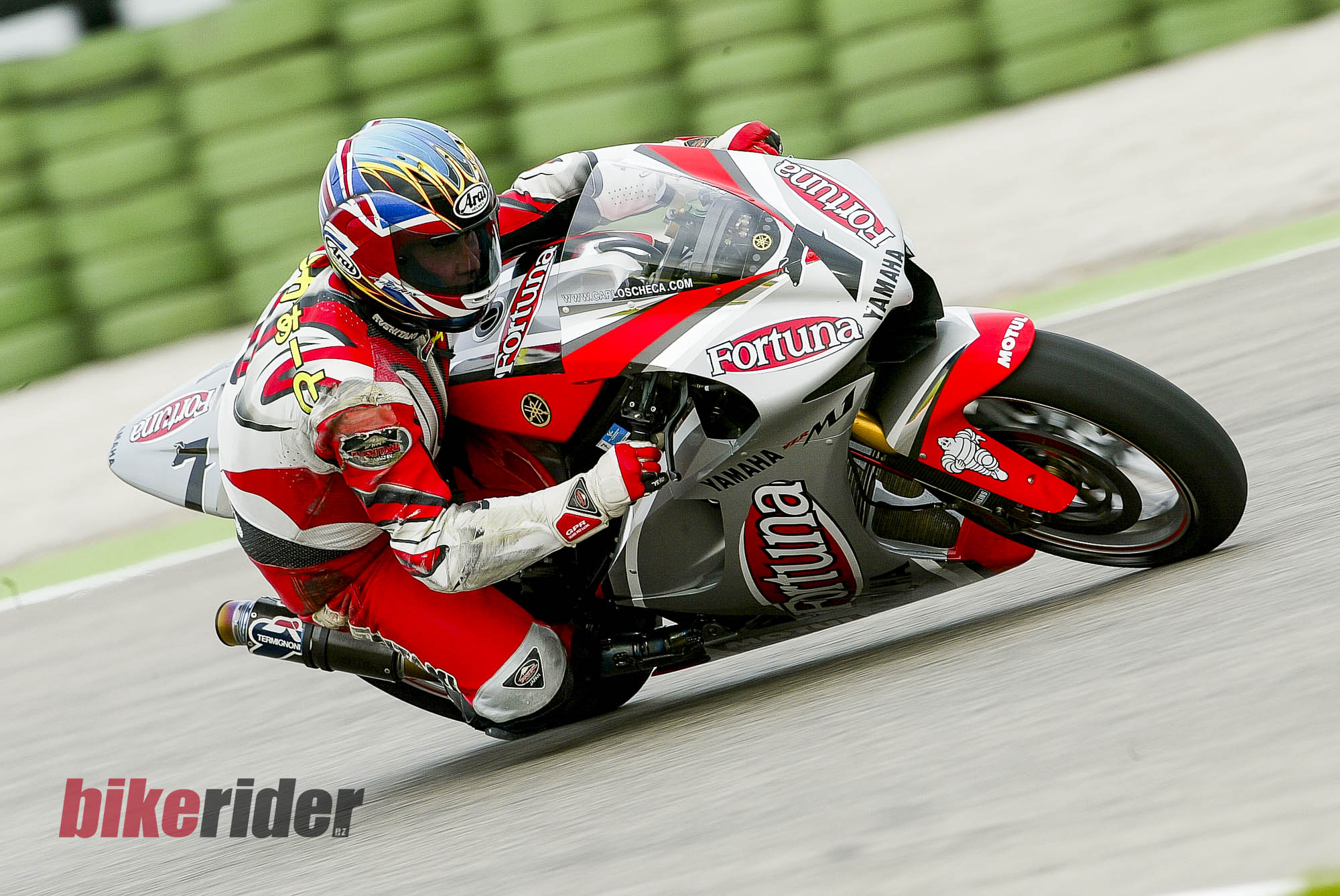
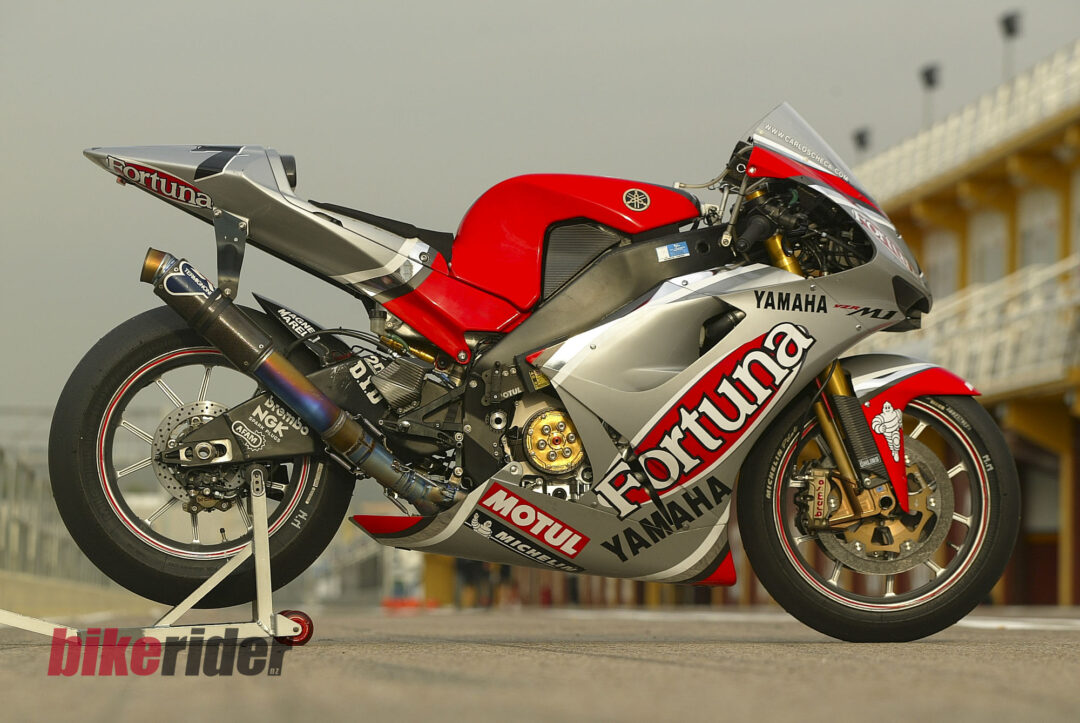
- Alan Cathcart rides Yamaha’s original 2003 MotoGP YZR-M1.
- Insight from project leader Ichiro Yoda reveals the thinking behind the bike.
- A fast, flawed machine that shaped Yamaha’s MotoGP future.
Alan Cathcart rides the 2003 Yamaha YZR-M1 MotoGP bike and speaks to project leader Ichiro Yoda, revealing the origins of Yamaha’s most important racing machine.
Where it all began
As World Championship MotoGP racing clocks up its 25th anniversary, Yamaha finds itself once again at a crossroads, developing a new V4 design after more than two decades of loyalty to the inline four layout it introduced at the very dawn of the class in 2002.
It’s a timely moment to look back at where it all began.
Because when the YZR-M1 first appeared, it wasn’t the polished, race-winning package it would later become. Instead, it was a fast, intelligent, but ultimately flawed motorcycle — one that offered a fascinating insight into Yamaha’s thinking as it transitioned from two-stroke Grand Prix racing into the four-stroke MotoGP era.
The chance to ride that original machine, and to speak with the man who led its creation, provides a unique perspective on a bike that was as influential as it was imperfect.
A bike with all the right ideas
After its vintage 2000 season, when Yamaha won five out of eight World Championships across the categories it contested, there followed a steep decline. For four seasons, the firm didn’t win a single premier-class title.
The introduction of the four-stroke MotoGP formula in 2002 offered a reset. Yamaha’s response was the YZR-M1 — an all-new machine that, on paper, had everything required to succeed.
Max Biaggi proved as much, scoring two GP victories in 2002 and finishing runner-up in the World Championship. But the following season told a different story. The revised 2003 machine failed to deliver, with no wins and just a single podium finish across the entire campaign.
Yet the potential was clearly there.
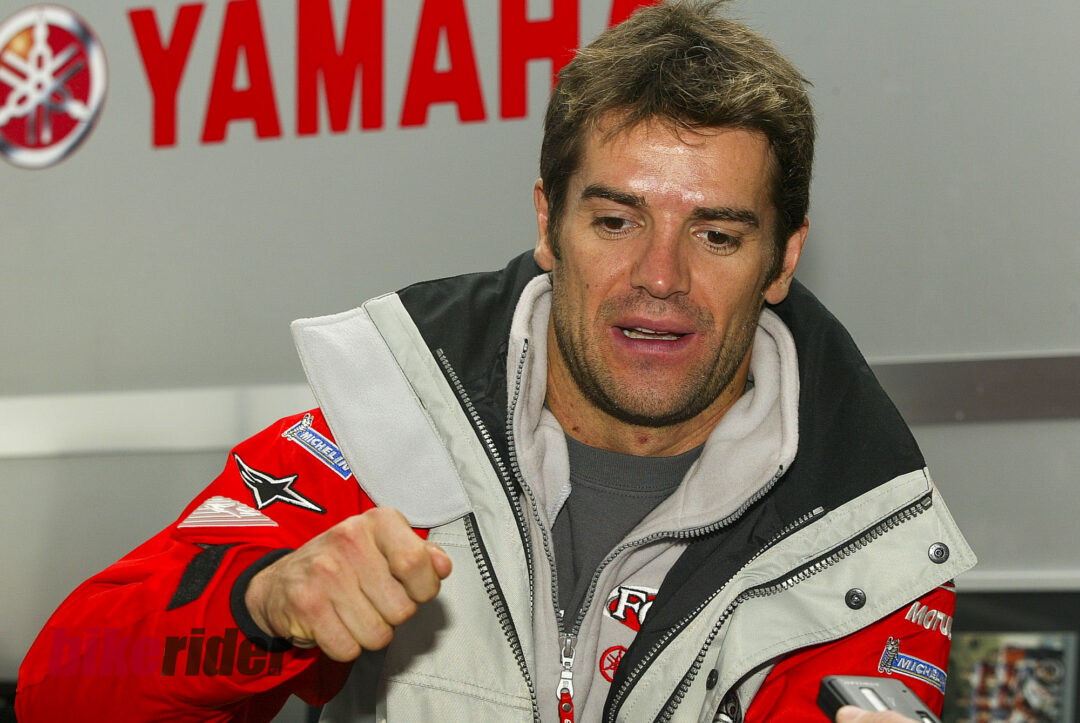
The opportunity to ride Carlos Checa’s 2003 bike at Valencia, immediately after the final race of the season, offered a chance to understand why.
A deceptively compact MotoGP bike
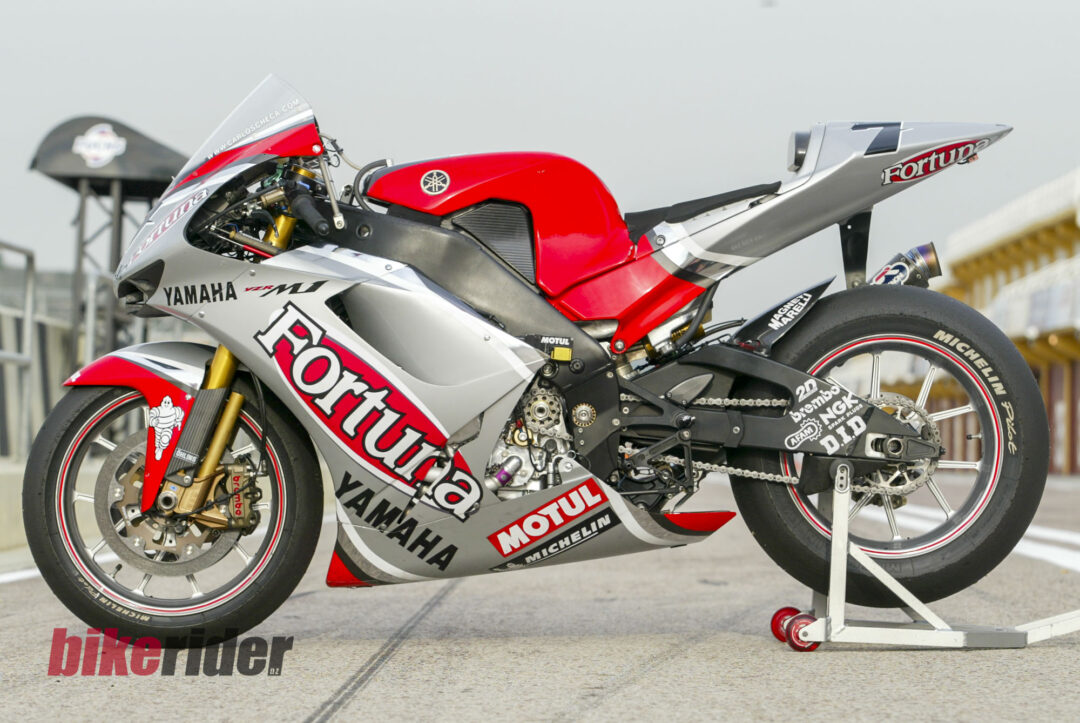
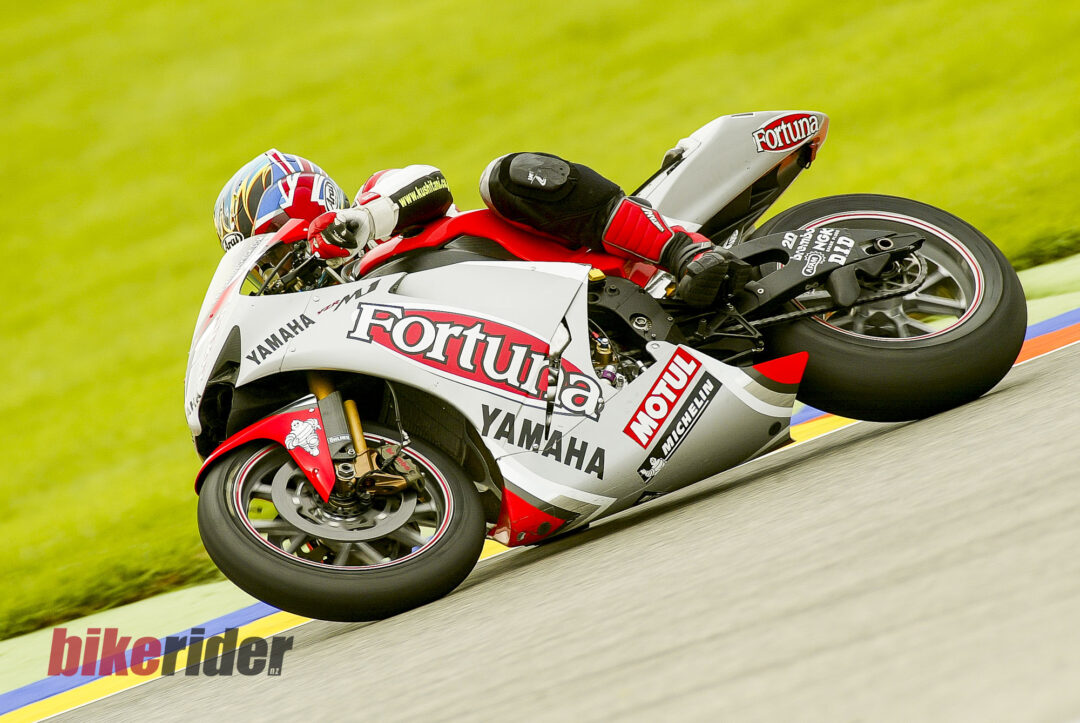
Hopping aboard the M1 in pitlane, it immediately felt more dainty than many of the other bikes of that era. That’s not an adjective you’d expect to use about a 240bhp MotoGP missile, but it was a fair description.
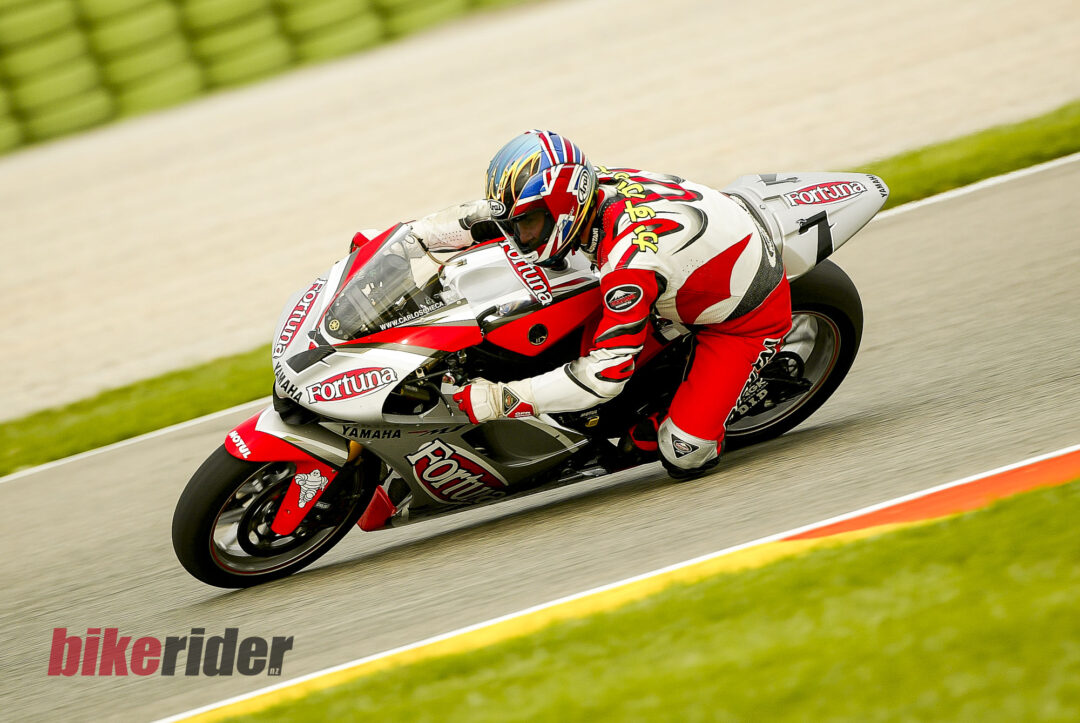
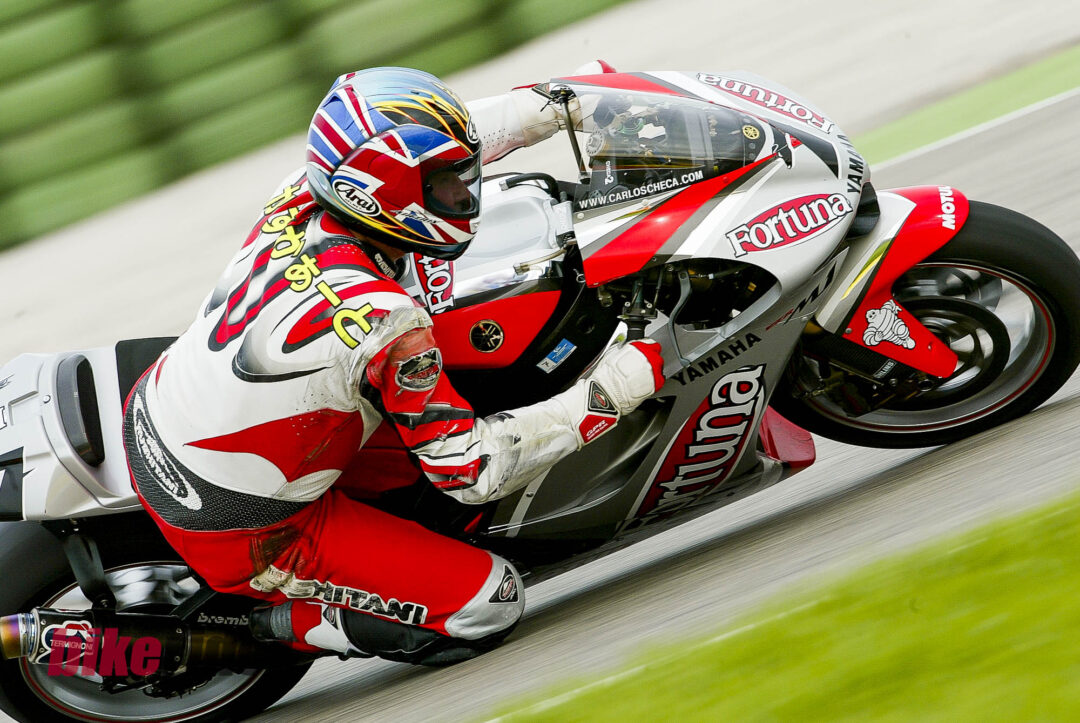
Out on track, the Yamaha steered really well, with quite responsive handling for such a powerful machine. It flicked easily from side to side and seemed ready to hold a high turn speed through medium and faster bends.
It felt very balanced and together, poised even.
Maybe too much so.
Back then, you didn’t see many Yamaha riders laying rubber out of turns in the same way as the Ducati and Honda riders. Whether that meant the M1 lacked the feel needed to push to the limit is harder to say, but it certainly gave that impression.
Freewheeling into corners
Where the Yamaha immediately stood apart was under braking.
There was absolutely no engine braking when you downshifted while braking hard at the end of Valencia’s pit straight. The electronic management system had been set up to disguise the fact it was a four-stroke, leaving the bike effectively freewheeling into turns.
At first, it was disconcerting.
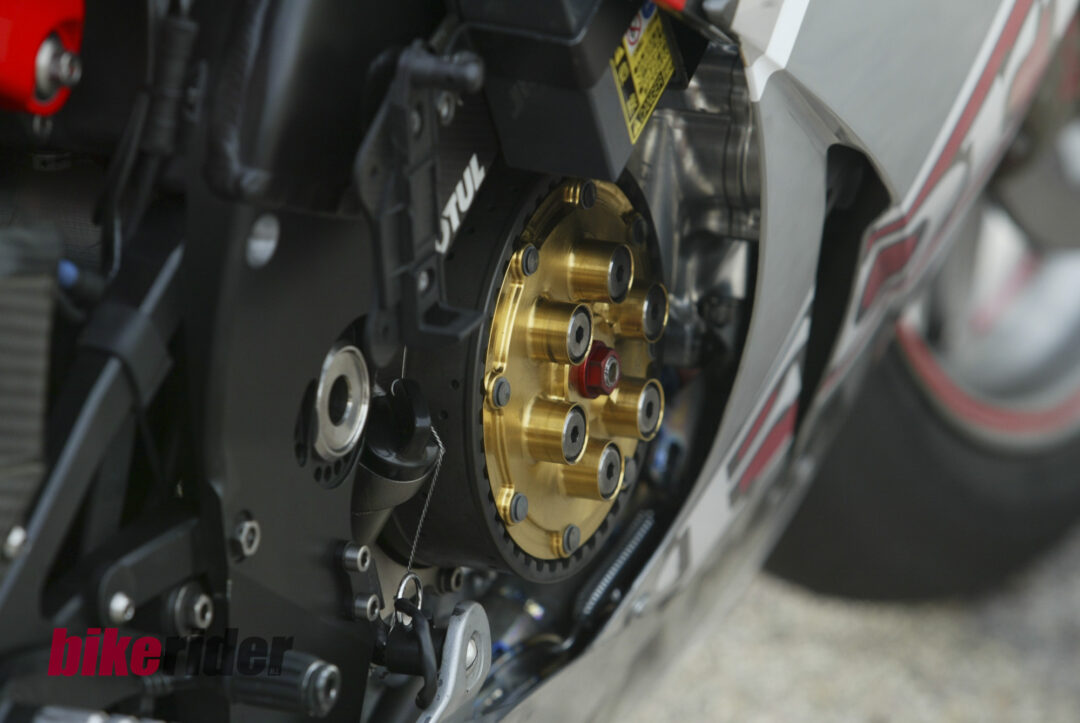
Downshifting required a completely different approach. You had to keep working the clutch lever while shifting down through the gears, and resist the instinct to blip the throttle — because the ECU was programmed to take care of that for you.
If you followed the habits of a lifetime and blipped anyway, it would only confuse the system.
Once you adapted, it worked well enough, eliminating rear wheel chatter and allowing you to focus on braking and hitting the apex. But it also created a sense of detachment, as though the rider was no longer entirely in charge.
Power where it mattered — and nowhere else
The engine itself delivered impressive performance, but only if you used it correctly.
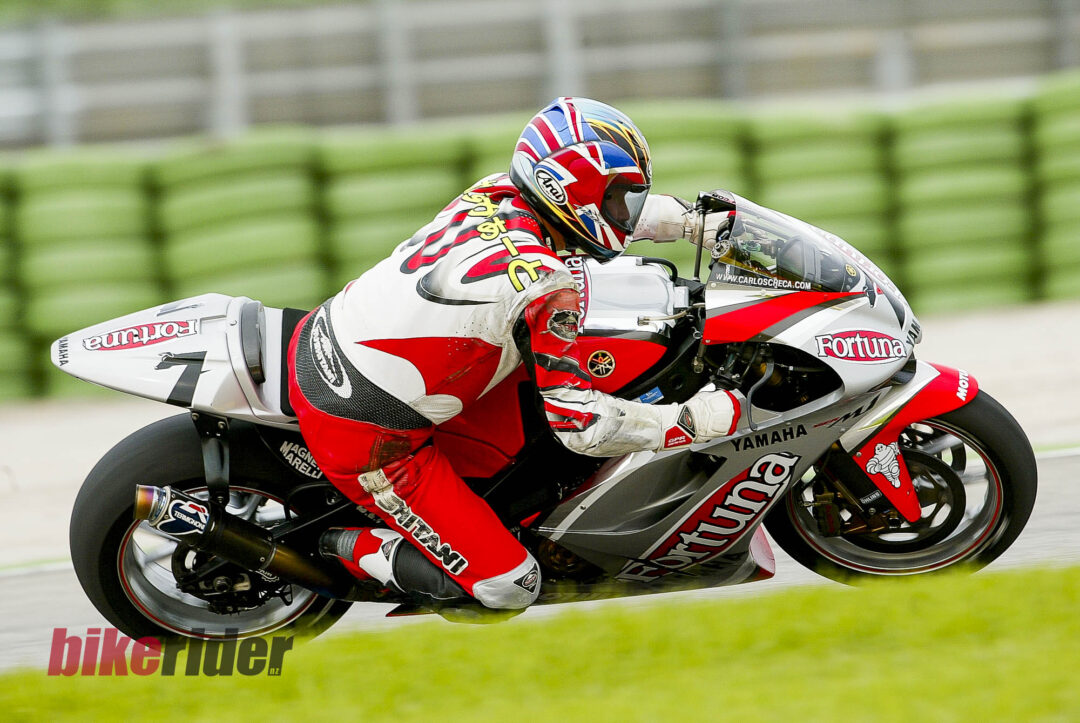
With an explosive delivery that lofted the front wheel with ease, it felt like every one of the claimed 240 horsepower was present — but only in the upper reaches of the rev range. Down low, it wasn’t as strong as other bikes of the era, especially the Honda and Ducati.
That meant keeping the engine revving hard all the time, flirting with the rev limiter to maintain drive.
There were also distinct steps in the power delivery, making it preferable to use higher revs to keep things smooth and predictable. The red shift lights would begin flashing at 14,000rpm, with peak power arriving just above that point.
Used properly, it accelerated hard and delivered impressive top-end performance.
Used poorly, it could catch you out.
A handful on the exit
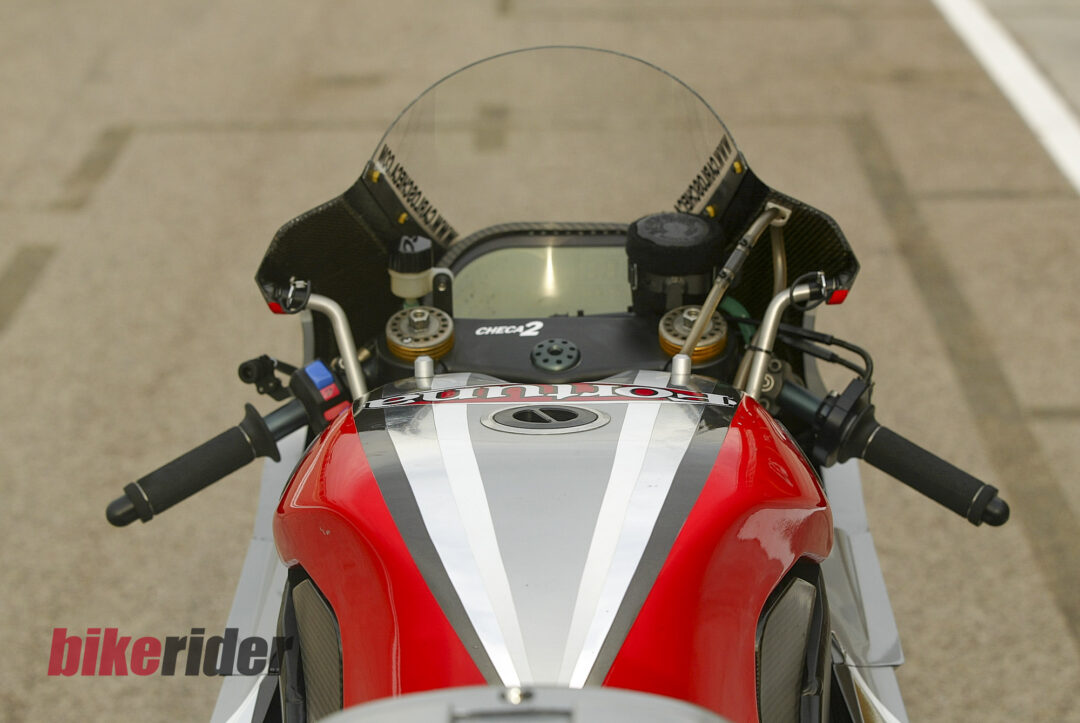
Exiting Valencia’s final corner highlighted both the strengths and weaknesses of the engine.
In the lower gears, the power was manageable, with traction control helping to keep things in check. But as the bike shifted up through the close-ratio gearbox, things became more dramatic.
By fourth gear, the front wheel would lift aggressively under acceleration, requiring careful throttle control to keep things pointed in the right direction. Backing off the throttle cost momentum, but pushing on demanded commitment.
It was exhilarating, but it also underlined how peaky the power delivery was.
Balanced, but not always confidence-inspiring
The Yamaha’s handling was undoubtedly one of its strengths.
It offered light steering and agile responses, with a balanced feel that inspired confidence through faster sections of track. The Öhlins suspension provided good feedback, and the bike felt composed when flowing through corners.
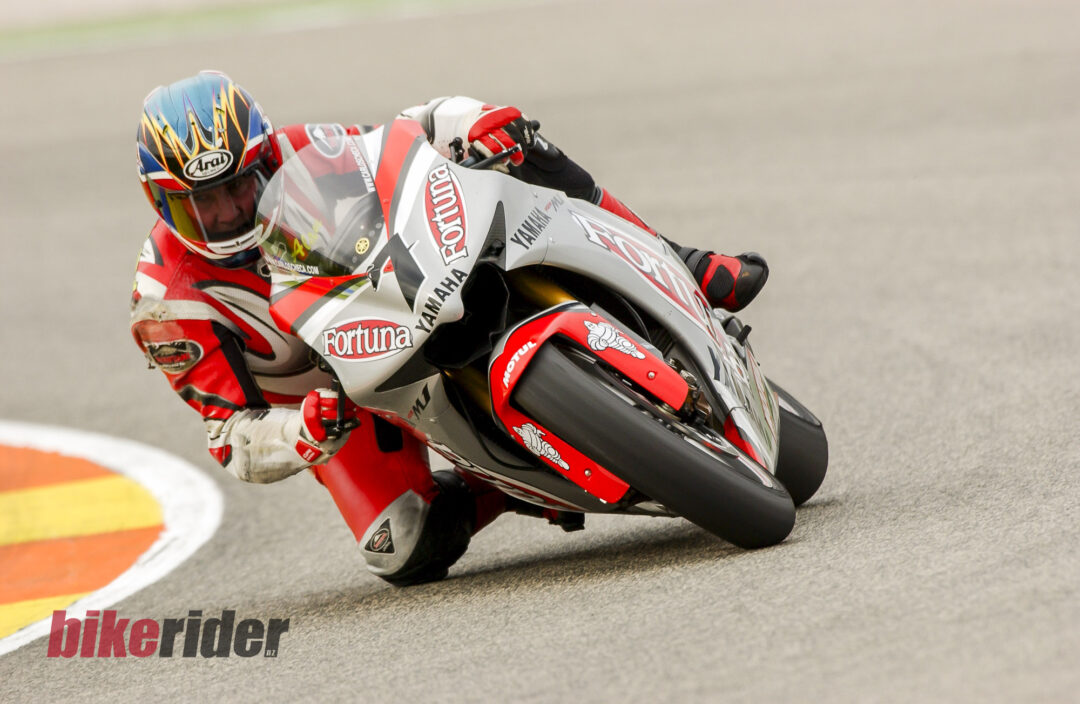
But in tighter turns, especially those requiring heavy trail braking, there was a flaw.
At the apex, just as you came off the brakes and began to accelerate, the front would suddenly feel like it wanted to fold. It wasn’t violent, but it was enough to unsettle the rider and make it difficult to push harder.
Combined with the unusual braking behaviour and peaky engine, it meant the M1 was a bike that demanded adaptation.
The thinking behind the M1
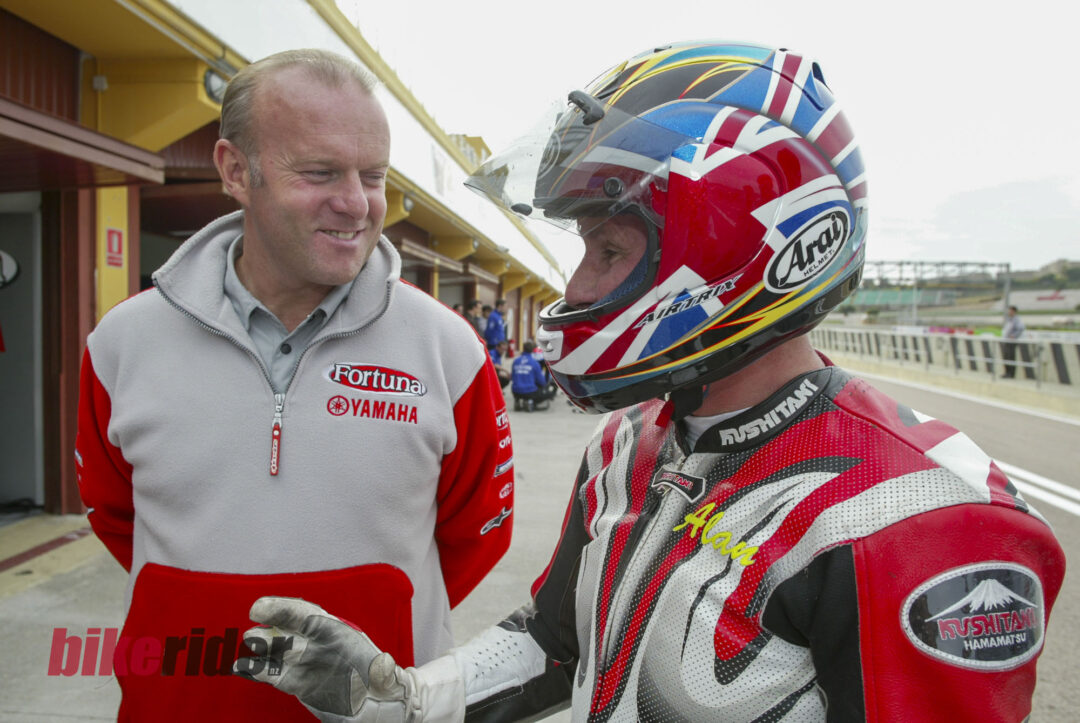
To understand why the bike behaved this way, it helps to look at the philosophy behind it, as explained by Yamaha’s MotoGP project leader, Ichiro Yoda.
Yamaha began work on the M1 project in 2000, focusing first on the engine before turning to the chassis. The decision to use an inline four-cylinder configuration was based on experience.
“We had a lot of knowledge about inline four-cylinder engines, so we chose this format. Some people thought it was for marketing reasons, but this is not true — we just believed it was the best option.”
The first M1 was effectively a YZR500 chassis fitted with a four-stroke engine, with its key feature being a short wheelbase combined with a long swingarm to improve traction. Centralisation of mass was a fundamental principle, aimed at delivering easy steering and predictable handling.
“The essence of the YZR-M1 concept was easy steering and centralisation of mass.”
Yamaha initially resisted going to full capacity, starting with an engine of around 920cc in order to prioritise compactness and efficiency. As development progressed, this was increased to 990cc, producing around 240bhp while remaining both light and narrow.
The chassis was designed with high vertical stiffness, but reduced lateral and torsional rigidity, allowing it to contribute to the suspension effect when the bike was leaned over.
Electronics were also a major focus, with traction control, engine maps and engine braking systems already in use.
One key system was the Idle Control System, which adjusted the throttle during deceleration to improve stability. However, it required riders to change their technique.
“The rider must not blip the throttle when downshifting, otherwise the system doesn’t work. You must learn again how to backshift.”
Looking ahead, Yoda saw electronics as the defining challenge.
“This will be the greatest challenge for all teams in coming years — to understand and develop electronic programs to help the rider control the bike.”
A nearly bike
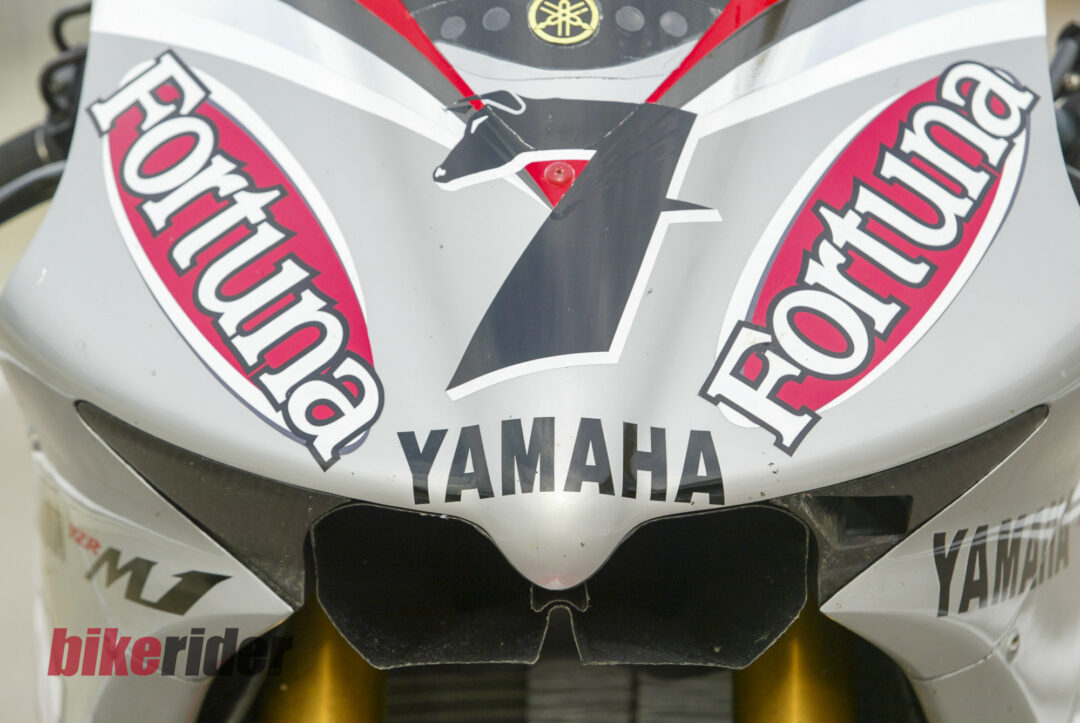
The more time you spent on the M1, the clearer its character became.
It was fast, well balanced, and packed with intelligent engineering. But it never quite came together as a complete package.
The electronics improved stability, but reduced feedback. The chassis offered agility, but not always confidence at the limit. The engine delivered strong peak power, but lacked the flexibility needed to make it fully usable.
It was, in many ways, a “nearly bike.”
The turning point
That was the machine Valentino Rossi inherited in 2004.
What followed was not a complete redesign, but a refinement of the same ideas. The engine gained a broader spread of power, the electronics were reworked to better support the rider, and the overall package became more intuitive to ride.
The foundations laid by Yoda and his team remained intact, but the execution changed.
And with that, the M1 became a race winner.
Why it still matters
Looking back now, the early M1 represents the starting point for everything Yamaha would do in MotoGP over the next two decades.
Its emphasis on handling, balance, and rider-friendly characteristics became defining traits of the brand’s approach, even as rivals pursued different solutions.
Now, with Yamaha moving towards a V4 configuration, that long-standing philosophy is being re-evaluated.
But the roots of that philosophy can be traced directly back to this machine — a bike that may not have been perfect, but one that set the direction for everything that followed.
M1 Matters: Ichiro Yoda on the Birth of Yamaha’s MotoGP Machine
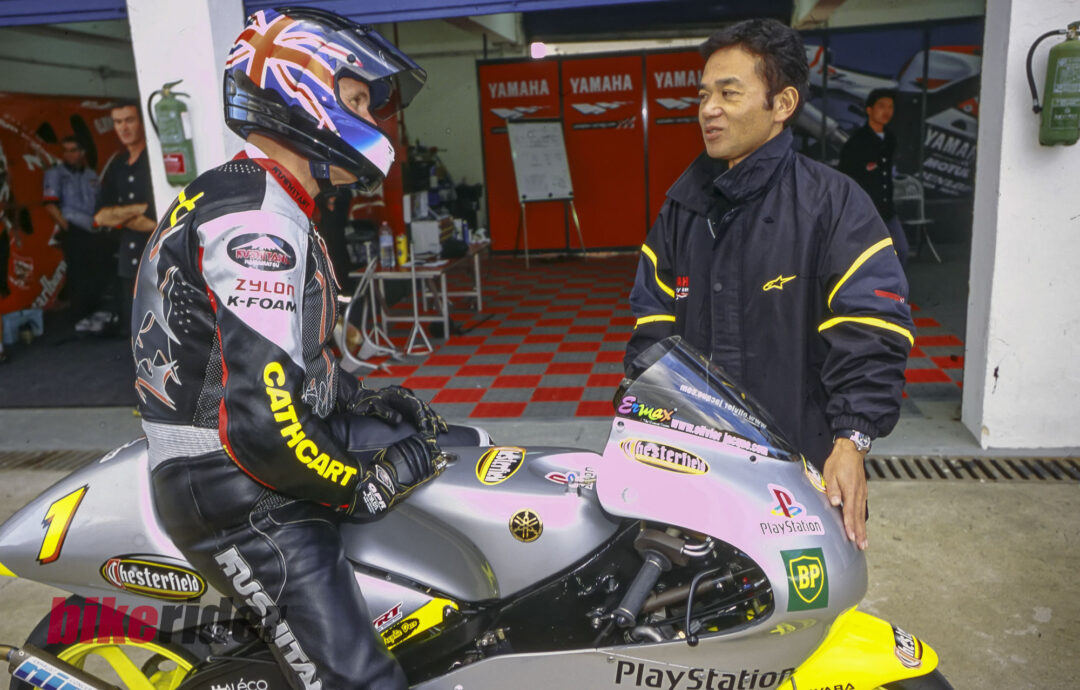
Japanese engineer Ichiro Yoda helped shape modern road racing from the inside, first at Yamaha through the birth of MotoGP, then at Kawasaki during its World Superbike dominance.
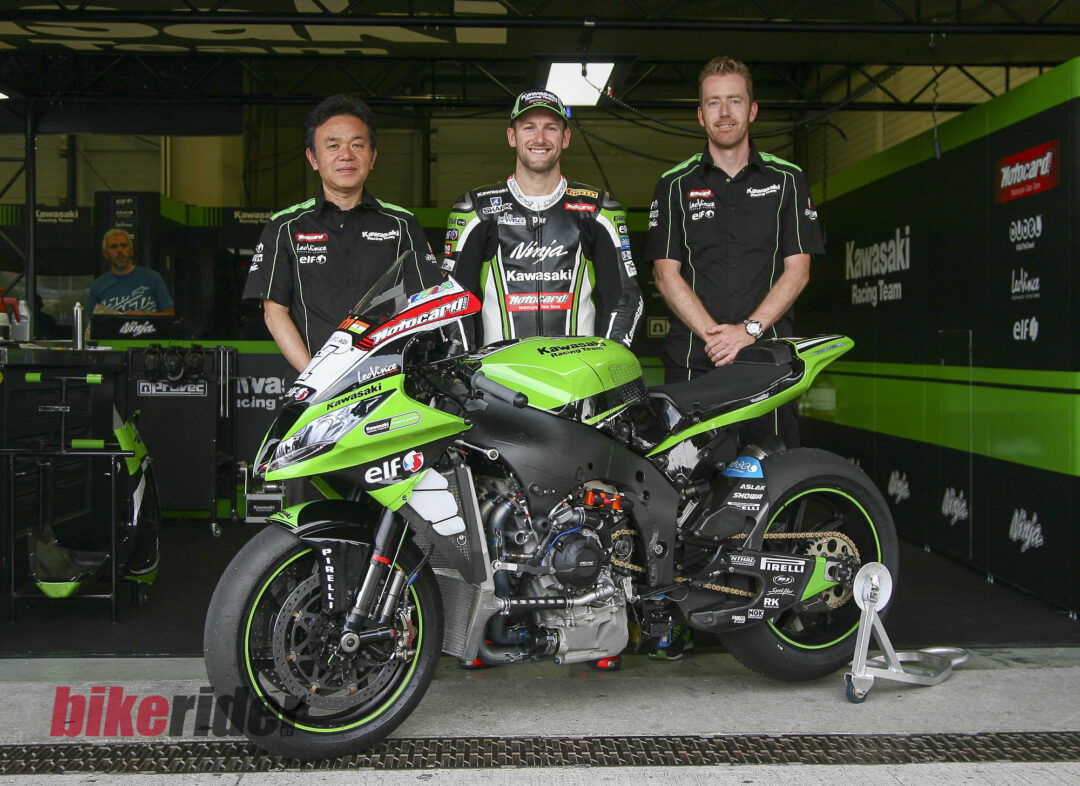
After Kawasaki withdrew from MotoGP at the end of 2008, Yoda was appointed Superbike Project Director, a move that paid off with the all-new ZX-10R introduced in 2011. Tom Sykes would win the World Superbike title in 2013, before Jonathan Rea added six more from 2015 onwards.
But it was at Yamaha where Yoda’s influence on Grand Prix racing was first made.
Over a 20-year period he was involved in the development of the multi-title winning YZR500s of Lawson and Rainey, as well as the 250GP World Championship-winning V-twins of Lavado and Jacque. Midway through 2001, just nine months before the first MotoGP race at Suzuka, he was appointed to lead the YZR-M1 project.
It was a fitting role. His first job at Yamaha had been working on the company’s first four-stroke Grand Prix engine — a liquid-cooled 500cc V4 that never raced, but laid the groundwork for future development.
Choosing the inline four
“Our team began working on the YZR-M1 project early in 2000, first on the engine, with the chassis coming later. I joined in 2001, by which time the basic format was established.
“Our reason for choosing four cylinders was simple. Like a man looking for oil, you use your experience to know where to dig. We had a lot of knowledge about inline four-cylinder engines, so we chose this format. Some people thought it was for marketing reasons, but this is not true — we just believed it was the best option.
“We briefly considered five or six-cylinder engines, but dismissed this idea due to their extra weight.”
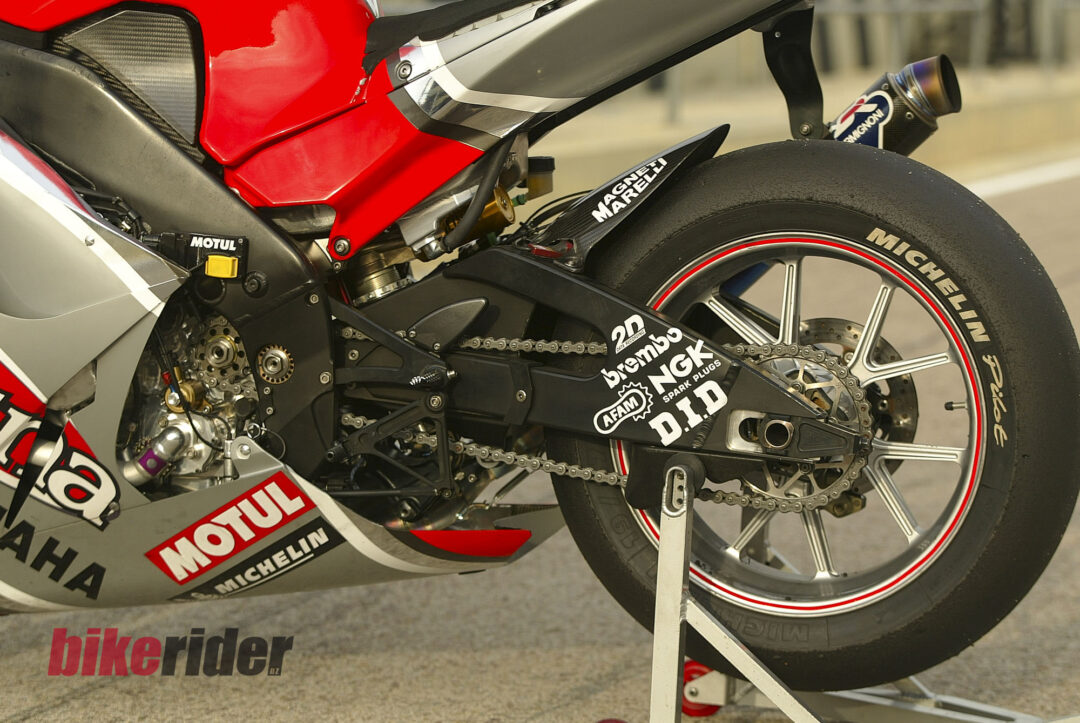
The first M1 was effectively a YZR500 chassis fitted with a four-stroke engine, but with a clear focus on handling.
“Its most important feature was a short wheelbase with a long swingarm for good traction, made possible only by the inline motor. This is the essence of the YZR-M1 concept, concentrating on easy steering and centralisation of mass.”
Building a chassis around feel
Yoda placed particular emphasis on how the chassis behaved under load.
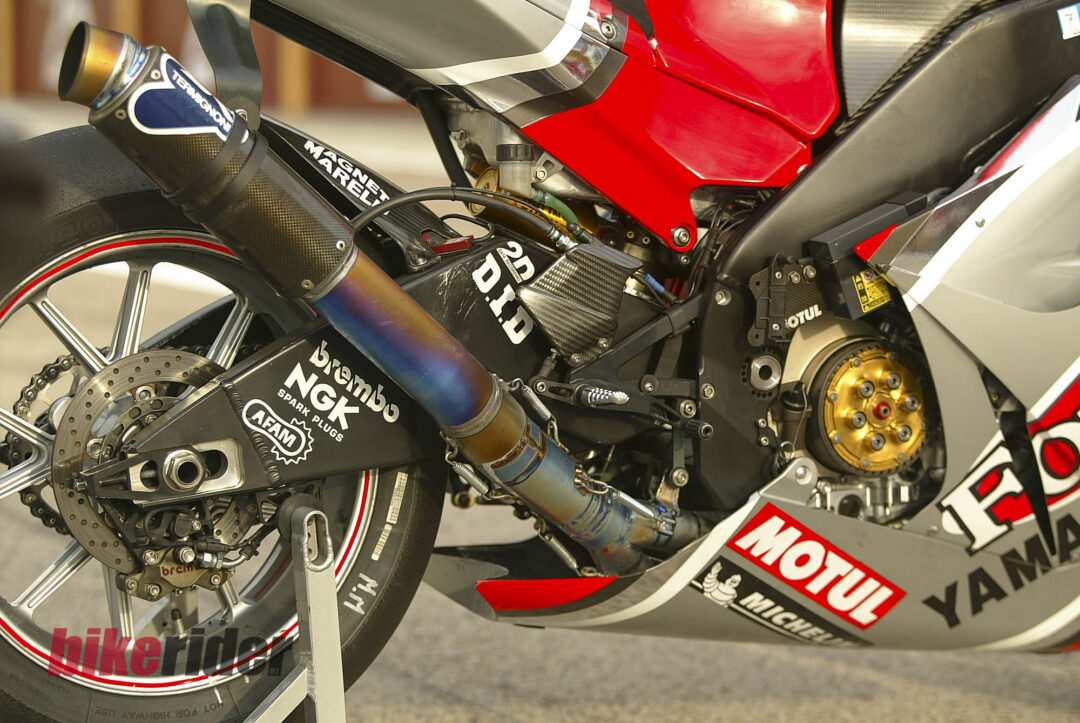
“The chassis was designed to have high vertical stiffness, but less lateral and torsional stiffness. Any bike’s suspension only moves in a vertical direction — up and down. So when the bike is banked over in a turn, the frame must also act as suspension. That is why we focused very much on this element.”
It was a philosophy that would define the M1’s character — prioritising feel and balance over outright rigidity.
Small, light, and efficient
At the beginning, Yamaha deliberately avoided going to full capacity.
“At the beginning the engine was around 920cc. Our concept was to make it small and narrow, with a good power-to-weight ratio… We didn’t need full capacity. It was more important to reduce size and weight.”
Fuel consumption also played a role, particularly with tank limits already in place.
As development progressed, and efficiency improved, the engine grew to 990cc.
“By the middle of 2002 we had around 240bhp… the full-capacity engine was still very light — only 51kg — and narrower and shorter than the R7 Superbike engine.”
This compact design allowed Yamaha to build a smaller, tighter chassis around it.
Engineering details that mattered — and those that didn’t
One of the M1’s more talked-about features was its reverse-rotating crankshaft, but Yoda was quick to downplay its significance.
“Crankshaft rotation does affect handling, but less than people think. Suspension, spring balance and rigidity are more important. The total balance of the bike matters most.”
The engine itself featured five valves per cylinder, something Yamaha had long experience with.
“The valves can be smaller and lighter, and we could still reach 15,500rpm without problems.”
Durability, however, was always a compromise in racing.
Certain components had limited lifespans — cam chains, pistons and valves required regular replacement — while others, such as the crankshaft and conrods, lasted significantly longer.
The move to fuel injection
Early versions of the M1 ran carburettors.
“We used carburettors at first for reliability and easy adjustment, which helped development. But they are not good for fuel consumption, so we changed to injection.”
It was a necessary step as performance increased and efficiency became more critical.
Finding balance on track
Handling issues in 2002 led to further development work.
“We had some understeer, especially under acceleration. This came from weight transfer, so we experimented with the engine position to change weight distribution.
“It was trial and error — but we found the right balance. Our aim was to reduce the polar moment, and bring the centre of mass and gravity closer together.”
The result was improved traction and more neutral handling, allowing riders to brake later and accelerate earlier.
Rethinking aerodynamics
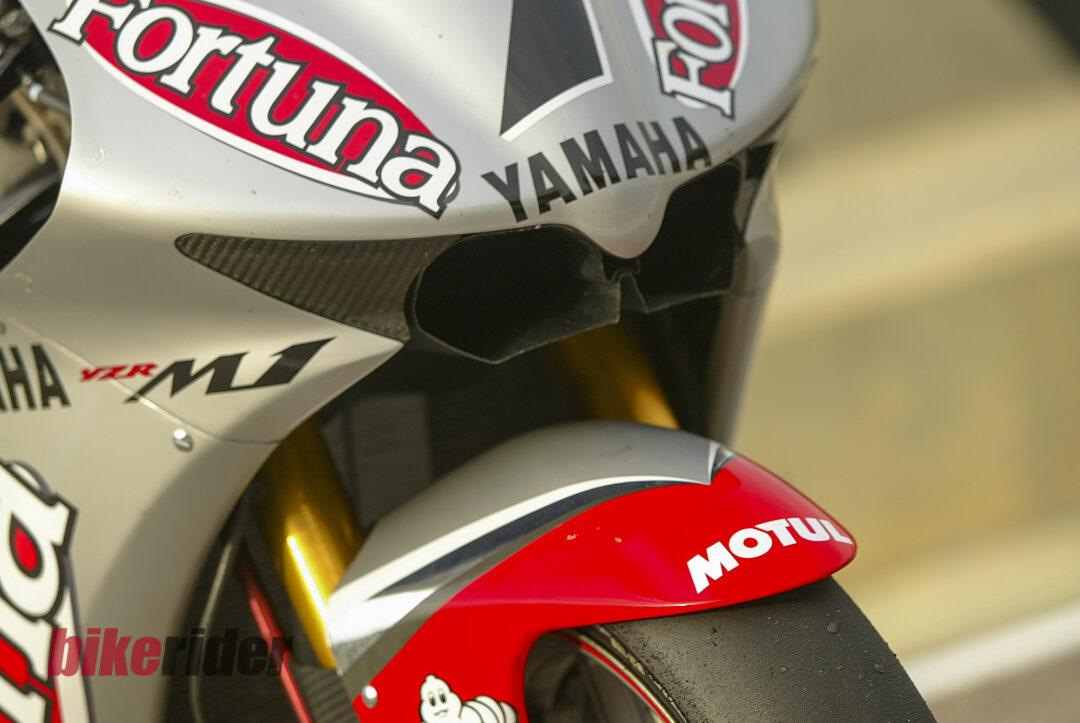
Aerodynamics followed a similar path of refinement.
“At first we thought top speed was most important. But then we realised easy change of direction was the key. So we made the fairing more compact, reducing drag in crosswinds without hurting straight-line performance.”
Electronics: the next frontier
Even at this early stage, electronics were becoming central to performance.
“We had traction control, different engine maps and control of engine braking.”
One key system was the Idle Control System, which adjusted throttle input during deceleration.
“But the rider must adapt — he must not blip the throttle when downshifting, otherwise the system doesn’t work. You must learn again how to backshift.”
Looking ahead, Yoda saw electronics as the defining challenge for MotoGP.
“This will be the greatest challenge for all teams in coming years — to understand and develop electronic programs to help the rider control the bike, as well as the ones we have now to control the engine.”
He wasn’t wrong.