


• Active noise cancellation claims to reduce wind noise and fatigue
• Fully integrated Sena 60S intercom delivers excellent sound and usability
• Front spotlight and rear brake lights add to the high spec helmet’s features
What if you could actually make your ride quieter? With the run of bad weather recently, I ended up cramming a heap of riding into a short window — and the Sena Phantom ANC completely changed the experience.
A different kind of helmet
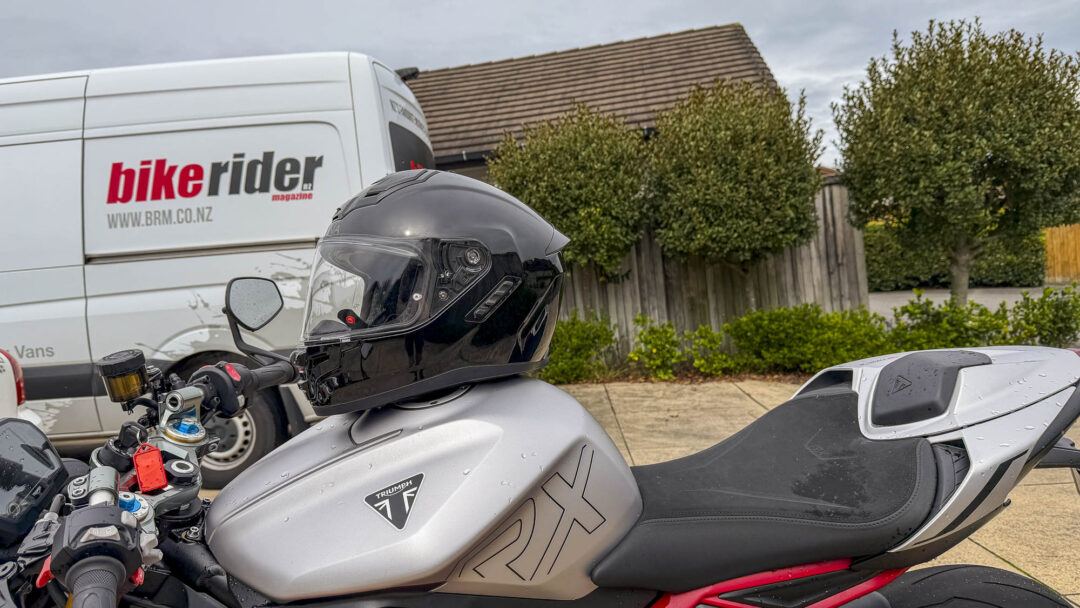
Every now and then, something comes along that makes you question the way things have always been done. The Sena Phantom ANC is one of those products.
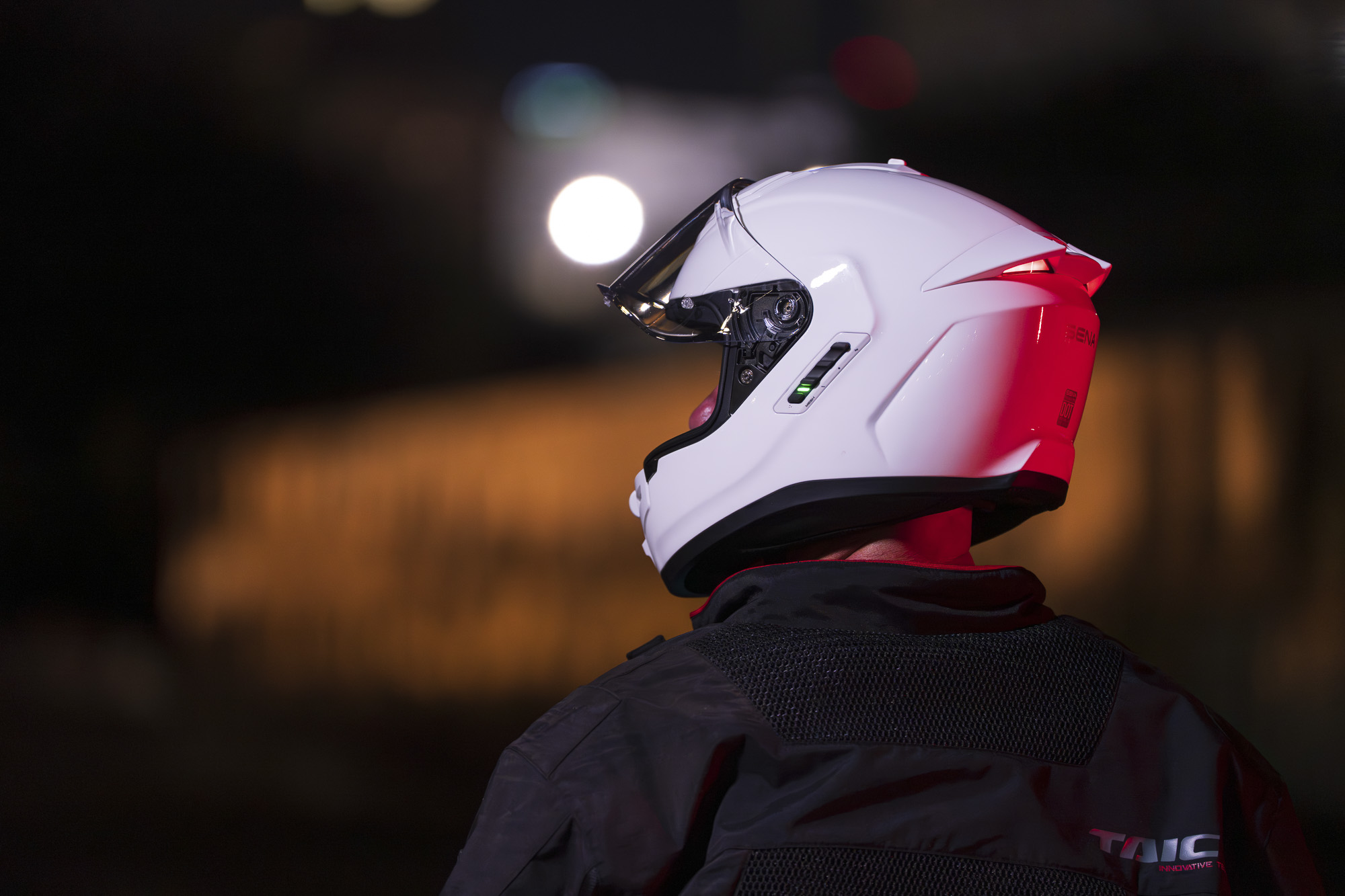
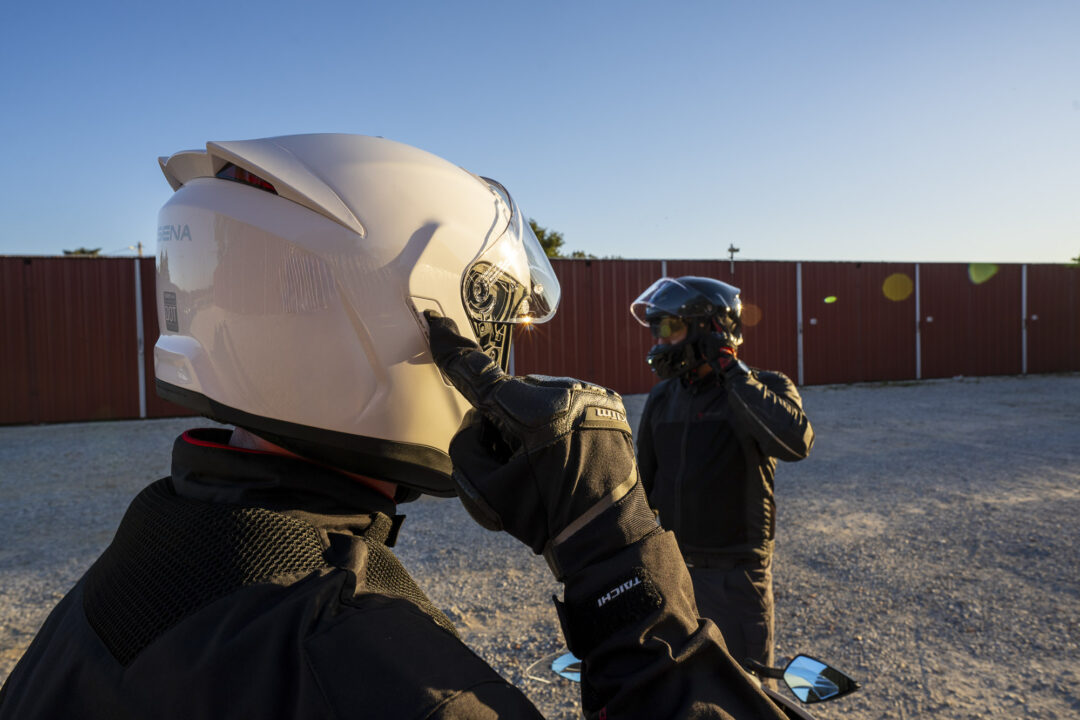
At first glance, it looks like a premium full-face helmet with a clean, modern design. Look closer, though, and you realise this isn’t a helmet with comms bolted on afterwards. It’s been designed as a complete system from the start — speakers, microphones, electronics and all — built into the structure rather than added as an afterthought.
That changes the experience more than you might expect.
There are no modules hanging off the side, no wiring tucked into liners, no compromises in speaker placement. It feels tidy, cohesive, and, importantly, like everything is working together rather than fighting for space.
MORE ARTICLES
The quietest ride?
The headline feature is active noise cancellation, and it’s the reason you’d consider the Phantom in the first place.
On the road, the effect is immediately noticeable. In clean air, especially on a bike with decent wind protection, the level of quiet is unlike anything you’ll have experienced in a conventional helmet. It’s not complete silence — that’s not the goal — but the harsh edge of wind noise is softened, and the low-frequency drone that wears you down on longer rides is significantly reduced. Sena claims a reduction of as much as 20 dB thanks to the ANC and premium interior of the Phantom, and with wind noise easily punishing a rider’s ears at 90dB when travelling at 100km/h, that 20dB drop is massive.
That’s where the real benefit lies. Less fatigue. Less constant background noise. More space in your head, if that makes sense. And that’s before you consider hearing damage, with tinnitus being a real issue for riders who haven’t used earplugs when they ride.
It’s not perfect. In turbulent air, the effect is reduced, and you’re still very much aware you’re on a motorcycle. But once you’ve ridden with it for a while, switching the system on and off – which you can do with one touch – instantly reveals just how good the noise cancelling is. And going back to a normal helmet really does make you realise just how much noise you’ve been putting up with.
Don’t think of a set of noise-cancelling headphones that block all noise. Instead, the Sena active system works on cancelling the harmful wind noise while still letting the other noises we want to hear as motorcycle riders still come through, so you won’t be surprised by a car, ambulance or police car that you didn’t hear approaching. All that sound still makes its way through.
Built around sound
Because Sena has designed the helmet around their top-of-the-line 60S audio/intercom from the outset, the result is better than anything you’ll get from a bolt-on system.
The speakers are properly integrated, so you don’t get pressure points or awkward positioning, and the sound quality reflects that. Music is clear and full, comms are sharp, and voice pickup is excellent even at speed. This is made even better with the ANC as I didn’t feel the need to crank the sound levels up to maximum just to hear it over the wind noise as is the case usually. Instead, I could keep the volume level moderate and still be able to hear everything while I was riding.
If you ride in a group or spend time on the phone while riding, this is where the Phantom really starts to make a lot of sense. Everything works fuss-free, especially since the Phantom features the latest Sena intercom with Mesh 3.0 and WAVE. The speakers are quality items, so the sound is good, and there are even over-the-air updates to keep the system current.
On the move
Out on the road, the Phantom feels more conventional than you might expect.
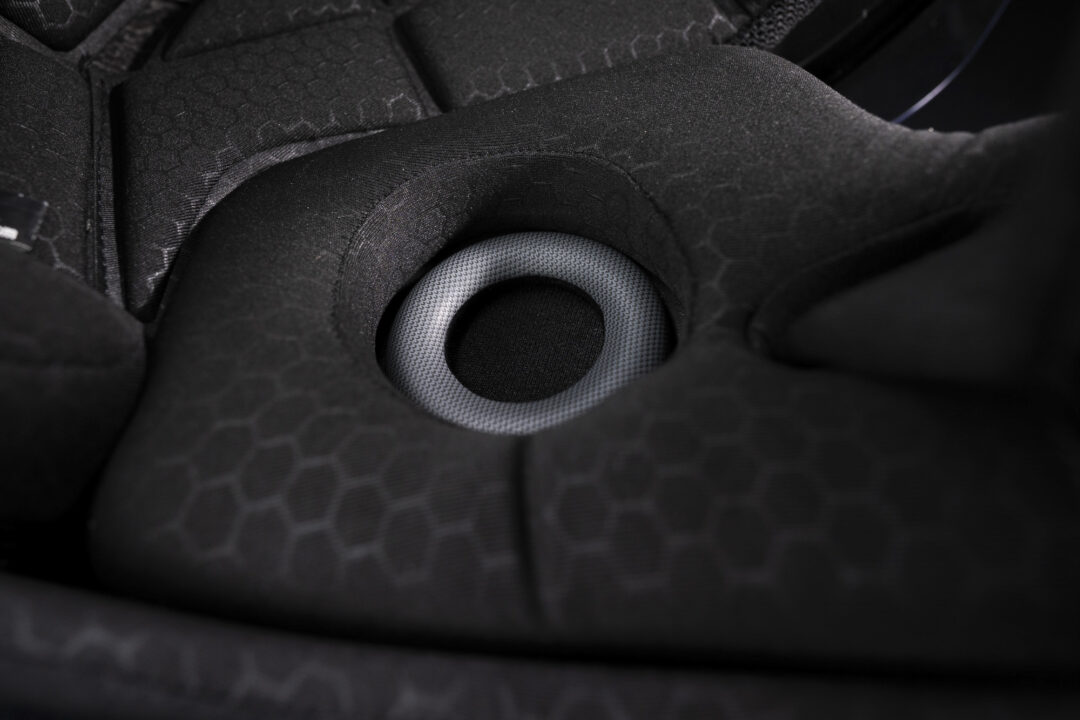
The fit is snug, which is to help cut the wind noise, yet once on it sat well without any obvious pressure points. It’s not the most luxurious interior you’ll find at this price point, but it’s comfortable enough for long trips. Plus, the interior is removable and washable, so you can keep it fresh after long stints behind the visor.
The weight is reasonable (1720g) considering what’s packed inside, and the balance is good. Again, it’s a better option than having an intercom system clipped on one side. And you’re not constantly aware of the electronics, which is exactly how it should be.
Ventilation seemed to be ample, with a vent on the chin, two in the brow and one in the centre, with exhaust ports at the back. It’s not going to be as cool as some other helmets, I reckon, simply because there is ample lining on the inside to seal the helmet from wind noise. But for touring in NZ in summertime, I think it will be more than suitable. The vents are all easily operable with gloves on, which is nice to see.
Living with it
Once you get used to the system, the Phantom is easy enough to live with.
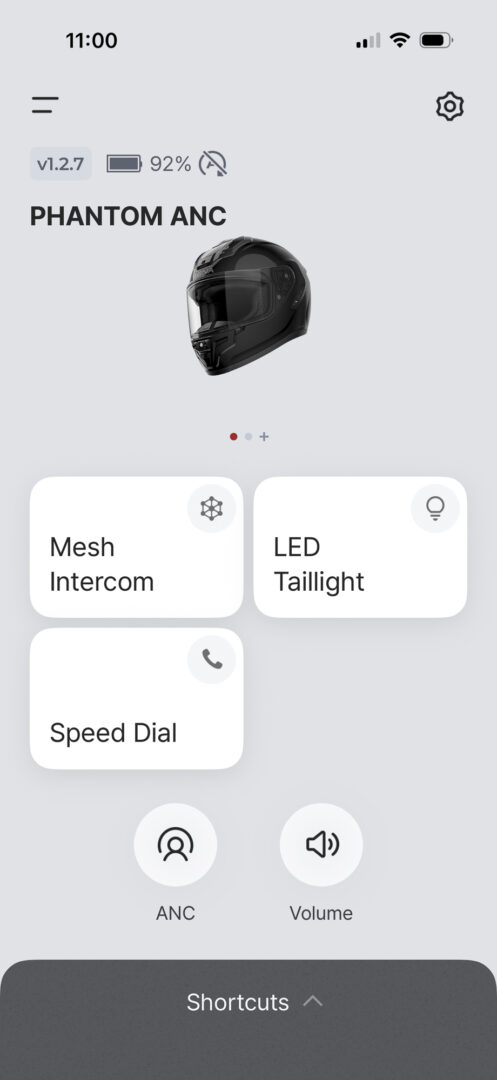
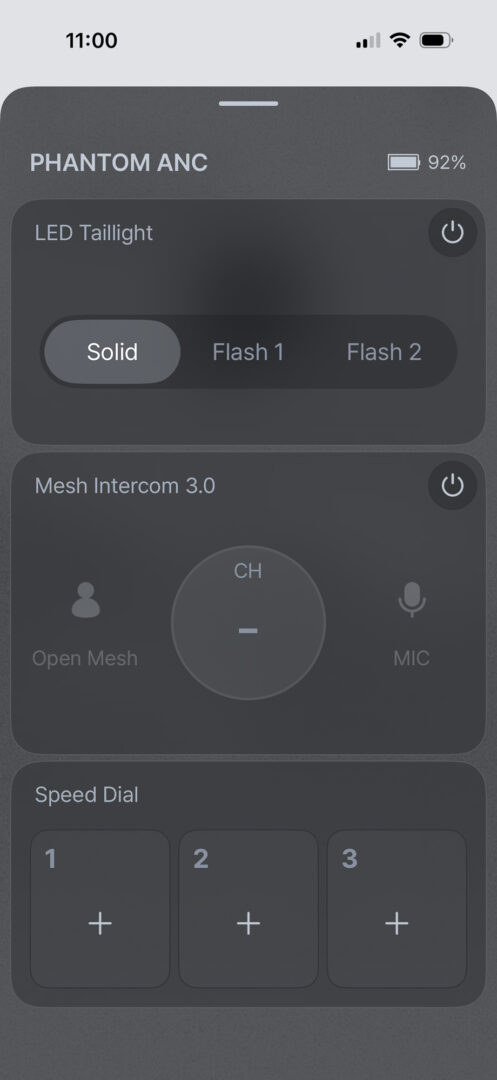
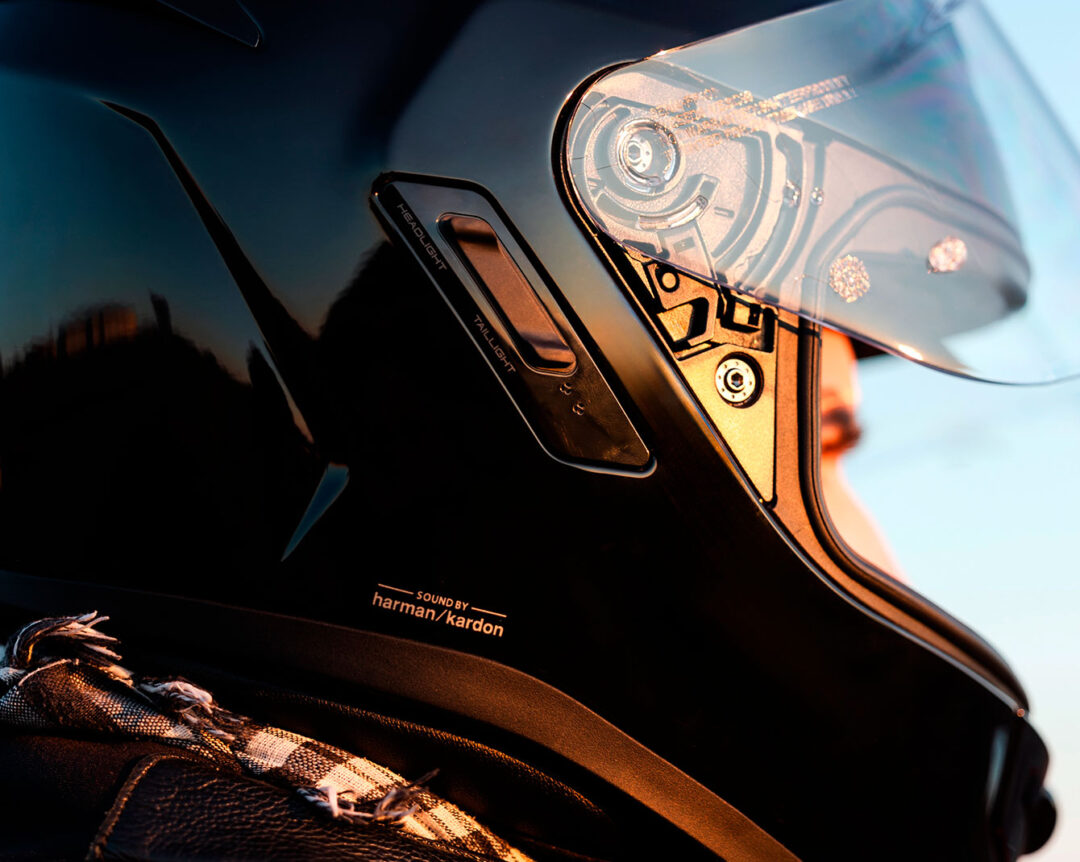
The controls take a little familiarisation, but there’s a lot going on, so it pays to work it out before putting the lid on and riding away. Most functions can also be managed through the app, which simplifies things. And once it’s set up, you tend to leave it alone and just ride. The buttons can be a little tricky to find at first, with the individual buttons not as pronounced as they could be. But then, having something protruding from the side of the helmet is what Sena is trying to get away from with the Phantom, so the fact that the buttons are more streamlined is understandable.
Battery life is strong – Sena claims 35 hours of talk time! – so easily enough to cover long days in the saddle, and the connectivity is reliable. It feels like a mature system rather than something still finding its feet.
And There’s More
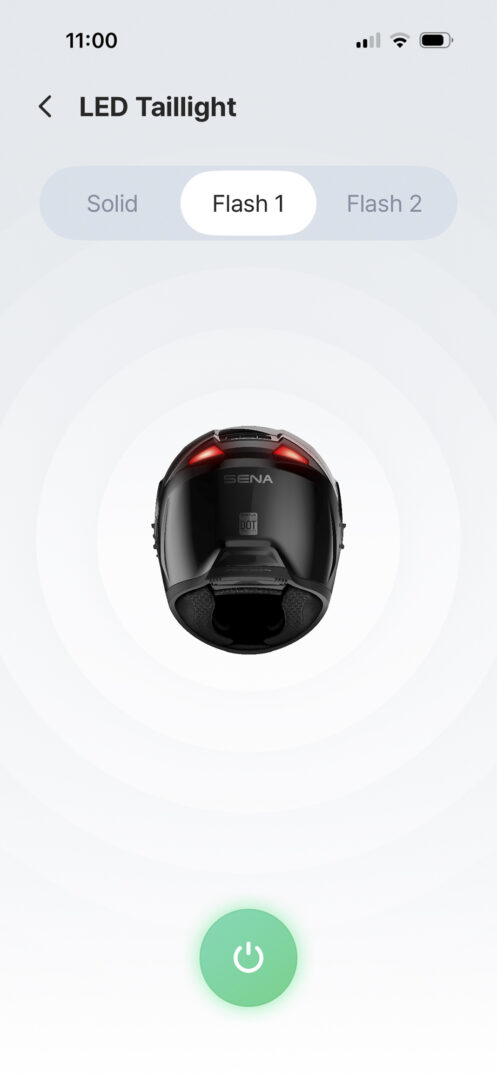
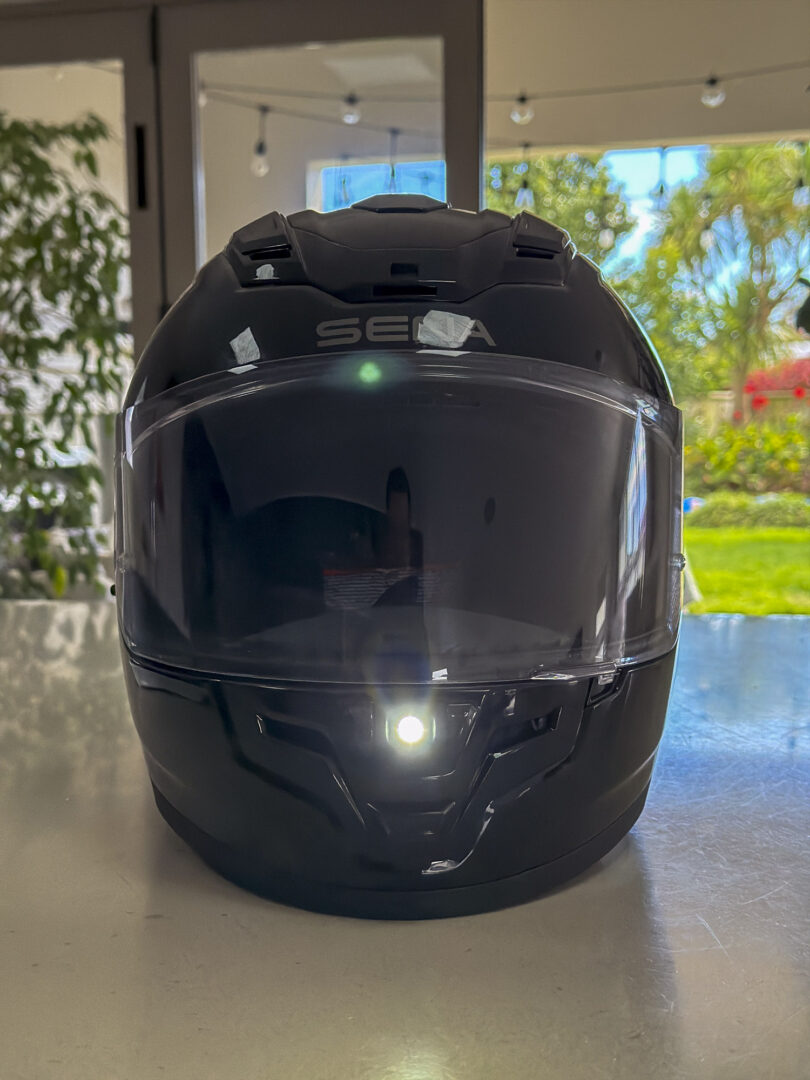
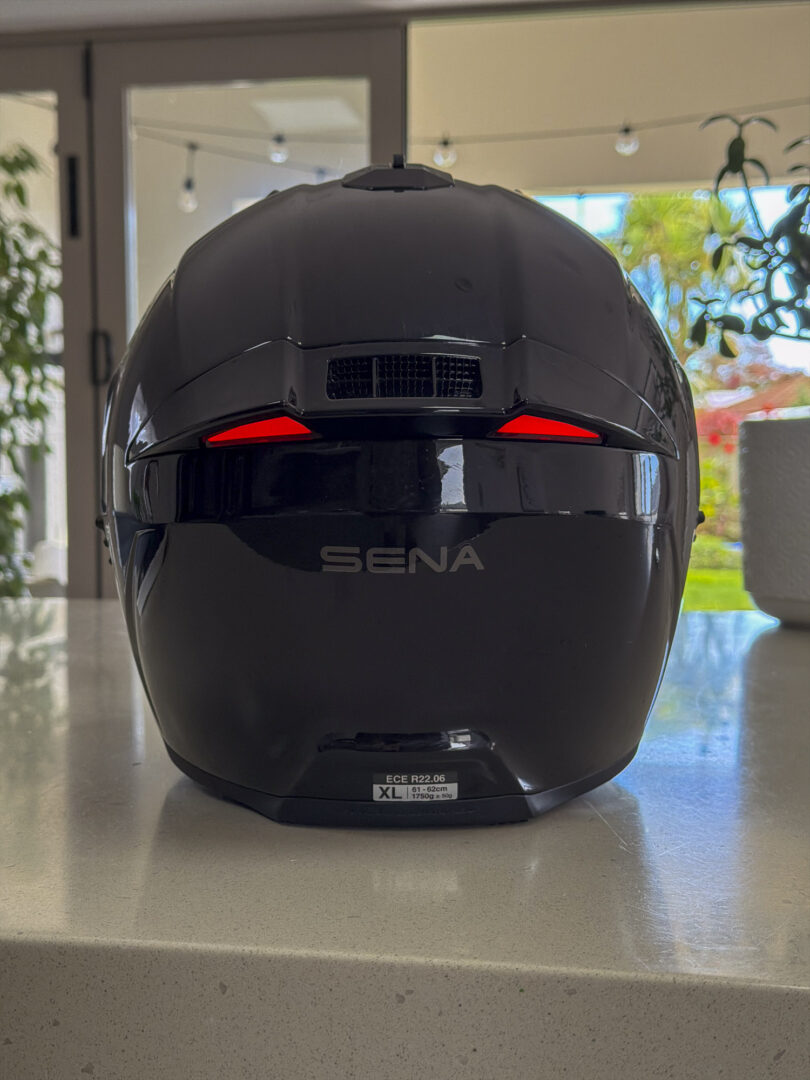
There are some nice touches, too, like the integrated brake light, which sounds gimmicky until you start thinking about visibility in traffic. You can either switch it on via the button on the side or in the app, and there are three options to choose from: solid or two flashing. The helmet also detects when you’re braking or heavily decelerating, illuminating the rear red lights in the same way you see high-level brake lights on cars. If you ride at night or in gloomy conditions, there is no doubt that this is a significant safety aid.
There’s also a spotlight on the front, which is operated via another button on the right side of the helmet. If you live or have to park somewhere that is unlit, this will surely help finding the lock to put your key in. And if you use a disc lock or something similar, I can see this being a great help to find the keyhole rather than struggling holding your phone with the torch on in one hand while manipulate the lock and key in the other.
There’s also voice activation available, so you can use ‘Hey, Siri’ or ‘Hey Google’ to communicate with your phone, answer or reject calls hands-free, and you can even say ‘Hey, Sena’ and give prompts like turn the volume up or down. All very clever stuff, although commonplace on top-line intercoms.
When I received the helmet, it came with a clear visor and also included a Pinlock, which will make sure there’s no steaming up when riding in wet weather. And while there’s an internal drop-down visor, I prefer riding with a tinted visor in summer, which is already available from the importer. So if you’re the same, make sure to speak to your dealer and get one.
The bigger picture
What Sena has done with the Phantom ANC is rethink the role of a helmet.
I reckon fit is more critical here than usual, as it needs to be snug to keep the wind noise out, so you’ll definitely want to try one on at a dealer before committing. And because everything is integrated, you don’t have the flexibility of swapping components around. So you need to be happy with the Sena 60S intercom, which really is the flagship.
The real key with the new Phantom ANC is that instead of it being a passive piece of safety gear with add-ons, it becomes part of the riding experience in a much more active way. The reduction in noise alone changes how a ride feels, particularly over distance. But the premium intercom and sound quality also make this a seriously good helmet.
Yep, the Phantom isn’t about chasing outright performance or shaving tenths on a track day. It’s about comfort, clarity, and reducing the mental load of riding. And in that context, it works.
For those who spend long hours in the saddle, who use comms regularly, and who are starting to notice just how tiring wind noise can be, the Phantom makes a strong case for itself.
Because once you’ve experienced a quieter ride, it’s hard to go back.
For more info and where to find your local Sena dealer, head to Bits4Bikes.
And check out the video review below on Bike Rider TV.