



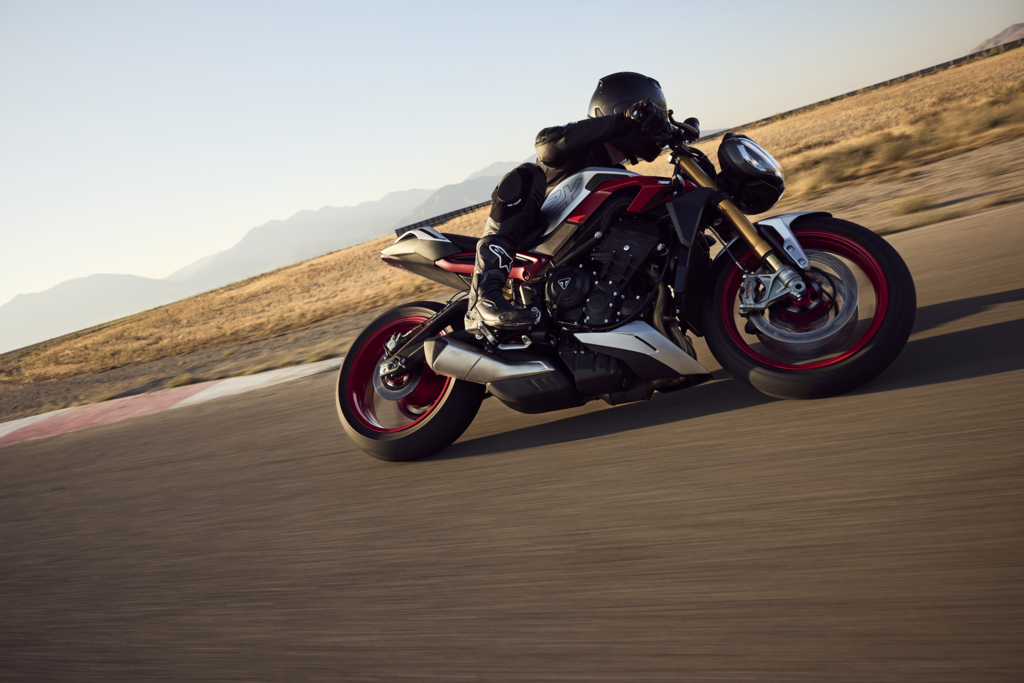
Triumph Motorcycles has unveiled a new-generation race engine that will power the Moto2 World Championship from 2027, bringing more power, a lighter construction and extensive changes to the engine’s internal components.
The new three-cylinder powerplant is expected to deliver around six per cent more peak power than the current Moto2 engine. Triumph has focused heavily on improving airflow into the cylinders, with the engine featuring a completely redesigned cylinder head, low-inertia valvetrain, higher-flow ports and a revised combustion chamber.
The changes allow for a higher compression ratio and are designed to deliver stronger torque throughout the rev range. Triumph has also redesigned the crankcases and other internal components to cope with the additional power and torque. Despite the performance increase, the new engine is claimed to be 2kg lighter than the current unit. Triumph has yet to reveal the engine’s exact specifications, with full technical details expected to be announced at a later date.
New engine, new Moto2 chassis
The arrival of the new engine will have implications beyond the powertrain, with Moto2 chassis manufacturers required to develop completely new motorcycles for 2027.
In particular, changes will be required to the engine mounting points and air intake positioning. Triumph says it has spent the past 12 months working closely with chassis manufacturers, providing the technical information needed to prepare for the new engine.
The updated engines will soon be made available to Moto2 teams, with private testing already underway. Triumph expects the new powerplant to make its first on-track appearance later this year before being introduced across the Moto2 grid in 2027. Triumph has been the exclusive engine supplier for Moto2 since 2019, replacing Honda after the 2018 season. The current Moto2 field uses a 765cc three-cylinder engine derived from the company’s Street Triple RS road bike.
MORE ARTICLES

The manufacturer has accumulated extensive experience during its time in the championship, collecting 1,926,132km of racing data alongside feedback from riders and teams. That information has helped shape the development of the new engine as Triumph looks to increase performance while maintaining the reliability required for Grand Prix racing.
Triumph and MotoGP have also extended their Moto2 partnership through 2029, ensuring the British manufacturer will remain the championship’s sole engine supplier for several more seasons.