

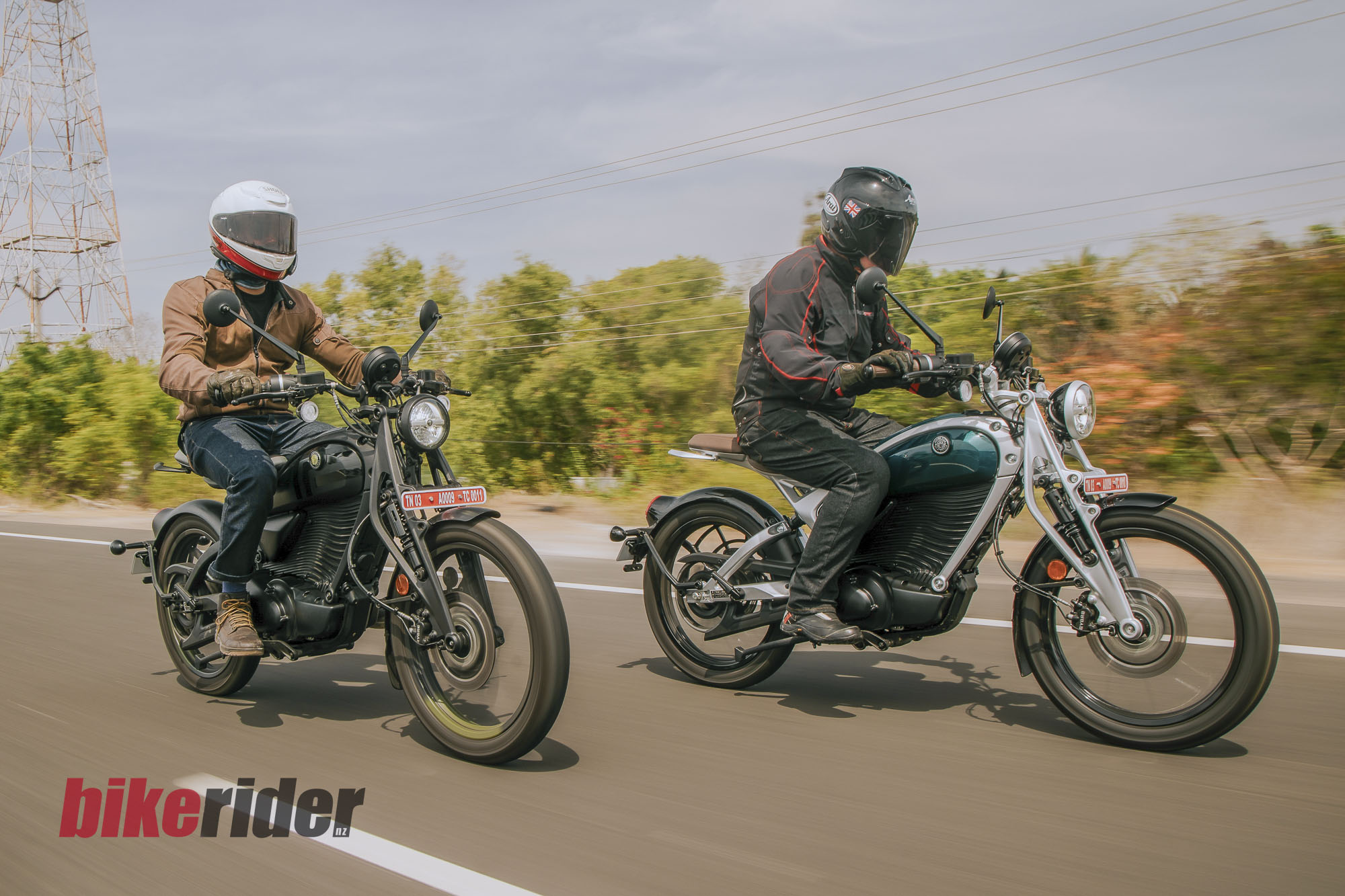
- Royal Enfield joins the EV segment with a 124kg electric motorcycle with 15.4kW and 60Nm.
- Claimed 154km range and 65-minute 20–80% recharge.
- Alan Cathcart was the first journalist from outside India to ride it with a special trip to the factory.
Alan Cathcart became one of the first journalists from outside India to ride Royal Enfield’s radical new Flying Flea C6 – and reckons it could be the electric motorcycle that finally changes a few minds.
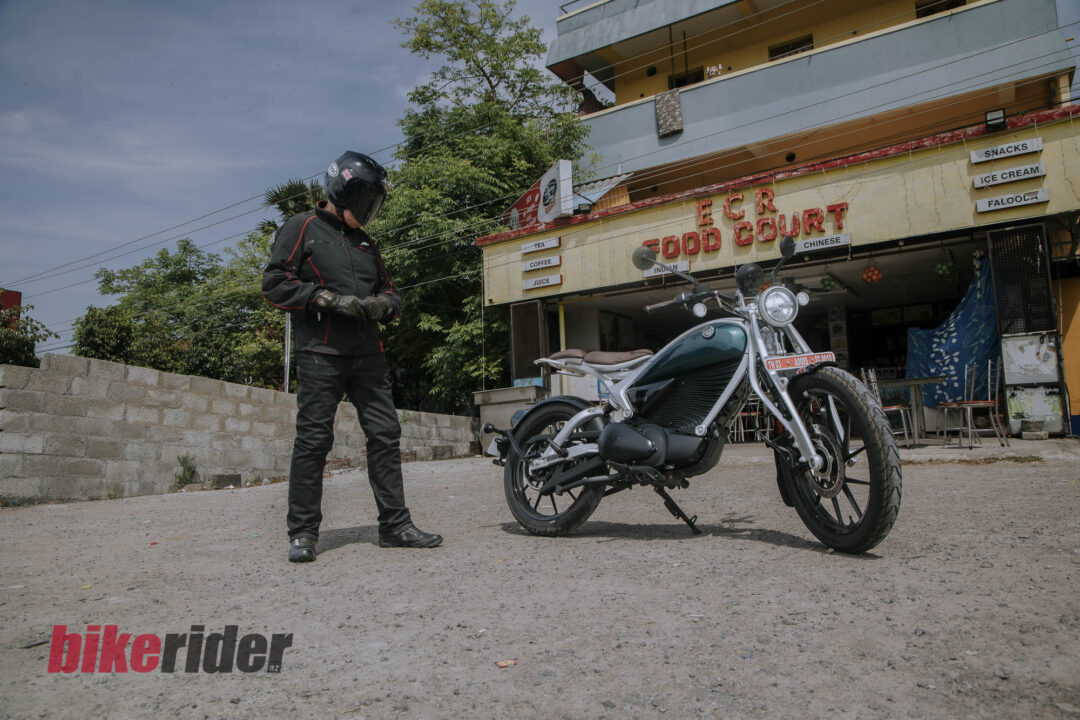
Royal Enfield has a very specific identity, both corporately and in terms of its products, which may best be described as retro done right, in a modern context.
So, nine years ago in 2017 when Sid Lal and his colleagues, including the then newly-appointed Royal Enfield CEO B.Govindarajan, sat down to consider if they should enter the seemingly fast-growing EV/electric bike market, the question as much as ‘if’ was ‘how’, and what with.
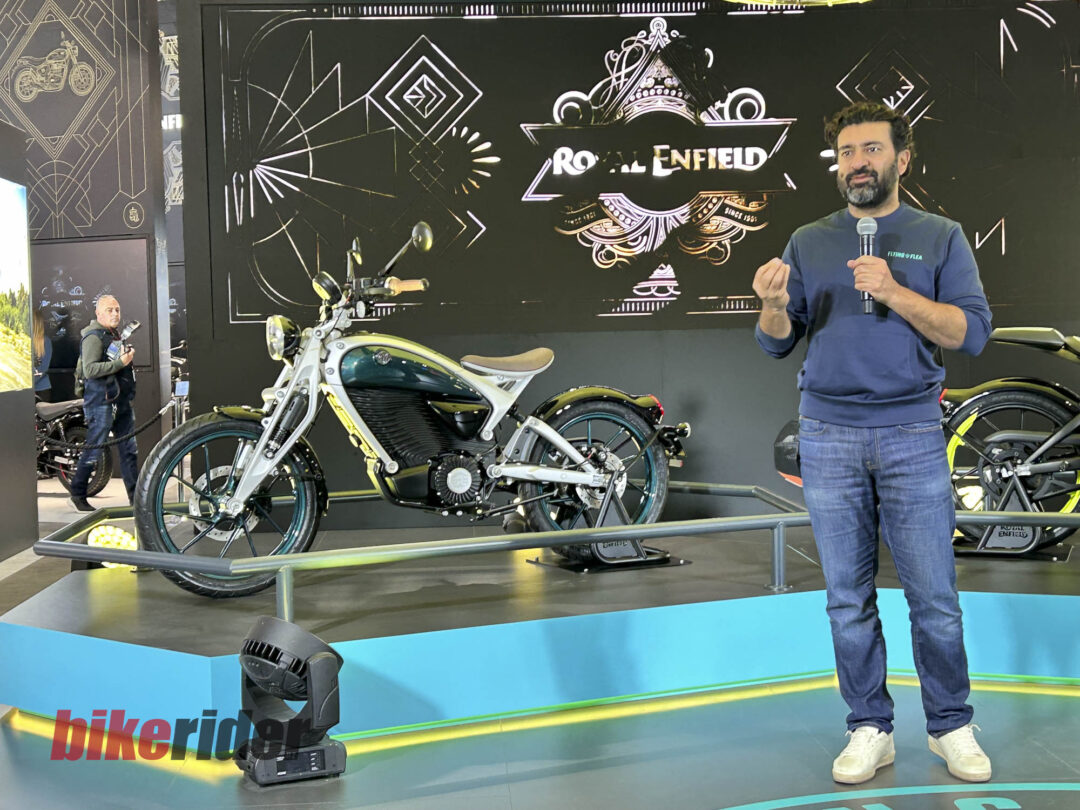
Fast forward to November 2024 when Royal Enfield unveiled its Flying Flea C6 electric bike at the EICMA show in Milan – adding the scrambler-style S6 at the same event a year later. Electric motorcycles often struggle with identity, some because they try to imitate petrol bikes too closely, others because they lean so heavily into the avantgarde that they lose any sense of brand identity. The Flying Flea seemingly manages to avoid both traps, inasmuch as somehow or other it seems recognisably to be a Royal Enfield, while at the same time also something unmistakably new.
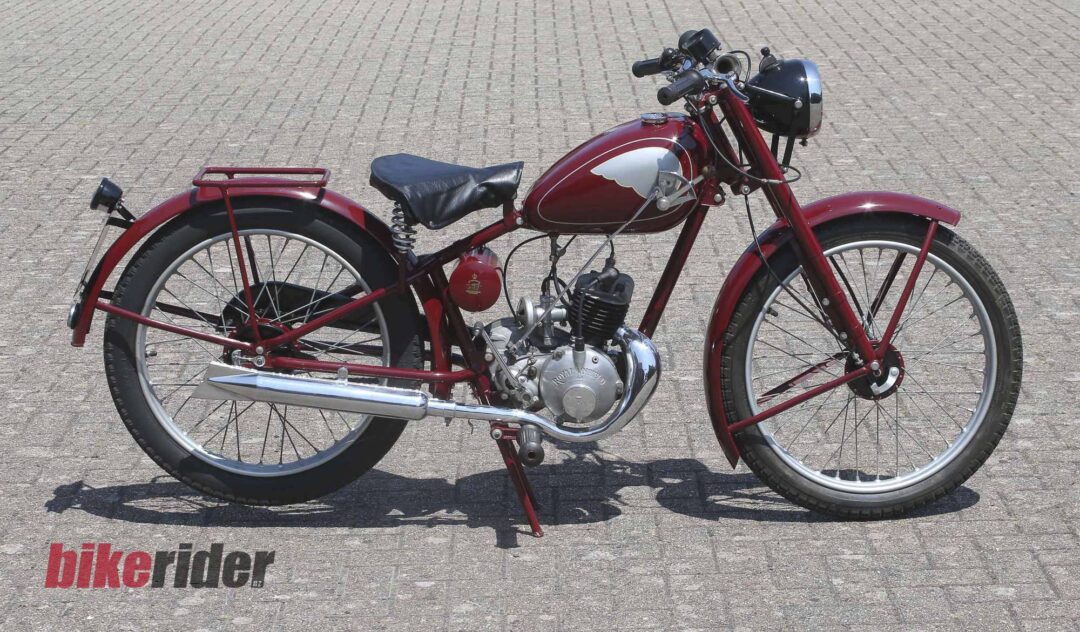
Jointly developed at the company’s UK Technology Center at Bruntingthorpe and its Chennai Technical Center, the new e-model draws inspiration from one of Royal Enfield’s iconic wartime motorcycles. The original “Flying Flea” used during World War II was a lightweight 126cc two-stroke specifically designed to be parachuted to the ground behind enemy lines alongside the paratroops who rode it.
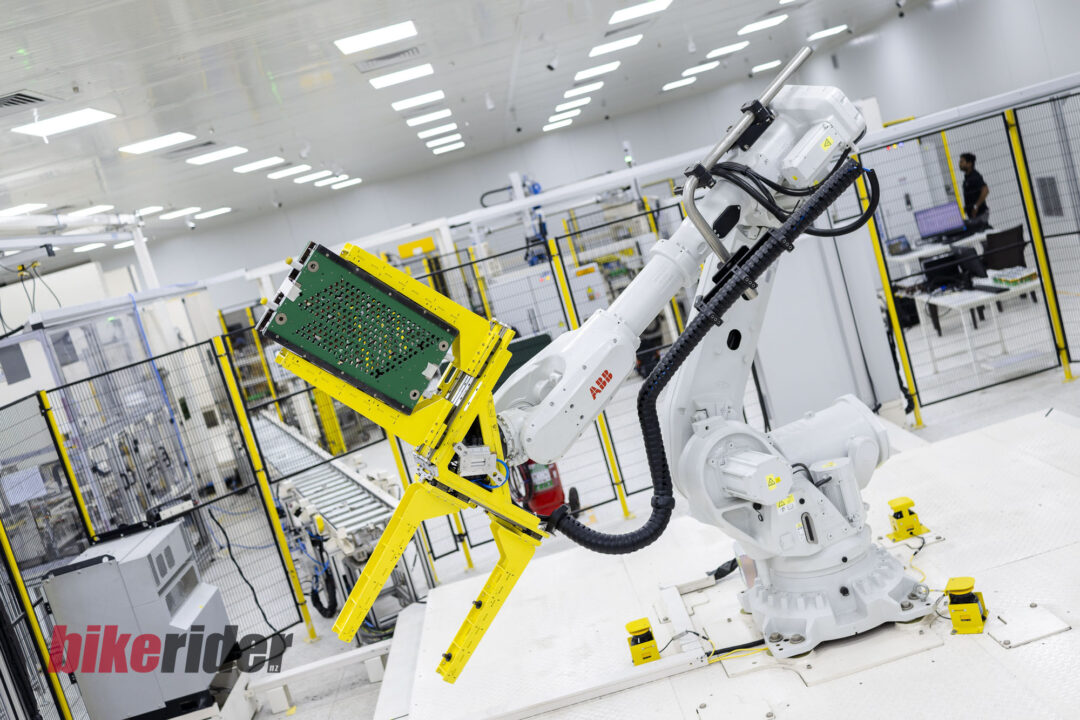
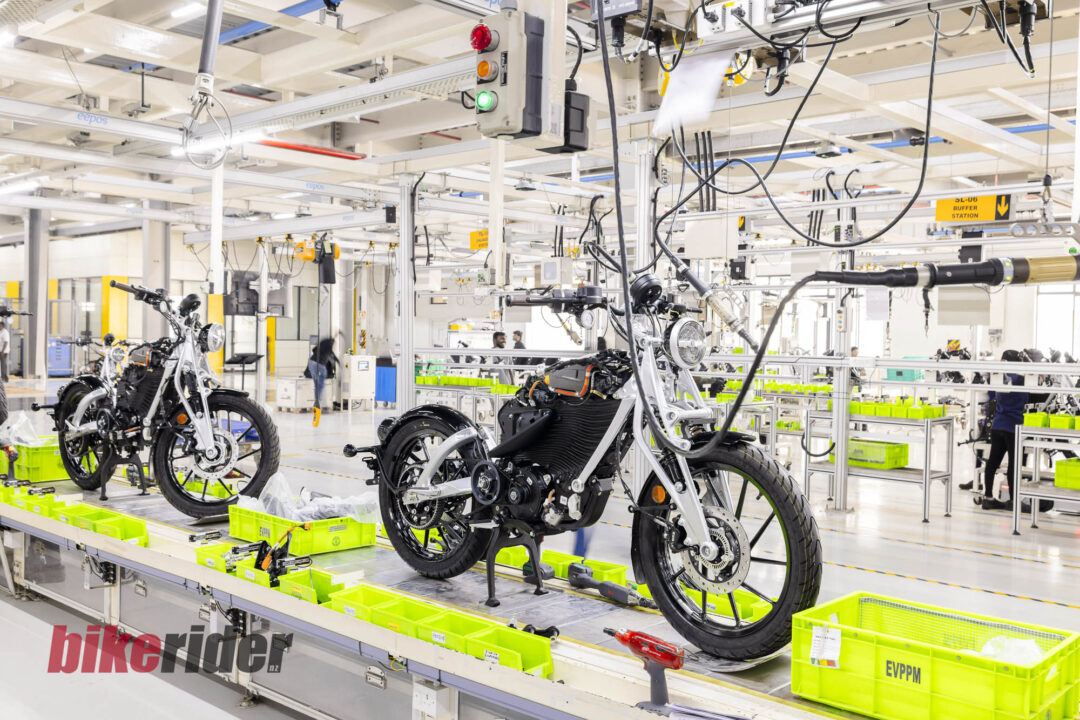
The new RE e-bike’s creative journey began in December 2017 when the company hired American Matt Cardenas from Triumph USA, a former Honda R&D and Polaris/Indian development engineer tasked with exploring the company’s route into the EV sector. Today he’s still RE’s EV Product Strategy Group Lead, who in conjunction with the company’s CTO Electric, Umesh Krishnappa, an ex-Mahindra EV engineer, has led the 200-strong cadre of EV development engineers shared between the UK and the 1190m² laboratory built in 2022 adjacent to the Flea’s assembly line in Chennai, in implementing Lal’s desire to develop an electric motorcycle not like the others, under the so-called ‘City Plus’ umbrella.
MORE ARTICLES
CITY PLUS
At the EICMA 2024 unveiling of the Flying Flea, Siddhartha Lal explained how this came about: “We had an epiphany a while ago that we’re not going to do bigger electric motorcycles, because that doesn’t work either financially or dynamically,” he said. “But we saw that scooters in some markets are working OK, with a small battery pack, relatively light weight and good packaging – but can we build a motorcycle a step or two above that, which gives the same convenience, but with a lot more character, and an inbuilt fun factor?”
The Flying Flea was the result, a model unlike anything else in the EV market that was good-looking with its own strong visual identity, light in weight and seemingly capable of providing downright fun. But most of all, it had to be something more than pure urban transportation.
“City Plus is what it says on the label – extra flexibility, extra range with short recharging times using an onboard charger – and it must be from a wall socket, too, so I can plug it in at Mama’s home to recharge it while we’re eating!”
“We wanted to create something that has a slightly higher range capability than a typical electric inner-city commuter,” Lal stated. “It’s for when you want to go somewhere a little bit out of the city – so if I live here in Milano and this is where I use my e-bike for getting around, if I want to go to Como 50km away for lunch with my mother, I can do that – and not have to worry about the rush hour traffic jams on my return. But this is not for long distance, because as soon as you do that you need to have much bigger battery packs, and the bike becomes big, heavy and expensive. City Plus is what it says on the label – extra flexibility, extra range with short recharging times using an onboard charger – and it must be from a wall socket, too, so I can plug it in at Mama’s home to recharge it while we’re eating!”

WHAT POWERS THE FLEA?
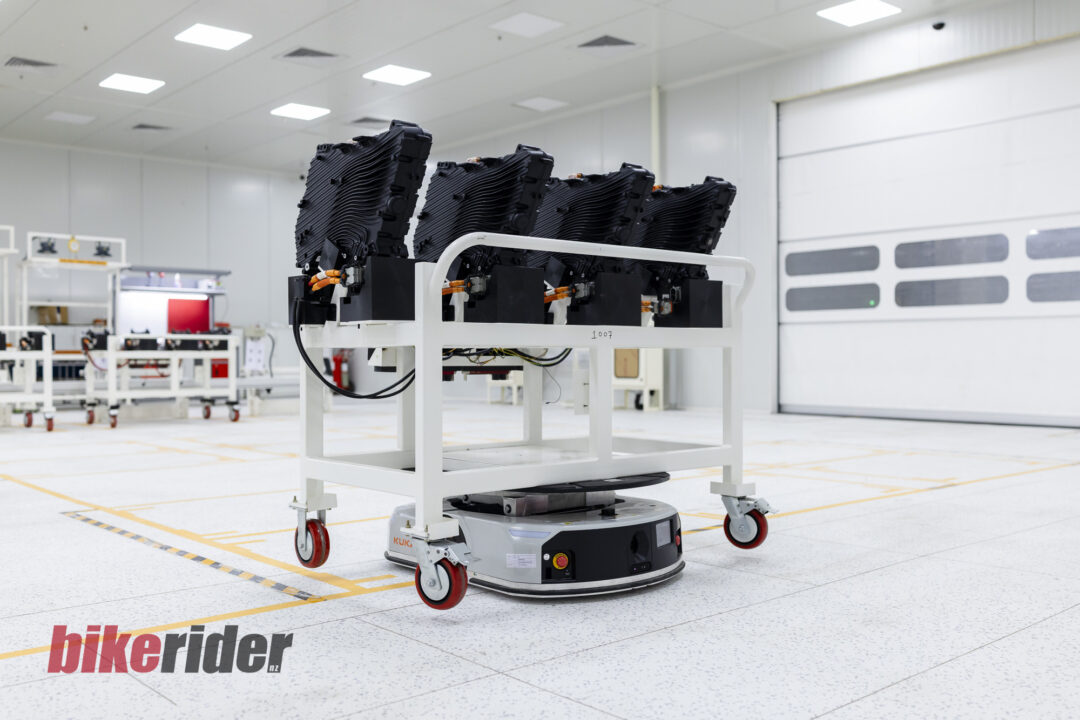
The Flying Flea employs an air-cooled permanent magnet synchronous AC motor which rotates forward, turning to a maximum of 7,500 rpm, and like the battery pack and controllers is entirely developed and built in-house by Royal Enfield. Producing a claimed 15.4 kW/21 bhp, its peak torque is a claimed 60 Nm/44.25 ft-lb, together sufficient to propel a Flying Flea C6 weighing 124kg from 0-60 km/h in 3.7 secs, with a claimed top speed of 115 km/h – comparable in performance (and weight) to a 125cc four-stroke single-cylinder ICE model, says Royal Enfield.
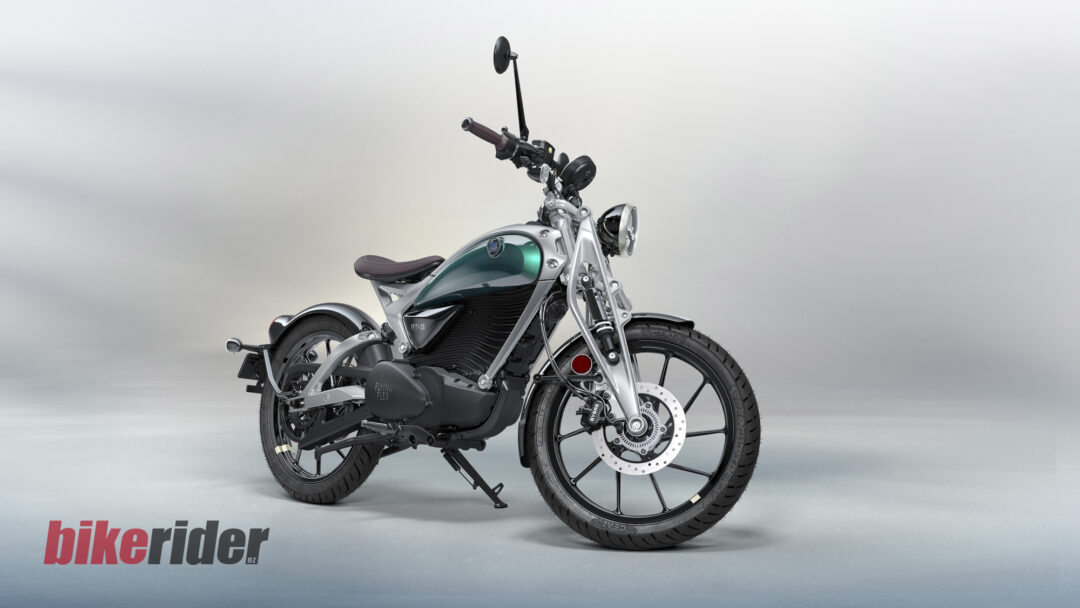
That low weight by EV standards is obtained by holding down the size of the 3.91 kWh 101.9-volt lithium-ion battery pack, comprising an appealingly-styled, ultra-distinctive looking, wind tunnel-developed cast magnesium casing that’s heavily finned for cooling purposes.
“Royal Enfield says a 20% – 80% charge can be achieved in 65mins via a household socket, while 0-100% takes 2 hrs. 15 mins.”
The downsized battery pack impacts on range, which while the company quotes a figure of up to 154 km, is measured using the IDC/Indian Driving Cycle parameters, which tend to be over-optimistic. Initial tests by Indian journalists have suggested that the Flea’s current real-world range could be as little as 80 km, depending on how hard the rider works the throttle.
Conversely the smaller battery also means reduced charging times – Royal Enfield says a 20% – 80% charge can be achieved in 65mins via a household socket, while 0-100% takes 2 hrs. 15 mins, with extra time needed for the cells to rebalance themselves over the last 5% of charge. The built-in DC charger can cope with home voltages from 100 to 270 volts AC.
The C6’s powertrain and battery pack sit within an exoskeletal forged (not cast) aluminium chassis, which carries a forged aluminium girder fork with twin non-adjustable Gabriel shocks mounted low down and giving 100mm of wheel travel. The similarly forged aluminium swingarm carries a cantilever monoshock, again made by Gabriel and again non-adjustable, not even for spring preload.
Nineteen-inch cast aluminium wheels sit at either end, shod with 90/90 CEAT Energy Ride EV tyres specially developed for the Flying Flea. There’s a single disc brake on each wheel, a 260mm one at the front with a twin-piston ByBre caliper, and 220mm at the rear with a single-piston caliper. Bosch’s lean-sensitive dual-channel Cornering ABS is fitted, and is switchable at the rear. The Flea also features lean-sensitive traction control, again by Bosch.
FIRST RIDE
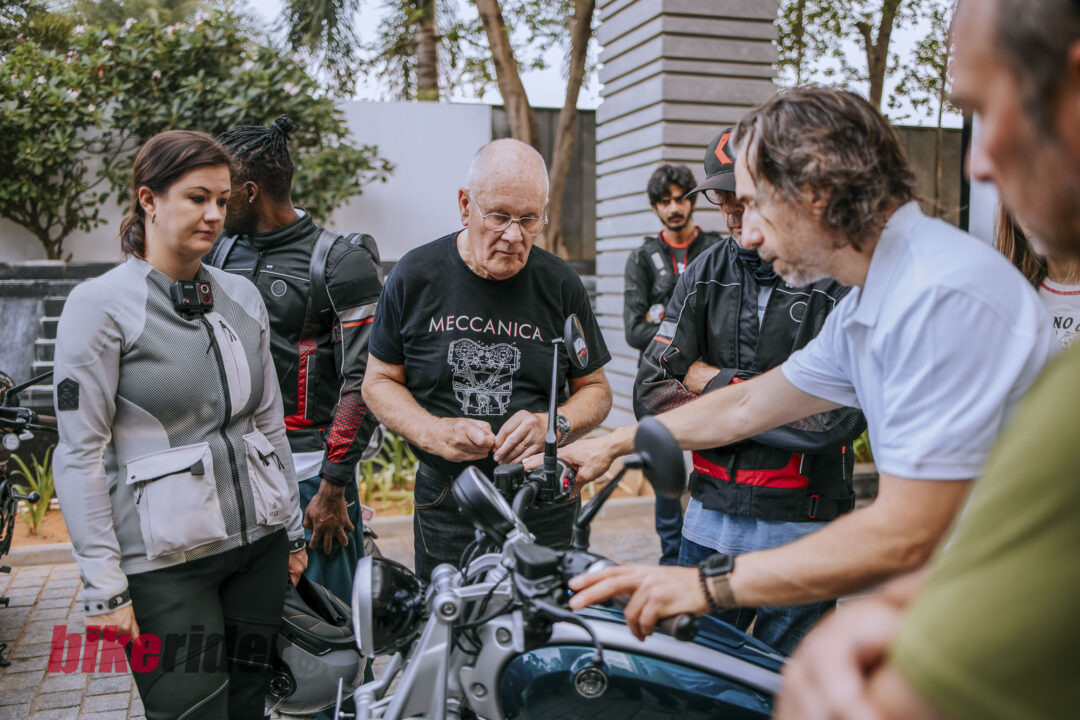
Royal Enfield’s Flying Flea has been a slow burner. Ever since it was unveiled at the 2024 EICMA Show, the Indian company’s debut electric bike has been waiting in the wings, as it readies itself to swarm onto the world stage. It’s been on sale in RE’s Bangalore test market since April, and the Indian press has ridden it, but no outsider – until now.
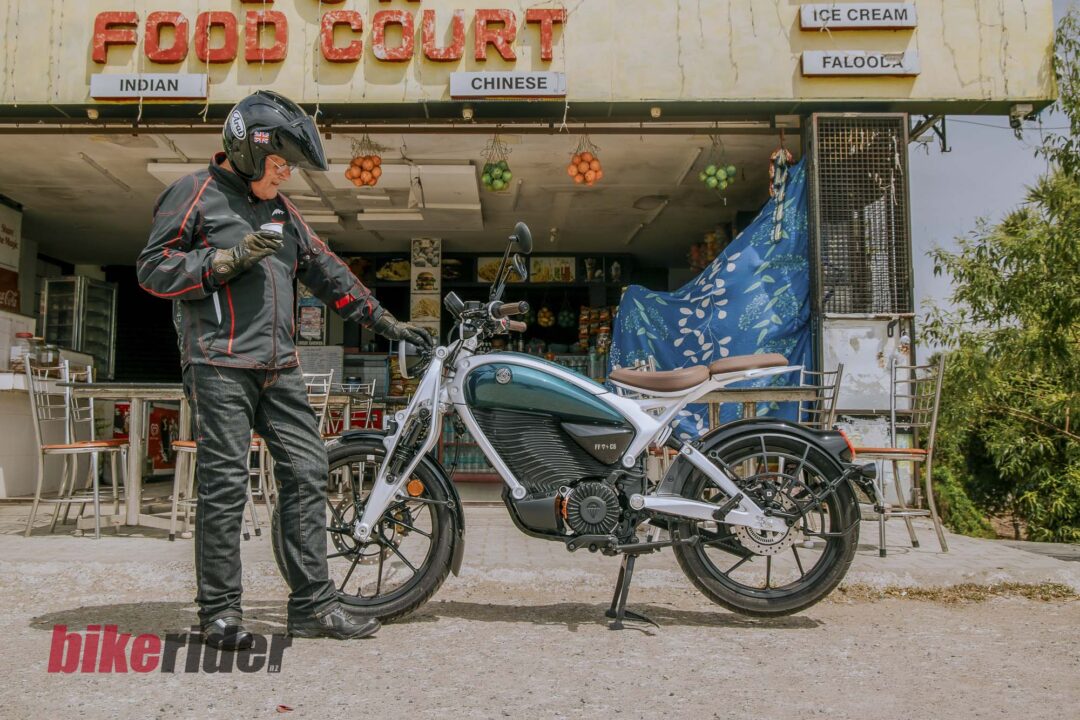
My chance to experience Royal Enfield’s first electric motorcycle came via a 40km tour of the suburbs of Chennai alongside RE CEO B.Govindarajan heading for breakfast at his favourite coffee shop, followed by a speedy ride along the dual carriageway trunk road leading south along the Indian Ocean towards the former French colony of Pondicherry. So it encompassed all the different aspects of an e-customer’s likely use.
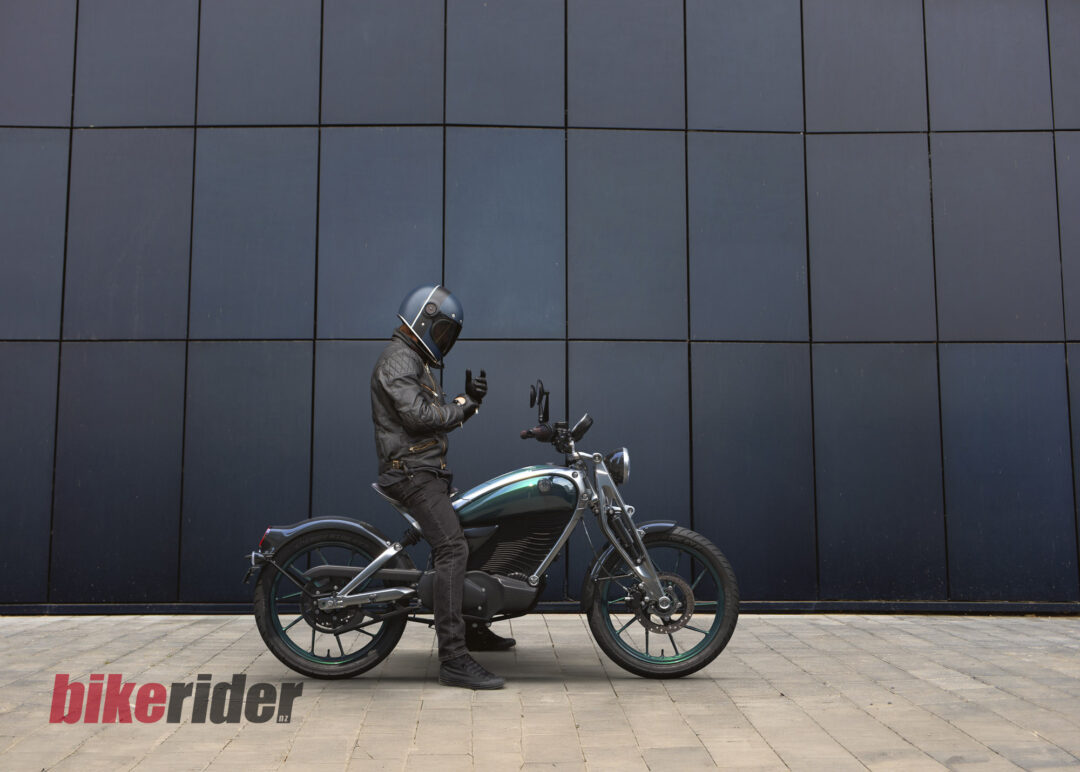
Climbing aboard the Flying Flea C6 parked on the centre-stand that’s included as standard alongside the easy-to-find sidestand showed the 823mm-high seat to be quite accessible, though shorter riders will want to step on the left footrest to do so – its 19-inch wheels add to the height of the bike.
The brake levers on the one-piece taper-section aluminium handlebar are both adjustable for span, and as on a scooter, the rear brake control is where the clutch lever would normally be on an ICE bike, so there are no foot controls, partly to make newbies who only rode a bicycle before, not a motorbike, feel at home.
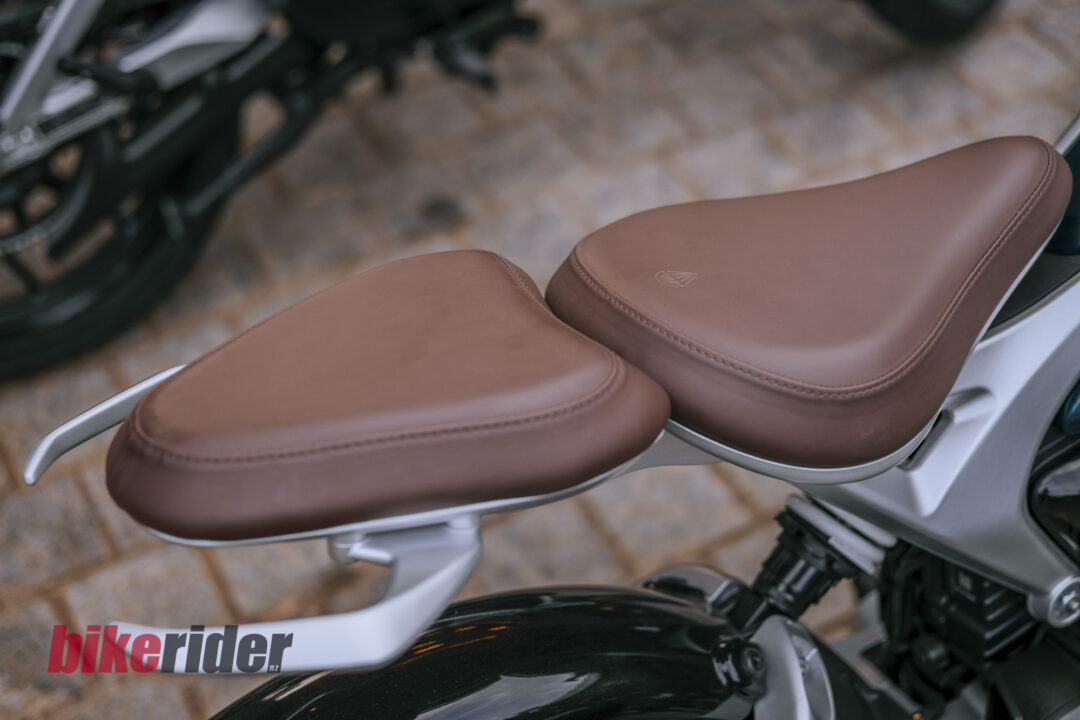
Once aboard, I found the seat pretty hard and unwelcoming, plus it was too smoothly surfaced, which meant I slid forward under heavy braking, as when a tuk-tuk pulled out in front of me – a grippier covering would definitely be preferable. The riding stance is quite upright, so ideal for town work in terms of scanning ahead to plot your trajectory through the flotsam of cars and bikes and trucks and vans all going in different directions in typical Indian inner-city traffic.
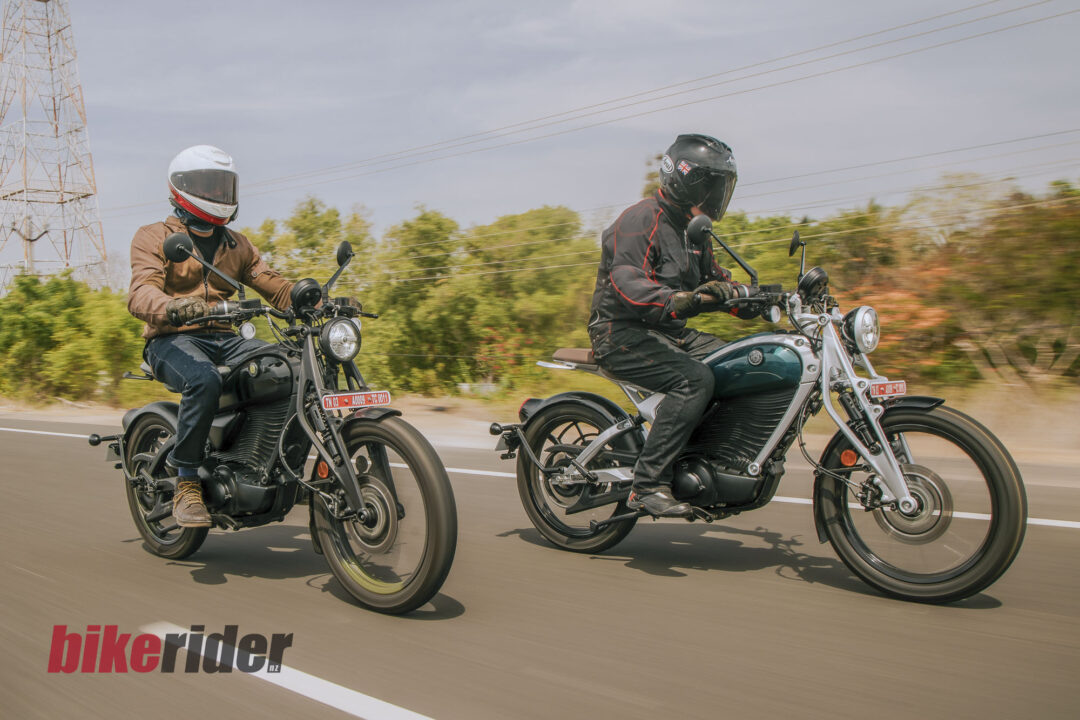
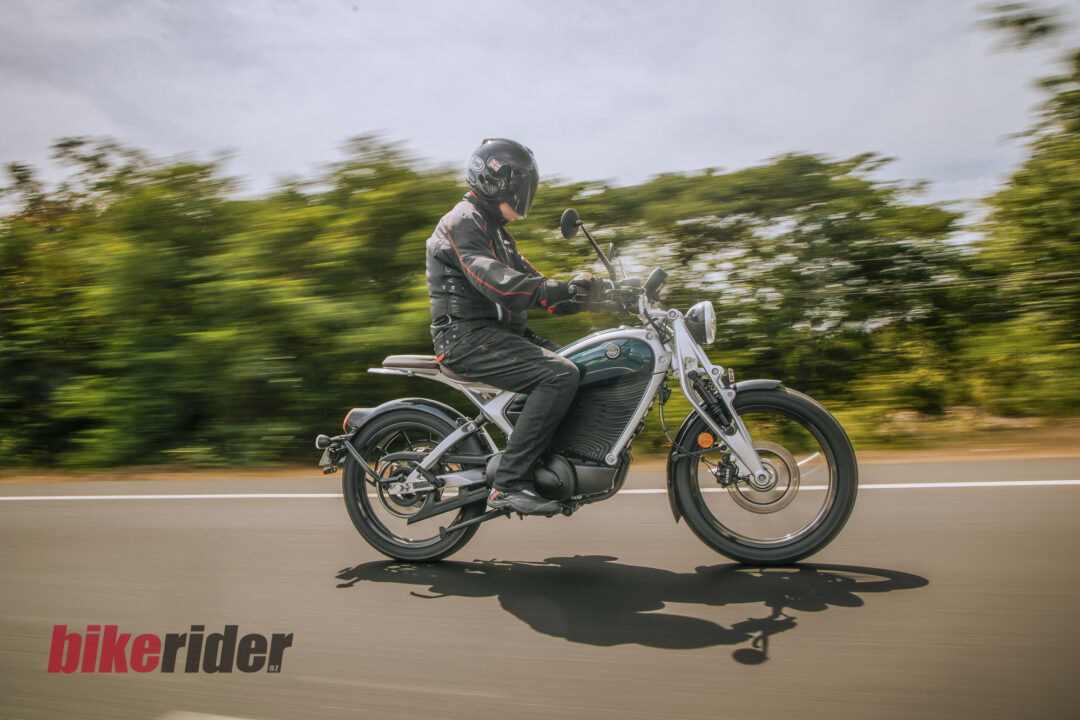
But it’s hard to think of anything better to tackle this merry-go-round of urban motion than the Flying Flea, which at just 124kg, is featherweight light by electric motorcycle standards. Though quite tall, it’s very slim and feels ultra-controllable – the steering is light but direct, and very precise, so you can make quick changes of direction very easily. It goes where it’s pointed – instantly.
“The Flea felt responsive, alert and delightfully nimble.”
Filtering my way through Chennai’s chaotic traffic, the Flea felt responsive, alert and delightfully nimble – the narrow profile and deft steering made it easy to weave through gaps in the traffic. Yet on faster turns it felt very stable despite the skinny 90/90-19 tyres – whatever the steering geometry is, it’s well chosen to give the best of both worlds. With your knees nestling against the exoskeletal frame’s upper tubes, you feel very much at one with the Flea. Yet over the course of my ride, I never felt cramped or uncomfortable on it – except for the hard seat!
QUICK – AND QUIET
In fact, the whole bike not only looks dead cool, but it also feels very together, with high build quality. Riding over significant road rash in the streets of Chennai didn’t trigger any shakes or rattles, just more or less silent forward motion.
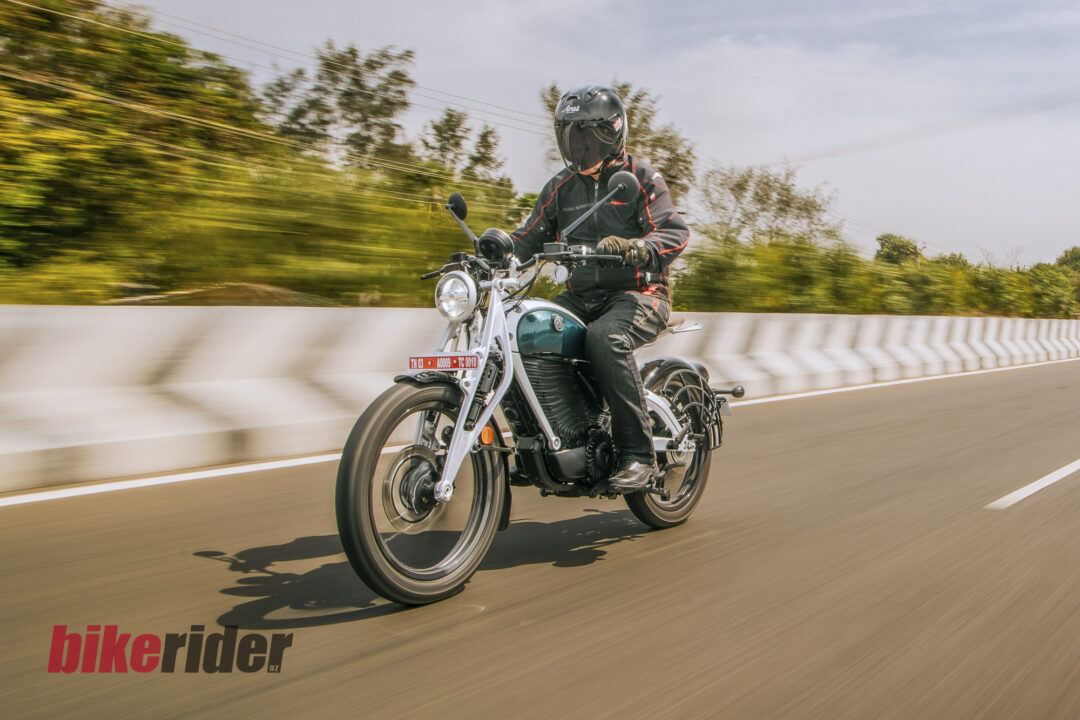
And it’s pretty fast for a 125cc ICE competitor: I saw 114 km/h on the speedo just slightly leaned forward into the breeze rather than flat on the pseudo-tank, so it keeps up with traffic quite happily.
The Flying Flea’s Gabriel suspension is quite tautly sprung at both ends, but actually worked surprisingly well at damping out the bumps and lumps of typical Indian city streets and country back roads replete with speed bumps and potholes. I could feel the twin side-mounted front shocks damping out road shock over their 100mm stroke, helping the Flea maintain a composed ride over uneven surfaces.
“If it was good enough for John Britten, who used a similar front end design on his legendary road racers, but made from carbon fibre and with the front monoshock parked behind the steering head, it’s good enough for the Flea!”
Royal Enfield insists the girder fork bears witness to the character of the original Flying Flea, but irrespective of that I liked the fact that it surely plays a part in the nimble, direct steering, and it transmitted road feel well to the handlebar from the front tyre. If it was good enough for John Britten, who used a similar front end design on his legendary road racers, but made from carbon fibre and with the front monoshock parked behind the steering head, it’s good enough for the Flea!
The bike stops well, with the front ByBre twin-piston brake caliper gripping the single front 260mm disc effectively enough to use most of the time on its own, with the paradoxically smaller 220mm rear disc and single-pot caliper rather improbably even more effective, albeit without being snatchy.
Despite the Bosch Cornering ABS that’s included in the FF electronic package, together with Cornering TC, I suspect you’d soon learn to avoid using the rear brake too hard in the rain. Brake pad material is well chosen – neither brake felt snatchy to use, just effective.
FIVE WAYS TO FLY
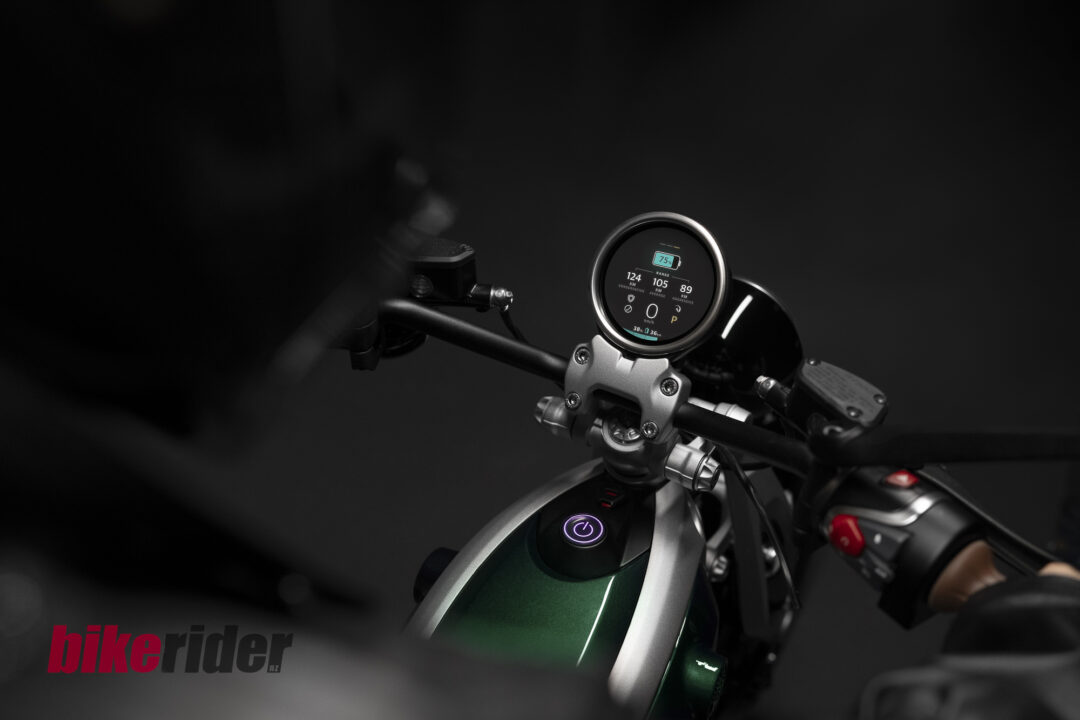
The large round 3.50-inch TFT touchscreen dash is clearly laid out and very visible, even in bright sunshine – and there are lots of those that aren’t. The five riding modes included in the Flea’s electronic package are each very distinct in operation one to another, and are easy to select on the go via the switch cube on the left handlebar.
Sport gives notably better acceleration than Highway, to the extent of verging on being thrilling – the Flea may supposedly be comparable with a 125cc ICE motorcycle in terms of performance, but it certainly doesn’t feel anything like as humble such a bike to ride if you hold the throttle wide open in Sport mode. Royal Enfield claims a 0–60 km/h time of 3.7 secs, and I reckon that figure is entirely believable.
“This motorcycle is obviously the beneficiary of thousands of miles/km of testing in real world conditions by many different people – Royal Enfield claims 85 test riders collectively covered over 250,000km on prototype models…”
However, this comes at the cost of a more emphatic regenerative braking system setting when you close the throttle. This makes it hard to go through a flowing series of bends on part throttle in Sport mode – you basically have to accelerate again each time you pass an apex, whereas in Highway mode there’s much less regen, and not a lot less grunt out of a bend, so you can keep up momentum better.
City is a lazier mode both going and stopping, while Rain has much less immediate acceleration – it picks up speed more lazily, as you’d expect, and regen is nicely set up to slow the bike in the wet, and would avoid you having to use the brakes much at urban speeds on a damp road.
But you immediately notice when riding the Flea that the throttle is ideally mapped in all the modes. It’s obviously had the initial pickup softened to avoid a snatch or jerk in the response from a closed throttle, and this will be very confidence inspiring for any rider, and especially a newbie.
The torque is cleverly managed – they don’t give you all 60Nm/44.25ft-lb of oomph at 1 rpm the moment you open the throttle, but nor is it so layered that you get frustrated with the delivery.
This motorcycle is obviously the beneficiary of thousands of miles/km of testing in real world conditions by many different people – Royal Enfield claims 85 test riders collectively covered over 250,000km on prototype models – and the result is a self-evidently refined product, which inspires confidence as well as pleasure. I don’t deny I was sorry my ride was so short.
RANGE AND RECHARGING
I didn’t get the chance to check the range, but there was plenty of charge left after my morning’s ride. I’ll look forward to doing that when I get the remote key for a Flying Flea to take it for a longer flight – sorry, ride.
But there’s a clever active regen braking system which becomes second nature once you get used to it. Instead of relying solely on braking input to recover energy, the Flea allows its rider to harness regen simply by reversing the throttle.
“Tests by Indian journalists have suggested that the Flying Flea’s real-world range could be as little as 80km/50mi, depending on how eager you are with the throttle.”
In theory, this should help extend the bike’s claimed range of 154 km, but this however is measured using the Indian Driving Cycle/IDC method, which apparently tends to be notoriously optimistic. Tests by Indian journalists have suggested that the Flying Flea’s real-world range could be as little as 80km, depending on how eager you are with the throttle.
That figure isn’t brilliant, but it’s not necessarily a problem either. The Flea isn’t pretending to be a touring motorcycle – its mission statement is urban mobility.
And it does have impressively quick recharging times with the onboard DC charger plugged into a wall socket – forget about your fancy fast chargers, this is deliberately the only means of recharging the FF battery. Royal Enfield claims a 20-80% charge can be achieved in 65 mins, while a 0-100% percent charge takes 2 hrs 15 mins. That’s both convenient, and practical.
NOT QUITE PERFECT
Meantime, two things do need attention. The right turn indicator button on the left ‘bar is very awkward to use because of the way it’s mounted – I sometimes needed three or four attempts to cancel it. And the seat needs work, urgently – the padding’s too hard, and way too slithery: I got numb bum syndrome after an hour riding on it, and that can surely be easily fixed. If RE don’t do it, the aftermarket will.
COULD THIS BE THE ELECTRIC BREAKTHROUGH?
I may immodestly claim to have ridden more different electric motorcycles than anyone else on the planet, starting in 2010 with the Mission Motors e-Superbike.
These include each winner of the Isle of Man TT Zero race including the fabulous MotoCzysz and the Mugen Honda it defeated to win the race four times, the Lightning LS218 Superbike with lights and a horn which won Pikes Peak outright and set the LSR for electric motorcycles, and its uber-affordable Strike street sister.
“I may immodestly claim to have ridden more different electric motorcycles than anyone else on the planet, starting in 2010 with the Mission Motors e-Superbike.”
More prosaically, I’ve ridden each year’s Zero street range since 2012, each BMW customer e-bike, including the current CE-04, as well as its prototype e-Power Roadster, plus KTM’s e-Freeride and the Harley LiveWire in street and road racing guise.
In short – I get electric, and I honestly think that Royal Enfield’s Flying Flea may well be the breakthrough bike in persuading potential customers to overcome their resistance – OK, prejudices! – and give electric a chance.
Of course, it all depends on the price tag outside India that Royal Enfield management eventually decide to stick on the handlebar, but whether in Flea Green or Storm Black, the only two colours it’s presently available in, the Flying Flea is both cute and appealing, as well as completely original in appearance.
It’s uber-characterful, enjoyable to ride, and has the potential to become a landmark motorcycle if, as its creators hope, it carves a niche for itself in the electric marketplace. It will very possibly become the No.1 hey-look-at-me set of wheels for the on-message elite in cities around the world to carve their way through city streets and the adjacent countryside, as part of Royal Enfield’s City-Plus mantra, while all the time helping to save the planet without sacrificing convenience and urban chic.
Wait and see…..!

A LITTLE BIKE WITH A BIG HEART
The genesis of the original Flying Flea is improbably rooted in Nazi Germany’s persecution of the Jews. In 1934 DKW, then the world’s largest motorcycle manufacturer, launched its RT100 two-stroke model. Designed by Hermann Weber, it quickly became the best-selling model of the 1930s with over 70,000 made.
In 1938 DKW was forced by Nazi laws to stop supplying its Jewish-owned Netherlands distributor Stokvis & Sons with products. Representatives from the Dutch firm thus travelled to the U.K. seeking a British manufacturer to build an alternative. They approached Royal Enfield with a 98cc DKW RT100 two-stroke motorcycle they’d brought with them, and asked if they could produce a direct copy of it. Royal Enfield agreed, reverse-engineered the design, and subsequently created a version with a larger 126cc engine designed by Ted Pardoe.
In January 1942, Winston Churchill ordered an Air Landing Brigade to be formed, as it became increasingly likely that Britain would be launching an invasion of Europe, rather than the other way around. This entailed provision of a lightweight motorcycle capable of being housed in a metal frame and dropped from an aircraft, which the invasion force could use for liaison duties, traffic control and convoy routing.
The 126cc Royal Enfield WD/RE and 122cc James ML powered by a Villiers motor were selected for the role by the War Department, and once in action were christened by troops serving in the invasion force as the ‘Flying Fleas’.
In June 1944 these were parachuted into action as part of the D-Day invasion, and again in Operation Market Garden at Arnhem in September that year. Just under 8,000 examples of the WD version of the bike were built before VE Day in 1945.
Serious Potential
In short – I get electric, and I honestly think that Royal Enfield’s Flying Flea may well be the breakthrough bike in persuading potential customers to overcome their resistance – OK, prejudices! - and give electric a chance.
Specifications
| ROYAL ENFIELD FLYING FLEA C6 | SPECIFICATIONS |
|---|---|
| Motor | Air-cooled AC permanent magnet synchronous motor |
| Battery | 101.9V, 3.91kWh lithium-ion; 224 Samsung nickel cobalt aluminium cells |
| Power | 15.4kW (21bhp) @ 7,500rpm |
| Torque | 60Nm |
| Riding Modes | City, Highway, Sport, Rain, Custom |
| Transmission | Direct single-speed; belt primary and final drive |
| Range | Up to 154km (IDC) |
| Charging | 10–80% in 65min; 0–100% in 2hr 15min |
| Frame | Forged aluminium exoskeletal frame |
| Front Suspension | Forged aluminium girder fork, twin non-adjustable Gabriel shocks, 100mm travel |
| Rear Suspension | Forged aluminium swingarm, non-adjustable Gabriel cantilever monoshock, 110mm travel |
| Front Brake | 260mm disc, twin-piston ByBre caliper, Bosch Cornering ABS |
| Rear Brake | 220mm disc, single-piston ByBre caliper, Bosch Cornering ABS |
| Front Wheel/Tyre | 90/90-19 CEAT Energy Ride EV, cast aluminium wheel |
| Rear Wheel/Tyre | 90/90-19 CEAT Energy Ride EV, cast aluminium wheel |
| Wheelbase | 1366mm |
| Seat Height | 823mm |
| Weight | 124kg |
| Top Speed | 115km/h (claimed) |
| Manufacturer | Royal Enfield, Chennai, India |