

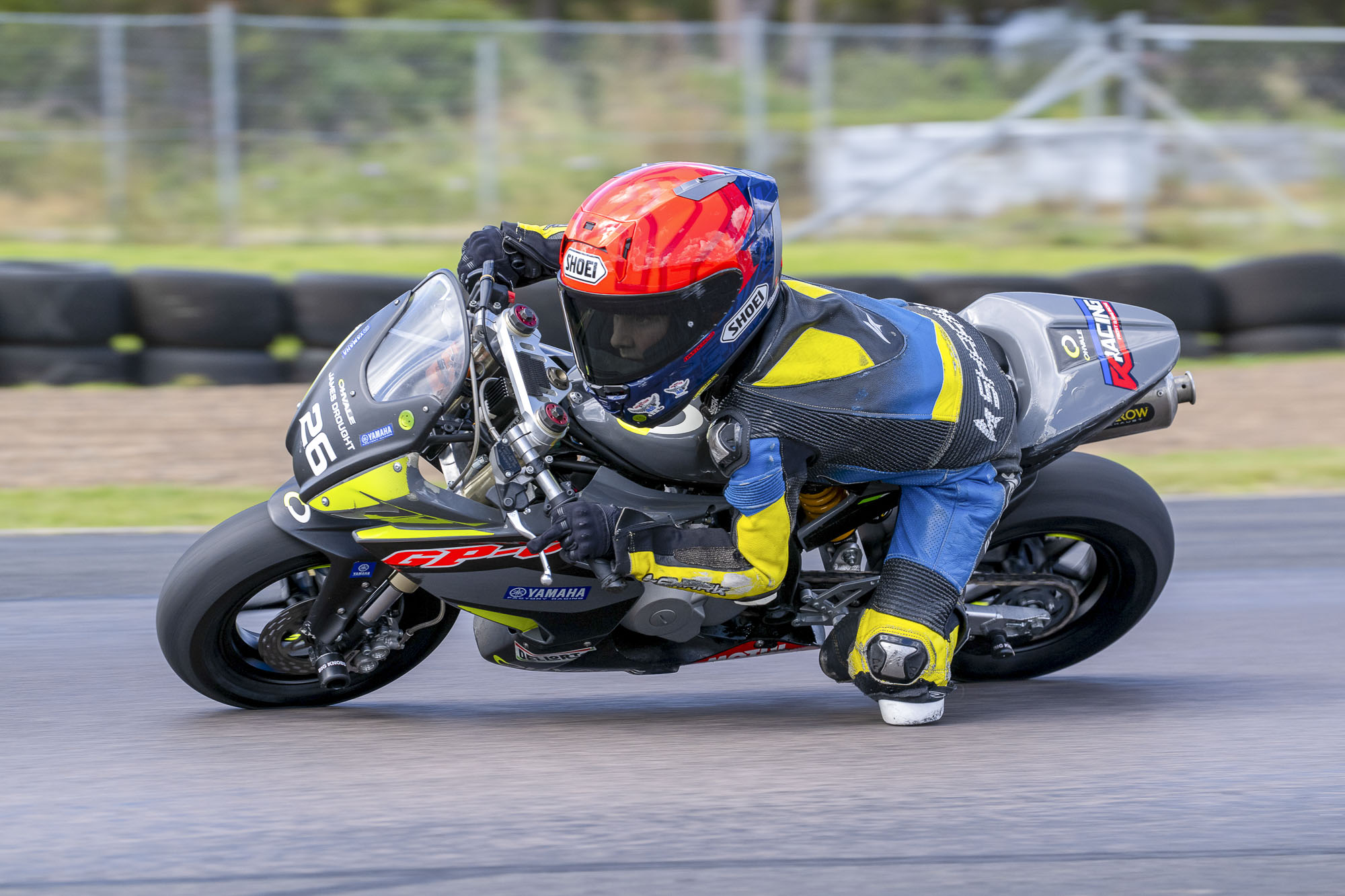
- James first rode a motorcycle at just 18 months old and has progressed from motocross to becoming one of New Zealand’s brightest young MiniGP talents.
- After finishing runner-up in the New Zealand Pirelli MiniGP Series, James quickly adapted to the highly competitive Ohvale Australia Cup, taking pole positions, race wins and earning international recognition.
- Despite his success, the Drought family remains committed to a simple philosophy: fun, development and building a good person come before trophies and results.
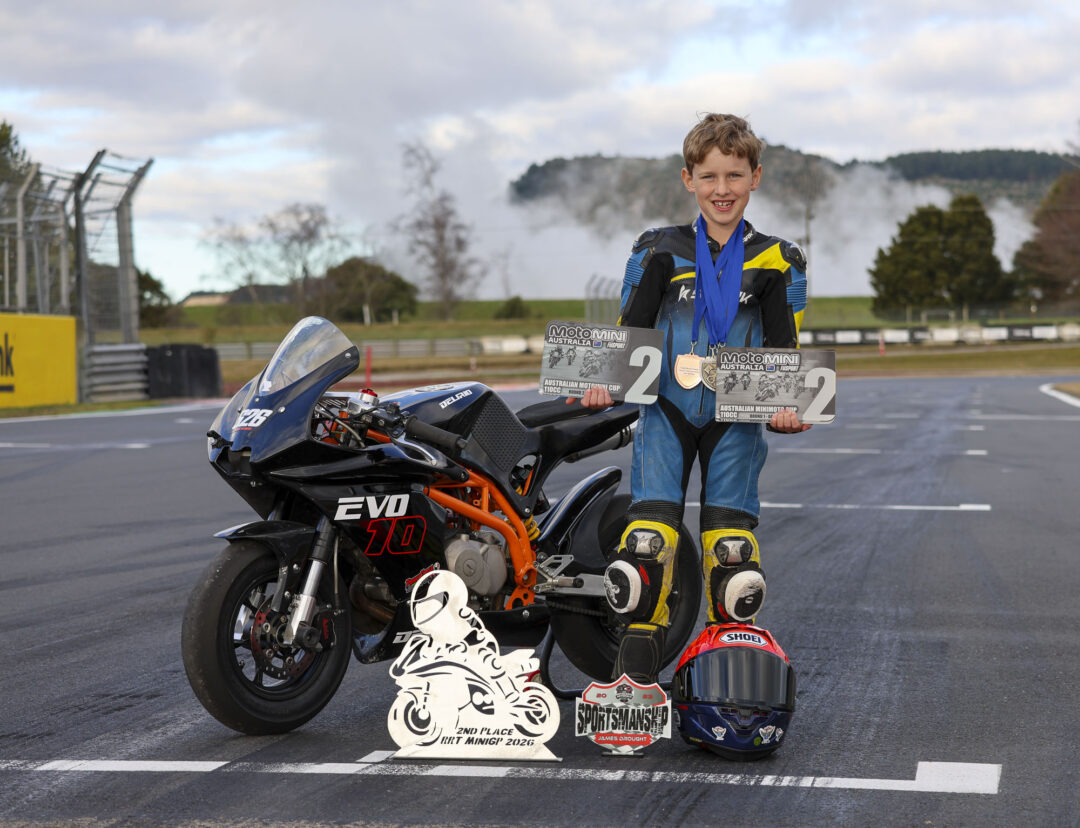
At eight years old, most kids are still learning the basics of organised sport. James Drought is already learning how to manage race pressure, adapt to unfamiliar circuits and compete against some of the best young motorcycle racers in Australasia.
His journey on two wheels began almost before he could walk, progressing from a modified quad bike as a toddler to motocross, MiniGP road racing and now international competition. But perhaps the most impressive part of the story is not the lap records, podiums or race wins. Talking with the Drought family and it quickly becomes obvious that the focus has never been on creating the next superstar. It has always been about fun, developing skills, building resilience and ensuring James remains a happy kid who loves riding motorcycles. That approach has already helped James achieve remarkable things.
Born To Ride
How did James first get into motorcycles and motorcycle racing?
From the day James was born, Dad was modifying anything that would slide across the kitchen floor. Skids and sliding around were simply part of everyday life.
Before he could even walk, we bought James a balance bike. Initially he could only sit on it, but before long he was taking his first steps and quickly became a mini moto terror of the kitchen and hallway.
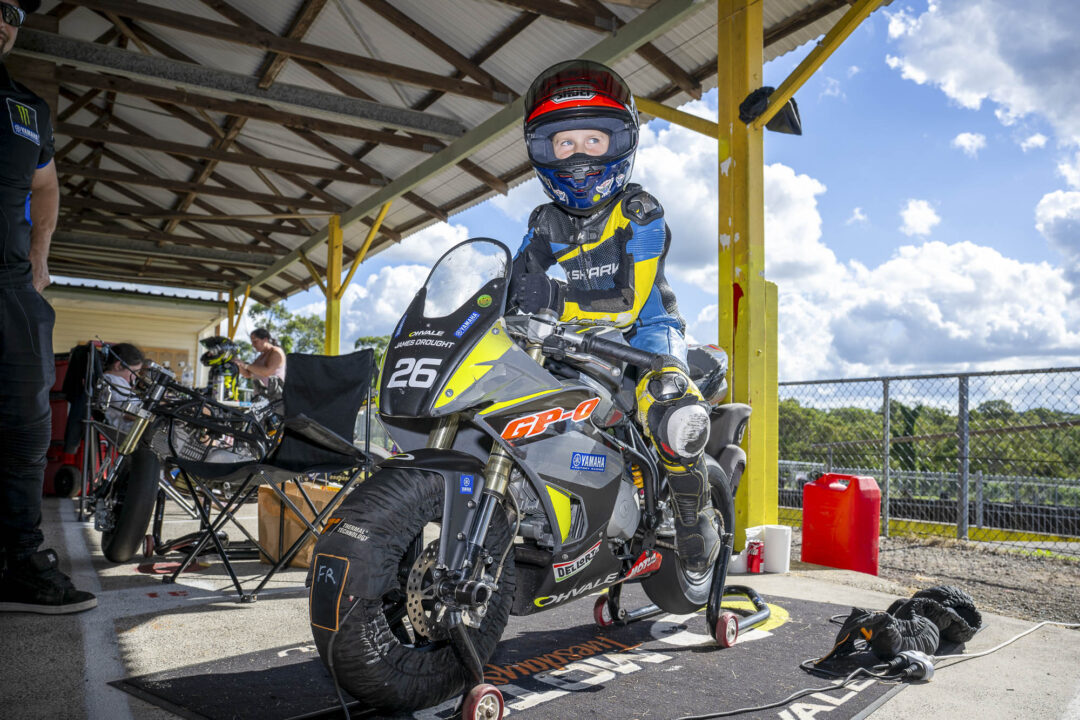
By around 18 months old, he was riding a little quad bike that Dad had modified so he could actually fit it. His hands were so tiny that Dad used to run behind him holding a rope attached to the quad to make sure he couldn’t go too fast until he showed enough control.
That was where he learnt to do controlled donuts — and he hasn’t stopped doing them since.
Next came a Yamaha TTR50, which again needed modifications. Because he was riding slowly, we removed the rear shock and replaced it with a section of steel tube to lower the ride height enough for him to touch the ground.
One thing we were very careful about was not over-coaching him too early. We didn’t want to squash any natural ability or talent. Instead, we focused on the basics — riding in control, standing up, using his front brake, looking where he wanted to go — but most importantly, making sure he was having fun.
Is there a family connection to bikes or racing?
James’ dad raced motocross when he was younger and motorcycles have always been part of the family. His grandfather also rode motorcycles for most of his life.
James is a third-generation rider, with all three generations having been involved with the Taupō Motorcycle Club at different stages over the years.
It really is a family passion. Mum rides a Yamaha TTR125 and James’ younger sister Kate has an electric Husqvarna EE 2 and is riding more and more herself.
How old was James when he first rode a motorcycle?
James first rode a motorcycle — a small quad bike — when he was just 18 months old. At that age, one of the biggest challenges was actually finding riding gear small enough to fit him.
He progressed from the quad to a Yamaha TTR50, KTM 50 Mini, KTM 50 SX and then onto the Yamaha YZ65 he currently races in motocross.
We have also been huge fans of electric motorcycle technology. James has trained on a Sur-Ron Hyper Bee and previously rode a KTM SX-E 5. We wanted to see how the KTM would compare against its petrol-powered rivals, so we entered him in competition.
It was a stacked class and he was definitely up against it — but James didn’t just make the podium, he won it.
Electric technology is incredible for many reasons and we will continue to look for opportunities to use it as part of his development.
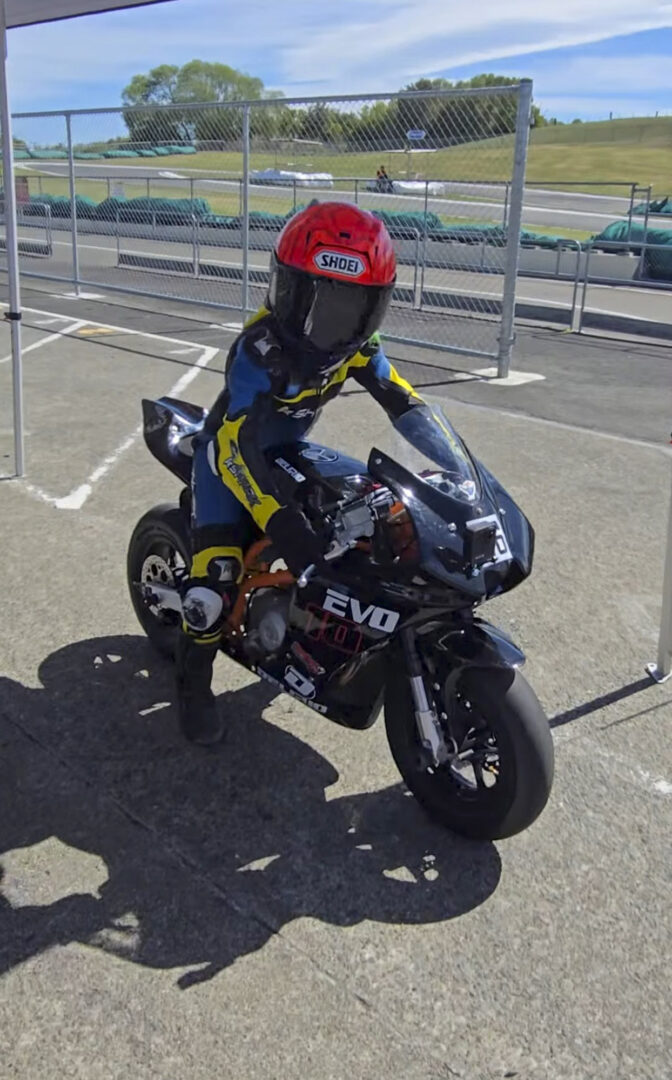
His first experience on a MiniGP bike came during a MiniGP Academy New Zealand Have A Go Day in April 2025. He initially signed up for a 20-minute session but ended up staying for the entire three-hour afternoon track day.
We ordered his own GP bike, which arrived the day before the opening round of the Pirelli New Zealand MiniGP Series. With virtually no time on the machine, James went out and set a lap record.
We were scratching our heads wondering, “How does he know how to do that?”
I think Chappy was thinking exactly the same thing.
What was it about racing that hooked him?
He was hooked from his very first motocross race day when he was five years old.
If you ask James what he loves about racing, he’ll probably just shrug his shoulders and say, “It’s just fun.”
He loves going fast and racing with his mates. And if we’re honest, we think he secretly knows it’s pretty cool and is very proud of what he has achieved — even if he would never actually say it.
The MiniGP Discovery
What has his progression through MiniGP been like so far?
From the very first time James rode a MiniGP bike at a MiniGP Academy New Zealand Have A Go Day in April 2025, he showed incredible natural ability.
When we arrived at the track, we didn’t even know these types of bikes existed. James suited up with the gear supplied, completed some basic riding assessments and was sent out onto the circuit. As it turned out, the little guy could ride.
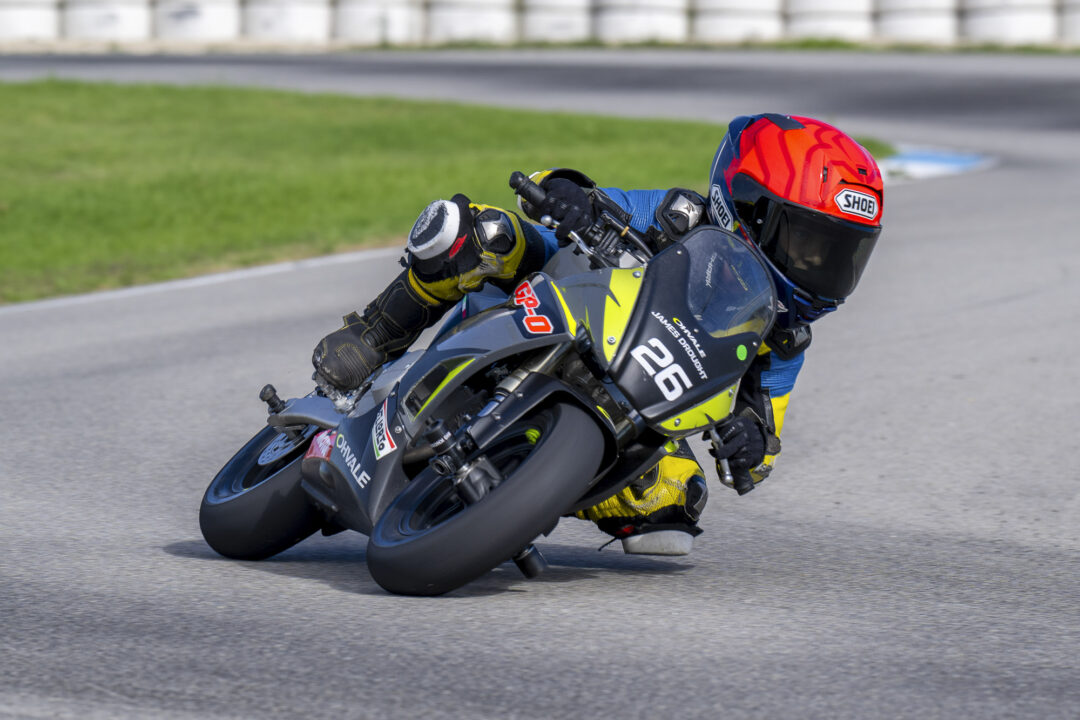
After two more Have A Go Days, we ordered him his own bike and James went on to compete in the New Zealand Pirelli MiniGP Championship, finishing second overall in the national series.
Throughout the season, he regularly set fastest laps and showed an impressive ability to ride with his head as much as his heart. His patience, racecraft and maturity often stood out, especially considering his age. At times he was under enormous pressure from riders behind him, but he never seemed to panic. He simply stuck to his lines and rode his own race.
One of our early experiences in the road racing paddock still makes us laugh. A gentleman pitting nearby came over and asked how long James had been riding his GP bike.
I looked over at the hour meter and said, “About 0.2 hours.”
He couldn’t believe it.
He said, “You need to bring him to Auckland and put him on one of our Supersport 150 bikes to see how he goes. He’s pretty small for an 11-year-old though.”
I replied, “No, he’s not 11. He’s just turned eight.”
The guy nearly fell over.
We quickly discovered how incredible the road racing community in New Zealand is. It is filled with amazing people who are passionate about helping young riders develop.
We have been truly humbled by the time, effort, advice and support offered by individuals and organisations within the sport.
We will continue to do our best to promote MiniGP and junior motorcycle racing because there are some incredibly talented young riders in New Zealand who only have these opportunities because volunteers and supporters dedicate so much of their time to making it happen.
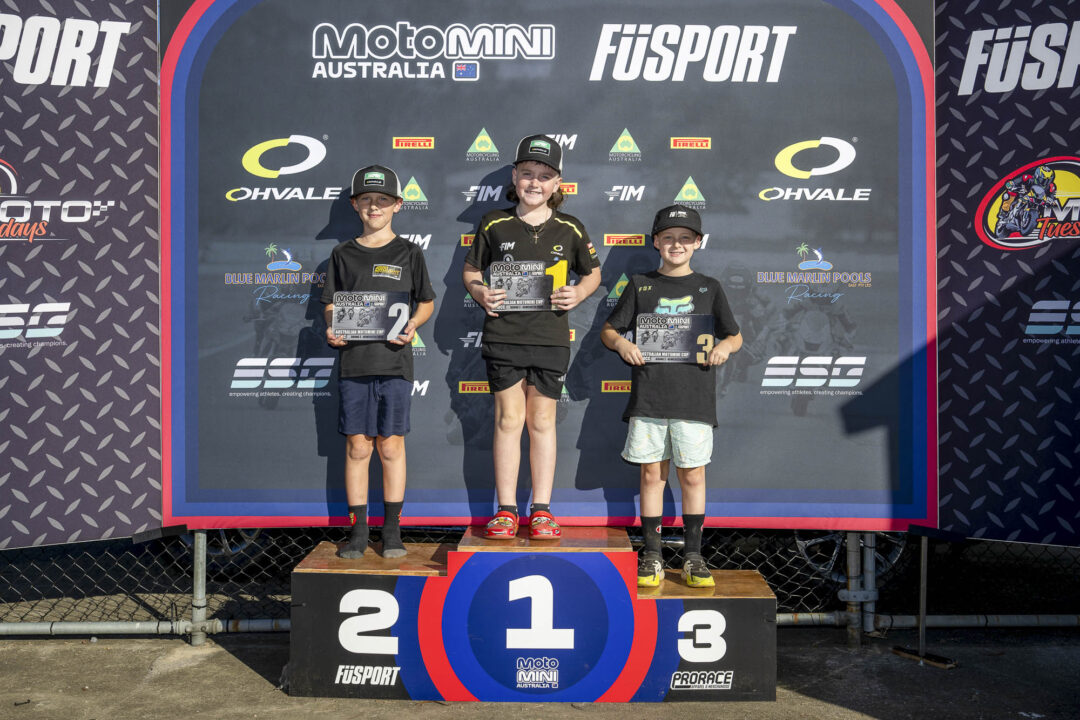
Taking On Australia
How difficult has it been stepping into the Ohvale Australia Cup?
Honestly, it probably wasn’t as difficult as people might expect because we travelled to Australia with no real expectations.
Our mindset was simple — make it work, learn as much as possible and enjoy the experience.
There were definitely plenty of lessons involved with racing internationally. James was riding unfamiliar circuits on an unfamiliar bike, but we approached it the same way we approach everything: understand the motorcycle, understand the track and work out how to go fast.
We turned up in Australia with a small toolbox and a fairly basic setup, renting a bike for the weekend, while some teams were swapping exhaust systems and making major changes between sessions trying to find every last bit of performance.
We kept things simple — gearing changes, small setup adjustments and making sure James was hitting his marks.
Then he went out and put the bike on pole position during his very first weekend, which was pretty special.
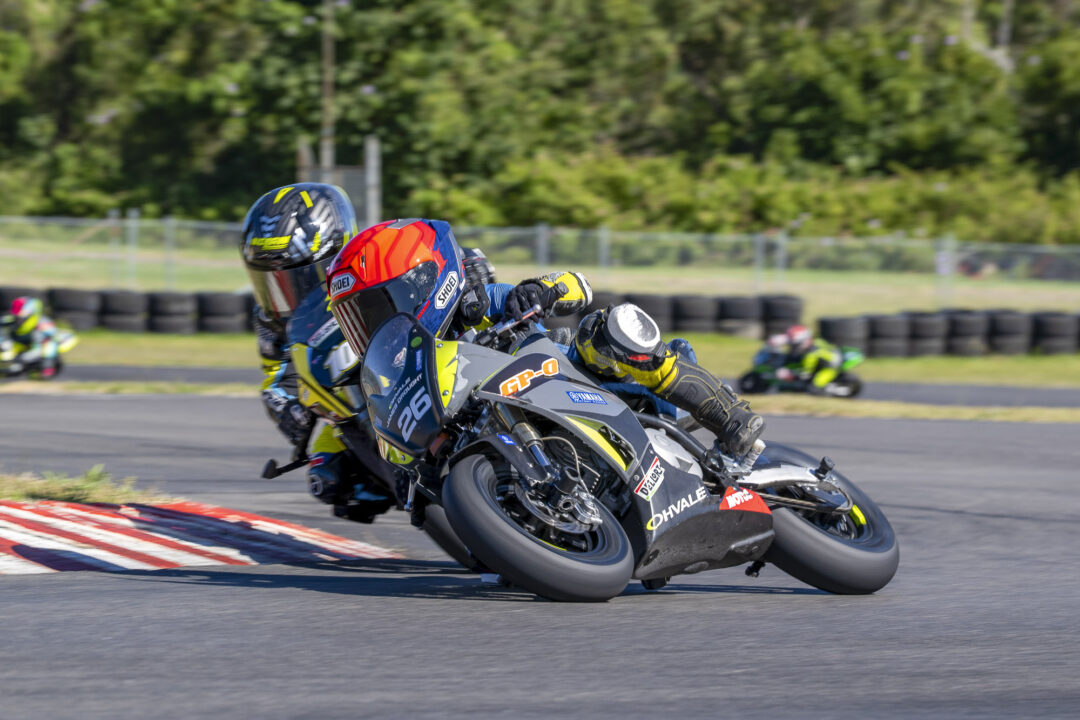
There were also plenty of hoops to jump through just to get there, but once we arrived, we hit the ground running. James was fast, consistent and regularly among the quickest riders, even setting the occasional lap record.
The racing style in Australia was definitely more aggressive than what we were used to in New Zealand, so adapting to that took some time.
The support we received over there was incredible. Everyone welcomed us and helped us out.
Wayne Maxwell, Kelly Nicole and the entire Ohvale Australia team were unbelievably supportive.
Wayne in particular was incredibly generous with his time and advice.
What has surprised you most about the level of competition in Australia?
The biggest adjustment was definitely the aggressive racing style.
We had to adapt quickly and begin talking more about defensive lines and protecting position on the track.
What really impressed us was James’ ability to listen, process information and adapt at such a young age.
He rides with a level of maturity well beyond his years.
Even when other riders were aggressive around him, he rarely became flustered or emotional. He continued to ride smartly and often his patience paid off later in the race.
It was amazing to watch him learn and adapt in real time.
Another thing that stood out was the quality of the facilities and the amount of training available to young riders in Australia.
However, we are also incredibly lucky in New Zealand to now have access to similar opportunities.
Thanks to KartSport New Zealand clubs and the New Zealand MiniGP Academy, young Kiwi riders have access to some fantastic facilities and pathways into road racing.
The future of junior road racing in New Zealand looks incredibly bright.
How important was James’ first New South Wales race win?
It was a really important moment because it showed James that all the hard work, dedication and his ability to adapt could pay off at this level.
That weekend we saw another level of focus and determination from him.
You could tell through his riding that he really wanted it. He rode hard, with aggression and commitment, but to his credit he remained composed and patient. It was a very calculated ride.
We really believe in the importance of three key elements — the bike, the rider and the mindset.
That weekend felt like another step in James’ mental development and his understanding of what it takes to succeed in the sport.
As parents, we were incredibly proud of the way he handled himself.
But at the same time, we constantly remind ourselves that he is only eight years old.
Fun still has to be the priority.
He has to be the one driving this journey because he loves it, not because anyone expects results from him.
If the stars continue to align, he could achieve great things.
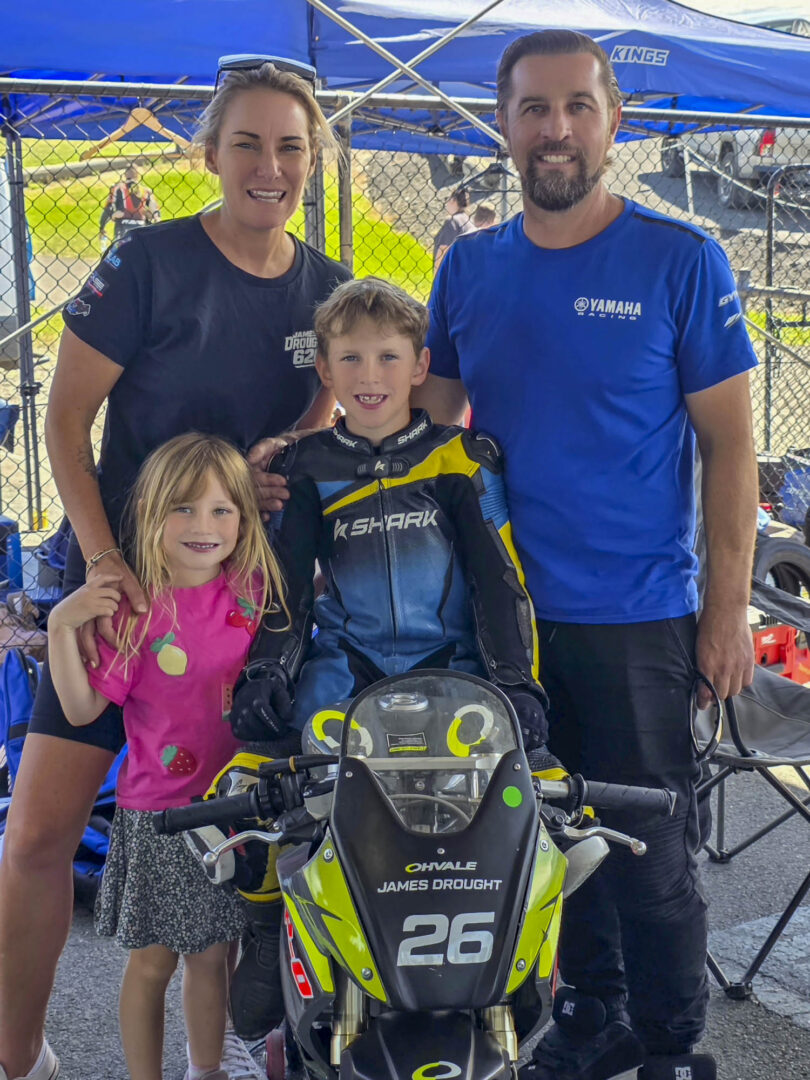
Life As A Racing Family
What does a typical race weekend look like for your family?
Race weekends usually start long before we even get to the track.
There are late nights in the shed preparing bikes, checking gear, loading trailers, packing tools and trying not to forget anything important.
Depending on where the race is, we’ll either leave very early in the morning or head away the night before and camp at the track.
Once we arrive, it becomes organised chaos — kids riding around on scooters and bikes being little knuckleheads, adults catching up and everyone working through their own routines.
For us, a lot of focus goes into track walks, studying lines, identifying reference points and trying to work out where the speed is.
Then it’s practice sessions, adjusting bike setup, changing gearing, reviewing what worked and what didn’t, qualifying and racing.
But there is also a really special social side to it all. The racing community is full of amazing people and there is a huge amount of support between families.
At the end of the weekend, it’s packing everything back up, driving home exhausted and trying to take positives and lessons from every race meeting — all while making sure it remains fun.
How much travel and commitment is involved behind the scenes?
There is definitely a huge commitment involved — financially, physically and personally.
We travel regularly for race meetings and practice sessions, but in many ways, travel is simply the reality for many Kiwi sporting families. Whether it’s rugby, netball, hockey, gymnastics or motorsport, success requires commitment, sacrifice and plenty of weekends spent on the road.
Finding the right balance is important and, as most parents know, it isn’t always easy.
The financial commitment is significant as well — bikes, tyres, fuel, trailers, maintenance, riding gear and travel costs all add up very quickly. That is why we always come back to the long-term approach.
James also races motocross alongside his road racing, so there are very few quiet weekends.
We approach it as a complete team effort. Mum, Dad, James and his younger sister Kate are all part of the journey.
Kate sacrifices a lot by spending so many weekends at the track, and we are very mindful of that. However, she is incredibly supportive of her brother and the bond they share is something we are very proud of.
We are fortunate enough to live on a lifestyle block where James has his own motocross track at home, which is a huge advantage for his training and development.
What sacrifices has the family had to make to support his racing?
Like any motorsport family, there are definitely sacrifices involved.
Kate gives up many of her weekends to support her brother, but she is also undoubtedly one of his biggest supporters.
Watching the bond between those two is incredibly special.
Dad spends countless hours maintaining and preparing the bikes and equipment to the standard required to remain competitive, while Mum is honestly the brains of the entire operation and keeps everything moving behind the scenes.
Financially, there has already been a substantial investment and James is still only eight years old. That is simply the reality of competing in motorsport at a high level.
We are very honest with James that this lifestyle is not normal for most children his age. We don’t live an extravagant lifestyle ourselves — we choose to invest our time, energy and money into our children and the opportunities they have.
We are fortunate enough to currently be able to support his racing ourselves, but we are also realistic about how expensive the sport becomes as riders progress.
Long term, sponsorship and supporters will become an important part of helping James continue to develop and compete internationally.
Who are the people or sponsors that have helped James along the way?
Honestly, the list is huge and we are incredibly grateful.
James is just a genuinely loving and respectful little boy and, when you combine that with the talent and maturity he shows on a motorcycle, people naturally seem to want to support him.
The New Zealand MiniGP Academy has been absolutely incredible and gave James his first opportunity in road racing.
When we entered the sport, we were completely green and knew very little about the road racing world.
What surprised us was just how many experienced and highly respected people are involved in helping young riders develop.
People like Sloan Frost, Sean King, Tyler King, Nixon Frost, Vince Scappucci, Steve Lloyd and Chappy from the MiniGP Academy have all played a huge role in James’ journey and have been incredibly generous with their time and knowledge.
Being invited to join Frost/King Racing was a massive moment for us as a family, and Tyler King asking James to become his apprentice is something we will never forget.
We have also had many supporters following James through social media who have stepped in and helped in different ways.
The support surrounding our little team has been truly humbling.
We are incredibly grateful to everyone who has supported James so far and we will continue to do our best to represent them, promote junior motorcycle racing and make everyone proud.
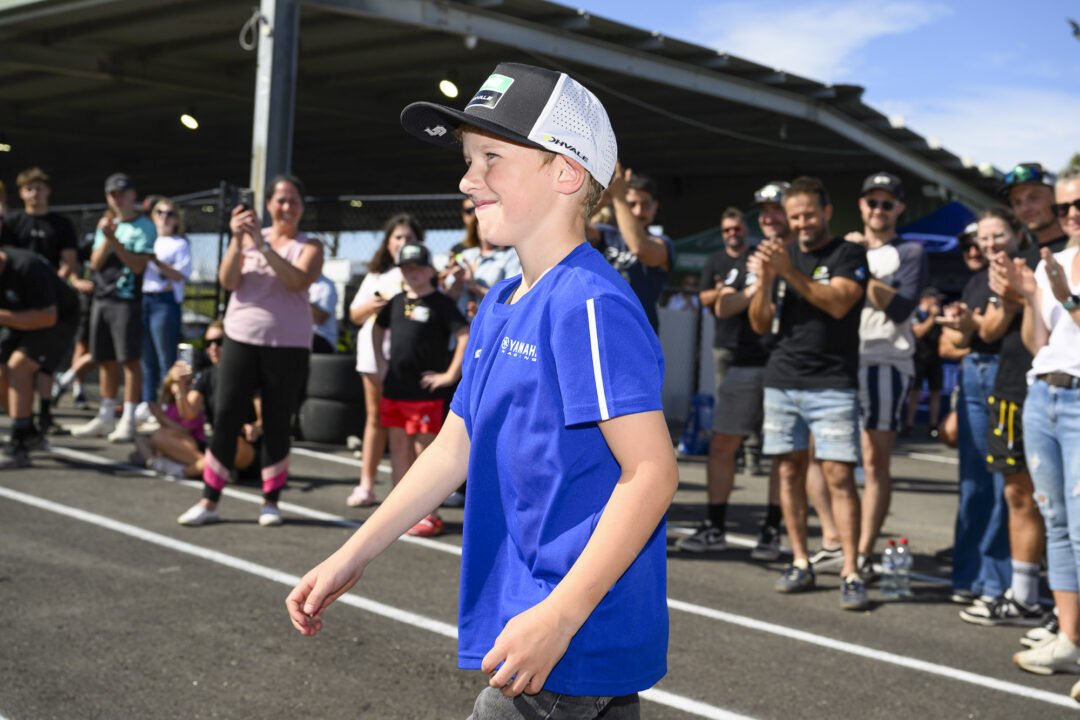
The Person Behind The Helmet
Does James have any racing heroes or riders he looks up to?
James talks about a wide range of riders he admires.
Names such as Hayden Fordyce, Alvin Wu, Nixon Frost, Scott Moir, Aaron Slight, Maximus Purvis, Ben Townley, Valentino Rossi, Marc Márquez, Travis Pastrana, Cole Davies and Tyler King are all riders he looks up to.
He’s especially excited to be part of the same team environment as Tyler and Nixon and to learn from riders who have already achieved so much in the sport.
He also believes young New Zealand rider Rocky Gibbs is incredibly talented.
And of course, there is also — in James’ words — “that guy Jason that rode the Britten!”
What are his goals and dreams in motorcycle racing?
Well, let’s put it this way — James recently rode his new 160cc GP bike on the track for the first time and now reckons his 110cc machine is a “three-toed sloth”.
If you ask James what his goals are, the answer is very simple:
He wants to go fast.
He has said that he wants to become a New Zealand Champion one day, but from the very beginning our focus has never been on results.
Fun, safety and developing his skillset have always been the priority.
We haven’t set conventional goals such as needing to finish in the top five. Instead, our race-day goals have always been things James can control — hitting his marks, looking further through corners, making good decisions and continuing to learn.
As we continue on this journey, he will naturally begin to understand the importance of setting goals and having a vision for what he wants to achieve.
At the same time, we are realistic about how difficult it is to make a career from motorsport, especially as a rider.
There are many pathways within motorsport outside of being the person sitting on the motorcycle, and education remains hugely important to us. James is doing extremely well at school and we are not putting all our eggs into the motorcycle racing basket.
Right now, it is about continuing to support him, helping him learn, improve and enjoy the sport, while giving him opportunities that most children his age never get to experience.
In all honesty, because he is so young, we don’t think he fully understands the level at which he is already performing. We don’t want to overcomplicate things or place unrealistic expectations on him too early.
If his passion continues to grow alongside his talent, and he continues to develop the mental resilience that is already helping him succeed, then who knows where the journey could take him.
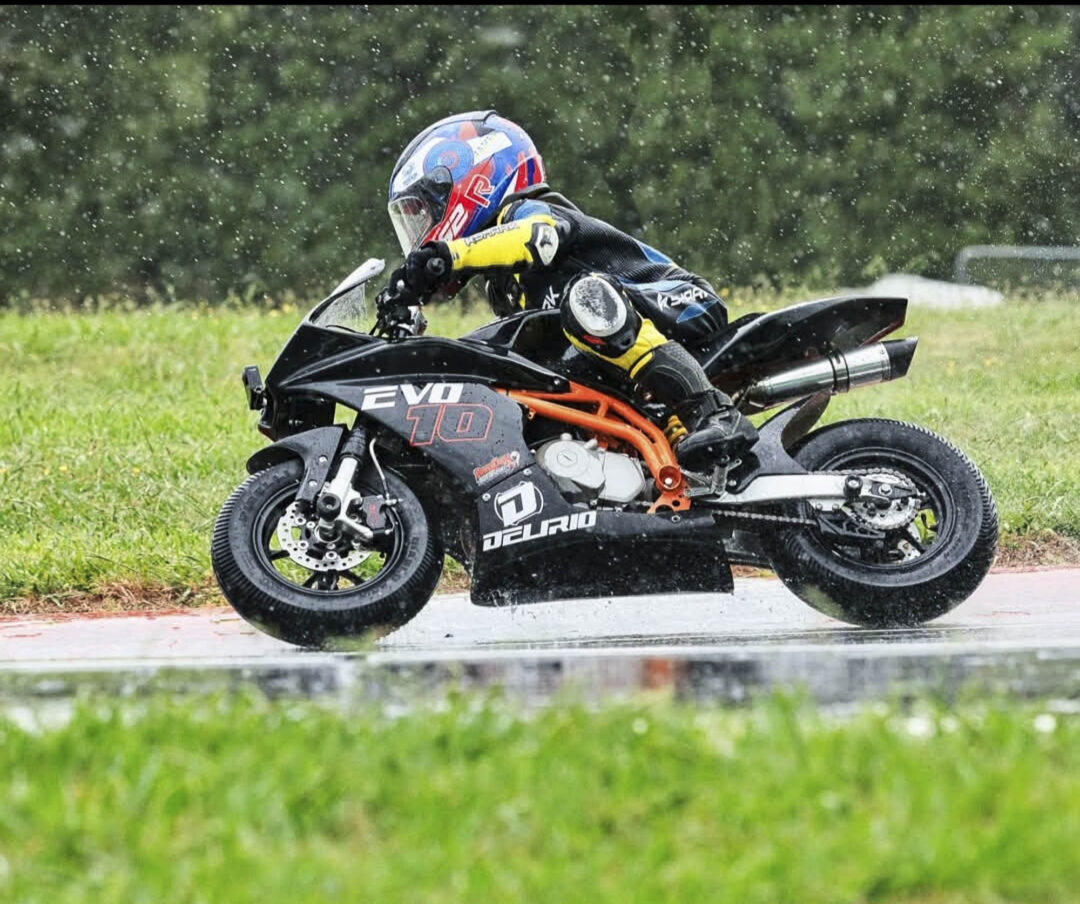
How exciting was it for him to be selected for the Ohvale Guangzhou Super Cup?
Initially, because he is still so young, James didn’t fully understand the scale of the opportunity.
He was at a sleepover when Mum texted him to say he was going to China.
In true James fashion, his response was simply:
“Cool.”
But once Mum explained that he had been selected to travel to China to represent New Zealand against some of the fastest young riders in the world, it absolutely blew his mind.
He is very excited now.
For us as parents, it is an incredible opportunity, but we are approaching it exactly the same way we approach everything else — with no expectations.
Our message to him is simple: do your best, ride hard, be proud to represent New Zealand and enjoy the experience.
Very few people get opportunities like this at such a young age.
Rip it up and have a blast.
What does competing internationally mean to him at such a young age?
For James, competing internationally still feels more exciting than intimidating.
At his age, he probably does not fully appreciate the scale of what he is doing yet, and that is actually quite special because it allows him to simply enjoy the experience.
In his own words, he says he is “really excited to be racing overseas and just wants to do his best”.
Competing internationally exposes him to different tracks, different riding styles, different levels of competition and even different cultures.
Those experiences are incredibly valuable not only for his development as a rider, but also as a person.
Hopefully, they give him a perspective on how lucky he is to represent New Zealand doing something he loves.
What has been your proudest moment as parents so far?
That is honestly one of the hardest questions to answer because there have been so many moments.
Watching him apply things we have discussed before races, seeing him stand on the podium for the first time, watching him crash twenty times in the mud and get back up every single time, seeing him sit on a start line in pouring rain without fear and getting his first holeshot — they have all been incredibly proud moments.
But some of our biggest moments have had nothing to do with results.
Seeing him lend his bikes to other children so they can practise, fist-bumping competitors before and after races, and choosing to move up classes early so he can challenge himself against faster riders says so much about his character.
One moment that really stands out was receiving the Sportsmanship Award at the Mini Nationals in Christchurch.
That meant a huge amount to us.
And honestly, one of our favourite moments is watching him come off the track after a race and hug his sister Kate to thank her for supporting him.
As parents, that melts your heart every single time.
What has motorcycle racing taught James already?
Motorcycle racing has already taught James valuable lessons in resilience, discipline, focus and pushing himself outside his comfort zone.
He is learning that when something is difficult, the best approach is to focus on what he can control, put in the effort and simply do his best.
The sport has taught him the importance of preparation, how to adapt under pressure and how to take positives and lessons from both the good days and the difficult ones.
It has also developed his mechanical understanding from a young age and shown him the value of hard work and consistency.
What would help James most moving forward — sponsorship, support, mentoring?
Honestly — all of the above.
We have been incredibly fortunate to receive guidance and support from highly respected people within the sport. Many of them have asked for nothing in return, driven purely by a love of motorcycles and a desire to see young riders succeed.
Like those people, we are passionate about the sport. Dad currently serves as co-president of the local Mini MX track and we actively open our pits whenever possible to show supporters the bikes and promote MiniGP.
Even though we have only been involved in road racing for a short time, we already feel a responsibility to help grow junior motorcycle racing in New Zealand.
We maintain a humble perspective, but we also recognise that James is currently competing at the pointy end of the sport and performing strongly against some of the best young riders around.
Motorsport requires significant investment, particularly once international travel becomes involved.
As James progresses, sponsorship and financial support will become increasingly important.
For now, simply knowing there are individuals and businesses who believe in what James is doing and share our excitement for the journey means a huge amount.
James’ mum currently manages most of his social media, documenting his journey and keeping it authentic to who he is.
As he gets older, he will take more ownership of that side of things, but we also understand the importance of developing professional content and partnerships that help showcase his story.
Is there anything people might not realise about junior motorcycle racing in New Zealand?
One of the biggest misconceptions is that motorcycle racing is more dangerous than it actually is.
Someone seeing young children riding at speed for the first time might think it looks extremely dangerous. What they do not see is the years of progression, training and skill development that takes place before riders reach that level.
The children wear the best safety equipment available and develop their abilities gradually. Nobody jumps on a motorcycle and instantly rides flat out.
Another thing people may not realise is that the sport can be enjoyed at many different levels and budgets.
You do not need the latest or most expensive equipment to get involved.
In the early stages, good technique, racecraft and consistency are far more important than outright speed. Build strong foundations first and the speed generally follows.
Motorcycle racing also teaches young people valuable life skills around risk assessment, resilience, discipline and decision-making.
Kids are often capable of far more than we give them credit for.
Finally, if you had to describe James in three words, what would they be?
Caring. Humble. Talented.
James’ website is live, so if you’d like to follow his journey or help in any way, check it out.