

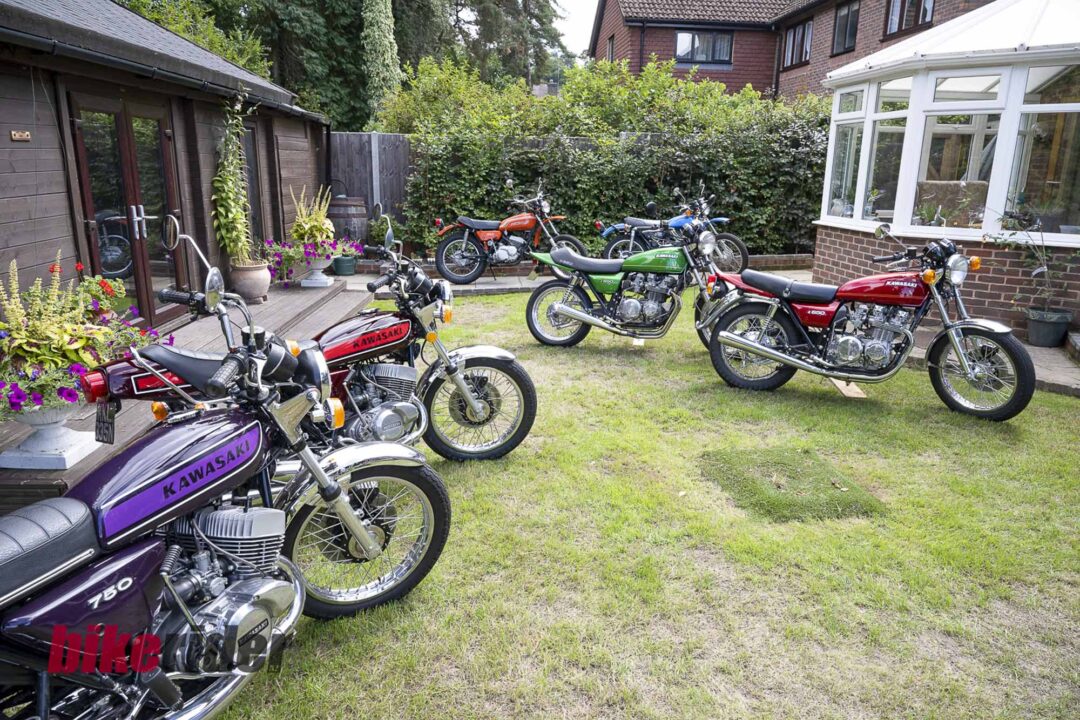
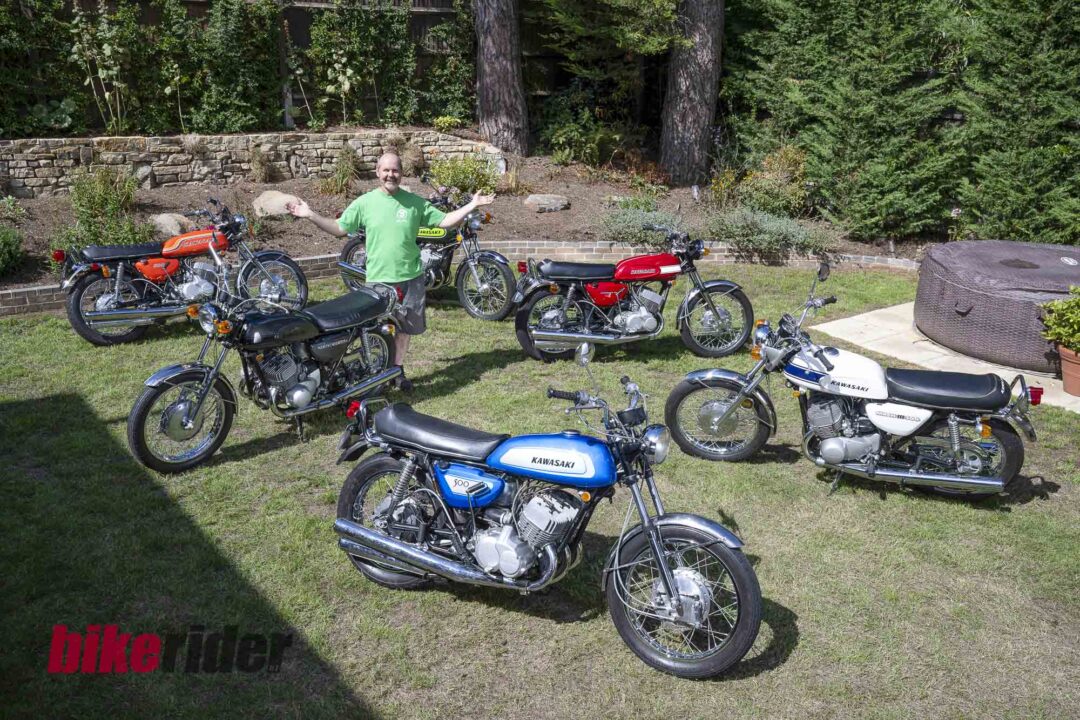
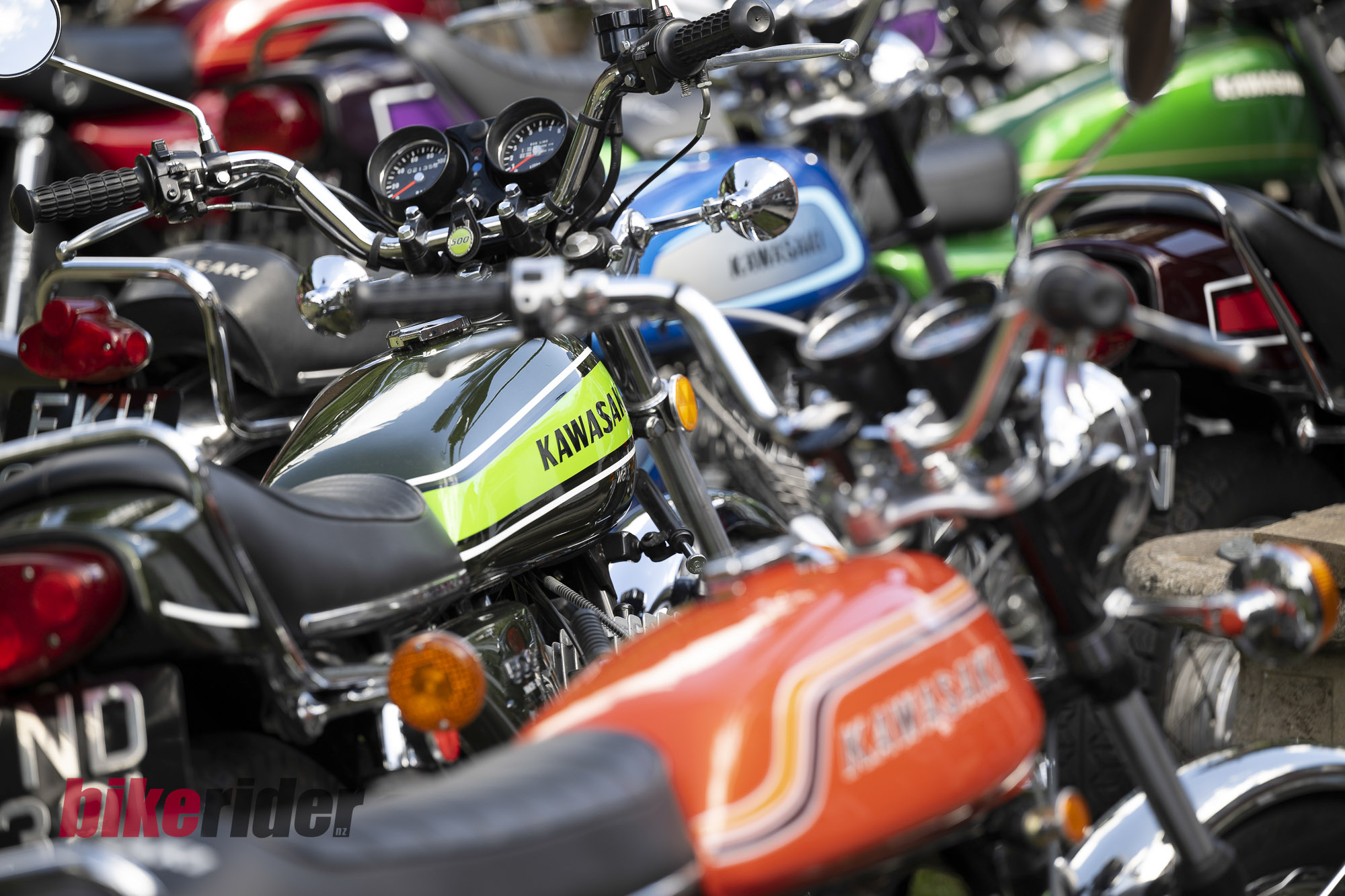
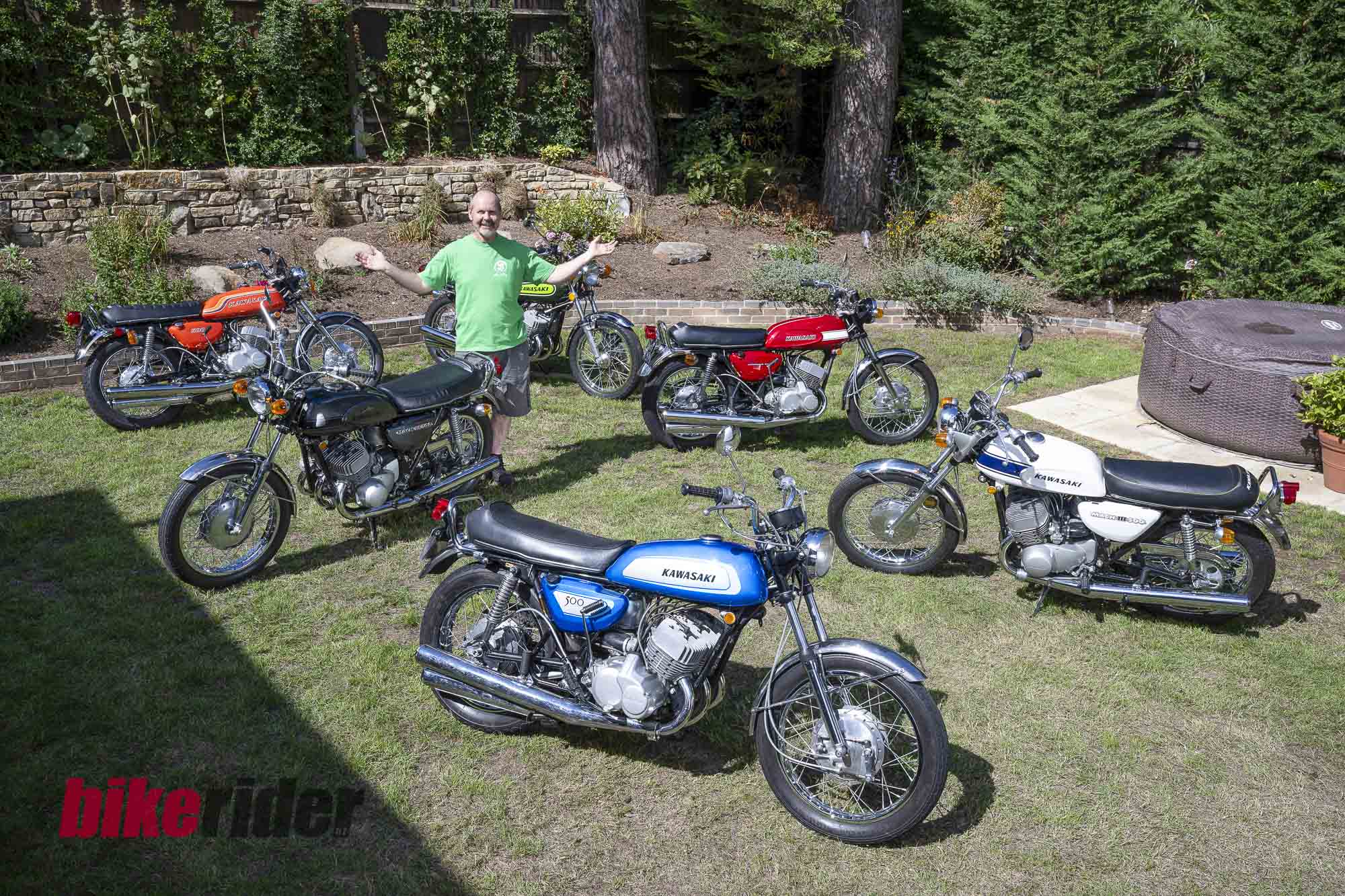
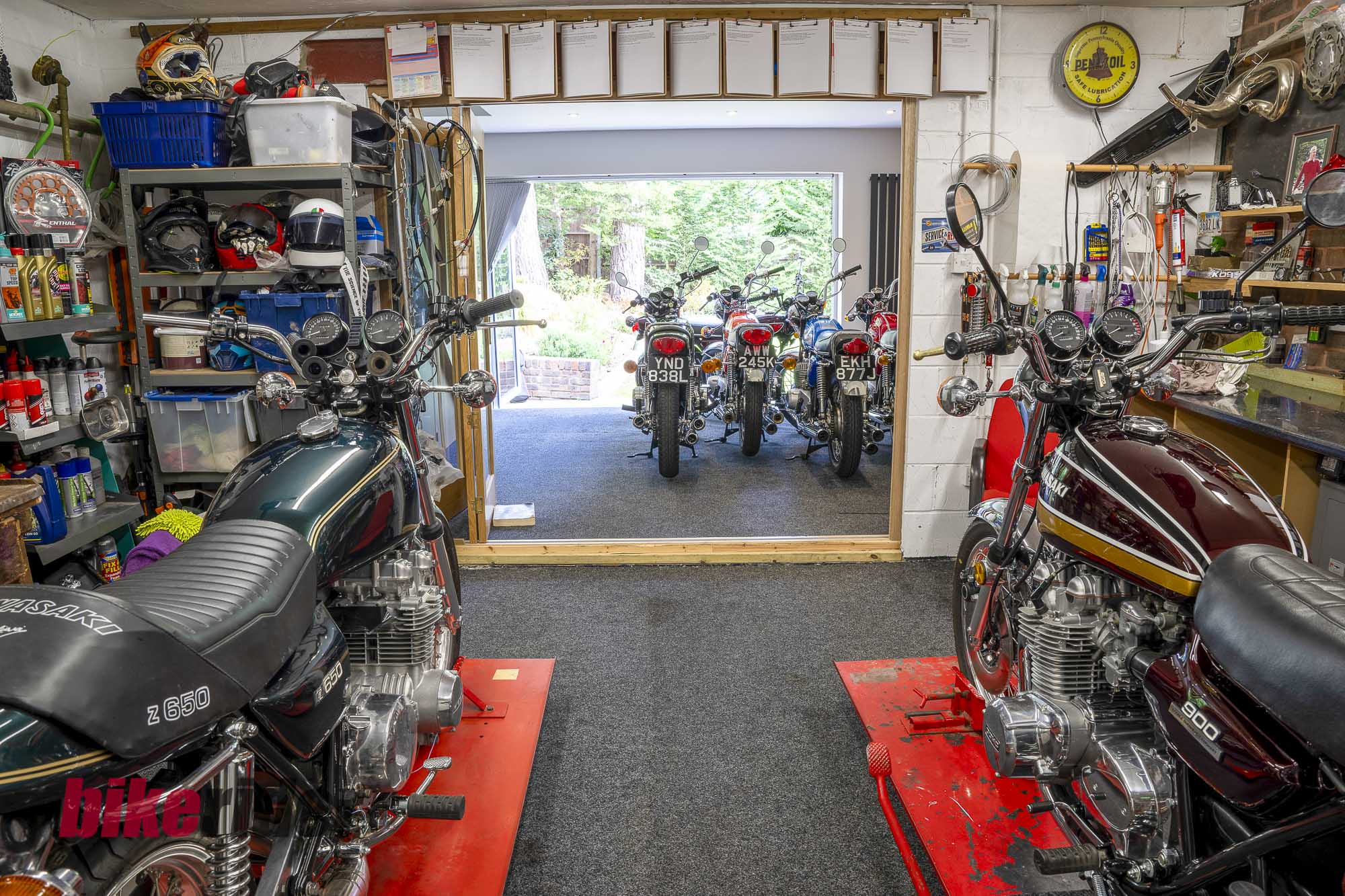
- Rich Hobbs’ collection comprises 22 Kawasakis, with a particular focus on the iconic models produced between 1969 and 1977.
- The collection includes legendary Kawasaki two-strokes such as the H1 Mach III and H2 750, alongside landmark four-strokes including the Z1 and his original Z650.
- Most of the bikes aren’t simply display pieces – Rich believes motorcycles are there to be ridden and regularly takes his classics out on the road.
From wild H1 and H2 two-stroke triples to the legendary Z1, British enthusiast Rich Hobbs has assembled an extraordinary collection spanning one of the most exciting periods in Kawasaki history – and, unlike many collectors, he actually rides most of them.
Words: Alan Cathcart Photography: Oli Tennent
Few manufacturers have produced two motorcycles as significant – or as dramatically different – as Kawasaki’s Z1 and H2 Mach IV. The 903cc four-cylinder Z1 four-stroke was arguably the world’s first superbike for the street, while the H2 Mach IV 750cc two-stroke triple was Kawasaki’s ultimate straight-line weapon. Going around corners, however, was quite a different matter…
One man fortunate enough to be able to simply open his garage doors and choose from 22 different Kawasakis for a ride through the Hampshire countryside is British Kawasaki collector Rich Hobbs.
Guildford, Surrey-born Rich, who runs a property maintenance business, has been a Kawasaki owner since 1984, after passing his test a couple of years earlier on a borrowed Honda SS50.
“I’ve always felt Kawasakis were a cut above the rest,” he says. “The way they look and their engineering has always been spot on, and I’ve always felt they’re one step above everything else.
MORE ARTICLES
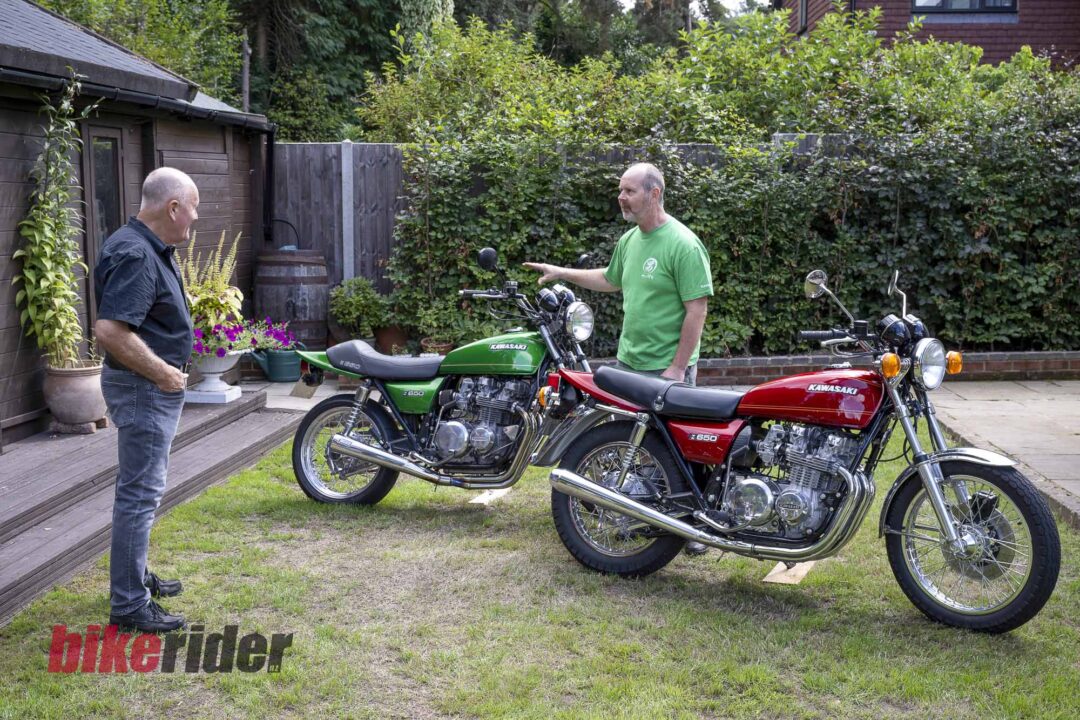
“After leaving school I went to work in a petrol station on the A3 at Wisley that I needed a cheap car to get to, which then died on me. So by dint of no drinking and no going out I managed to save up £600 to buy a green Kawasaki Z650, then my dream bike. My mum drove me up to Watford to pick it up – and I’ve still got it!”
That first Kawasaki lasted just a month before the big ends blew.
“I went to my local Kawasaki shop, and the mechanic there diagnosed it immediately, and offered to fix the engine for me after hours in his home workshop. That was nearly four decades ago, and he’s been my mechanic and best friend ever since.
“His name’s Mark Hutton, he’s very knowledgeable on all Kawasakis, and today he lives just down the road from my home, which is very convenient!”
Various other Kawasakis followed, including a shaft-drive GT550 which Rich used while working as a motorcycle courier for five years.
“I had five bikes by then, but it was too many, and anyway I’d lost my love of motorcycling because now it was just a job. The last thing you want when you’ve been out riding a bike all day every day delivering stuff is to come home and work on something else with two wheels and a motor as a hobby.
“I just fell out of it, got married to Kay, had children, and sold all my bikes except for the Z650. I lost contact with Mark for around 20 years, but then in about 2010, when my children had grown up and I started to have a bit more money left over, I came back to bikes again – and it all took off from there.”
Rich Hobbs’ extensive collection, focused predominantly on Kawasakis from 1969 to 1977 with one later exception, has therefore been assembled in little more than a decade and a half. Many were basket cases Rich bought and personally restored, while others were machines Mark Hutton had previously rebuilt.
THE KAWASAKI THAT STARTED A COLLECTION
Ironically, the later bike in the Hobbs collection was the machine that kickstarted what Rich initially thought might become a small collection of half a dozen Kawasakis.
He had always fancied the KZ1000 LTD, Kawasaki’s US-market high-barred boulevard cruiser produced in the early 1980s, and eventually sourced one with the intention of restoring it.
“It was a nail, with so many major parts missing – there was no sump, no clutch, no carbs, no exhausts and no seat, and it had obviously been left outside for a long time, because we had to cut the swingarm out!
“But I found all the parts either on the internet or through DK Spares, and rebuilt it – so that taught me what it was feasible to do. It very much lived up to expectations. It’s so nice to ride, with lots of torque and a chilled-out riding position. And I must admit I get a kick out of turning up at a rally or a social, and nobody quite knows what it is!”
The satisfaction of completing the KZ1000 left Rich wanting more.
CHASING KAWASAKI’S TWO-STROKE LEGENDS
“I’d definitely got the bug for finding older Kawasakis and restoring them,” he says. “I’d obviously been out of it for a long time, but I really fancied the early two-strokes, which I’d always admired but never thought I could afford to get my sticky hands on.
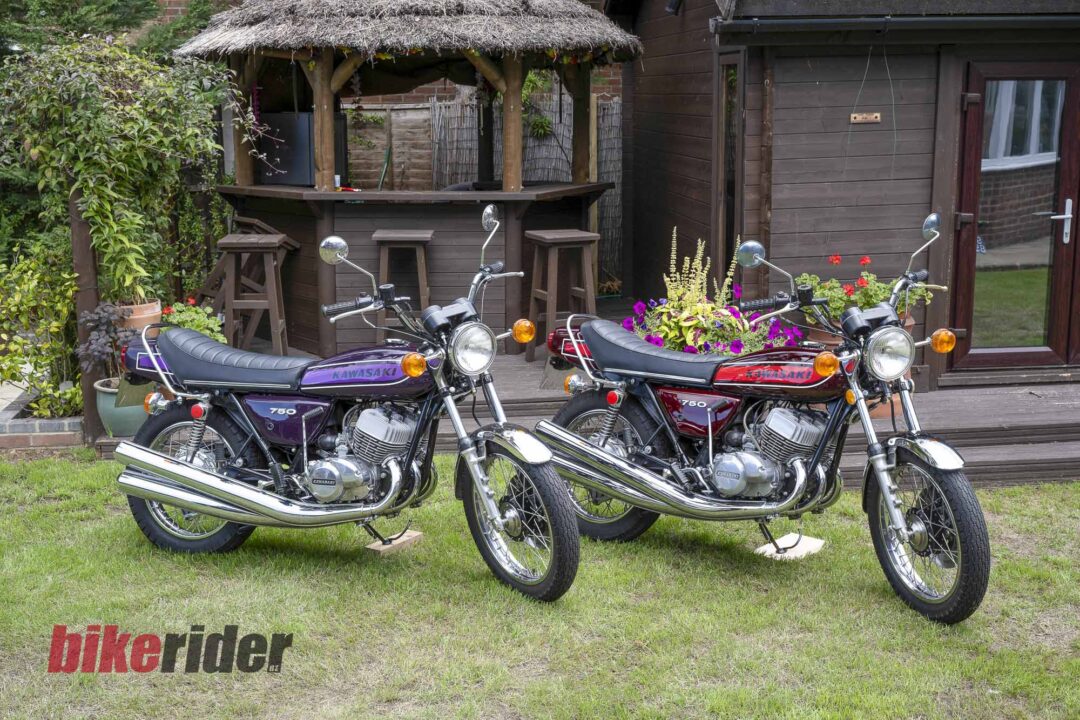
“I’d always loved the H2 750C, which is the prettier version with the longer tank and shorter seat, so that was the one I wanted.”
Rich found an American example which he believes had been crashed around 40 years earlier and then left outside. Fortunately it had spent its time in a dry state, although it was still in poor condition.
“It cost me £6,000, even in the state it was, and another £10K to restore, so I’ve put a lot of money into it, but I really enjoyed rebuilding it. Mark Hutton was very helpful as usual, and he did the engine for me while I restored the cycle parts.
“And again, I managed to track down all the original parts I needed to complete the bike either via the web or DK Spares.”
With Kawasaki’s mighty 750 two-stroke triple in the garage, Rich turned his attention to the earlier 500cc H1 Mach III.
“The trouble was which one to go for,” he says. “The holy grail is the 1969 first-series model with the white-and-blue colour scheme which they launched at the 1968 Tokyo Show across the hall from the Honda CB750 four.
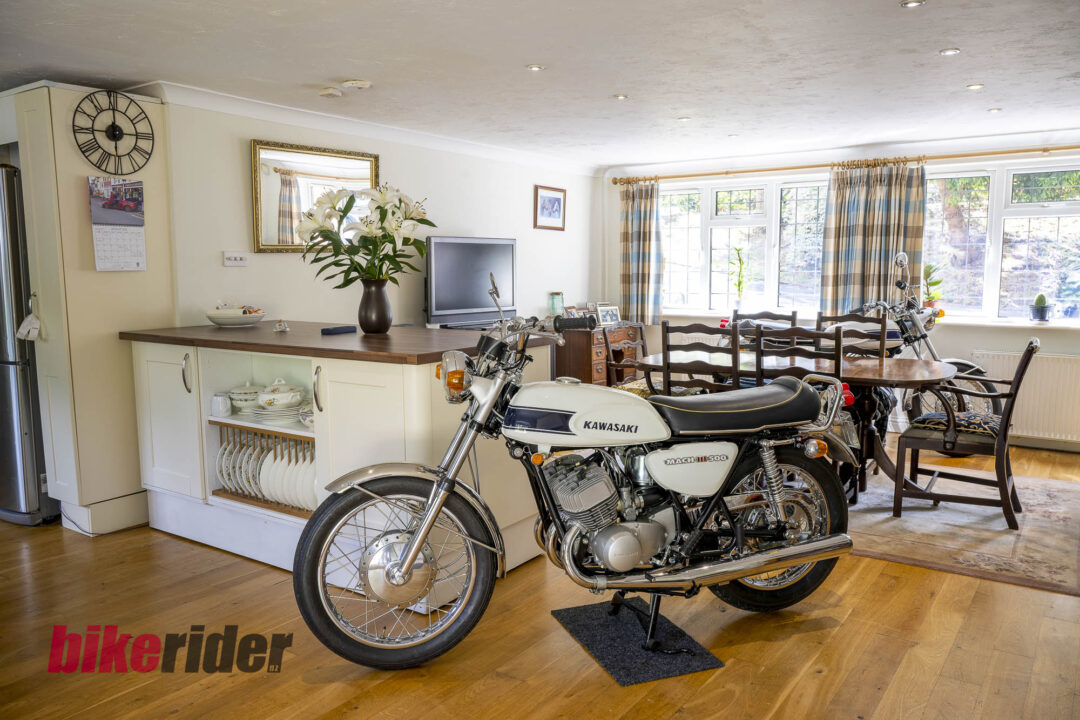
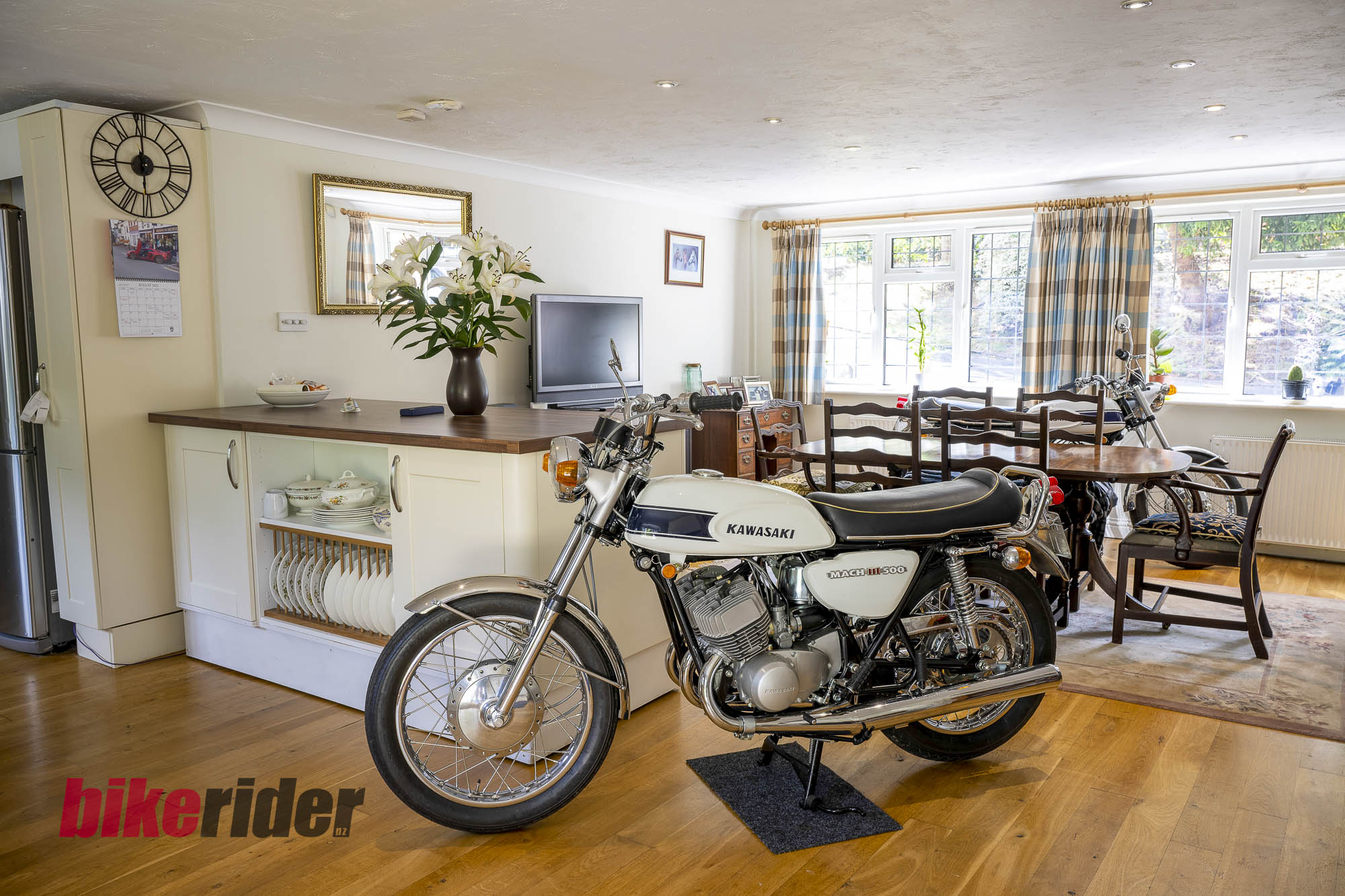
“Mark had one he’d restored that had won Best in Show at the 2009 Stafford Classic Show, which celebrated the 40th anniversary of the model. So I bought that from him with a view to it just being a work of art on display in my dining room, which is where it lives today.”
It’s one of only two bikes Rich owns which don’t get ridden, because it’s completely original even down to the decals. The other is his first-series Z1 four, which has covered zero miles since restoration.
“However, I want to ride all my bikes,” he says, “so then I started looking for other H1s that I could throw a leg over. Again, Mark had a later D-model that he’d just finished building from new old stock parts, and I bought that from him, too.
“I ran it in carefully, and it’s just wonderful to ride. It has slightly less power than the earlier ones, because Kawasaki restricted it for emissions purposes – but paradoxically that makes it a lovely bike to ride in normal use. It’s quite fast enough for me!”
WHERE DOES A COLLECTION END?
The collecting snowball continued to gather pace, and over the following years Rich assembled an enviable array of early Kawasakis spanning the 1969 to 1977 period.
Why 1977 as the cut-off?
“Well, after that date represented by the Z650 B1 four-stroke, they changed the Z650s quite a bit to make the B2s and B3s, and they never did it for me. I always thought the original was the best.
“The two-strokes were getting weaker and weaker by then, and the E version of the H1 is the same as the D, but with the rubber-mounted engine, and the F was done in horrible colours and had even less power because of emissions, so that’s not very desirable, either.
“The two-strokes just got very weak compared to before in terms of performance and desirability, because of legislation.”
Is there any Kawasaki model from that era Rich is still hunting?
“I never wanted a US/UK-market H1B, because it’s visually exactly the same as the C, so what would be the point of having both? But they did make a Japan-only home-market version in a lovely shade of red, and there’s one out there that’s been offered to me, but it’s hard to pin the seller down.
“That might possibly be a future addition, but I’ve got two unrestored 350 Big Horn singles, and I think I’ve run out of oomph for restoring those.”
So, the inevitable final question: which Kawasaki is Rich’s favourite?
“That’s impossible to answer. If I look at the whole collection, I’m really glad to own all of them, but to actually pin one down as my favourite one – I can’t!
“So let’s just say my favourite bike is the one I’m riding today!”
Kawasaki Collection Gallery
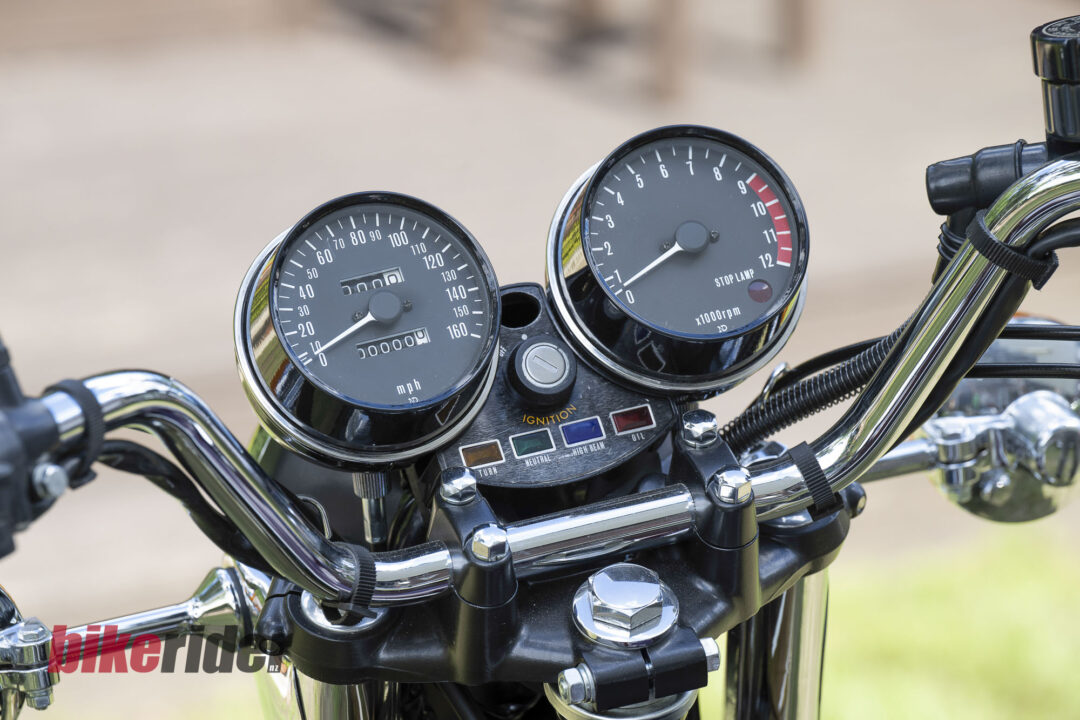
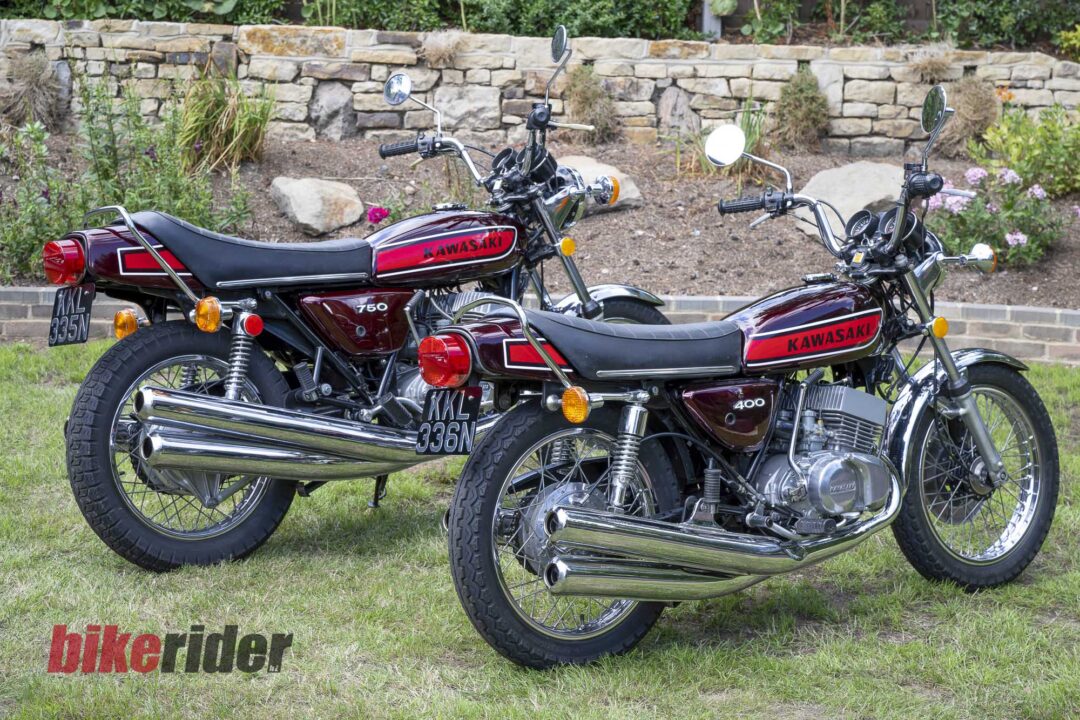
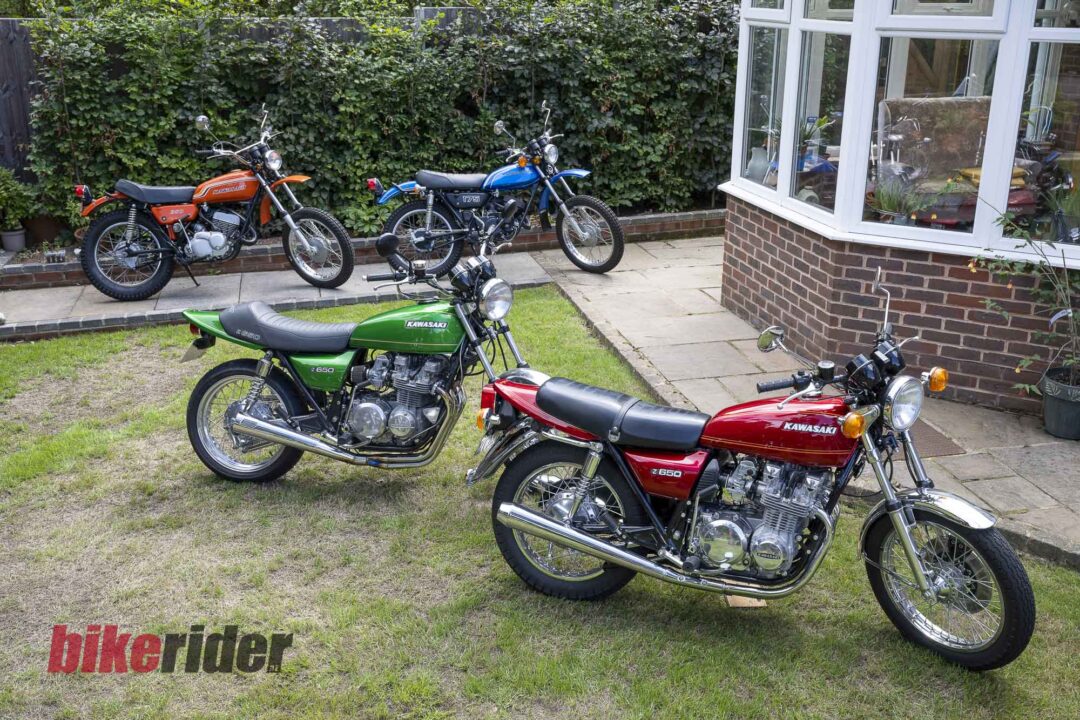
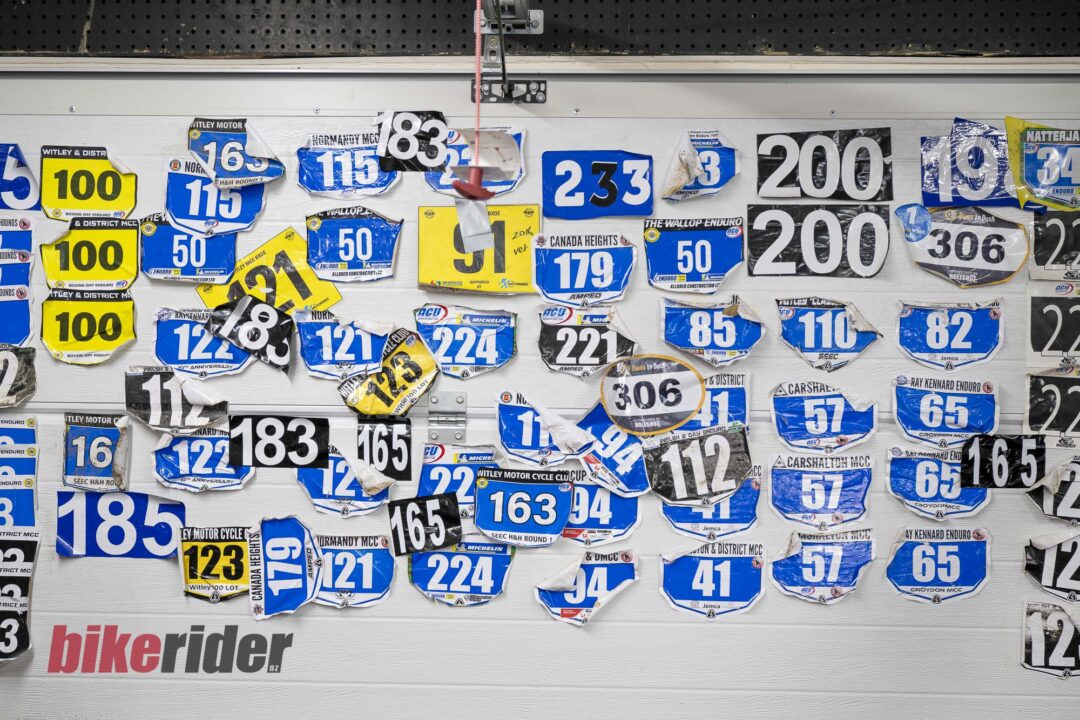
RICH HOBBS KAWASAKI COLLECTION: The Bikes
Let’s allow Rich Hobbs to give us a guided tour of the bikes in his collection, running from little to large….
Kawasaki 250 Bison & KE 175
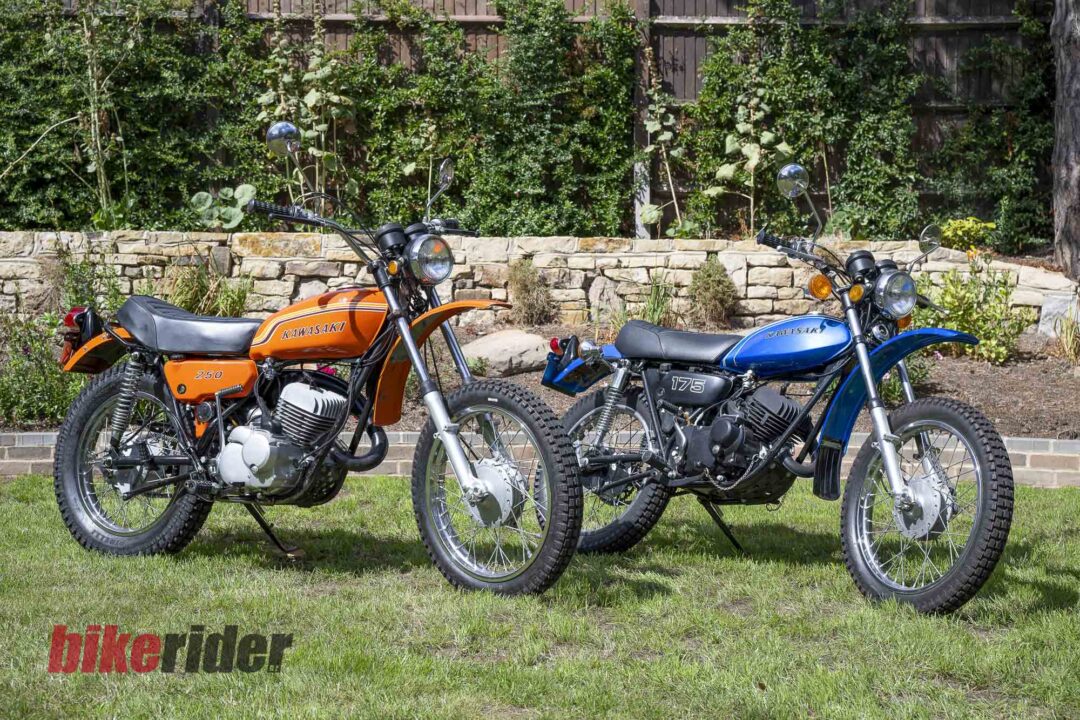
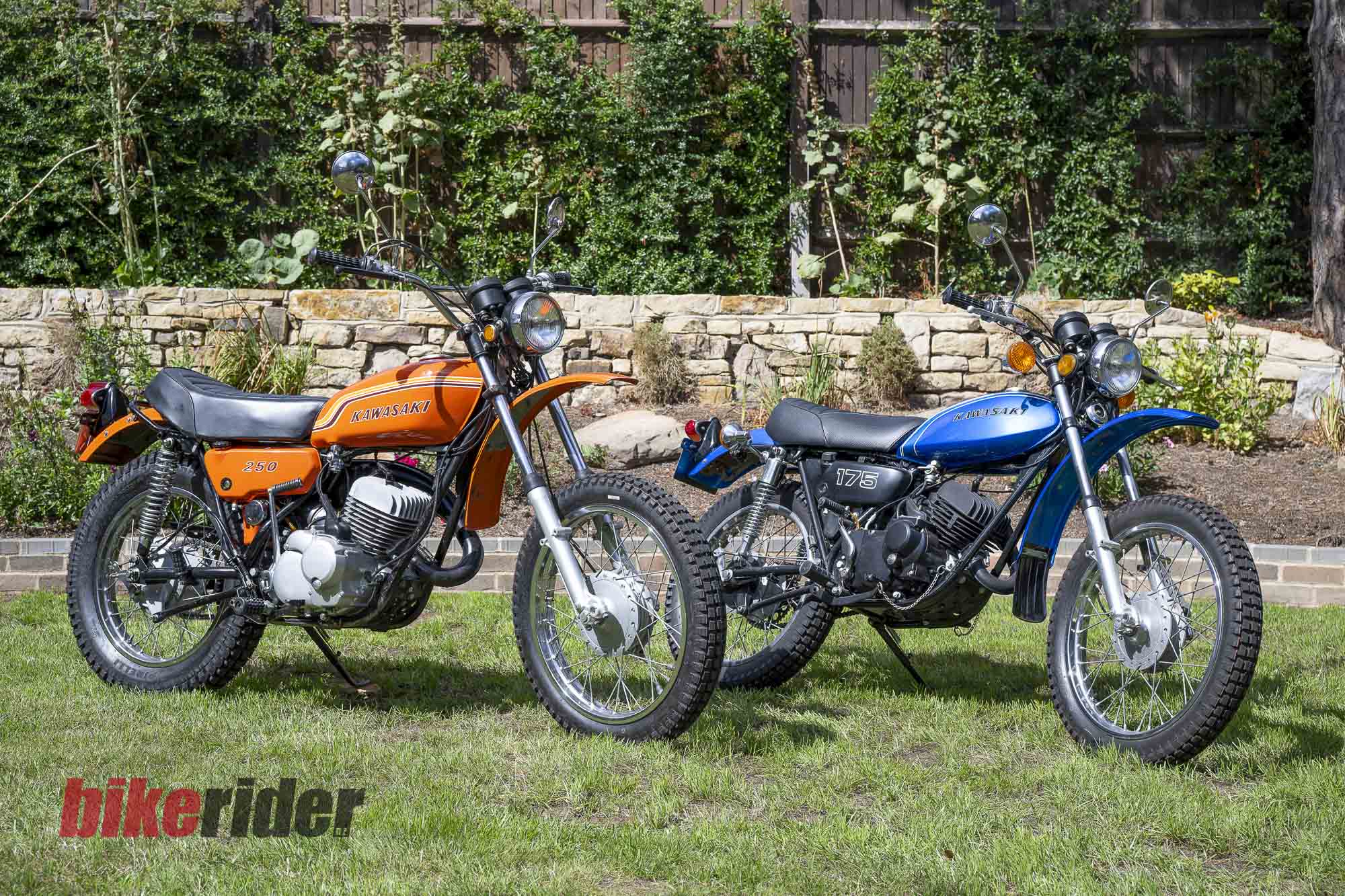
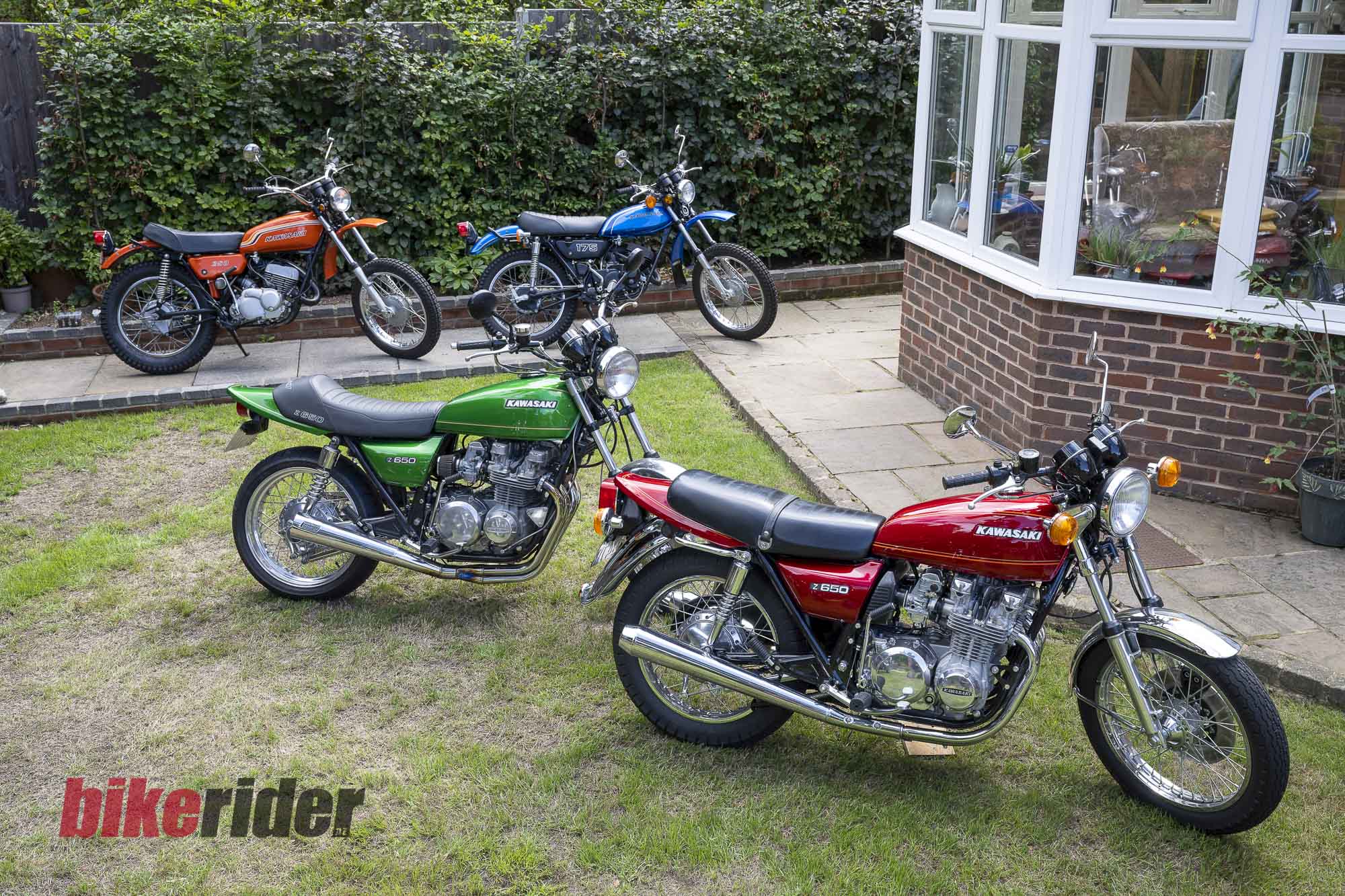
“I have a couple of rotary-valve two-stroke single trailbikes both from 1972 – the 250cc F8A Bison and the 175cc F7B, which are a pair of Mr. & Mrs. off-roaders. My wife Kay is very petite, so the F7B is ideal for her, because it’s actually a 125 frame with a 175 motor, so it’s a very small bike, but very effective. All the other Kawasaki two-strokes were piston-port engines, but these trail bikes have rotary-valve motors, which were very effective back in the day. Actually, you could probably semi-submerge them in water and they’d still run, because the carburettors are mounted inside the engine on the side of the crank, so until you get the airbox under water, you’re good to go!”
“I completely restored the 175 which came from the States as a total wreck, but despite being an off-roader the 250 Bison is unrestored and still has the original paint, which is just fabulous. It’s very rare in the UK, especially in this condition, but we do use it quite regularly.”
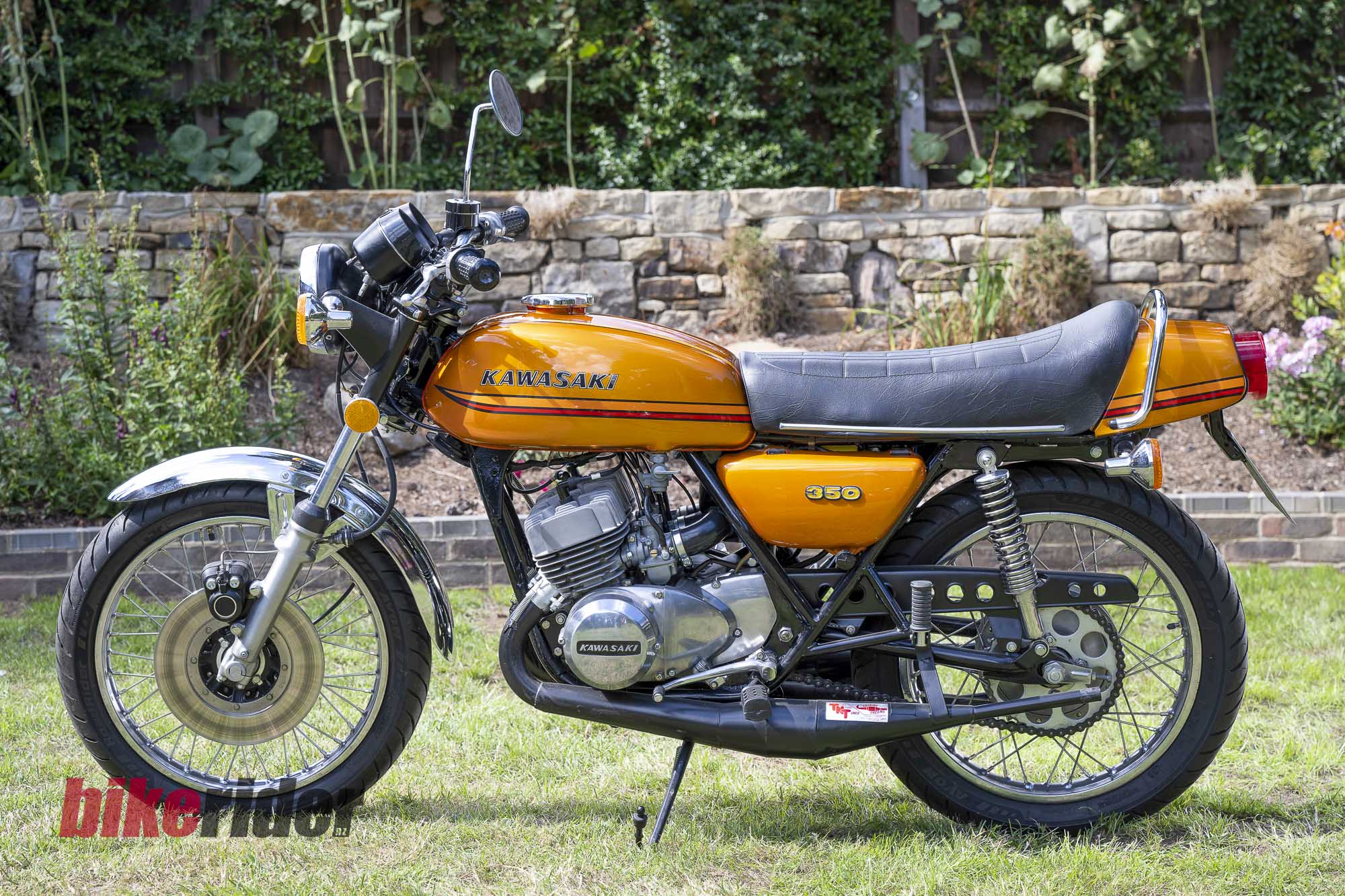
Kawasaki 350-3 S2A Mach II
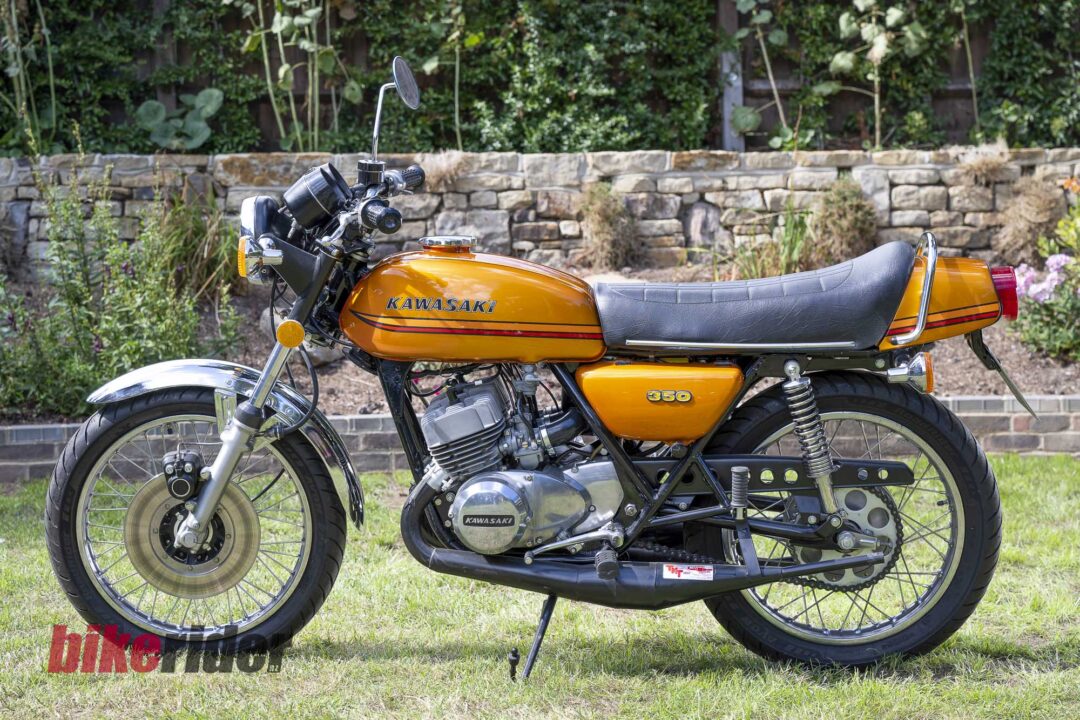
“This 350cc S2A is a 1972 bike which they termed the Mach II, and was launched as a spinoff from the 500cc H1. There was also a 250cc triple, the S1 Mach I, but I’ve never seen one of those. Both the S-models had the same crankcase with a 52.3mm stroke, and this 350cc version has a 53mm bore for 346cc. This one was found in America set up as a drag bike, so it had an extended rear end, wheelie bars, and these TNT/Tony Nicosia stinger exhausts on it, which are just totally raucous – Tony was a drag racing legend on Kawasakis. Dave Howard from Keighley, who’s my supplier of new old stock parts, rebuilt the motor completely with such a crankshaft. It goes like an absolute rocket, but it’s so loud it’s embarrassing. In fact, I’ve got baffles to fit on the end of the pipes for when I start it, and when I get a few miles up the road I get out my screwdriver and remove the tail pieces. I don’t think it was ever originally sold in the gold it’s painted in, more of an orange shade as well as a pale blue. But that gold is so lovely that I had to leave it like that. I don’t have a total originality fetish!”
Kawasaki 500-3 H1 Mach III
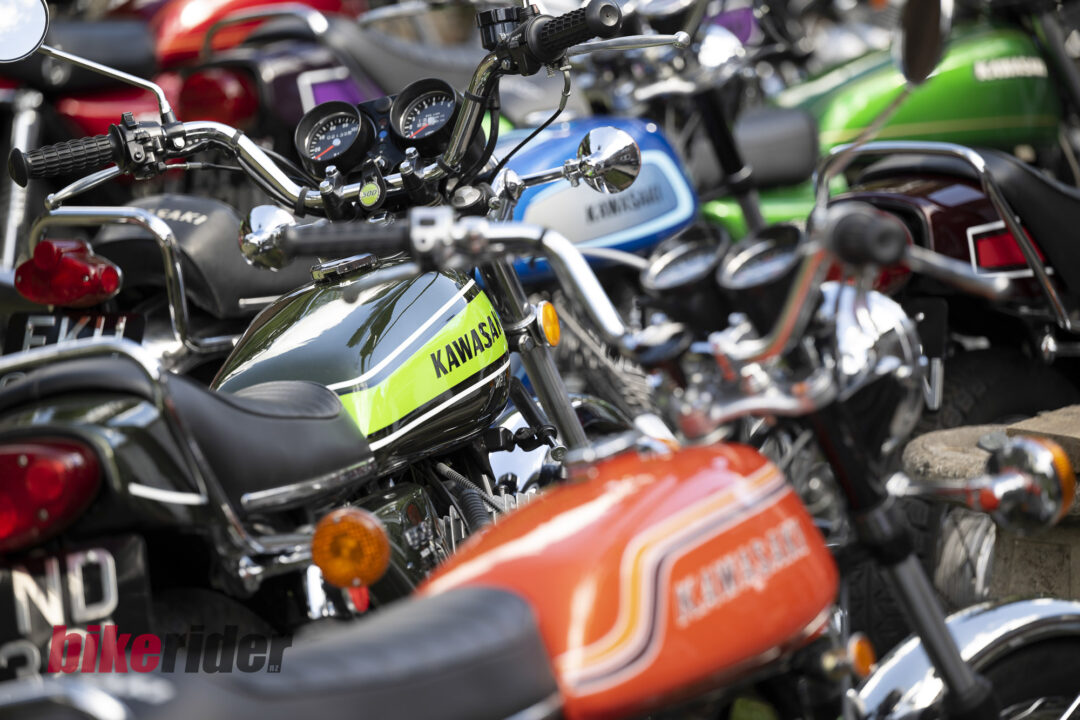
“The core of my collection is the line of H1 two-strokes I’ve assembled, starting with the midnight white 1969 which lives indoors and doesn’t get ridden. That’s because it’s frame no.125, and engine no.133, and they made 6,500 bikes that first year, so this is a very early one, possibly the earliest in the UK. Unlike with their other models, this is a ‘69 H1, and then they did the ‘70 H1, and then in 1971 they did the H1A, which was two years after the first deliveries. For me, they’re just so pretty to look at – but I wanted to ride it. So I knew where another ’69 white one was in the same condition, so I bit the bullet and bought it – that’s also a sub 1000 number, so it’s also early, around no.800. I just finished running it in, and it’s another completely original bike, but this time with the Kawasaki script on the fuel tank slightly skewwhiff, unlike the other one living indoors, which has it straight. They’re both correct, paradoxically, depending on who was painting in the Kawasaki factory in 1969 as to what they decided was the best way of having it. I prefer the level Kawasaki – it just looks a bit drunk with it hanging down the back!”
“In ’69 the engines were still very crude and unrefined, with raw power. They built this to wow American youth at just $999, and many of them were written off within a mile of the showroom, because they were completely unprepared for the engine performance, so they opened them up and just took off. It’s a very impressive piece of equipment, with so much speed – but no handling and no brakes, though if you ride it accordingly, you can really have some fun on it. It’s a lovely thing to ride, a bit like having a bucket of nails shot out of a catapult, rattly as hell and with a very fierce delivery. When it comes on strong at just over 5,000 revs, you’re kicked in the pants all the way to the 9,000 pm redline.”
“I have seven H1s in total – the two ‘69s, two ‘70s, and one each from ‘71, ’72 and 73. But after that they became increasingly sanitised for environmental reasons, so that’s where I’ve drawn a line in the sand.”
Kawasaki 750-3 H2 Mach IV & 400-3 S3A
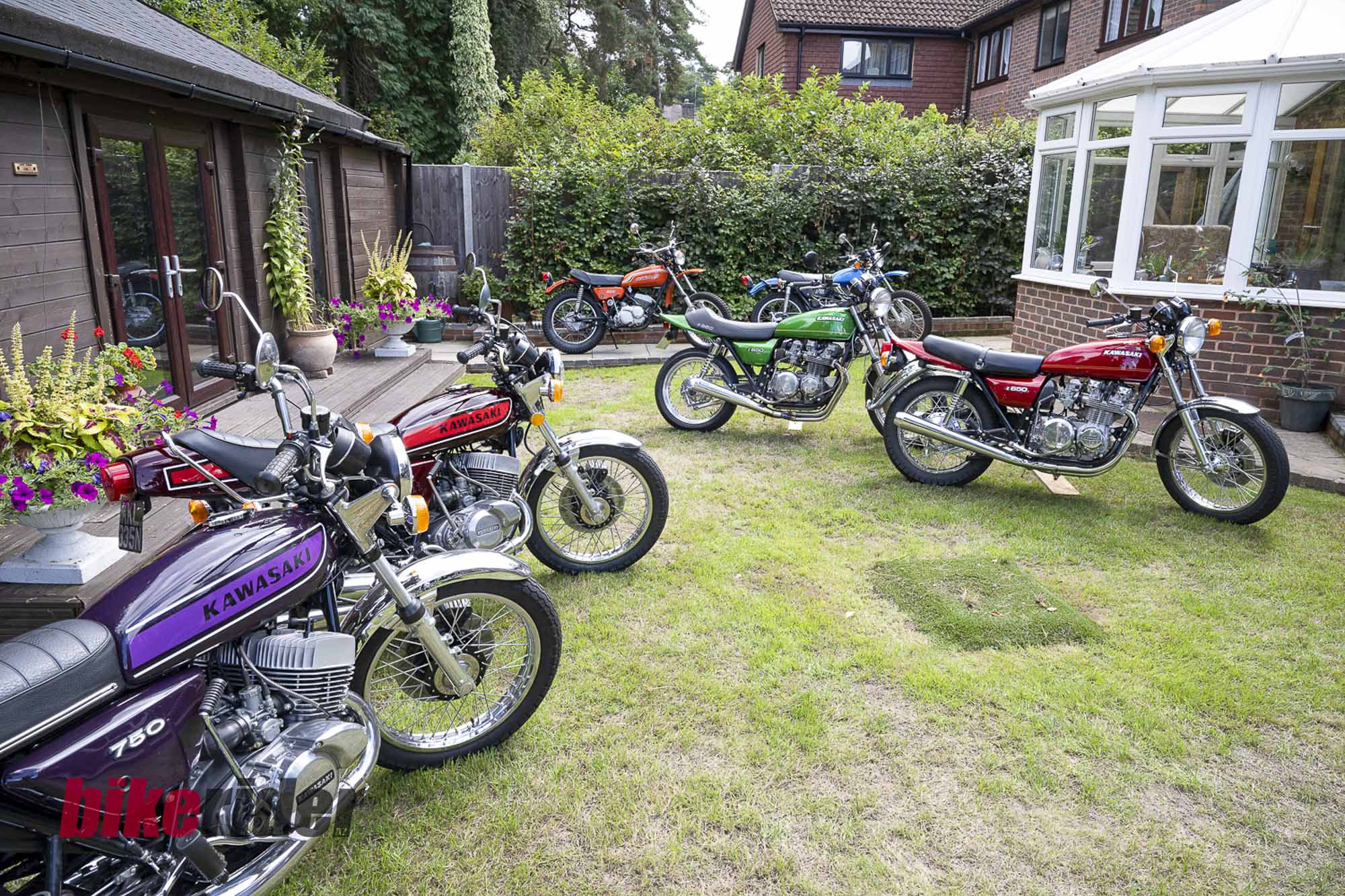
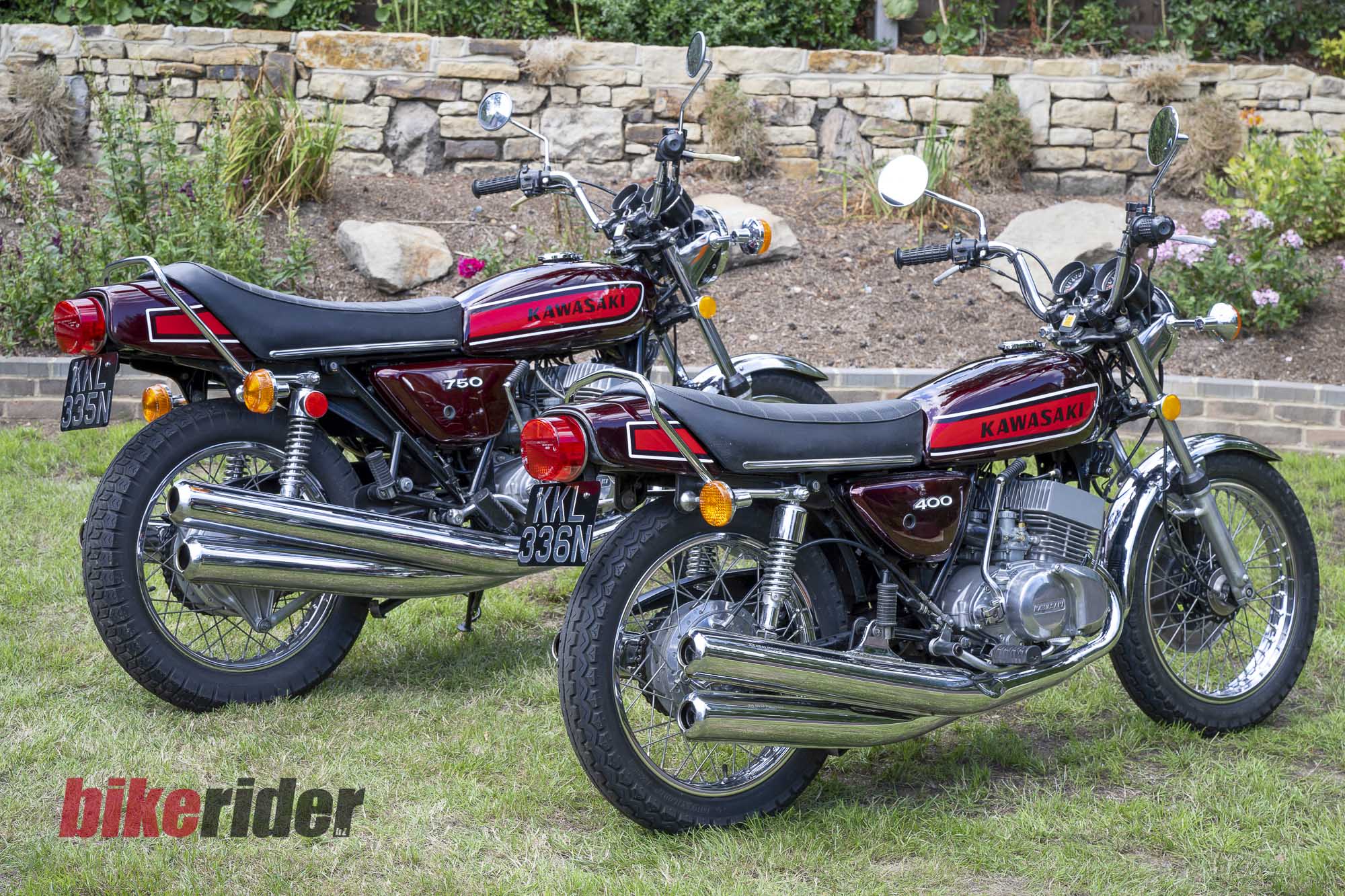
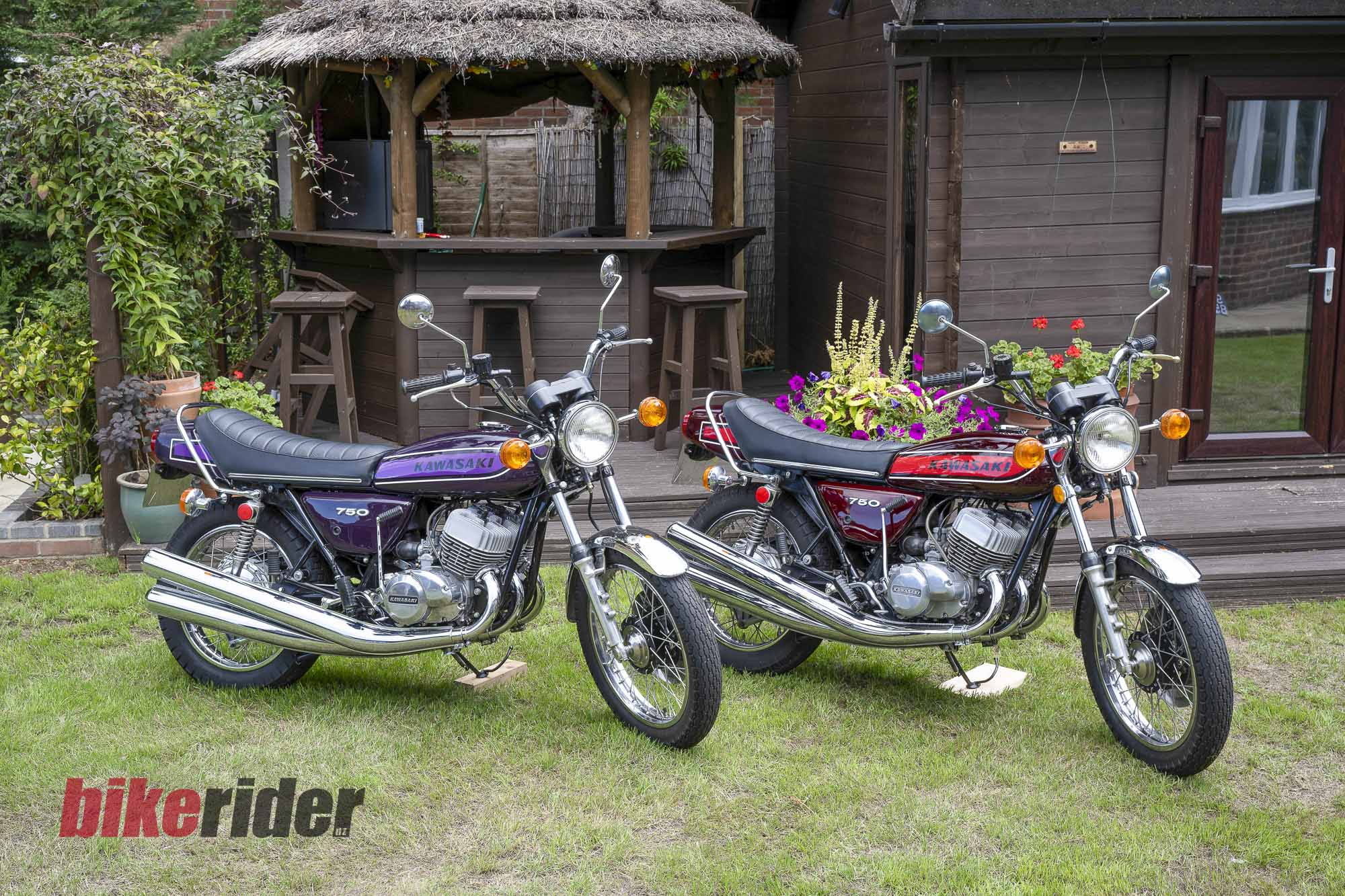
“I have two H2 750 Triples, kind of by mistake! Once I got the bug for restoring, I bought the purple one and rebuilt it – the purple is such an iconic early ‘70s colour for these models. But I also found that they did it in a lovely shade of red, so I decided to try and source another set of bodywork to paint up, and then I could maybe one year have a purple bike to ride, and another year a red bike. Sounds a good idea, doesn’t it! Well I did it, at some expense because the bodywork’s not easy to find – but then just as I’d got the paintwork back for the red one, I came across a really good condition original red bike with poor paintwork. So I bought that and put my new paintwork on it, and so I have my red H2 and a purple one both at the same time! They’re both 1975 H2C models, and they only made 5,000 of them, so they’re quite rare. I didn’t fancy the earlier models, because on the A and B versions the two stroke surge is much more defined, and I don’t like the colours so much. The smaller a two stroke is, the better it runs, in my opinion – a 750 is quite a big old two-stroke. Plus, the early ones didn’t handle at all well, but by the time they got to the mid-‘70s like with these, Kawasaki had got their act together on that.”
“To go with the red H2, I’ve also got a 400cc S3A triple which replaced the S2 at the end of 1973, with the engine bored out to 57mm. This 1975 one is the same year as the H2Cs, and in fact it’s the same colour as the red one. After I’d finished restoring them both I sent off to the DVLA to get the two of them registered at the same time, both the same year and same colour – and without asking for that they came back with consecutive registration nos., which is just so cool! I’ve planned to run them as a His and Hers duo – my wife Kay does ride, and has done many miles on a Z650, but she’s very petite – so I’ve had to lower the S3A for her. But hopefully we can turn up somewhere, and see if anyone notices they’ve got consecutive plates!”
Kawasaki Z1B + Z650
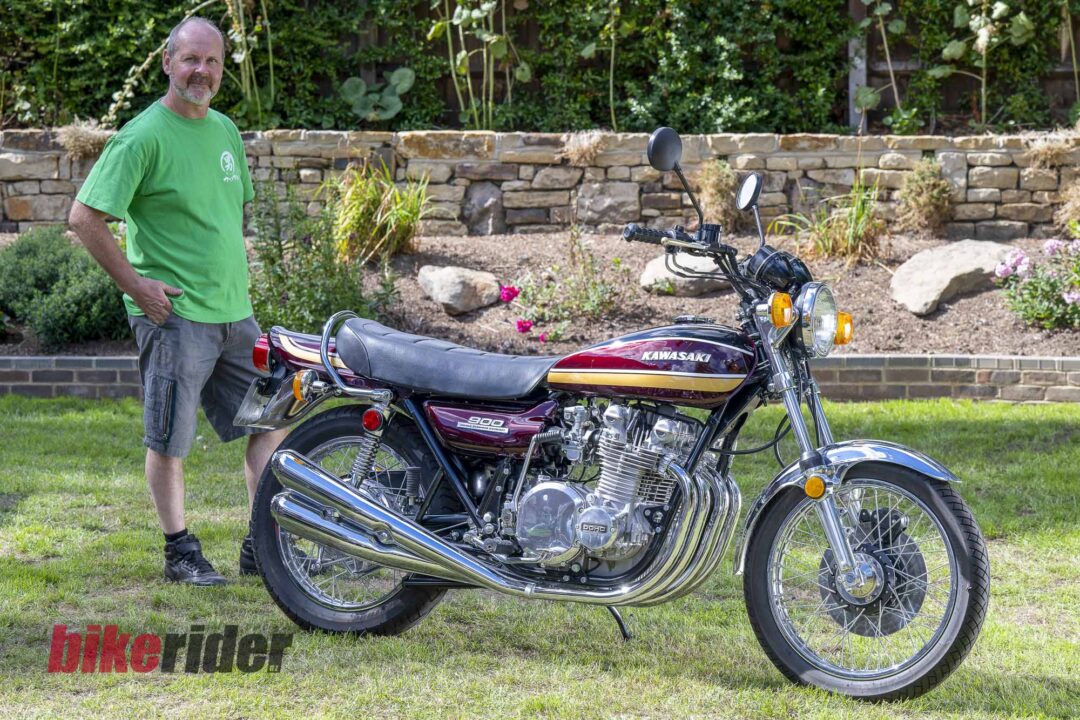
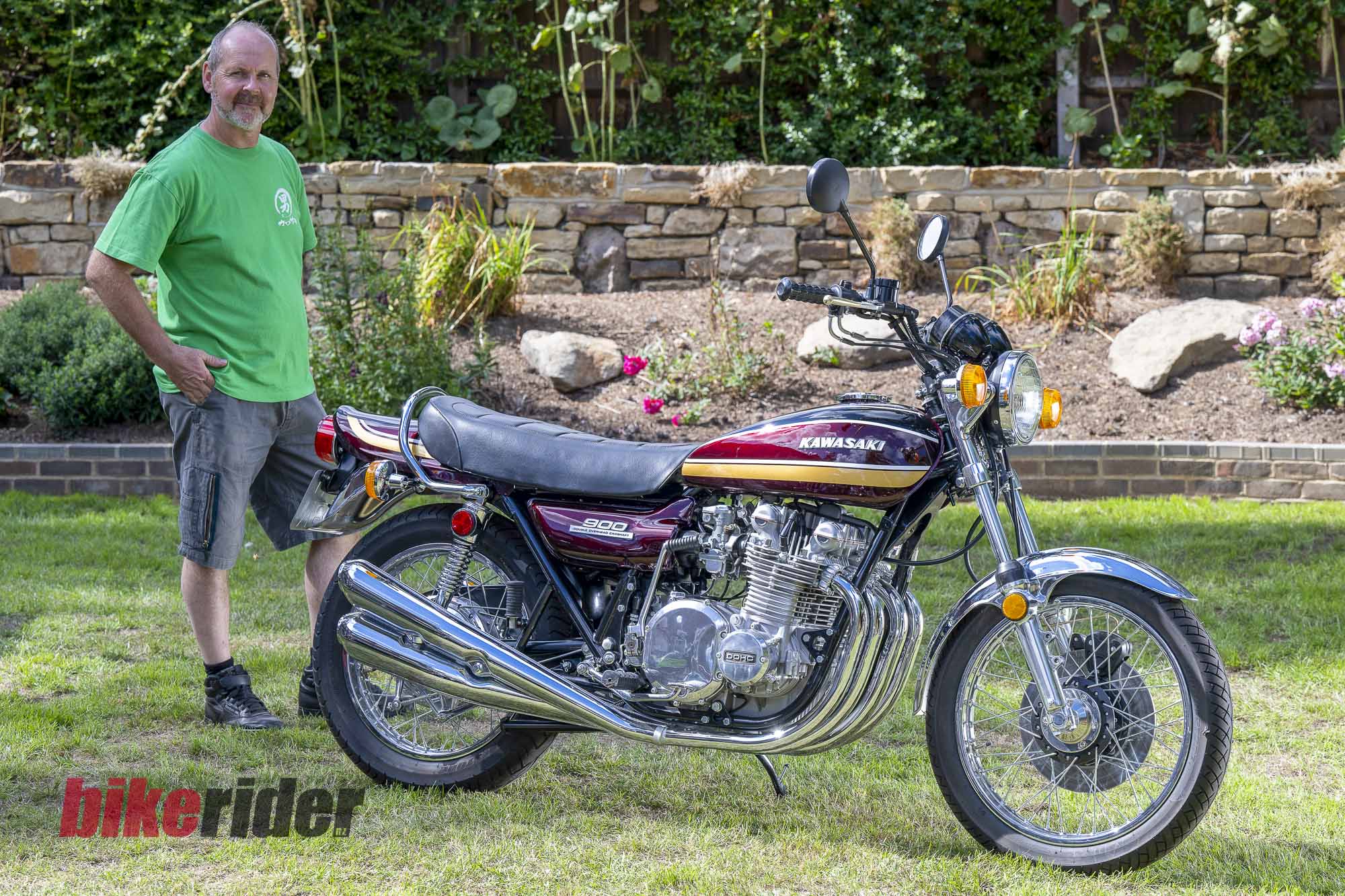
“My 1975 Z1B also came from America with just a few thousand miles on it, probably 6-7,000 – the only British bikes I’ve got are the Z650s. I’ve always loved the Z1, and it was top of my wishlist when I was a teenager, and the B was my favourite because I thought it had the best colour scheme – it’s a lovely looking bike. I restored it to as-new condition, and it still has zero miles on it – it’s too nice to ride, so I definitely bought it just to look at. It is a very pretty bike – they did them in two colours – a lovely dark red with the gold panel, and a wonderful blue. I was very torn between getting one or the other, but I’ve been caught in this trap before, so I decided not to get another one, even as a user!”
“I started off on four-strokes with the Z650, and always loved them, but I was always a bit scared of the Kawasaki two-strokes – I was worried about being bucked off with the surge in the power band, but actually, as I’ve become more experienced as a rider, that’s what I’m searching for – the ultimate rush with the big hit of power coming in. So now I enjoy riding them both. The fact that Kawasaki made such good four-strokes right at the same time as developing the ultimate two-strokes shows the depth of the company’s engineering capabilities, which nobody else could match, not even Honda. The Z1’s very impressive DOHC cylinder head puts the single-cam Honda CB750 in the shade – for years and years they still kept on making those CB’s with just a single overhead cam that wasn’t in the same league as the Kawasaki Z1 family.”
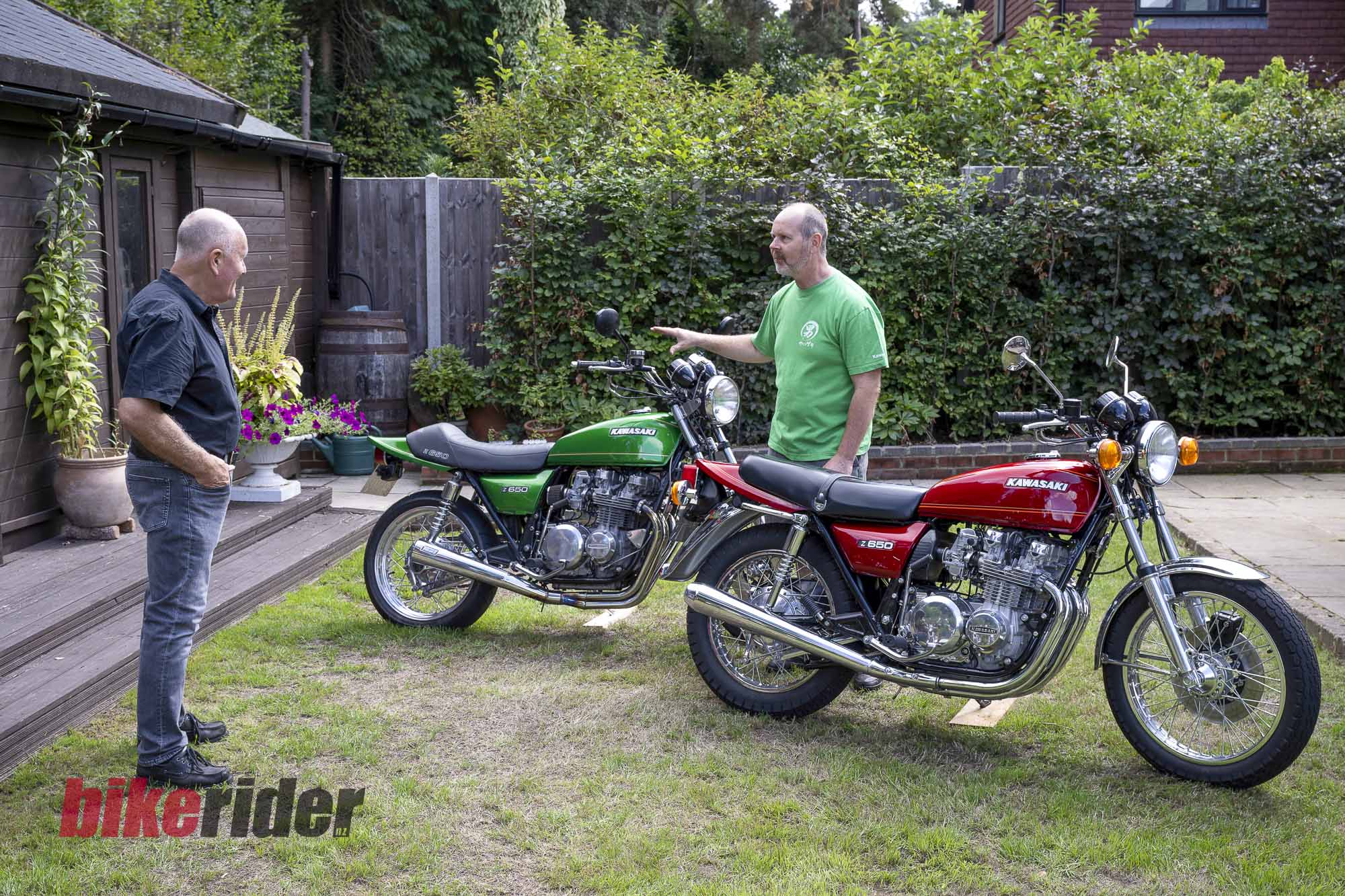
“As well as that and the KZ1000 LTD I’ve also got four Z650s, but only two of them are restored. They’re both 1977 Z650 B1 models in the two iconic colours, red and green. People would trip over the green bike to get to the red one, but the fact the green wasn’t really liked was what I loved about it – no one else wanted it, but I did, so this green one is the bike I’ve always had since I was a teenager. It was my first Kawasaki, but I fancied having a red one as well, so I’d been looking for 35 years for original exhausts in good condition, and I finally found a set of new old stock ones which I bought at vast expense. I then found a UK bike in boxes, to build up around the exhausts, which I just finished this summer, and am now currently running it in. It’s a very good bike, and I’ve built it up as close to original specifications as possible.”
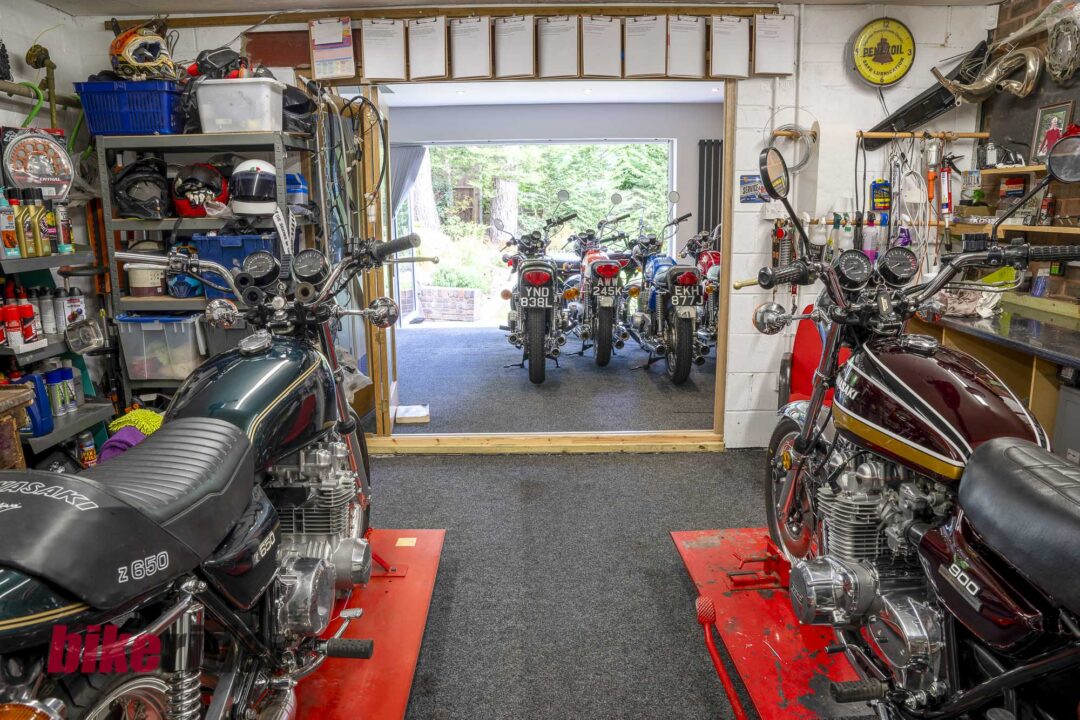
“Mark Hutton does all the engine work on my bikes, and I build them up in my home workshop. My motto is always to buy the best you can afford, and then you won’t be disappointed, so I useDream Machine for the paintwork even though they’re so expensive, and they’ve always been very good. They’ve always rectified any problems immediately – so, they had a bad batch of lacquer one year, and they took both H2C’s back, and repainted them complete without the slightest quibble.”