

- Chris from Pass Masters Rider Training goes on a mission to turn a road bike into a racer for under a grand.
- The Suzuki parallel twin is perfect for New Zealand’s Sport Bike racing category.
- If you’ve ever wanted to take your bike racing or make it track ready, this is for you.
Words: Chris Smith. Pics: BRM, Chris & ASP
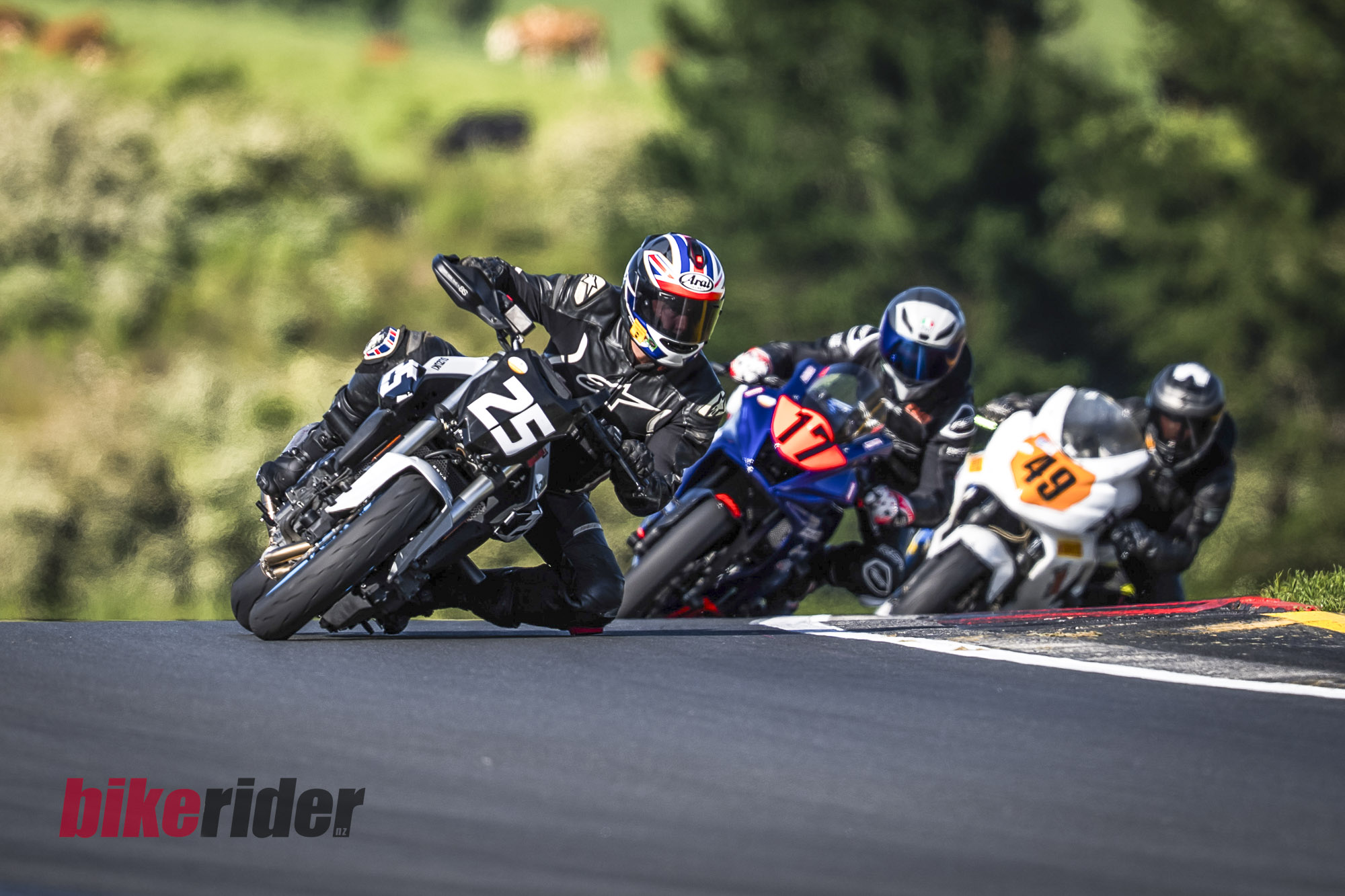
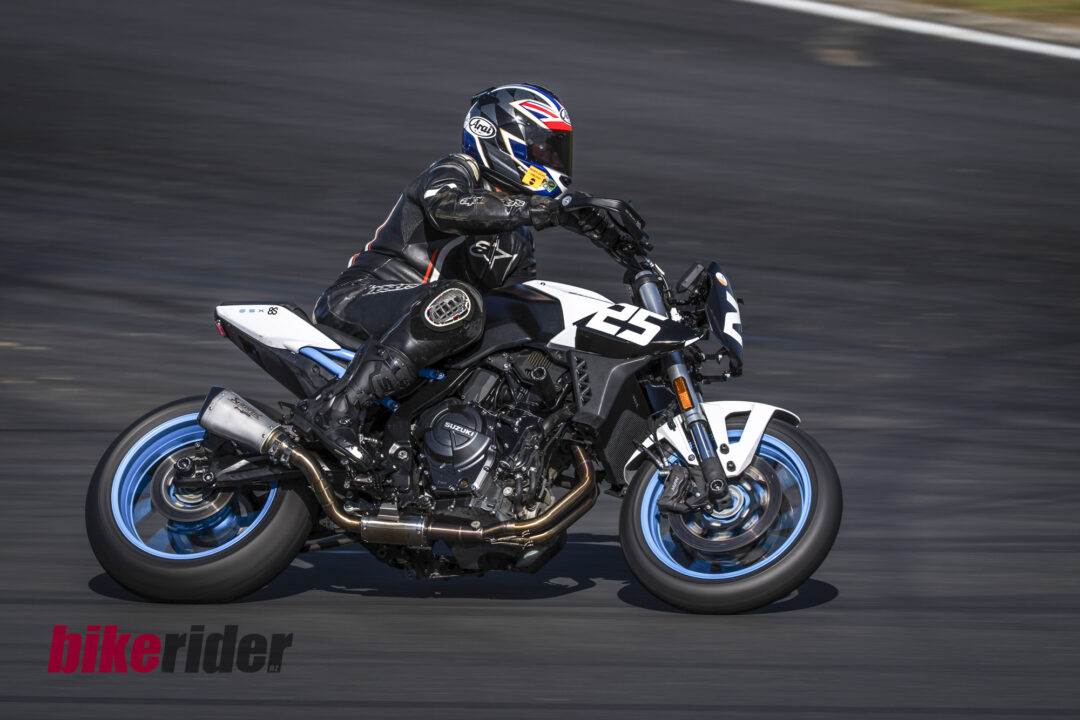
Ever wanted to take your road bike to the track but weren’t sure what needed changing? Or reckon you’re quick enough to have a crack at racing? Chris Smith from Pass Masters Rider Training explains how he turned a Suzuki GSX-8S into a budget Sport Bike racer for last season’s Auckland Club Champs.
Quick Facts
Bike | Suzuki GSX-8S
Class | Sport Bike
Conversion budget | $1000
Actual spend | $993
Tyres | Bridgestone Battlax R11
Major changes | Rearsets, exhaust headers/de-cat, race tyres, revised chassis setup and race-prep modifications
Best race result | P6
Best lap | 1:12.8
Circuit | Hampton Downs
Rider | Chris Smith, Pass Masters Rider Training
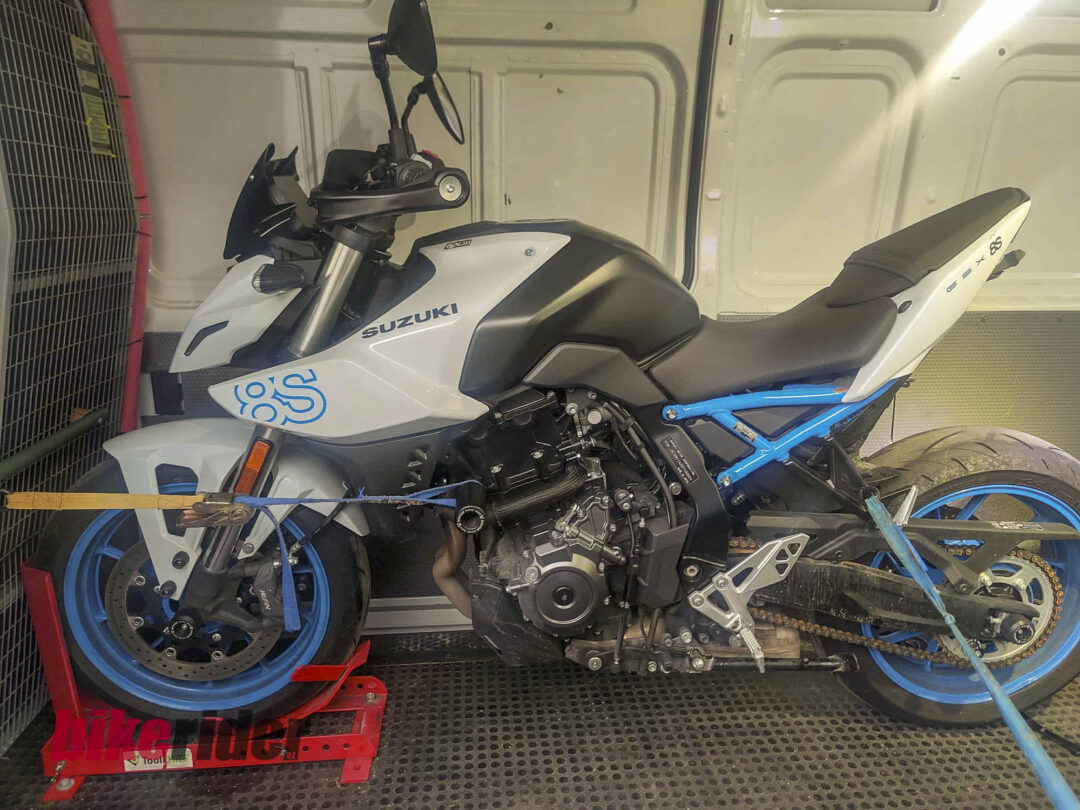
was the obvious choice.
Having built and raced many Ninja 400s over the last few years, here at Pass Masters we have honed our workshop skills so that we can turn a road bike into a competitive race bike for not a huge amount of cash. Coming across a bargain Suzuki, we thought we’d see what it takes to turn a road spec GSX-8S (you can read the BRM test report HERE) into a competitive race bike for the last round of the Auckland Motorcycle Clubs summer series. The result was far better than we ever could have imagined…!
“Finding a cheap GSX-8S, we pulled it into the shed, chucked it up on the ramp and sat back with a cold one and stared at it for a while with the rule book open and a budget of $1000 to spend.”
Having spent at least 50,000km riding a Suzuki GSX-8S in my role as a motorcycle trainer, I thought it would be a pretty good contender for the new Sport Bike class. Finding a cheap GSX-8S, we pulled it into the shed, chucked it up on the ramp and sat back with a cold one and stared at it for a while with the rule book open and a budget of $1000 to spend.
MORE ARTICLES
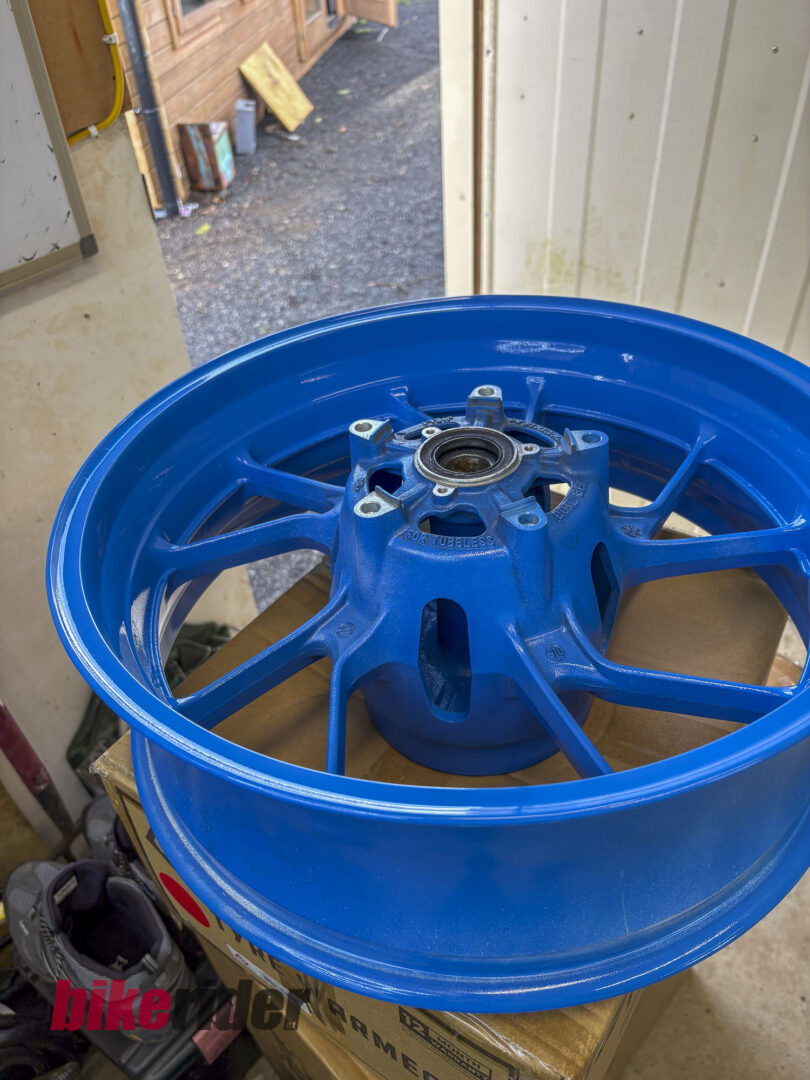
Doing The Basics
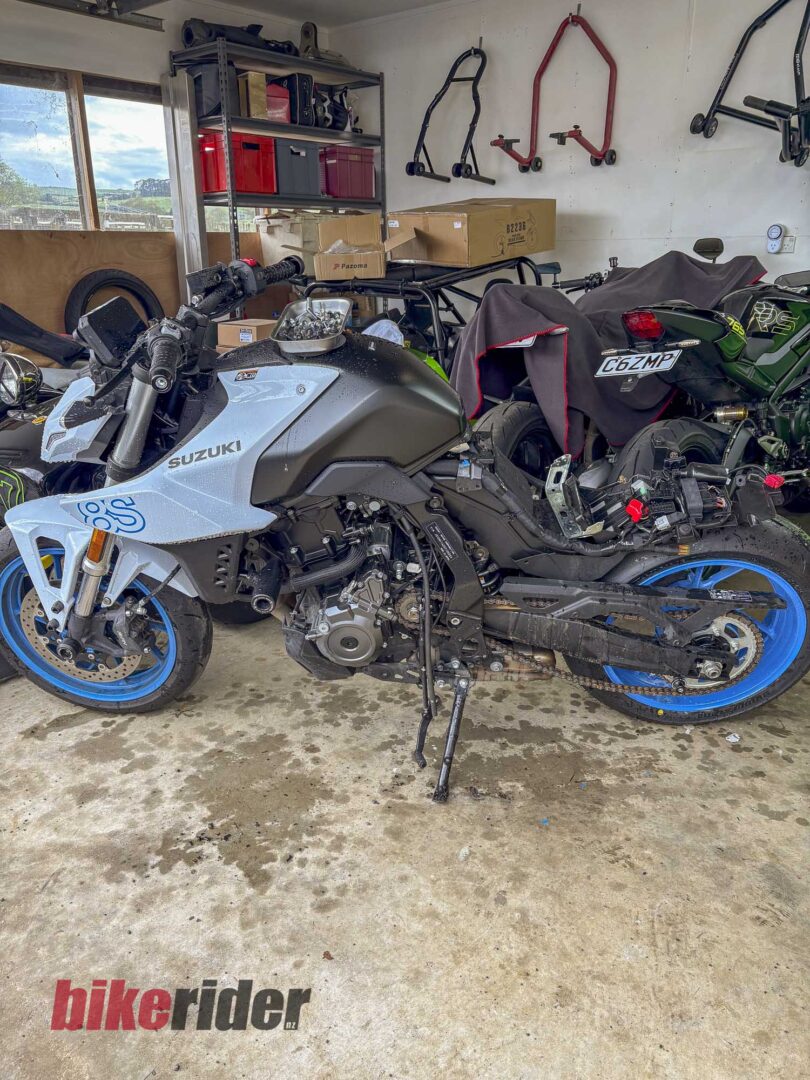
First up on the removal list was the taillight and the support. Now this was a 5-minute job as Suzuki used four M6 bolts on the underside of the tail to secure it. We just unplugged the indicators and tail/number plate light from the loom and, hey presto. Job done.
Now the rules say that we had to have a rain light fitted, but the rules don’t say it has to be switchable. So, we purchased a red LED light from AliExpress for $3, stuck it to the underside of the tail and soldered it into the number plate light connector and plugged that in.
Next up on the hit list was the headlight. Again, Suzuki did a wonderful job of using the minimum number of bolts (4) to attach the ugly unit to the nose of the bike. With the headlight removed along with the indicators, we fitted a black MX front number board which was purchased from our local bike shop for $30. With the new number board fitted we could get started on adding the race numbers.
For road racing here in NZ (and probably everywhere to be honest) you must display your number on the front and on each side of the bike, and there is a specific background colour and number colour depending on the class you are riding in. For us this was white numbers on a black background. Our mates at Supersigns sorted out some off cuts of black and cut the numbers for us. Andy had the job of fitting the numbers as I don’t have the skills or patience for vinyl wrapping! The whole job was $35.
With the bike looking ‘racy’, we started on the other items that need doing to make it race compliant.
Lock It Down
This is a must for racing to stop any vital bolts from accidentally unwinding. You MUST lockwire the sump plug, oil filter, the oil filler cap and front brake caliper bolts.
The sump plug was probably the most time-consuming, and as I didn’t want to drain the oil, I simply laid the bike on its side on the lawn and removed the plug so I didn’t lose the oil. Having done a countless number of these over the years, I find that using a pillar drill is the fastest and least likely to bust a drill bit. If you can’t be bothered with the hassle, then you can buy one already drilled from a bike shop for $25. Refitted and wired to a hole on the header tank cover, that was that job done.
“Within two laps I’m already comfortable with the GSX-8 racer, bouncing it off the limiter with the quickshifter punching it through the gears.”
The caliper bolts were slightly awkward to drill as they are tapered, but a quick job with a file sorted that. The oil filter didn’t have a lock wire hole like the K&N aftermarket ones, so we used a 65mm hose clip. This will stop the oil filter from spinning and is acceptable for scrutineering. The oil filler was easy and didn’t even need removing to drill and wire. So, with all the lock wiring done for $5 worth of wire and a 2.5mm drill bit (as I did break one…!), it was onto the next job of changing the pegs out.
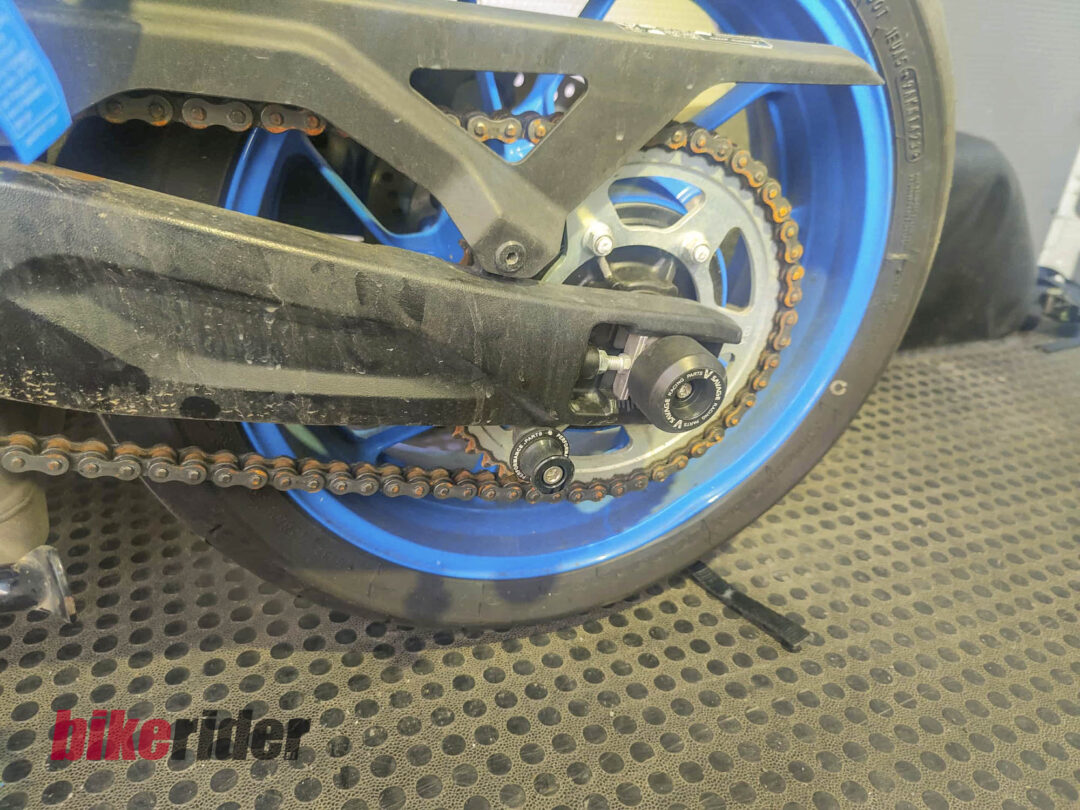
Why rearsets? Well, there are a couple of reasons for fitting rearsets on the bike. Firstly, the standard pegs are set for comfort and are too low, so they drag on the floor during ‘spirited’ riding. So, with the rearsets on, the pegs are raised about 50mm from standard thus allowing a greater lean angle for faster cornering. The other very important reason is that the footpegs are now solid mounted, so if I decide to involuntarily depart from the bike, they will/should help keep the rest of the bike off the floor and limit the damage sustained. Fitting the rearsets took an hour and a half as we had to set all the linkages to get the gear and rear brake in the right place for me. The rearsets are another online purchase and set us back $180 and another $10 for a new bottle of Loctite (always, always use that)!
The Other Important Bits
The rules say you must not use a glycol-based coolant on the track for racing (but it’s ok for track days). This was drained out, and we just filled the system with water. I always refill with coolant in the off-season, as the glycol product acts as a corrosion inhibitor
The Suzuki has quite a relaxed steering angle, so to help the 8S turn sharper, we raised the forks 12mm through the clamps and added some more preload to the rear of the bike. The rear shock has only preload, so we took it up to 2 notches from the top.
With the current budget sitting at around $280 spent, we decided that it needed to breathe better. Back online, I found a set of China’s best headers and cat removal pipes, which were purchased for $180. We fitted those up and removed the snorkels from the airbox for a little more flow, too.
The Final Touches
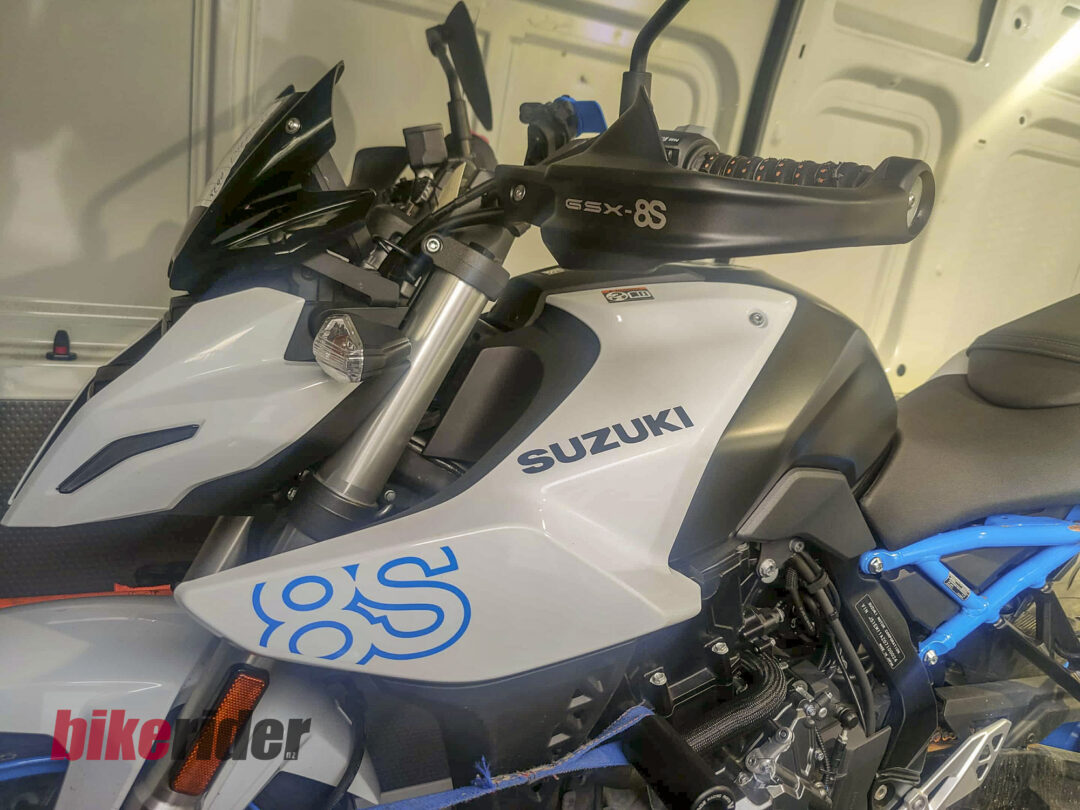
The rules say the sidestand needs removing, so we whipped that off and added a handguard which we had lying around. This was to act as a brake lever guard in the event that I clipped another bike with the handlebars, so the brake won’t be activated. The lever guard isn’t compulsory here in NZ, but it is in the UK and Europe even for track days and is an added bit of safety that I like to have.
So there was only one thing left really. With the weather looking good, we opted for a set of 120/180 Bridgestone R11 tyres as these are a great tyre for the track (and are also road legal if you’re brave). These were from our local shop and were $550 for the set.
All set for the track for under the $1000 budget. Mint.
THE $993 RACE-BIKE CONVERSION
Rain light | $3
Front number board | $30
Numbers/graphics | $35
Lockwire | $5
Rearsets | $180
Loctite | $10
Headers/de-cat | $180
Bridgestone R11 tyres | $550
TOTAL | $993
*Excludes the donor GSX-8S and items already on hand.
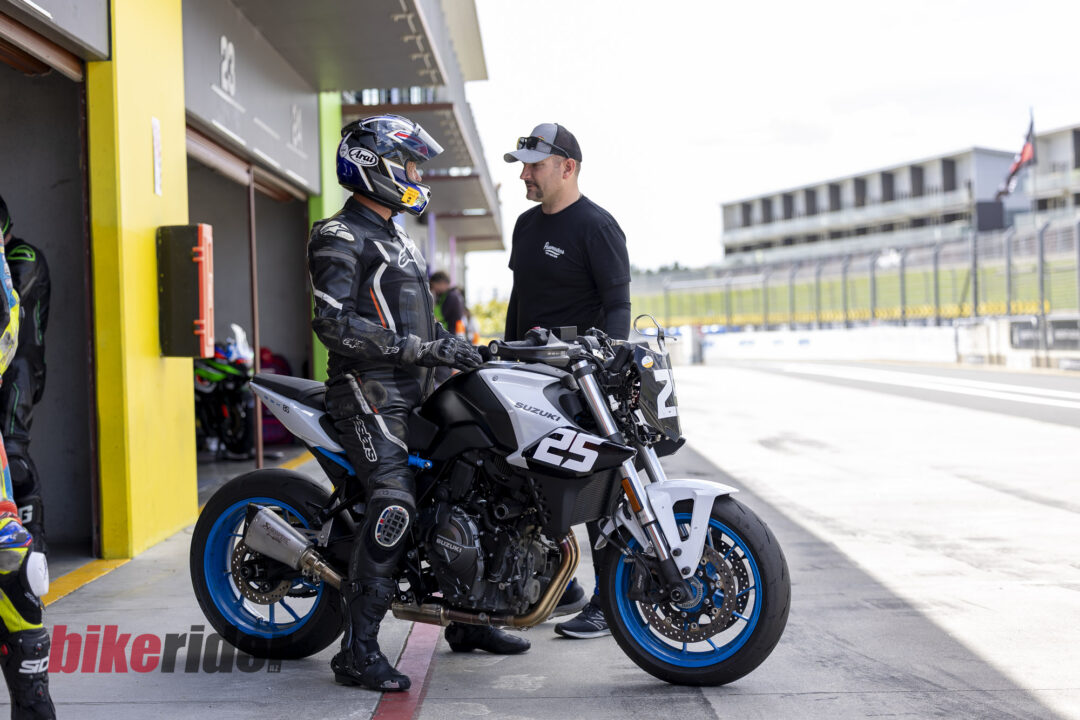
Next Stop: Hampton Downs!
RACE DAY
I arrived with my son at the track at around 7.45 after a chilly ride down on our Kenny Roberts replica XSRGP and a quick bacon buttie stop at Pōkeno.
Justin and Blair had already unloaded the bike, and Blair (our crew chief) was busy removing the side stand, which I had put back on just to make life easy en route to the track and in storage. He also gave the chain a quick clean and lube up.
The bike sailed through scrutineering as to be expected; if you take pride in your prep and are meticulous with things, then there’s never a problem. Don’t think that the scrutineers are out to get you though, they are looking out for your safety in case you miss something vital.
“We found that the rear brake lever and the right-hand peg were interfering with the tarmac in turns 1 and 6. Blair managed to raise them up a little more, and Ali hit the rear brake lever with a grinder to reduce its length and hopefully fix it from having a fiddle with the floor.”
Blair put the tyre warmers on the R11s to get them up to a good temp to go and hammer it straight from pit lane. You don’t need warmers for track days, you’d just need to remember that you’ll need a good 3 laps to get them up to operating temperature.
I popped down to the next pit garage to have a quick chat with Jesse Stroud, who was also running a GSX-8R, to discuss tyre pressures. Knowing how hard Jesse pushes R11s, I opted to run 1 psi more than him and settled at 26 in the rear and 30 in the front hot off the warmers.
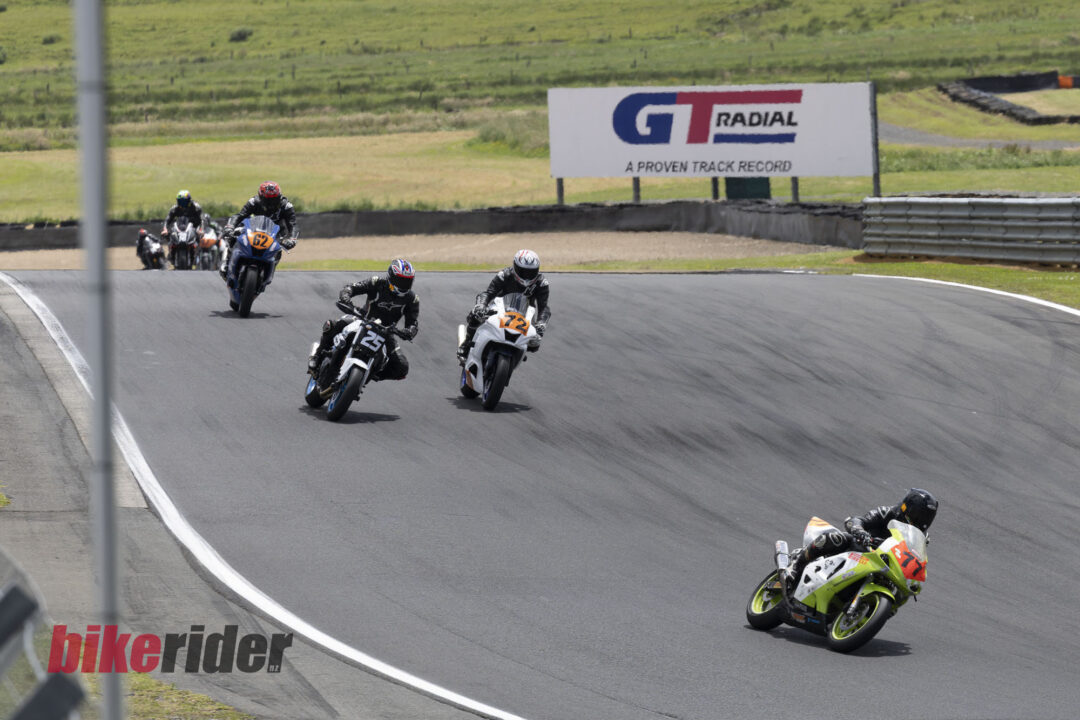
Practice/Qualifying
We headed out first after rider briefing, and it was evident within half a lap that the track was hot already! I started out in B mode on the throttle response and the TC set to 1.
Within two laps I’m already comfortable with the GSX-8 racer, bouncing it off the limiter with the quickshifter punching it through the gears and making it bang through China’s finest exhaust. The noise was epic! I put in a good enough time to put me 10th on the grid, which I was really happy with for the first time out on this thing.
Back in the pits, we did all the normal things like check the tyre pressures and chuck some gas in ready for the first race while I set about trying to sort the ground clearance issues. We found that the rear brake lever and the right-hand peg were interfering with the tarmac in turns 1 and 6. Blair managed to raise them up a little more, and Ali hit the rear brake lever with a grinder to reduce its length and hopefully fix it from having a fiddle with the floor.
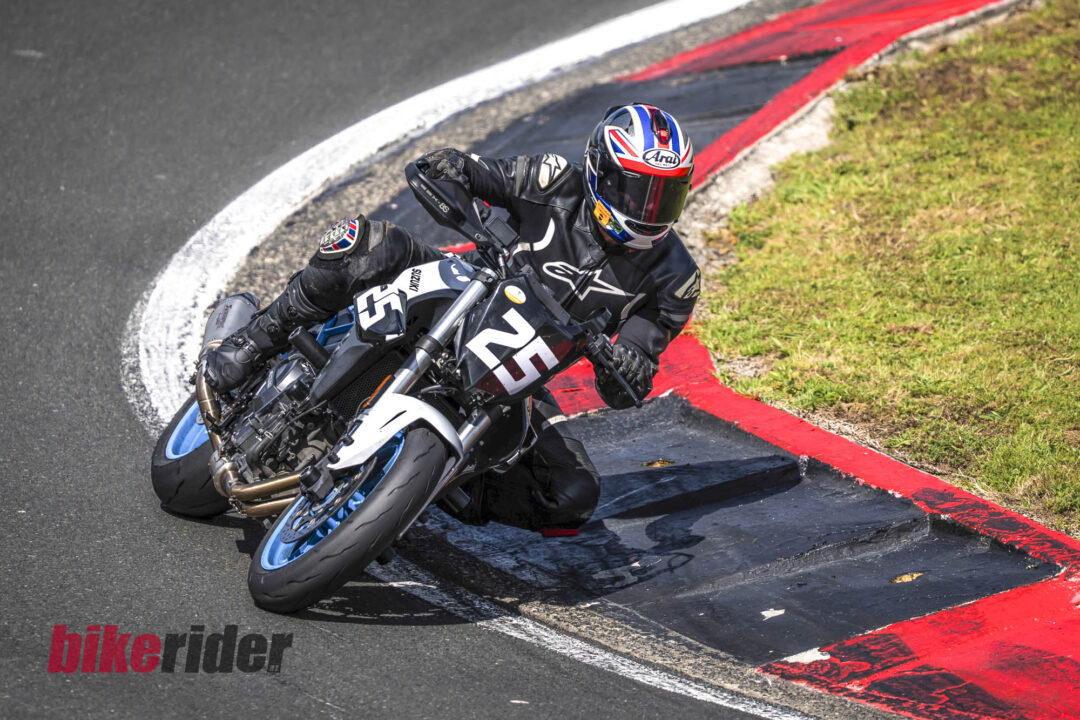
Race 1
This was a lot of fun, and I had some good battles with some fully suspended SV650s and R7s. At around the four-lap mark, I was really getting the hang of this bike, although its long wheelbase was hampering its turning. It was super stable during the turn, but pretty reluctant to initiate the tip in under brakes. Still, I came away with a good result of P11 and I was pretty happy with the 1.13 lap times for sure.
Back up in the stands and we decided to raise the forks another 3mm through the clamps to get the nose down. Plus, we added two more notches of preload to the budget rear shock. The tyre wear was good, so the shock was actually performing pretty well for my ‘average’ riding skills. I also thought I’d chuck the throttle map into A mode for a quicker punch out of the corner.
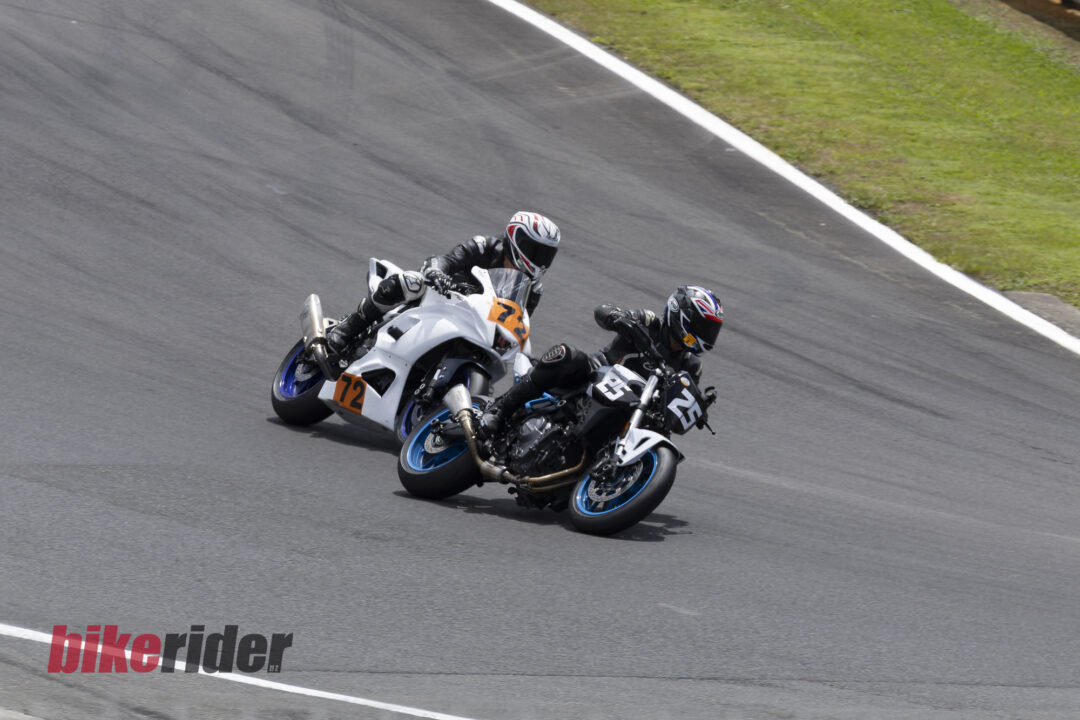
Race 2
This was even more fun than race 1! The throttle map change took a bit of getting used to, but I was working on it right up to the point where I soiled myself at turn 4! I turned the bike in late to the apex having block-passed an R7 under brakes, and got on the gas like I did in race 1. The throttle butterfly opened up with more speed thanks to the more aggressive map and lit the back end up, leaving a huge black line on the track. Then the TC came in and cut the power, which in turn tried to book me a ticket to the moon. Luckily, I’m so out of shape that I didn’t react, and it came back – definitely luck, not skill. I finished the race in P9 and managed 1.12.8 with a 1.14 on the code brown lap.
A little more fuel, a cuppa, and a nut-and-bolt check is all we did to the bike after race 2. Oh, and I put the bike back into B mode…
“$1000 to modify the bike into race spec and have that much fun on it. It wins Bike of the Year for me.”
Race 3
This one was the best. I was now getting used to the bike and was putting in 1.12s all race. I finished P6 having some epic battles in the process, and I was smiling from ear to ear all the way through this one. I also found that into turn 5 (the dipper) that I could punch it down two gears under hard braking and the slipper clutch would let the back end of the bike slide out, meaning I was able to back it in. It felt awesome to have the confidence in the chassis to play like this.
Race 4
Final race of the day and it was an odd one. The previous race to ours was the Juniors, and a bike had let go and left an oil slick from the end of turn 1 all the way to turn 4. The marshals and track team did a great job of trying to clear it up, but due to the change of track conditions, they gave us 2 sighting laps. The race line through 2 and 3 was very limited, and I decided not to ride in that race as it really wasn’t worth risking a crash as I had to go to work the next day. My boss is an arsehole if I call in sick because I fell off (Chris works for himself – ED!).
So, we packed it up and headed off for a pint. $1000 to modify the bike into race spec and have that much fun on it. It wins Bike of the Year for me.
What Is The Sports Bike Class?
Originally called the Super Twin class, the Sport Bike class was implemented in 2025 and is designed as a perfect gateway for riders looking to get into racing or move up to the bigger, faster machines. With the rules attempting to make the class affordable, there are restrictions with the modifications you can make to the machines in an attempt to keep costs for competitors down while also rewarding rider skill.
What Other Bikes Fit In The Sports Bike Class?
While there are a few GSX-8s, there’s a heap of Aprilia RS660s. And while these are good with plenty of power, they aren’t the budget option like the Suzuki. Other models include the Yamaha R7 (another popular choice), the KTM 790 Duke and Honda CBR650R.
Where Can I See Them Race?
The Suzuki International Series, NZ Superbike Series and various club championships now run the Sport Bike class along with all the usual categories. There is even the North Island Cup over winter and the Auckland Motorcycle Club champs that Chris raced in usually begin in September.
If you’re keen on some top-notch rider training, make sure to reach out to the team at Pass Masters via their website. They even do track training at Hampton Downs, so if you’re keen on doing a track day or even giving racing a go, the Pass Masters team will be able to give you some guidance.