

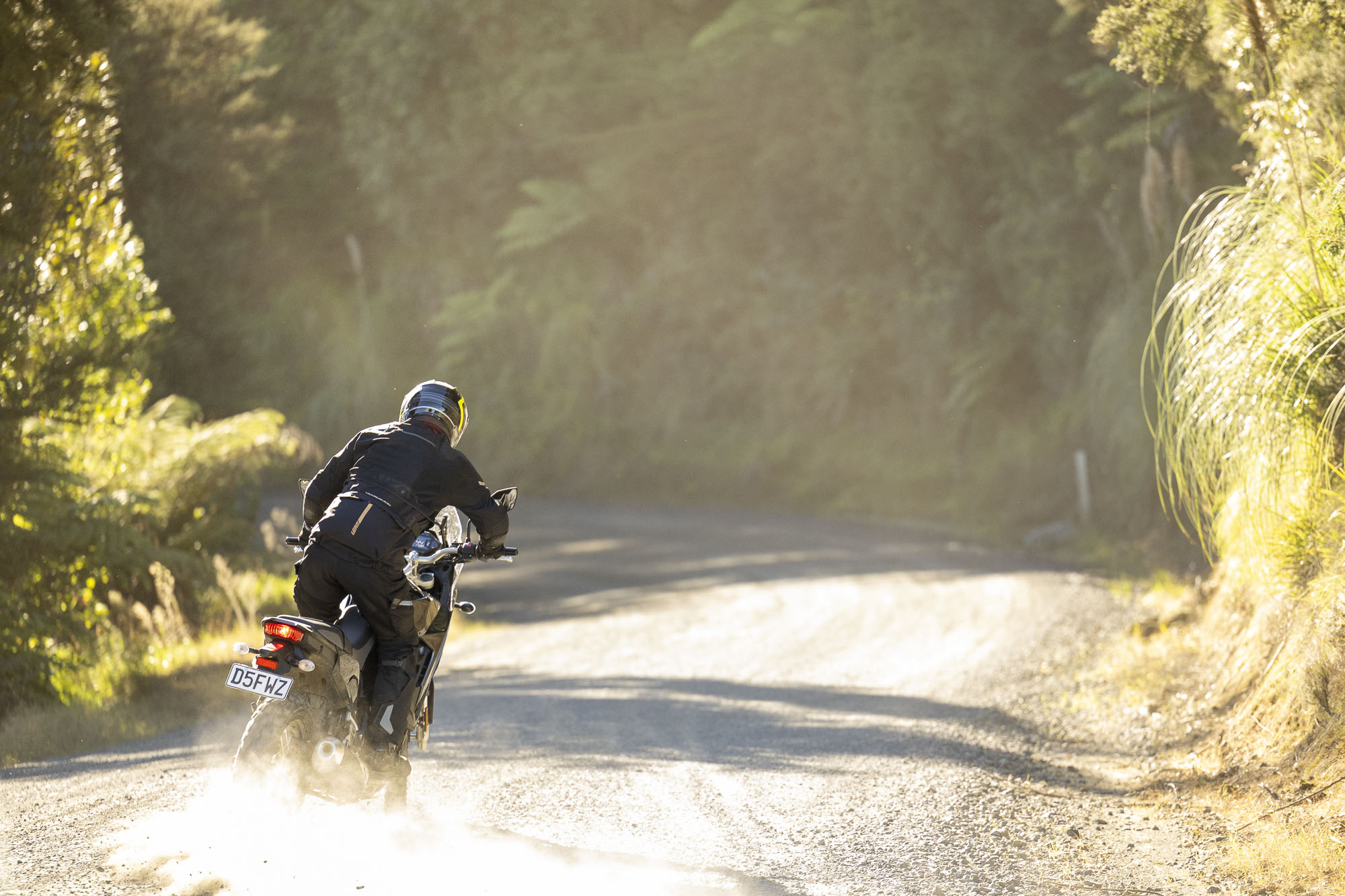
- Comfortable and confidence-inspiring both on road and gravel
- Excellent twin-cylinder engine with real-world usability
- Ground clearance concerns aren’t as dramatic as the internet suggests
Lightweight, approachable and surprisingly capable, the Kawasaki KLE500 proves adventure riding doesn’t need to be complicated.
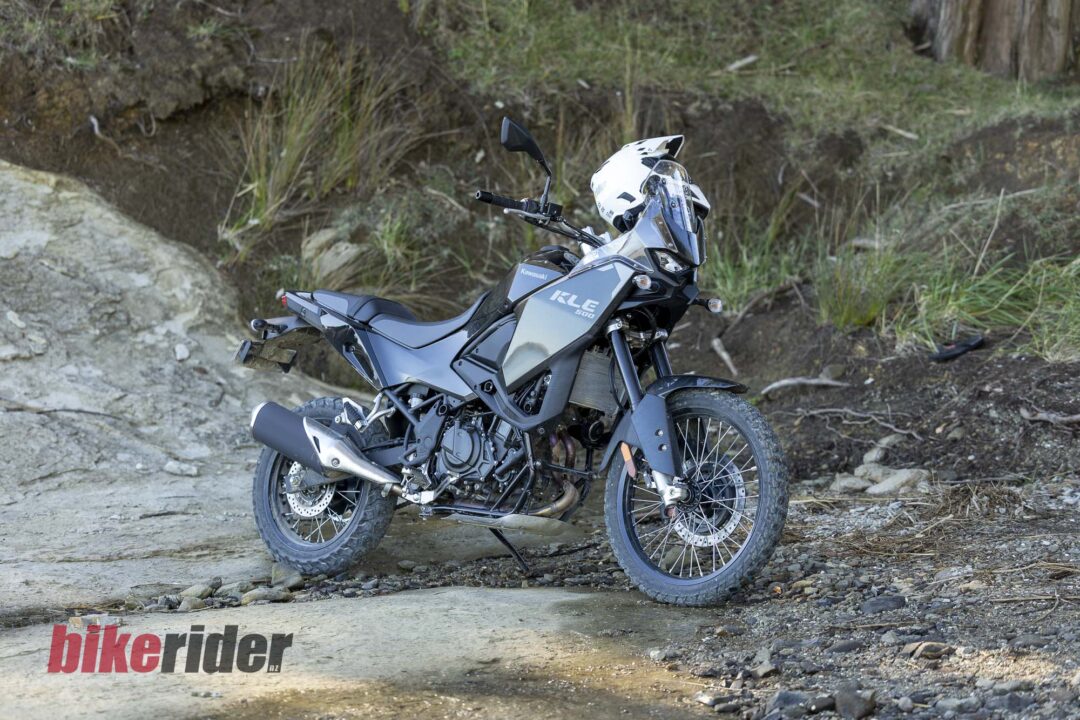
The adventure bike market has become a strange place recently. Motorcycles are getting bigger, heavier and increasingly complicated, all while claiming to be more adventure-ready than ever before. Yet for plenty of riders, the reality of adventure riding is far simpler — gravel roads, back-country exploring, commuting during the week and the occasional rough detour when curiosity gets the better of them.
That’s exactly where the Kawasaki KLE500 fits.
For older riders, the KLE500 name immediately triggers memories of the original 1990s machine — a slightly oddball parallel-twin adventure bike that quietly built a cult following thanks to its simplicity, reliability and surprisingly capable all-round nature. Kawasaki eventually replaced it with the Versys, but the KLE badge never completely disappeared from adventure-bike conversations. Now Kawasaki has revived the name for an all-new ‘lightweight’ adventure model aimed squarely at the booming middleweight ADV segment.
Unlike many rivals trying to be hardcore rally replicas, the KLE500 takes a more balanced approach. Powered by Kawasaki’s familiar 451cc parallel-twin engine — shared with models like the Ninja 500 and Eliminator — the KLE combines approachable performance with genuine adventure-bike proportions. The liquid-cooled twin produces around 45hp and 43Nm of torque, paired with a six-speed gearbox and assist-and-slipper clutch.
The chassis is purpose-built for adventure riding rather than simply adapted from a road bike. There’s a steel trellis frame, long-travel KYB suspension, 21-inch front and 17-inch rear spoked wheels, switchable ABS and adventure-bike ergonomics that immediately give the KLE a proper off-road stance. Kawasaki has clearly aimed this bike at riders wanting something lighter and more manageable than a full-sized adventure machine without sacrificing comfort or touring ability.
MORE ARTICLES
And importantly, there are two versions available.
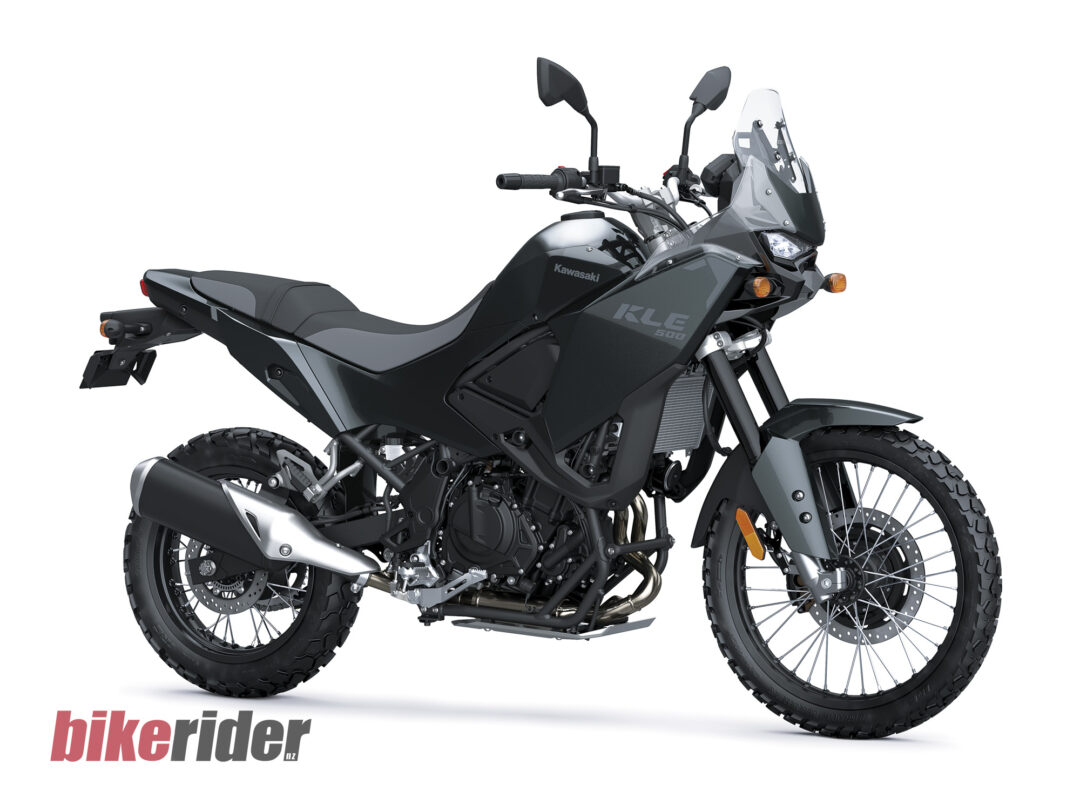
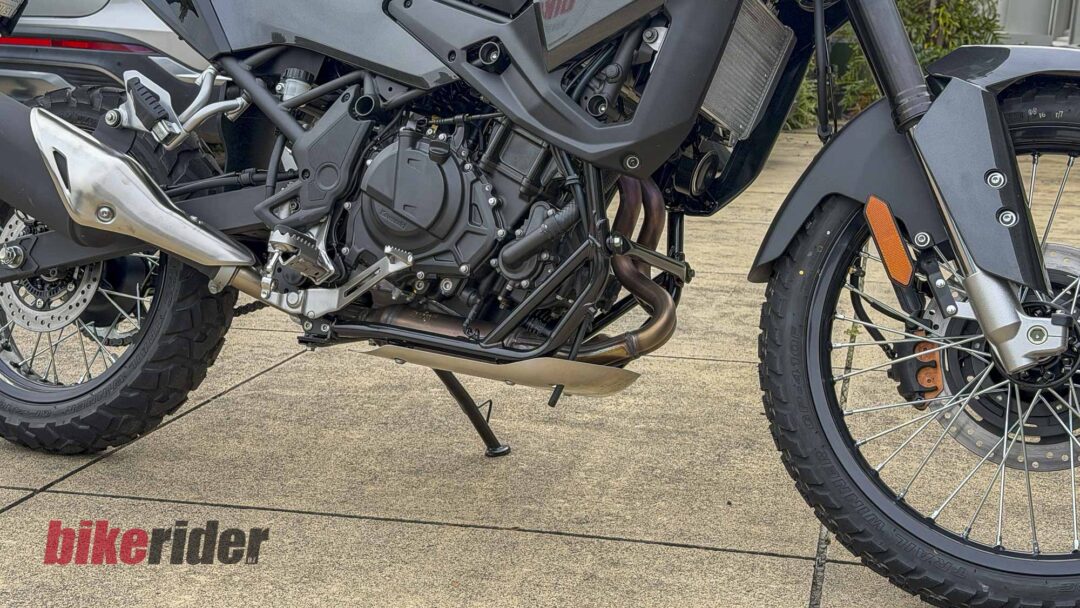
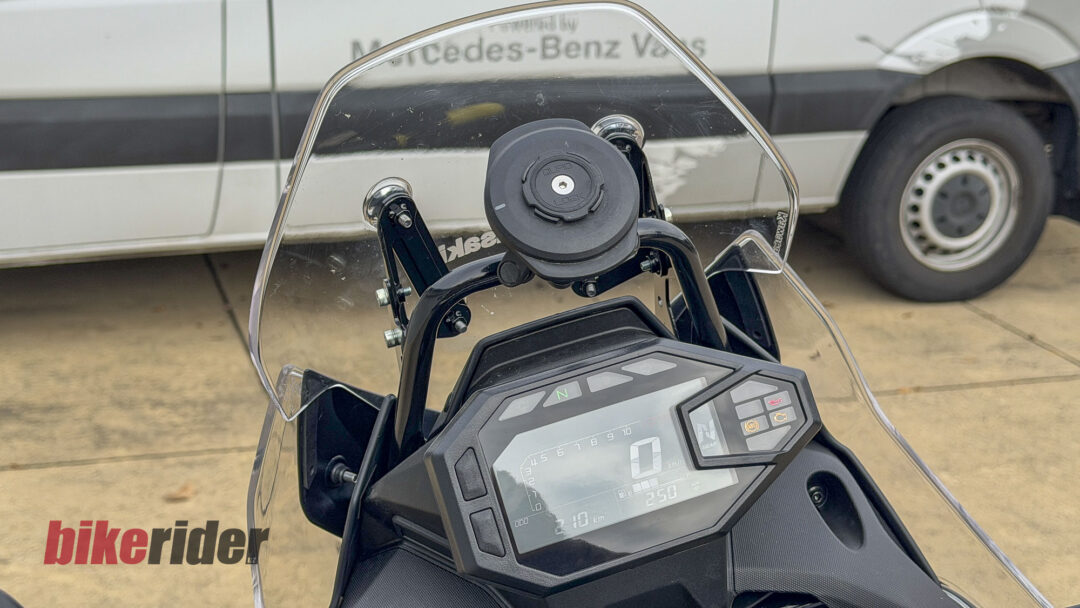
The standard KLE500 — which is the model we’ve got on test — keeps things relatively simple with an LCD dash, adjustable screen and smaller bash plate. Step up to the SE version and you get a larger skid plate, taller screen, handguards, TFT display and a few cosmetic upgrades aimed at riders wanting a slightly more premium feel. Mechanically, however, both bikes are essentially identical.
Social media opinion around the KLE500 has been fascinating because while plenty of riders love the idea of a simple, lightweight twin-cylinder adventure bike, one topic keeps repeatedly surfacing — ground clearance.
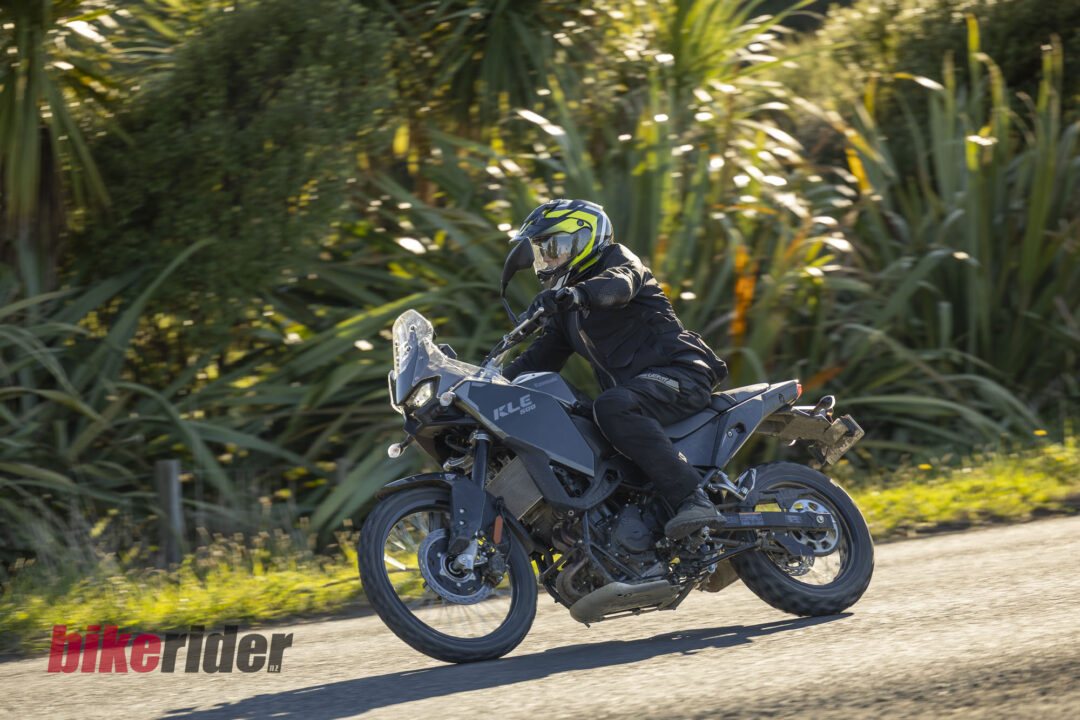
At around 185mm, the KLE’s clearance figures are noticeably lower than some of the more dirt-focused bikes in the category, and plenty of keyboard adventurers have been quick to point this out online.
The irony is Kawasaki appears fully aware of this criticism and suggest that the KLE has the longest suspension travel in the segment (210mm front/200mm rear). Yet, the fact both models come factory-fitted with a bashplate (the SE version receives a much larger one) makes it obvious they expect the new model to do a bit of belly-dragging.
So, it raises the obvious question: Is the KLE500 genuinely adventure-ready, or is it really just a road bike wearing ADV styling?
That’s exactly what we wanted to find out.
First Kays
If you read my first ride review a little while back, you’ll know we’ve got the KLE500 for an extended test, with Kawasaki NZ giving us the bike for around six months. That gives us the opportunity to not only put some decent kilometres on the model but also to fiddle and fettle with it like a real owner. Shortly after the bike arrived in the BRM shed, I stuck Kerry on the back and made a beeline for Raglan (the long way…), which offers not only great riding roads, but also the promise of good coffee when we arrived. And with a grand total of 80km on the clock when I turned the Kawasaki’s ignition on, it also meant I could start clicking off the kilometres to reach the first service.
At the heart of the KLE500 is the excellent parallel twin we’ve seen in the Ninja 500 road bike. It’s a great engine (although it’s actually a 450…), producing 45hp and 43Nm. Surprisingly, Kawasaki didn’t follow the current trend of fitting a 270-degree crank to give the parallel twin a V-twin-style feel. Instead, the KLE retains the smoother, revvier character of Kawasaki’s traditional parallel twin design.
On the road and the character of the twin is just as happy in the KLE when you’re in adventure touring mode. In fact, I was really surprised at just how well the KLE performed two-up, with the power coming in around 4,000rpm before getting spicier up near 7,000. It’s an engine that likes revs, although there was certainly more going on lower in the rev range than I expected. So perhaps it wouldn’t be completely out of its depth off-road.
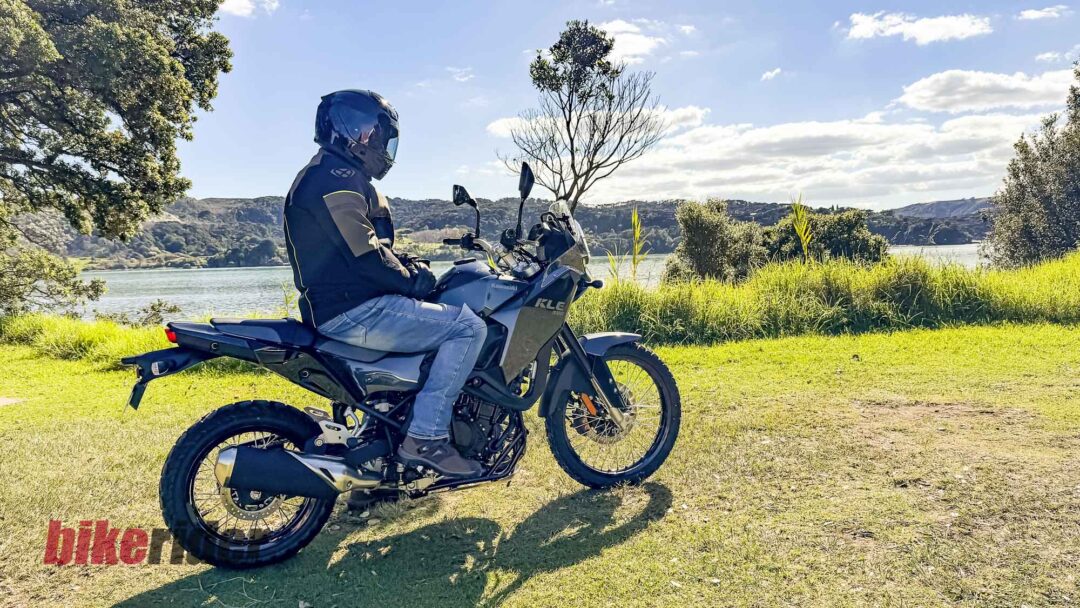
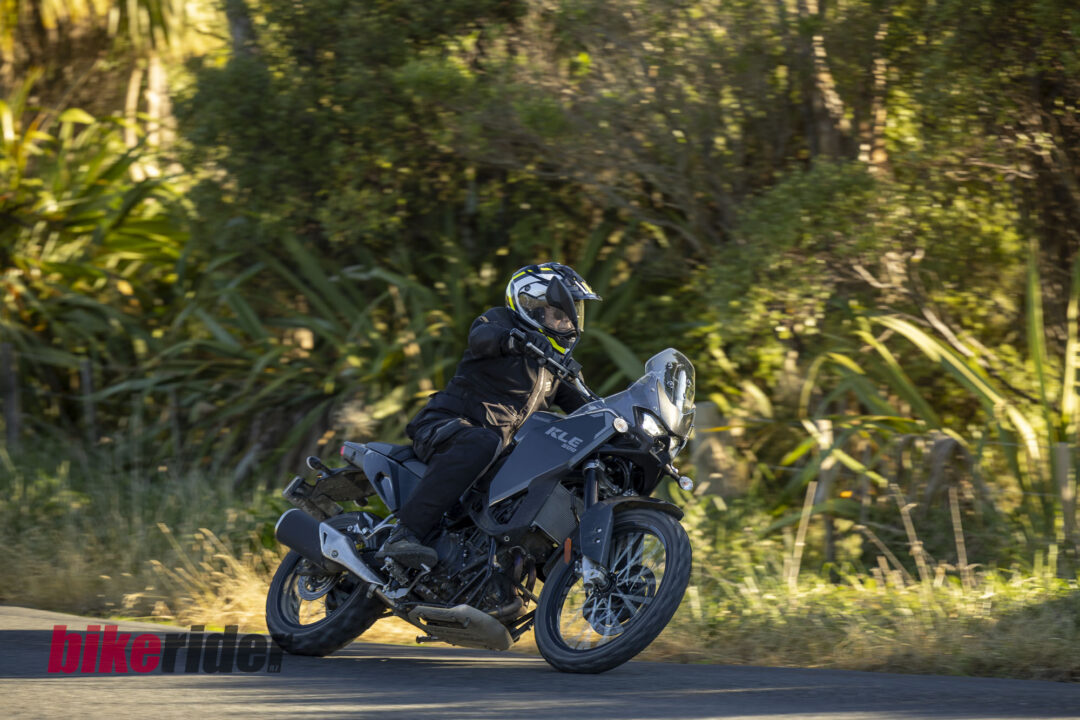
As mentioned earlier, Kawasaki claims the KLE has got among the longest suspension travel figures in the lightweight twin-cylinder ADV category, which I had to double-check considering the low ground clearance. It turns out that with suspension travel measured from the forks and shock completely extended (think of the bike hanging in the air), the Kawasaki does have a decent 210mm at the front and 196mm at the rear. It all sounds a little weird with only 185mm of ground clearance, but what you do also get is a nice and accessible seat height of 870mm. And it’s a real bonus, especially two up, to have the security of getting both feet firmly on the ground.
On the road, the KLE’s suspension is composed even when pushing on. There isn’t much in the way of adjustment, with preload available on the Uni-Track rear shock and that’s it. But the factory set-up is firm enough that it doesn’t wallow through the stroke, and I reckon that despite the limited ground clearance figure, it’s not the sort of suspension that’s likely to blow through that in a hurry. There was no moaning from the pillion about impacts of rough surfaces, and with the willing powerplant and comfortable riding position, this is a small adventure machine that I’d happily tour on.
Getting Dirty
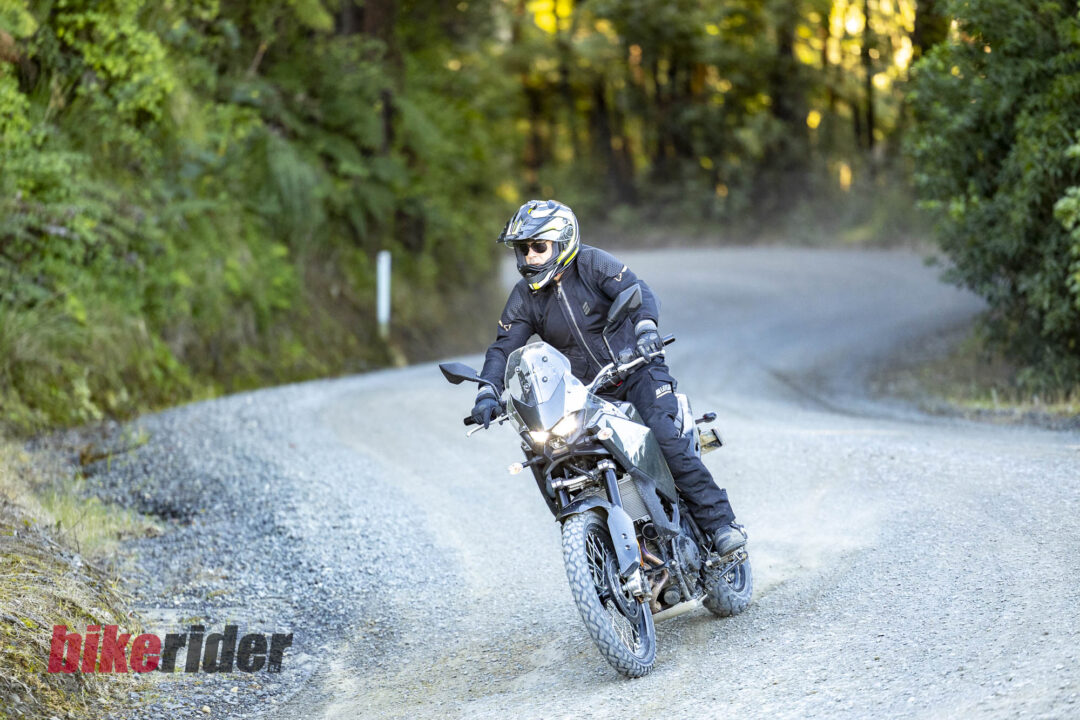
It was a week-or-so later that I got the first chance to get the KLE off-road. Yes, I could have handed the Kawasaki to a hot-shot MX rider who would do some crazy stuff for photos, but that’s not what this bike is all about. So instead, a day heading up the west coast to the popular stop of the Nikau Caves Café before continuing on up to Port Waikato while trying to find as much gravel as possible seemed like the perfect test environment.
I made a couple of mods to the Kawasaki before I went, adding a Quad Lock mount onto the handy bar above the LCD dash (the SE gets a flash TFT screen – we didn’t get that one…) so I could mount my phone for navigation. I then undid a load of bolts and raised the screen to its highest setting to offer myself and the phone some shelter before realising that the SE also gets a USB outlet. The standard doesn’t, so I grabbed an Oxford USB cable from the shed, attached it to the battery and then stuck the outlet to the side of the dash. Finally, making sure I could change gear and brake with off-road boots on meant a little adjustment with the levers, and I was all set. With the OEM tyres fitted to the Kawasaki looking good enough for what we were aiming to do, the bonus is they also worked well on the road, making this a true dual-purpose motorcycle. No fuss – just get on with it.
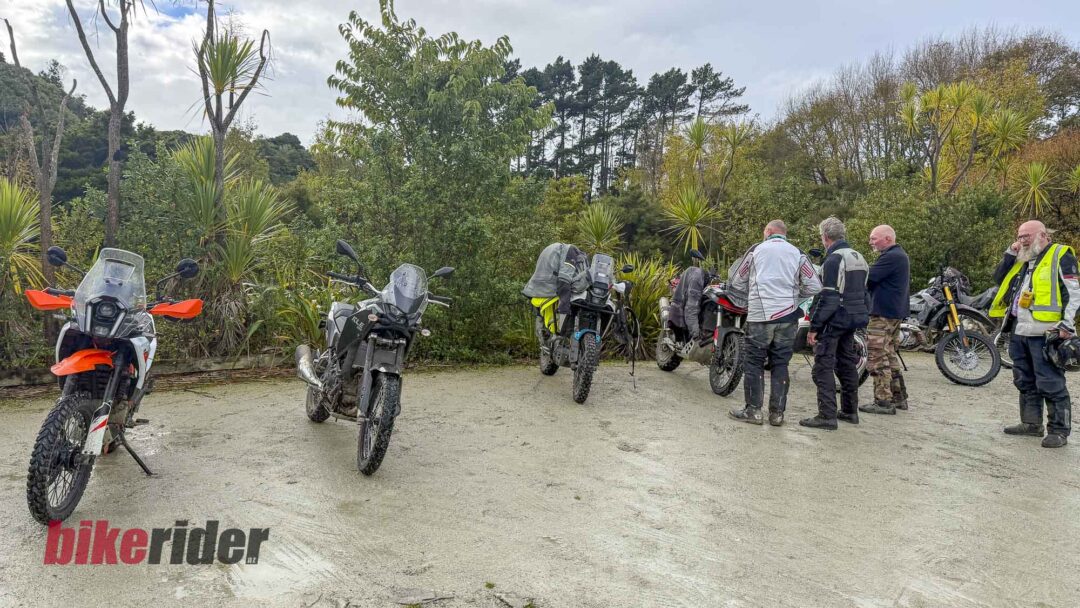
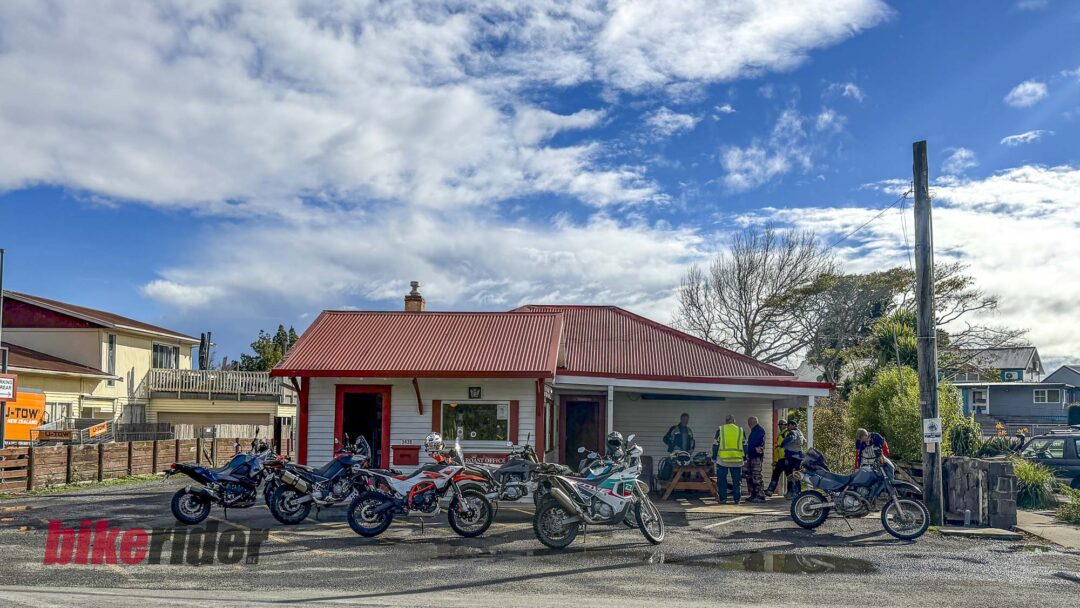
There was plenty of interest in the KLE from the others in our little gathering, with everyone pretty much on small adventure machines. Most agreed that Kawasaki had done a good job with the styling and were keen to see how it handled the day. With stands up at 9.30 am and the weather looking iffy, I was (like them), about to find out.
With Greg Boyd leading the group, I was prepared for his detour to a secret off-road spot that he’d led me along before. The first time it was dry, so riding between the trees wasn’t too much of an issue. But as I saw him slide sideways with both wheels as we entered the treeline, I knew it was going to be a challenge.
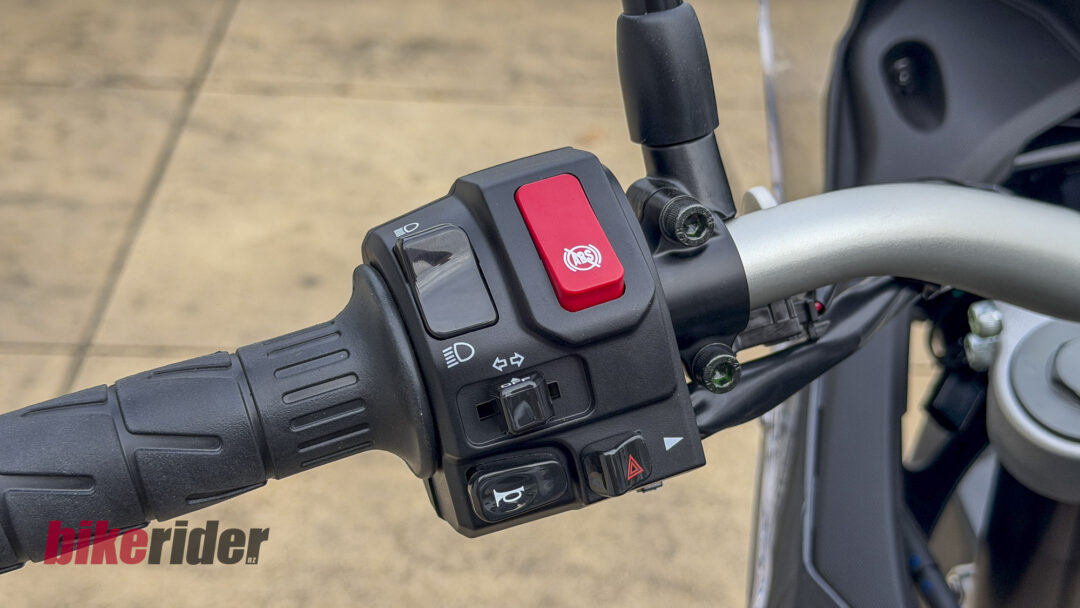
Thankfully, Kawasaki saw sense to fit a large red ABS button on the left switchblock, so it’s easy to deactivate the rear ABS, although you can only do it while stationary. With at least a bit of control with the rear brake, I followed Greg and gingerly entered the forest, where it soon became apparent there wasn’t much traction for anyone, whether you had full-on gnobbly tyres or not. The Kawasaki’s rubber did its best to provide traction, and I was surprised to find the front ABS coped well with the lack of grip, obviously tuned to handle low-grip situations when the rear is deactivated.
But it was the powerplant that really surprised me, with the less urgent power delivery at the bottom of the rev range actually making the bike easier to manage in the slippery conditions. When I needed a burst of power the clutch could be called on to spin the twin up, but it never felt intimidating or snappy. With the first challenge passed, it was on to the gravel.
Gravel Fun
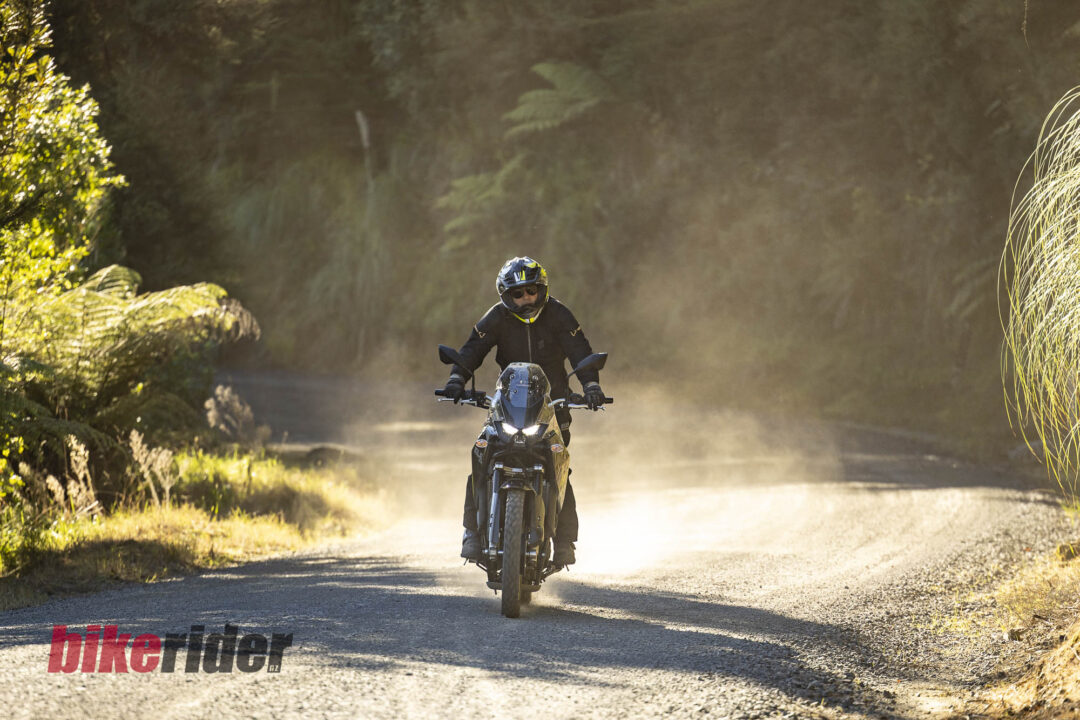
Heading up the coast from (almost) Raglan, there is a seemingly endless myriad of different options for gravel roads. And there wasn’t much traffic around given it was mid-week.
Plenty of rain in the preceding weeks and months meant the roads were a real mix of conditions, with some in the process of being graded while others were littered with slippery clay patches and water erosion. All of us needed to keep on our toes to avoid being caught out, especially as the pace quickened.
At cruising speed the KLE simply got on with the job. The smaller screen, despite being on its highest setting, was more than enough to keep the elements at bay, although as soon as I got to the first corner on the loose stuff and pushed the bike down to turn, I realised how enormously wide the handlebars are. They are a serious stretch! That makes off-road cornering a little more challenging, although the trade-off is great leverage to flick the bike from one corner to the next on the tarseal. But it took a little while to get used to on the dirt.
The saddle is comfortable, the riding position flexible enough for sitting or standing, and the suspension is well damped enough that I wasn’t too worried about hitting stuff at speed – see, the ground clearance really isn’t a problem. It was just when I started to up the pace that I needed to employ a bit more thought into riding the Kawasaki, as it feels a little disconnected from the front 21-inch wheel. And with the tall bodywork, you can’t really see what’s going on at the front even if you’re standing up.
Power Play
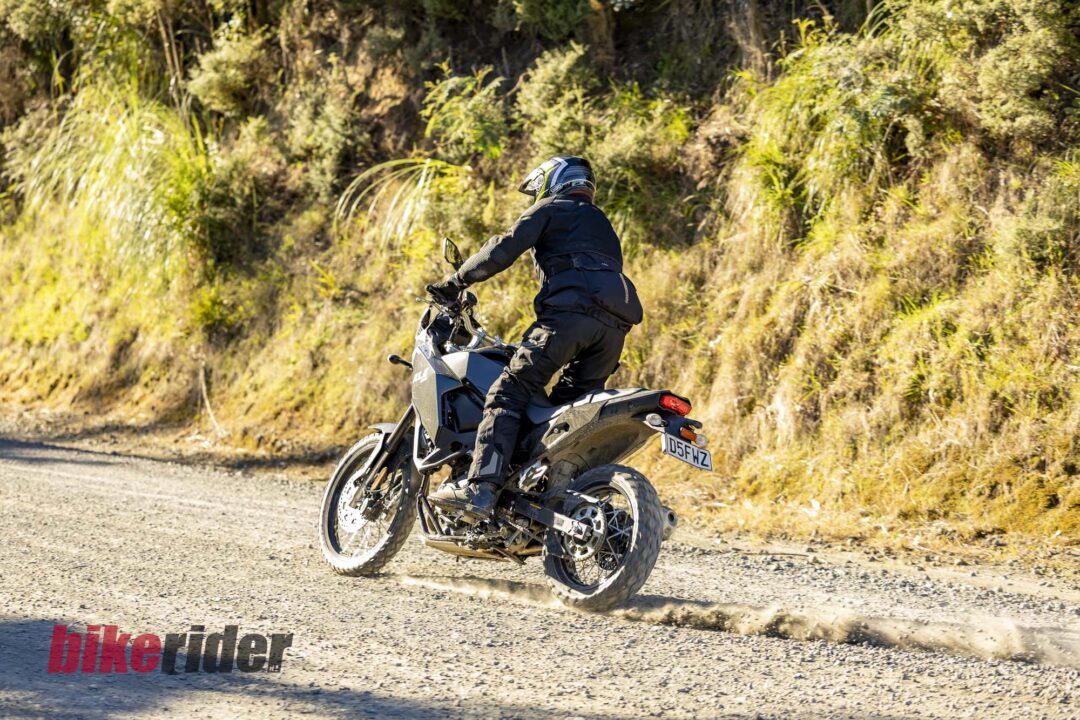
And it’s here that the engine characteristics once again come into play. It almost feels like the Kawasaki has traction control, as coming out of corners the motor tends to drive rather than spinning up. That’s because there’s naturally less going on down the bottom of the rev range, and to get the rear to spin you need to get the revs higher. The problem with that is, whereas steering with the rear wheel lower in the rev range on a bike with V-twin characteristics results in a controllable slide, when the revs are already high, the spin takes off much faster, making it harder to control. I couldn’t help thinking that it felt like the equivalent of riding a four-cylinder adventure bike.
Thankfully, the rest of the package just got on with the job while I played around with the best solution for getting the KLE to corner predictably, switching between higher gears and using the clutch or keeping the bike in a lower gear than usual. As it turned out, dropping an extra cog so the revs sat higher and then controlling the slide with the throttle offered the most predictable experience, while aiming to keep the cornering speed up also lessened the effect of trying to get the drive sorted in slower corners.
In high-speed gravel corners the KLE was in its element, with the package feeling composed and happy getting on with the job. The riding position is very much a ‘sit-in’ set-up, so I didn’t find myself standing on the pegs in an attack position very often unless the terrain was particularly tricky or I was about to hit something at speed. But as a general-purpose adventure bike that can turn its hand to a bit of everything, the Kawasaki KLE500 manages to do the job.
Heading Home
After a day of gravel and trail fun, I was still in a happy place on the KLE despite a good 250km on the clock for the day. Heading down the fantastic SH22 – a local biker’s favourite route – the Kawasaki carved from one lean to the other while I flicked up and down the box without bothering the clutch. The slip-and-assist clutch is seriously light, yet the gearbox is slick enough to make clutchless changes a breeze. With my phone connected to the Sena intercom on my helmet, pumping tunes while I watched the GPS countdown to the distance home, I had to be amazed at just what $11k gets you nowadays. There wasn’t a time when I wished I had more power, more suspension or more ground clearance – the Kawasaki KLE500 just got on with it.
The four-cylinder-like power delivery was the real unknown. On the road it’s great, especially if you like the spirited side of adventure touring. The motor is legendary, great fun and the best way to exploit 45 horsepower. Off-road, the lack of that low-down grunt just made the experience a little different. Not worse I wouldn’t say, just different. If you hadn’t ridden anything else, you wouldn’t know. If you have, then you’ll just need to change your technique slightly. And on fast gravel, well, it’s still a heap of fun!
Real-World Adventurer
The Kawasaki KLE500 doesn’t try to be a hardcore rally replica or an oversized adventure tourer. Instead, it focuses on real-world usability, comfort and approachability — and in that role it absolutely succeeds. The engine is smooth, entertaining and surprisingly capable, the chassis is confidence inspiring and the overall package simply works whether you’re commuting, touring or heading down a gravel road for the weekend. Yes, the low ground clearance and revvier engine character mean it requires a slightly different riding style off-road, but the internet criticism feels far more dramatic than the reality. For riders wanting a lightweight, affordable and genuinely usable adventure bike, the KLE500 makes a huge amount of sense.
Specifications
| Tech Spec | Kawasaki KLE500 |
|---|---|
| ENGINE | |
| Capacity | 451cc |
| Type | Liquid-cooled, DOHC, parallel twin |
| Bore x Stroke | 70.0 x 58.6mm |
| Compression Ratio | 11.3:1 |
| Fuel System | Fuel injection (32mm throttle bodies) |
| Transmission | 6-speed, assist & slipper clutch |
| Power | 33.4kW / 45hp @ 9,000rpm |
| Torque | 42.6Nm @ 7,500rpm |
| RIDER AIDS | |
| Electronics | ABS (switchable rear / off-road mode) |
| CHASSIS | |
| Frame | High-tensile steel trellis |
| Front | 43mm KYB USD forks, non-adjustable, 210mm travel |
| Rear | Uni-Trak monoshock, preload adjustable, 200mm travel |
| BRAKES | |
| Front | Single 300mm disc, twin-piston caliper |
| Rear | Single disc |
| WHEELS & TYRES | |
| Front | 21-inch spoked (IRC GP-410) |
| Rear | 17-inch spoked (IRC GP-410) |
| DIMENSIONS | |
| Wheelbase | — |
| Seat Height | 860–870mm |
| Ground Clearance | ~185mm (claimed) |
| Weight | 194kg (wet) |
| CAPACITY | |
| Fuel Tank | 16 litres |
| Standard | $11,215 + ORC (as tested) |
| SE | $12,535 + ORC |