

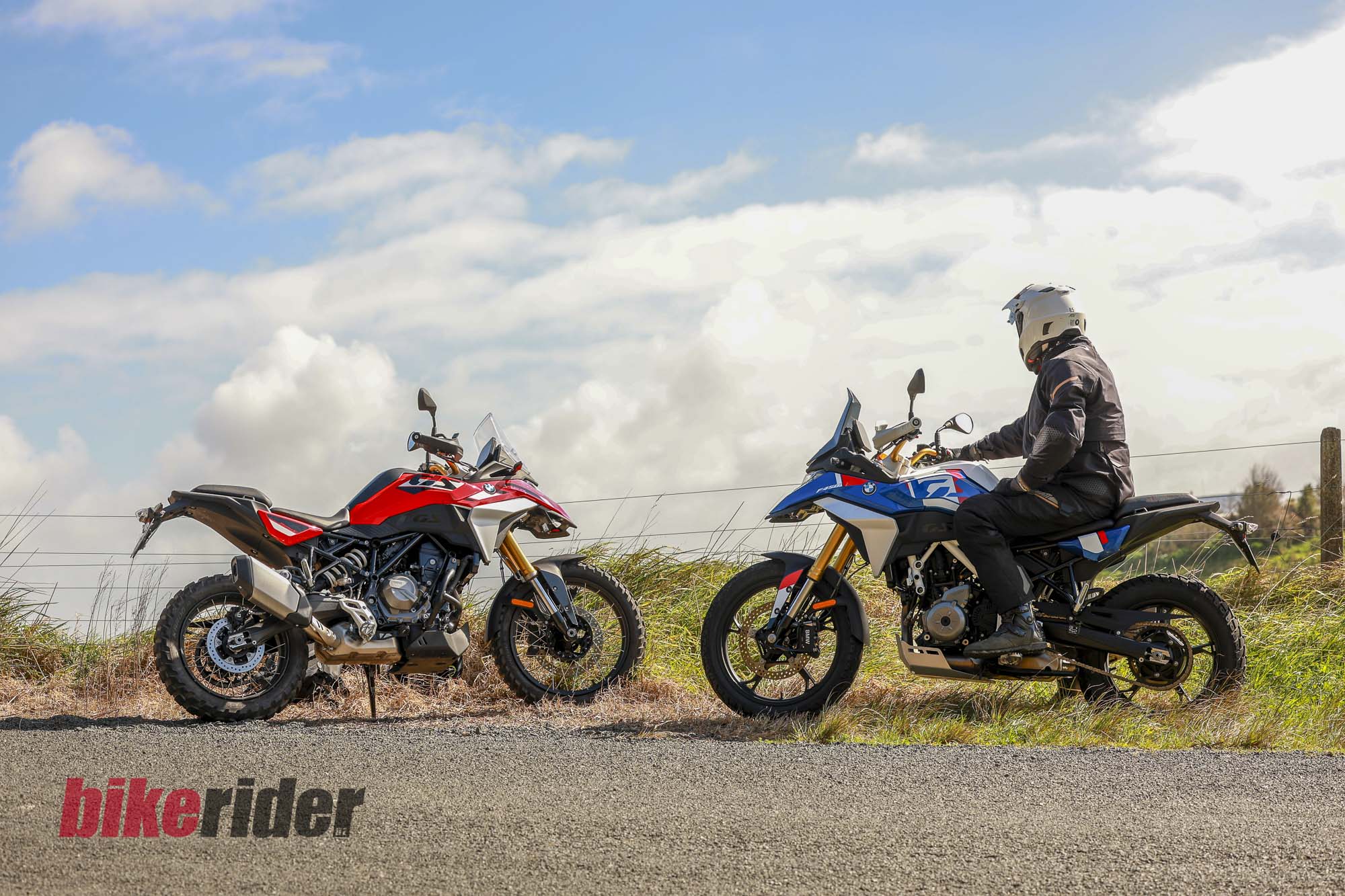
- 420cc parallel twin produces 48hp and 43Nm
- 178kg ready to ride with 180mm suspension travel
- Easy Ride Clutch removes the need to use the clutch without removing the lever
BMW’s new F 450 GS brings big-bike technology, a punchy parallel twin and genuine gravel ability to the lightweight adventure class. We test it on road and dirt – with and without BMW’s clever Easy Ride Clutch.
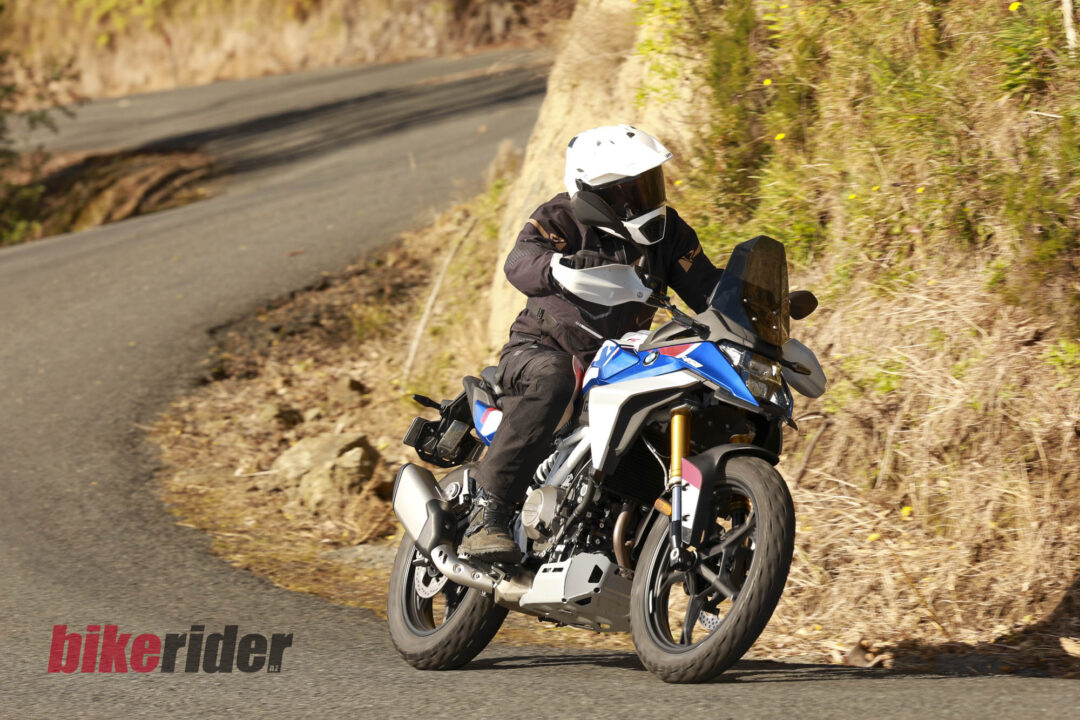
BMW’s new F 450 GS might be the smallest member of the GS family, but after riding it on road and gravel, there’s much more big-bike GS DNA here than you might expect.
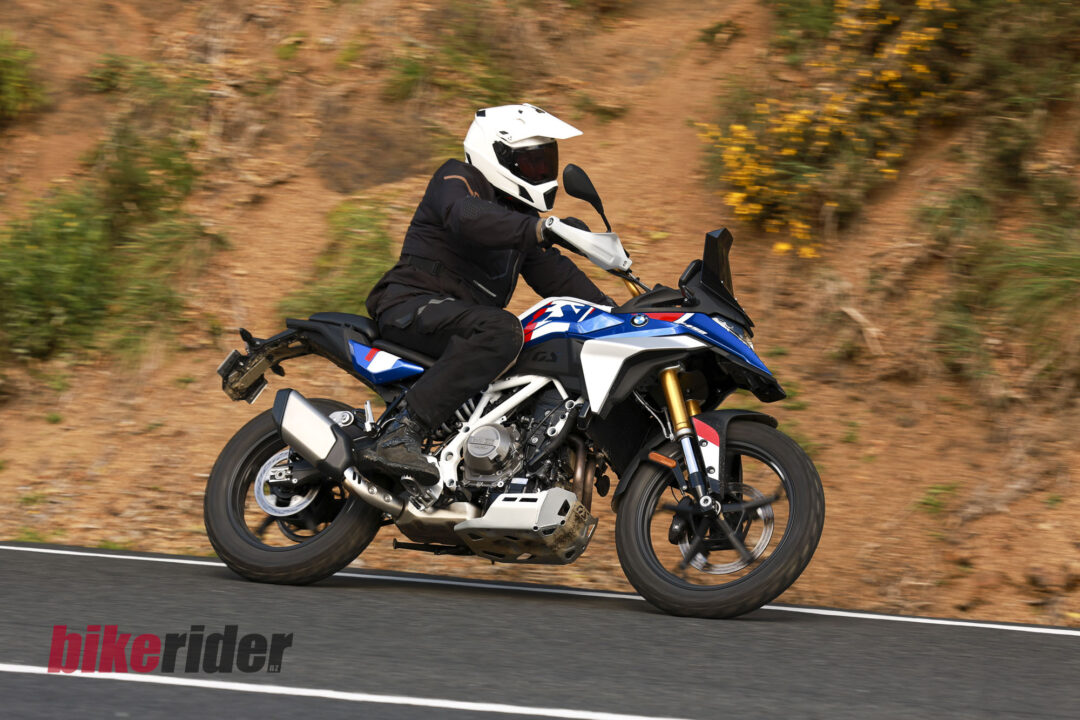
There’s something immediately likeable about the new BMW F 450 GS. In fact, before you even turn a wheel, BMW has got one important thing right – it looks like a proper GS.
The distinctive X-shaped headlight borrowed from the bigger members of the family, little beak, familiar GS profile and, particularly in the GS Trophy colours, give the 450 considerably more presence than you might expect from a small-capacity adventure bike. It’s one of those bikes that makes you stop and have a second look.
But the more important discovery from our time with the F 450 GS is that the family resemblance goes considerably deeper than the styling.
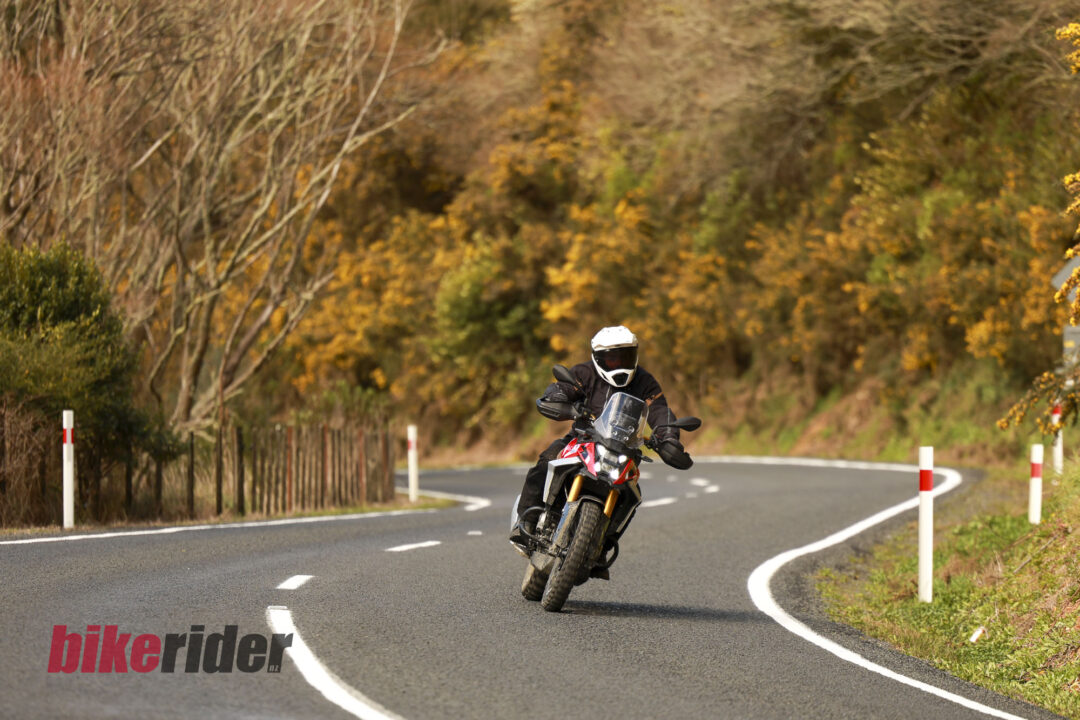
A Proper Little GS
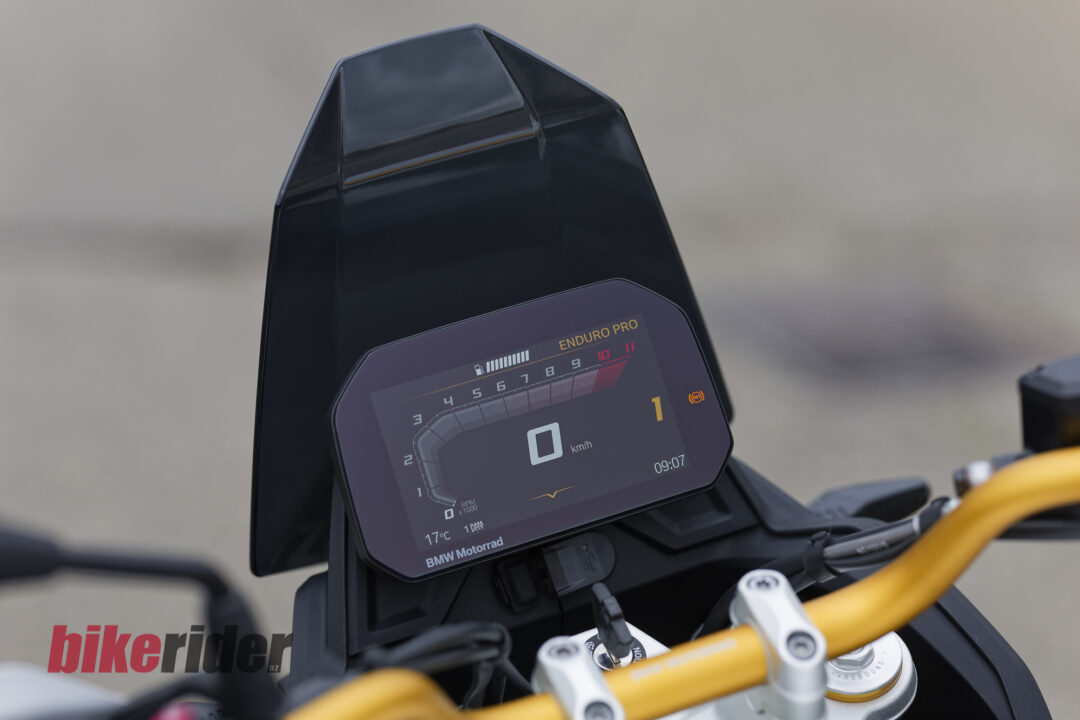
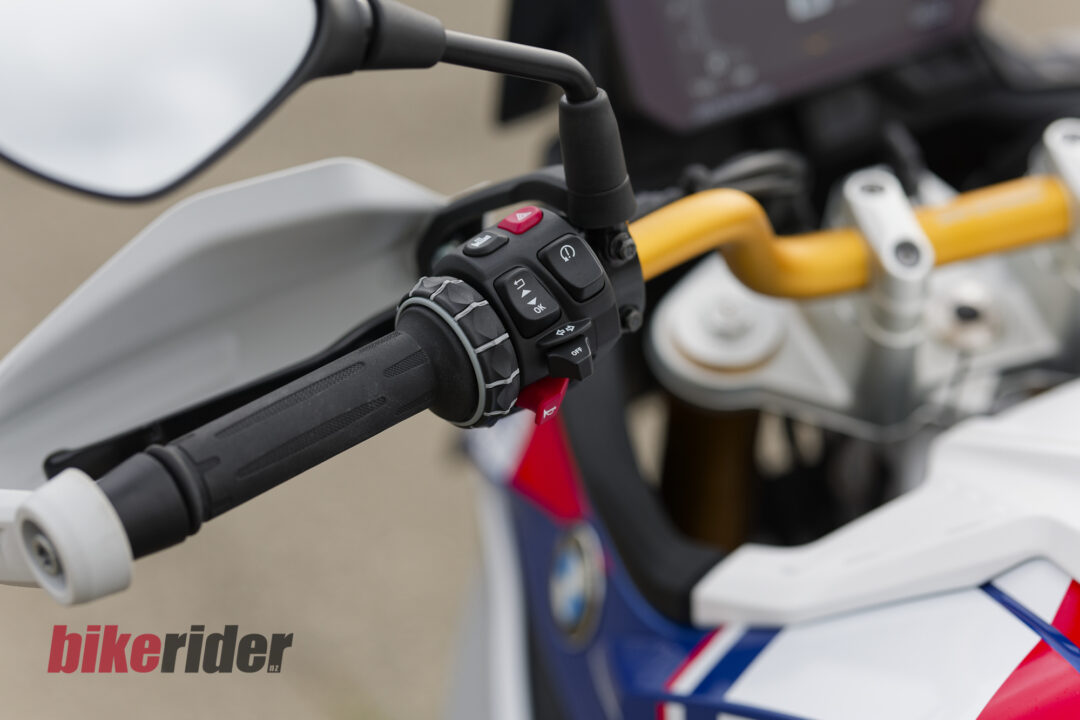
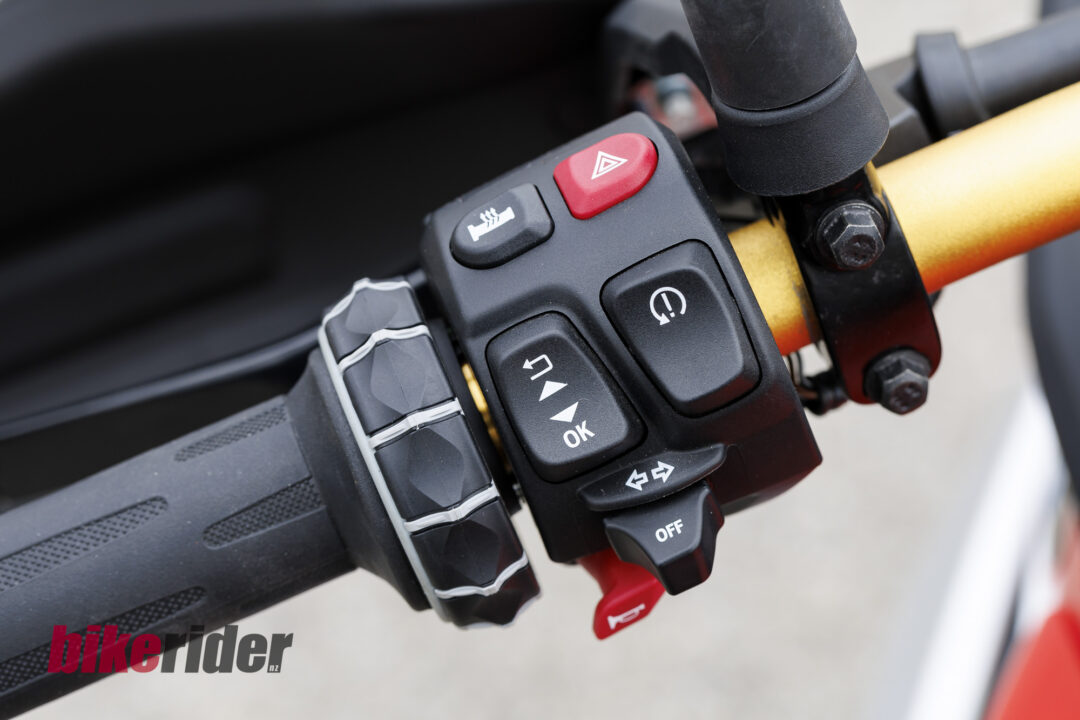
Climb aboard and there’s a surprising amount of big-GS familiarity. The switchgear, BMW’s rotary controller and TFT dash will all be immediately recognisable to anyone who has spent time on BMW’s larger adventure bikes.
MORE ARTICLES
That makes the F 450 GS feel surprisingly premium for what is now the entry point to the GS family. There are areas where the budget becomes a little more obvious – some of the finishing around the top yoke and ignition, for example – but the stuff you actually interact with is impressively polished.
“Before you even turn a wheel, BMW has got one important thing right – it looks like a proper GS.”
The riding position is typically upright and comfortable, while an 845mm seat height doesn’t feel intimidating thanks partly to how slim the bike is through the middle. BMW quotes a road-ready, fully fuelled weight of just an impressive 178kg, and you notice it immediately.
It’s light, manoeuvrable and unintimidating, whether you’re threading through traffic or picking your way along a gravel road.
Our test took place on an exceptionally windy day making it difficult to properly judge the screen, but while there was still plenty happening around the helmet, it did a decent job of keeping the blast away from the torso. The standard two-piece seat is reasonably firm and limits movement forward and back slightly, but if you’re going to get serious on the BMW, then they also offer a taller one-piece Rallye seat as an accessory. And while it will undoubtedly aid movement, I imagine it’ll probably look cooler as well.
Don’t Be Fooled By The 450 Badge
Despite the name, the new engine actually displaces 420cc. The parallel twin produces 48hp at 8750rpm and 43Nm at 6750rpm, with an unusual 135-degree crankpin offset. And it’s one of the highlights of the bike.
The twin is surprisingly smooth, yet still has plenty of character despite delivering its power in a wonderfully linear fashion. There’s useful drive through the middle of the rev range, which makes it easy to manage on loose surfaces, but let it spin beyond 7000rpm and there’s enough enthusiasm at the top to make the F 450 GS surprisingly entertaining on the road.
“It’s smooth, has plenty of character and delivers its power in a wonderfully linear fashion.”
It doesn’t suddenly come alive with a big top-end hit. Instead, it simply keeps pulling, making it an exceptionally easy engine to use. And despite being the baby GS, I wouldn’t hesitate to take one of these on a decent trip, especially as with a 14-litre tank and BMW claiming consumption of 3.8L/100km, there’s theoretically well over 300km of range available too.
Two Bikes, Two Personalities
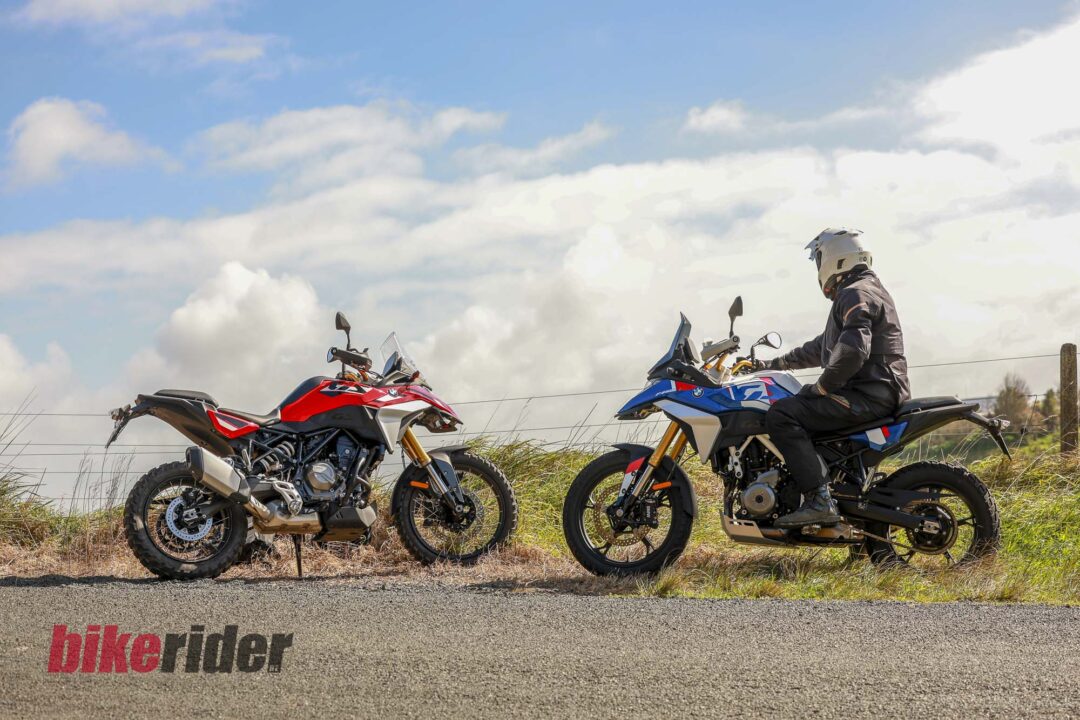
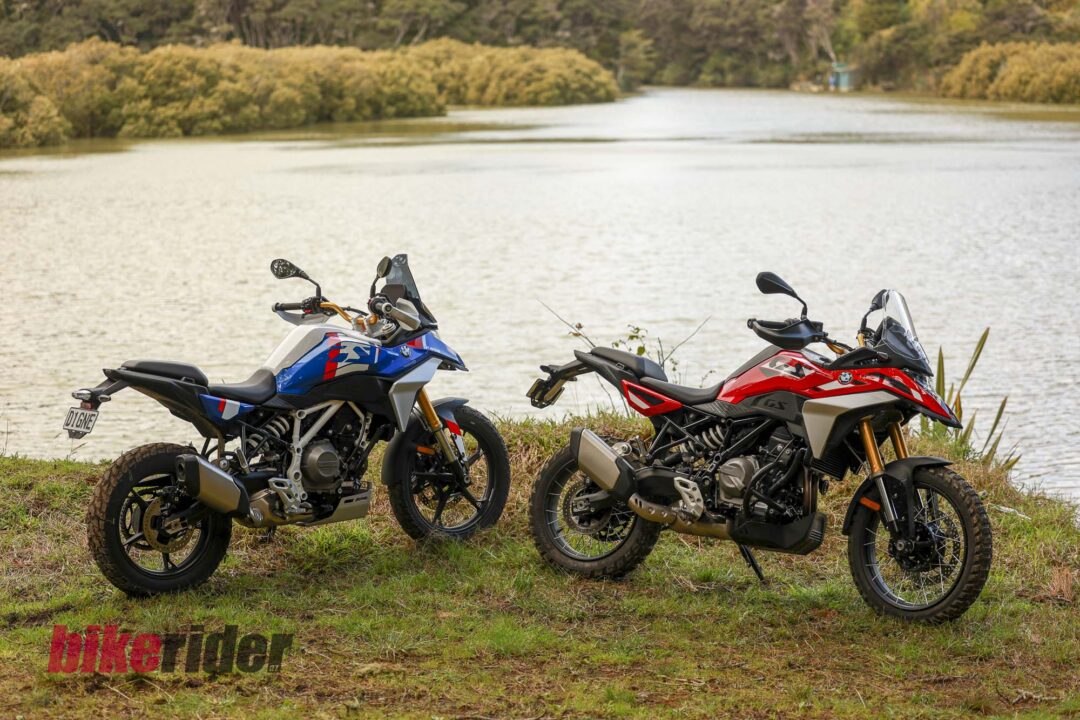
We had two F 450 GS examples to play with, which gave us the opportunity to experience rather different versions of the same motorcycle.
There was a GS Trophy which featured BMW’s new Easy Ride Clutch, while the Racing Red bike retained the conventional clutch but had been fitted with cross-spoked wheels and much more dirt-focused Metzeler Karoo 4 rubber. And it was the difference in those tyres that was immediately noticeable.
On tarmac, the Karoo 4s made the bike feel distinctly different – initially enough that I wondered whether something was wrong with the tyre pressures – but head onto loose surfaces and the extra grip was obvious. The more road-orientated tyres on the Trophy were surprisingly capable on dry gravel but quickly reached their limits once things became wet or muddy.
The 19-inch front wheel might not appeal to riders looking for a miniature rally bike, but for the kind of mixed road and gravel riding most Kiwi adventure riders actually do, it works well enough.
Easy Does It
And, so, onto the big talking point of the new GS, BMW’s Easy Ride Clutch (ERC).
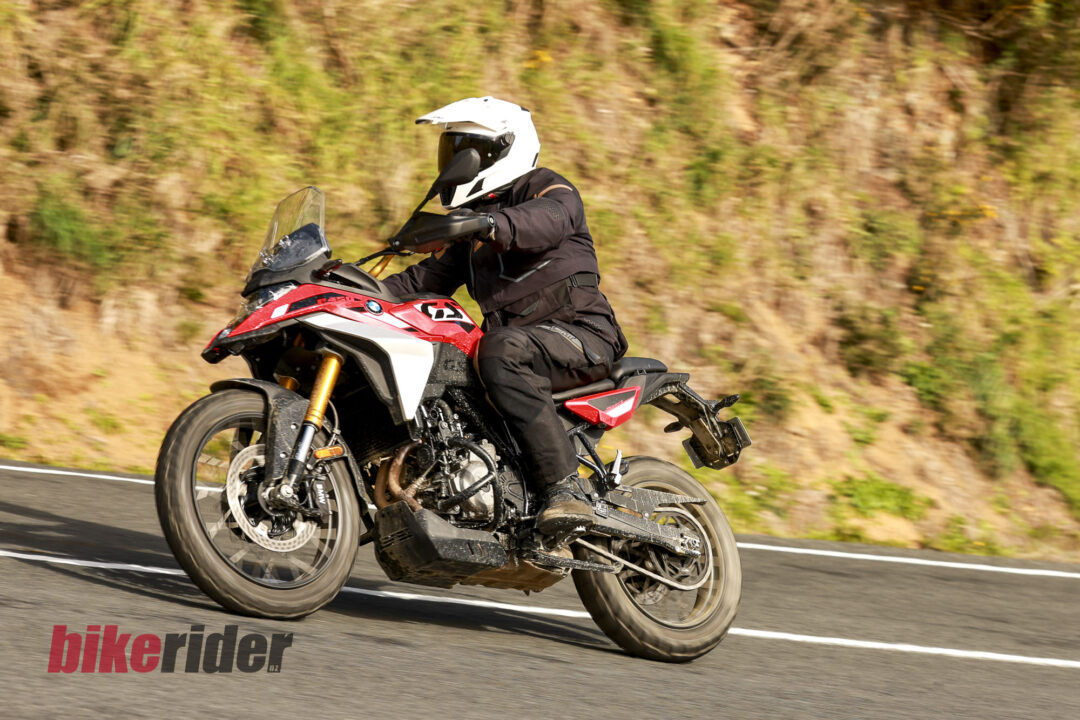
There is a multitude of different versions of ‘auto clutch’ available from manufacturers nowadays, with them all seemingly doing it a bit different. And riders also seem to fit into two camps – love them or hate them. I’ve ridden with most of them, and I reckon that the BMW system is probably one of the best, especially for adventure riding. You see, rather than removing the clutch lever altogether, BMW uses a centrifugal clutch that automatically engages according to engine speed. Select first gear at a standstill, release the clutch lever and nothing happens until you open the throttle. Twist the throttle and pick the revs up to 2,500rpm and the drive engages and you start to move forward.
It’s pretty easy, and combined with Shift Assistant Pro, you can essentially ride without touching the clutch lever at all. Pull away on the throttle, shift up and down using the quickshifter and come to a complete stop without disengaging the clutch. Yet, BMW has deliberately retained the conventional clutch lever, so the rider can override the system whenever required.
“For an adventure bike, that combination makes a lot of sense.”
Around town, it works brilliantly. There’s no possibility of stalling when you’re pulling away from the lights and, once you’ve recalibrated your brain, low-speed manoeuvring becomes surprisingly natural. This is a system that will aid with confidence for new riders or those who really struggle with clutch control.
Off-road, there is a compromise. Starting from stationary on a slippery surface requires enough throttle for the centrifugal clutch to engage, which can make it easier to spin the rear tyre than when you’re delicately feeding in a conventional clutch.
But unlike some automated systems, the lever is still there when you need it. Want to pop the front over an obstacle or deliberately introduce a burst of power? Pull the clutch in, build the revs and release it exactly as you normally would.
For an adventure bike, that combination makes a lot of sense.
And BMW’s Shift Assistant Pro is excellent. Changes in either direction are slick enough that there really is very little reason to touch the clutch during normal riding.
Getting Dirty
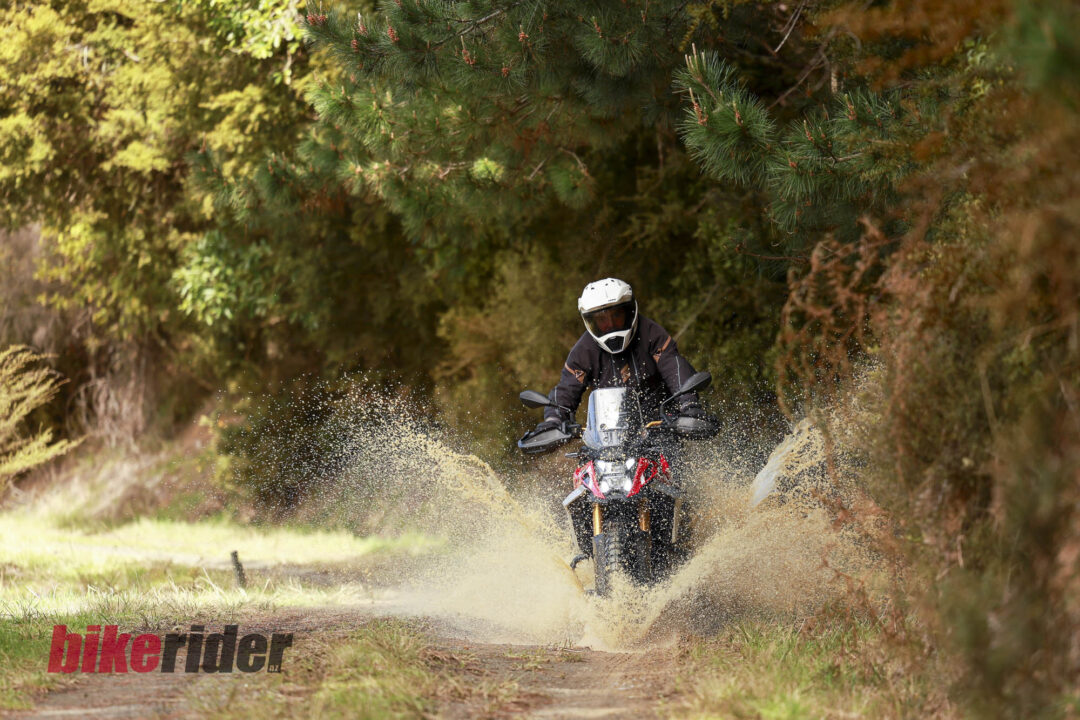
Standing on the pegs reveals another strength of the F 450 GS. It’s beautifully slim through the middle, giving you plenty of room to move around and making it easy to grip the bike with your knees.
At six feet tall, I found the handlebar fractionally low when standing, although rotating it slightly forward would probably have improved matters. Otherwise, the ergonomics work well.
The suspension is where you begin to find the limits. There’s 180mm of travel at both ends, with a 43mm USD fork and an adjustable rear shock. For gravel roads and relatively gentle off-road riding it’s perfectly adequate, but start hitting bigger holes and sharp bumps with enthusiasm and you can feel the suspension beginning to struggle.
“It doesn’t feel like BMW has simply built a cheap 450 and stuck a GS badge on it.”
And that’s probably the key to understanding the F 450 GS.
This isn’t a lightweight rally bike or an enduro machine wearing indicators. Think of it instead as perhaps 70/30 road to dirt – a smaller, lighter interpretation of what BMW’s larger GS models have always done.
You could load it up, ride it down the South Island, spend days exploring gravel roads and ride it home again. That’s much more its natural territory than tackling a technical trail ride.
Small GS, Big Ambitions
The BMW F 450 GS enters a part of the adventure market that’s becoming increasingly competitive, and its $13,490 + ORC starting price puts it at the premium end of the small-capacity category. Start adding some of the desirable options and that gap can grow further.
But there’s also an argument that you’re getting something for that premium.
The TFT, electronics, switchgear and overall integration have the polish we’ve become accustomed to on considerably more expensive BMWs. The engine is excellent, the bike is light and extremely easy to manage, and it manages the difficult trick of being friendly to a relatively inexperienced rider without becoming boring for somebody with considerably more experience.
Most importantly, it doesn’t feel like BMW has simply got someone to build a cheap 450 and stuck a GS badge on it.
It really does feel like a proper little GS.
And that might turn out to be the F 450 GS’s biggest strength.
The Competition
CFMOTO
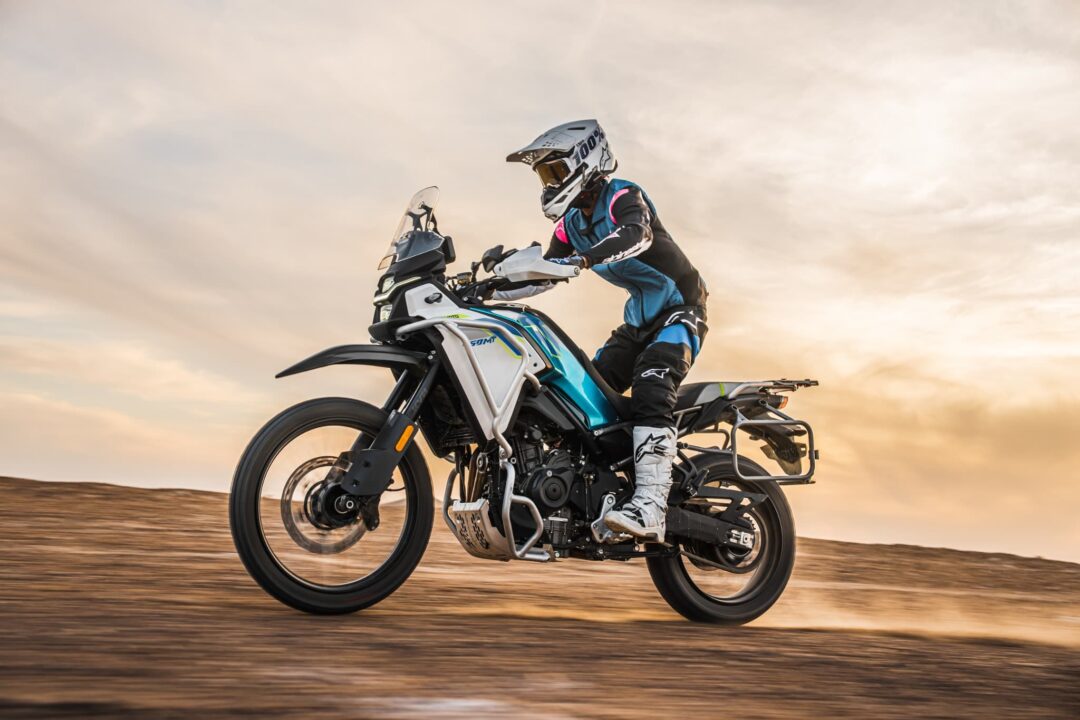
450MT
Engine: 449cc parallel twin
Power: 32.5kW (44hp)
Torque: 44Nm
Weight: 192kg wet
Wheels: 21in / 18in spoked
Suspension travel: 200mm / 200mm
Price: $9,990 + ORC
Character: More overtly off-road focused, with long-travel KYB suspension and proper 21/18in wheels. But, there’s a reason it’s been NZ’s biggest selling bike for months, with a well sorted package.
KAWASAKI
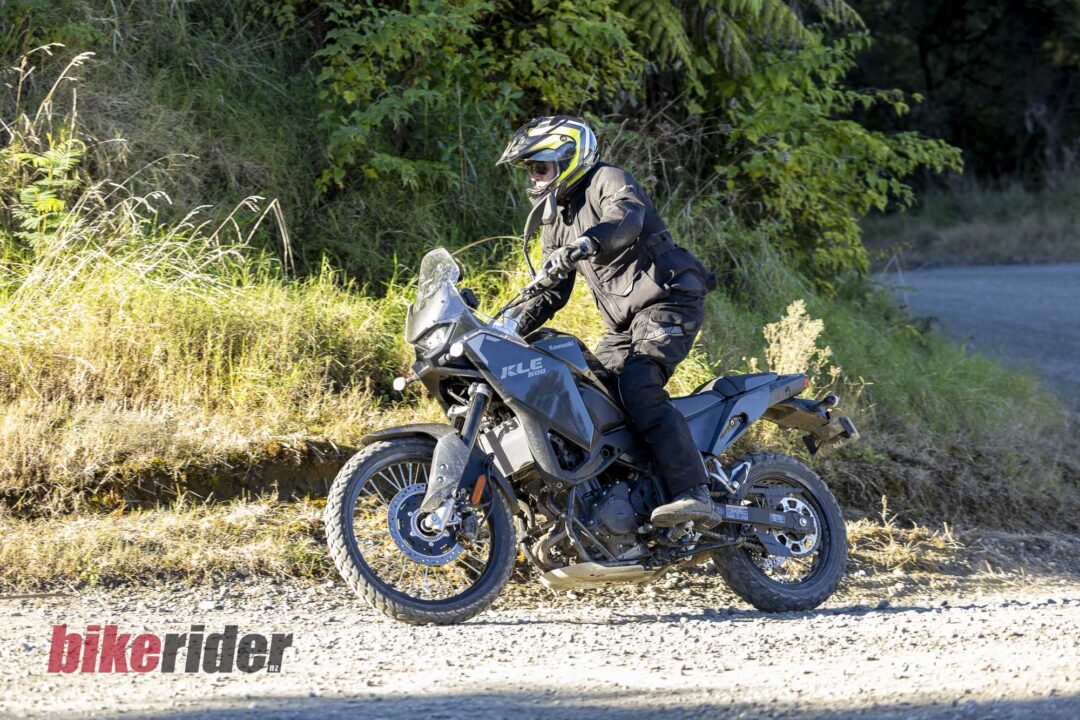
KLE500
Engine: 451cc parallel twin
Power: 33.4kW (45hp)
Torque: 42.6Nm
Weight: 194kg wet
Wheels: 21in / 17in
Suspension travel: 210mm / 196mm
Price: $10,559 + ORC
Character: Another road-and-dirt all-rounder, but its 21in front wheel and extra suspension travel give it a more traditional adventure-bike specification than the BMW.
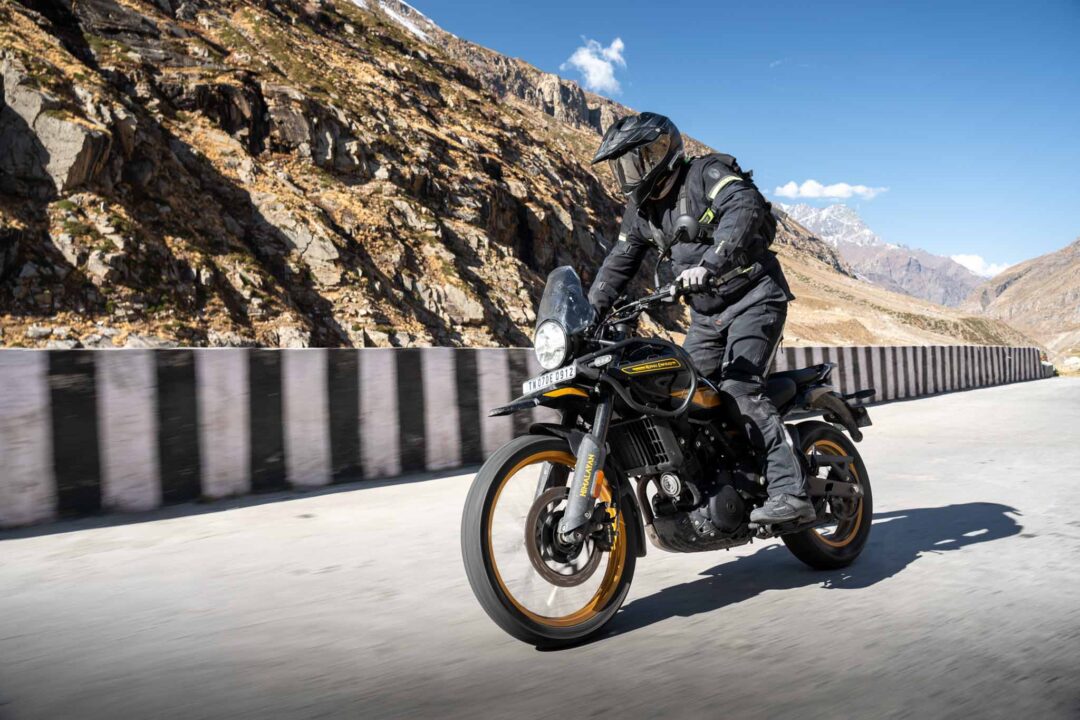
ROYAL ENFIELD
HIMALAYAN 450
Engine: 452cc single
Power: 29.4kW (40hp)
Torque: 40Nm
Weight: 196kg dry
Wheels: 21in / 17in
Suspension travel: 200mm / 200mm
Price: $9,190 + ORC
Character: Less powerful than the BMW and powered by a single rather than a twin, but with a 21in front and 230mm ground clearance it’s aimed squarely at traditional adventure riding.
A GS Where It Matters
The F 450 GS isn’t a miniature rally bike and doesn’t pretend to be. Instead, BMW has produced a genuinely useful lightweight adventure bike that’s easy to ride, entertaining on the road and capable enough to tackle the sort of gravel-road exploring most riders will actually do. The engine is a highlight, the electronics and controls have the polish of BMW’s bigger machinery, and at 178kg it’s refreshingly manageable. The suspension ultimately sets the limit when the terrain gets rough, while the premium price will inevitably be a consideration alongside some very capable competition. But the important bit is that the F 450 GS doesn’t feel like a budget motorcycle wearing an expensive badge. It feels like a GS – just a considerably smaller one.
Specifications
| BRM Quick Facts | BMW F 450 GS |
|---|---|
| Engine | 420cc liquid-cooled parallel twin |
| Power | 35kW (48hp) @ 8750rpm |
| Torque | 43Nm @ 6750rpm |
| Gearbox | 6-speed |
| Front suspension | 43mm USD fork, 180mm travel |
| Rear suspension | Adjustable monoshock, 180mm travel |
| Front brake | 310mm disc, Brembo four-piston caliper |
| Wheels | 19in front / 17in rear |
| Seat height | 845mm |
| Fuel capacity | 14 litres |
| Wet weight | 178kg |
| Price | From $13,490 + ORC |