

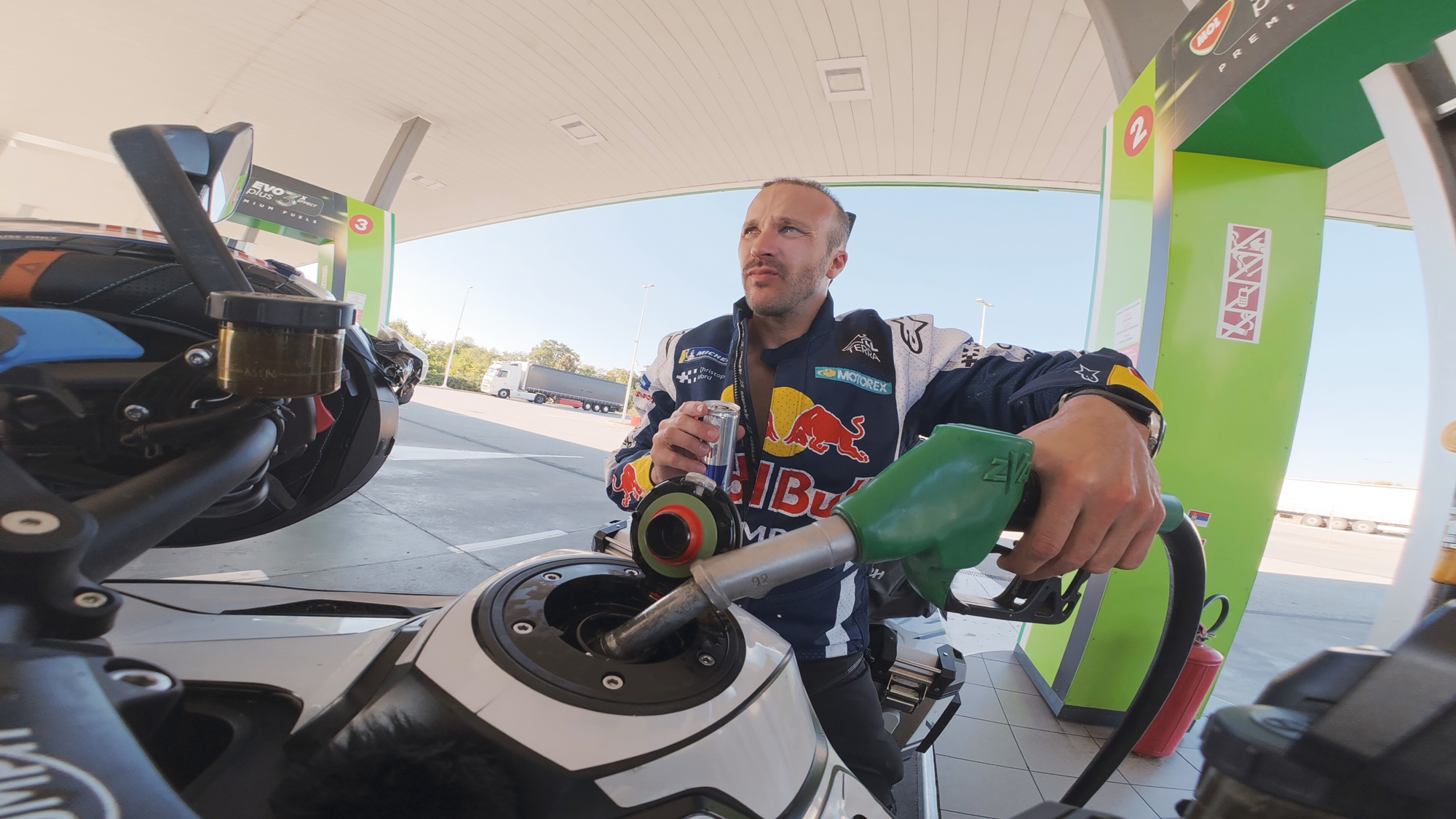
- Sunderland was attempting to beat the 19 days, 8 hours and 25 minutes round-the-world motorcycle record.
- His Triumph Tiger 1200 Rally Explorer sustained damage in the Australian outback, leading to a technical issue that required repair.
- New Zealand was supposed to be the next leg, but the repair and testing time meant the record was no longer achievable.
Sam Sunderland’s audacious attempt to become the fastest person to circumnavigate the globe by motorcycle has come to a heartbreaking end in Australia, after his Triumph Tiger 1200 Rally Explorer sustained damage in the outback.

The two-time Dakar Rally winner had been making impressive progress on his 18,000-plus-mile (29,000km) journey around the world, but damage sustained during the Australian leg resulted in a technical issue that ultimately brought the attempt to a halt.
It wasn’t necessarily that the Triumph couldn’t be repaired. The bigger problem was the clock.
With the existing record standing at 19 days, eight hours and 25 minutes, Sunderland and his team calculated that the time required to repair the Tiger and then properly test it before continuing would make the record impossible to achieve.
“Anyone who knows me knows I don’t give up easily, and this definitely wasn’t a decision I took lightly.”
“I’m gutted, honestly,” Sunderland said after confirming the attempt was over.
MORE ARTICLES
“Anyone who knows me knows I don’t give up easily, and this definitely wasn’t a decision I took lightly. But sometimes you’ve got to accept what’s in front of you.”
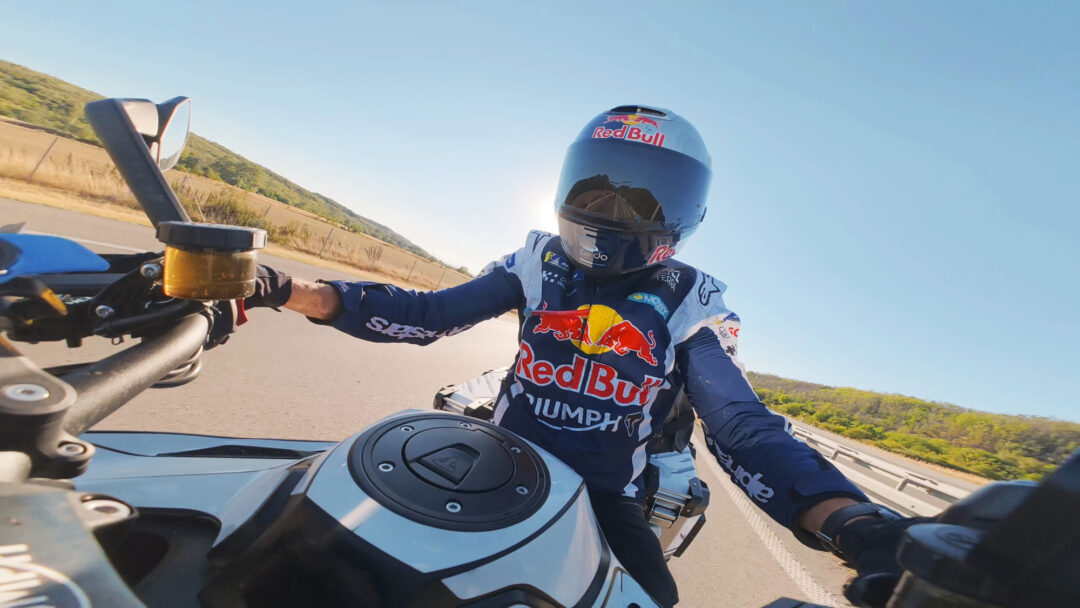
A HUGE CHALLENGE
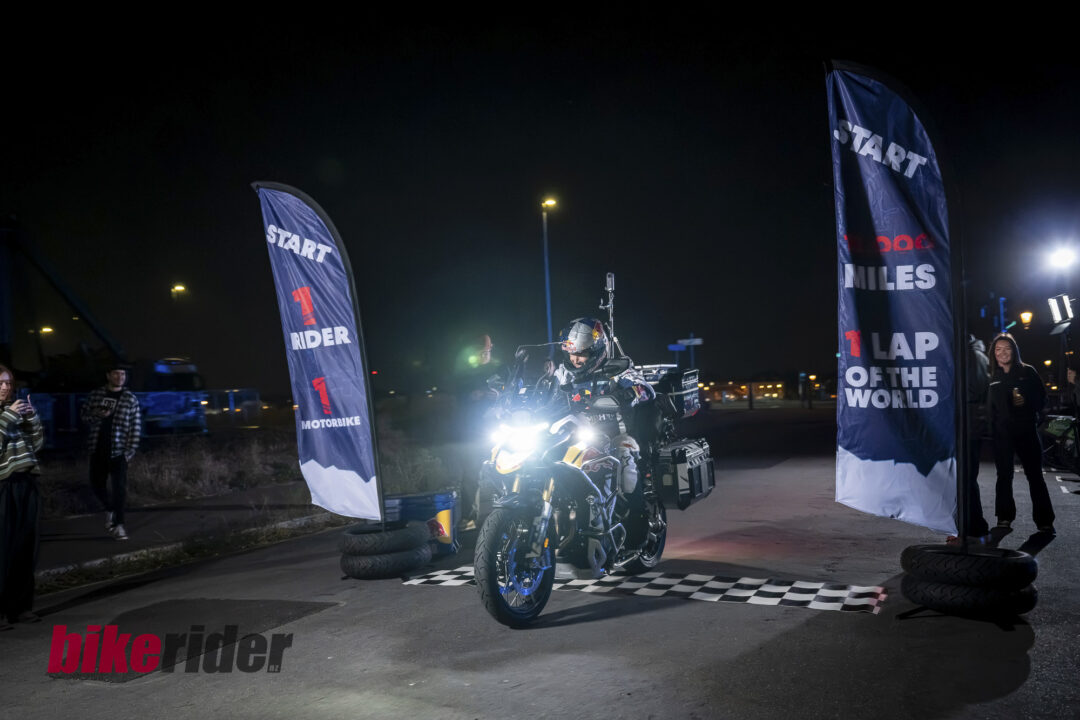
Sunderland left Greenwich, London, on September 5 aboard the Triumph Tiger 1200 Rally Explorer, aiming to beat a record that has stood since 2002.
The scale of the challenge was enormous. Sunderland planned to cover more than 18,000 miles across five continents and 16 countries, averaging close to 1000 miles (1600km) a day and spending as much as 17 hours in the saddle.
The six riding legs would take him from London to Istanbul, Bangkok to Kuala Lumpur, Perth to Sydney, through the length of New Zealand, Vancouver to Montreal and finally Casablanca back to London.
Under the rules, the clock stopped while Sunderland and the motorcycle were transported across oceans, but rest periods during the riding legs still counted. Crucially, Sunderland also had to complete the journey on the same motorcycle.
And he certainly wasn’t hanging around.
“The plan called for almost 30,000km across five continents and 16 countries.”
The opening run from Greenwich to Istanbul covered 2356 miles (3792km) in 39 hours and 34 minutes, taking Sunderland through England, France, Italy, Slovenia, Croatia, Serbia, Bulgaria and Turkey.
He then covered the 948 miles (1526km) between Bangkok and Kuala Lumpur in just 15 hours and 33 minutes. After those opening two legs Sunderland had covered 3304 miles (5317km), with the record clock sitting at two days, seven hours and seven minutes, including rest time.
Australia was next, with the planned route taking Sunderland and the Tiger from Perth across the continent to Sydney before heading across the Tasman for the New Zealand leg.
Instead, the Australian outback proved to be the end of the road.
DAMAGE ENDS THE ATTEMPT
Sunderland has not detailed exactly what was damaged on the Tiger, saying only that the motorcycle “sustained damage which led to a technical issue that needed repairing”.
His team attempted to keep the challenge alive, but with repairs and subsequent testing required, there simply wasn’t enough time left to remain in contention for the record.
It’s a particularly tough way for the attempt to finish given just how much preparation had gone into it.
The challenge was originally announced for an earlier start but was postponed after Sunderland broke his back in a training accident. Following months of rehabilitation, the former Dakar champion returned to fitness and finally rolled away from Greenwich earlier this month.
“It wasn’t the ending we were chasing, but that’s part of adventure sometimes.”
The Australian failure also underlines just how difficult this record is. This wasn’t simply about maintaining a high average speed. Rider fatigue, sleep deprivation, weather, border crossings, changing road conditions, logistics and keeping one motorcycle running across more than 29,000km all had the potential to derail the attempt.
Ultimately, it was the bike — or more specifically the time required to put it right — that brought Sunderland’s challenge to an end.
“While I’m disappointed, I’m also proud of what we achieved, the places we reached and the adventure we’ve had over the last few weeks,” Sunderland said.
“It wasn’t the ending we were chasing, but that’s part of adventure sometimes.”
For Sunderland and Triumph, it’s a frustrating conclusion to one of the most ambitious motorcycle endurance challenges we’ve seen in years.
But considering Sunderland has won the Dakar twice, come back from a broken back and then decided that riding nearly 30,000km around the planet against the clock sounded like a good idea, we wouldn’t necessarily bet against him having another crack.