

Words: Adam Child “Chad” | Photography: KTM
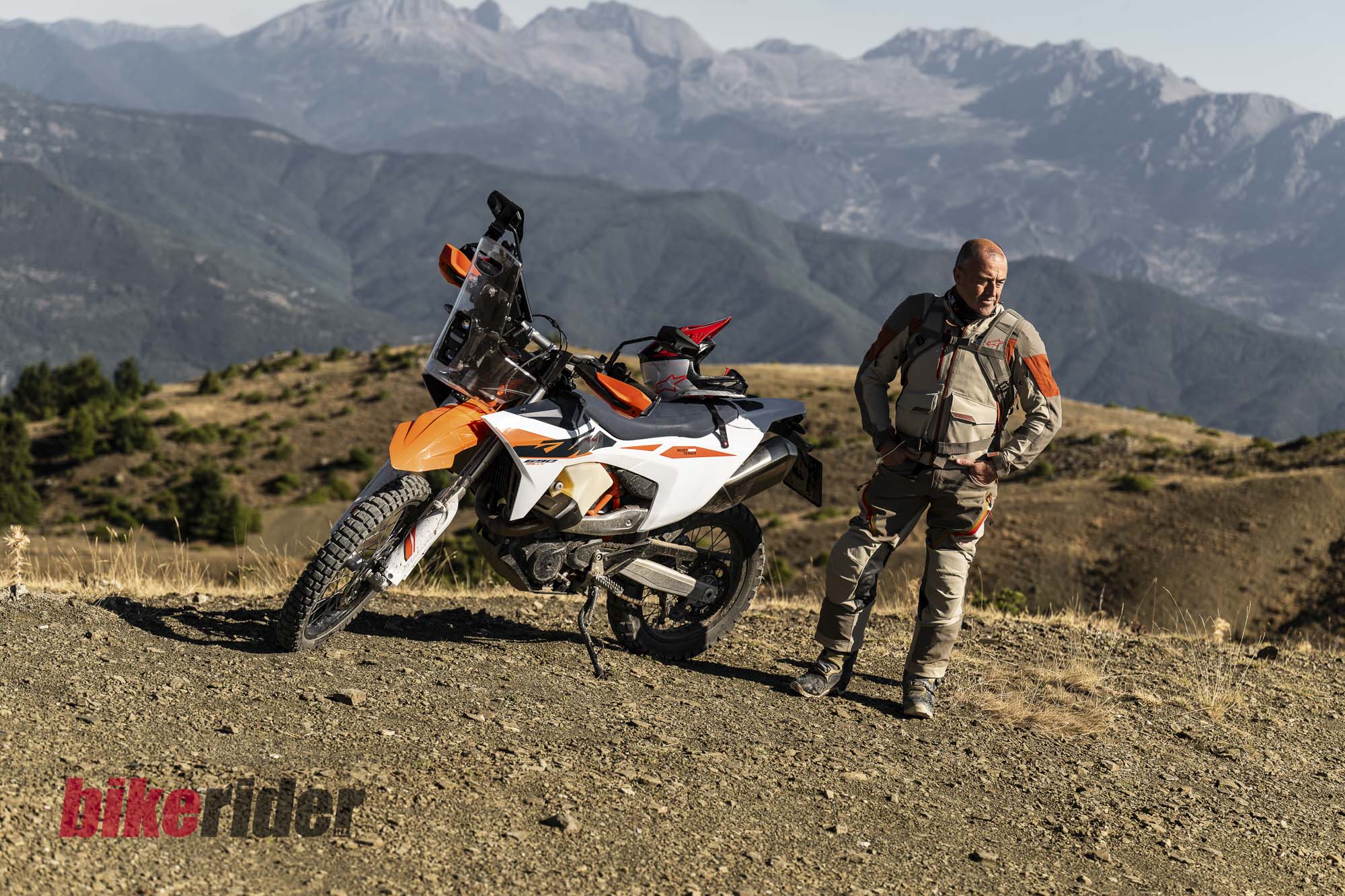
A KTM ready to take on the world. Adam Child takes the 2027 KTM 690 Rally into the Greek hills for two days of demanding off-road riding.
- Twenty litres of fuel, a rally tower and wind protection build on the 690 Enduro R platform.
- Confidence-inspiring electronics and manageable weight impress across nearly 400km in Greece.
- NZ$25,499 ride-away; a tall 935mm seat and limited road-testing time are important caveats.
Sometimes there is an obvious gap in the market: riders know what they want, yet the manufacturer is slow to deliver it. That is exactly what happened with the KTM 690 Rally.
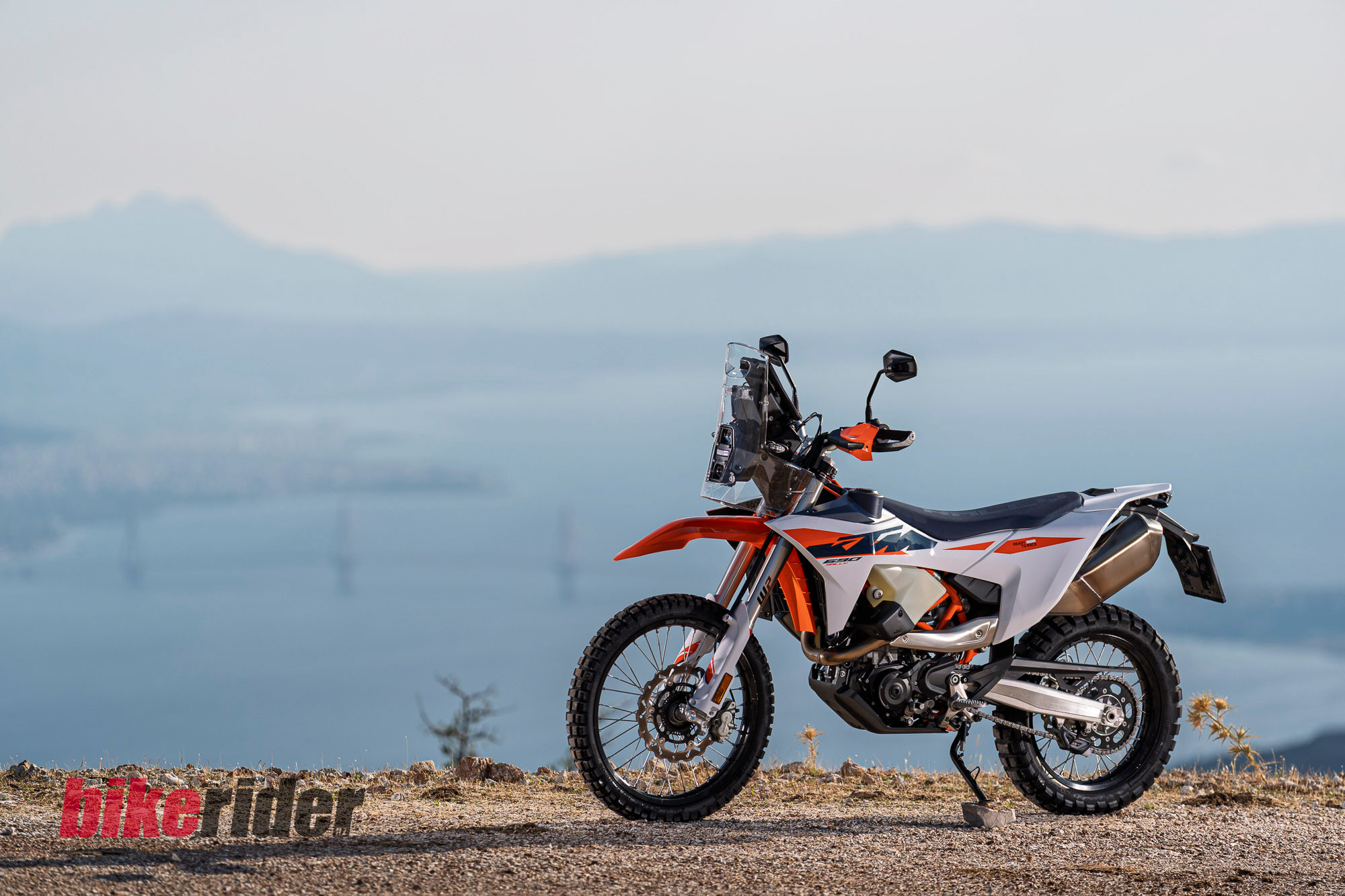
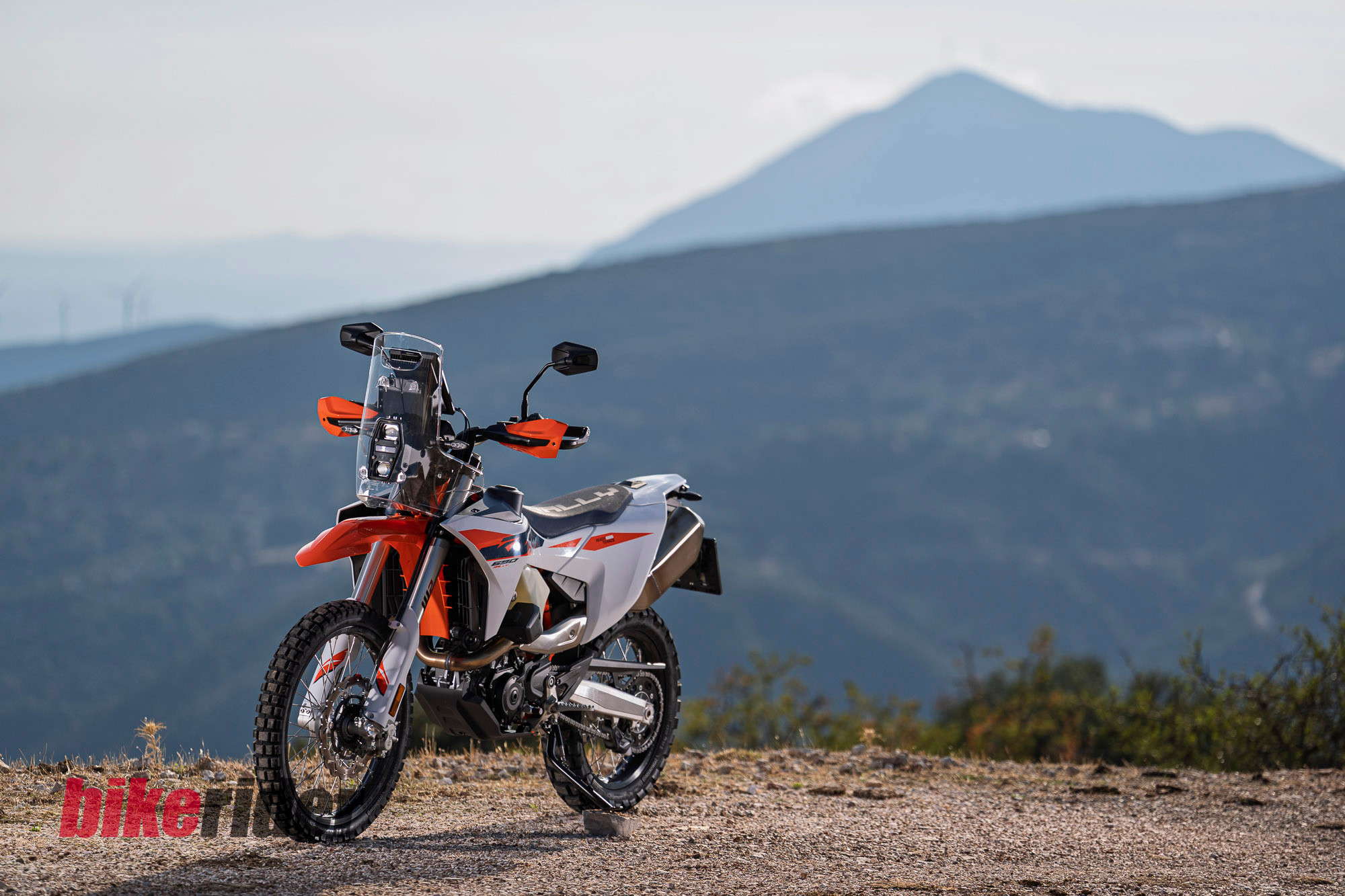
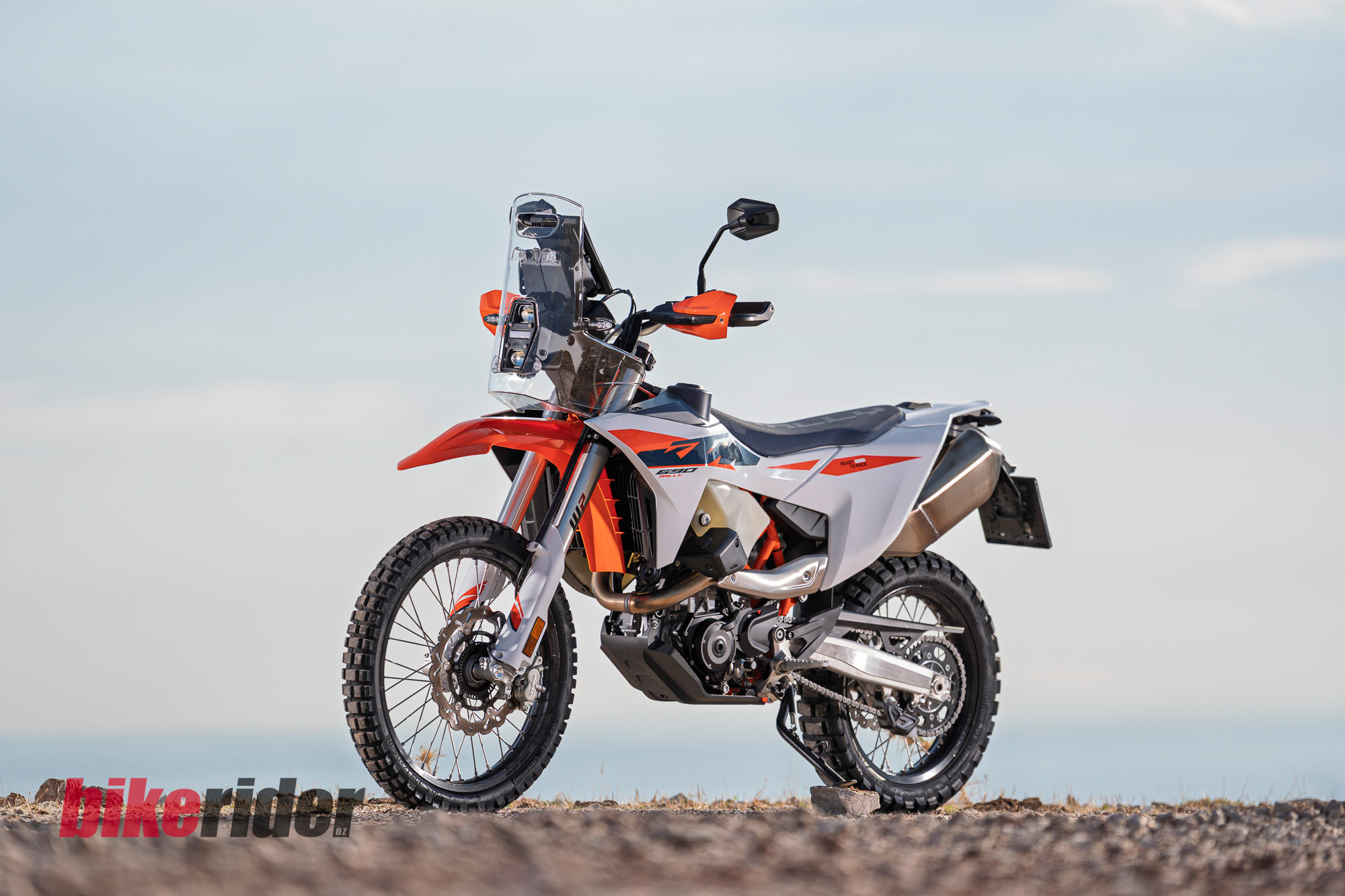
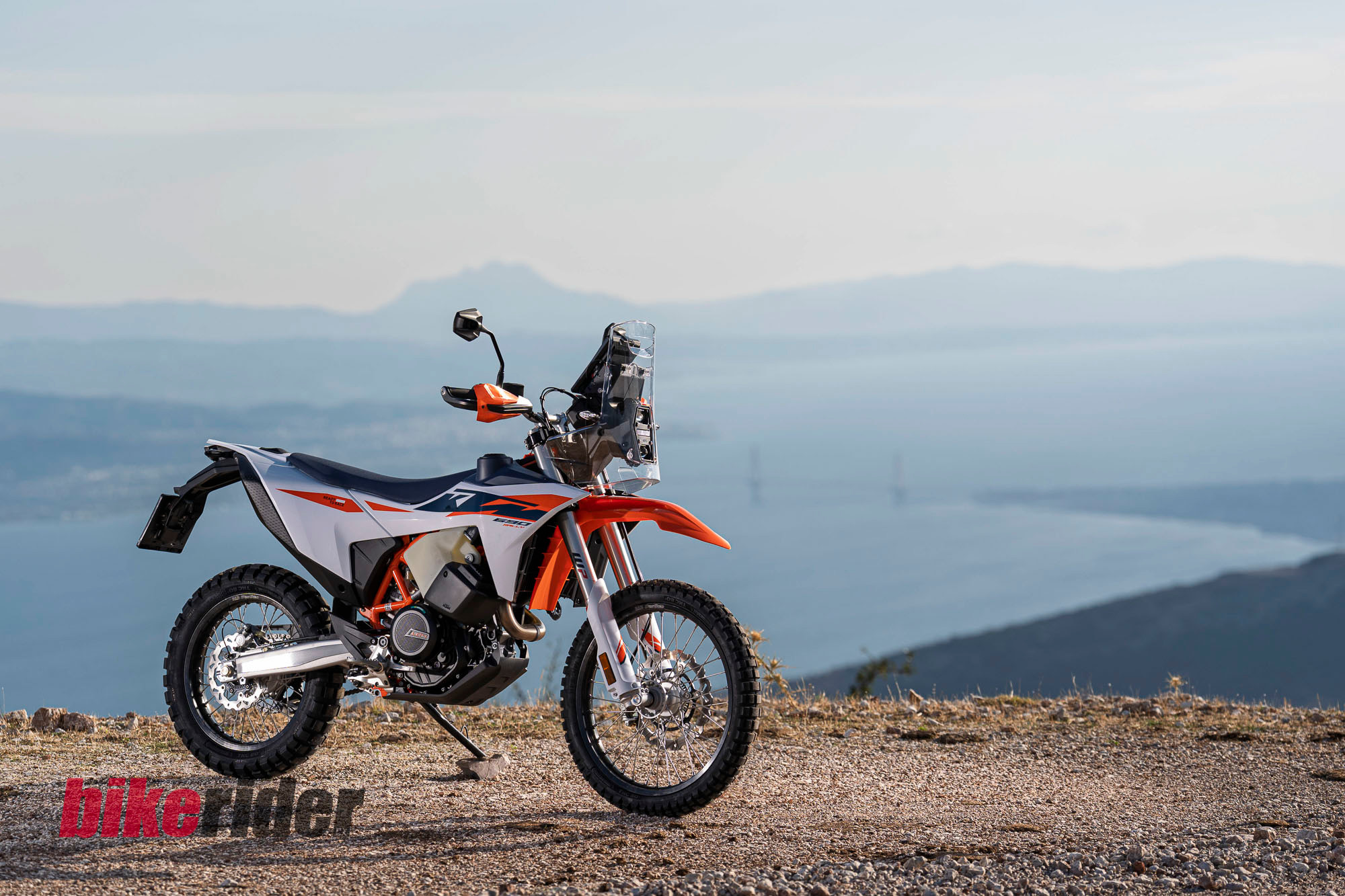
For years, owners have modified the 690 Enduro R with larger fuel tanks and rally towers to increase range and improve long-distance capability. KTM has now done much the same itself, adding seven litres of fuel capacity, twin front tanks, a rally tower and a substantial windscreen. At last, it appears to have built the 690 adventure bike riders have been asking for.
Three tanks, more possibilities
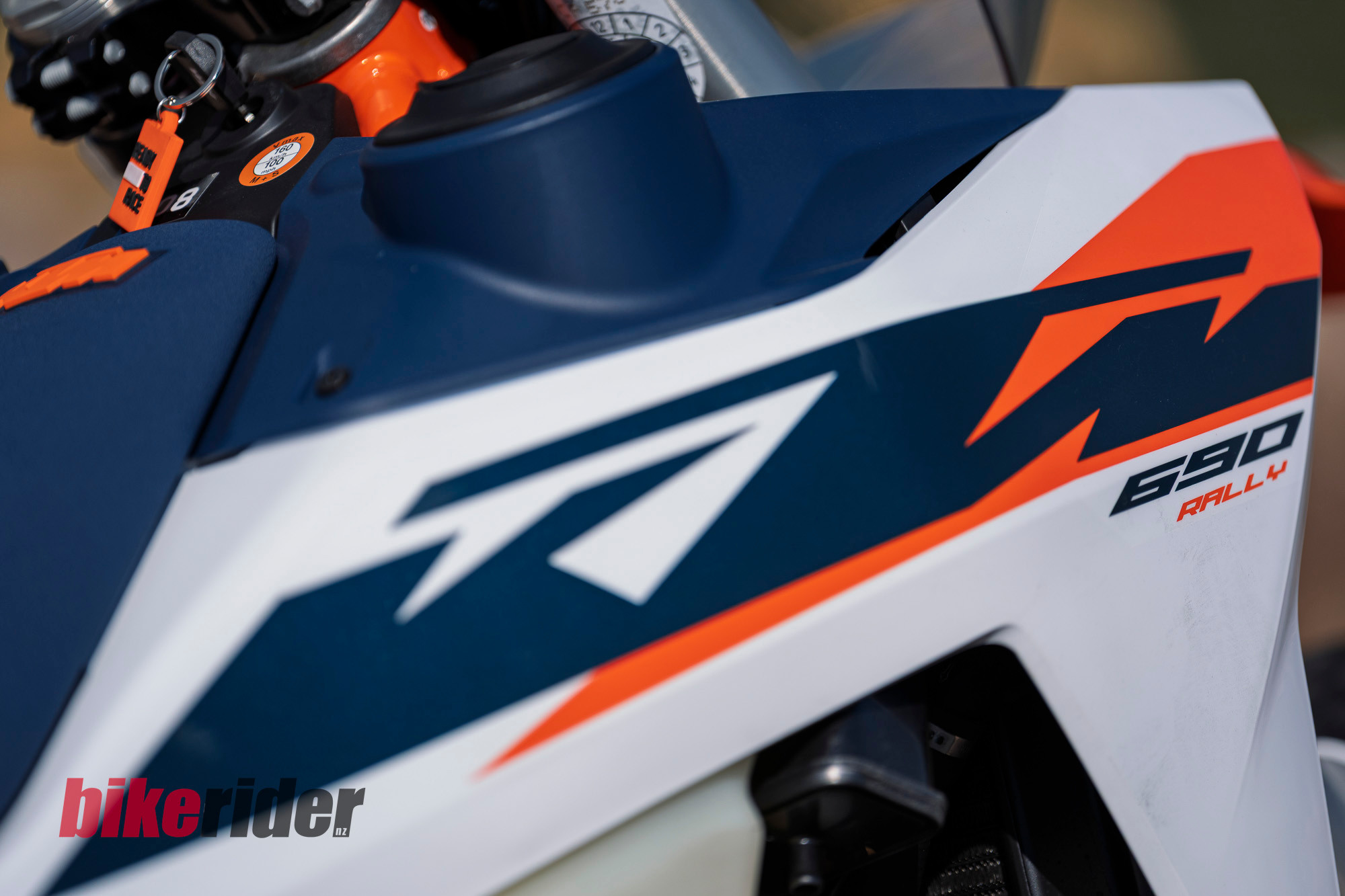
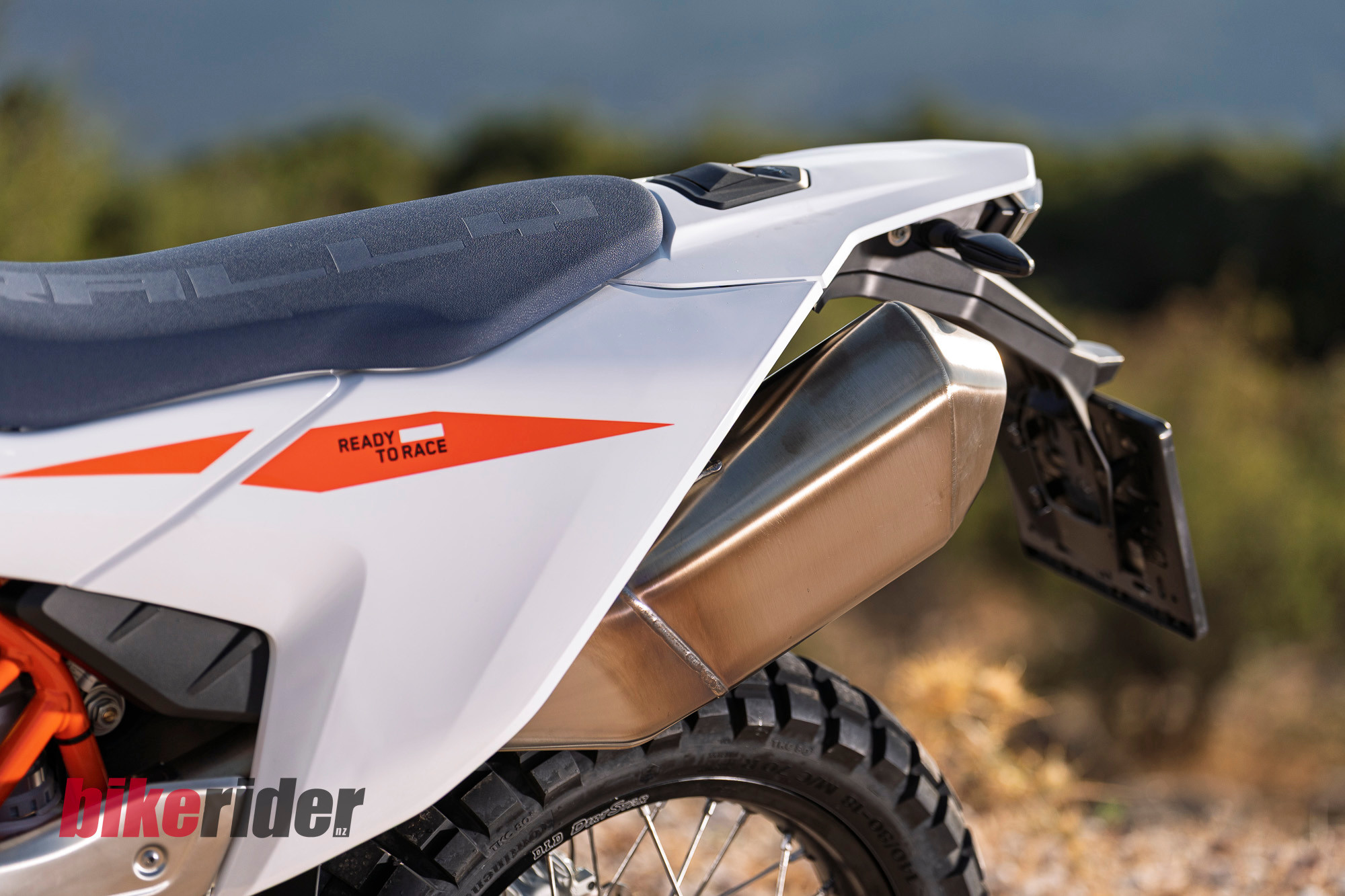
The Enduro R’s 13-litre rear tank remains beneath the seat, but the Rally gains two 3.5-litre tanks at the front, taking total capacity to 20 litres. All three filler caps use the same key.
There is one fuel pump for the connected front tanks and another for the rear. A handlebar switch allows the rider to select which supply to use. Emptying the rear tank first keeps more weight over the front for grip, while draining the front tanks first can lighten the steering in sand and make wheelies even easier. Fuel cannot be transferred between them, so you need to remember which tanks you used first.
MORE ARTICLES
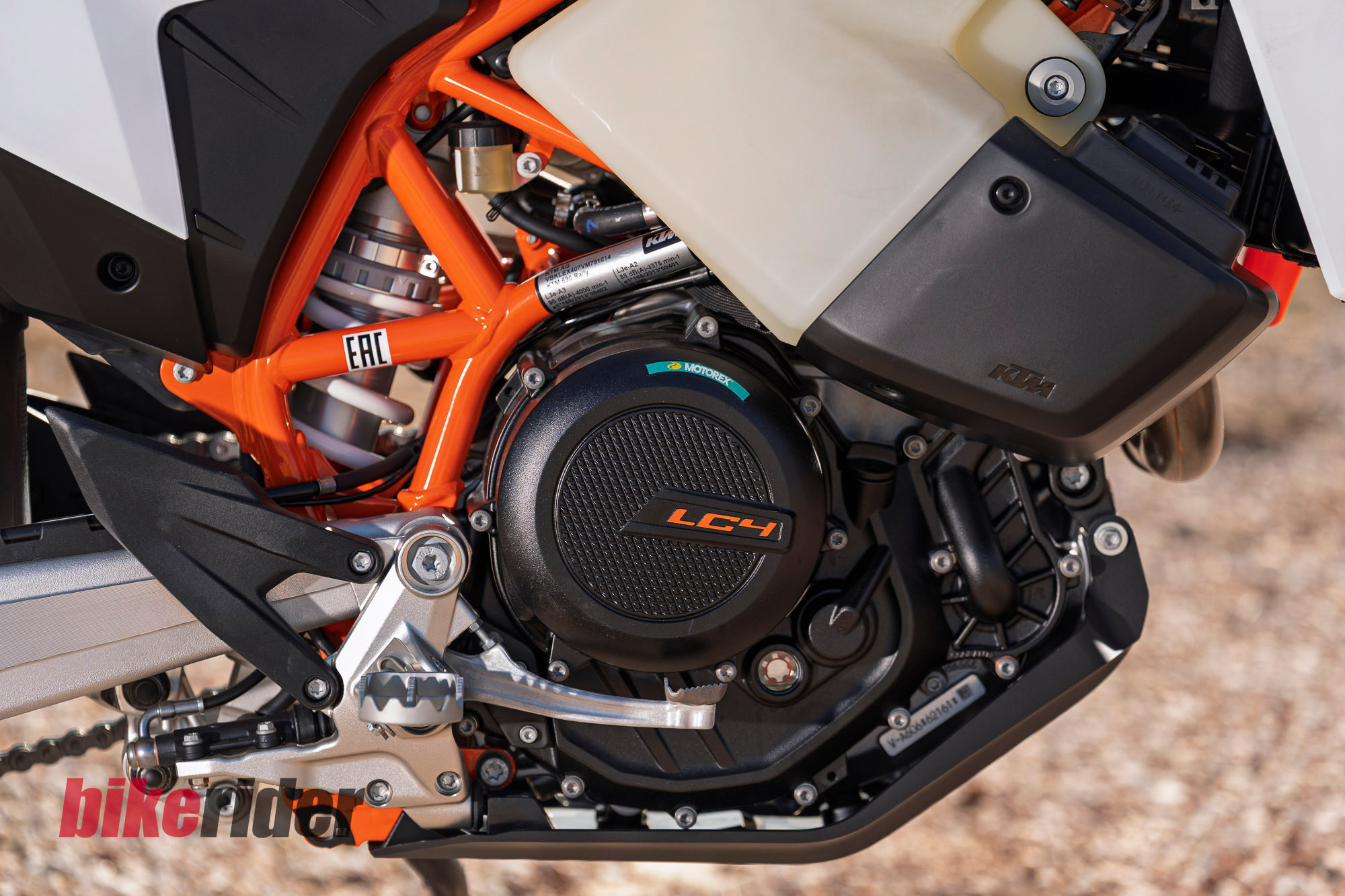
Other additions include slightly wider footpegs, a windscreen derived from the KTM 450 Rally, a USB-C port and a 12-volt socket for navigation equipment. KTM revised the shim stack in the 48mm WP XPLOR forks to accommodate the additional front-mounted weight, although travel remains 265mm. The rear shock, frame, gearing and 692.7cc LC4 single-cylinder engine are carried over from the Enduro R, with a claimed 79PS (78bhp).
Two days in Greece
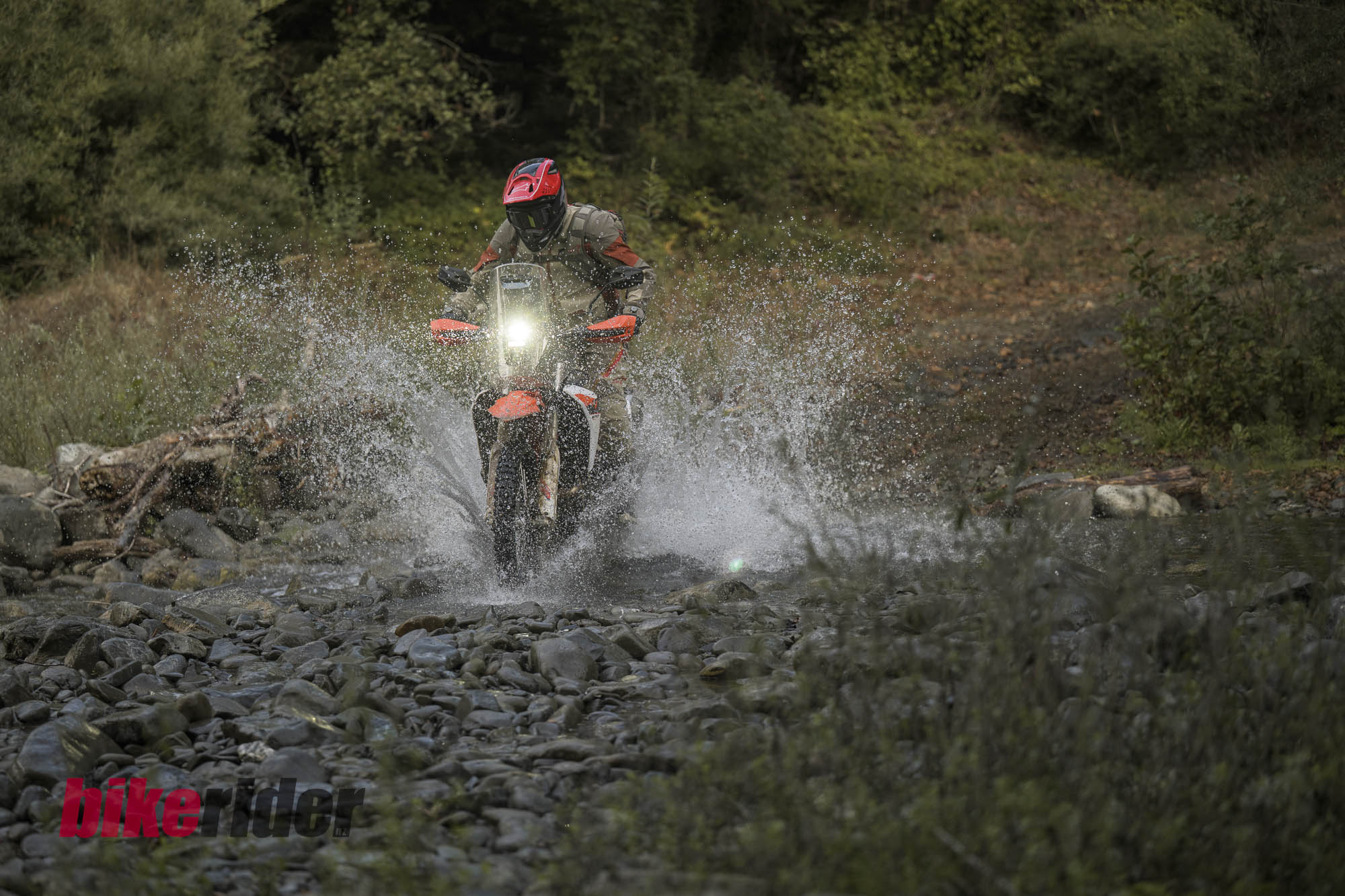
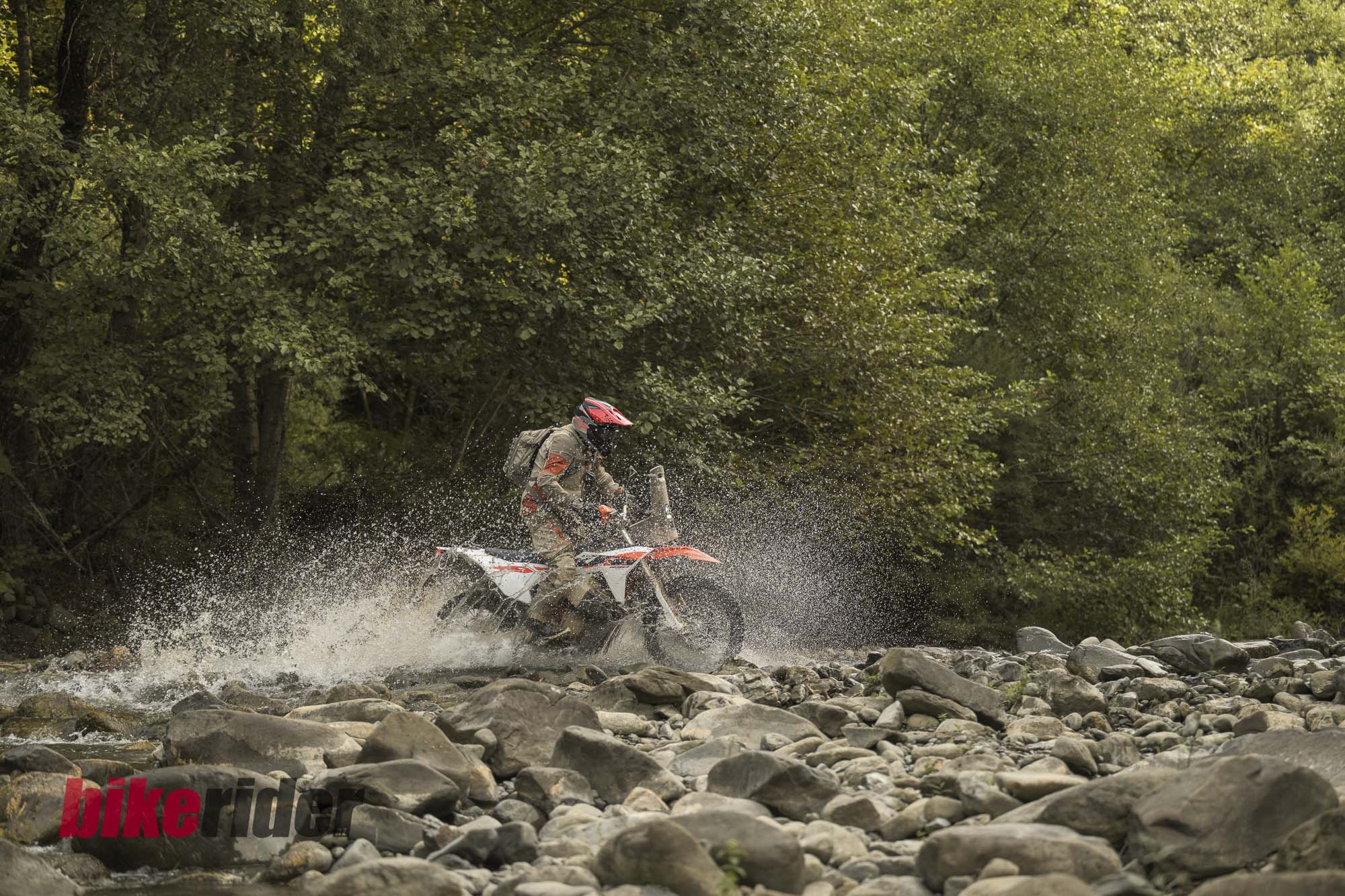
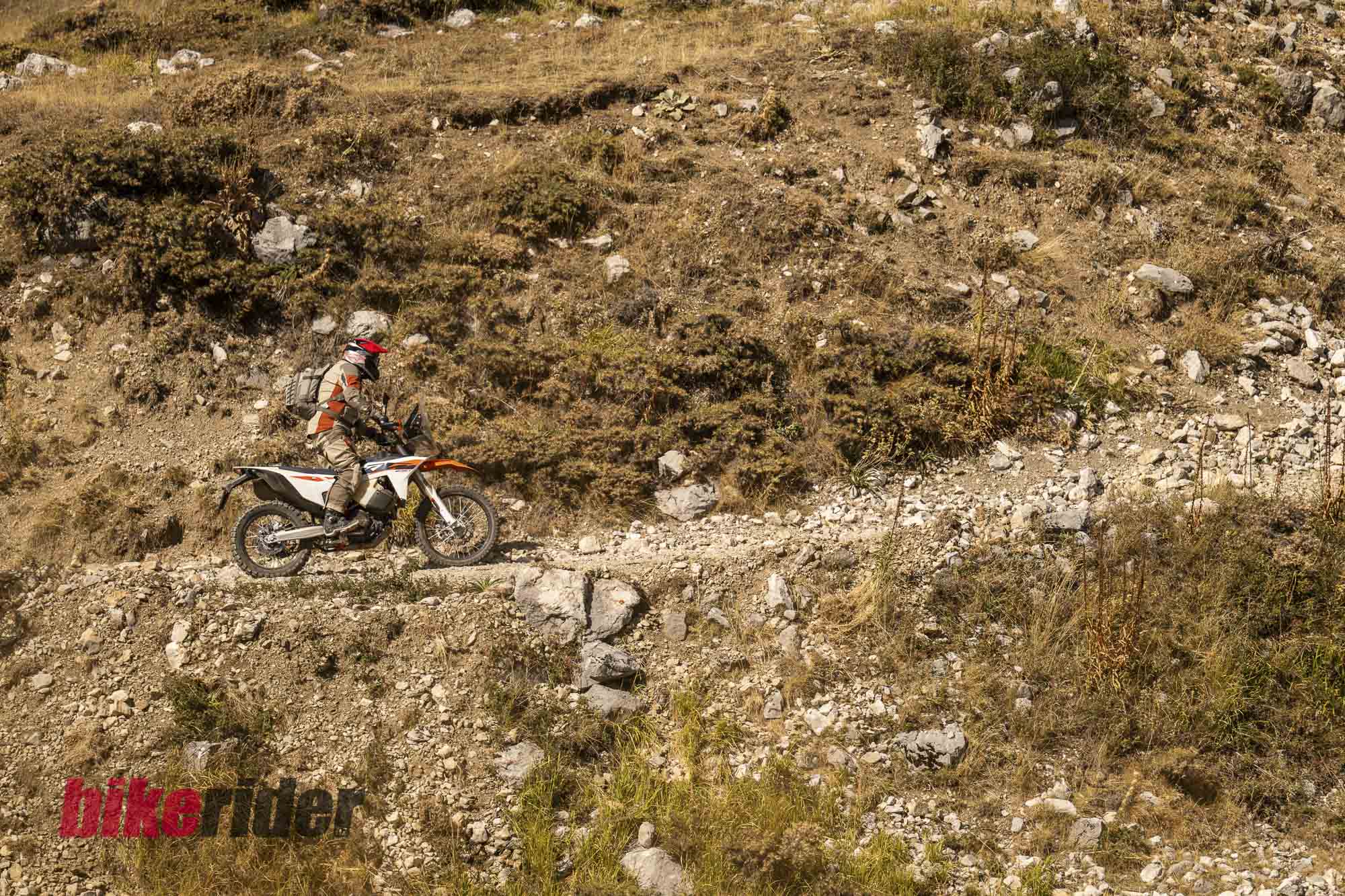
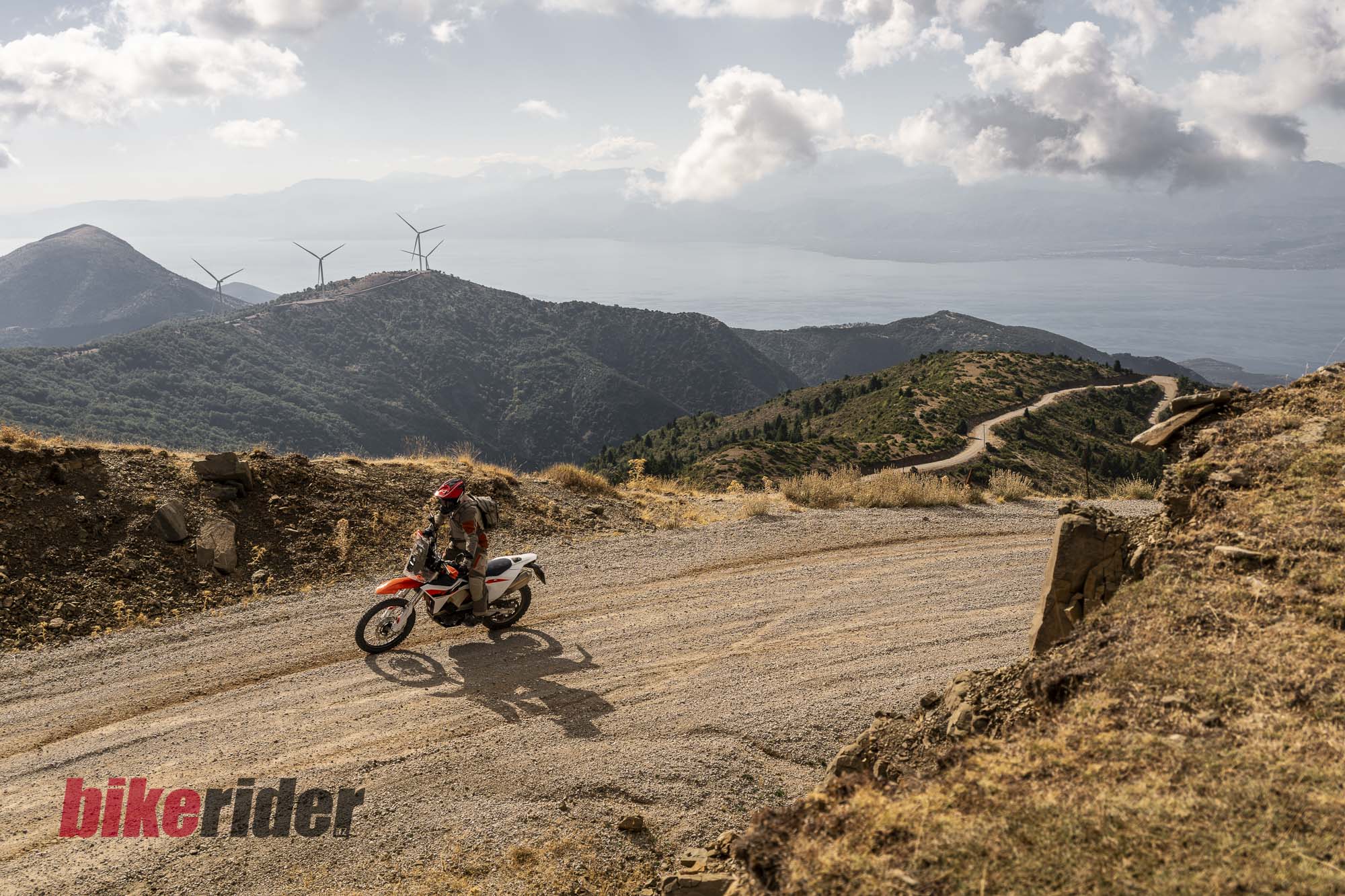
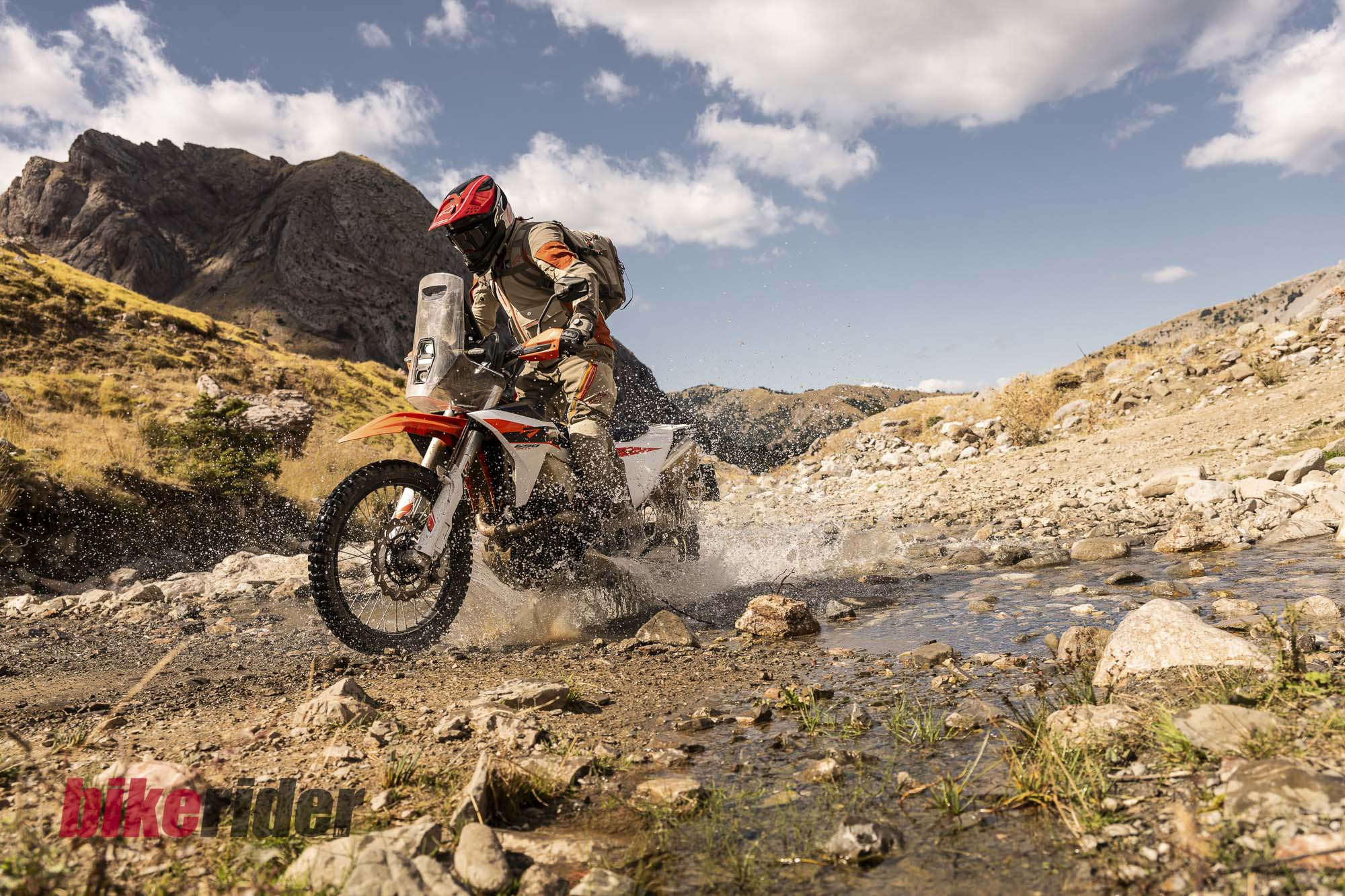
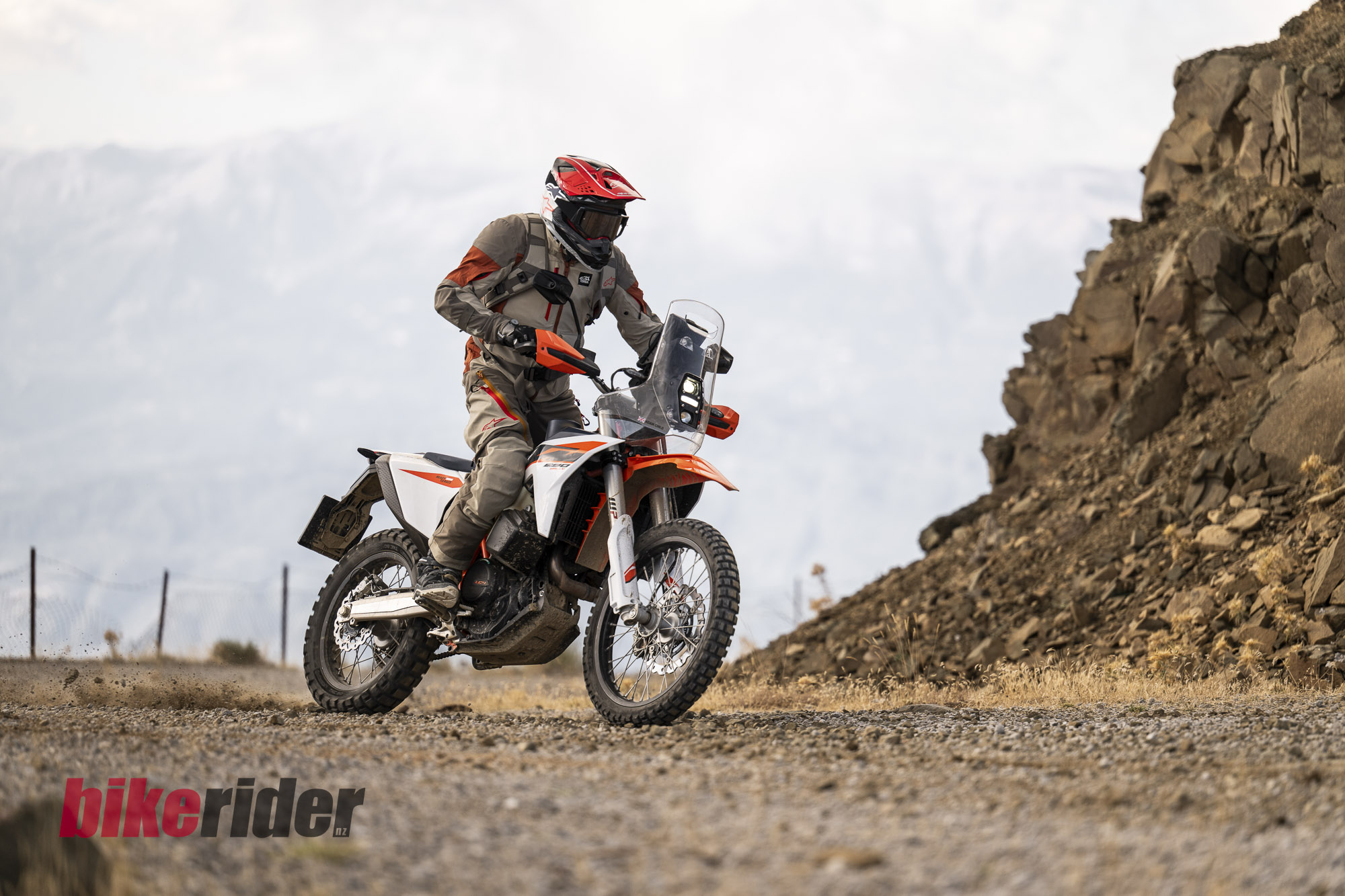
KTM invited us to test the Rally over two days in Greece. The 400km route was around 95% off-road and included gravel, river crossings, open plains, forests, rocks, steep climbs and descents. Most of the other riders had serious enduro backgrounds, so the prospect was slightly intimidating.
Thankfully, KTM’s marketing has shifted away from presenting every new adventure bike as a machine for former Dakar racers. The emphasis is now on travel, camaraderie and the journey, which better reflects riders who enjoy off-road exploration but find large multi-cylinder adventure bikes daunting.
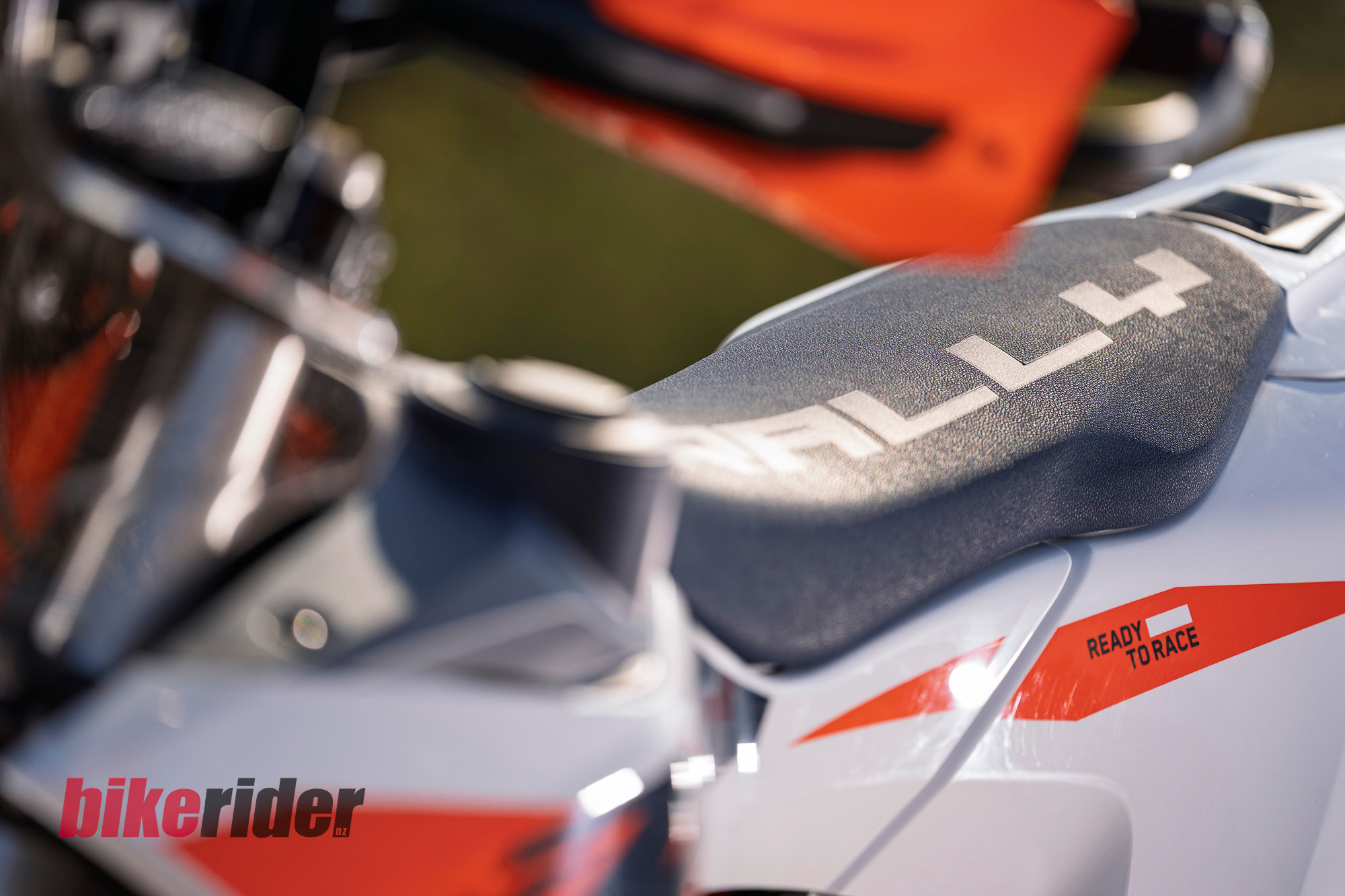
The 935mm seat is undeniably tall, although its narrow shape helps. At 172cm, I could place one foot comfortably on the ground, but not both. The simple switchgear includes a compact 4.2-inch TFT display and a button for changing fuel tanks.
Street and Off-road riding modes are standard. In Street mode, the ABS and traction control are lean-sensitive. Off-road mode uses dedicated calibrations, removes rear ABS and retains off-road ABS at the front. A separate button allows the rider to deactivate ABS at both wheels while stationary.
Our bikes also had the optional Tech Pack, adding cruise control, a quickshifter and Rally mode. Rally mode provides adjustable traction control and three throttle responses: Rally, Street and Off-road.
With all three tanks full, the Rally initially felt heavier than expected. KTM quotes 161.5kg without fuel, compared with 152kg for the Enduro R, while a full fuel load takes it to roughly 175–178kg. Our bikes also used Michelin Bib Mousse inserts, adding unsprung weight. Within a few kilometres, however, the Rally felt far less intimidating than a 200kg-plus adventure bike such as the Yamaha Ténéré or KTM 890 Adventure R.
Confidence on the trails
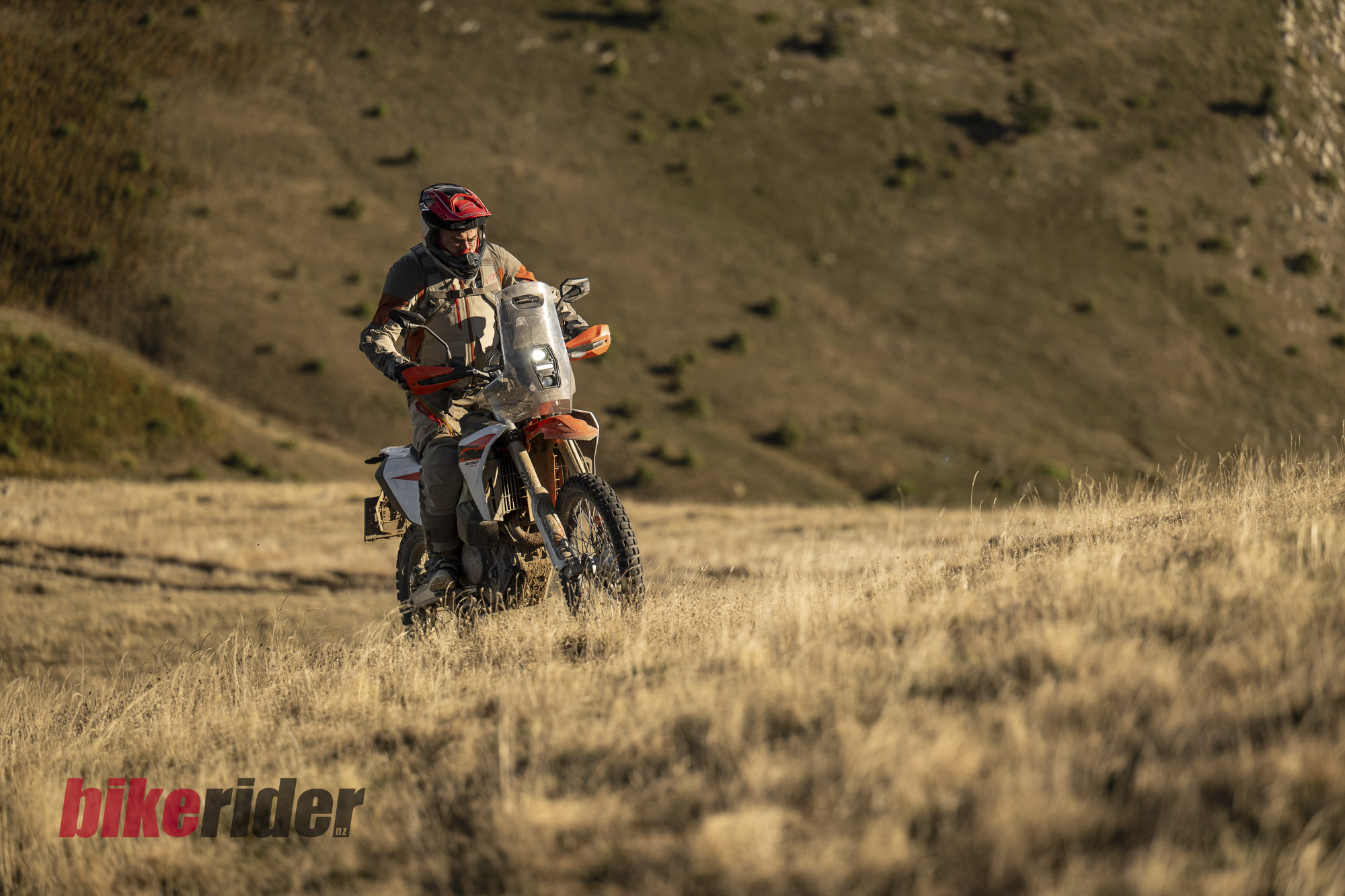
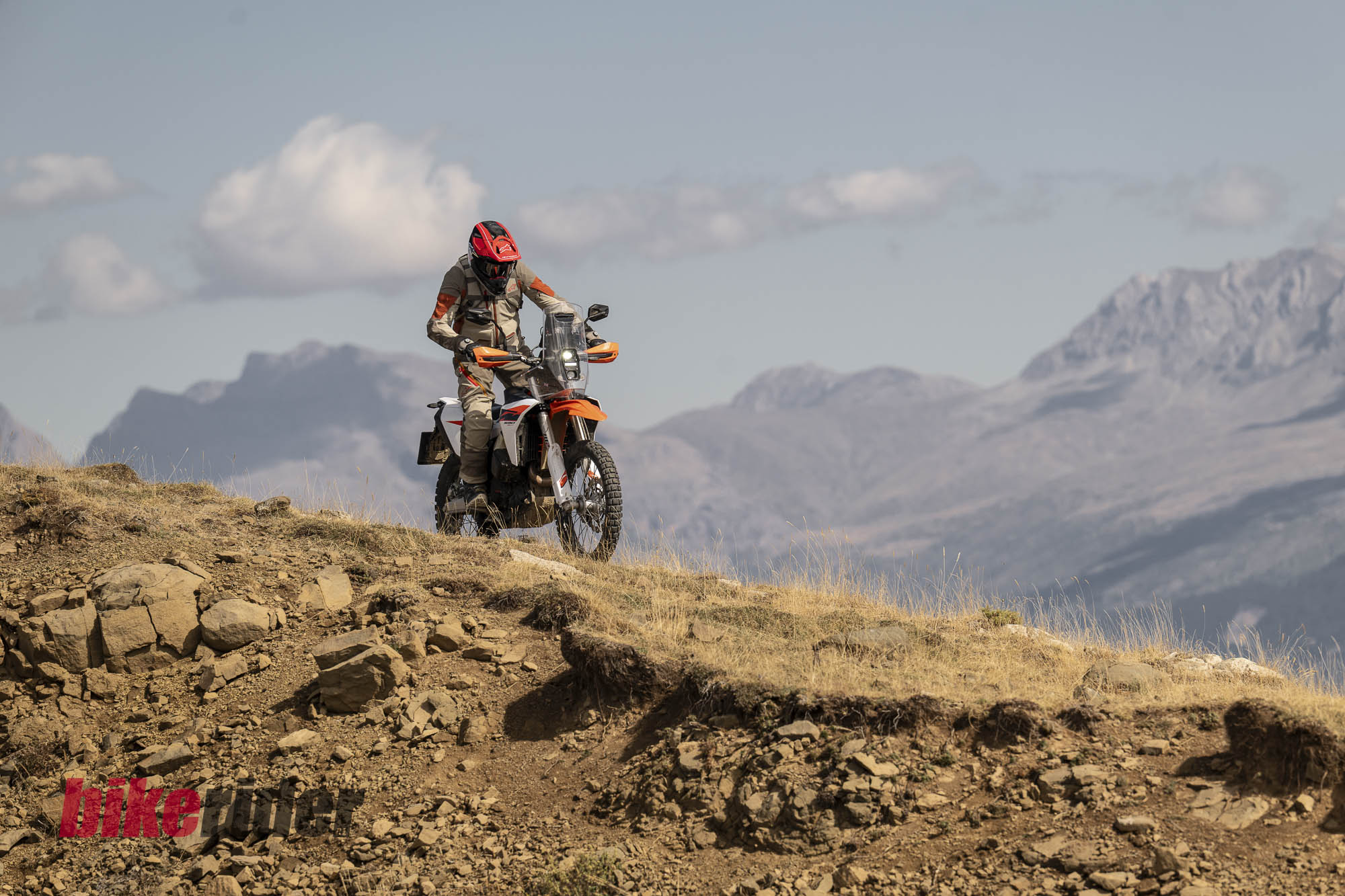
Once off-road, the bike immediately felt at home. Its wide footpegs provide excellent grip, the handlebars are positioned high, and the mirrors stay out of the way. The tall screen offers useful protection when seated without obstructing the rider’s view while standing.
The slim body and long, narrow seat make it easy to shift position. I could move forward to increase front-end grip, then slide back to find traction or help the front wheel float over streams and puddles. There are a few minor pinch points, but overall movement is remarkably easy.
The quickshifter is particularly effective in the lower gears. Much of the route required constant changes between first, second and third, and clutchless shifts allowed my left hand to concentrate on controlling the bike.
The LC4 engine is slightly lumpy at very low revs, but smooths out as speed increases. In Off-road mode, power delivery is progressive rather than aggressive, despite the engine retaining its full output. This also helps the traction control operate smoothly.
The standard off-road electronics are exceptionally well calibrated. Traction control manages slides without abrupt intervention, allowing the rear wheel to move in a progressive and controllable way. It is not foolproof, but it works discreetly enough to preserve the fun while catching most mistakes. In optional Rally mode, Dynamic Slip Adjust can also permit additional wheelspin when needed, such as in deep mud, before returning to the selected setting.
The front ABS is even more impressive. At low speed, I occasionally felt it working over loose rocks and rubble. At higher speeds, it provided the confidence to brake harder and deeper into corners. Its intervention is quick and precise, and it rescued me repeatedly.
That is the Rally’s greatest strength: it builds confidence.
After 100km off-road, I was carrying more speed, experimenting with the rear brake and holding third gear through corners where I would usually have selected second. The electronics provide support without making the bike feel restrictive.
The chassis is similarly reassuring. Even when the WP suspension was punished by rough terrain, the Rally remained composed. I never felt the need to change the standard settings, which seemed well suited to an 80kg rider across varied conditions. Heavier or more experienced riders may want to adjust them, but most owners should find the standard setup excellent.
Finding the right response
Later, I tried Rally mode with traction control set to level four. Its standard throttle response felt too sharp for tight second- and third-gear trails, although it could suit experienced riders attacking dunes or wide-open terrain. I preferred the softer response of Off-road mode.
Adjusting traction control on the move was useful. I could reduce intervention on open ground, switch it off entirely, then increase it when conditions became slippery or fatigue set in. Nevertheless, the standard Off-road settings should be sufficient for most riders. Rally mode is best viewed as extra flexibility for those who enjoy tailoring the electronics.
By the end of day one, I had bonded with the bike. It had taken a pounding yet encouraged me to push harder. I eventually toppled over near the top of a difficult climb, but the protected fuel tanks survived and the bike was easy to lift. That is an important advantage over a 220kg multi-cylinder adventure machine.
Day two brought fast open trails and tight woodland sections requiring first-gear balance. The KTM remained composed and easy to control at low speed, although the clutch occasionally needed slipping to smooth out the engine.
What about the road?
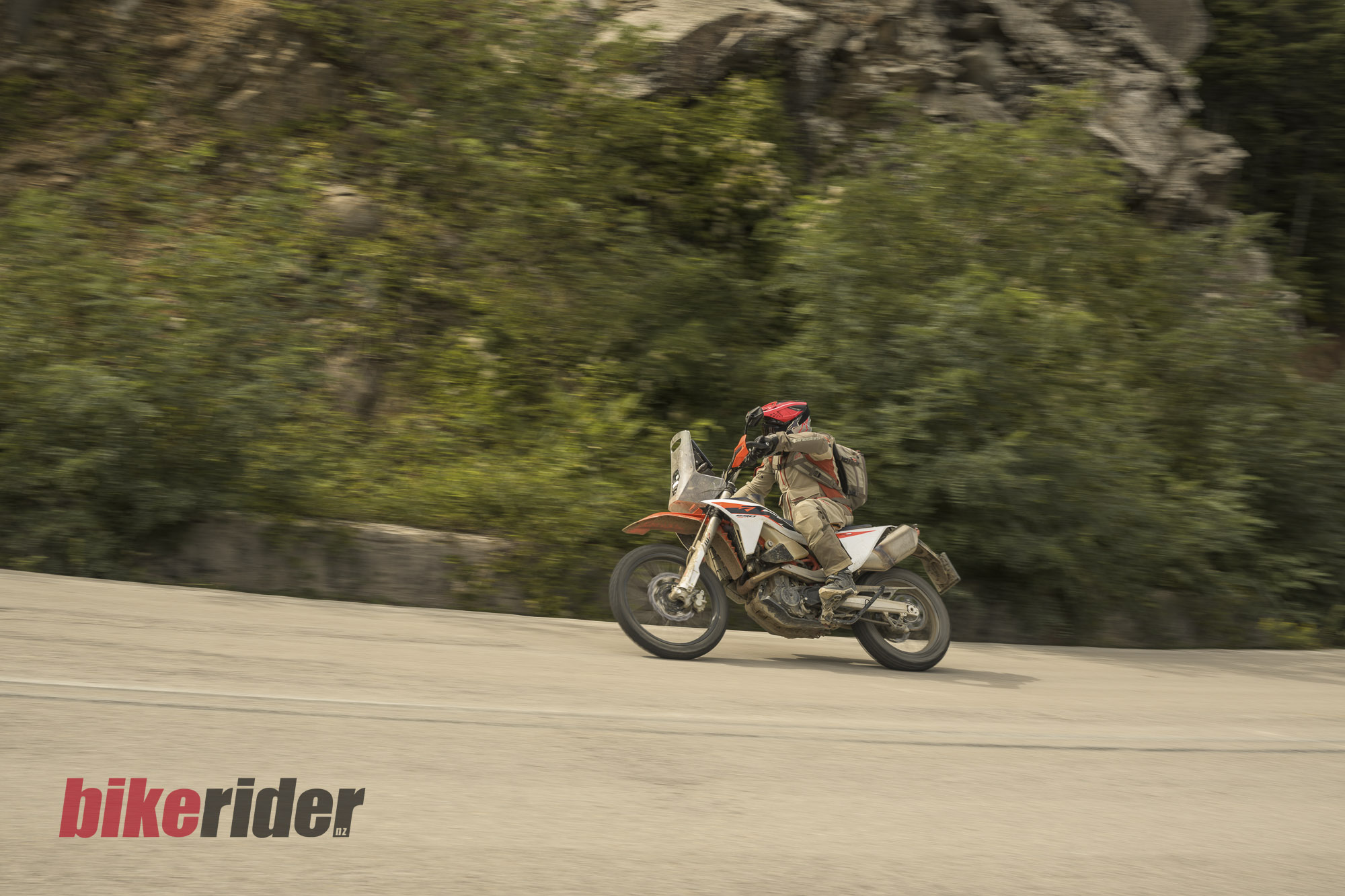
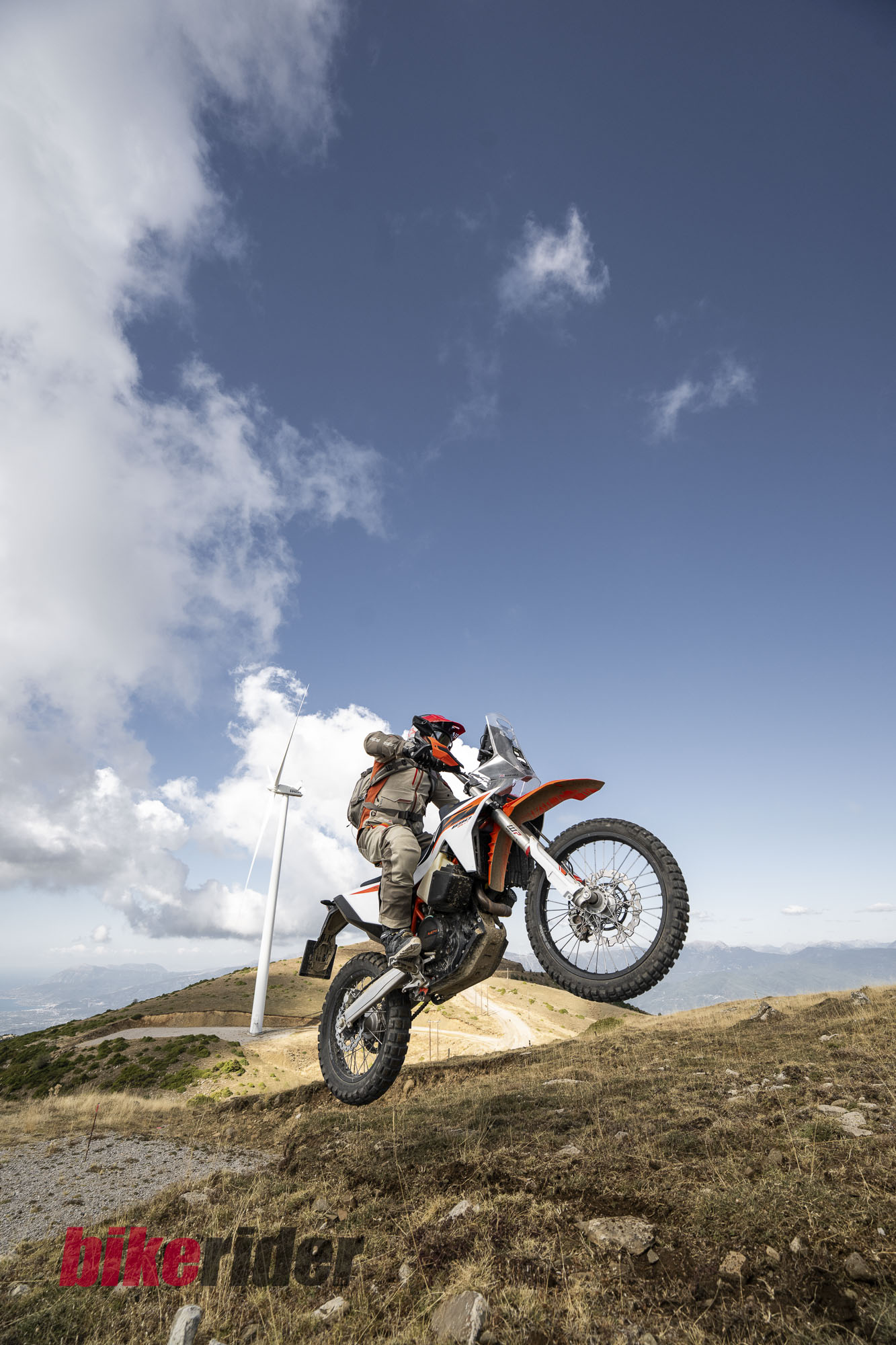
A faster stretch of asphalt revealed that the Continental TKC 80 tyres delivered more grip and feedback than expected. The engine has enough torque to lift the front wheel in the first three gears and should, from experience, comfortably handle motorway speeds.
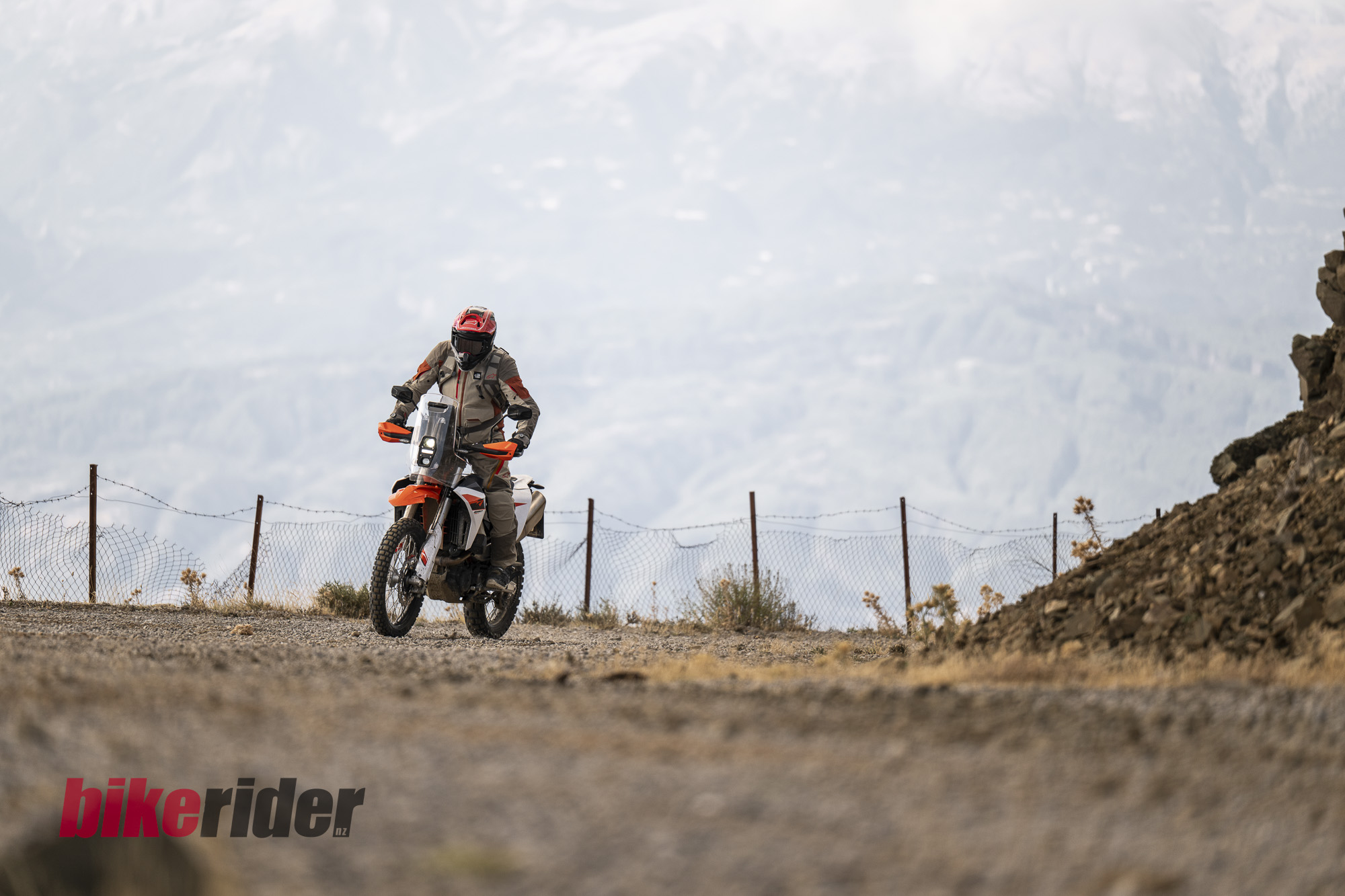
We did not spend enough time on surfaced roads to assess cruise control or long-distance comfort fully. Even so, the tall screen, substantial handguards and weather protection appear promising, while the rally tower provides ample space for navigation equipment. KTM claims a range of 400km from the 20-litre capacity, although our off-road route made representative fuel-consumption figures impossible.
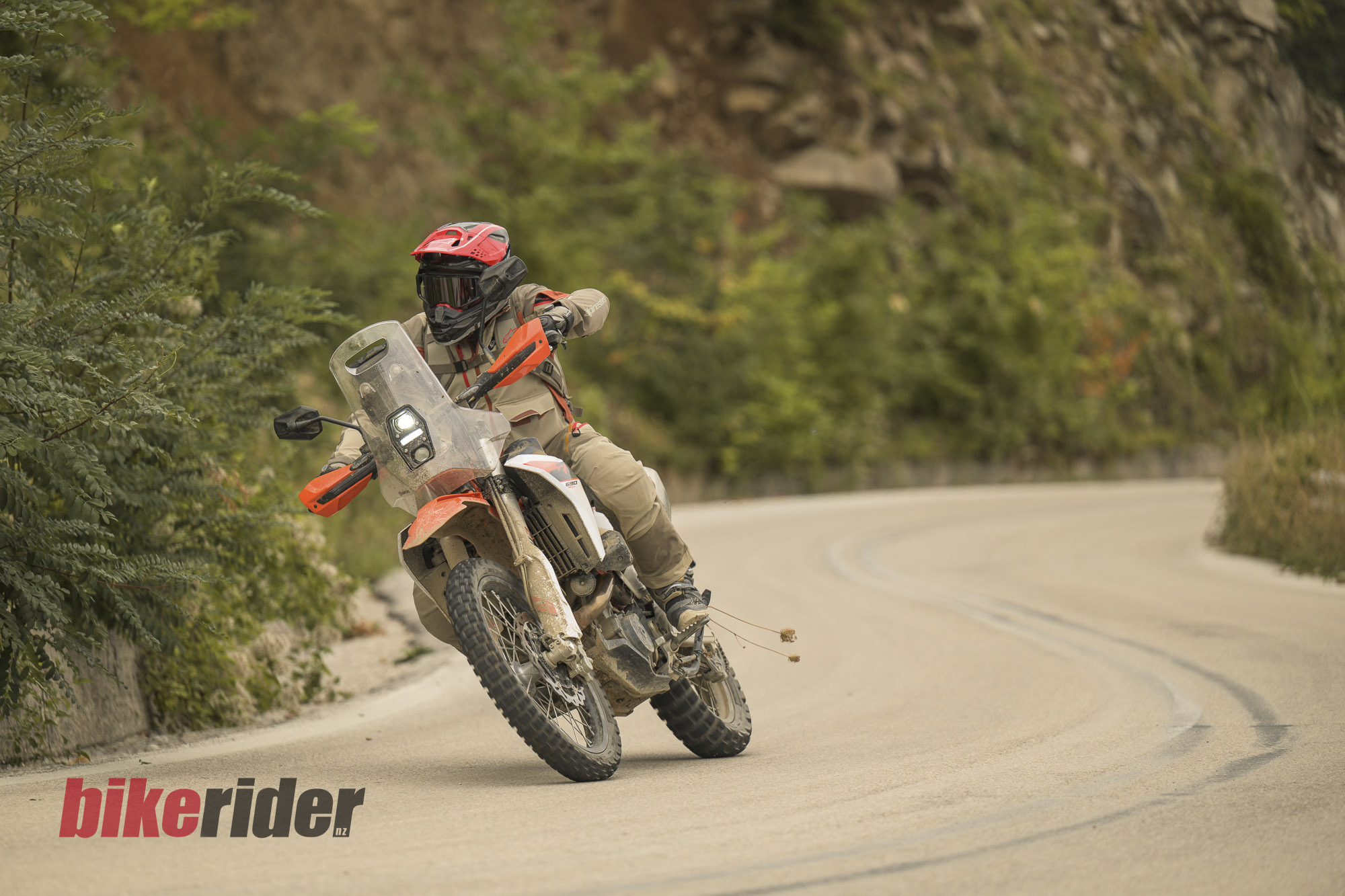
The 21-inch front wheel, 18-inch rear and long-travel suspension mean the Rally is not especially sharp on tarmac, but it is impressive for a bike with this long-travel stance. Even at a brisk pace, however, the suspension remained controlled and coped well with aggressive riding.
After nearly 400km, the KTM 690 Rally had allowed me to tackle trails, climbs, descents and river crossings with more confidence than expected. The ABS repeatedly rescued me, while the traction control helped prevent enthusiasm from becoming disaster.
There are drawbacks. The engine is lumpy at walking pace, filling three separate tanks is inconvenient, and the 935mm seat will be too tall for some riders. It’s also reasonably pricy for a single-cylinder adventure bike.
Those criticisms aside, I cannot think of a better motorcycle on which to repeat this journey.
Verdict
At the end of a test, I ask whether I would choose another bike for the same journey. Here, I cannot think of one.
The 690 Enduro R lacks the Rally’s range and touring equipment, while the KTM 890 Adventure and Yamaha Ténéré are heavier and harder work off-road. After 220km on the trails, I would choose the lighter 690 Rally every time.
After two demanding days, I still wanted more.
It may be expensive for a single, but few bikes combine serious off-road ability with such promising road and touring potential. Our limited time on tarmac means a full assessment of long-distance comfort will have to wait. After two demanding days, I still wanted more.
New Zealand price and availability
KTM New Zealand lists the 2027 KTM 690 Rally at NZ$25,499 ride-away, including freight, PDI, six months’ registration, WOF and a full tank of fuel. Units are expected in NZ dealers from December 2026; check with your dealer for allocation and delivery timing.

2027 KTM 690 Rally specifications
| Engine | 692.7cc liquid-cooled LC4 single; Keihin ride-by-wire |
| Power / torque | 79PS (78bhp) @ 8,000rpm / 73Nm @ 6,750rpm |
| Transmission | Six-speed, chain drive; optional Quickshifter+ |
| Frame | Chromium-molybdenum steel trellis |
| Front suspension | 48mm WP XPLOR USD; 265mm travel |
| Rear suspension | WP XPLOR with linkage; 250mm travel; fully adjustable |
| Brakes | 300mm front disc, two-piston Brembo / 240mm rear, single-piston Brembo |
| Wheels / tyres | 21in front / 18in rear; Continental TKC 80 |
| Seat / ground clearance | 935mm / 265mm |
| Wheelbase / trail | 1,506mm / 121mm |
| Weight | 161.5kg without fuel (claimed) |
| Fuel capacity | 20 litres |
| Rider aids | Street and Off-road modes; optional Rally mode. ABS and traction control; see text for modes and settings. |
| Oil changes | 15,000km; follow the full service schedule |
| Warranty | Up to four years, subject to KTM eligibility and authorised-dealer servicing conditions |
| NZ price | NZ$25,499 ride-away |
| NZ arrival | From December 2026; confirm dealer allocation |
| NZ Tech Pack | Price to be confirmed |
KTM 690 Rally gallery