
• The RX adds clip-ons, Öhlins forks and sharper front-end feel to the Street Triple formula
• Greater precision inspires confidence, but rough Kiwi roads expose a harsher edge
• Brilliant for track-minded riders, though the RS may still be the better all-rounder
Triumph’s Street Triple has long been the benchmark middleweight naked. With the new RX sharpening that winning formula further, will our Kiwi roads do their usual trick of exposing bikes developed with racetracks in mind? We waited for some dry weather and hit our usual test route to find out.
Quick Facts: Triumph Street Triple RX
Sharper, track-focused take on the Street Triple RS
Clip-ons and revised ergonomics add more front-end feel
Öhlins NIX forks replace the RS’s Showas
Same 128hp Moto2-derived 765cc triple
Track mode, quickshifter and premium electronics standard
NZ RRP: $23,995 + ORC
There can’t be many tougher jobs in motorcycling than improving the massively successful Street Triple.
For years, Triumph’s middleweight triple has been one of those rare motorcycles that seems to satisfy just about everyone. Fast enough for experienced riders, unintimidating enough for those moving up, playful on the road, devastating on track — it has long occupied that annoyingly perfect sweet spot.
But the new RX does something interesting. It reaches back as much as it reaches forward. Because while Triumph won’t say it outright, there’s more than a hint of old Triumph Daytona 675 spirit in this thing. The clip-ons, the loaded front end, the extra intent in the chassis — it feels like a faint echo of those beautifully balanced three-cylinder sportbikes Triumph once built.
MORE ARTICLES
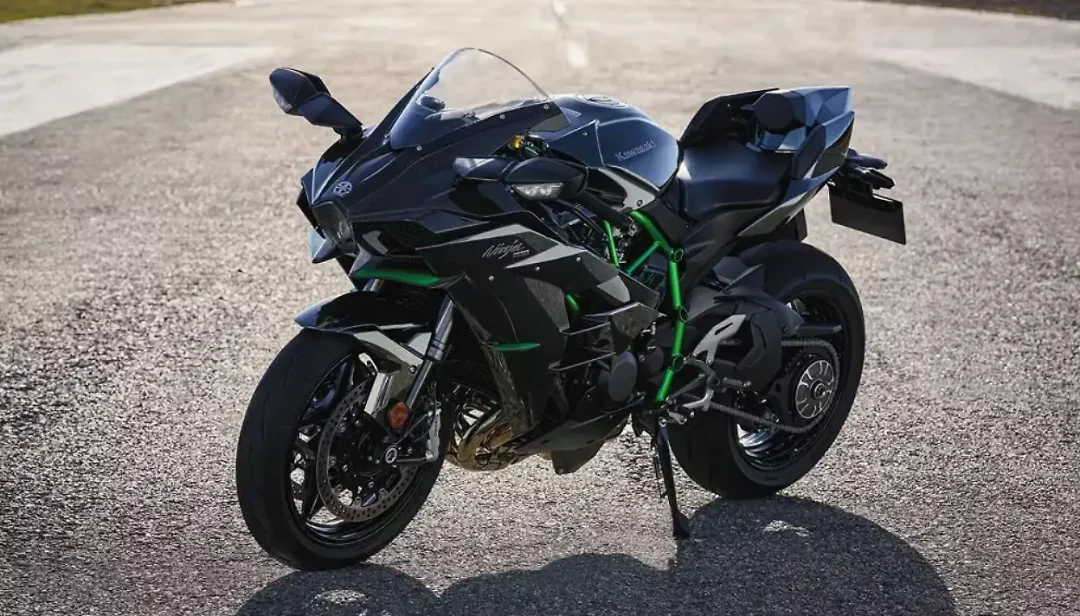
Part of me still wishes Triumph had gone all the way and put a fairing on it, because then the job would be complete — a proper mid-capacity sports bike sitting far closer to a legitimate Moto2-inspired road machine than the current naked 765 carrying world championship stickers. But they didn’t.
So where does that leave the RX?
With our summer never really firing and Autumn continuing the pattern of seriously crap weather, the RX spent plenty of time sitting in the BRM shed waiting for dry roads and passable temperatures before I was happy enough to fire the triple into life and attack some corners.
And when I did, the RX started to make sense.
RS vs RX
While the RX shares its engine, electronics package and core chassis with the RS, Triumph has altered the riding experience in a more fundamental way than the spec sheet first suggests.
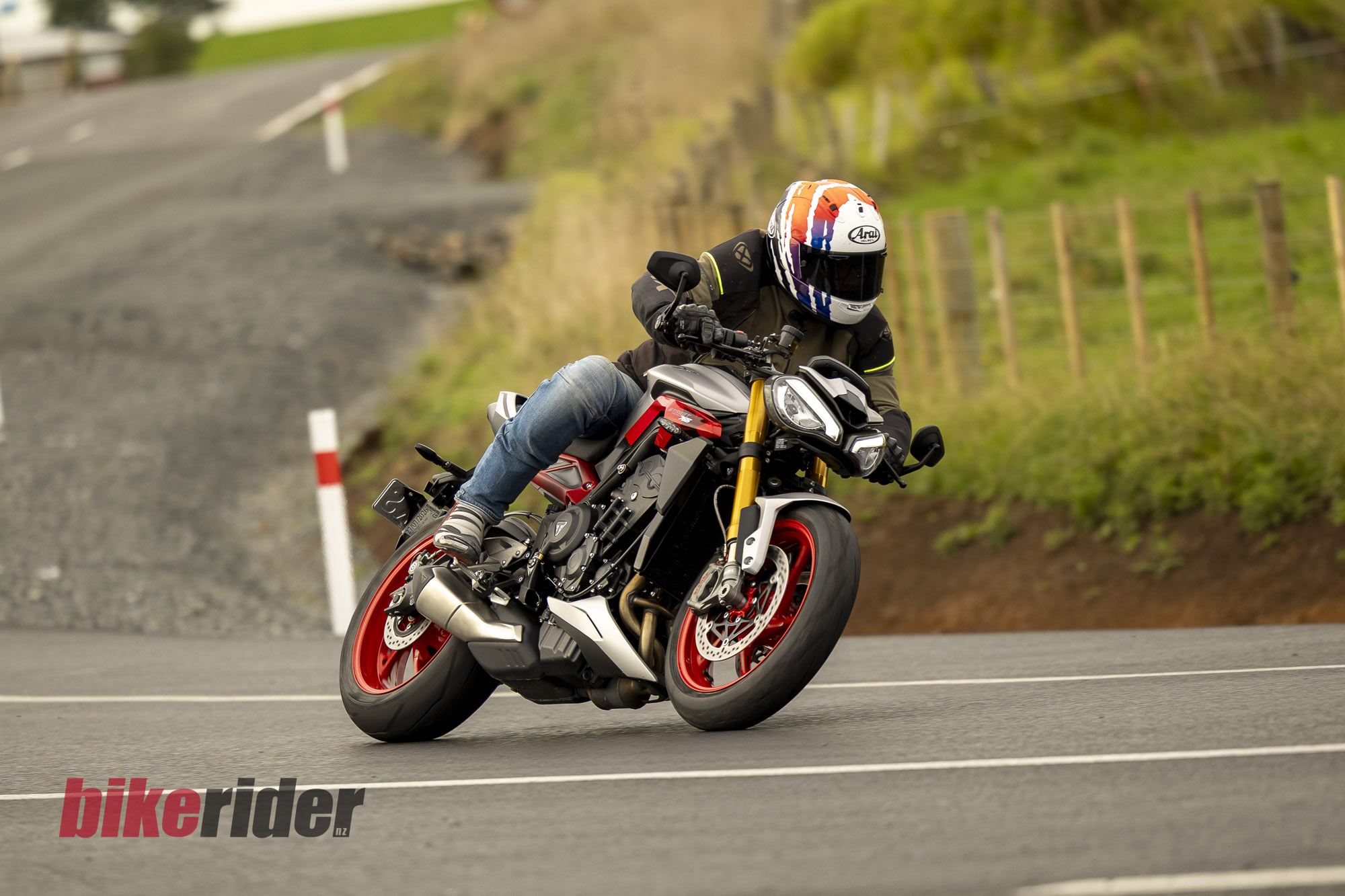
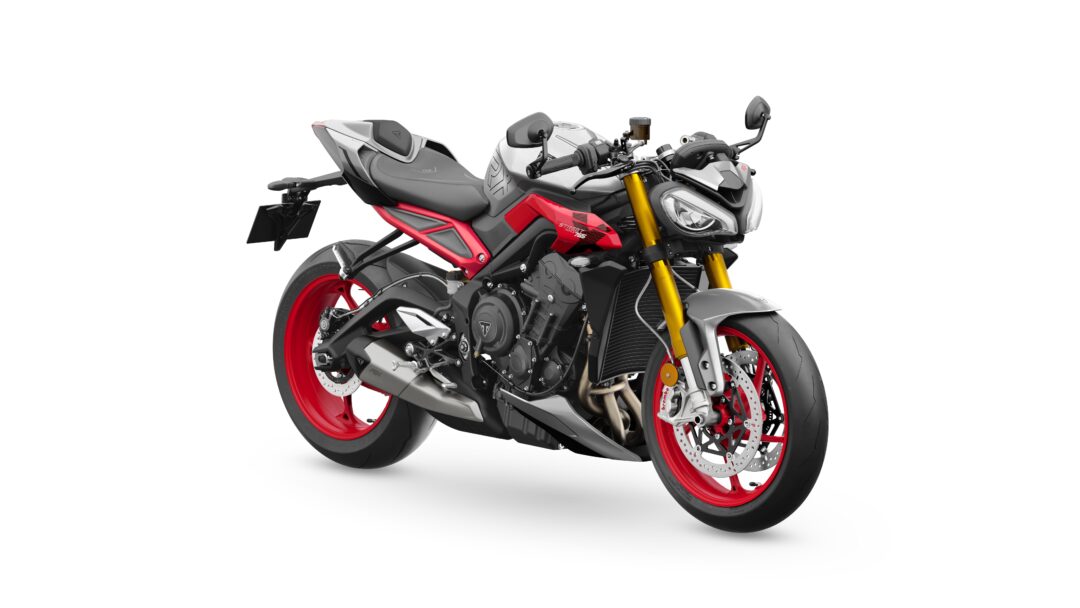
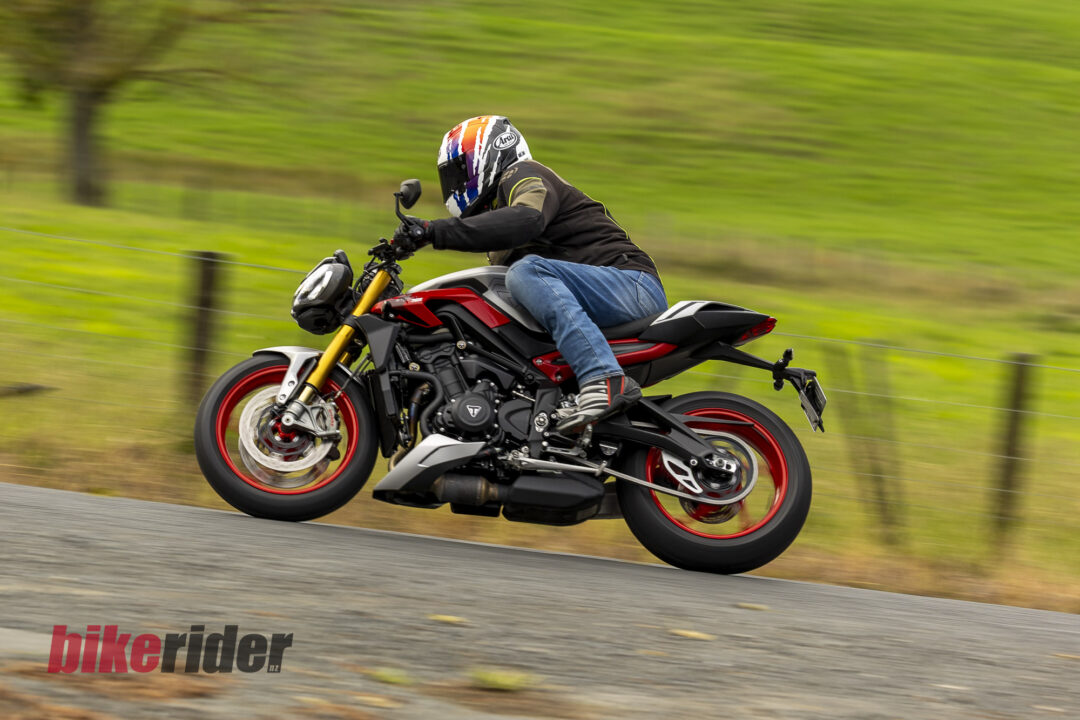
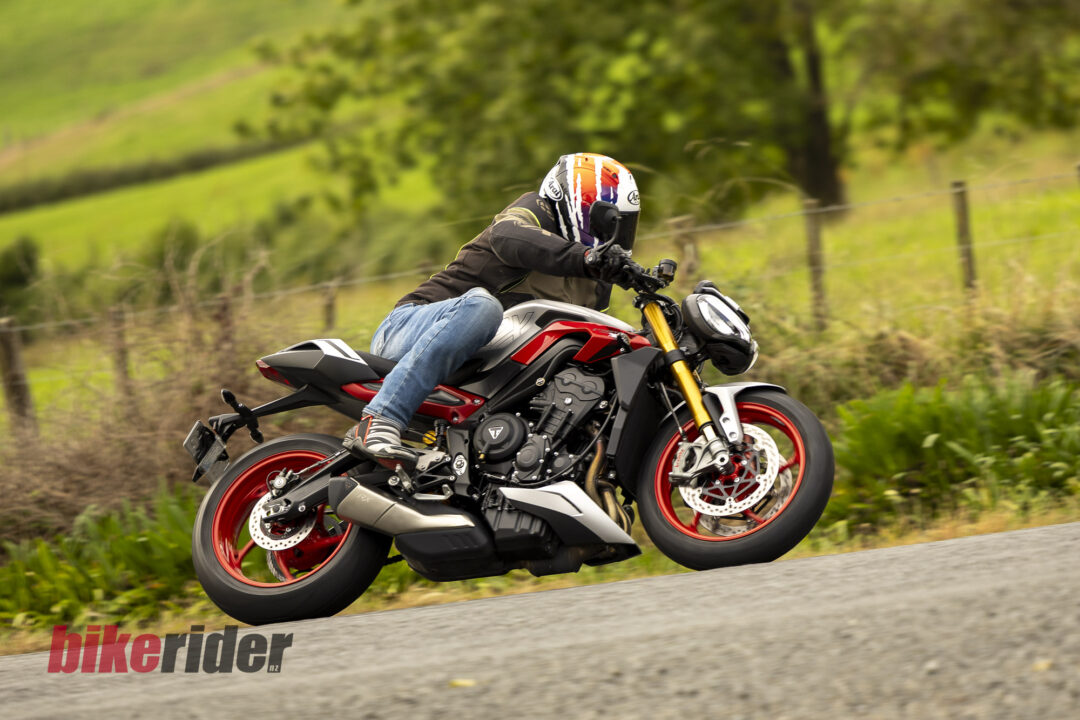
The biggest change is the move from a conventional wide handlebar to clip-ons mounted above a beautifully machined aluminium top yoke, shifting the rider’s weight further over the front wheel. It doesn’t sound dramatic on paper, but it changes the conversation you have with the chassis. There’s more load on the front tyre, more feedback through the bars and a noticeably more purposeful feel before you’ve even left the driveway.
It also subtly changes the character of the Street Triple. The RS has always had this wonderfully mischievous, almost supermoto-like playfulness to it. The RX trades a little of that away for greater intent. Steering feels more deliberate, front-end communication stronger, and when you start asking more of the chassis, you can feel where Triumph was heading with it.
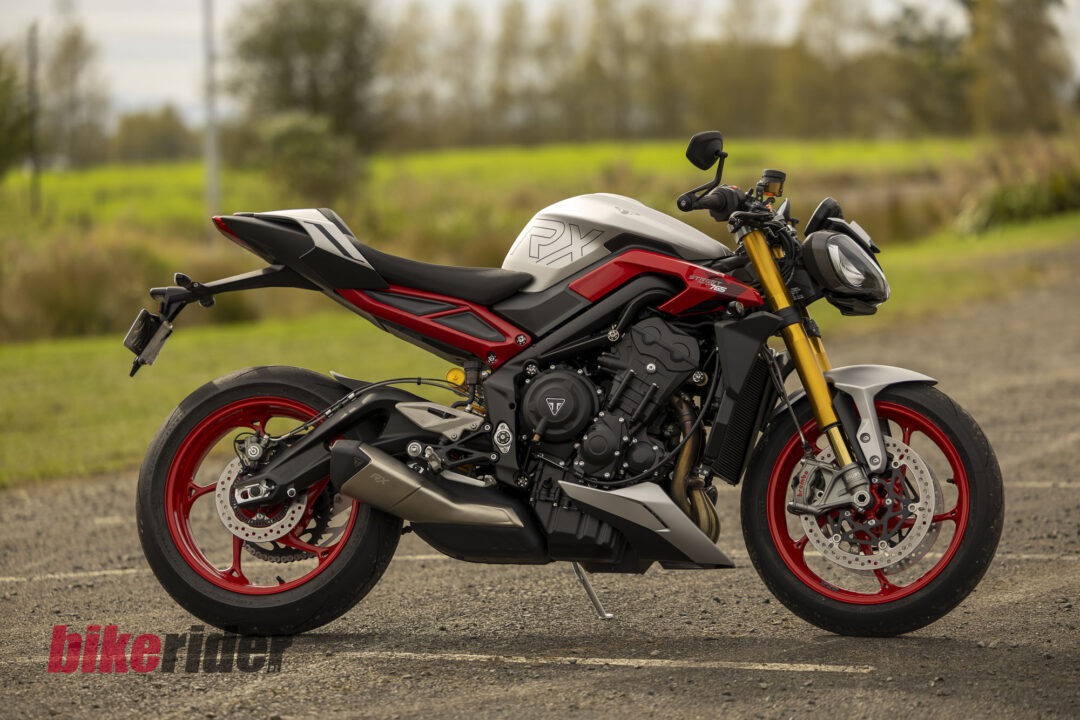
Start pushing on and the changes really start to make sense, especially with the fully-adjustable Showa forks of the RS replaced by Öhlins NIX units on the RX. Combined with the revised rider position, the front end feels even more planted and precise when loading the tyre hard on turn-in. When the conditions are right, there’s almost no other front-end like it.
The irony is that the changes aren’t about making the RX faster in any measurable road-going sense. The engine is unchanged, the power figures remain the same (128hp @ 12,000rpm / 80Nm @ 9,500rpm), and the electronics package — including Track mode — is familiar territory.
Instead, the differences are about feel, precision and rider preference.
And that’s why the RX is probably not a replacement for the RS so much as a more specialised interpretation of it. For riders who occasionally venture onto a circuit, or who simply love a more loaded, front-biased sportsbike feel, it makes immediate sense.
For everyone else, the question becomes whether that sharper focus is worth the trade-offs.
That Glorious Triple
Importantly, none of this comes at the expense of the thing that has always made a Street Triple special — that engine. The 765 triple is still one of the great motors.
Urgent, elastic, mischievous… whatever adjective you choose, it remains deeply enjoyable. There’s punch through the midrange followed by a hard-edged rush as the revs build, and a soundtrack that matches perfectly.
The short, underslung muffler, complete with RX logo on the side, encourages you to hold onto ratios and enjoy the audio accompaniment that comes from the three-cylinder powerplant as it wails. Yet even at a standstill, a few blips of the throttle are enough to get your heart pulsing faster.
It likes to be worked to get the best from the mill, so I was pleased to discover the up/down quickshifter worked seamlessly to flick between cogs. And you do need to be doing a bit of flicking.
An overtake can be done by leaving the RX in top and simply rolling on the throttle, but it’s a lot faster — and a whole heap more satisfying — to knock down to fourth with two prods of the quickshifter, which brings the package to life.
And when you do, you wonder why anyone would possibly need a bigger-capacity version of the Street Triple — it’s seriously quick down winding backroads.
The answer is, however, when you want to do those lazy overtakes by leaving the gearbox alone and just rolling on the throttle. Then there’s no substitute for the bigger capacity of the Triumph Speed Triple 1200 RS powerplant.
Electronics
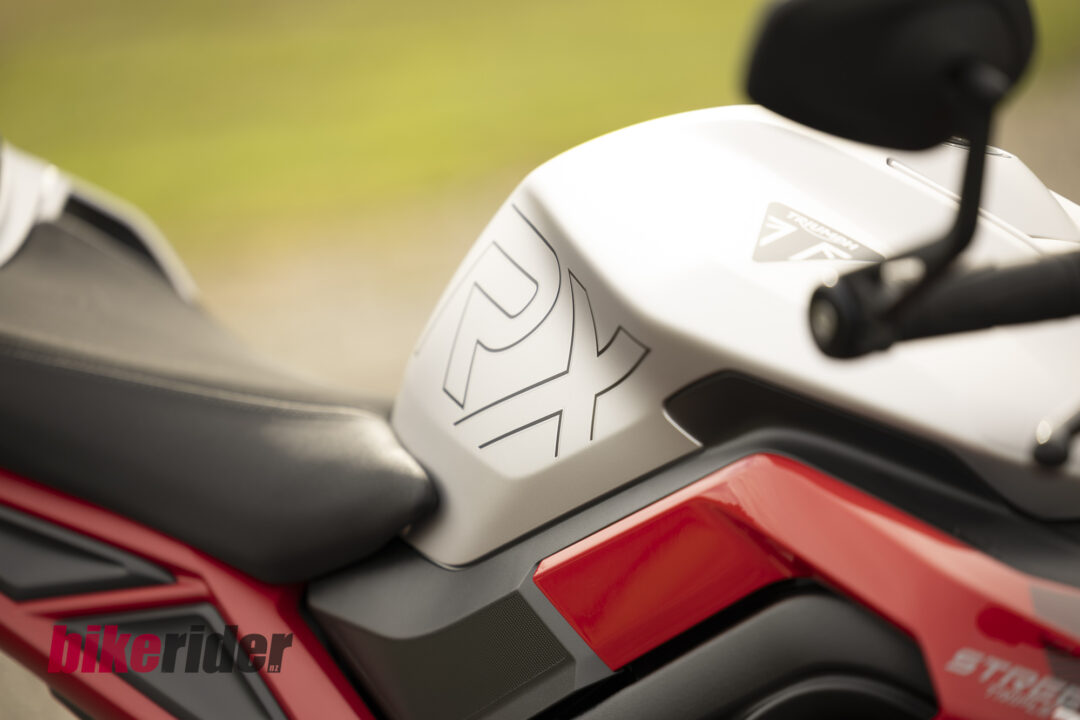
The electronics play a role in the RX’s package thanks to the slightly shorter wheelbase and steeper steering geometry. That could have made the RX more flighty at the front than the RS if it wasn’t for the revised riding position putting more of the rider’s weight into the front Pirelli.
But it’s still a naked bike, and as such, the rider, positioned upright, combined with the wicked mid-range of the 765 powerplant, gets the lift control and other electronics working their magic to keep everything under control.
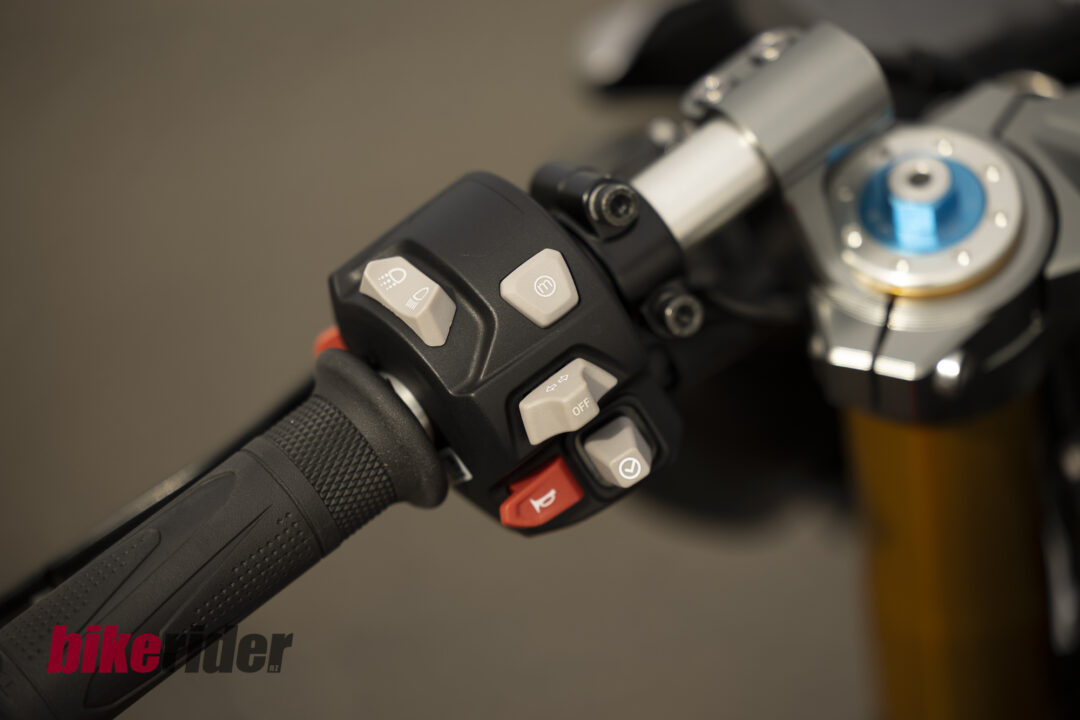
Stick the RX into Track mode, and it dials the aids down and sharpens the throttle response, making the Street Triple a hooligan machine that lifts the front over crests or under power, while the ABS doesn’t get intrusive or carried away into turns.
It’s seriously sharp and a bundle of fun, which just encourages you to push harder, at least when no one is watching…
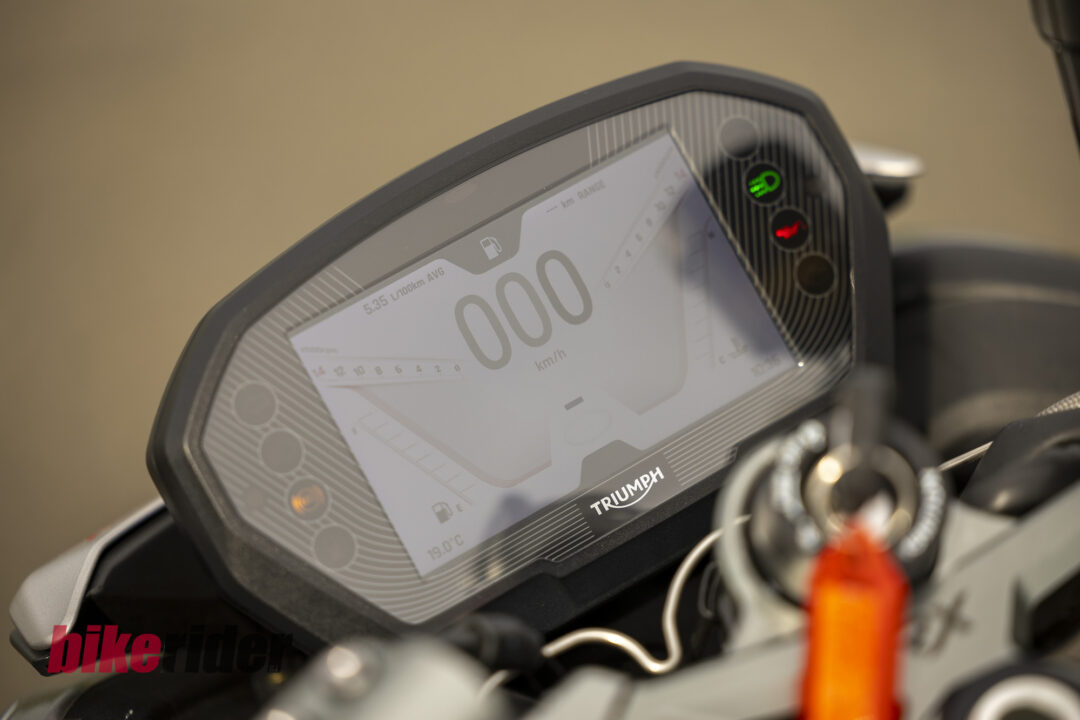
One thing that still doesn’t impress is Triumph’s dash.
It’s carried over unchanged, and I still find the layout fussy, with the two rev-counter displays feeling cluttered rather than intuitive. On a bike this focused and polished elsewhere, it remains a weak point.
Who’s It For?
The trade-off for all that extra front-end fidelity is a ride that can feel busy, even harsh, when the road gets broken and bumpy — which, let’s face it, is often.
I needed to think about where I was going to test the RX, as while there are some great roads around the Waikato for getting away from the crowds and putting a bike like this to the test, they can often be in less-than-perfect condition.
And with the RX’s more front-end feel and bias combined with the more focused riding position, it wasn’t always a great mix.
It’s not uncomfortable exactly. But it is less relaxed than the RS, which pretty much devours any road you point it at. And I kept finding myself asking whether the extra precision was something I genuinely needed on the road — or simply something I admired.
So really, this review comes down to intent.
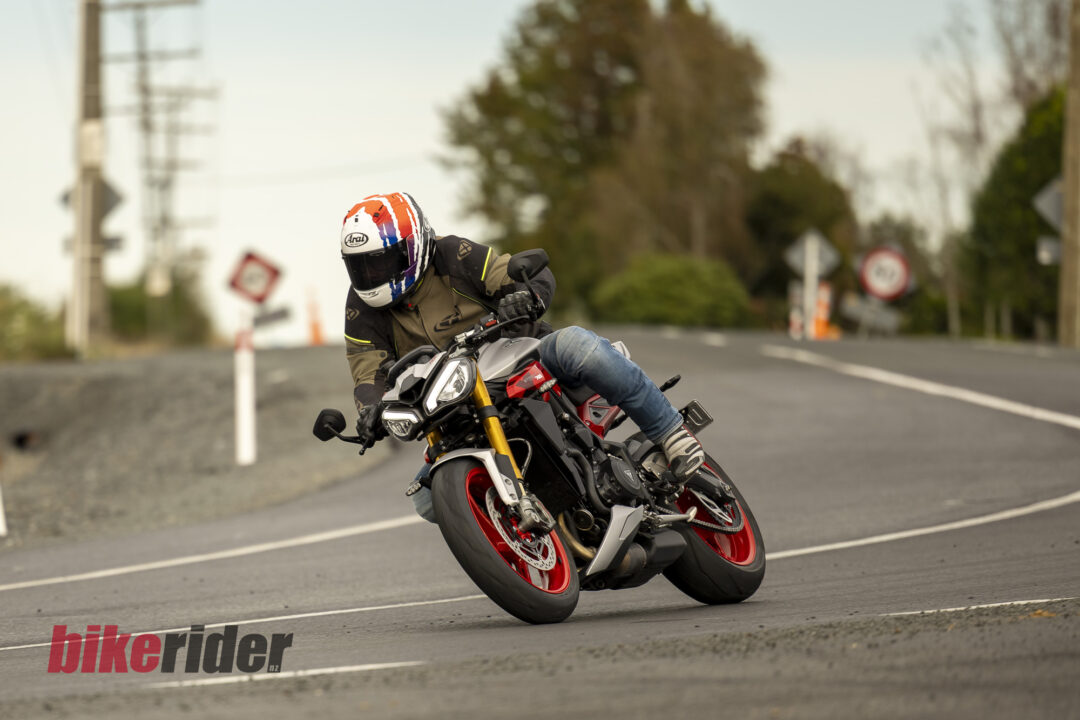
If you’re a regular trackday rider, or the sort who prizes front-end communication above almost everything else, the RX makes perfect sense.
Likewise, if you just love the idea of a Street Triple with clip-ons and that exquisite top yoke — and honestly, who wouldn’t — there’s emotional logic here too.
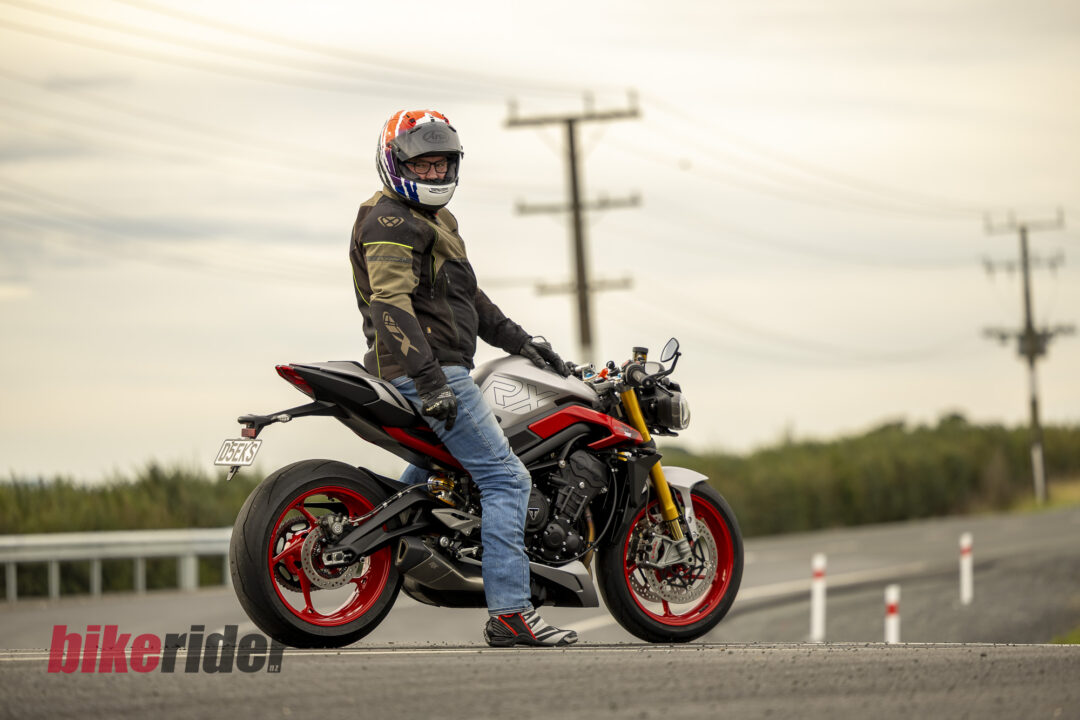
And let’s be honest, the RX looks sensational. Those clip-ons and machined top yoke have real emotional pull, even before the first corner.
But if your riding is mostly what many of ours is — rough backroads, imperfect surfaces, fast road riding rather than faux race weekends — I’m not convinced the RX eclipses the RS.
In fact, I’m fairly sure it doesn’t.
The RX doesn’t replace the RS — it takes the RS and nudges it a little closer toward the old Daytona/Moto2 ideal. And perhaps that’s what some riders are after – a sharper naked.
Because if the RS is the all-round masterpiece, the RX is the specialist tool — a little harder edged, a little more demanding, a little less forgiving. A scalpel, where the RS was already a very fine knife.
It does look the business in a less flashy way than the Triumph Street Triple Moto2 Edition. It’s cheaper too, with the RX ($23,995) just over $2k more than the RS ($21,990) and a significant $2,500 less than the Moto2 bike.
For that, you get the upgraded Öhlins suspension over the RS, which, in itself, is worth the extra cash. It’s just whether the more focused riding position would be a deal-breaker.
For me, especially as the RS is simply so complete, it probably would be.
And perhaps that says more about the brilliance of the RS than any failing of the RX.
Verdict
The Street Triple RX delivers exactly what Triumph promised — more front-end feel, more precision, more track-minded focus. But on Kiwi roads, that extra sharpness comes at a price.
If you want a Street Triple tilted toward circuit work, this is your bike. If you want the best all-round middleweight naked on sale? The RS still wears that crown.

Sharpened Scalpel
Brilliantly precise, intoxicating triple engine, gorgeous front-end feel — but if you are predominantly a road rider, then we reckon the RS remains the sweeter all-round road bike. However, if you like a stunning front-end, then this is it!