


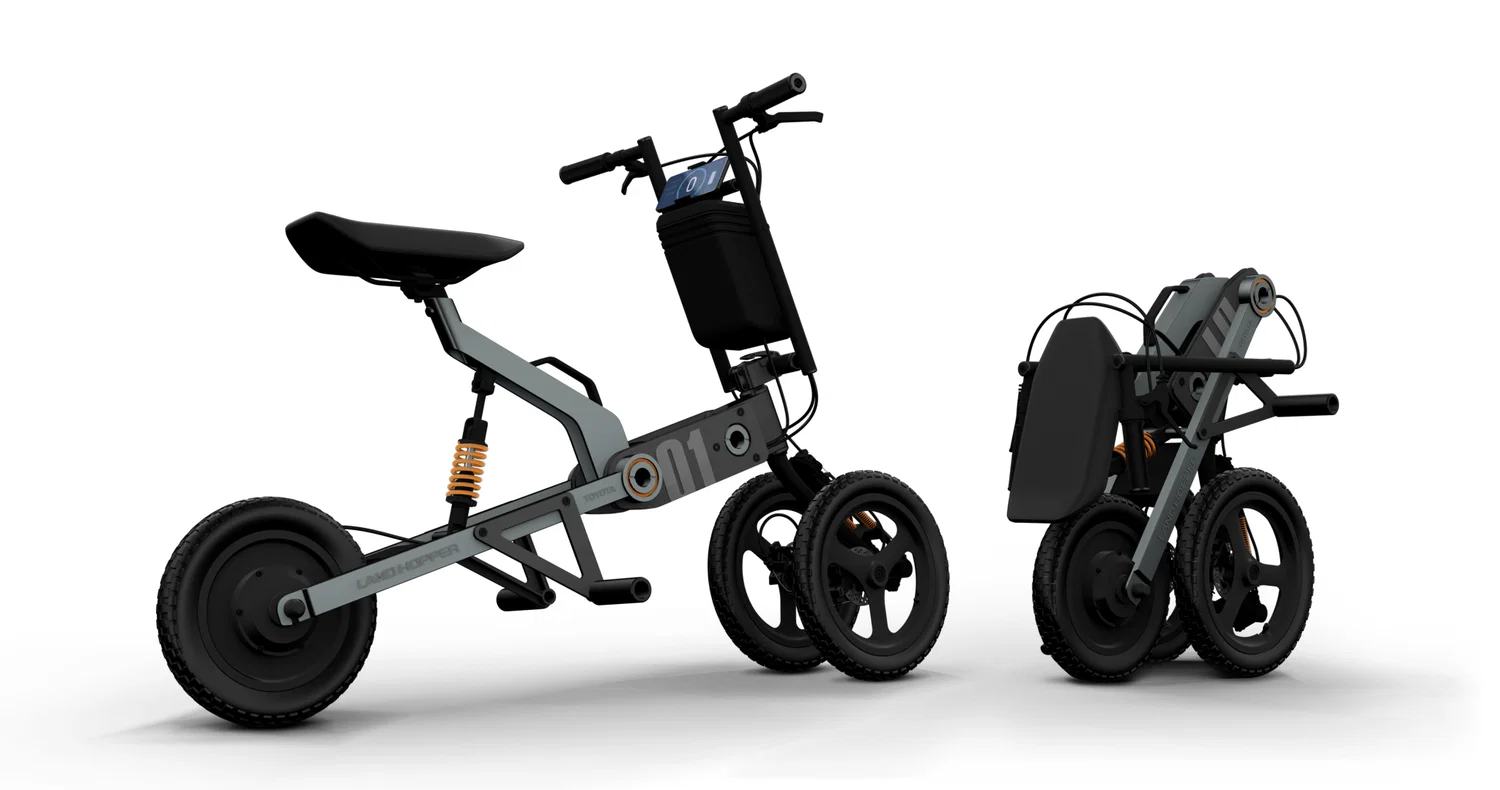
- Positioned as a last-mile transport
- Completely foldable design for convenience
Toyota is not a brand typically associated with pint-sized electric mobility, especially one that looks more at home beside a scooter rack than an off-road icon. Yet, the newly revealed Land Hopper Concept may be one of the company’s more practical ideas in recent years, even if it appears unconventional at first glance.
Presented as a compact three-wheeled electric mobility concept, the Land Hopper is Toyota’s latest answer to the growing “last mile” transport challenge. While the thought of a company best known for vehicles like the Land Cruiser building a miniature electric runabout might initially seem unexpected, Toyota’s broader philosophy around practical and accessible mobility makes the concept easier to understand.
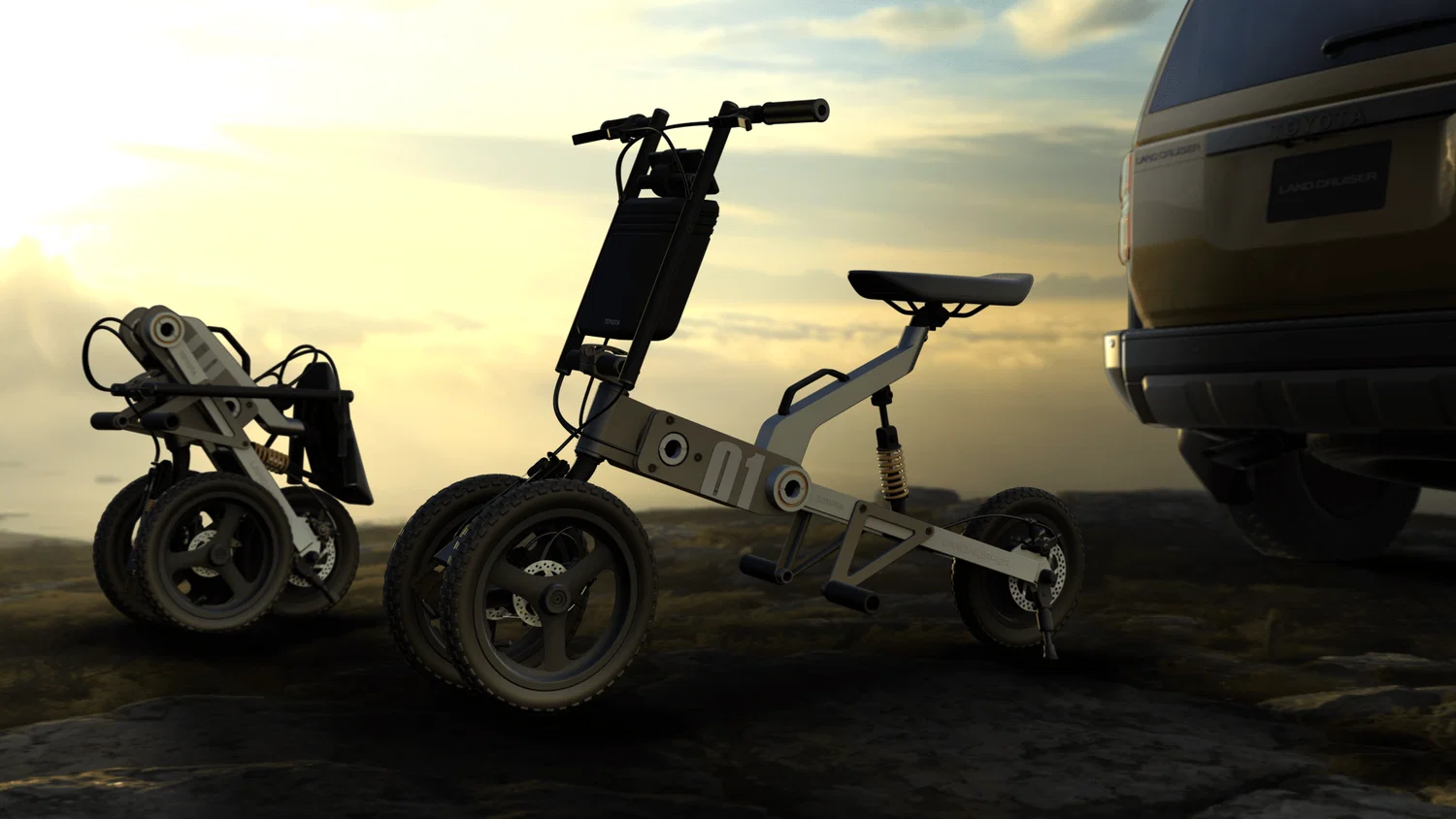
The Japanese manufacturer says the Land Hopper is designed to expand mobility options, particularly for older riders or people moving away from full-sized vehicles and traditional driving licences. Under Japan’s updated Road Traffic Act, Toyota believes the machine could qualify as a small motorised bicycle, potentially allowing riders aged 16 and older to use it without holding a conventional driver’s licence.
Its compact footprint further reinforces that purpose. Measuring just 1,355mm in length, 600mm in width and 930mm in height, the Land Hopper is considerably smaller than most motorcycles. A low seat position and narrow proportions are intended to make mounting, manoeuvring and riding less intimidating, especially in busy urban environments.
Visually, the Land Hopper sits somewhere between an electric scooter, a leaning trike and a futuristic mobility pod. However, beneath the unusual styling is a mechanical setup designed with usability in mind. The concept employs a twin-front-wheel configuration connected through a leaning mechanism, enabling the front end to tilt naturally while allowing each wheel to move independently over uneven surfaces. The result, according to Toyota, is improved stability compared with a conventional two-wheeler, while still maintaining an engaging riding experience.
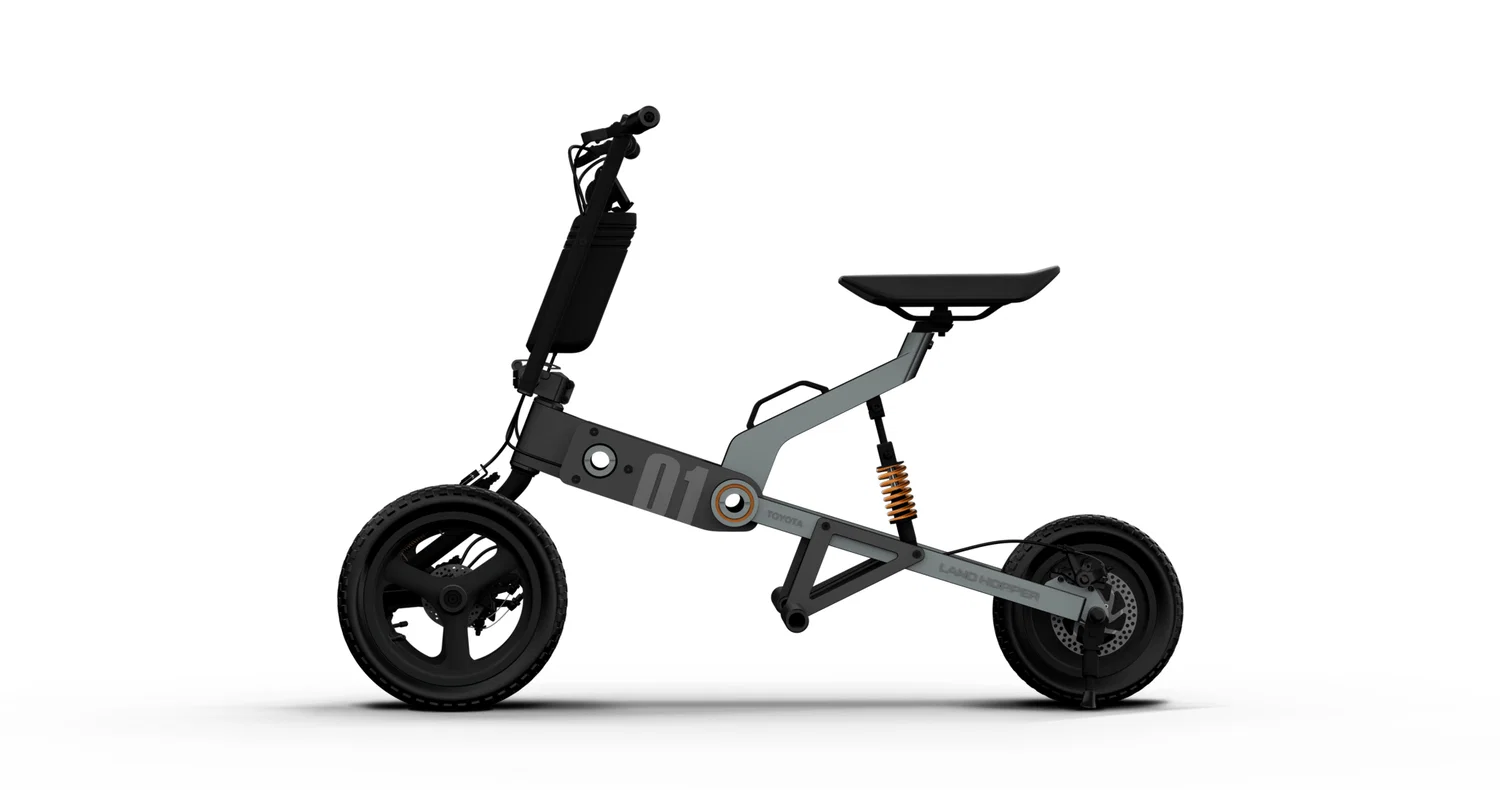
Toyota describes the riding character as intuitive and enjoyable, claiming the setup offers a unique experience distinct from both bicycles and cars, while also being easier to manage for less experienced users.
MORE ARTICLES

Perhaps the Land Hopper’s most practical feature is the role Toyota imagines it playing alongside a car rather than replacing one altogether. Compact enough to fold and fit inside a vehicle’s boot, the machine could serve as a secondary transport option for shorter journeys, sightseeing trips or navigating crowded urban areas after reaching a destination by car.
In many ways, the concept aligns neatly with Toyota’s long-standing association with touring and adventure travel. Owners of vehicles such as the Land Cruiser already commonly carry bicycles, scooters or outdoor equipment for similar reasons, making the Land Hopper feel less like an outlandish experiment and more like an extension of an existing lifestyle.