

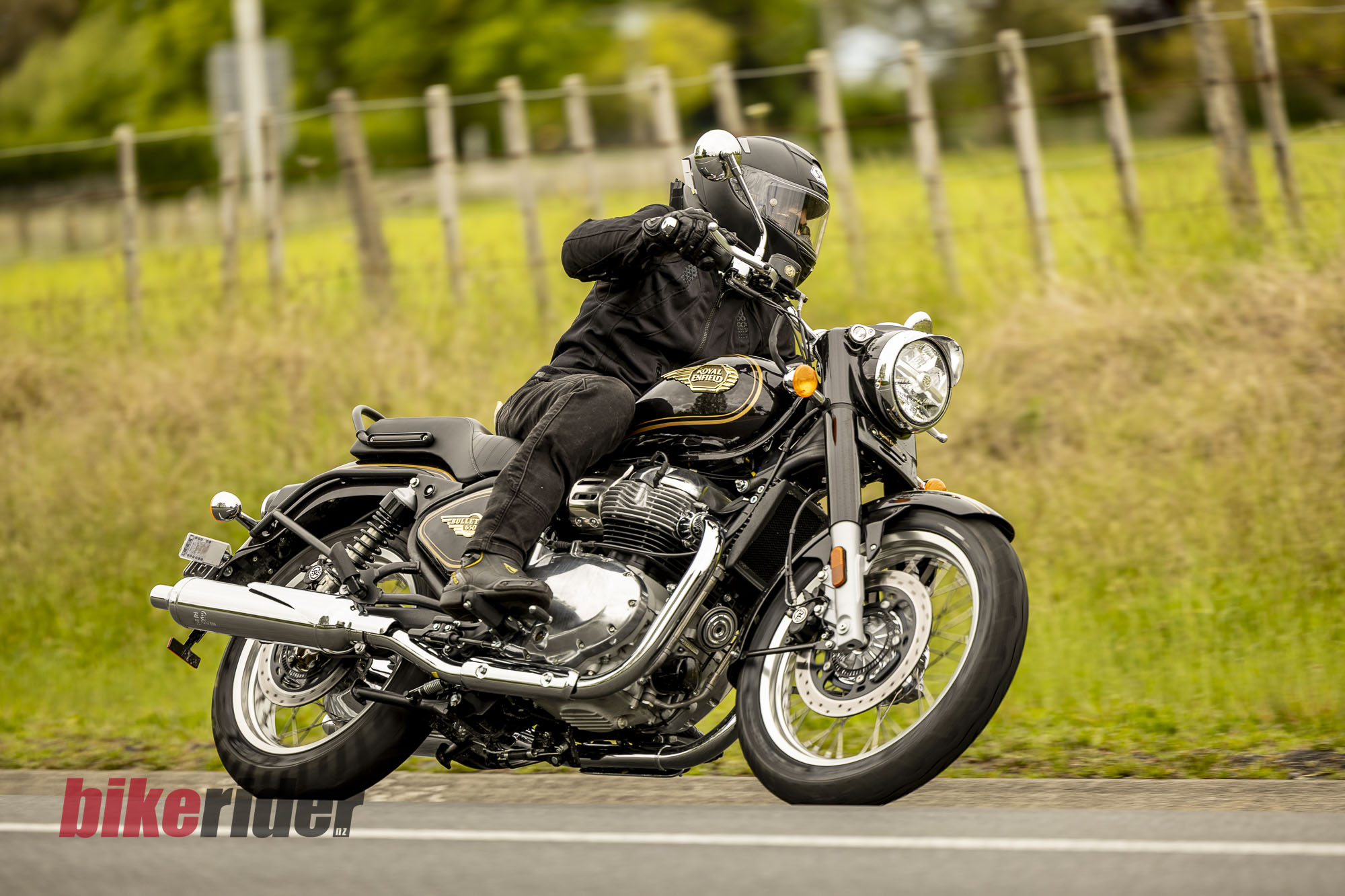
With timeless styling, a beautifully refined 650 twin and a price tag that won’t break the bank, Royal Enfield’s latest Bullet makes a compelling case for slowing down and simply enjoying the ride.
- Beautiful retro detailing and a refined 648cc twin give the Bullet 650 genuine everyday appeal.
- Handles better than its 243kg kerb weight suggests, although the rear suspension feels firm.
- Battleship Blue: $11,190 / Cannon Black test bike: $11,390 excluding on-road costs.
Quick Facts: Royal Enfield Bullet 650
Engine: 648cc parallel twin
Power: 34.6kW at 7250rpm
Torque: 52.3Nm at 5650rpm
Transmission: Six-speed
Claimed kerb weight: 243kg
Fuel capacity: 14.8 litres
NZ price: From $11,190; Cannon Black $11,390, excluding on-road costs
Warranty: Three years, unlimited kilometres; three years’ roadside assistance
There’s something rather satisfying about walking into your shed and seeing a motorcycle that just looks right. And the Royal Enfield Bullet 650 is one of those bikes.
I’ve had the Bullet sitting in my shed for the past week, and every time I’ve walked past it, I’ve found myself stopping for another look. I think it’s just a really cool motorcycle. Not because it’s particularly fast, technologically advanced or covered in expensive components, but because Royal Enfield has managed to create something that looks like it could have rolled out of a showroom 60 years ago, yet is perfectly capable of dealing with modern motorcycling.
And here’s the thing. At around $11,000, it’s not an unreasonable amount of money to have something this good-looking sitting in the corner of your garage.
MORE ARTICLES
You could have it as a second bike, something to pull out on a sunny Sunday morning, throw on your favourite riding jeans and leather jacket, and head down to the local café. Or you could quite happily use it as your everyday motorcycle, because despite its distinctly old-school appearance, the Bullet 650 is remarkably easy to live with.
Either way, I reckon there are plenty of motorcyclists who would be rather pleased to have one of these in their shed.
A proper Bullet
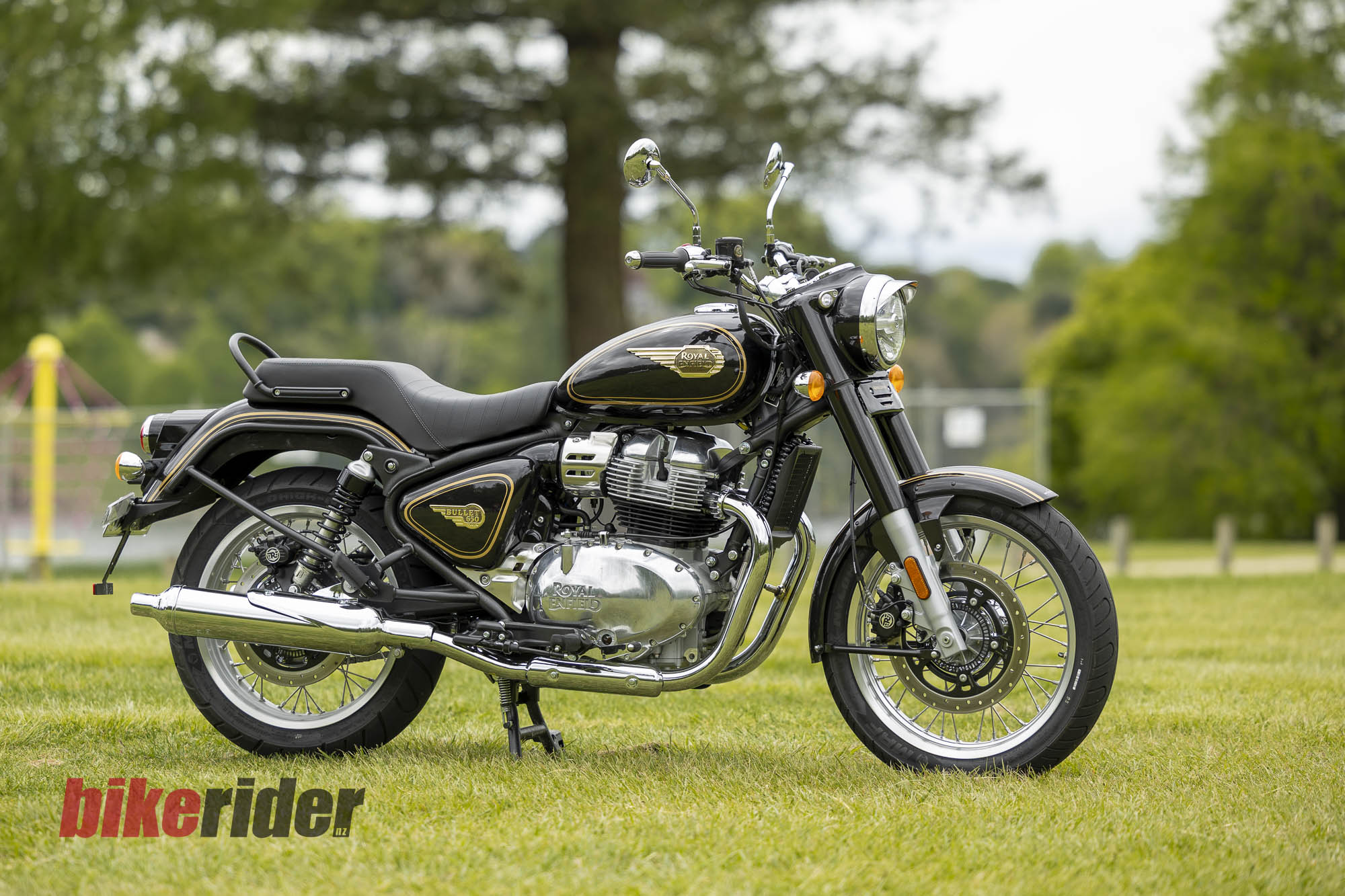
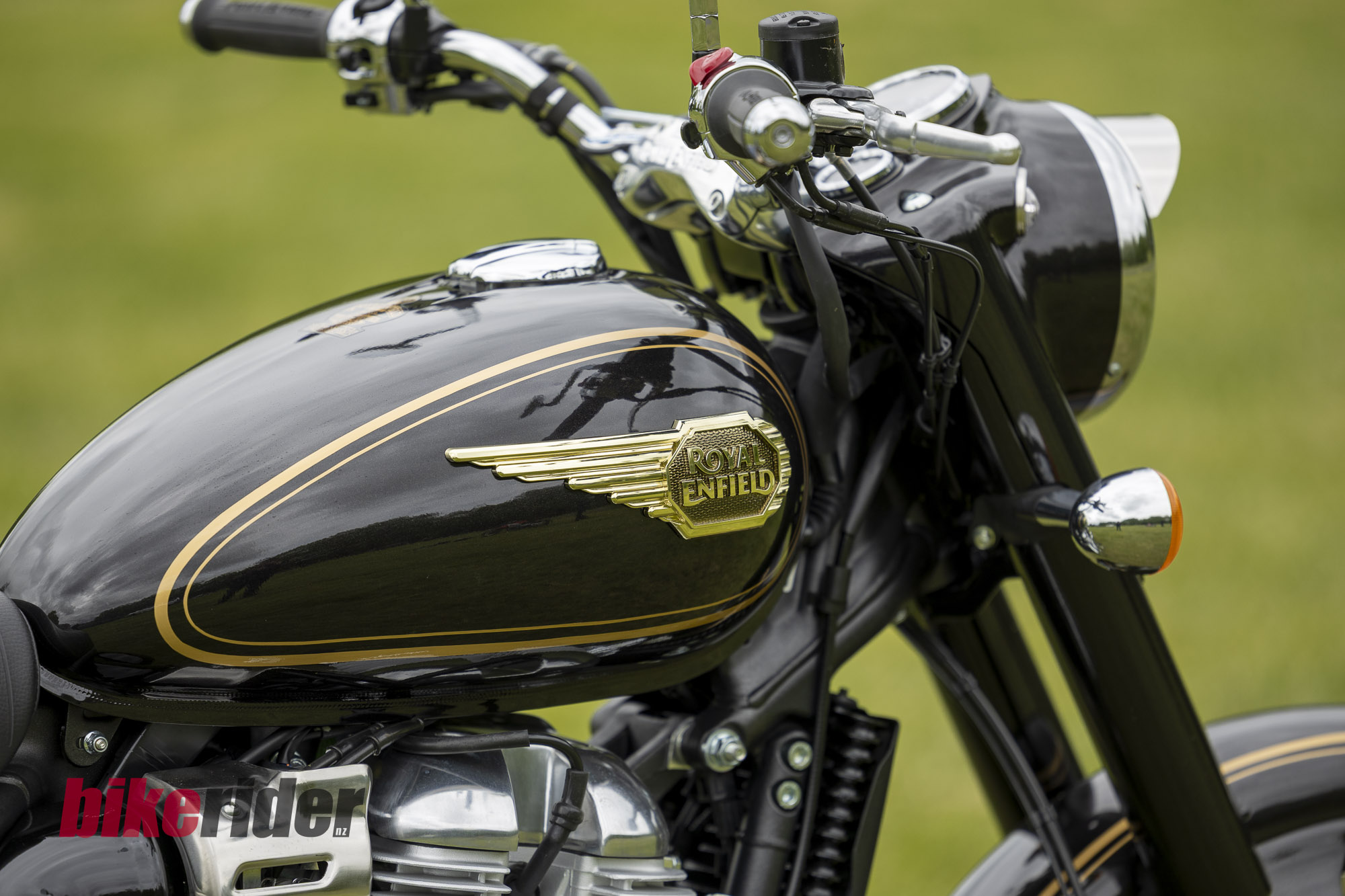
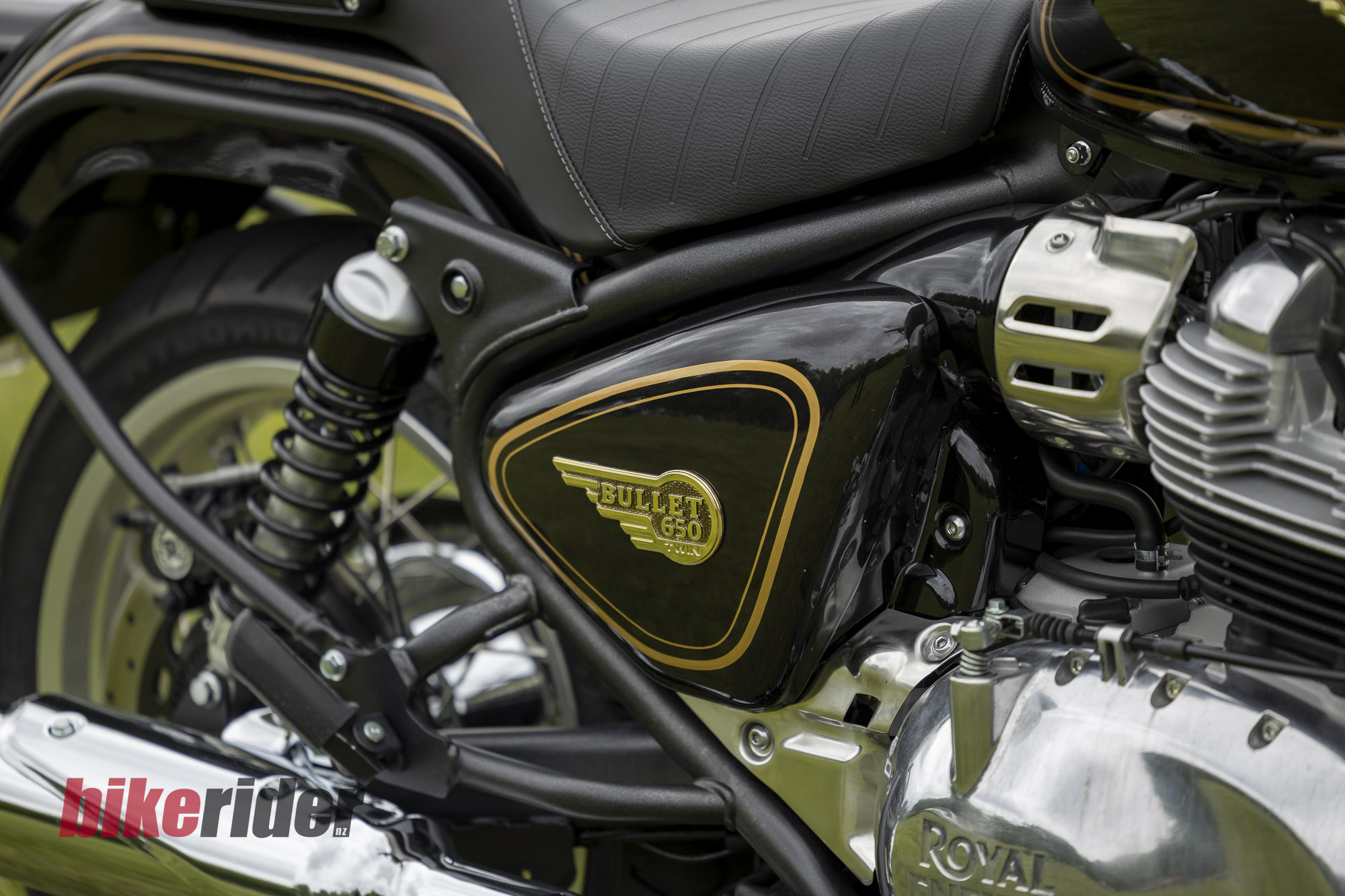
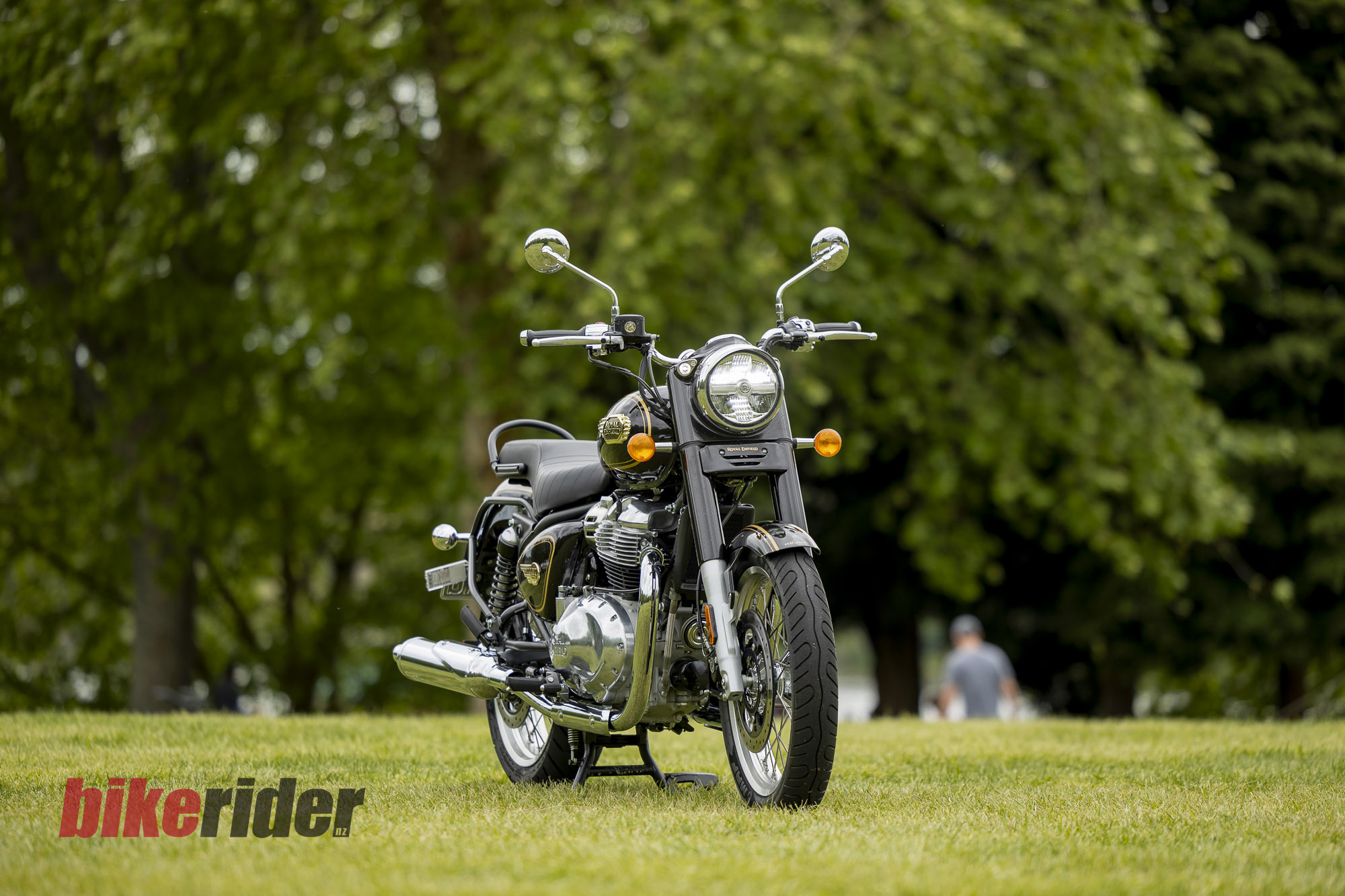
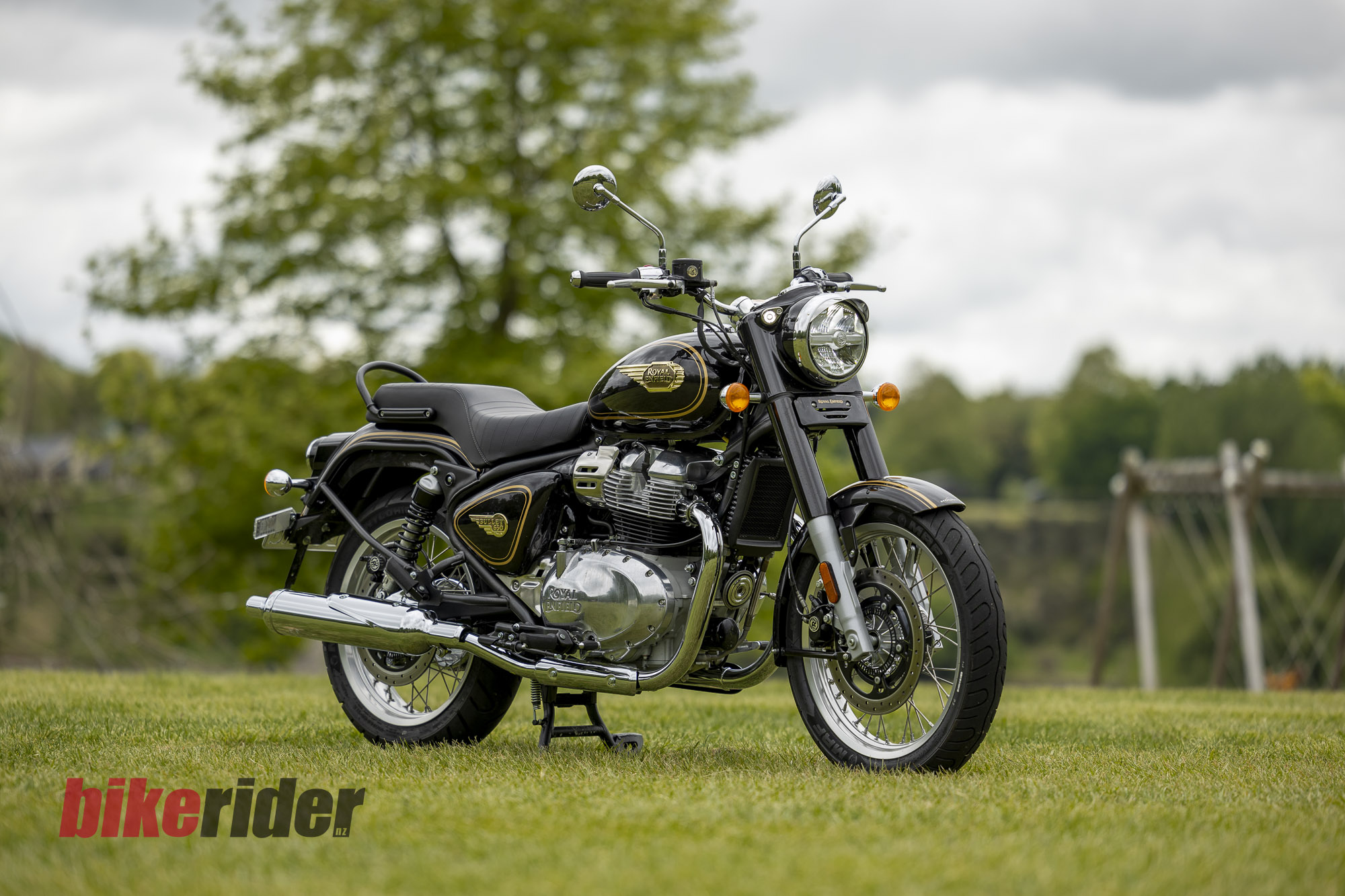
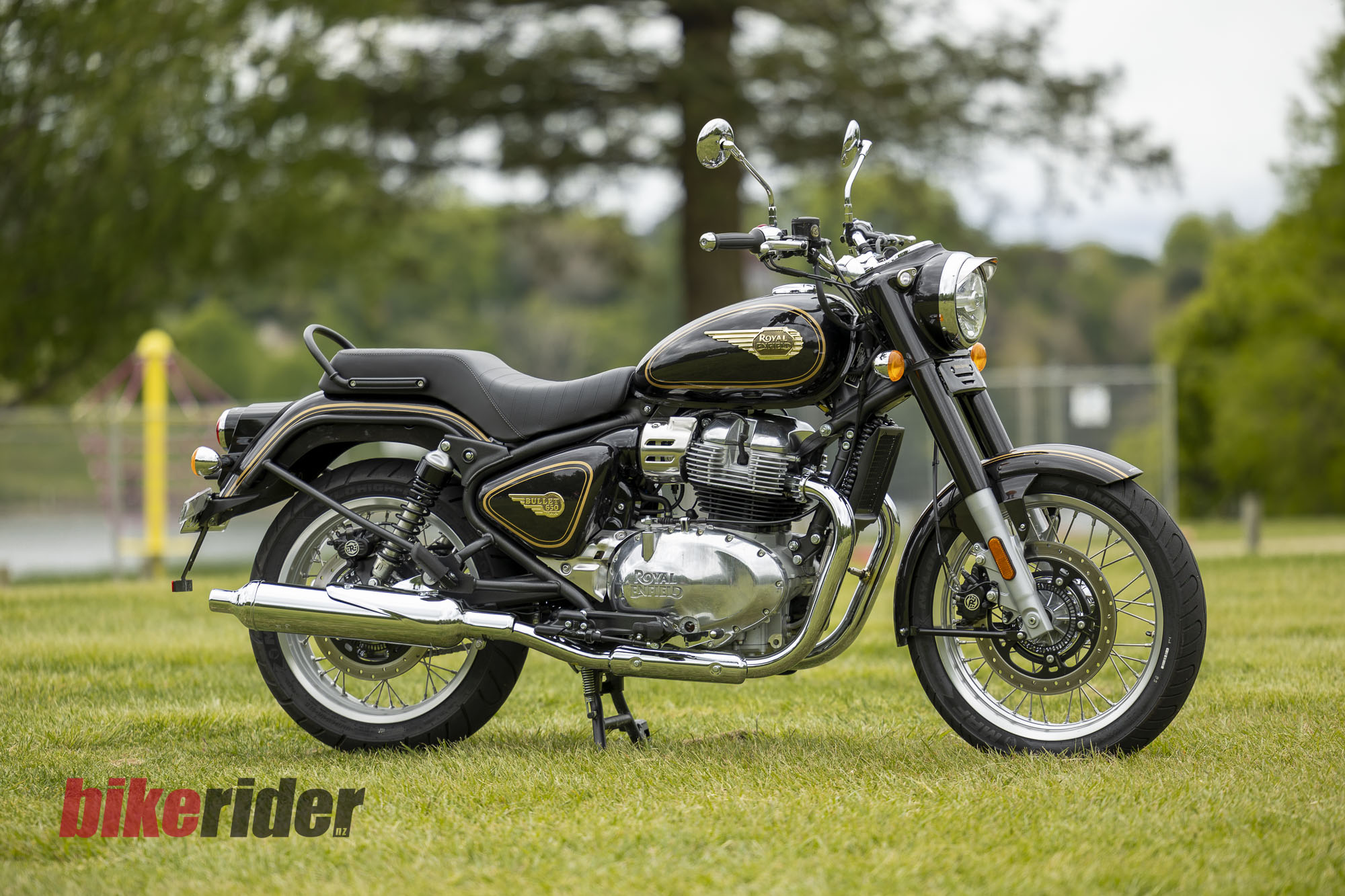
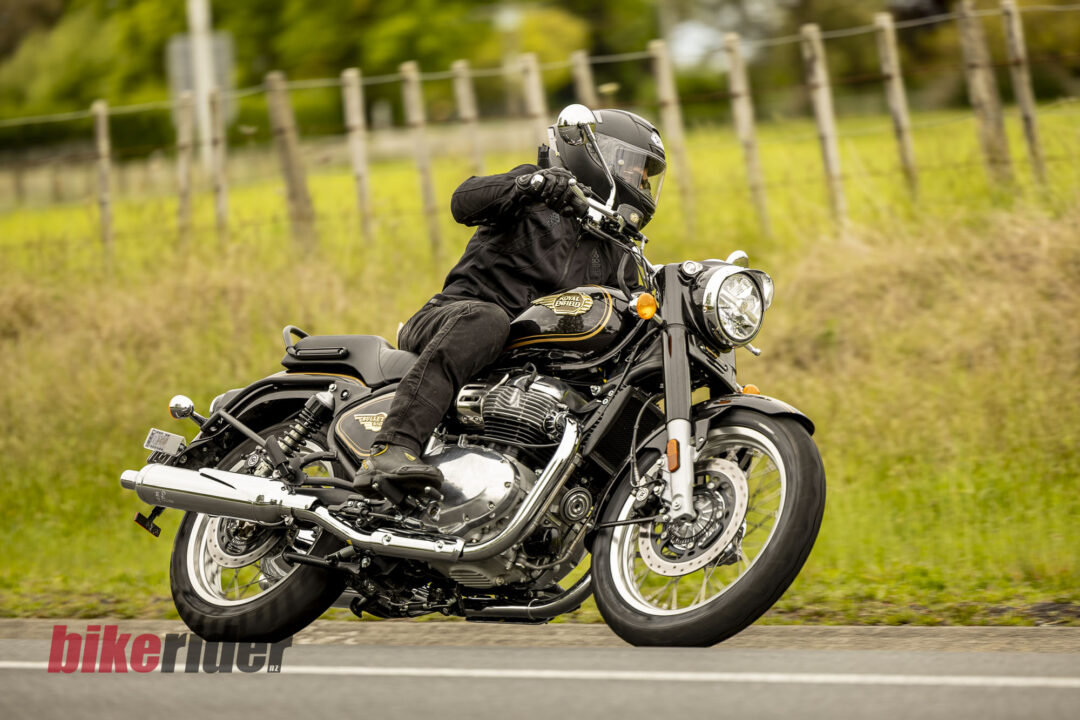
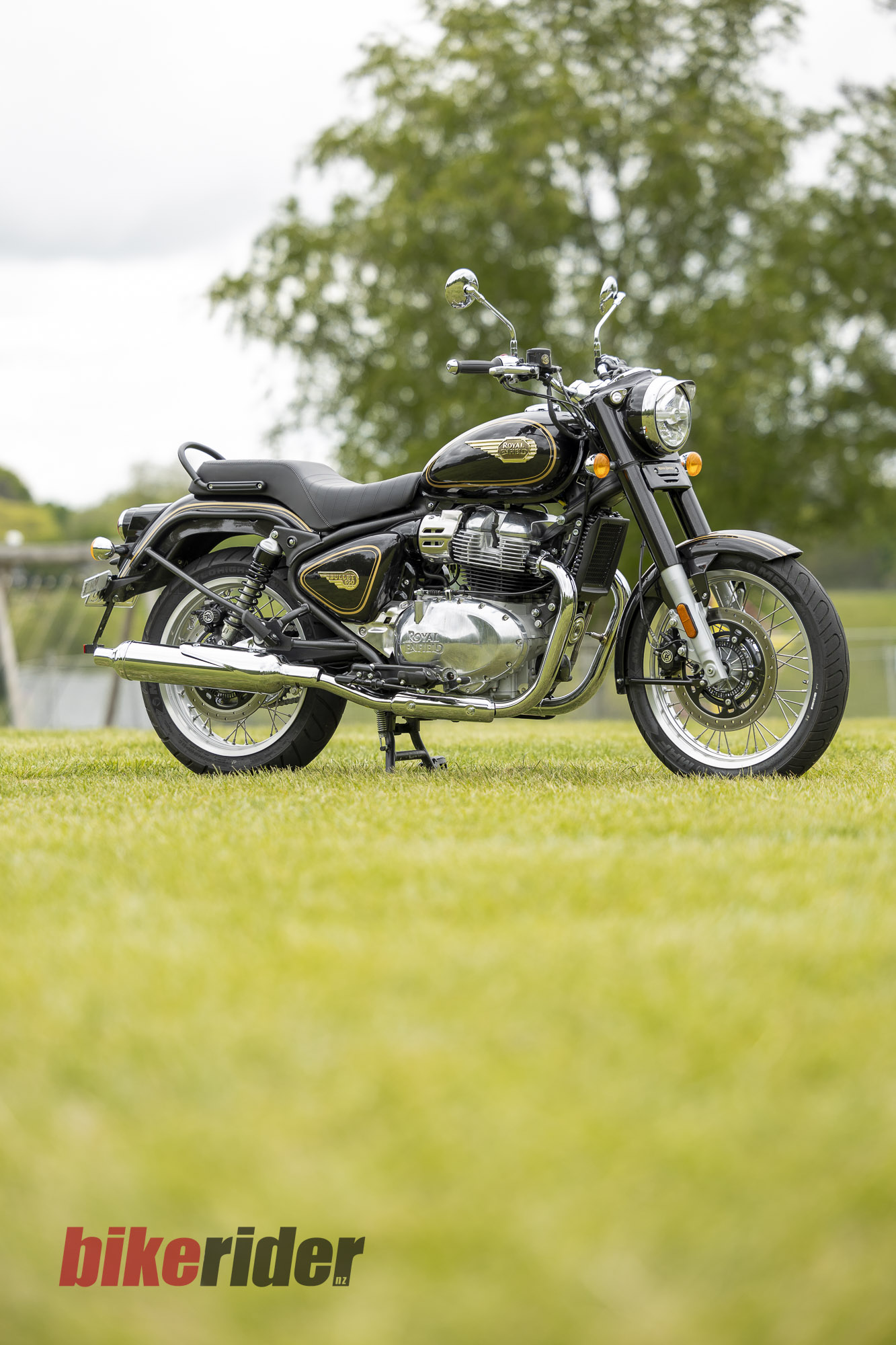
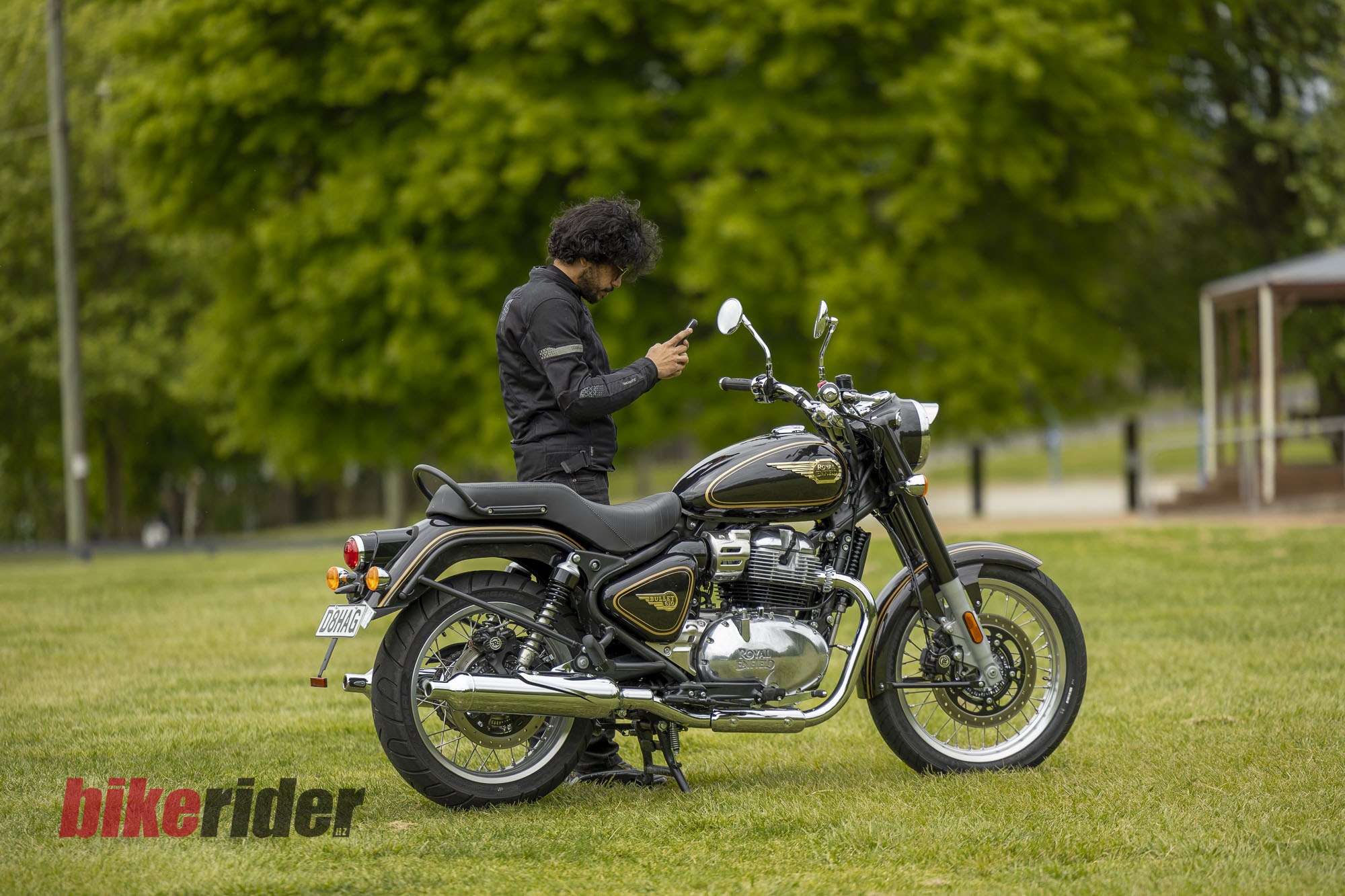
Royal Enfield has done an excellent job with the styling, particularly on our Cannon Black test bike with its gold accents and traditional detailing.
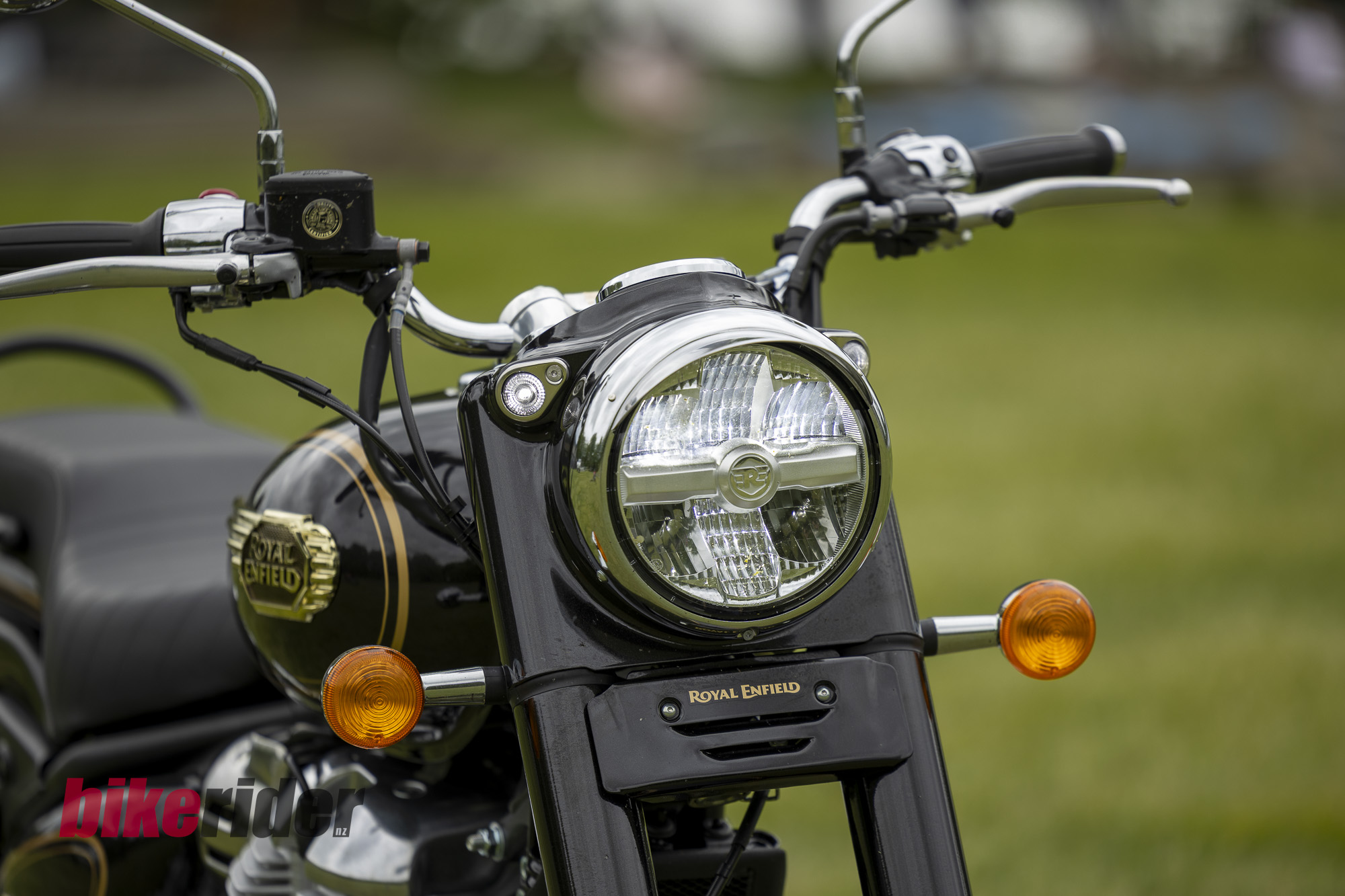
The little metal peak above the headlight, the substantial chrome handlebar clamp, metal mudguards, gold Bullet badges, traditional twin rear shocks and those lovely peashooter-style exhausts all contribute to a motorcycle that looks absolutely spot-on.
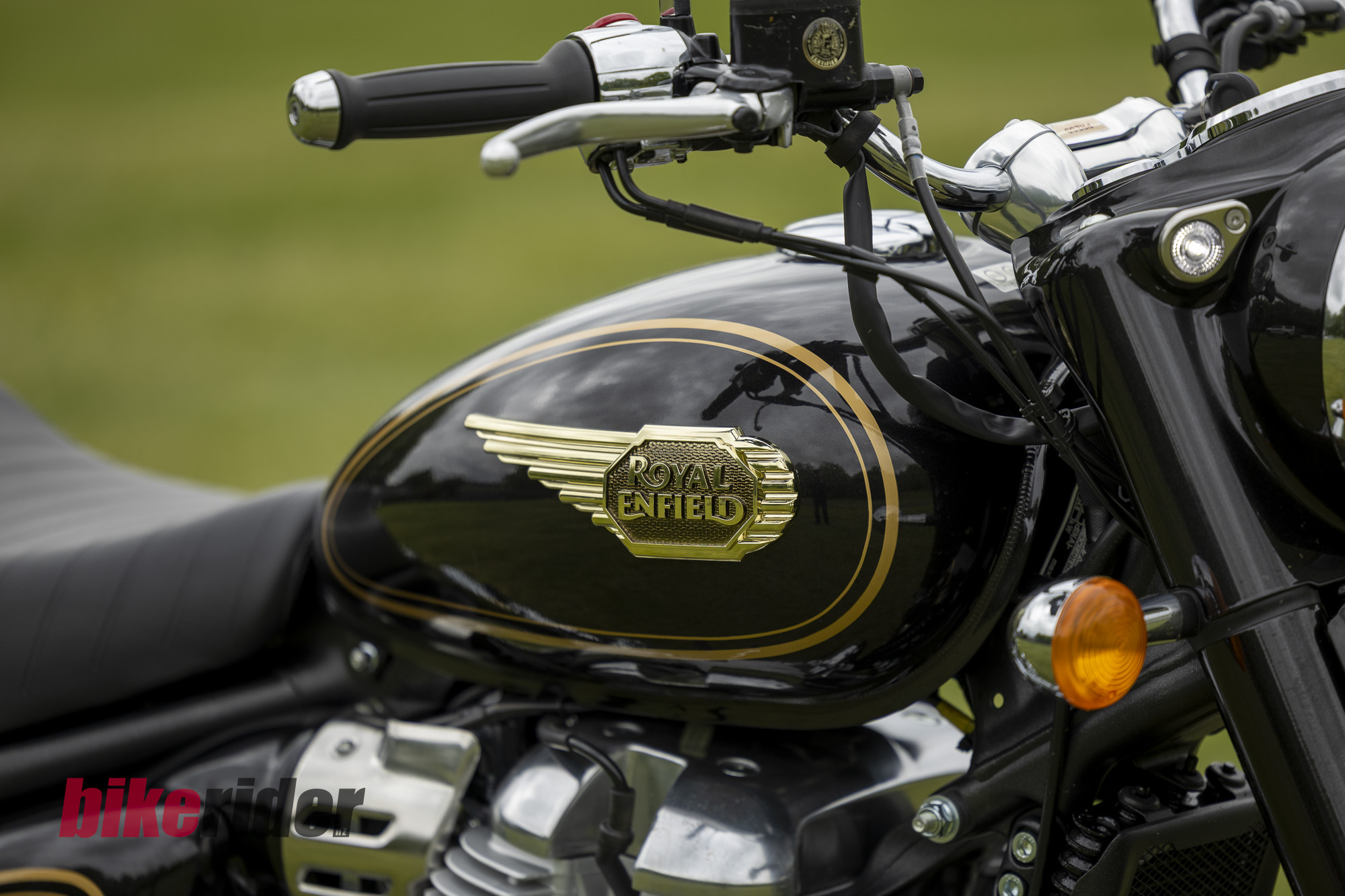
There’s the classic stepped seat, round rear light and beautifully finished fuel tank with its traditional, Royal Enfield lettering and hand-painted gold pinstriping. Even the paint has a lovely depth and subtle metallic fleck to it that catches the light.
And the more you look, the more you notice.
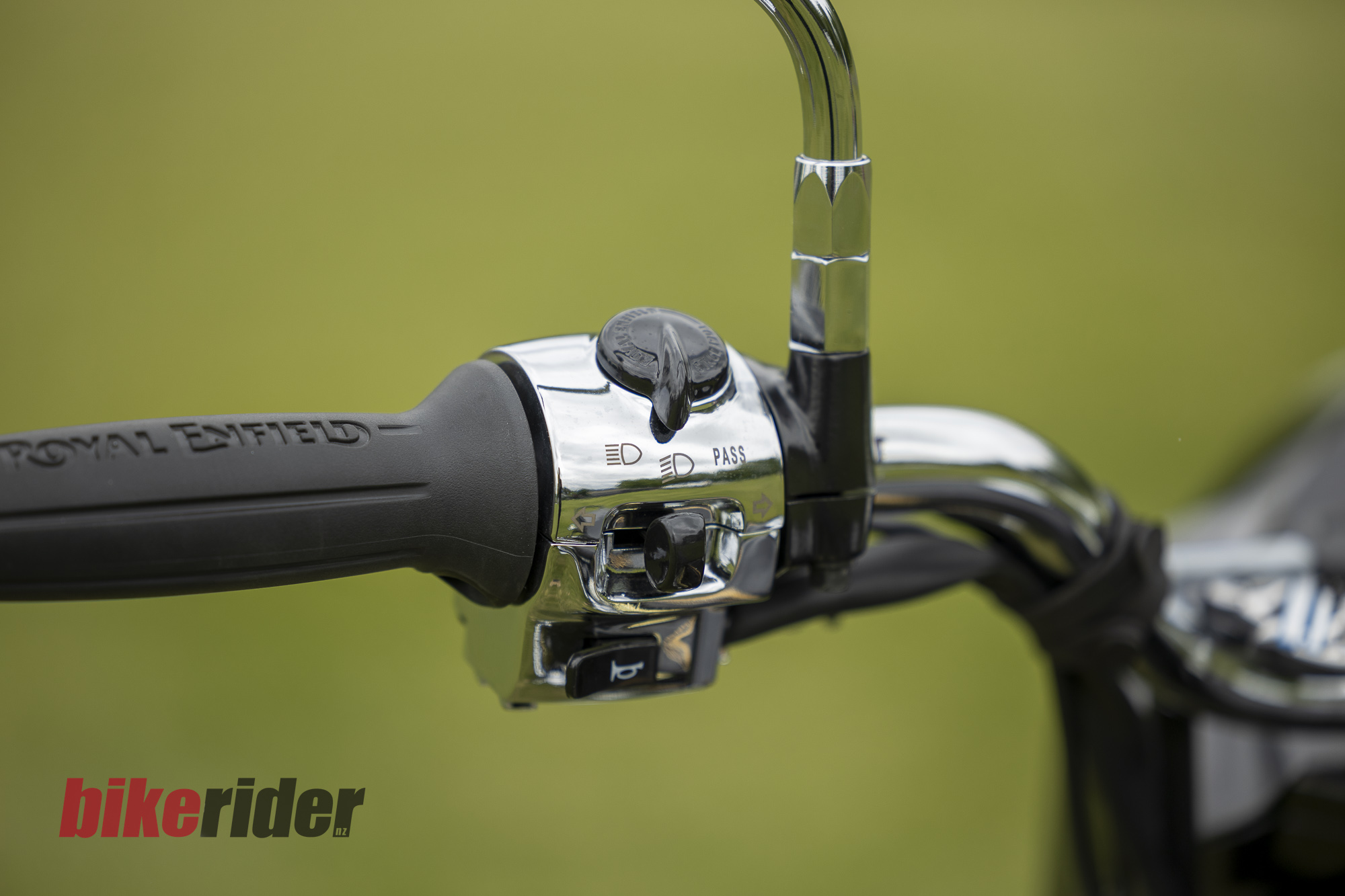
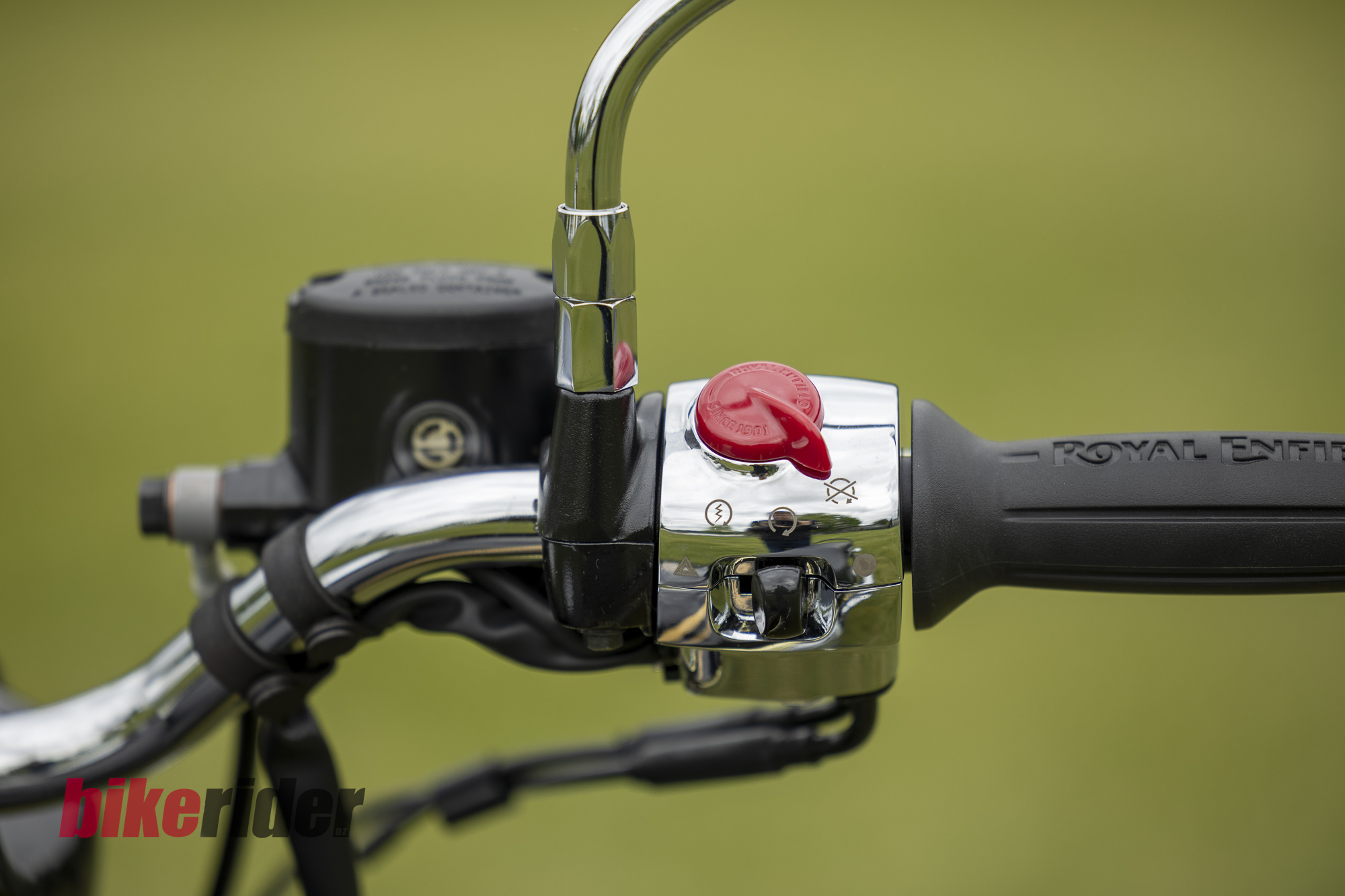
The switchgear housings are polished aluminium rather than cheap plastic, the bar ends are substantial, and the large rubber grips have Royal Enfield embossed into them. There’s a proper locking chrome fuel cap and a pair of large chrome mirrors that, refreshingly, allow you to see what’s happening behind you rather than offering a lovely view of your elbows. And to give it the classic Bullet look, there’s even a set of ‘tiger eye’ lamps either side of the headlight.
It’s all rather impressive, especially when you consider the price.
There’s something about the Bullet that makes you want to dress appropriately for the occasion, too. Riding jeans, leather jacket, retro helmet. You know the look. And while that might sound a little superficial, I reckon it’s part of the appeal of owning a motorcycle like this.
“It’s not just about getting somewhere. It’s about enjoying the whole experience.”
A twin with a different character
Of course, the biggest departure from the Bullet’s traditional formula is the engine.
For decades, the Bullet was synonymous with a big, thumping single-cylinder motor. It was part of the motorcycle’s character, and while those engines weren’t necessarily the last word in refinement, they certainly had personality.
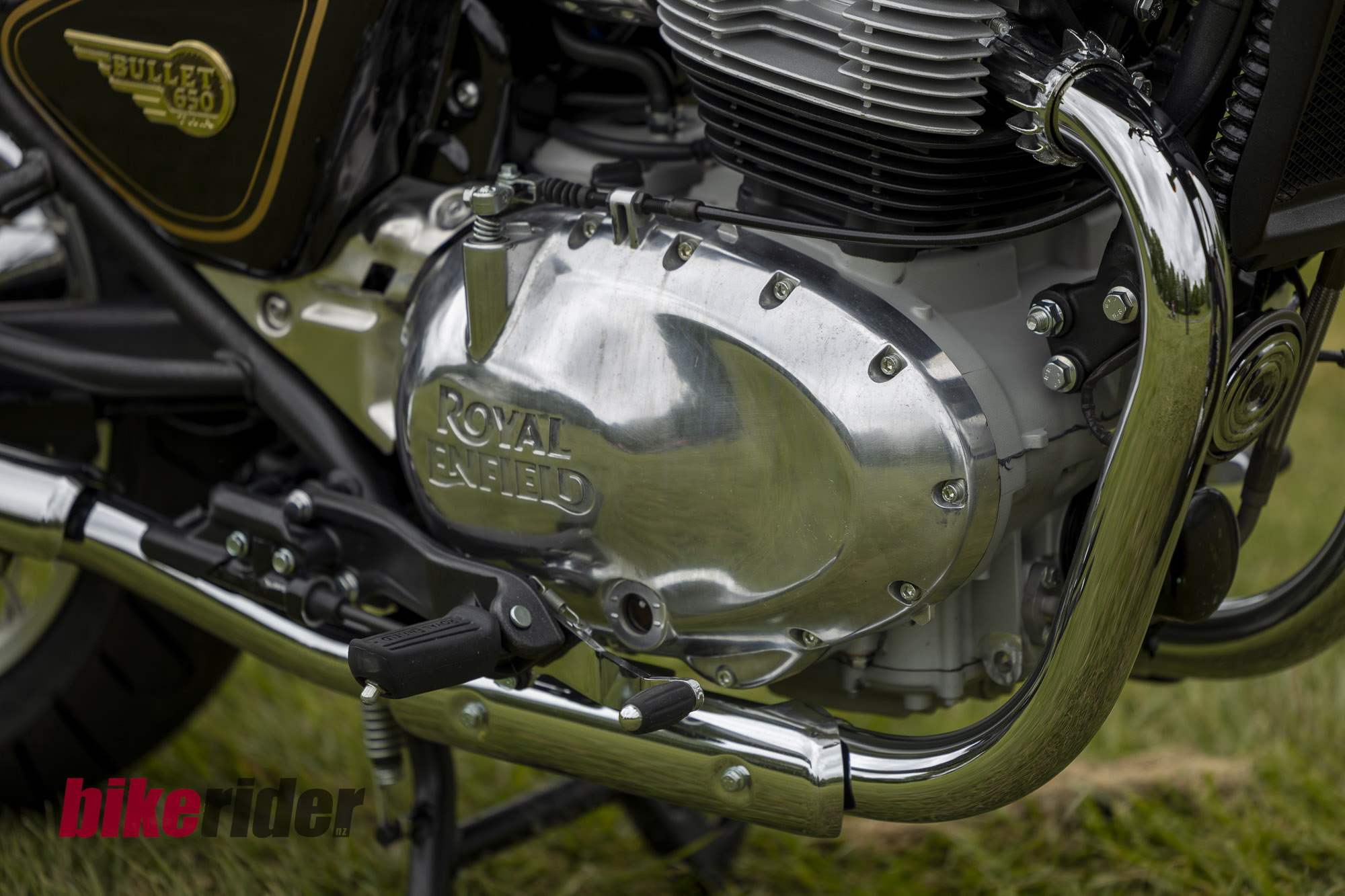
The latest Bullet uses Royal Enfield’s familiar 648cc parallel twin, producing 34.6kW (approximately 46bhp) and 52.3Nm of torque.
It’s an engine we’ve experienced in several Royal Enfield models, and it’s a good one. Smooth, refined, flexible and with beautifully linear power delivery, it makes the Bullet an exceptionally easy motorcycle to ride.
But if I’m being picky, it’s almost a little too refined.
There’s none of that traditional single-cylinder thump that you might associate with a motorcycle wearing the Bullet badge. Instead, you get a wonderfully smooth twin that simply gets on with the job without any fuss.
Does that take away some of the character? Perhaps a little.
But I don’t think it really matters, because the rest of the motorcycle delivers so much old-school charm that you quickly forgive the engine for being rather too civilised. And there’s no denying that the twin makes the Bullet a much more versatile motorcycle.
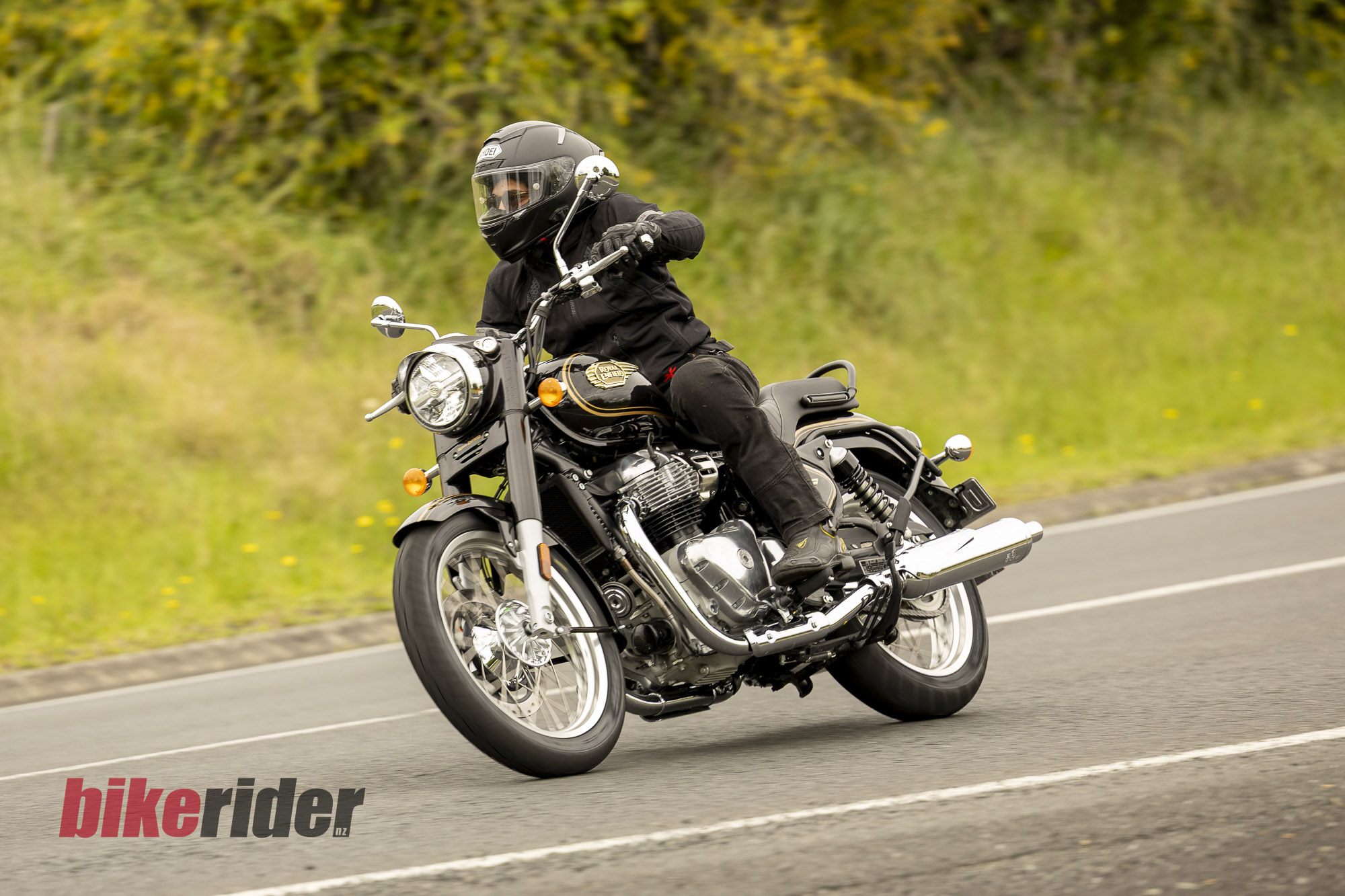
The fuelling is excellent, with no hesitation, flat spots or unexpected surges. Whether you’re trickling through traffic or winding the throttle open on a country road, the response is predictable and controlled. There’s also enough performance to make things entertaining, although with a kerb weight of around 243kg, the Bullet is never going to set your hair on fire.
“You do need to give the engine a bit of encouragement if you want to get moving quickly, but once it’s spinning, there’s enough performance to enjoy yourself.”
And the exhaust note adds to the experience, with a pleasant note from those traditional peashooter-style silencers producing a suitably mellow soundtrack. I’m sure some owners will be tempted to fit something a little more vocal, but personally, I thought it sounded just fine.
Old looks, modern conveniences
One of the things I particularly like about the Bullet is the way Royal Enfield has incorporated modern conveniences without spoiling the traditional appearance.
The large analogue speedometer looks exactly right, but tucked into the bottom is a small LCD display showing useful information, including the fuel level, trip information and gear position. There’s even an indicator that suggests when you might want to shift up or down. Very civilised…
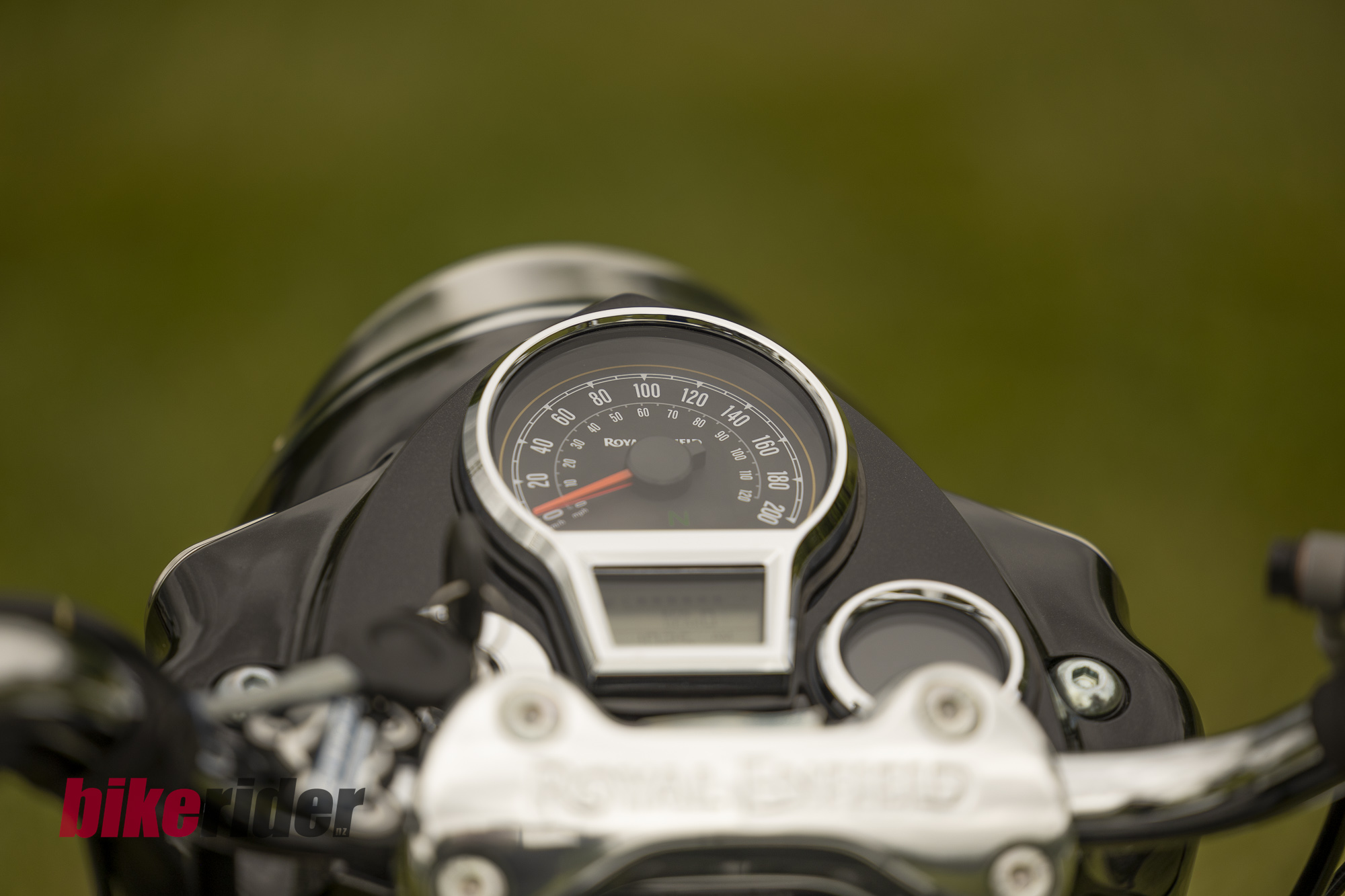
Now, a fuel gauge might not sound particularly exciting, but it’s a welcome addition on a motorcycle with this sort of styling. Too many retro machines seem to think that looking traditional means you shouldn’t know how much petrol you’ve got left.
The Bullet also gets Royal Enfield’s Tripper navigation system, housed in a small circular display to the right of the ignition switch. Pair it with the Royal Enfield smartphone app, and you get simple directional navigation without having to mount a phone or large screen on the handlebars. It’s a clever solution that fits perfectly with the motorcycle’s character.
Other nice touches include span-adjustable brake and clutch levers, something that isn’t always a given on motorcycles at this price. And the riding position is equally straightforward. You sit upright, with a comfortable seat, sensibly positioned handlebars and footpegs that give you plenty of room.
At 182cm tall, I found it a comfortable place to spend time, although the footpegs occasionally got in the way when putting my feet down at a stop. It’s a little reminiscent of some Harley-Davidsons, where you have to work out exactly where to put your legs to avoid banging your shin. You soon get used to it.
Better through the bends than you might expect
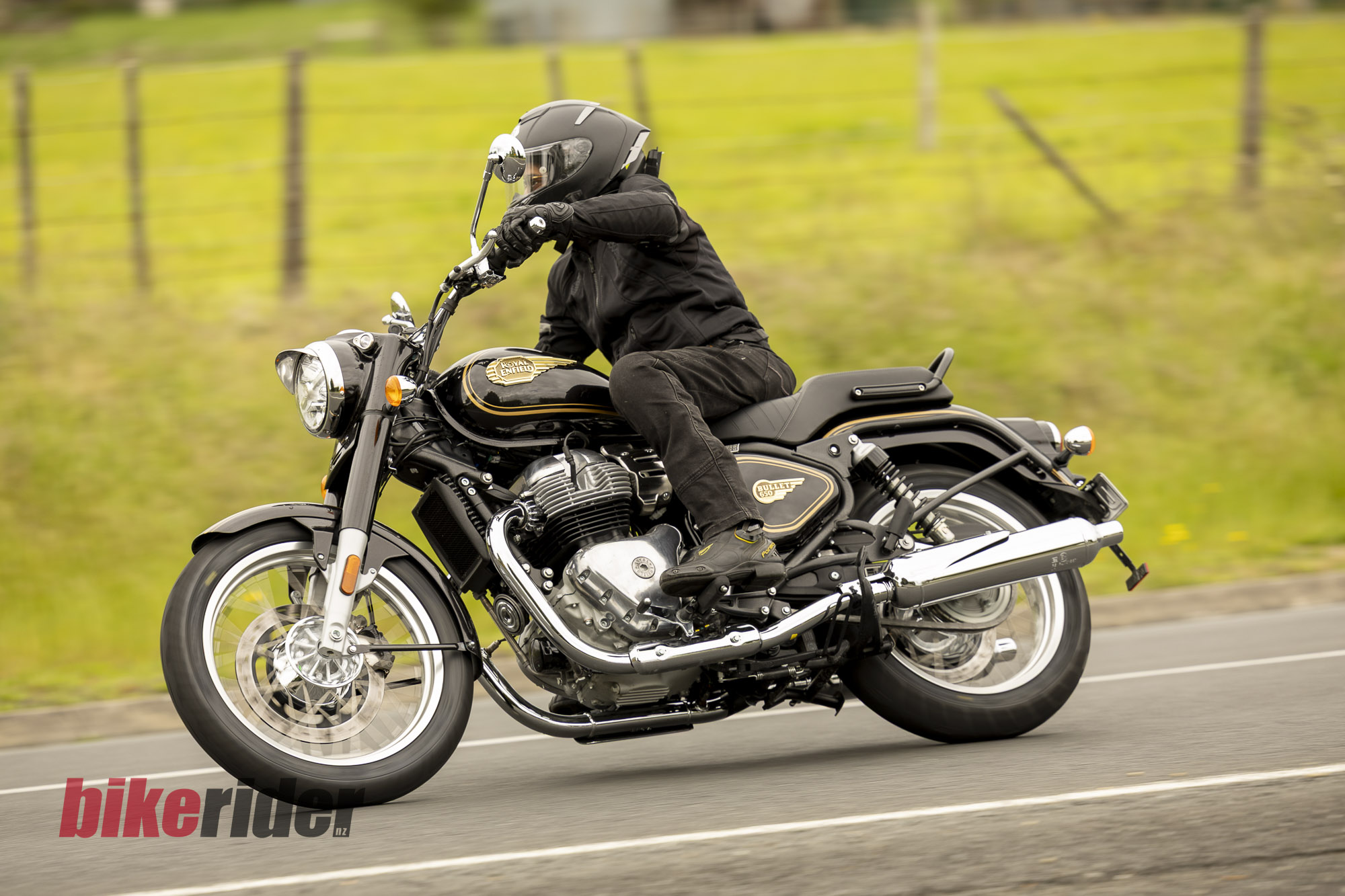
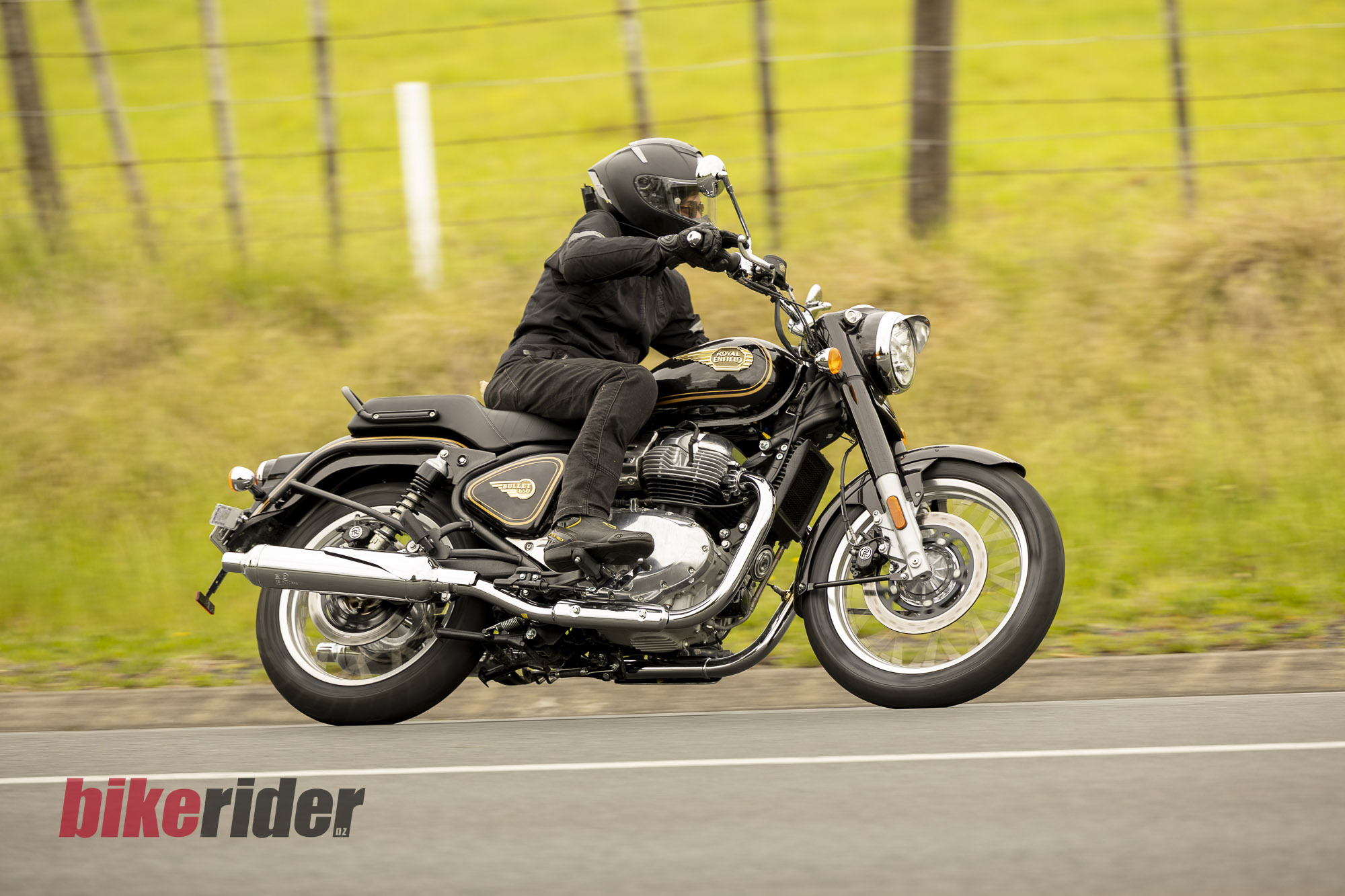
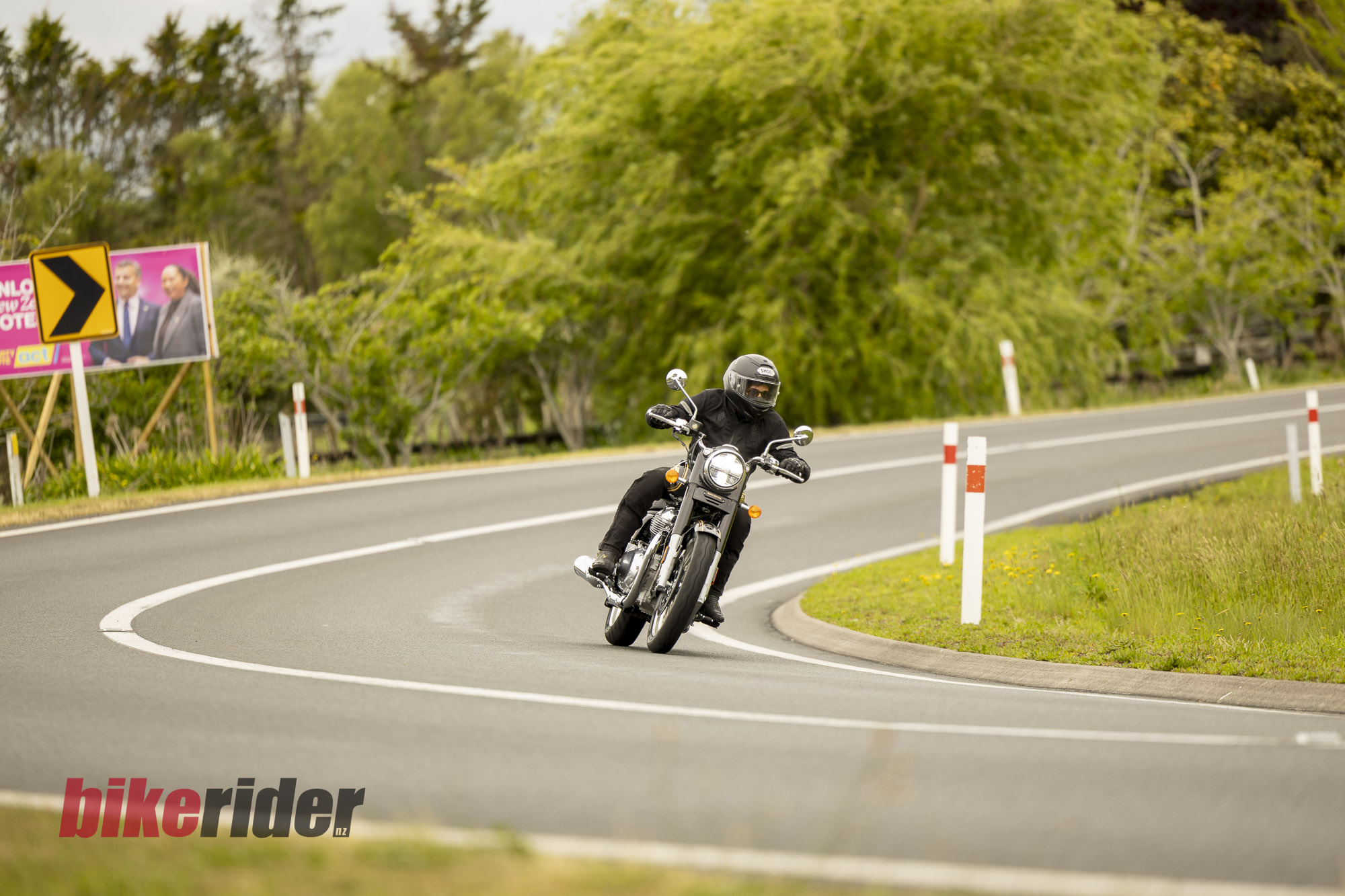
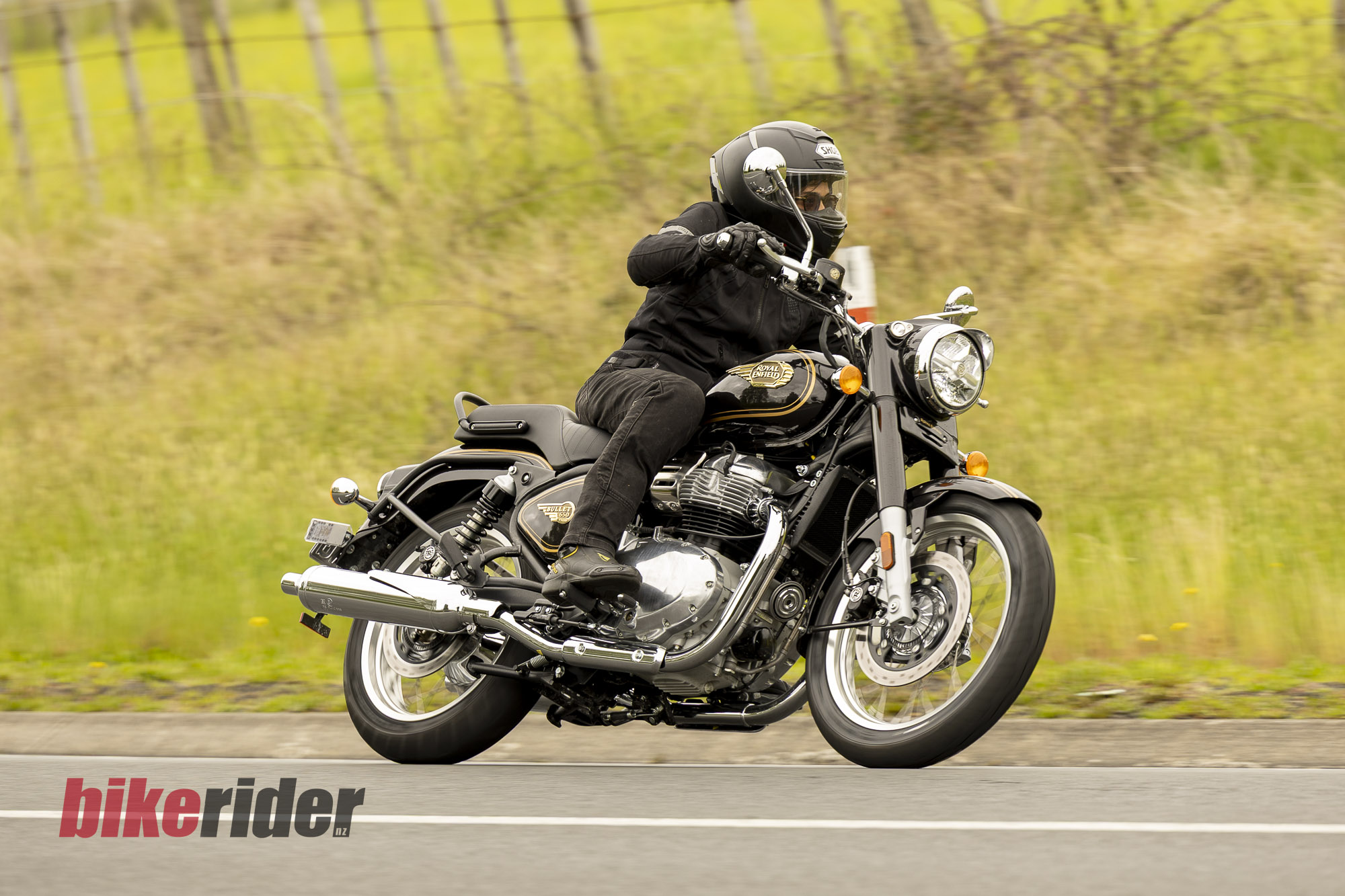
I wasn’t expecting the Bullet to be particularly enthusiastic when the road started getting twisty. After all, it’s a relatively heavy, traditionally styled motorcycle with twin rear shocks, conventional-looking suspension and a fairly modest amount of horsepower. But I was pleasantly surprised.
The suspension is actually quite firm, particularly at the rear. Our test bike’s twin shocks were already on their minimum preload setting, so there was no opportunity to reduce the preload any further. I could add preload if I stuck a pillion on the back or added luggage to the situation, but I couldn’t take any away.
It’s not an uncomfortable motorcycle, but the ride is certainly firmer than you might expect from something with such a relaxed personality. The upside is that means the Bullet handles rather well.
There’s none of the wallowing or flex you might associate with an old-fashioned motorcycle, and once you get into a series of corners, you can maintain a surprisingly entertaining pace. I guess I shouldn’t have been surprised as the original Interceptor 650 that I actually ended up owning was a real heap of fun when pointed at a twisty road.
I was initially a little concerned about ground clearance, particularly with those traditional exhausts, footpegs and centrestand all looking like they might scrape. But despite enjoying myself on some of our favourite Kiwi backroads, I didn’t manage to touch anything down. To be fair, I wasn’t particularly keen to find out what would happen if I did, because I suspect it would be something fairly substantial making contact with the tarmac.
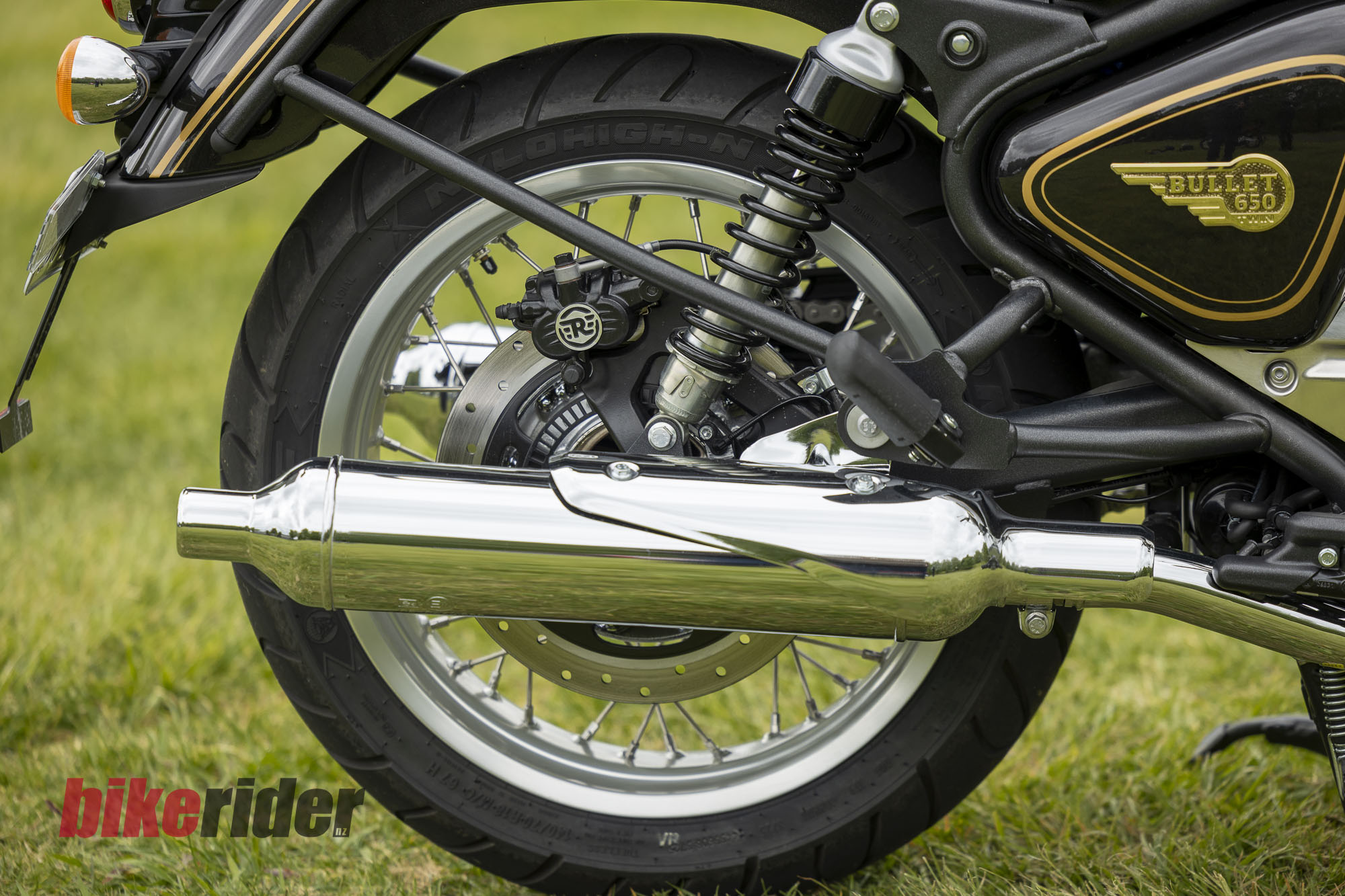
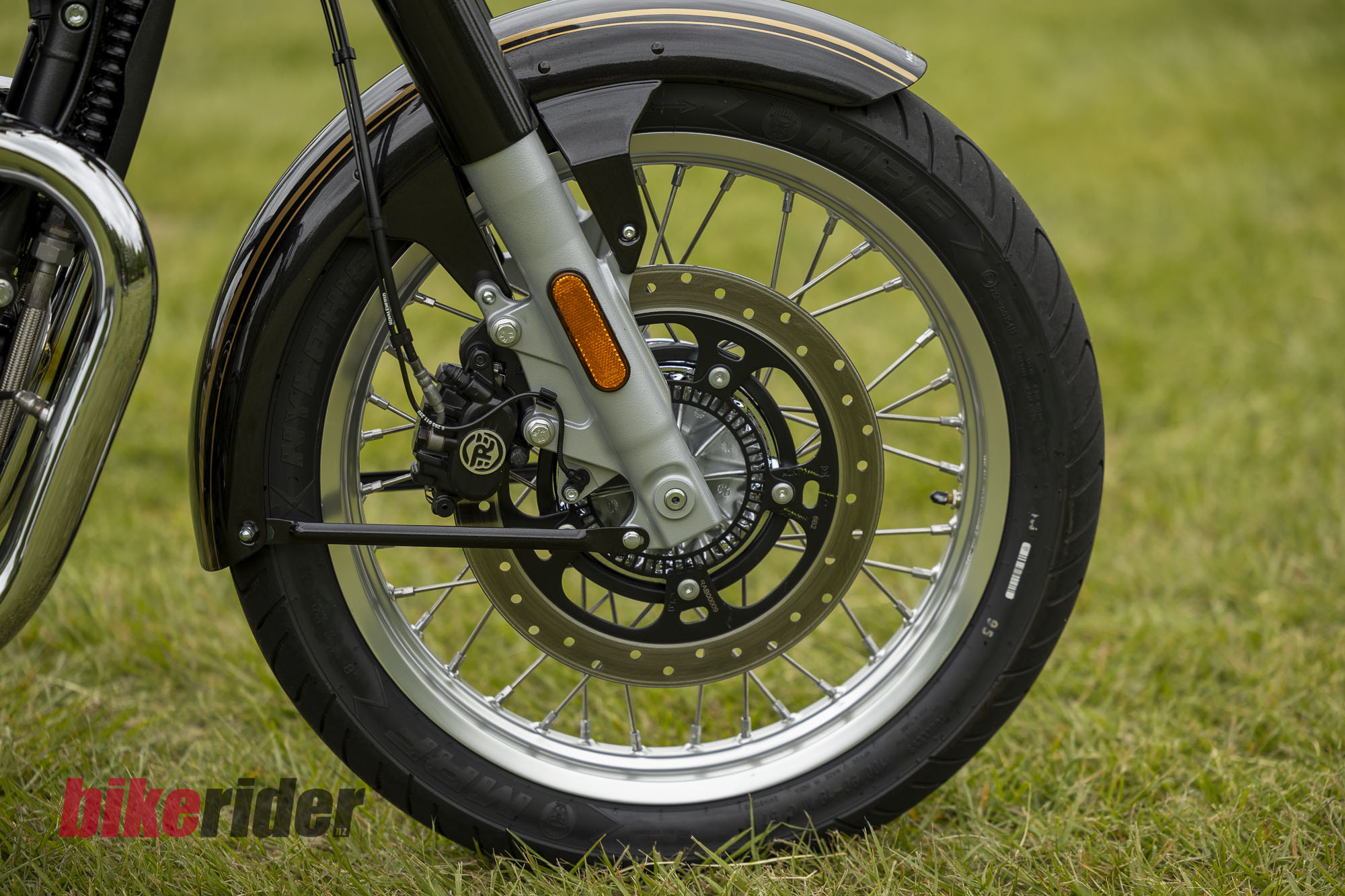
The MRF tyres fitted to our test bike also performed perfectly well in the dry conditions I experienced. Okay, I didn’t get an opportunity to try them in the wet, so I can’t comment on their performance in those conditions, but again, this isn’t the sort of bike that you’re supposed to be pushing the limits on anyway.
The brakes are adequate rather than outstanding. There’s a single front disc, and while it does a reasonable job, you’re asking it to slow down a fair chunk of motorcycle. I found that bringing the rear brake into play made a noticeable difference when you wanted to stop quickly. And fortunately, the rear brake has plenty of bite, so using both brakes together provides sufficient stopping performance.
It’s a motorcycle that rewards smooth, considered riding rather than aggressive braking and acceleration. And really, that’s exactly how a Bullet should be ridden.
Surprisingly good around town
One of my favourite experiences with the Bullet came while riding through town. There was a market taking place, the traffic was horrendous, and the roads were packed with cars crawling along at walking pace. Doesn’t sound like fun, right?
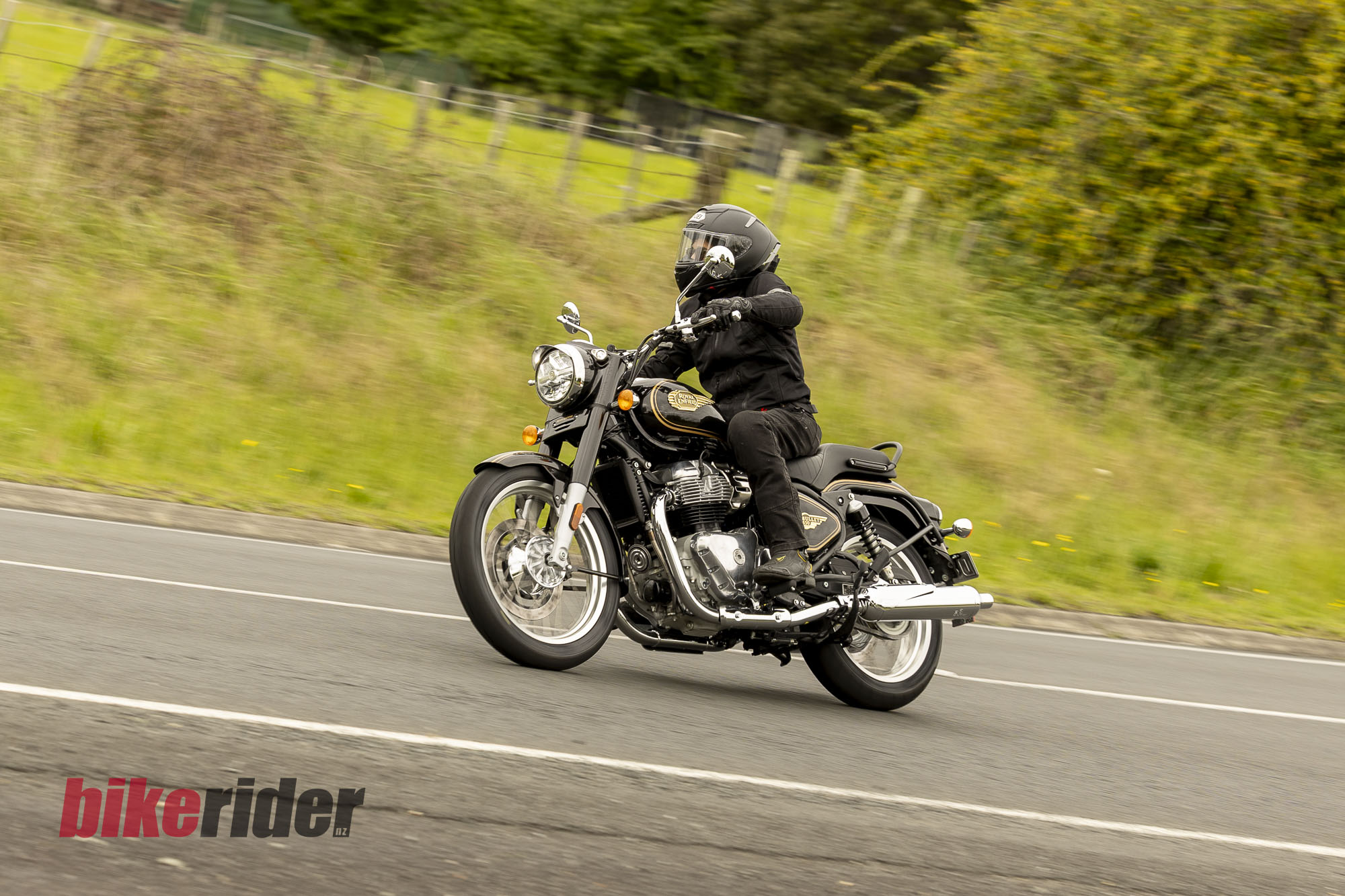
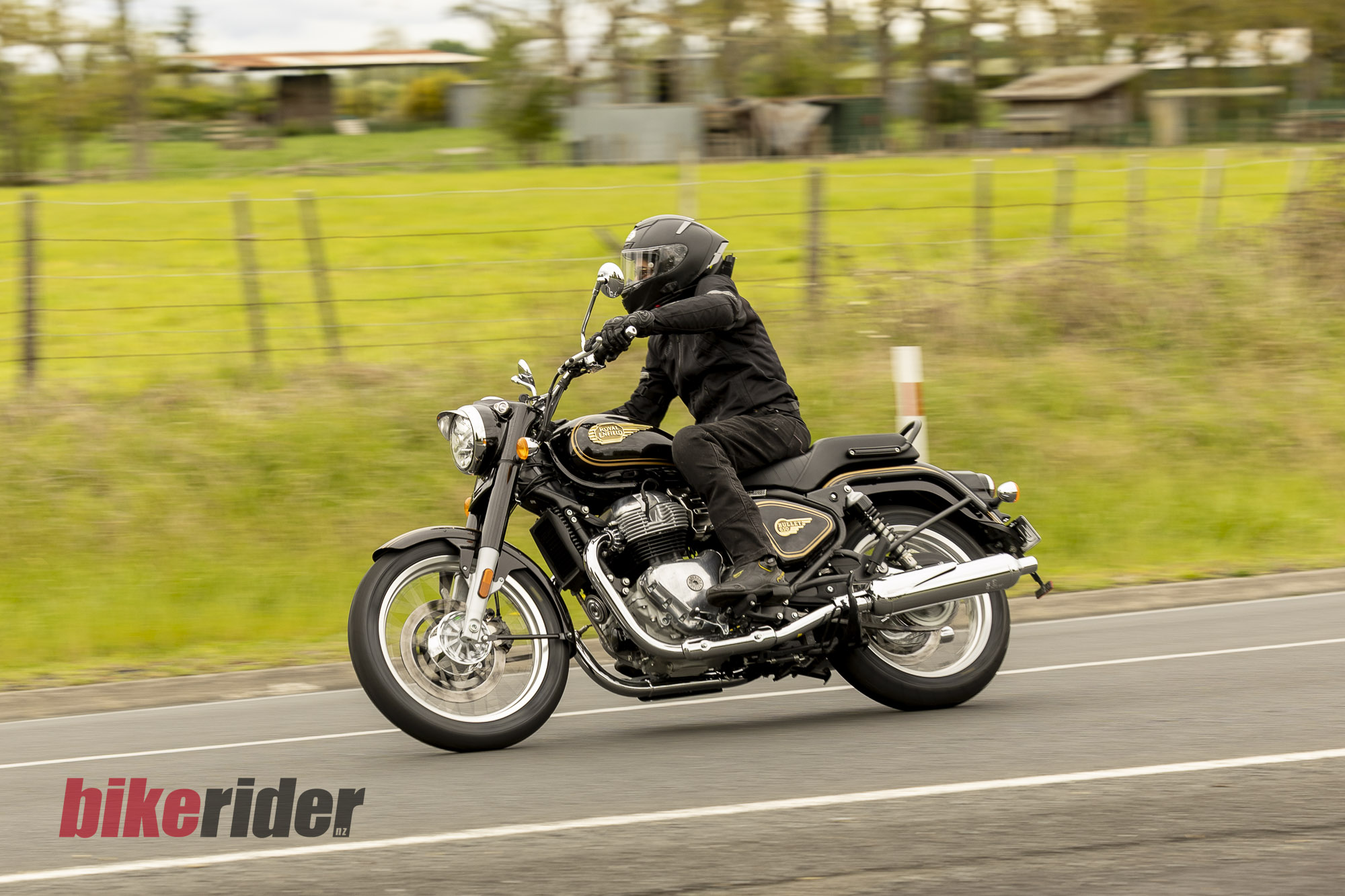
Normally, that sort of situation can be frustrating on a motorcycle, particularly a relatively heavy one. But the Bullet took it all in its stride. The Enfield feels beautifully balanced at low speeds. The upright riding position gives you excellent control, the handlebars provide plenty of leverage, and there’s enough steering lock to manoeuvre through tight spaces without feeling awkward. That meant I could lane-split like a pro.
“The Enfield feels beautifully balanced at low speeds.”
The clutch and throttle work together beautifully, and the smooth fuelling means you can trickle along at below walking pace without the engine becoming snatchy or difficult to manage. I found myself using a little rear brake to control the speed while balancing the bike on the clutch and throttle, and it all felt completely natural. I got into one of those zones where I’d almost refuse to put my foot down and rather see how long I could balance. I was loving it!
It was one of those occasions where the motorcycle seemed to make a potentially frustrating journey rather enjoyable. And it got me thinking that the Bullet would actually make an excellent commuter. It’s easy to control, comfortable, economical in its approach to performance, and you could turn up at work looking rather stylish. Not a bad way to start the day.
Not quite a motorway cruiser
There is one area where the Bullet’s traditional design becomes something of a disadvantage, and that’s sustained higher-speed riding.
With no wind protection and a very upright riding position, you’re sitting directly in the airflow. At 100km/h, it’s manageable. But once you start upping the pace, the windblast becomes increasingly noticeable. There’s no real opportunity to tuck down behind anything, and you find yourself hanging on to the handlebars rather more firmly than you’d like.
The engine has enough performance to maintain open-road speeds and beyond comfortably, but the rider is likely to want a break long before the motorcycle does. For that reason, I wouldn’t choose the Bullet for regular long-distance motorway journeys.
Could you tour on one? Absolutely. But I’d be inclined to take the scenic route, avoid the motorways where possible and enjoy the journey rather than concentrate on getting to the destination as quickly as possible.
Which, when you think about it, is probably the whole point of owning a Bullet.
The verdict
After a week with the Royal Enfield Bullet 650, I came away rather impressed. Not because it does anything particularly remarkable, but because it does so many ordinary things really well.
It’s comfortable, easy to ride, beautifully finished and surprisingly entertaining when you find yourself on a decent stretch of road. Yes, it’s heavy. Yes, the suspension is firmer than I expected. And yes, the engine has lost some of the traditional Bullet character by becoming a smooth, refined parallel twin.
But none of those things really detracts from the overall experience.
“What Royal Enfield has created is a motorcycle that looks fantastic, costs a relatively modest amount of money and makes even an ordinary ride feel like something worth doing.”
And I kept coming back to the idea of having one sitting in the shed.
Imagine a sunny Sunday morning. You’ve got a couple of hours spare, nowhere in particular to go, and there’s a beautiful black-and-gold Bullet waiting in the garage. You pull on your favourite leather jacket, fire up the twin and head out for a ride.
Maybe you stop for coffee. Maybe you find a few entertaining corners. Maybe you simply enjoy cruising along at a relaxed pace, taking in the scenery. And when you get home, you park the Bullet, stand back and admire it for a moment before heading inside.
That’s the sort of motorcycle this is. And for around eleven grand, I reckon that’s a pretty compelling proposition.
For more info: Royal Enfield New Zealand.

Bullet 650 vs Classic 650
Two interpretations of Royal Enfield’s traditional motorcycle

With the Bullet 650 and Classic 650 sharing the same basic engine and chassis architecture, choosing between them is largely a matter of styling preference.
Both use Royal Enfield’s 648cc parallel twin, producing 34.6kW and 52.3Nm, with a claimed kerb weight of 243kg.
The Bullet starts at $11,190 in New Zealand, while the Classic 650 starts at $11,490.
Our Cannon Black Bullet carries a small premium, bringing its listed price to $11,390, excluding on-road costs.
The Bullet stays closer to the traditional Bullet identity, with its distinctive badging, gold detailing and one-piece stepped seat.
The Classic takes a slightly different approach, with more ornate styling and a separate pillion seat that can be removed for a solo appearance.
Mechanically, there’s little to separate them, so the decision really comes down to which one you prefer looking at.
Personally, there’s something about the Bullet’s black-and-gold finish that I find particularly appealing.
Old Looks / Cool Ride
The Bullet 650 won me over with its beautiful black-and-gold finish, smooth twin and the way it makes an ordinary ride feel special. It is easy to live with, surprisingly enjoyable through the bends and excellent value. The firm rear suspension and motorway windblast are compromises I could happily accept for a motorcycle I kept imagining in my own shed.
Royal Enfield Bullet 650 photo gallery