

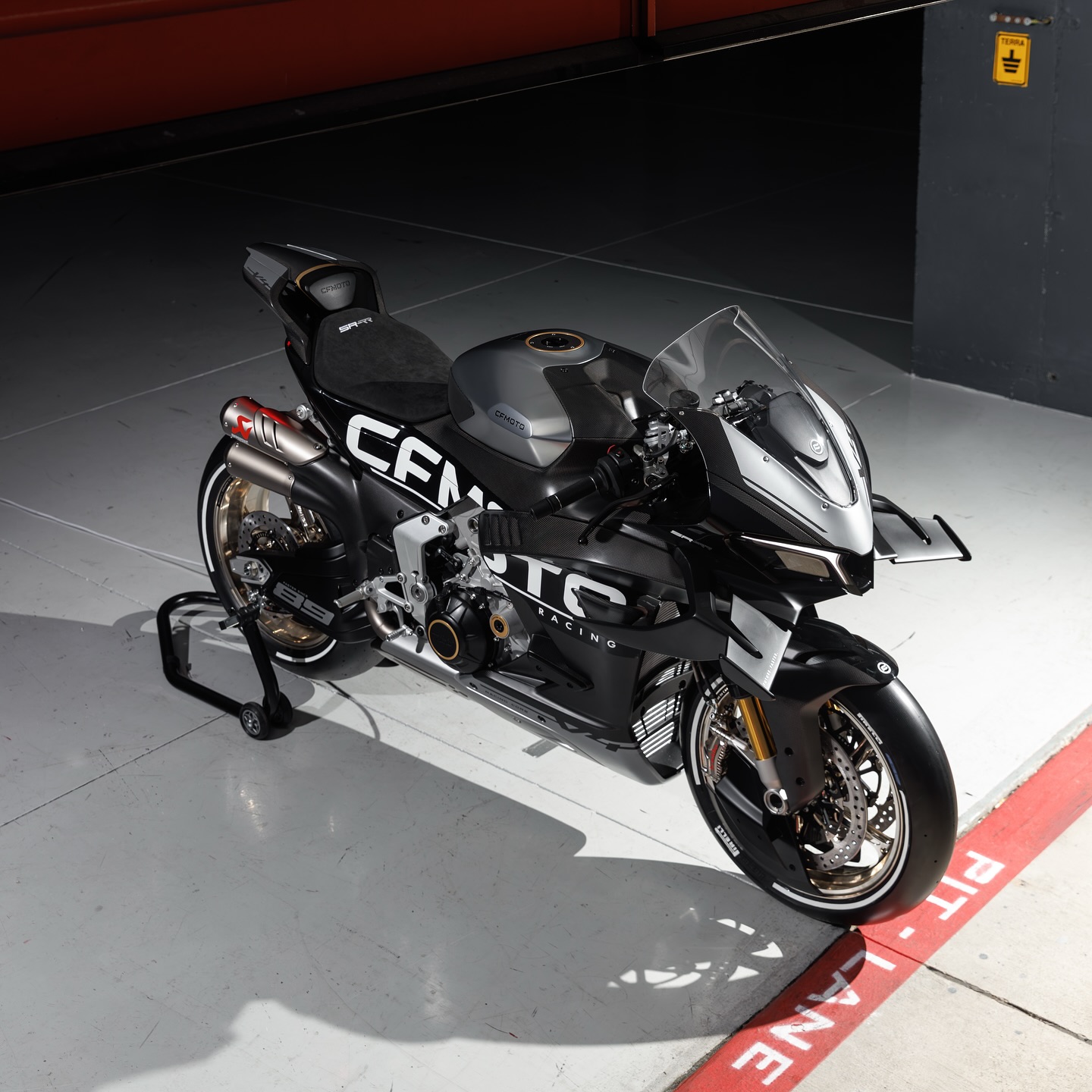
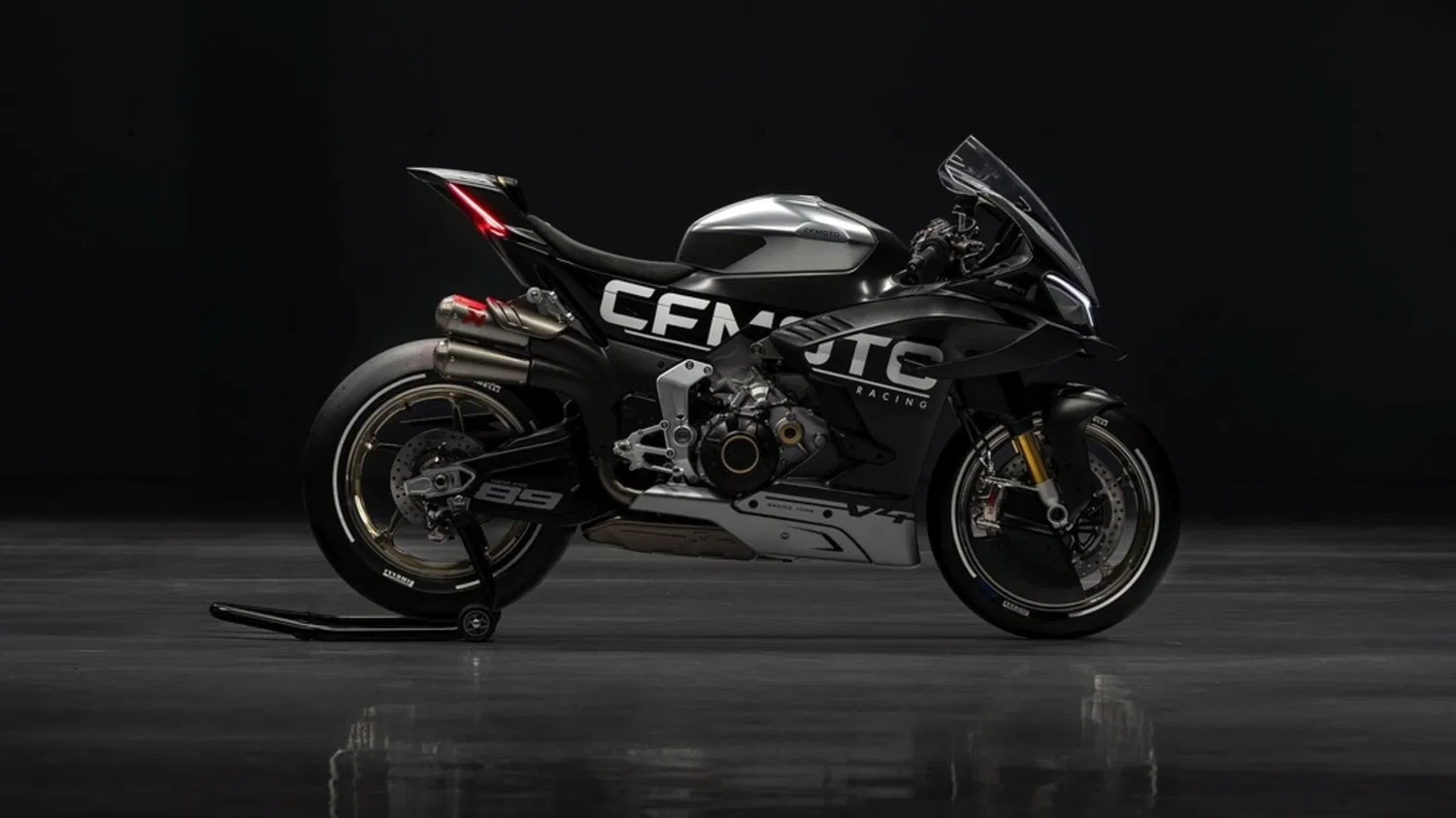
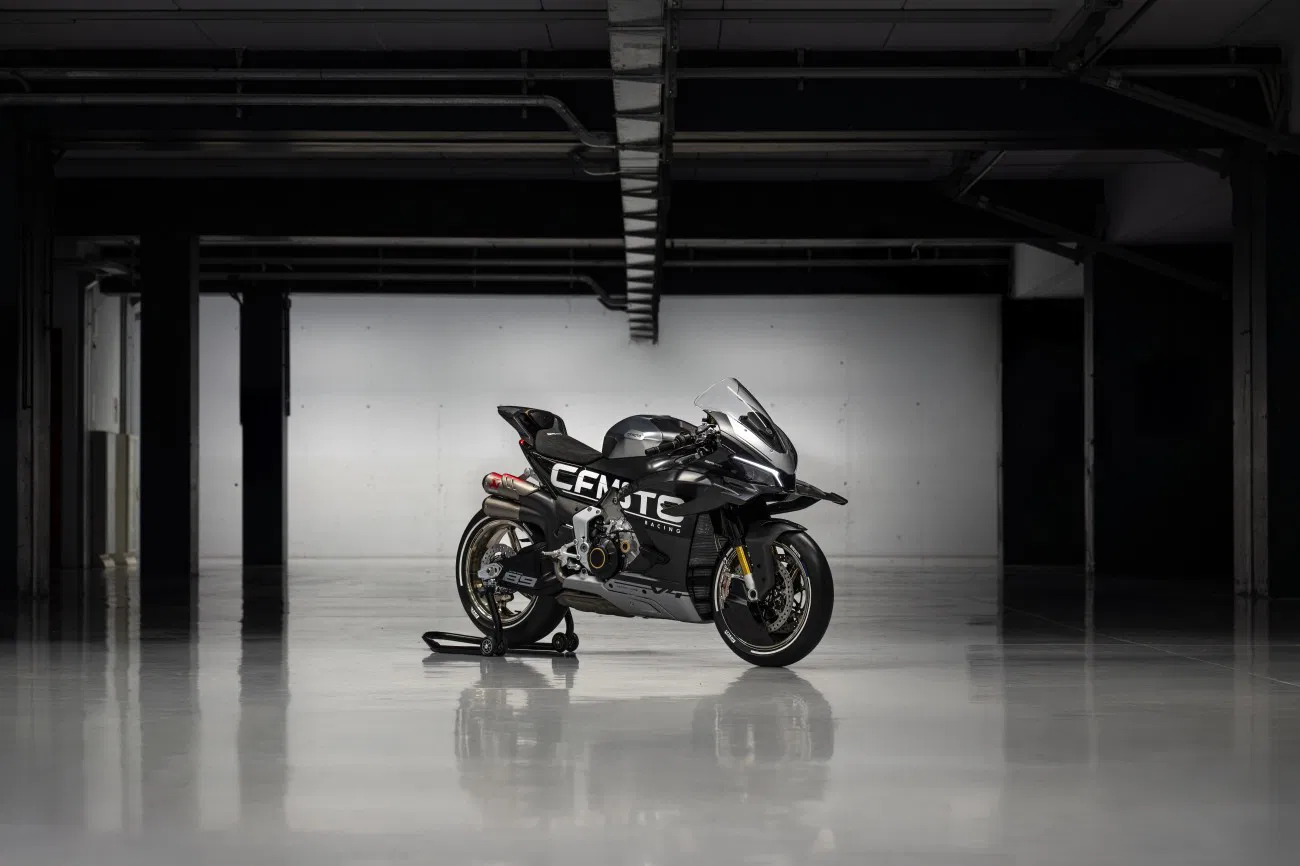
CFMoto unveiled the SR-RR V4 prototype at EICMA last year; the headline figures were already enough to grab attention. A claimed 207bhp from a 997cc V4 engine, premium suspension and braking hardware, and styling that looked ready for production all suggested CFMoto was serious about entering the superbike arena. However, it was the motorcycle’s active aerodynamic system that generated the most discussion.
Unlike the fixed winglets now commonly seen on modern superbikes, the SR-RR V4 prototype featured large aerodynamic wings capable of moving independently. At the time, many assumed the setup was little more than a concept-bike talking point designed to attract attention on the show stand. Recent patent filings and prototype sightings in China suggest otherwise.
According to the patent documents, CFMoto’s active aerodynamic system is intended to play a genuine role in the motorcycle’s performance. The wings are mounted on pivoting bearings and connected to electric servos through a linkage system that can alter their angle in real time. This allows the motorcycle’s electronics to adjust the aerodynamic profile depending on speed, riding conditions and vehicle dynamics.
The principle behind the system is relatively straightforward. Traditional winglets generate downforce that helps keep the front wheel planted at high speed and reduces wheelies under hard acceleration. The downside is that increased downforce also creates additional drag, limiting top speed and reducing efficiency. Fixed winglets therefore, represent a compromise between stability and outright performance.
CFMoto’s solution aims to eliminate that compromise. Under acceleration and at lower speeds, the wings can remain at a flatter angle to minimise drag. At higher speeds, the system can increase wing angle to generate more downforce, improving stability and front-end control. Patent documents suggest the wings could operate within a range of angles depending on riding conditions, allowing the motorcycle to constantly balance aerodynamic efficiency against stability requirements.
The technology appears capable of much more than simple speed-based adjustments. The patents indicate the system can work alongside the motorcycle’s sensors and electronic control systems, including the Inertial Measurement Unit (IMU). This would allow the wings to react to lean angle, acceleration forces and potential instability. Because the prototype’s wings can move independently, it is possible that each side could adopt different positions while cornering, opening the door to more sophisticated aerodynamic control than anything currently seen on a production motorcycle.
Mechanically, the setup has been designed with practicality in mind. The electric servo motors can be positioned within the fairing where space allows, while additional support brackets prevent the wings from flexing under aerodynamic loads. It is a solution that appears engineered for real-world use rather than exhibition purposes.
Whether the production version ultimately retains the full capability of the prototype remains to be seen. Nevertheless, the fact that road-testing prototypes continue to feature the distinctive movable wing design suggests CFMoto is committed to bringing at least some form of active aerodynamics to production.