

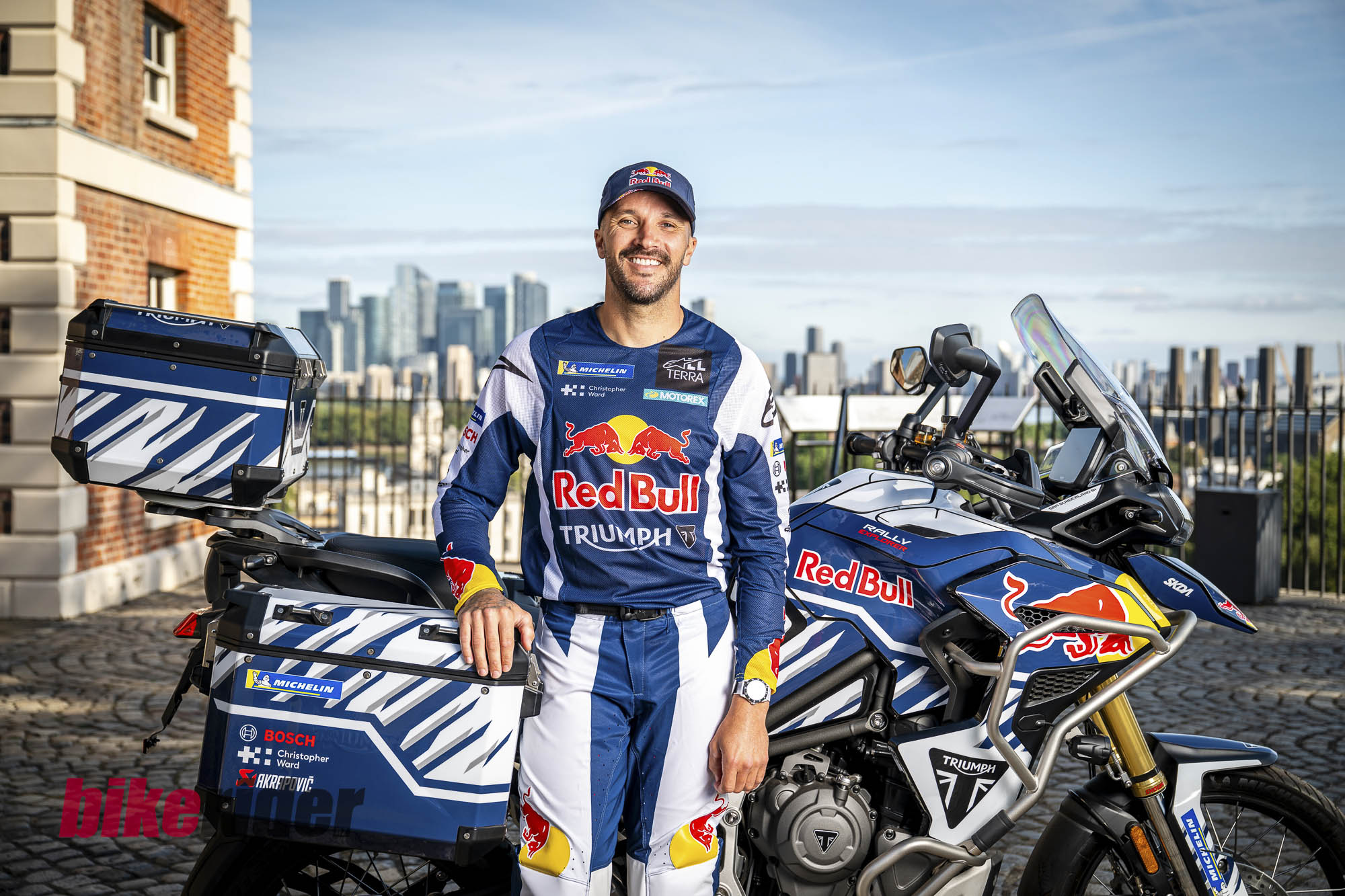
- Two-time Dakar winner Sam Sunderland will ride the length of New Zealand during an 18,000-mile attempt to circumnavigate the globe in less than 20 days.
- The Cook Strait crossing adds an intriguing Kiwi complication.
- Sunderland is tackling the challenge after recovering from a broken back, having fractured three vertebrae in a training crash that postponed the attempt by a year.
Two-time Dakar Rally winner Sam Sunderland has set off on an extraordinary attempt to ride around the world in less than 20 days aboard a Triumph Tiger 1200 – and New Zealand forms a crucial part of the route. Even more remarkably, the Brit is taking on the challenge after recovering from a broken back that postponed the attempt by a year.
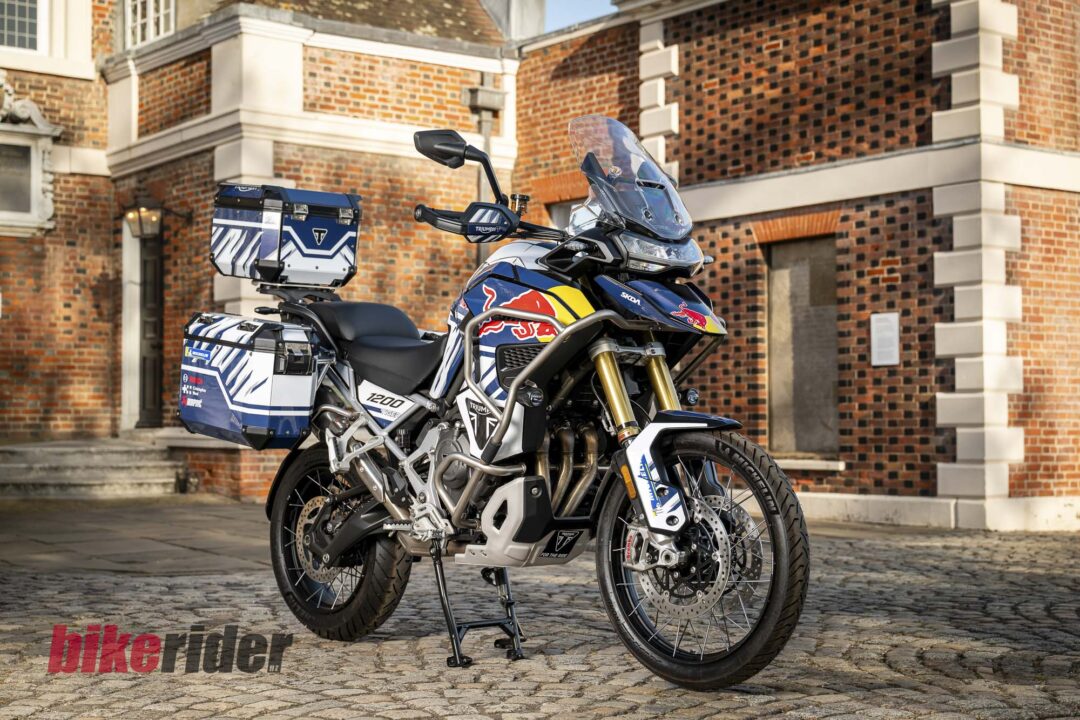
Two-time Dakar Rally Champion Sam Sunderland has begun an attempt to set a new benchmark for the fastest circumnavigation of the globe by motorcycle – and Kiwi riders should get the chance to see him in action.
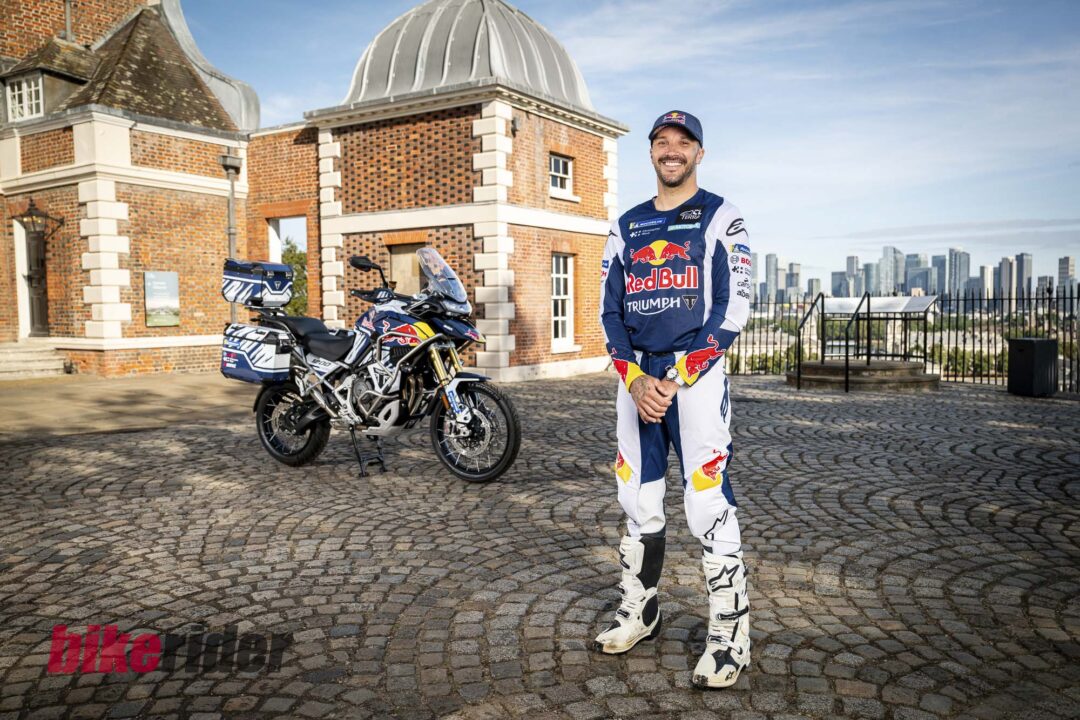
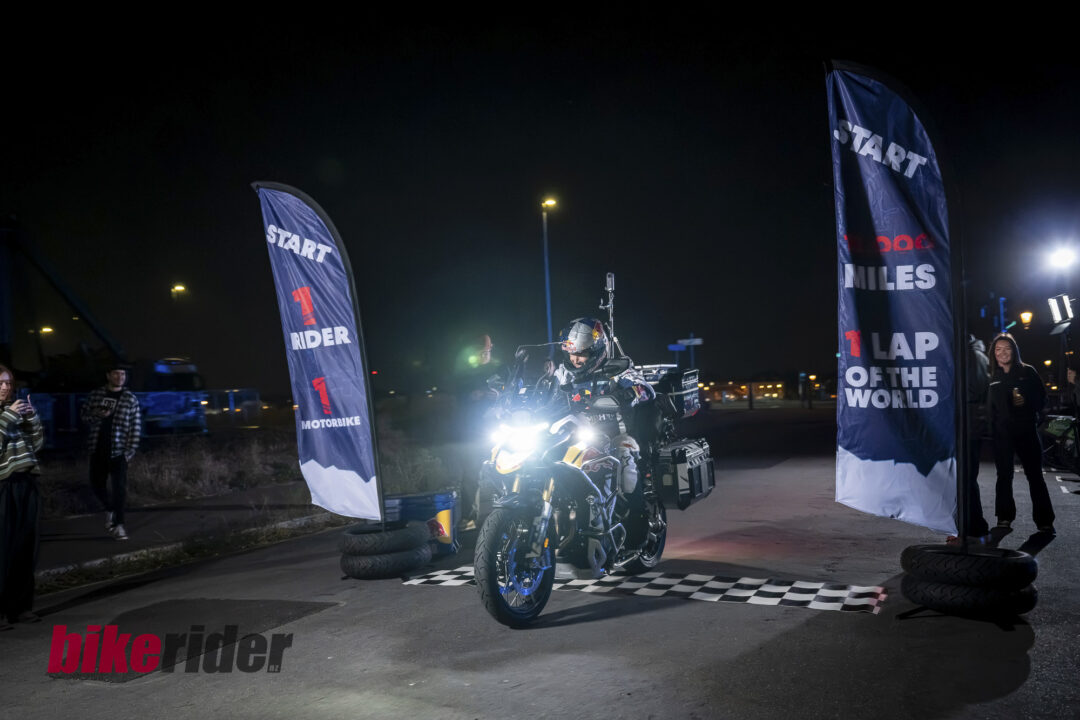
The 37-year-old British rider left London on September 5 aboard a Triumph Tiger 1200 Rally Explorer, beginning a journey of more than 18,000 miles (29,000km) across five continents.
His target is the 19 days, eight hours and 25 minutes achieved by British husband-and-wife team Kevin and Julia Sanders in 2002.
To beat that benchmark, Sunderland expects to average close to 1000 miles – around 1600km – per day, spending as much as 17 hours a day in the saddle.
And part of that epic mileage will take place right here in New Zealand.
MORE ARTICLES
NEW ZEALAND ON THE ROUTE
Sunderland’s six-leg route begins with London to Istanbul before moving to Southeast Asia for a Bangkok-to-Kuala Lumpur leg.
From there he’ll tackle Australia from Perth to Sydney before heading across the Tasman to ride the length of New Zealand.
After New Zealand, Sunderland heads to North America for the longest individual section of the challenge, riding from Vancouver to Montreal. The final leg runs from Casablanca back to London.
Exactly where Sunderland will start and finish his New Zealand run – and the route he’ll take – hasn’t been detailed in Triumph’s initial announcement.
There’s also the not-insignificant matter of a large stretch of water separating our two main islands.
Assuming “the length of New Zealand” means Sunderland will ride through both the North and South Islands, at some point he and the Tiger will need to cross Cook Strait.
Under the rules of the record attempt, the official clock is paused during ocean crossings, meaning the time spent getting across Cook Strait shouldn’t count against Sunderland’s riding time.
But that doesn’t necessarily make the logistics straightforward.
Anyone who has travelled between the North and South Islands with a motorcycle will know that ferry timetables – and the Cook Strait weather that can disrupt them – aren’t necessarily compatible with a world-record schedule.
Whether Sunderland will therefore be at the mercy of the regular ferries or has some form of special transport arranged to get himself and the Tiger across Cook Strait remains to be seen.
Whatever the solution, the rules require Sunderland and his motorcycle to complete the riding route together, travel continuously in one direction, touch two antipodal points and complete the challenge on the same motorcycle.
That could make the New Zealand section one of the more intriguing legs of the entire attempt.
BACK FROM A BROKEN BACK
Making Sunderland’s undertaking even more remarkable is the fact that he was originally supposed to attempt it a year ago.
Those plans were abandoned after a serious training crash ahead of the Le Touquet beach race left Sunderland with a broken back. He fractured three upper thoracic vertebrae – T1, T2 and T3 – forcing the round-the-world attempt to be postponed until 2026.
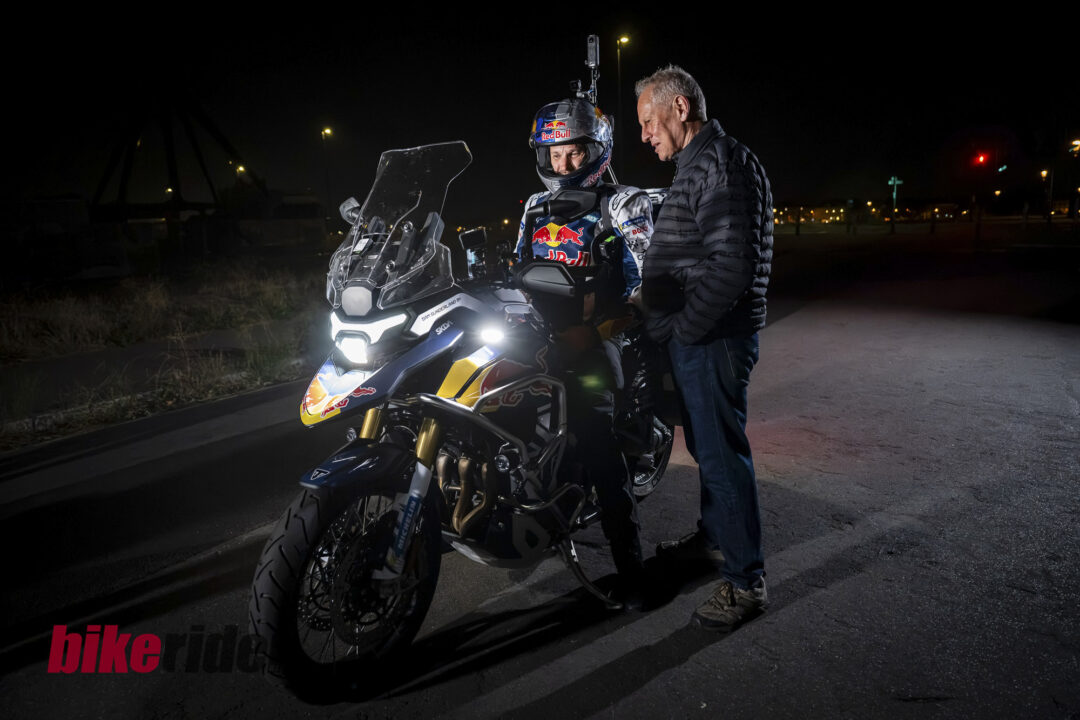
Fortunately, Sunderland didn’t require surgery. He underwent rehabilitation at Red Bull’s Athlete Performance Centre in Austria and has since returned to riding.
And he hasn’t exactly eased himself back into it.
Just weeks before setting off around the world, Sunderland completed five days of racing at the notoriously demanding Red Bull Romaniacs. More importantly, he reported that his back had coped well with the punishment.
The injury adds another dimension to an already extraordinary physical challenge. Sunderland isn’t simply facing consecutive 15-to-17-hour days aboard the Tiger; he’s doing it after recovering from an injury serious enough to derail the entire project for a year.
17 HOURS A DAY
While the logistics are formidable, Sunderland believes the sheer amount of time spent riding will present the biggest challenge.
“One of the toughest parts of this challenge for me is definitely the miles that we have to cover,” Sunderland said.
“I’m going to be riding for 17 hours a day, back to back, over many days. I feel like that accumulation’s going to build up and it’s definitely going to be tough.”
Along the way he’ll have to contend with dramatically changing climates, unfamiliar roads, extreme temperatures, border crossings, multiple time zones and as many as six long-haul transfers.
Sleep deprivation, jet lag and mental fatigue are expected to become increasingly significant as the attempt progresses.
Sunderland knows a thing or two about endurance. He won the Dakar Rally in 2017 and again in 2022, when he also claimed the inaugural FIM World Rally-Raid Championship. He retired from professional rally competition in 2024 but clearly hasn’t lost his appetite for a challenge.

TIGER TAKES ON THE WORLD
Sunderland is tackling the journey aboard Triumph’s flagship Tiger 1200 Rally Explorer.
It’s a very different challenge from the terrain on which he built his reputation. Rather than racing flat-out across Dakar special stages, the key to this attempt will be maintaining concentration, managing fatigue and keeping both rider and motorcycle functioning while covering enormous distances day after day.
The Tiger itself also has to go the distance. The rules stipulate that Sunderland must complete the journey aboard the same motorcycle, making reliability every bit as important as rider endurance.
Triumph Chief Marketing Officer Nick Bell said covering more than 18,000 miles across five continents in less than 19 days would place “huge demands on both rider and motorcycle”.
Interestingly, while Triumph describes Sunderland’s target as the existing record, Guinness World Records no longer officially recognises fastest motorcycle circumnavigation attempts due to concerns about records encouraging high average speeds on public roads. Sunderland is nevertheless using Kevin and Julia Sanders’ 2002 time as the benchmark he intends to beat.
For New Zealand motorcycle fans, though, there’s another question:
When exactly will Sam Sunderland and his Tiger 1200 arrive here – and where can we see him?
Triumph hasn’t yet released detailed timings or the route for the New Zealand leg, but with Sunderland now underway, it shouldn’t be too long before we find out.