

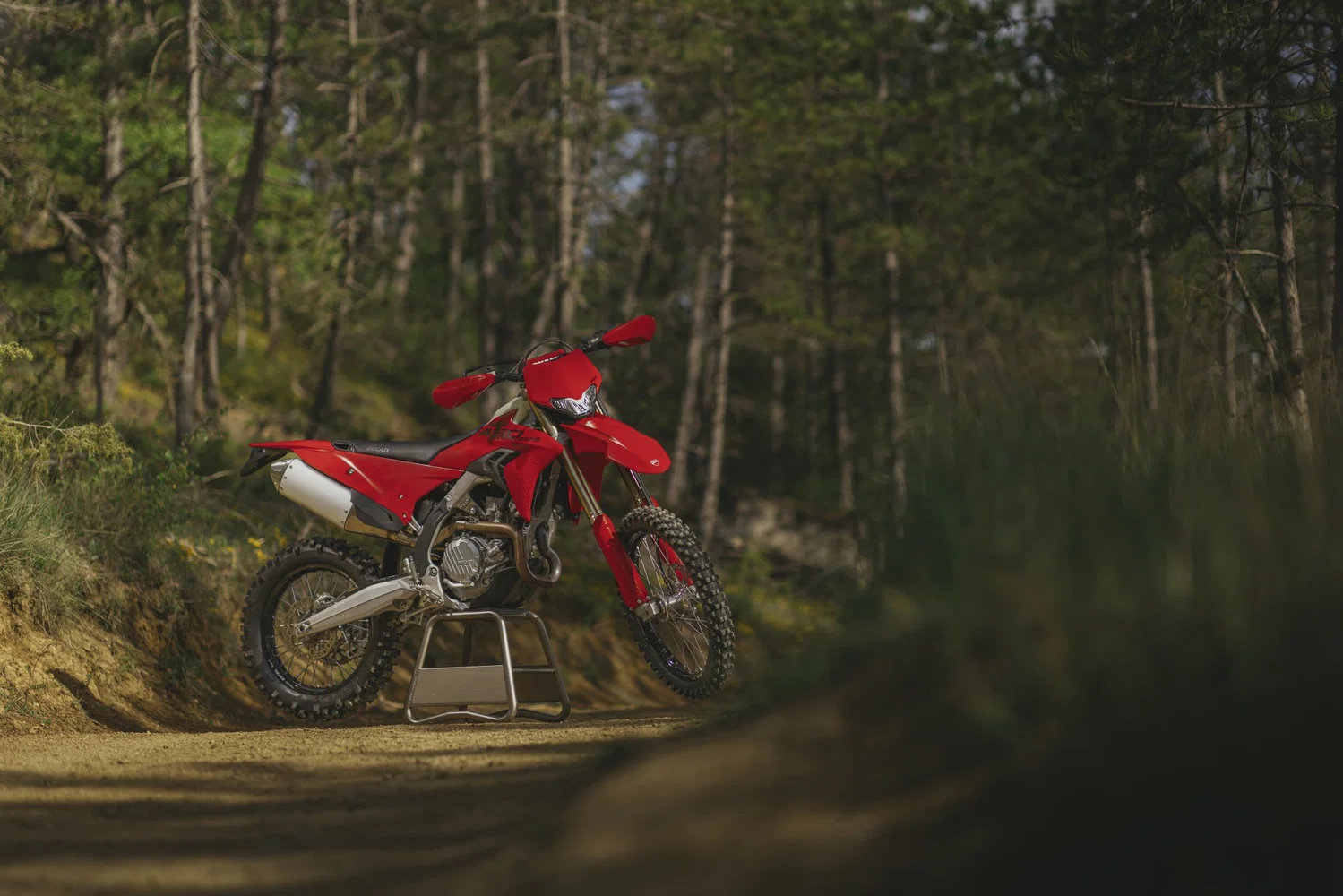

- Ducati has officially unveiled the new Desmo450 EDS, its first road-legal* enduro motorcycle, built from the same race-developed platform as the Desmo450 MX motocross bike. (*Probably not in NZ)
- The 449.6cc desmodromic single-cylinder engine has been retuned for enduro riding, with smoother power delivery, more low-down torque, a six-speed gearbox and an enlarged 8.5-litre fuel tank for longer trail rides.
- Ducati has equipped the EDS with enduro-specific Showa suspension, full LED lighting, rider aids including a seriously trick traction control system, launch control, plus smartphone connectivity through the Ducati X-Link app.
Ducati has expanded its off-road ambitions with the launch of the new Desmo450 EDS, a purpose-built enduro motorcycle developed from the Desmo450 MX motocross platform. Designed to tackle technical trails, rocky terrain and long-distance off-road events, the new model marks the Italian manufacturer’s first serious step into the highly competitive enduro segment.
While the EDS shares its core architecture with the motocross-focused MX model, Ducati has introduced a wide range of modifications aimed at improving performance and durability in real-world enduro conditions. Key changes include a larger 8.5-litre fuel tank, revised suspension settings, a six-speed gearbox, additional protective equipment and a retuned version of the brand’s distinctive 449.6cc single-cylinder engine.
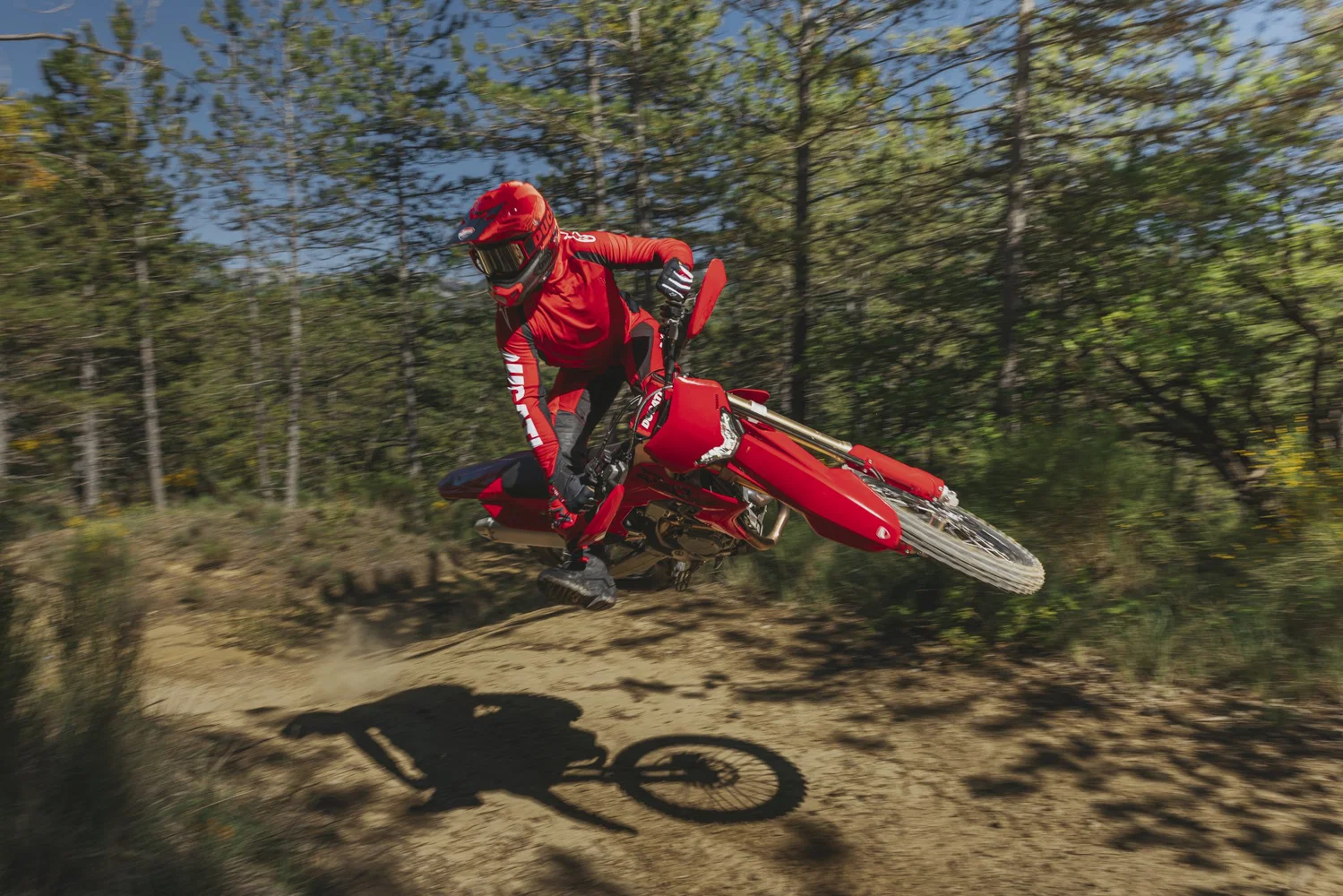
The engine remains one of the motorcycle’s biggest talking points. Ducati continues to stand alone in the class by employing its signature Desmodromic valve actuation system, a technology traditionally associated with the company’s high-performance road and racing motorcycles. According to Ducati, the design allows the engine to deliver strong low- and mid-range torque while still maintaining the ability to rev higher than many conventional single-cylinder rivals.
To better suit enduro riding, the powerplant receives a series of dedicated changes. These include revised camshafts, a smaller 42mm throttle body, a lower-compression piston and a heavier flywheel. The objective is to create smoother power delivery, improve traction on challenging surfaces and reduce rider fatigue during long hours in the saddle.
For riders seeking additional performance, Ducati is also offering an optional racing kit through its dealer network. The package increases output to a claimed 54bhp and introduces a range of advanced electronic features, including additional riding modes, launch control, engine brake control and Ducati’s proprietary traction control system. Pairing the kit with an Akrapovič exhaust system raises peak power further to a claimed 56bhp.
“One of the most interesting aspects of the electronics package is the traction control system itself.”
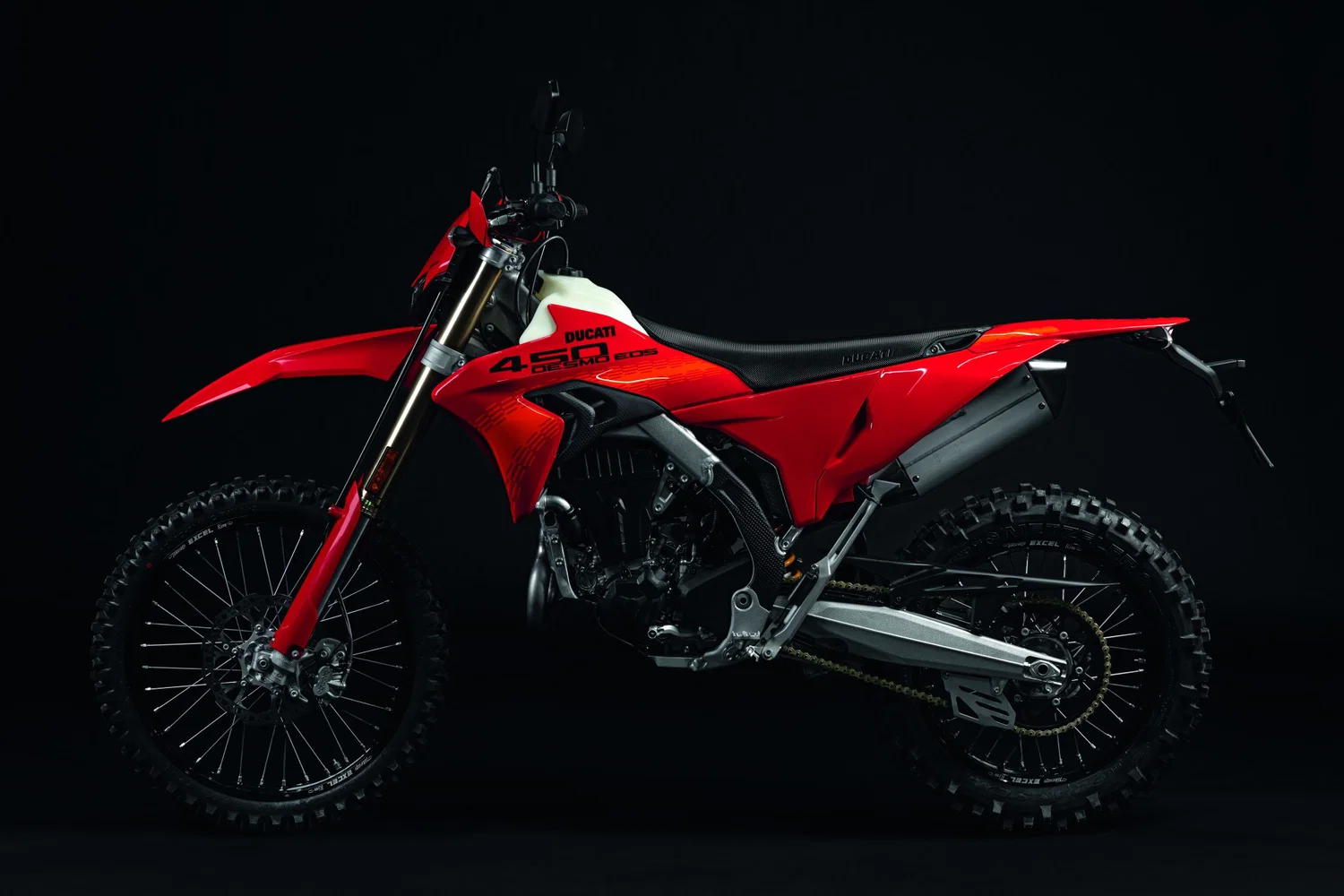
One of the most interesting aspects of the electronics package is the traction control system itself. Ducati claims the technology monitors actual rear-wheel slip rather than relying solely on pre-programmed intervention strategies. Riders can also temporarily deactivate the system while riding by lightly operating the clutch lever, allowing unrestricted engine performance in sections where maximum traction control intervention may be undesirable. The system then automatically reactivates after a short period.
The chassis remains closely related to the motocross model, using Ducati’s aluminium twin-spar frame. However, revised engine mounting points have been introduced to alter overall stiffness characteristics and improve behaviour in enduro conditions. Ducati says the frame weighs less than 9kg and is constructed from only 11 individual components, a notably simple design compared to many competing motorcycles.
Suspension duties are handled by Showa, which worked closely with Ducati’s off-road development team, including former Enduro World Champion Antoine Meo. The motorcycle features a fully adjustable 49mm fork offering 310mm of travel, with softer spring rates than the MX model to better absorb rocks, roots and lower-speed impacts commonly encountered on enduro trails. A fully adjustable rear shock connected via linkage completes the suspension package.
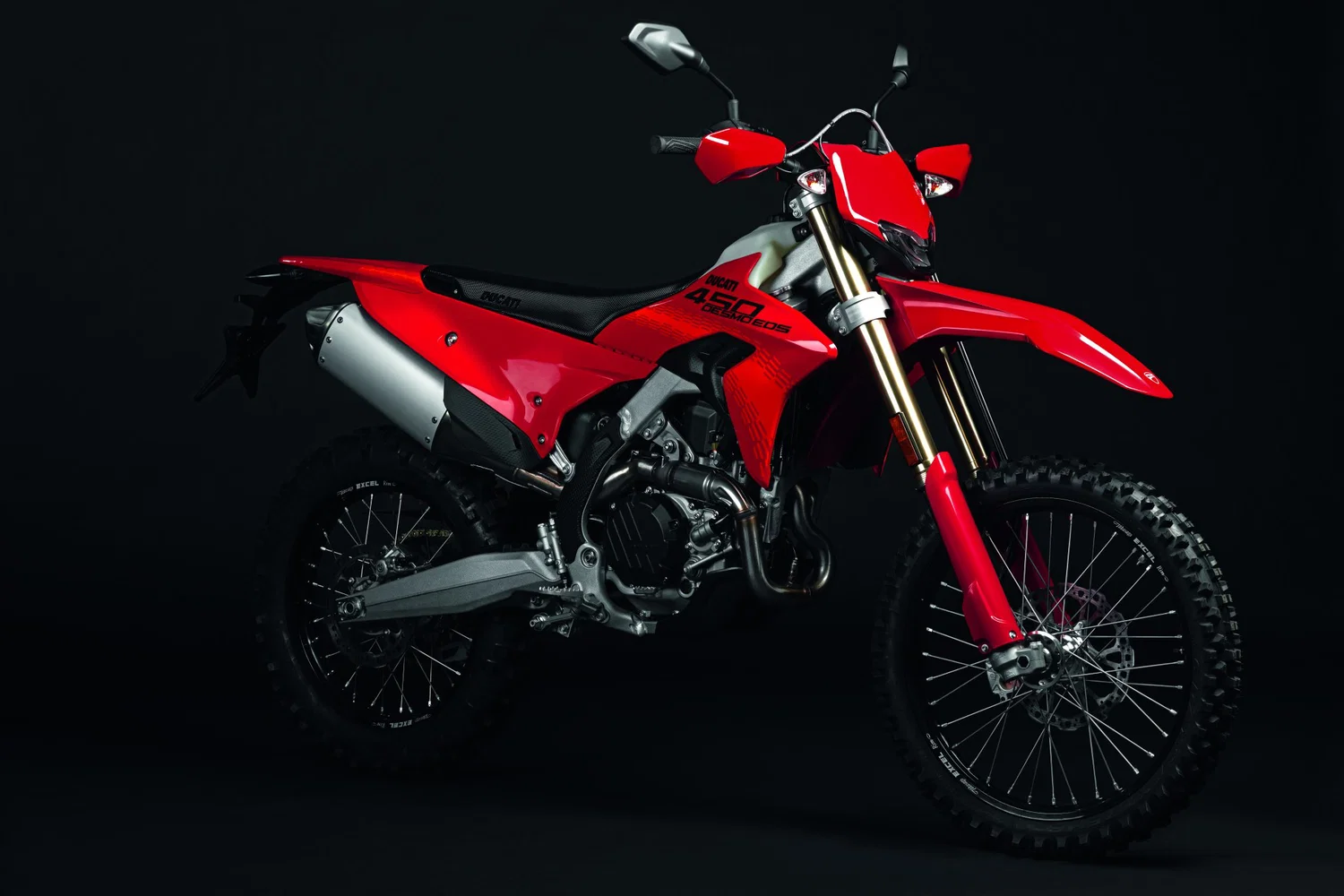
Braking performance comes from Brembo calipers paired with Galfer discs, while standard-fit Metzeler Six Days Extreme tyres are mounted on 21-inch front and 18-inch rear wheels, reflecting the motorcycle’s serious off-road intentions. Practicality has also been a major focus during development. The Desmo450 EDS comes equipped with aluminium engine guards, handguards and reinforced side panels as standard. A cooling fan has been added to improve temperature management during slow-speed technical riding, while the transparent fuel tank allows riders to monitor fuel levels at a glance during long rides and competitive events.
Another notable innovation is Ducati’s adaptive maintenance system. Using riding data collected by the motorcycle, the system evaluates engine usage and wear to tailor maintenance schedules accordingly. Ducati says piston replacement intervals can range between 90 and 120 hours, depending on riding conditions, while complete engine rebuilds may be required anywhere between 180 and 240 hours, offering a more flexible approach to maintenance than traditional fixed service schedules.
Desmo 450 EDS
Main standard features

- Desmo450 single-cylinder engine, 449.6 cc
- Twin-spar aluminium frame
- 5-litre fuel tank
- Fully adjustable 49 mm Showa upside-down forks, 310 mm travel, Kashima coating on the fork legs, specifically tuned for Enduro
- Fully adjustable Showa monoshock, 301 mm travel
- Cast aluminium swingarm
- Brembo braking system with single Galfer discs, 260 mm (front) and 240 mm (rear)
- Metzeler Six Days Extreme tyres, 80/100-21″ and 110/90-18″
- DID chain final drive
- Takasago Excel aluminium rims with Alpina spokes, 21″ x 1.60″ and 18″ x 2.15″
- 2 Power Modes, 2 Riding Modes (with racing kit)
- Riding Modes configurable via the accessory X-Link app (with racing kit)
- Next-generation electronics package with Ducati Traction Control (DTC); Launch Control; Quickshifter, Engine Brake Control (with racing kit)
- Piston replacement every 90 hours (extendable up to 120 hours according to X-Link indications)
- Valve clearance check every 180 hours (extendable up to 240 hours according to X-Link indications)