


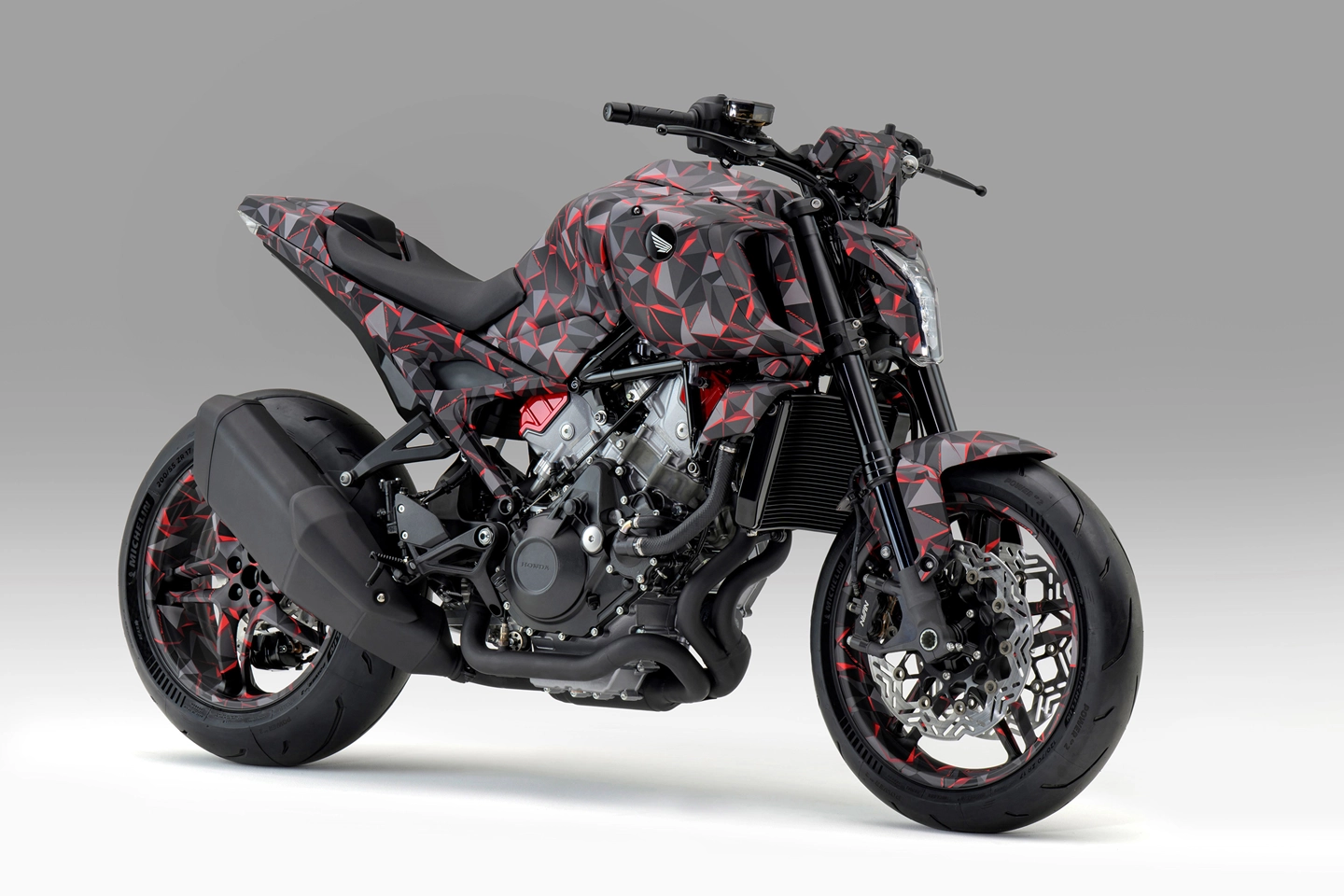
Few motorcycles in recent years have generated as much curiosity as Honda’s upcoming V3R 900 E-Compressor. Promising the performance of a 1200cc machine from a compact 900cc engine, the concept represents one of the most ambitious engineering projects Honda has undertaken in the modern era. Recent patent filings have now revealed more details about how the Japanese manufacturer plans to achieve that goal, offering a fascinating look at the technology hidden beneath the bodywork.
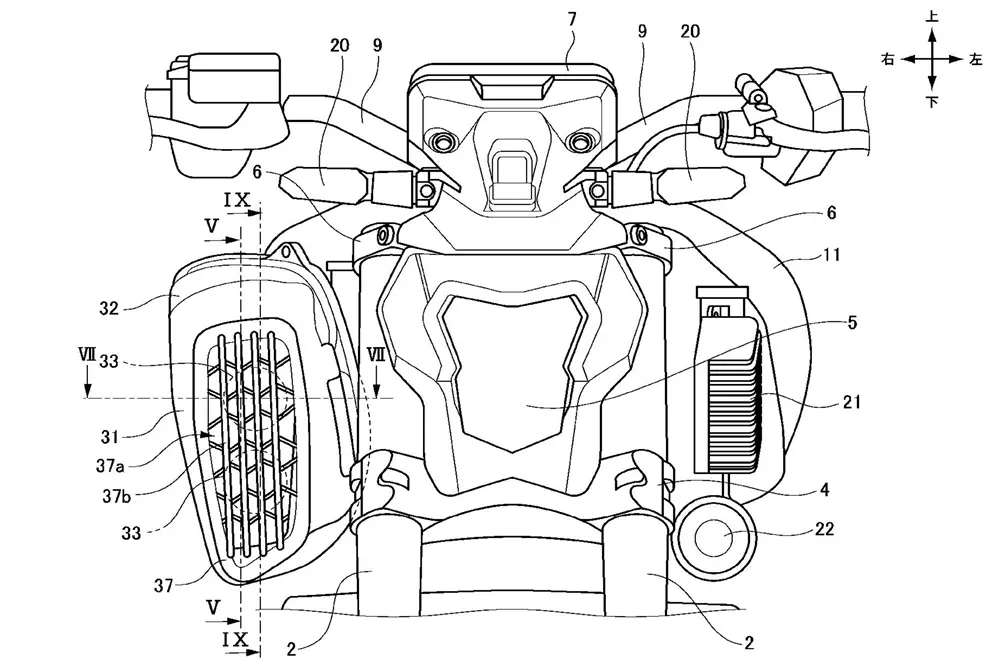
At the heart of the V3R is a completely new 900cc V3 engine paired with an electrically driven supercharger. The unusual layout has resulted in a distinctive asymmetrical design, with the motorcycle’s right-hand side appearing noticeably larger than the left. While unconventional from a styling perspective, the arrangement serves a clear engineering purpose.
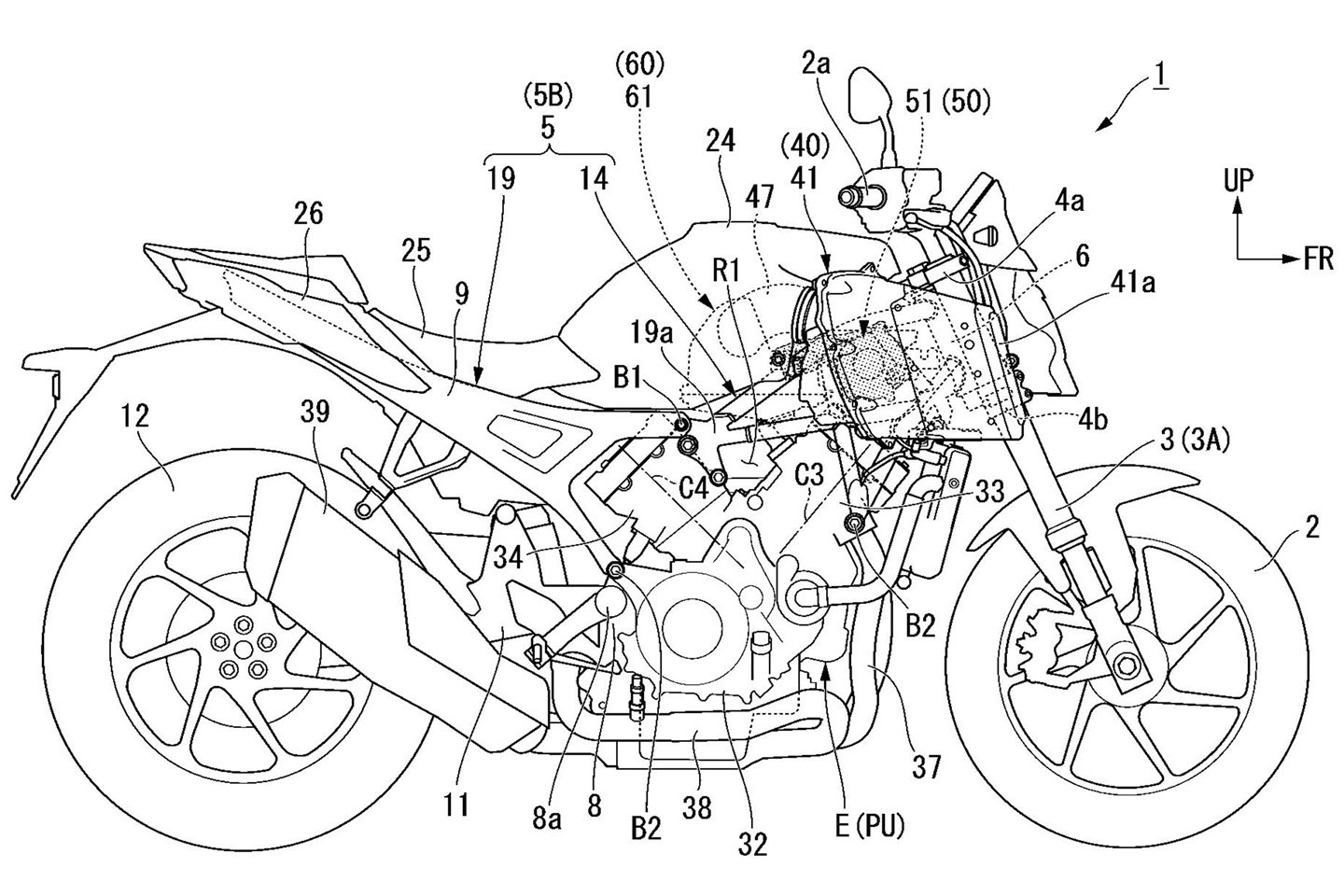
Patent drawings show that the oversized right-side intake houses the motorcycle’s air filter assembly, which is mounted almost vertically beneath the front section of the tank cover. Honda has designed the intake ducts to direct incoming air while also helping separate and drain rainwater before it reaches the filter. This configuration allows the bulky airbox to be positioned away from the centreline, freeing up space for other components.
Behind the filter sits an airbox featuring two separate airflow paths. One route channels air directly into a plenum chamber located within the V of the engine, allowing the motorcycle to operate as a naturally aspirated powerplant during normal riding conditions. The second route directs air towards the electric supercharger mounted above the engine, just behind the steering head.
Unlike traditional engine-driven superchargers or turbochargers powered by exhaust gases, Honda’s system only activates when additional performance is required. The compressor wheel is positioned on one side of the unit, while the electric motor that drives it sits on the opposite side, with the control electronics mounted above. By locating the entire assembly along the motorcycle’s centreline, Honda has been able to optimise weight distribution while keeping the intake pipework as short as possible.
The operation of the system is equally clever. During everyday riding and lighter throttle openings, the engine functions as a conventional naturally aspirated 900cc unit. When the rider demands more performance, an electronically controlled valve closes the standard intake path and the electric supercharger begins forcing compressed air into the plenum chamber. This increases the volume of air entering the combustion chambers by roughly 30 per cent compared to what the engine could draw in on its own.
According to Honda, the result is performance comparable to that of a naturally aspirated 1200cc motorcycle while retaining the packaging advantages of a smaller engine. Because the supercharger only operates when needed, the system avoids the constant energy losses associated with continuously driven forced-induction setups. This selective operation could also deliver benefits in fuel consumption and emissions, as the engine spends much of its time running as a smaller-capacity naturally aspirated unit.
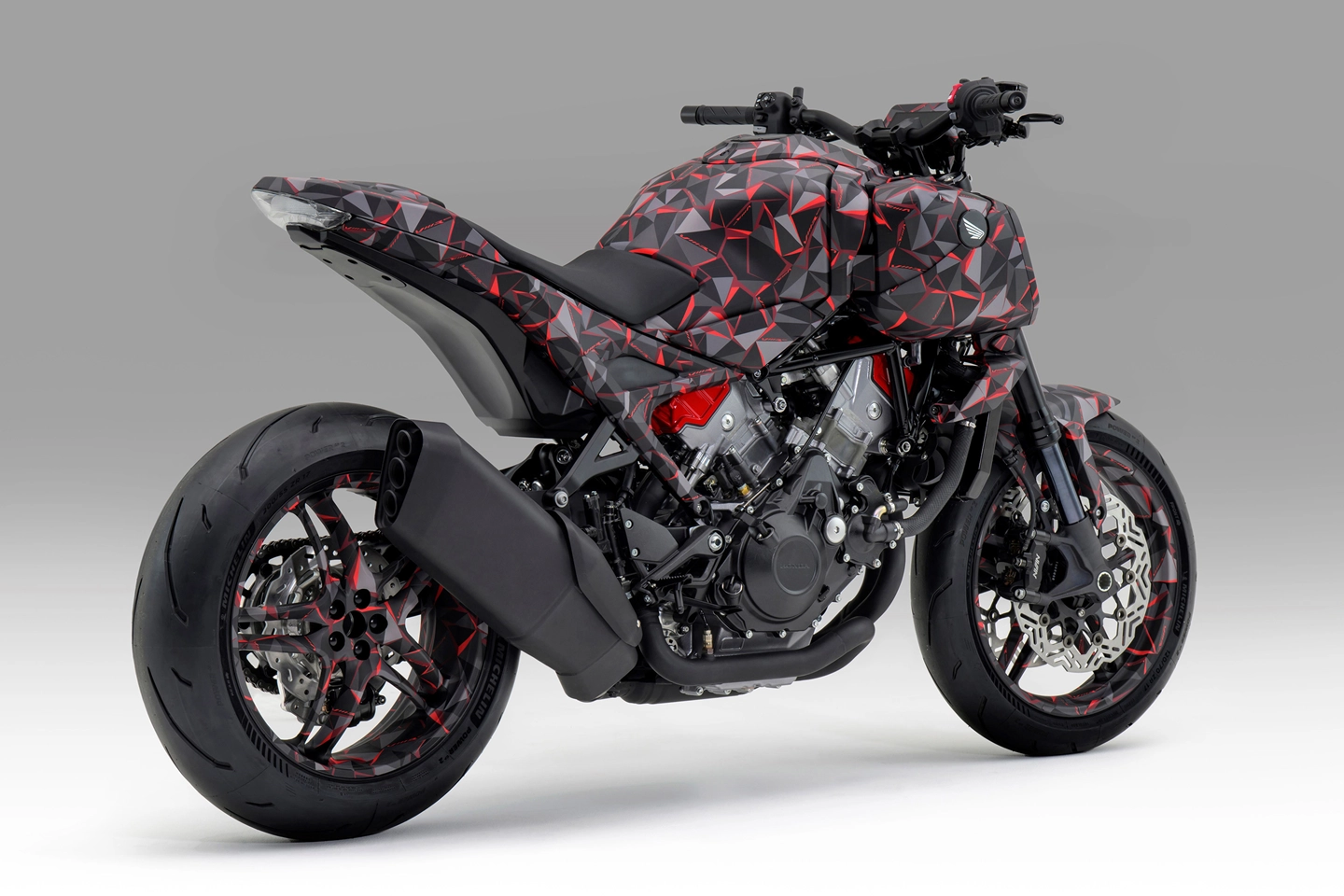
The engine architecture itself is equally noteworthy. The V3 configuration is expected to become the first production four-stroke V3 motorcycle engine. The layout uses two cylinders in the front bank and a single cylinder in the rear, creating an engine that offers substantially more capacity than a parallel twin while remaining relatively compact. Honda claims the arrangement provides the width of a typical middleweight twin-cylinder engine while delivering significantly greater displacement.
The asymmetrical bodywork is also tied directly to the bike’s packaging strategy. While the larger right-side intake feeds the airbox, the smaller intake on the opposite side is believed to provide cooling air for the motorcycle’s electronic control systems. This approach helps balance weight distribution while making the most efficient use of available space.
Perhaps most importantly, the patents suggest that Honda views the V3R as more than a one-off engineering showcase. Documentation indicates the company may already be exploring alternative versions of the electrically supercharged concept using different engine capacities and cylinder configurations. If the V3R proves successful, it could mark the beginning of a new family of forced-induction motorcycles from Honda.
Whether the V3R ultimately becomes a landmark production motorcycle remains to be seen. However, with its unique V3 engine, on-demand electric supercharger and highly innovative packaging, Honda appears determined to challenge conventional thinking about motorcycle performance. Even before it reaches production, the V3R is shaping up to be one of the most technically intriguing motorcycles of the decade.