
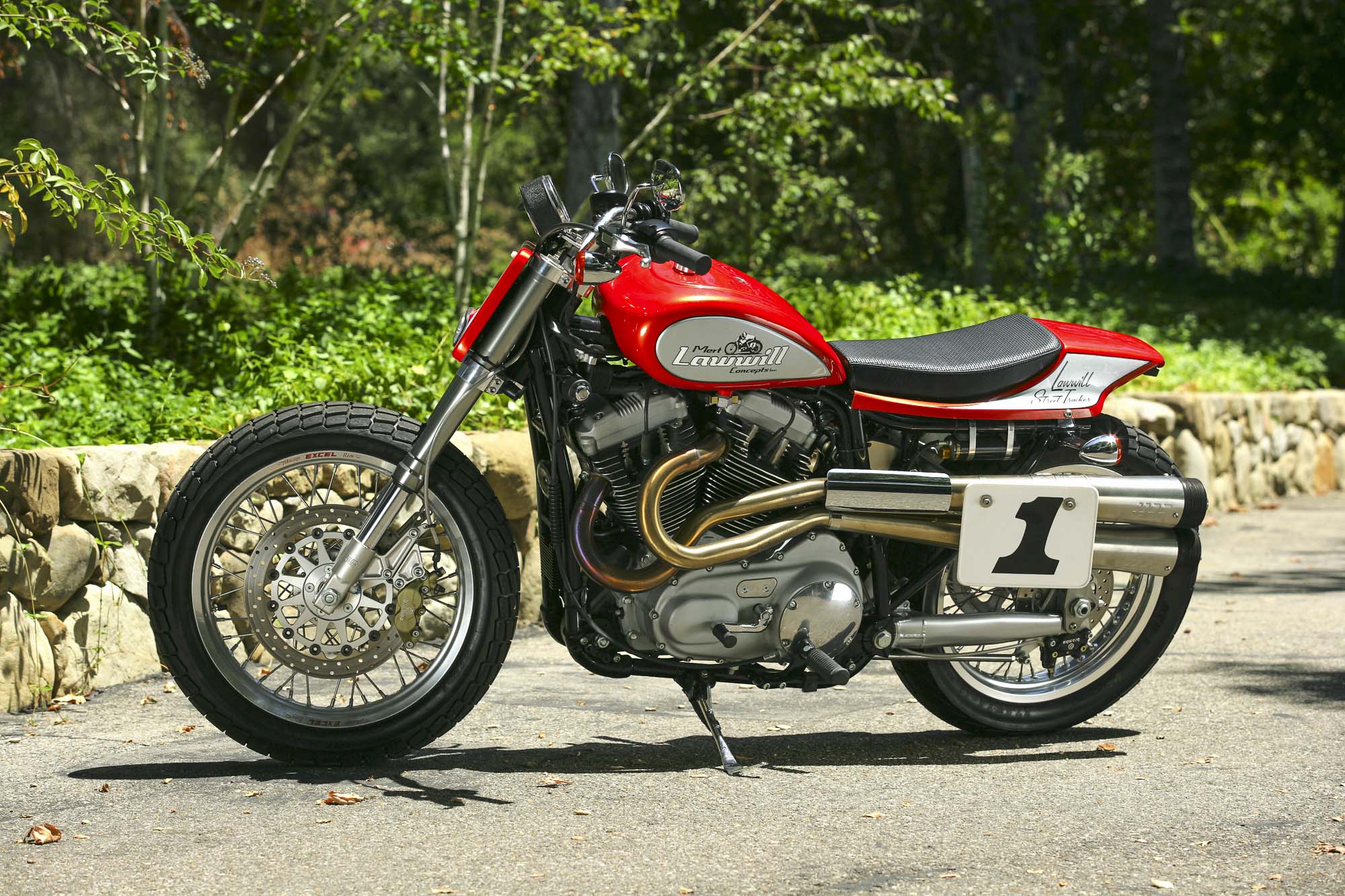
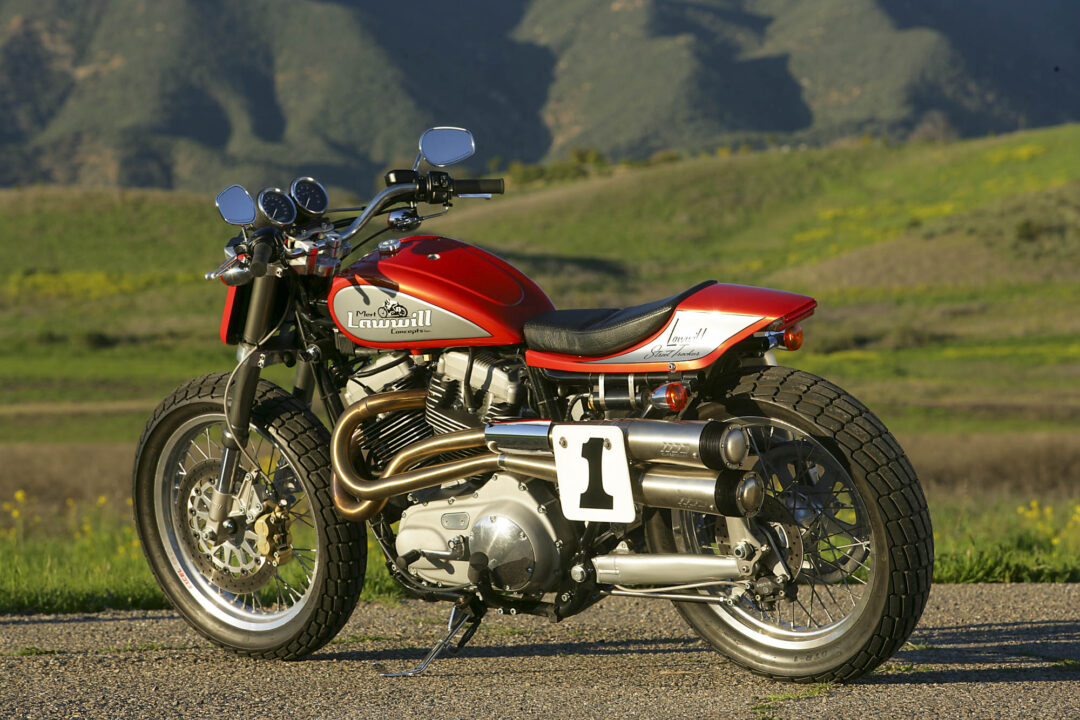
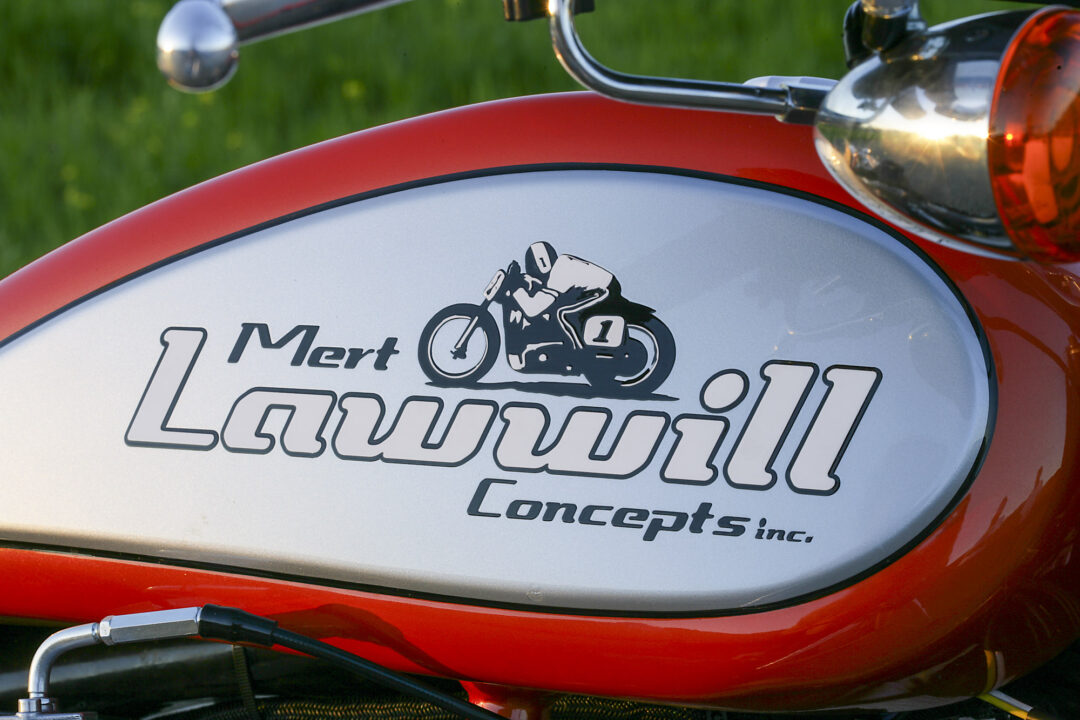
- Mert Lawwill built just 20 Street Trackers, creating the closest thing ever made to a road-legal Harley-Davidson XR750.
- The hand-built special produced 92bhp at the rear wheel and featured Lawwill’s unique Quadrilateral rear suspension system.
- Alan Cathcart found it delivered the character, performance and dirt-track attitude that Harley’s factory-built XR1200 never quite achieved.
Legendary AMA Grand National champion Mert Lawwill passed away on May 6, aged 85. Not only a successful racer, but also a skilled chassis designer, Lawwill built 20 examples of the Lawwill Harley Street Tracker, the most authentic streetlegal tribute yet created to Harley’s legendary XR750 dirt-tracker. Alan Cathcart looks back at his ride of the closest thing ever created to a road-legal XR750.

Why Harley Never Built The Real Thing
Harley-Davidson bosses had to have their corporate arms twisted by H-D Europe before finally producing an overdue tarmac tribute to the dirt-track dominance of the legendary XR750 flat-tracker introduced back in 1972, which was still winning US AFT Nationals in 2017.
But when the XR1200 finally reached production in 2008 after being unveiled at the 2006 Intermot show in Germany, shock, horror – it was for Euro customers only: Yanks need not apply. In fact, it took another year to reach US showrooms, only to be discontinued in 2012.
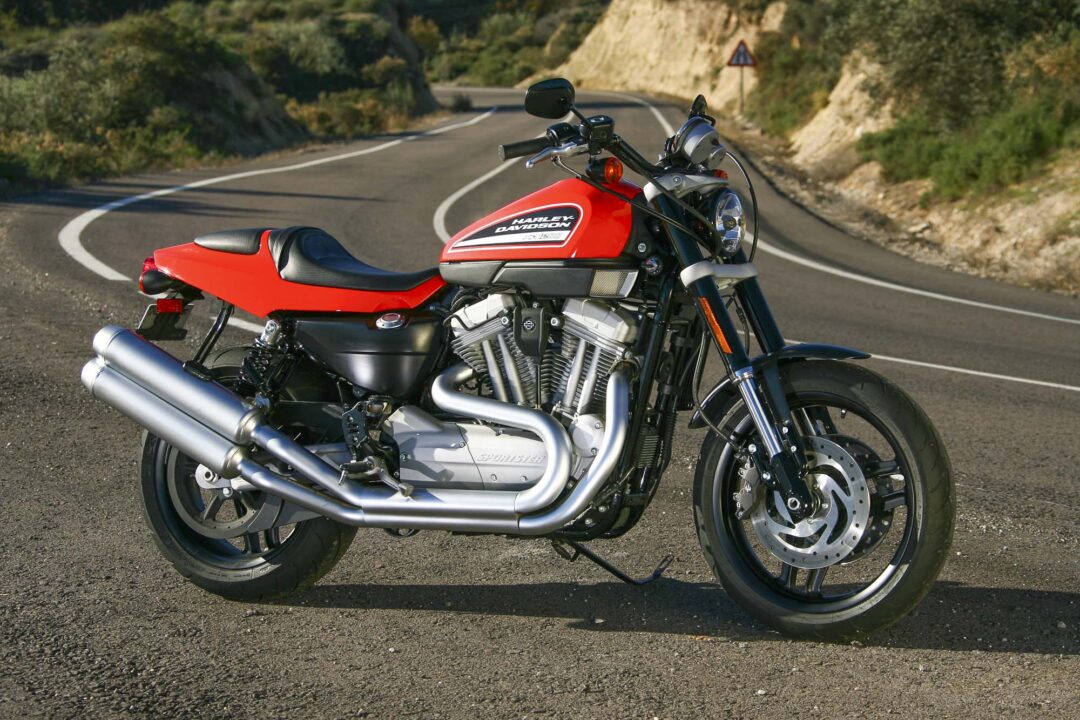
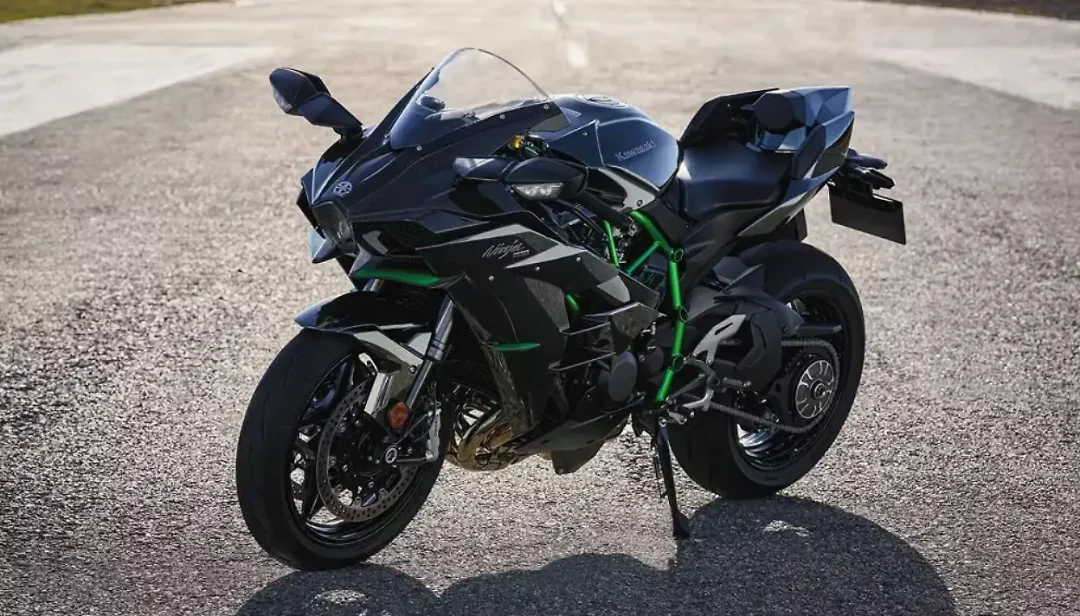
At the end of the day, the XR1200 was still a modified Sportster made over to resemble an XR750 at a hasty first glance, with a motor producing 20bhp more than the XL1200 engine it was derived from. Its porky 250kg dry weight, courtesy of the stock Sportster frame, certainly impacted performance.
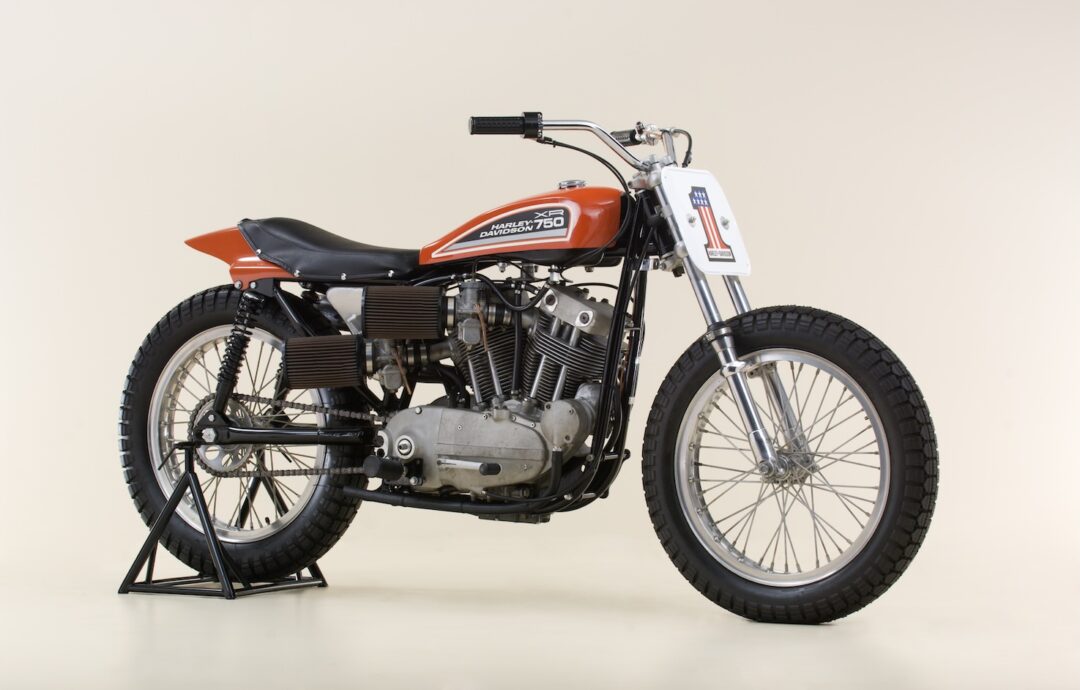
Then there was the fact that the XR750’s key visual design cue – a pair of carbs parked on the right side of the motor, wrapped with air cleaners to keep out the dirt – was missing altogether. Instead, the fuel-injected streetbike breathed through a central airbox. The stacked exhausts were on the wrong side, too.
As a racer with lights, it was about as close to an XR750 as a crossplane crank Yamaha R1 would be to Fabio Quartararo’s 2021 MotoGP World Championship-winning YZR-M1 – which is to say, still fun to ride, but by no means the Real Thing.
As a racer with lights, it was about as close to an XR750 as a crossplane crank Yamaha R1 would be to Fabio Quartararo’s 2021 MotoGP World Championship-winning YZR-M1 – which is to say, still fun to ride, but by no means the Real Thing.
That’s where the late, great Mert Lawwill came in.
When he finally turned his attention to building a streetbike – not just for himself, but one customers could buy too – the result was something Harley-Davidson itself had never managed to create.
“People had been after me for pretty much ten years to build a Street Tracker, a motorcycle that looked exactly like an XR750 track racer, but was street-legal enough that you could ride through town on it,” Mert told me when I visited his home in Northern California to take the ride he’d promised me on just such a bike.
“For many years I didn’t believe there was a big enough market to support that, till I finally started to realise – hey, it’s time, the window’s open. So I began work on the Lawwill Harley Street Tracker in 2005, and I’ve made 20 of them since then based on brand new XL1200 Sportsters.
“The price started out at $29,900, but gradually crept up to $34,000 complete because of all the labour involved. Nineteen of those got sold, I kept one for myself, and then Harley fuel-injected the Sportster for ’07, so that put an end to it. But it was fun while it lasted!”
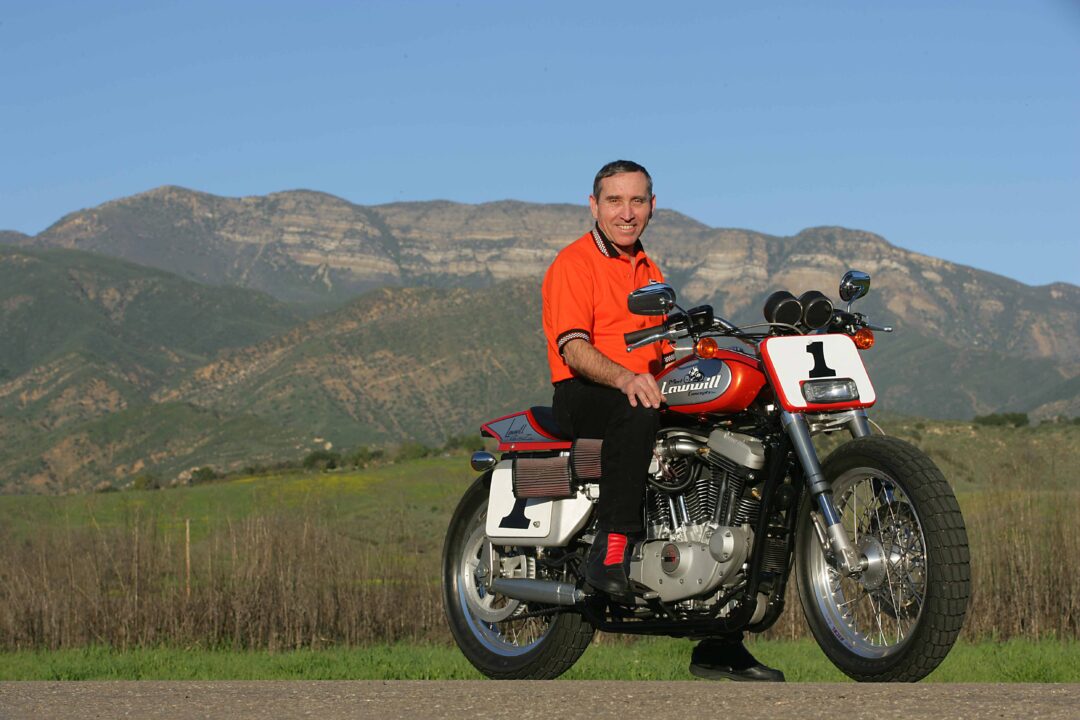
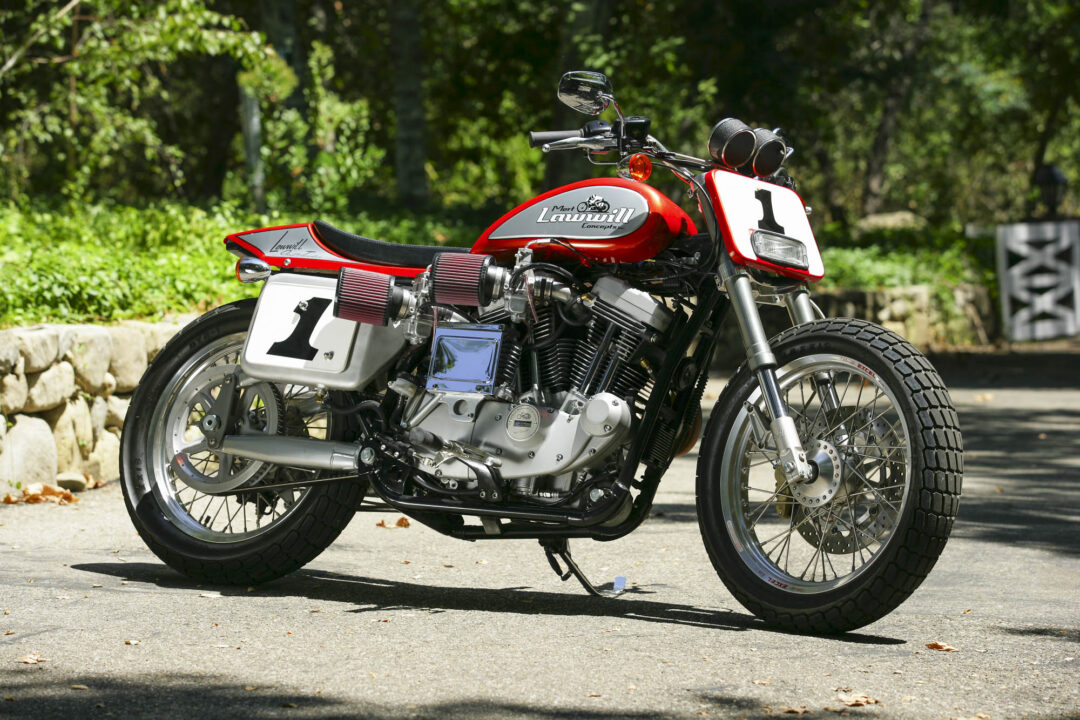
Indeed so. For if ever a naked-but-unashamed streetbike had visual presence, it was this first-ever street-legal replica of an XR750 flat-tracker to come with a VIN number on the frame.
That meant no hanging lights and a horn on a retired racer and hoping the cops wouldn’t notice you thundering down the road. Nor was it merely another visual tribute to Harley’s dirt-track glory days like the factory-built XR1200 or any of the Sportster-based specials produced by aftermarket firms such as Storz or Australia’s Gasoline Motor Co.
Building A Better XR750
To create a Street Tracker in the spacious workshop attached to his Tiburon home on the scenic shores of San Francisco Bay – a stone’s throw from Mount Tamalpais, where he developed his groundbreaking mountain bikes – Mert Lawwill took a carburetted XL1200 Harley Sportster with a rubber-mounted Evolution motor and stripped it back to basics.
The engine, handlebars, wiring loom and turn signals were removed, the VIN plate detached from the stock frame and the cylinder heads discarded. Only then could the transformation begin.
The Street Tracker’s air-cooled OHV pushrod V-twin retained the stock XL1200 Sportster’s 88.8 x 96.8mm long-stroke layout, but used specially cast cylinder heads from STD in Los Angeles that swapped the intake and exhaust positions to replicate the XR750 flat-tracker.
“I had to modify the street engine so that not only in appearance did it seem to be a dirt racer, but so that it performed like one, too,” said Mert.
The reworked heads carried twin 38mm Mikuni flatslide carburettors on the ‘proper’ right-hand side of the engine, each breathing through a substantial K&N air filter. Elevated intake ports dramatically improved airflow into the combustion chambers and, together with specially designed Andrews cams, helped the Street Tracker produce 92bhp at the rear wheel at 6,000rpm, along with 115Nm of torque.
An H-D Screaming Eagle race ignition system and SuperTrapp stainless-steel exhaust completed the package.
“I had to modify the street engine so that not only in appearance did it seem to be a dirt racer, but so that it performed like one, too.”
Producing that level of performance from an engine that originally delivered around 65bhp required considerable development. The stock pistons were modified for clearance, while the special two-valve cylinder heads received larger intake valves and extensively reshaped ports.
Yet despite the performance gains, Lawwill retained the standard XL1200 pushrods, hydraulic lifters and five-speed Sportster transmission. The result was a motorcycle that offered racebike looks and performance without sacrificing the relative reliability and ease of maintenance of the donor machine.
The Quadrilateral Difference
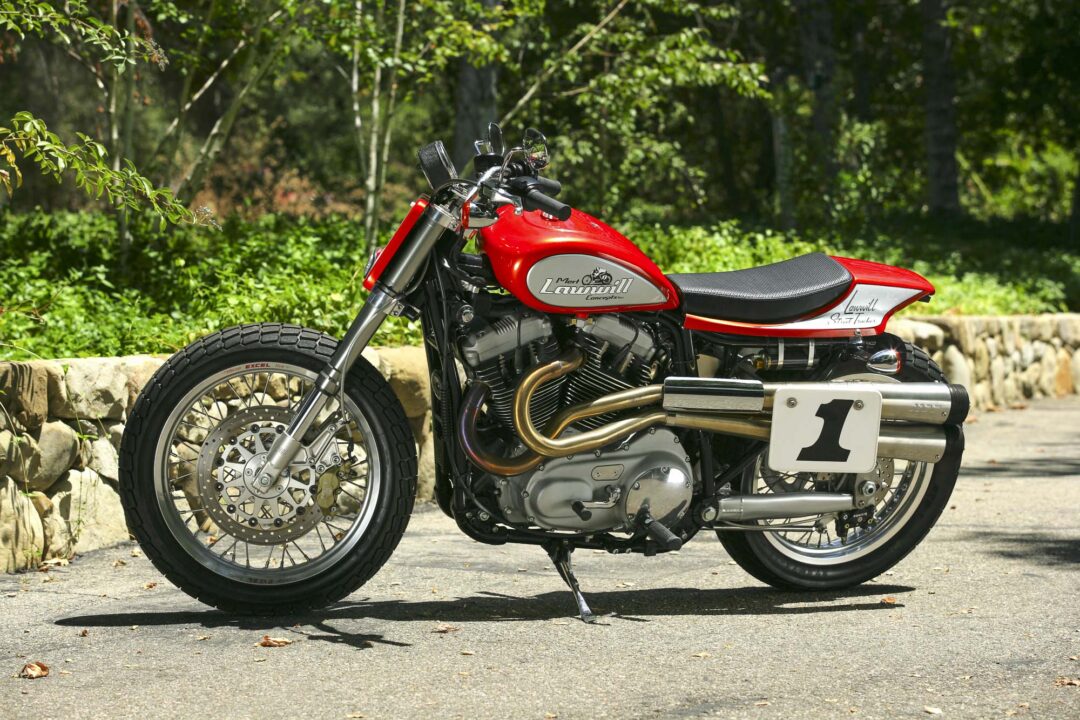
The Street Tracker’s lightweight 4130 chrome-moly steel twin-loop frame was built by one of Lawwill’s former race mechanics, Jim Belland, in California.
A 43mm upside-down Showa fork from a Buell Firebolt sat up front, while braking duties were handled by a single Brembo front disc and four-piston caliper. Flat-track-style 19-inch Kosman wire wheels with Excel aluminium rims carried Maxxis tyres developed for paved oval racing, while the distinctive aluminium fuel tank was finished in a vivid tangerine colour.
The race-style number plate concealed a small square headlight and also doubled as the oil tank for the dry-sump engine.
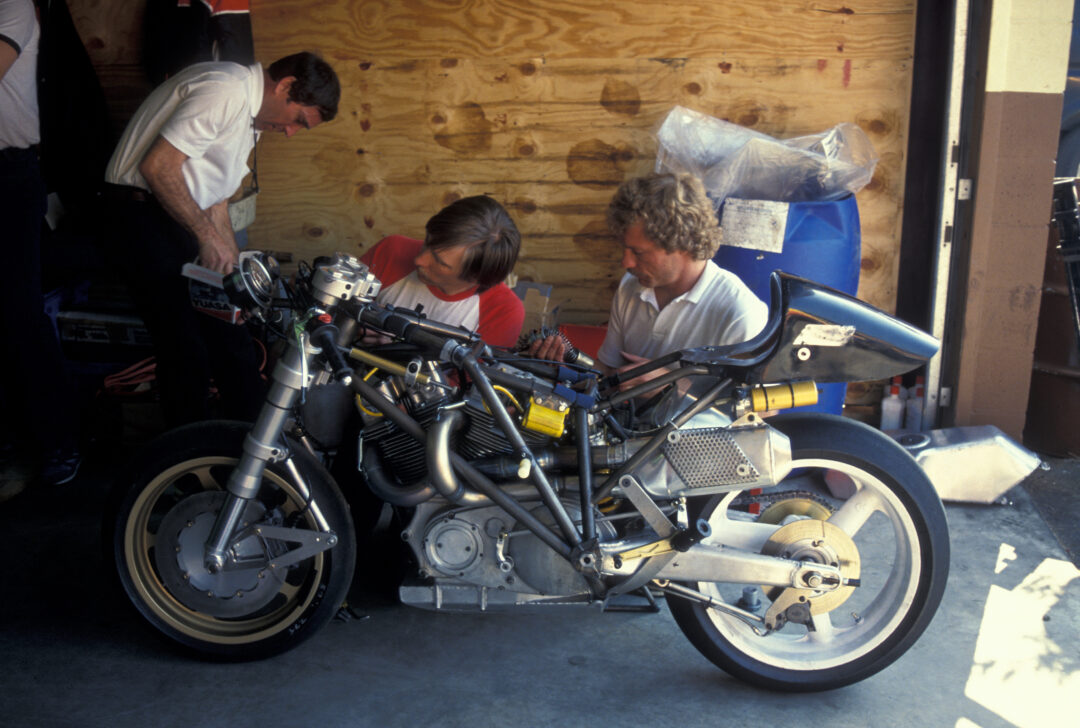
But the most intriguing feature was the patented Quadrilateral rear suspension system developed by Lawwill and Dave Garoutte of DKG Engineering.
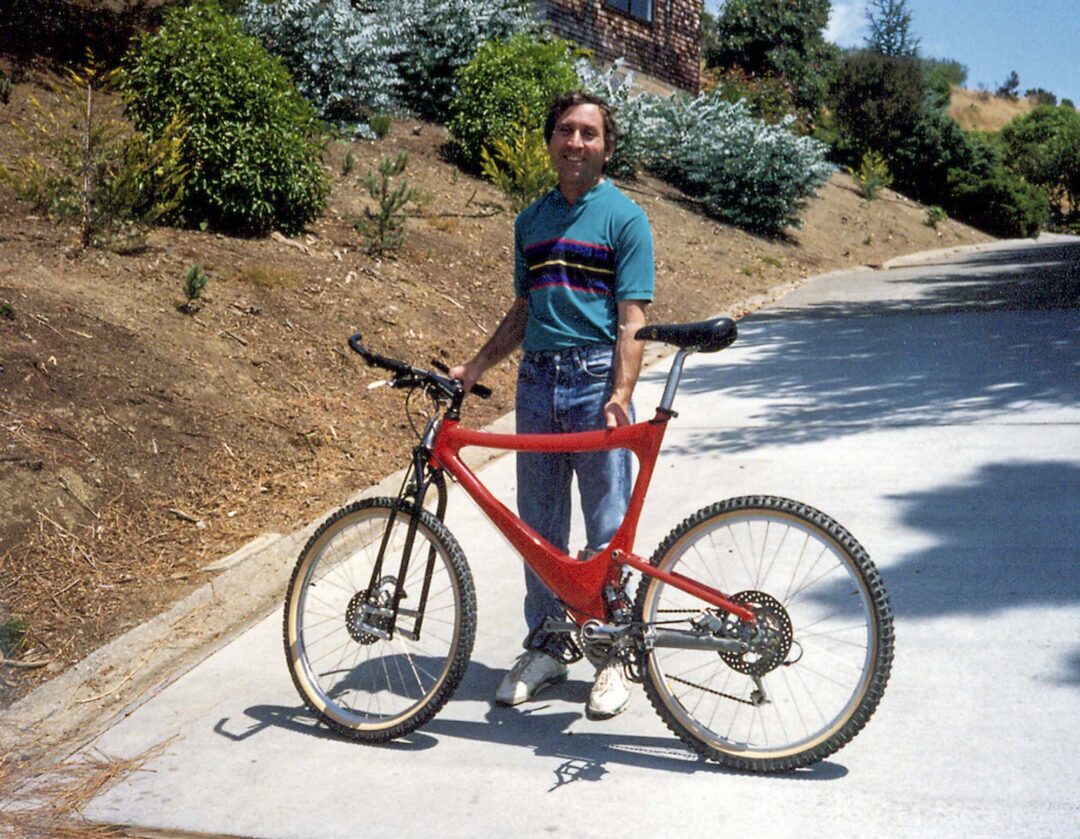
Originally inspired by concepts Lawwill developed while pioneering mountain-bike suspension, the system used twin swingarms connected by a vertical link, with a specially developed Penske monoshock mounted between them.
“In the late ’80s I was riding my original Pro-Cruiser Mountain bike with a rigid frame up on Mount Tam, and I came straight down the mountain at about 20mph – full white-knuckles death grip, sure I was going to die!” recalled Mert.
“Then I thought, if I was on my motorcycle I’d come down here twice as fast and wouldn’t even think about it. So I realised – you’ve got to have suspension.”
The concept eventually evolved into a system designed to maintain constant final-drive tension throughout the suspension’s travel while minimising the power losses associated with conventional rear suspension designs.
According to Lawwill, one of its biggest advantages was that the motorcycle rose slightly under acceleration rather than squatting down.
“Penske designed and valved a special shock that works for the kind of energy this system uses,” he explained.
“When you touch the throttle the motorcycle rises, much like a dragster or any dirt-track race car does. It’ll rise, deliver the weight transfer that way, and then accelerate ahead.”
The system also allowed softer suspension settings because throttle inputs no longer compressed the rear shock in the conventional manner. On a torquey V-twin Harley, that meant improved comfort and compliance without sacrificing control.
More Power To The Rear Wheel?
For performance enthusiasts, Lawwill claimed an additional benefit.
“I built this system in the beginning to conserve rider energy on a bicycle,” he said. “It also therefore conserves horsepower on the motorcycle.”
According to Lawwill, dyno testing suggested the design delivered more of the engine’s power directly to the rear wheel by reducing suspension-related losses.
“We actually got more horsepower at the rear wheel rather than less.”
Whether or not you accepted every aspect of the theory, there was no doubting the ingenuity of the engineering – or the fact that the Street Tracker was unlike any other Harley-Davidson special built before or since.
Does It Actually Work?
Hmm, that all sounded too good to be true – so off I headed to the hills behind Tiburon to see for myself.
First off, there was no getting around it: this was not a comfortable bike to sit on, unless you’d spent a lifetime riding horses and were thus bow-legged. The Street Tracker’s riding position presented the same challenges as Harley’s short-lived XR1000, thanks to the voluminous carburettors hanging out in the breeze on the right and the only slightly less obtrusive stacked exhausts on the left.
My right leg had to negotiate the K&N filters before reaching the footrest, while my left wasn’t much happier because, being considerably taller than Mert, the heatshield on the upper SuperTrapp pipe was positioned in exactly the wrong place for me. Ouch.
Still, on a bespoke motorcycle like this you could probably specify where you wanted it located. Besides, this wasn’t a machine designed for commuting or stop-start city riding. Ergonomically speaking, the Street Tracker was a disaster in town – but that’s not where, or how, it was intended to be ridden.
A Flat-Tracker For The Road
Fire up the motor via the key mounted on the left of the triple clamps and immediately you’re rewarded with a glorious soundtrack from the stacked SuperTrapp exhausts. Add in the distinctive twitter from the flatslide carburettors and the Street Tracker already feels special before you’ve even moved off.
You also quickly discover that it absolutely refuses to idle. A blip of throttle here and there is mandatory.
Head out of town and into the twisties, however, and a treat lies in store.
At lower revs the Lawwill Harley is reasonably tractable, content to lope along in traffic so long as you keep the motor spinning above 2,000rpm. Any less and it starts to snatch and protest.
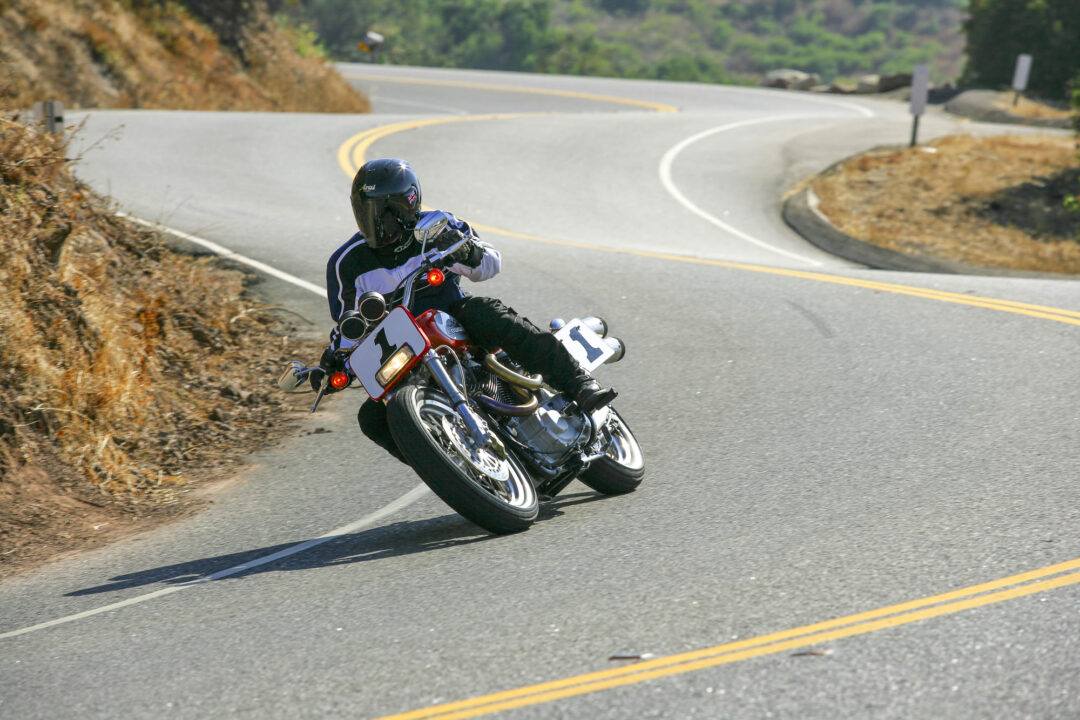
But once the road opens up and you can get the engine revving, the Street Tracker changes character completely.
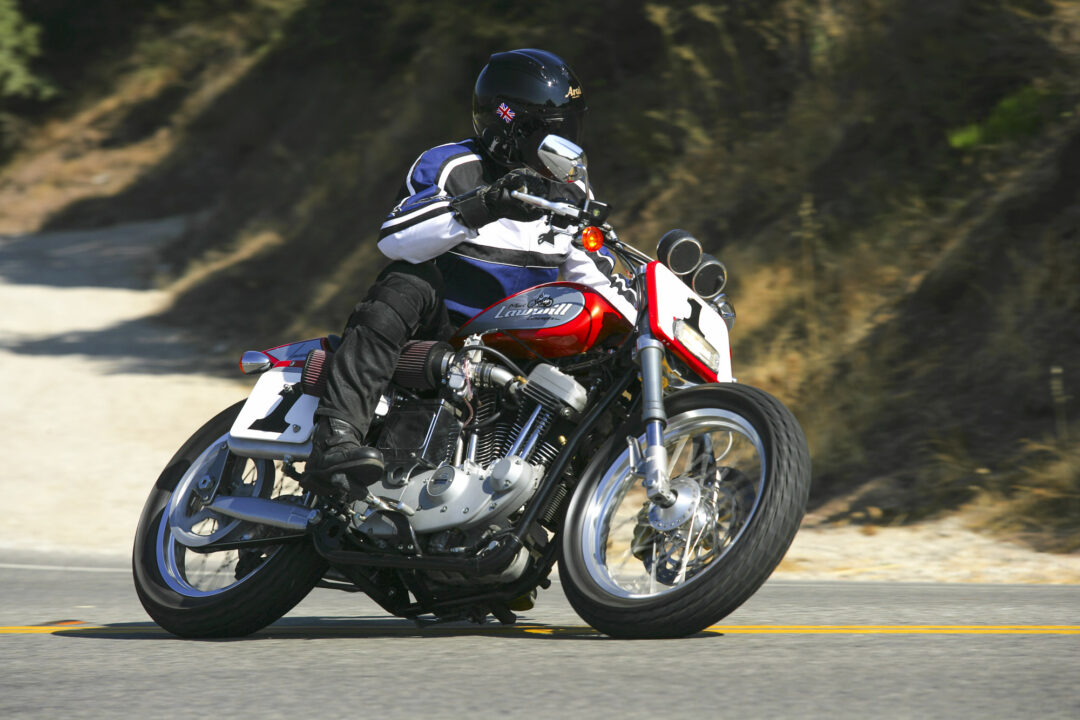
As the needle sweeps past 4,000rpm there’s a glorious surge of power that swiftly had me practising my low-rent dirt-track technique on tarmac, using the wide handlebars to countersteer and catch the rear Maxxis tyre as it started to slide.
Get the wheels back in line and the Lawwill Harley launches itself forward in an incredibly muscular, meaty way, accompanied by a vivid roar from the twin pipes.
“Paradise – I swear the earth moved!”
The rush continues until just beyond 6,000rpm, at which point it’s time to grab another gear and chase the next hit of torque.
What struck me most, though, was the way the motorcycle behaved under acceleration. Rather than squatting down like most powerful motorcycles, the Street Tracker actually rose slightly on its rear suspension.
That was the Quadrilateral system doing exactly what Lawwill claimed it would.
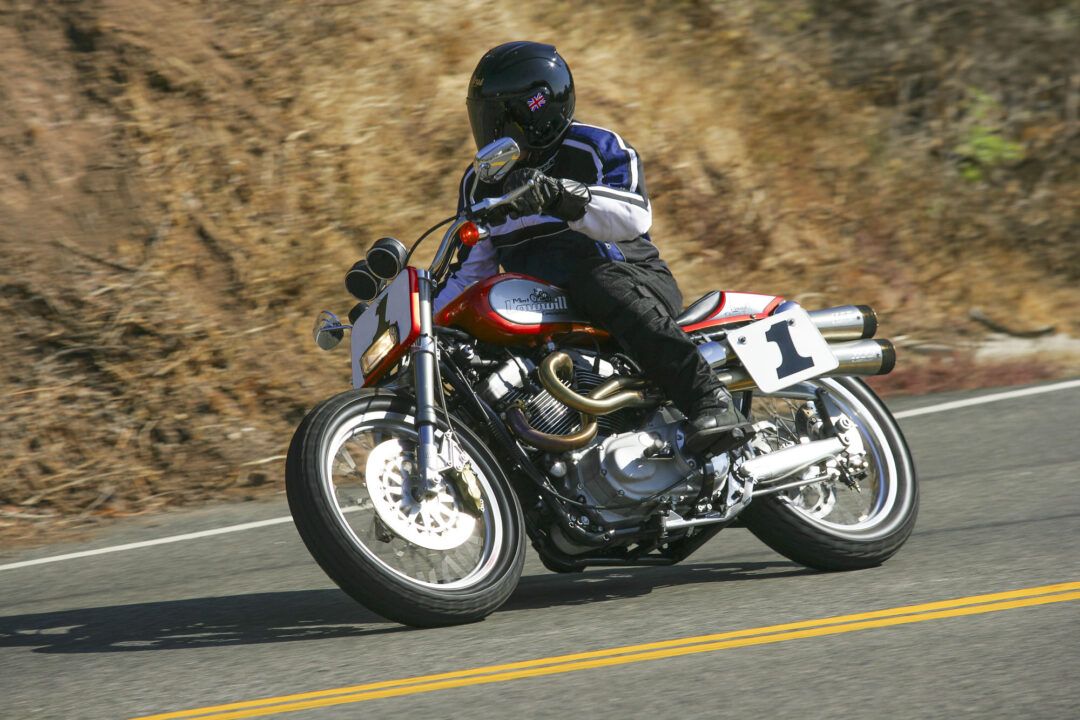
Even more impressive was the way the bike coped with bumps while accelerating hard through corners. On most motorcycles with this much torque you’d expect the rear wheel to chatter or skip across the surface. The Street Tracker simply drove forward.
You could still feel road shock through the fork, but the rear wheel remained remarkably composed. Ride quality was surprisingly good for such a hard-edged hot rod, and certainly better than the factory XR1200 or any similarly powerful Sportster.
Call me a believer.
Interestingly, despite all that torque, I couldn’t get the thing to wheelie. Even attacking the crest of a hill with a healthy tug on the bars produced little more than wheelspin.
Another benefit of the Lawwill design was the way it separated braking forces from suspension movement. The floating rear brake and its torque arm directed braking energy into the frame rather than the rear wheel, encouraging greater use of the rear brake and allowing Lawwill to get away with a single front disc.
That, in turn, reduced gyroscopic effect and helped offset the heavier steering imposed by the wide dirt-track front tyre. The result was a useful compromise: extra grip from the larger tyre without sacrificing steering precision.
The Verdict
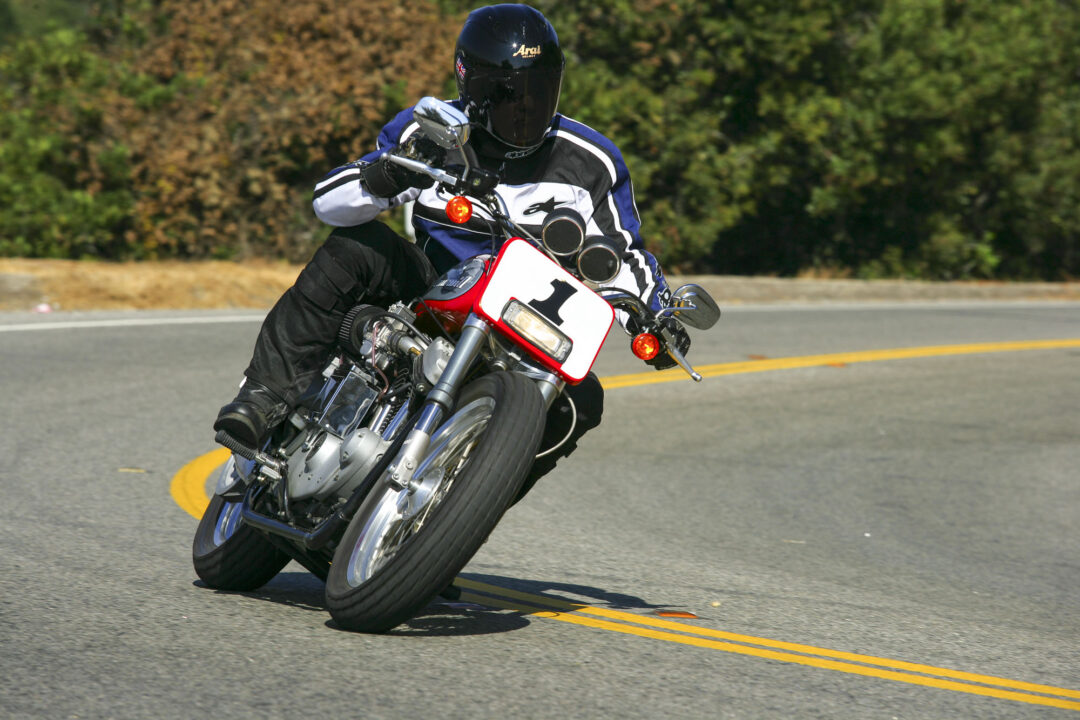
The only thing I didn’t like was the Street Tracker’s lack of stability at speed. At anything above 70mph it would begin to weave gently in a straight line. Call it a shimmy rather than a shake, but it was noticeable enough for me to mention it to Mert.
“Sorry, but that’s a spinoff from using the dirt-track tyres,” he admitted. “If you didn’t want quite as authentic a look, we fitted regular Dunlop street tyres, and the problem went away.”
Form over function, then.
But otherwise, Mert Lawwill’s 20-bike tribute to Harley-Davidson’s decades of dirt-track dominance was exactly what it set out to be: an authentic, charismatic and surprisingly effective street motorcycle.
The dynamic benefits of the Quadrilateral rear suspension certainly deserved more attention than they ever received. Perhaps the biggest shame is that Lawwill never lived to see a major manufacturer adopt and further develop the concept.
Too bad that never happened before Mert’s sad passing.
But there’s still time.
Mert Lawwill: Racer, Innovator, Pioneer
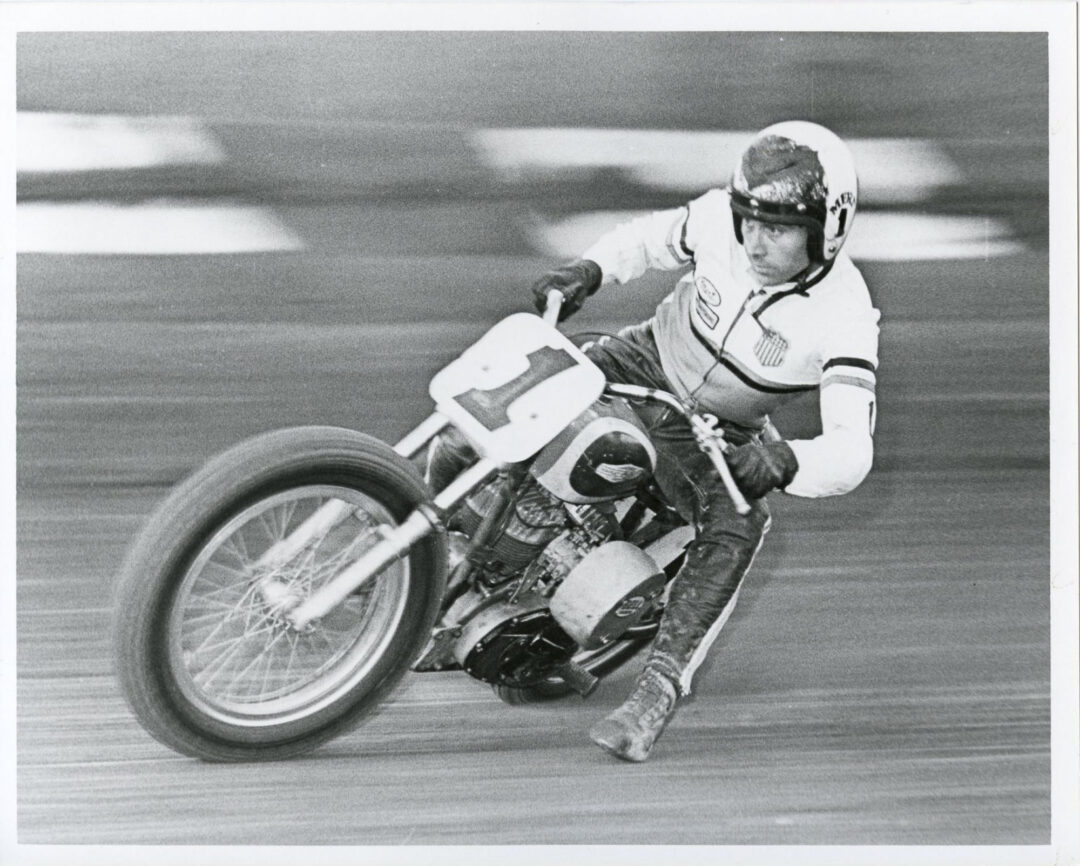
Few motorcyclists have left a mark on as many different disciplines as Mert Lawwill.
Best known as the 1969 AMA Grand National Champion and one of the stars of Bruce Brown’s legendary On Any Sunday film alongside Steve McQueen and Malcolm Smith, Lawwill was far more than just a racer.
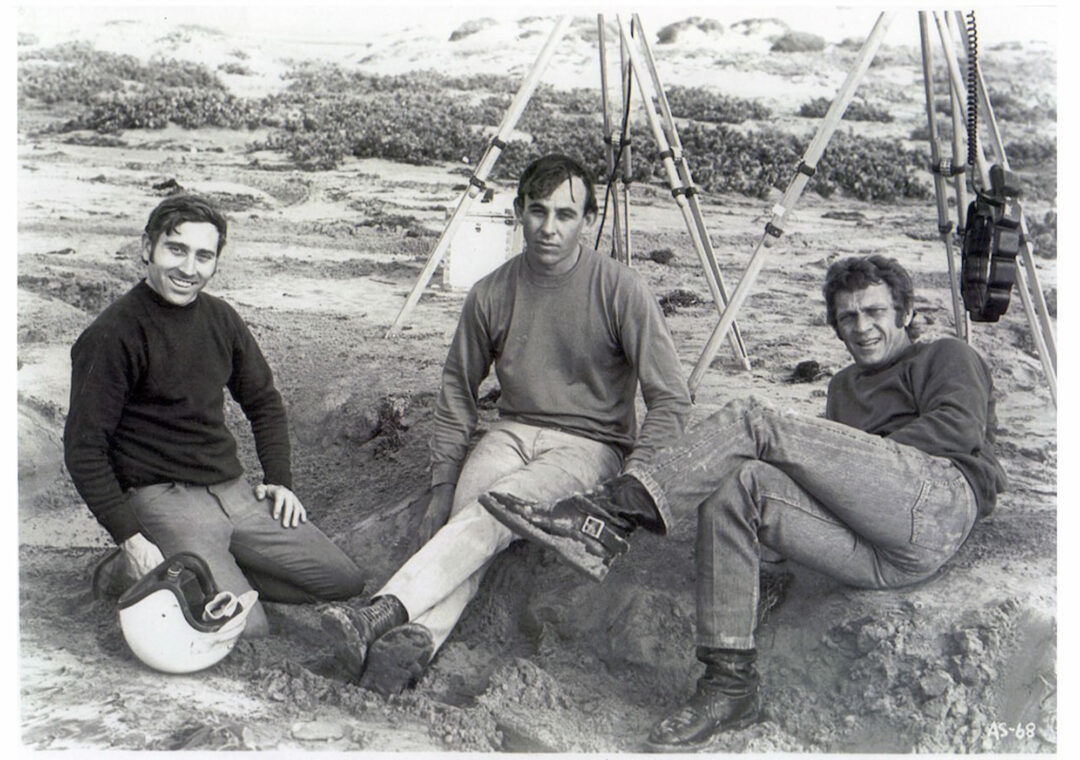
Following a successful dirt-track career that included 15 AMA Grand National victories, Lawwill turned his attention to motorcycle chassis development, becoming one of the most respected innovators in American racing. He later played a pioneering role in the development of modern mountain bikes, creating some of the first commercially successful suspension systems and earning induction into the Mountain Bike Hall of Fame.
His engineering talents also extended to prosthetics, developing specialised devices that enabled amputees – including injured military veterans – to return to riding motorcycles and bicycles.
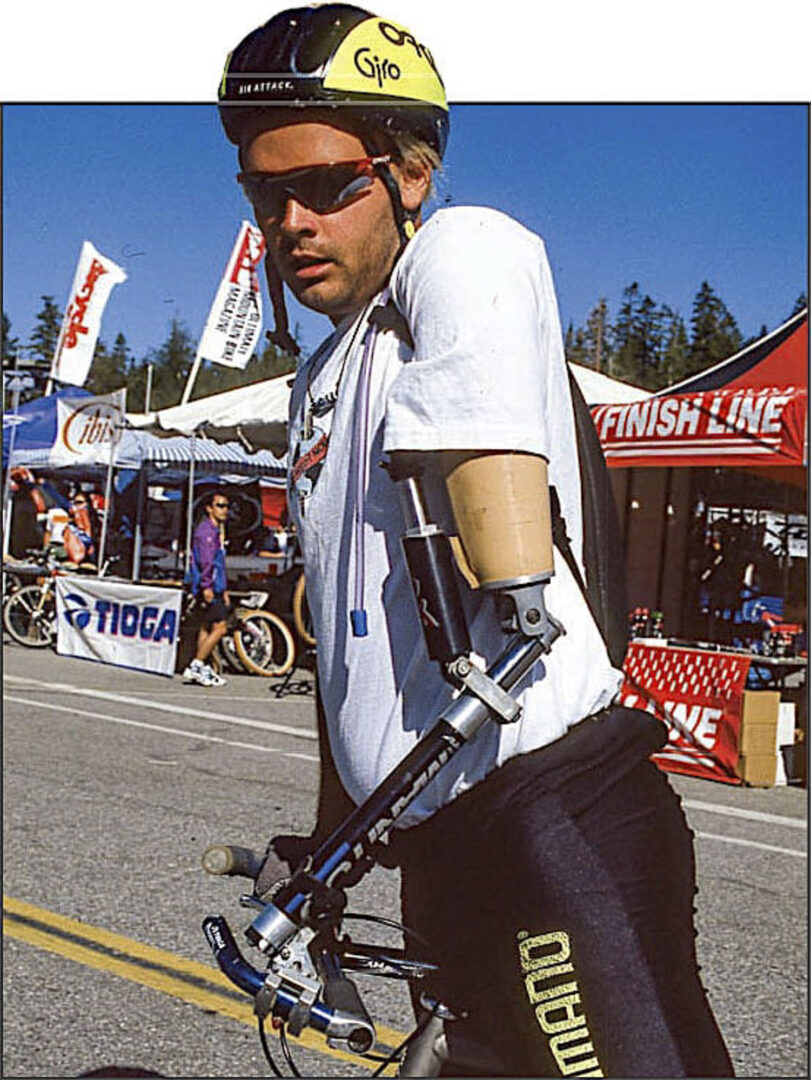
Lawwill passed away in May 2026 at the age of 85, leaving behind a remarkable legacy that stretched from dirt-track racing and mountain biking to engineering and adaptive technology. The Street Tracker featured here stands as one of the final expressions of his lifelong passion for motorcycles and innovation.