

- Whites Powersports’ Hayden Mills travelled to Japan for specialist training at the Shoei helmet factory in Narita.
- The visit included tours of Shoei’s manufacturing facility, R&D labs and a $5 million wind tunnel used to test helmet aerodynamics and noise.
- Shoei’s Personal Fitting System is now arriving in New Zealand, with the first fitting event taking place at Boyd Motorcycles in Hamilton.
BRM goes behind the scenes inside the Shoei helmet factory in Japan as Whites Powersports’ Hayden Mills trains with Shoei technicians — and explains how the brand’s personalised helmet fitting system is now arriving in New Zealand.
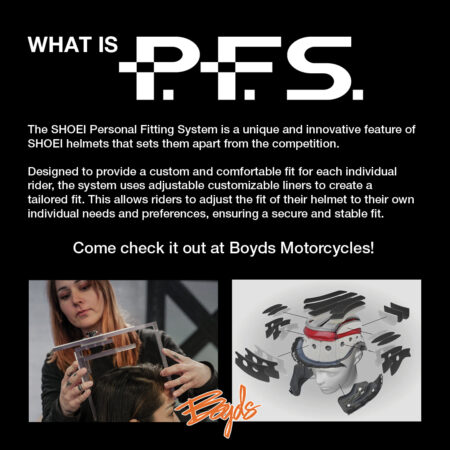
This Saturday (March 21) sees the very first Shoei Personal Fitting System (PFS) Event take place at Boyd Motorcycles in Hamilton. What’s it all about? Well, as you can probably guess from the name, it’s a new service for owners of Shoei helmets, where PFS-trained staff from the Shoei New Zealand distributor Whites Powersports, along with master technicians from Shoei Japan, will be on-site to deliver the most advanced helmet-fitting experience available.
The process includes precise head measurements followed by Shoei’s exclusive fitting software, which guides the technician on any liner adjustments needed to achieve a perfect fit and takes around 20-30 minutes. With helmet fit so crucial for maximising safety in the event of an accident, and also for keeping wind noise to a minimum, we reckon this is an excellent (and unique) service for Shoei fans. But how do the technicians get trained? Well, that’s exactly why Hayden Mills from Whites headed to Japan, so he could learn from the best. Below is what he learnt at the factory. And if you want to book to have a PFS check at Boyd Motorcycles, you can book HERE.
Training with the Shoei Helmet Technicians
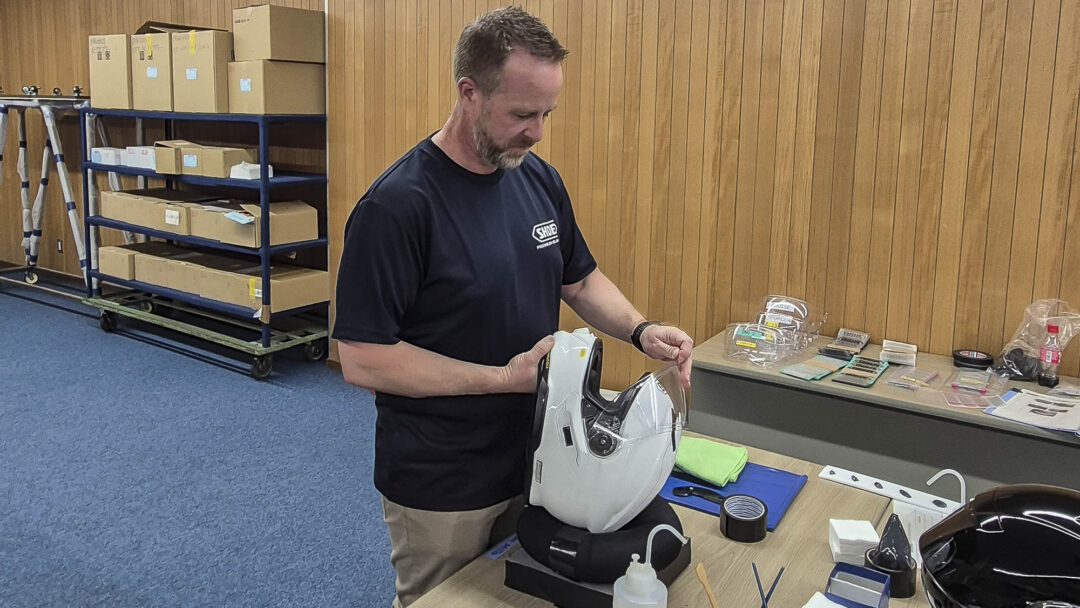
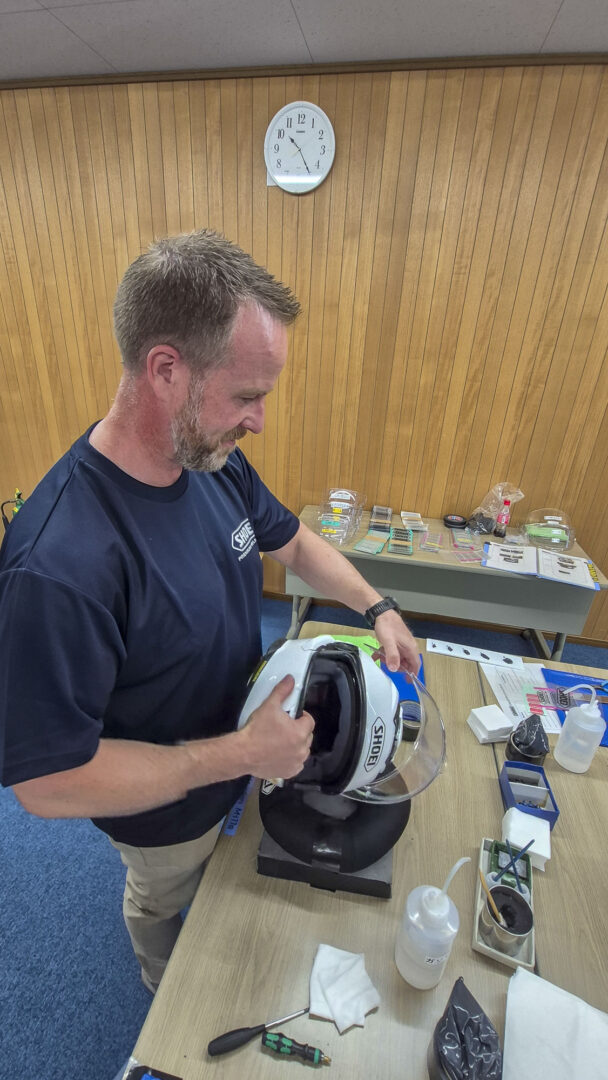
I was fortunate enough to visit the Shoei factory in Narita, Japan—about an hour out of Tokyo—for four days of training. The course focused on the complete disassembly and reassembly of a helmet, followed by a certification test in which we had to work without help while being closely monitored by the examiners.
The training involved completely stripping down each model of helmet, one at a time. That meant removing liners, visors, vents, stickers, the chin bar, the EPS liner, and the cheek pad clips, until only the shell, the main EPS liner, helmet straps, and waterproof seals remained.
Once stripped, each helmet then had to be rebuilt from scratch. That included applying new vent adhesive, reglueing the cheek pad clips, fitting official Shoei decals and refitting all liners and visors. In total, we worked through eight different helmet models, completing the process over two days.
Exam Time
With the training complete, it was time for the certification exam. I was handed a random helmet and asked to completely strip it down and rebuild it without any assistance or input from the trainers. Thankfully, I passed with flying colours.
They were blown away by how quickly I had picked up the process and my attention to detail. In fact, I finished the training almost two days ahead of schedule, with the examiners commenting that I was faster and more accurate than some of their factory workers, particularly when it came to decal placement and alignment, so that meant there was time for a bit of exploring.
Touring the Shoei Factory
Because we had completed the training early, we had extra time to tour the factory and see the full Shoei helmet manufacturing process from start to finish.
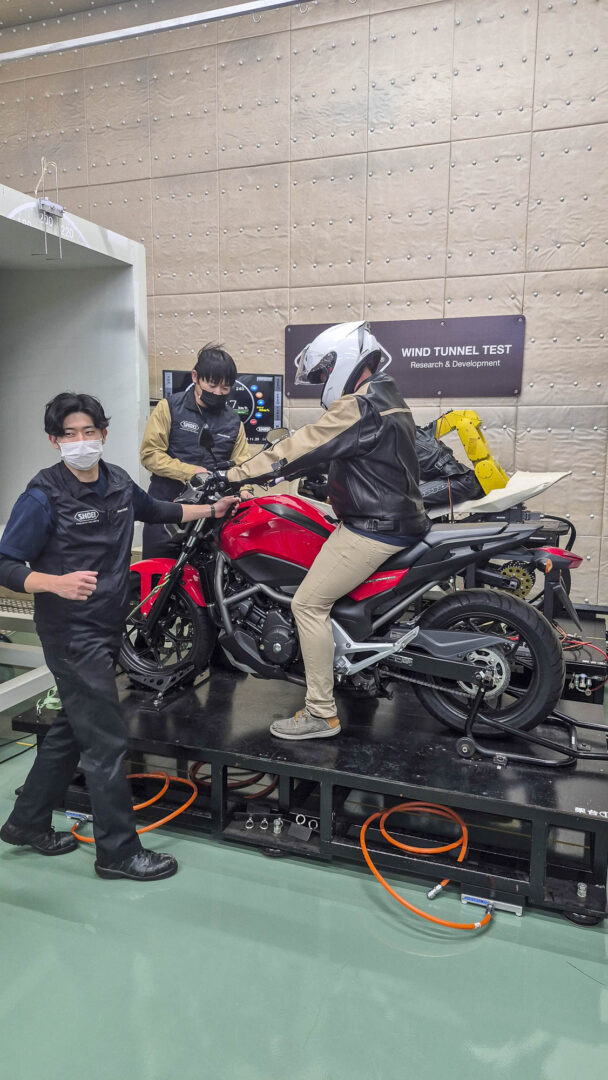
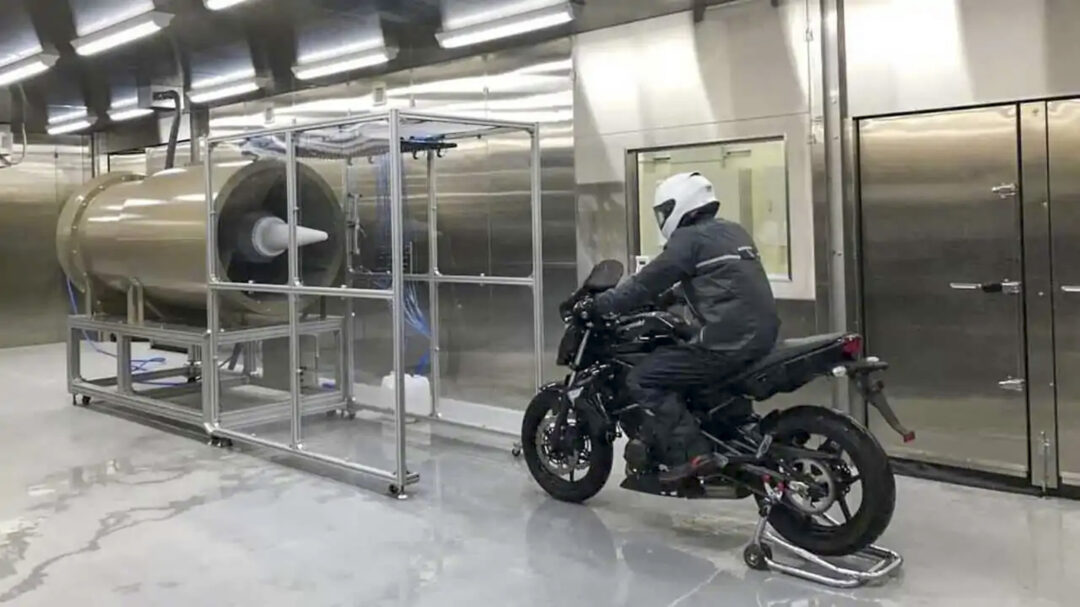
Unfortunately, photography inside the factory itself wasn’t permitted as, understandably, Shoei are very protective of their manufacturing secrets. However, I was able to take photos of their incredible $5 million wind tunnel, where I even had the chance to sit on a bike and test the Shoei X-SPR Pro helmet at 150 km/h.
This wind tunnel is used to test aerodynamics, ventilation and noise levels for both new concept helmets and production models.
Four Seasons in One Climate Wind Tunnel
Right next door is Shoei’s newly built climate wind tunnel test facility, which recreates extreme weather conditions.
Here, the team tests helmets in rain, wind, humidity and cold conditions to ensure visors don’t fog and the helmets remain completely waterproof.
I hopped on the test bike while they dialled the temperature down to 2°C, and it got cold very quickly as the turbine fired up. It was a pretty incredible way to see just how seriously Shoei takes its testing procedures.
R&D, Certification and Safety Testing
Next we were taken through the R&D and certification testing rooms, where Shoei performs all the required safety tests.
This includes drop tests, pin-drop tests, strap-breaking strain tests, and a range of other durability checks.
Seeing these tests first-hand was fascinating. The amount of punishment the shell and EPS liner can absorb while still remaining comfortably within certification limits was impressive.
It was also eye-opening to see how much inspection and quality control go into each helmet along the way.
While robots are used in parts of the production process, around 80 per cent of the manufacturing is still carried out by hand. That attention to detail really shows just how much care goes into building every Shoei helmet.
Visiting Shoei’s Tokyo Headquarters and Gallery
The following day, we travelled to Tokyo to visit Shoei’s global headquarters in Akihabara, a district famous for electronics, anime and Japanese pop culture.
There we met the design, marketing, sales and management teams before heading just around the corner to the Shoei Gallery.
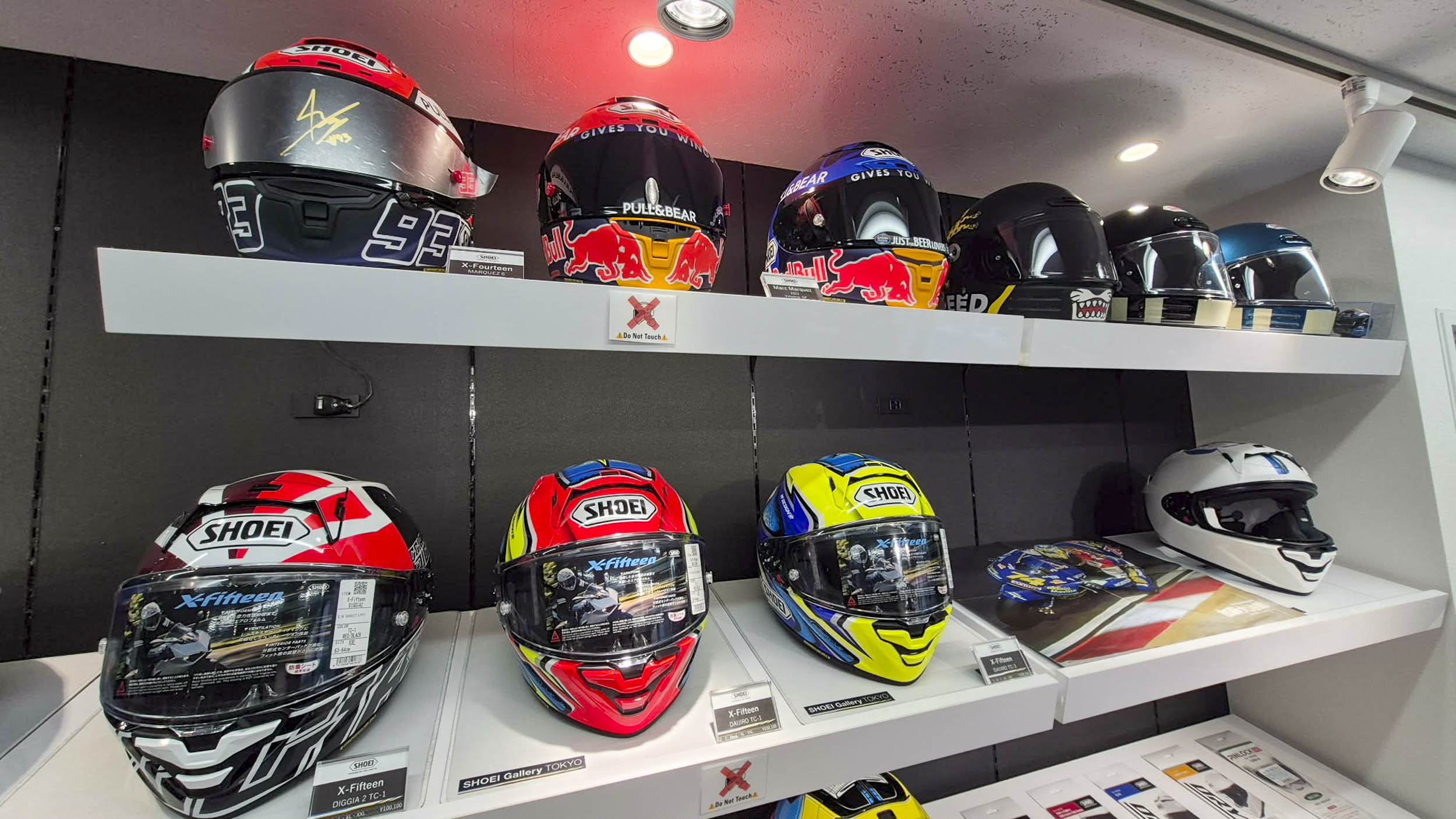
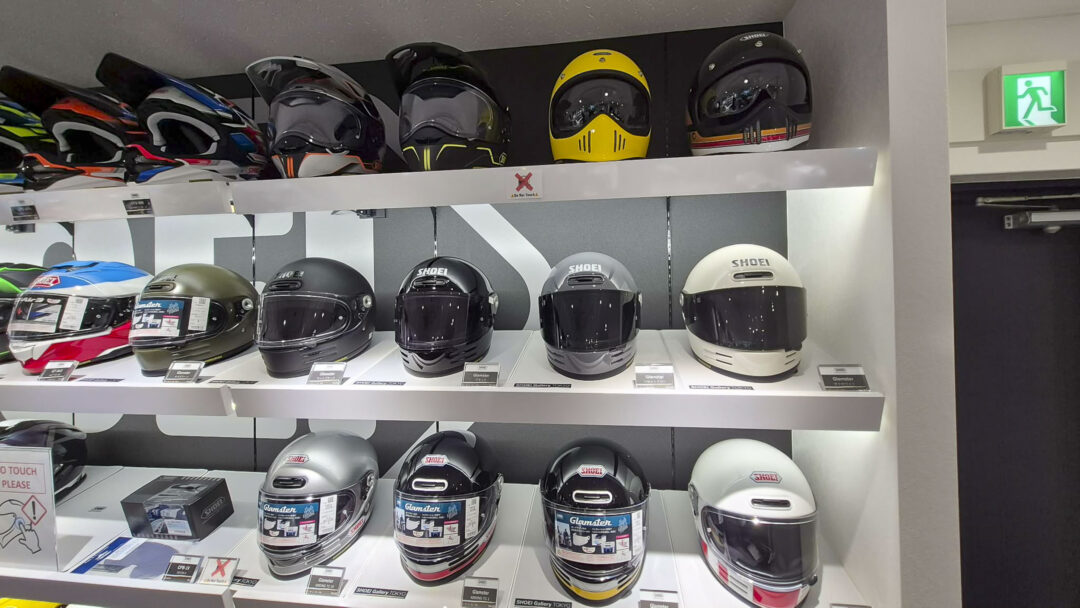
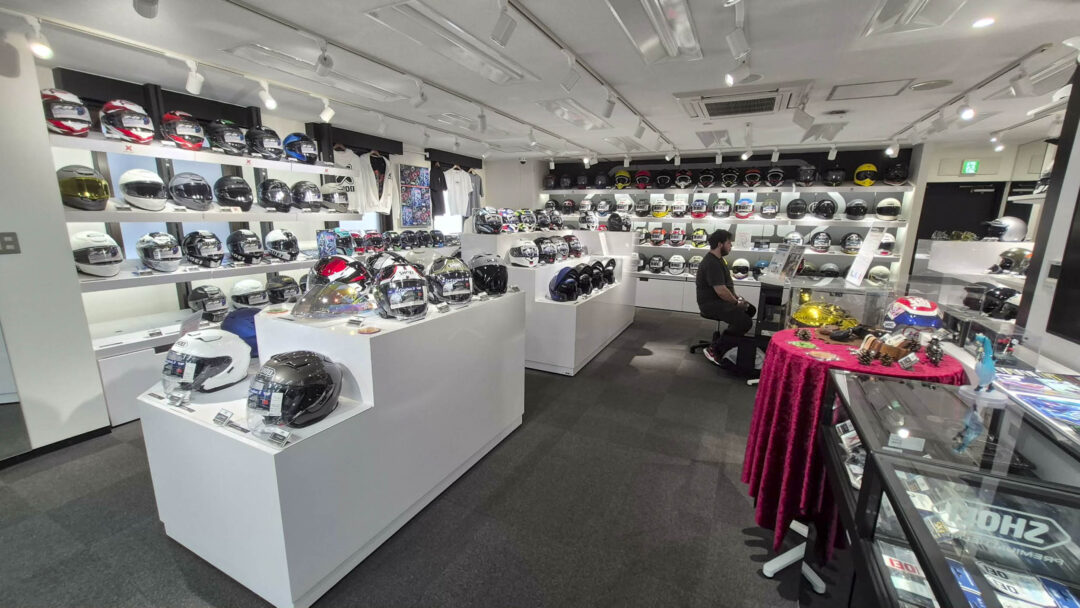
The gallery is a showcase of every Shoei helmet model and graphic currently available, along with a number of collectable items and championship-winning helmets from riders Shoei has supported over the years.
The gallery also offers a personalised helmet fitting service, where Shoei owners can book an appointment with a trained fitment technician. When we visited, there were three customers going through the process, which involves carefully adjusting the internal padding to create a truly custom fit. And it’s this service that is now becoming available in New Zealand. It’s just another example of the level of service and attention to detail that defines the Shoei brand.
First NZ Shoei Personal Fitting
Remember, if you’d like to get a Shoei professionally fitted, there is a PFS session at Boyd Motorcycles this weekend. And they’ve even got a Shoei sale on, so you can pick up a new lid then get it fitted. If you’re keen on a Shoei Personal Fitting, you can book HERE.