
- Western Australian collector Ian Boyd owns 44 Vincents and nearly every production model built from 1935-1955
- The collection includes rare Black Lightnings, race bikes, experimental engines and failed Vincent revival projects
- Hidden away in Jurien Bay, the private collection has become a bucket-list destination for Vincent enthusiasts worldwide
Hidden away in a small fishing town north of Perth is one of the greatest Vincent collections on the planet — 44 legendary machines, rare race bikes, experimental engines and enough stories to fill a lifetime.
Vincents and Other Things (But Mostly Vincents…)
Jurien Bay is a fishing port 200km north of Perth on Western Australia’s Indian Ocean coastline. Today, it’s home to what remains of the state’s lobster fishing industry, but for motorcycle enthusiasts, it’s become something else entirely — home to what is surely one of the finest Vincent collections anywhere in the world.
Ian Boyd had been crayfishing since 1964, but sold up in 2004, well before ultra-low fishing quotas introduced in 2009 reduced the local fleet from 47 boats to just seven. The collapse of the local industry allowed Boyd to spend more time with his motorcycles — a remarkable collection of mainly British classics centred around Britain’s ultimate sporting marque, Vincent-HRD.
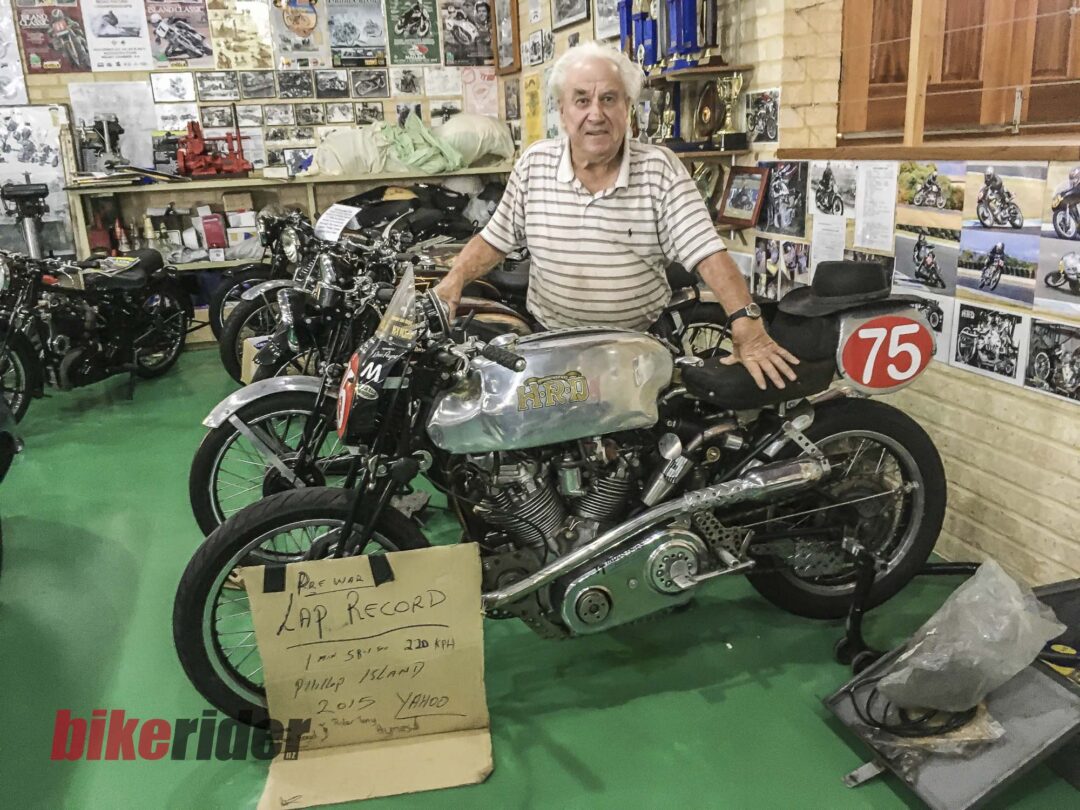
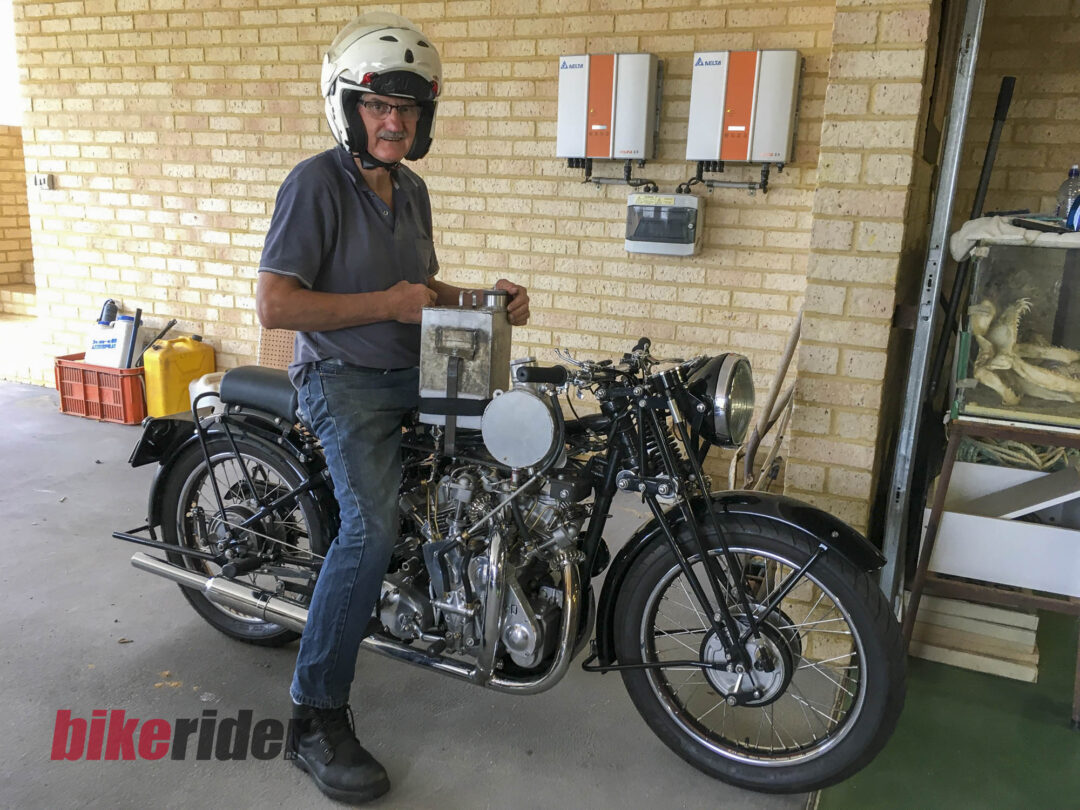
“There are 69 bikes here at the moment, and another five nearly finished being restored,” says Boyd, a fit and purposeful-looking 81-year-old freshly back from an early morning sea cruise to collect lobster for lunch. “Right now, I have 44 Vincents altogether, plus a Cooper-Vincent car, and various engines with a story to tell. There’s enough here to keep me busy!”
A former house builder before turning to fishing, Boyd started what he originally intended to be a small collection of vintage bikes with the purchase of a 1955 Series D Vincent Black Knight in 1987.
“I’d been crayfishing for years, and I wanted something else in life,” he says with a chuckle. “I decided I’d buy something that I liked to mess about with, and chose motorbikes — I’d had them when I was a teenager. I started out just wanting a mixture of makes — BSAs, Nortons, Triumphs, whatever — but I was lucky because a Vincent happened to come up first, and it all grew from that.
“I never knew anything about Vincents up to then, but the Black Knight turned up in Perth and I bought that. Then, seeing as I had one already, I bought all four of Tom McQuade’s Vincents. He was a Sidecar Speedway ace at the legendary Claremont Speedway in Perth, and I bought his Speedway outfits and two Black Lightnings, but they were all in pieces.
“Then I met a guy based in Adelaide named David Bowen, who’d been an apprentice in the Vincent factory alongside John Surtees, and he offered to restore them all for me. Quite a lot of Vincents wound up in Australia, and we just bought them as they came up for sale anywhere in the country.”
Building the Vincent obsession
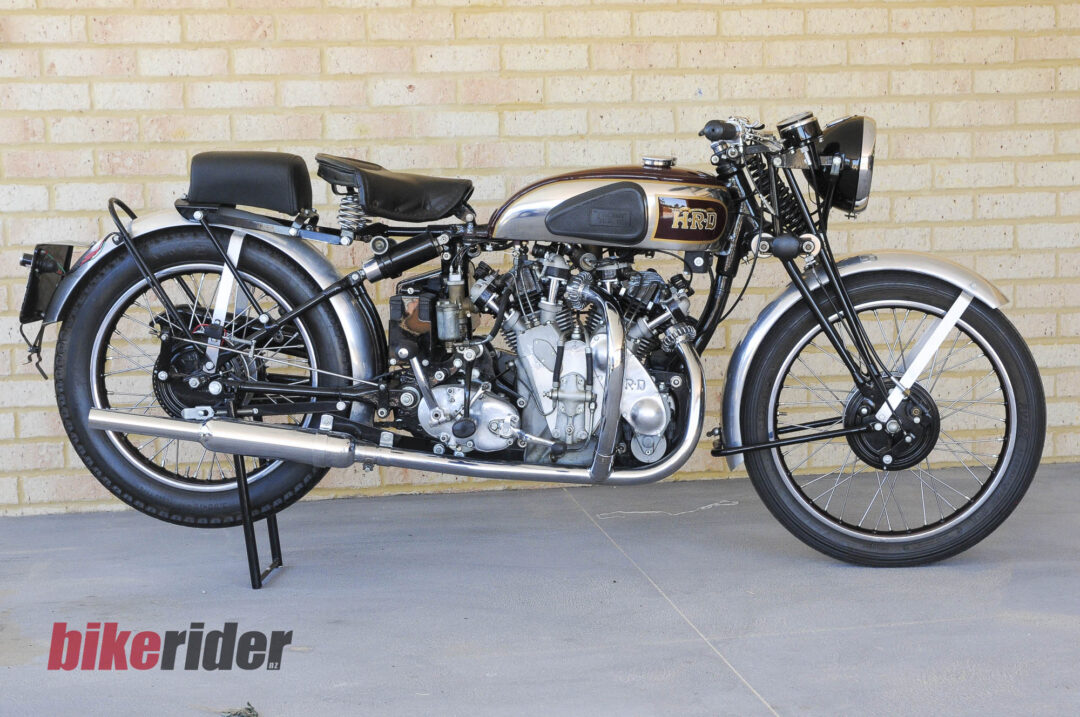
Today Boyd has a near-complete set of every production Vincent model built from 1935 to 1955, plus two earlier machines using proprietary engines. He has one of the 45 Model J singles powered by a JAP engine, alongside one of the 46 Model Ps built in the early ’30s with a Rudge Python motor in a diamond frame.
Both used cantilever rear suspension, a design Philip Vincent patented in 1928 at just 20 years old.
After a disastrous 1934 Isle of Man TT, when all three Vincent-HRD entries with Python motors retired with engine failures, Vincent and Australian designer Phil Irving decided to build their own engine. Boyd owns examples of the first Vincent-built singles from 1935, including both the Meteor and the sportier Series A Comet.
“I never intentionally set out to have one of everything, but that’s just the way it’s turned out,” he says. “I’ve got at least one of every model from when Vincents built their first engine with Phil Irving in 1935, right through to the last Series D versions of the Black Prince and the Black Knight.
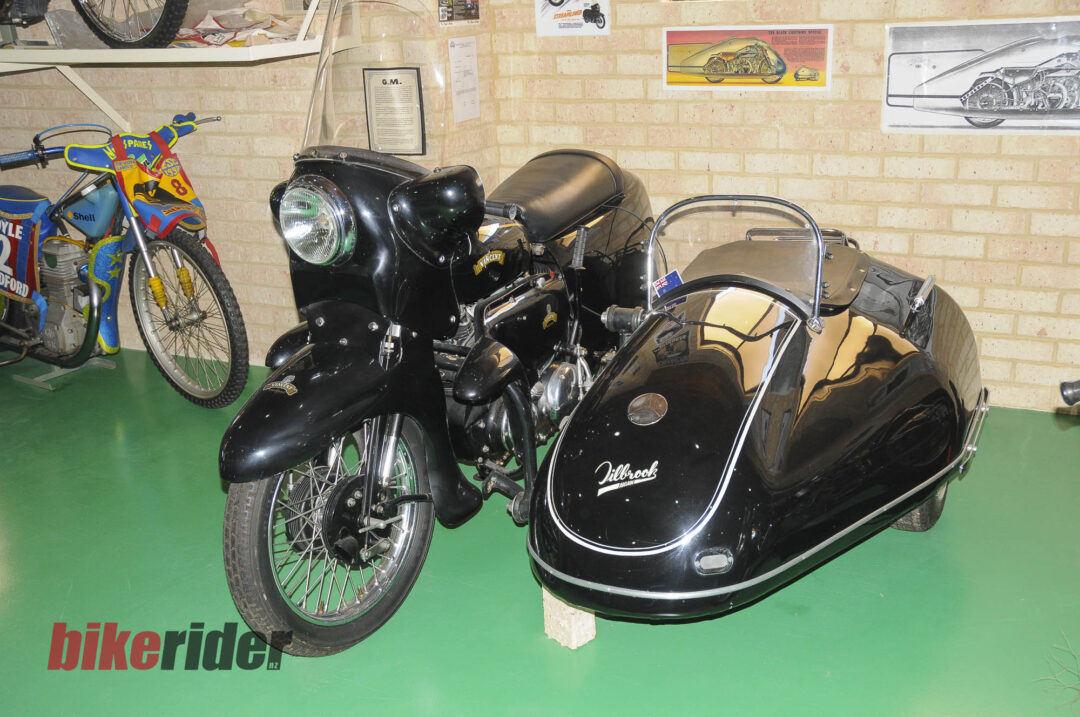
“But strictly speaking, I’m missing two bikes. One is the White Shadow, which was a Rapide built to Shadow specification. Fifteen of those were made in 1950-51 without the usual black-painted engine. The other one I’m missing is a Series D single called the Victor. They only built one before Vincent closed in 1955, and that sold at auction a few years ago for a huge amount of money. But everything else is here!”
As the collection expanded, Boyd eventually needed a bigger house.
“I had somewhere else before with much less space for the bikes — they were jam-packed into one room half the size of the present one, and then they spilt over into the bedrooms, the passageways, the lounge room and out onto the back veranda!
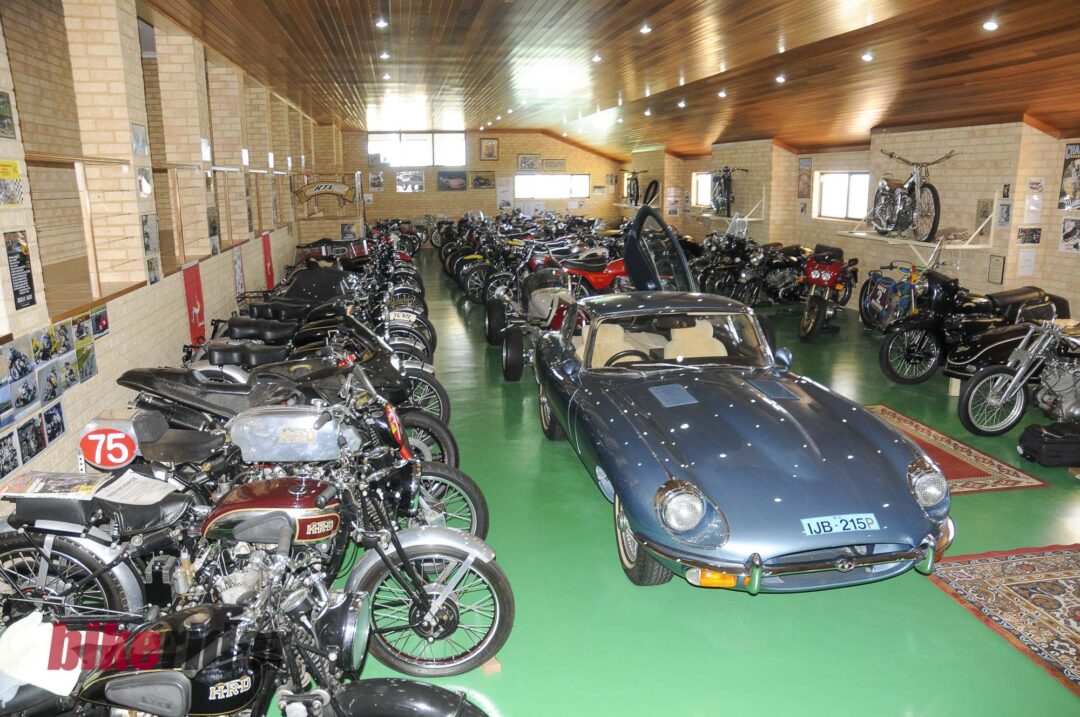
“So as the collection kept expanding, we had to have somewhere larger, so I designed this new house and built it myself with a good-sized room for the bikes, and then the rest of the house arranged around that. Priorities!”
A house built around motorcycles
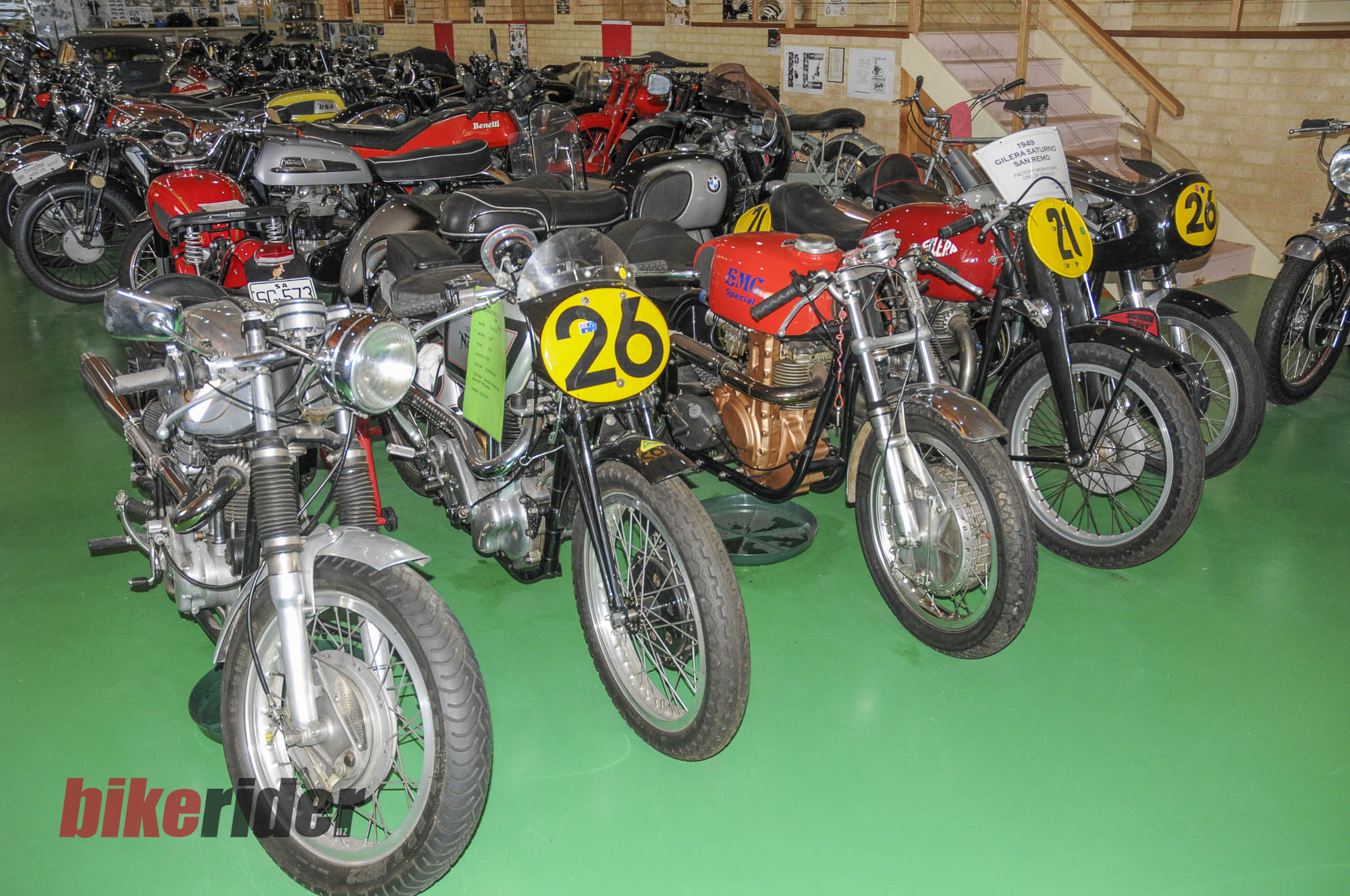
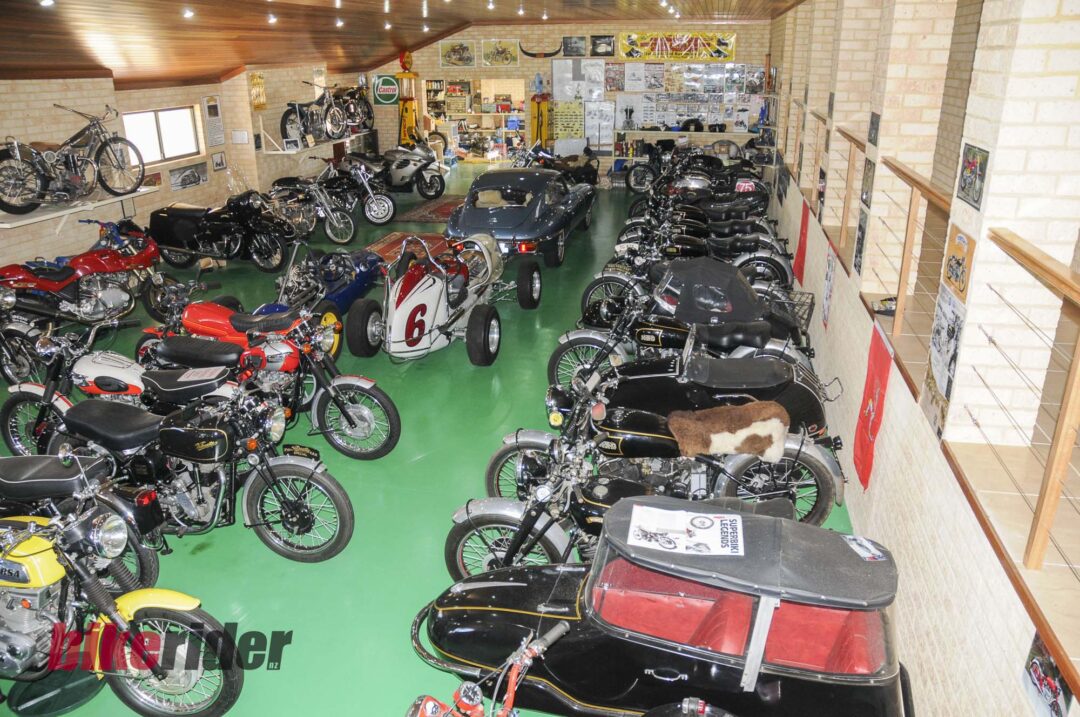
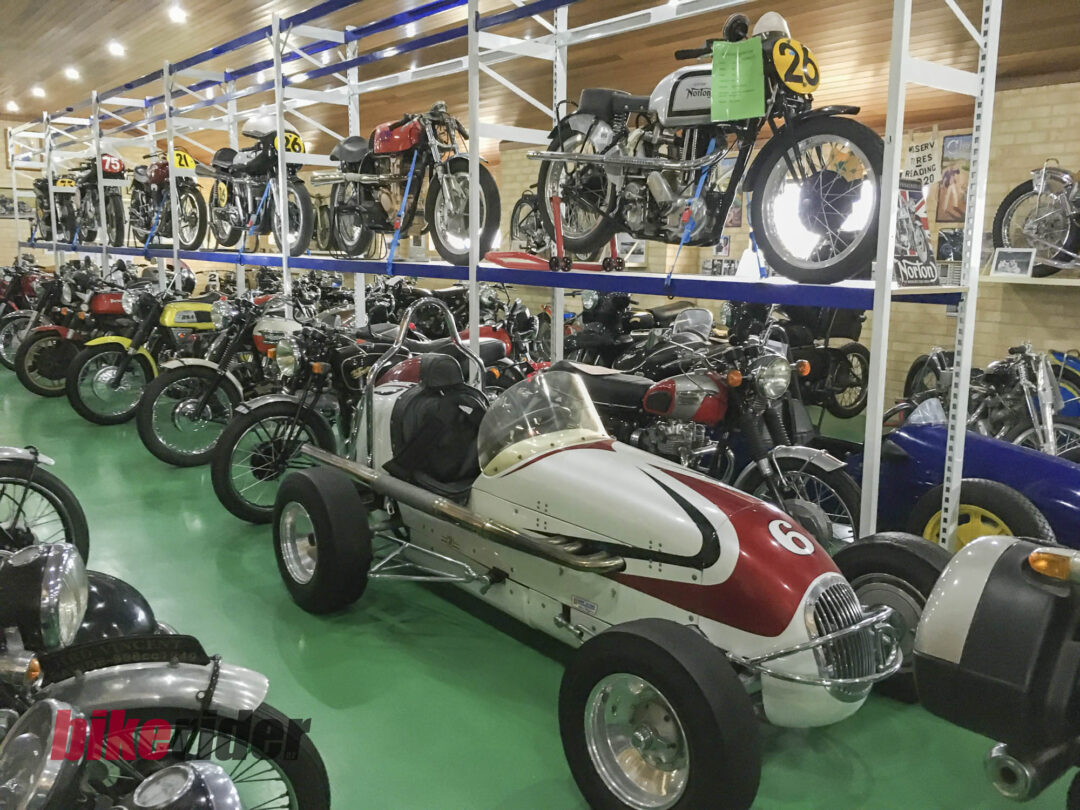
Completed in 2013, the resulting building combines a spacious bike museum with comfortable living quarters off to one side. Besides the Vincents, there are Speedway bikes, a Manx Norton, Matchless G50, Velocettes, Royal Enfields and more. There are also several cars, including a Jaguar E-Type Coupe and a Cooper-Vincent single-seater race car.
But it’s the Vincents which dominate the collection.
The Black Lightning dragster
Perhaps the most imposing motorcycle in the collection is the incredible Black Lightning dragster, a machine with an improbably chequered history.
“This drag bike was the second last Black Lightning ever made out of a total of 36, not 34 as often mistakenly written,” says Ian. “The motor was originally built for Cooper Cars, but then they brought the Coventry Climax motor out, so Coopers cancelled the order.
“A Kiwi named Bill Hocking was living in America at the time, and he heard about this, rang the factory up and got them to build this motor and put it into a drag bike at the factory.
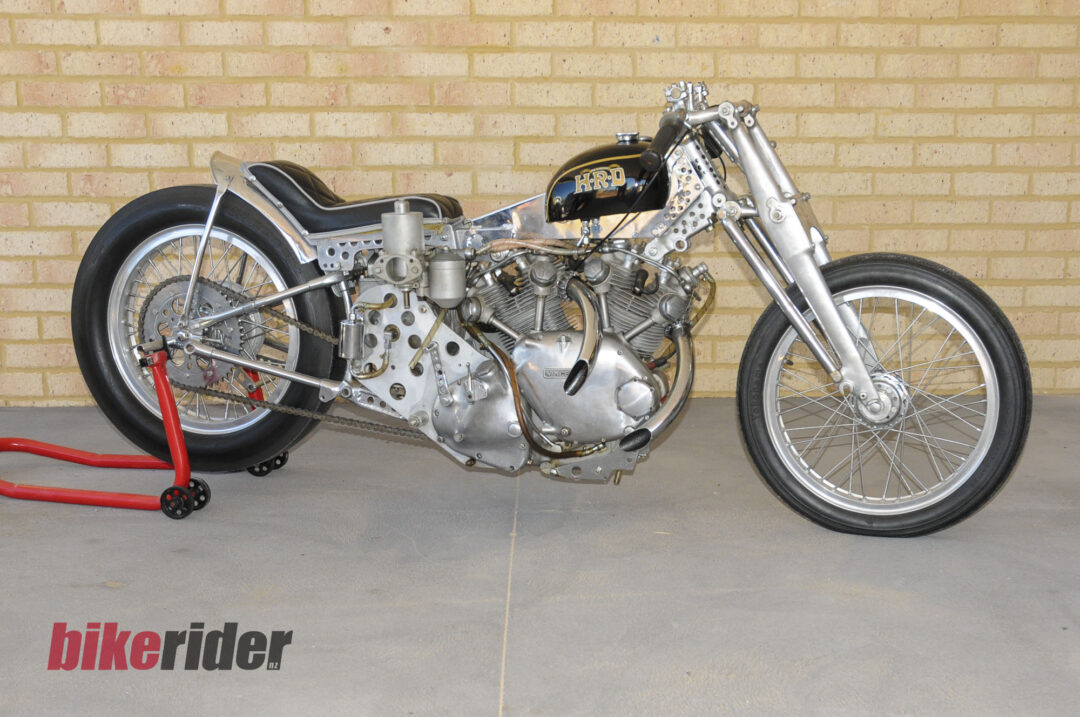
“We’re pretty certain it was drag-raced in America unblown, just as it came from Vincents, but then it came to Australia and went to the Boeing aircraft factory at Fishermans Bend in Melbourne, who stuck a big ten-inch Shorrocks supercharger on it.
“Tom McQuade then bought it and brought the bike to WA, put its motor in his sidecar outfit, and raced it at Claremont Speedway in 1962 with the blower fitted. They had lots of problems because even Claremont’s straights weren’t long enough for them to get the airflow running on it, so they kept melting pistons on the front cylinder.
“So then he converted it back to being a drag bike, and in 1982 he took it to the Ravenswood Drags in WA and did the quarter mile in 9.26 seconds at 144mph, with 165 horsepower. It’s the only dragster ever built in Vincent’s Stevenage factory!”
It’s not the only Black Lightning in the collection.
Beside it sits another pristine example once owned by Prince Bira of Thailand.
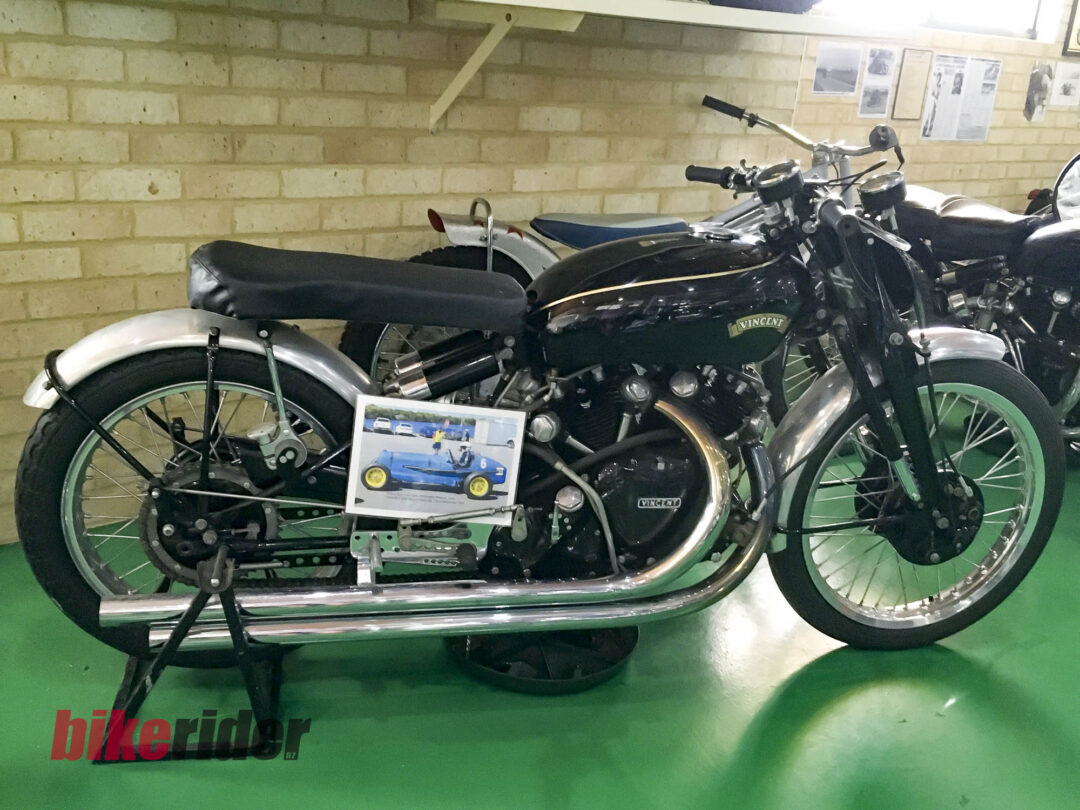
“Prince Bira bought one of the five Black Lightnings sold through Singapore in 1952,” says Ian. “He only had it for twelve months, but there’s no record of him ever racing it.
“Then Gordon Benny from South Australia purchased it in Singapore. He worked on a BP oil tanker, so he smuggled it onboard. When they docked in South Australia, he wheeled the Vincent down the catwalk past Customs.
“The Customs man said, ‘Well, it’s not a motorbike then, is it? It’s a piece of agricultural machinery, right?!’ Gordon nodded, signed the paperwork and rode away with it!”
The bike later broke lap records at circuits across South Australia.
Rare race bikes and restorations
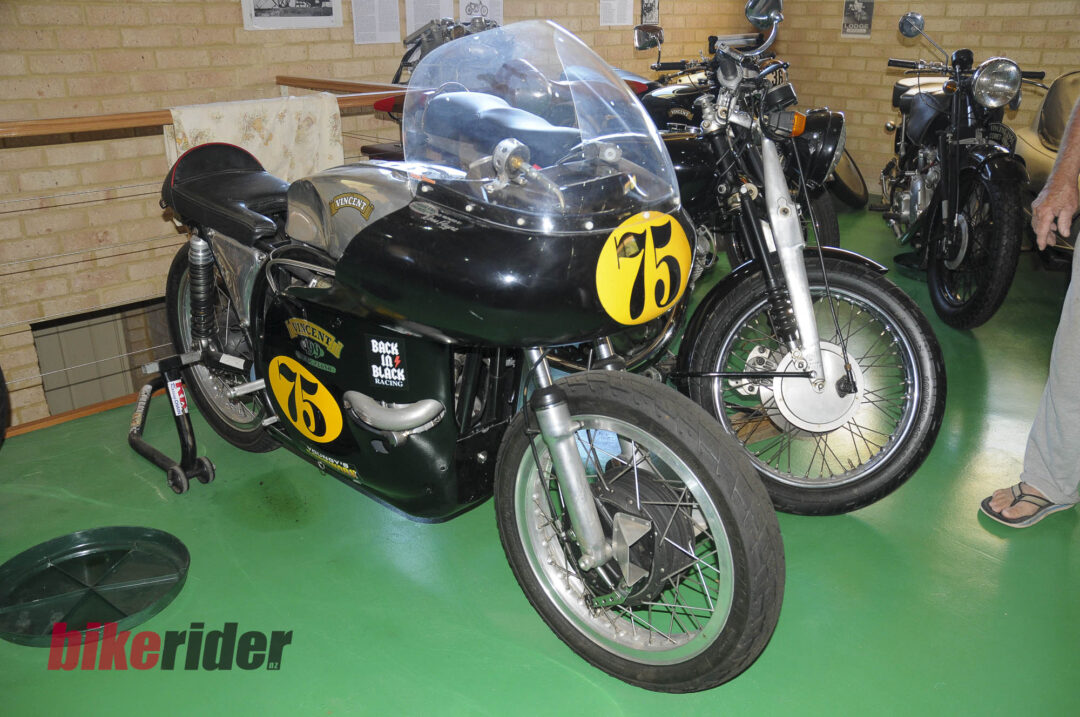
The earliest postwar Vincent V-twin in the collection is a very early Series B Rapide built in 1946 with engine number 82. It was sold directly from the factory to famous British racer Raymond Mays, founder of the BRM racing car company.
Another distinctive model is the 1952 US-spec Touring Rapide painted in bright Chinese Red, complete with high-rise handlebars and valanced mudguards. Only 50 were produced.
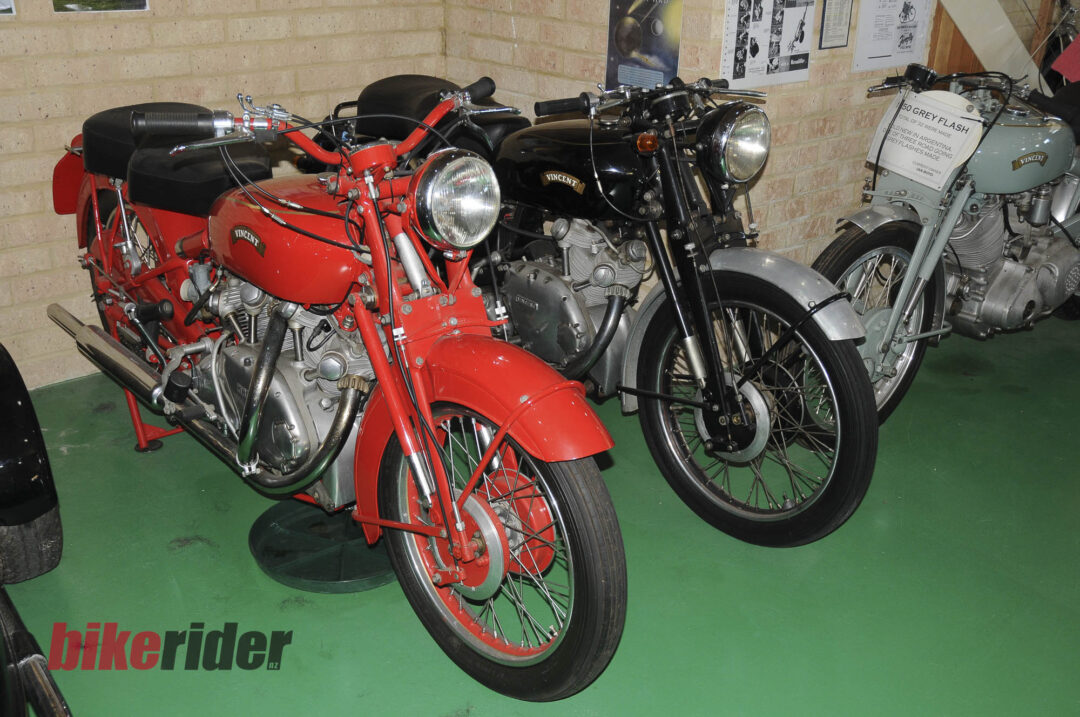
There are also several rare pre-war Series A twins.
“From 1937-39 there were 78 Series A twins built, and we believe only 35-40 are now left in the world,” explains Ian.
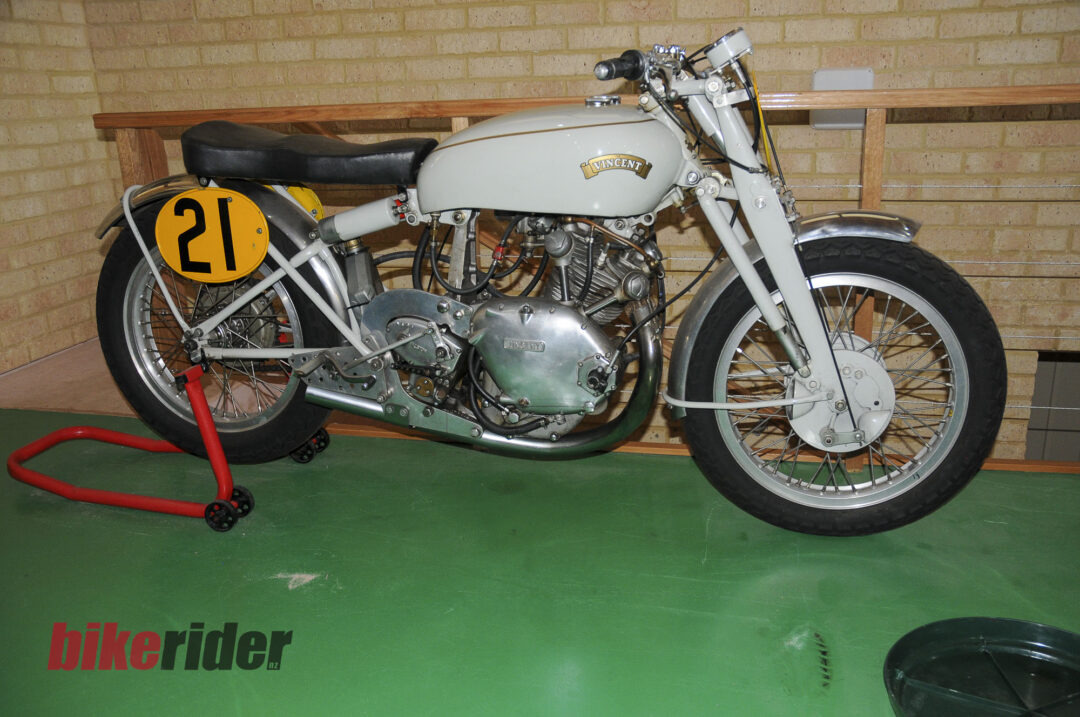
“One of the Australian bikes eventually wound up in Tasmania where it was raced, crashed and modified over the years before being restored.
“In 1982 a collector had 10 Vincents stored in a warehouse in Newcastle, but vandals got in, set fire to the warehouse, and burnt them all out. A friend of mine bought the burnt-out wreck and restored it to perfect condition — there it is over there!”
That restoration project eventually led to the creation of several Series A replicas, one of which is now in Boyd’s collection.
Strange engines and forgotten projects
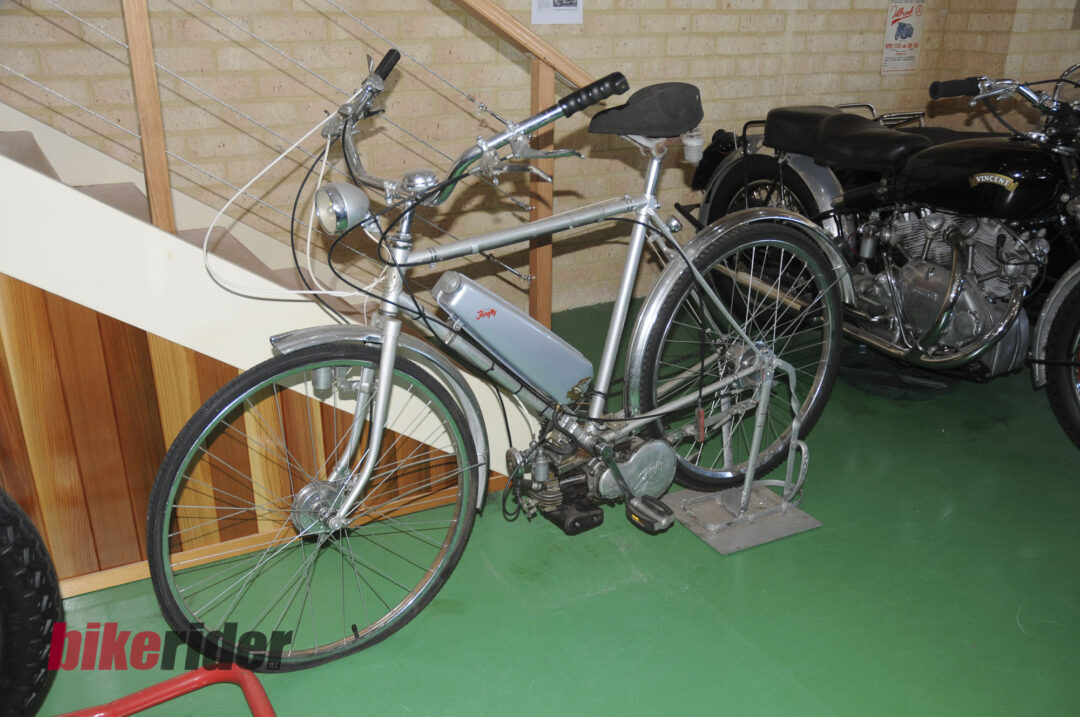
Among the many oddities in the Boyd Collection is one of the 3,000 Vincent Firefly mopeds built from 1953 onwards under licence from Miller. Powered by a tiny Phil Irving-designed 45cc clip-on motor, it’s one of only two in Australia.
There’s also a rare Uniflow engine — a fascinating wartime project that drew Irving back to Vincent in 1943.
The 497cc two-stroke engine featured three cylinders, six pistons and twin crankshafts, and was designed to power airborne lifeboats intended to rescue downed RAF aircrew.
Only around 50 were built before the project was cancelled near the end of the war.
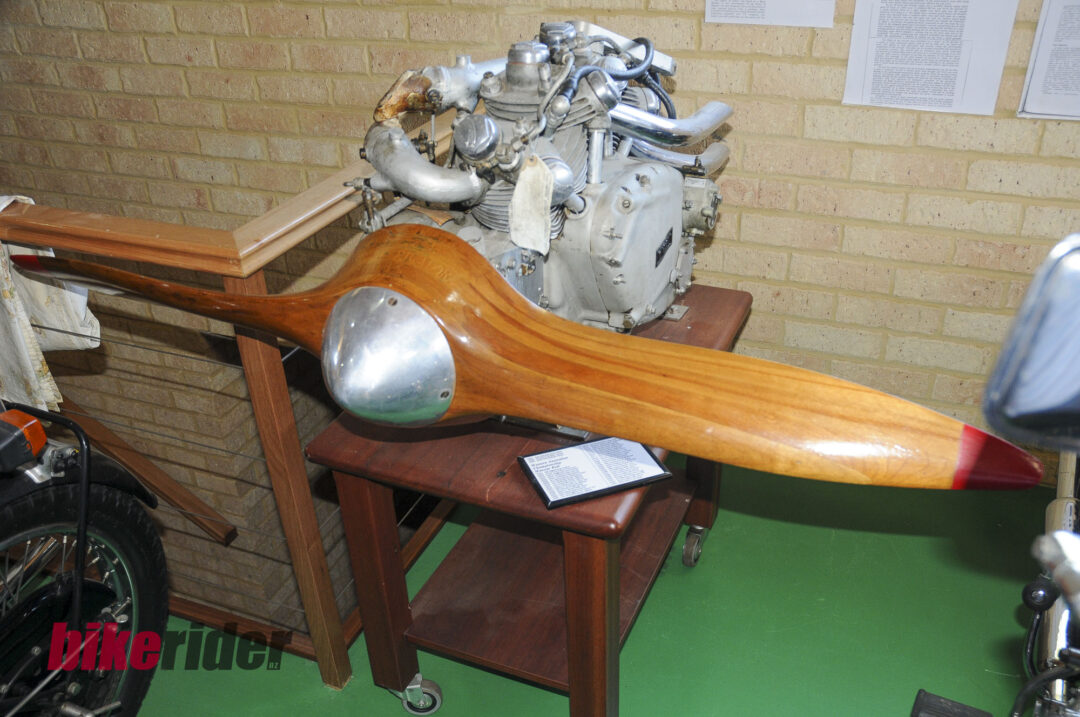
Next to it sits a Picador engine, developed for pilotless target aircraft for the Royal Navy.
“The Picador came when the Royal Navy were towing targets, and they were frightened they might shoot down a pilot, so they wanted an electronically controlled pilotless drone to pull the target,” says Ian.
“They trialled it over the North African desert, and they actually had it flying at one stage for 45 minutes until it ran out of fuel and landed via parachute.
“But by then they had ground-to-air missiles, so they didn’t need such planes anymore, and the Ministry cancelled the order.”
Only three complete Picador engines are believed to survive.
The Vincent story continues
Besides the original factory-built Vincents, Boyd’s collection also includes several later attempts to revive the famous marque.
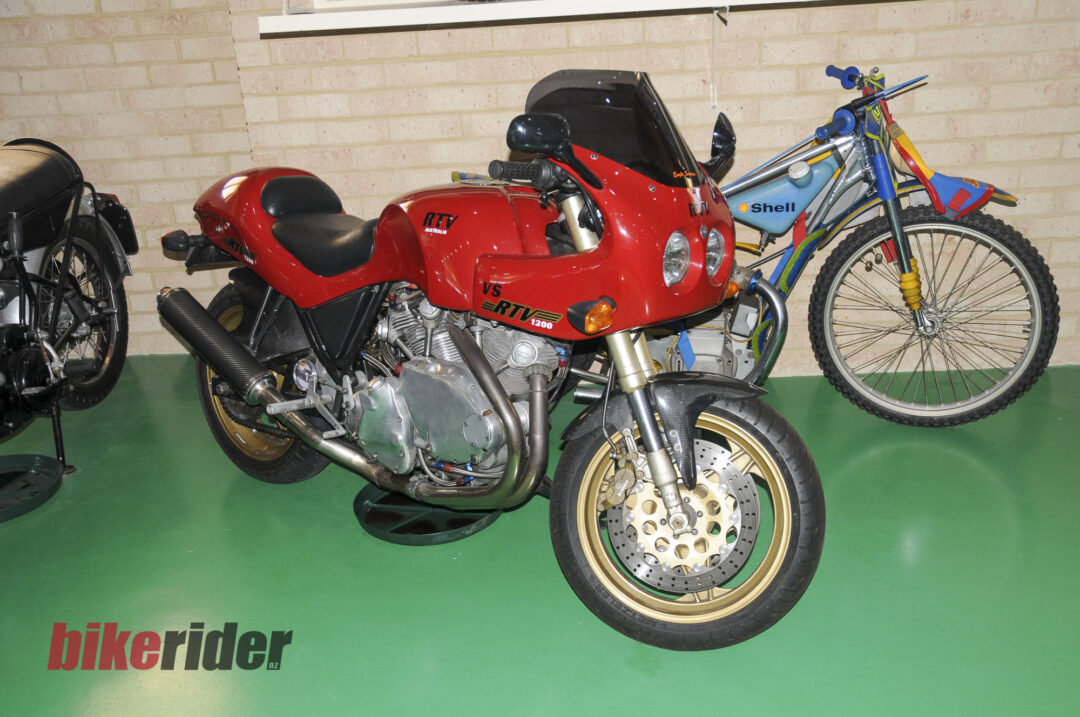
One is the RTV 1200 Black Widow, an Australian-developed Vincent-inspired café racer project created during the late 1990s by Terry Prince.
Another is the Honda RC51-powered Vincent prototype developed in America by Bernard Li before that project collapsed following Li’s death in 2008.
From the earliest JAP-engined singles through to Black Shadows, Rapides, Black Lightnings and the later revival projects, Boyd’s collection tells the complete Vincent story from beginning to end.
Although the collection isn’t formally open to the public, enthusiasts regularly make the pilgrimage north from Perth to see it.
“I get visits all the time from people from all over the world, as well as local bike clubs,” says Ian. “I’m happy to let anyone come and see my bikes, and we never have any problems with security. Everyone knows how to behave, and do the right thing.”
That alone makes Jurien Bay worth the ride.
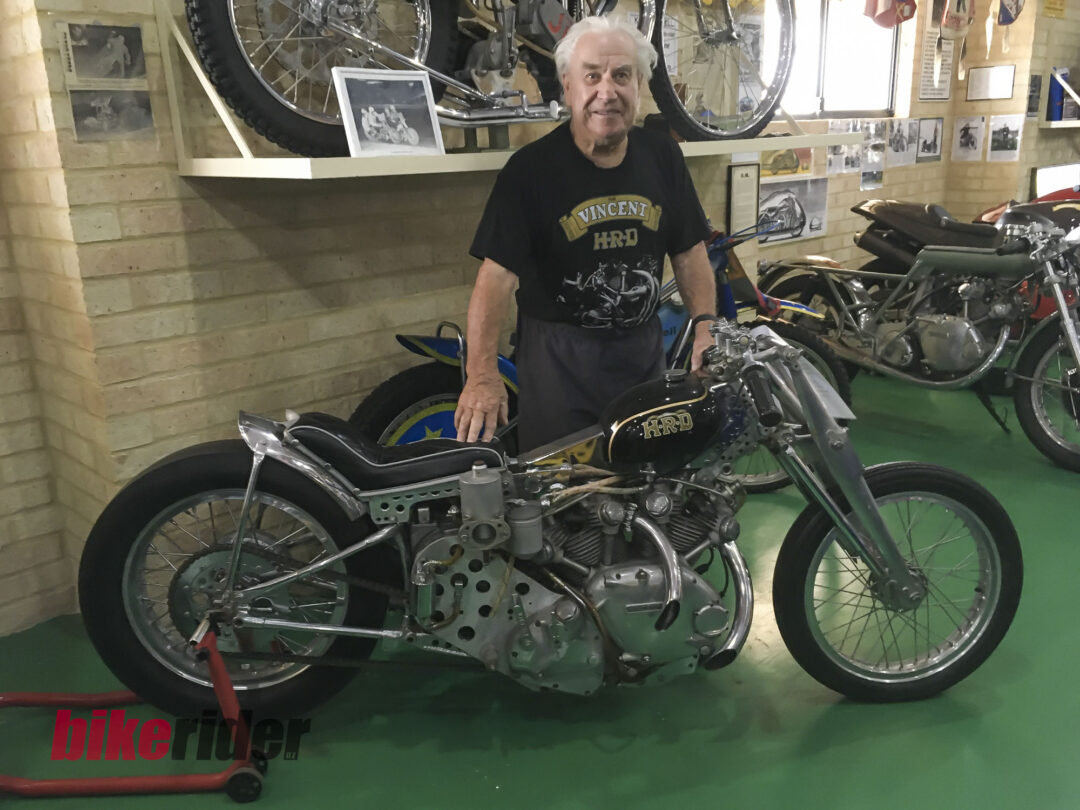
Photo credit: Jim Scaysbrook

Vincent: The Original Superbike
Founded in 1928 by ex-Harrow public schoolboy and Cambridge University graduate Philip Vincent, when he purchased the defunct HRD company with the financial aid of his father, an Argentinian rancher, the Vincent marque lays valid claim to having produced the first true Superbike in motorcycling history. The series of 1000cc V-twins produced over the two decades from 1936 (with a five-year gap during WW2, when Vincent production was devoted to non-biking war materials) set new standards for two-wheeled performance and engineering excellence, which no other motorcycle manufacturer in the world could match.
This was reflected in the endless succession of race victories and speed records obtained by Vincent riders in the immediate postwar decade between 1946 and 1955, when production ceased. These included Rollie Free’s 1948 World Land Speed Record for unsupercharged motorcycles at 150.313 mph, obtained at Bonneville wearing only a pair of bathers, and lying prone on his stomach aboard his Vincent with his legs stuck out the back, all to reduce drag. Created 90 years ago in 1936 by the brilliant Australian engineer Phil Irving, only 78 versions of the first Series A high-cam 47.5-degree Vincent Rapide V-twin were in fact manufactured before the outbreak of war but, redesigned by Irving for the postwar era, its revamped 50-degree V-twin successor the Series B Vincent was released in standard Rapide form in 1946, comfortably living up to its claim to be the fastest and safest production motorcycle in the world.
In high-performance Black Shadow form, and especially in competition Black Lightning guise, the Vincent earned an enviable reputation around the world as the leading-edge benchmark of motorcycling excellence. Progressively improved in Series C form (introduced in 1949) and Series D (1954), a total of 6,852 examples of the Vincent V-twin were produced and sold all around the world after 1946 – some of them in fully-enclosed Black Prince and Black Knight sports touring guise – before the company shut down in 1955 after manufacturing just 11,036 motorcycles in total, including around 4,000 examples of the the Comet single. In spite of introducing a host of avantgarde technical features still found on today’s motorcycles – such as cantilever rear suspension, aluminium blade forks with hydraulic suspension, and monocoque frame construction using the high-cam unit construction engine as a fully-stressed member, suspended from a central oil tank – Vincent’s insistence on an uncompromising quality of manufacture and engineering was sadly incompatible with also making a profit. But the calibre of his company’s products was underlined by the success they continued to enjoy in open-class competition well into the 1970s, and their prized status as collectable – and usable – period pieces today. Just like its modern generation V-twin Ducati counterpart, ninety years ago the Vincent set standards for others to aim at. Truly, it was the first Superbike.