

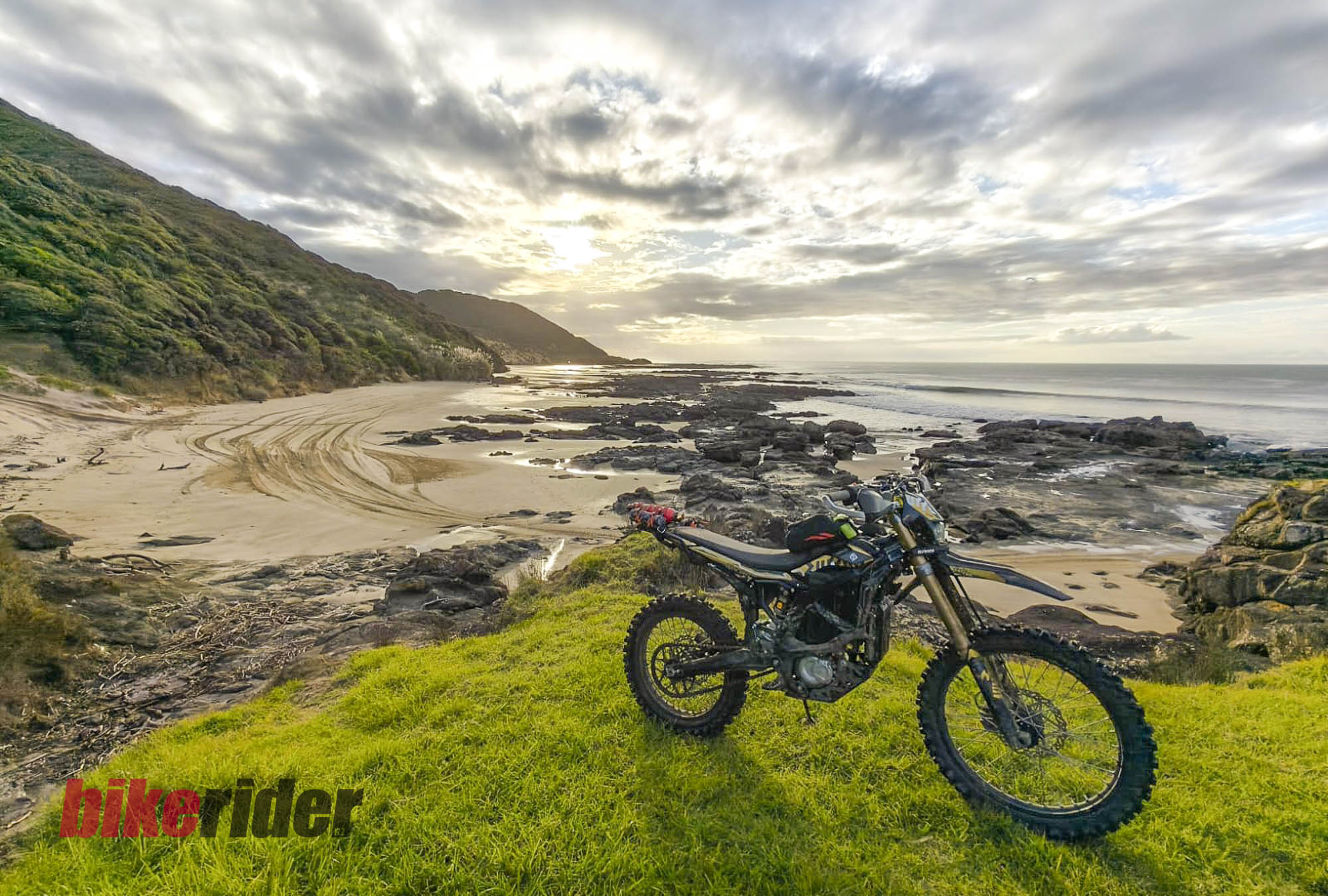
- A different way to adventure: Michael Hood combines a converted Nissan Leaf camper with a lightweight Surron Ultra Bee to explore remote New Zealand trails.
- Adventure on a budget: Sleeping in the Leaf and using inexpensive EV charging dramatically reduces the cost of multi-day motorcycle adventures.
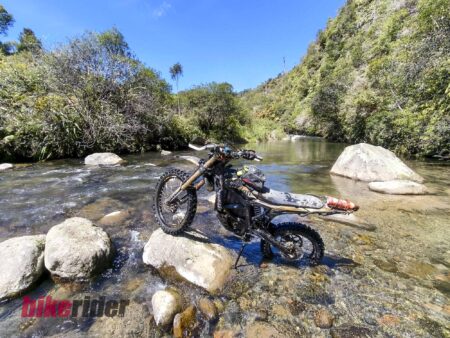
- Small bike, big capability: Weighing just 85kg, the Surron Ultra Bee tackles terrain that would challenge many full-sized adventure motorcycles.
Forget big adventure bikes and expensive touring. Michael Hood has discovered a different way to explore New Zealand’s back country, combining a converted Nissan Leaf camper with a lightweight Surron Ultra Bee electric dirt bike to create an affordable and surprisingly capable adventure setup.
Words & Photography: Michael Hood
Most adventure riders load up a big ADV bike, book accommodation and point the front wheel towards the horizon. Michael Hood has taken a very different approach.
His adventure vehicle is a converted Nissan Leaf. His trail bike weighs just 85kg, makes huge torque and doesn’t burn a drop of petrol. Together, they have opened up a new way of exploring New Zealand’s most remote tracks while keeping costs surprisingly low.
It’s certainly not the traditional way to go adventure riding—but that’s exactly what makes it interesting.
The Adventure Basecamp
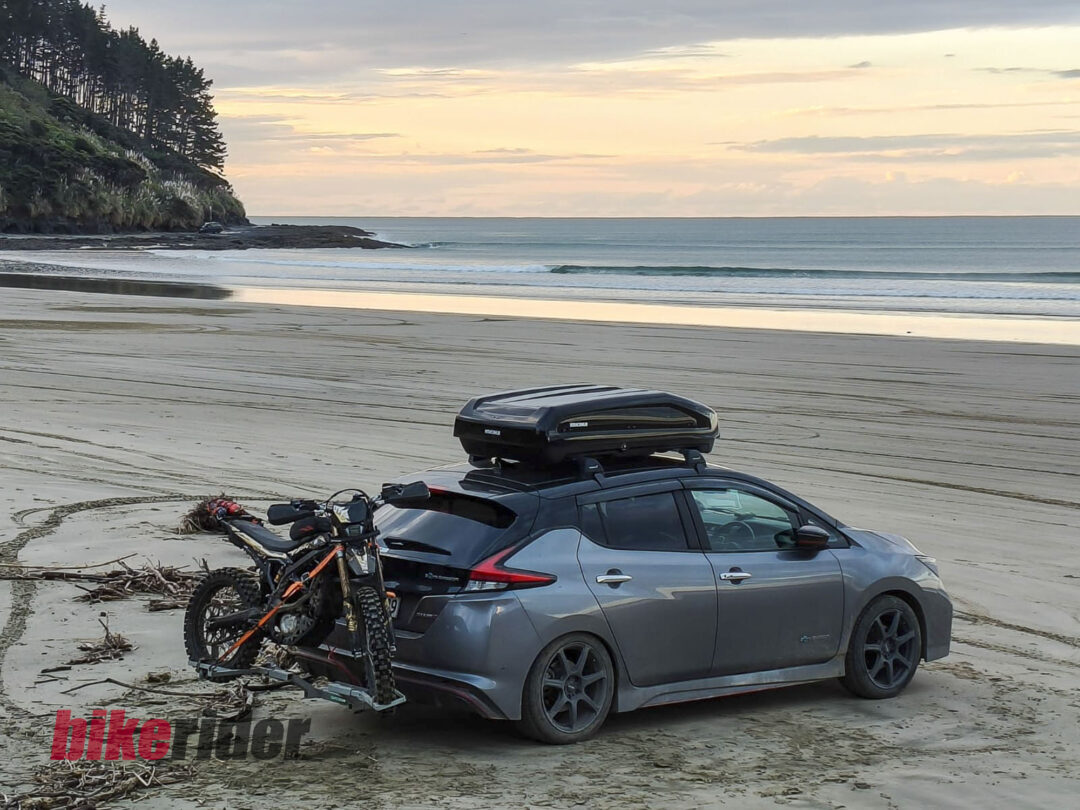
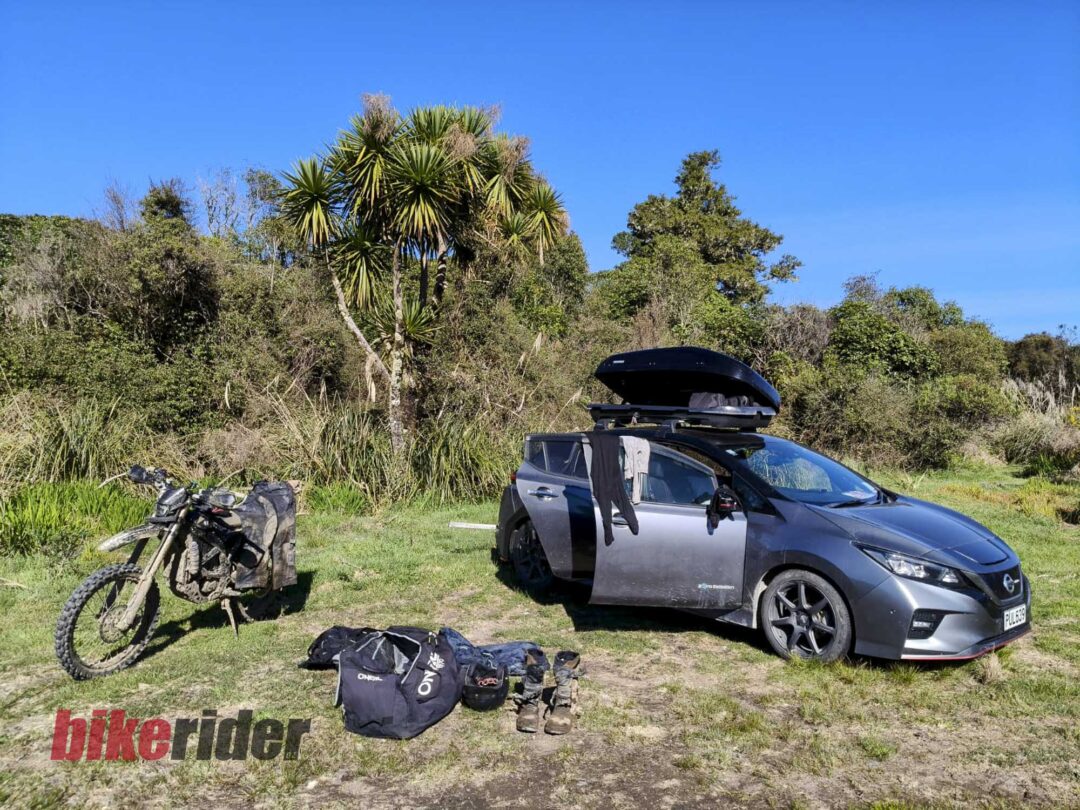
My setup revolves around two electric machines: a 2020 Nissan Leaf and a 2025 Surron Ultra Bee High Performance.
MORE ARTICLES
The Leaf has been converted into a simple camper by removing the rear seats and fitting a plywood platform topped with a foam mattress. It’s comfortable, private thanks to the tinted windows, and allows me to travel without worrying about booking accommodation.
That simple conversion has dramatically reduced the cost of my adventures. Between inexpensive EV charging and sleeping in the car, I can spend extended periods exploring New Zealand without the usual accommodation and fuel bills.
“It’s certainly not the traditional way to go adventure riding—but that’s exactly what makes it interesting.”
Most towns have an aquatic centre where I can grab an inexpensive shower every day or two, and because I don’t book anything in advance, I have complete flexibility. If I discover somewhere interesting, I can stay longer. If the weather turns bad, I’m warm, dry and comfortable inside the Leaf.
Finding the Good Stuff
Having spent decades riding New Zealand’s roads—many of them countless times—my interests have shifted.
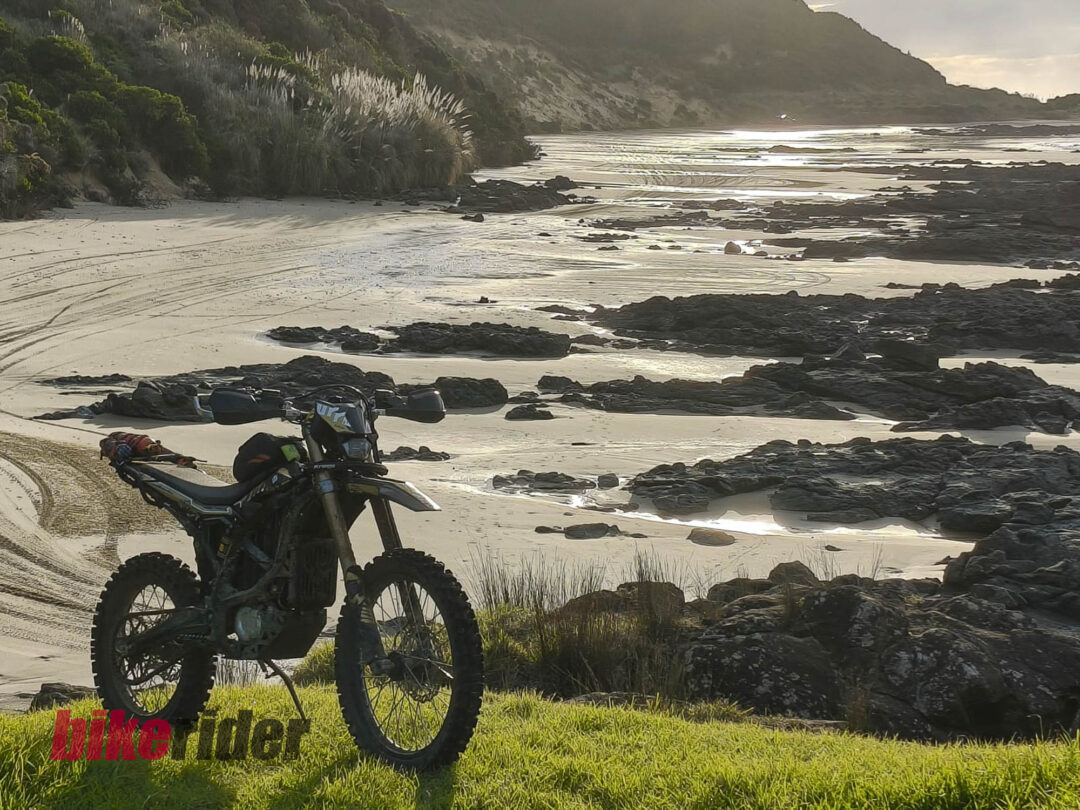
These days, I’m far more interested in rough back-country tracks that I’ve never explored before. The more remote and challenging, the better.
“If I can walk it, there’s a good chance the Ultra Bee can ride it. In many ways, it’s more like a two-wheeled mountain goat than a conventional motorcycle.”
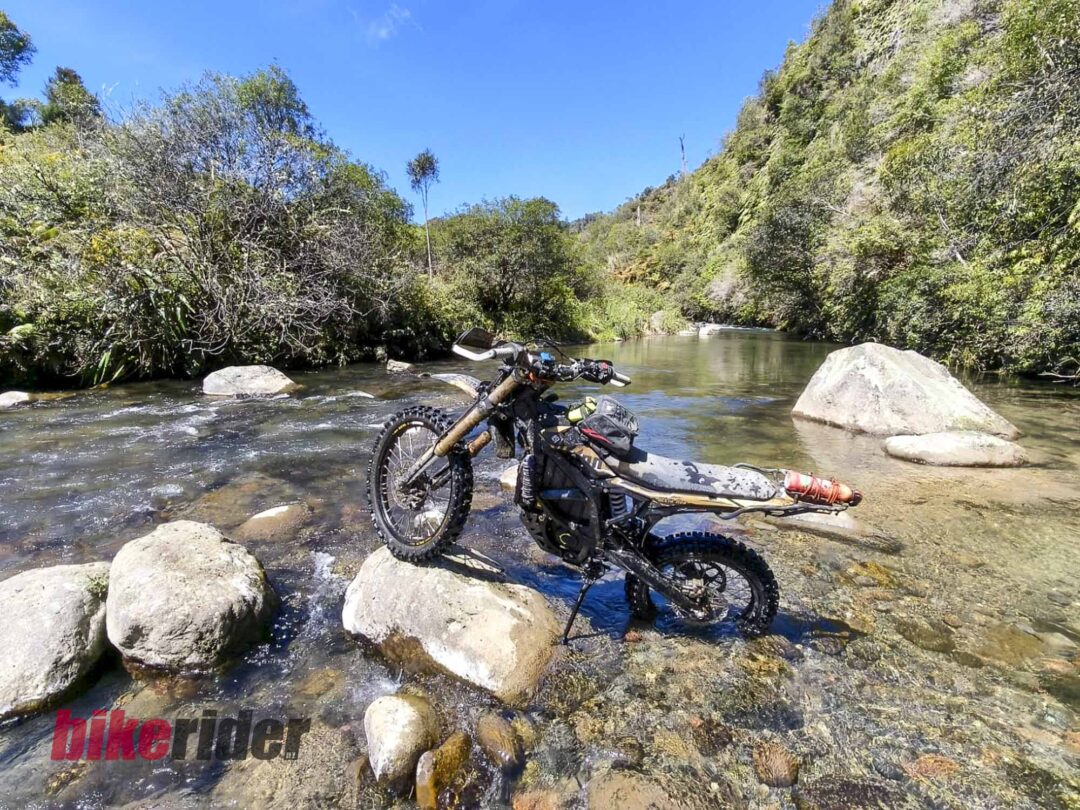
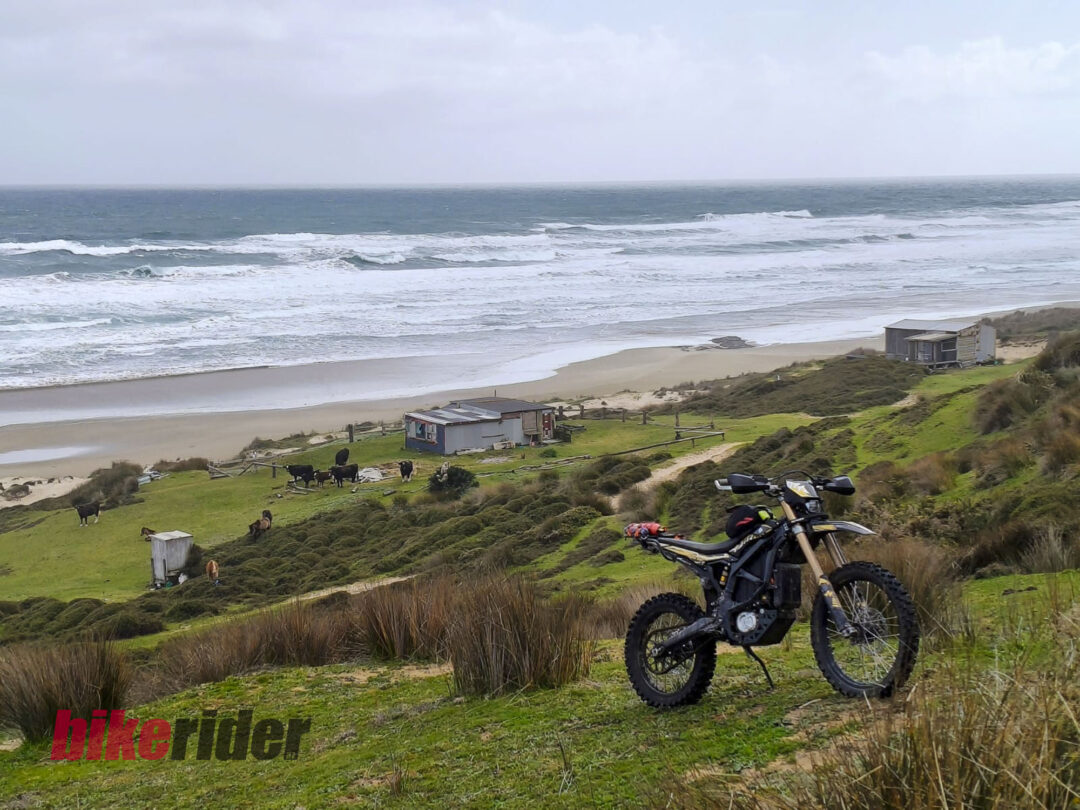
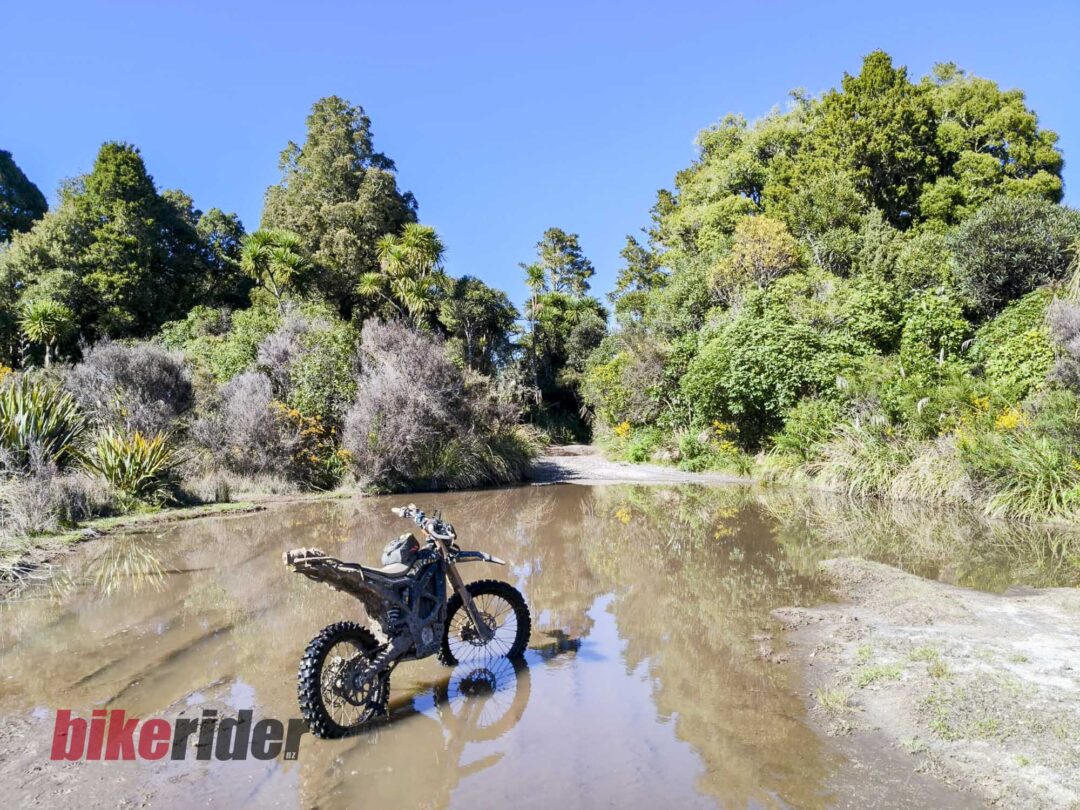
The process is simple. I drive the Leaf as far as possible along the access road before parking at the trailhead. From there, the Surron takes over.
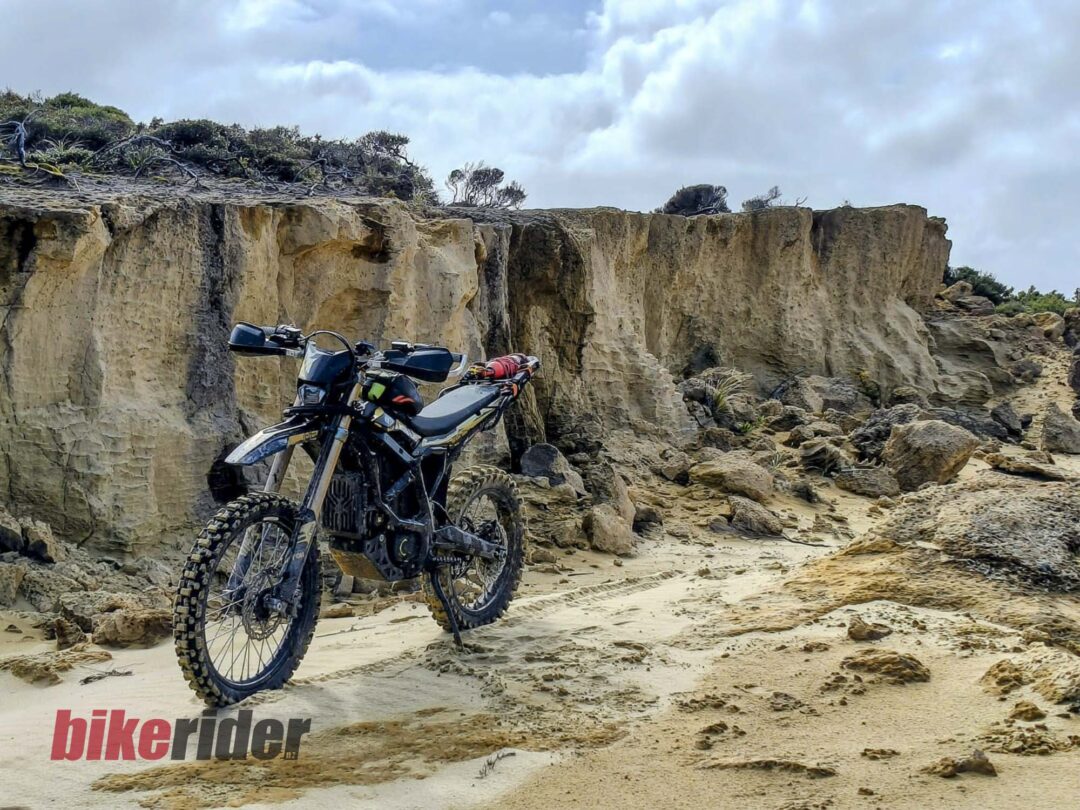
Its light weight means I can tackle terrain that would be intimidating on a full-sized adventure bike. If I can walk it, there’s a good chance the Ultra Bee can ride it. In many ways, it’s more like a two-wheeled mountain goat than a conventional motorcycle.
Small Bike, Big Capability
Despite weighing just 85kg, the Ultra Bee packs plenty of performance.
Different riding modes allow it to adapt to varying terrain, while Crawl mode and even Reverse prove surprisingly useful when manoeuvring on steep or awkward sections.
Then there’s Turbo mode.
Press the button and, for ten glorious seconds, the bike unleashes everything it’s got. With around 500Nm of wheel torque available, the acceleration is genuinely startling and never fails to put a smile on my face.
Of course, there are limitations. You need to think about charging, and long-distance touring still favours conventional adventure bikes. But for the sort of riding I enjoy—exploring difficult back-country tracks—the Ultra Bee has become the ideal tool.
Planning the Ride
One of the questions I’m asked most often is about range.
My 40kWh Nissan Leaf comfortably manages around 200km of open-road driving between charges. While that’s modest compared with many newer EVs, it’s perfectly adequate for the way I travel.
“Some readers may think I’ve completely lost the plot. To be fair, I probably misplaced it years ago.”
The Ultra Bee’s 12.5kWh battery typically provides between two and three hours of trail riding, or roughly 50-70km depending on terrain and riding conditions. Most of the out-and-back tracks I enjoy are easily completed on a single charge.
When it comes to finding new places to ride, one resource has become invaluable. Josh Martin’s Adventure Guide app brings together an extensive network of adventure routes and trail information from around New Zealand, making it incredibly easy to discover new places to explore.
Adventure Isn’t One-Size-Fits-All
Some readers may think I’ve completely lost the plot. To be fair, I probably misplaced it years ago.
But this setup isn’t about replacing traditional adventure motorcycles. I still own and enjoy petrol-powered bikes, including an Aprilia Tuareg 660 based in Africa and I’ve just sold my CFMOTO 450MT here in New Zealand. Before long, I’ll also have a Yamaha WR155 based in Vietnam for future Southeast Asian adventures.
Each motorcycle suits its environment, and that’s really the point.
Adventure riding isn’t defined by engine capacity, fuel type or how much money you spend. It’s about discovering new places, solving problems along the way and creating stories you’ll remember long after you get home.
As I load the Ultra Bee back into the Leaf after another day exploring tracks I’ve never ridden before, I’m reminded that there are many ways to have an adventure.
This just happens to be mine.
And tomorrow, another trail is waiting.
If you’re interested in this sort of riding, check out www.sur-ron.co.nz or www.dreamcycles.co.nz