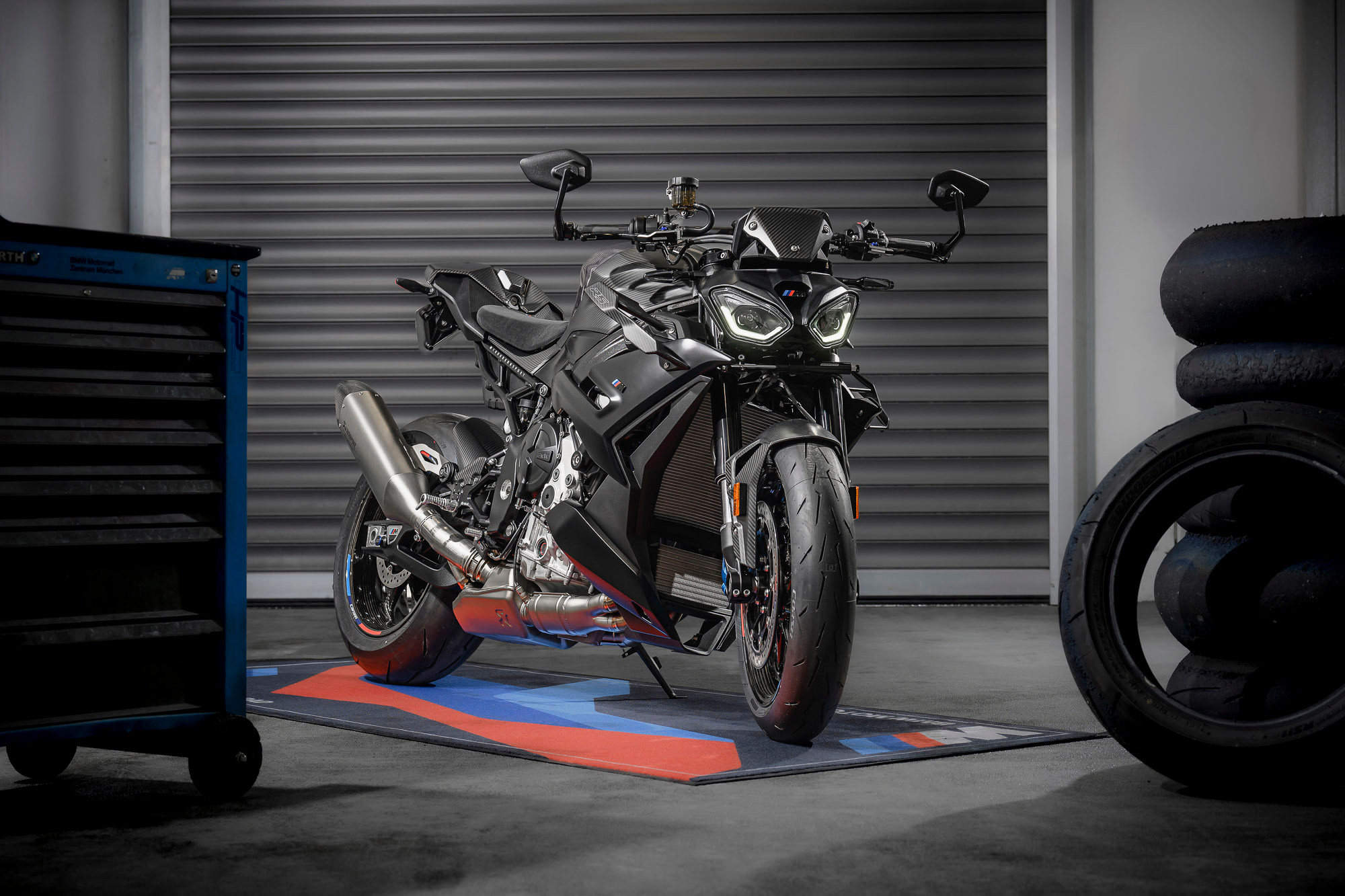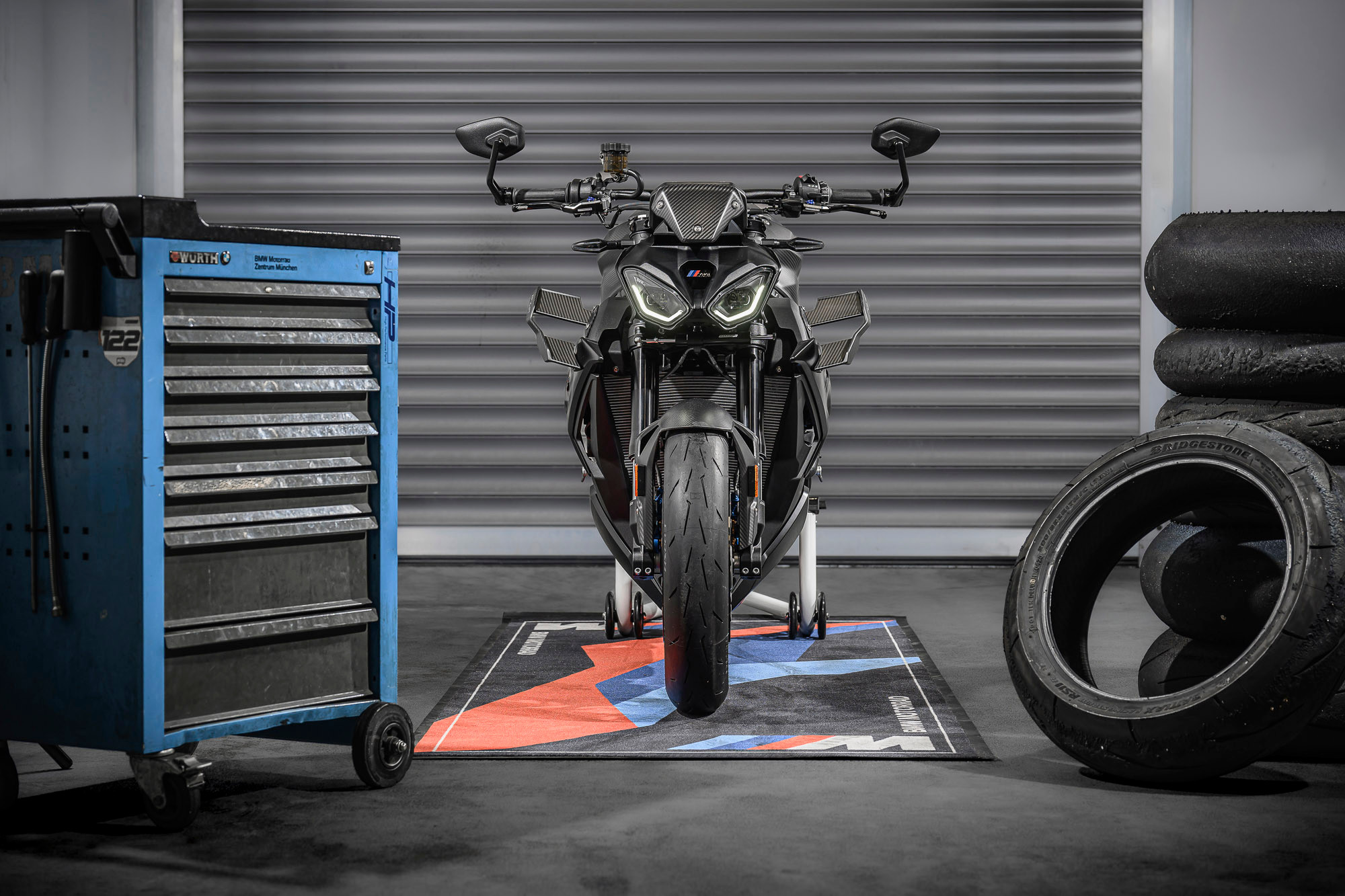


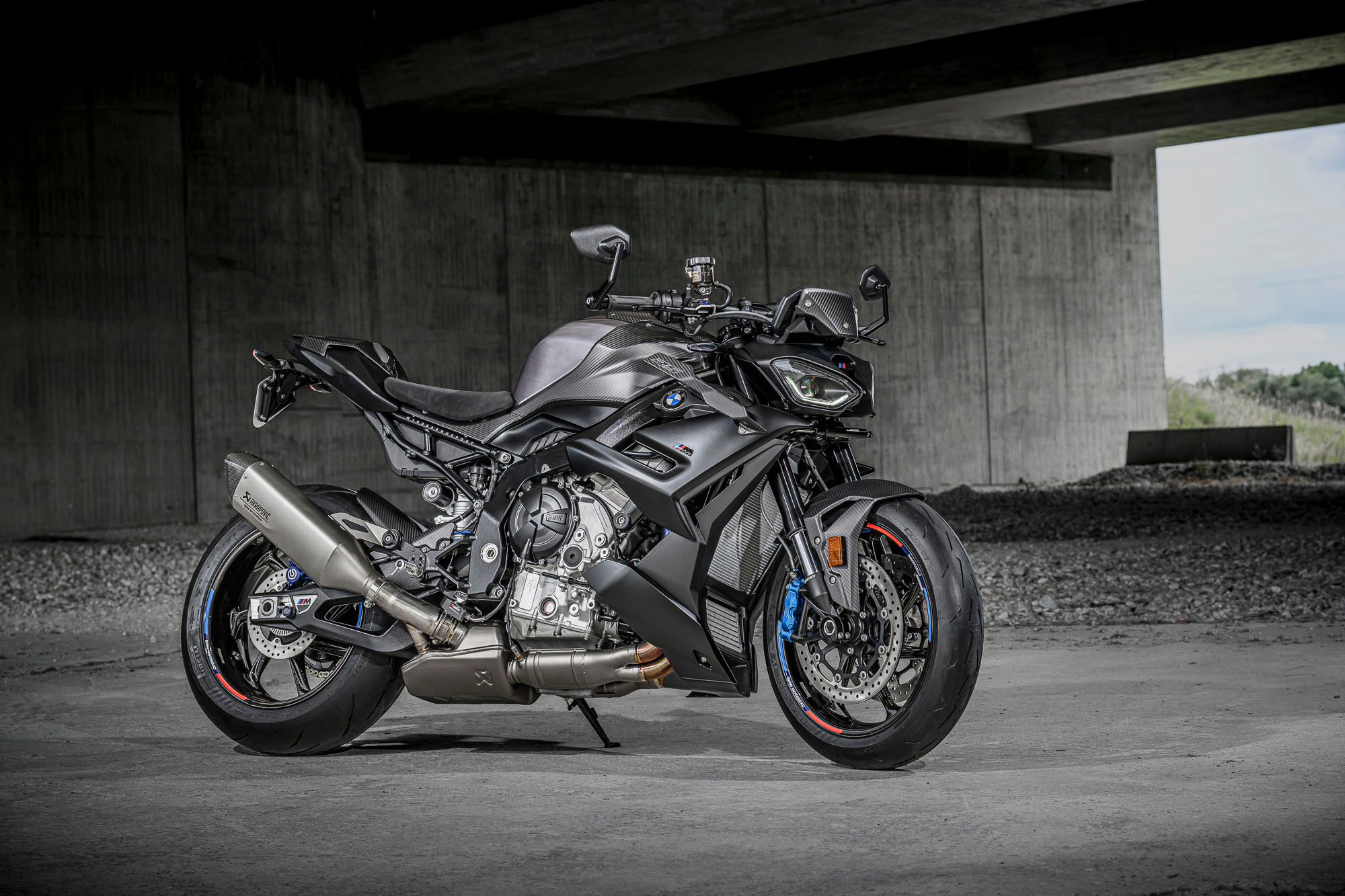
BMW’s M1000R was hardly short of horsepower. The new M1000RS takes things a step further, dropping the full-power M1000RR superbike engine into a naked bike and adding a generous helping of carbon fibre and titanium. Just 1,000 will be built, and BMW is claiming the title of world’s most powerful hyper naked.
- 160kW and 196kg: M1000RR power in a road-ready, fully fuelled naked bike.
- Carbon and titanium as standard: M Carbon wheels, titanium exhaust and RR-derived rear end.
- Only 1,000 worldwide: dealer availability from March 2027; New Zealand details remain unconfirmed.
The RS name might make you think of BMW’s sports-tourers, but this one has a different brief. Here it stands for Rennsport, reaching back to racers such as the RS 255 Kompressor and RS 54. There’s precious little touring bodywork involved. The starting point is the M1000R with its M Competition Package, with more hardware borrowed from the RR.
The superbike engine, with the fairing left behind
The big news sits under the brushed aluminium tank: a 999cc ShiftCam inline-four making a claimed 160kW at 14,500rpm. That’s a serious output, with the 218 hp matches to an equally impressive torque figure of 113Nm at 11,000rpm.
BMW claims a 0–100km/h time of 3.2 seconds and a top speed of 283km/h, although good luck holding on at that speed. That’s serious superbike territory, but with considerably less between the rider and the wind, chances are you’re not thinking about top speed if you ride one of these.
Superbike power, an upright bar and very little to hide behind.
More than an engine swap
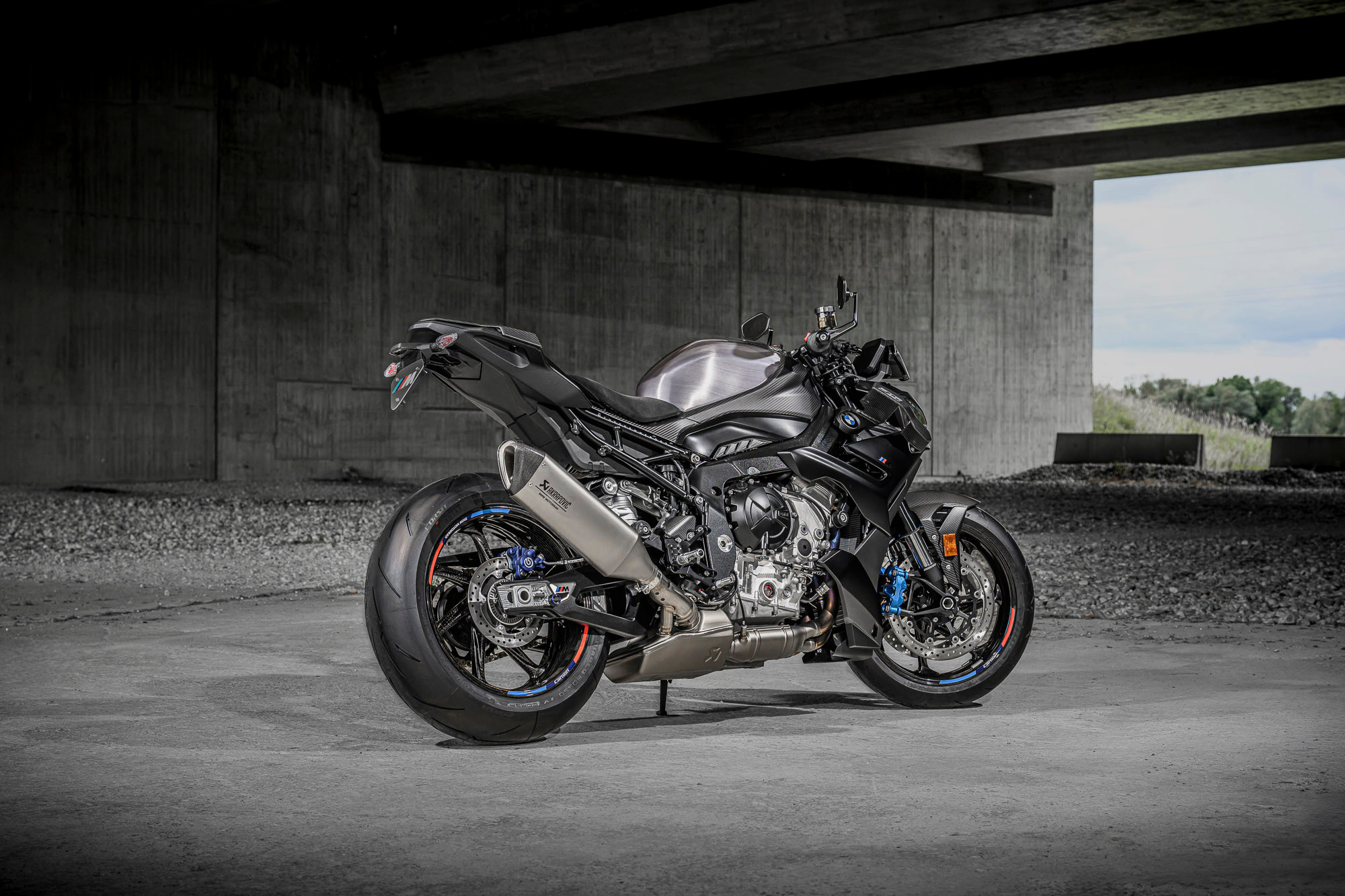
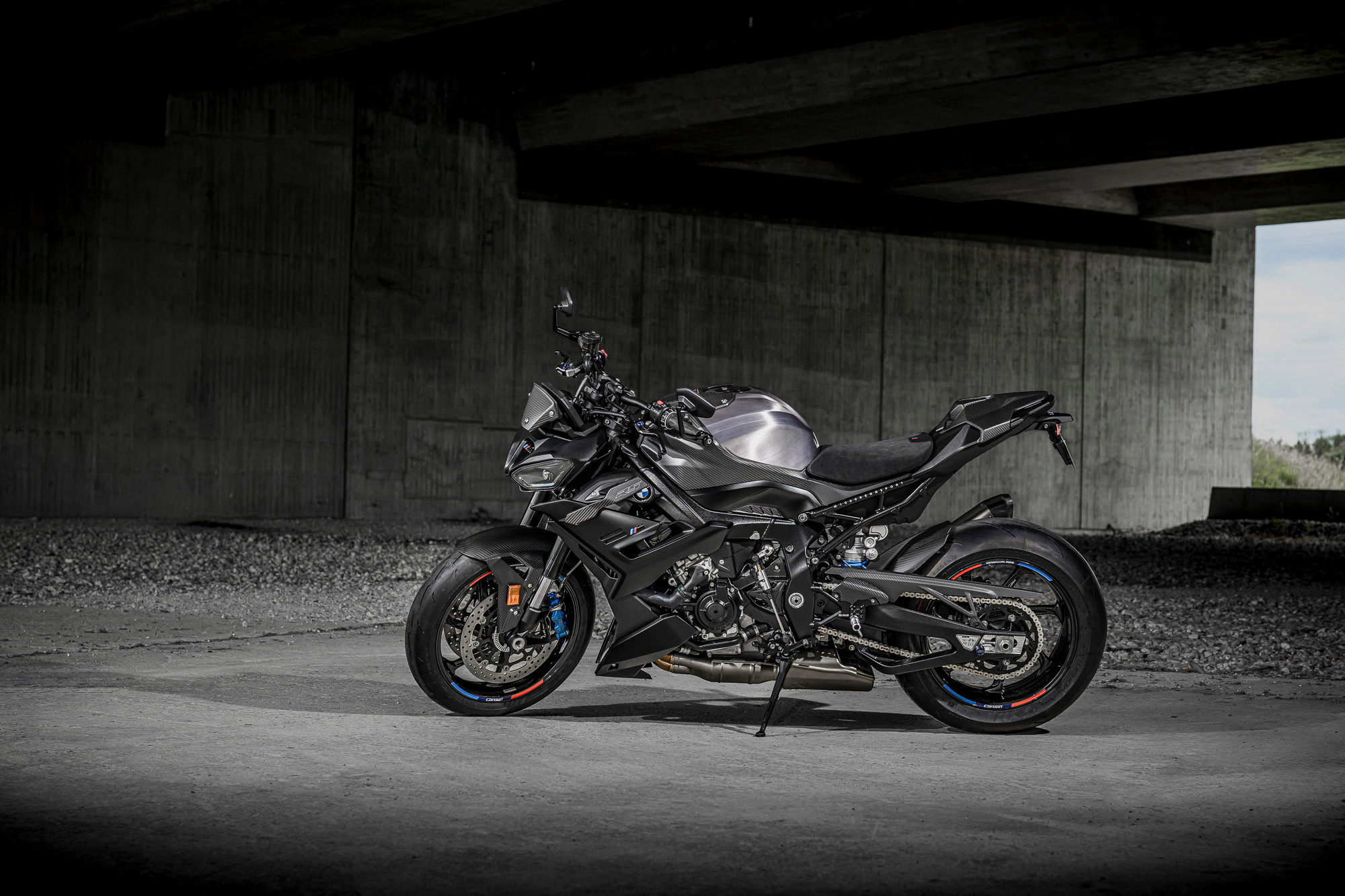
BMW lists a weight of 196kg, road-ready and fully fuelled. Standard M Carbon wheels, an M battery and a full titanium M exhaust are all part of the package. The M1000RR also supplies the rear end and rider footrest system, while the 850mm seat is 20mm higher than the M1000R’s. BMW says the result puts the rider further towards the front wheel.
MORE ARTICLES
The suspension is suitably serious: 45mm upside-down forks and a rear shock with Dynamic Damping Control, BMW’s electronically controlled damping system. Twin 320mm front discs and radial four-piston M calipers handle braking duties, backed by a 220mm rear disc, ABS Pro and traction control. The rear tyre is a chunky 200/55 on a 17-inch carbon wheel.
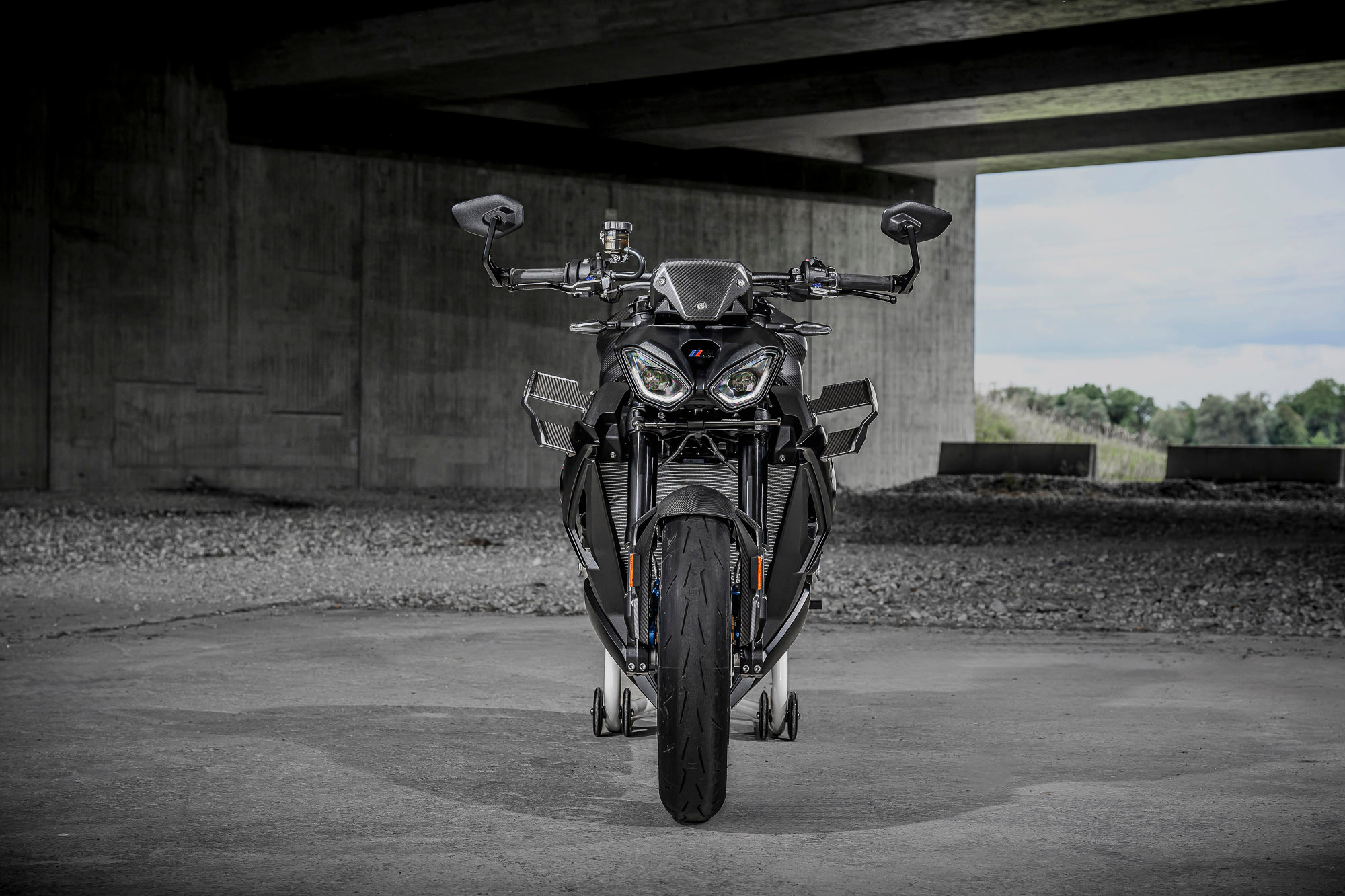
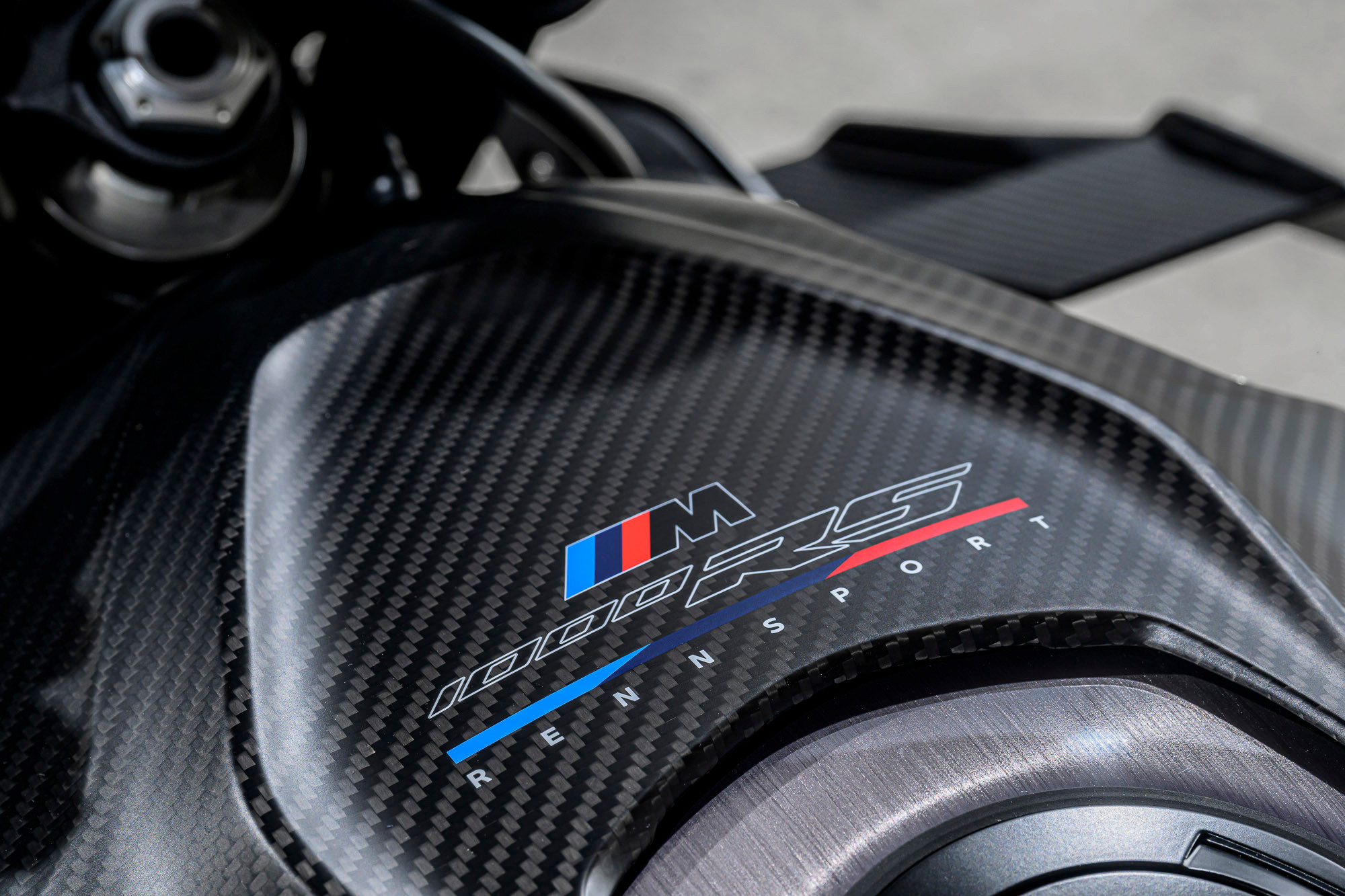
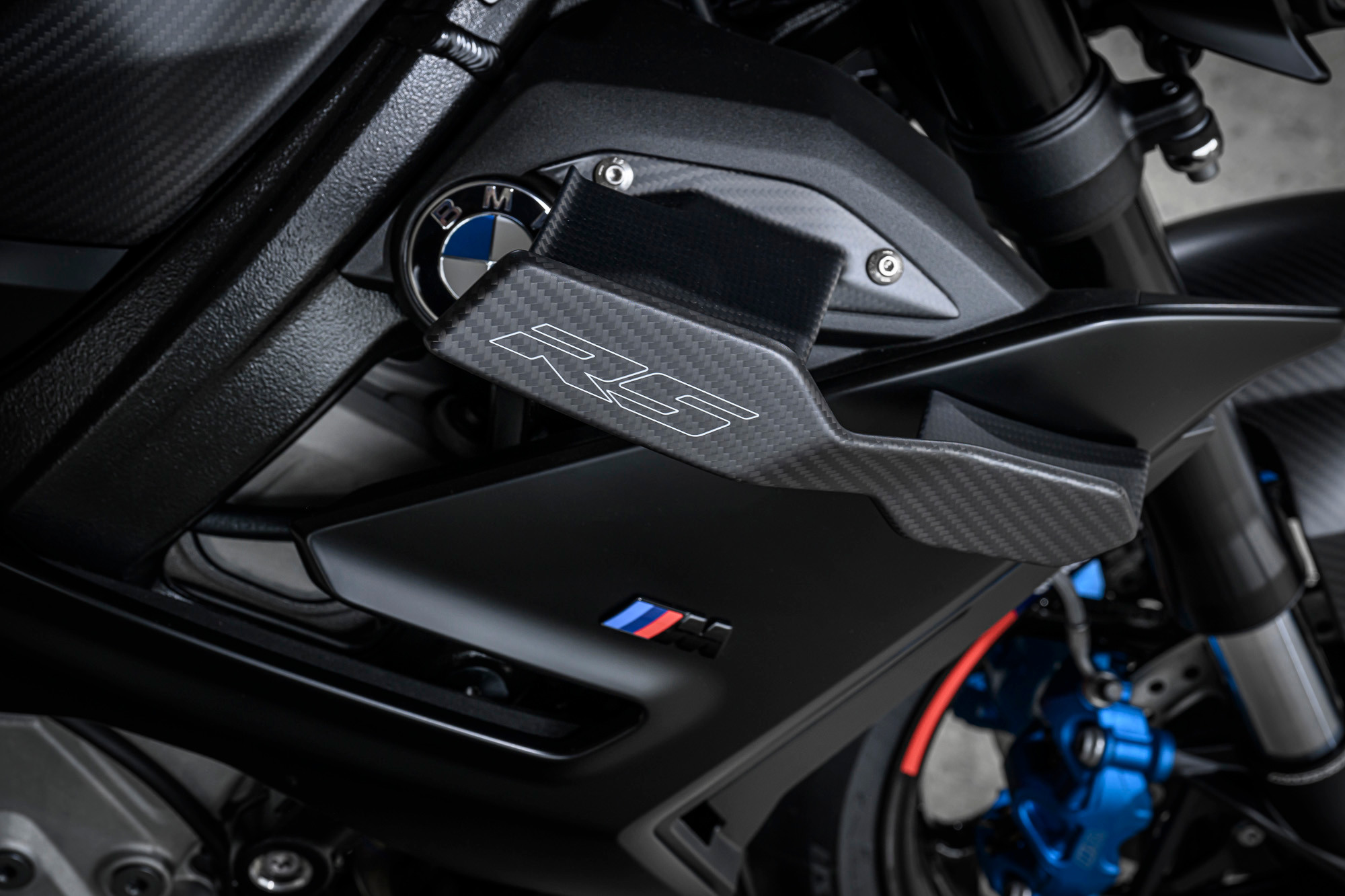
Visually, the RS is refreshingly restrained for something with this much performance on paper. Matt carbon, the brushed tank and subtle graphics give it that almost race-test look, while the Alcantara-look seat carries RS embroidery. The winglets still make a statement, but the overall finish lets the hardware do most of the talking.
Still a road bike
For all the racing references, BMW hasn’t stripped out the everyday comforts. Heated grips, cruise control and Keyless Ride are standard, along with Riding Modes Pro, Gearshift Assistant Pro, tyre-pressure monitoring and the M Track Package. That mix is part of the appeal: an extravagant naked bike that still remembers you might have to ride home from the circuit.
Only 1,000 bikes worldwide makes the allocation as interesting as the specification.
BMW says dealer availability begins in March 2027. The announced German price is €40,000 including 19 per cent VAT; that is a German-market figure, not a New Zealand price. The global announcement doesn’t confirm a Kiwi allocation, local price or NZ arrival date, so those remain to be established.
On paper, it’s a more focused take on the M1000R, with the subdued finish making a welcome change from the usual race-replica graphics. Whether the extra performance makes it a better road bike is something a ride will have to answer. For now, the combination of superbike hardware and a 1,000-unit production run gives BMW fans plenty to talk about.
Source: BMW Motorrad global press release and technical data. Photography: BMW Motorrad.

BMW M1000RS gallery