


The Daytona 660 spent more than a week in the garage while I found excuses to ride other motorcycles. Then the sun came out, and Triumph’s middleweight sports bike reminded me just how much fun riding can be.
- Triumph’s 660cc triple is a gem, combining beautifully smooth fuelling, strong performance and an addictive soundtrack.
- The 2026 updates bring adjustable Showa front suspension, a standard up-and-down quickshifter and Metzeler M9 RR tyres.
- It’s a genuinely entertaining sports bike that doesn’t demand the usual compromises in comfort or everyday usability.
QUICK FACTS
PRICE
ENGINE
TORQUE
TRANSMISSION
POWER
WEIGHT
FRONT SUSPENSION
REAR SUSPENSION
SEAT HEIGHT
FUEL CAPACITY
FRONT BRAKES
TYRES
There are some motorcycles you can’t wait to get out and ride, and others that sit in the garage while you find excuses to take something else. I’m slightly embarrassed to admit that the Triumph Daytona 660 fell into the latter category.
I’d had the bike for around a week and a half, but with the weather being a bit miserable, I kept gravitating towards the more comfortable, weather-friendly machines that happened to be sharing the garage. A middleweight sports bike wearing Metzeler Sportec M9 RR tyres wasn’t exactly top of the list.
Then Saturday arrived, bringing beautiful sunshine, even if there was still a bit of a chill in the air. It seemed like the perfect opportunity to finally give the Daytona a proper outing.
And I’ll tell you what, I’m glad I did.
What started as a ride I wasn’t particularly enthusiastic about turned into one of those afternoons where you deliberately take the long way home, hunt out another twisty road, and find yourself wondering why you hadn’t ridden the thing sooner.
MORE ARTICLES
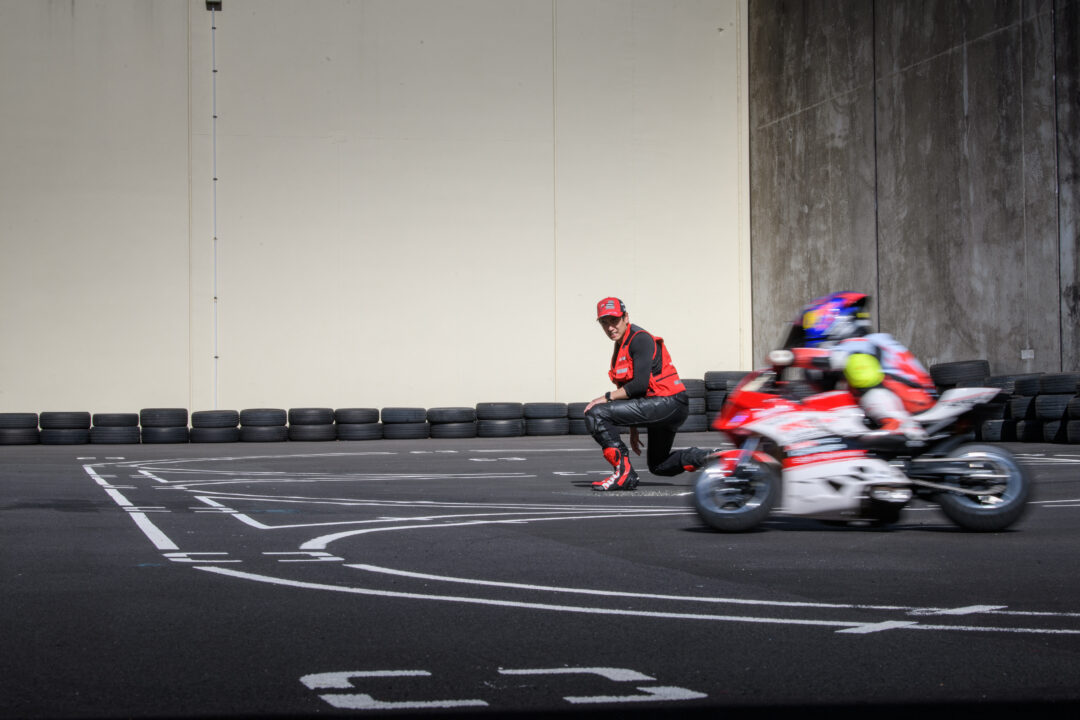
The Daytona 660 was an absolute surprise.
“What started as a ride I wasn’t particularly enthusiastic about turned into one of those afternoons where you deliberately take the long way home.”
A Proper Sports Bike, Without the Punishment
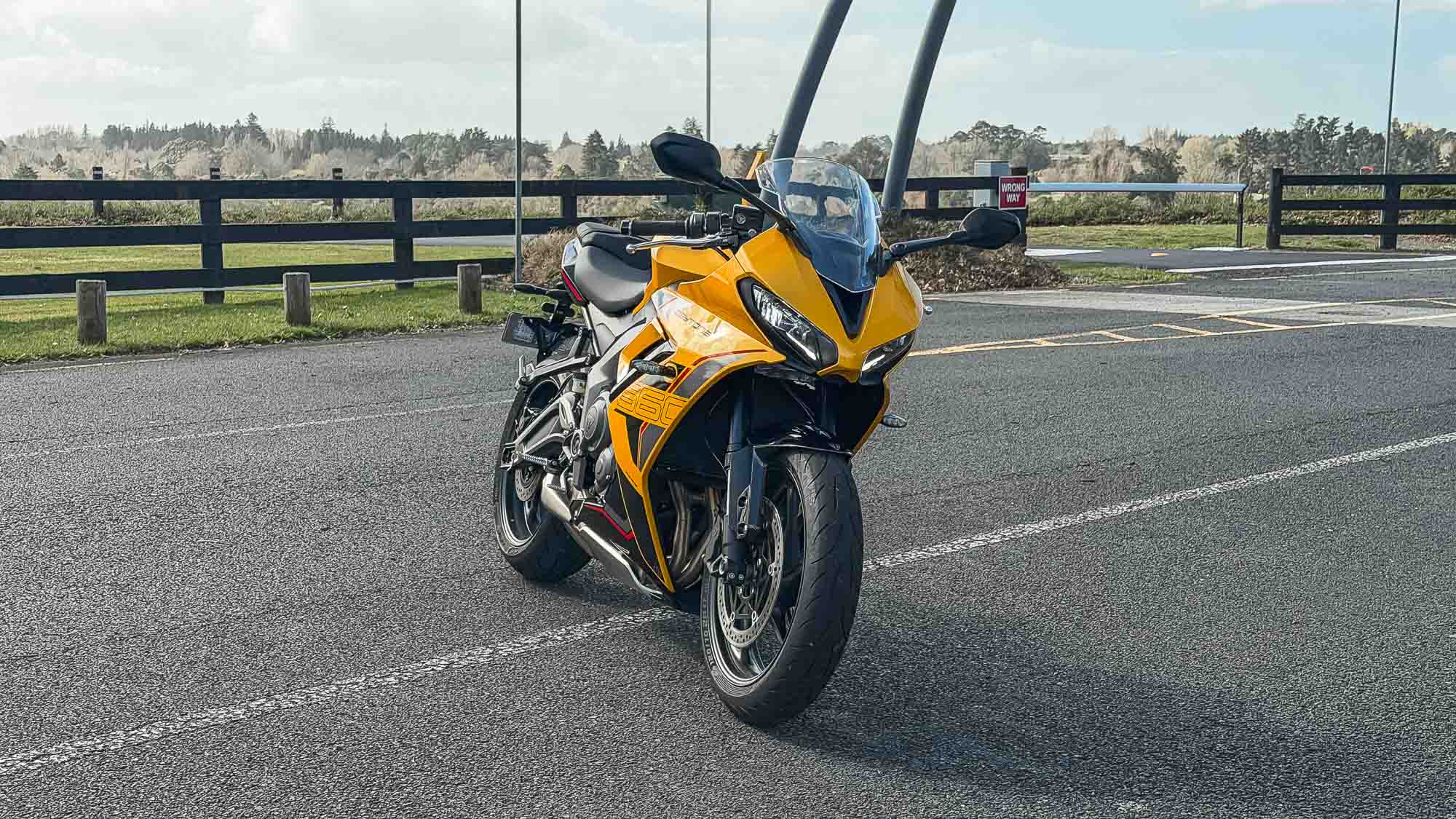
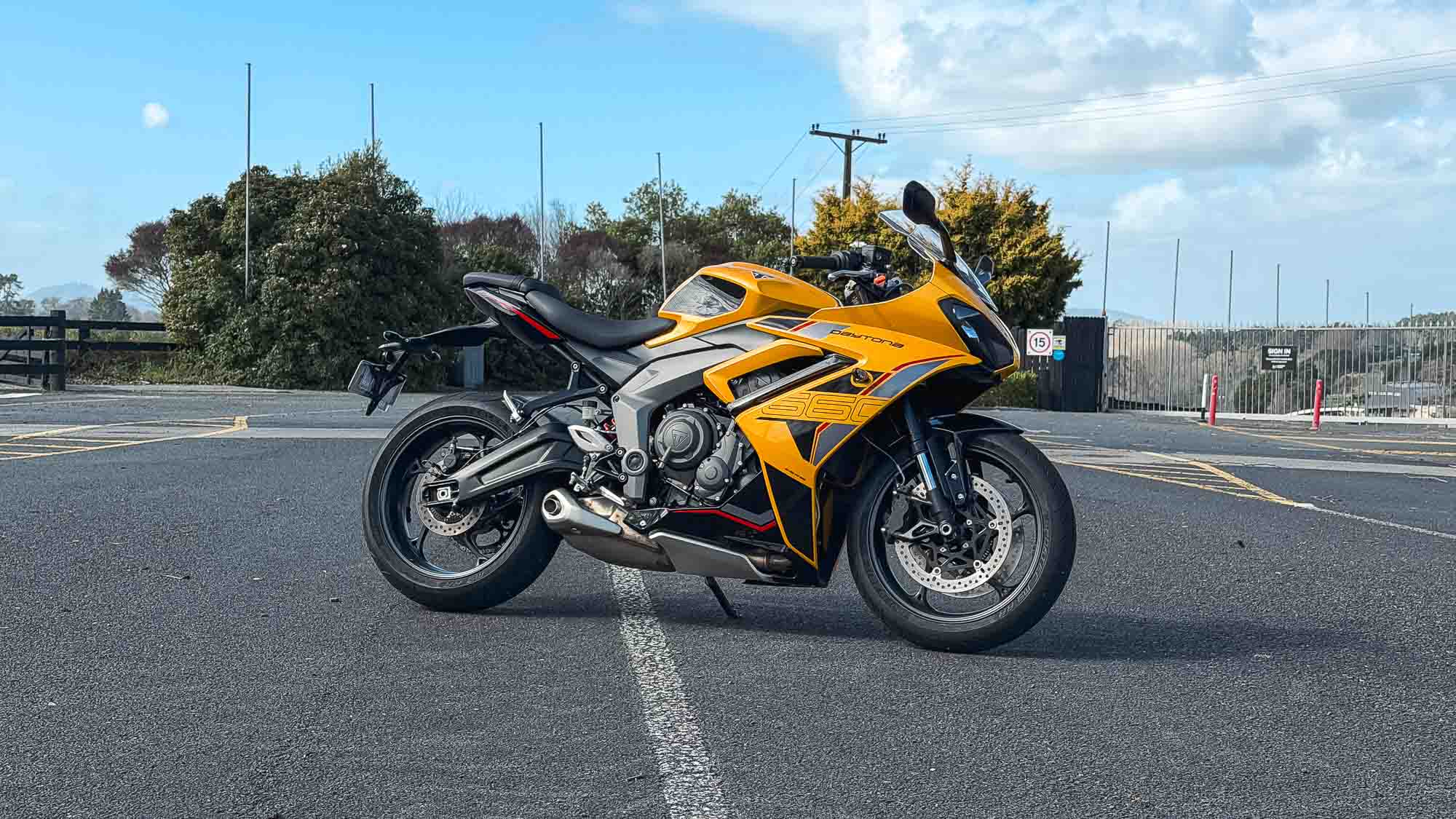
Before even heading out, the Daytona had already scored a few points in the looks department.
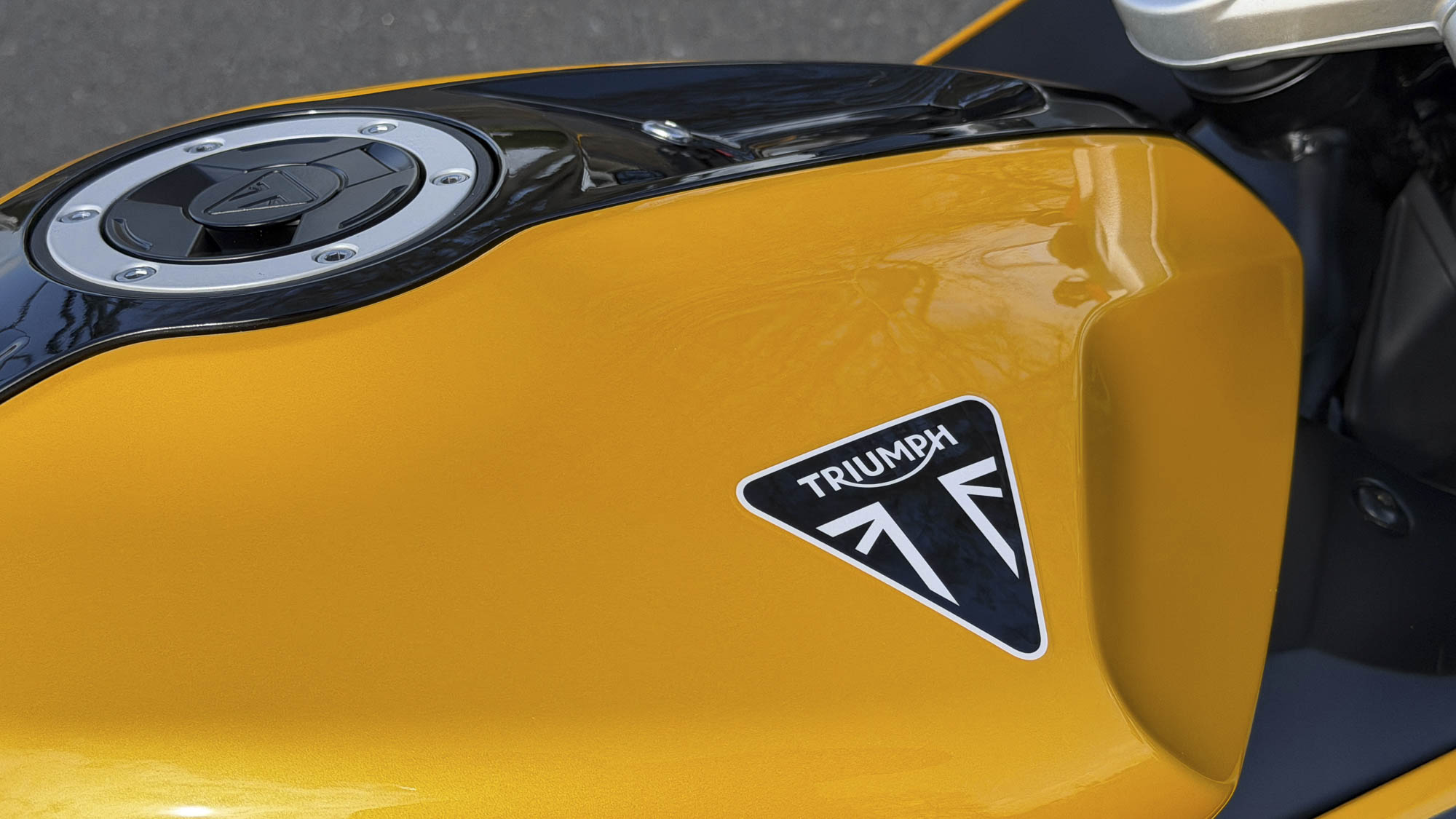
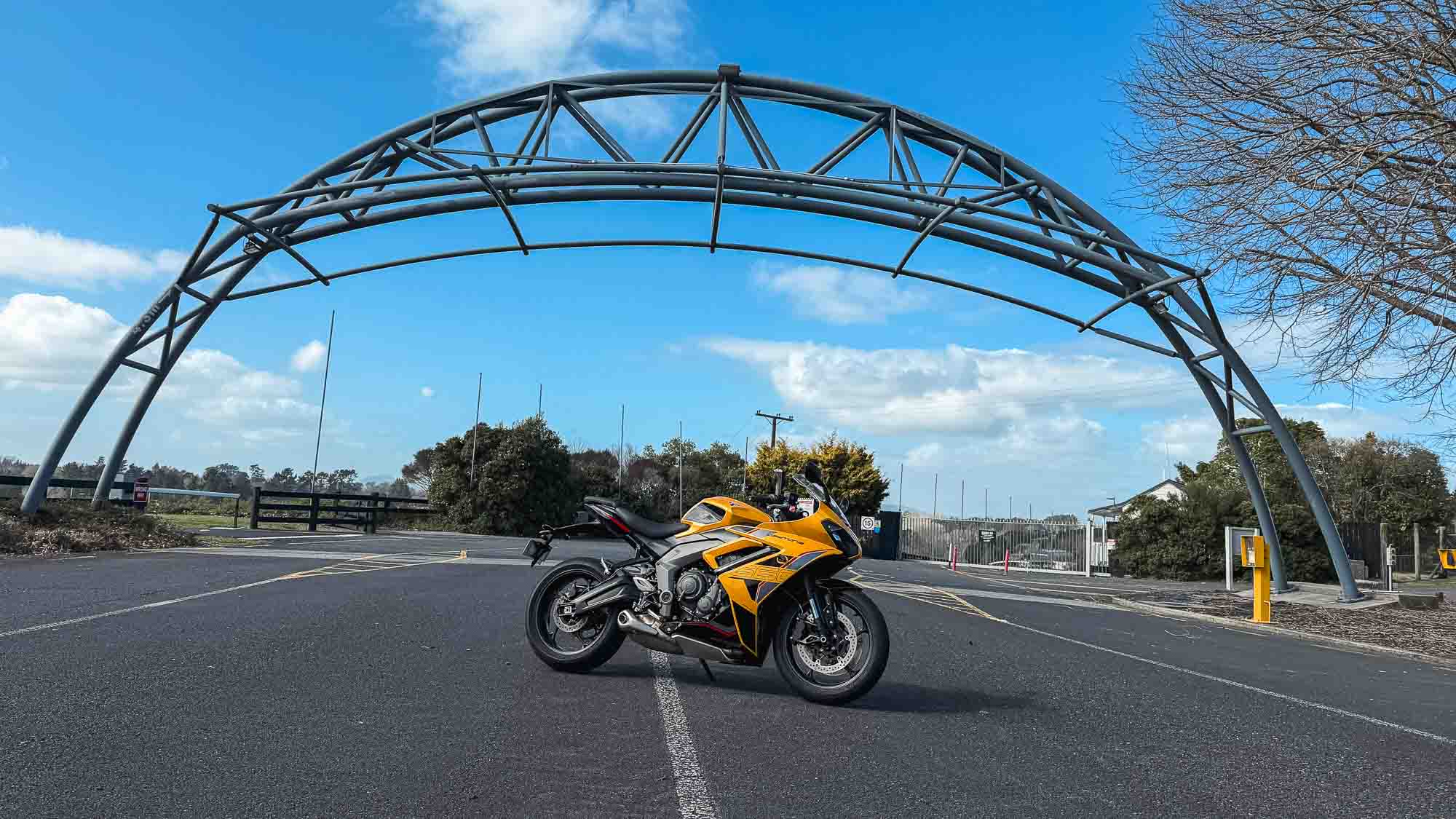
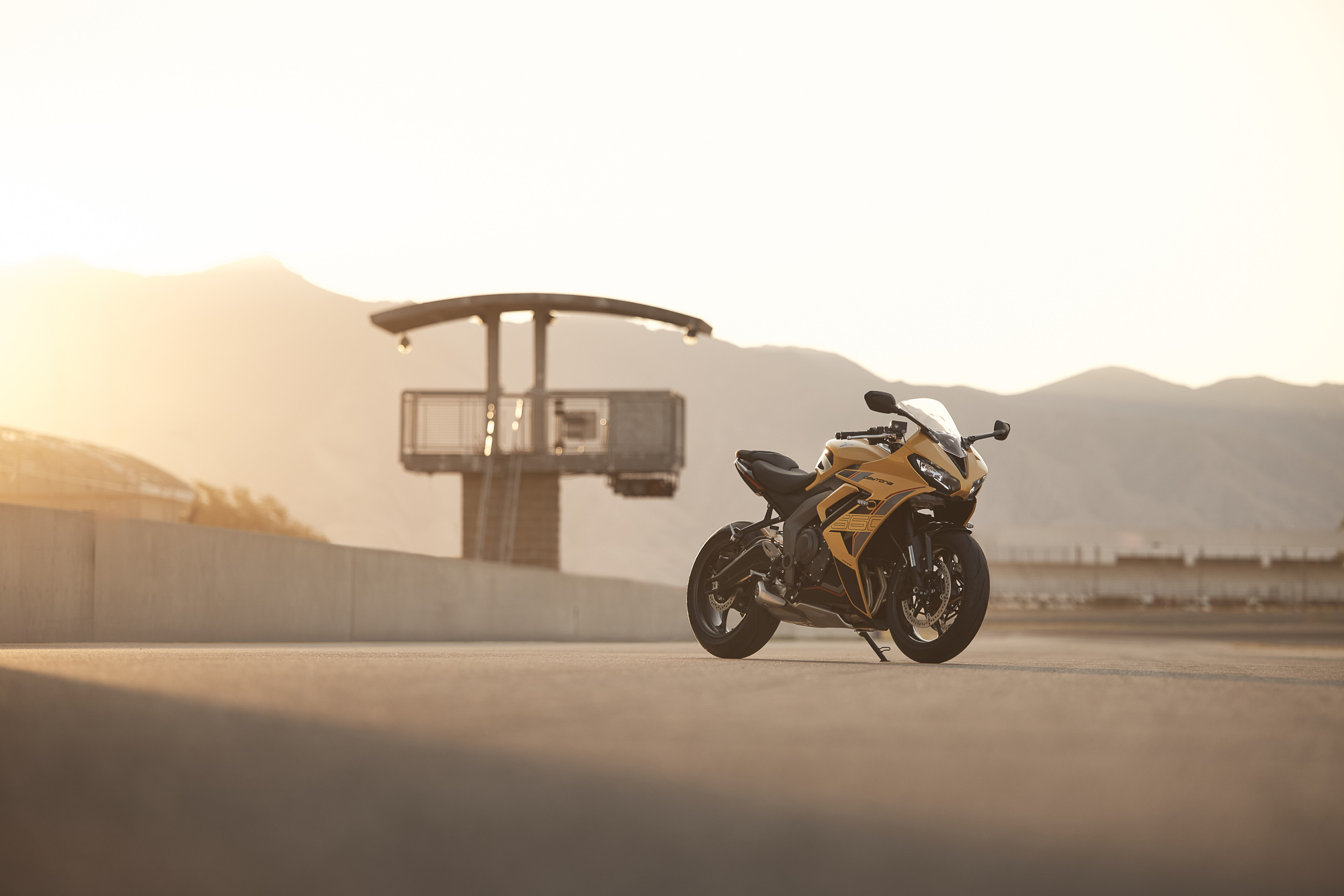
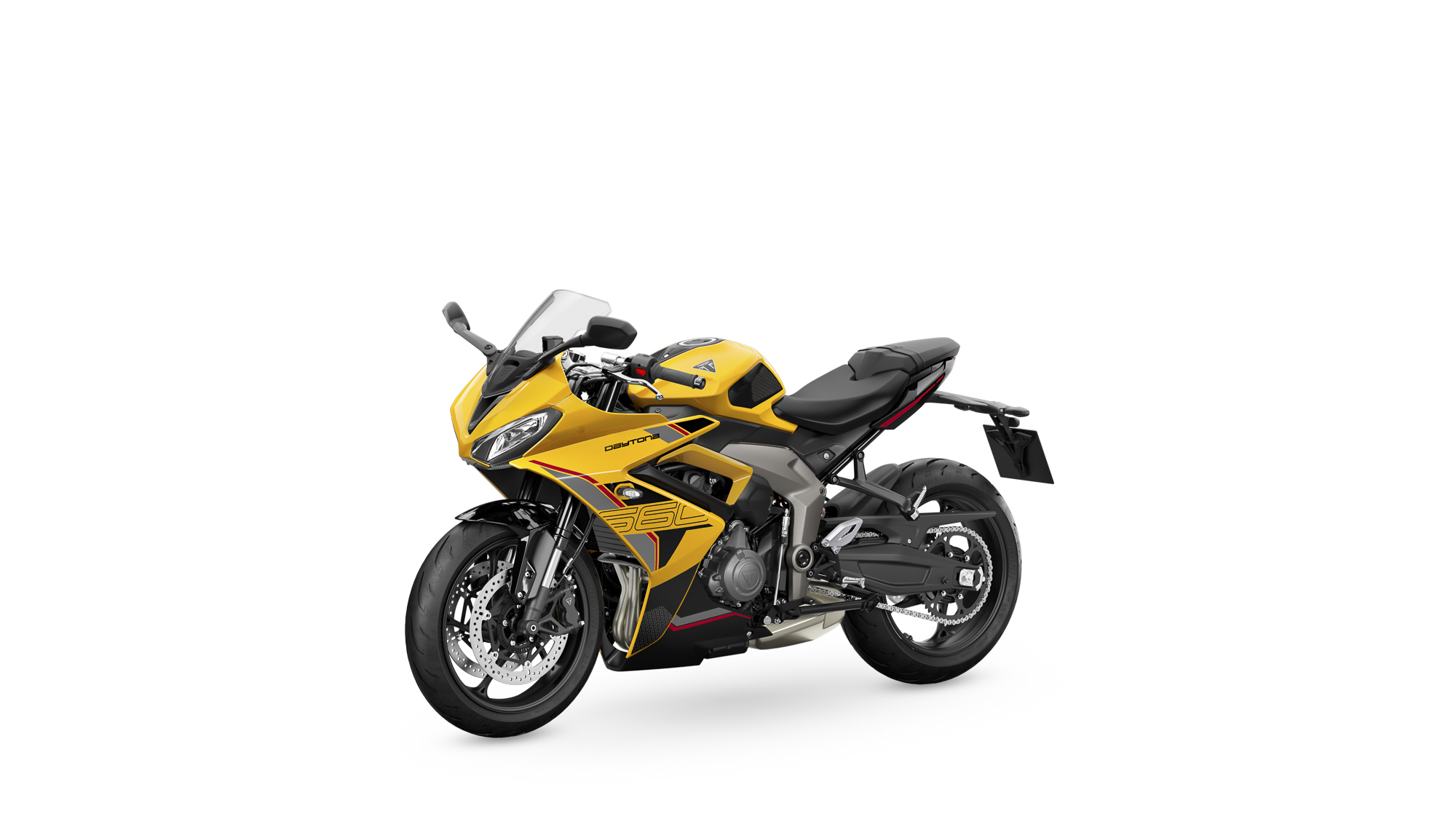
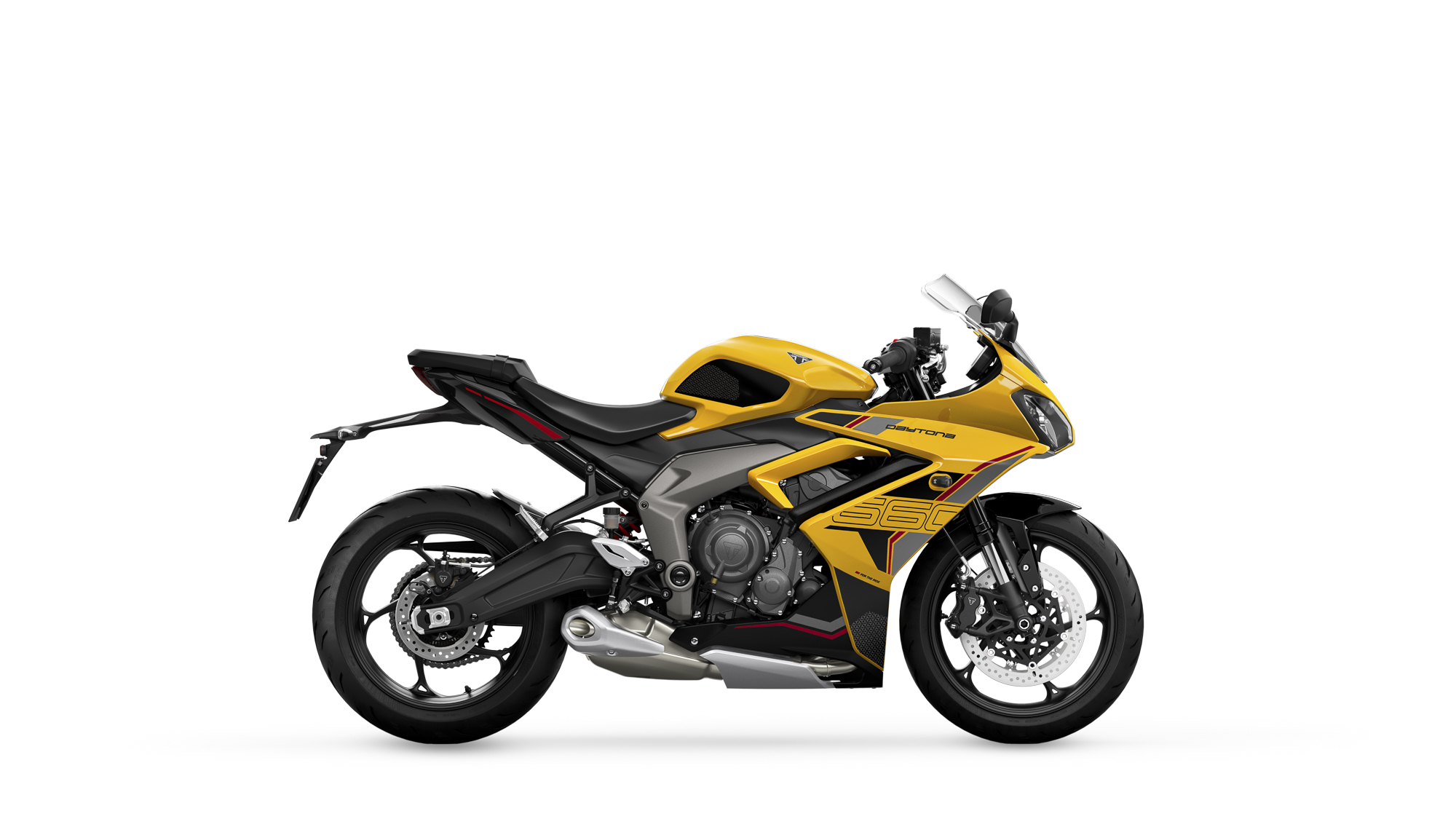
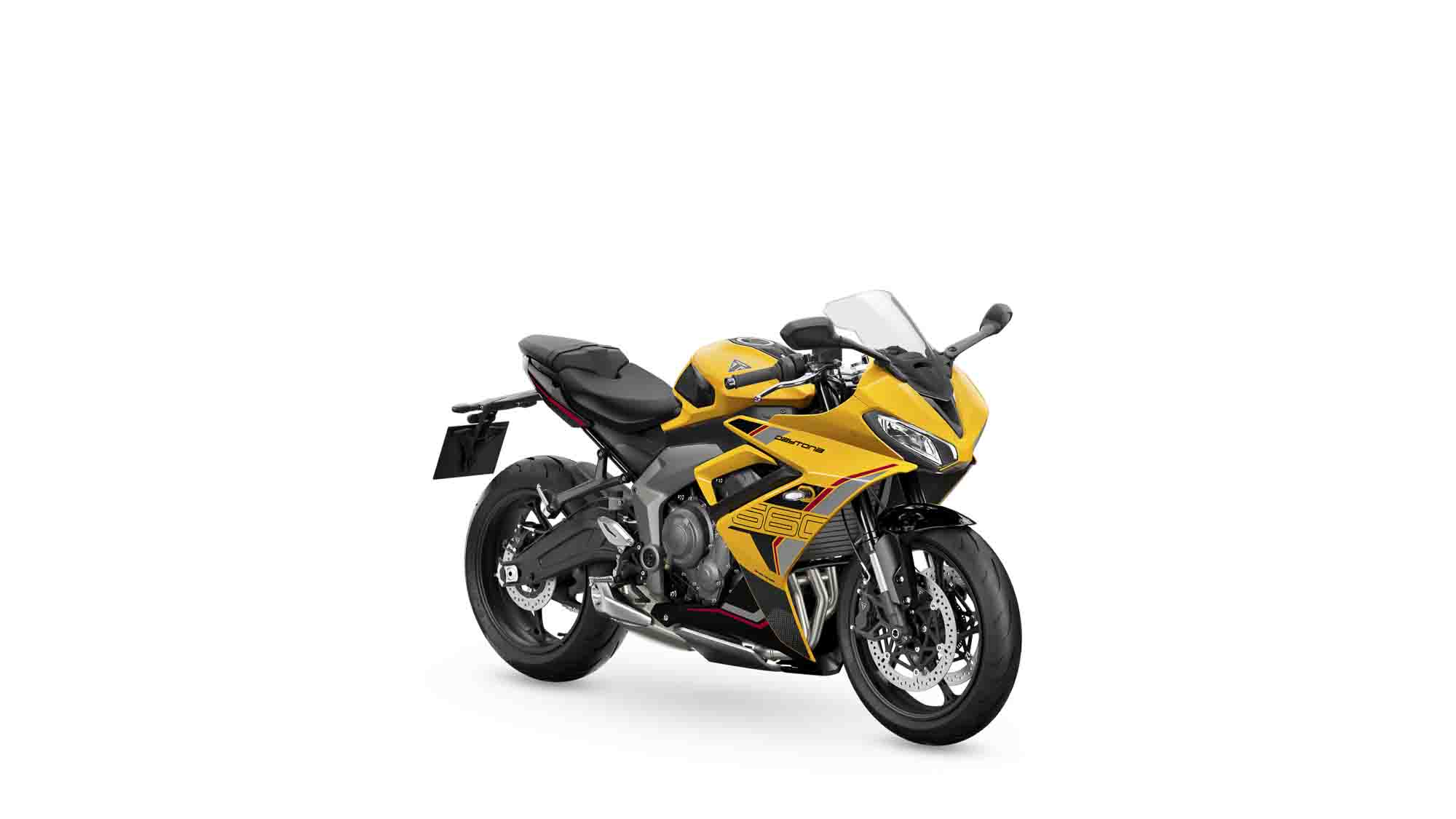
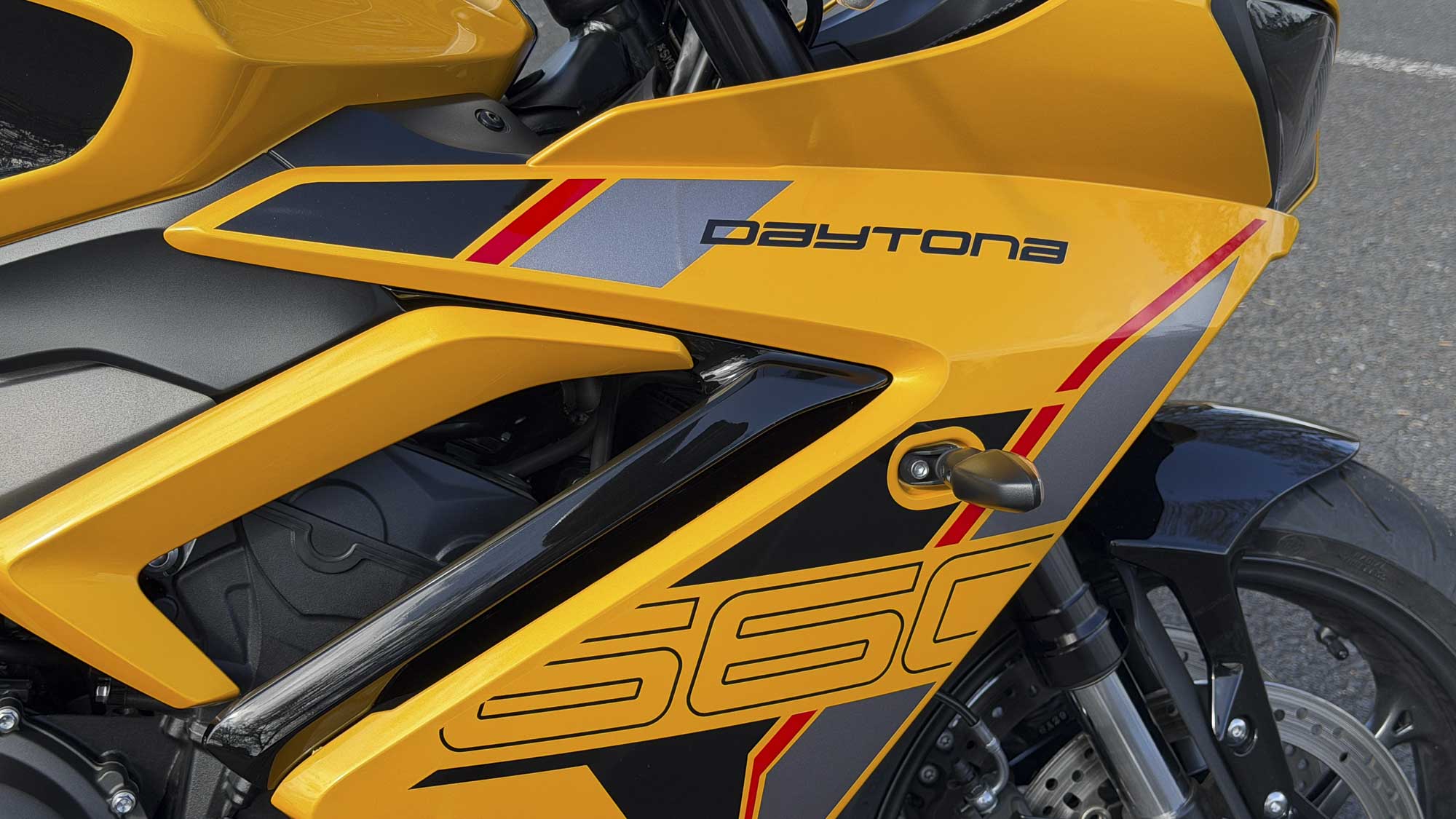
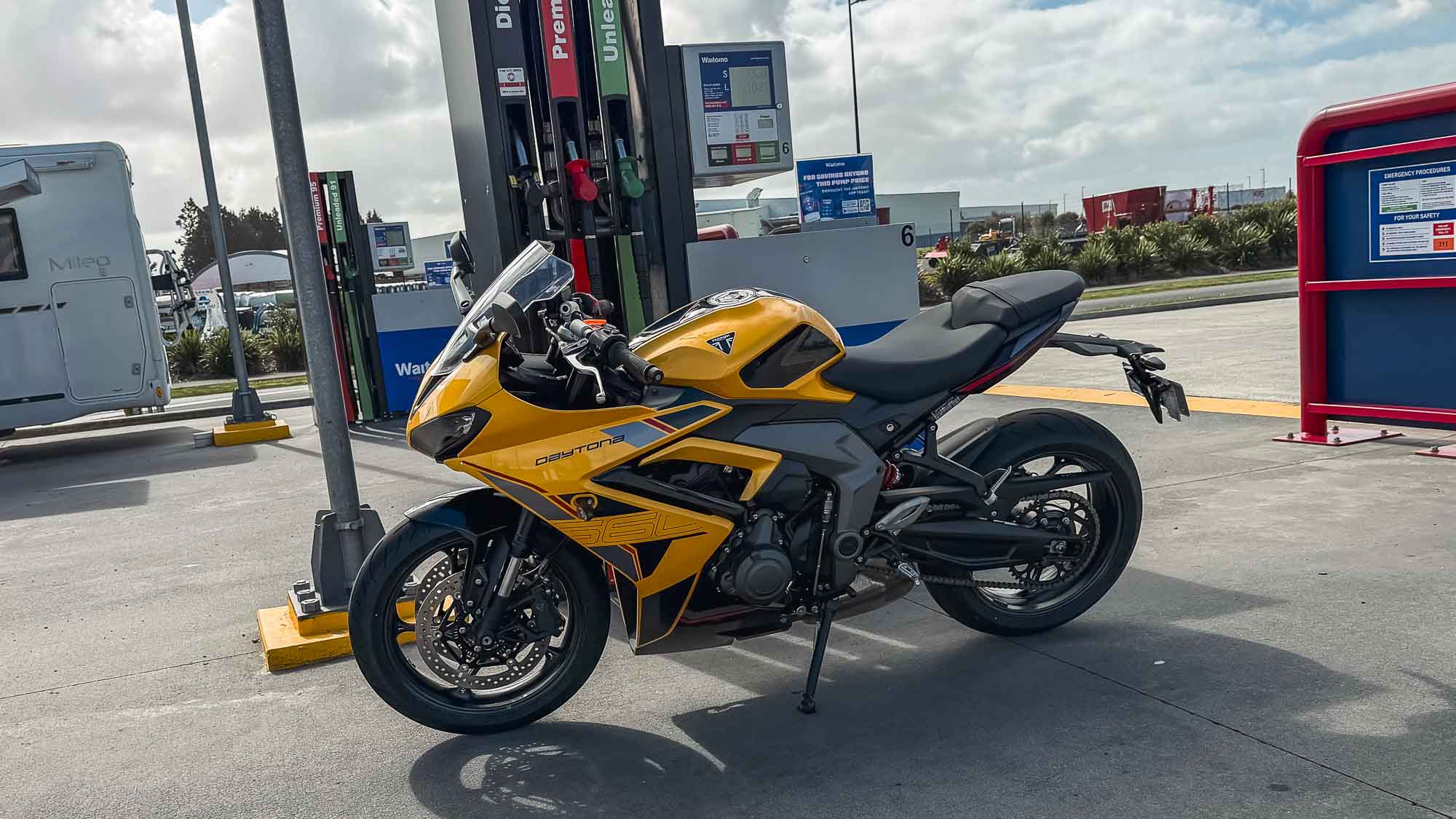
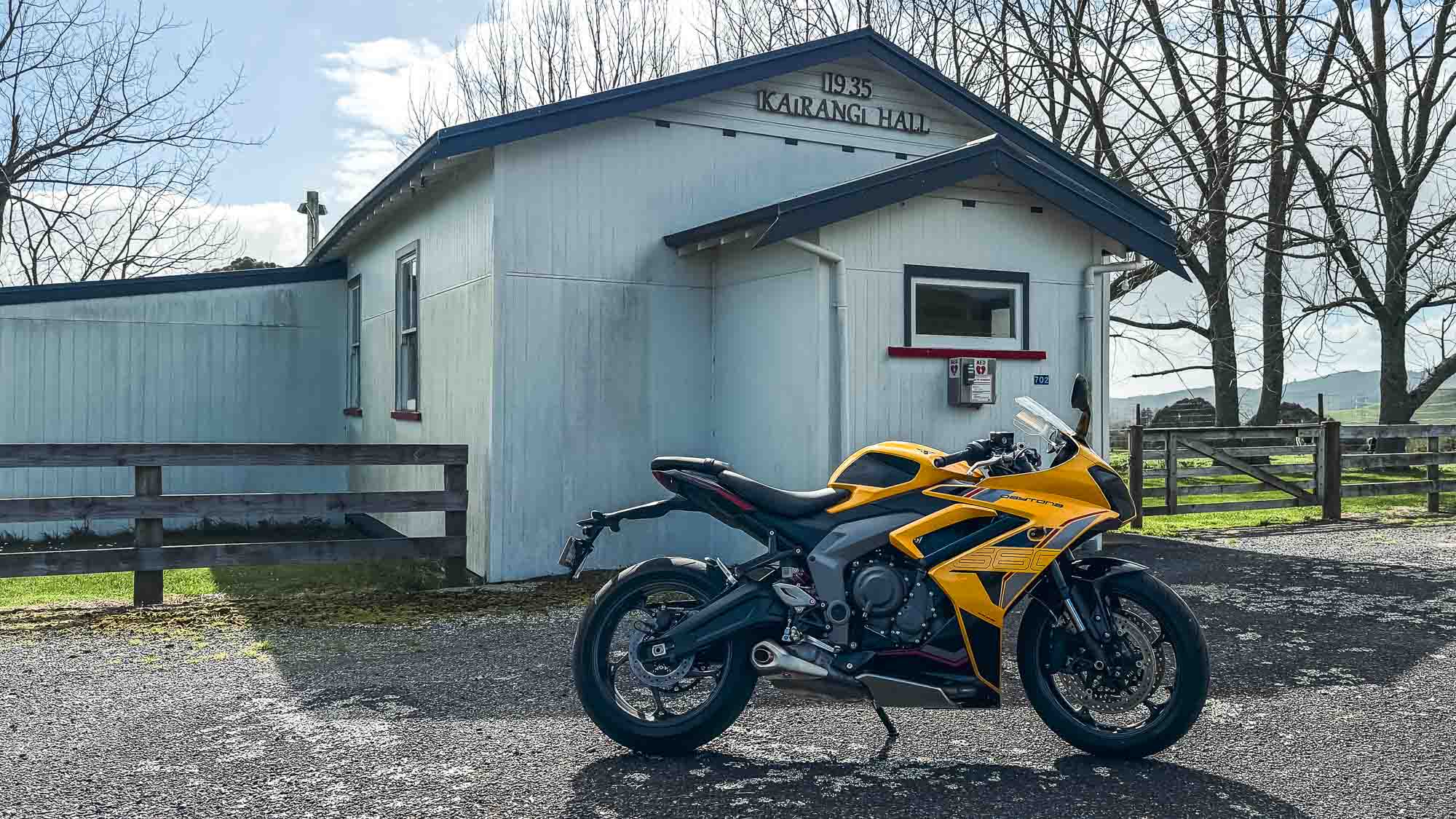
The yellow and gold pearl-effect paintwork on my test bike looked absolutely stunning when I wheeled it into the sunlight. It’s one of those finishes that photographs don’t quite do justice to.
I’m also a big fan of the front end. The sharply angled LED headlights give it an aggressive, almost Ducati-like appearance, while the narrow screen and neatly sculpted fairing make it look like a serious little sports bike.
It’s a good-looking motorcycle from just about every angle.
And here’s something that shouldn’t be remarkable but often is on sports bikes: the mirrors actually work.
They extend out far enough to give you a decent view of what’s happening behind, rather than providing a beautifully framed picture of your elbows. You can adjust them properly, and they stay useful when you’re riding.
Once aboard, there’s another pleasant surprise.
The riding position is sporty without being unnecessarily extreme. The clip-on handlebars sit on risers above the top of the forks, so you’re leaning forward, but not hanging off your wrists like you’re preparing for the start of a MotoGP race.
At 182cm, I found the relationship between the seat, bars and footpegs worked well. The tank provides some support, while the windscreen takes a decent amount of wind pressure away from your chest and shoulders.
You’re still going to get some wind around your helmet, and you’d need to be smaller than me to disappear completely behind that little screen, but that’s hardly surprising.
The seat is another highlight. It has a decent amount of padding for a sports bike and is thoughtfully shaped, curving down into a relatively narrow section at the front before rising towards the tank. There’s also a raised section behind you that helps hold you in position.
It all makes the Daytona feel surprisingly compact beneath you.
Pillion accommodation? Well, that’s another story.
The rear seat is tiny, and I certainly wouldn’t fancy taking someone any great distance on it. In fact, the distributor was talking about removing the pillion footpegs, and I could see why.
When I moved my feet back into a sportier riding position, my heels occasionally clashed with the pillion pegs. It’s a small annoyance, but one I noticed repeatedly throughout the day.
Removing them would probably improve both the appearance and the riding experience, assuming you don’t intend carrying a passenger.
That Triple Is Something Special
Of course, the real reason to ride the Daytona is the engine.
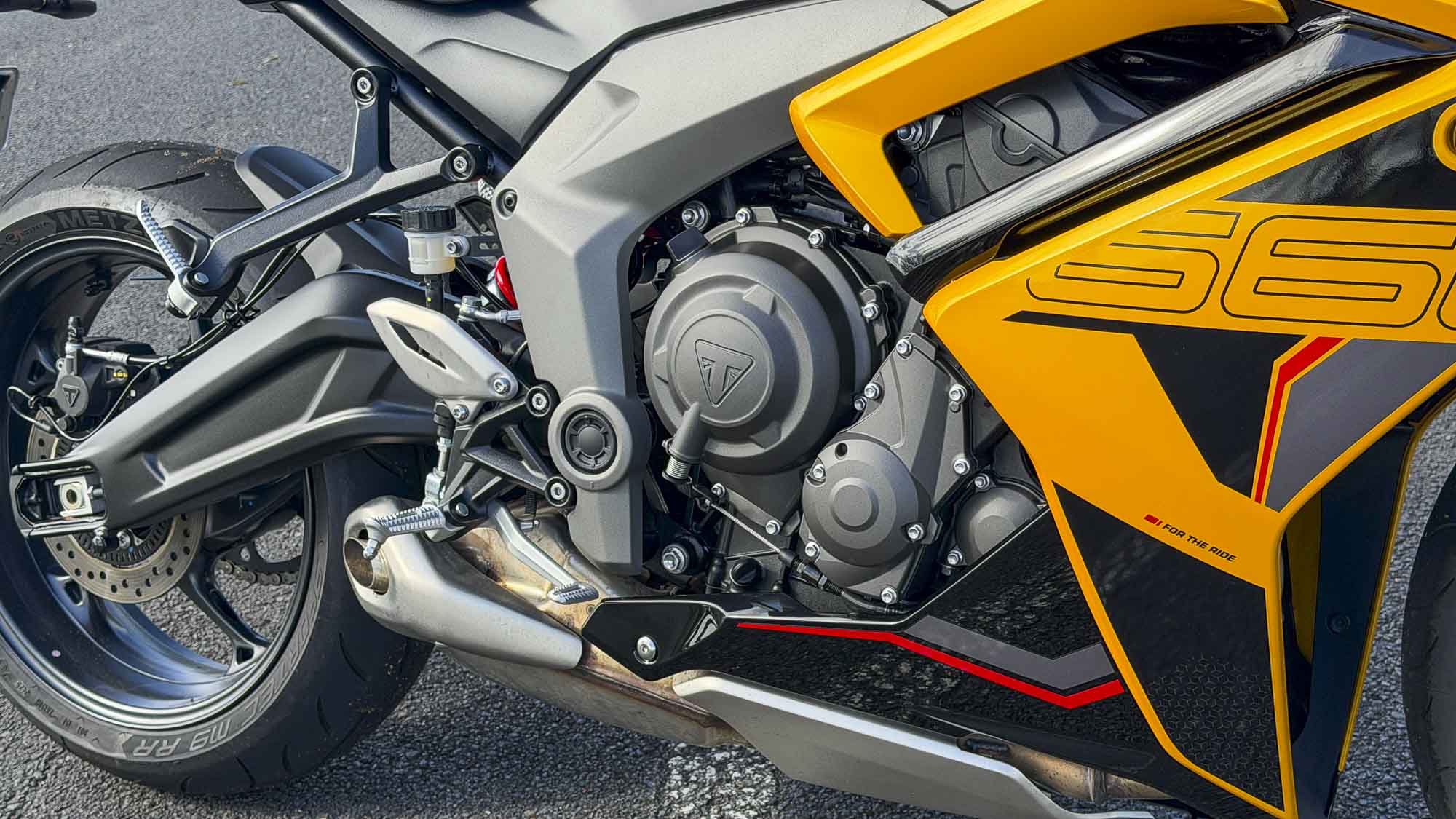
Triumph’s 660cc inline three-cylinder produces a claimed 70kW (95PS) at 11,250rpm and 69Nm at 8,250rpm in full-power form. There is also a LAMS-approved version, and both are priced at $16,495 plus on-road costs in New Zealand.
What I love about Triumph triples is the way they combine some of the best characteristics of twins and four-cylinder engines. There’s useful drive through the middle of the rev range, but they’re also more than happy to keep spinning towards the redline.
The Daytona is a particularly good example.
It’s beautifully smooth at low revs, with fuelling that’s about as good as you’ll find. I deliberately tried to catch it out by using a high gear at low revs, rolling on and off the throttle, and generally doing the sort of things that can expose poor fuel mapping.
Nothing.
No hunting, no snatchiness and none of that irritating hesitation you sometimes get when transitioning between a closed and open throttle.
It just responds to what you’re asking for, smoothly and predictably.
But get the revs climbing and there’s another side to its personality.
The engine really comes alive above around 6000rpm, with a particularly entertaining sweet spot between 7000 and 9000rpm. You can keep it spinning harder if you want, but I found myself enjoying the mid-to-upper part of the rev range rather than constantly chasing the redline.
There’s more than enough performance here for New Zealand roads, and the way it delivers that performance is a big part of the attraction.
Then there’s the noise.
Despite the substantial collector box beneath the engine and the little stubby exhaust outlet, Triumph has somehow managed to retain a fantastic three-cylinder soundtrack.
Wind it out and it sounds remarkably like one of the sportier Street Triple 765 models. It’s a wonderful mechanical howl that encourages you to hold a gear a little longer than you probably need to.
You don’t need an aftermarket exhaust to enjoy this bike.
And just when you think things couldn’t get much better, there’s the quickshifter.
The Quickshifter That Steals the Show
For 2026, Triumph Shift Assist is fitted as standard, allowing clutchless upshifts and downshifts through the six-speed gearbox.
And it is absolutely brilliant.
I don’t think I’ve enjoyed using a quickshifter quite so much for a while.
The upshifts are beautifully clean, but it’s the downshifts that really make the Daytona entertaining. Arriving at a junction or a series of tighter bends, I’d find myself braking and clicking down through the gearbox simply because it was so satisfying.
The combination of the engine note, smooth electronic blips and precise gear changes becomes seriously addictive.
“The combination of the engine note, smooth electronic blips and precise gear changes becomes seriously addictive.”
In fact, the system is so good that you almost forget you still need to use the clutch when coming to a complete stop.
The gear lever on my test bike was positioned a little higher than I’d have liked, but that’s an adjustment rather than a criticism of the motorcycle.
It’s difficult to overstate how much the quickshifter contributes to the overall riding experience. It turns what could have been a perfectly pleasant middleweight sports bike into something that actively encourages you to play with the gearbox.
And that’s exactly what I spent much of the day doing.
Built for Real Roads
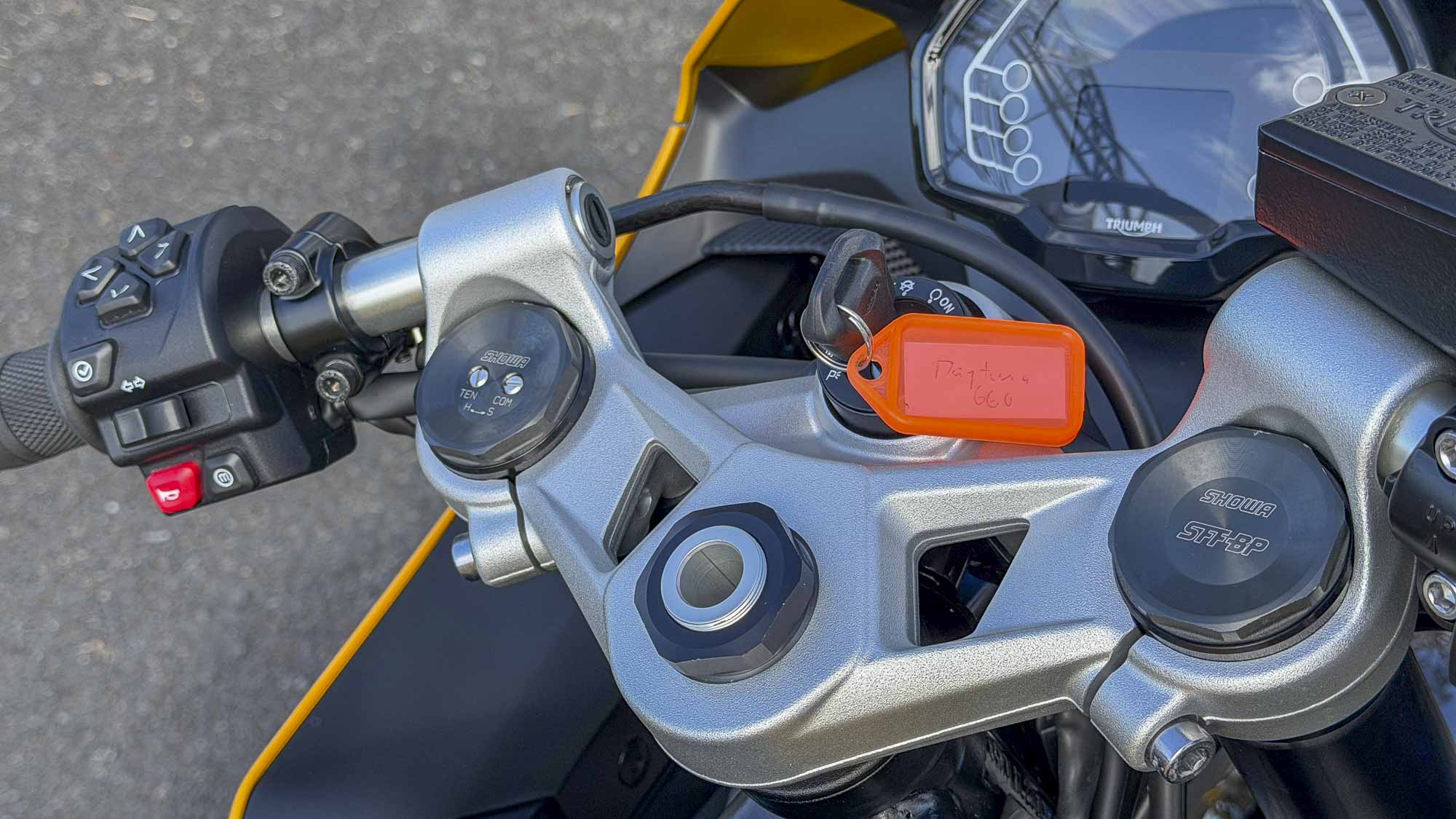
The 2026 Daytona receives a worthwhile suspension upgrade, with new 41mm Showa Separate Function Big Piston forks that allow compression and rebound damping adjustment.
At the rear, there’s a Showa monoshock with preload adjustment.
The specification sounds sporty enough, but what surprised me most was just how comfortable the standard setup proved to be.
After around half an hour of riding, I stopped for fuel and took a closer look at the rear suspension. The preload appeared to be wound right off, which isn’t necessarily how I’d choose to set up a sports bike for my weight of around 94kg.
Yet the Daytona was remarkably comfortable.
I’d deliberately headed off in search of twisty back roads, and anyone who spends much time riding around New Zealand knows these aren’t always blessed with billiard-table surfaces.
There are bumps, ripples, patched sections and the occasional nasty surprise waiting halfway through a corner.
The Triumph dealt with them exceptionally well.
Rather than kicking me out of the seat or sending sharp impacts through my backside, the suspension absorbed the worst of the road surface while allowing the bike to track confidently through corners.
It wasn’t the quickest-steering motorcycle I’ve ridden. Moving it rapidly from one side to the other required a little more effort than I’d expected from a middleweight sports bike.
But once committed to a corner, it felt planted and predictable, following the chosen line without fuss.
There’s a reassuring stability to the Daytona that should appeal to riders developing their sports-bike skills, while still providing plenty of entertainment for more experienced riders.
The trade-off for the comfortable suspension setup became more apparent under heavy braking.
Grab a big handful of the front brake and the forks would use a fair amount of their travel. That wasn’t particularly concerning on the road, but I’d certainly be interested in experimenting with the damping adjustments to see whether the front end could be made a little more controlled when riding harder.
A touch more rear preload might also help sharpen the overall response.
However, I didn’t adjust the suspension during the test, and I certainly wouldn’t want to sacrifice too much of that excellent ride quality.
“There’s something rather refreshing about a sports bike that doesn’t try to beat you into submission every time you encounter a rough section of road.”
There’s something rather refreshing about a sports bike that doesn’t try to beat you into submission every time you encounter a rough section of road.
Braking Without the Drama
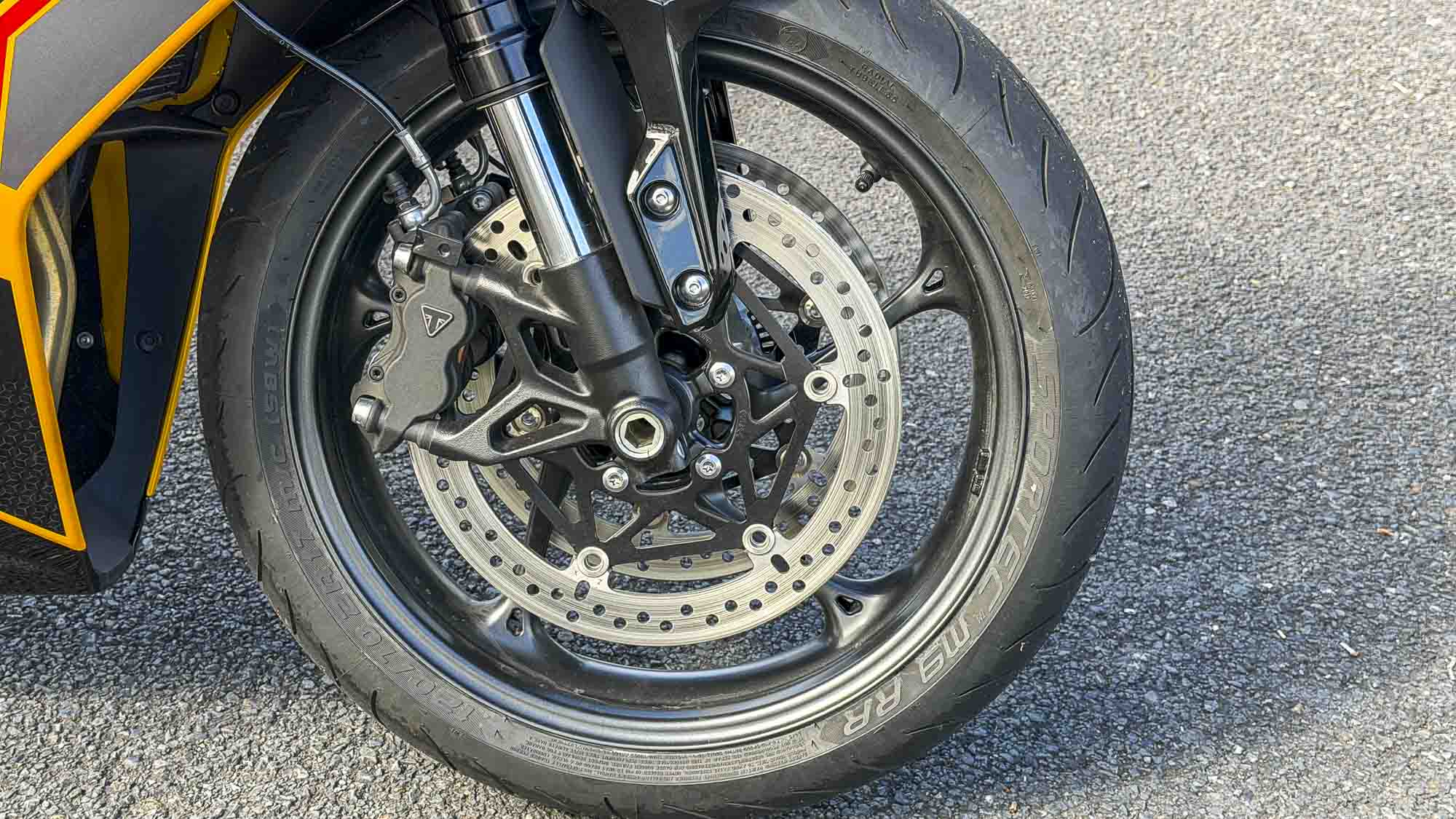
The front brakes use twin 310mm discs with four-piston radial calipers, and they’re another area where Triumph seems to have prioritised usability over outright aggression.
The initial bite isn’t especially fierce.
In fact, I was initially expecting a little more response when I first squeezed the lever. But apply more pressure and there’s certainly no shortage of stopping power.
It’s a progressive setup, with plenty available when you need it, without that sudden grab that can unsettle less experienced riders.
It suits the character of the motorcycle.
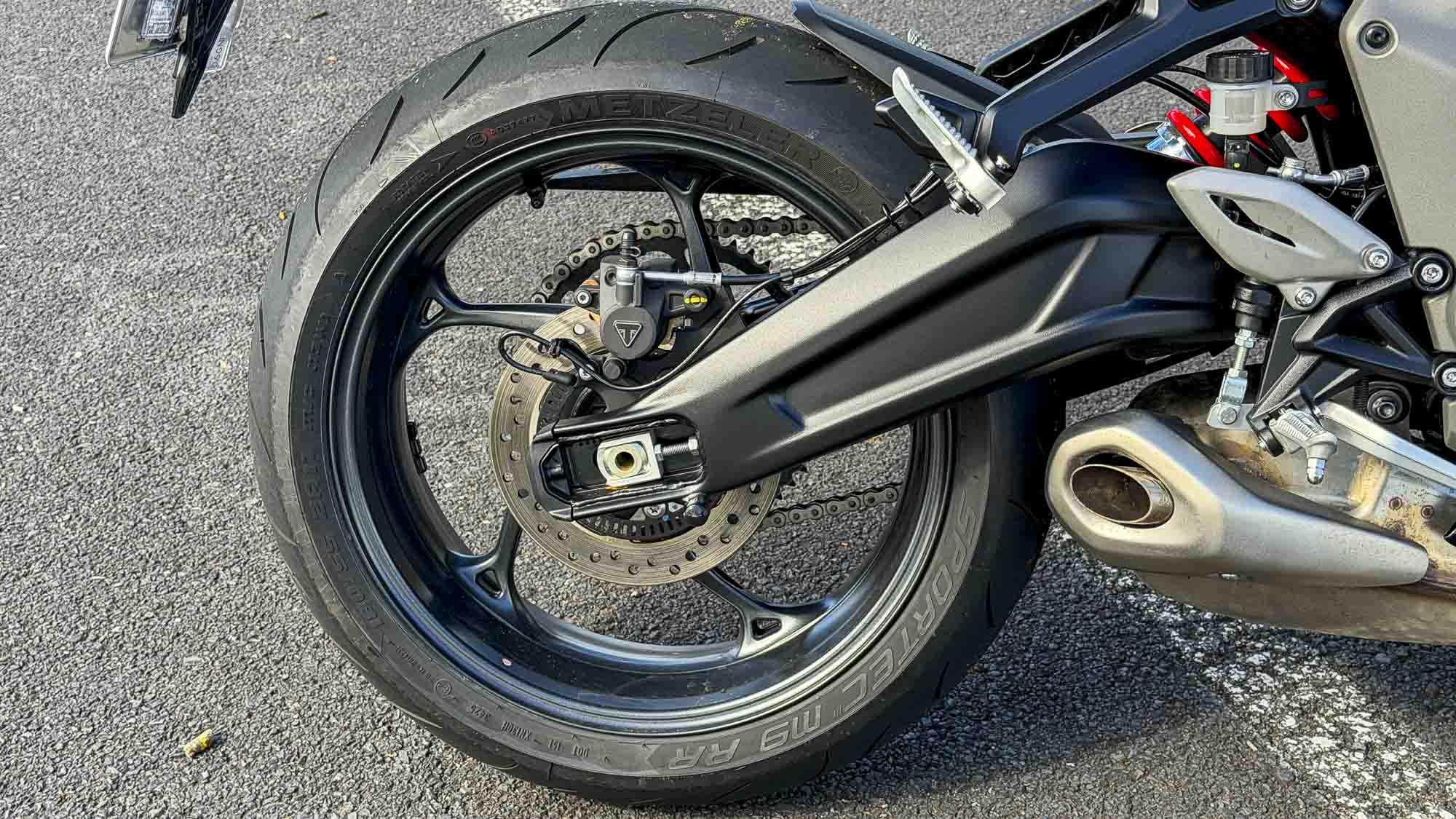
The standard Metzeler Sportec M9 RR tyres also deserve a mention. These are properly sporty tyres, and on the dry roads I encountered they provided plenty of grip and confidence.
By the time I returned home, they’d clearly been working, with a decent amount of warmth in the rubber.
I wouldn’t necessarily choose them as my first preference for riding through the depths of a cold, wet winter, but on a sunny day and a series of entertaining back roads, they were excellent.
Electronics: Good, But Not Perfect
There are three riding modes: Road, Sport and Rain, with corresponding changes to throttle response and traction-control intervention.
The traction control can also be switched off through the menu.
I spent some time exploring the different settings, although I found the electronics noticeably reluctant to allow the front wheel to lift.
Even with an enthusiastic throttle opening in first gear, the Daytona remained remarkably planted. I initially wondered whether the traction control was intervening, but there wasn’t always an obvious indication on the dashboard.
It may simply be a combination of the bike’s stable chassis, power delivery and electronic intervention. Either way, this certainly isn’t a motorcycle that constantly threatens to stand up on its back wheel.
For the intended audience, that’s probably a good thing.
My bigger disappointment is the dashboard.
Triumph uses a combination LCD and smaller colour TFT display, similar to the arrangement found on several of its more affordable models.
It provides the important information, including speed, revs, fuel level, gear position and trip data, but it’s hardly an inspiring piece of equipment.
The display works, and I had no trouble reading the essential information, but aesthetically it feels a little underwhelming on a motorcycle that looks this sporty.
The switchgear isn’t particularly attractive either, although the controls are straightforward enough once you’re familiar with them.
There’s also no cruise control, which is a shame because the Daytona is comfortable enough to make longer rides a realistic proposition.
Another small annoyance is the non-adjustable clutch lever. Triumph has shaped it to provide a relatively accessible section near the end, but riders with smaller hands might still find an adjustable lever preferable.
These aren’t deal-breakers, but they’re the sort of things you notice when everything else about a motorcycle works so well.
A Sports Bike You Could Actually Live With
Perhaps the Daytona’s greatest achievement is that it doesn’t feel like a compromise in the way you might expect.
There’s enough performance to make it genuinely exciting, yet it’s manageable and predictable. The suspension is comfortable enough for rough New Zealand roads, the riding position doesn’t leave you desperate to stop after half an hour, and that wonderful triple provides entertainment at speeds that don’t necessarily require a racetrack.
You could use this motorcycle for commuting, weekend rides and even the occasional longer trip, although luggage options would need some thought.
It’s also the sort of bike that makes sense for someone stepping up from a smaller-capacity motorcycle and wanting to develop their sports riding skills.
That doesn’t mean it’s only for less experienced riders.
I can see the appeal for someone who’s spent years riding increasingly powerful, increasingly focused sports bikes and has finally decided that comfort and usability might not be such terrible things after all.
Yes, an experienced rider could eventually reach the Daytona’s limits, particularly on a racetrack. But on the road, I never felt it was lacking the performance required to have a thoroughly enjoyable ride.
And at $16,495 plus on-road costs, it makes a compelling case for itself.
Verdict – Sometimes Less Really Is More
By the time I returned home, my opinion of the Daytona 660 had changed completely.
I’d gone from largely ignoring it in the garage to deliberately hunting out more roads simply because I didn’t want the ride to end.
The engine is superb, the quickshifter is genuinely addictive, and the suspension manages to deliver an impressive balance between comfort and sporting ability.
There are things I’d change. The dashboard could be better, the pillion pegs interfered with my heels, and I’d like an adjustable clutch lever. I’d also be interested to see how much sharper the chassis could feel with a little suspension tuning.
But none of those things detracted significantly from the enjoyment.
“The Daytona 660 isn’t trying to be a miniature superbike. It’s a sports motorcycle designed to be enjoyed in the real world.”
The Daytona 660 isn’t trying to be a miniature superbike. It’s a sports motorcycle designed to be enjoyed in the real world, with a brilliant engine, a sensible amount of performance and enough comfort to make you want to keep riding.
And after initially struggling to find the enthusiasm to take it out, that’s exactly what happened.
Sometimes the best motorcycles aren’t the ones with the biggest numbers on the specification sheet.
They’re the ones that leave you grinning when you finally get home.
And the Daytona 660 certainly managed that.

THE GOOD
- Brilliant, flexible triple-cylinder engine
- Outstanding standard quickshifter
- Surprisingly comfortable riding position and suspension
- Excellent fuelling and an addictive soundtrack
- Strong value for money
NOT SO GOOD
- Basic dashboard and switchgear
- Pillion footpegs interfere with a sporty riding position
- Non-adjustable clutch lever
- No cruise control
- Steering could feel sharper
2026 Triumph Daytona 660 specifications
ENGINE AND TRANSMISSION
| Type | Liquid-cooled inline three-cylinder, 12-valve DOHC, 240° firing order |
|---|---|
| Capacity | 660cc |
| Bore | 74.0mm |
| Stroke | 51.1mm |
| Compression | 12:1 |
| Max power EC | 95 PS / 95 bhp (70 kW) at 11,250 rpm |
| Max torque EC | 69 Nm at 8,250 rpm |
| System | Multipoint sequential electronic fuel injection with electronic throttle control. Three rider modes (Rain, Road, Sport) |
| Exhaust | Stainless steel 3-into-1 header system with low, single-sided stainless steel silencer |
| Final drive | X-ring chain |
| Clutch | Wet, multi-plate, slip & assist |
| Gearbox | Six-speed, Triumph Shift Assist |
CHASSIS
| Frame | Tubular steel perimeter frame |
|---|---|
| Swingarm | Twin-sided, fabricated steel |
| Front wheel | Cast aluminium alloy, five-spoke, 17 × 3.5 in |
| Rear wheel | Cast aluminium alloy, five-spoke, 17 × 5.5 in |
| Front tyre | 120/70 ZR 17 |
| Rear tyre | 180/55 ZR 17 |
| Front suspension | Showa 41mm upside-down separate function big piston (SFF-BP) forks, adjustable compression and rebound damping, 110mm wheel travel |
| Rear suspension | Showa monoshock RSU, adjustable preload, 130mm wheel travel |
| Front brakes | Twin 310mm floating discs, four-piston radial callipers, ABS |
| Rear brakes | Single 220mm fixed disc, single-piston sliding calliper, ABS |
| Instrument display and functions | LCD multifunction instruments with integrated colour TFT screen |
DIMENSIONS & WEIGHTS
| Length | 2084mm |
|---|---|
| Width at handlebars | 736mm |
| Height without mirrors | 1145mm |
| Seat height | 810mm |
| Wheelbase | 1425mm |
| Rake | 23.8° |
| Trail | 82.3mm |
| Wet weight | 201kg |
| Tank capacity | 14 litres |
SERVICE
| Service interval | 16,000km (10,000 miles) / 12 months |
|---|
CONSUMPTION AND EMISSIONS
| Fuel consumption | 4.9 L/100km (57.6mpg) |
|---|
Triumph Daytona 660 photo gallery