


Chinese automotive manufacturer Chery is exploring an entry into the motorcycle industry, with plans that include an electric adventure scooter, a range-extender cruiser and an unusual electric motorcycle concept featuring a hubless rear wheel.
The company, better known through its Omoda and Jaecoo automotive brands, has already started developing its two-wheeler portfolio. Its early designs suggest that Chery is looking to experiment with different technologies and unconventional approaches to motorcycle design.
Unlike conventional electric motorcycles that rely entirely on a rechargeable battery, the Grow C3 as it is called, uses its electric motor to drive the rear wheel, while the combustion engine works as a generator. The approach is similar to the extended-range electric vehicle technology increasingly being adopted in the car industry, although fitting such a system into a motorcycle presents different packaging challenges.
Chery is also positioning the Grow C3 as a touring and camping companion. It features vehicle-to-load (V2L) functionality, allowing riders to power external electrical equipment using the motorcycle’s battery. The company has also mentioned artificial intelligence-based features, although it has not yet explained exactly what these will involve.
Alongside the cruiser, Chery has showcased an electric adventure scooter with a claimed riding range of between 150km and 200km (93 and 124 miles). The company says the scooter can be charged using automotive charging equipment. However, details regarding its battery capacity, charging times and motor output are yet to be announced.
Neither of the two machines has a confirmed production timeline, pricing or export market at this stage.
MORE ARTICLES
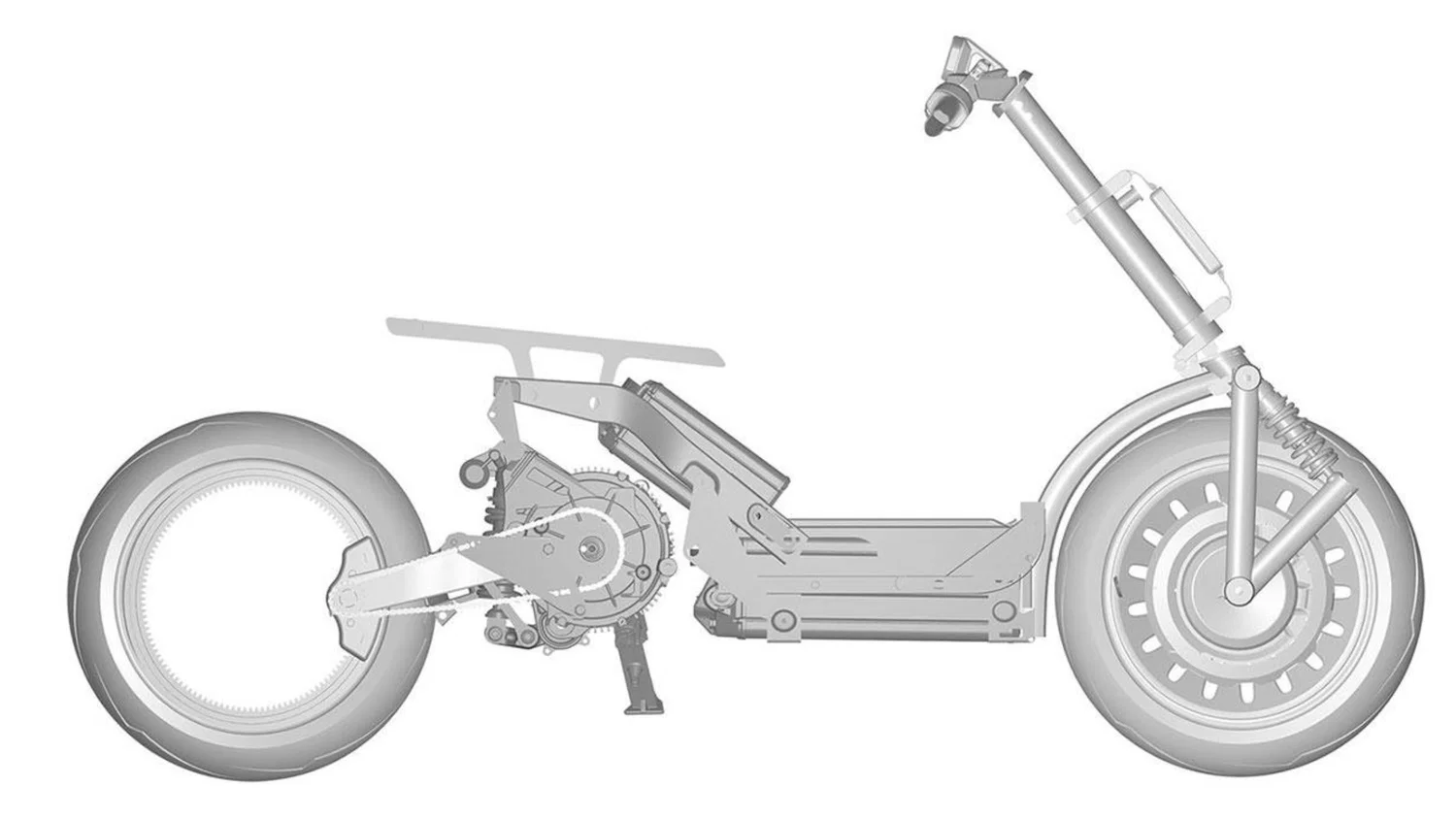
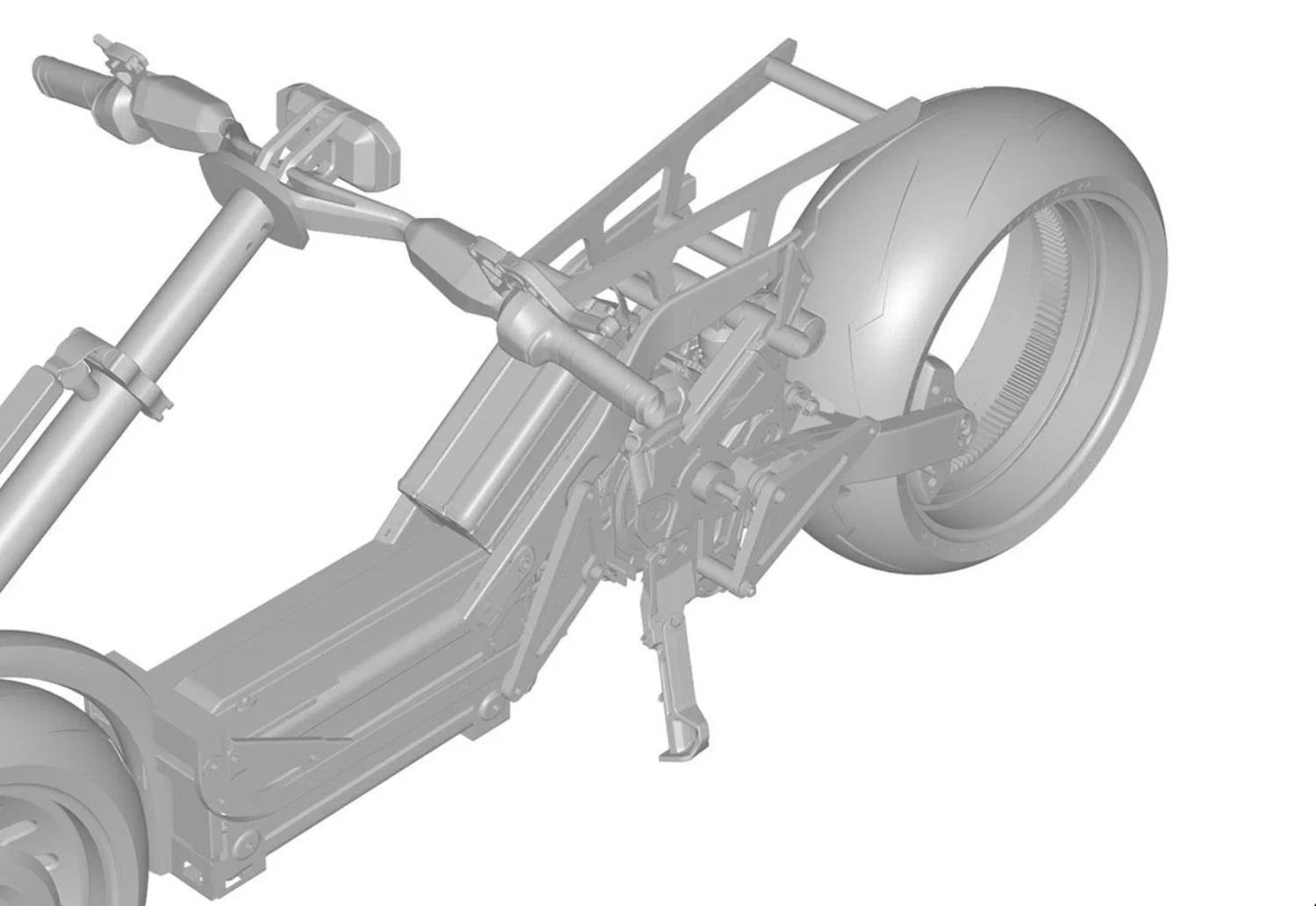
Perhaps the most interesting development, however, comes from a separate patent application that offers a glimpse into Chery’s future motorcycle ambitions. Reported by Australian Motorcycle News, the patent illustrations show an electric two-wheeler featuring a hubless rear wheel, chain-driven transmission and an unusual adjustable handlebar arrangement.
The rear wheel uses a toothed inner rim that receives power through a chain connected to the electric motor. Instead of a conventional rear axle arrangement, the wheel is supported by a perimeter bearing system. Although hubless wheel designs have previously appeared on custom motorcycles and electric two-wheelers, Chery’s proposed engineering approach offers another interpretation of the concept.
The handlebar arrangement is equally unusual. The illustrations show a hinged steering column that allows the handlebars to move up and down, potentially providing different riding positions for seated and standing operation. The concept brings to mind a stand-up personal watercraft, such as a jet ski. However, the patent drawings do not show a completed seat or footboard arrangement, making it difficult to determine exactly how the final design would accommodate riders. There are also questions surrounding the front suspension, with the patent illustrations showing what appears to be a relatively basic and possibly incomplete arrangement of tubes.
As with any patent filing, there is no guarantee that the design will eventually reach production. Patent applications are often intended to protect engineering ideas rather than represent a finished product, so the illustrations may not reflect the final motorcycle’s appearance or mechanical layout.
Nevertheless, Chery’s growing interest in two-wheelers is worth watching as Chinese automotive manufacturers increasingly explore opportunities in the motorcycle industry. Companies such as Great Wall Motors and Geely-backed QJMotor have also demonstrated the growing crossover between the automotive and motorcycle sectors.