

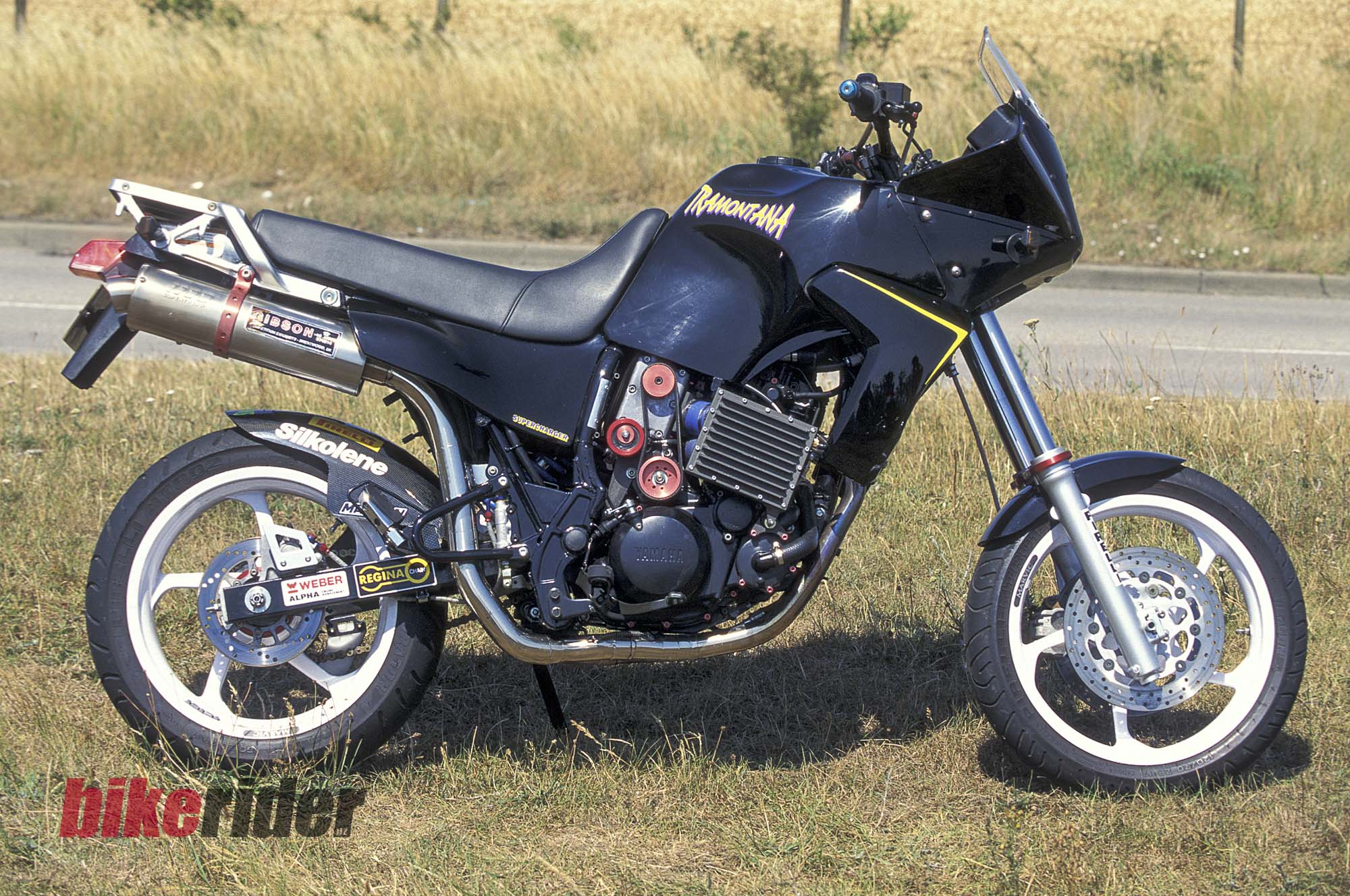
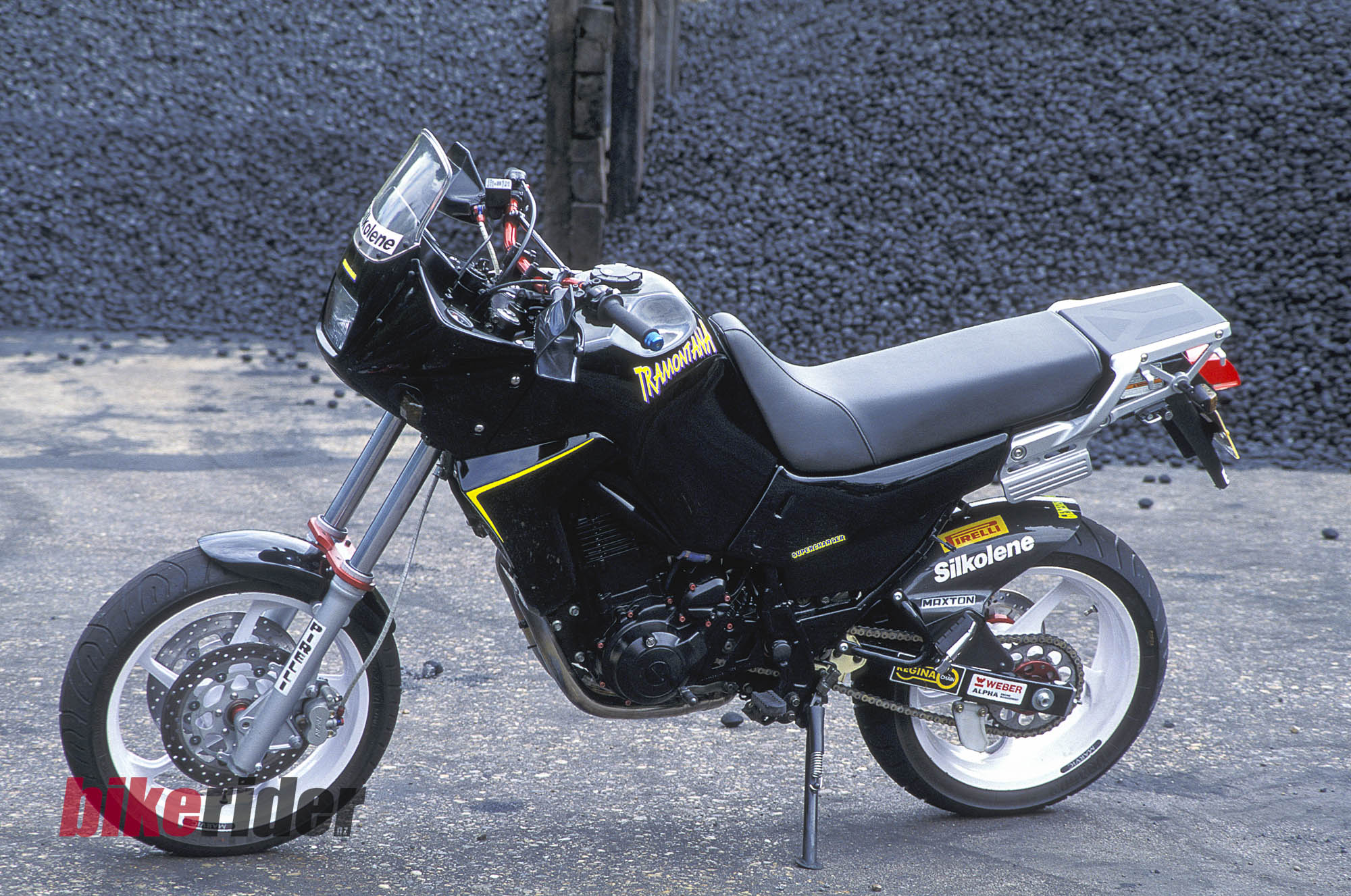
Thirty years before the latest wave of supercharged motorcycles, Yamaha commissioned British engineer Russell Savory to create a blown XTZ660. Alan Cathcart rode the extraordinary RS Tramontana in 1995.
QUICK FACTS
ENGINE
SUPERCHARGER
BOOST
POWER
TORQUE
WEIGHT
PROTOTYPES
Words: Alan Cathcart | Photography: Kyoichi Nakamura
Let’s face it – the idea of getting something for nothing is irresistible: it’s human nature. Trouble is, reality usually fails to deliver the goods – as, for example, in the field of automotive technology, double the horsepower with no appreciable weight penalty? Sounds too good to be true….
In Turbo times on two wheels, it was. What began as an offshoot of gas turbine aircraft technology seemed to promise something for nothing when it came down to earth half a century ago, and entered the car world. First to turn turbocharging to tarmac use on four wheels was Renault in Endurance racing, where it won the 1978 Le Mans 24 Hours at the third time of asking with its Alpine-built A442 Turbo prototype, having entered Formula 1 the previous year with the RS-01 Turbo, each created by ELF motorcycle designer André de Cortanze. The French company was followed soon after by Porsche, as well as by a host of truck and bus manufacturers seeking to overcome the diesel engine’s traditional lack of acceleration and load-carrying torque. By using expelled exhaust gases to drive a pump compressing the incoming charge, it seemed as if nature was delivering something for very nearly nothing – well, until you read the fine print, that is!
Throttle lag, increased fuel consumption, the extra bulk and weight of installation, and especially the complex uprated cooling system needed to offset the substantial increase in heat produced by turbos, were all factors in bursting their bubble of engineering acceptance for use on two wheels. As a turbo car owner myself, I can’t deny the thrill you get from the big burst of torque obtained by flooring the throttle, and watching the boost gauge hit the red zone as you fast-forward towards the horizon via a big kick in the back. But something for nothing, turbocharging isn’t – and all four Japanese motorcycle manufacturers who briefly flirted with turbos over 40 years ago before realising, like Moto Morini who’d toyed with it too, that the minuses substantially outweighed the plusses, admitted as much. It’s been four decades since you could buy a two-wheeled turbo – and Honda’s abortive late-’80s 250cc oval-piston V-twin turbo project for 500GP road racing, in which forced induction engines were allowed to compete with a 50% capacity penalty, served only to underline this particular technology’s fundamental unsuitability for two-wheeled use. It never raced.
But supercharging is a different matter, as modern-day petrol/gasoline engined car manufacturers including first Lancia, then Cadillac, Mercedes-Benz, Jaguar and then many others including BMW (via the Mini Cooper S), duly recognised. Using a mechanically-driven supercharger to compress the incoming charge doesn’t deliver the same problems of throttle lag or heat which turbos do, while delivering a comparable step in power – and especially torque. But the extra weight and bulk of the supercharger, and the fact you have to give back some of the extra power you gain in order to drive it mechanically, initially made supercharging unattractive for anything beyond drag racing and land speed record attempts – certainly not for everyday use. But times changed with the development of a new generation of smaller, more compact superchargers, and the technology to employ them via the variable boost which electronically controlled engine management systems make possible. The only surprise is that the bike world ignored all this for so long.
MORE ARTICLES
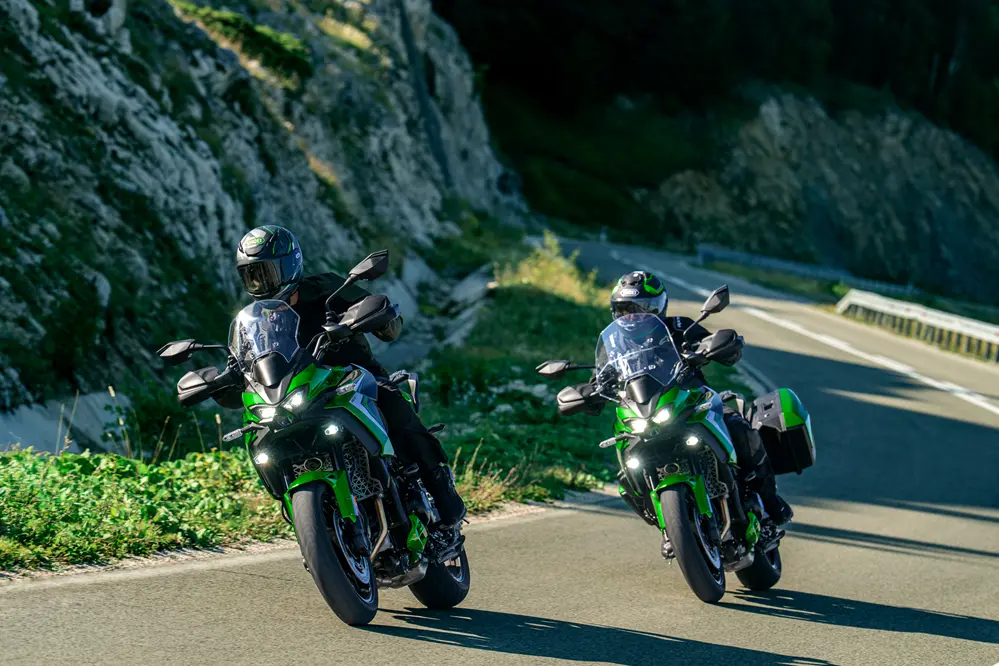
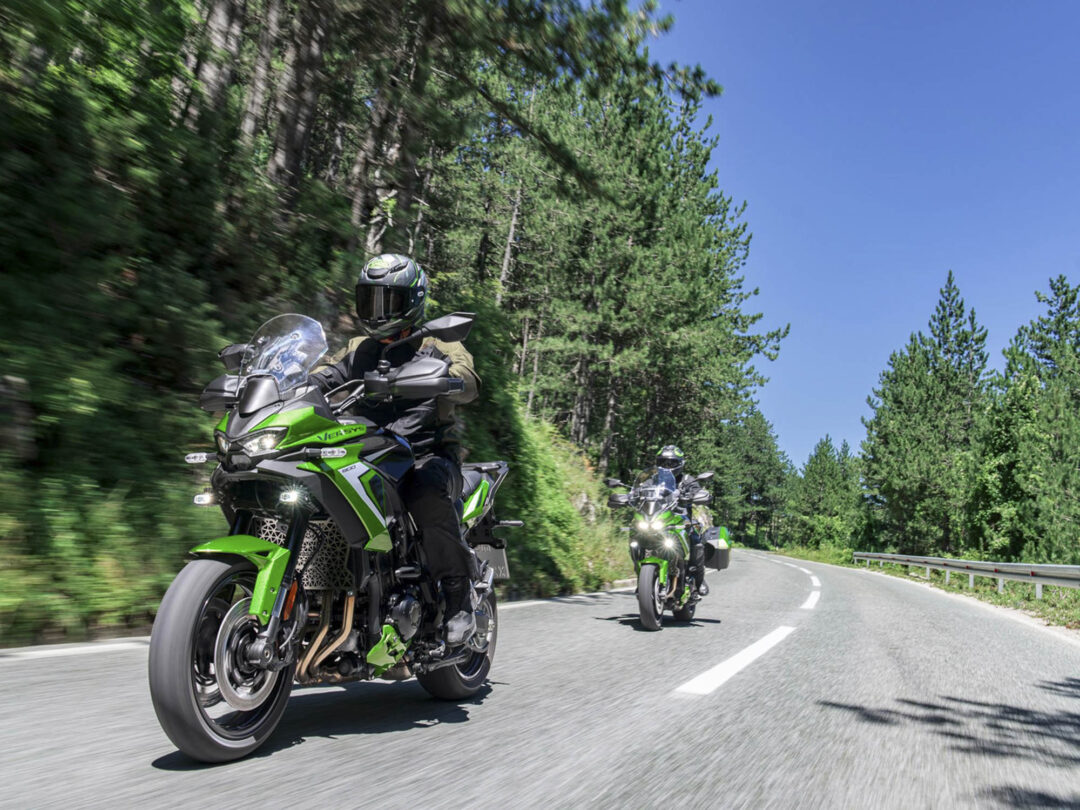
It was Kawasaki which finally brought supercharging to dealer showrooms with the unveiling at Intermot 2014 of its Ninja H2 and H2R models, powered by a purpose-built 1000cc four-cylinder engine. Its bespoke centrifugal supercharger was designed in-house with help from Kawasaki Heavy Industries’ Aerospace Division. More recently, Honda unveiled its V3R 900 E-Compressor prototype at EICMA 2025, featuring a compact, water-cooled 75-degree V3 and an electronically controlled compressor intended to deliver responsive torque from low revs. Honda says the concept is being developed towards production. But there’s a fascinating footnote to this renewed enthusiasm for forced induction: Yamaha had already commissioned a remarkable supercharged single from British engineer Russell Savory more than 30 years ago. Here’s how.
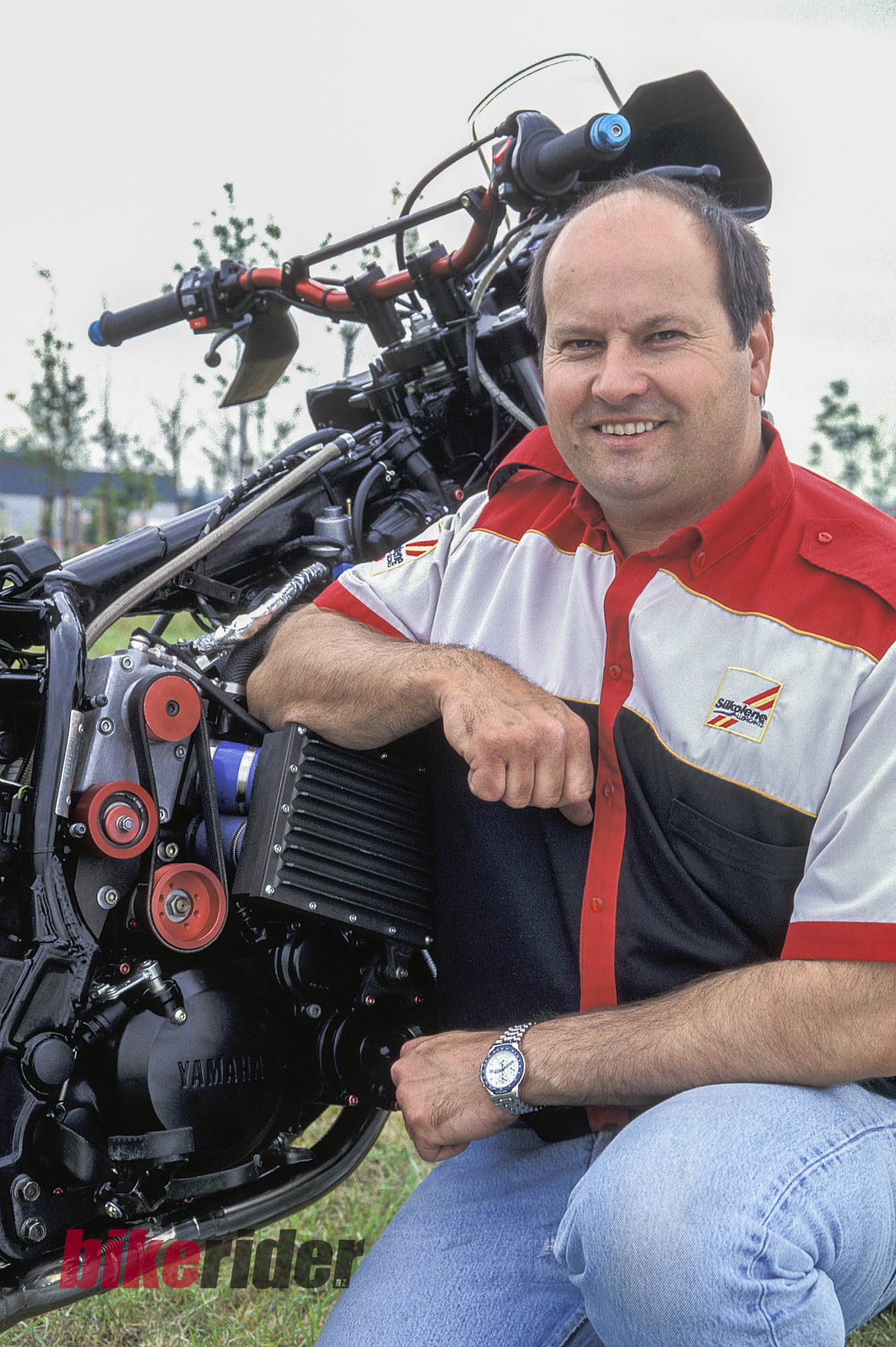
The engineer behind the Tramontana
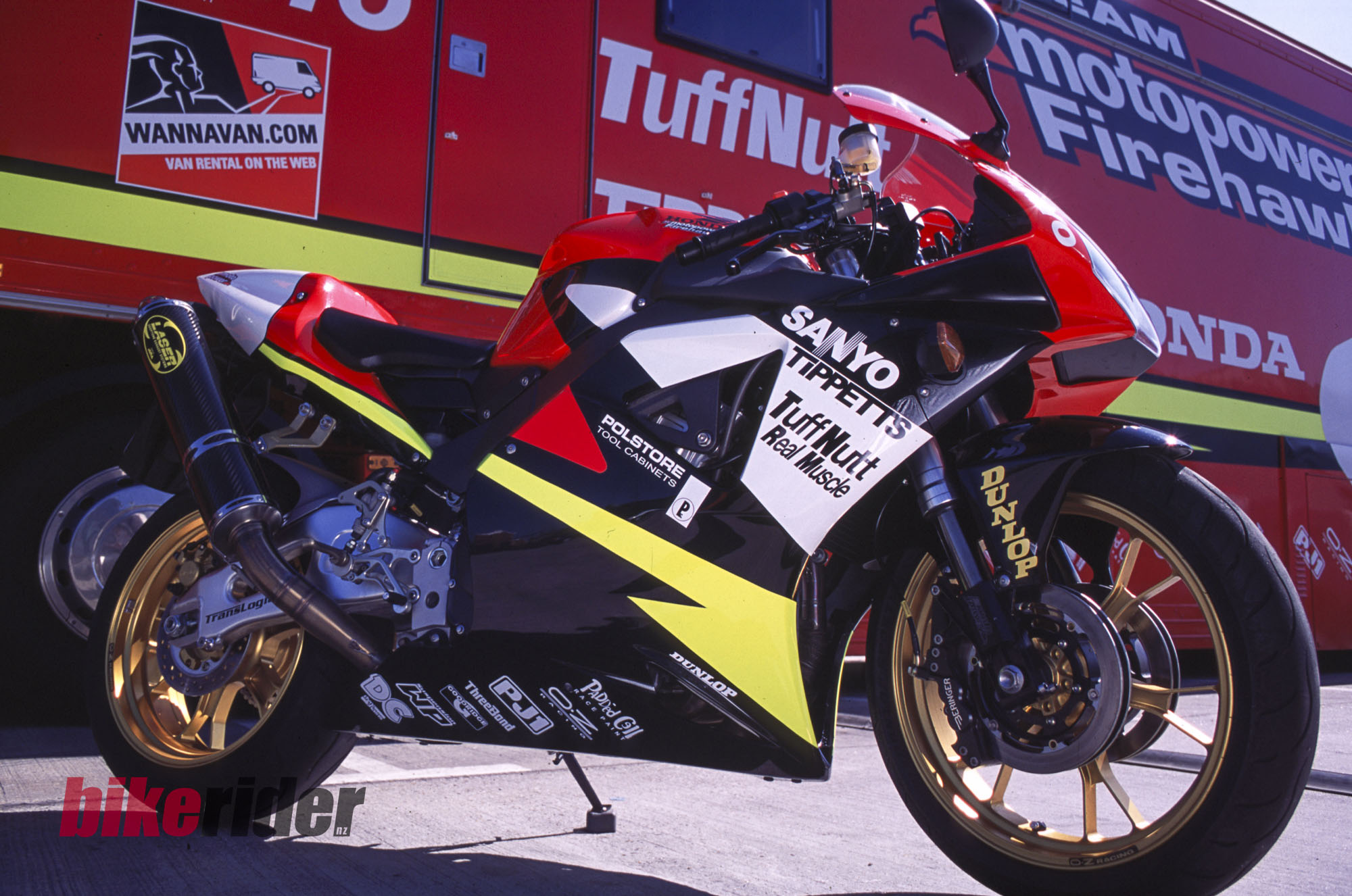
Back in 1995 Russell Savory, then 54, was one of Britain’s top development engineers, accustomed to working on secret projects for several major manufacturers. In addition to his Isle of Man TT-winning race-tuning activities for Yamaha and Honda (Savory’s Sanyo-sponsored CBR900RR Fireblade Production racer won Honda’s historic 100th TT victory in 1998, in the hands of Jim Moodie), and producing the Honda CBR600RR that Paul Brown won the 1997 British Supersport title with, Savory’s Hertfordshire-based RS Performance concern also created a series of tricked-out special projects, often based on Yamaha machinery. So, like the fuel-injected 2-litre V8 engine delivering over 320 bhp comprising a pair of FZR1000 EXUP motors bolted to a common bespoke crankcase, which powered the Caterham RST-V8 Levante, eight examples of which were built from 2004-2008 to celebrate 50 years of Caterham Cars production.
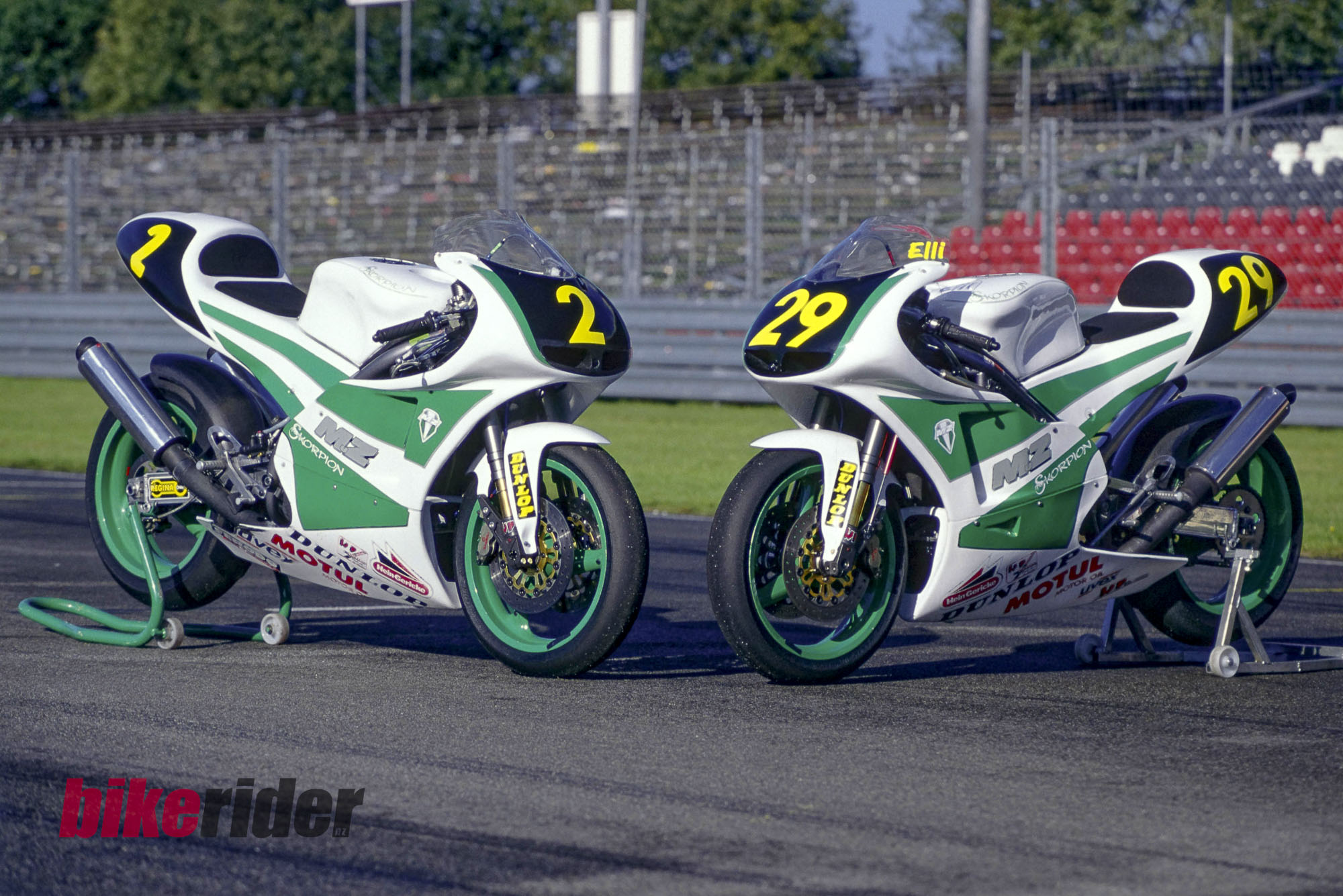
Or like the modified 6-speed FZR1000 engine powering the 55 examples built of the Rocket street-legal two-seater racing car designed by Gordon Murray of McLaren F1 fame. Or the fuel-injected XTZ660 five-valve single which powered the first factory MuZ Skorpion Supermono racer made in 1993, and its twin-cam four-valve successor, the RS660, which debuted two years later. Or the 180-bhp Honda Fireblade ultrabike built under the Motopower Firehawk label for discerning customers like rock legend Mark Knopfler, or McLaren-Mercedes F1 engine designer, Graham Langham. Or – well, you get the picture: besides being super-smart, Russell Savory has an enquiring mind, which is how when Yamaha came to him back in 1993 with the idea of developing a supercharged single, it was a project which immediately appealed.
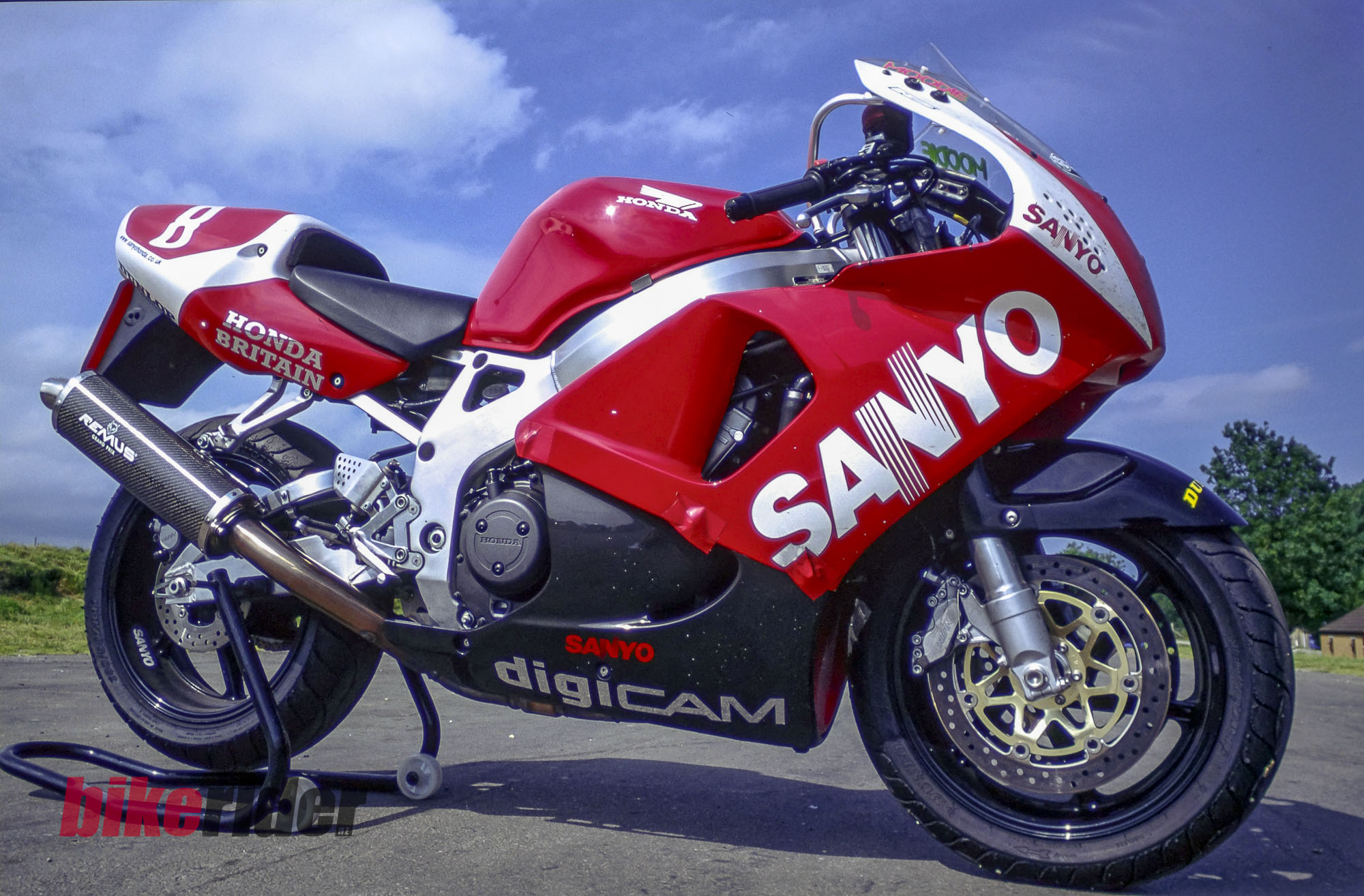
The Japanese firm’s brief was to counter the power advantage of the 900cc V-twin Cagiva Elefant which had become its principal competition in gruelling Desert races like the Paris-Dakar and Sahara Rallies, while still retaining the light weight and manoeuvrability of its Ténéré single in sand and slow going, by producing a power-up Supermono dirt racer via the simple – not! – expedient of supercharging it. As in, much more horsepower and especially torque, but with no significant increase in weight – which is where we came in….!
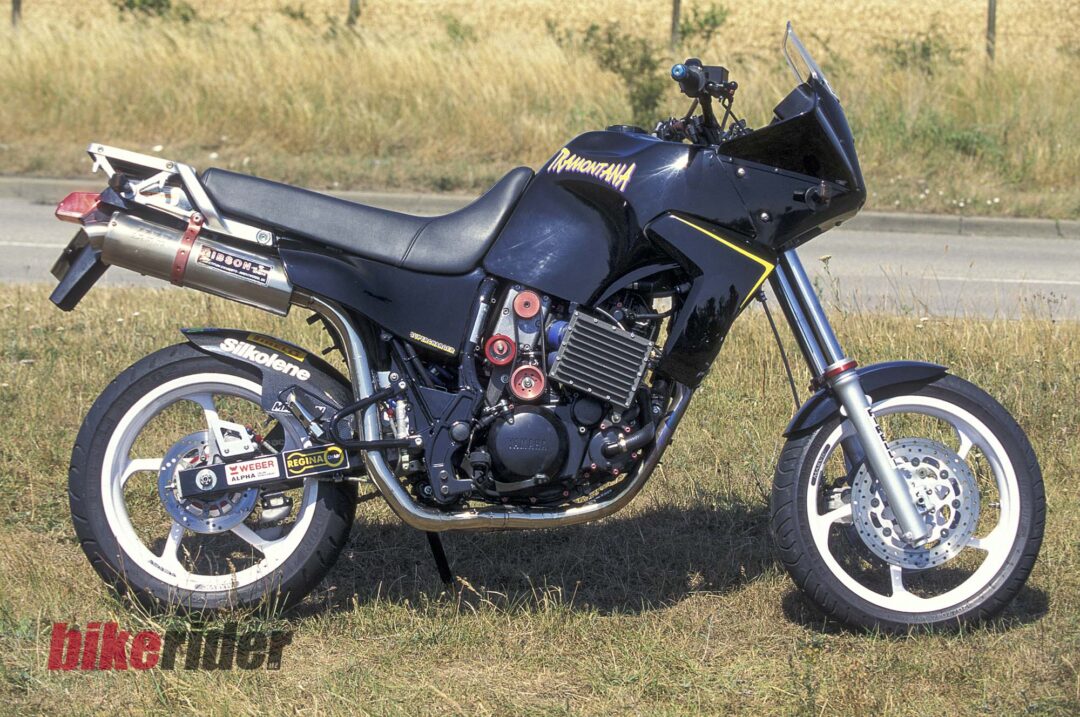
Two years later, the fuel-injected Yamaha XTZ660-based RS Tramontana (named after a strong cold wind that blows across the Mediterranean basin) became living proof that supercharging works on bikes as well as cars, in a way that turbos don’t. If you ever thought this was a uniquely Vintage-era concept, better suited to those prewar days of yesteryear when the Gilera Rondine Compressore four or BMW Kompressor twin vied for 500GP supremacy with the blown AJS V4 or the stillborn supercharged Velocette Roarer twin, think again. Supercharging may have been banned for GP racing after WW2 in keeping with the new mood of postwar austerity, but as Honda and Kawasaki will readily confirm, its time has surely come again – and the first moment I twisted my wrist on Savory’s supercharged street rod thirty years ago, I was convinced, too.
Almost twice the power
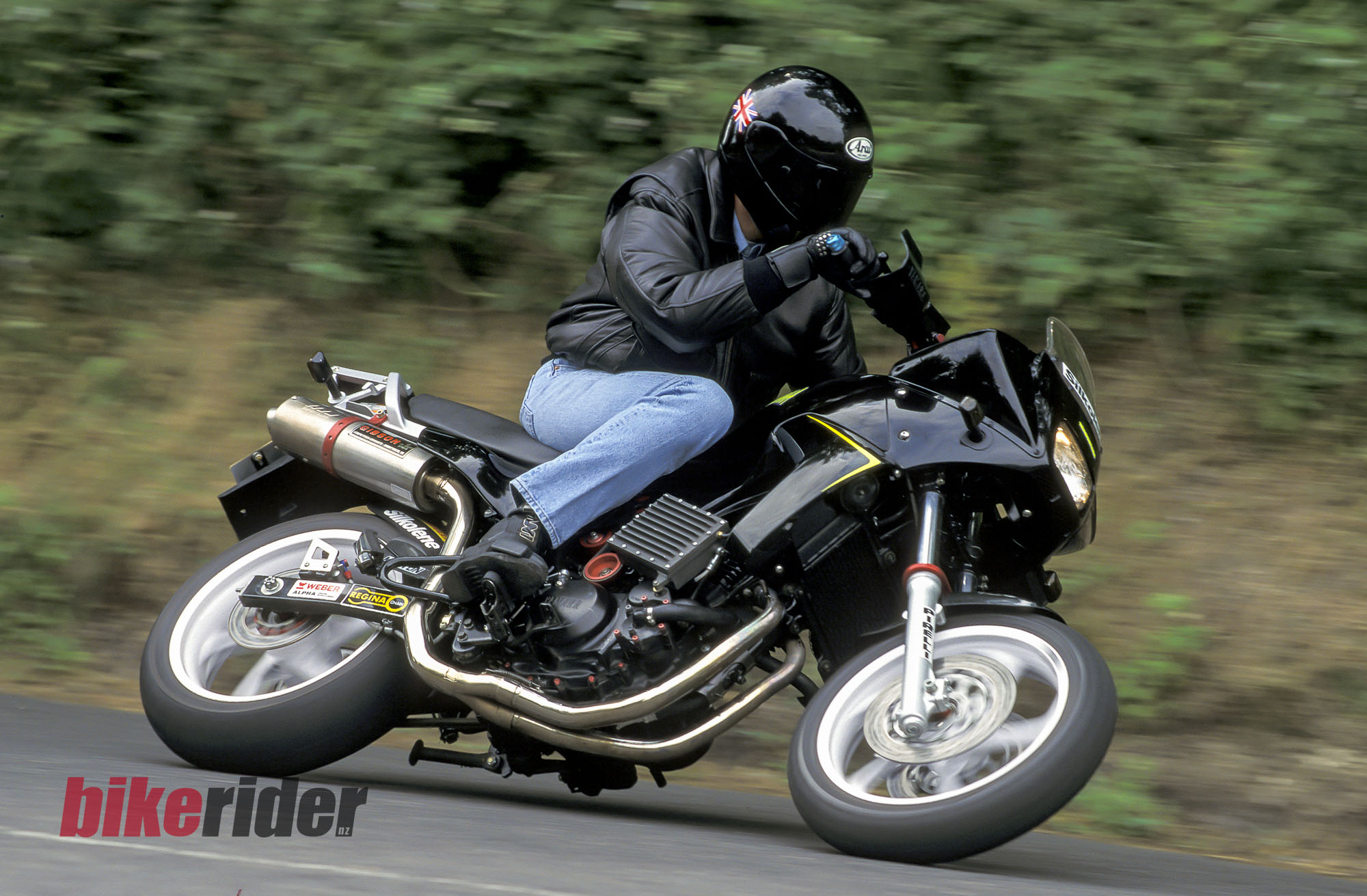
The figures say it all. The stock Yamaha XTZ660 motor delivered 37 bhp at the gearbox on the RS Performance dyno fresh out of the crate, whereas the very same engine in the blown Tramontana churned out 72 bhp on the same dyno at 7,200 rpm.
“The stock Yamaha XTZ660 motor delivered 37 bhp … the blown Tramontana churned out 72 bhp.”
But that’s not the best part: by adding a mechanical supercharger, Savory’s Tramontana significantly increased both low-end and peak torque across the rev range, peaking with 81 Nm/59.74 ft-lb at 4,900 rpm, compared to the stock motor’s 56 Nm/41.30 ft-lb at 5,250 revs. All that was without any conventional tuning work like gas flowing or porting the cylinder head. Camshaft, valves etc. were all strictly stock, and the compression ratio was actually reduced to 9:1 via a forged Omega piston mated to a Carrillo conrod and welded-up crank – just for peace of mind with all that extra power and torque. It was supercharging that made all the difference.
Riding the supercharged single
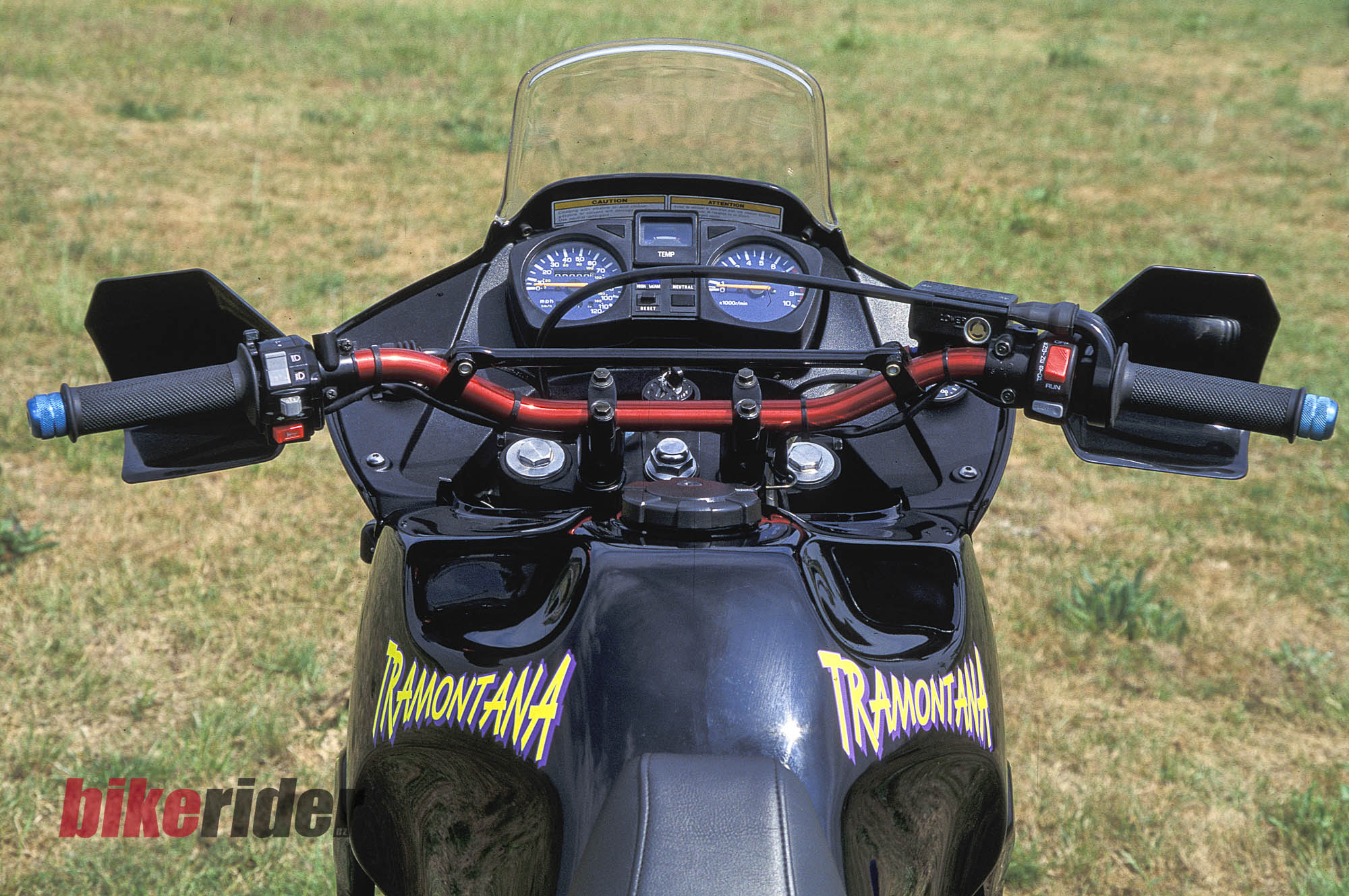
The result 30 years ago was a bike that, even today, would be a contender to be the quickest point-to-point machine yet conceived for city streets or country roads – as well as a wheelie hound par excellence. Spool the Trammie up, hear the whine of the supercharger above the fruity-sounding Gibson 2-1 exhaust, drop the clutch and watch the boost gauge to the left of the dash sweep round to the right as you made everything else on the road eat your dust. Better still, cruise around off the boost, looking for prey – like a Porsche Turbo or Honda Fireblade. Line ’em up at the lights, twist that wrist – and ride the waves of power from 3,000 rpm to 6,000 rpm – and beyond. Max torque came at 4,900 rpm – but, said Russell Savory, the only thing standing in the way of more power, and especially torque – which is basically acceleration – was the rev limiter. “The power curve is almost diagonal,” he said matter-of-factly, “and although we’ve got the limiter set at 8,200 revs compared to 7,200 rpm with the stock XTZ, thanks to the stronger rod and welded up crank, if we were brave enough to set it higher, we’d have more power. We’ve never had a single problem with the crankcases or bottom end in the entire development cycle, so with some proper tuning and a decent camshaft, there’s no doubt we could still get 100 bhp from this engine. And remember – this is ‘just’ a single!”
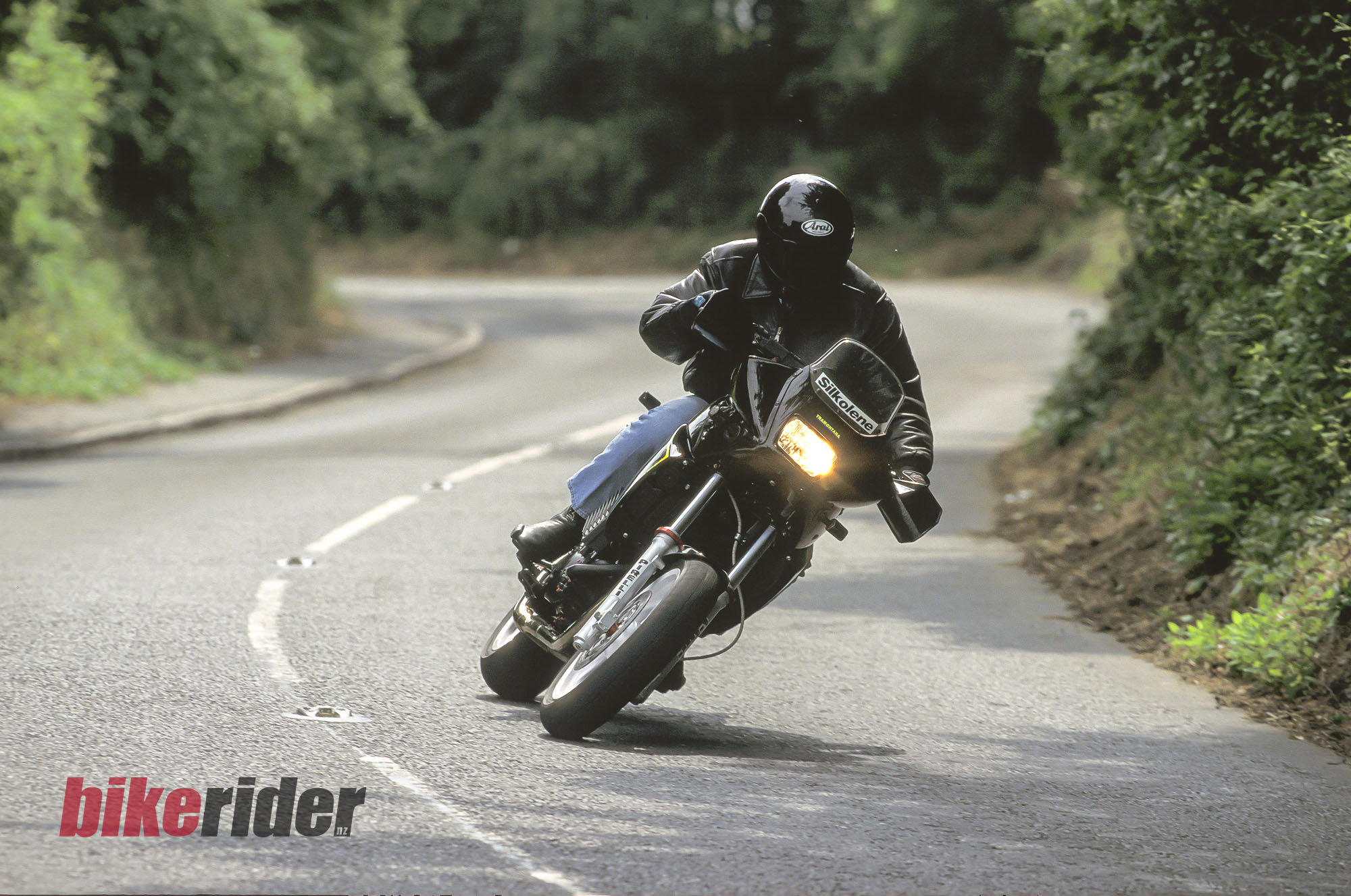
The supercharged YZF750 four punched out to 835cc which would have been the next Yamaha application of the RS Performance blower technology, would certainly have maxed out the concept power-wise, had it ever been developed. But while the result might certainly have delivered outrageous performance, it’s unlikely it could have been anywhere near as rideable as the punchy, potent Tramontana single. The stock XTZ chassis package proved much tighter-handling and more streetworthy than its trailie derivation had led me to expect, thanks to RS installing stiffer springs in the 40mm stock fork that had been revalved courtesy of Maxton, and a fully adjustable Quadrant rear monoshock giving race-level suspension compliance via an altered RS progressive-rate link. Burton-on-Trent frame specialists NWS had modified the frame slightly to make room for the blower, with 17-inch Marvic cast aluminium wheels fitted at both ends, shod with Pirelli Dragons – the rear 160/60 cover wide enough to lay all that power and torque to the tarmac. This was serious streetfighter spec, and the result was a nimble, fast-steering, tight-handling street single with unbelievable urge. And no throttle lag: not a turbo, see?
Instead, the Tramontana delivered instant grunt from the light-action twistgrip and, if you got hard on the throttle above 4,000 rpm, it was the arm-yanking variety – so hold on tight! Only the brakes needed attention: look closely at the pics and you’ll see two front discs, but just a single caliper. The downside of being the first person to ride the bike outside of RS Performance or Yamaha itself was that Russell hadn’t got round to fitting the second caliper he’d only just sourced. Though the Tramontana actually weighed a remarkable 5kg less than the stock XTZ660, despite the addition of a supercharger (the total blower package weighed only 7kg extra all told, offset by stripping off the trailbike hardware), it accelerated so much faster that you needed more stopping power – and the way I got the rear brake howling in protest when I worked it hard with the interim setup, confirmed this.
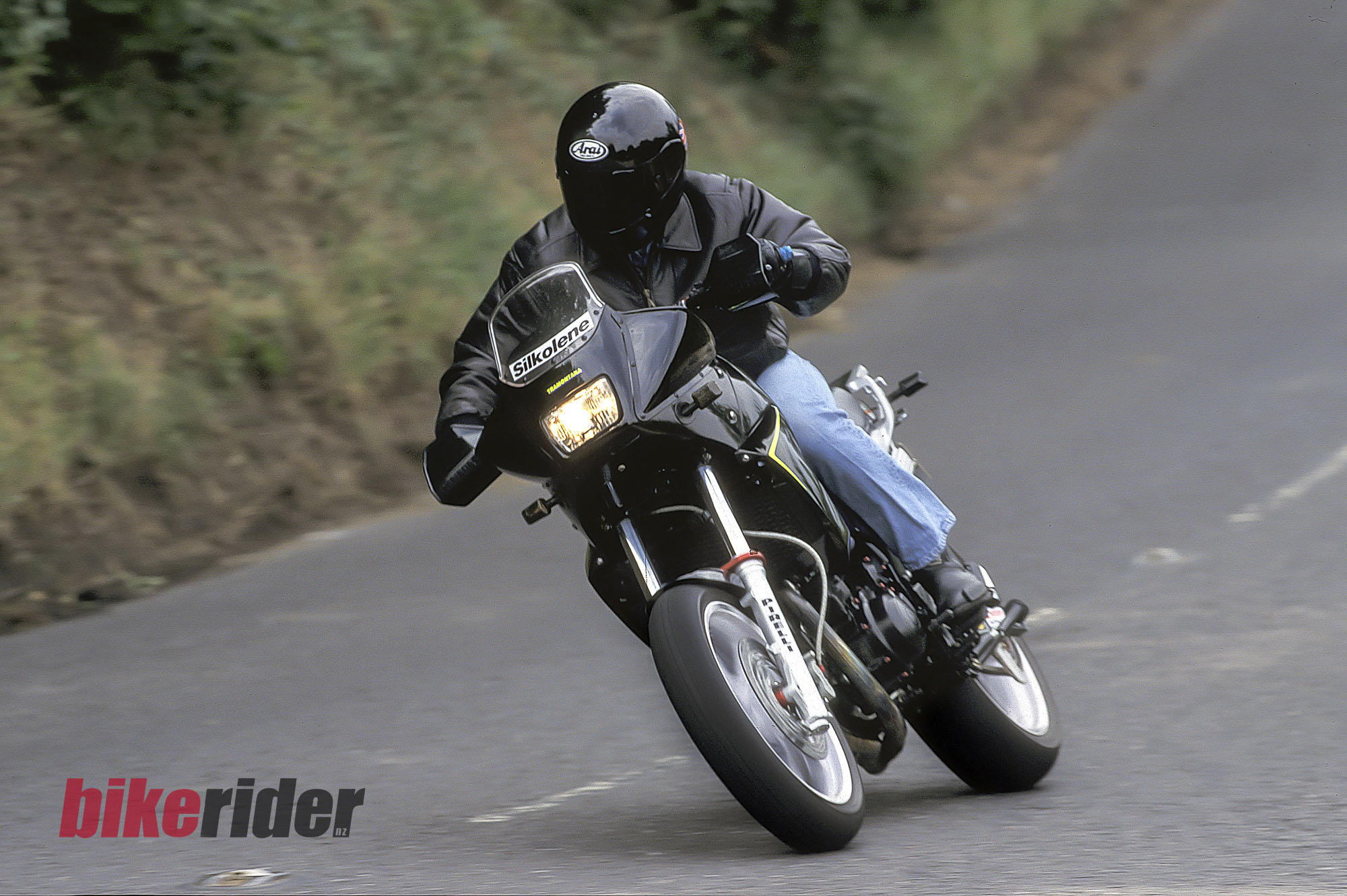
“Instead, the Tramontana delivered instant grunt from the light-action twistgrip.”
Two years of development
Twice as much power using a stock cylinder head, with no weight penalty or throttle lag – all this didn’t come about overnight, and the Tramontana was the result of two years of continual development, some of it frustratingly abortive. RS began by sourcing the smallest commercially available supercharger then available, made by Opcon Autorotor AB in Sweden, whose compact twin-screw positive displacement (aka volumetric) superchargers had become legendary in the aftermarket tuning scene. Unlike typical Roots-type blowers which merely push air, the Opcon Autorotor utilised a highly efficient Lysholm twin-screw design, which featured internal compression using tightly intermeshing male and female rotors, providing exceptional volumetric and thermal efficiency. The version RS sourced was a twin-rotor design of which just ten prototypes were built: three for the RS Tramontana, one for Harley-Davidson (!?), and the rest for Honda for use on a 660cc microcar development project.
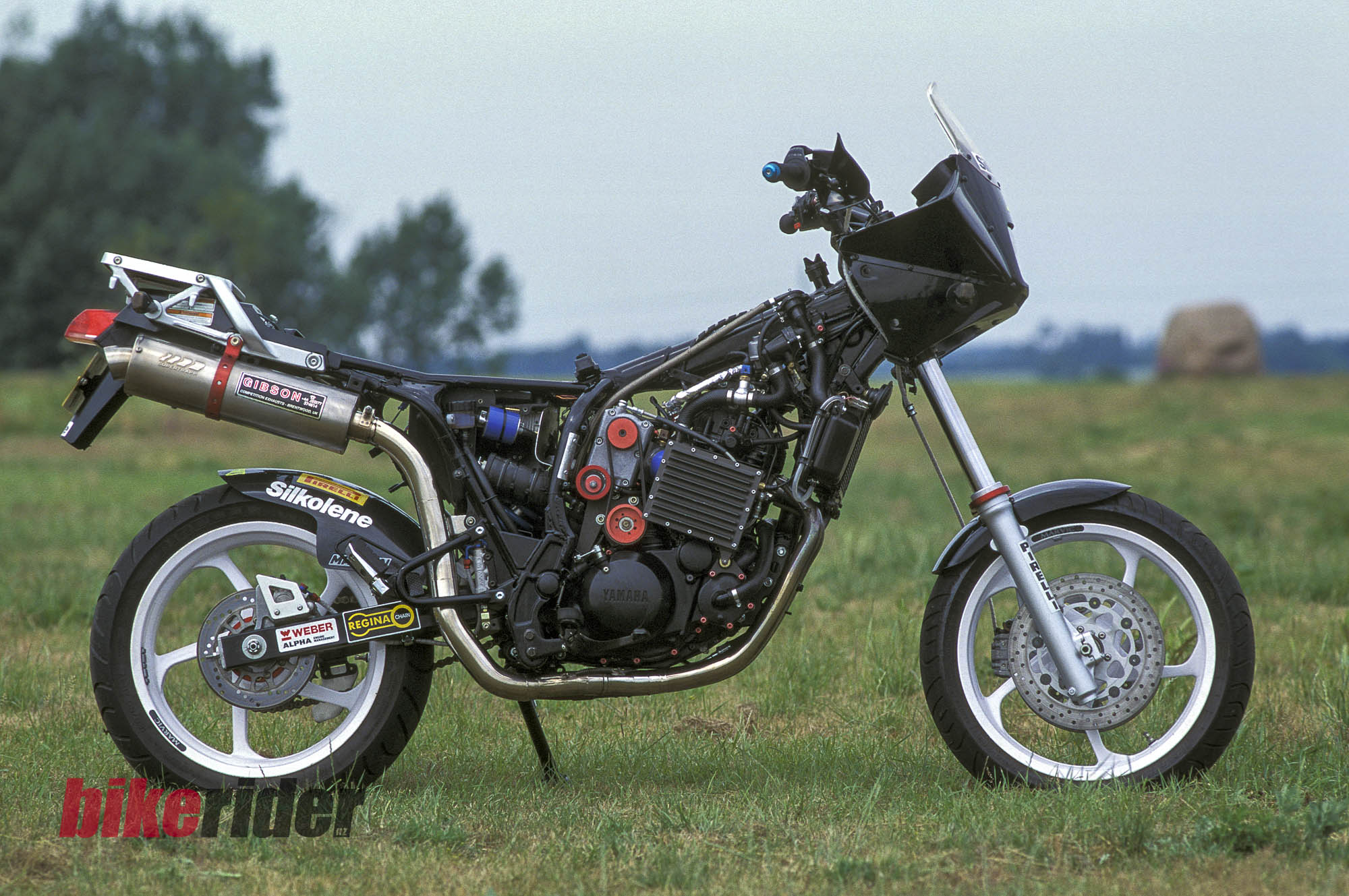
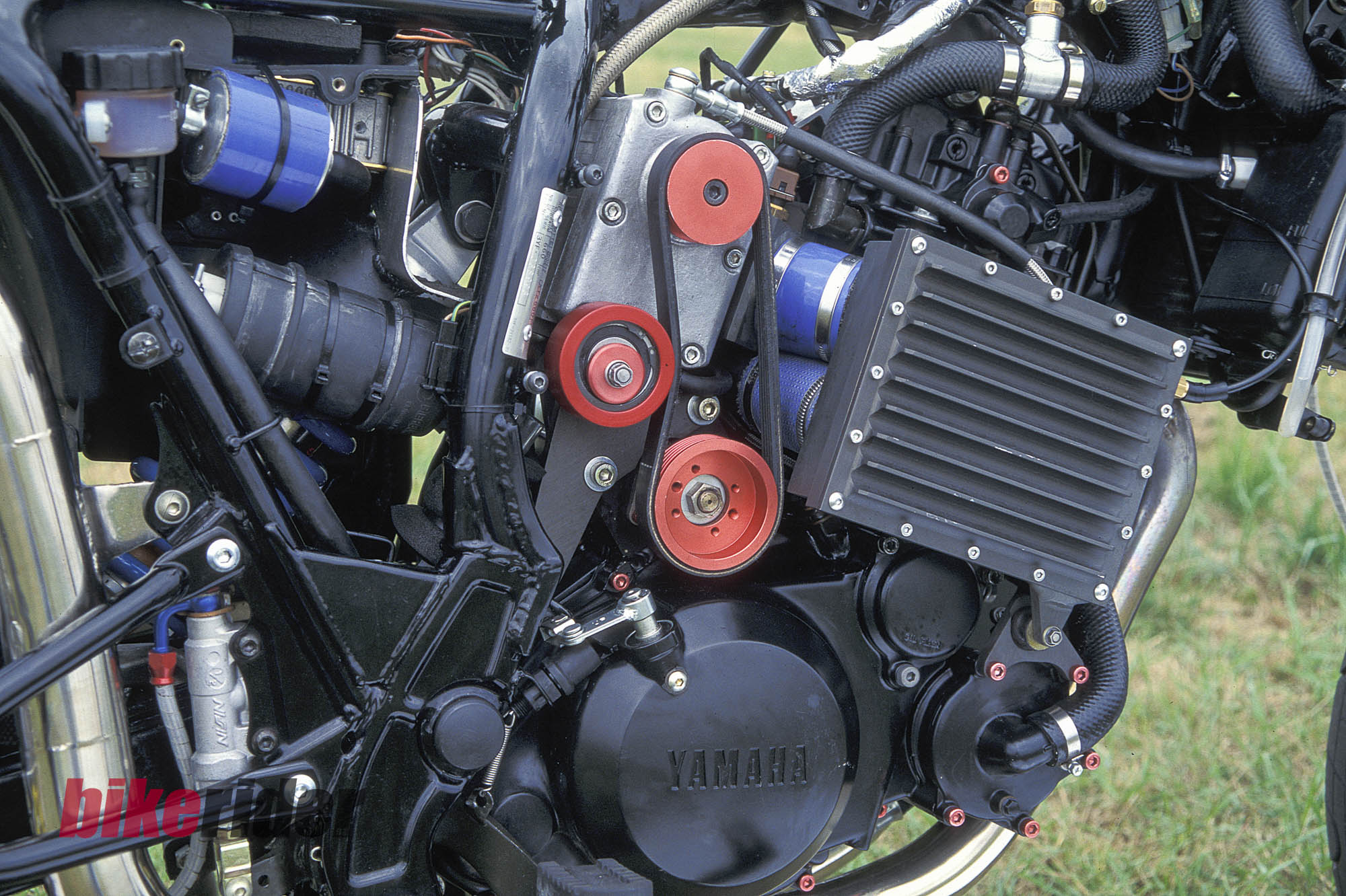
Having sourced the blower, the next step was to decide on a drive system for it, and after four or five failures, RS hit on the system eventually employed, which saw the supercharger driven by a toothed belt off the engine’s gear-driven vibration-killing counterbalancer. This had the added advantage of employing a cush drive to smooth out the gear shock from the pulsing effect of a four-stroke single firing every 720 degrees of crankshaft rotation. “This is the reason it’s so hard to turbocharge a single,” Russell Savory told me, “because you only get one exhaust gas pulse every two engine rotations, which is insufficient to drive the turbo unit. Supercharging a single is equally difficult, which is probably why nobody ever did it in prewar days on a racing Norton or the like – you have to wait so long between bangs, it causes terrific shock to the drive system. We had lots of failures because of this – it took months of trying different tapers, different keyways, alternative belt designs and moving the drive about the engine, until we eventually got it right. Toothed belts would tear themselves to shreds at about 3,000 rpm – even the HDT ones used for oil pumps on Formula 1 car engines. Eventually Uniroyal came up with their PolyVee belt used on high torque pumps for power steering, and this gave a bit of slippage which solved the problem. We called this the Lemon Engineering project – suck it and see, spit it out if no go, then try something else till you get it to work. And eventually, we did!”
“We called this the Lemon Engineering project – suck it and see.”
Running the supercharger at 1.7 times engine speed with a relatively modest 6-10 psi (0.4-0.7 bar) variable boost pressure was a conservative step aimed at eliminating this problem, even if such a slow blower speed is at the outer edge of Opcon’s performance envelope. But together with the more precise fuel metering of the RS-developed Weber-Alpha fuel injection system, this delivered not only reliability but also amazing fuel economy – the main reason car manufacturers have mostly all turned away from supercharging these days, because turbos are significantly more fuel-efficient and better suited for meeting strict modern emission regulations, while throttle lag issues have been addressed mainly by electronic control. But back in 1995 Savory told me the Tramontana’s fuel consumption was almost identical to a stock, carburetted XTZ660’s – the EFI’s increased efficiency compensated for the extra thirst of the supercharged engine. A vital function was performed by the little black intercooler box on the right side of the engine, which acted as a plenum chamber cooling the incoming air, before it was mixed at the very last moment with fuel. The box was internally baffled, and its volume and design were critical factors in delivering performance, as well as acting as an air damper to resolve the problems of the shock from the 720-degree firing pulse.
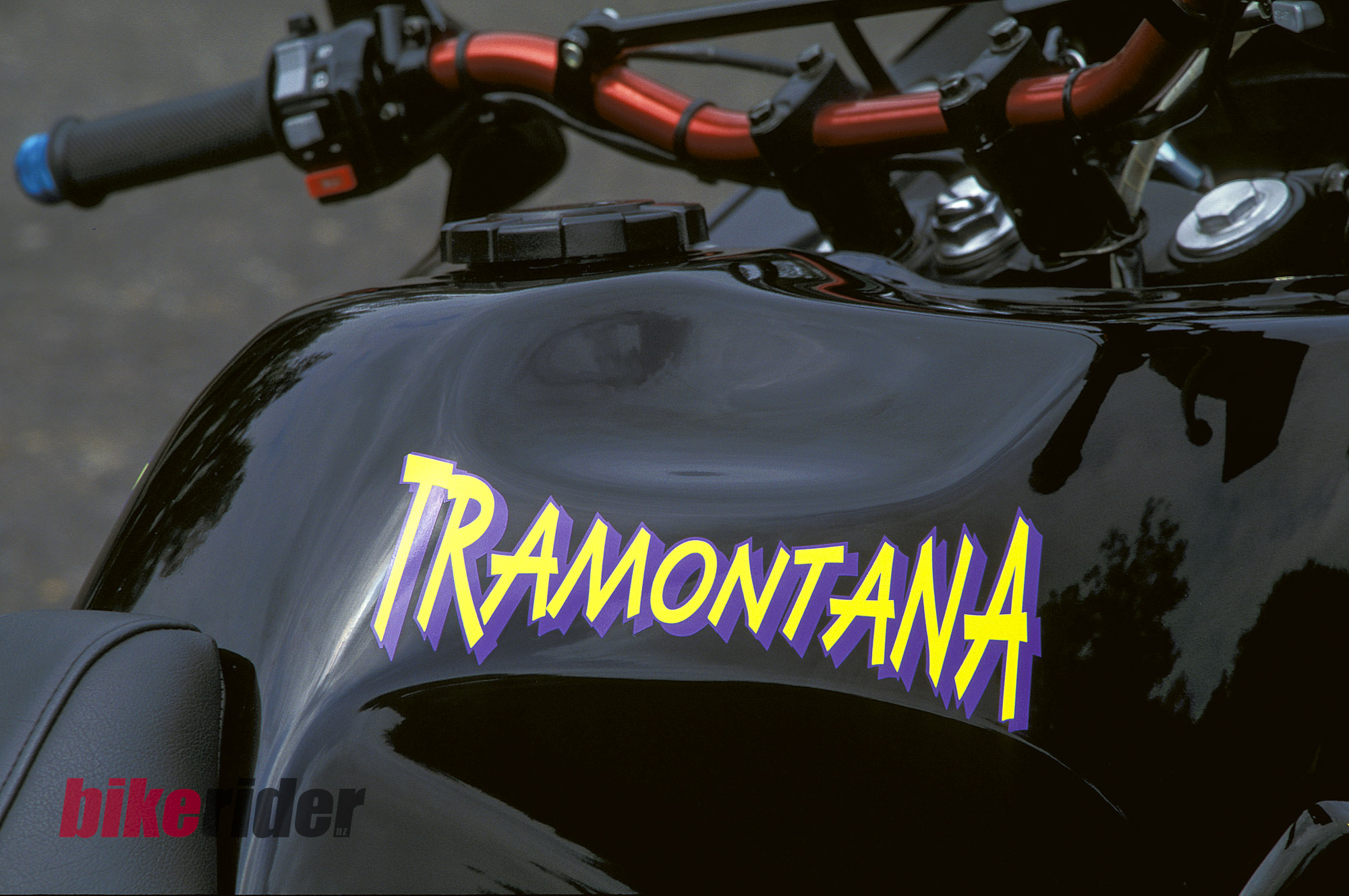
Developing the EFI for the supercharged application was also a hit and miss affair, admitted Russell – although he was helped by the work he’d done on the same Yamaha-based engine for his Supermono road racers, so he knew where to place the sensors, and had an idea for the basic map before compensating for the blower. The system he ended up with had a throttle body behind the steering head, which sucked air down into the supercharger. This then compressed and fed it to the baffled plenum chamber, where it was cooled and stabilised before passing through the manifold to the ports. A balance pipe between the plenum and manifold maintained constant pressure, while an oil feed delivered engine oil to the top of the supercharger. After running through it, this drained out through the bottom and thence into the bearing housing fitted to the crankcase. There was no need for extra oil capacity, nor even a cooler: instead, the XTZ’s standard watercooling coped just fine, and even on a warm British summer’s day, the fan hardly came on at all even when I was sitting in traffic. Definitely, NOT a turbo!
The main engineering problem Savory encountered was where to stick the twin injectors. Dyno testing a variety of different locations delivered the chosen option of fitting them both in the five-valve cylinder head, one feeding each of the pair of inlet ports of the five-valve head, with the fuel squirting in very late just before the valve closed. Choosing that delivered a 5 bhp increase all through the power band. But while a larger single 52mm throttle body delivered even more power, it did so at the expense of bottom end response and rideability – hence the smaller 40mm one eventually fitted, which delivered magical, meaty pickup low down: I discovered early doors that the Tramontana would pull any gear you threw at it. Perhaps that was the biggest surprise about riding it: here was this point-and-squirt device with the performance of a turbo, but the immediate throttle response of a fuel-injected Superbike, that was both tractable and sufficiently user-friendly to pull hard from low revs, or to trickle round town off the boost. It was clever engineering – the best of both worlds.
The project that got away
It surely would have been easy to adapt the RS Performance power-up concept to off-road conditions, where you could take real advantage of all that torque, to obtain performance without sacrificing agility on sand or loose surfaces. But sadly, just months after Savory had delivered two out of the three prototypes built to Japan, and received very positive feedback from Yamaha’s engineers about the system’s potential, the Japanese manufacturer cancelled the project by withdrawing from Desert racing, including the Paris-Dakar Rally, leaving Russell Savory by prior agreement with the third of the three prototypes built – and The Knowledge. But, after lying dormant for the best part of 30 years, interest in the technology has now reawakened, with Honda’s renewed interest in its supercharged V3 concept.
For this is a new window on performance street tuning – let alone a road racing application where rules permit. Volume motorcycle manufacturers surely need to take a fresh look at supercharging with an open mind, because Russell Savory’s dedicated development has proved that it has real potential for production application, even if it’s left him with a sense of unfinished business. “I’m convinced supercharging has so much potential for street motorcycle use,” he said. “Combining it with electronic fuel injection and engine management systems allows you to benefit from this technology via variable boost systems, without any of the traditional drawbacks.” You can’t help wondering if Yamaha’s technical department realises the value of the forced induction technology it has tucked away in its archives – or if it even knows it’s there?!
Sadly, Russell Savory never got to take the Tramontana technology any further, intensifying his focus 30 years ago on the 320bhp RST-V8 engine he developed over a period of time after one half of it first appeared in Gordon Murray’s Lightning two-seater street-legal racing car. This lightweight, high revving, four-camshaft 40-valve all-aluminium power unit weighing 74kg using Yamaha R1 cylinder heads ended up being fitted in several different cars, most notably the Caterham Seven referred to earlier. But in 2008 Russell Savory experienced an epiphany which led him to a complete change of career. Since then he’s become one of Britain’s leading wildlife photographers www.russellsavory.com working for the BBC and other TV channels on some of the UK’s best loved nature programmes. So – sorry, Yamaha, if you wanted Savory-san to resume development of the Tramontana project as a counter to your Honda rival’s new Supercharged lineup of models, he’s otherwise engaged!
Written June 1995, updated September 2026.