

- Richard Mille and Brough Superior collaborate on a €200,000, limited-edition hyperbike with only 150 examples to be built.
- Billet-built engineering masterpiece featuring a 130bhp CNC-machined V-twin and Brough’s signature Fior front suspension.
- Alan Cathcart rides the RMB-01 on Spain’s Calafat circuit to discover whether this stunning machine is more than just rolling art.
Luxury watchmaker Richard Mille has teamed up with Brough Superior to create one of the most exclusive motorcycles ever built. Alan Cathcart rides the 130bhp RMB-01 to find out whether it’s a work of engineering brilliance or simply an object of desire.
Quick Facts
Engine | 997cc liquid-cooled 88° V-twin
Power | 130bhp @ 10,250rpm
Torque | Not quoted
Transmission | Six-speed cassette gearbox with Adler slipper clutch
Weight | 175kg
Production | Limited to 150 units
Price | €200,000 + taxes
Built | Toulouse, France
Tester | Alan Cathcart
For Formula One GP fans, the name of Richard Mille has become synonymous with success on four wheels. Reigning World champions McLaren have been paired for over a decade with the luxury Swiss-based watchmaker founded in 2001 by French horologists Richard Mille and Dominique Guenat, whose 500 employees currently make just under 6,000 timepieces a year in their factory in French-speaking Switzerland. That’s just a tiny fraction of the production of, say, over one million Rolex watches a year, a deliberate scarcity which, combined with high demand, results in significant waiting lists, and makes Richard Mille timepieces highly sought-after on the secondary market.
So when McLaren’s 2025 F1 World champion Lando Norris and his Aussie teammate Oscar Piastri made their increasingly frequent visits to the post-race podium last season, they had to be sure to slip the latest and greatest Richard Mille creation on to their wrists before being interviewed, retaining it for the trophy presentation followed by the inevitable champagne shower. Just as well such objects are waterproof!
But with McLaren somewhat off the pace so far this year in this new hybrid era of F1 racing, it’s allowed the company’s other sponsored F1 team since 2021, Ferrari, to step to the fore, duly ensuring that the Richard Mille name is clearly visible in cockpit shots, and that it’s the turn of Sir Lewis Hamilton and Charles Leclerc to flash that stash in Victory Lane. Seven-time World champion Hamilton is a serial collector of Richard Mille items from his days with McLaren and Mercedes, having hoovered up a personal hoard of over a dozen such watches reputed to be worth over $10m, headed by the RM 43-01 Ferrari Carbon/Titanium model limited to 75 pieces worldwide each worth $1.5m, that’s frequently spotted on his wrist at Grand Prix weekends. No wonder he and Kim Kardashian are presently an item……
However, the creation of a motorcycle bearing Richard Mille’s name owes more to the eponymous watchmaker’s appreciation for fine design and exquisite engineering on two wheels than any desire to extend his company’s reach into the upper stratosphere of two-wheeled bling. Mind you, at an even €200,000 + tax, the 150-off Brough Superior RMB-01 which debuted on the world stage one year ago carrying the Richard Mille name has a pretty heady price tag, but with 52 such examples already ordered, paid for and delivered to their customers, it looks like BS boss Thierry Henriette and Monsieur Mille have priced their joint creation just right. Especially as the most recent delivery was made over the Le Mans Classic weekend in early July to none other than former Brabham and McLaren F1 World Championship-winning designer Gordon Murray, creator of the McLaren M1 customer supercar, and a noted motorcycle addict who’s evidently able to appreciate the exquisite engineering that’s gone into his purchase. But how did this partnership come about?
MORE ARTICLES
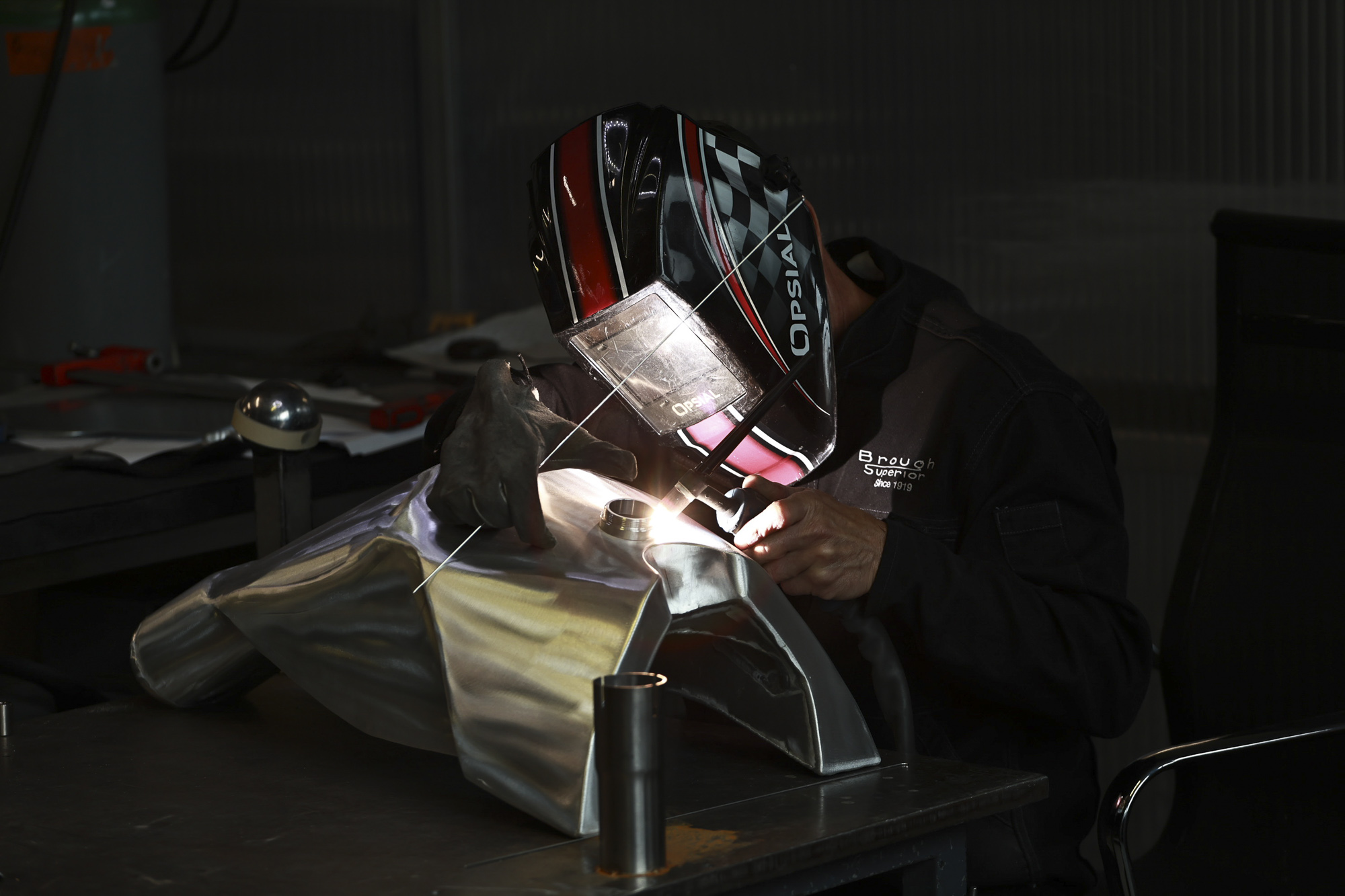
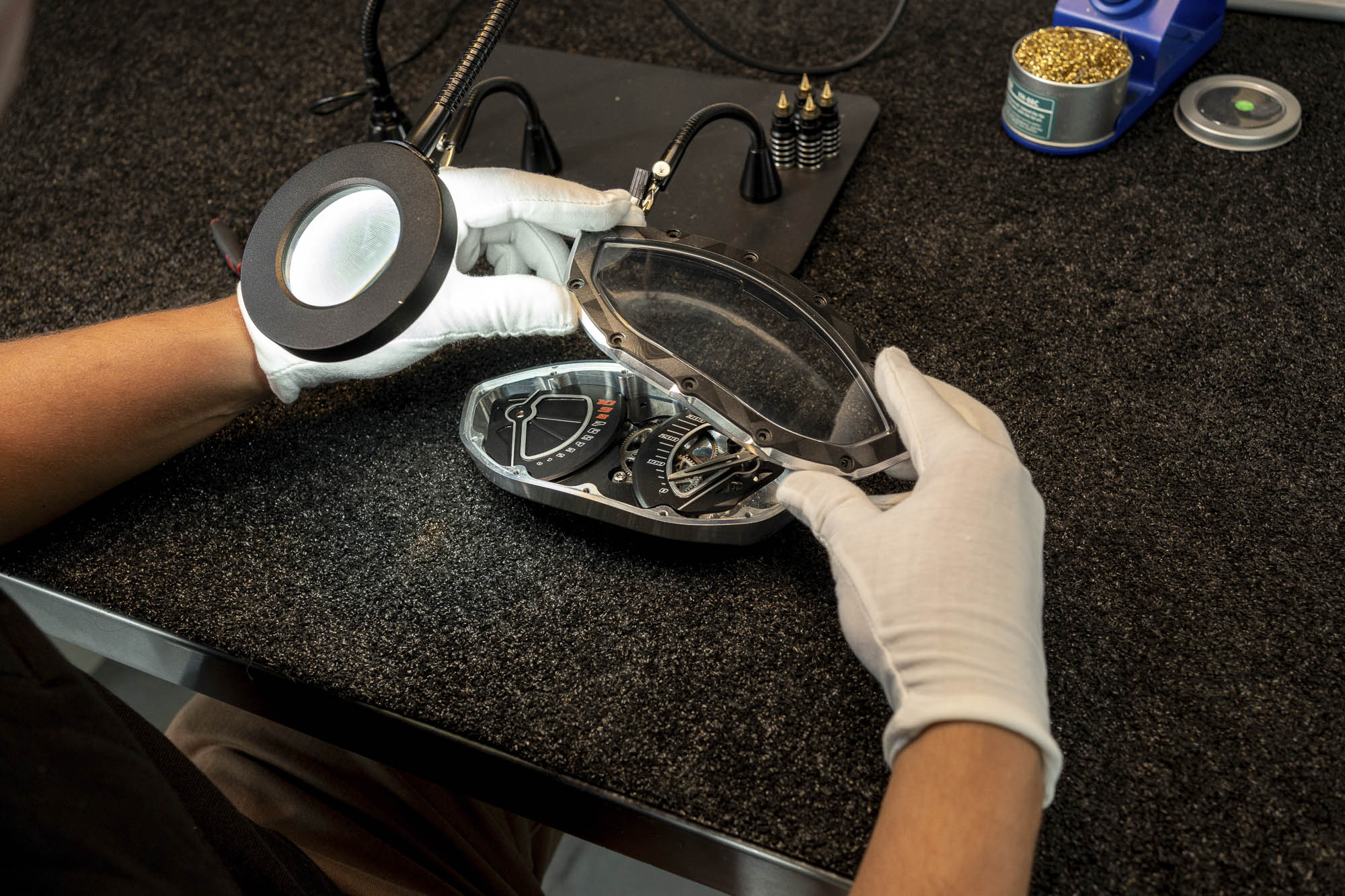
“It happened completely by chance,” says Albert Castaigne, Executive Director of Brough Superior Motorcycles, and as such responsible for marketing the products of the company’s Toulouse factory. He’s also in charge of supervising production of the series of exquisitely detailed and innovatively designed models created by company CEO Thierry Henriette to emanate from there carrying both the Aston Martin and Brough Superior badges. “It came about from an encounter at the 2019 Retromobile in Paris, a world leading Classic car show. Richard was an exhibitor there, same as us, and he came to our stand, and remained a long time on his own examining the bikes closely. Then someone advised me who he was, so we got together and I invited him to come to visit our factory – he didn’t know our bikes are made in France. When he came to visit us, he and Thierry hit it off big time, and we decided right then to make a motorcycle together. Richard is a motard – he has some bikes and rides himself, although above all he’s a Classic car enthusiast, with a big collection of sports cars. But he likes mechanical objects and admires the processes we use to create our hand-made motorcycles – there’s a definite similarity with creating luxury watches. The project really started in 2023, and after all the legal side was finished he and Thierry worked in close collaboration for eighteen months, producing twelve different iterations of the design before arriving at a common vision – and the RMB-01 which debuted last year is the result.”
An Engine Carved From Solid
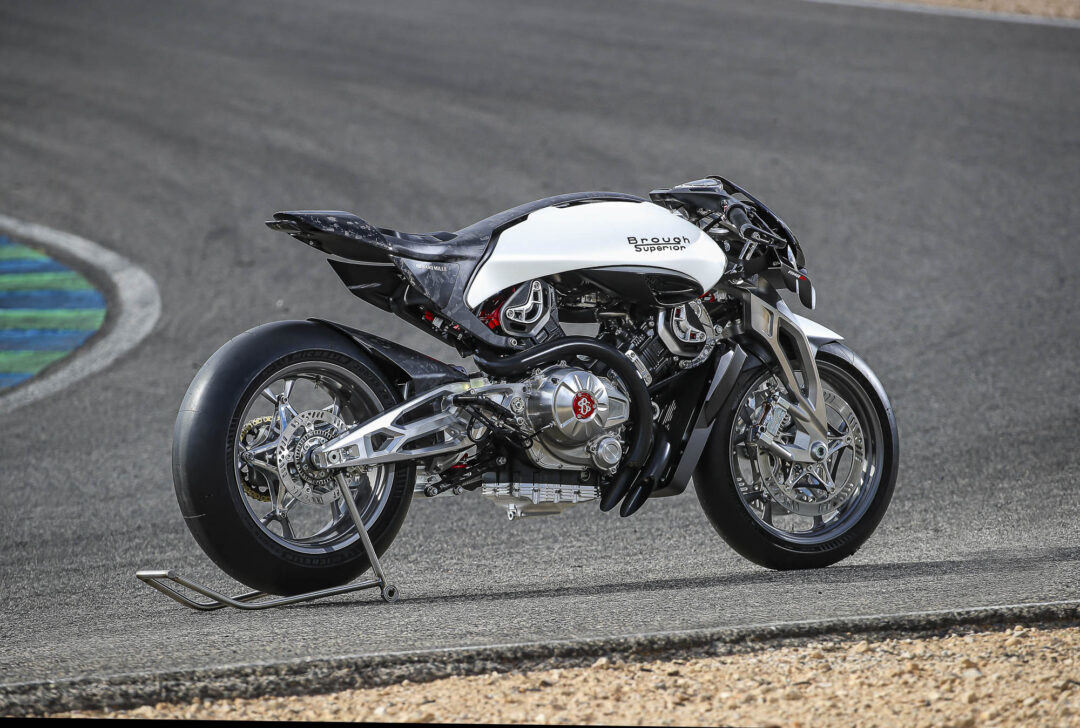
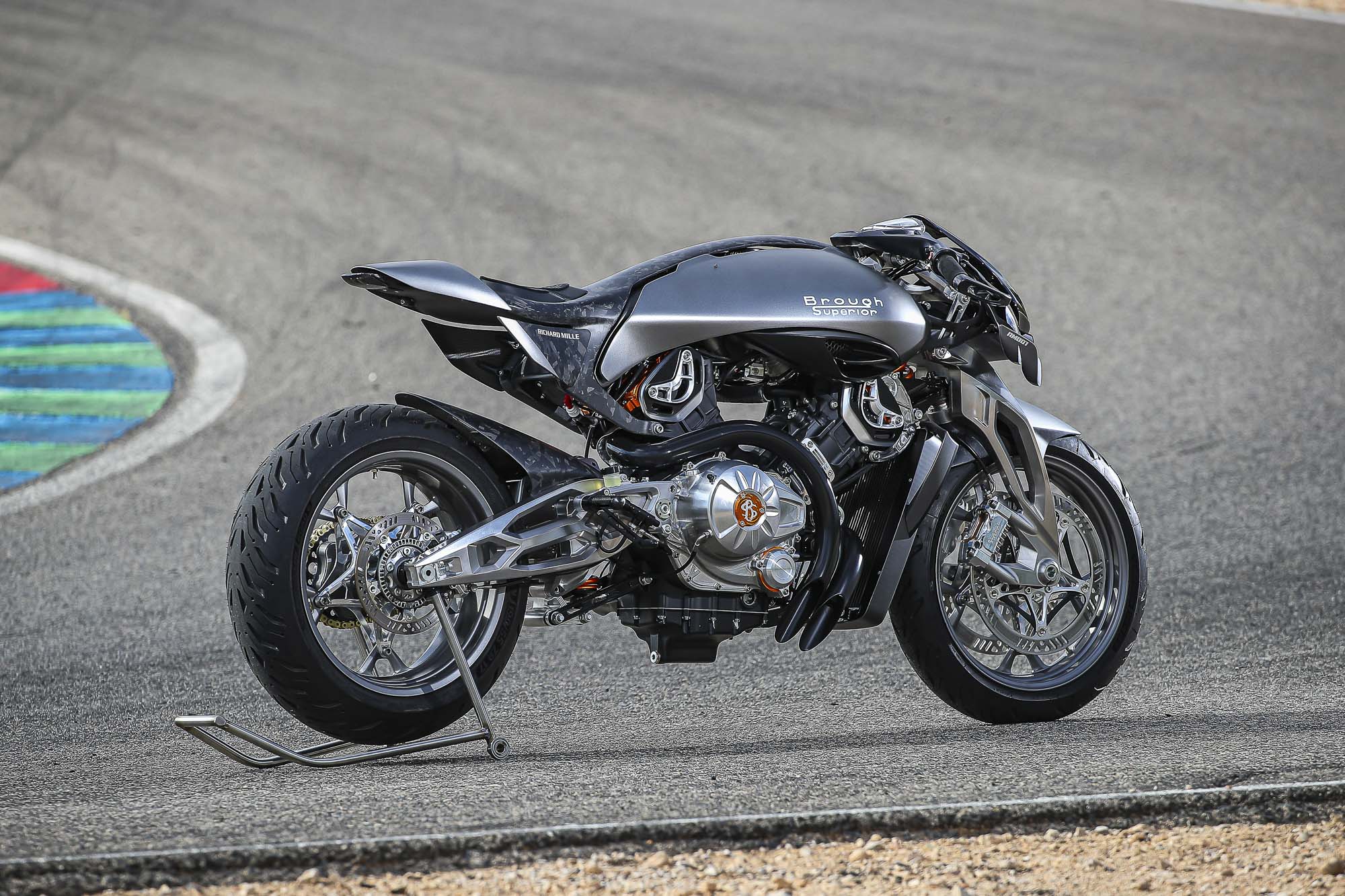
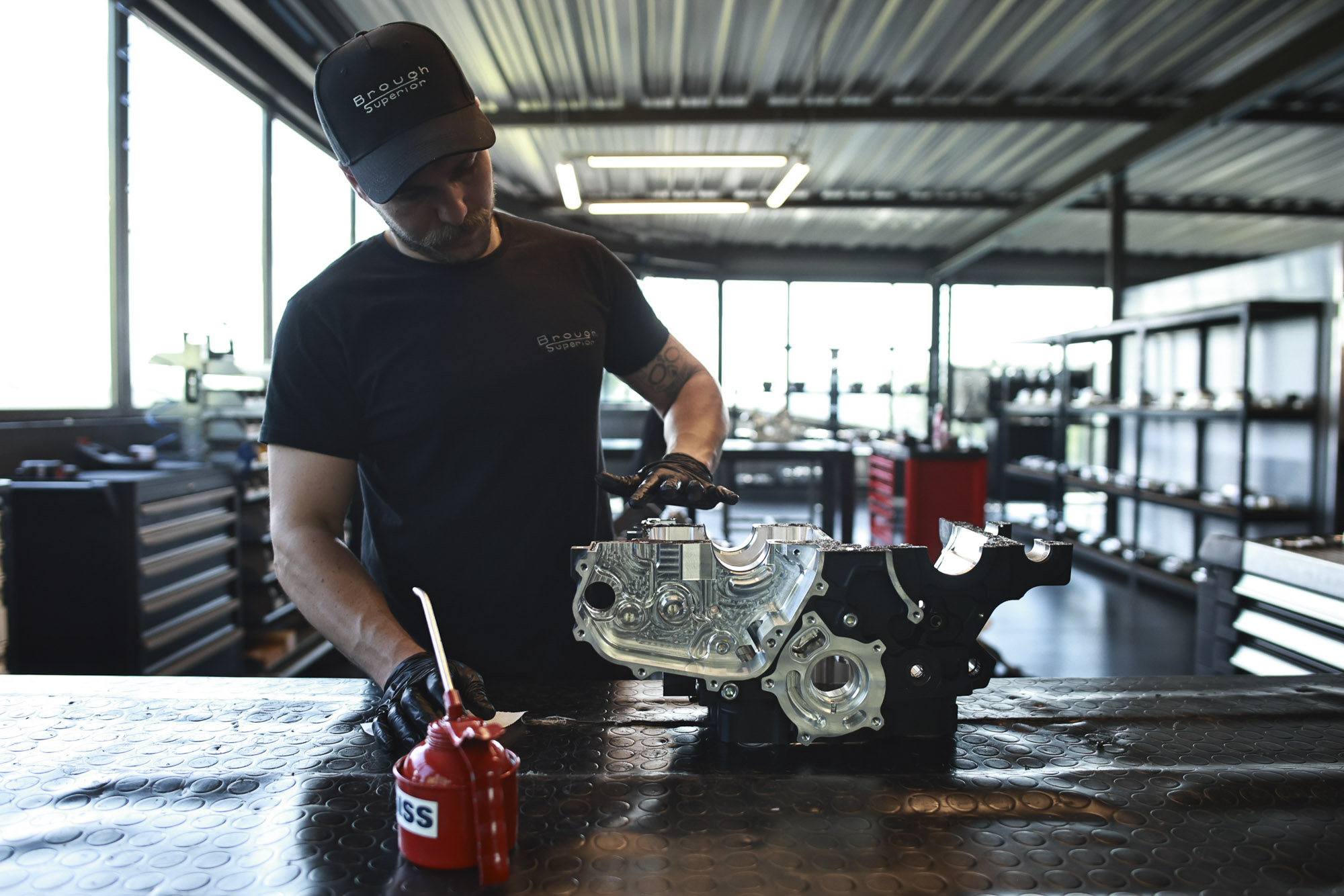
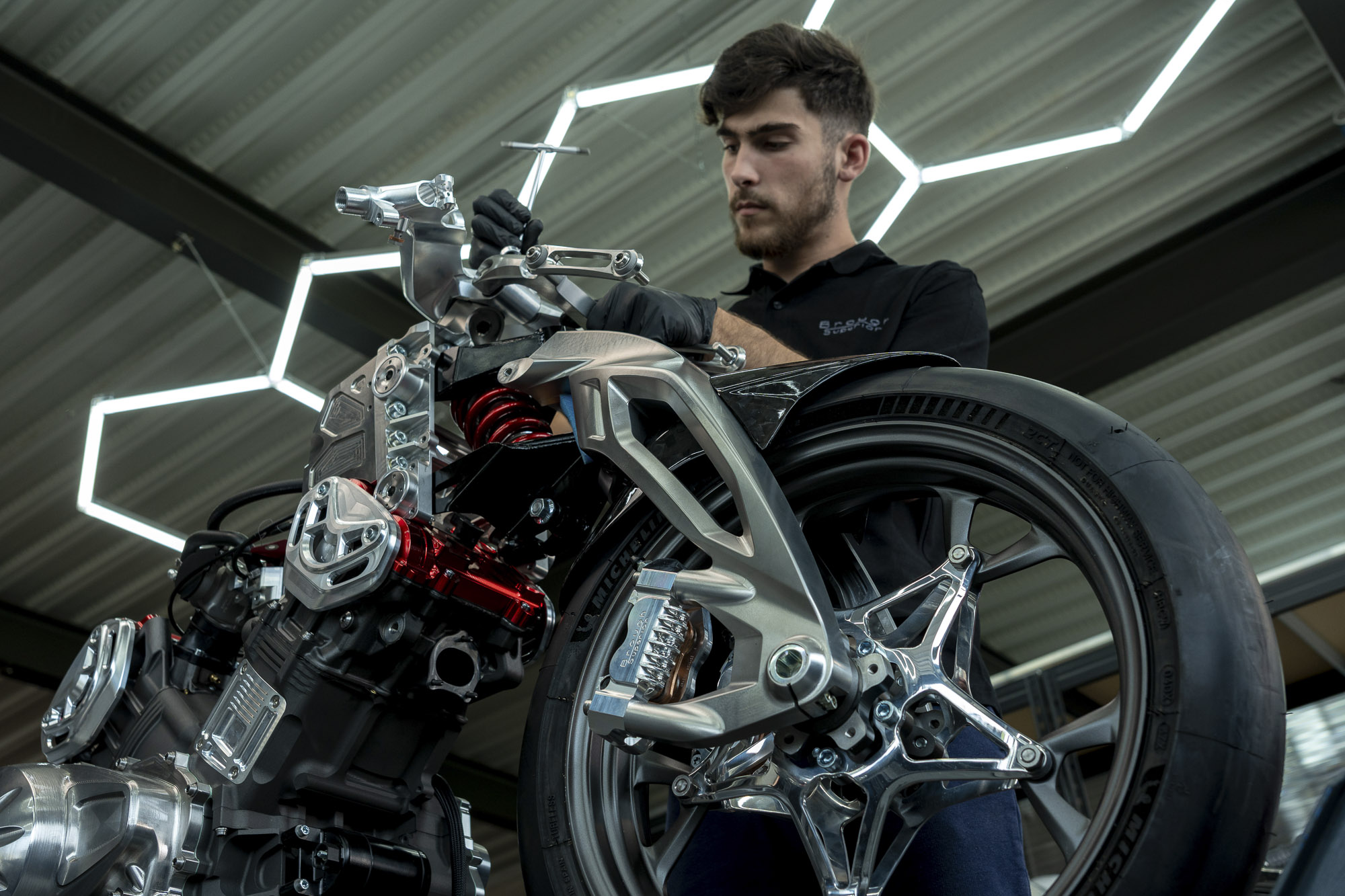
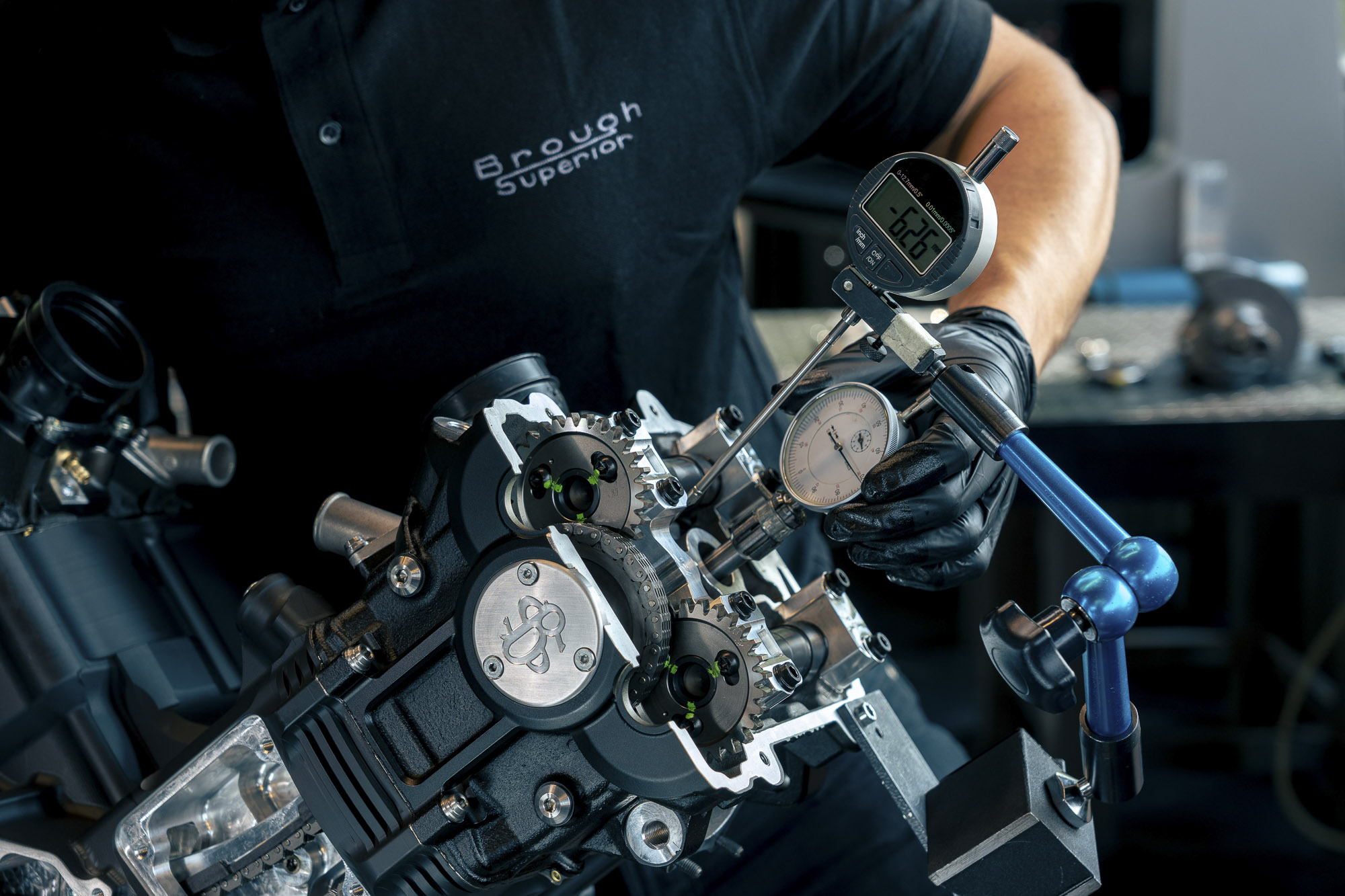
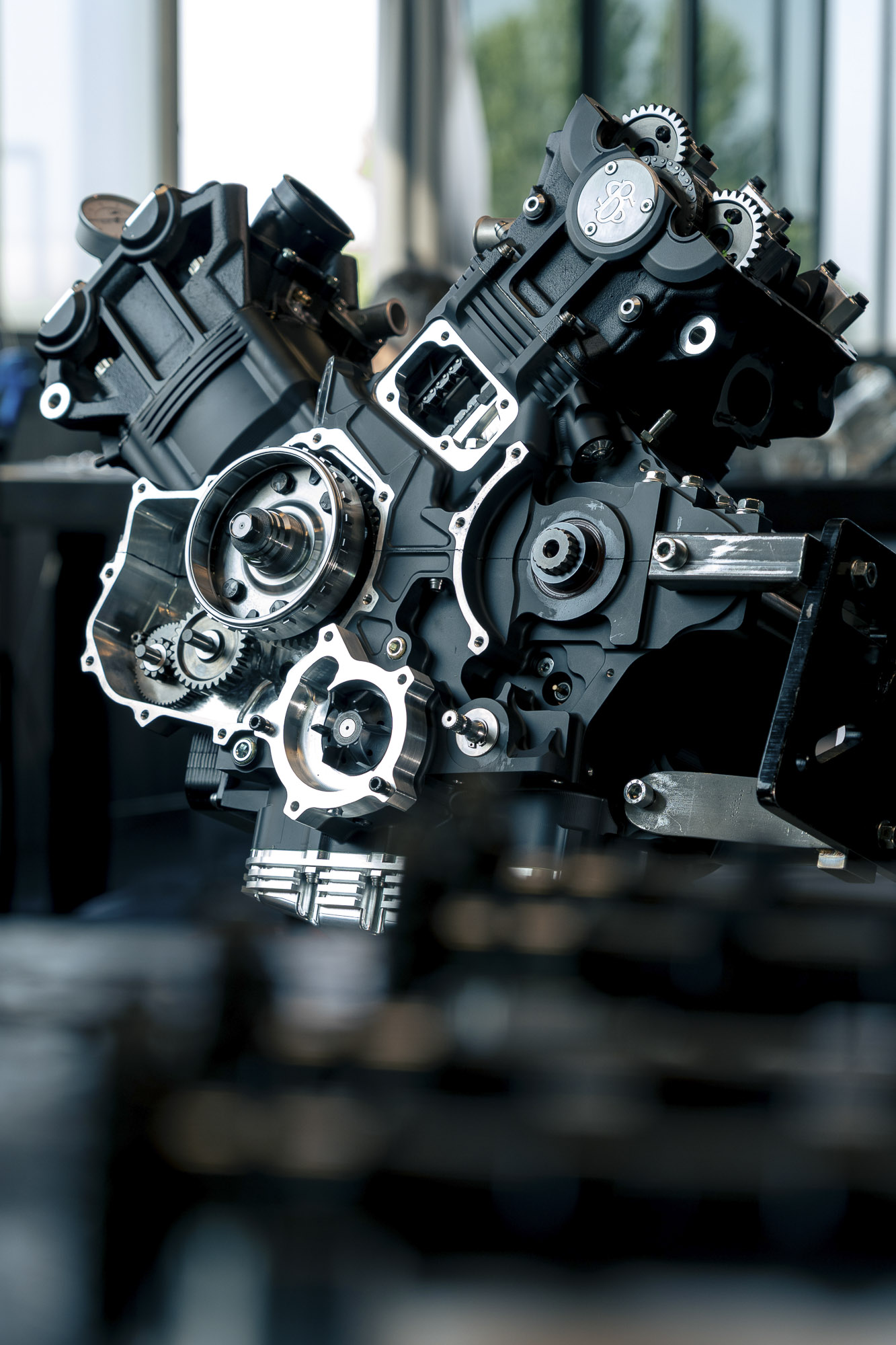
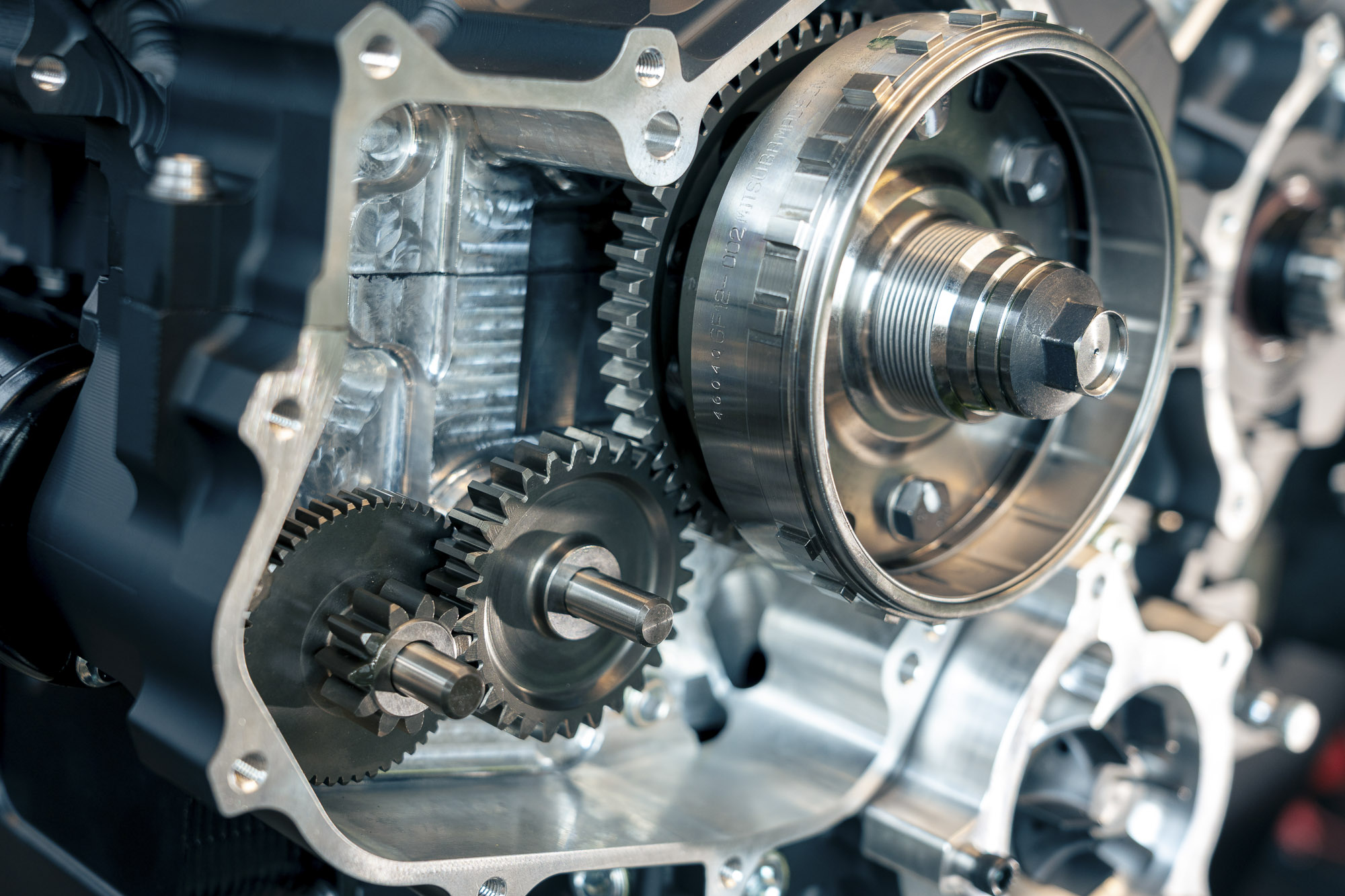
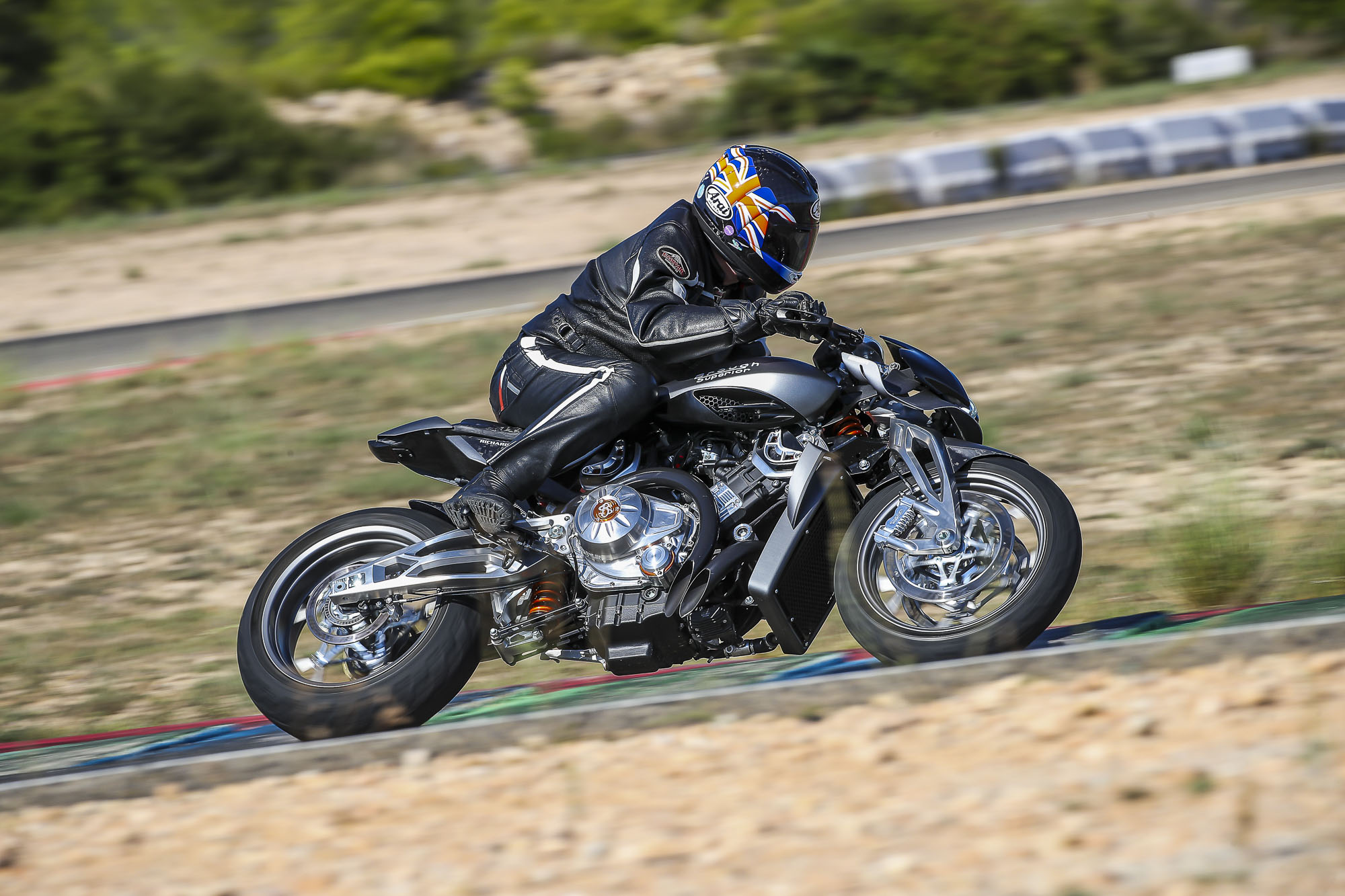
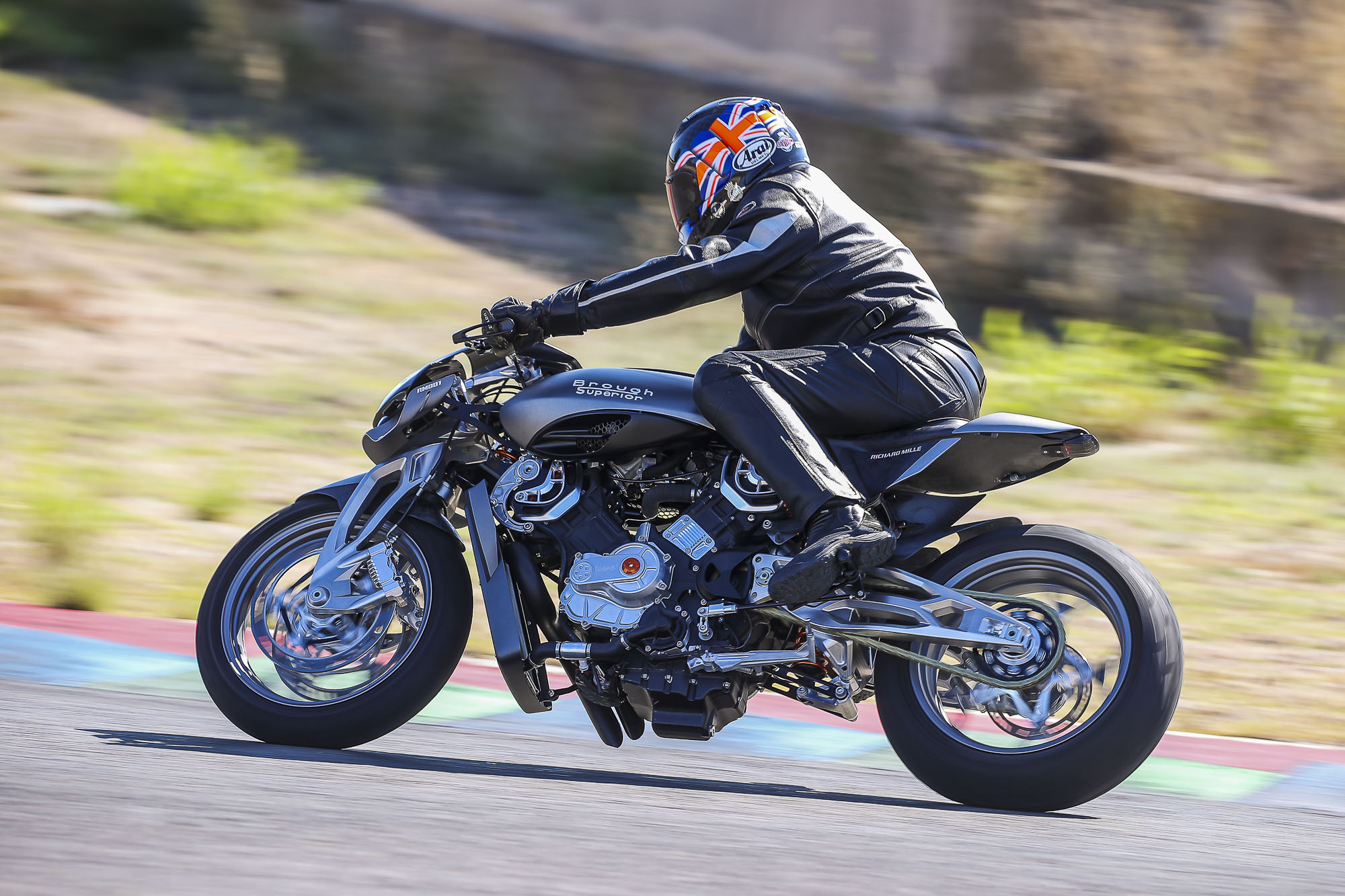
This motorcycle employs Brough Superior’s liquid-cooled 88º V-twin 997cc engine made in house at its Toulouse factory, with its cylinder angle reduced by two degrees at the crankcase from the more normal 90º format which delivers perfect primary balance. This allows 30mm to be saved in terms of space between the cylinder heads, without having to use a counterbalancer to smooth out undue vibration. The CNC-machined exoskeletal aluminium twin-sided swingarm rotates in the horizontally-split crankcases, the upper half of which incorporates the Nikasil-lined cylinders. The eight-valve motor measures 94 x 71.8 mm, with forged steel conrods sitting side by side on a shared crankpin, and the forged crankshaft running on plain bearings.
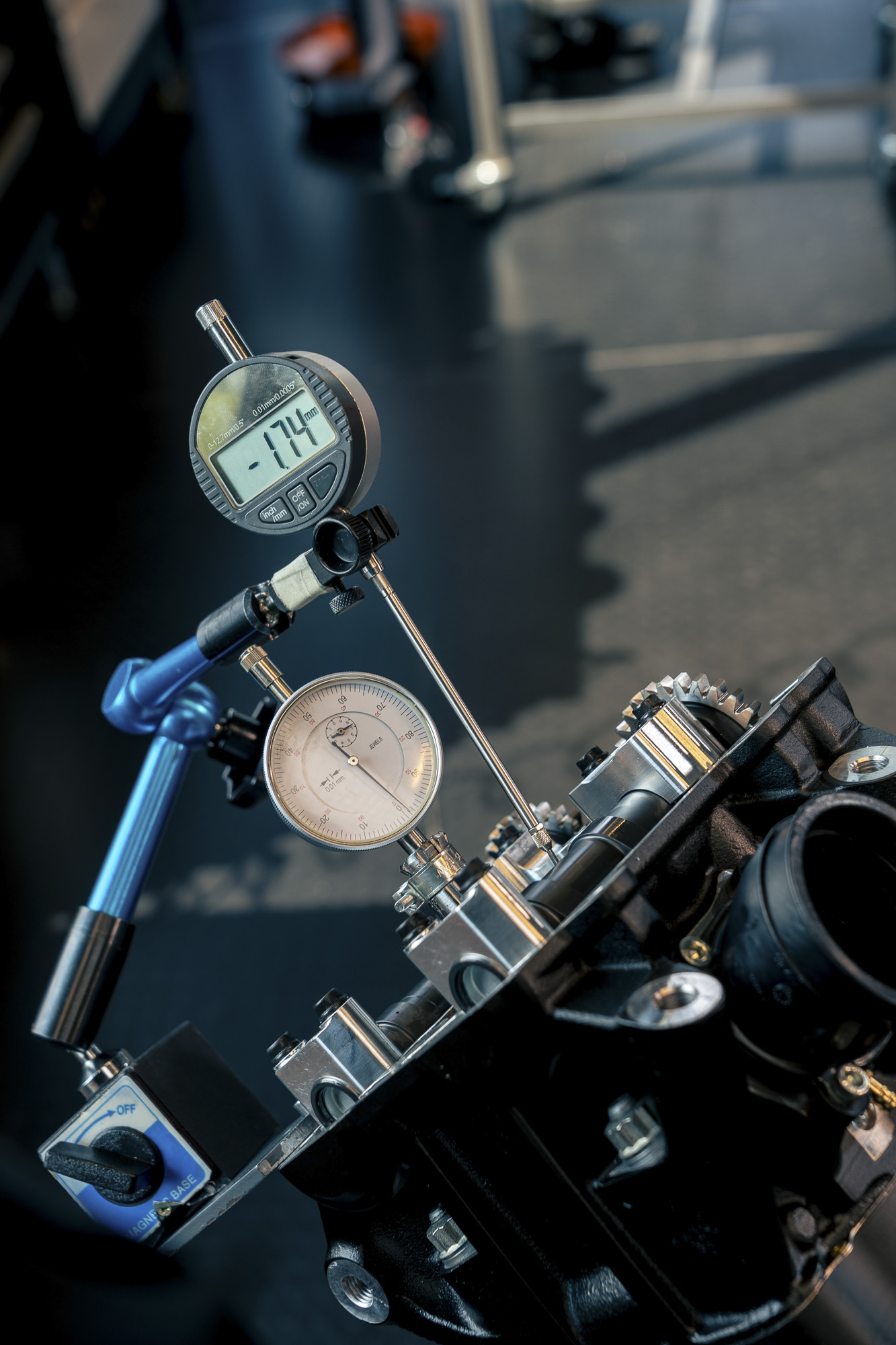
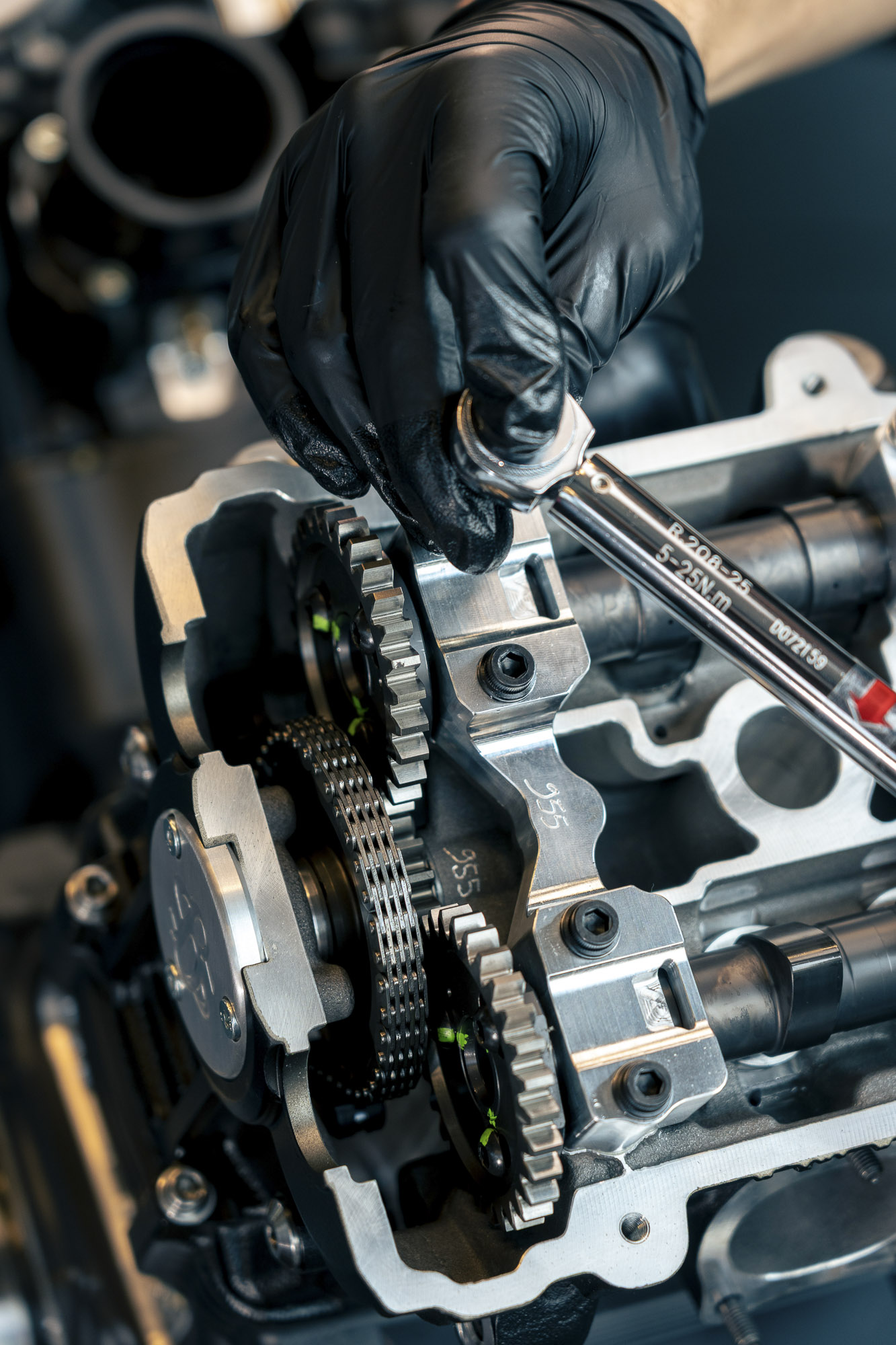
The conrods’ plain-bearing small ends carry forged three-ring pistons, with a two-stage oil pump chain-driven directly off the crank, and incorporating secondary drive to the water pump. There’s composite camdrive to the pair of four-valve cylinder heads, comprising a Morse chain for each cylinder driven directly off the crank, running to an intermediate gear pinion situated immediately beneath the twin overhead camshafts in each cylinder head, both of which this drives directly. The paired steel valves – 35mm inlets and 31mm exhausts, each fitted with a single valve spring – sit at a 26º total included angle to each other, and are directly operated via buckets. There are twin 50mm Synerject throttle bodies, each with a single injector and RBW digital throttle governed by Brough’s own ECU, but without any choice of riding modes.
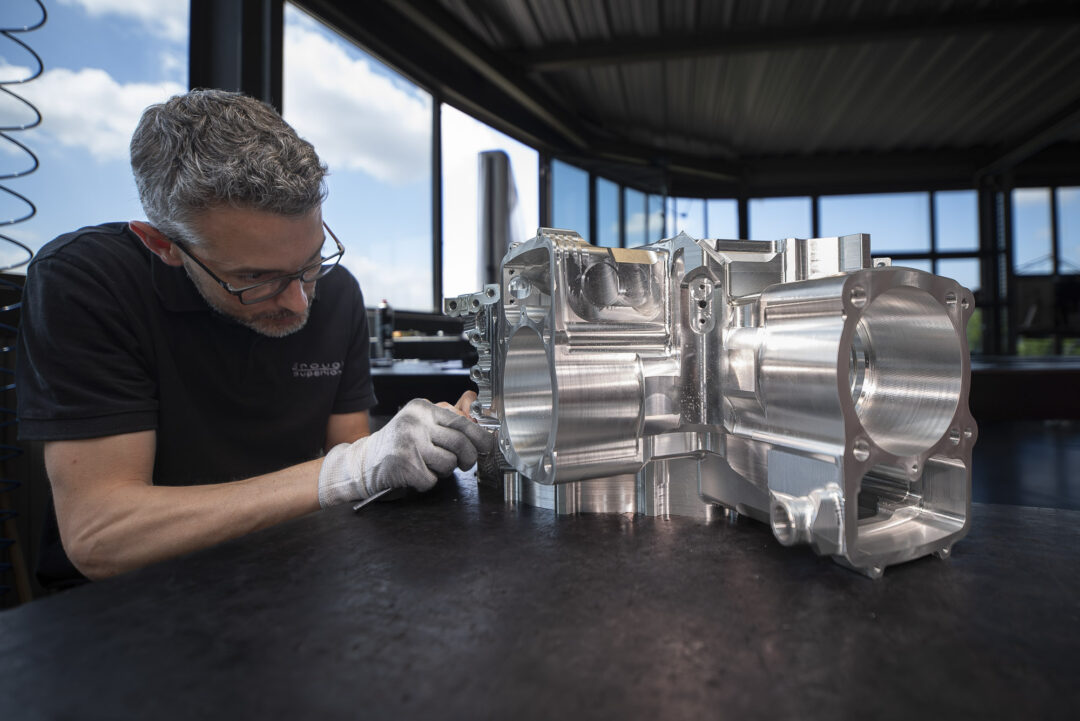
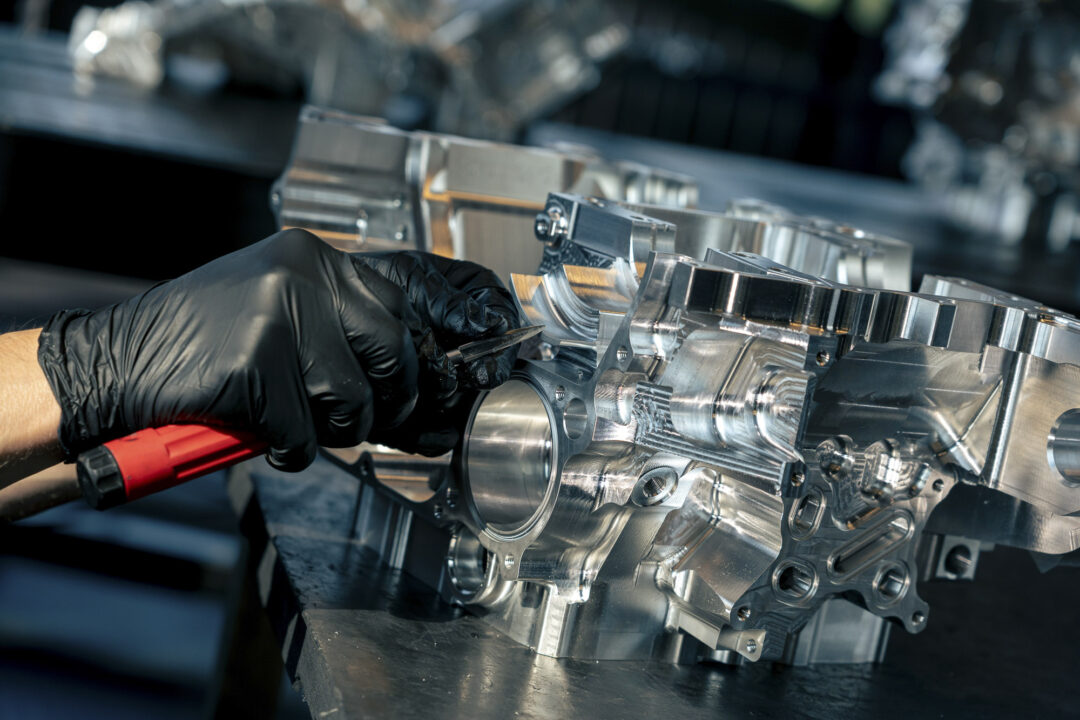
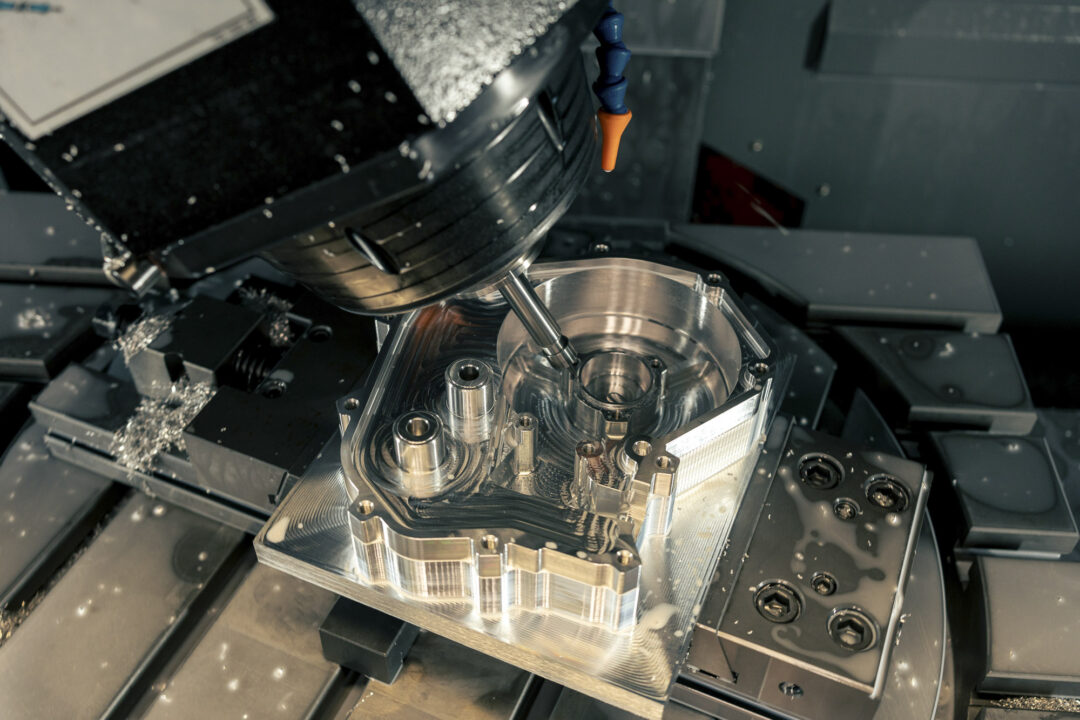
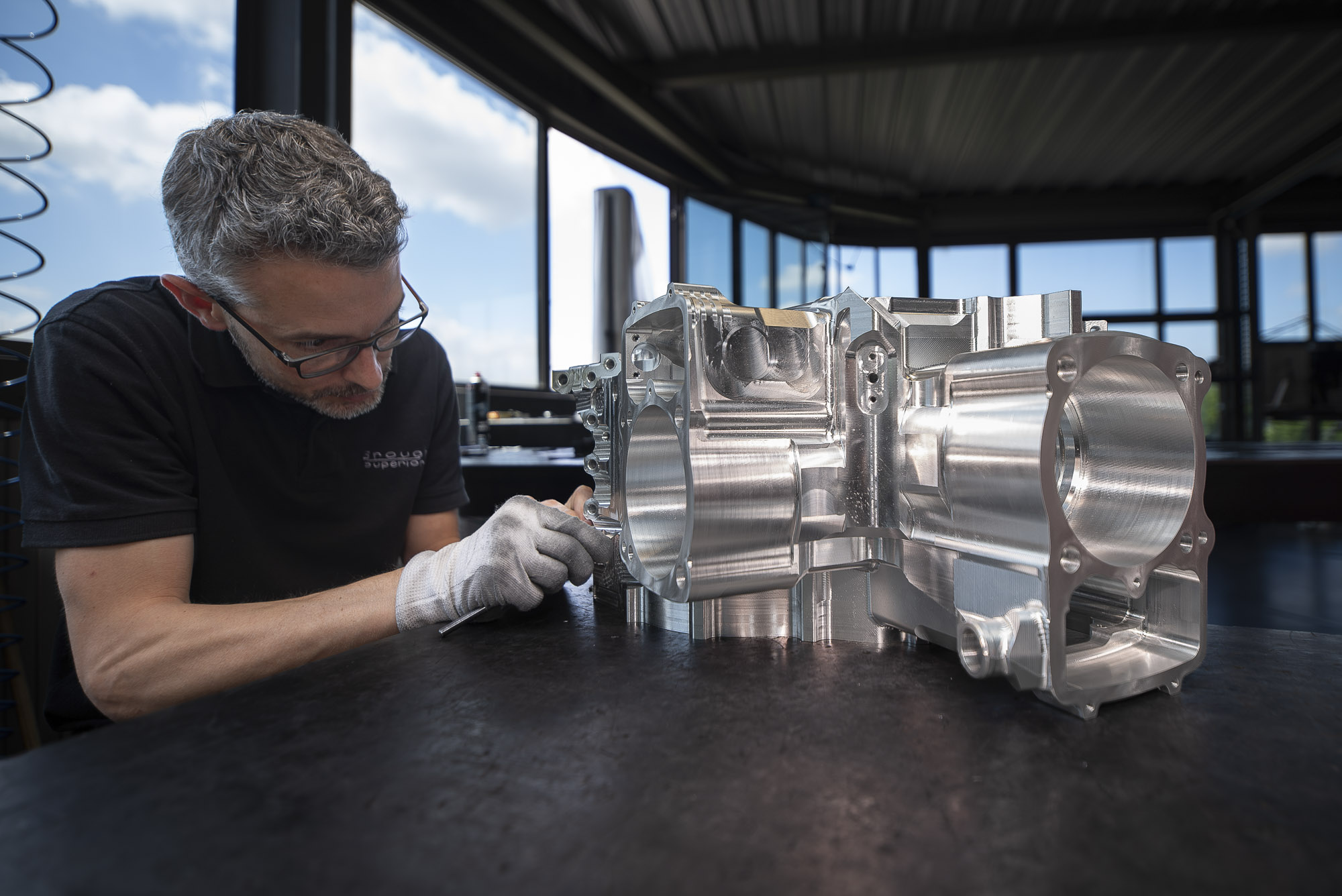
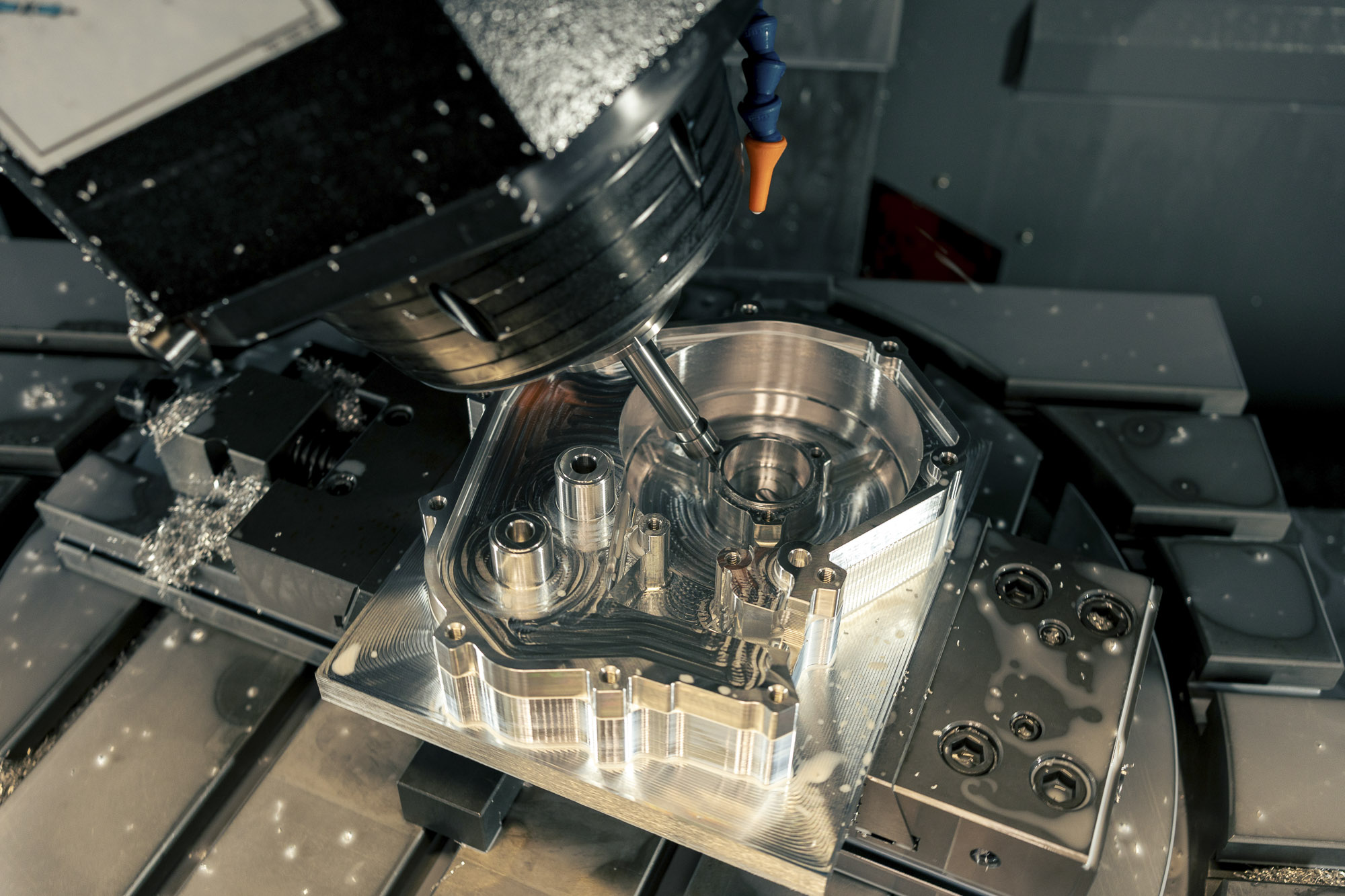
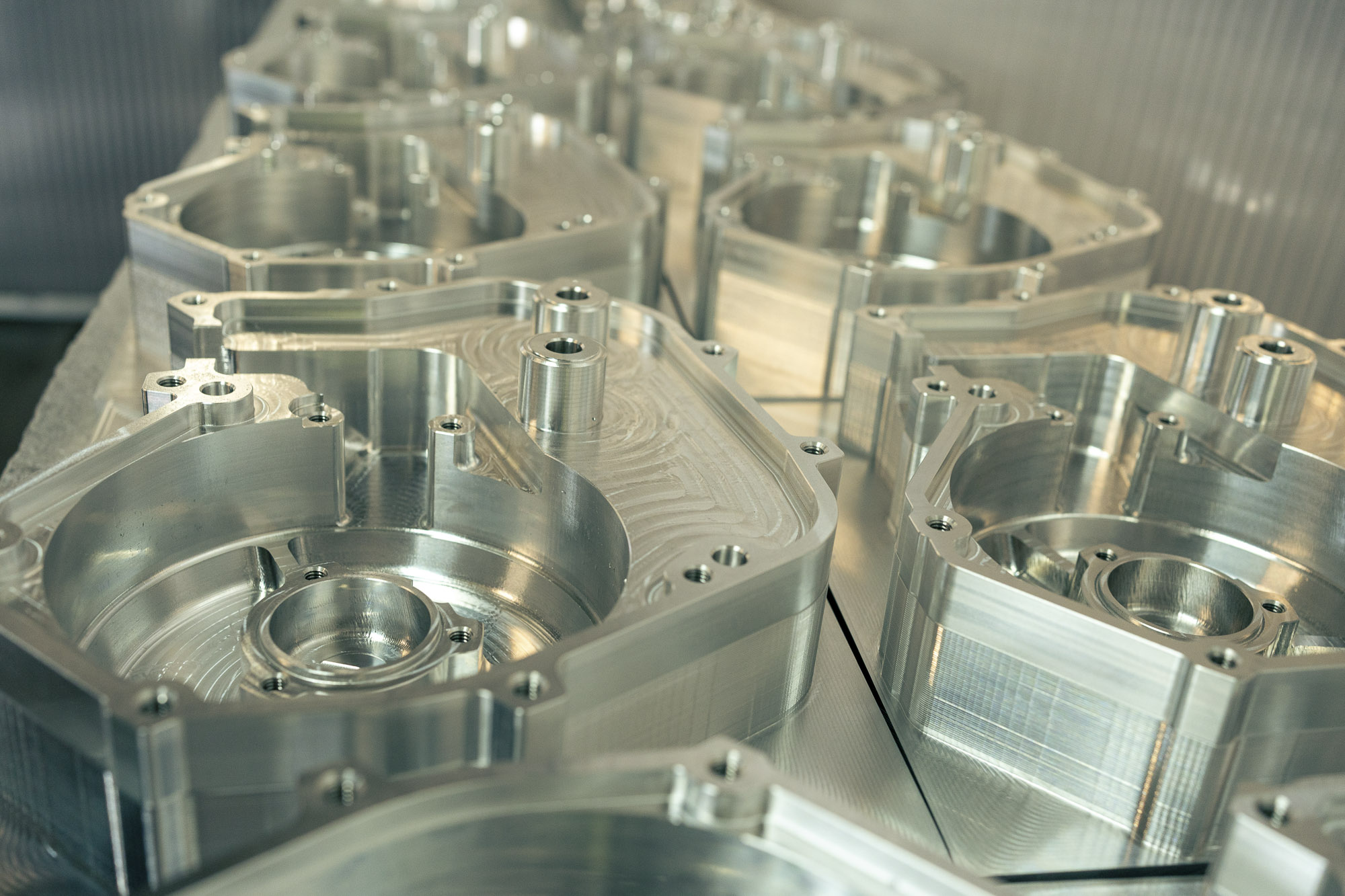
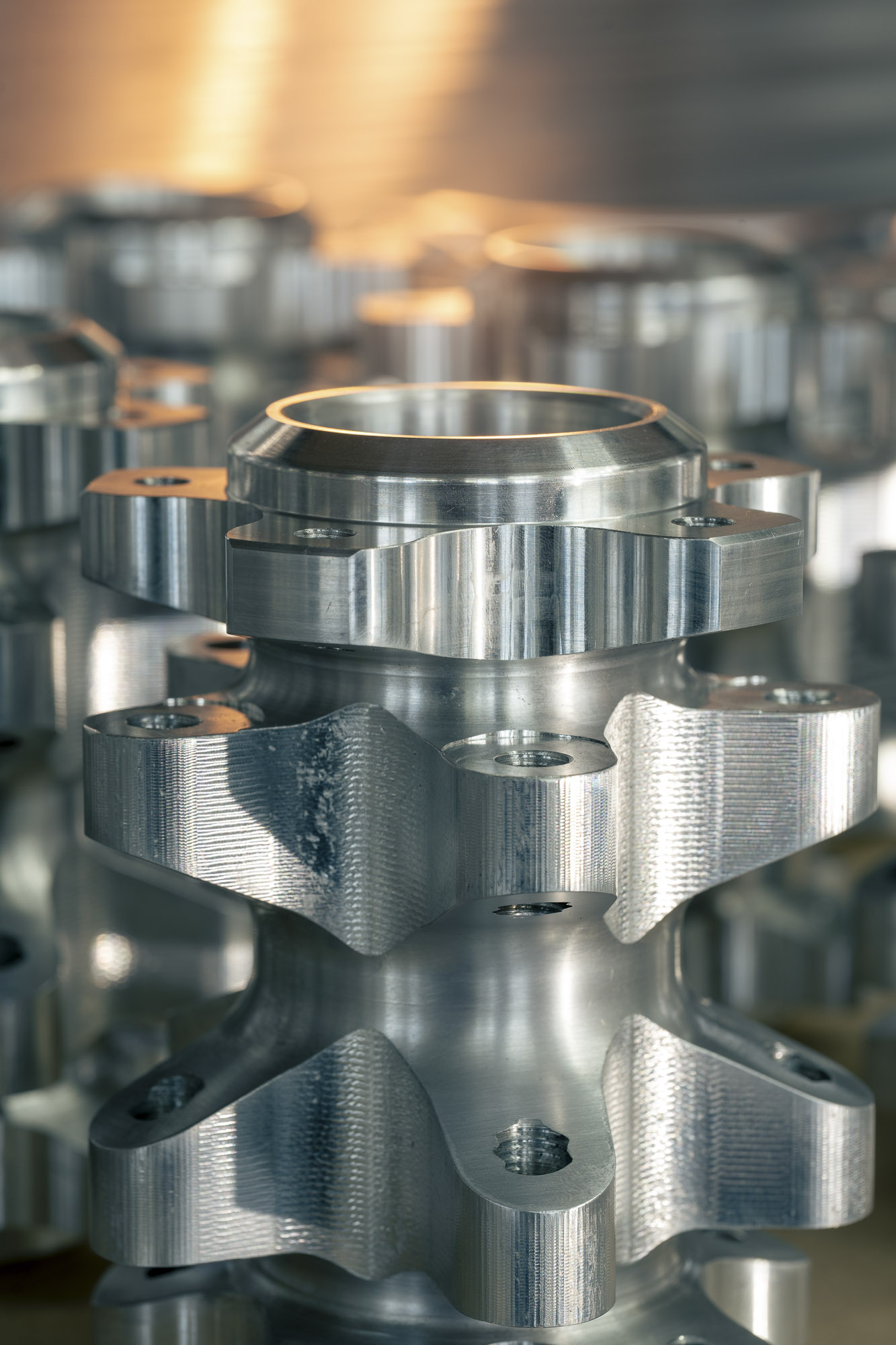
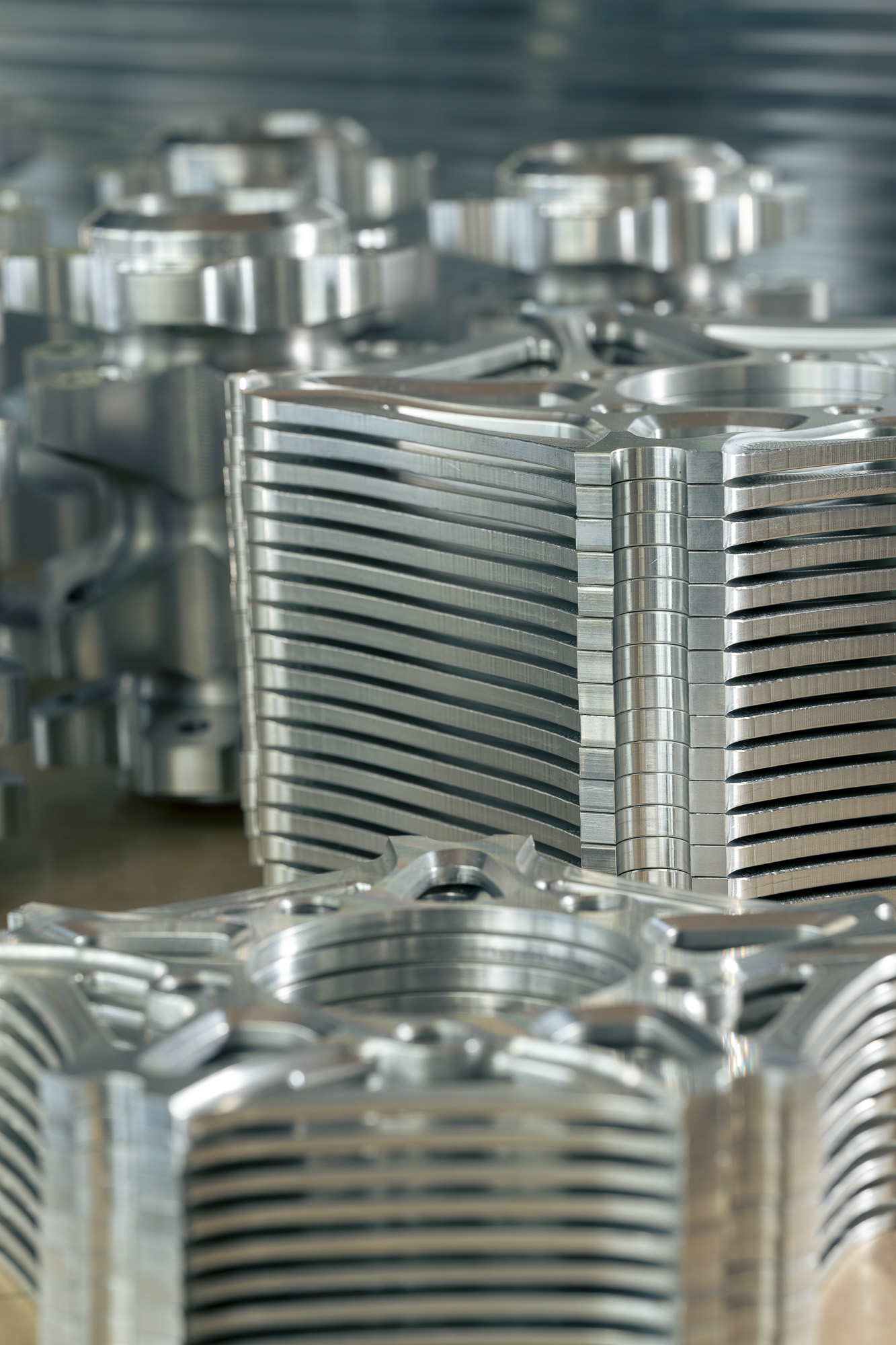
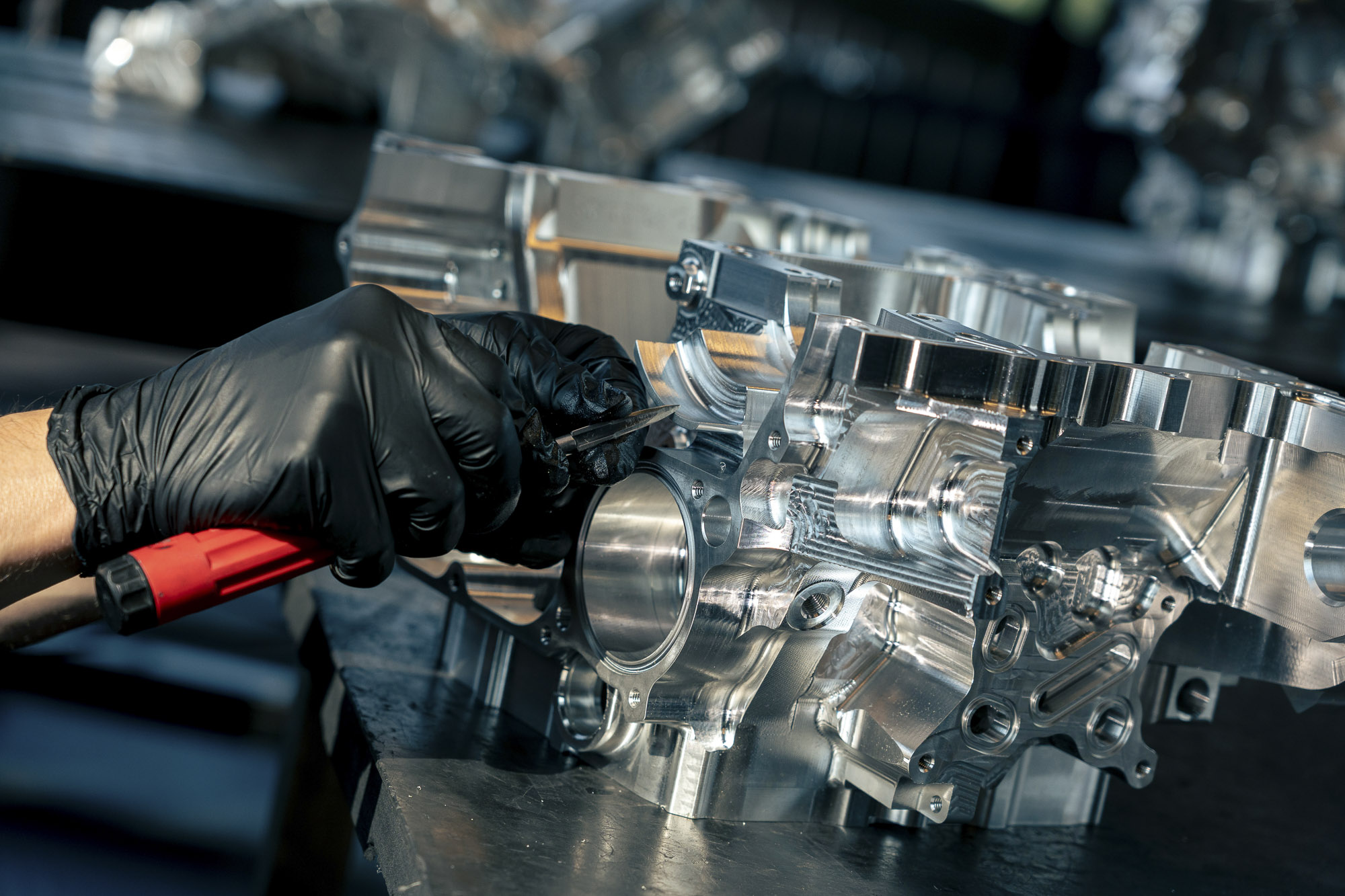
However, beyond its overall format this RMB-01 motor is different than any other modern Brough Superior engine in that it’s entirely carved out of solid billet, with its major castings such as crankcases and cylinders replaced by components entirely CNC-machined from an entire block of AL5000 aluminium. This results in a combined weight of just 23kg for all the parts thus carved out of a single chunk of metal which originally weighed 160kg. There must have been a lot of swarf! This results in a markedly stiffer engine compared to the cast one, which can be used as a full structural component of the chassis, whilst a new cylinder design with wet cylinder liners helps to improve cooling. It’s the same motor that’s used in the Aston Martin AMB 001 Pro, but there it’s turbocharged whereas on the RMB-01 it’s normally aspirated.
The resulting powerplant weighs just 70kg without throttle bodies, helping reduce weight of the complete bike to 175kg, vs. the 200kg of the current Dagger model with the cast motor, split 50/50% along the quite rangy 1493mm wheelbase. The stronger engine design allows the rev ceiling to be raised to 10,500 rpm, up 900 revs compared to before. In this normally-aspirated guise – the first time the new engine has been made available in this form – power has been lifted to 130 bhp at the crank at 10,250 rpm, up from 102 bhp at 9,600 rpm on the Dagger. This is transmitted via a six-speed extractable cassette-type gearbox made by CIMA in Italy, and an Adler/APTC oil-bath slipper clutch.
Chassis Like No Other
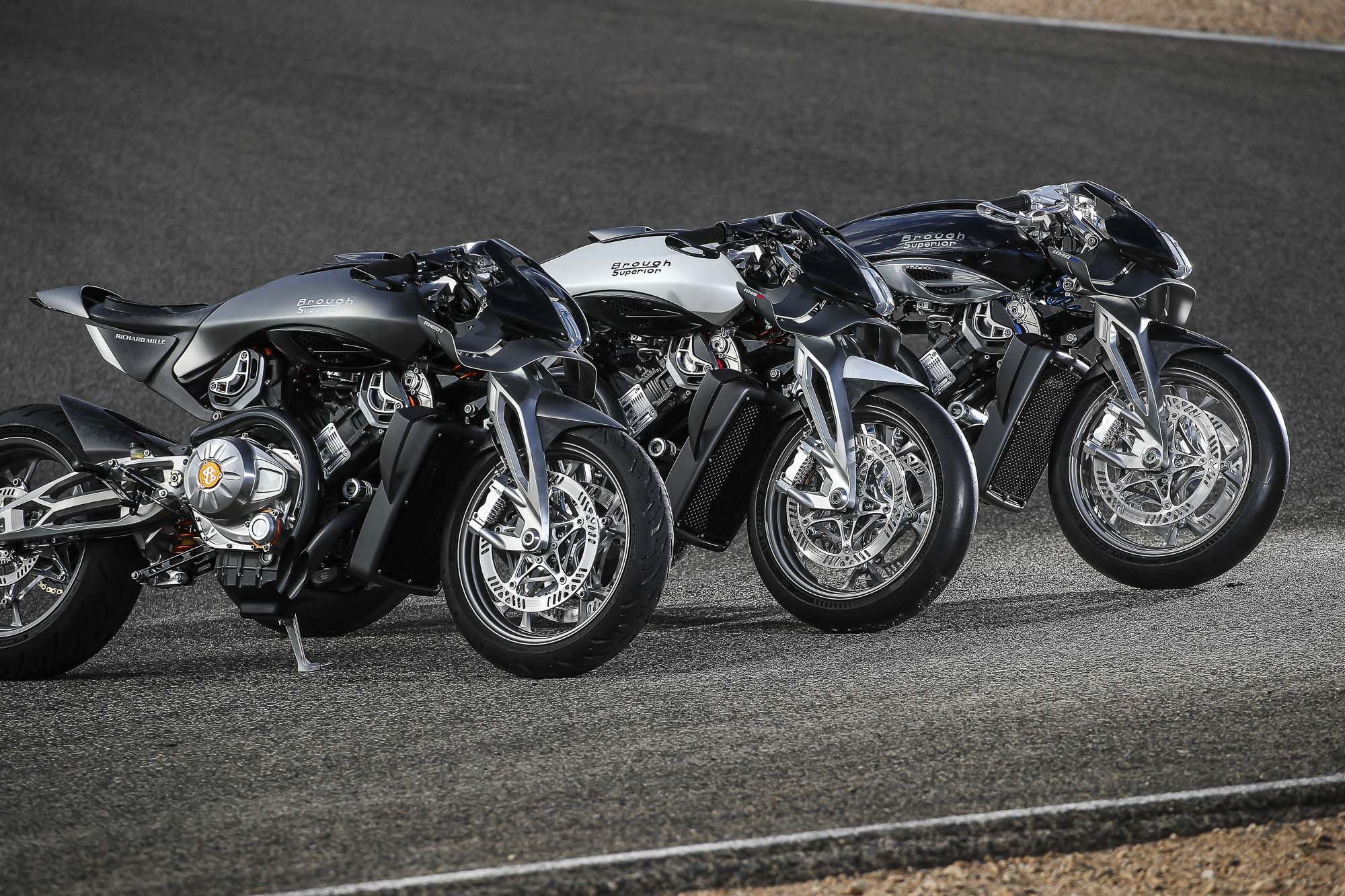
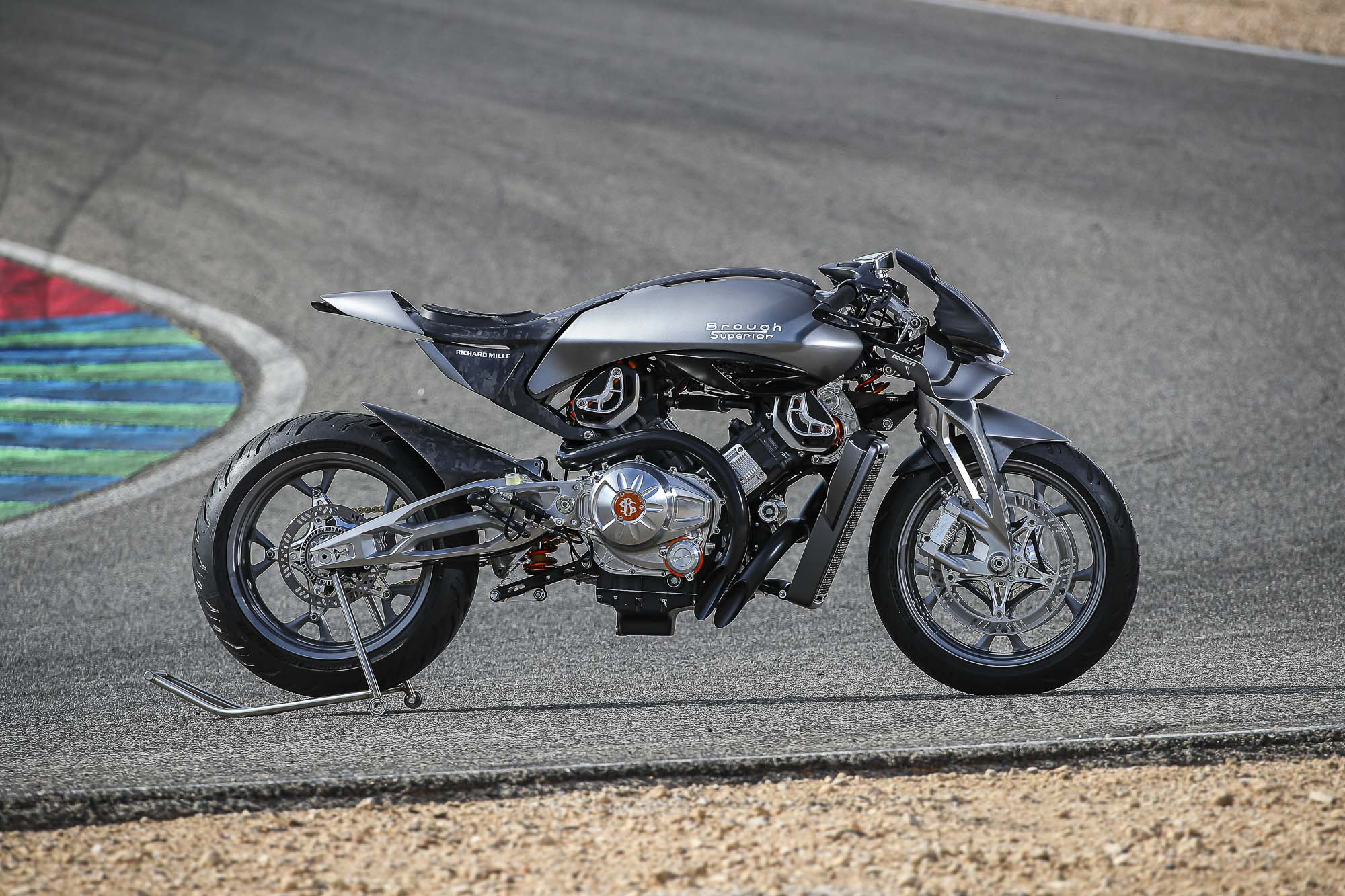
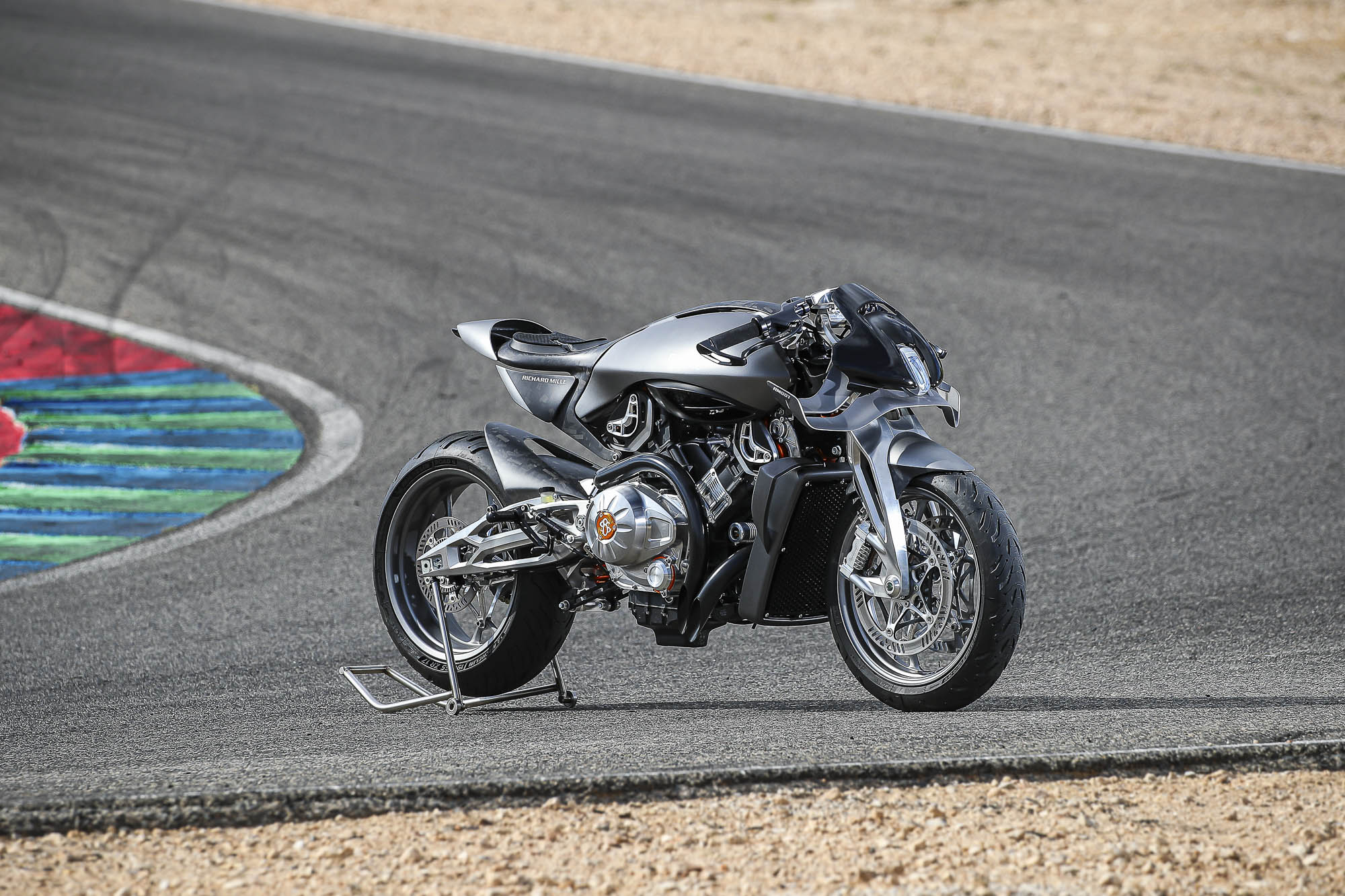
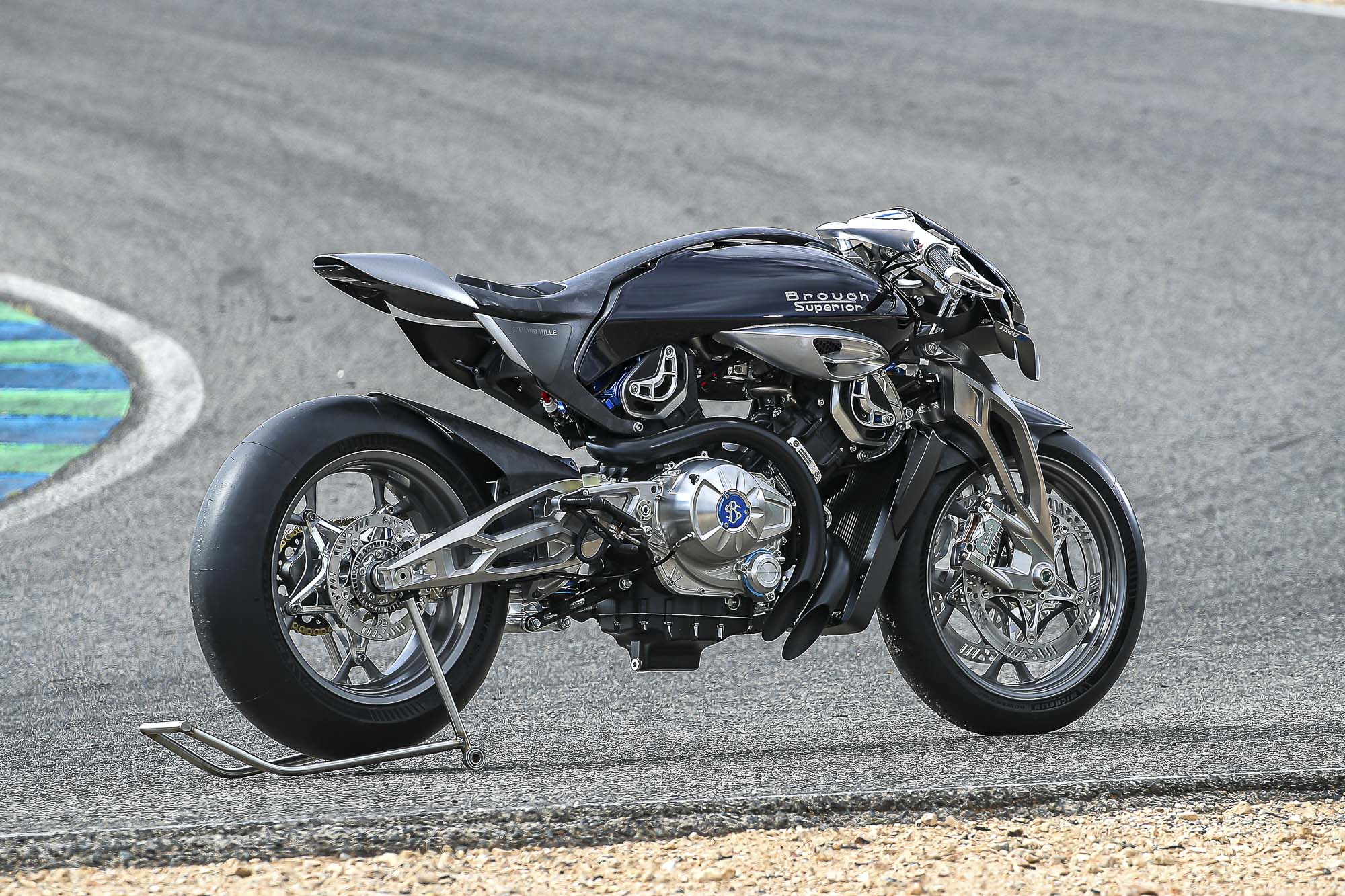
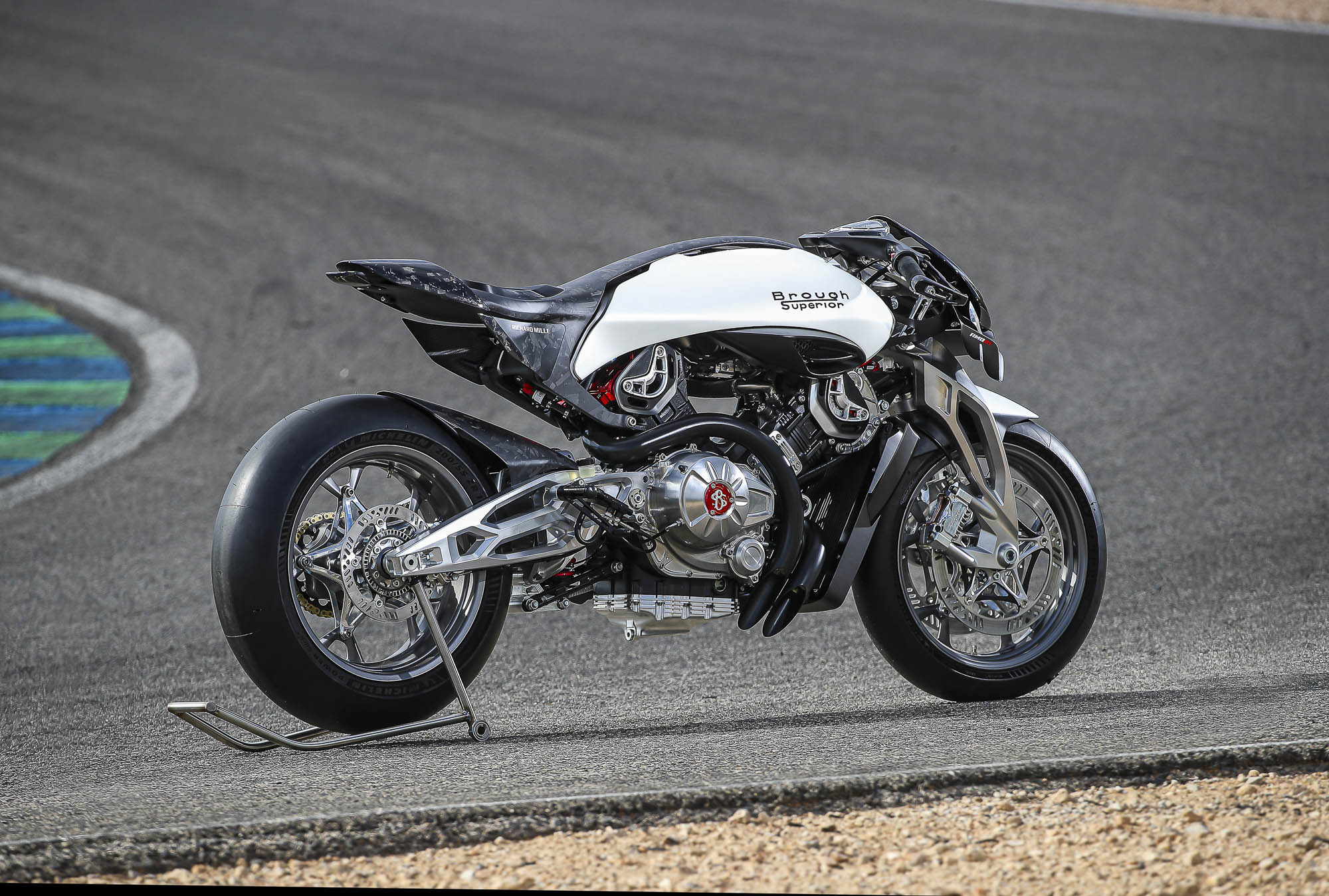
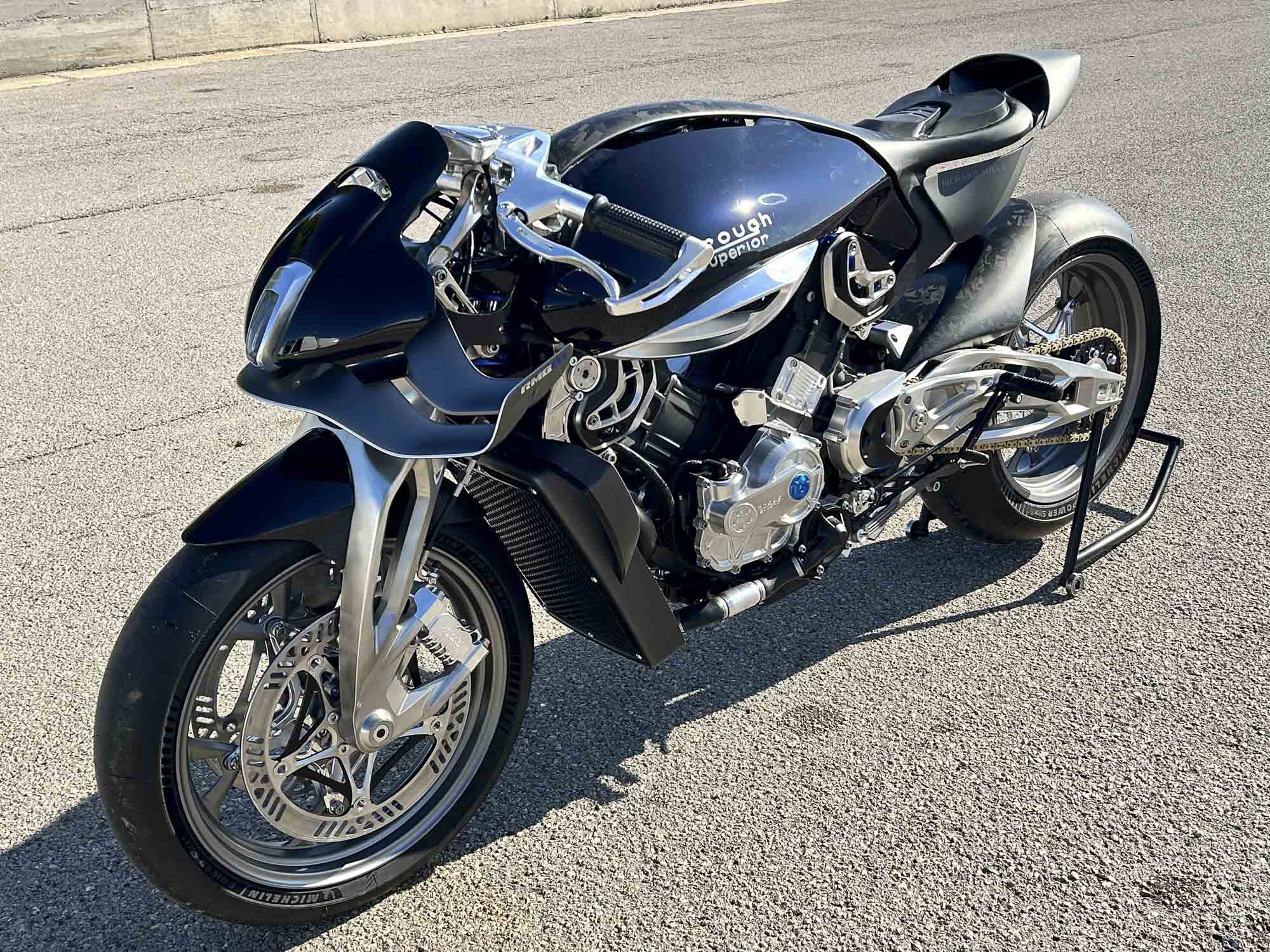
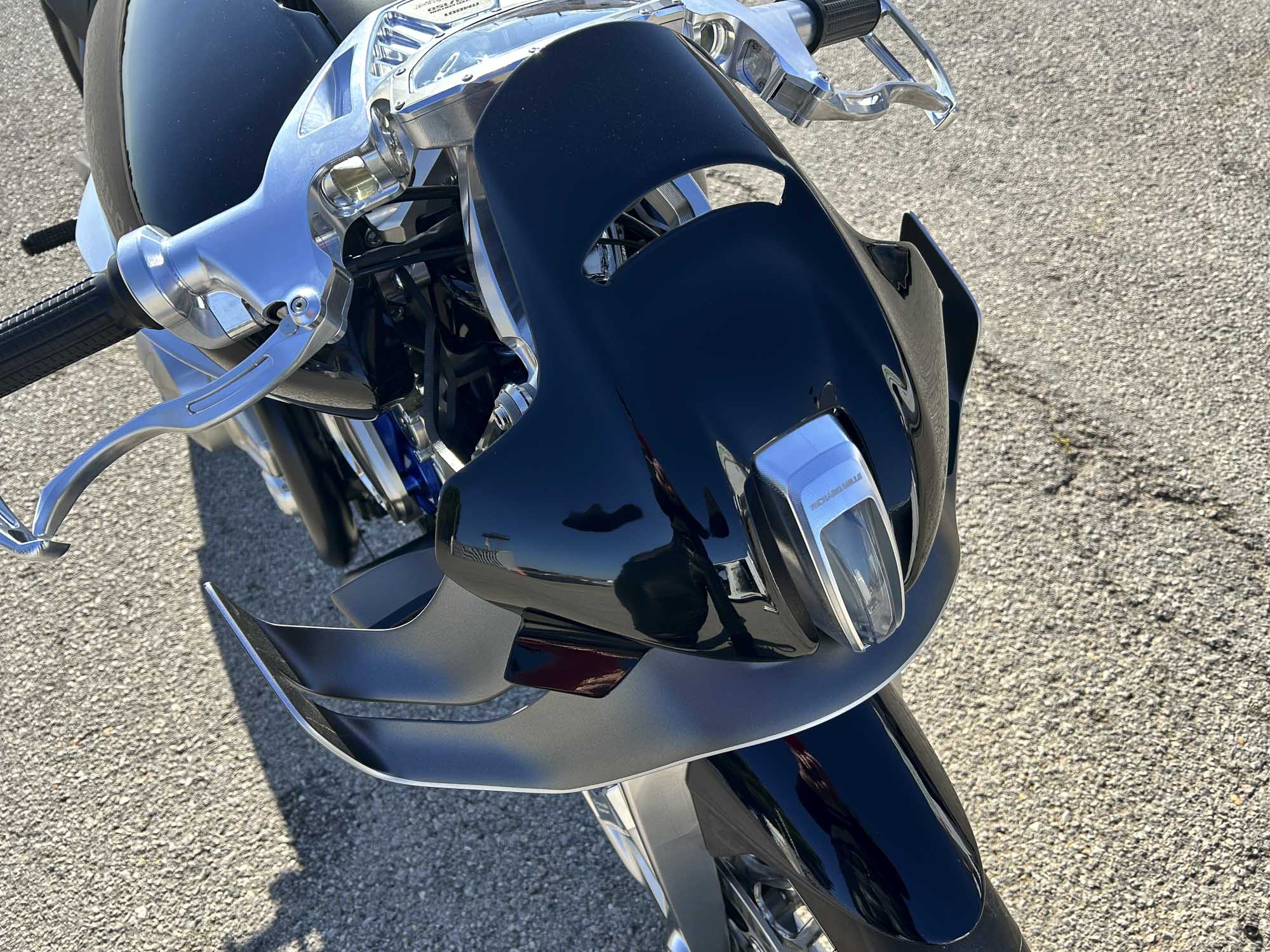
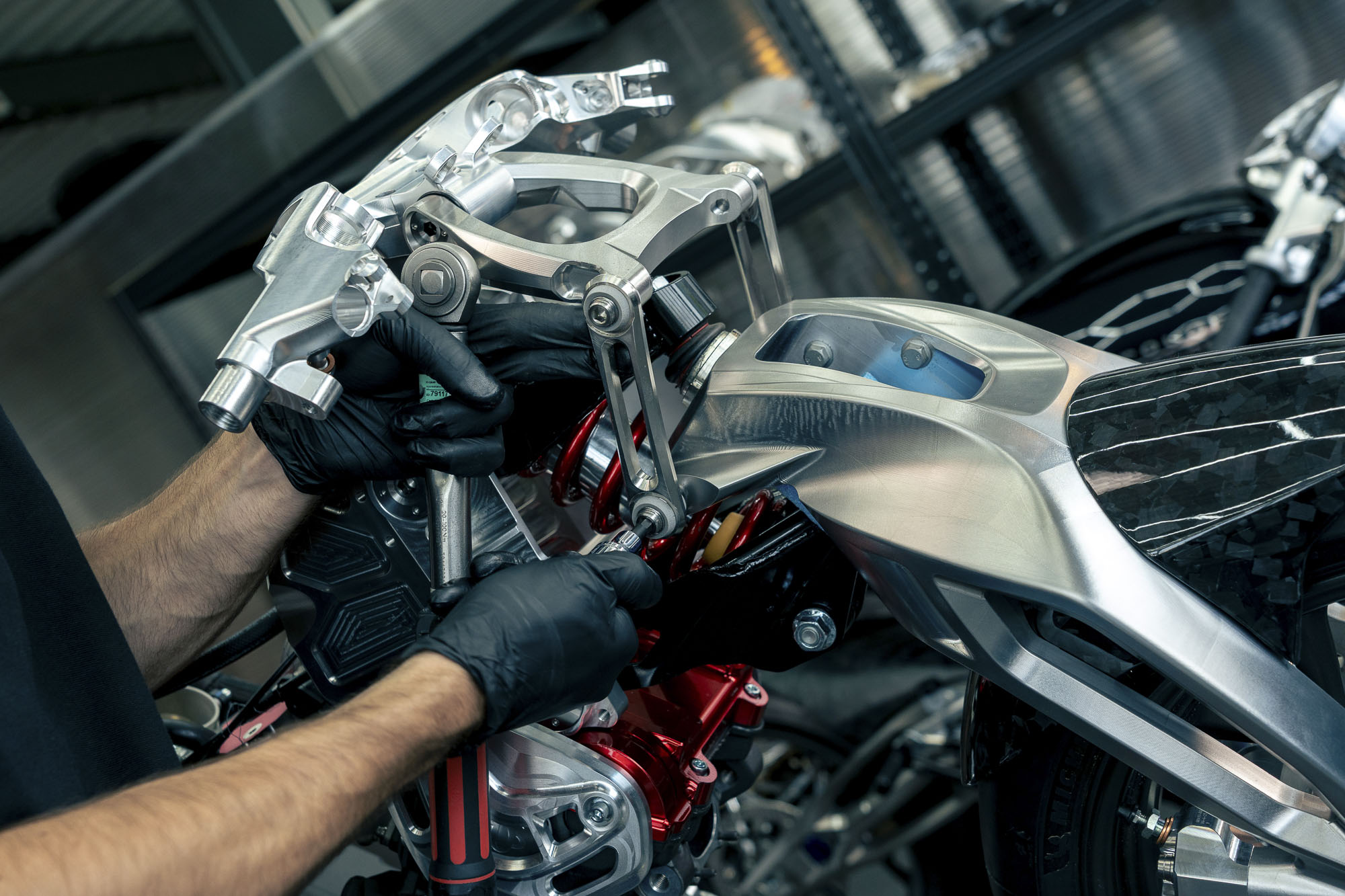
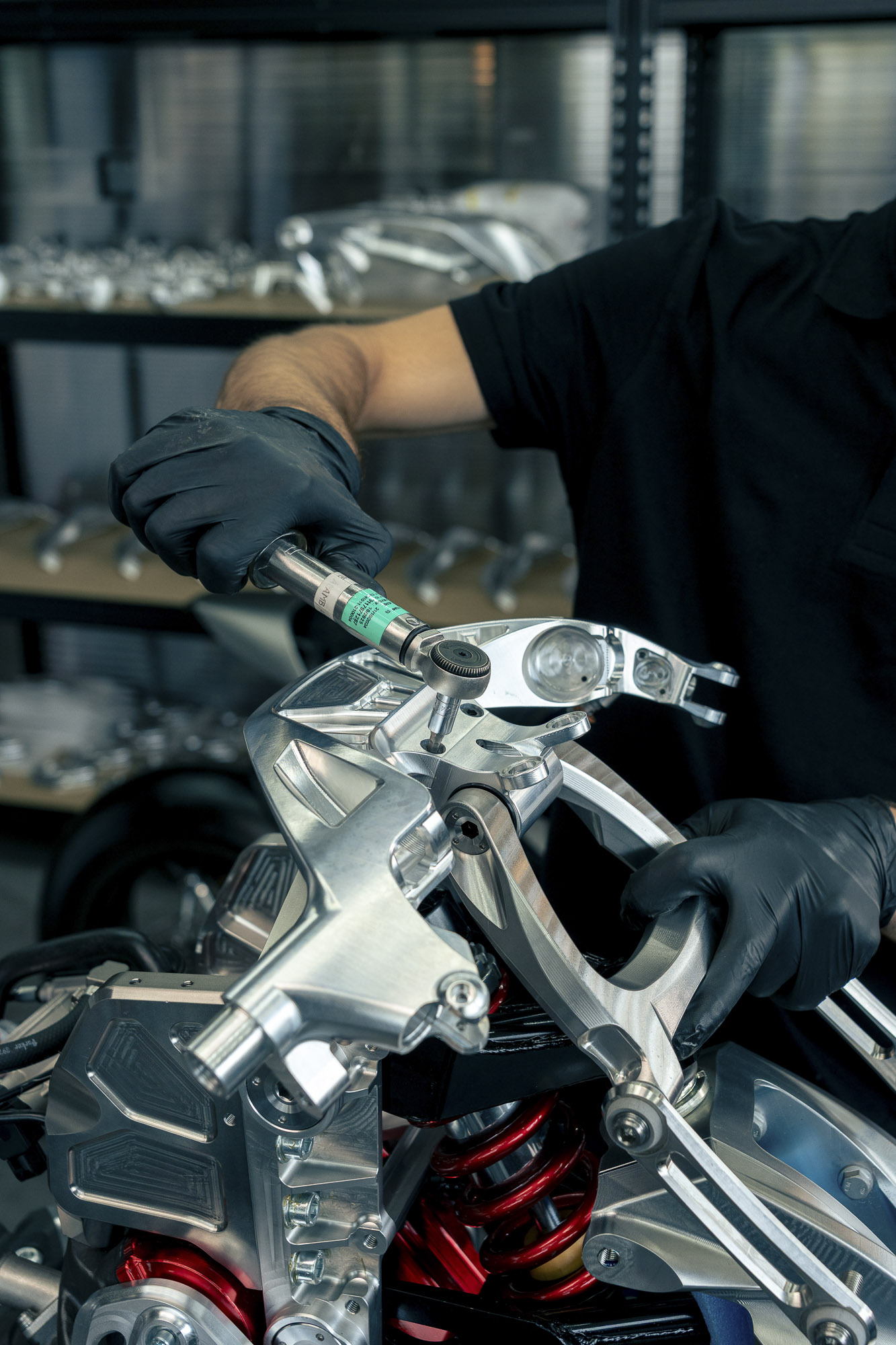
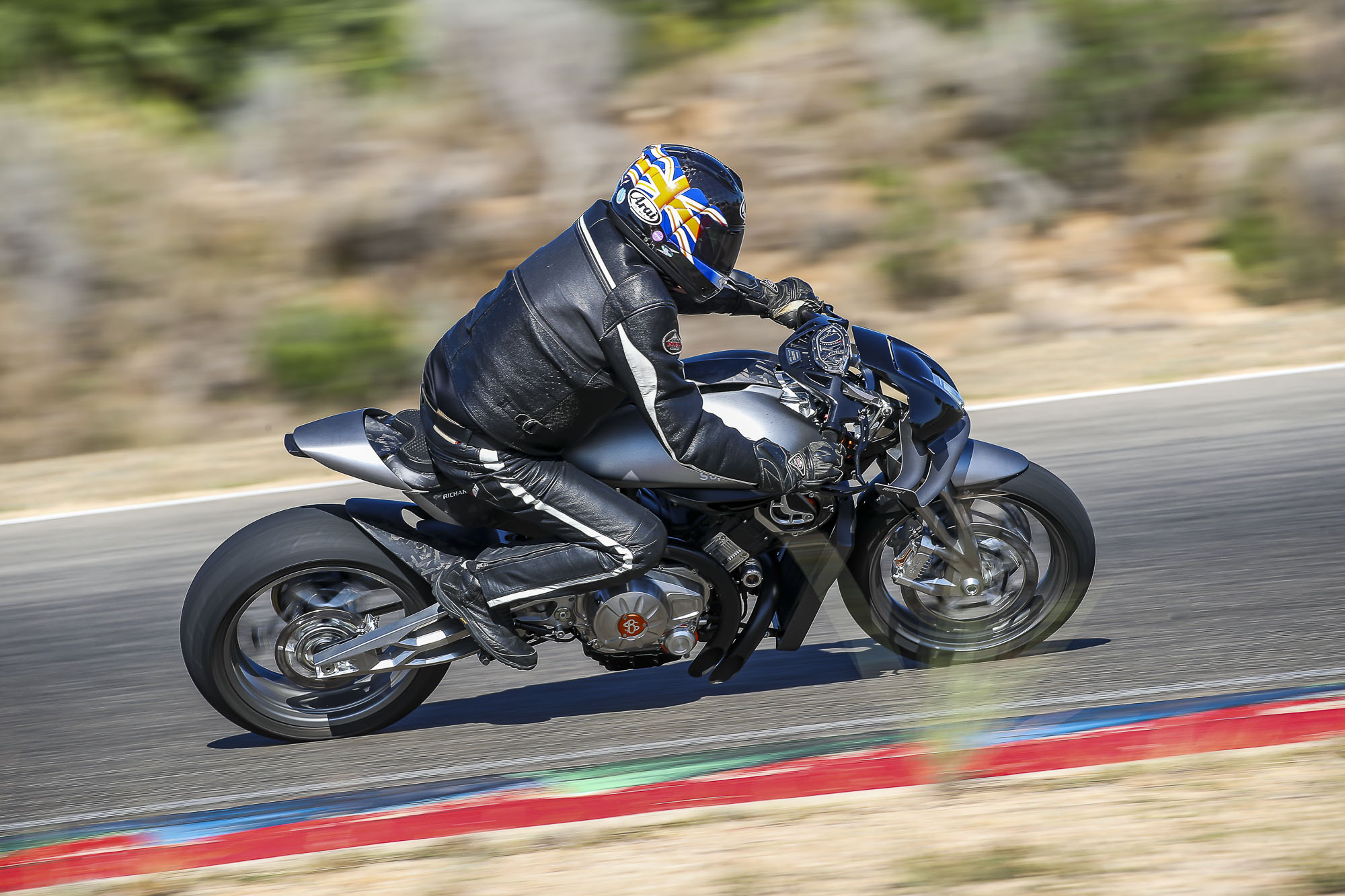
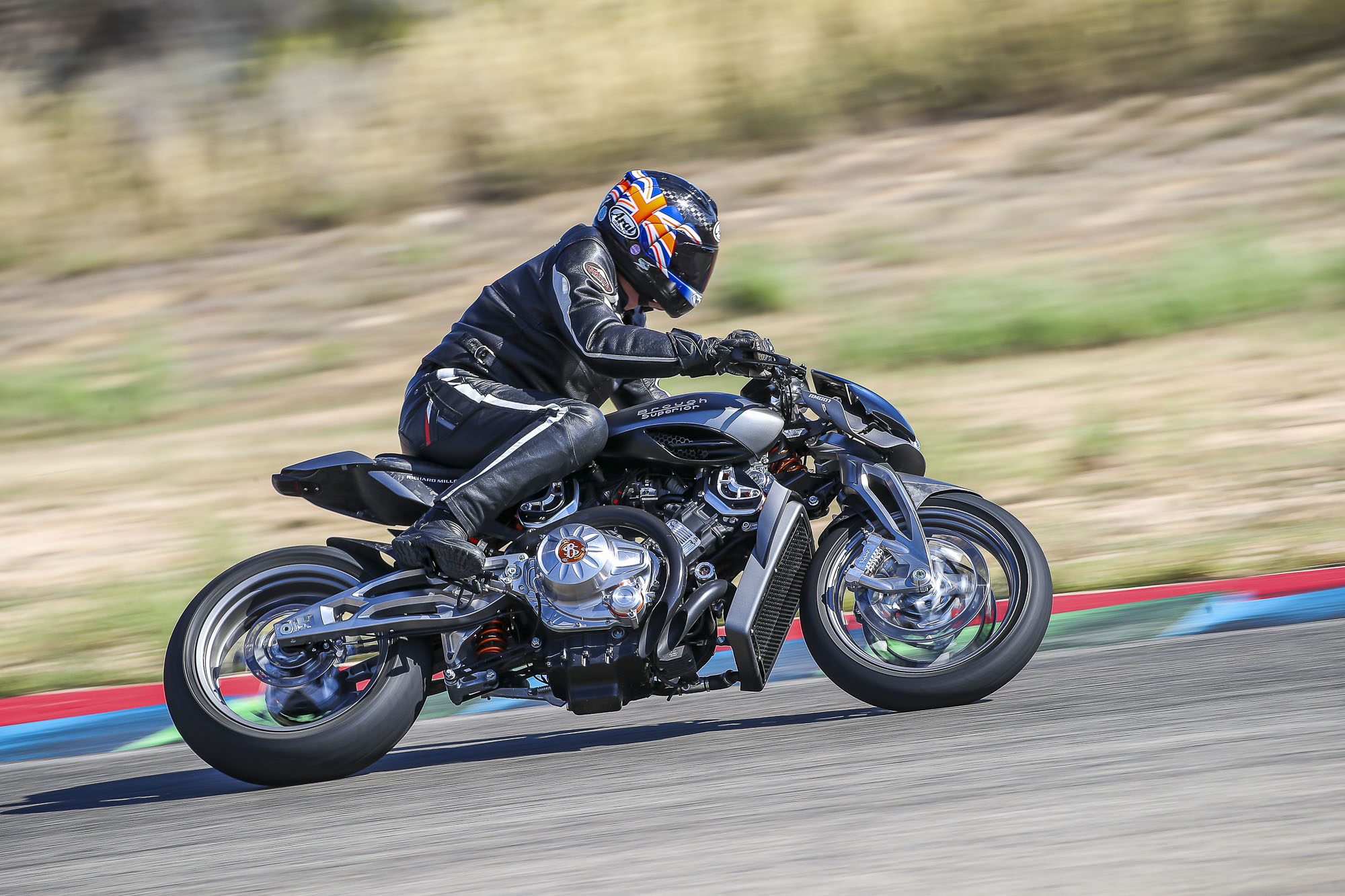
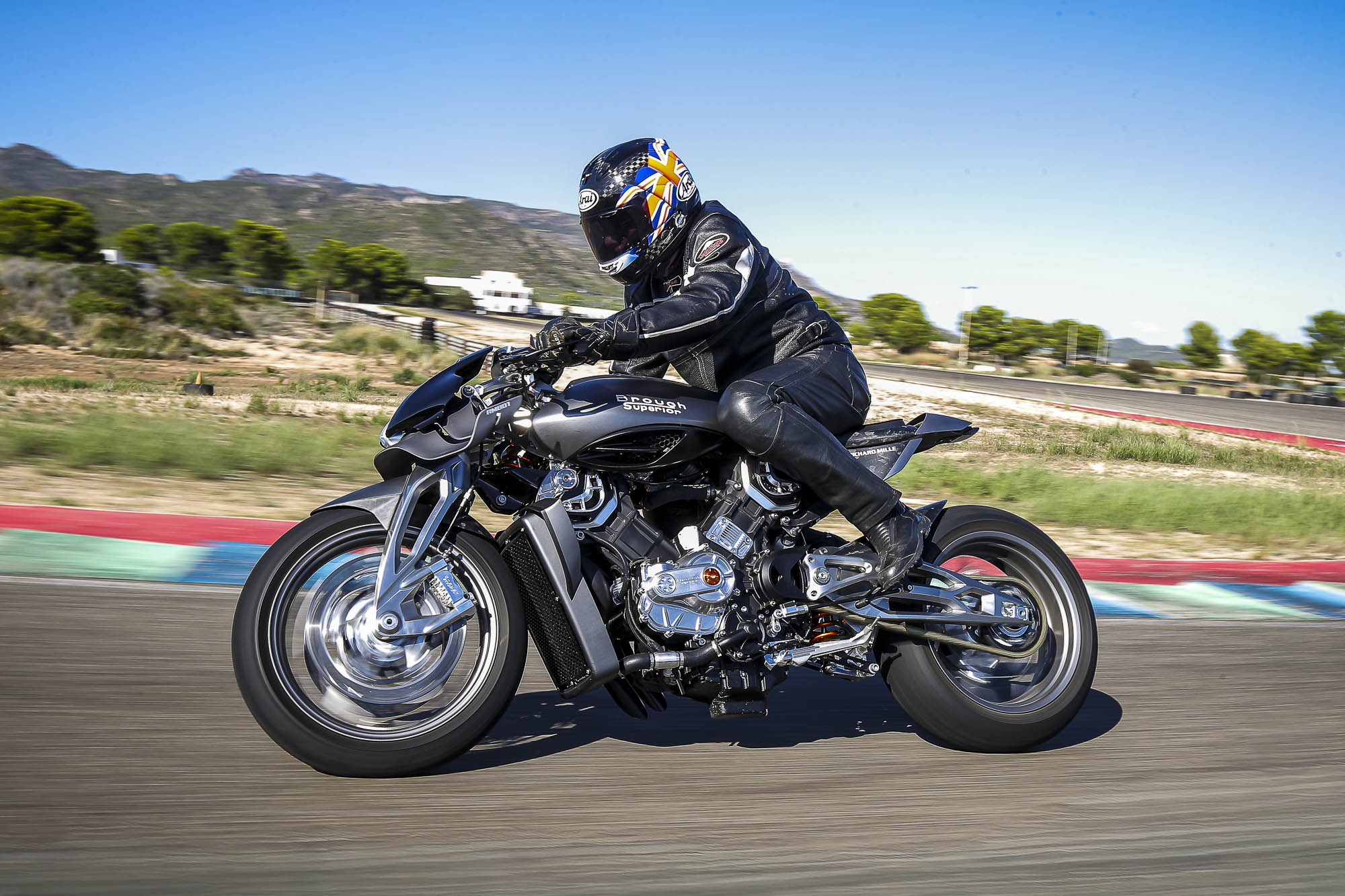
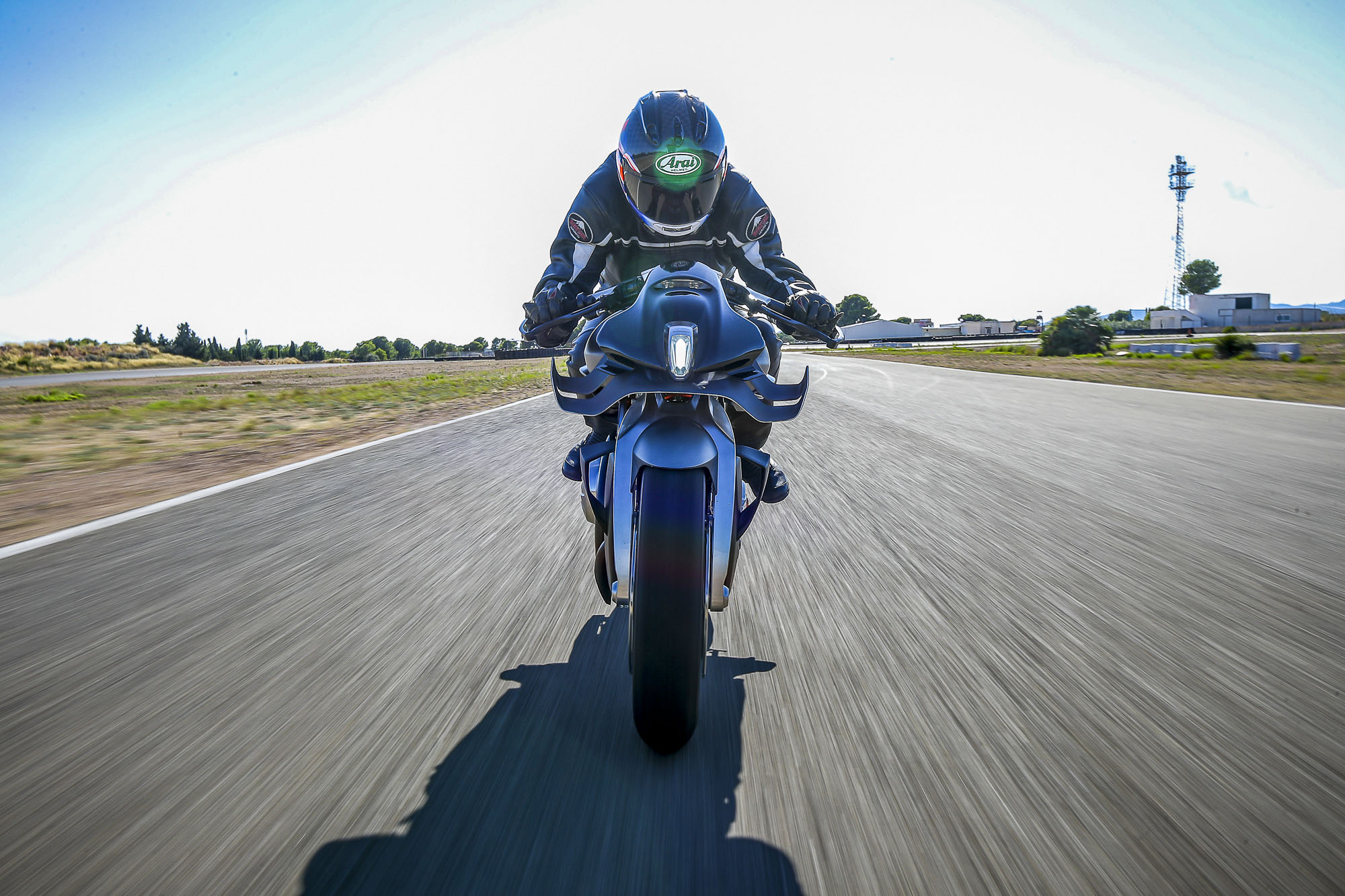
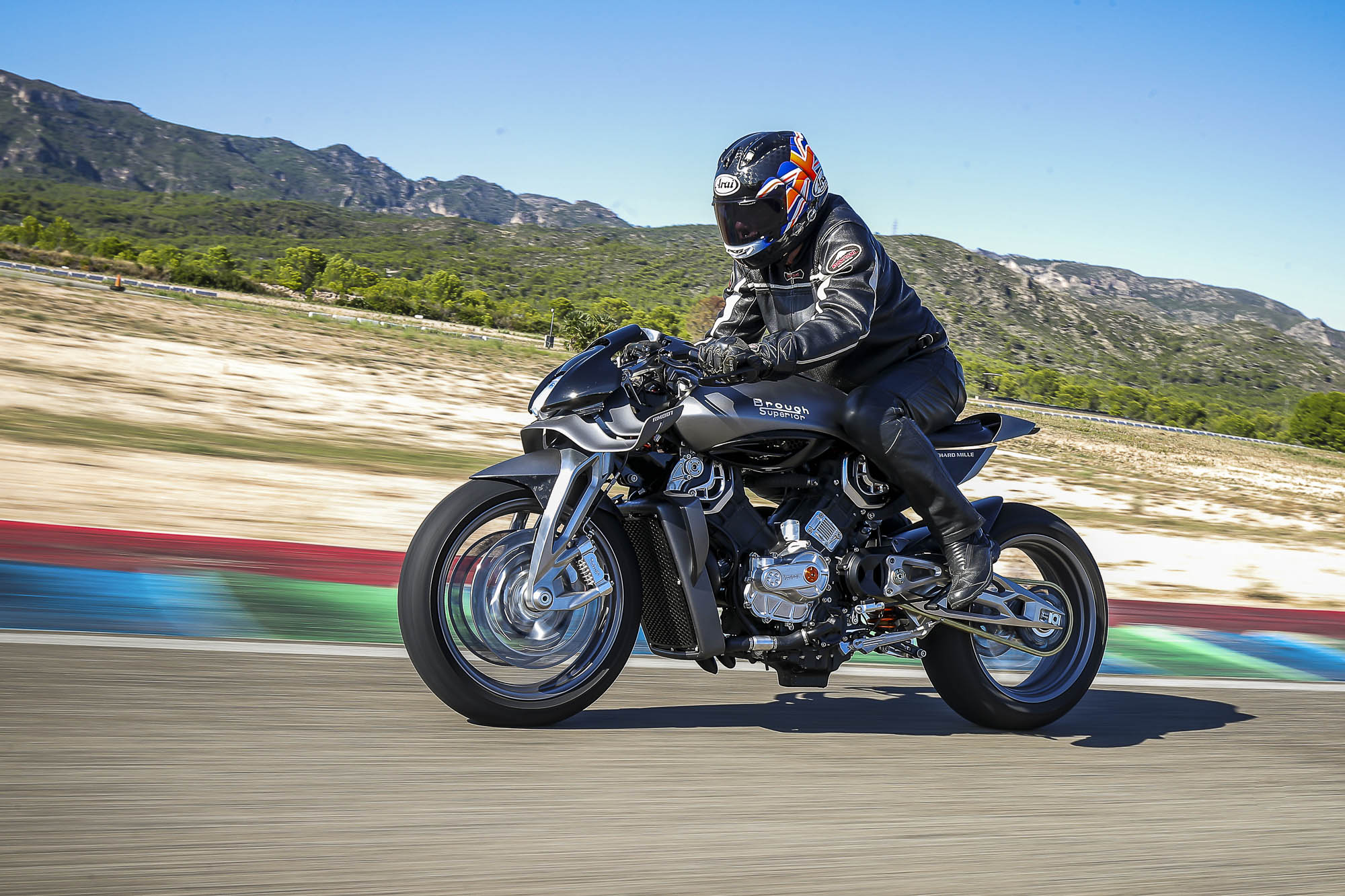
The stiffer engine means that the already vestigial frame can be further reduced in size, with the front CNC-machined frame now a shorter composite aluminium and titanium one shrouded in carbon fibre, via which the front suspension is essentially just bolted to the front cylinder head. As ever, the RMB-01’s front suspension is the most immediately eye-catching of the many avantgarde features on this very special Brough. Nowadays employed on all Brough Superior (and Aston Martin) models, this is based on the wishbone fork design created by French engineer Claude Fior and raced to points-scoring finishes in the FIM Endurance series some two years before the first bike bearing the similar Hossack format was created. The fourche Fior was also later copied by John Britten on his V-1000 racer, as well as by BMW on the Duolever front end fitted to their K-series models, since the race-minded Claude Fior omitted to patent it!
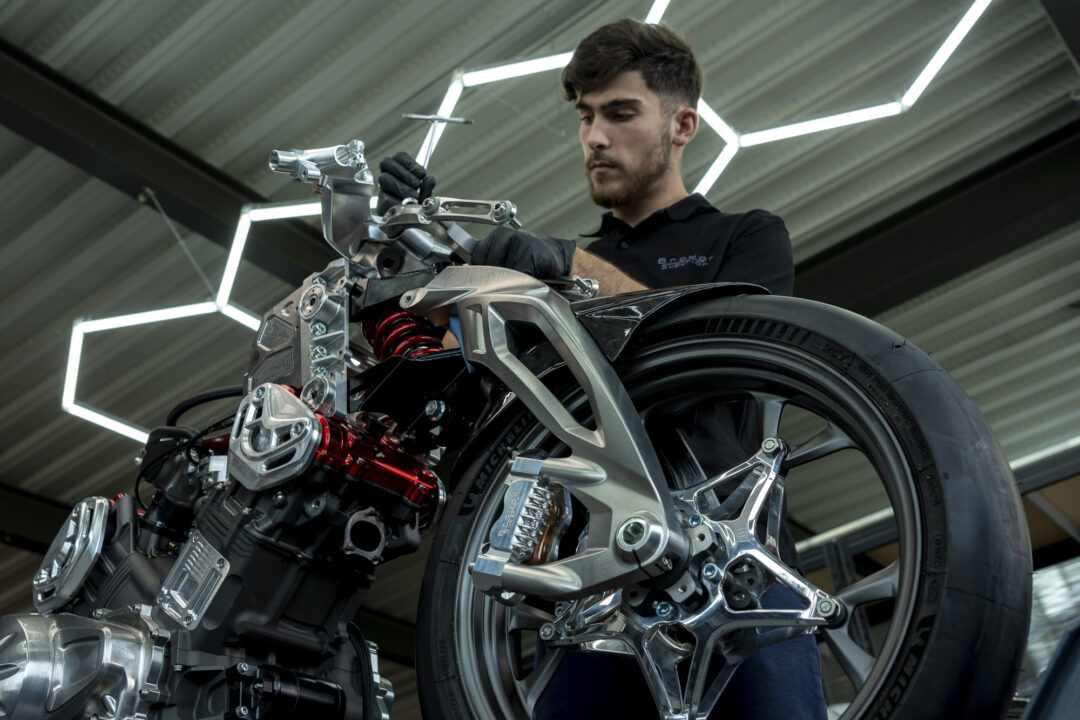
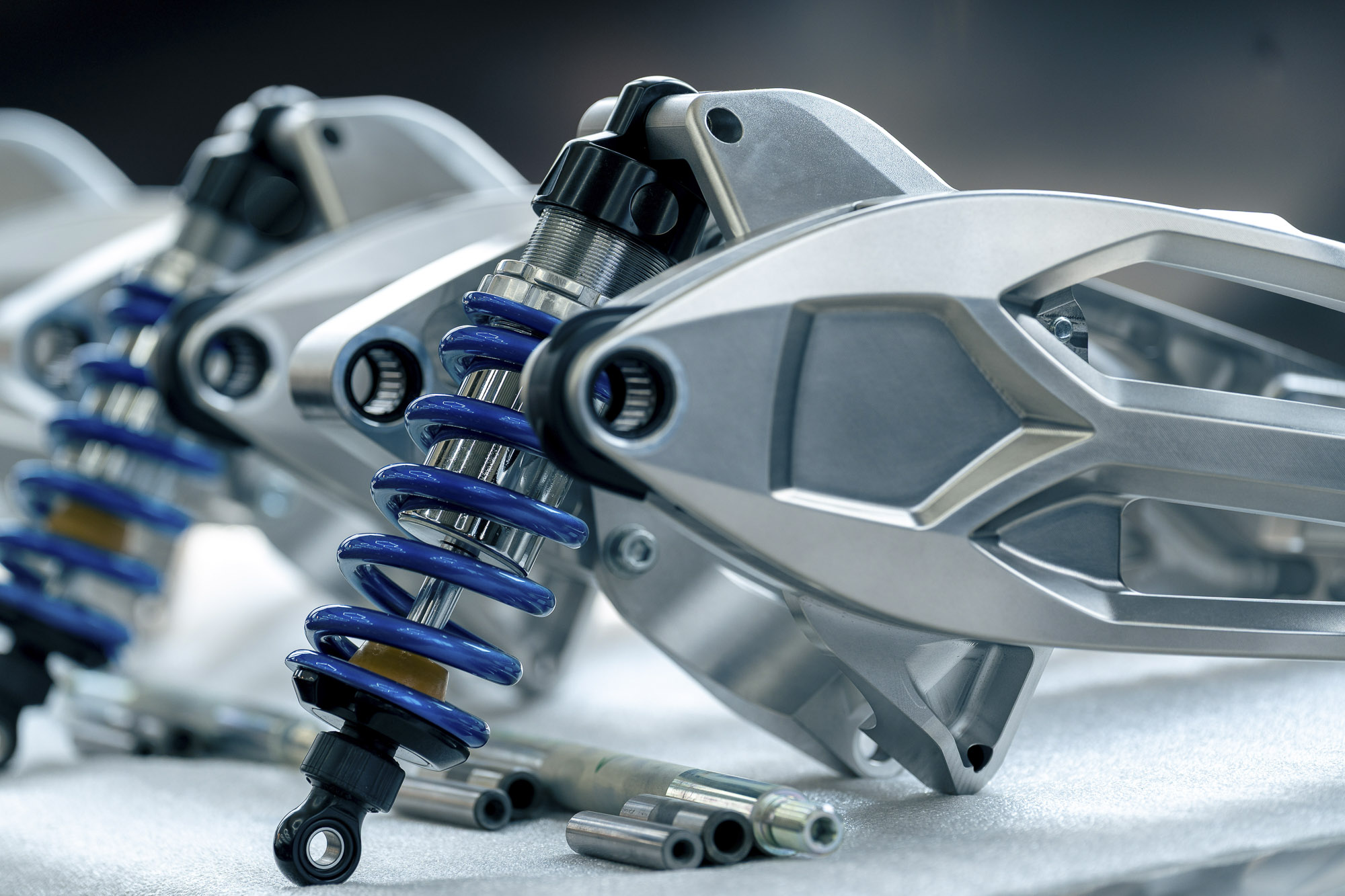
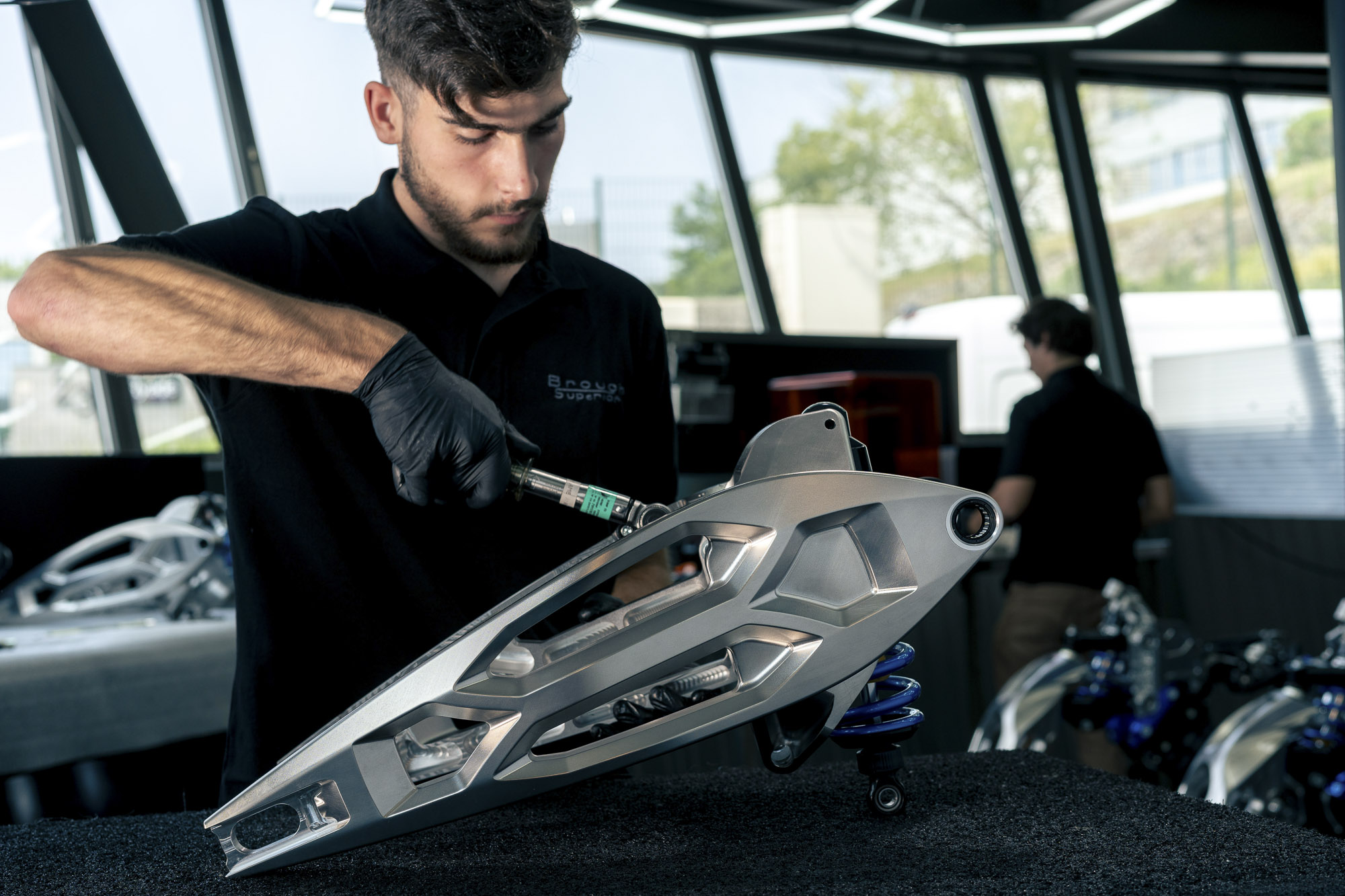
The twin wishbone struts set at a 22.90° rake with 86.90mm of trail are CNC machined from aluminium billet with twin articulated titanium triangular links, and carry a front Donerre monoshock adjustable for spring preload and rebound damping, with just 85mm of wheel travel. At the rear the twin-sided swingarm CNC machined from aluminium billet pivots in the engine crankcases, with another Donerre monoshock now fully adjustable for spring preload plus compression and rebound damping, and a progressive rate link yielding 113mm of travel. Donerre is a Czech-owned French competition suspension specialist located to the north of Toulouse, founded in 1994 which besides being the French importer for WP has developed a series of dedicated shocks for Brough Superior and now Aston Martin models. Brough ditched Öhlins for them, so they must be good! Likewise a local concern, Beringer has long supplied Boxer, Brough and now Aston Martin with brakes, and their twin 320mm front discs on the RMB-01 are gripped by their radially-mounted four-piston Monobloc calipers, with a 230mm rear disc and single-pot caliper.
First Impressions
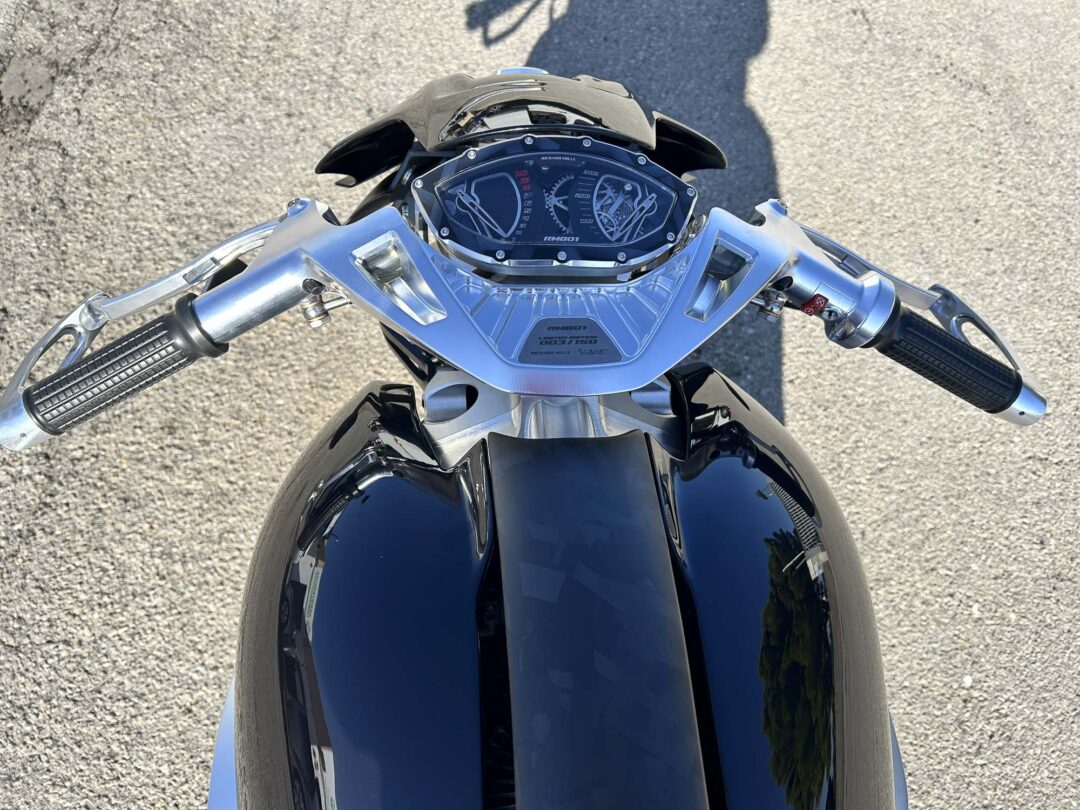
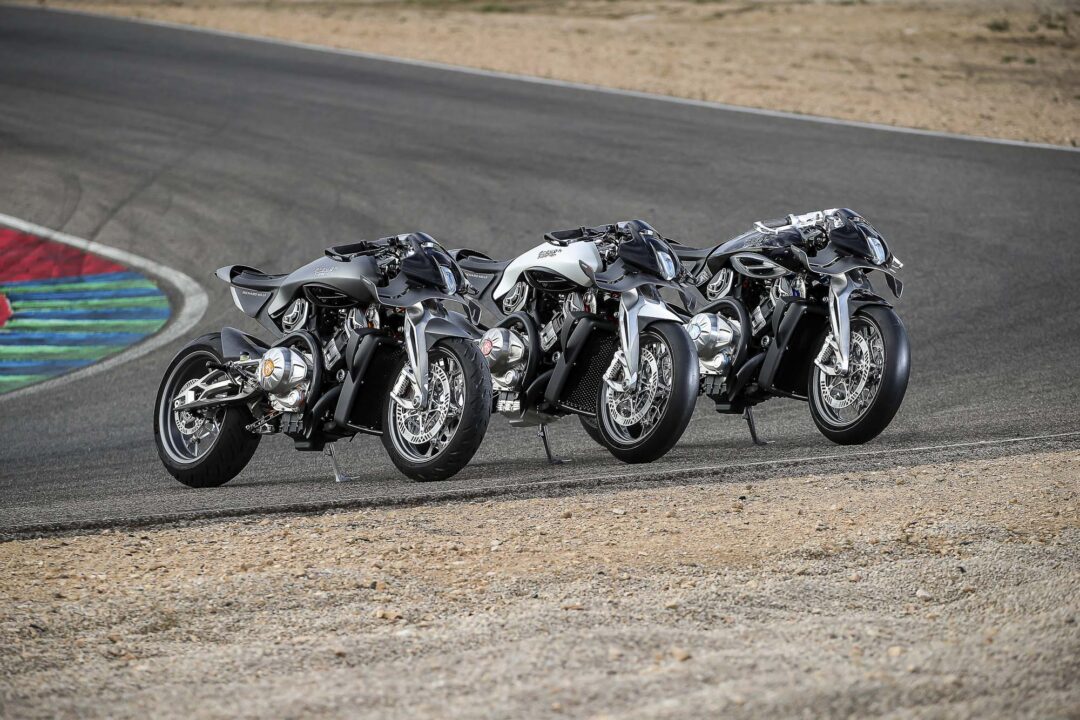
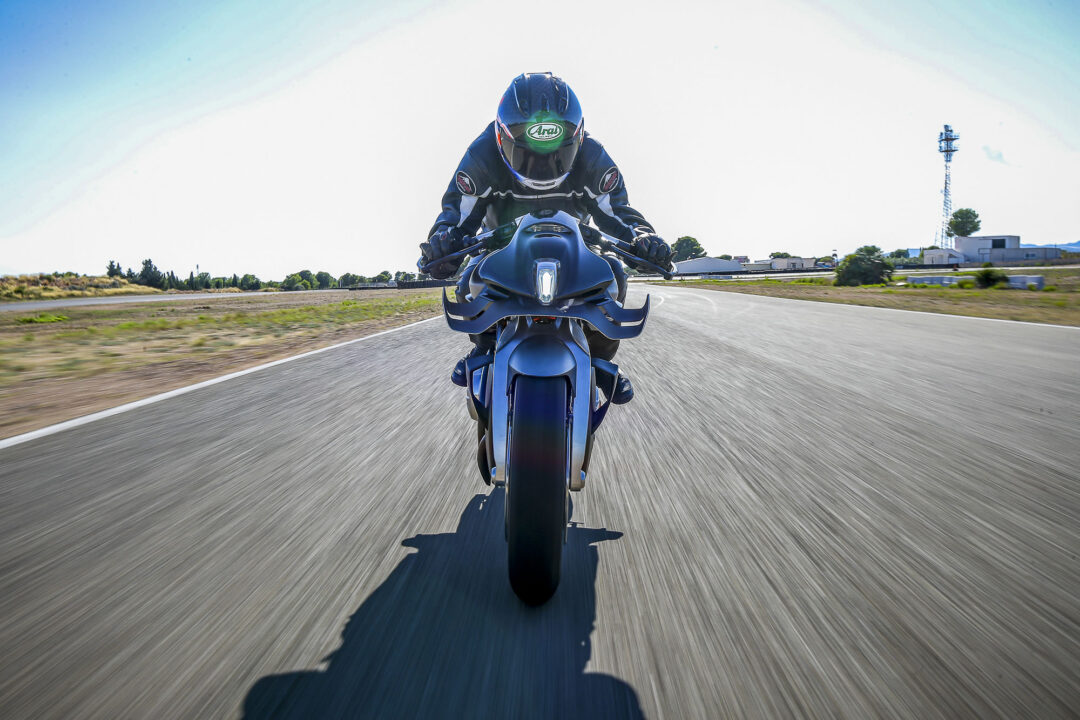
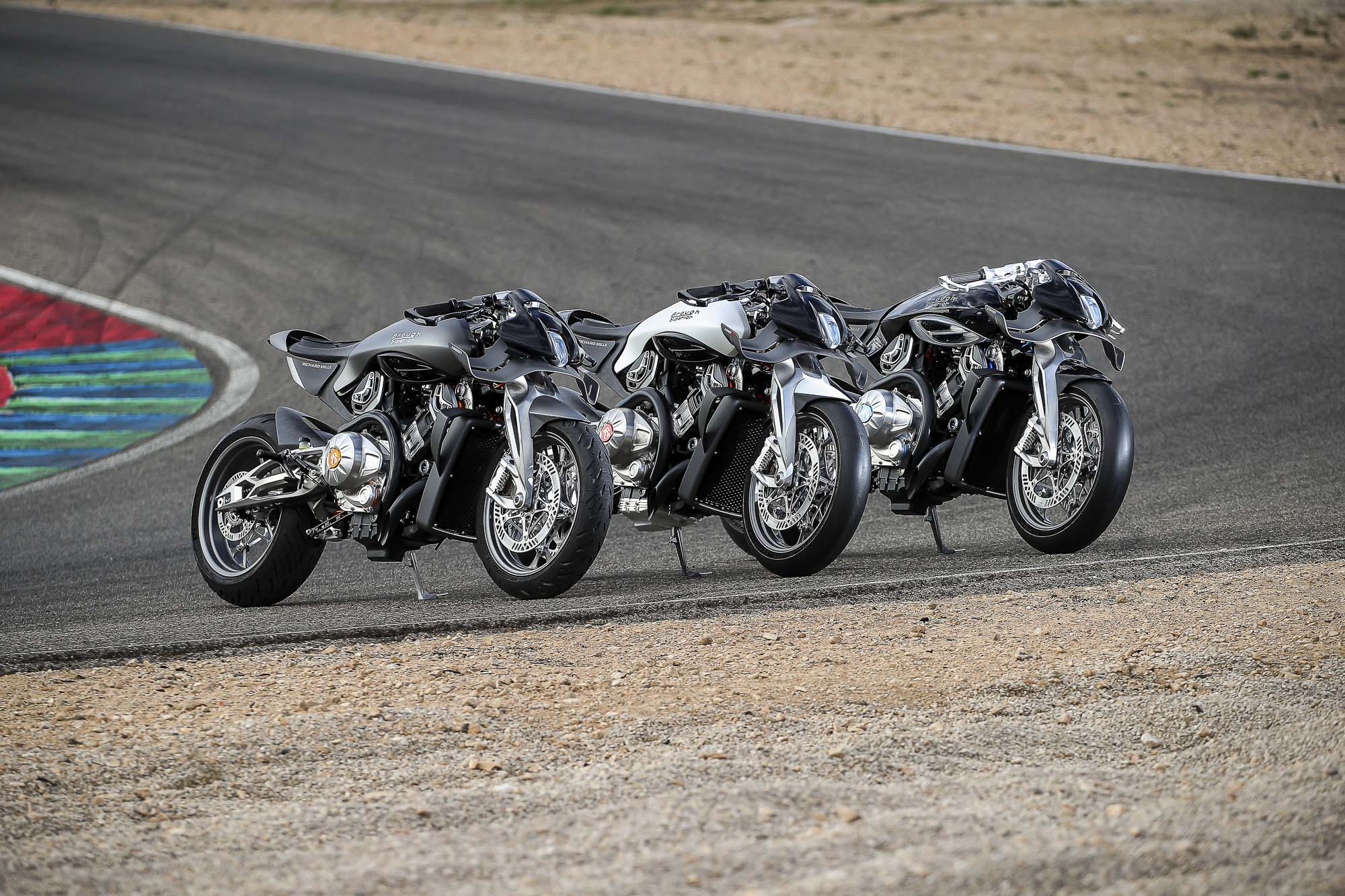
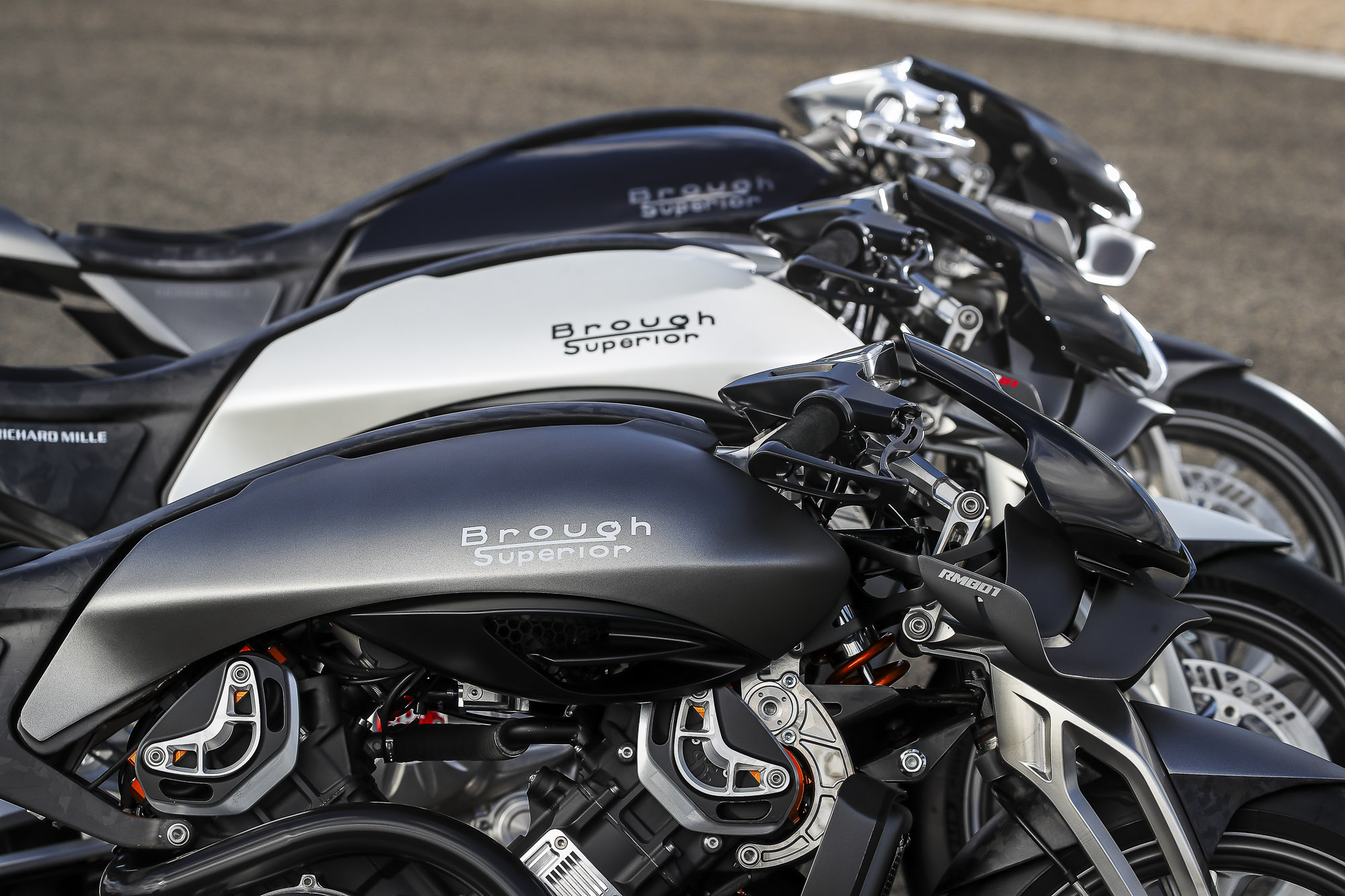
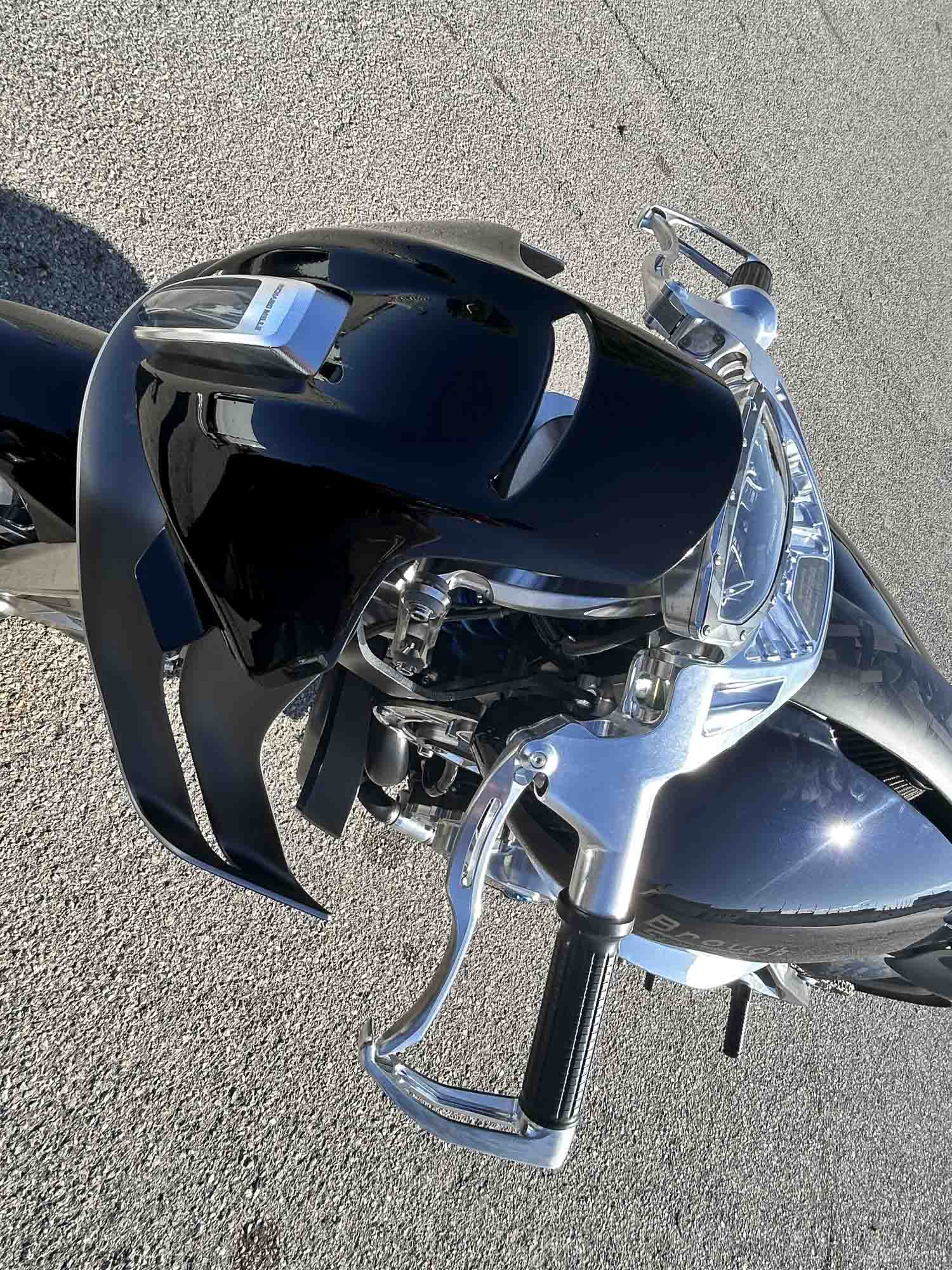
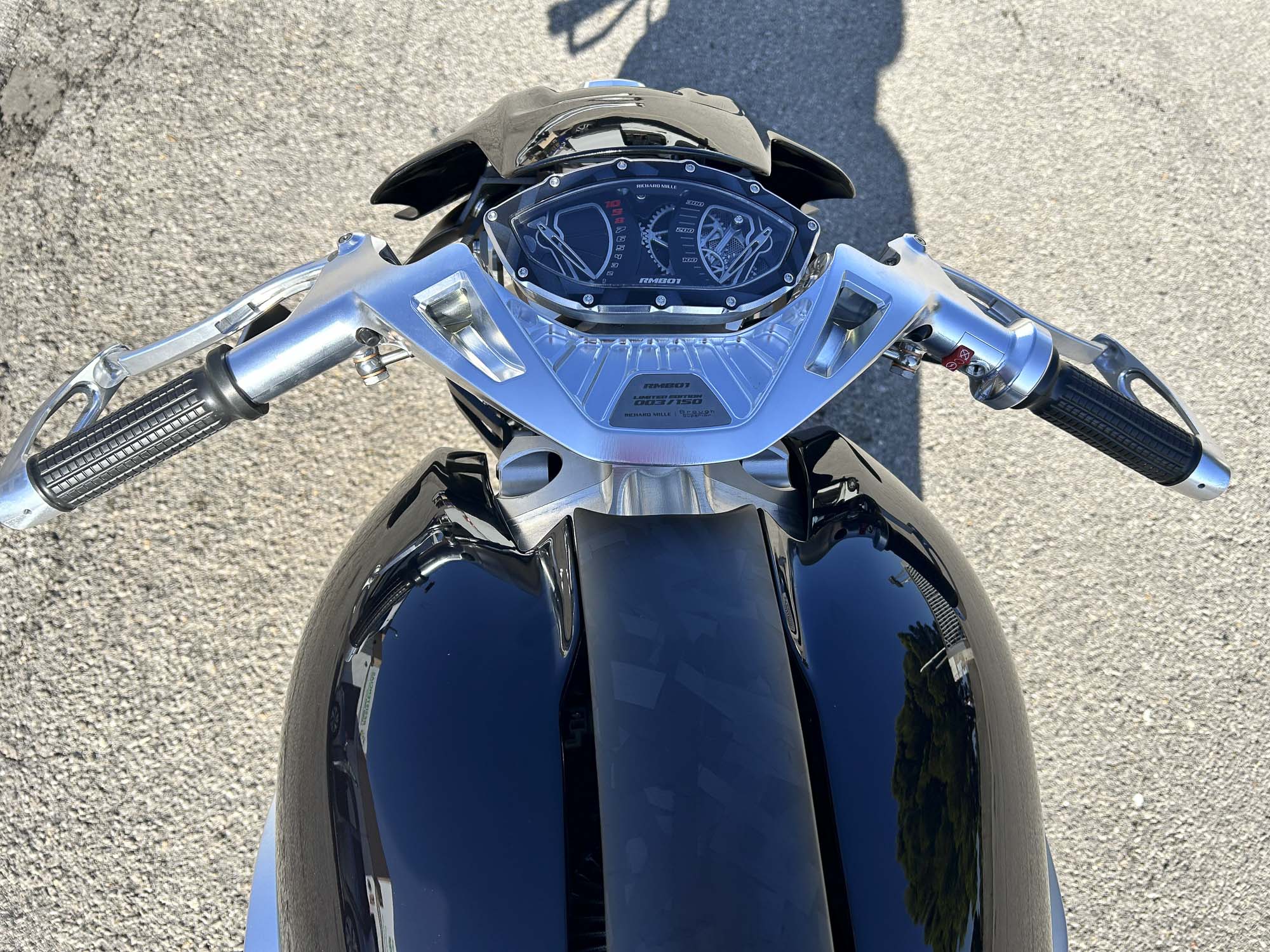
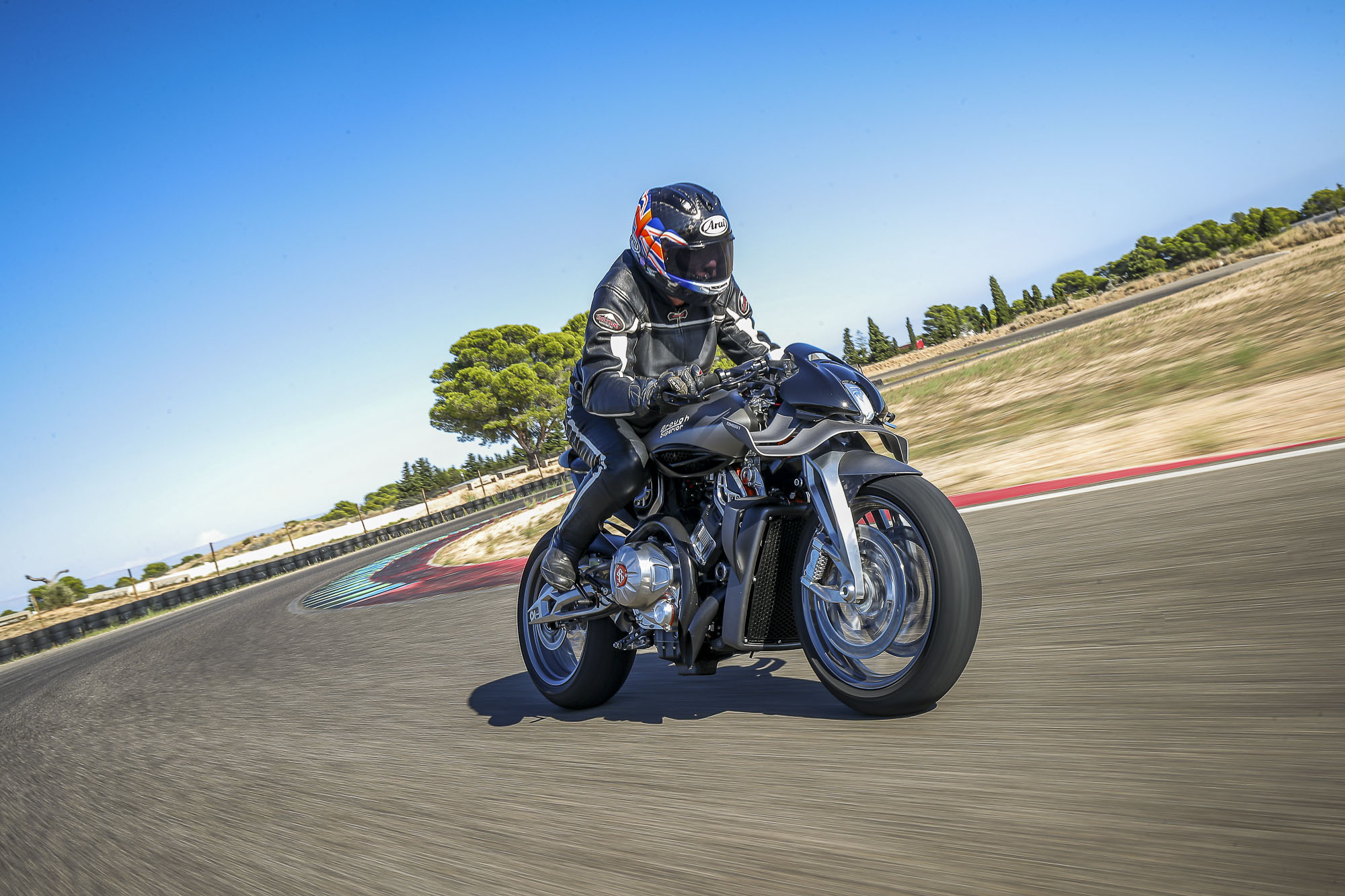
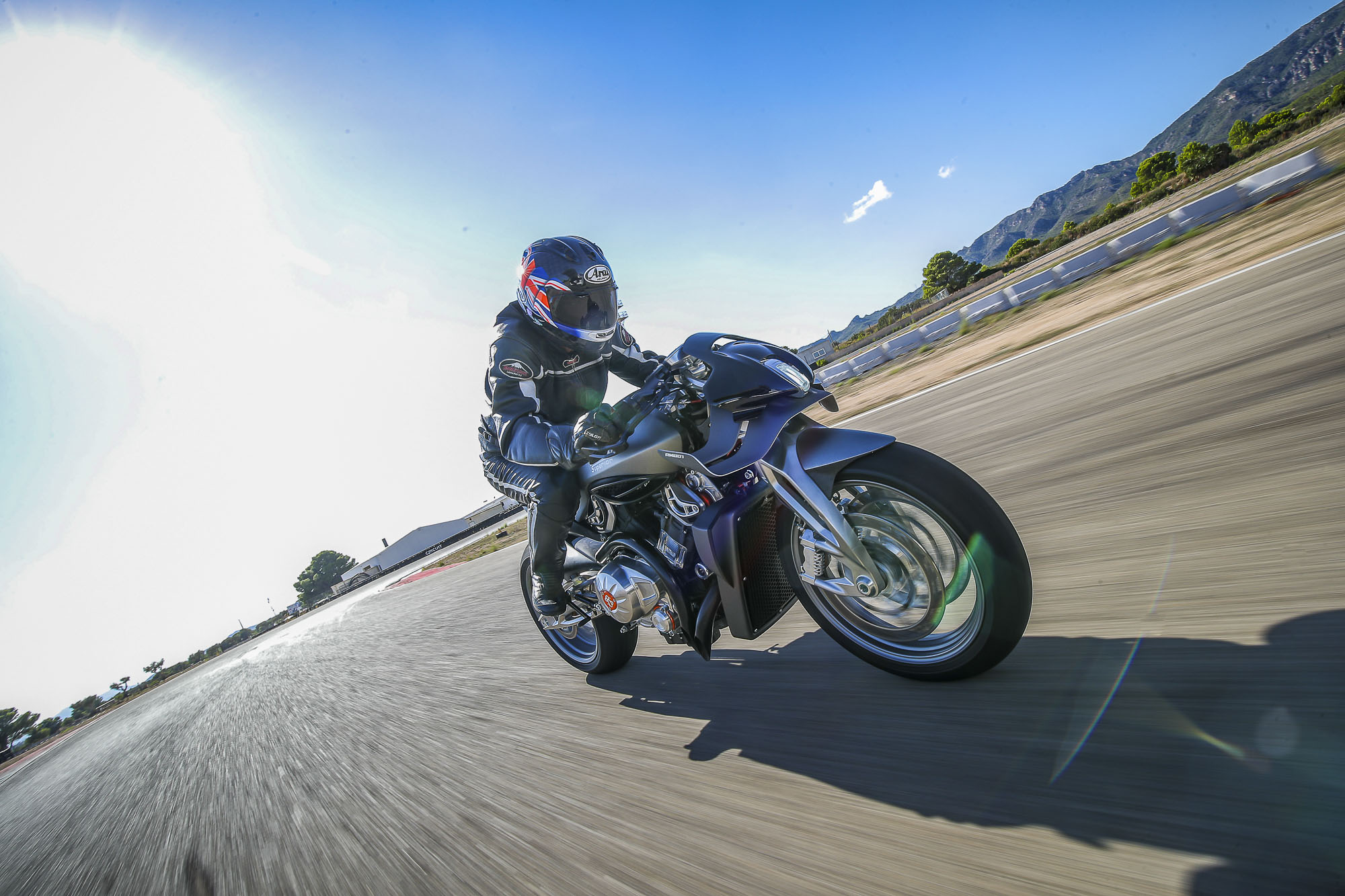
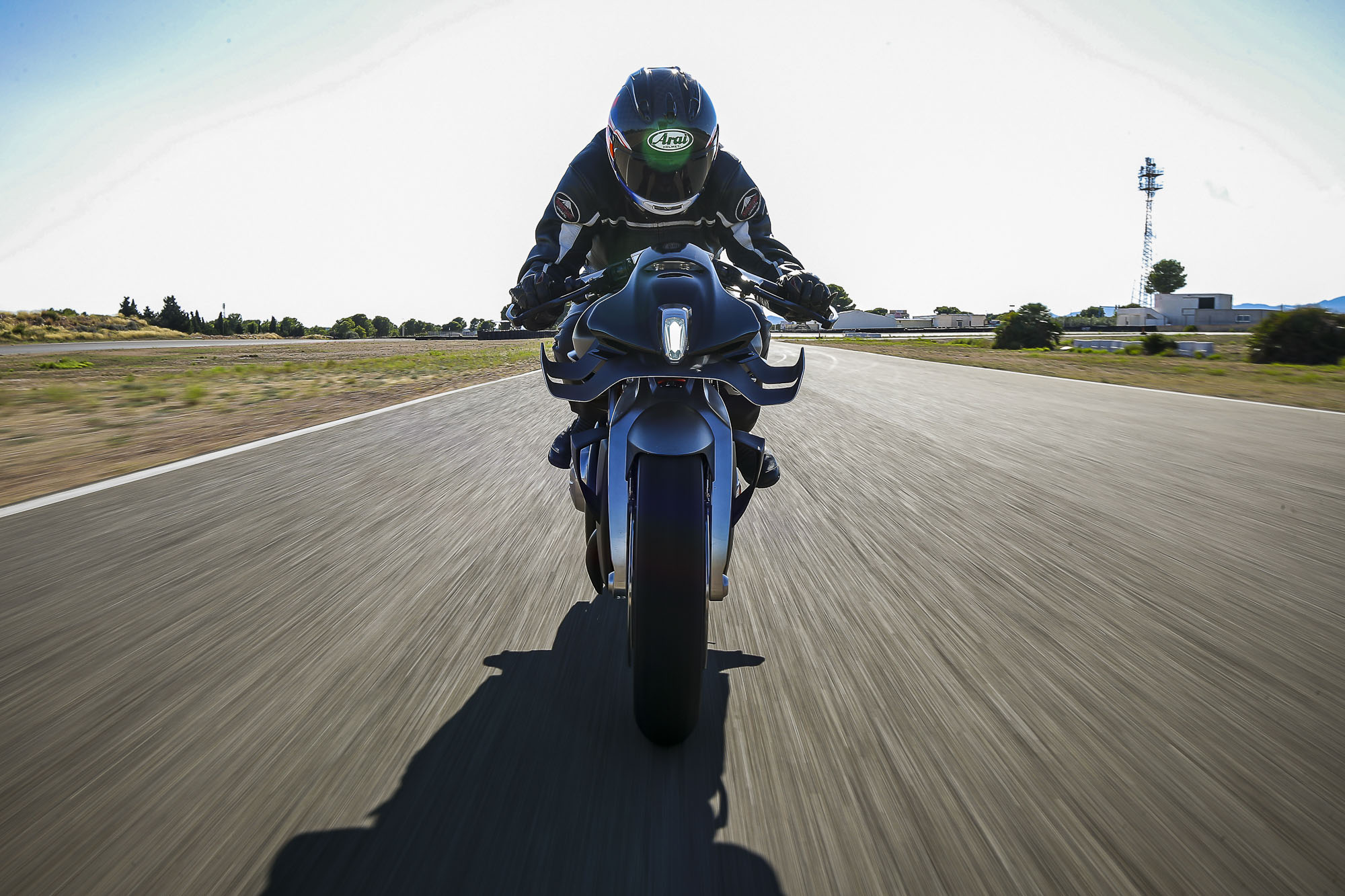
My chance to sample this joint venture in exquisitely executed engineering came under sunny skies at the Spanish seaside track of Calafat, 450km/five hours south of Brough’s home base in Toulouse. Just glimpsing the trio of bikes standing in sunlight, each in a different one of the three liveries available (Nocturnal Sapphire i.e. midnight blue; Selene = matt grey with orange; and Pearl of Speed aka pearlescent white with red flashes) made me appreciate the huge amount of truly artistic detail that’s gone into their creation. By any standards, this is a lovely motorcycle, with its distinctive looks accentuated by the gracefully curved vestigial spoiler wrapped around the tiny headlamp cluster as a nominal but emphatic nod to the current trend for aerodynamic winglets.
Tall, Fast and Demanding
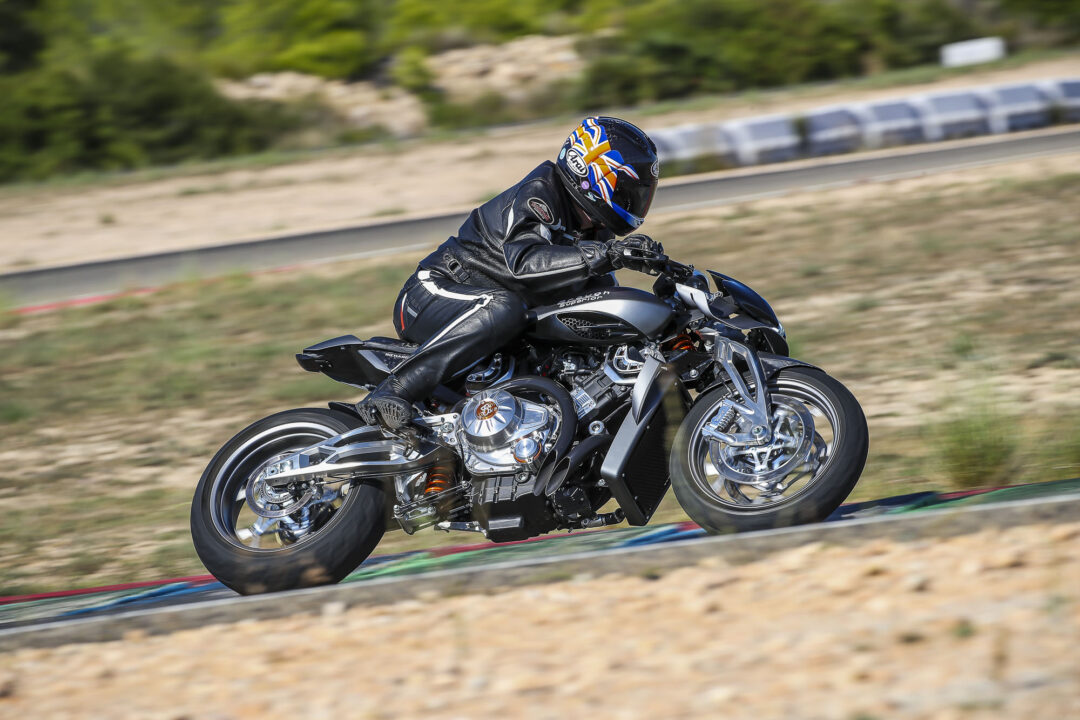
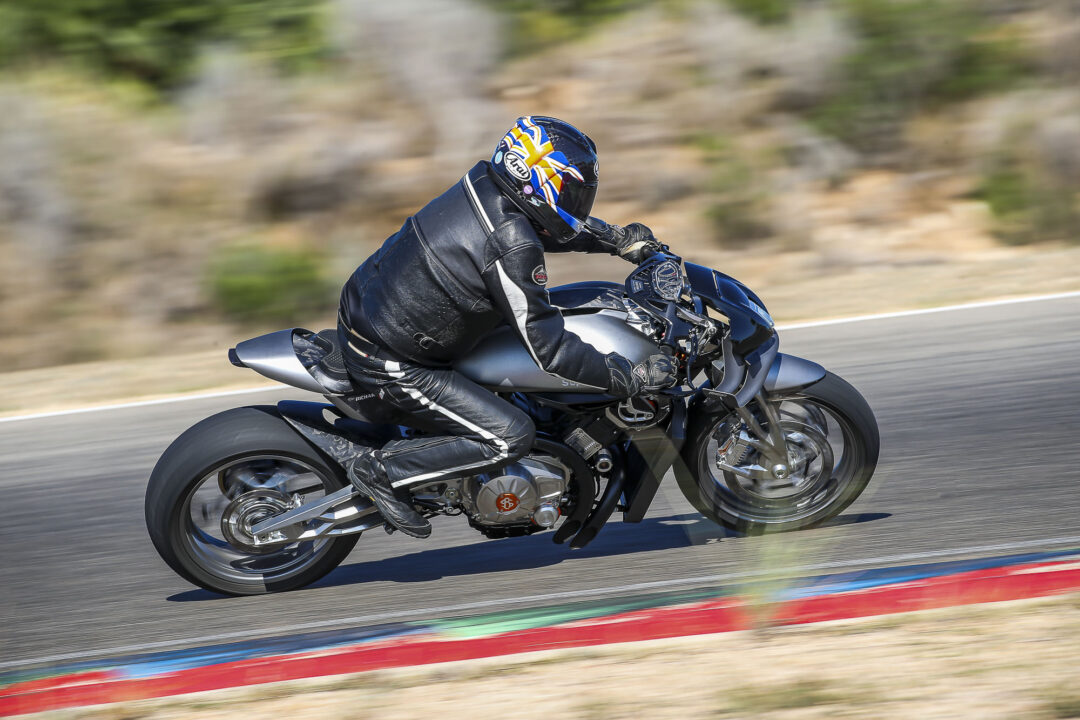
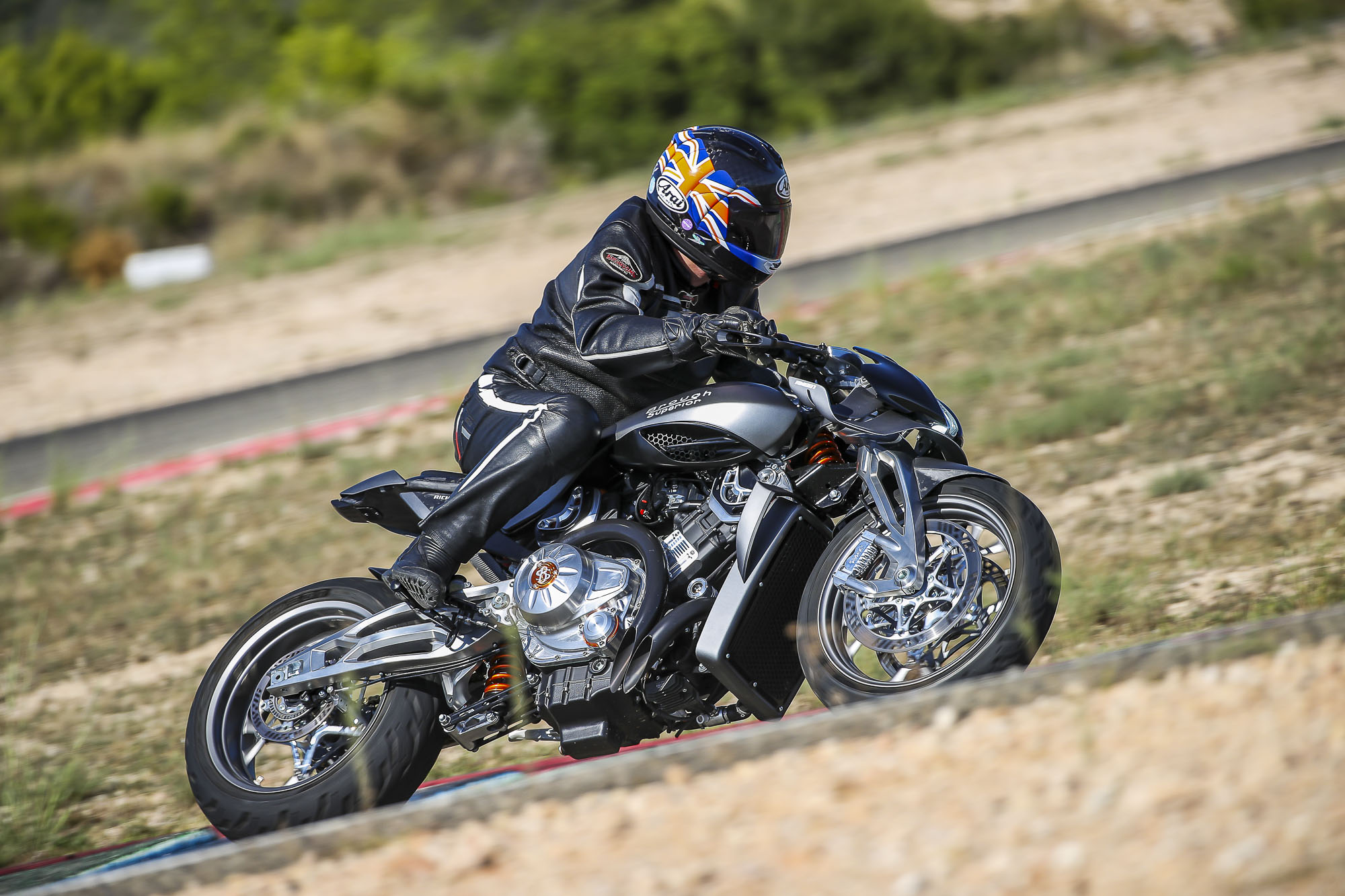
However, before taking the Richard Mille motorcycle bearing a plaque identifying it as no. 003/150 out for a dozen tours that afternoon of a track that I’ve carved literally hundreds of laps on down the years as well as raced at with a modicum of success, I’d sampled it for size, and found that at 1.80m/5’10” tall I practically needed a stepladder to climb aboard the supposedly 808mm-high seat, which was also very wide where it met the fuel tank. I reckon they might just need to re-measure that, because once aboard I could only j-u-s-t touch the toes of both boots down on the ground simultaneously. It felt unbelievably precarious, since after firing up the extremely raucous-sounding V-twin motor whose twin exhausts are devoid of any silencing – OK, Track Use Only, but how many tracks these days besides Calafat have no noise limits?? – I had to lean the bike right over to the side so I could put my right foot to the ground to find neutral with my left, in using the one-up race-pattern gearshift to get ready for launch. Luckily, initial pickup was strong rather than violent so I didn’t find myself skidding off the line sideways in obtaining forward motion via the light-action clutch.
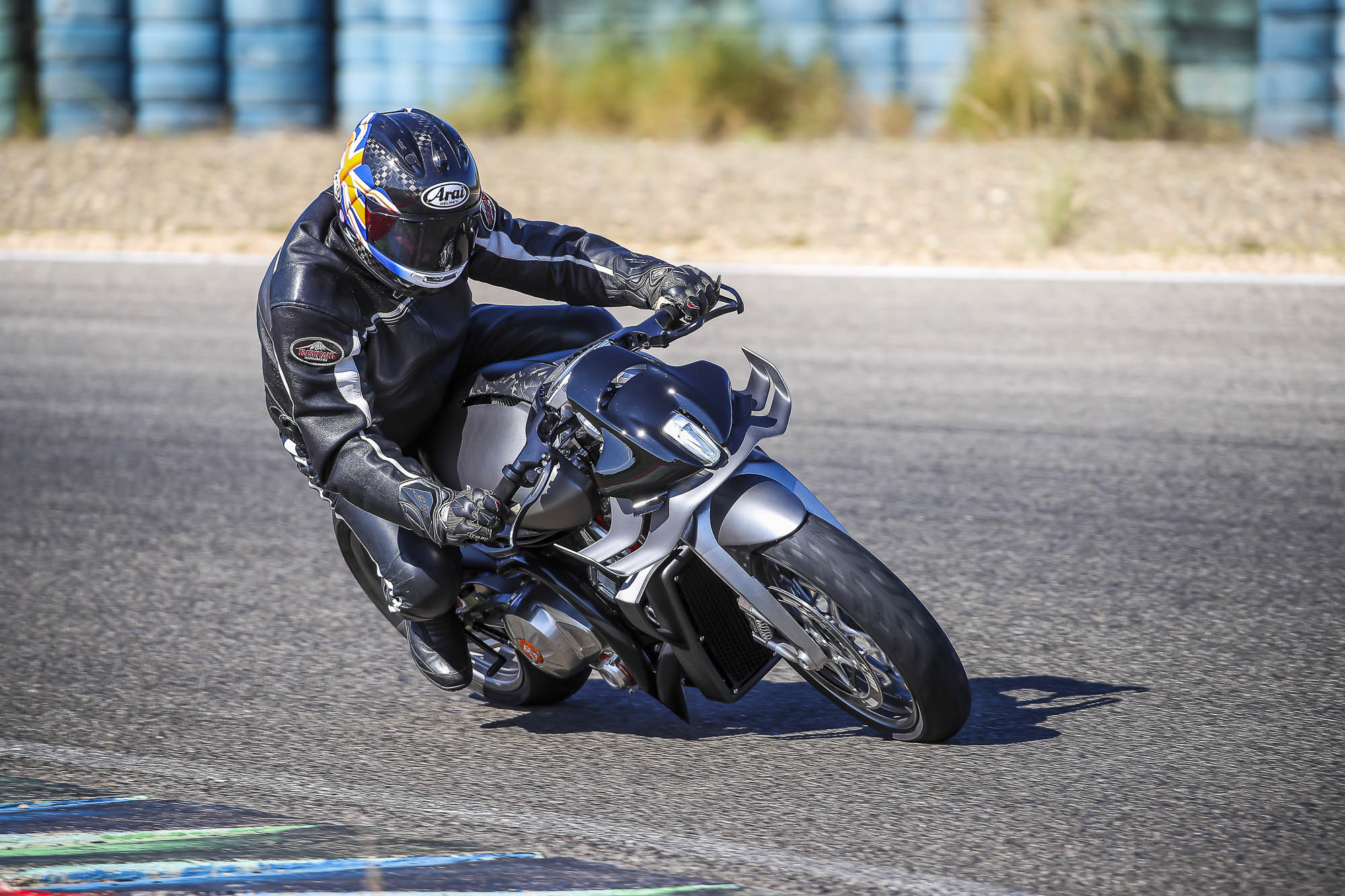
Still, once straightened up and flying right, I could pin the RMB-01’s throttle firmly open as we streaked down the Calafat pit straight together. However, I couldn’t help thinking that what I was in fact sitting on was a beautifully designed, plushly upholstered plank of carbon fibre which had been shaped to look good rather than be dynamically effective. And the ride height of the whole bike needs to be dropped at least 30mm – it’s much too tall, and while after having ridden all his various racebikes I know Claude Fior was an avid exponent of tall motorcycles in order to promote weight transfer in pursuit of extra grip, I never did agree with him that a tall bike’s needed to get the best out of his front end design, as here. The RMB-01 felt downright ungainly because of its tall ride height in flicking from side to side through Calafat’s twisting turns – although the way it drove so strongly out of the final third gear sweeper onto the Pit Straight was really satisfying.
Old-School Muscle
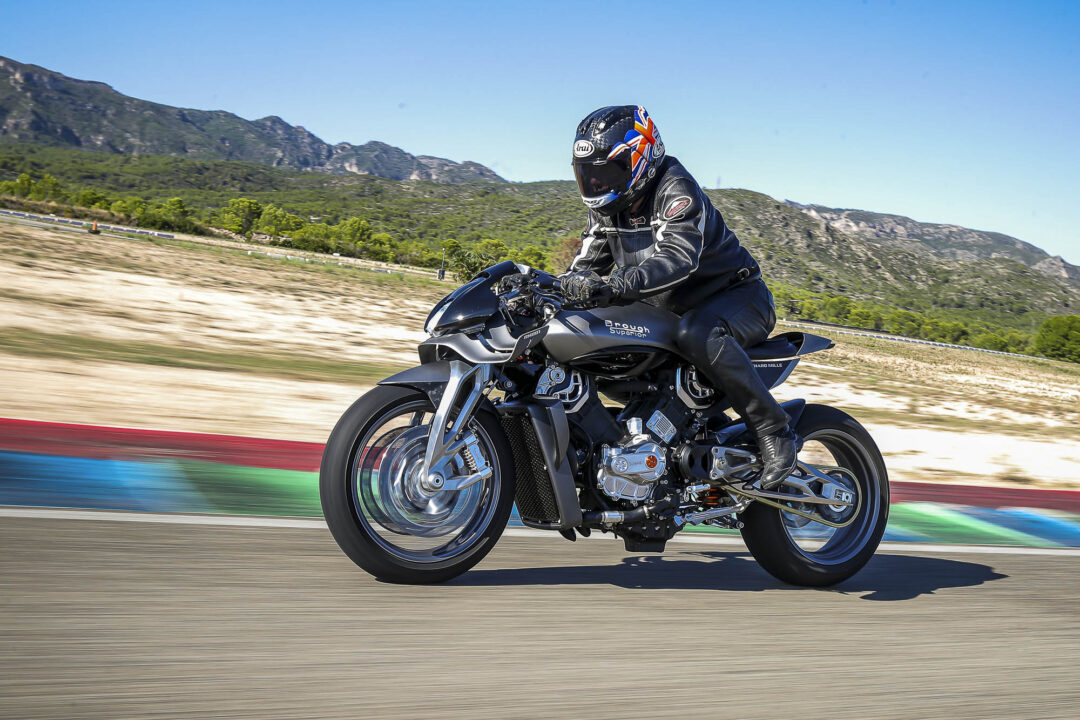
Indeed, clocking up the laps aboard the Richard Mille Brough while trying increasingly unsuccessfully to forget the €€€ mega price tag of the bike I was riding, brought a smile to my face thanks to the nicely mapped throttle response from the punchy, potent V-twin motor – well, so long as I kept moving along reasonably quickly, and didn’t have to cope with its low speed instability in some of Calafat’s tightest turns! There’s a strong yet smooth but completely insistent shove all the way through the revband from 4,000 rpm upwards to the nominal 10,500 rpm peak which in practice you won’t go anywhere near. Seeking a higher gear at 8,000 rpm via the six-speed CIMA gearbox’s slightly notchy but still precise shifter will see you right back in the meaty section of the uber-flat torque curve – and by the way, there’s no powershifter on this motorcycle, nor as mentioned any riding modes. This is pure old-school motorcycling, untainted by any electronic intervention – just like a Richard Mille watch! Anyway, the Brough motor’s wide spread of torque means you can cut right back on shifting gear – it’ll pull seamlessly from under 3,000 rpm all the way to eight grand, with zero undue vibration. In terms of the engine performance this would be a satisfying street ride with heaps of attitude, and a wide spread of torque – but only if it was lower, and quieter!
Why the Fior Front End Works
There are several effective benefits of the Brough’s wishbone fork design, including the separation of steering and suspension functions, so that the front suspension doesn’t freeze when you trailbrake into a turn, on the angle. There’s also superior suspension compliance, thanks to a fully-adjustable shock eliminating the stiction problems of any telescopic fork, plus inherent antidive, so reducing weight transfer and maintaining constant steering geometry, since the rigid upright only permits the wheel to travel up and down in a true vertical plane, even under the heaviest braking possible. It has zero fork deflection under braking, so no risk of the front wheel touching the engine, despite the steep rake and reduced trail. And there’s lower unsprung weight, too, leading to improved suspension compliance, and clean, uncluttered aesthetics. The wishbone fork also potentially offers immediate and subtle adjustment of all chassis geometry – trail, head angle, wheelbase, ride height and weight distribution, as well as easier fine tuning of suspension settings than is possible on even the most sophisticated telescopic fork. Add in the enhanced stiffness to weight ratio of a wishbone front end compared to a tele fork, and you can appreciate the reasons for the fanatical belief Claude Fior possessed in the worth of his design, which BMW engineers later recognised, and Thierry Henriette today incorporates in all new Broughs and Astons, including the RMB-01.
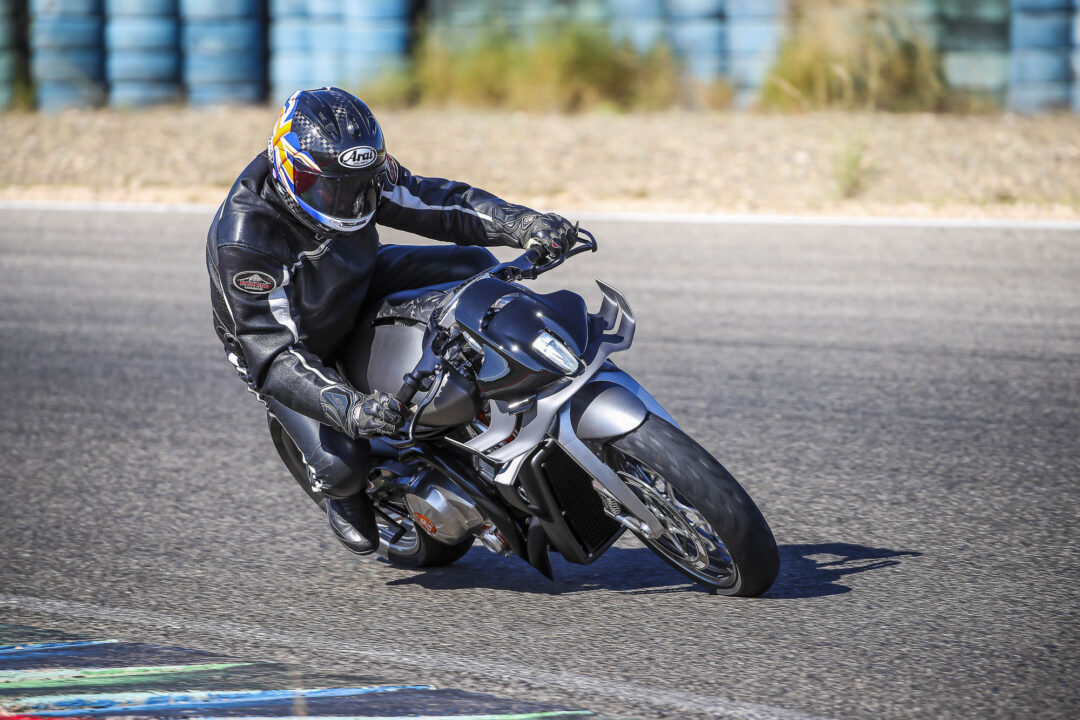
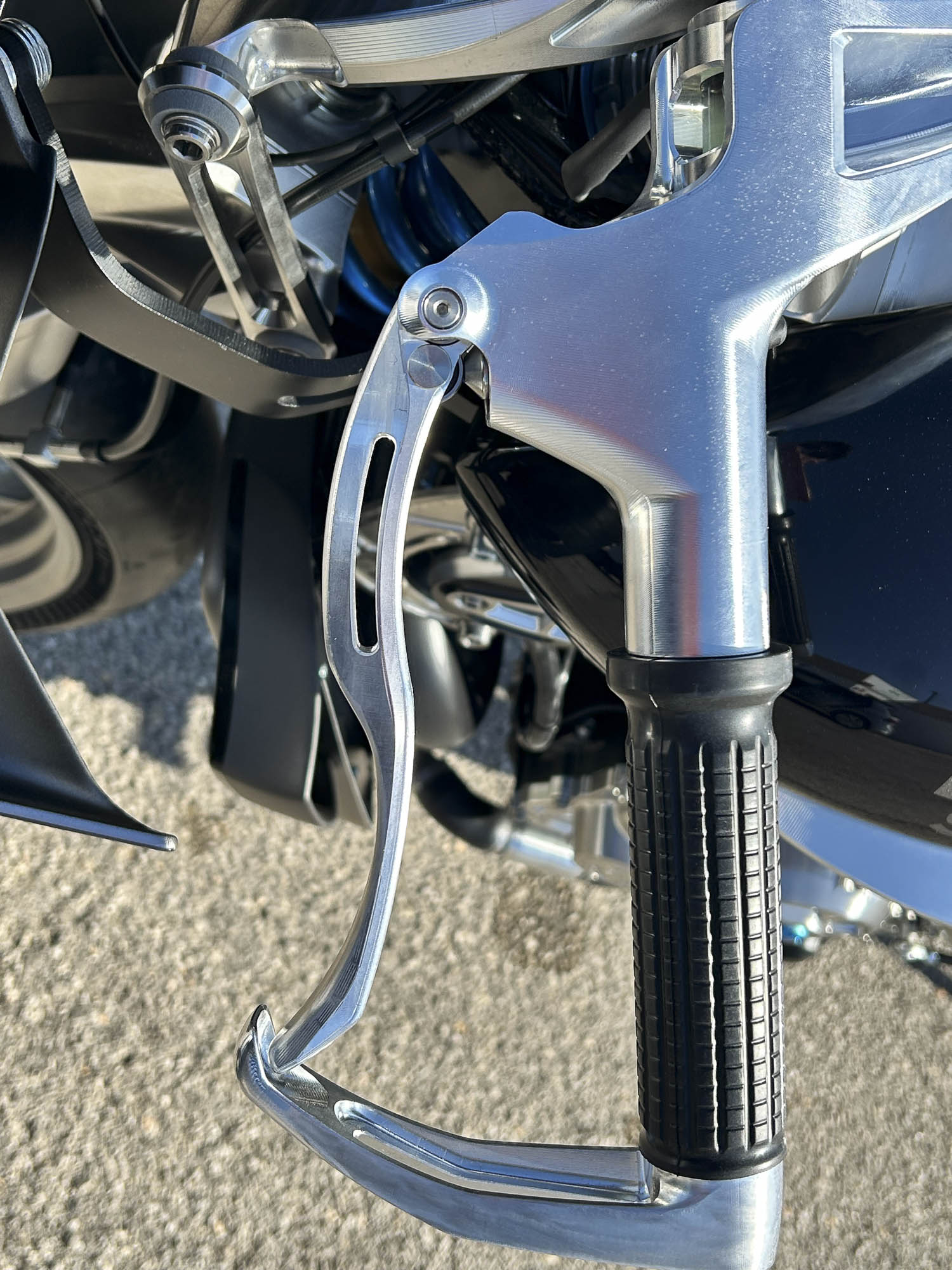
You can experience these benefits very quickly on the Richard Mille bike by the way it soon becomes second nature to trailbrake hard and late into a turn without fear of the fork freezing. However, once committed to that, you must never release the brake lever and then come back for more, because if you do the bike will sit up and head for the hedges via pronounced understeer – it requires a very precise, confident riding style. But Henriette has retained just sufficient front end dive – as you can – in the system to give someone unfamiliar with alternative front ends the sense that the bike is actually slowing when you squeeze the front brake lever hard. As it does, for that very potent Beringer brake package is really effective at stopping this fairly light package for a one-litre V-twin musclebike scaling 170kg dry, aided by the fair degree of engine braking still provided on the overrun by the Adler slipper clutch.
Verdict
Thierry Henriette and Richard Mille have produced a great-looking bike that almost surprises you by turning out to be rideable – if not very easily, and only at a racetrack without a noise meter, plus it’d be even better if it lost some height! But is the devil in the detail – as in, calling this bike the RMS-01 presupposes there might be an RMS-02 version that’s both street-legal and sanitised structurally, without losing any of the devastating allure which its joint creators have created here? Without dismissing it outright, Albert Castaigne won’t be drawn on this possibility, in which case there’s only one answer: Watch this space…!
Specifications
| Brough Superior RMB-01 | Specifications |
|---|---|
| Engine | Liquid-cooled DOHC 88° V-twin four-stroke, four valves per cylinder, composite chain/gear cam drive |
| Capacity | 997cc |
| Bore x Stroke | 94 x 71.8mm |
| Compression Ratio | 11.0:1 |
| Maximum Power | 130bhp @ 10,250rpm |
| Fuel System | Electronic fuel injection with Synerject ECU and twin 50mm Synerject throttle bodies (single injector per cylinder) |
| Transmission | Six-speed gearbox with hydraulic-operated Adler multiplate wet slipper clutch |
| Frame | CNC-machined aluminium and titanium frame with engine as a fully stressed chassis member |
| Front Suspension | Fior-type billet aluminium wishbone fork with articulated aluminium triangular links and Donerre monoshock, adjustable for preload and rebound, 85mm travel |
| Rear Suspension | CNC-machined exoskeletal aluminium swingarm pivoting in the crankcases, Donerre monoshock adjustable for preload, compression and rebound, progressive linkage, 113mm travel |
| Rake / Trail | 22.9° / 86.9mm |
| Wheelbase | 1,493mm |
| Front Brakes | Twin 320mm Beringer stainless steel discs, four-piston radial calipers, Continental MK100MAB ABS |
| Rear Brake | 230mm Beringer stainless steel disc, two-piston caliper, Continental MK100MAB ABS |
| Front Wheel / Tyre | Billet-machined aluminium wheel, 3.50 x 17in / 120/70 ZR17 Michelin Road 6 |
| Rear Wheel / Tyre | Billet-machined aluminium wheel, 6.00 x 17in / 200/55 ZR17 Michelin Road 6 |
| Seat Height | 808mm |
| Dry Weight | 170kg (50/50 weight distribution) |
| Price | €200,000 + tax (ex-factory) |
| Manufacturer | Brough Superior Motorcycles SAS, Toulouse, France |