


- Engineering genius: Bryan Thomas designed and built complete racing motorcycles—including castings, engines and gearboxes—from his workshop in Feilding.
- Factory-beating innovation: His hand-built desmodromic Norton recreated an engine the Norton factory itself built only twice, and his machines competed successfully in New Zealand and Europe.
- A true Kiwi legend: Admired by icons such as John Britten and Ken McIntosh, Bryan remained a humble engineer whose passion was solving mechanical problems rather than seeking recognition.
Gordon Campbell tells the remarkable story of Bryan Thomas, the quiet engineering genius from Feilding who hand-built motorcycles that the world’s greatest factories never could.
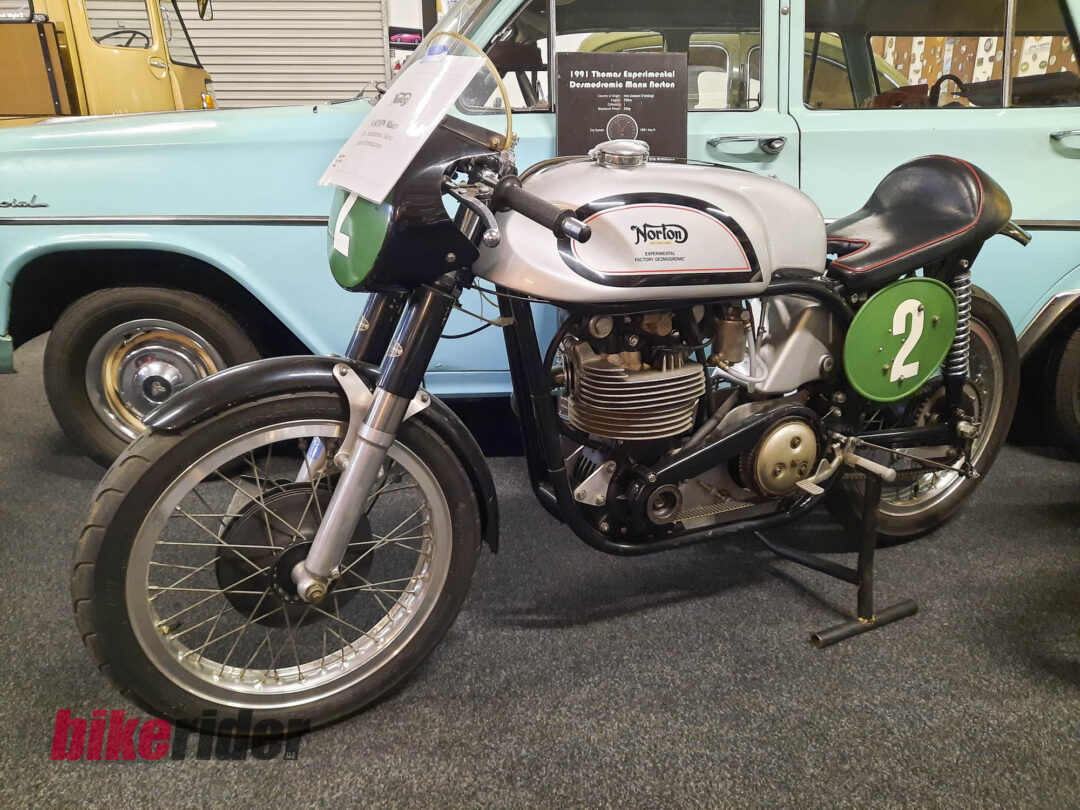
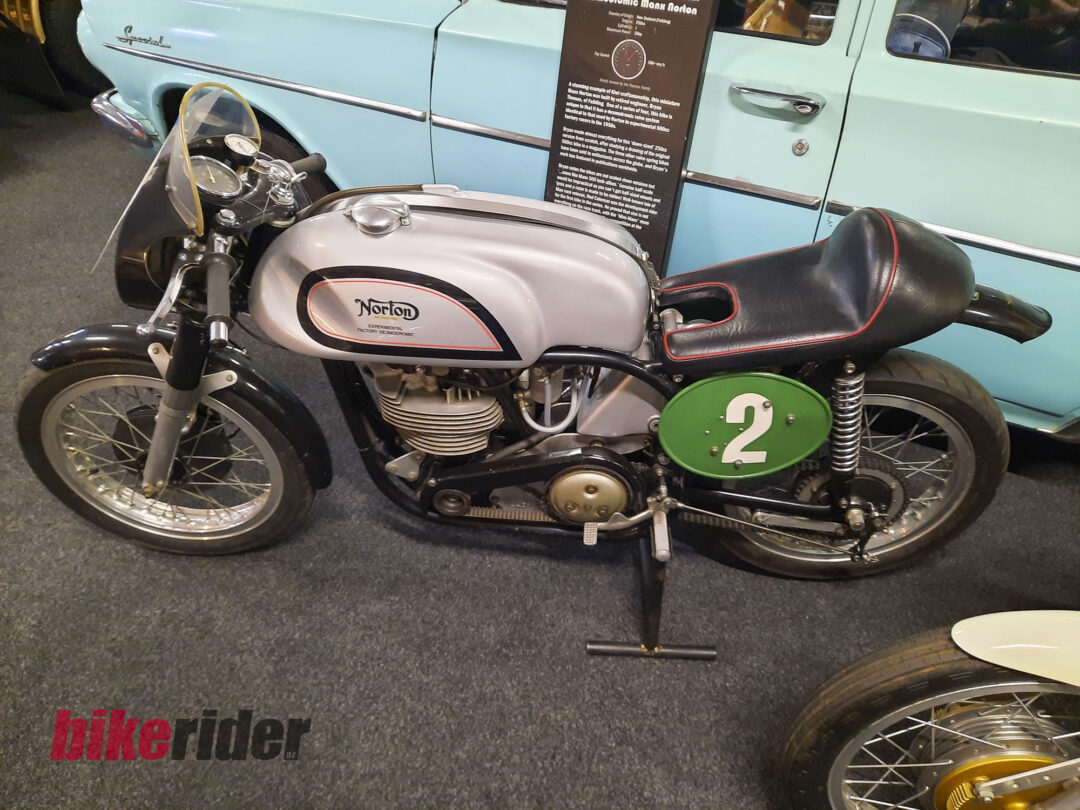
What do you do if you like small capacity motorcycles, usually nothing over 250cc, and you want a Norton single cylinder racer with desmodromic valve gear, but the factory made only two? If you were the late Bryan Thomas, a former precision engineer from Feilding who died in February 2026 at 93 years of age, you make one. From scratch.
He made it sound easy. “Right from my sketches through to producing wooden patterns, getting them cast and machining them”, is how he summarises the process.
Bryan wrote to Joe Craig, the legendary boss of the Norton racing team and the man responsible for the development of the Manx Norton, to ask for permission to make a desmo Manx engine. Craig said yes, and Bryan was on his way.
Heat it and see
A tricky part was working out what clearance to give the cam on top of the valves and the rockers underneath that return the valves to their seats. “To test the clearances, I assembled just the cam box at a set clearance and heated it in the oven to a running temperature and re-ground the rockers until it was within what I considered the right tolerance. I never had any bother with it running.” Maybe not how Fabio Taglioni did it when he designed the Ducati desmo system, but every bit as effective.
Maybe not how Fabio Taglioni did it when he designed the Ducati desmo system, but every bit as effective.
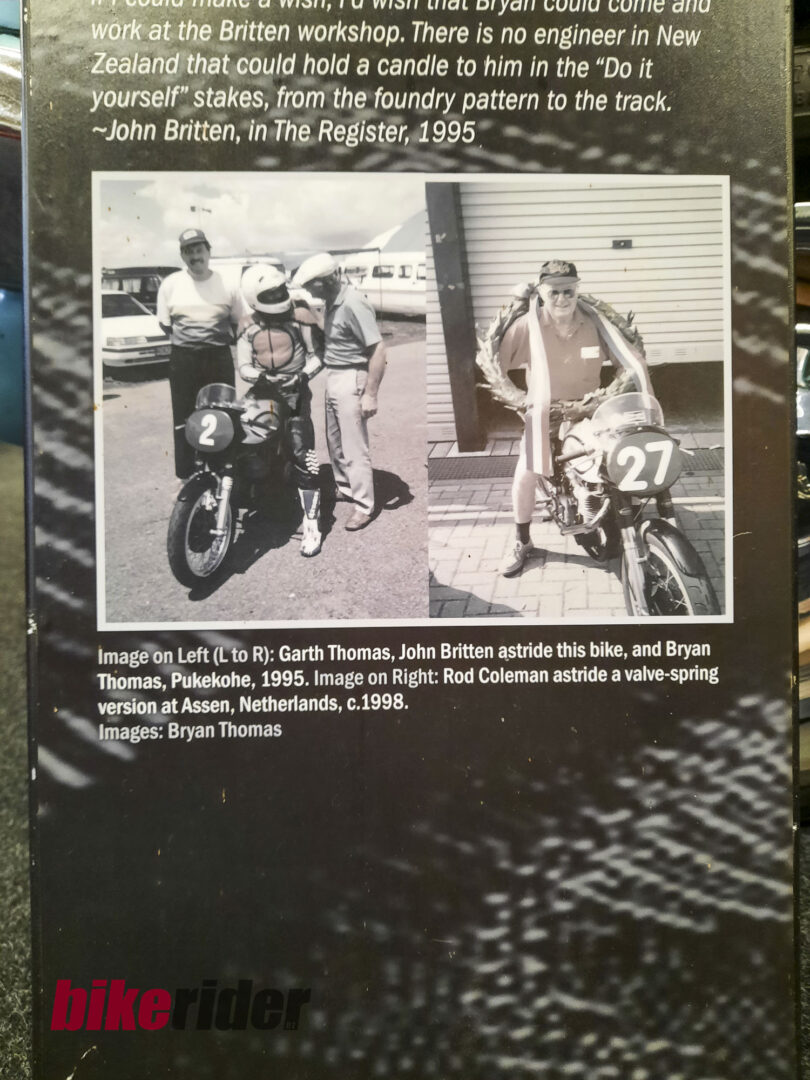
Bryan and his son Garth, an amateur engineer who inherited his father’s talents, built four Norton 250 race bikes, but only one had desmodromic valve gear, with Rod Coleman riding it for them at the annual Classic Racing Register meetings at Pukekohe. “Between each race meeting the motor was pulled down and I probably made two or three sets of cams, trying to get more and more power.” Garth takes up the story: “Every year we’d come along with modifications to the bike and engine, and Rod would say, ‘What have you done?’ Dad would say, ‘You tell me,’ and he’d come in and give a rundown on how the bike was performing, so Dad had something to take away and think about what he would improve for the next time.”
As Bryan explained, “It was development all the time, and it’s especially satisfying when you’ve thought of it yourself and you’ve proved it. I never had very many failures.”
There is a video on YouTube (below) where you’ll see the bike being run up on a dynamometer – as sweet-sounding a Norton single as you’ll ever hear, with nothing like the bark of a normal Manx.
Racing at Assen
Of the three valve spring Nortons, one went to Ferry Brouwer, a motorcycle racer/mechanic and larger-than-life character who founded Arai Helmets Europe. “Ferry got hold of us and said, ‘Come over and race at Assen in Holland, and everything will be paid.’ Once again, Rod Coleman was the rider.
“We were told not to use the petrol from the petrol pumps on the circuit because it would be old, and a truck was coming with drums of different types of fuel. They said, ‘What fuel do you want?’ We didn’t know, and they said, ‘Put that in,’ so we did, and do you think the bike would start! Normally, it would start after two steps in a push start. All we could do was put it down to the fuel.
“We finally received better fuel, the engine sparked immediately and ran perfectly, and Rod went on to win. It was just faster than a four-cylinder Works Honda. We left the bike with Ferry after the meeting, and it’s still being raced in Germany.”
Twin Cam Ducati
Garth owned a 250cc Ducati Mach 1 and, when his work took him to Australia for a couple of years, he left the Ducati with Bryan. He returned to find it now sported bevel-driven double overhead cams in place of the previous single cam. It’s since been converted into an all-out race bike.
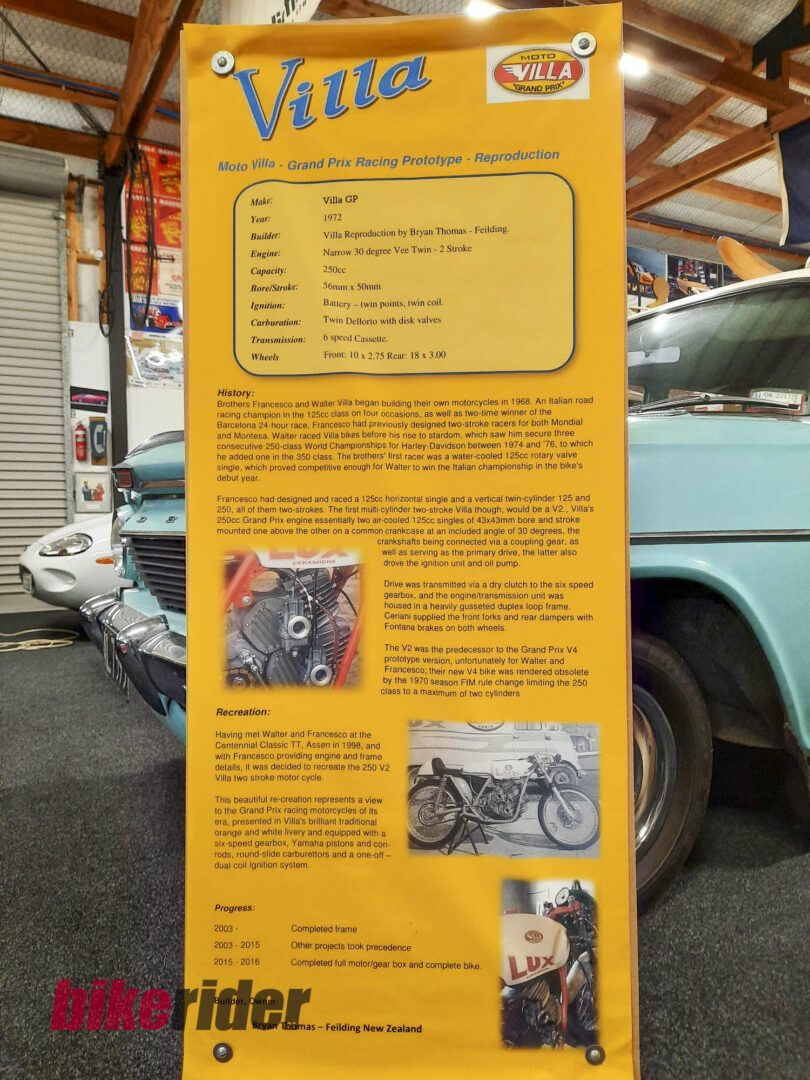
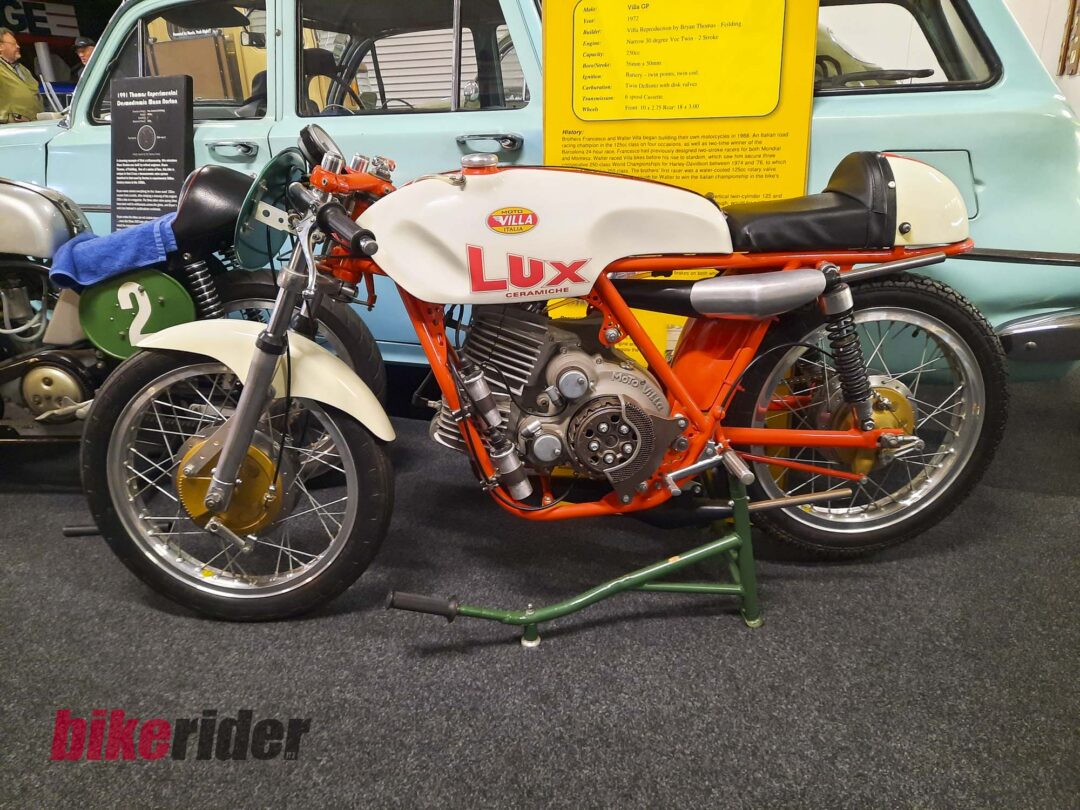
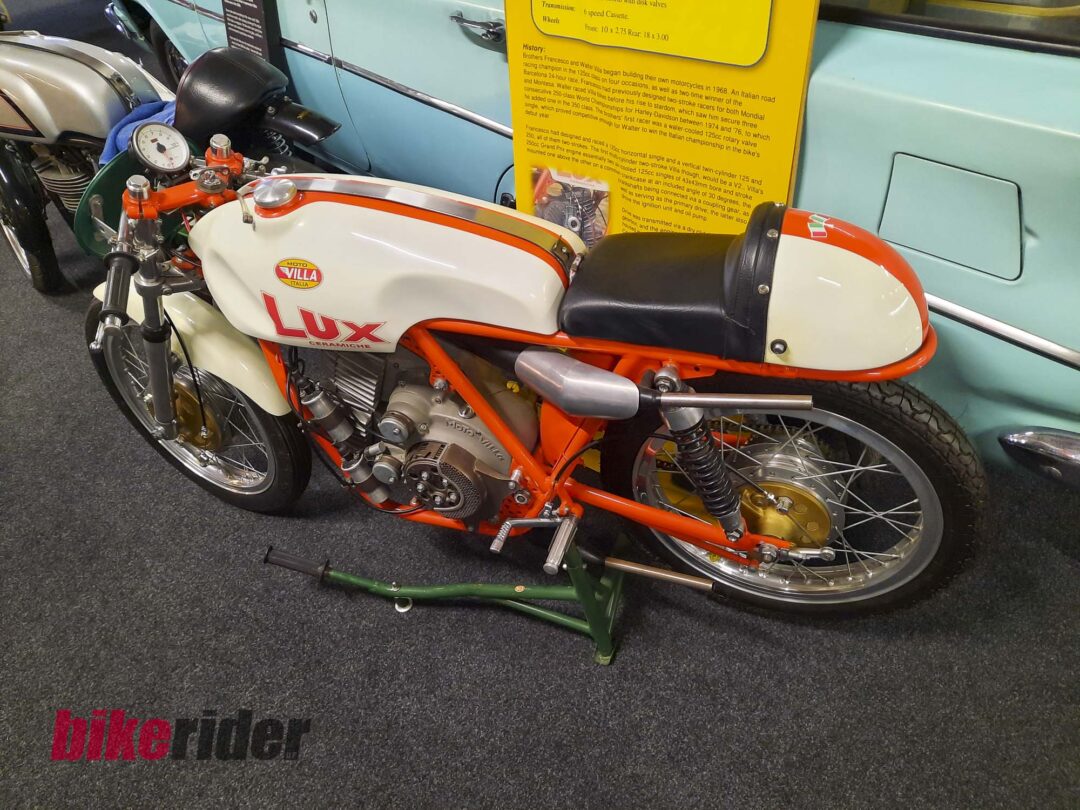
Even more challenging than the desmo Norton, was a 250cc Villa. Readers with a good number of years behind them may remember Walter Villa, a four-times world champion – three on Aermacchi Harley-Davidson 250s in 1974-76 and a 350 title as well in 1976. Prior to that, he’d run his own Villa 125 and 250 bikes with no great success.
Bryan chose the Villa 250 V-twin two-stroke to recreate. It was an unusual design, being two single-cylinder two-stroke engines mounted on one crankcase and geared together, like a Kawasaki KR-1 250 “tandem twin”. Even though the two cylinders shared a crankcase, each had its own rotary disc valve inlet system and chamber to compress the mixture before it was transferred to the combustion chamber. Like the other bikes he built, Bryan made and machined all of the wooden patterns, castings, and the gears and shafts for the gearbox that shared space in the extended crankcase, as well as the double-sided front brake. “There was a lot of work in that one,” said Bryan matter-of-factly.
Racing tiddler
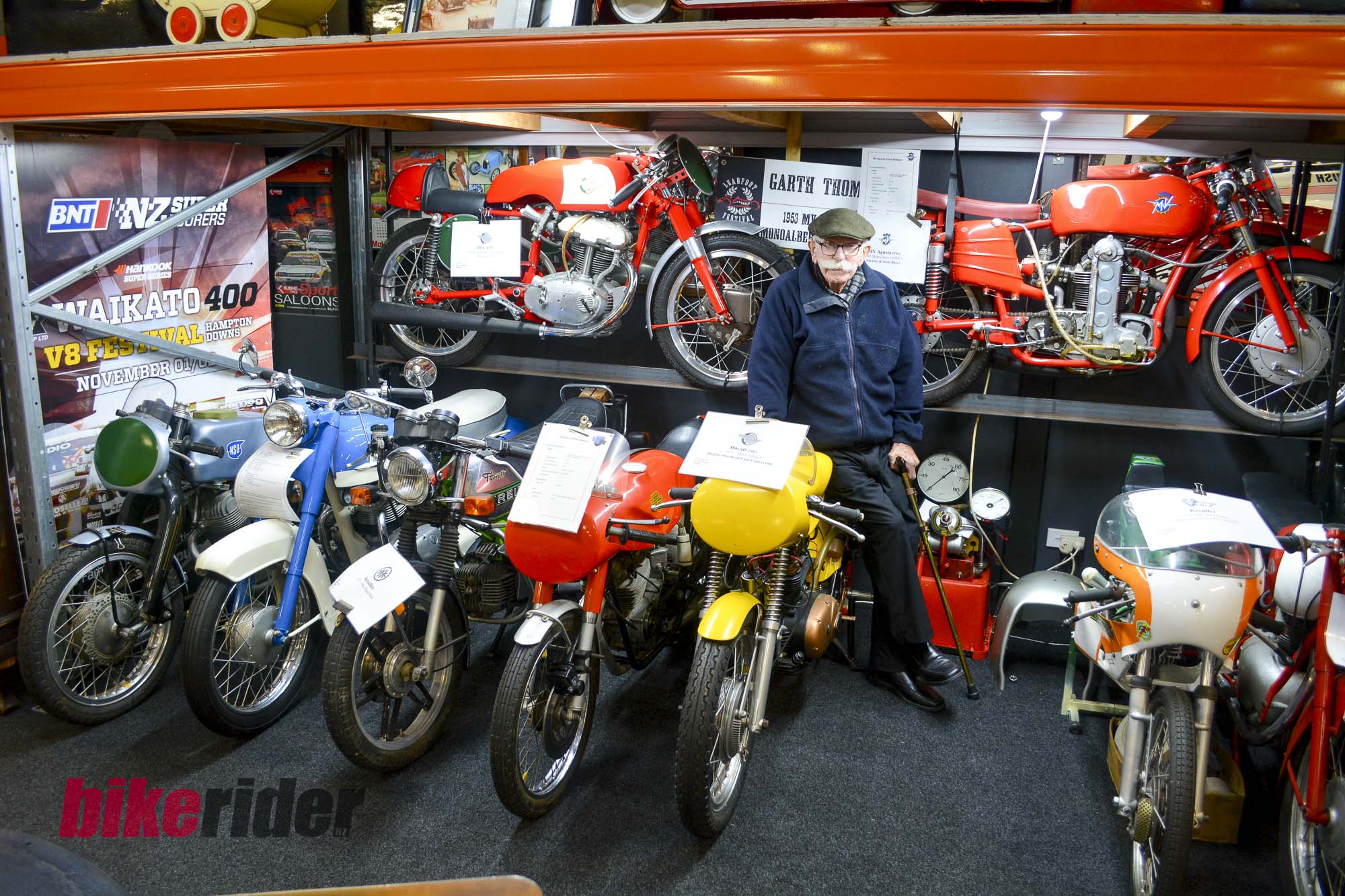
Not every bike in the Thomas collection was built by Bryan. There are two 50cc Kreidlers, an original road bike and a Thomas-built racer.
Kreidler pretty well owned the 50cc Grand Prix ‘tiddlers’ class in the 1970s and early ‘80s after several successes in the early ‘60s. In 1973 it was a one-two for Kreidler and they filled nine of the top ten places. In 1974 the first six places in the championship were filled by Kreidlers
As Garth says, “We bought a Kreidler road bike and thought we’d make it into a racing bike, but it would be a waste, because it’s a beautiful, original little road bike. We got two Kreidlers from person near Levin and one was a sports model that we used to make the racer.”
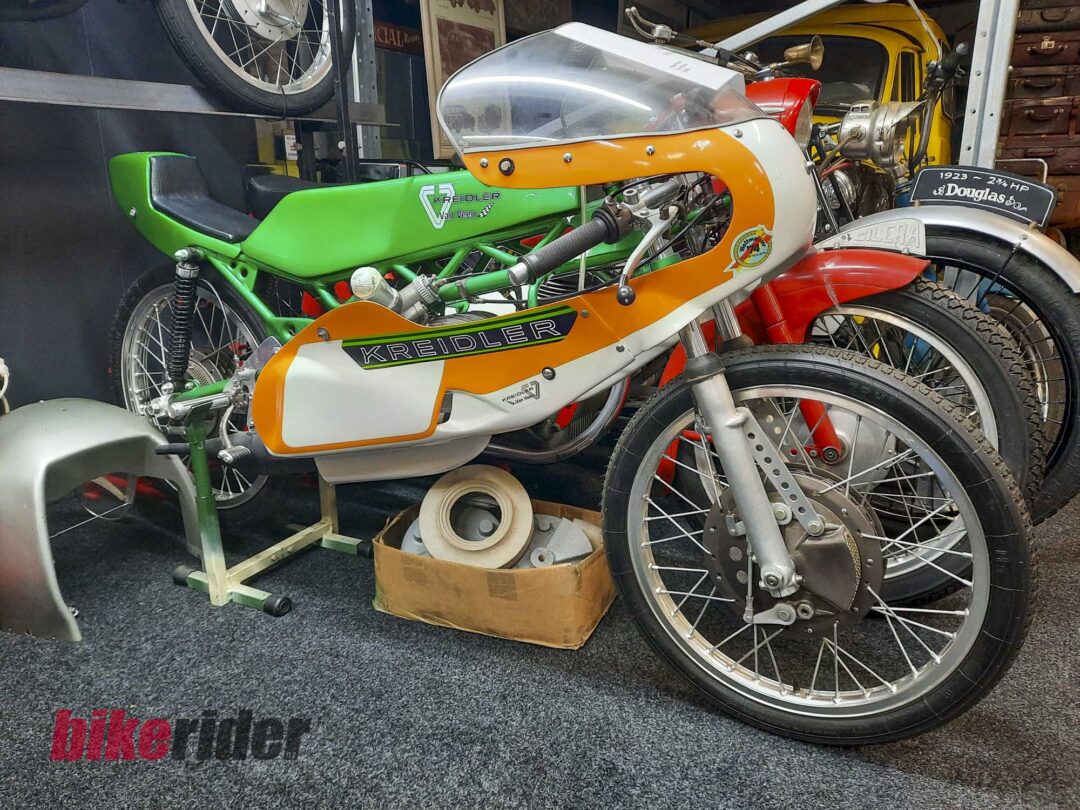
As Bryan explained, the frame is very unusual. “It was sort of a normal frame, but there were extra main tubes and zig-zagged tubing between them. A man near Melbourne had one and gave us the dimensions to make the frame. Another Aussie had a brand new set of Ceriani forks and wheel and brake for a Kreidler.”
Garth was working for Ford Motor Company then and used to trip around the world. “We got all the other little bits from the racing guys in the UK, and I brought them back in my suitcase.”
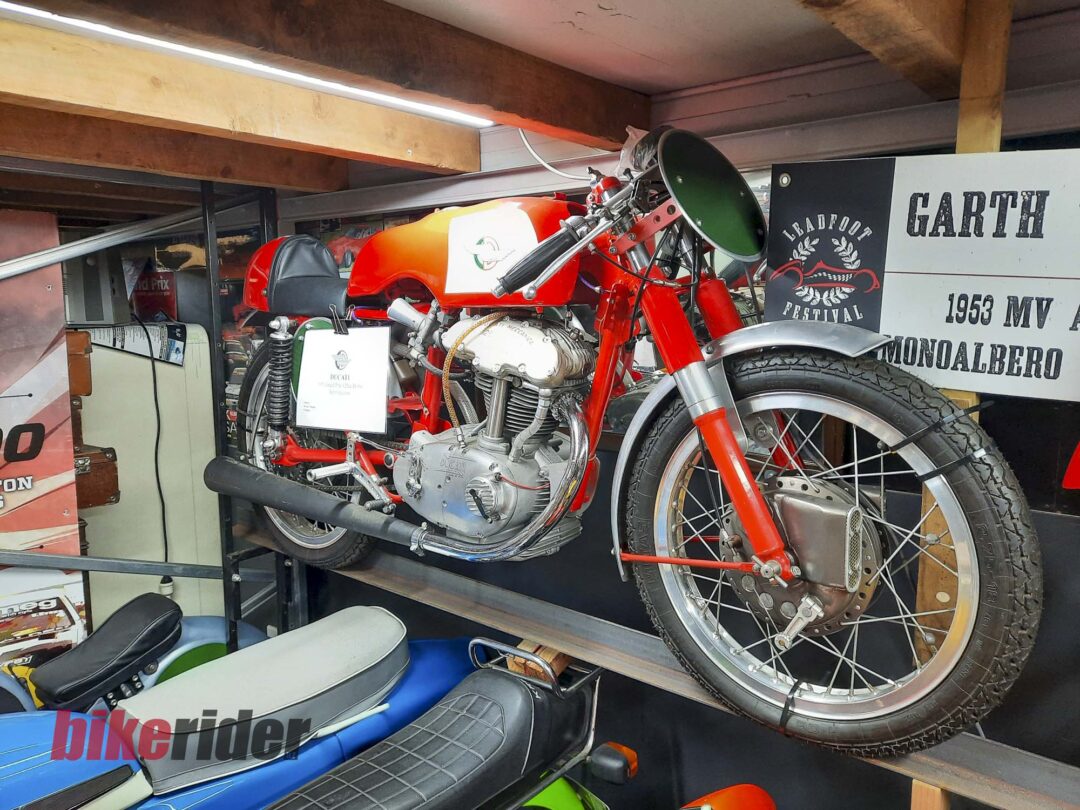
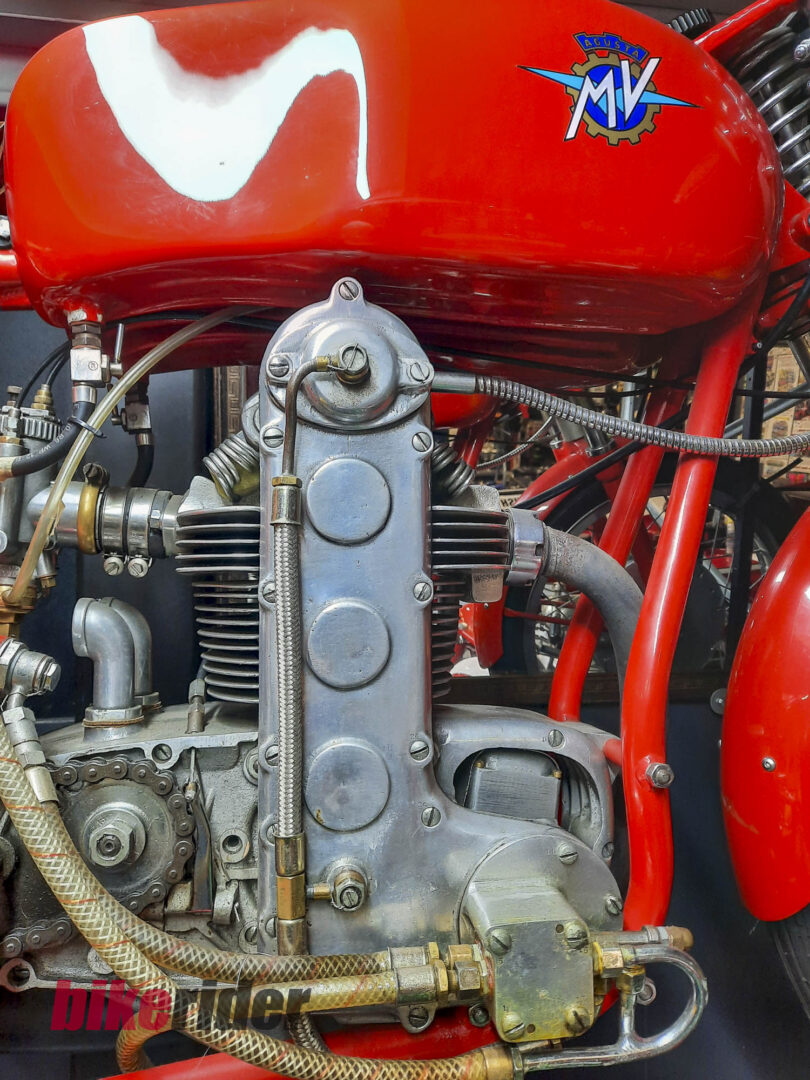
An NSU Sport Max is part of the collection, mostly because Bryan was fascinated by its unusual overhead camshaft drive that consists of a pair of eccentrically driven con rods. A jewel in the collection is a 1953 MV Agusta 125cc Monoalbero (single overhead cam) Grand Prix bike, a factory racer for privateers. It was last ridden, by Garth, at Rod Millen’s Leadfoot Festival hill climb event at Hahei. Understandably, it’s off-limits for any modifications.
A meeting of like minds
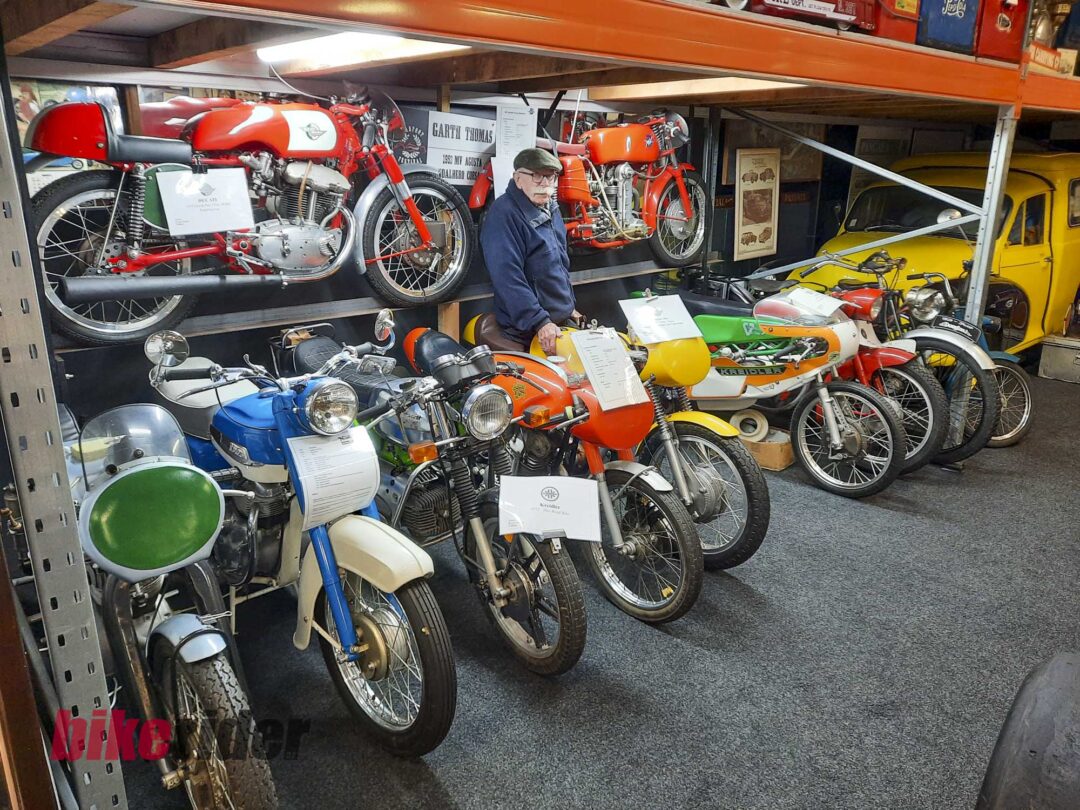
It was probably inevitable that Bryan would get to know people like Ken McIntosh and John Britten. Bryan did some work on Ken’s Jawa racer, but it was his introduction to John Britten that really was a meeting of like minds. “John was keen to ride the 250cc Norton at Pukekohe, and he came back all smiles, so much so that we went to Christchurch to see what he was up to. We spoke to the chaps doing a lot of the work. Like me, he didn’t make everything himself, he had a few staff there.
“John and I had a lot of discussions. He was just so good to get along with. He was a great chap and apart from his riding and the bike business, there were the design things he did around Christchurch.”
Bryan felt privileged to have watched John race at Daytona. “It had a steep banked area, and I don’t know how many miles it was around, but it came off the radius there as the circuit flattened out so you didn’t need the banking, and they could keep going around the circuit. As John came off the radius he was going so fast that he was riding on the back wheel right through the windy bits. He was lapping so fast that we heard they evidently didn’t like local riders being beaten so they altered the track to slow him down.”
Not a racer
Despite his amazing work with motorcycles, Bryan is not a motorcyclist. “I raced an old Velocette MOV once, at Ōhakea. I was never a rider.” One of the main attractions for Bryan as an engineer was that motorcycles were small and easy to work with. “The first one I altered was a little Triumph 175, and I wanted a 125, so I made a set of flywheels so it was 125. That was the start. Then I bought a 350cc AJS 7R racing machine and made that into a 250. Someone really wanted it, so I sold it. It was just that I loved the mechanical side of designing something and then seeing if it worked. And what didn’t work is a bigger learning curve, because you learn by it.”
Along with his motorcycle engineering wizardry are a number of machines Brian built to support the development of the race bikes – machines such as a cylinder head flow bench designed by Garth and built by Bryan, used to experiment with wooden pattern designs prior to the final head designs and castings. That was only the beginning, as there were always several flowed head iterations after the bikes had run, to eke out that final little bit of extra performance. Brian designed and built a dynamic balancer to balance bike crankshafts, and a dynamometer to test motorcycle and car engines.
Several overseas friends of Bryan’s asked him to restore their factory race bikes. Two he mechanically restored were a 1953 MV Agusta 125 Bialbero (DOHC) and a 1955 Ducati 125 DOHC factory racer, which Bryan copied for his replica. He cast and machined direct copies of the original head and cam arrangement for the replica.
The Wizard of Feilding
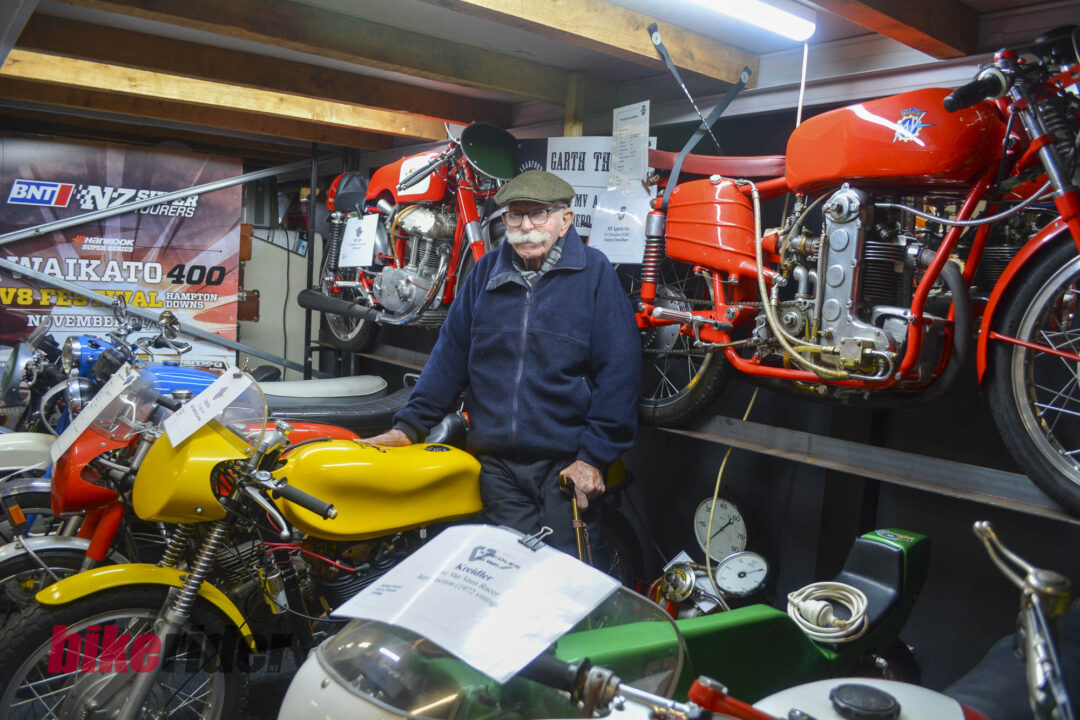
Right up until Bryan passed away, his mind was no less sharp or active than it ever was, and he hadn’t lost any of his enthusiasm for engineering challenges. An Australian classic motorcycle magazine called Bryan “The Wizard of Feilding”. That’s an accurate description, as his engineering abilities really did verge on the magical.