


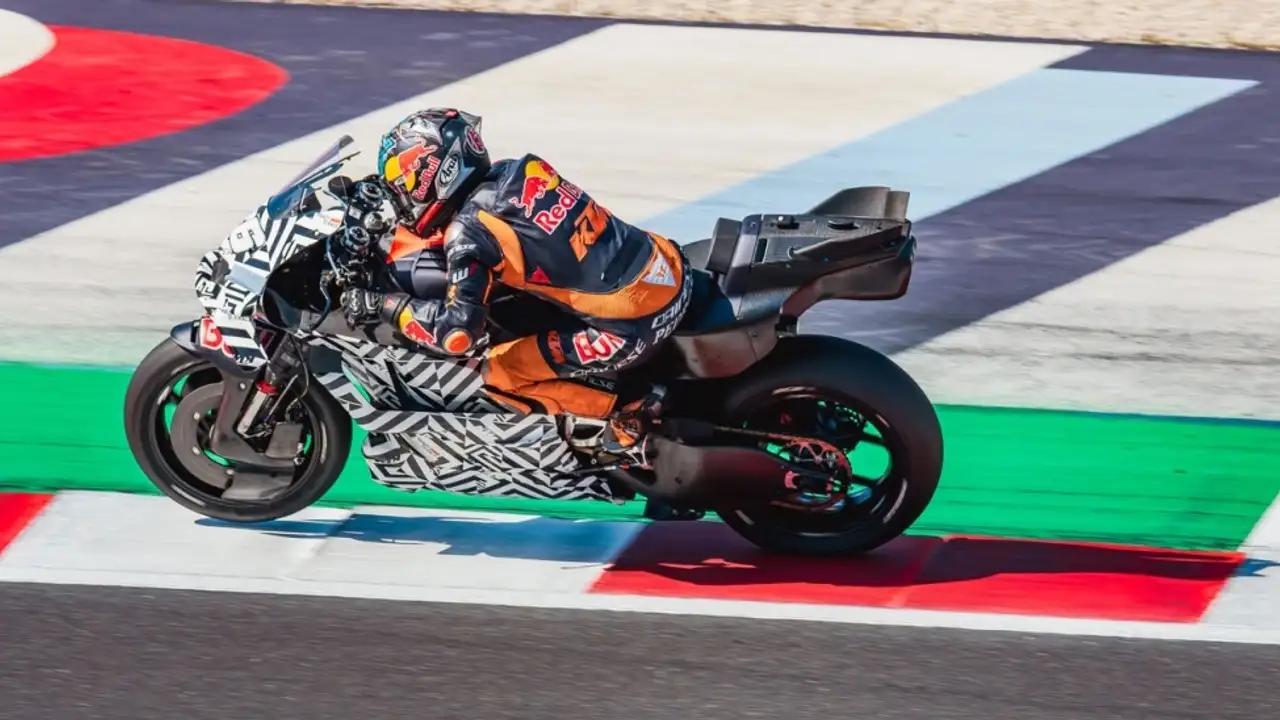
MotoGP’s transition to 850cc machinery for 2027 is already producing some fascinating technical developments, and the latest KTM prototype suggests the Austrian manufacturer may have taken inspiration from one of Aprilia’s most innovative aerodynamic solutions.
During the recent Misano MotoGP test, where manufacturers continued development work on next season’s 850cc prototypes, KTM rolled out a machine featuring a distinctive air intake arrangement that bears a striking resemblance to the system currently used by Aprilia on its RS-GP. While similarities between rival designs are nothing new in Grand Prix racing, the appearance of a comparable concept on KTM’s prototype highlights just how quickly successful innovations can spread through the paddock.
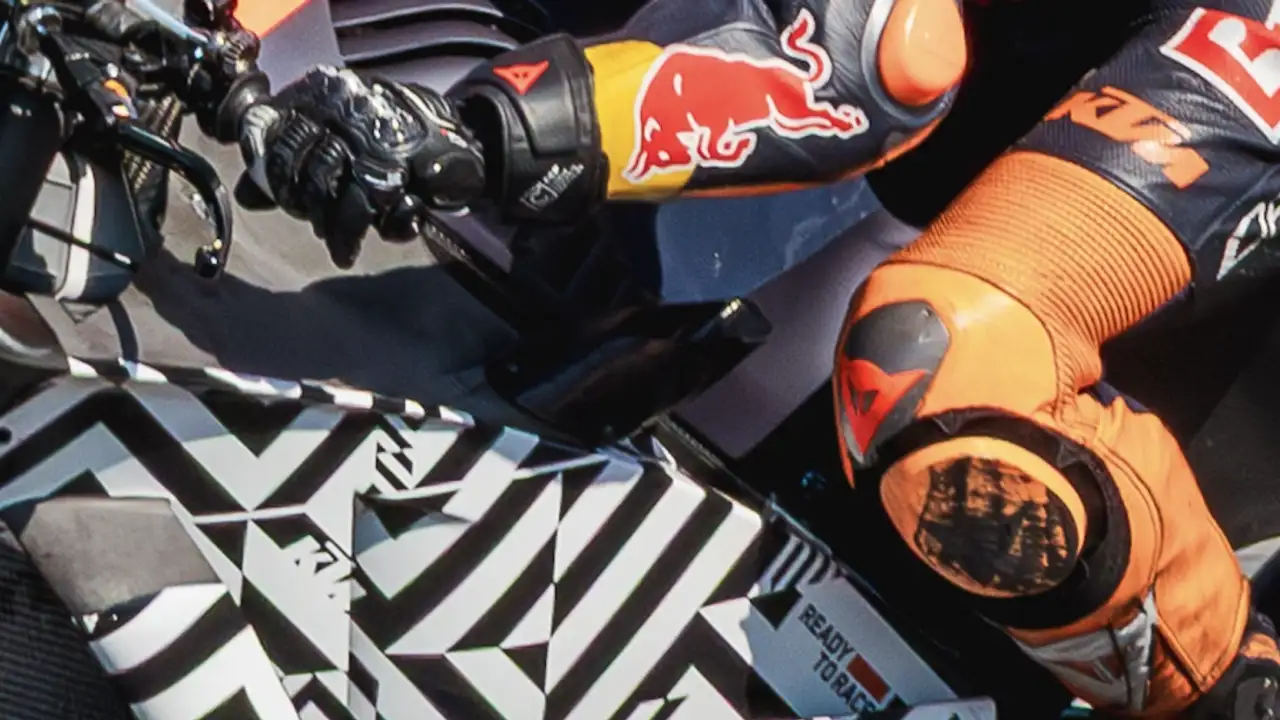
Aprilia first introduced its revised intake design earlier this season, drawing inspiration from Formula 1’s famous F-Duct concept. Originally pioneered by McLaren on the MP4-25 during the 2010 Formula 1 campaign, the F-Duct used carefully managed airflow channels to reduce aerodynamic drag and increase straight-line speed. By altering airflow across the rear wing, the system reportedly delivered gains of up to 10km/h on long straights.
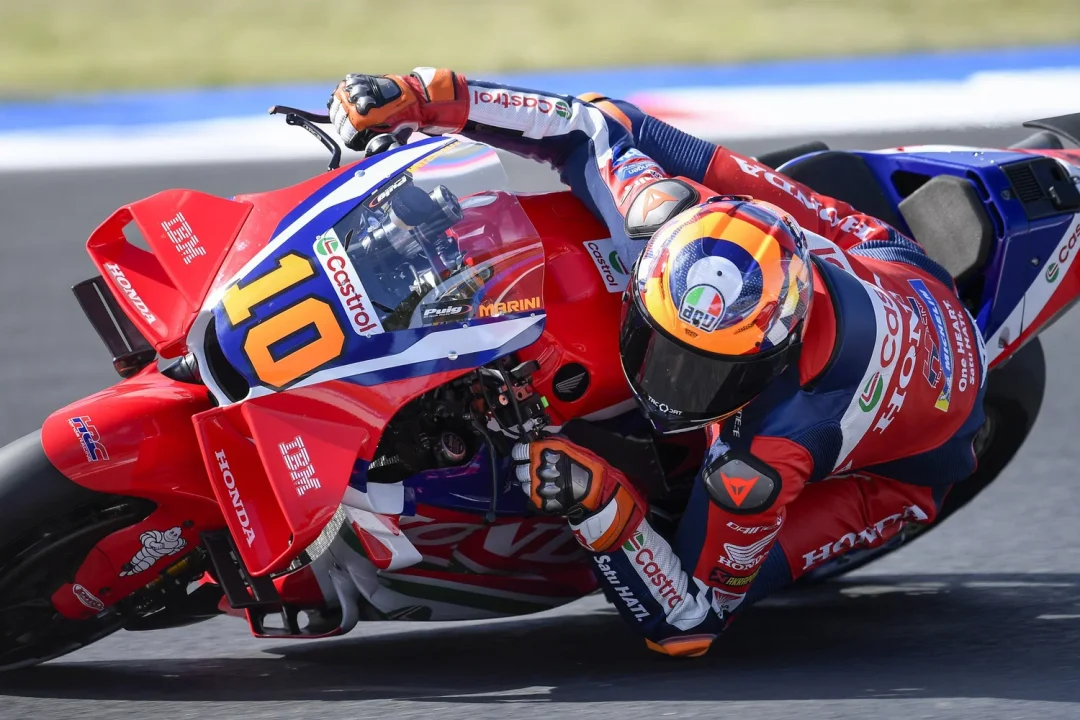
The MotoGP interpretation works differently but follows a similar principle. On the Aprilia RS-GP, small ventilation slots are integrated into the front fairing around the central air intake. Additional openings positioned near the rider’s forearms can be covered when the rider tucks in behind the screen on a straight. This changes the airflow characteristics around the fairing, helping reduce drag and ultimately improving top speed.
Given the competitive advantage offered by even small aerodynamic gains, it was perhaps inevitable that rival manufacturers would begin exploring similar ideas. KTM appears to be the first to do so publicly, with both of its 850cc prototypes at Misano featuring a comparable intake arrangement. The bikes, ridden by experienced test riders Pol Espargaró and Dani Pedrosa, carried air intake structures positioned in a broadly similar area to the Aprilia system, although the execution appears noticeably different.
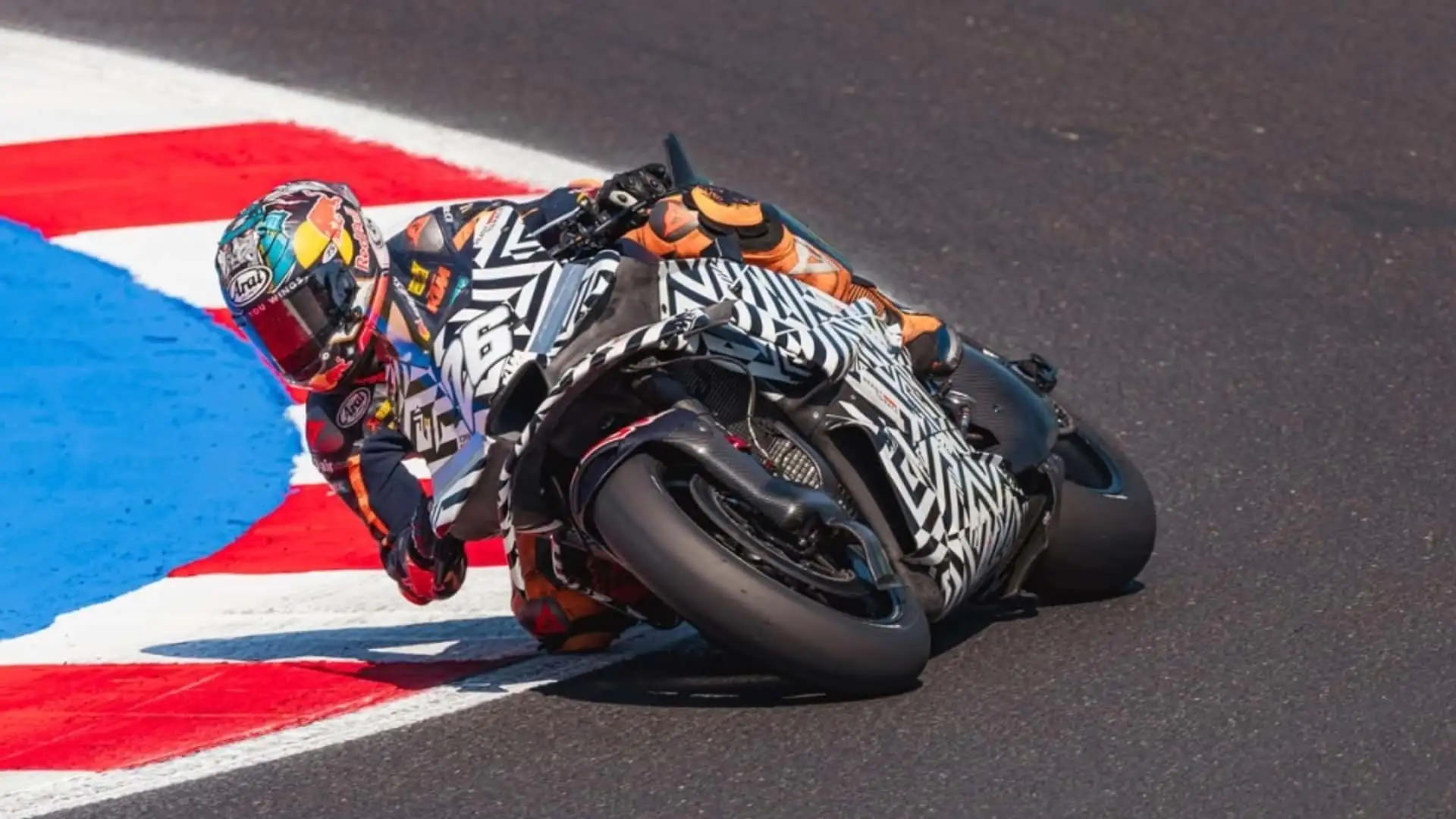
Unlike the Aprilia design, KTM’s version seems to sit further away from the fairing surface and uses a different shape altogether. Whether the system functions in exactly the same way remains unclear, but its presence suggests KTM is actively investigating alternative airflow management solutions as MotoGP prepares for the next generation of regulations.
MORE ARTICLES

The timing is significant. MotoGP’s upcoming 850cc era will bring tighter restrictions on aerodynamics, forcing manufacturers to search for innovative ways to maximise performance within a narrower rulebook. That makes pre-season testing particularly important, as engineers gather data and evaluate concepts before regulations lock in future development paths.
With another private test scheduled at Brno, teams are expected to continue refining both engine and aerodynamic packages behind closed doors. While much of that work will remain hidden from public view, KTM’s apparent exploration of Aprilia-inspired aero concepts demonstrates that the battle for performance in MotoGP’s new era is already well underway.