


- 2000km completed in 48 hours across the South Island of New Zealand
- Extreme wind and rain tested riders throughout the event
- A true endurance rally combining navigation, planning and resilience
Relentless weather, tough roads and 2000km in 48 hours — TT2000 2026 delivered a true test of endurance riding. Dave Britten fills us in on what was his 20th TT2000 and possibly the toughest yet…
TT2000 QUICK FACTS
Distance | Minimum 2000km
Time Limit | 48 hours
Format | Checkpoint-based rally
Focus | Endurance, navigation, planning
Location | North & South Island routes
Imagine this: it’s daylight, but only just, and the sky’s so gloomy that everything looks bleak and grey. The wind is blowing gusty and strong. Strong? I’ve ridden in plenty of strong winds, and this was as intense as it gets. Oh, and it was raining. Raining? Pouring, more like. And the road was shiny and slippery. We were riding 50km from near Invercargill to Fortrose in one direction and then the same 50km back. A man should have stayed in bed…
Or not!
Why We Ride It
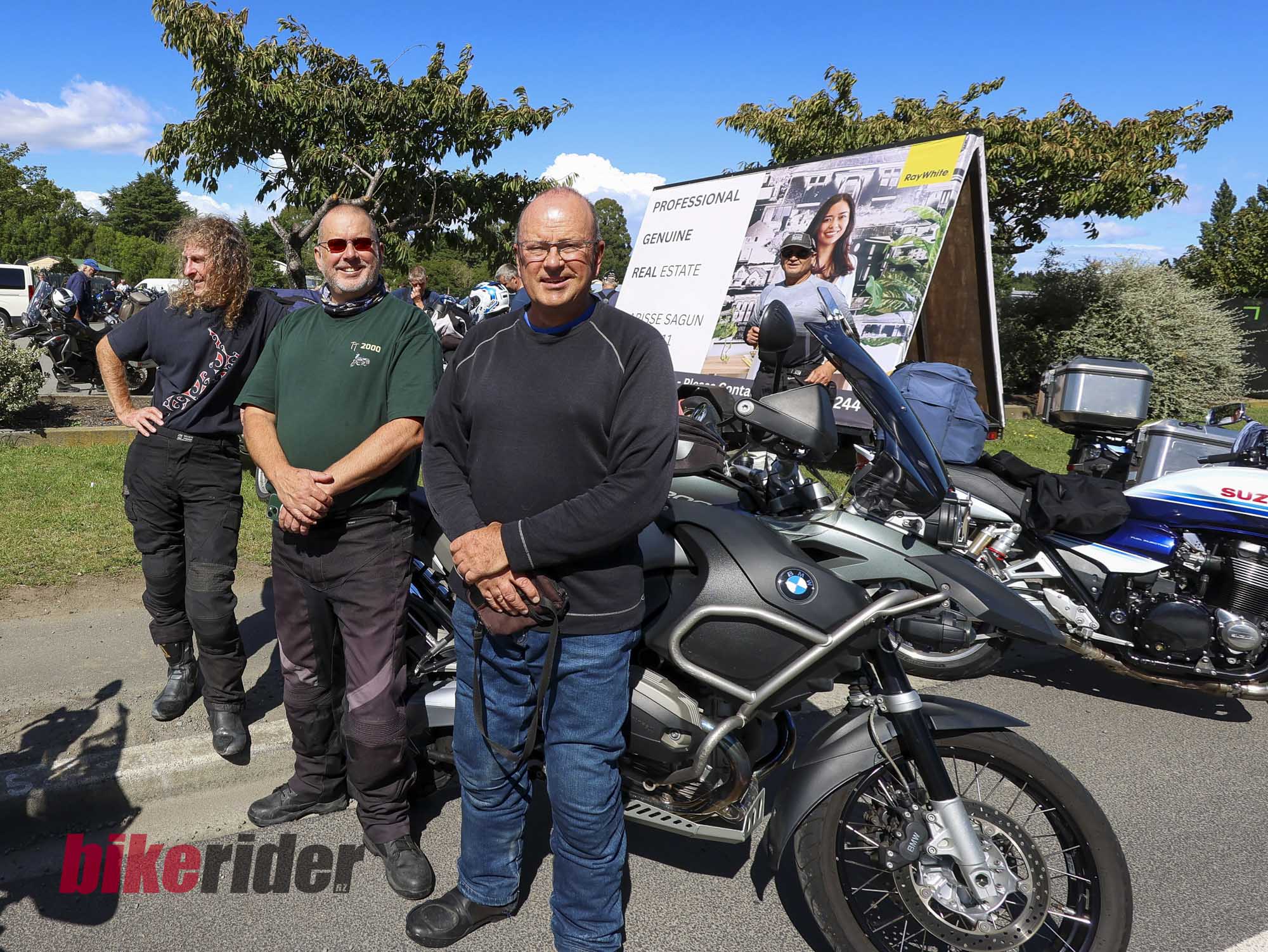
Why would we be taking such risks in those most dangerous of conditions? The chance of being blown off the road and into the scrub was very real. Motorcycling should be fun, and this was no fun at all. However, the annual TT2000 road rally is all about dealing with whatever happens over the 48 hours in which you must ride a minimum of 2000km and visit sufficient checkpoints to gain the points needed to be deemed to have completed the rally, and we wanted to be part of that.
The 2026 TT2000, run by Shannon McDougall and his team, was the 18th held. Although I missed the first (2009) event organised by the late Mike Hyde, I have ridden in all 17 after that, and, having ridden three of them twice, this was now my 20th TT2000.
MORE ARTICLES
20 Years of TT2000
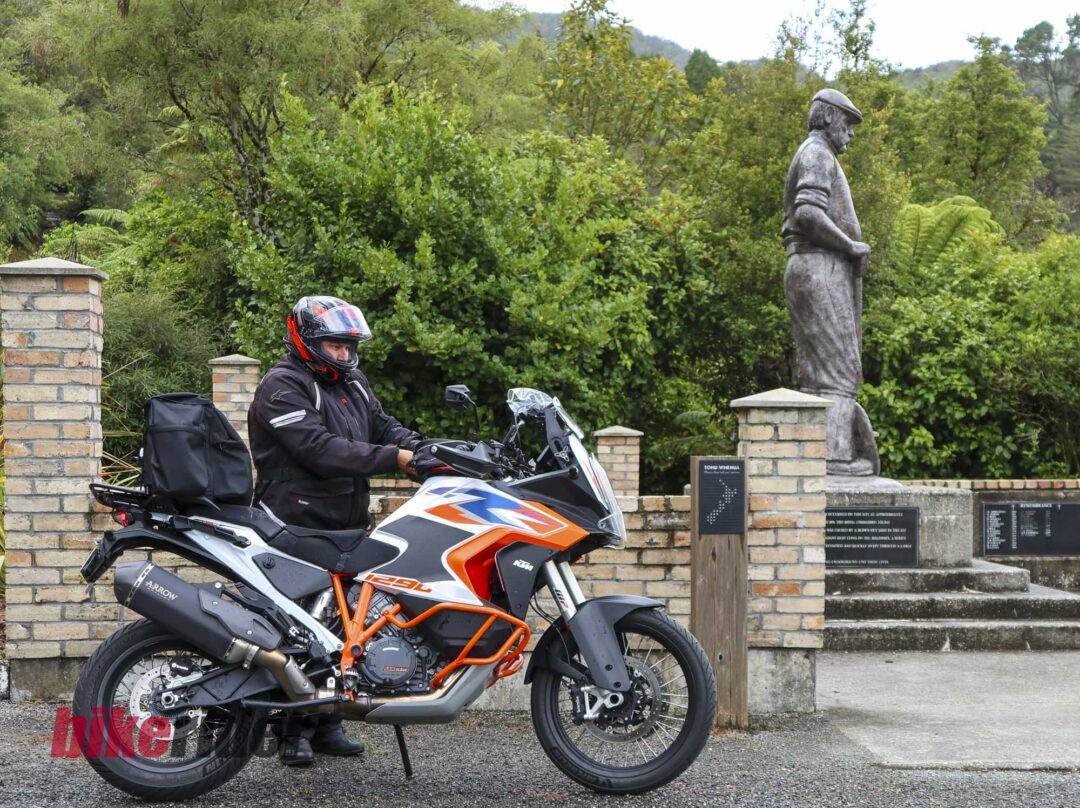
Eighteen of those twenty have been on my BMW R1200GSA, one on my Honda TransAlp 750, and one on Yamaha NZ’s XT1200Z. This year’s theme was based around memorials, statues, and memories. Riders of the South Island route (and by far the majority of those participating) had a choice between their own Monumental Quest or to follow a compulsory 20-checkpoint Heritage Trail, the latter of which my usual riding companion, Brett and I followed, and we picked up all five mystery checkpoints as well.
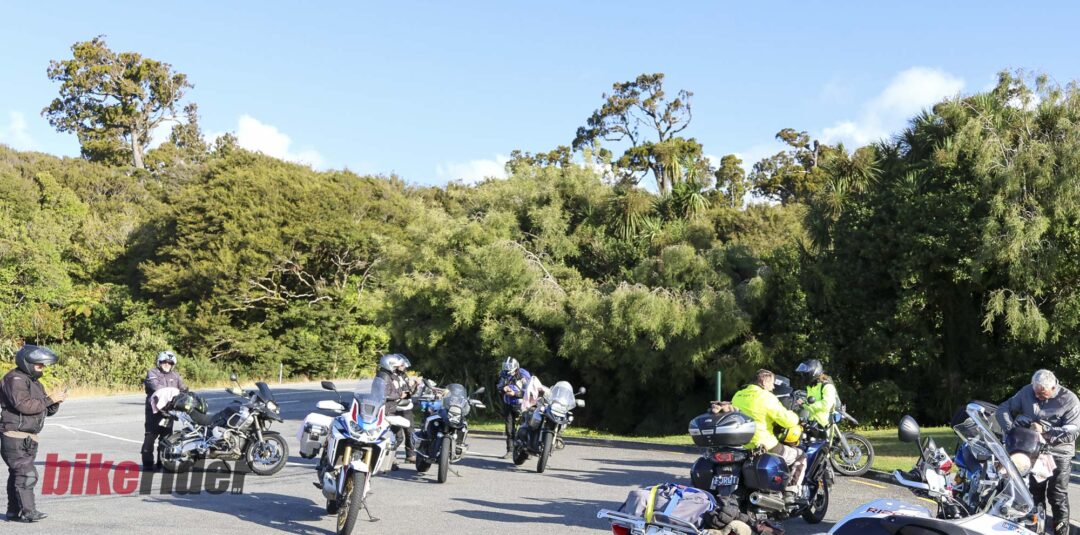
With almost 200 entrants, we’d departed the Yaldhurst Hotel (Christchurch) on Friday at noon, and we had to be at the finish at Totoiti School (Milton) by Sunday at noon. The hotel’s car park was a sea of colour as the bikes and riders prepared to leave once the riders’ briefing was over. The sun was shining, and there was no wind at all. No wind at all, that is, until only a few minutes after the off, the Canterbury nor’wester made its presence felt, and we had a stiff breeze as we crossed Porter’s and Arthur’s Passes heading to the West Coast.
West Coast Wake-Up Call
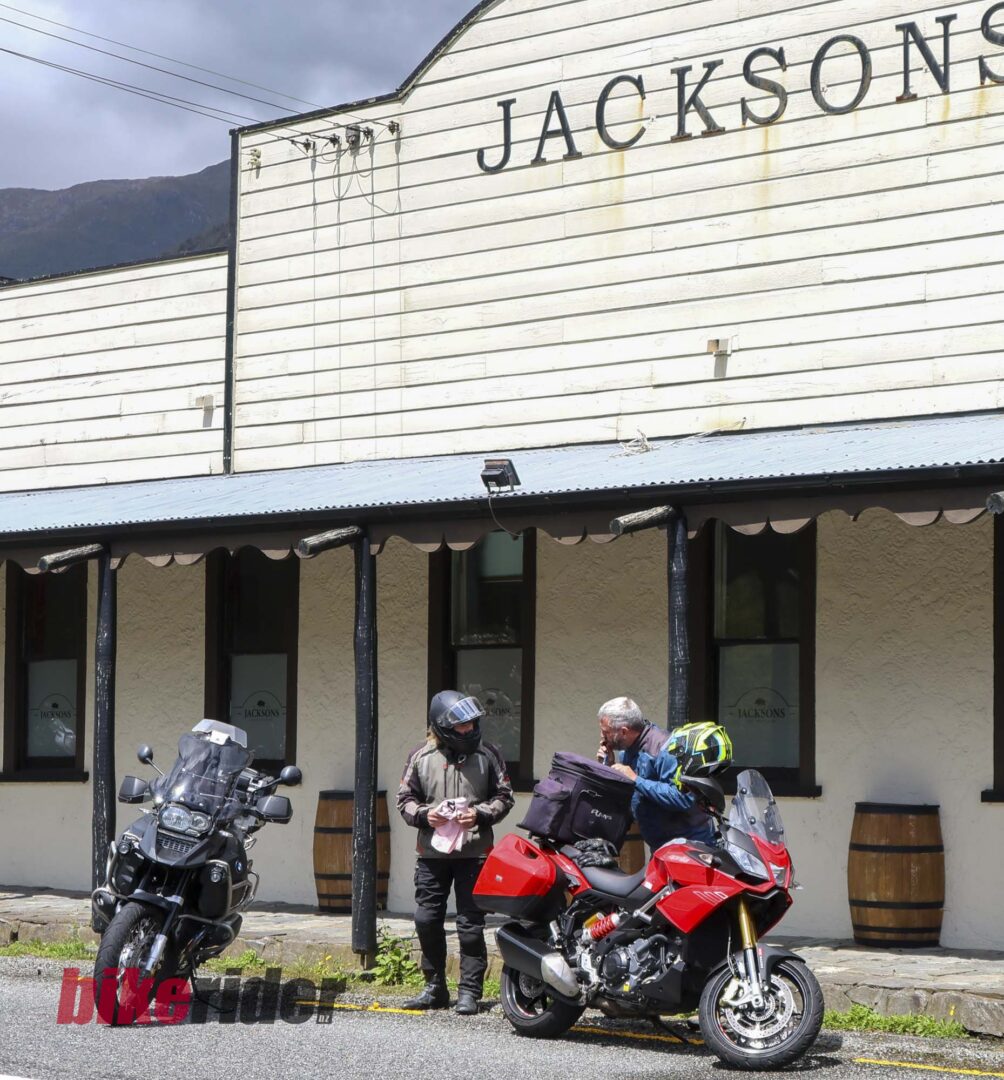
Brett and I had our wet weather gear on standby (only a mug wouldn’t have included the weather forecast in their planning) with an agreement that at the first sign of rain, we’d stop and suit up. Those first spots fell near Bealey as we approached the village of Arthurs Pass, but we could see past the clouds to clear weather over the Main Divide. The second checkpoint was at Jacksons, and once there, Brett asked if I wanted to prepare for the probability of rain ahead by adding a waterproof layer while we were stopped taking the necessary photo of proof of arrival. Not wishing to lose the few minutes it would take to do so (time spent in the pits being average speed diminished), I suggested that the obvious black clouds ahead would not be dropping rain on our route past Lake Brunner and so at the next checkpoint at the Brunner mine disaster memorial, near Taylorville on the banks of the Grey River, we could decide there.
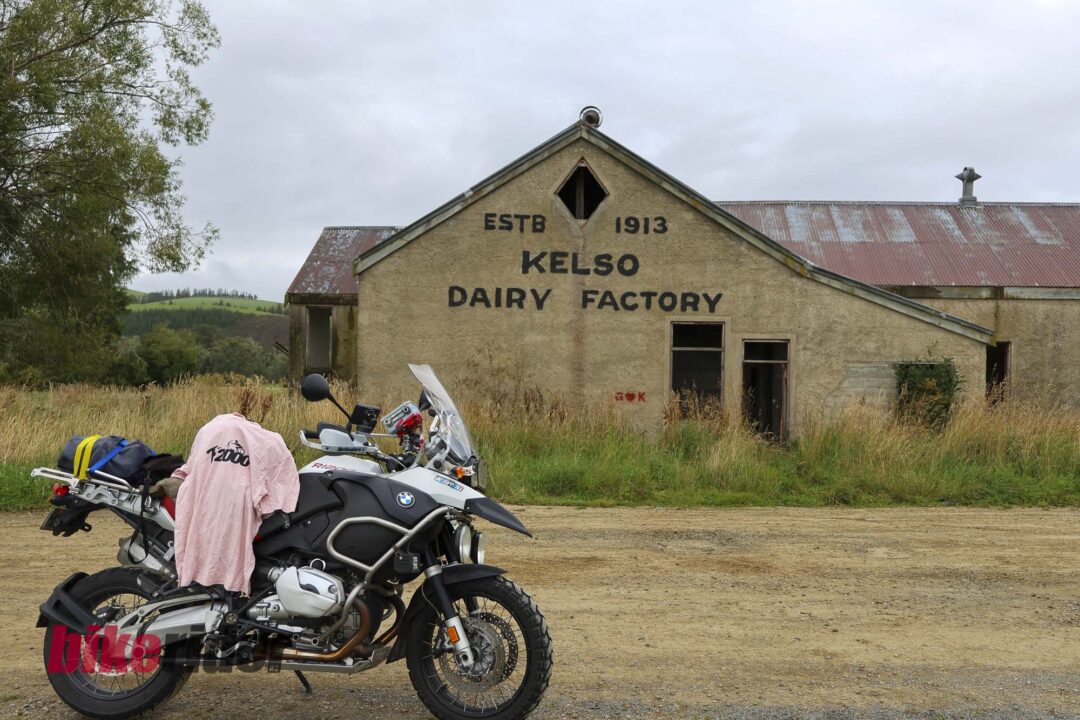
Ha, and double ha! Only a few minutes after riding away from Jacksons, some big raindrops splashed on my visor. Foolishly, and optimistically, and wrongly, I thought (hoped, expected, wondered, and dreamed) that we would still cut around the cloud’s edge. On we pressed, and then the sky fell in. The West Coast is green for a reason and so rightly has a reputation for dampness, and this day was no exception. As it might say in the bible, the rain it raineth, and we were utterly soaked. There’d have been no point in stopping now, as we’d get wetter while struggling roadside with pants that wouldn’t pull over wet boots and jackets that would tangle their sleeves over wetter jackets, and so we rode on. At the Brunner memorial, 40 minutes later, the rain had cleared, and as it was a racing certainty that the rest of the afternoon’s ride south down the coast to Haast would be in sunshine, we chose to allow nature to dry us off, given that it was nature that had caused the soaking.
The strong westerly remained an uncomfortable side wind until we turned east over Haast Pass. The sun, now low in the sky, and the wind were both behind us, so our climb and descent over the lowest of the three main alpine passes was a joy. The scenery was magnificent, and our two BMWs purred along as we took in the vistas that make the riding of motorcycles such a pleasure.
Cold Starts and Long Miles
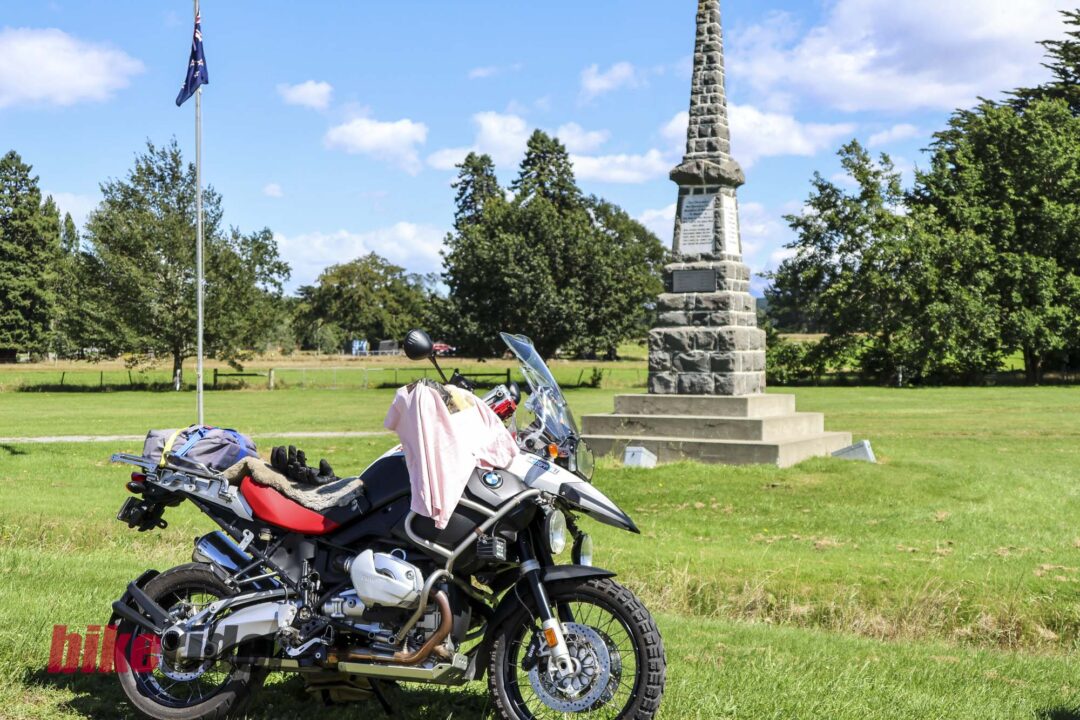
We overnighted in Wanaka, departing on Saturday morning in the dark and chill of the typical southerly that follows a nor’wester. I saw minus one degrees on my bike’s temperature gauge as we approached the Red Deer Memorial checkpoint at the summit of Lindis Pass, just as day was breaking.
By the time we’d passed through Omarama, turned east down the Waitaki Valley and then into the rolling hills south of Duntroon, the day was warming, although the continuing wind knocked the edge off any heat. Meandering through small towns and isolated localities is one of the joys of the TT2000, as the route will take you past places you’d not normally visit.
We joined SH1 south of Oamaru, left it at Palmerston (real Palmerston, that is, not the northern pretender) and climbed into the exposed higher parts of the Maniototo past the appalling blot that is Macraes open cast gold mine, and photographed the obligatory checkpoint there. Although it may not say so in the bible, the wind it doth bloweth!
Wind, Traffic and Reality
We lunched south of Alexandra (Mystery Checkpoint 5) and then girded our loins, figuratively speaking, for the trudge and frustration that is the traffic-clogged roads to and through Queenstown. Once through that hell-hole of tourist over-hype, the road to Glenorchy is a biker’s delight, never mind the gusty wind. Checkpoint found and photographed by the lake, we once again had the wind at our backs.
When we were 15km short of Queenstown, we arrived at a short queue of stopped traffic. Filtering to the front as you must do, we spied a police officer laying out cones and a ‘Crash’ sign. Oh, dear. Whatever had happened, had happened just around the bend, so we had no idea of the cause. We waited, time passed. Once given the all clear to move, we saw a severely damaged motorcycle lying on its side, but no sign of the rider. We later heard that it was a solo bike crash and that the unfortunate rider had been flown to Dunedin hospital for repairs. We wish him well in his recovery.
Back through Queenstown, with the less said about us taking liberties with the road rules regarding filtering the better, we made it to Frankton and so south to more wind-blown checkpoints until we arrived at the Waikaia Camp Ground for our Saturday night sleep. We were early enough to have dinner there at the pub (recommended).
Sunday Survival
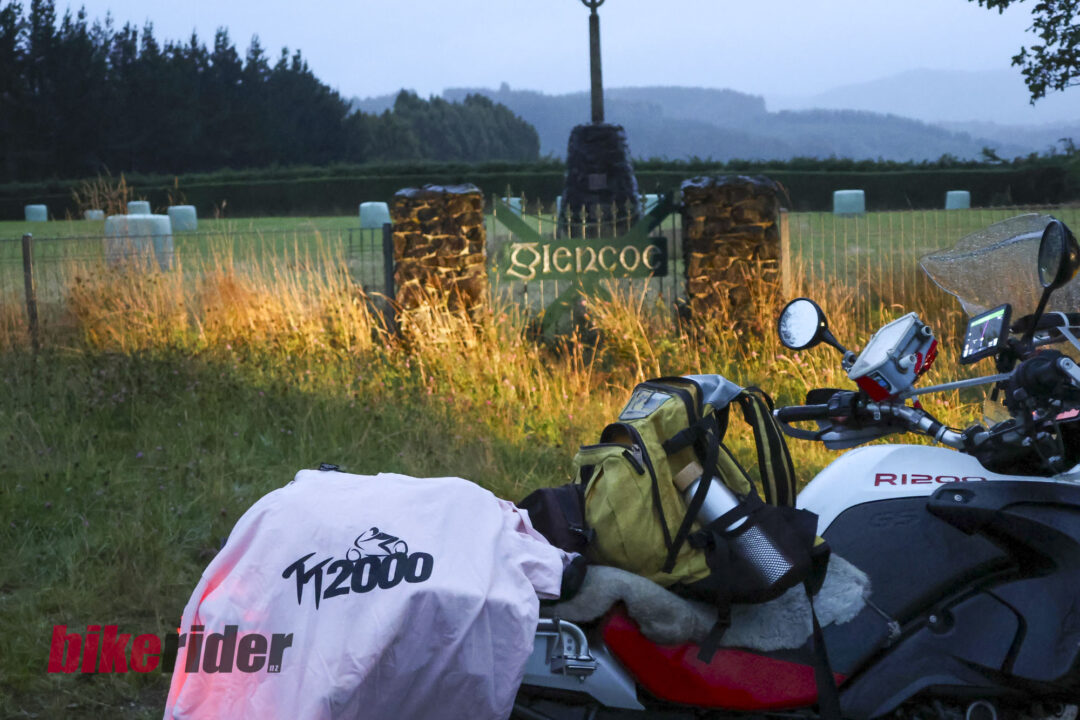
I might be slow, but I get there in the end. Sunday morning, in the black of 6am, a few spots of rain were felt as Brett and I prepared to leave. On with our wet weather gear – you can never be too careful. It was only 20 minutes to our fuel stop at Riversdale, but by then the rain was light and steady. After a further 10 minutes, to the Mandeville checkpoint, the rain was moderate, and the wind was building once more. A further half an hour’s riding had us at the Glencoe checkpoint just as the sky was lightening, and by now there was proper rain and proper wind.
From here, it should have been 45 minutes to the Fortrose café checkpoint, but instead it was closer to an hour, due to the awful weather conditions, as mentioned in my opening paragraph. There’s a sense of satisfaction at not coming a cropper, which was a very real likelihood, and as we rode back into northern Southland and southern Otago, the wind dropped to merely strong and the rain’s intensity dropped to barely any rain at all. Whew!
Breakneck Finish
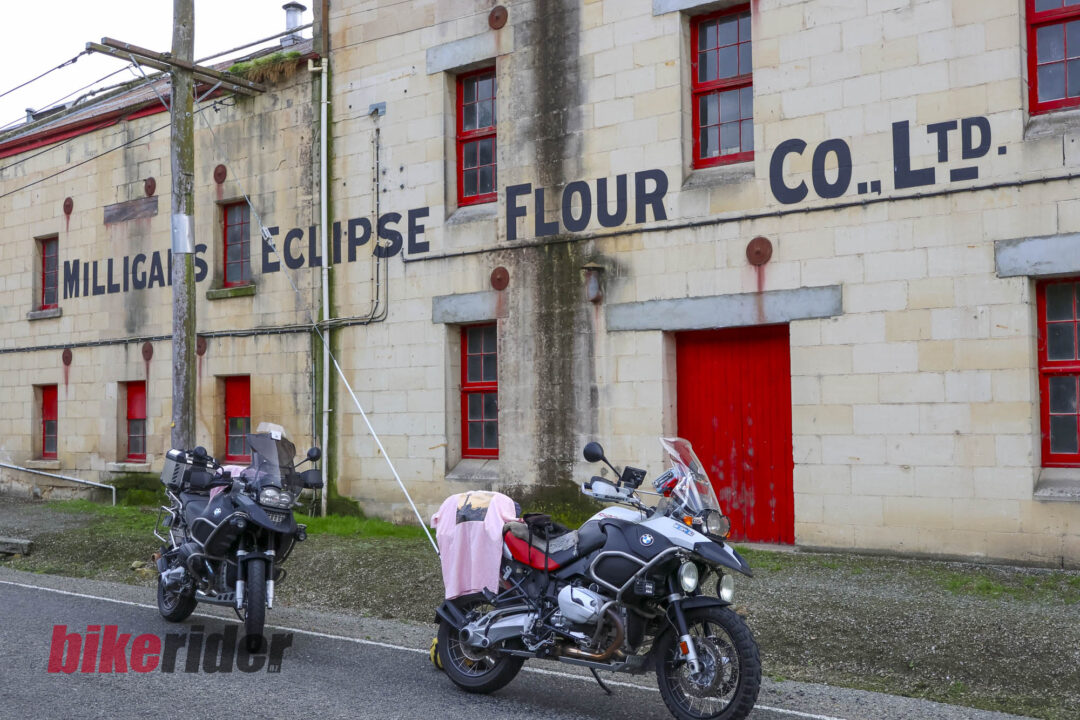
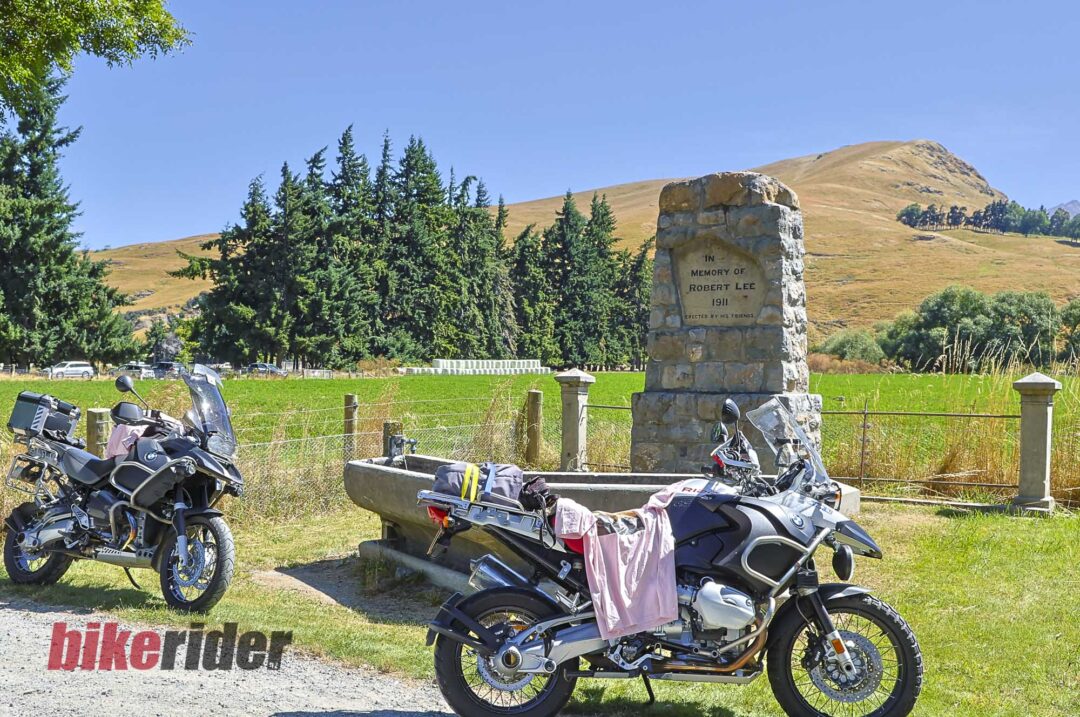
Thinking that we had completed the worst of the riding near the Catlin’s Coast, we naively relaxed until after the Mystery 1 checkpoint at Lawrence, we only had the Greenfield War Memorial to go. Ha, and double ha, once more! The quickest way between those two places was over the aptly-named Breakneck Road, which is smooth gravel, but on high ridges and completely exposed to the crosswind. Happily, there was no oncoming traffic as we found that gusts would shift us from the safe right or centre wheel track over to the left wheel track without warning. Again, no harm was done, and again we had some sense of satisfaction at our arrival at Greenfields.
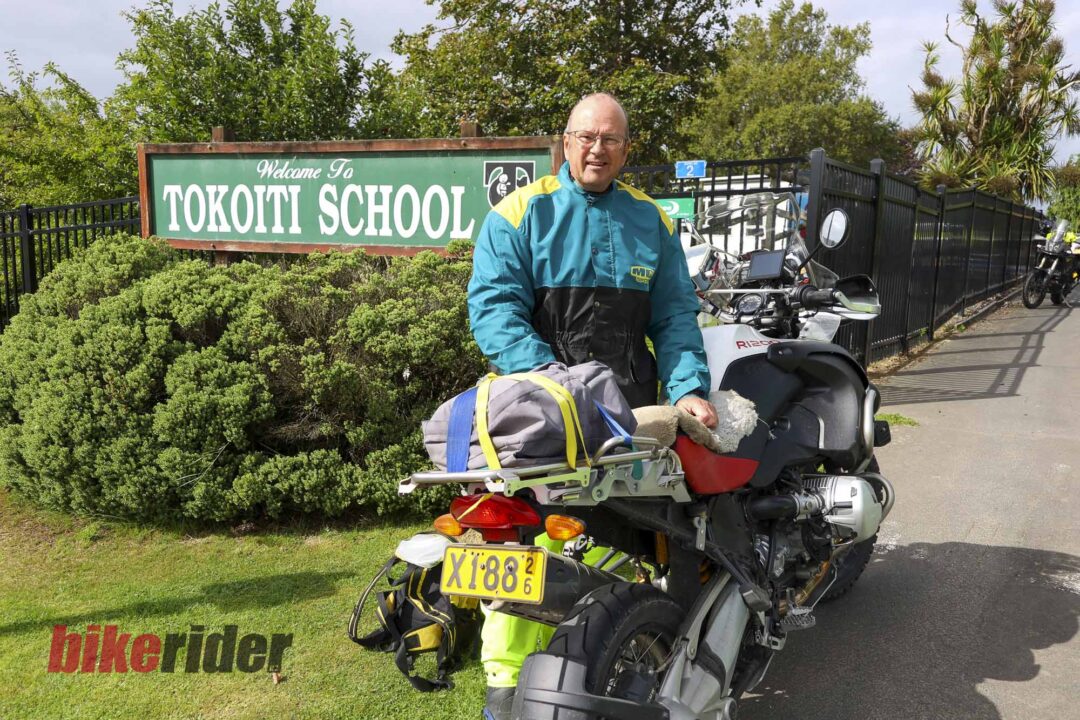
There was now only 50km of this year’s TT2000 remaining, and we rolled into the finish at Tokoiti School only eight minutes behind our planned time, which I think was pretty good considering the weather conditions, and we still had a three-quarter hour buffer before the noon cut-off for a 48-hour completion.
Mission Complete
All that we had to do in the afternoon was head home. Me, to Wanaka in increasing sunshine and diminishing wind, and Brett to Christchurch, battling a beastly easterly. Sometimes the weather is remembered as much as the riding, and that was certainly the case for this year’s event. What will 2027 bring? We await with interest the release of the course, much later this year.
TT2000 SUMMARY
The TT2000 2026 pushed riders to their limits with extreme weather, long distances and challenging routes. Covering over 2000km in 48 hours, this ride report captures the reality of endurance motorcycling in New Zealand.
To find out more about the TT2000 rally, head to https://www.tt2000.org
TOP 5 TIPS TO FINISH THE TT2000
1️⃣ Plan Smart, Not Fast
The TT2000 isn’t a race — it’s a strategy game. Chasing extra checkpoints at the expense of time or fuel stops will bite you later. Build a realistic route and stick to it.
2️⃣ Ride Within Yourself
You’ve got 48 hours to get it done — pushing too hard early is the quickest way to not finish. Smooth, consistent riding will always beat bursts of speed.
3️⃣ Stay Ahead of the Weather
Conditions can change fast in NZ, and they will. Check the forecasts, carry proper wet-weather gear, and be ready to adapt your plan if things turn nasty.
4️⃣ Manage Fatigue
This is where most riders come unstuck. Take short breaks, eat properly and know when to stop. Riding tired is slower — and a lot more dangerous.
5️⃣ Keep It Simple
The more complicated your plan, the more likely it is to fall apart. Simple routes, reliable fuel stops and clear decision-making will get you to the finish.