
- Updated with new styling and graphics
- Powered by 890cc V2 engine
- Likely to be launched in New Zealand and Australia next year
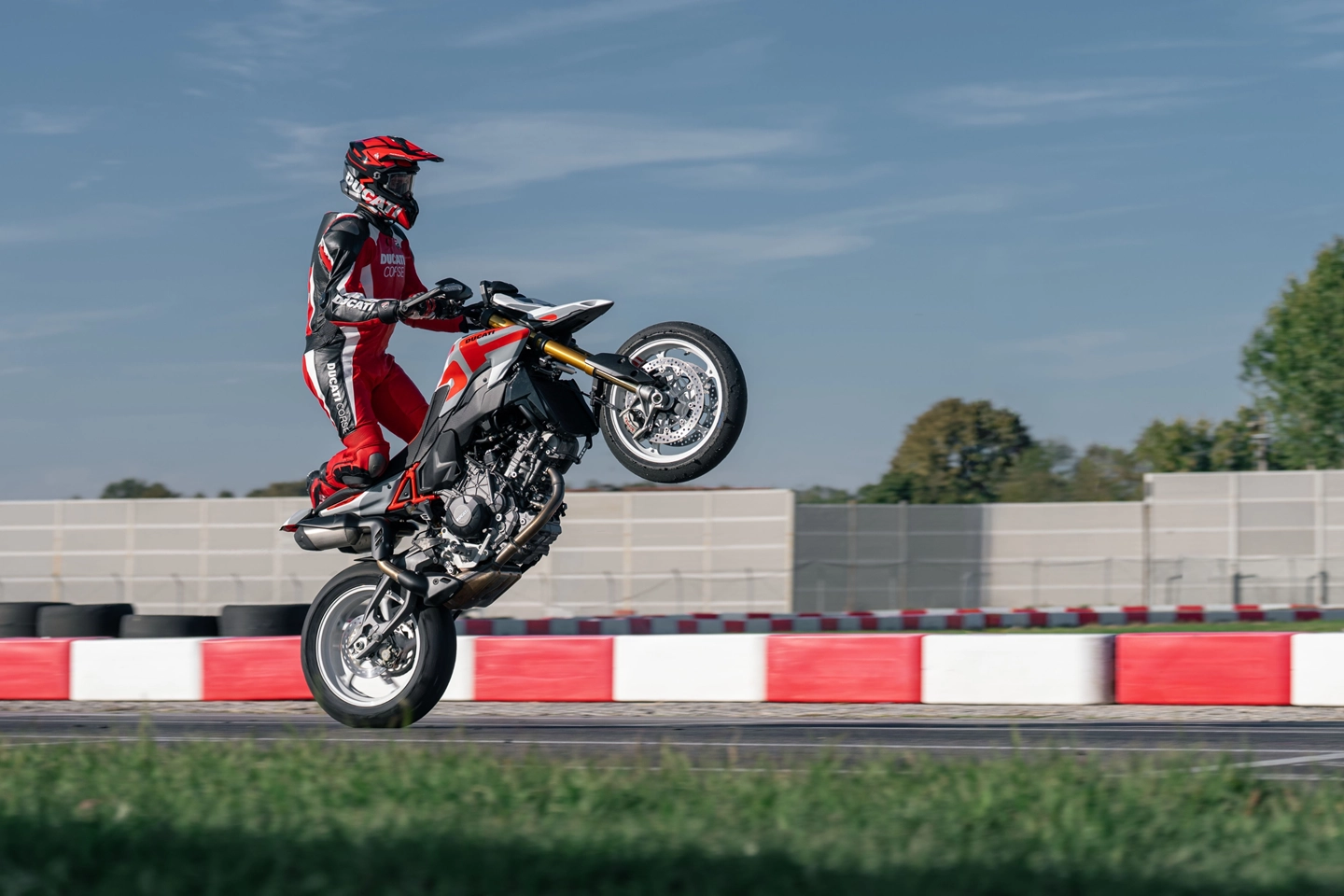
The Ducati Hypermotard enters a new era for 2026, marking 20 years since the original Pierre Terblanche-designed concept first appeared. Now in its fourth generation, the Hypermotard V2 is an all-new machine built around Ducati’s latest 890cc ‘V2’ engine.
For the first time in Hypermotard history, Ducati has moved away from its trademark Desmodromic valve system. The new engine uses conventional valve springs and variable valve timing, and despite a reduction in capacity compared to the outgoing model, it delivers more performance while cutting weight. Power is quoted at 118.4bhp at 10,750rpm, with torque rising to 94Nm at 8,250rpm. Variable intake timing plays a key role in improving midrange drive, while a major contributor to the weight saving is the engine’s structural role within the chassis, a design approach now shared across Ducati’s V2 platform.
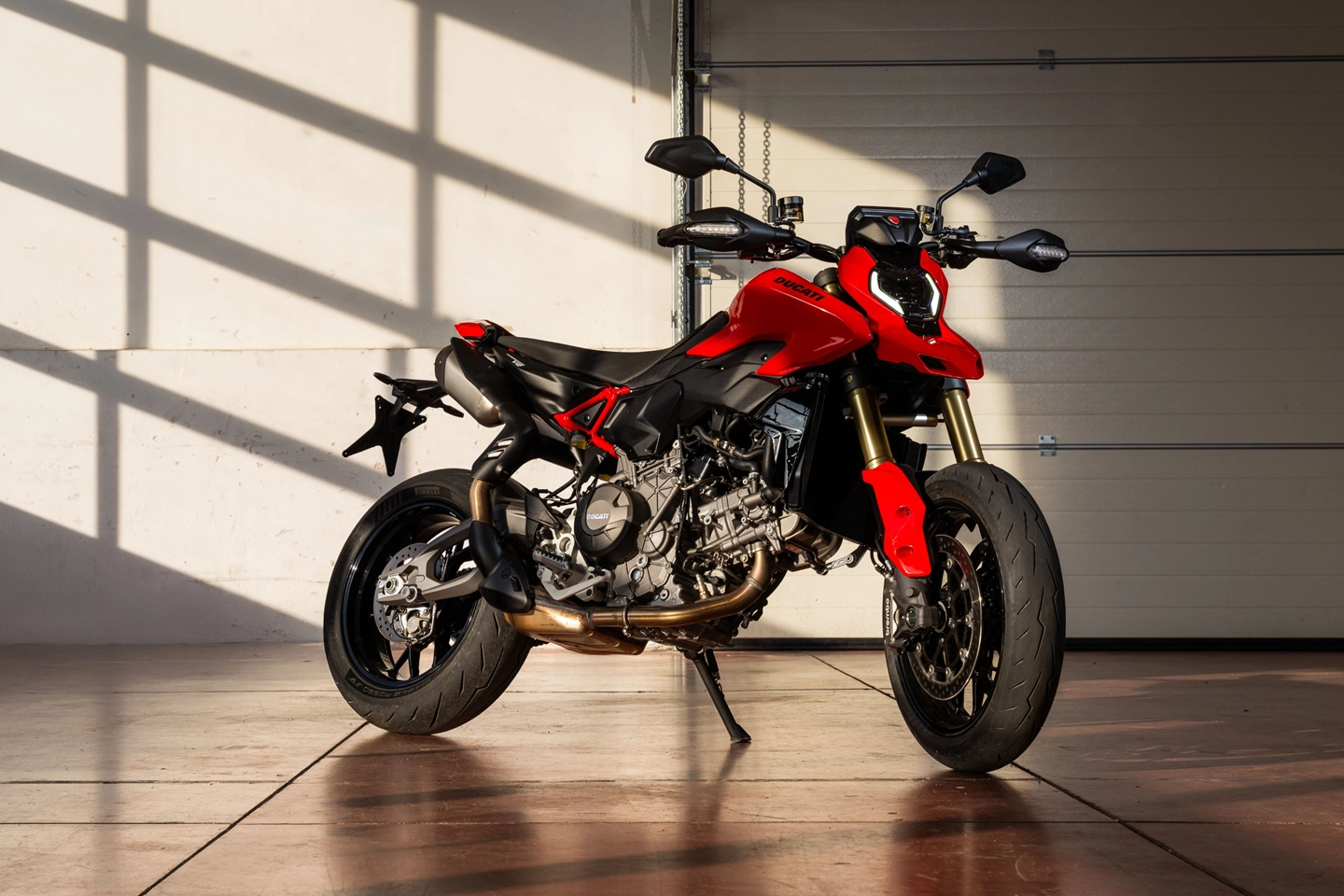
The traditional steel trellis frame used by previous Hypermotards has been dropped entirely. Instead, the swingarm bolts directly to the engine, while the front end is supported by an aluminium monocoque structure mounted to the cylinder heads and incorporating the airbox. The swingarm itself is a Panigale V4-style cast aluminium dual-sided unit.
As a result, the base Hypermotard V2 is claimed to weigh just 180kg without fuel, while the higher-spec SP version trims that further to 177kg. A steel trellis seat subframe remains, nodding to the design language of earlier models. Suspension and braking differ between the two variants. The standard bike runs fully adjustable 46mm Kayaba forks and a rebound- and preload-adjustable rear shock, paired with Brembo M4.32 monobloc calipers. The SP steps things up with Öhlins suspension at both ends, using 48mm NIX30 forks and an STX46 shock, along with Brembo M50 brakes.
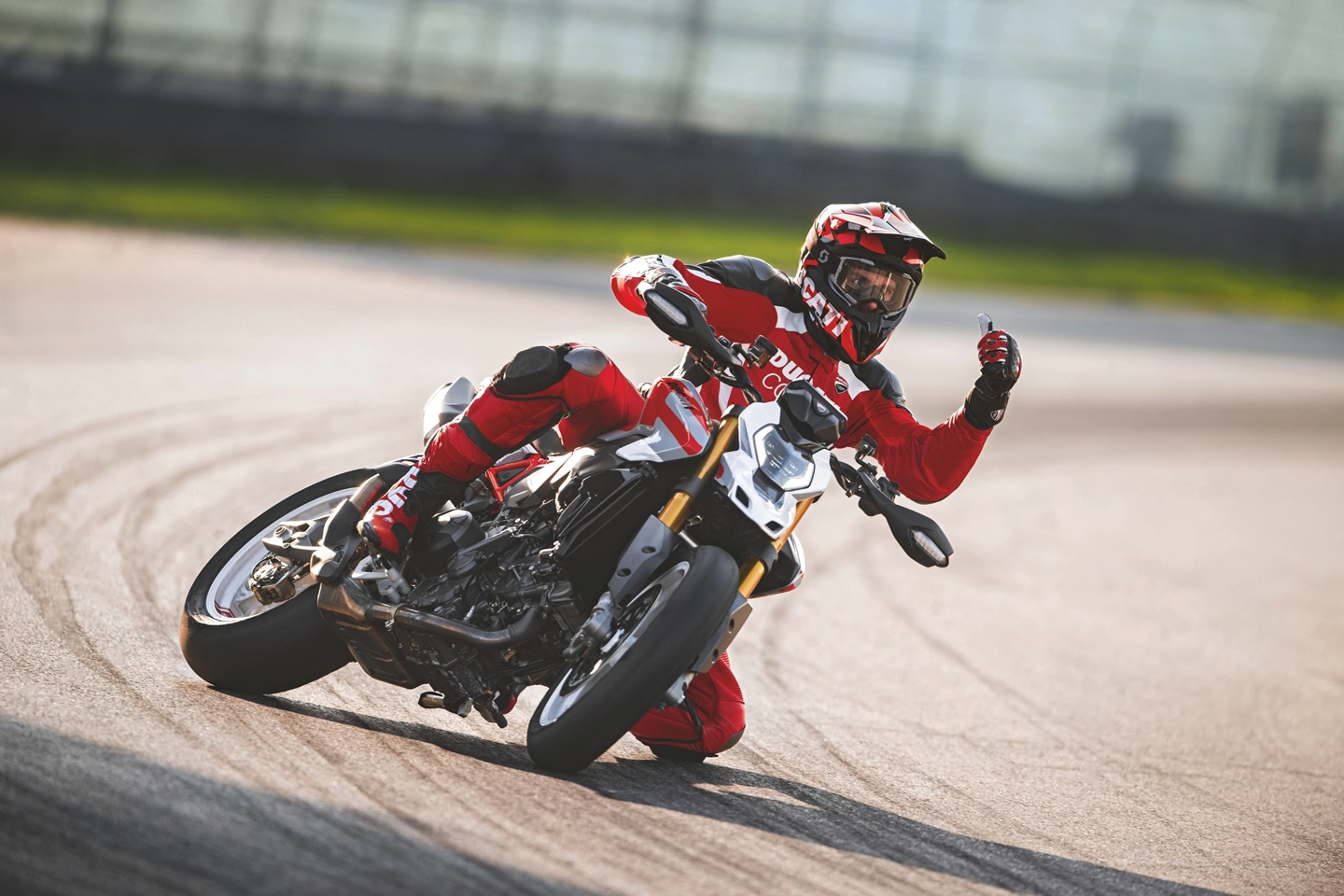
Additional weight savings on the SP come from forged five-spoke wheels in place of the standard bike’s cast items, plus a lightweight lithium battery. Ducati also offers an optional track-only Termignoni exhaust, claimed to reduce weight by 4.5kg while adding 3.9bhp.
Electronics are a far cry from early Ducati systems. The Hypermotard V2 features a six-axis IMU that enables cornering ABS and traction control, supported by wheelie control, engine brake control, launch control, a pit limiter, a bidirectional quickshifter and four adjustable riding modes. The ABS system offers four levels of intervention. Level one is track-focused and disables rear ABS, level two allows controlled rear-wheel slip under braking, while levels three and four are tuned for road use with increased safety intervention.
MORE ARTICLES
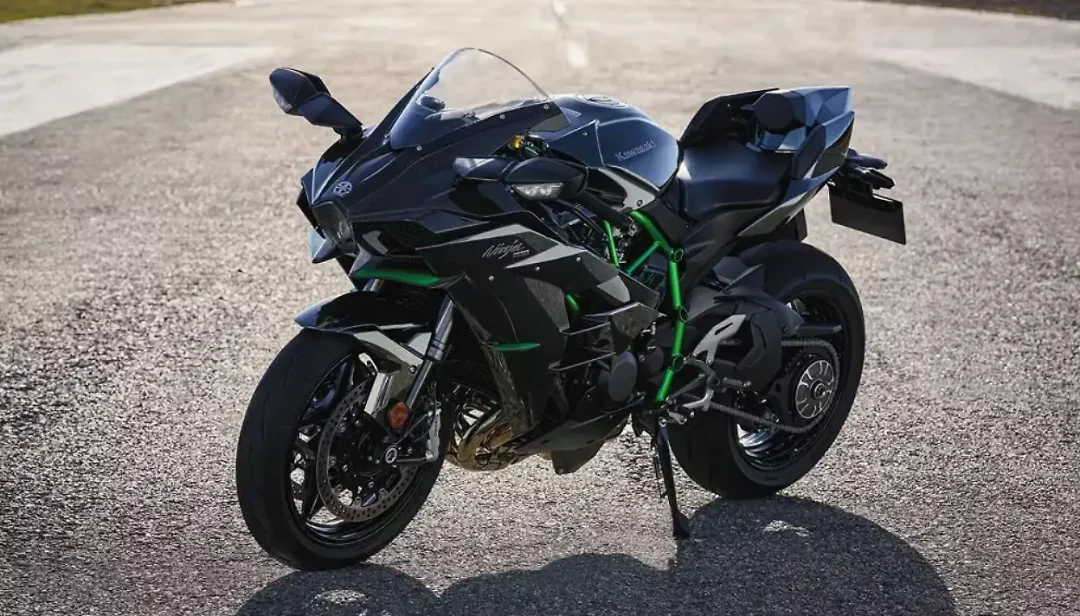
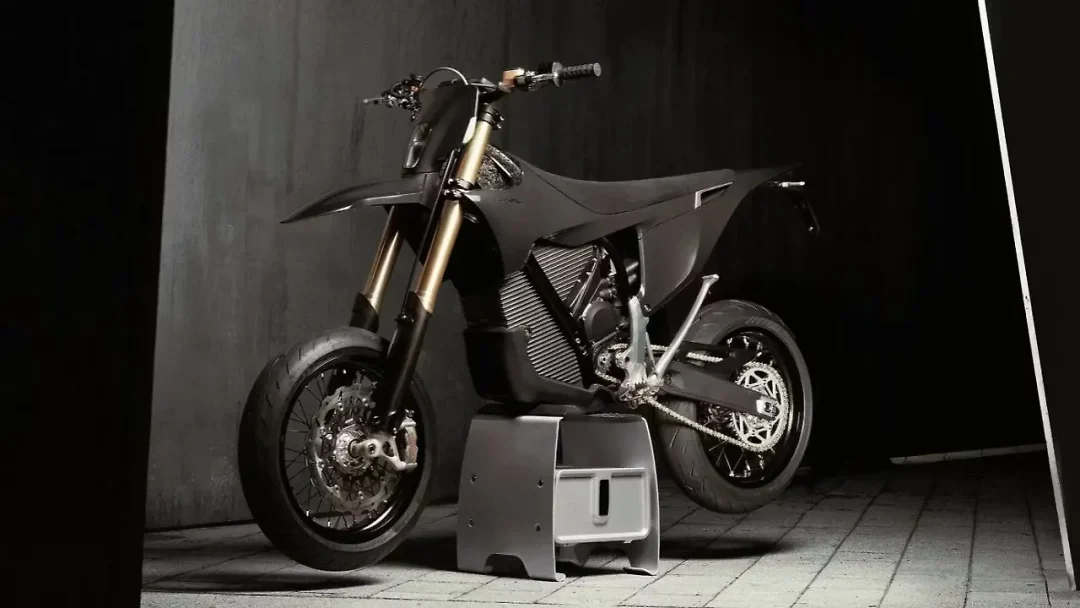
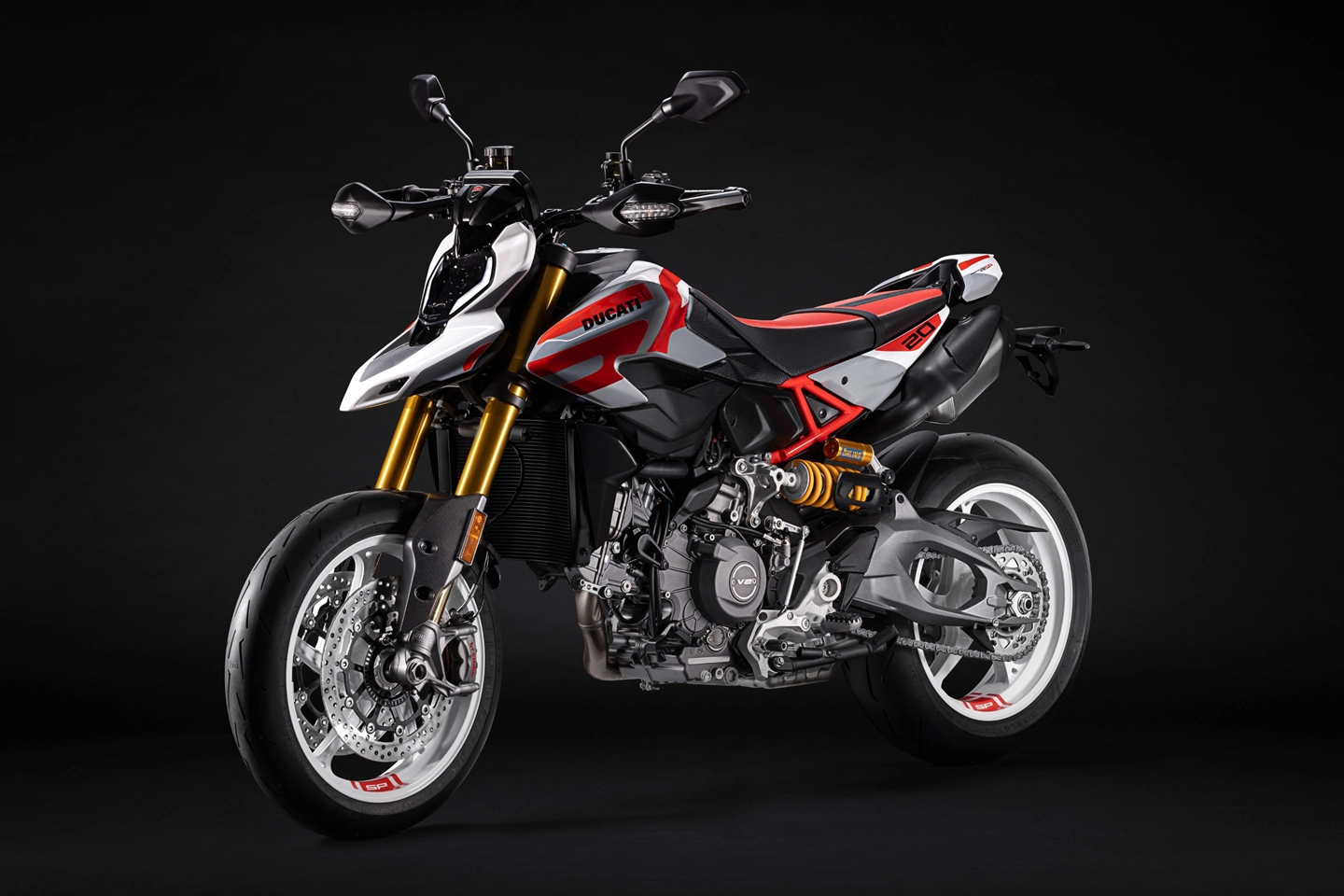
Information is displayed on a 5-inch TFT screen with three display layouts, while smartphone connectivity is offered as an optional extra. Styling takes clear inspiration from the original Hypermotard, retaining the dual under-seat exhausts and the distinctive front “beak.” Ergonomics have been revised for 2026, with the bars and footpegs moved forward to place more weight over the front wheel. Seat height is set at 880mm on both the standard and SP models, sitting between the previous base and SP versions.
With the arrival of the new Hypermotard V2, the DesertX now stands as the last Ducati using the desmo-valved Testastretta V-twin, although it too is expected to transition to the 890cc V2 platform in the near future.