
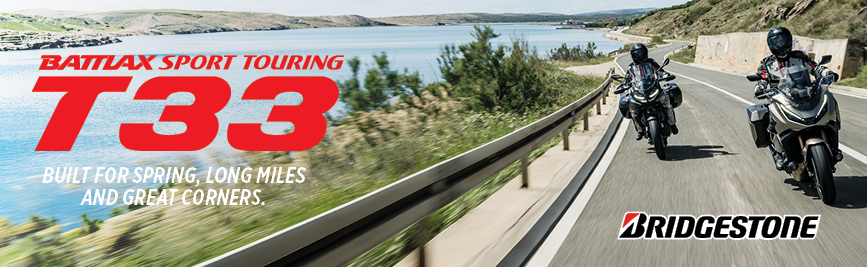

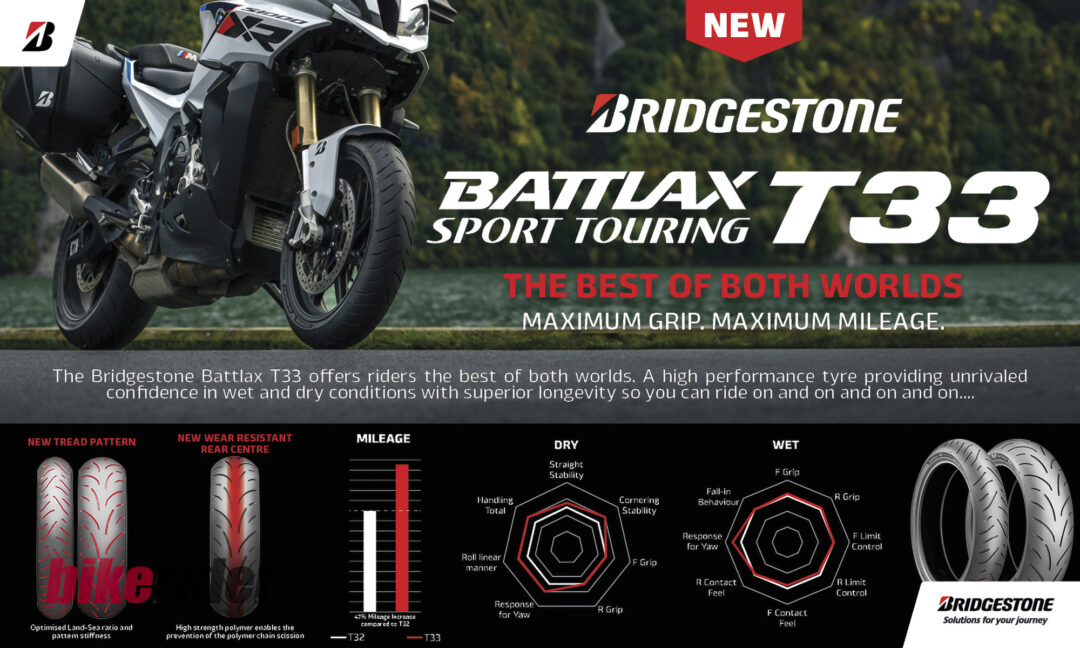
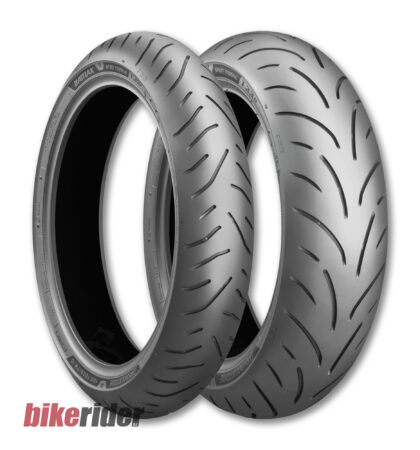
- Bridgestone’s new Battlax T33 claims a 47% increase in mileage over the T32 thanks to new compounds, construction and tread design.
- On test in Croatia, the T33 delivered sport-tyre-like edge grip and strong stability across a wide range of bikes, from the Honda Hornet SP to the BMW R 1300 GS.
- While long-term wear and wet performance still need home testing, the T33 proved impressively confidence-inspiring, playful and predictable throughout the launch ride.
Words: Adam Child Pics: Ant Production
Tyre technology has progressed massively in recent years, but when Bridgestone claims their new T33 not only performs better but delivers a 47% increase in mileage over the previous version, we had to check it out. Chad headed to Croatia to put them through their paces…
A New Generation of Sport Touring Performance
The all-new Bridgestone Battlax Sport Touring T33 builds on the success of the highly regarded T32, a tyre already fitted as standard to several new models. Engineered to suit a wide range of bikes—from heavyweights like BMW’s R 1300 GS with a 19-inch front wheel through to lighter, more agile machines such as Honda’s new Hornet—the T33 is designed to deliver both impressive longevity and smooth, confidence-inspiring handling.
Bridgestone’s headline claim is bold: a 47% increase in mileage over the T32. To put that to the test, we headed to Croatia for two days of spectacular riding across mixed roads, surfaces and conditions to see whether the T33 truly raises the bar.
Tyre Talk
On a motorcycle, tyres are arguably the most important components you can fit. Yes, you need an engine, suspension and brakes—but if the tyres don’t perform, none of that matters. You can have top-spec electronics and chassis hardware, but if the rubber isn’t doing its job, you’re fighting a losing battle.
Most riders underestimate how small the tyre’s contact patch really is—around the size of a credit card, depending on pressure and load. That tiny patch not only has to stop a 250kg bike plus rider, but also keep you upright when the footpegs start skimming the tarmac. It’s humbling when you think about it.
Race tyres have it comparatively easy: controlled conditions, consistent tarmac and different compounds for different weather. But sports touring tyres? They must handle everything—heavy or light bikes, rough or smooth roads, big distances, daily commutes, freezing mornings, scorching summers and, of course, wet weather. They must offer grip, stability, feedback and longevity across wildly varied situations. It’s a near-impossible brief.
I run T32s on my own BMW R1150RT, which clocks all-weather motorway miles year-round. Yet the same tyre is equally at home on a Ducati Multistrada V4S on a spirited weekend blast. That’s the range a modern sport touring tyre needs to cover. And now Bridgestone says the T33 improves on it.
To achieve this, Bridgestone has introduced a new compound using a more durable wear-resistant polymer. The front uses a single compound, while the rear adopts a three-section layout—harder in the centre for mileage, softer on the shoulders for grip.
Construction changes include a new front cross-belt and rear MS-belt, allowing wider fitment across light and heavy bikes. Importantly, the T33 is now a single version—no separate GT tyre required for heavier machines.
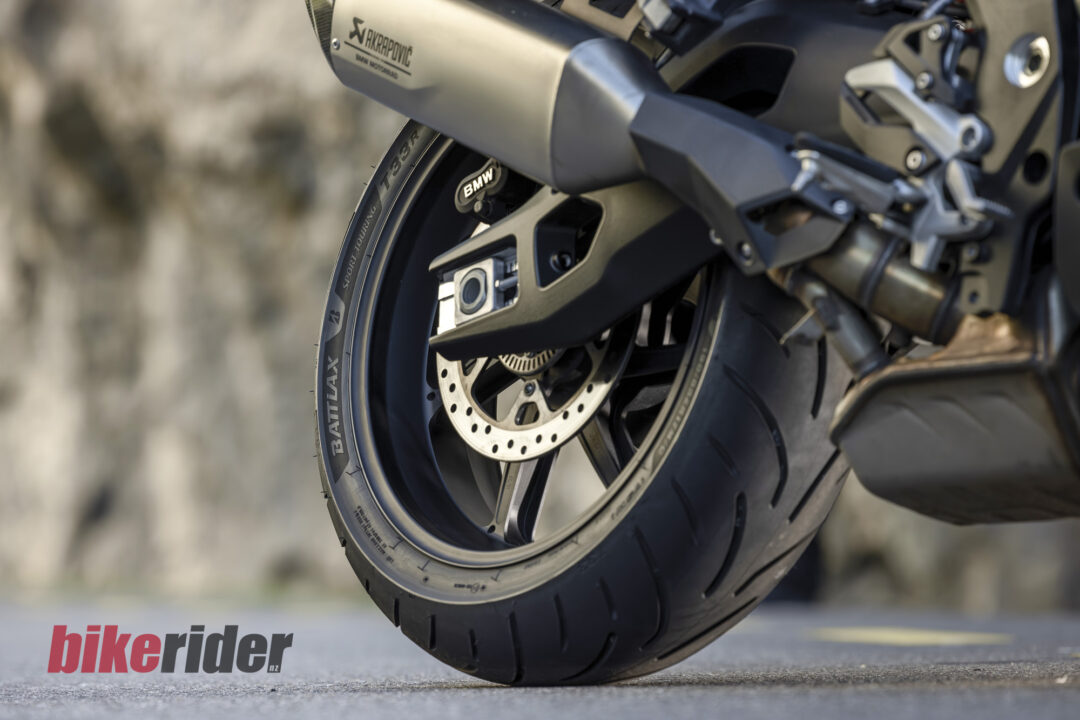
Tread design has also been refined with optimised groove ratios. More grooves typically mean a more flexible tyre, and Bridgestone has worked to balance stiffness, grip and wear. The new front resembles the old T32 GT, while the rear sits between the previous standard and GT versions.
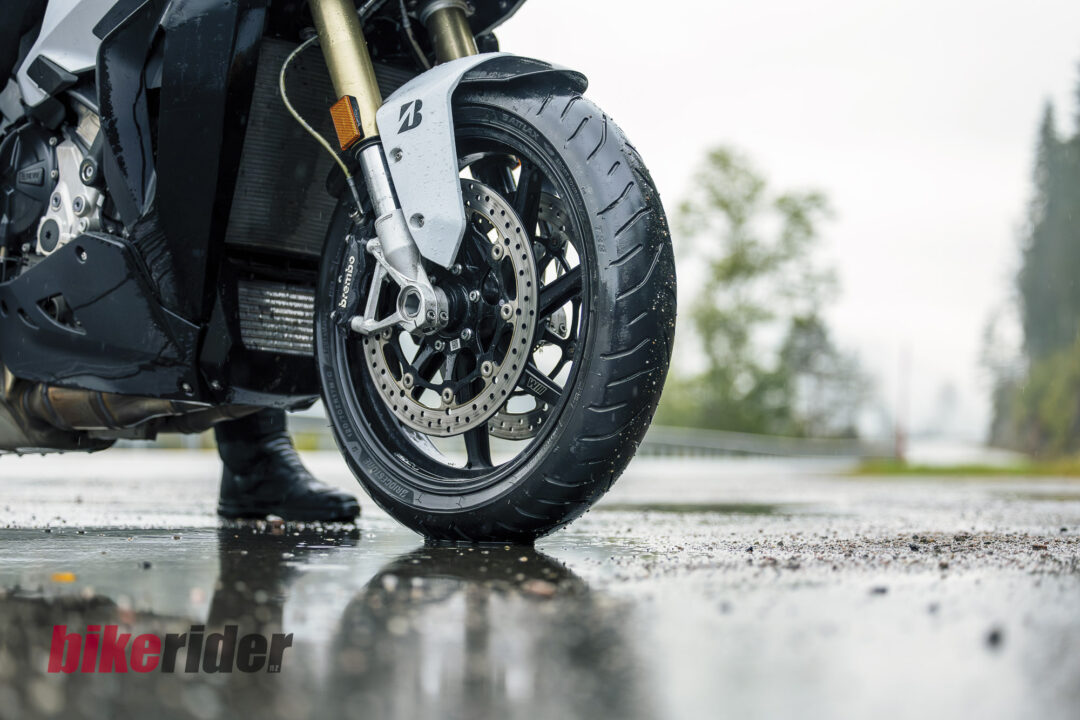
Taken together—compound, construction, tread design—these updates reduce “slip area” compared with the T32, which Bridgestone says contributes to the 47% increase in mileage. Wet grip and steering response have also been improved, requiring less rider input.
Torture Test in Croatia
I’ll be honest—I love tyre testing. Riding multiple bikes over multiple days on great roads? No complaints from me.
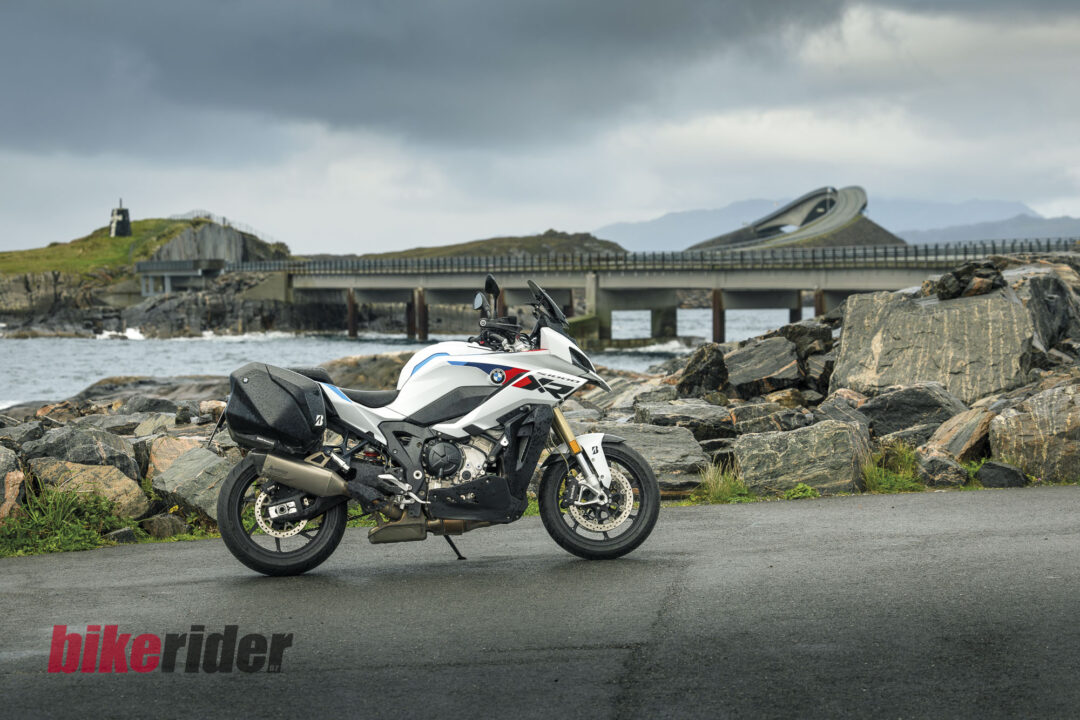
Day one of our Croatian test was an easy ride between hotels. Day two was the big one: roughly 250km across the island of Pag. Day three was the return leg to the airport. The test fleet read like a dream garage: BMW’s R 1250 RT, the new R 1300 GS, Honda’s CBR650R, Ducati’s Monster, and the Honda CB1000 Hornet SP, which typically comes fitted with T32s—perfect for comparison.
Sports touring tyres have come a long way. Not so long ago, longevity and grip were mutually exclusive. A tyre that lasted felt wooden, lacked feedback and took ages to warm up. Not the T33. It felt good straight away.
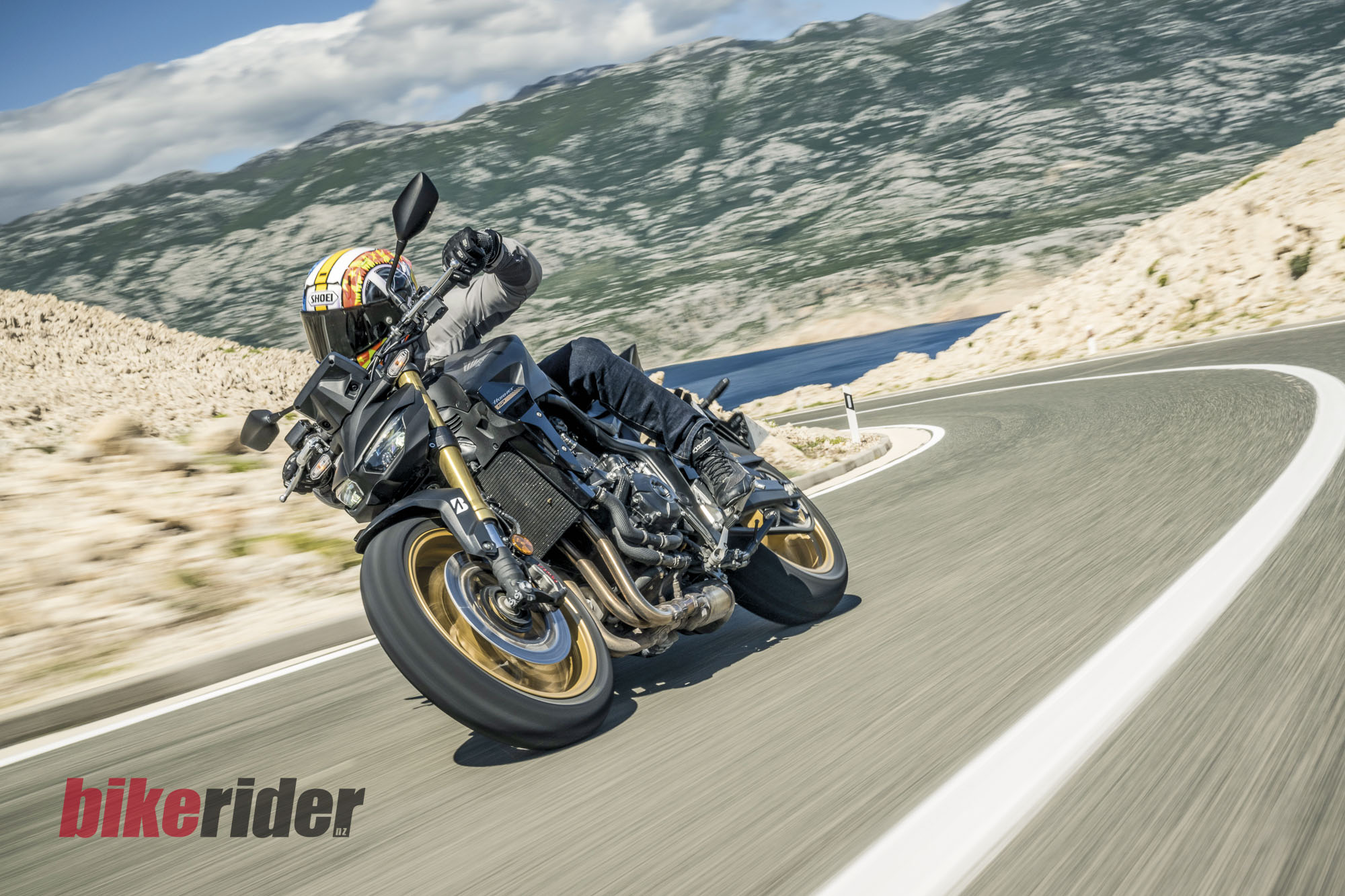
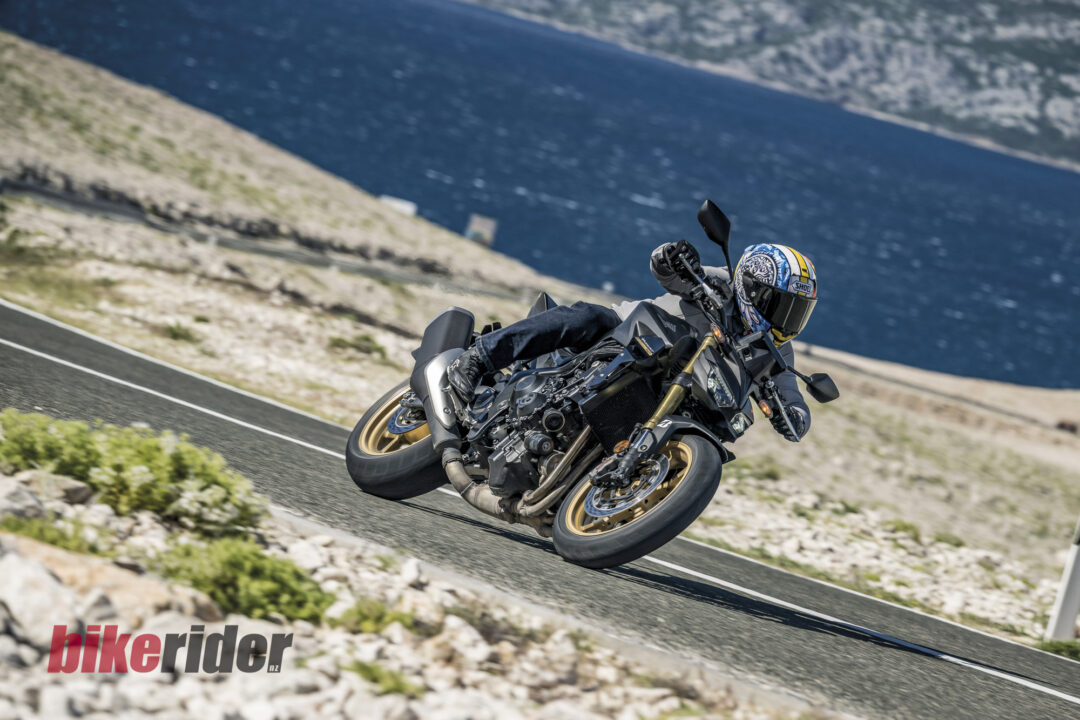
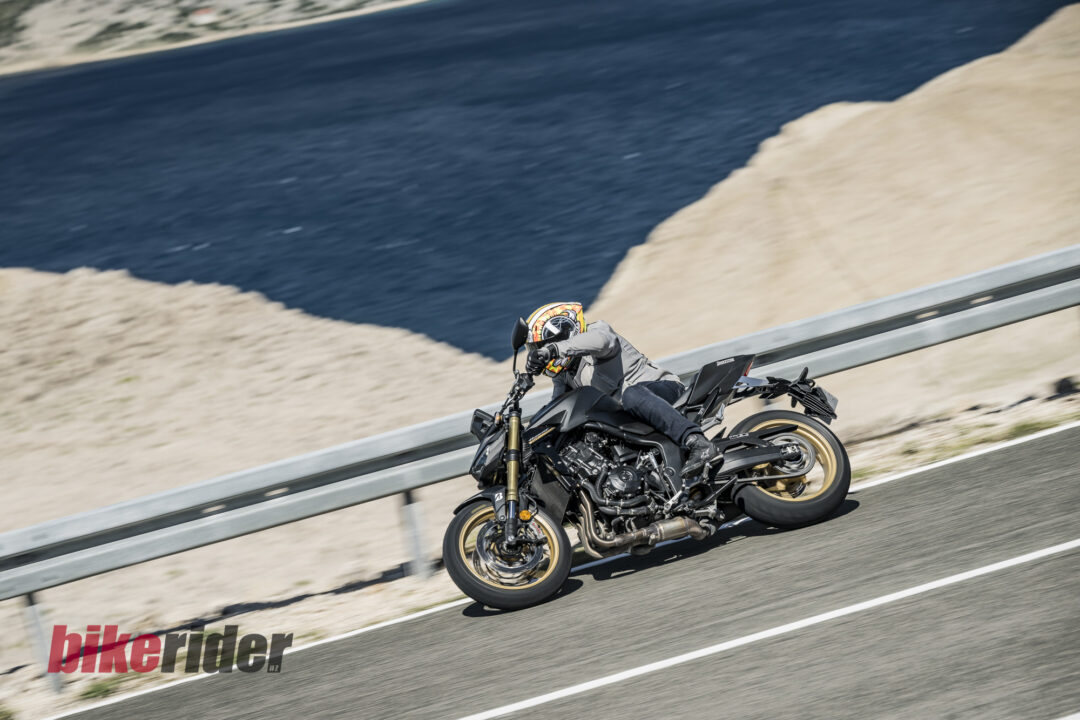
The Hornet SP might not be a traditional sports tourer—155bhp and 212kg wet—but I rode it hard, traction control off. At no point did I feel the tyre limiting performance. The T33 genuinely feels closer to a dedicated sport tyre. Could you take it on track? Absolutely, unless you’re an ex-racer chasing tenths.
Switching to the BMW R 1250 RT, the experience changed but confidence didn’t. The Telelever/Paralever setup naturally mutes some front-end feel, but even then I could sense the tyre’s grip clearly. I pushed the RT hard—well beyond what most riders would—and the tyres never flinched.
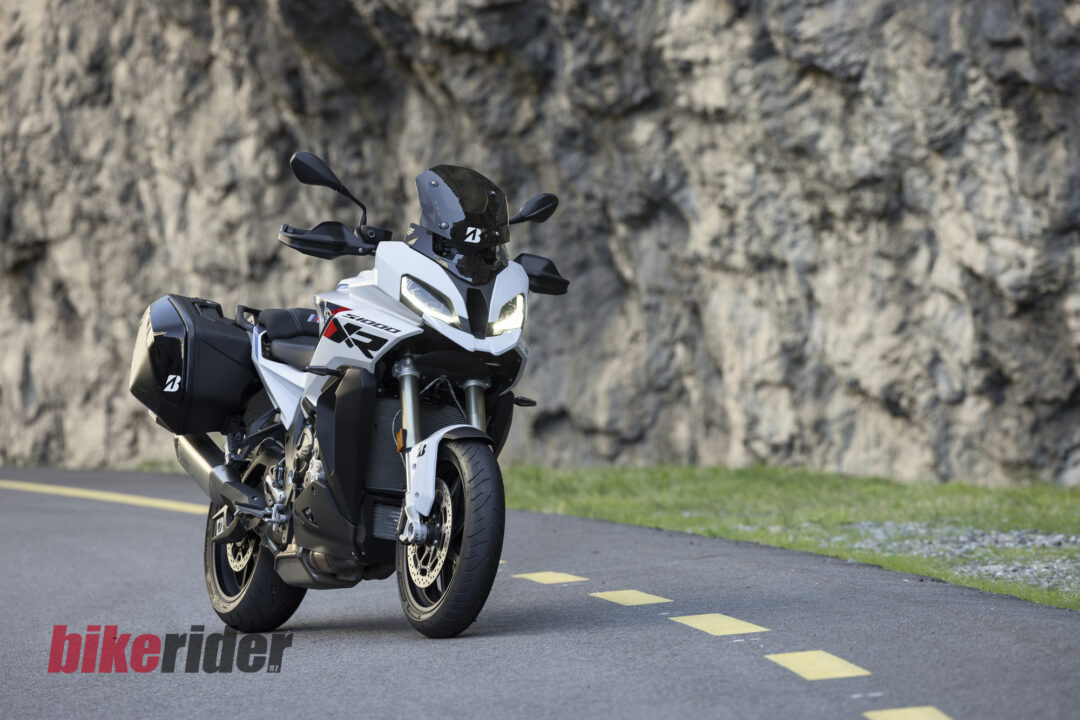
On day two I tested the R 1300 GS. I’ve only ridden it on semi-off-road rubber before, but with T33s it felt like a giant supermoto—agile, playful and precise. Croatia’s sweeping coastal bends were a perfect match. With strong grip, stability and feedback, the GS felt ready to attack unfamiliar roads with ease.
Later, I returned to the Hornet and simply enjoyed the ride. When your tyres give you grip, feel and trust, you stop thinking and just ride. That’s exactly what the T33 allows.
Verdict
We couldn’t verify Bridgestone’s boldest claim—the 47% mileage increase—because we didn’t have the luxury of riding 10,000km on both old and new tyres. (Bridgestone, if you want to send me back to Croatia for a long-term test, my bags are packed.) For now, we’ll take their word on longevity.
We also enjoyed near-perfect weather, so we didn’t fully evaluate wet performance. That will come when we fit T33s to a long-term test bike. Given the T32’s already-strong wet grip, there’s little reason to doubt the T33 will improve on it.
What we can say is this: the Bridgestone T33 was excellent on every bike and every road we tested. On lighter, sportier models, it delivered outstanding edge grip—more like a pure road-sport tyre than a traditional sport touring option—and would be perfectly suitable for a novice track day rider.
On heavier bikes, the T33 handled weight impressively well, even under hard braking and high lean angles. It transformed the new GS into a playful, engaging machine. As soon as the T32s on my own RT are worn out, I’ll be fitting the T33s.
For more details or to get yourself a set of the new Bridgestones, either head HERE or ask at your local dealer.
Tyre Sizes
10 sizes available for 2025 (four front, six rear), with five more sizes arriving in 2026.
Front
- 120/70ZR17 M/C (58W) TL
- 120/70ZR18 M/C (59W) TL
- 120/70R19 M/C 60V TL
- 110/80R19 M/C 59V TL
Rear

- 150/70ZR17M/C (69W) TL
- 160/60ZR17M/C (69W) TL
- 170/60ZR17M/C (72W) TL
- 180/55ZR17M/C (73W) TL
- 190/50ZR17M/C (73W) TL
- 190/55ZR17M/C (75W) TL