

- Africa Eco Race-inspired upgrades make the Tuareg even more capable off-road.
- The switch to tubed Excel wheels is the biggest talking point.
- Outstanding suspension, characterful engine and class-leading electronics impress.
Aprilia has taken one of the best middleweight adventure bikes on the market and given it genuine rally pedigree. But are the changes enough to justify the extra money over the standard Tuareg 660?
Quick Facts: 2026 Aprilia Tuareg 660 Rally
Rally-inspired version of Aprilia’s acclaimed Tuareg 660.
Africa Eco Race-winning DNA with revised off-road specification.
659cc parallel twin producing 80hp and 70Nm.
Fully adjustable KYB suspension with 240mm travel front and rear.
Rally-specific SC Project exhaust fitted as standard.
Excel Takasago spoked wheels with tubed tyres.
20mm higher saddle to aid standing/sitting transition.
Taller handlebars, sturdy handguards, new chain guide.
Comprehensive electronics package including customisable rider modes, cruise control, traction control and switchable ABS.
Wet weight: 199kg.
Price: $24,990 + ORC.
When Aprilia launched the Tuareg 660 a few years ago, it immediately established itself as one of the best middleweight adventure bikes on the market. Rather than trying to out-GS the BMW or out-KTM the Austrians, Aprilia produced a genuinely capable adventure bike that was equally happy carving corners on the road as it was tackling gravel roads and trails. Then they went rally racing… and started winning.
Success in the Africa Eco Race proved the Tuareg platform was much more than another adventure bike with long-travel suspension. Under Jacopo Cerutti, Aprilia claimed victory in one of the toughest rally events in the world, prompting the obvious question: why not build a production version inspired by the race bike?
The answer is the Tuareg Rally.
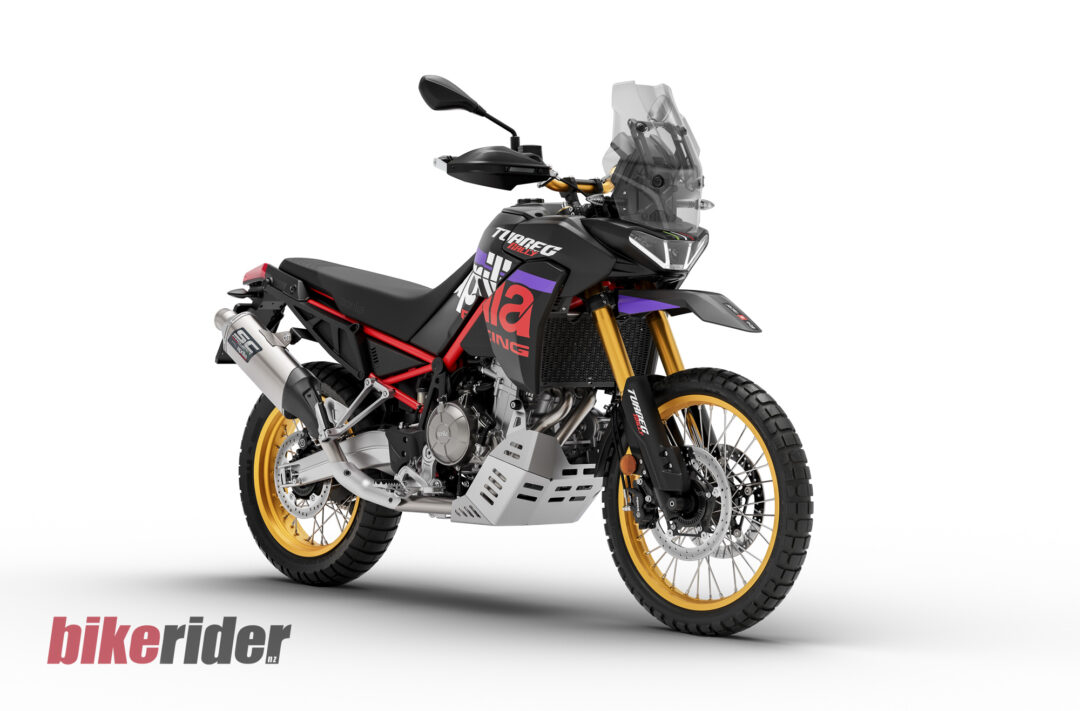
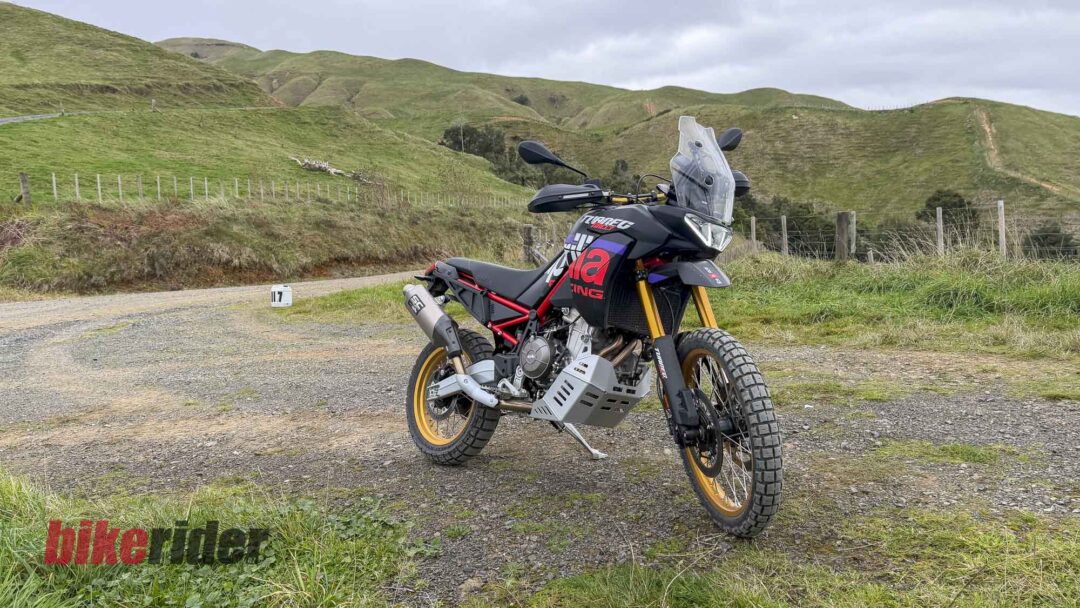
This isn’t a completely new motorcycle. Instead, Aprilia has taken the already excellent Tuareg 660 and sharpened its focus towards riders who spend more time standing on the pegs than sitting in motorway traffic. It gets revised suspension, rally-inspired ergonomics, extra protection, an SC Project exhaust and a host of detail changes designed to improve its off-road capability.
The result is a bike that still works brilliantly as an adventure tourer, but one that’s happier getting dirty than its standard sibling.
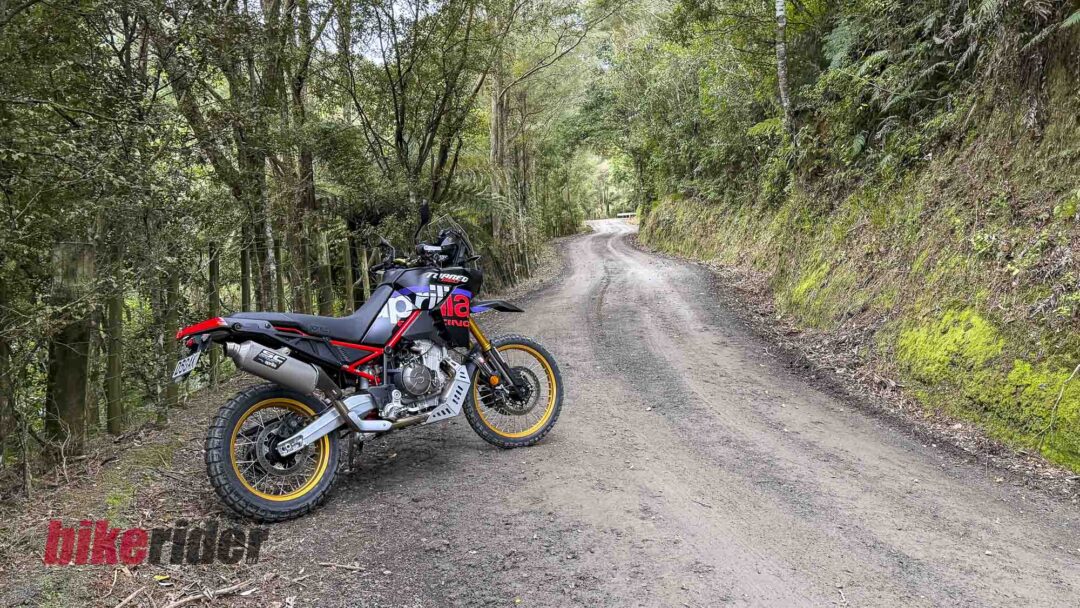
To find out whether those changes are worthwhile, I headed into the hills above the Hauraki Plains over a wet New Zealand long weekend. While everyone else was sitting in holiday traffic, I was doing exactly what this bike was designed for—linking together gravel roads, forestry tracks and forgotten back roads.
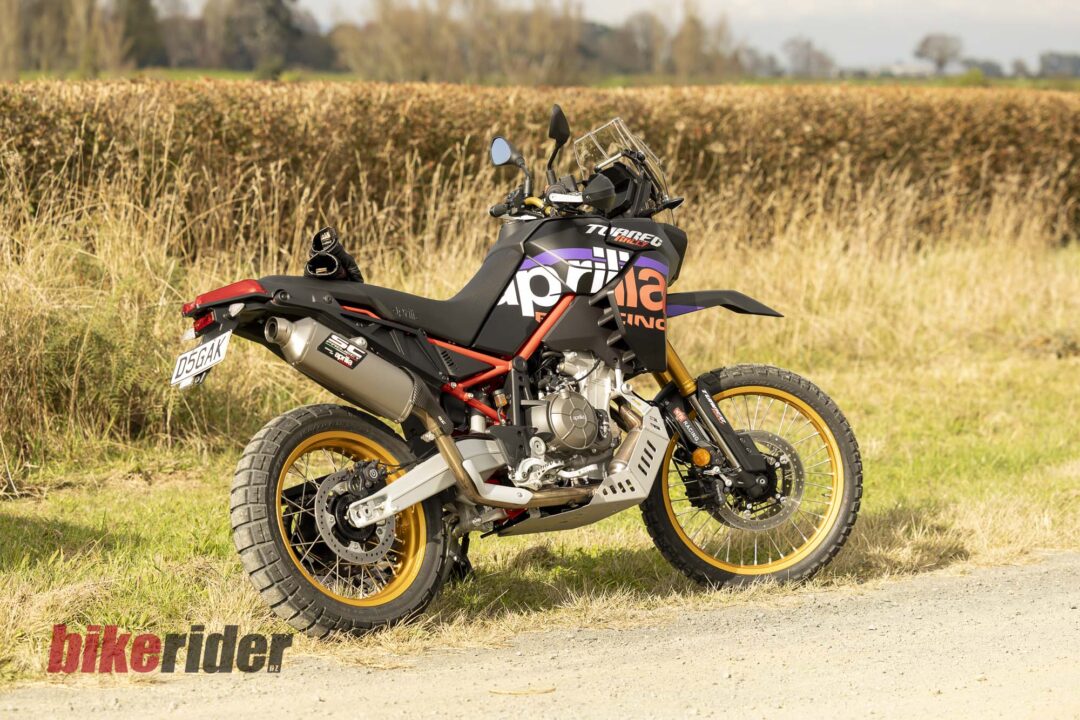
More than just a sticker kit
Manufacturers have become very good at producing “special editions” that amount to little more than different graphics and a handful of accessories. The Tuareg Rally is not one of them.
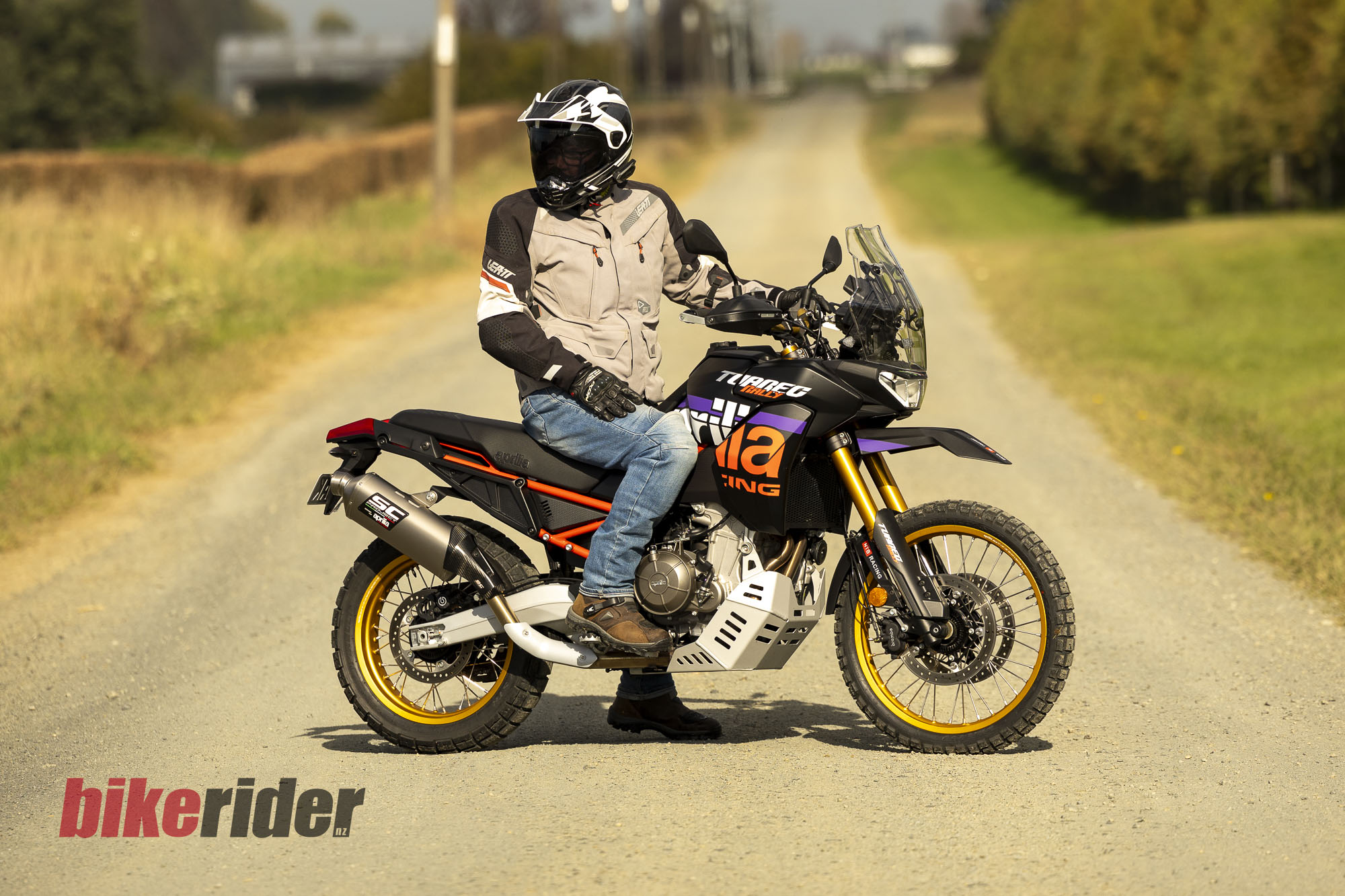
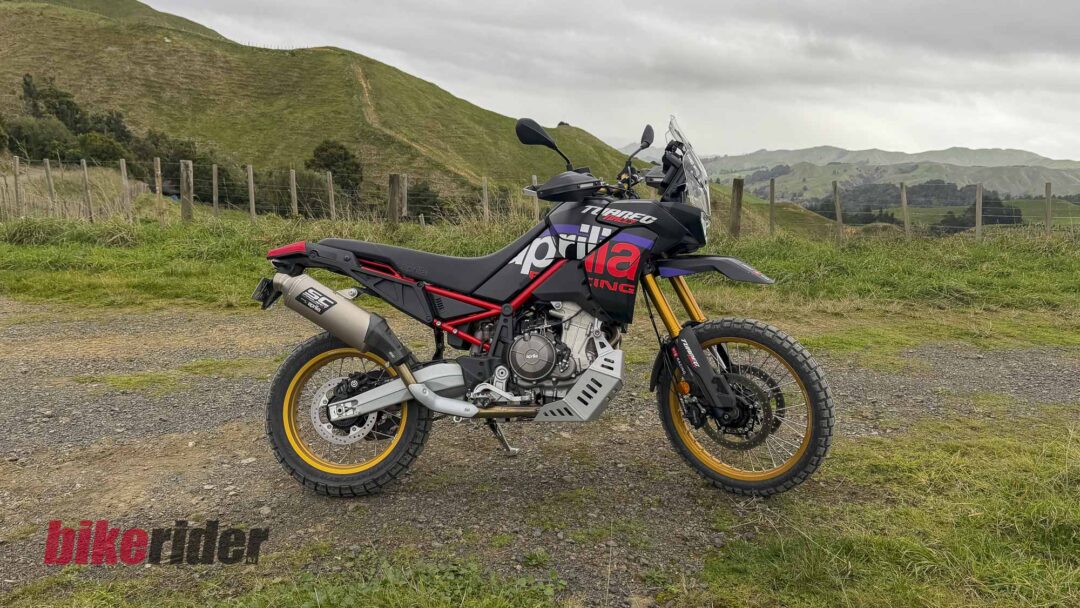
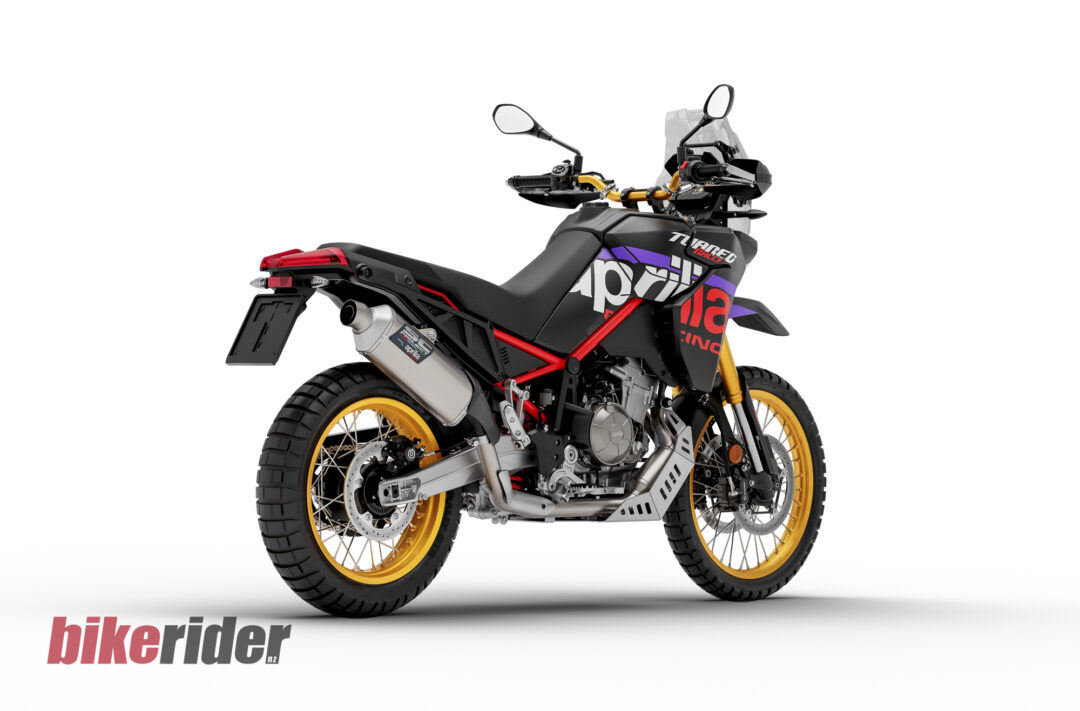
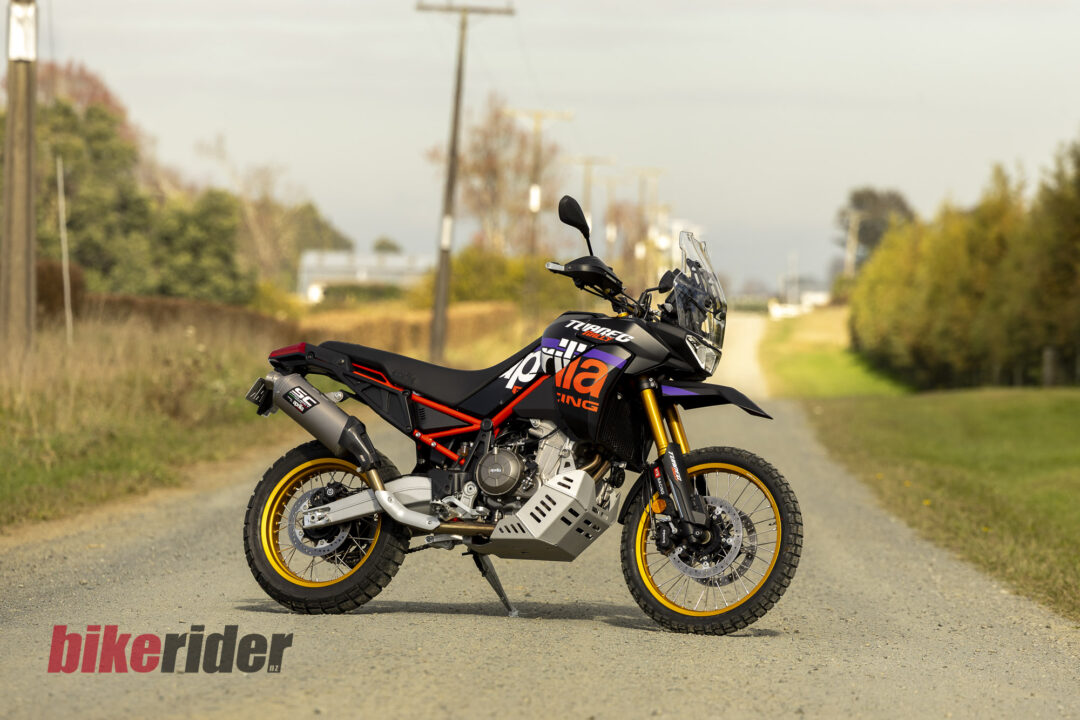
At first glance the Rally certainly looks the part. The striking race-inspired graphics, high front mudguard and purposeful stance immediately separate it from the standard bike. But the differences run much deeper than cosmetics.
The fully adjustable KYB suspension remains with 240mm travel front and rear, but features revised damping designed specifically for aggressive off-road riding. A substantial aluminium bash plate protects the underside, while revised footpegs and a flatter (but taller) rally seat make it easier to move around when riding standing up.
The SC Project silencer not only saves weight (wet weight is down from 204kg to 199kg), but it also completely transforms the bike’s personality.
Then there are the wheels.
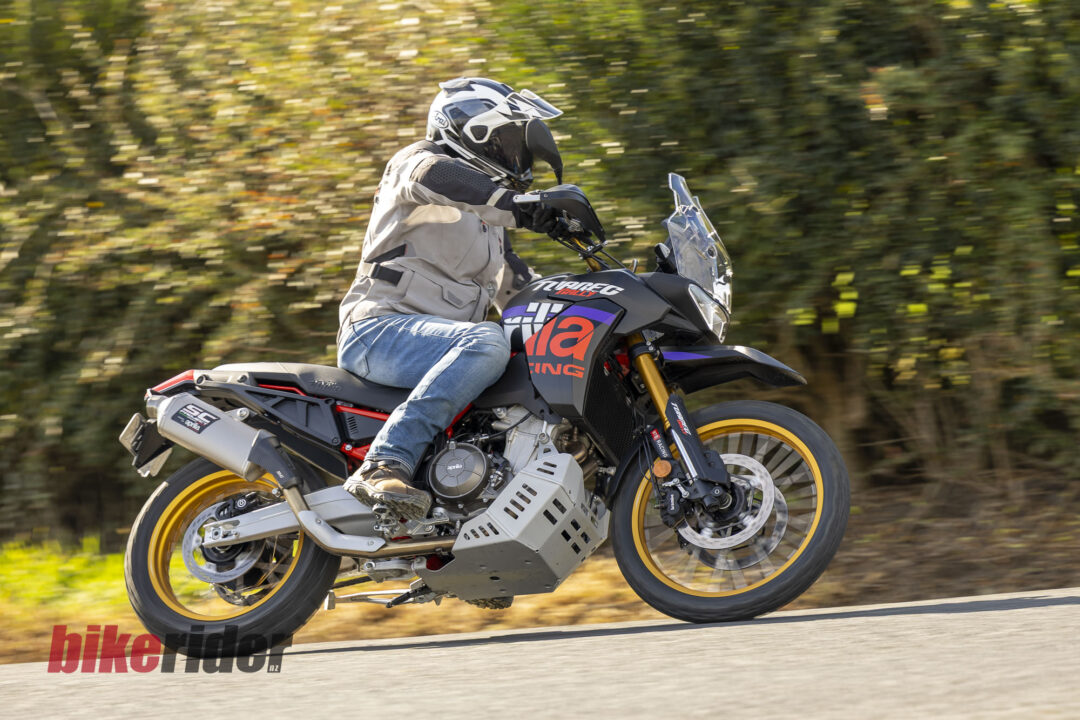
This is probably the biggest talking point surrounding the Rally and one that has divided adventure riders since the bike was announced. The standard Tuareg runs tubeless cross-spoke wheels. The Rally swaps those for heavy-duty Excel Takasago rims running traditional tubes.
For serious off-road riders, the logic is sound. Tubed wheels are generally more resistant to severe impacts, and if you bend a rim in the middle of nowhere you have a better chance of repairing it well enough to continue. For adventure touring, however, the decision isn’t quite so straightforward.
One of the great advantages of tubeless tyres is how easily punctures can often be repaired. A plug kit and compressor can have you moving again in minutes without even removing the wheel. With tubes, a puncture generally means removing the wheel, breaking the bead and replacing or repairing the tube.
It’s a compromise.
If your adventures regularly involve rocky terrain and genuine off-road riding, you’ll probably appreciate the tougher setup. If your riding is more gravel roads with the occasional adventure holiday thrown in, you may actually prefer the convenience of the standard Tuareg’s tubeless wheels.
It’s probably the one change on the Rally that will split opinions more than any other.
That glorious Italian twin
Regardless of which Tuareg you buy, the heart of the package remains one of the best engines in the class.
Aprilia’s 659cc parallel twin first appeared in the RS660 sports bike before finding its way into the Tuono and Tuareg. It’s an engine packed with personality.
Producing 80hp and 70Nm, it isn’t trying to dominate the horsepower charts. Instead, it delivers exactly what an adventure bike needs—strong mid-range performance, plenty of flexibility and just enough top-end to keep enthusiastic riders entertained. Like many Italian engines, though, it has character.
Around town I actually found myself selecting Urban mode more often than expected. Left in its more aggressive settings, the throttle response is sharp enough that the bike always feels eager to leap forward. Urban mode smooths everything out nicely, making commuting and slower-speed riding much more relaxed.
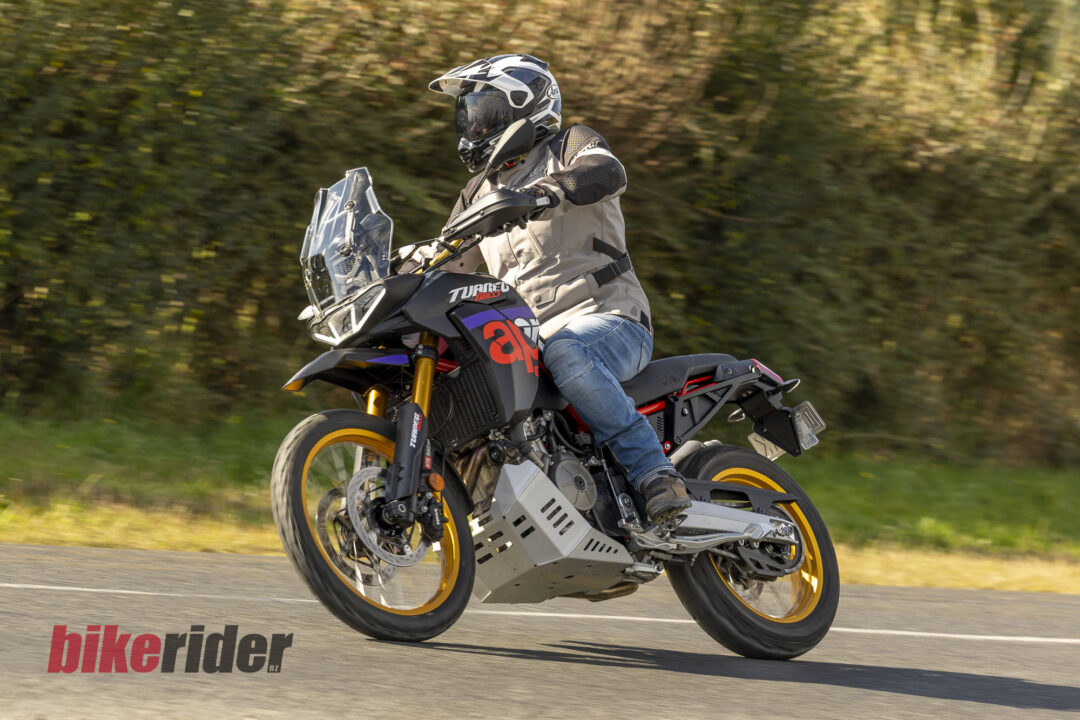
Out on the open road, however, it’s a completely different story. Once the revs climb beyond about 4,000rpm the engine wakes up and develops that distinctly Italian urgency that encourages you to keep chasing the next corner. Wind it out towards 8,000rpm and the Tuareg Rally feels genuinely entertaining.
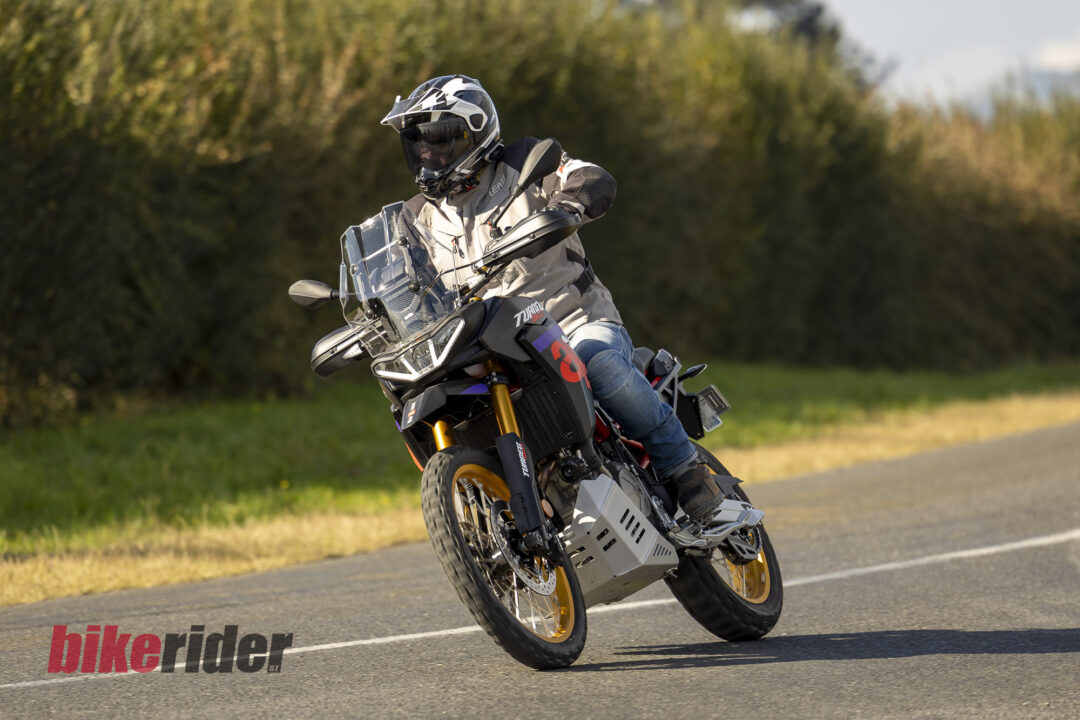
Adventure bikes aren’t normally described as playful, but this one certainly is. Despite running a 21-inch front wheel, it changes direction remarkably well. There’s enough performance here to surprise riders on much sportier machinery, and because you’re working with 80 rather than 150 horsepower, you’re enjoying yourself without constantly travelling at licence-losing speeds. It also reminds you why rider engagement matters more than outright numbers.
One omission did surprise me. Considering how well sorted the electronics package is, I expected a quickshifter to be standard. It isn’t.
You can add one as an accessory, and if I were ticking just one option box, that would be it. The gearbox itself is excellent, but when you’re working the bike through tight gravel switchbacks or flowing twisting roads, being able to snick effortlessly through the gears would elevate an already excellent riding experience.
The clutch isn’t particularly heavy, but after a day mixing road riding with tighter off-road sections, I reckon a quickshifter would be money well spent.
When the road disappears
Adventure bikes often promise far more off-road capability than most owners will ever use. The Tuareg Rally is one of the few that actually backs it up.
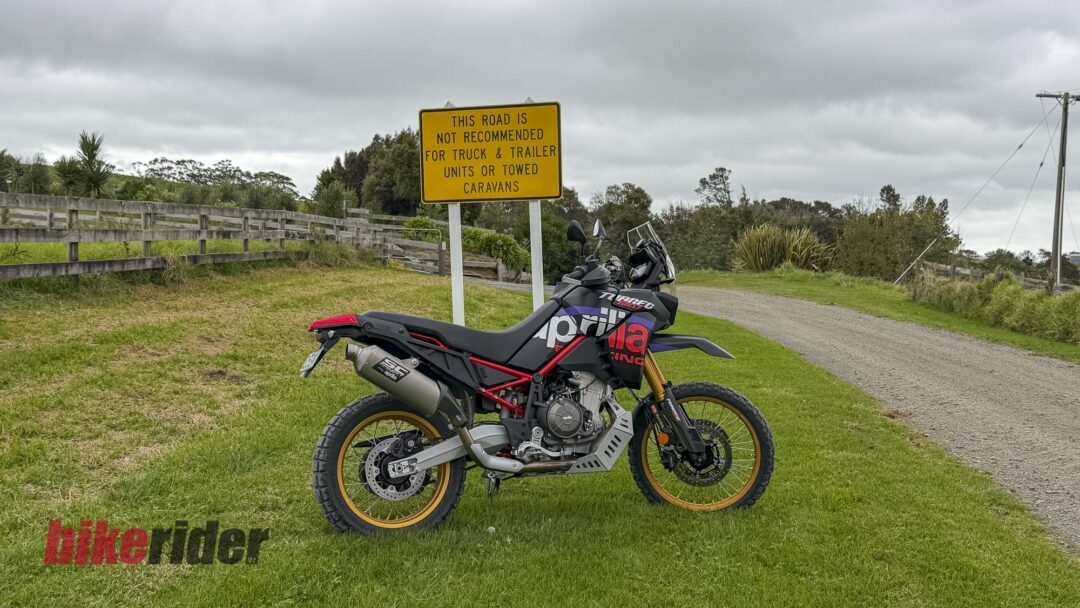
Now, before the keyboard warriors start firing up the comments section, no, I didn’t spend the weekend trying to recreate the Africa Eco Race. I wasn’t launching it over dunes or bouncing it off boulders. Instead, I rode the sort of terrain most New Zealand adventure riders actually seek out—gravel roads, forestry tracks, loose climbs and muddy back roads after a weekend of rain. And, to be honest, that’s exactly where this bike shines.
The first thing you notice is how composed the suspension feels. With 240mm of travel at each end, it has enough movement to absorb washouts, corrugations and potholes without ever feeling wallowy. The standard Tuareg was already one of the better suspended bikes in the middleweight class, but the Rally takes that composure another step further with its uprated internals. It encourages you to stand up, relax and simply let the bike work underneath you. The slim rally seat also plays a big role here.
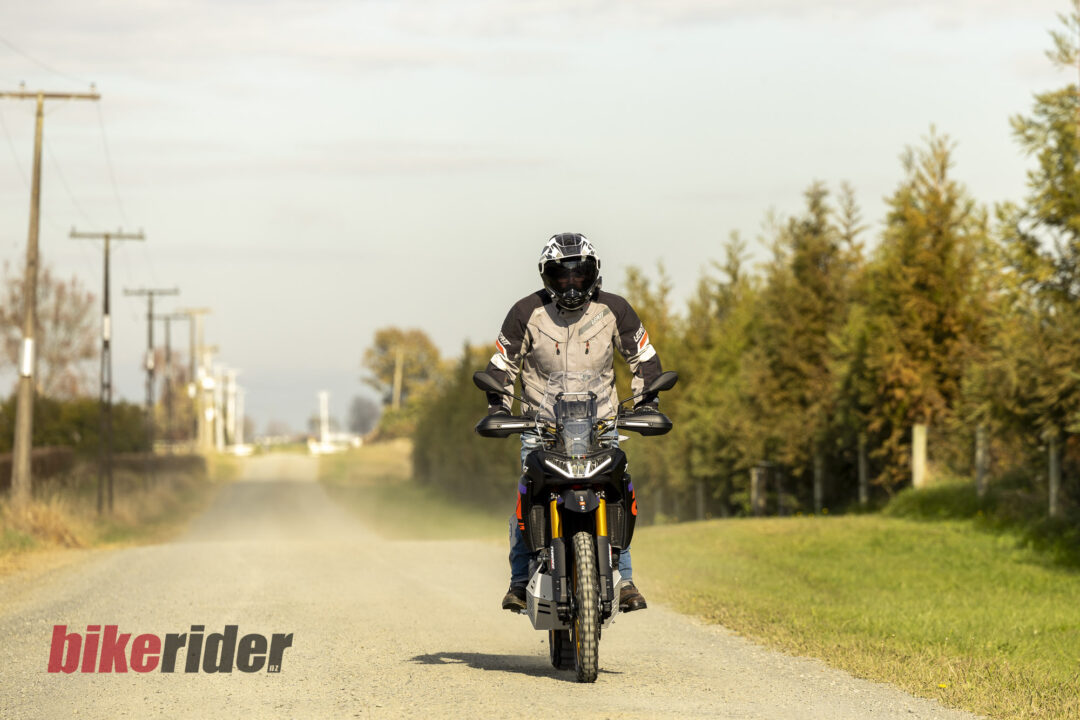
If you’re planning on riding from Auckland to Invercargill, you may find the standard Tuareg’s broader seat a little kinder on your backside. But when you’re standing on the pegs, it suddenly makes perfect sense. Its narrow profile allows your knees to grip the bike naturally, locking you into position while giving you plenty of freedom to move forwards and backwards as the terrain changes.
It’s a proper off-road riding position. Plus, the additional 20mm in height might make it a bit more of a stretch to the floor, but it assists in helping the transition between sitting and standing a little less of a strain. And after a day mixing it up on the Tuareg with a combination of road and off-road work, the smallest things can often make a big difference.
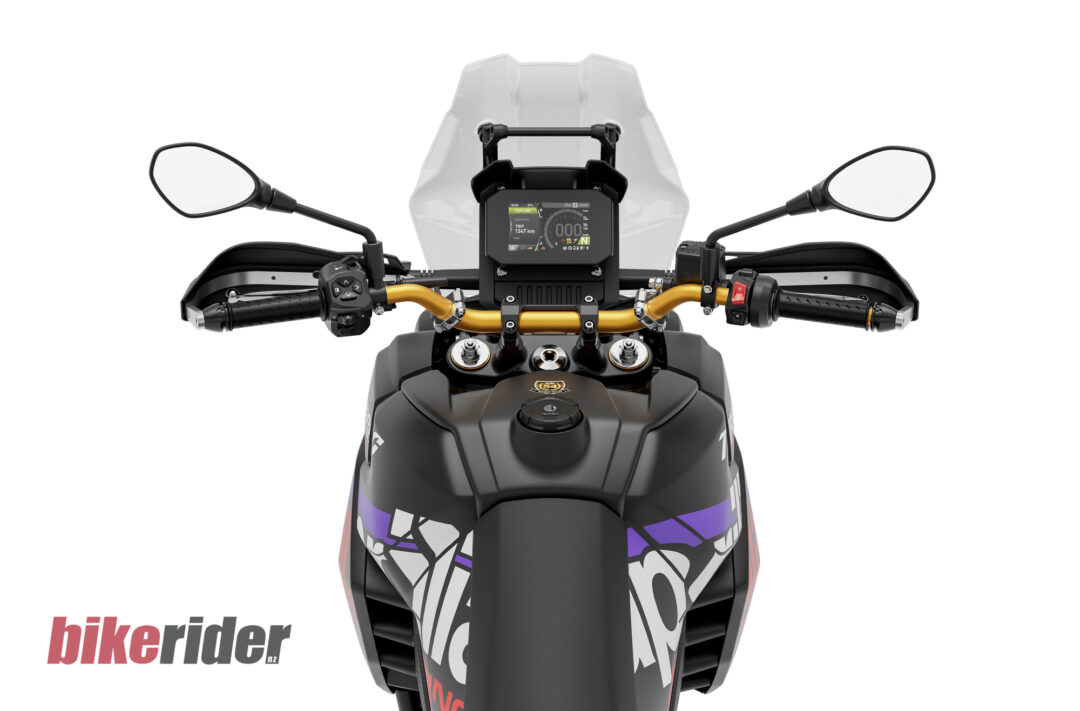
The wide handlebars complement that perfectly, putting you naturally into the attack position without feeling stretched.
One thing I did notice, however, was where you feel the bike’s weight. Unlike KTM’s 790 and 890 Adventure models, which carry their fuel low down in those distinctive side-mounted tanks, the Aprilia still carries more of its mass higher up. It isn’t top-heavy by any means, but when you’re pushing hard through loose corners you are aware that there’s more weight and a bit more bulk above the engine than on the KTM.
It’s not a deal breaker—it quickly becomes something you adapt to—but riders coming from an 890 Adventure R will probably notice it.
Electronics that actually help
Adventure bikes have become increasingly sophisticated over the past few years, but not all electronics are created equal. Aprilia’s APRC package has absolutely nailed the balance, although that’s hardly surprising as they are so sorted and intuitive on their road bikes.
The riding modes (Urban, Explore, Off-Road & Individual) genuinely change the character of the motorcycle rather than simply dulling the throttle or making the traction control intrusive. Better still, almost everything can be customised. Throttle response, traction control, ABS and engine braking can all be adjusted individually before being saved into a rider mode that suits your own preferences. You can also deactivate the ABS from the rear only, or both the front and back. And that’s particularly useful off-road.
Initially I found the Rally’s throttle response a little abrupt on loose gravel, particularly as the engine comes alive around the 4,000rpm mark. A few adjustments soon had everything working exactly as I wanted, allowing enough rear-wheel movement to steer the bike while still providing a safety net if my enthusiasm exceeded available grip.
The traction control deserves particular praise. Rather than cutting power aggressively, it intervenes smoothly enough that you barely notice it working. There were several occasions climbing loose hills where I could feel the rear tyre beginning to spin before the electronics gently gathered everything back together. Instead of interrupting the ride, it simply makes you look like a better rider.
That’s exactly how rider aids should work.
Music to your ears
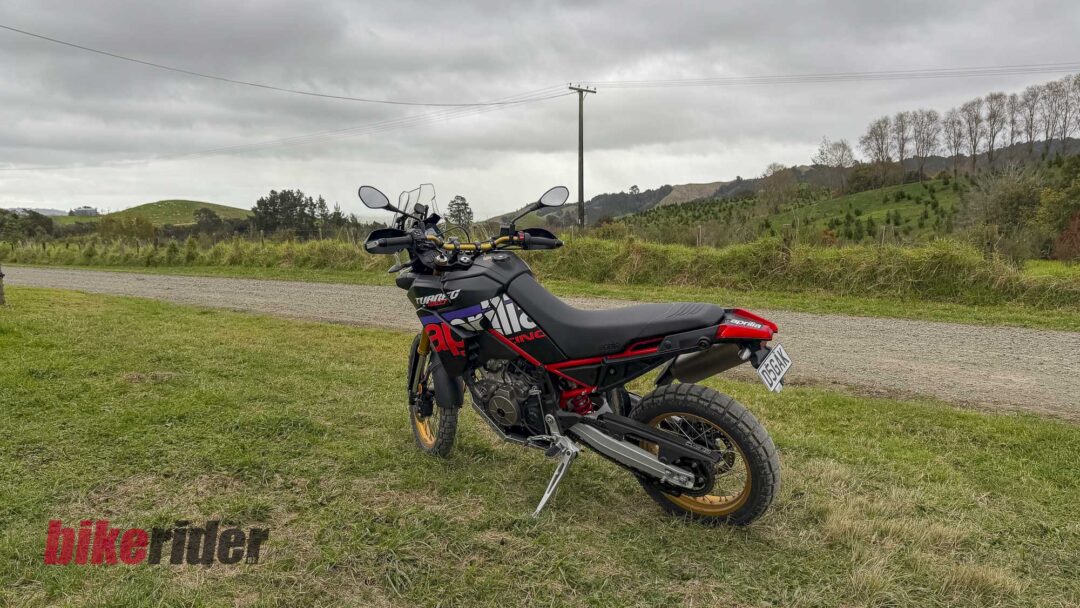
Then there’s the soundtrack. The standard Tuareg never exactly lacked personality, but the Rally’s SC Project silencer adds another dimension altogether.
It isn’t obnoxiously loud or antisocial, and you could still use the Rally to ride to work each day without causing anarchy with the neighbours. Instead, it delivers a deep, purposeful note that suits the character of the engine perfectly without being painful.
Rolling off the throttle produces a series of pops and crackles that echo around valleys and forestry roads, adding just enough theatre without becoming tiring on longer rides. It’s one of those modifications that genuinely enhances the riding experience rather than simply making more noise.
And yes… It also looks the business.
Living with it
Despite its more focused nature, the Rally hasn’t forgotten it’s still an adventure bike. Cruise control comes standard and works exactly as you’d expect, taking the strain out of longer highway sections before you disappear onto the gravel again.
The 18-litre fuel tank, combined with consumption hovering around the four litres per hundred kilometre mark, gives the bike an excellent touring range. That’s more than enough for the sort of back-country exploring most Kiwi adventure riders enjoy.
There’s also plenty of room to mount luggage, despite Aprilia deleting the pillion footpegs on the Rally. Whether that was to save weight or simply acknowledge the bike’s solo focus is open to debate, but the rear of the seat still provides ample space for soft luggage and camping gear.
Personally, I’d still have no hesitation loading this bike up for a week exploring the South Island.
Verdict
What impressed me most about the Tuareg Rally wasn’t that it felt like a race bike, because it didn’t. Instead, it felt like a really, really good adventure bike that’s been given just enough rally DNA to make it more capable without becoming intimidating.
It still handles beautifully on the road. The engine remains one of the most charismatic twins in the class. The electronics are superb, and once the tarmac disappears it comes alive in exactly the sort of terrain most Kiwi riders actually encounter.
The biggest decision prospective buyers need to make is whether the Rally’s changes actually suit the way they ride.
If most of your adventures involve sealed roads with occasional gravel detours and the odd South Island adventure ride, I’d probably steer you towards the standard Tuareg 660. The tubeless wheels are simply more convenient for touring, the broader seat is likely to be more comfortable over long distances and you’ll save yourself around $1500 dollars.
However, if your weekends revolve around exploring forestry roads, riding adventure rallies, tackling rougher trails, or you simply want to own the most capable version Aprilia builds, then the Rally makes a compelling case.
It’s sharper, tougher, looks cooler, and it sounds fantastic. Most importantly, it never feels like a compromise.
Instead, it feels like a motorcycle built by people who genuinely understand adventure riding.
Rally or Standard Tuareg?
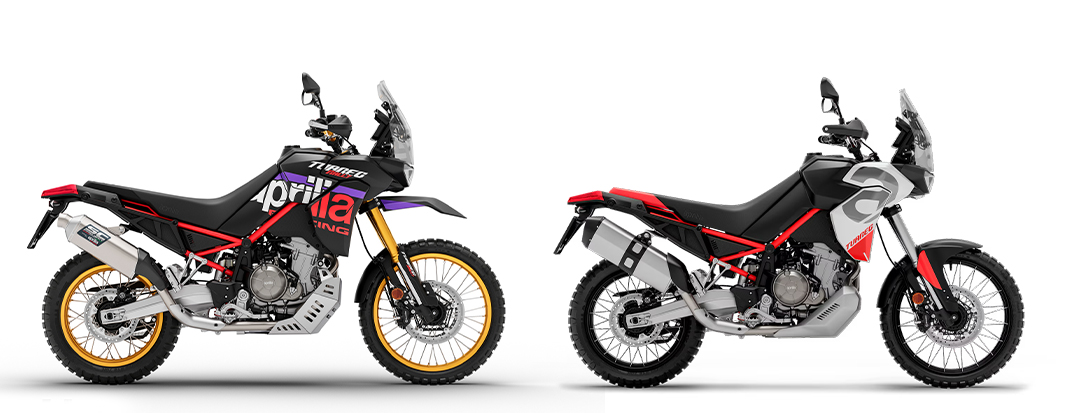
With only around $1,500 separating the two models, the obvious question is whether you should buy the Rally or stick with the standard Tuareg 660.
The answer really comes down to how you ride.
If most of your adventures involve sealed roads with the occasional gravel detour or the odd South Island back-country trip, I’d probably lean towards the standard Tuareg. It’s already an exceptionally capable adventure bike, the broader seat is likely to be more comfortable on long days in the saddle, and its tubeless wheels make punctures far less of a headache. A simple plug kit can often have you back on your way in a matter of minutes.
The Rally, on the other hand, is aimed at riders who spend more time standing on the pegs than sitting in the seat.
Its longer-travel suspension, rally ergonomics, additional protection and SC Project exhaust all add up to a bike that feels happier once the tarmac ends. Yes, the switch to tubed Excel rims will divide opinion, but there’s a reason Aprilia chose them. If you’re riding harder off-road, they’re generally better able to cope with big impacts, and a damaged rim can often be repaired well enough to keep you moving.
For me, the biggest improvement isn’t actually any single component. It’s the way all the changes work together. The Rally feels a little more focused, a little more purposeful and encourages you to seek out the sort of roads that adventure bikes were built for in the first place.
The standard Tuareg remains one of the best all-round middleweight adventure bikes you can buy.
The Rally simply shifts the balance further towards dirt.
Level Up
The standard Tuareg 660 remains the bike I’d recommend to most adventure riders. But if your weekends revolve around gravel roads, forestry tracks and exploring what lies beyond the sealed road, the Rally is absolutely worth the extra investment. It doesn’t replace the standard Tuareg—it simply gives serious off-road riders an even better option. The switch to tubed wheels will divide opinion, but if you’re the sort of rider Aprilia had in mind, you’ll probably see them as a worthwhile trade-off.
Specifications
| Specifications | 2026 Aprilia Tuareg 660 Rally |
|---|---|
| Engine | 659cc liquid-cooled parallel twin, DOHC, 8 valves |
| Power | 80hp (59kW) @ 9,250rpm |
| Torque | 70Nm @ 6,500rpm |
| Transmission | Six-speed, slipper clutch, chain final drive |
| Electronics | Ride-by-wire, four riding modes, custom rider mode, traction control, engine brake control, switchable ABS, cruise control |
| Frame | Steel tube frame with aluminium swingarm |
| Front Suspension | 43mm KYB USD forks, fully adjustable, 240mm travel, off-road tuned |
| Rear Suspension | KYB monoshock, fully adjustable, 240mm travel, off-road tuned |
| Front Brake | Twin 300mm discs, Brembo calipers |
| Rear Brake | 260mm disc |
| Wheels | 21-inch front / 18-inch rear Excel Takasago spoked wheels (tubed) |
| Tyres | Pirelli Scorpion Rally STR |
| Seat Height | 910mm |
| Fuel Capacity | 18 litres |
| Wet Weight | 199kg |
| Price | $24,990 + ORC |