
- Two Speed Twins, one road trip — real-world comparison from Waikato to Napier and beyond
- Same engine, but the RS delivers sharper handling and a more aggressive ride
- Surprisingly capable for light touring with soft luggage and open-road comfort
Speed Twin 1200
- More relaxed riding position
- Softer suspension setup
- Easier-going, everyday ride feel
- Better suited to longer distances
Speed Twin 1200 RS
- Sportier ergonomics
- Fully adjustable suspension (Öhlins rear)
- Sharper handling and braking
- More focused, aggressive ride
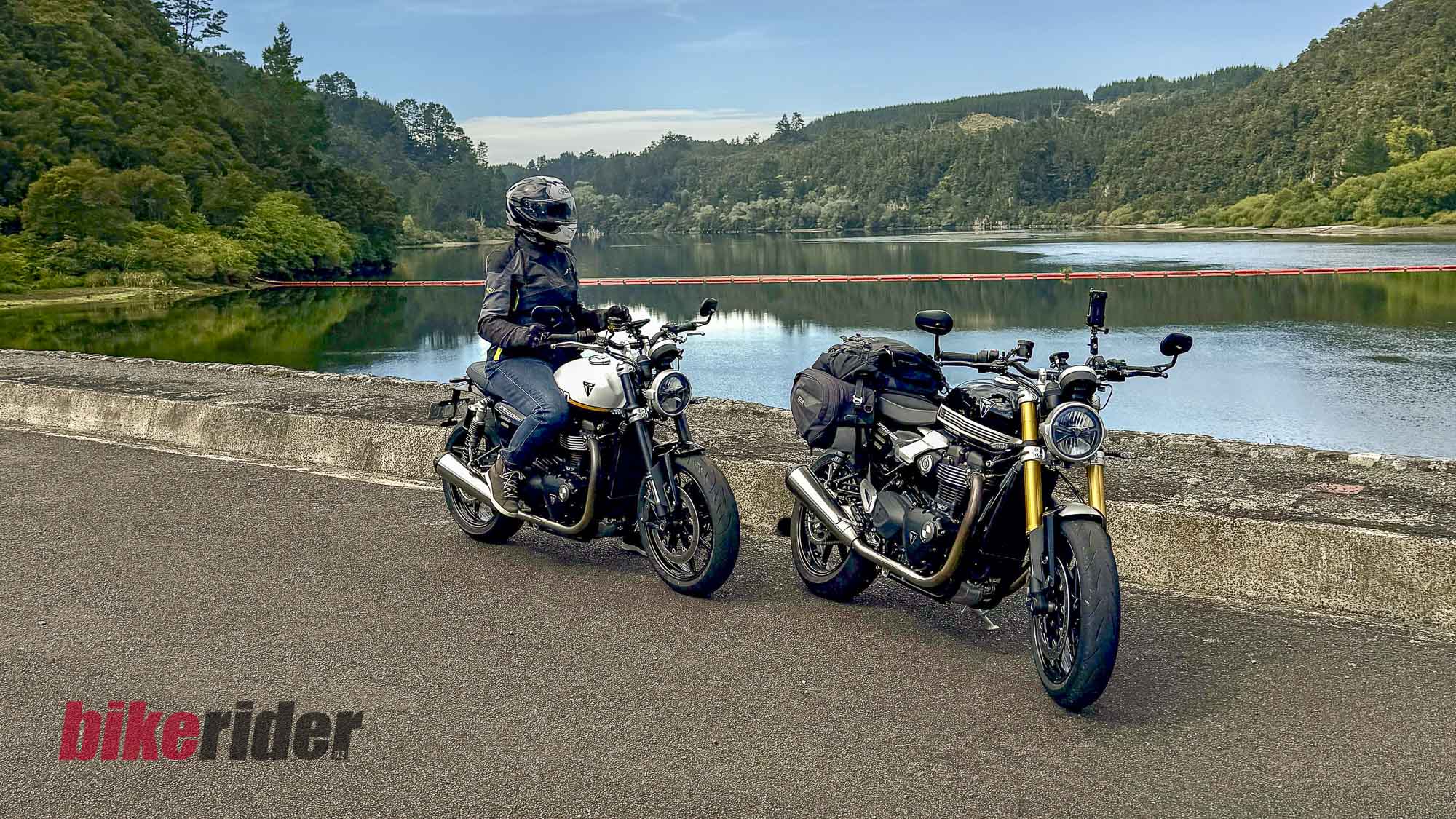
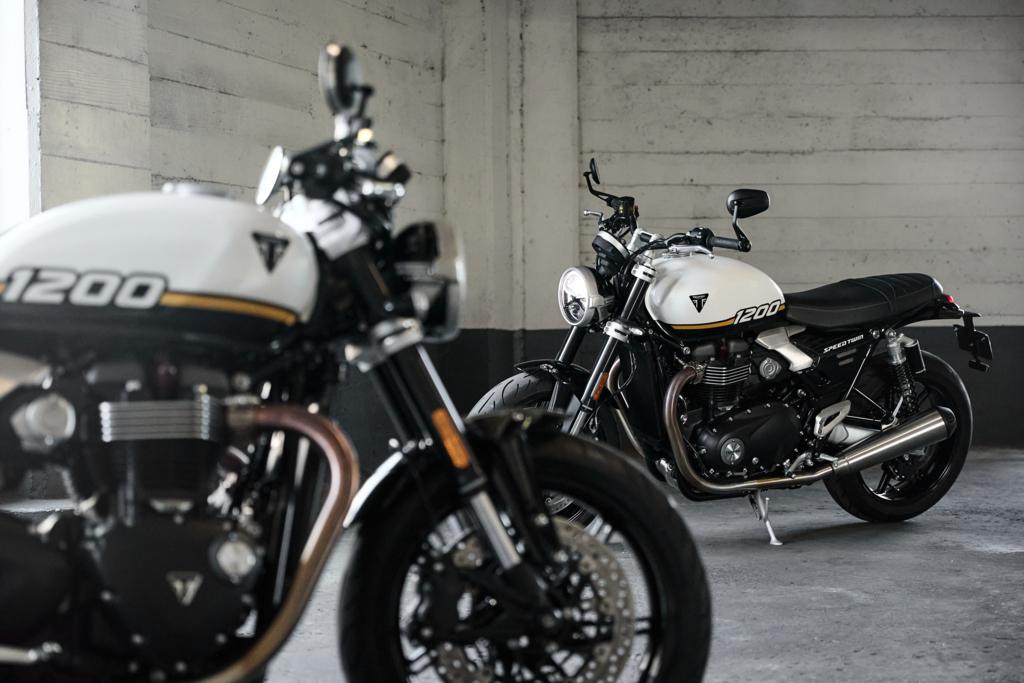
Two bikes, one road trip. We took Triumph’s Speed Twin 1200 and the sharper RS across to Napier to find out what really separates them in the real world.
Why We Took Them on a Trip
On paper, the difference between the Triumph Speed Twin 1200 and the Speed Twin 1200 RS is pretty clear. Same engine, same platform, but the RS gets the premium suspension, sharper brakes and a more focused riding position.
But spec sheets only tell you so much.
So instead of just riding them back-to-back for an hour, we decided to do something a bit more real-world. Load them up, take off for a proper ride, and see how those differences actually play out over a decent distance.
That meant a trip from the Waikato across to Napier on the East Coast to sample some of the epic roads on that side of the island, where we got a mix of open highways, flowing back roads and enough variety to get a proper feel for both bikes.
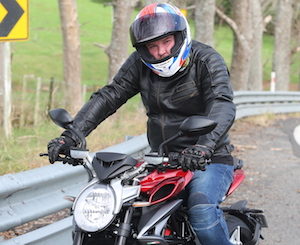
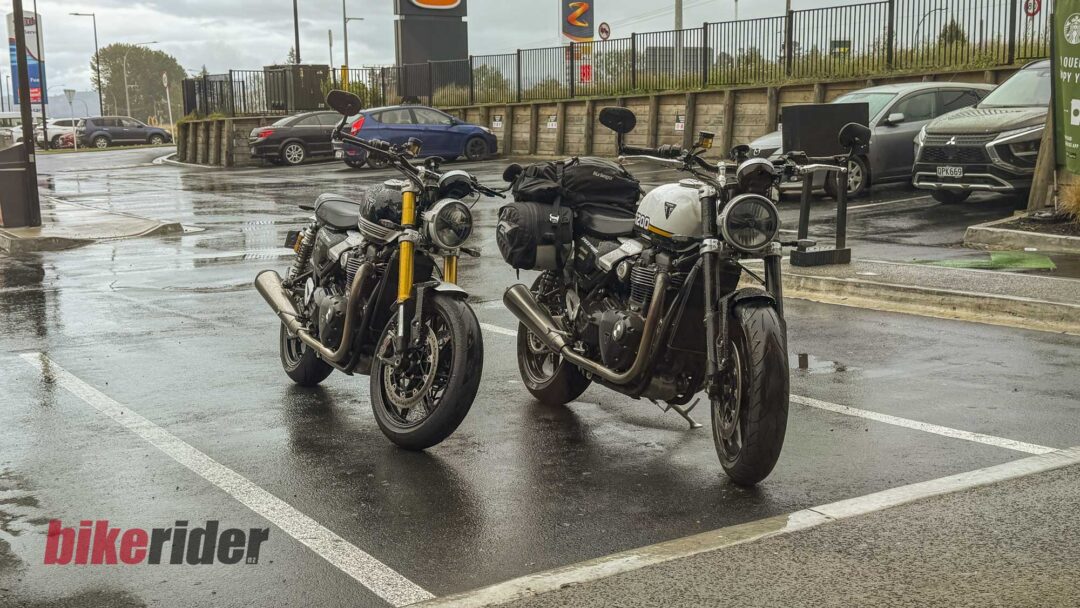
With Kerry along for the ride, we were able to swap between the two models and instantly see the differences in the real world. With Triumph Speed Twins among her list of favourite bikes that she rode last year, it didn’t take much persuading to get her along, even with the limited luggage capacity we were going to have. Yep, they’re not touring bikes… but we made it work.
Retro Roadster
Let’s be clear — neither of these bikes is designed to be a tourer. There’s no fairing, no hard luggage, and long-distance comfort isn’t really the brief. But that didn’t stop us. We threw some soft luggage over the back, packed light, and hit the road.
And you know what? They handled it better than you might expect.
Once you’re moving, both bikes settle into a really easy rhythm. The engine is relaxed, torquey and happy to sit at open-road speeds all day, and while you do get the full hit of windblast, it’s not something that becomes a dealbreaker unless you’re doing massive motorway miles.
For a trip like this — a couple of days, decent roads, plenty of stops — they actually make a lot of sense.
Same Engine, Different Feel
The biggest surprise (or maybe not, depending on how you look at it) is that both bikes share the same 1200cc twin — and it’s a great motor.
There’s loads of torque down low, a strong midrange and enough top-end to keep things interesting when you want to push on. It’s flexible, easy to ride and suits everything from cruising through small towns to opening it up on a clear stretch of road. So in terms of outright performance, there’s not a lot between them.
The character of the engine lets you know there’s a pair of massive cylinders working away beneath you that need to be wound up before they’ll deliver their full potential. It’s a mechanical feeling that accentuates the character of the Bonneville powerplant, with gob-loads of torque hitting as the digital rev counter gets near 4,000rpm and then pulling hard till the max power hits at 7,750rpm.
But this motor is all about the torque rather than the max output, despite the sporty intentions, and needs to be ridden as such. Get your timing wrong with the quickshifter on the RS version or wind the revs up and then quickly shut off the throttle and the Bonne powerplant will soon let you know that you’re doing it wrong, with smooth shifts and throttle inputs rewarded with decent progress. It takes a bit of getting used to if you want to do more than cruise around lower in the rev range, but that’s just life when riding a big capacity twin with a lumpy 270-degree firing order. And it certainly adds to the character compared to all the vanilla parallel twins coming through the ranks recently.
But the way each bike delivers the ride experience? That’s where things start to separate.
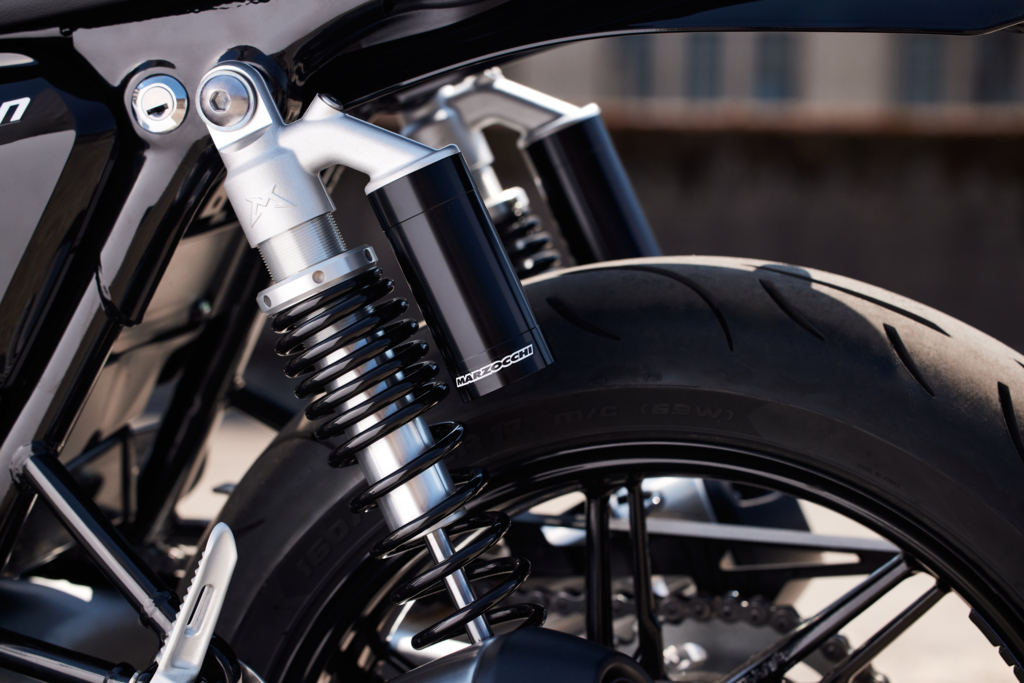
Where the RS Steps Ahead
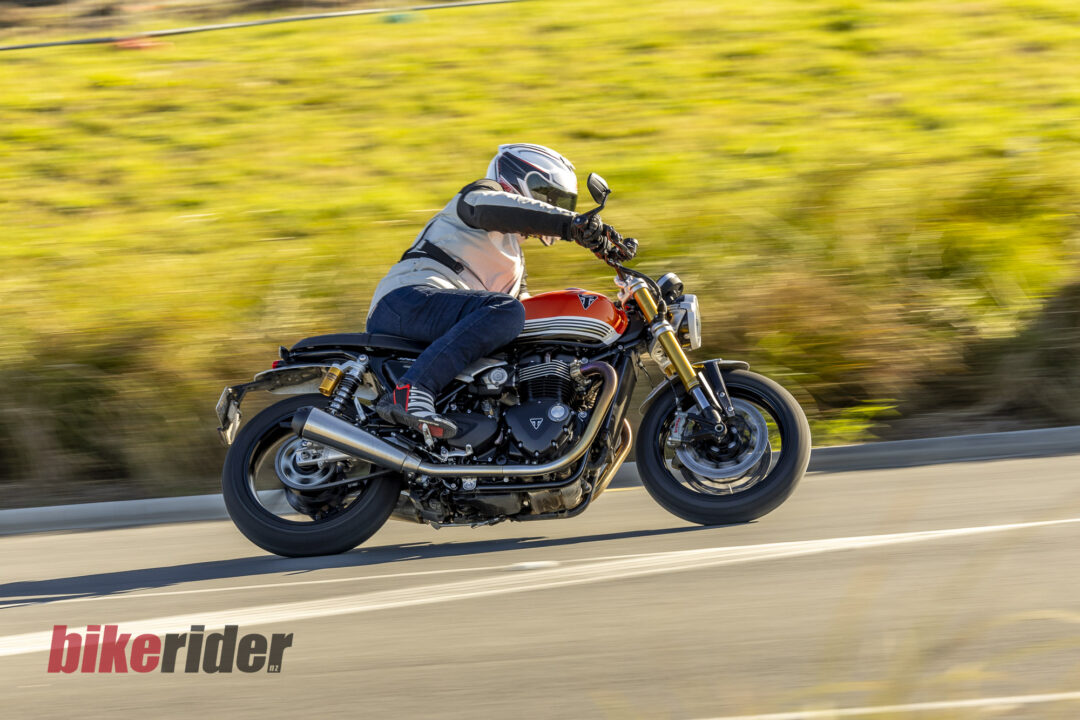
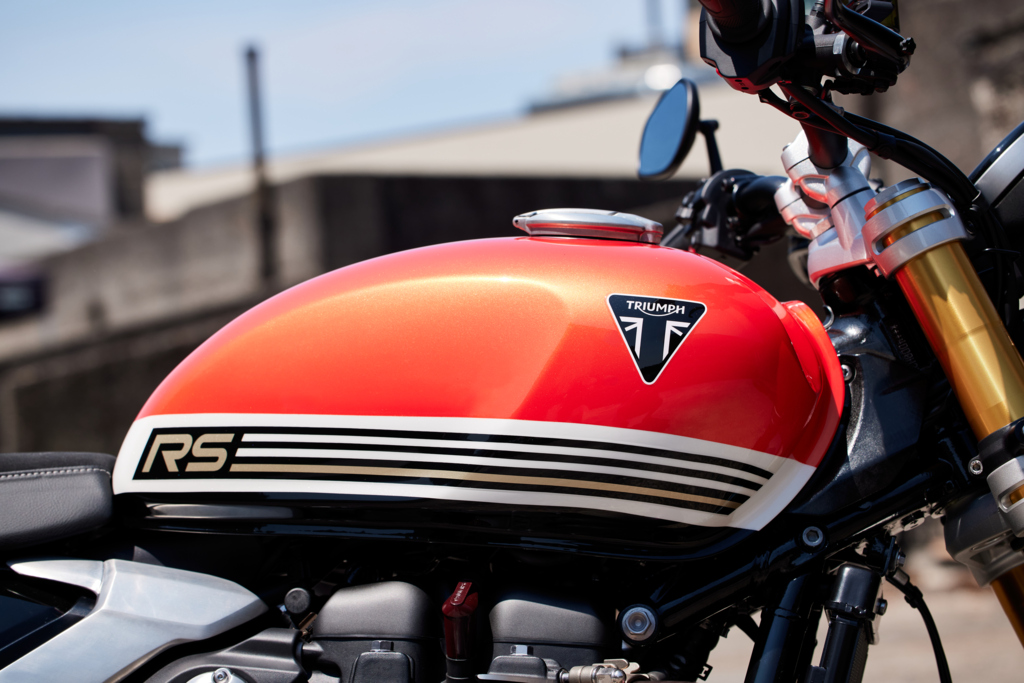
The RS is the sportier of the two, and you feel it almost straight away. The riding position puts you slightly more over the front, the suspension is firmer and more controlled, and the overall setup just feels sharper. When the road starts to get interesting, the RS is the one that encourages you to push a bit harder.
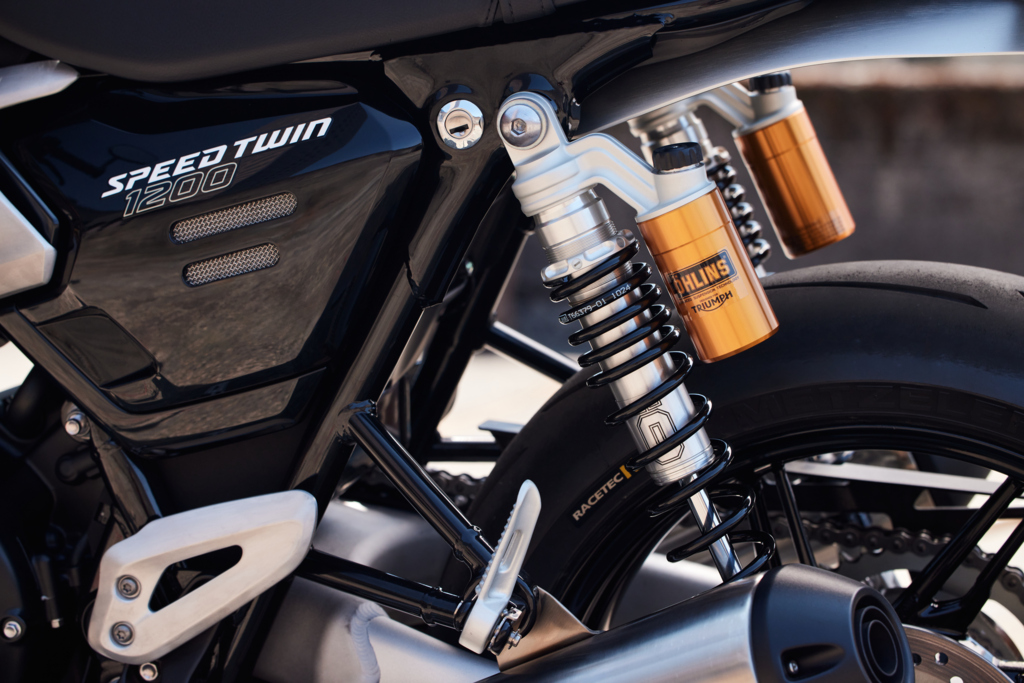
The Öhlins shocks at the rear and the upgraded front end give it a more planted feel, especially when you start loading the bike up through faster corners. Add in the stronger braking performance and better feel at the lever, and it’s clearly the more focused machine.
If you’re riding solo and you’re chasing that more aggressive, sporty edge, the RS is the one you’ll gravitate towards.
Where the Standard Bike Makes Sense
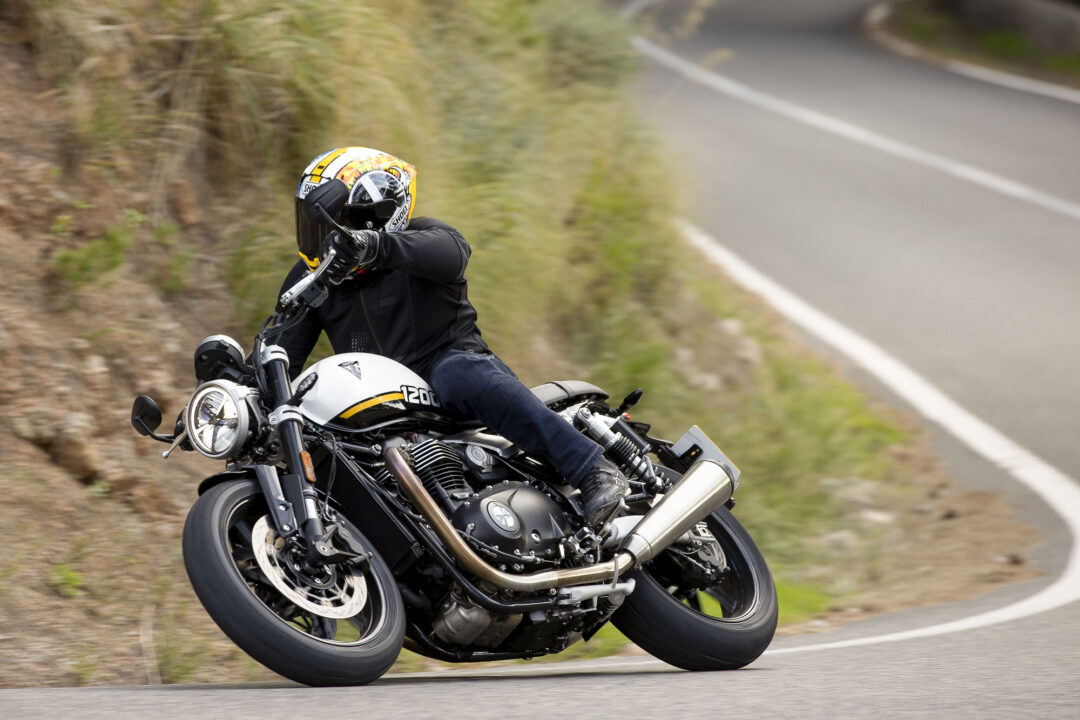
Jump back onto the standard Speed Twin 1200, and things relax a bit. The riding position is more neutral, the suspension is a little softer, and overall, it just feels easier going. It’s still a very capable bike — don’t mistake that — but it doesn’t have quite the same edge as the RS. And on a longer ride like this, that actually works in its favour.
It’s the bike you can just settle into, cruise along on, and not think too much about. It’s comfortable, predictable and still plenty quick when you want it to be. If your riding is more about enjoying the road than attacking it, the standard bike arguably makes more sense.
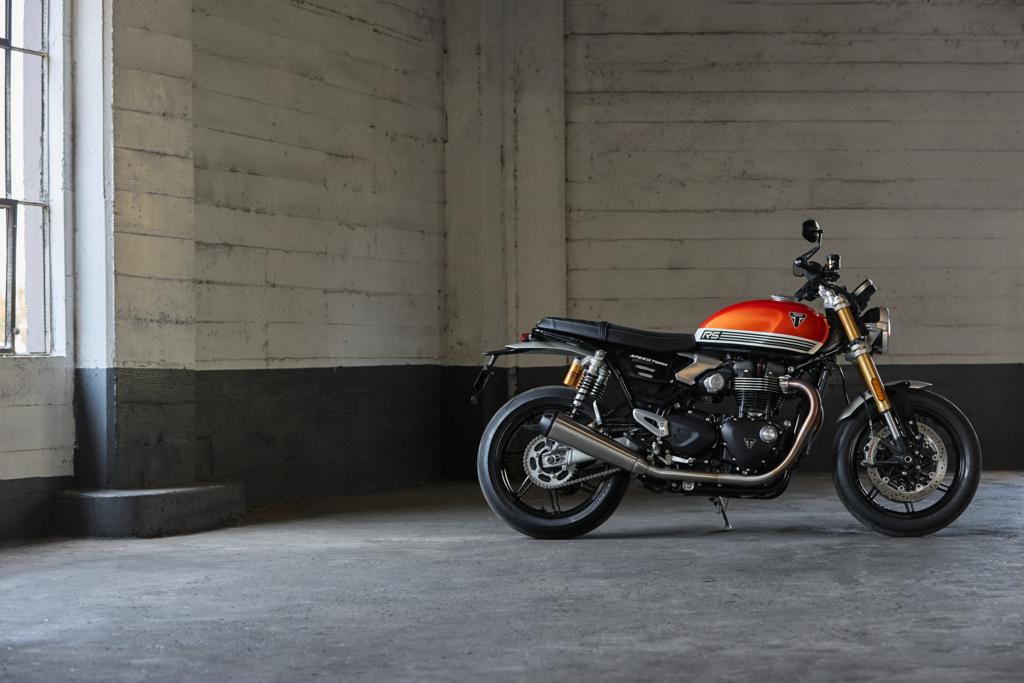
Real-World Riding: What We Found
Over the course of the trip, swapping between the two bikes really highlighted the differences.
The RS always felt like it had that extra layer of precision and intent. It’s the one you’d pick for a Sunday blast or a fast run through your favourite set of corners.
The standard bike, on the other hand, felt more relaxed and versatile. It didn’t demand as much from the rider, and over longer distances that made it an easier companion.
Neither is right or wrong — they just suit slightly different approaches to riding.
An Awesome Trip Regardless
More than anything, though, this trip reinforced just how enjoyable both of these bikes are to ride.
They might not be purpose-built tourers, but with a bit of planning and some soft luggage, they’re more than capable of handling a decent road trip.
Great roads, good weather, two cracking bikes and a couple of days away — it doesn’t get much better than that.
Difference At A Glance
| Spec | Speed Twin 1200 | Speed Twin 1200 RS |
|---|---|---|
| Engine | 1200cc parallel twin | 1200cc parallel twin |
| Power | ~103hp | ~103hp |
| Torque | ~112Nm | ~112Nm |
| Suspension (Front) | Marzocchi USD | Fully adjustable Marzocchi USD |
| Suspension (Rear) | Twin shocks | Öhlins fully adjustable |
| Brakes | Brembo | Brembo Stylema (higher spec) |
| Riding Position | Upright / neutral | More forward / sporty |
| Electronics | Riding modes, TC, ABS | + Quickshifter, sportier calibration |
| Tyres | Road-focused | Sport-focused (Racetec) |
| Character | Relaxed roadster | Performance modern classic |
👉 Choose the standard 1200 for comfort and versatility, or the RS if you want sharper handling and a more aggressive ride.
SUMMARY
The Triumph Speed Twin 1200 and Speed Twin 1200 RS may share the same engine and platform, but a real-world ride to Napier reveals distinct differences in character. The RS offers sharper handling, premium suspension and a more aggressive riding position, while the standard model delivers a more relaxed, comfortable ride over longer distances. Both prove capable of light touring when fitted with soft luggage, highlighting their versatility beyond their intended roadster role.