

WORLD LAUNCH | ADVENTURE
- New 743cc twin delivers 40.5kW and 63Nm, with the emphasis firmly on low-down drive.
- Accessible ergonomics, plush suspension and impressive comfort make long days easy.
- Its relaxed nature is part of the appeal, but weight and modest power limit the off-road fun.
Royal Enfield’s bigger Himalayan brings twin-cylinder torque, a generous equipment list and proper all-day comfort. Adam Child heads to Sicily to discover whether it has found its own place in the adventure-bike world.
Words: Adam Child “Chad” | Photography: Chippy Wood and Jamie Morris
Royal Enfield’s original Himalayan 411 arrived in 2016 and quickly won riders over with its rugged simplicity. The Himalayan 450 brought a useful step up in performance, while keeping that accessible, go-anywhere character. For some, though, there was still room for a bigger engine.
Enter the Himalayan 750. It started with a few Royal Enfield engineers squeezing a 650 twin into a Himalayan 450 chassis. The rough prototype, nicknamed the “pig”, showed enough promise to become something far more serious.
Despite those humble origins, the 750 is essentially new. More than 90% of its air/oil-cooled parallel-twin has been redesigned, along with the chassis, suspension and electronics. Familiar switchgear and the circular four-inch TFT provide a link to the 450.
MORE ARTICLES
More engine without the drama
The 743cc twin produces 40.5kW, or 54.3bhp, but the important figure is torque. There is 63Nm on tap, with Royal Enfield claiming 70% arrives at 2,000rpm and 90% by 3,500rpm. This is an engine intended to pull, rather than be revved hard.
It sits as a stressed member in a steel spine frame, with fully adjustable Showa forks, a preload-and-rebound-adjustable rear shock, 19/17-inch wheels and 205mm of ground clearance. The launch specification puts kerb weight at 223kg with 90% of the 17.8-litre tank filled.
“Within minutes, it feels familiar.”
Ride-by-wire brings five riding modes, lean-sensitive traction control and cornering ABS. Cruise control, tyre-pressure monitoring, self-cancelling indicators, navigation and two USB-C ports are standard. It is a generous equipment list for a bike with such an uncomplicated outlook.
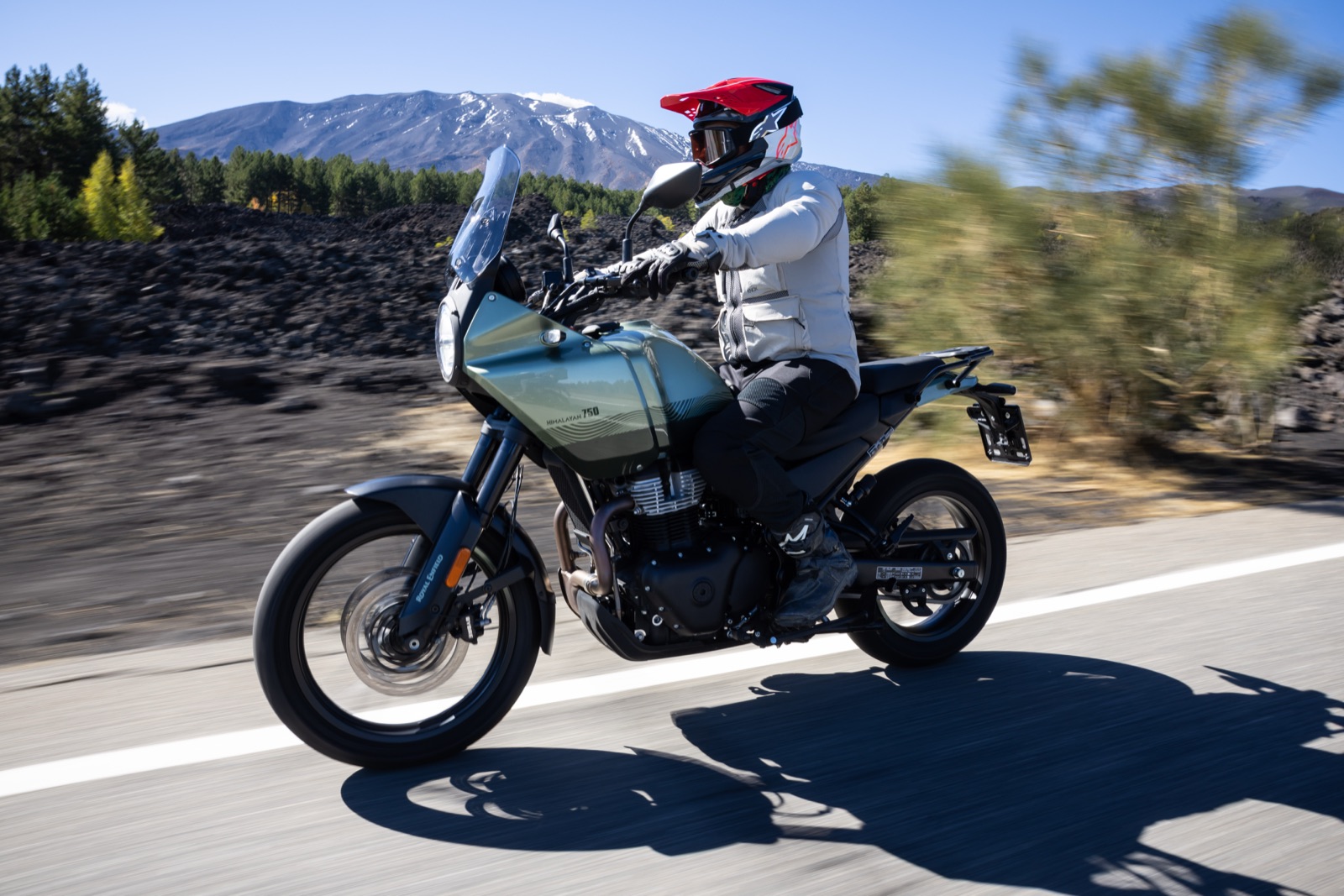
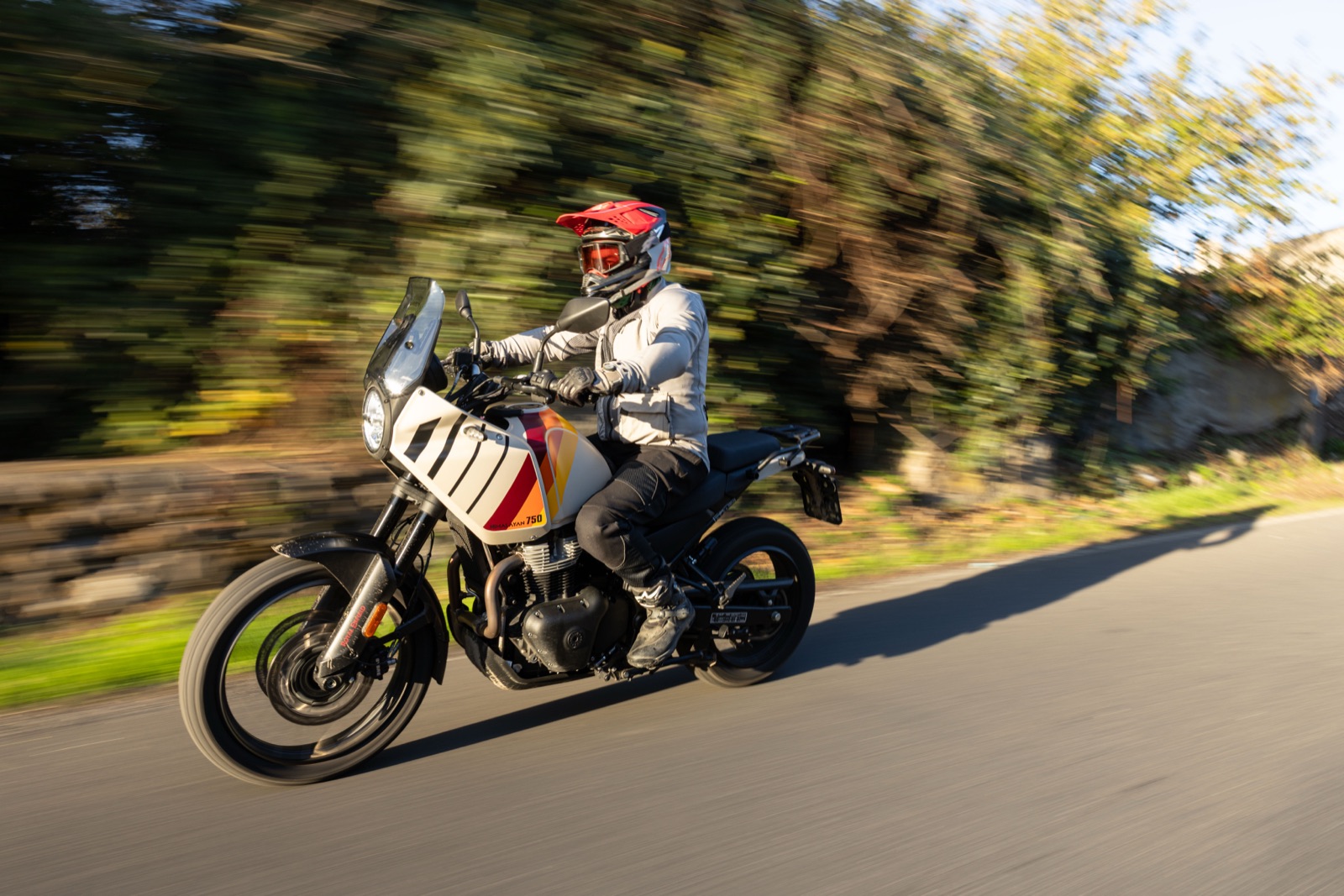
I first saw it in Sicily, shortly before its Milan unveiling. It is unmistakably a Himalayan: solid, purposeful and seemingly built from girders. Yet the integrated design and 1970s-inspired styling add some welcome finesse. The Givi-developed luggage looks suitably substantial, too.
Easy from the first few metres
At 815mm, the seat is low by adventure-bike standards. Despite its weight, the Himalayan carries its mass low and feels remarkably manageable. The throttle is soft, the balance excellent and walking-pace control almost effortless. Within minutes, it feels familiar.
The riding modes are less convincing. Changes require a closed throttle and a short wait, while off-road settings and disabled rider aids must be selected at a standstill. With this level of performance, five modes feel excessive. Road and Trail will cover almost everything.
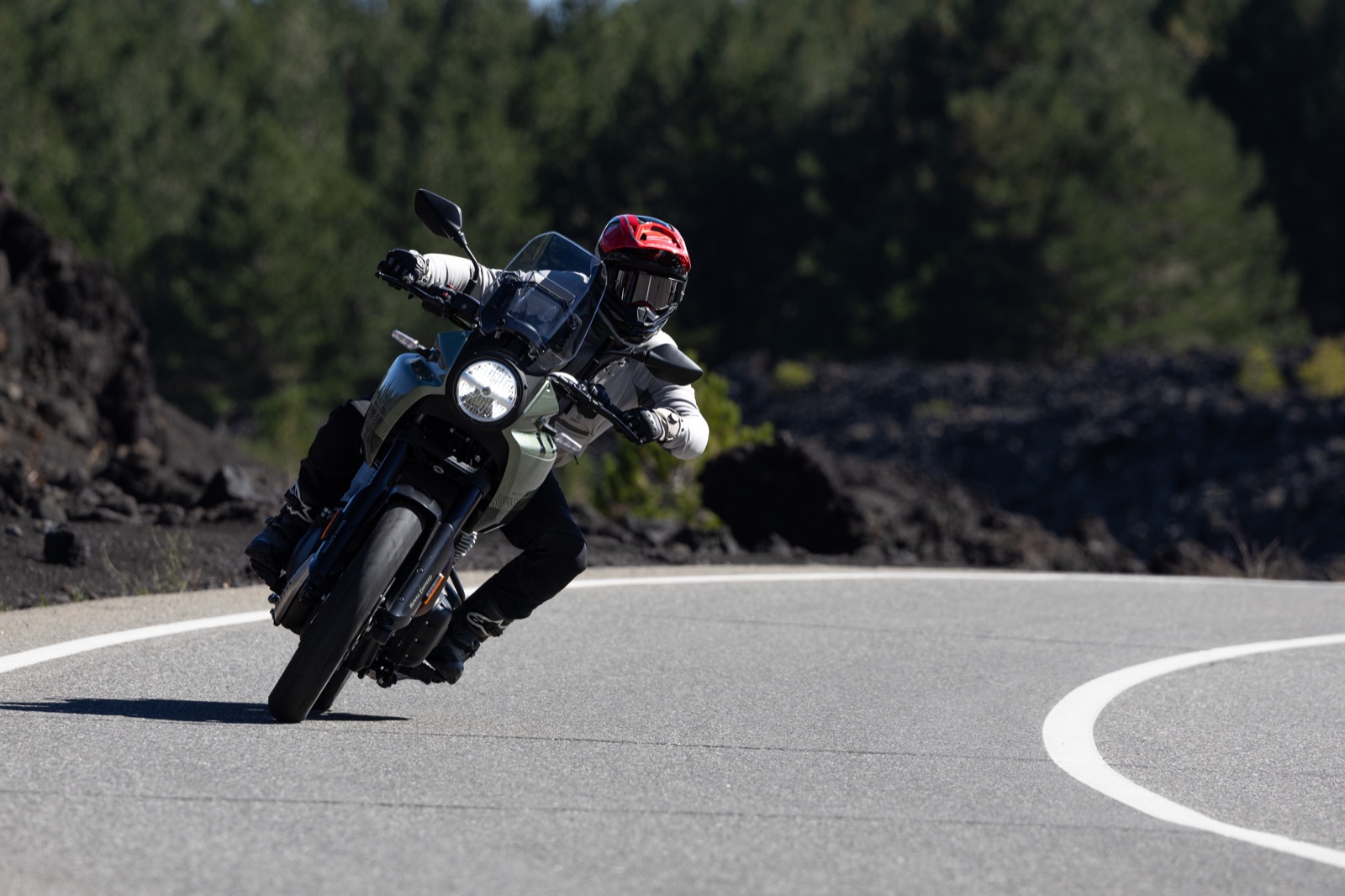
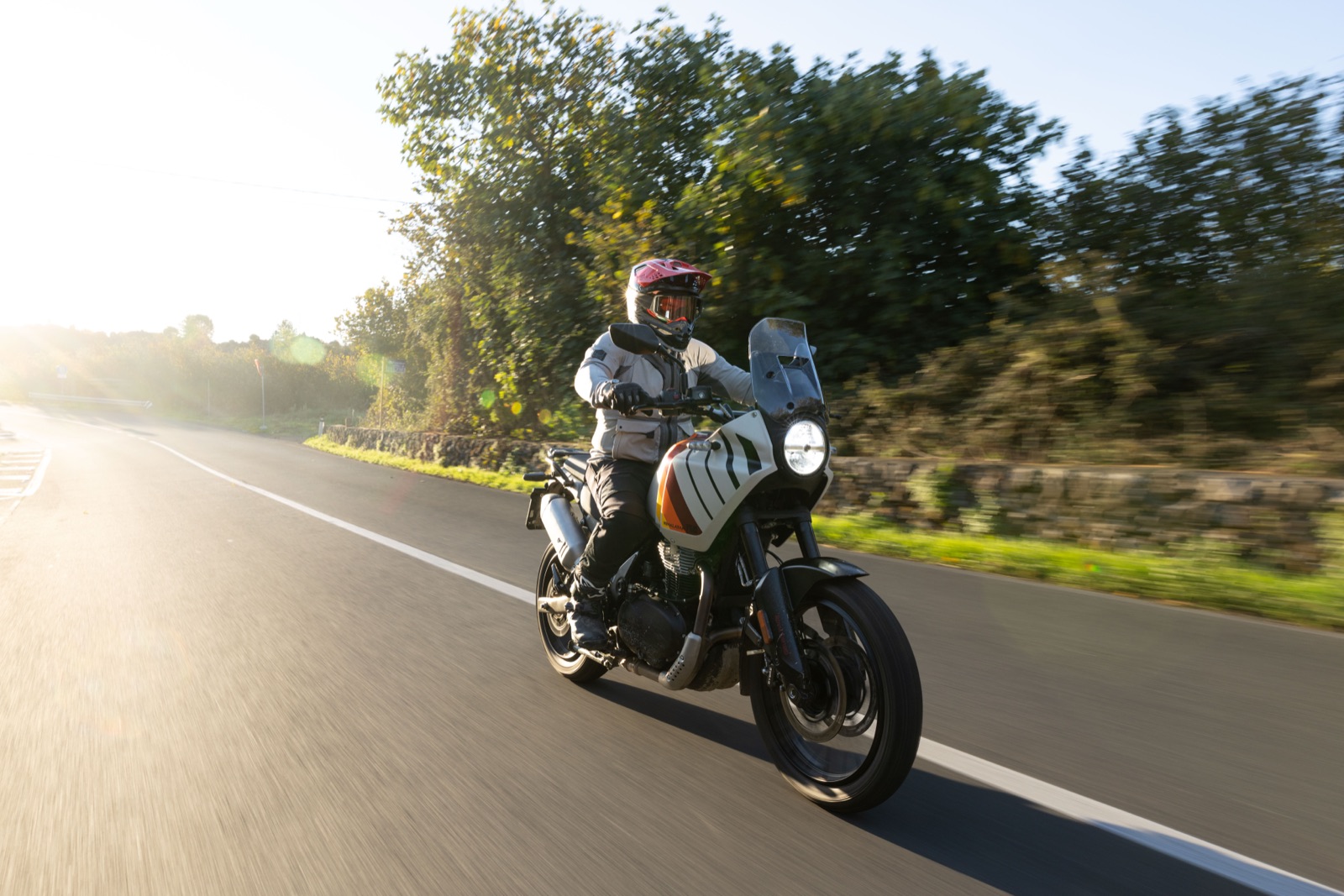
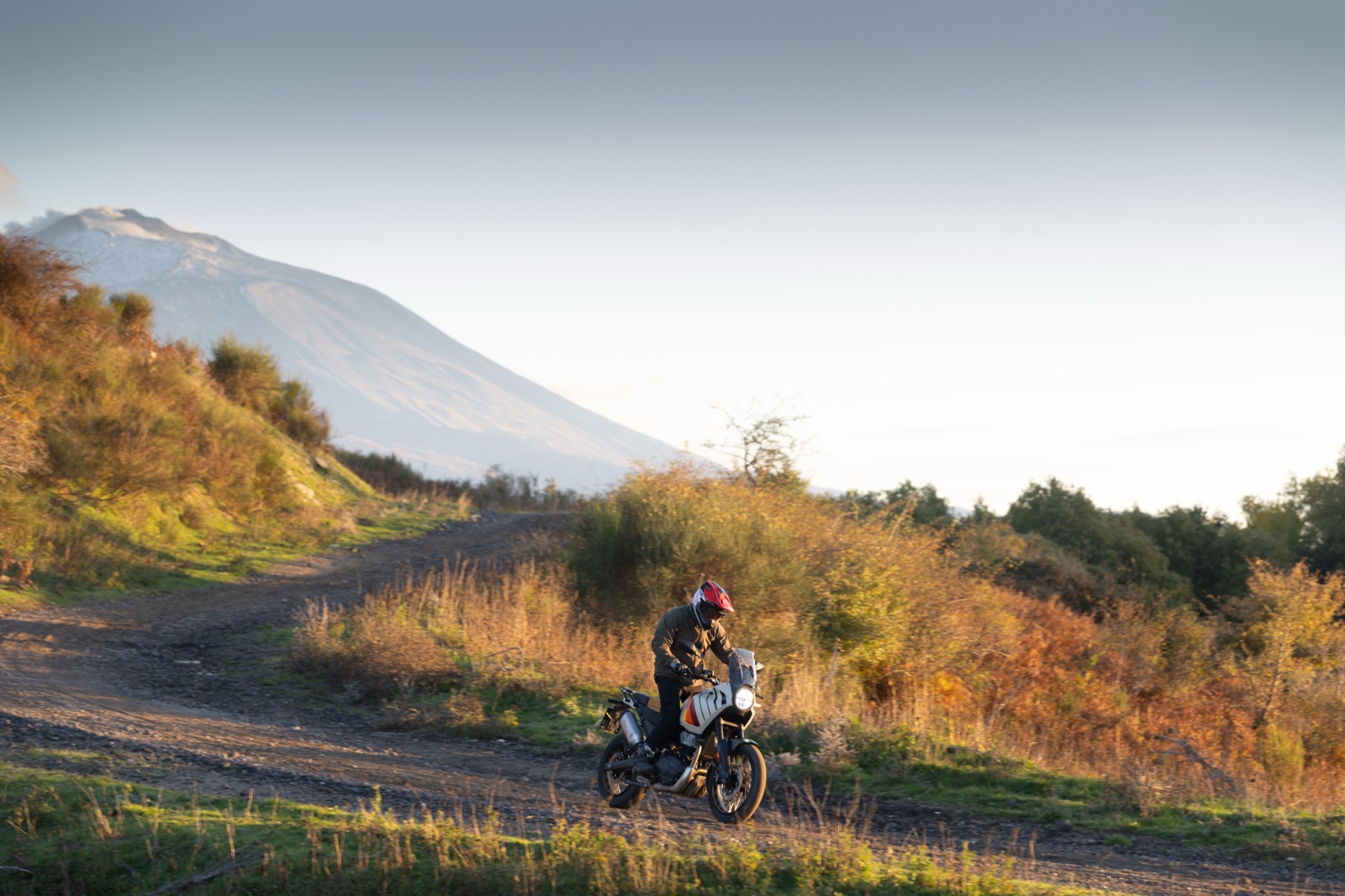
Around Mount Etna, the Himalayan proved stable and predictable. It does not snap towards an apex, instead rolling into corners progressively and requiring a deliberate push at the bars. It is neither cumbersome nor sharp, occupying an easy-going middle ground that suits its character.
The Showa suspension is plush, controlled and effective over Sicily’s cobbles and potholes. Braking is similarly progressive and easy to modulate.
The CEAT tyres on one of our pre-production launch bikes were less convincing, offering limited feel despite warm, dry conditions. The Vredesteins fitted to the spoked-wheel bike were better, though still not outstanding.
The engine follows the same relaxed philosophy. Chase the limiter and it quickly runs out of enthusiasm. Short-shift around 3,000–4,000rpm, use the low-down torque and progress is surprisingly brisk. It is smooth and feels well suited to settling into a motorway cruise, although it lacks excitement and mechanical character.
A workhorse in the dirt
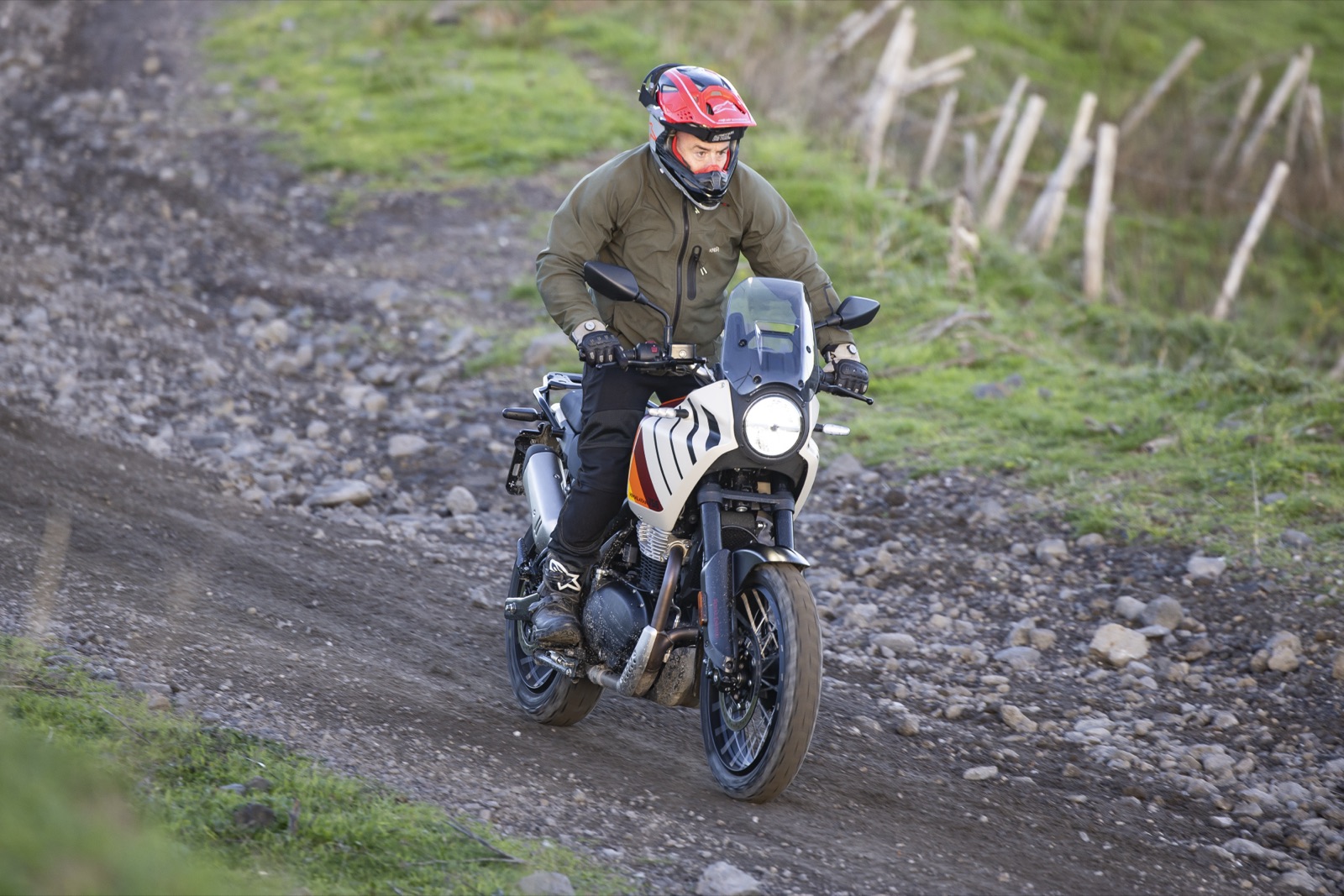
Off-road, the standing position is excellent, the bike feels narrow and the controls are easy to manage. But 223kg and modest power discourage heroics. This is a dependable workhorse, not a lightweight plaything: more Series II Land Rover than beach buggy.
“This is a dependable workhorse, not a lightweight plaything.”
It finds traction and keeps moving, tackling poor surfaces without drama. Like the Himalayan 450, the 750 simply gets on with the job. It also feels tough enough to survive repeated drops, although its wide engine would benefit from proper crash protection.
That easy-going nature has its limits if you want to ride hard. There are lighter, faster adventure bikes with more off-road ability. The Himalayan’s appeal is in making steady progress and keeping the rider comfortable while doing it.
Still comfortable after dark
Our ride continued well after dark. The LED headlight was excellent, while minor warning-light and tyre-pressure-monitoring glitches reflected the bikes’ pre-production status. More importantly, the Himalayan remained remarkably comfortable.
After a full day in the saddle, I had no aches. The adjustable screen offered impressive protection, too. That matters rather more on a long ride than another riding mode or a few extra revs at the top end.
You do not have to chase gears, attack braking zones or hunt apexes. You simply sit back and enjoy the journey, and that may be its greatest strength.
Verdict
The Himalayan 750 is difficult to judge because there is so much to like, yet its place in the market is less obvious than the bike itself.
Royal Enfield has nailed the styling, colours and overall image. The Givi-developed luggage and matching riding gear are equally impressive. The engine is torquey, the handling stable and the riding position accessible. Five modes feel excessive, and our pre-production bikes had minor niggles, but neither overshadowed the ride.
The bigger question is where it fits. Its 223kg kerb weight and modest output will not win a showroom specification contest. Himalayan 450 owners will be tempted by the extra torque and touring comfort, but other riders may favour a lighter machine or spend more for additional performance and off-road ability.
Perhaps Royal Enfield has found a useful space between entry-level adventure bikes and the more powerful middleweights: something easy-going and accessible that can still cover big distances.
What cannot be questioned is its comfort, stability and rugged accessibility. If the 450 is a military Land Rover, the 750 is a Discovery or Toyota Hilux: more refined and better suited to long-distance travel.
It may not be the fastest or most exciting adventure bike, but it feels like the sort of machine that could take you around the world and back without making a fuss. For plenty of riders, that will be more important than winning the numbers game.
Technical specifications
Royal Enfield Himalayan 750
| Engine | 743cc air/oil-cooled parallel twin, SOHC |
| Bore × stroke | 83.5 × 67.8mm |
| Compression | 9.5:1 |
| Power | 40.5kW / 55PS / 54.3bhp at 7,000rpm |
| Torque | 63Nm at 5,000rpm |
| Transmission | Six-speed, chain final drive; wet multi-plate clutch |
| Frame | Steel box-section spine; engine used as a stressed member |
| Front suspension | 43mm Showa USD fork; preload, compression and rebound adjustment; 190mm travel |
| Rear suspension | Showa linkage monoshock; preload and rebound adjustment; 175mm travel |
| Wheels | 19-inch front, 17-inch rear; cast or spoked options |
| Tyre sizes | 110/80 R19 front; 150/70 R17 rear |
| Front brake | Twin 280mm discs; two-piston floating calipers |
| Rear brake | 255mm disc; two-piston floating caliper |
| Rider aids | Five riding modes; cornering ABS; lean-sensitive traction control; cruise control |
| Equipment | Four-inch TFT with navigation; TPMS; dual USB-C ports; LED lighting |
| Seat height | 815mm |
| Ground clearance | 205mm |
| Wheelbase | 1,522mm |
| Kerb weight | 223kg, including centre stand, oil and 90% fuel |
| Fuel capacity | 17.8 litres |
| Claimed consumption | 4.44L/100km |
Himalayan 750 FAQ
How much power does the Himalayan 750 make?
Its 743cc twin produces 40.5kW (55PS or 54.3bhp) at 7,000rpm and 63Nm at 5,000rpm.
What is its seat height and weight?
The seat is 815mm high. Royal Enfield’s EMEA launch specification lists 223kg including the centre stand, oil and 90% fuel.
Is it suitable for off-road riding?
Adam found it manageable and reassuring on poor surfaces, with a comfortable standing position. Its weight and modest power favour steady progress over aggressive trail riding.
Does it have cruise control and cornering ABS?
Yes. The launch specification includes cruise control, cornering ABS, lean-sensitive traction control, five riding modes and tyre-pressure monitoring.