


- To produce brake systems in-house
- Set to debut on the 2026 390 Duke in March
KTM is set to bring braking development in-house, with the Austrian manufacturer confirming it will begin producing its own brake systems under the WP brand, best known for its suspension technology.
The move signals a major shift in KTM’s approach, with the new WP braking components expected to replace the Brembo callipers currently fitted across much of the range. By developing both suspension and braking systems internally, the brand is aiming to retain greater control over component design while reducing reliance on external suppliers.
According to KTM, the new brakes have been engineered to deliver strong stopping performance in a lightweight and compact package, with a focus on thermal management to reduce brake fade under heavy use.
Up front, the system features a WP FCR4 radial-mounted calliper, designed with integrated airflow channels and tipping the scales at a claimed 740 grams. It is paired with a compact radial master cylinder, which KTM says uses friction-reducing internal components and fine micrometric adjustment to improve feel and modulation at the lever. At the rear, braking is handled by a floating calliper with an enlarged pad surface. WP claims improved durability here, thanks to increased thermal isolation designed to better manage heat transfer during sustained braking.
Connecting the system are WP-developed Teflon braided brake lines, fitted with zinc-nickel hardware. These are said to offer improved flexibility, reduced expansion under pressure and greater heat resistance, helping to maintain consistent braking performance across a wide range of riding conditions.
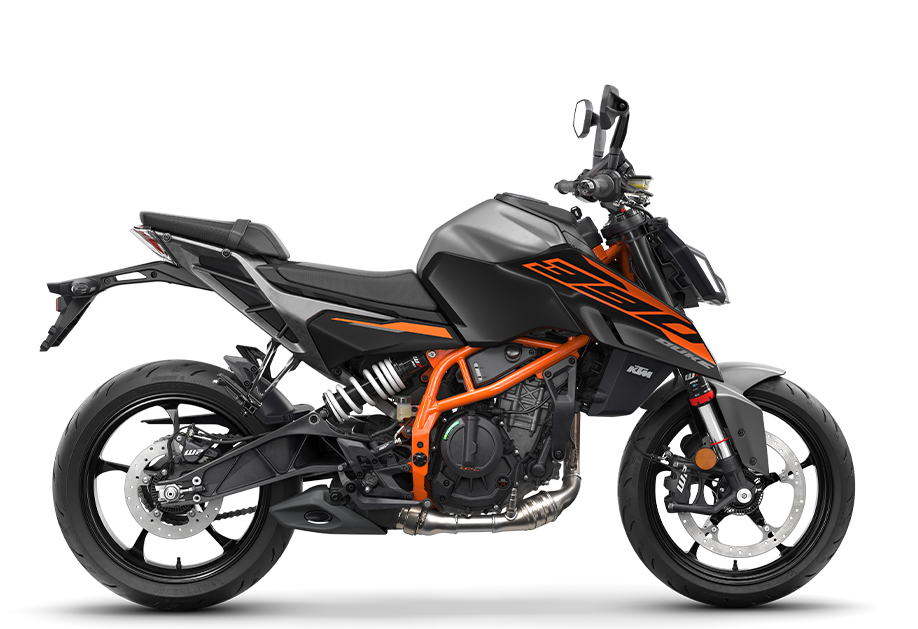
The new WP braking system will make its production debut on the 2026 KTM 390 Duke, which is scheduled to launch in March, and is expected to roll out across future models as the brand expands its in-house component strategy.
Given KTM’s recent financial challenges, the decision to invest in braking development represents a bold step. However, consolidating both suspension and braking under the WP umbrella could prove beneficial long-term, allowing KTM to streamline production, manage costs more effectively and reduce dependence on third-party suppliers.
Real-world performance will ultimately determine the success of the move, but the upcoming 390 Duke will provide the first opportunity to see how the WP braking systems perform outside the test bench.