

- Get up close with two legendary Britten V1000s and three of the earlier machines that led to their creation
- Previously unseen exhibits, archive material and technology tell the story of John Britten beyond the famous motorcycles
- The Christchurch museum provides a permanent home where one of New Zealand motorcycling’s greatest stories can finally be explored properly
More than 30 years after his death, a new Christchurch museum brings together the motorcycles, engineering and personal story of one of New Zealand’s greatest innovators. Dave Britten pays a visit.
I’ve always thought the Britten V1000 motorcycle and Concorde share a couple of similarities. Both were designed to travel as fast as possible without compromise, and decades after they were created, both still somehow look modern.
Beauty is definitely in the eye of the beholder, but there’s something about the Britten that makes it difficult to believe this extraordinary motorcycle was conceived more than three decades ago.
And now, finally, there is somewhere in New Zealand where you can take your time getting properly acquainted with it.
More Than Just A Motorcycle
It is now more than 30 years since John Britten died, aged just 45. His creations have rightly been admired around the world and continue to draw crowds whenever they are displayed – or, even better, ridden with some verve on a racetrack.
But until now, it hasn’t really been possible to spend enough time close to the bikes, components and history to understand the full picture of how they came about.
MORE ARTICLES
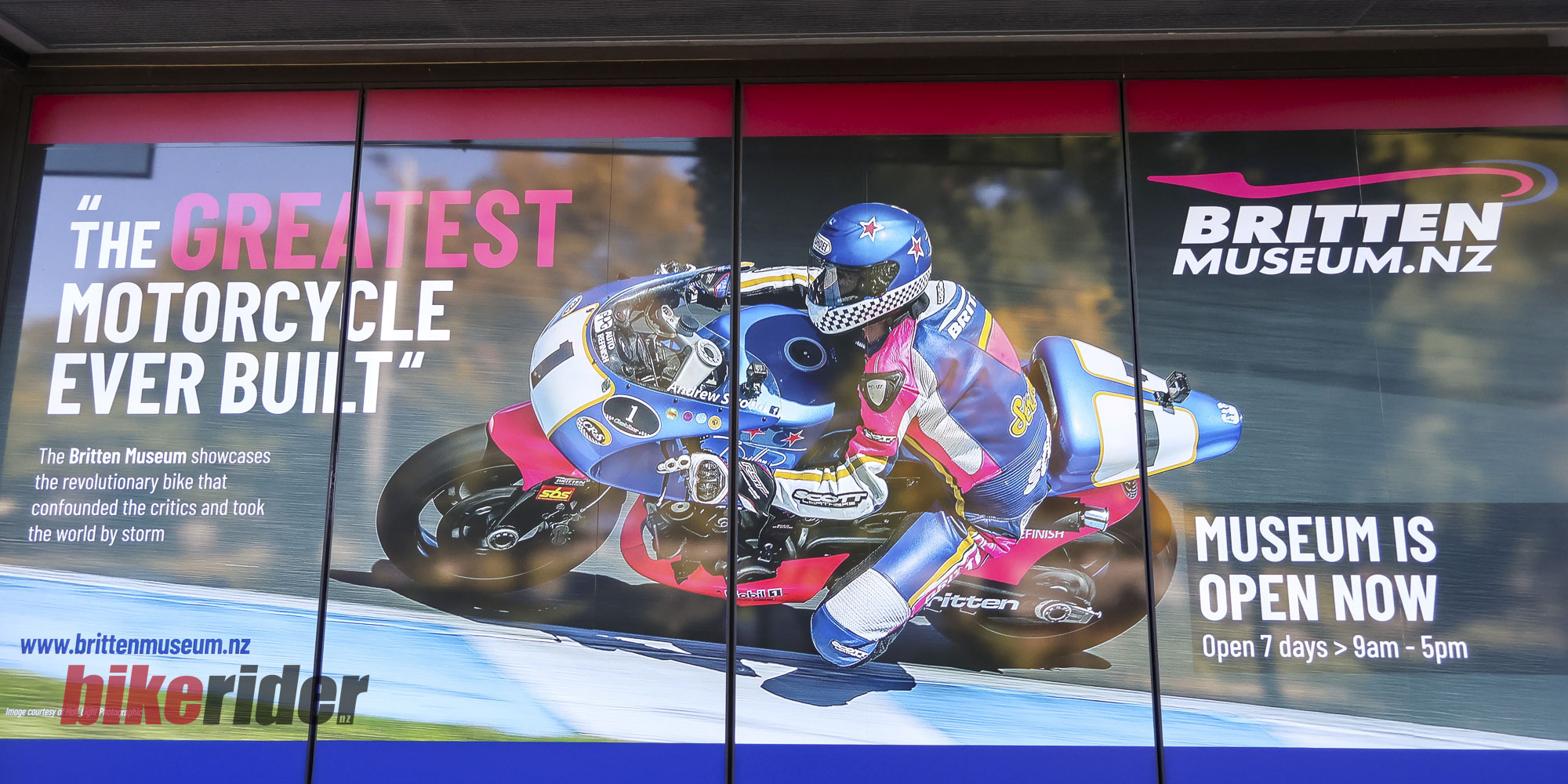
That has changed with the opening of the Britten Museum in central Christchurch.
Mike Pero, a six-time New Zealand motorcycle road racing champion and holder of the NZ 350cc land-speed record, has been the driving public face behind the museum. Together with Kirsteen Britten, Craig Roberts and Felicity Price, the project has brought together motorcycles, components, photographs, archive material and personal items, many of which have never previously been displayed publicly. The museum is operated by the not-for-profit John Britten Preservation Trust, established to preserve John’s legacy and use his story to encourage innovation, resilience and achievement in future generations.
The Story Behind The Bikes
The museum had only been open a few weeks when Nicki and I visited, but it was already clearly proving popular – and not just with motorcyclists.
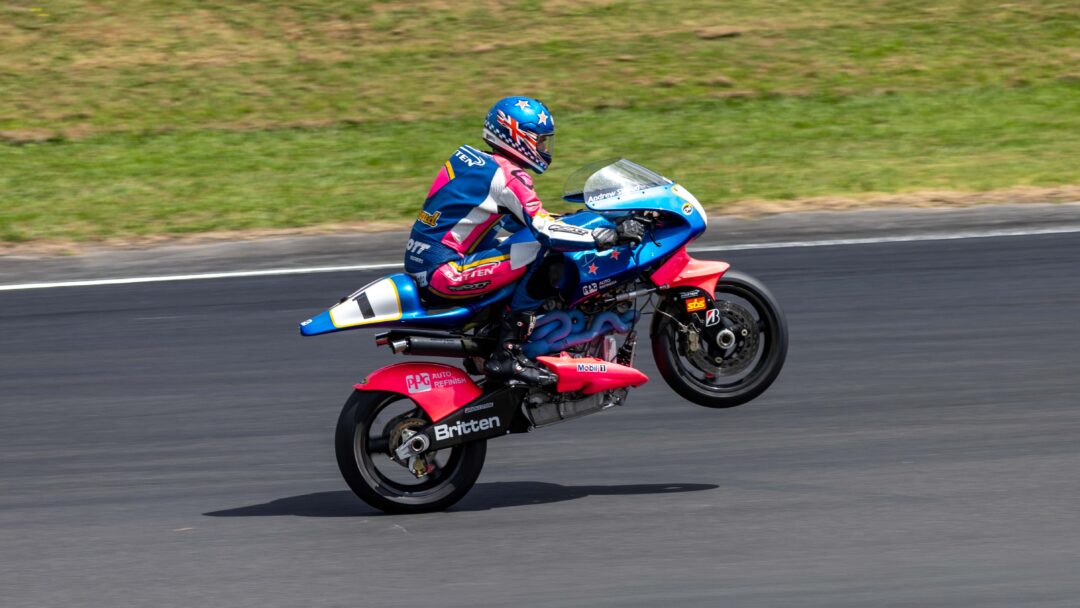
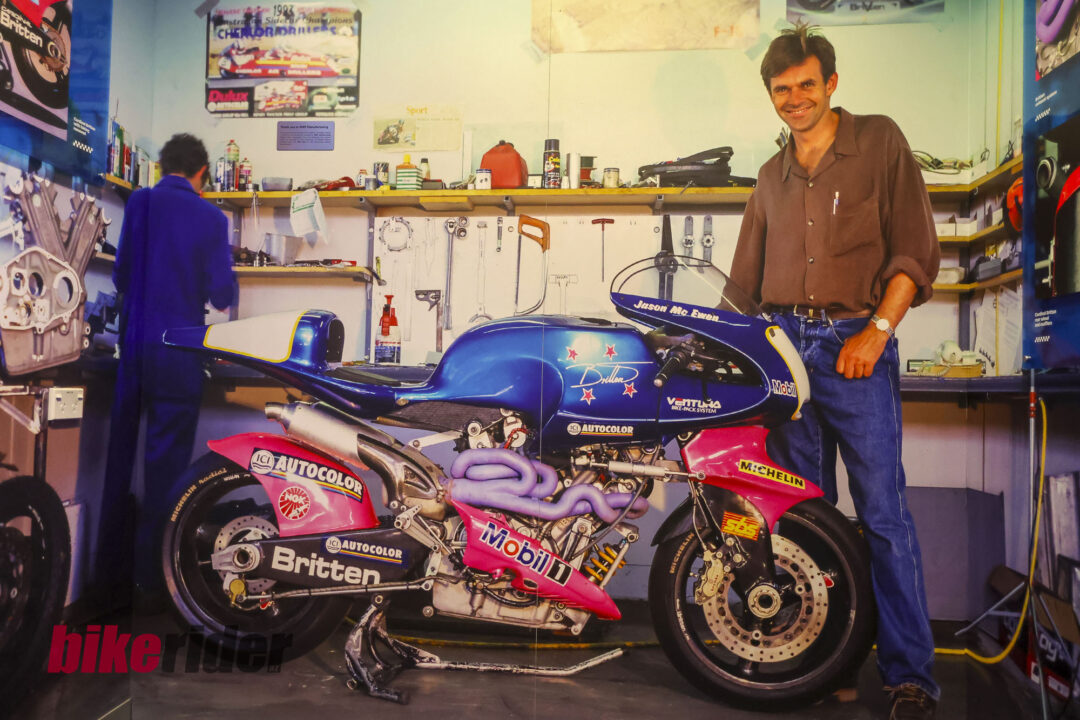
There can’t be many New Zealanders who don’t immediately recognise that distinctive pink-and-blue colour scheme.
But one of the strengths of the museum is that it goes considerably deeper than simply putting a couple of famous motorcycles on display.
The story begins with John as a child and follows the path that eventually resulted in one of the most extraordinary motorcycles ever created in New Zealand.
Display boards explain the development process behind the early prototypes, while archive footage and documentaries running in the museum’s two small cinemas provide another perspective on Britten, his team and the extraordinary amount they achieved with comparatively modest resources.
And that’s an important part of the story. While the finished V1000 became internationally famous, the museum also gives you a sense of the environment in which it was created. A recreation of the team’s 1990s Carlyle Street workshop demonstrates just how modest the operation was compared with the resources available to the European manufacturers Britten was taking on.
The Difficult Chapters
Importantly, the museum doesn’t simply celebrate the successes. The more difficult moments are included, too.
That includes the death of Irish racer Mark Farmer, who was killed during practice for the 1994 Isle of Man TT after crashing the V1000. John’s own death from cancer just 15 months later is also dealt with candidly.
Reading about how John and his family dealt with the terminal diagnosis is genuinely moving. Don’t be surprised if you find yourself with a lump in your throat.
It helps make this much more than a museum about a clever bloke who built a fast motorcycle. It’s the story of the person behind it.
WHY THE BRITTEN V1000 MATTERED
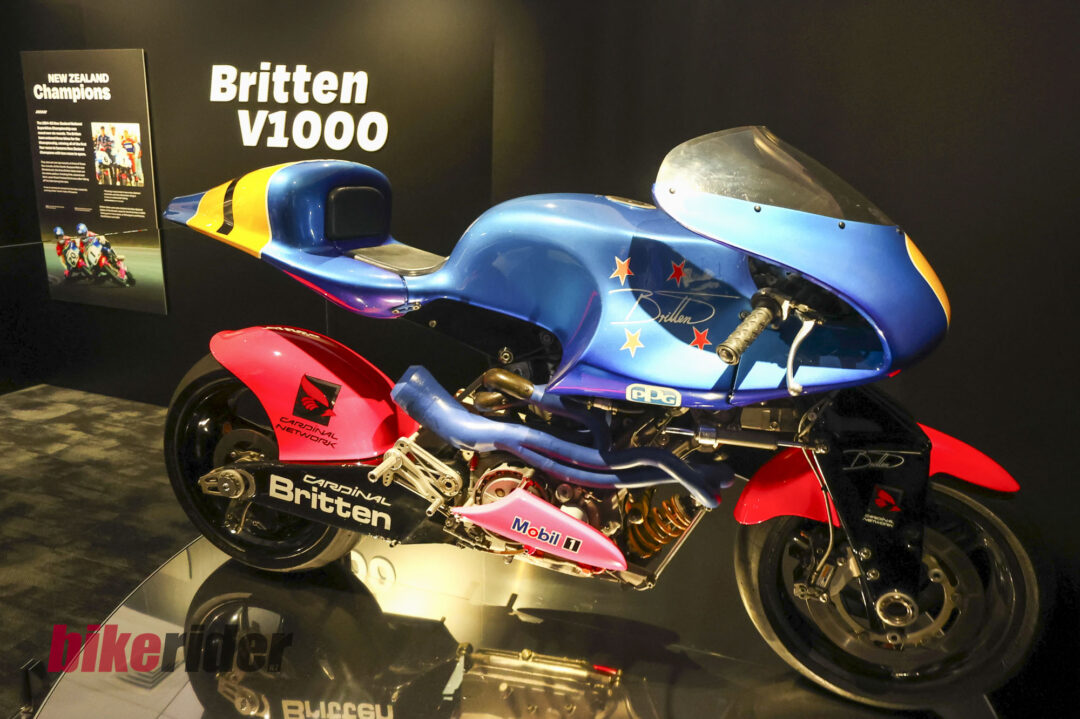
Built in Christchurch and capable of beating some of the world’s biggest motorcycle manufacturers, the Britten V1000 became one of motorcycling’s great engineering stories.
John Britten and his small team didn’t simply modify an existing production motorcycle. The V1000 was developed virtually from the ground up, with Britten pursuing his own ideas in areas including the engine, chassis, suspension and extensive use of carbon fibre.
The result was a motorcycle that looked unlike almost anything else on the grid – and had the performance to back it up.
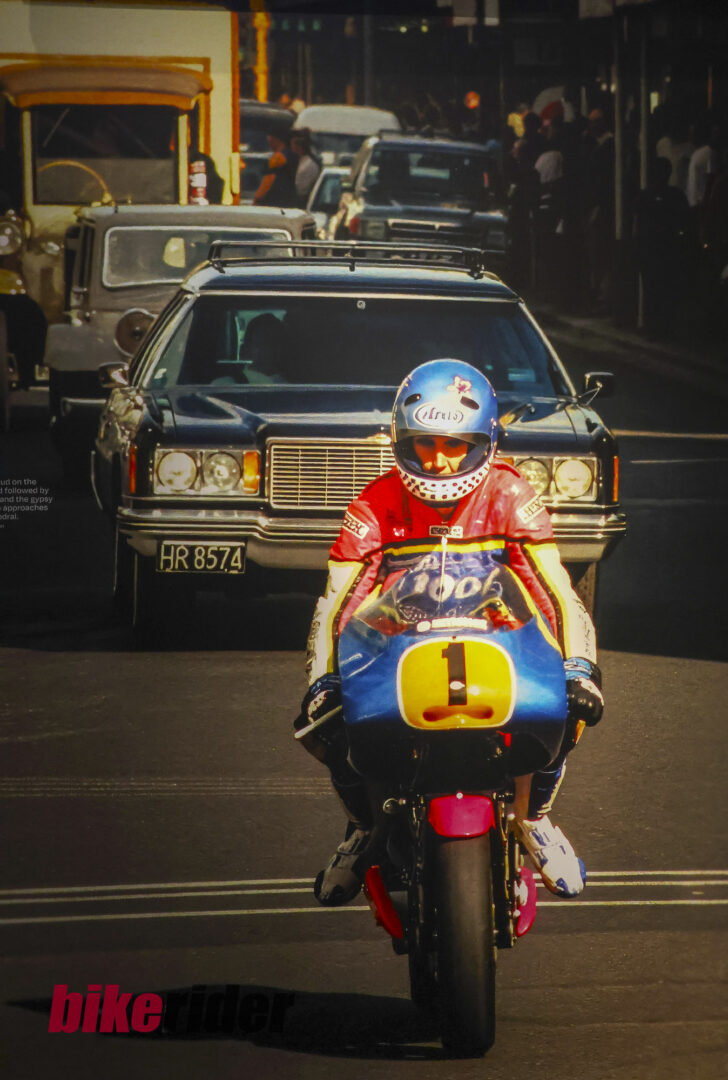
The V1000 competed internationally, won races against factory-backed opposition and set four motorcycle world speed records. Its greatest season came in 1995 when Britten motorcycles won the World BEARS Championship and the New Zealand Battle of the Twins series.
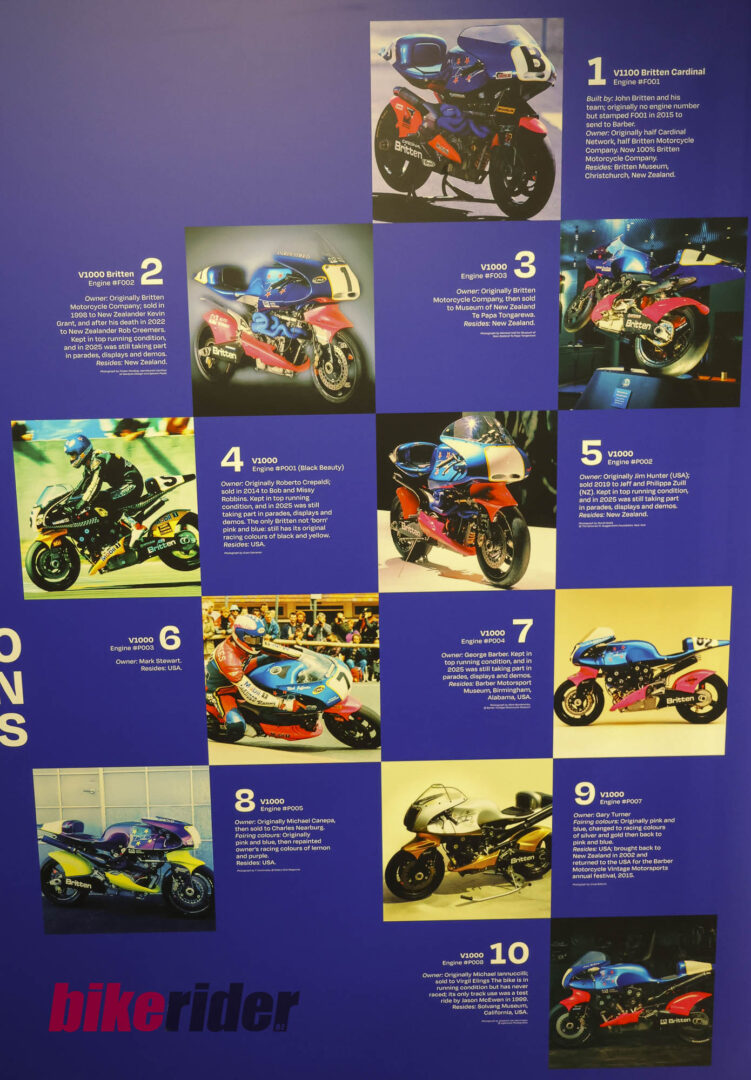
Only 10 Britten V1000s were built, helping make the surviving machines some of the most significant motorcycles ever produced in New Zealand.
But perhaps the V1000’s greatest legacy is what it represented: a small group of people in Christchurch proving that original thinking, determination and some extraordinary engineering could take on the established motorcycle industry – and win.
That also ties nicely back into Dave’s observation that the museum allows you to see the bikes close enough to appreciate how they were actually created, rather than simply knowing the Britten as an iconic pink-and-blue racing motorcycle.
Up Close With The V1000
Best of all, though, are the motorcycles.
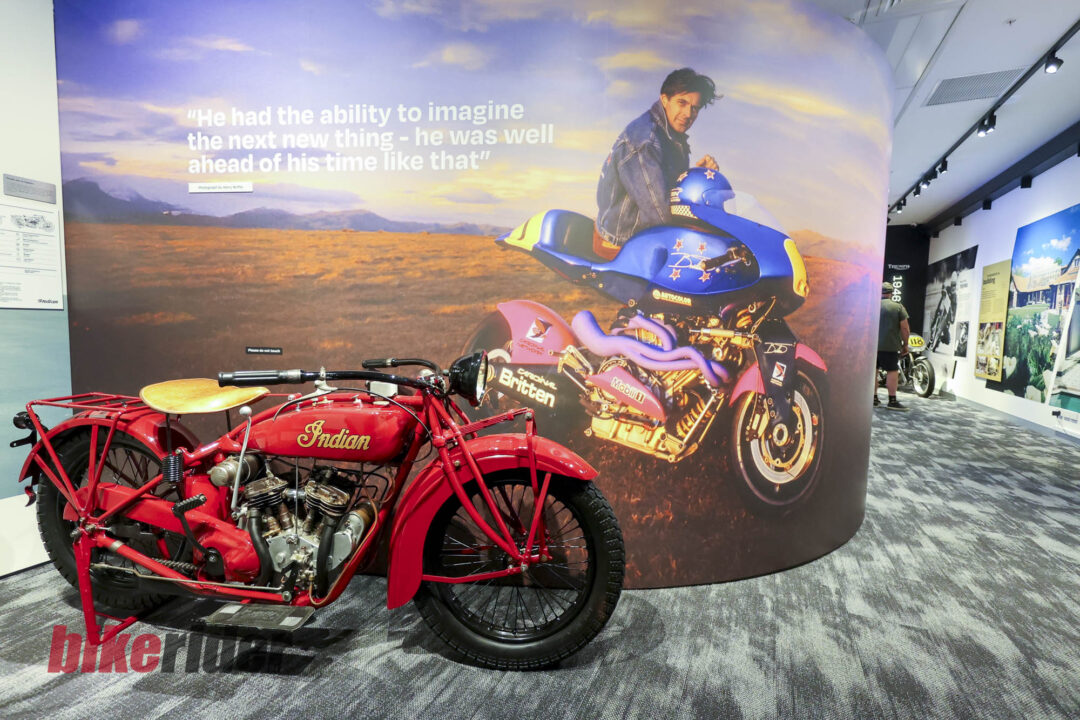
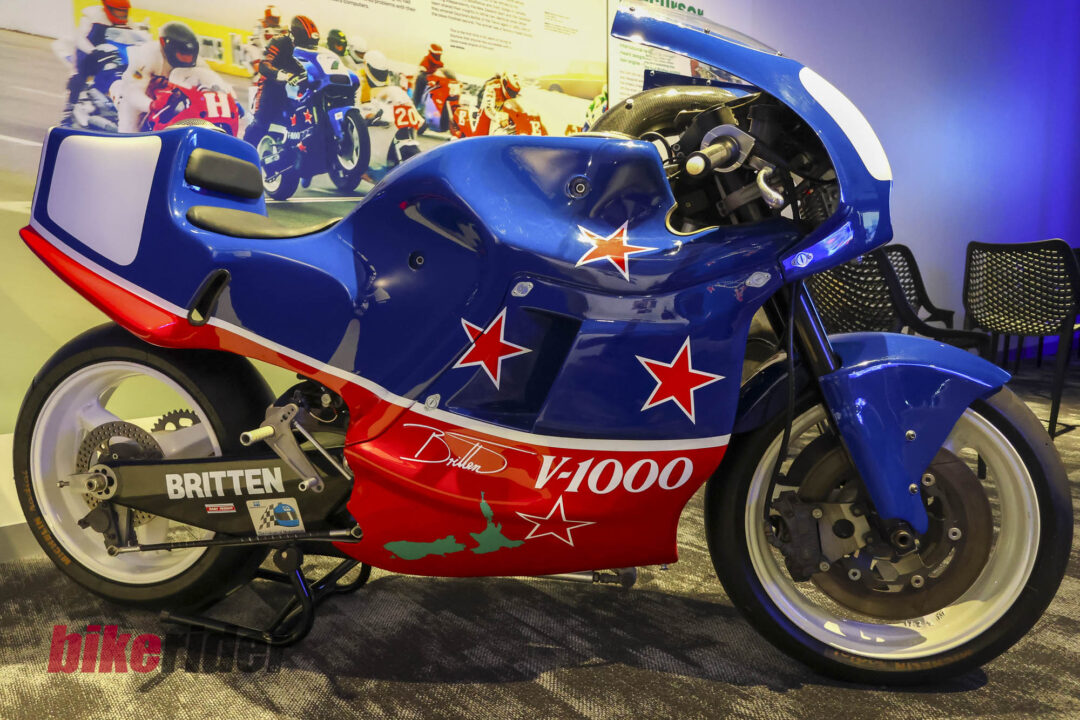
Two Britten V1000s are on display and, although barriers quite rightly prevent sticky fingers from getting onto them, you’re able to stand remarkably close and examine them for as long as you like.
And that’s when you really begin to appreciate what Britten and his small team achieved.
These weren’t motorcycles created by one of the world’s major manufacturers with enormous engineering departments and equally enormous budgets. They came from Christchurch and were designed, developed and built by a tiny team determined to do things differently.
The V1000s aren’t the only significant motorcycles on display, either.
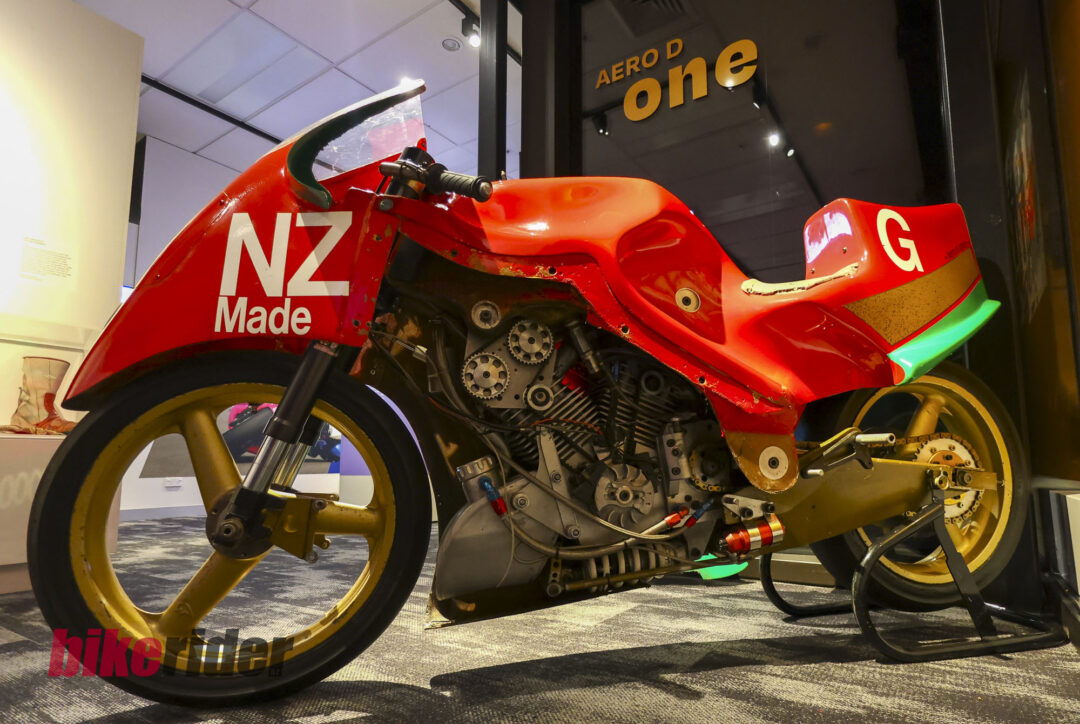
Three earlier Britten machines – the Ducati-powered Aero d’Zero, Denco-powered Aero d’One and the Precursor, complete with an early Britten engine – are presented in immaculate condition.
Together they provide a fascinating look at the evolution of Britten’s thinking and engineering before the V1000 became the machine recognised around the world.
John Speaks Again
One of the most unusual exhibits uses technology that John himself would probably have appreciated.
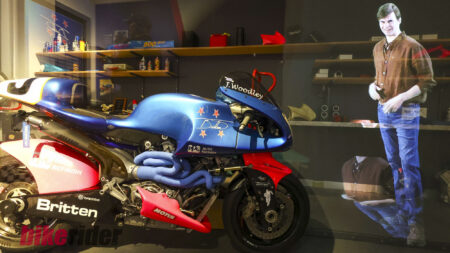
A hologram gives the impression of John standing in front of you and talking about the V1000.
Created decades after his death using archive material, it sounds, looks and moves remarkably like the man himself.
It’s an effective addition because the museum isn’t simply trying to explain the motorcycle. It’s trying to introduce visitors to John Britten.
Even if you arrive thinking you know the Britten story, I’d be very surprised if you don’t discover something new.
And that’s perhaps the museum’s greatest achievement.
You walk through the door knowing about an extraordinary New Zealand motorcycle.
You leave understanding considerably more about the extraordinary New Zealander who created it.
Definitely worth a visit.
Words & Pics: Dave Britten

VISIT THE BRITTEN MUSEUM
Where | Iwikau House, 93 Cambridge Terrace, Christchurch Central City
What you’ll see | Original Britten motorcycles, components and archive material, including Britten V1000s and earlier machines, plus a recreation of the team’s 1990s workshop.
Also | Interactive and audio-visual displays, documentaries and archive footage telling the wider John Britten story.
Opening hours | 10am–4.30pm, 364 days a year
Website | Britten Museum