
- Fireblade-based 999cc inline four tuned for midrange punch
- 155hp SP with Öhlins + Brembos + quickshifter
- No IMU = no lean-sensitive rider aids (and many riders won’t care)
- Finally it’s been announced for NZ with a starting price of $22,995 + ORC
Honda strips back the tech and doubles down on performance with the CB1000 Hornet SP — a Fireblade-powered streetfighter that’s lighter, sharper and more affordable than expected.
Words: Adam Child Pics: Honda Motor Europe
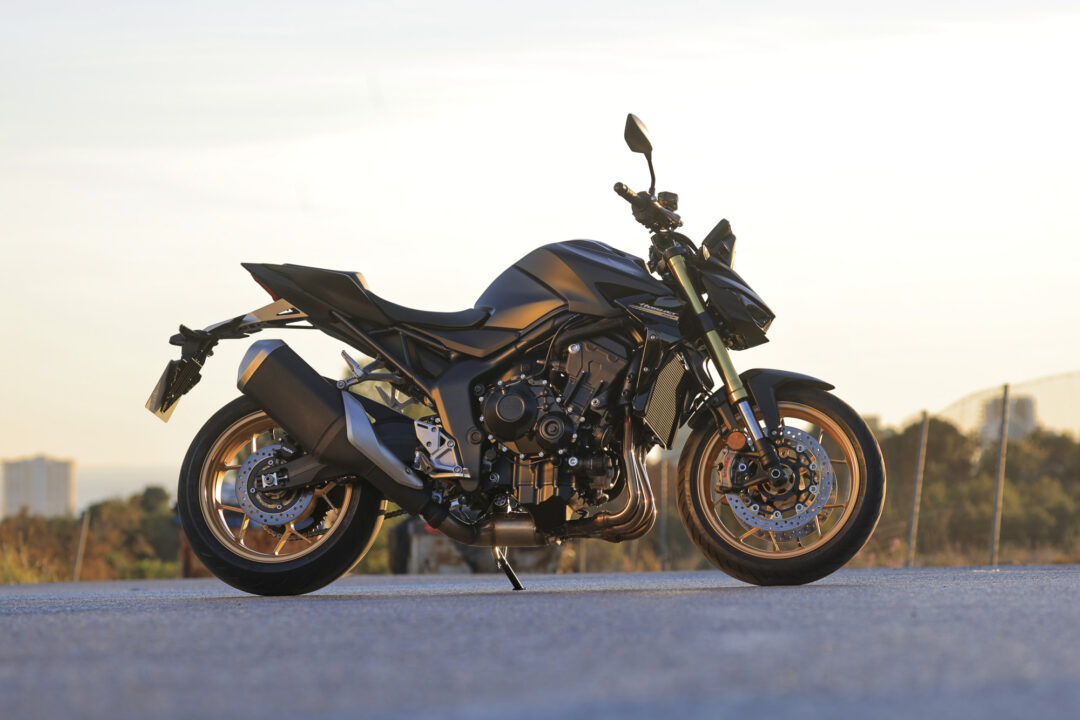
Honda doesn’t usually do “cheap and cheerful” when it comes to big new models — but the CB1000 Hornet SP is exactly that… without feeling cheap or cheerful. It’s a full-sized 1000cc naked with Öhlins TTX rear suspension, Brembo Stylema brakes, a 155hp Fireblade-derived inline four, and a price (overseas, at launch) that undercuts a bunch of the obvious rivals.
NZ availability has only just been announced, and with Honda NZ managing to bring it in near the bike’s “shock value” overseas, it’s going to have a lot of riders rethinking their shortlist.
A Hornet, but not as you remember it
Honda has a habit of playing the long game, rarely chasing headlines for the sake of it. Which is why the CB1000 Hornet feels a little bit unexpected. On paper it looks like a value play, but spend any time around it — or riding it — and it becomes clear this isn’t a budget bike pretending to be something else. It’s a deliberately pared-back litre naked that puts its money exactly where it matters.
The Hornet name has always been about accessibility rather than excess. The original late-’90s CB900 Hornet earned its following by being fast enough, fun enough and affordable enough to make sense in the real world. This new CB1000 follows the same philosophy, just scaled up for 2025 — and with far more performance on tap than the badge might suggest.
Simple where it counts, serious where it matters
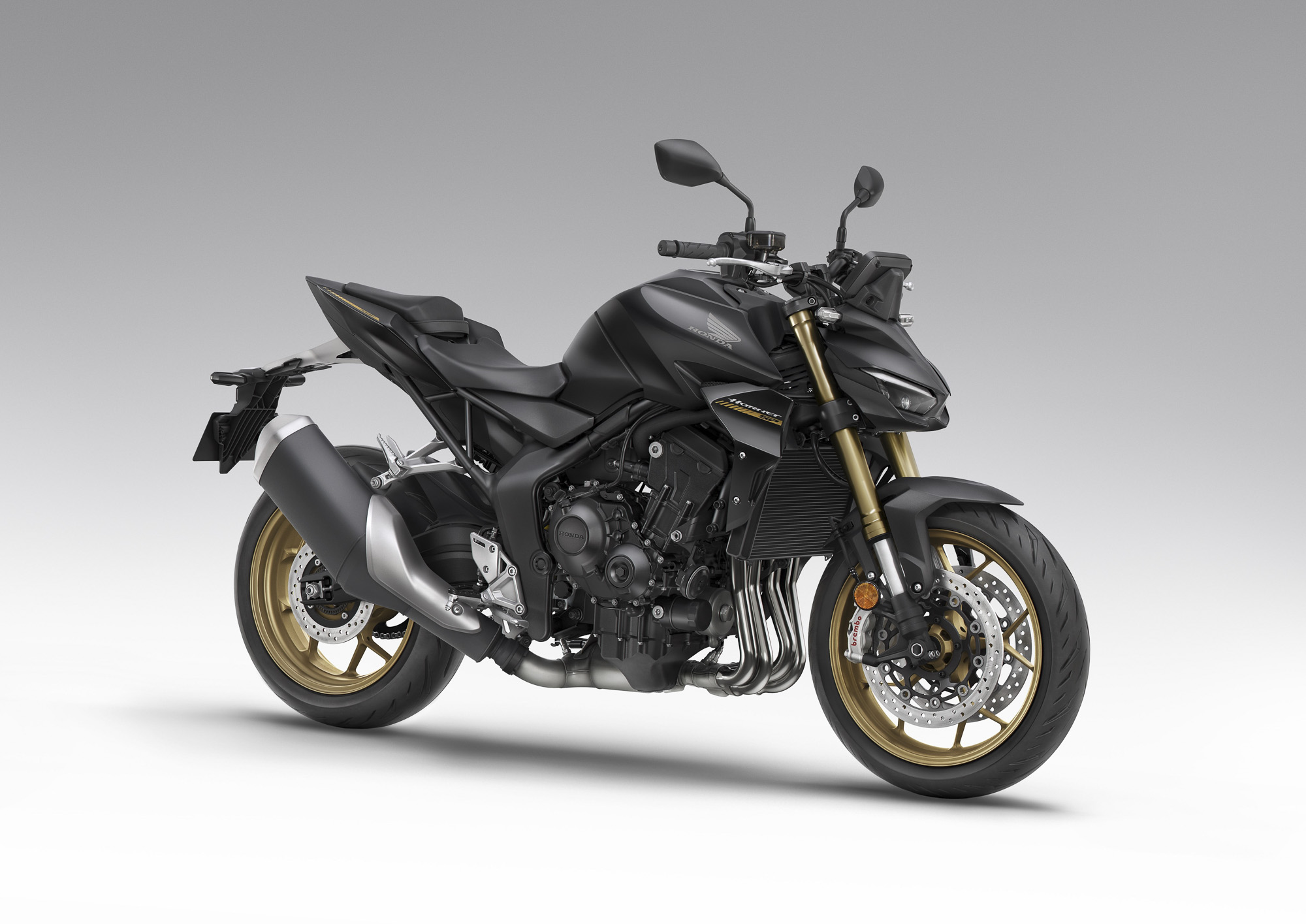
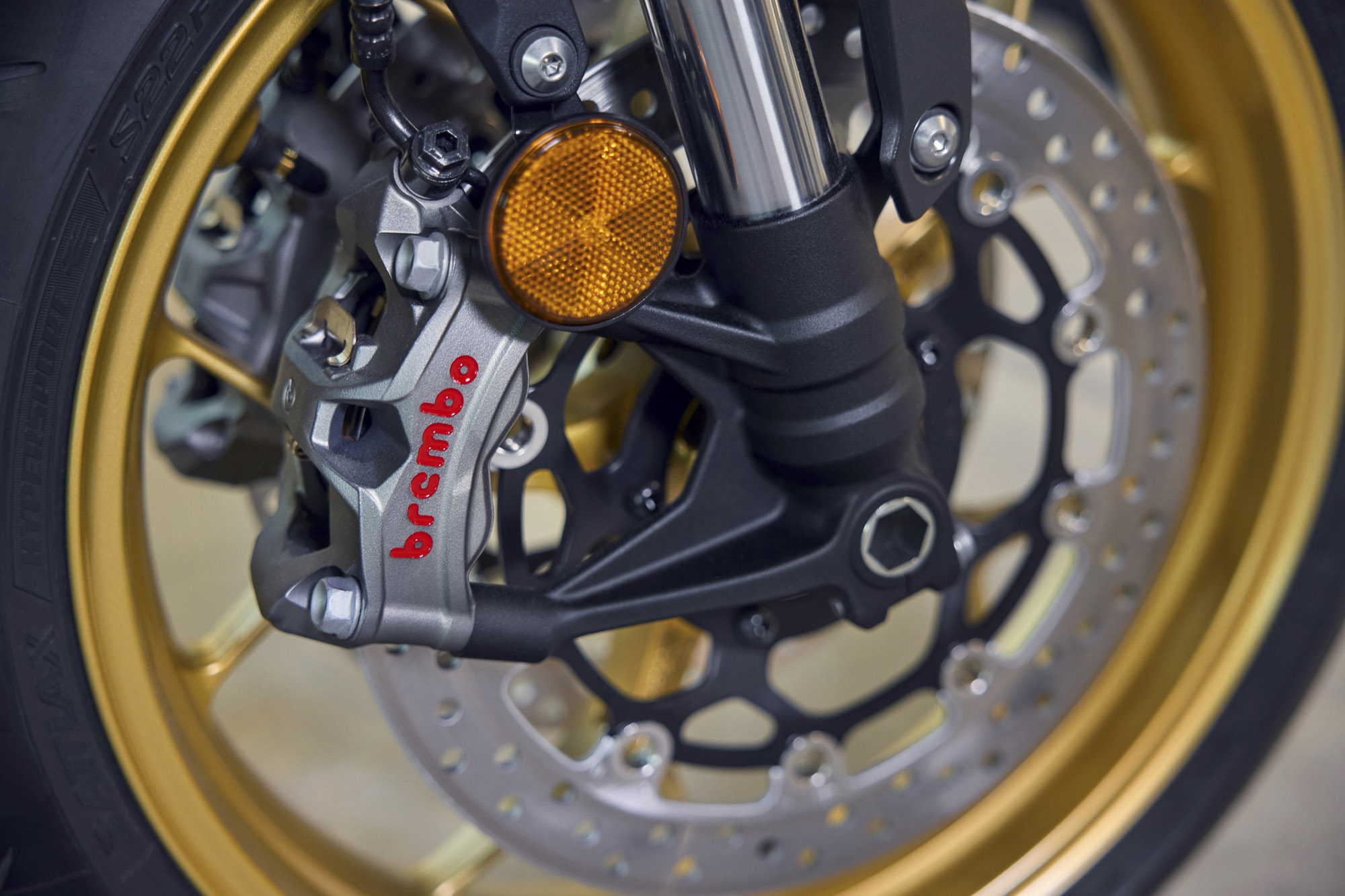
There’s a refreshing honesty to the way Honda has approached the CB1000 Hornet. No gimmicks, no over-complication, no attempt to out-tech everyone else. Instead, you get a strong aluminium twin-spar frame, fully adjustable Showa suspension up front, and — in SP form — an Öhlins TTX rear shock and Brembo Stylema brakes.
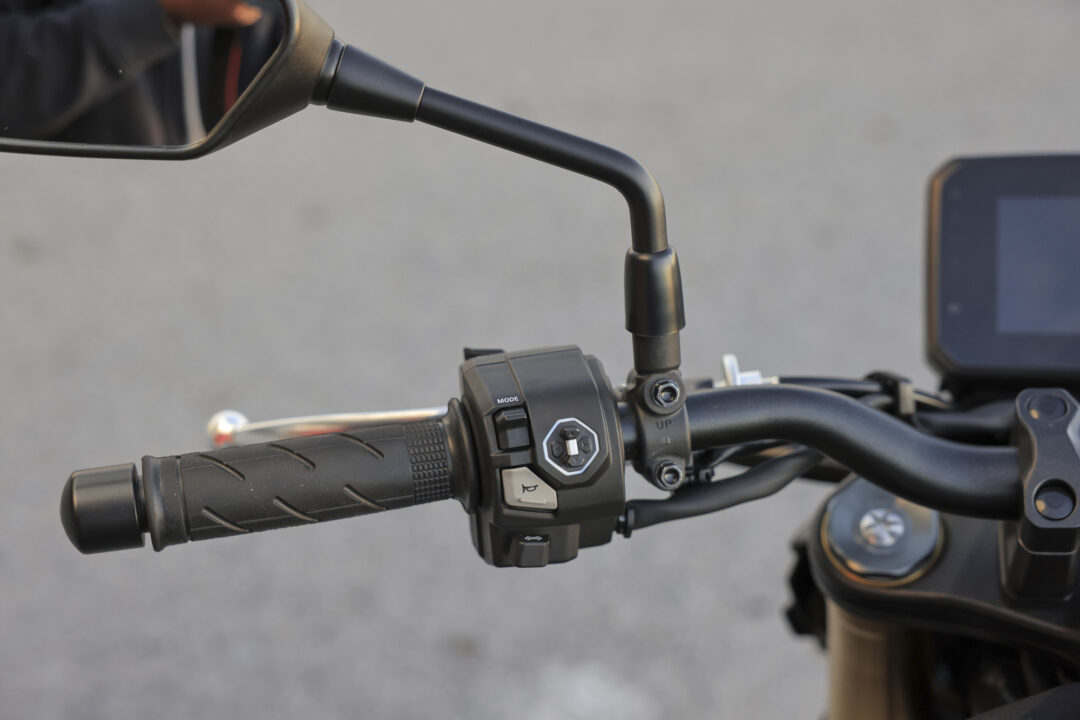
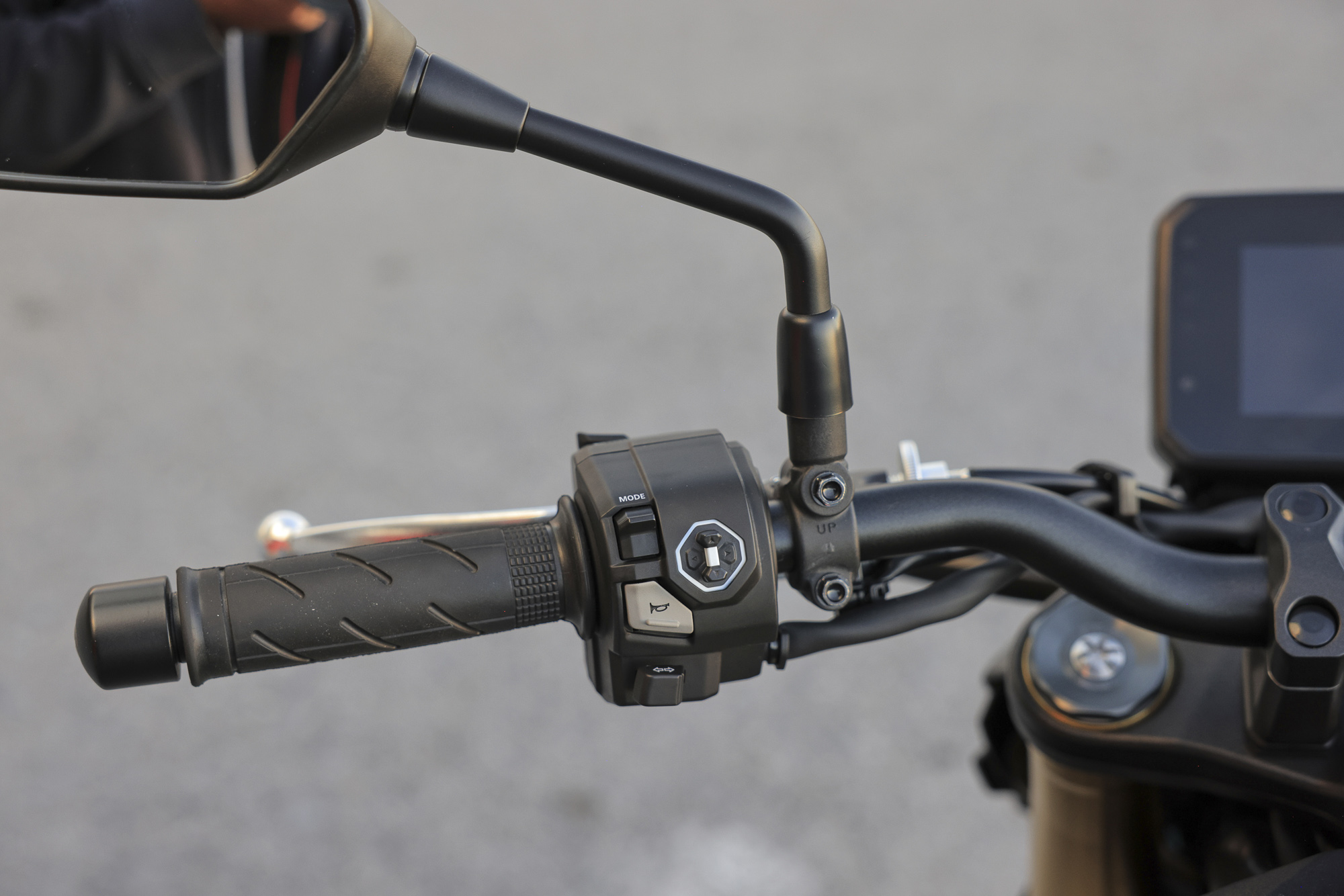
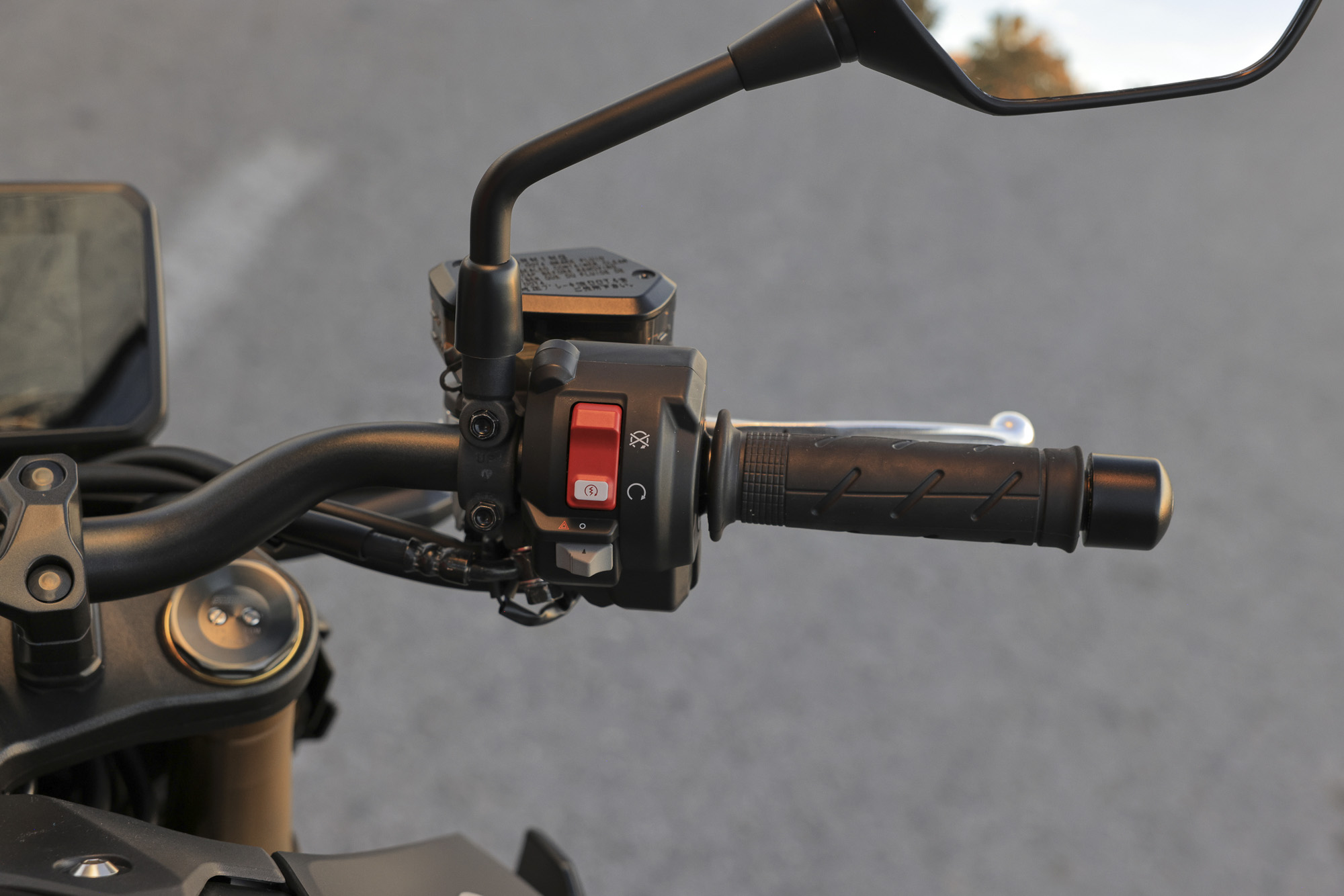
Yes, there are cost-saving clues if you go looking for them. The subframe is welded rather than bolted, and the electronics package is intentionally straightforward. But none of it feels cheap. The finish is typically Honda, the switchgear is familiar and intuitive, and the whole bike gives off the impression of something designed to be ridden hard rather than endlessly configured through menus.
Fireblade DNA, streetfighter attitude
At the heart of the Hornet is a motor with proper pedigree. The 999cc inline-four is based on the 2017 Fireblade engine, retuned for road use and updated to meet Euro 5+ regulations. Peak numbers matter less here than the way the power is delivered — and this engine delivers in a way that feels instantly usable.
There’s a strong, muscular midrange that encourages you to short-shift and surf the torque, but keep it spinning and it still rewards with that unmistakable inline-four howl. It’s not frantic or intimidating; instead, it feels eager and responsive, with enough character to make every ride feel like more than just transport.
On the road: lighter than it looks, sharper than expected
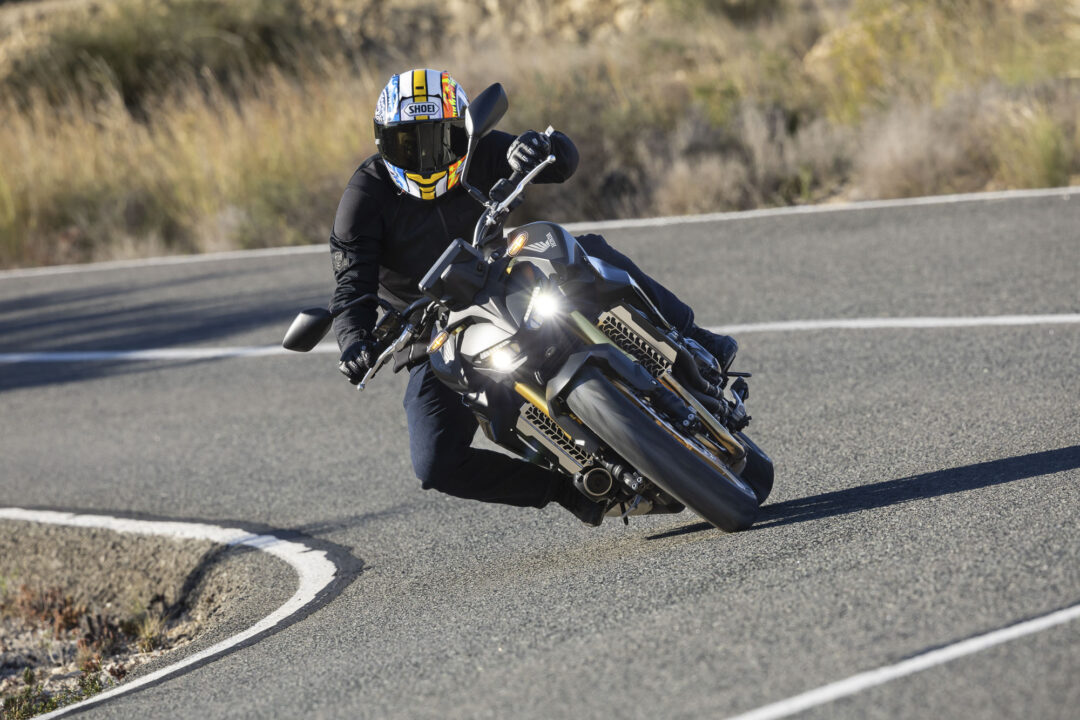
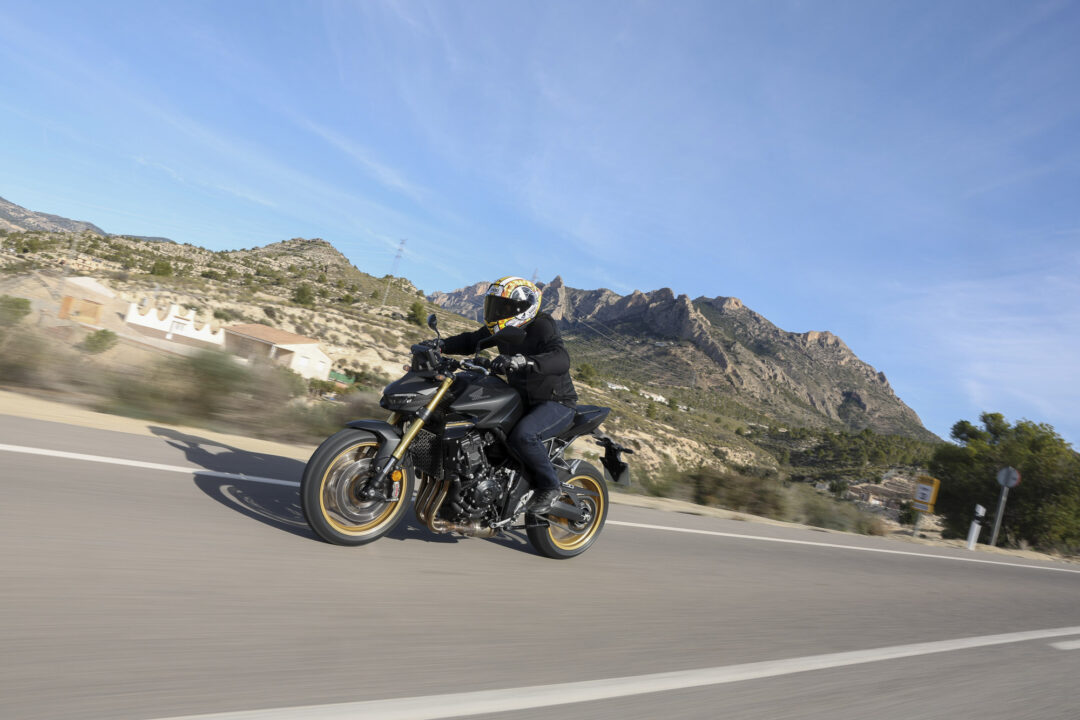
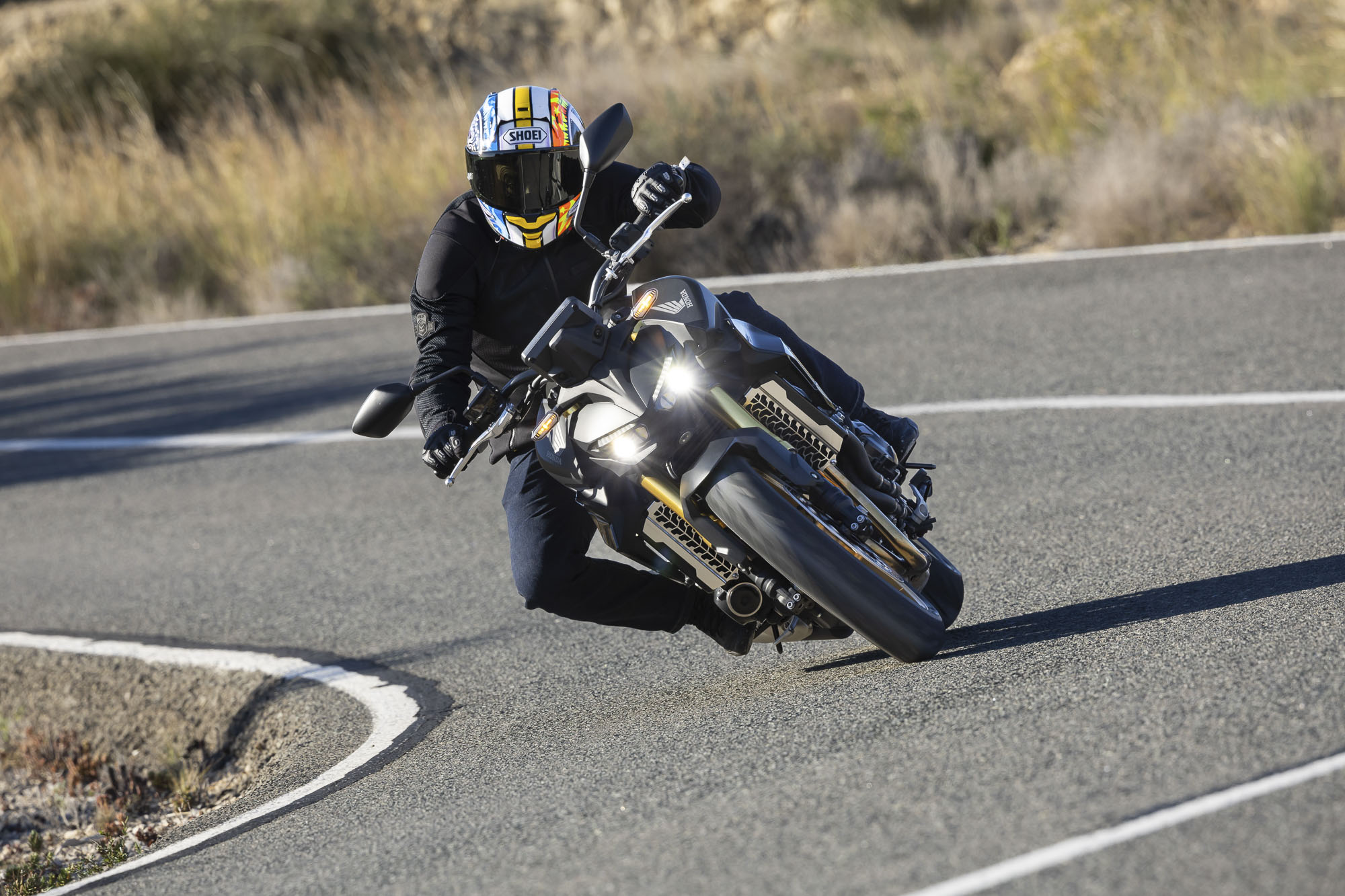
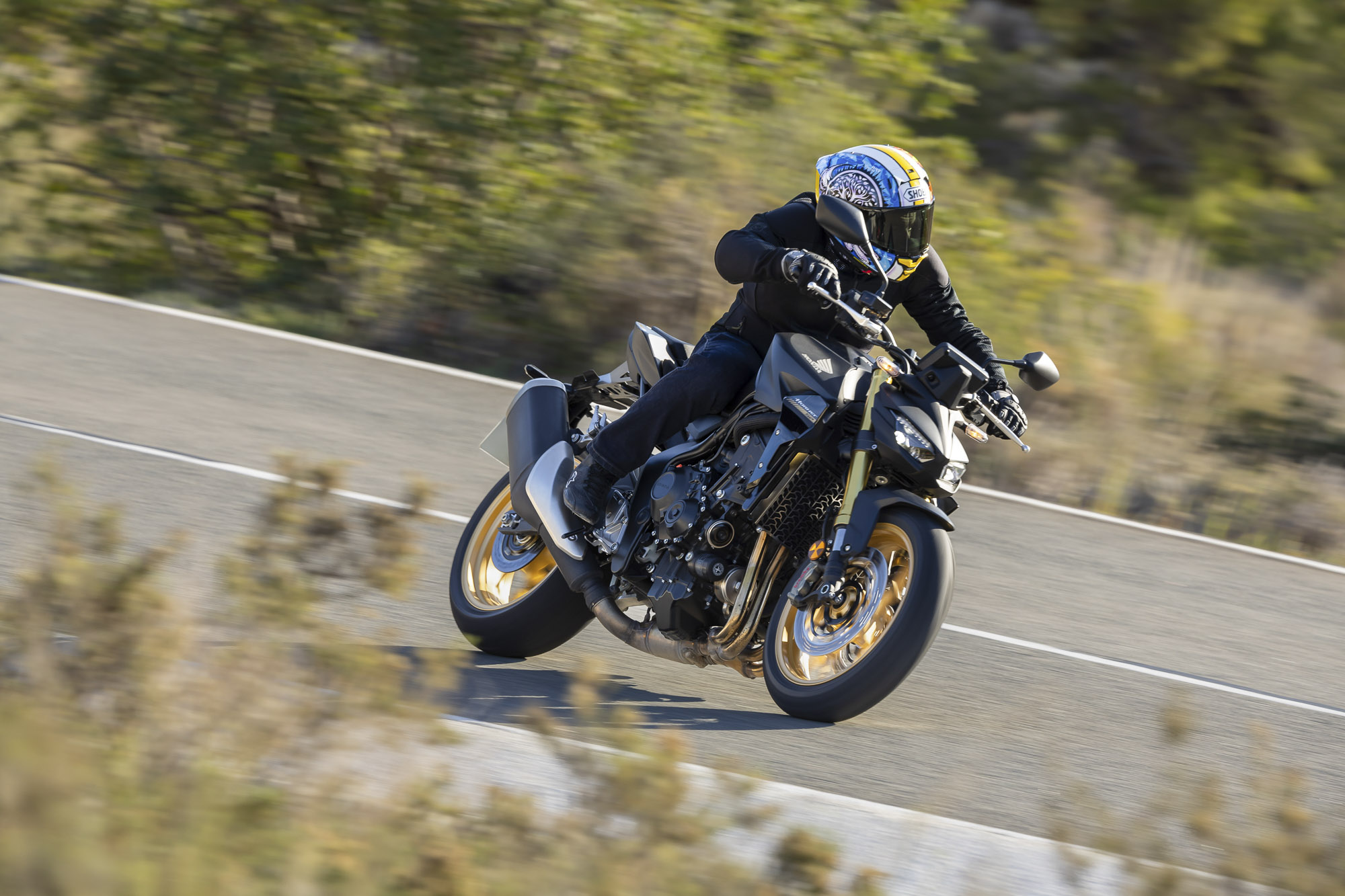
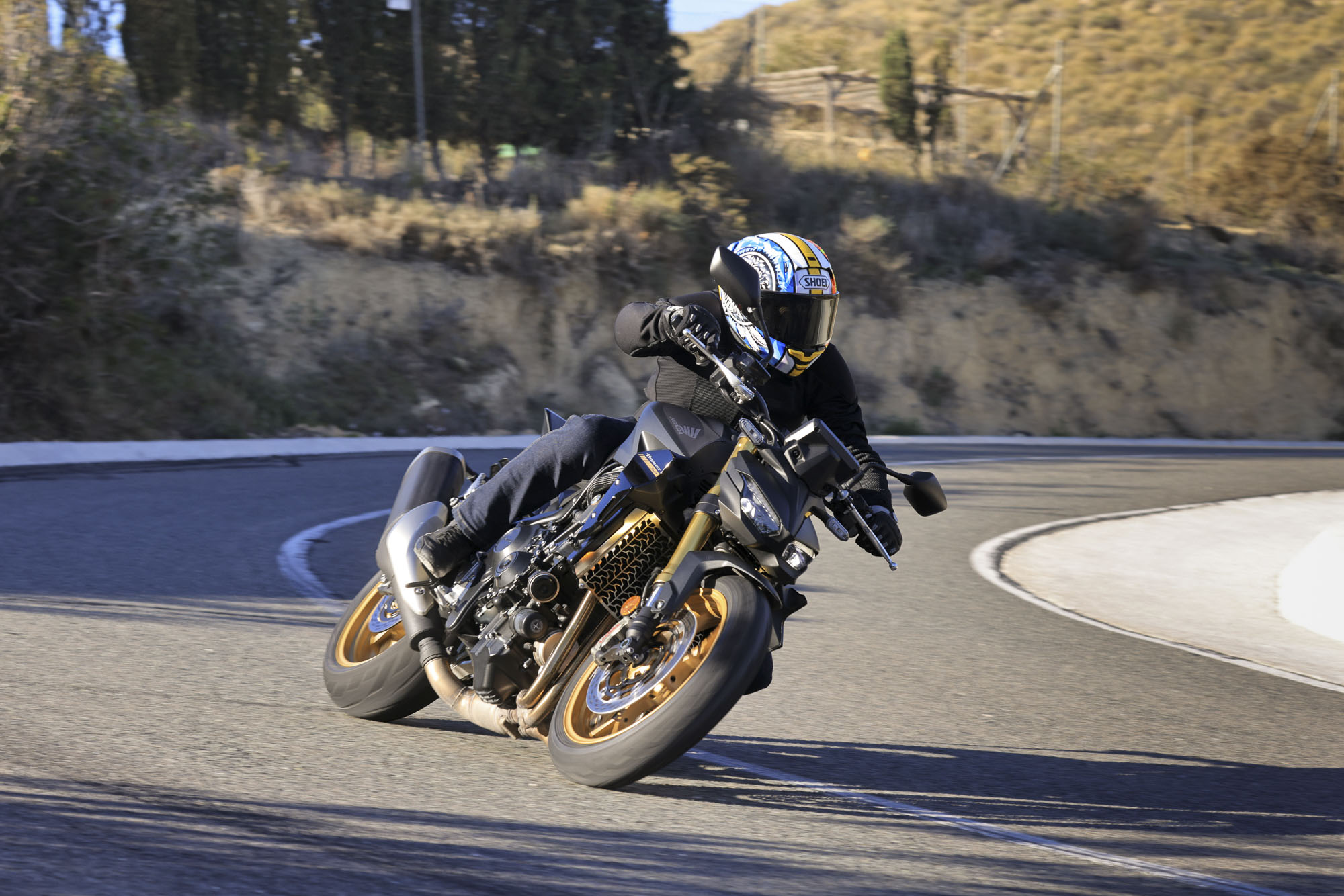
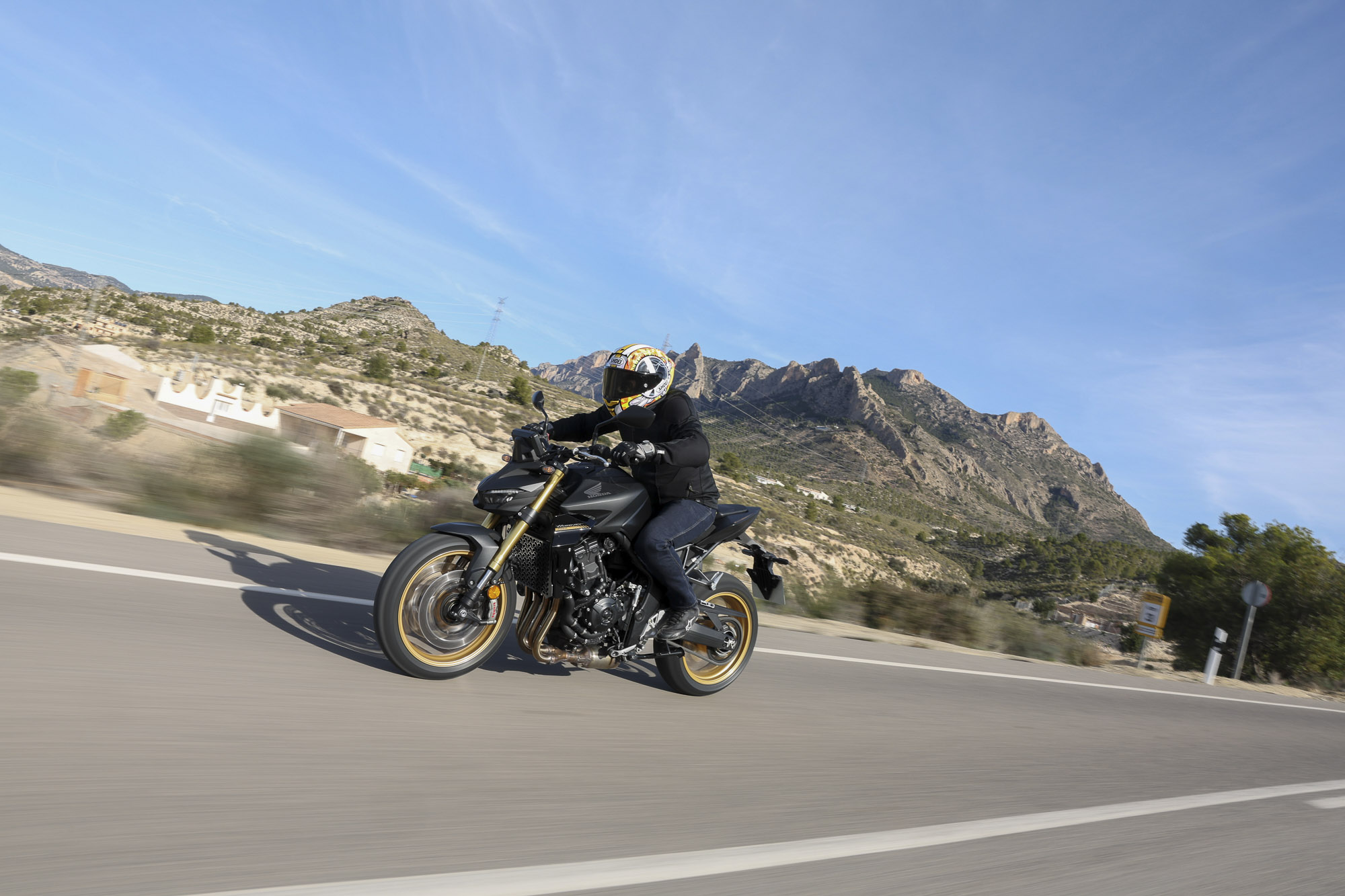
Honda claims a wet weight of 212kg, but the Hornet never feels like a heavyweight. Steering is light and neutral, the front end communicates clearly, and the bike changes direction with an ease that belies its engine size. On a flowing road it feels composed and confidence-inspiring; tighten things up and it’s happy to be hustled.
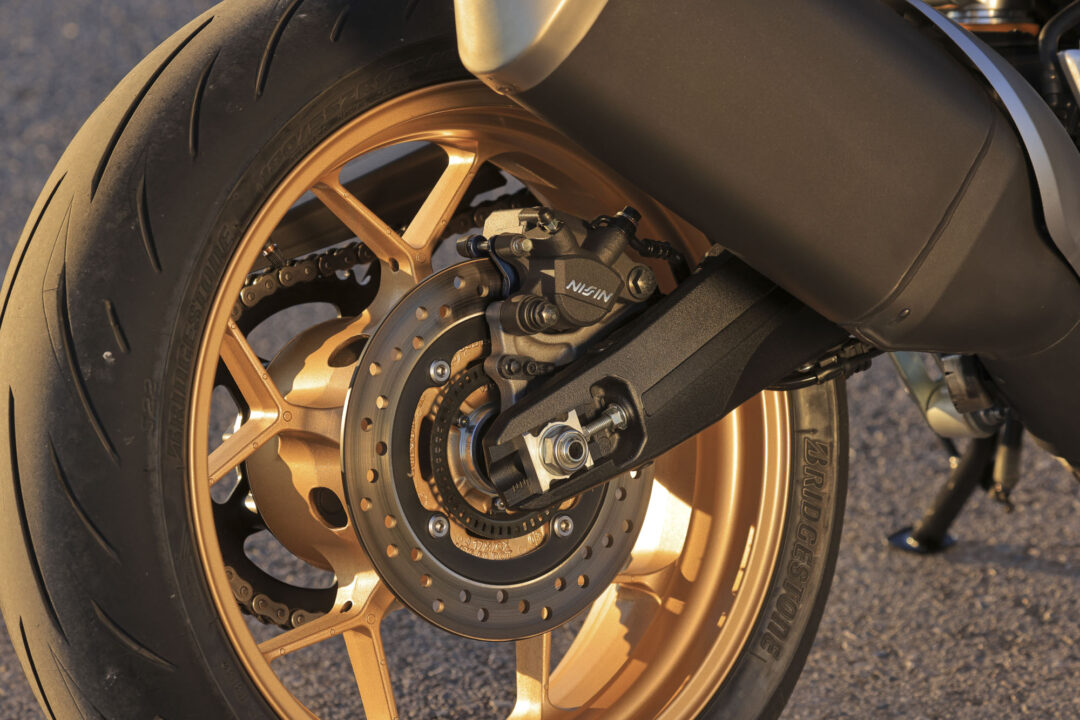
The SP’s Öhlins rear shock adds polish, especially when the pace picks up. It keeps the bike settled under hard acceleration and gives the chassis a planted, controlled feel without ever becoming harsh. The Bridgestone S22 tyres warm quickly and provide plenty of grip, while the Brembo Stylemas offer strong, predictable stopping power — even if some riders might wish for a slightly sharper initial bite.
Old-school electronics — and proudly so
In a world where litre nakeds increasingly come loaded with IMUs, lean-sensitive everything and endless adjustment, the Hornet takes a different path. There’s traction control, multiple ride modes, adjustable engine braking and power delivery — but that’s it. No IMU, no cornering ABS, no semi-active suspension.
For some riders, that will be a deal-breaker. For others, it’ll be part of the appeal. The Hornet feels refreshingly analogue in a modern way — a bike that rewards feel, throttle control and rider input rather than relying on software to do the thinking for you.
Living with it
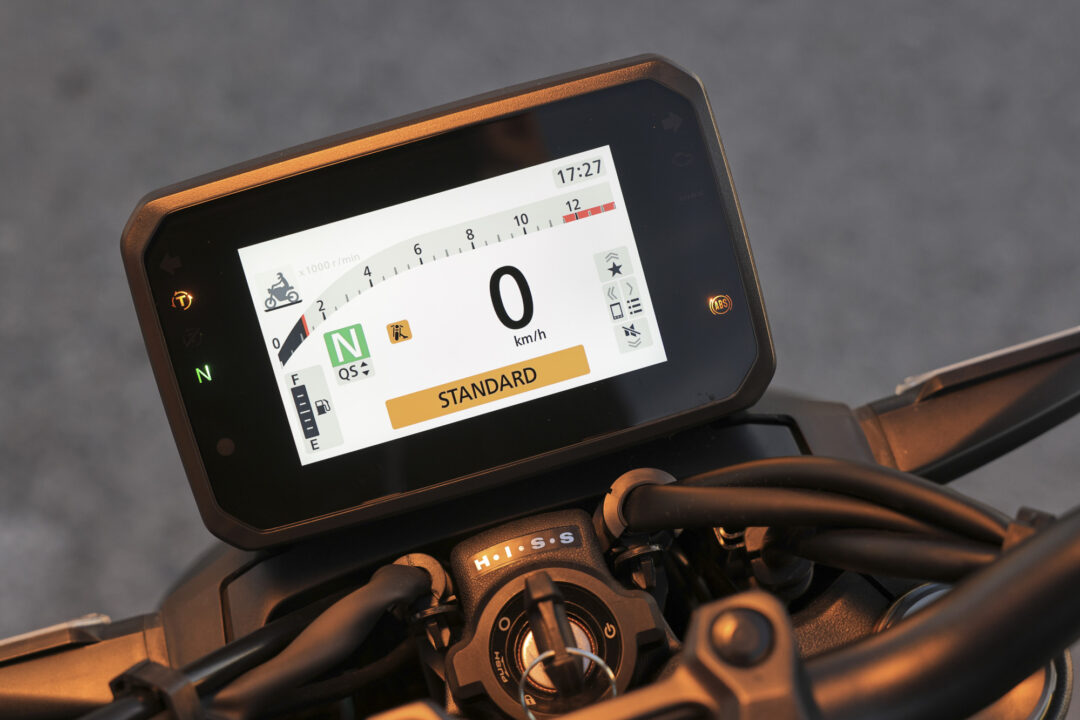
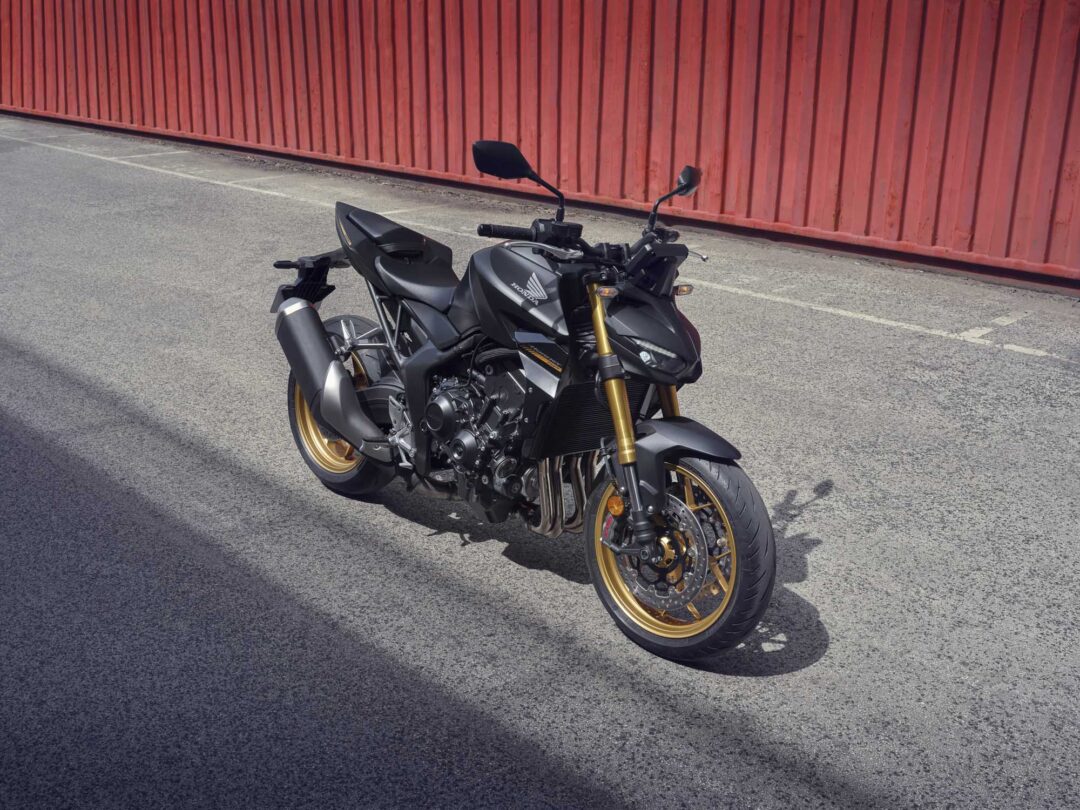
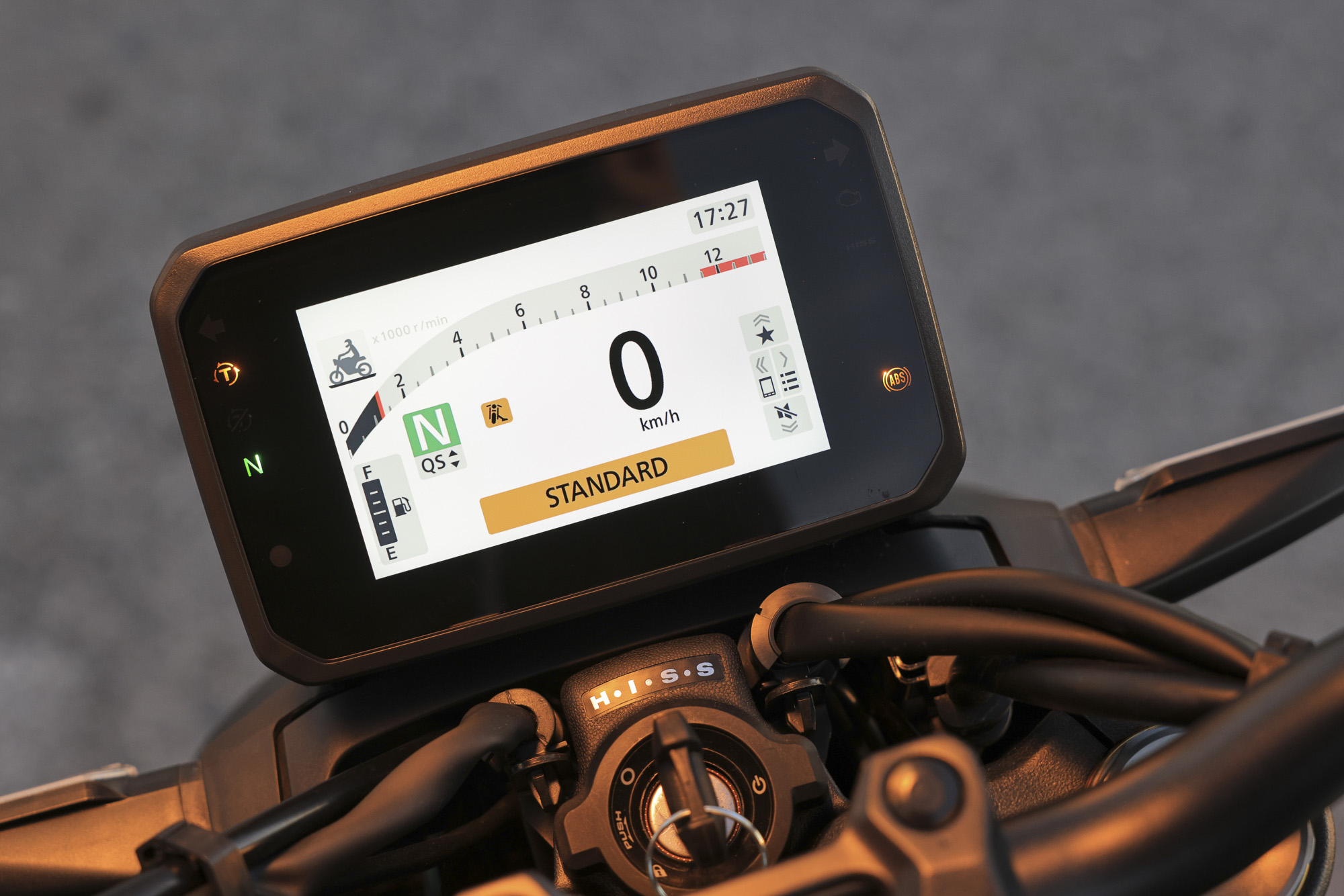
Despite the aggressive styling, the CB1000 Hornet is surprisingly civilised. The riding position is roomy, the seat height is approachable, and wind protection is about what you’d expect from a naked — manageable at legal speeds, honest once you push beyond them. Vibration is well controlled, and the TFT dash is clear and easy to read without being visually overwhelming.
It’s not pretending to be a tourer, but for everyday riding, weekend blasts and the occasional longer trip, it makes a strong case for itself — especially for riders who want litre-bike performance without litre-bike complexity.
Verdict: the “Why is it that cheap?” litre naked
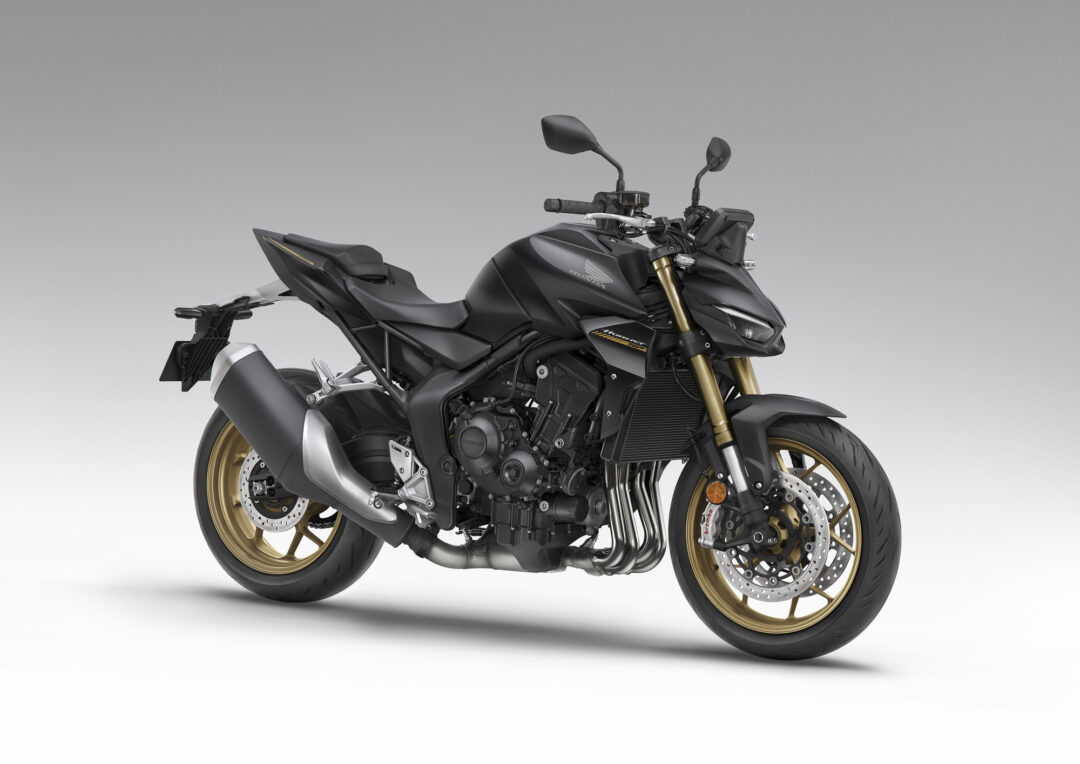
This bike hits a sweet spot: big horsepower, quality components, and real-world usability — without pricing itself into the stratosphere. The rider aids are simple and the TC could be smarter, but for riders who just want a fast, aggressive naked with a proper inline-four character, the Hornet SP makes an extremely convincing case.
The awkward part for rivals is the question it forces: if you’re shopping anything from a Z900 to an MT-10 to a Street Triple 1200, you’re going to feel obliged to at least test the Hornet — because on paper, not much touches its value-for-thrills equation.
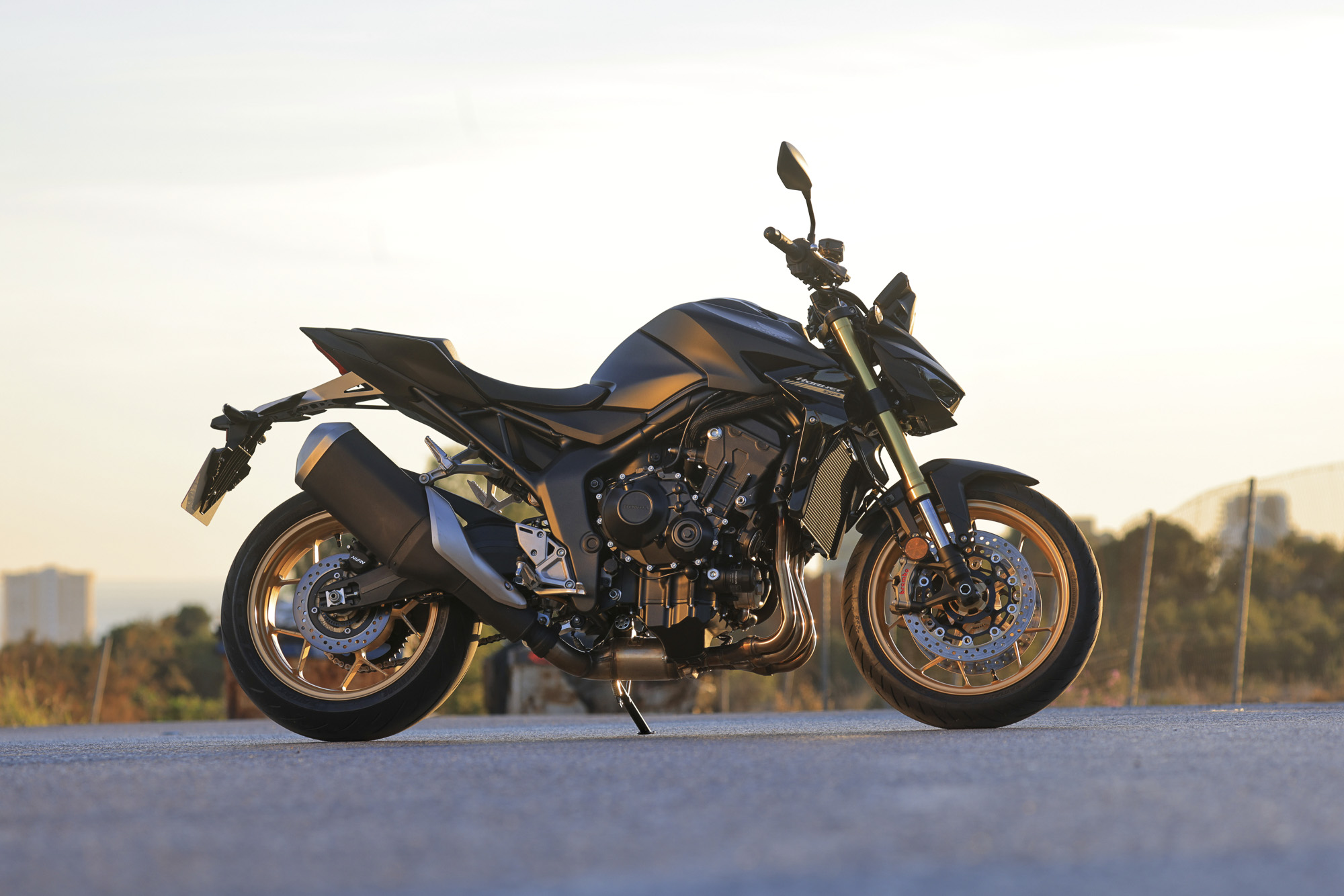
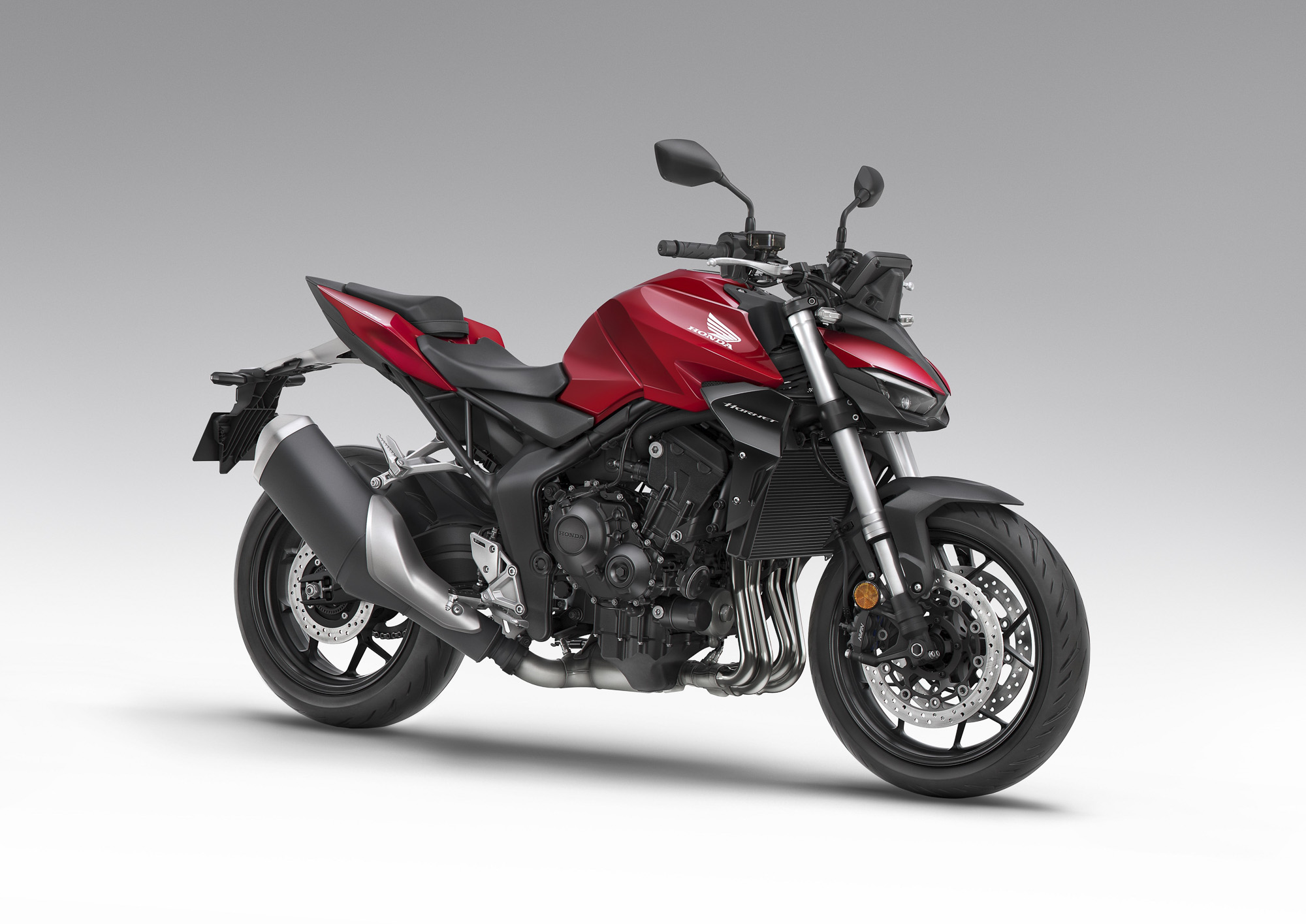
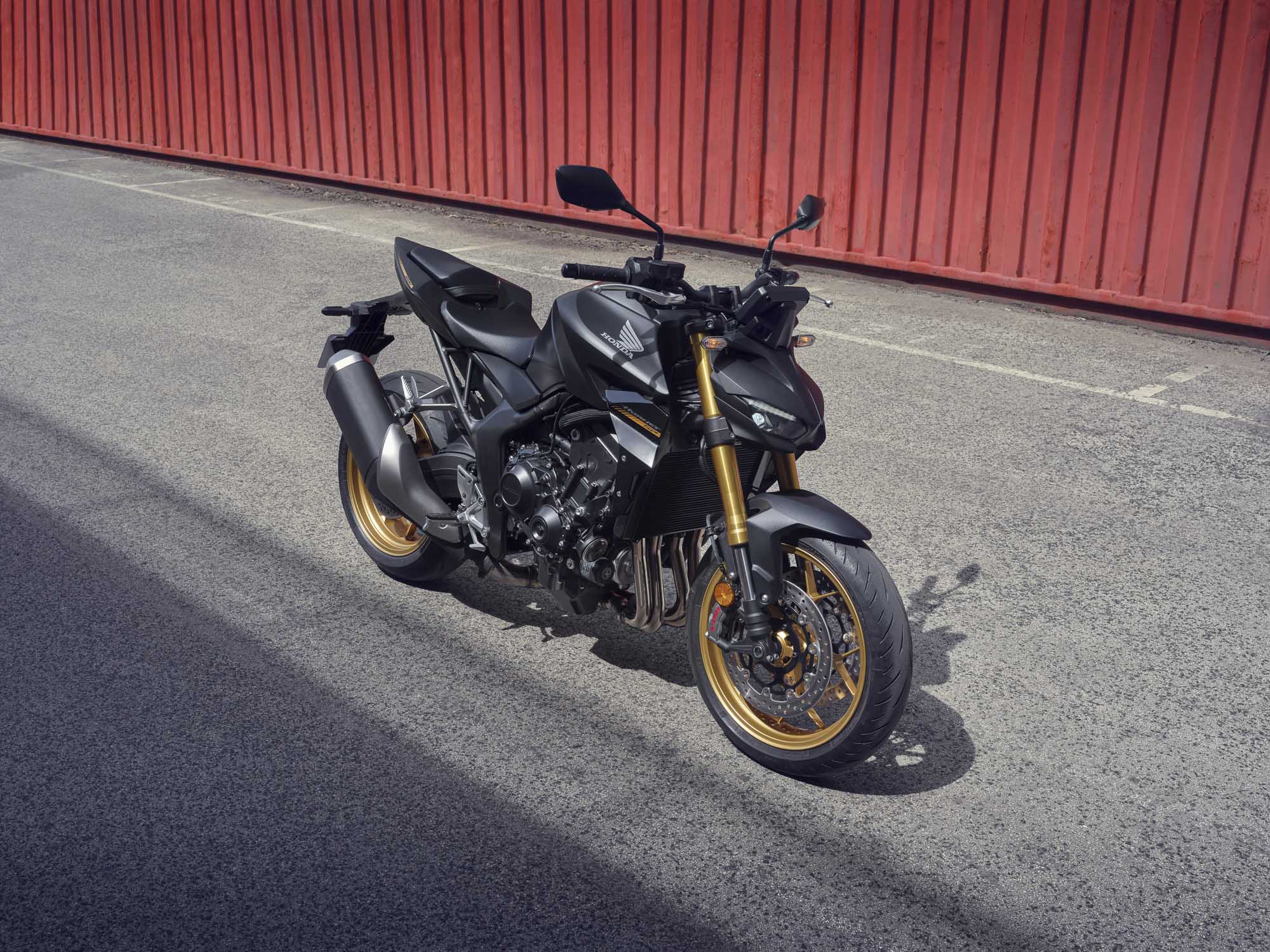
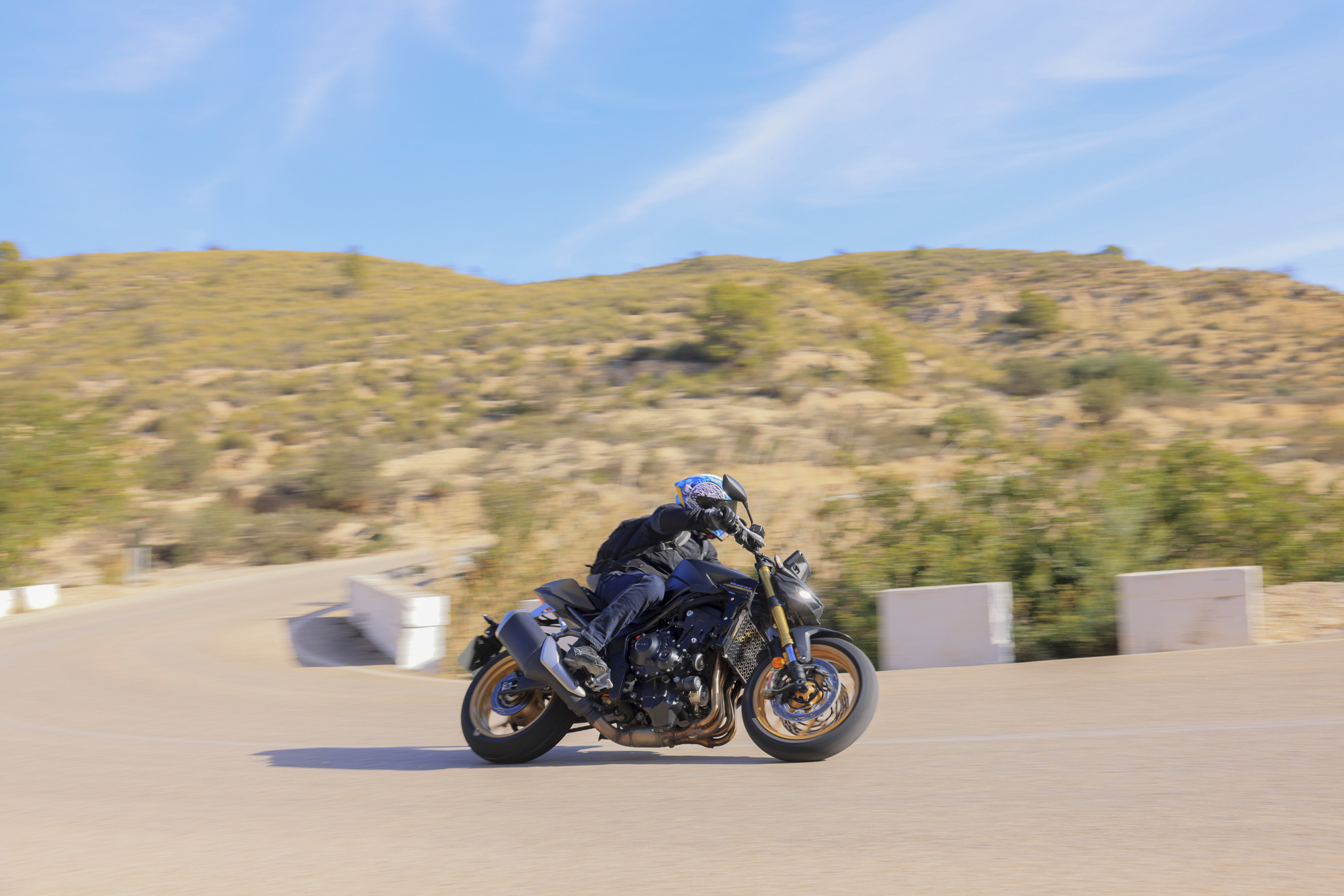
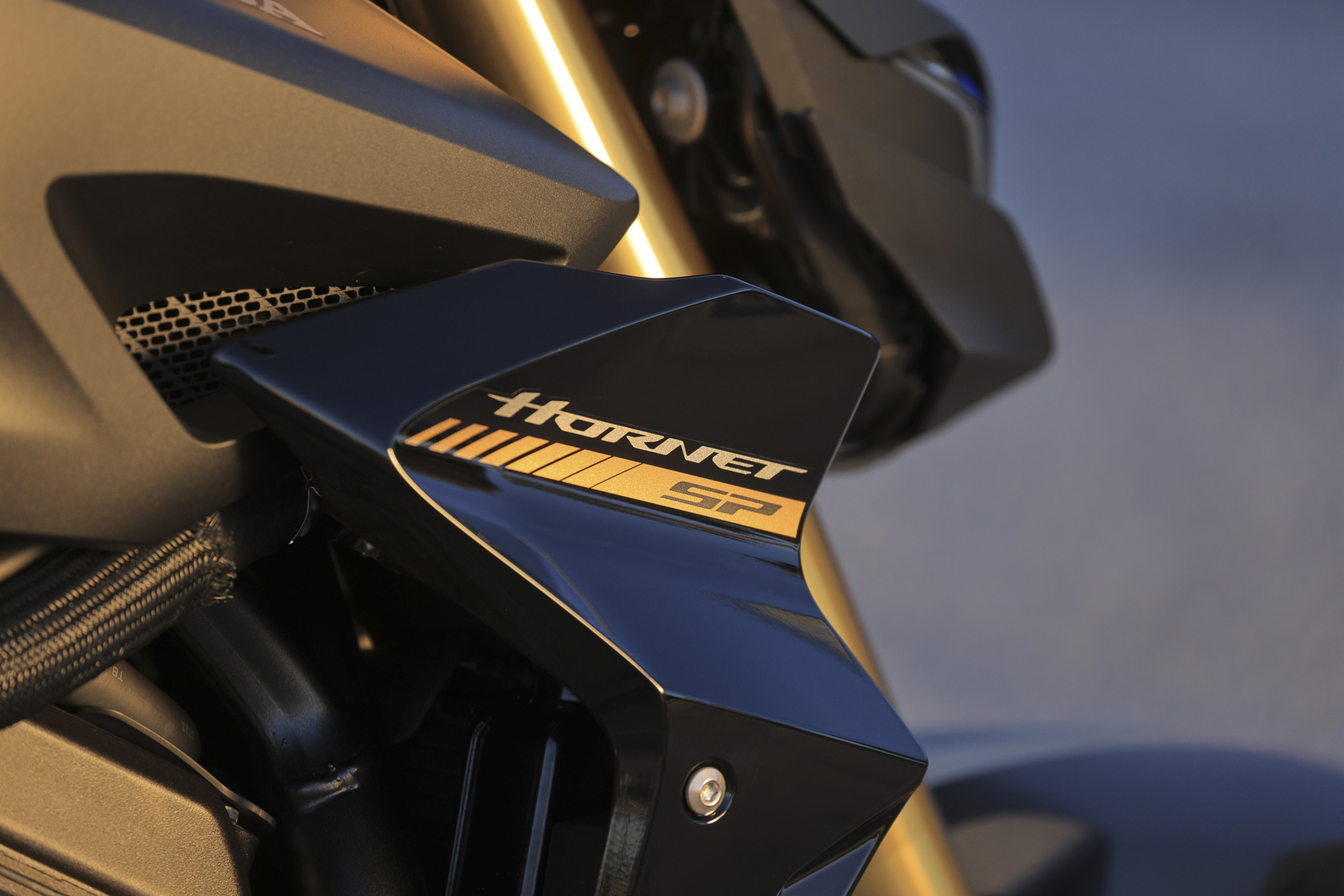
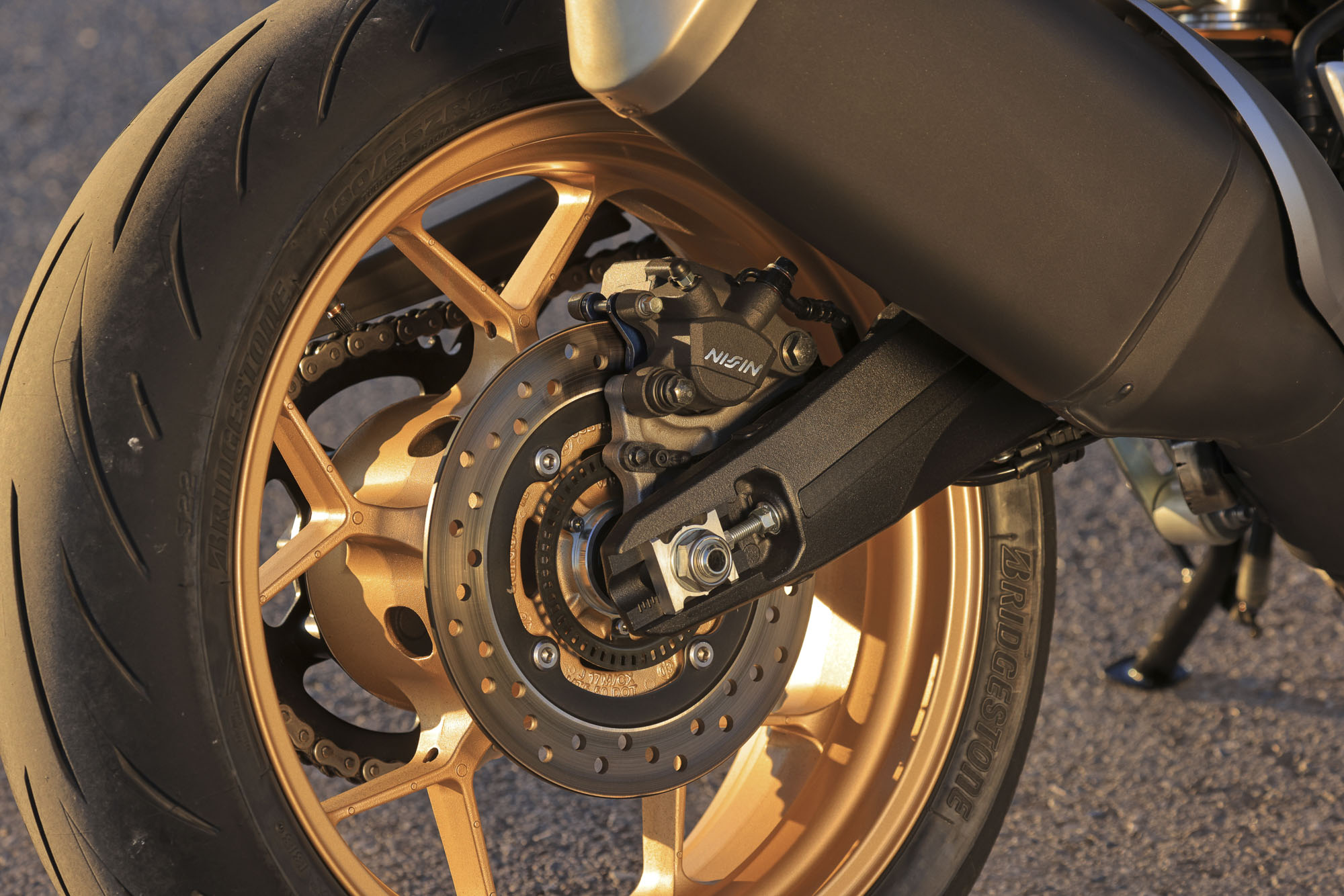
Honda CB1000 SP Gallery
Honda CB1000 Hornet FAQ
Is the CB1000 Hornet SP engine the same as a Fireblade?
It’s based on the 2017 Fireblade inline-four, but retuned for stronger midrange and updated to meet Euro 5+ emissions requirements.
Does the Hornet SP have an IMU and cornering ABS?
No — there’s no IMU, so the ABS and traction control aren’t lean-sensitive.
What does the SP add over the standard CB1000 Hornet?
Öhlins TTX rear shock, Brembo Stylema brakes, up/down quickshifter, black-only colour, and a slight power bump (155 vs 150).
When will NZ pricing be confirmed?
It has just been announced as starting from $22,995 + ORC. Will still don’t know when units will hit our shores though. And by the looks of it, it will only be available in the Kiwi favourite – Black!
Honda CB1000 Hornet Specifications
Price: $22,995 + ORC
Engine: DOHC, liquid-cooled inline four, 4v/cyl
Capacity: 1000cc
Bore x stroke: 76.0 x 55.1mm
Compression: 11.7
Gearbox / final: 6-speed / chain
Power: 155hp @ 11,000rpm
Torque: 107Nm @ 9,000rpm
Fueling: PGM-FI, throttle-by-wire
Clutch: Wet multi-plate, slip/assist
Frame: Twin-spar
Front suspension: 41mm Showa USD, fully adjustable
Rear suspension: Öhlins TTX36, fully adjustable
Brakes (front): Brembo Stylema R, dual 310mm discs, ABS
Brakes (rear): Nissin, 240mm disc, ABS
Tyres: 120/70-17 front, 180/55-17 rear (Bridgestone S22)
Wheelbase: 1455mm
Ground clearance: 135mm
Seat height: 809mm
Fuel: 17L
Wet weight: 212kg
Contact: hondamotorbikes.co.nz