

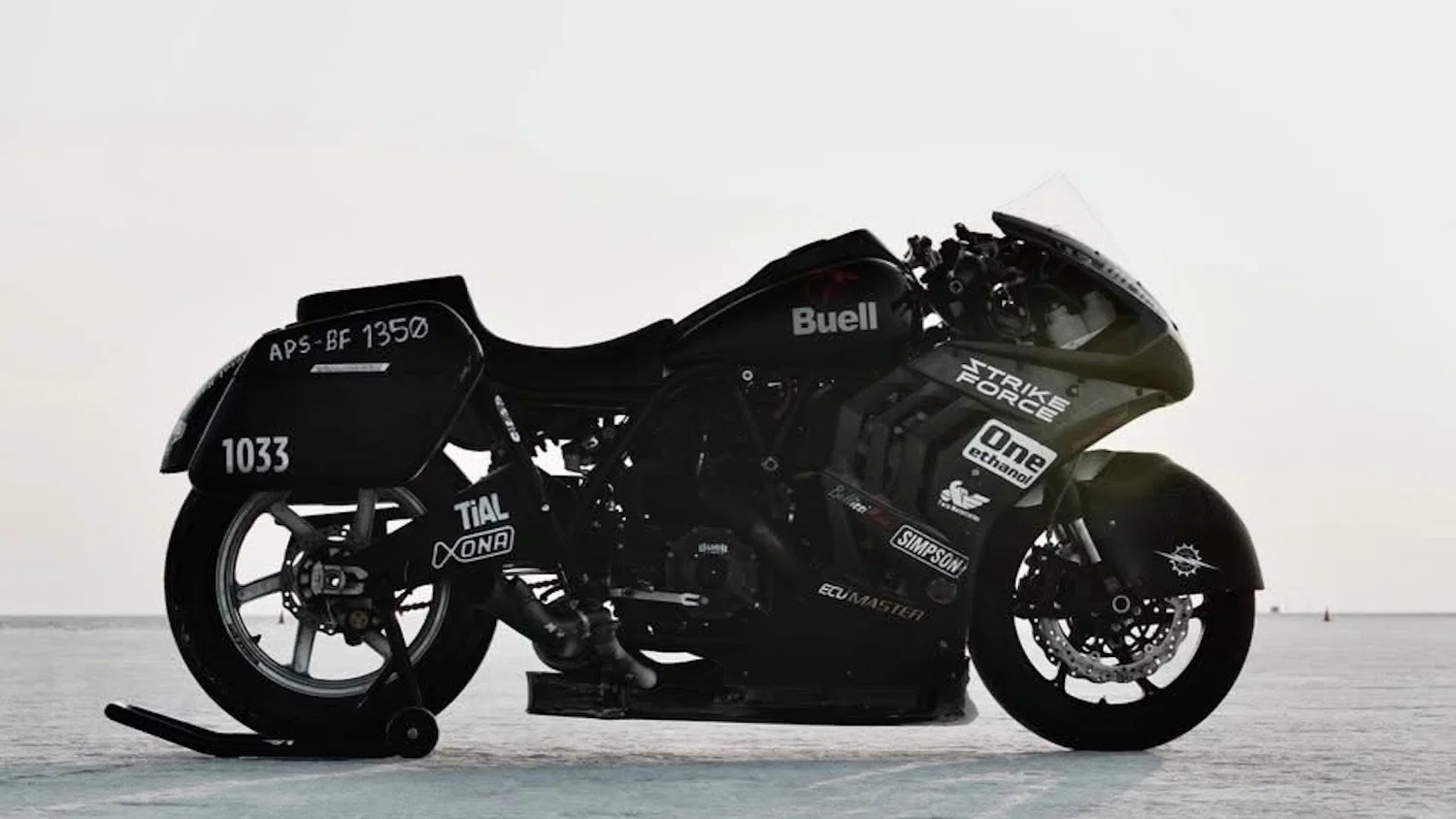
The Buell Project Leviathan arrived at Bonneville Speed Week with one clear objective: break the 402km/h (250mph) barrier. While the turbocharged land-speed motorcycle didn’t achieve that headline target, its debut on the famous salt flats proved to be as much about learning as outright speed.
The team’s fastest recorded run of the event stood at 287.3kmh, well below the projected top speed. However, Leviathan’s first Bonneville campaign was far from a straightforward speed attempt, with both the motorcycle and rider tackling the unique challenges of the venue for the first time.
Neither Leviathan nor rider Jacob Stark had competed at Bonneville before. The event marked the first time the motorcycle had moved under its own power outside of testing and dyno sessions, while Stark was making his debut on the salt. Before chasing record speeds, the team first had to complete Bonneville’s licensing process, which requires riders to demonstrate control at progressively higher speeds.
The opening run was deliberately conservative. Stark needed to exceed 201kmh to secure a D licence, so the team kept the run simple with a short shift into second gear before returning to the pits for inspection and setup changes. That initial outing went smoothly, but the challenge increased significantly once third gear came into play.
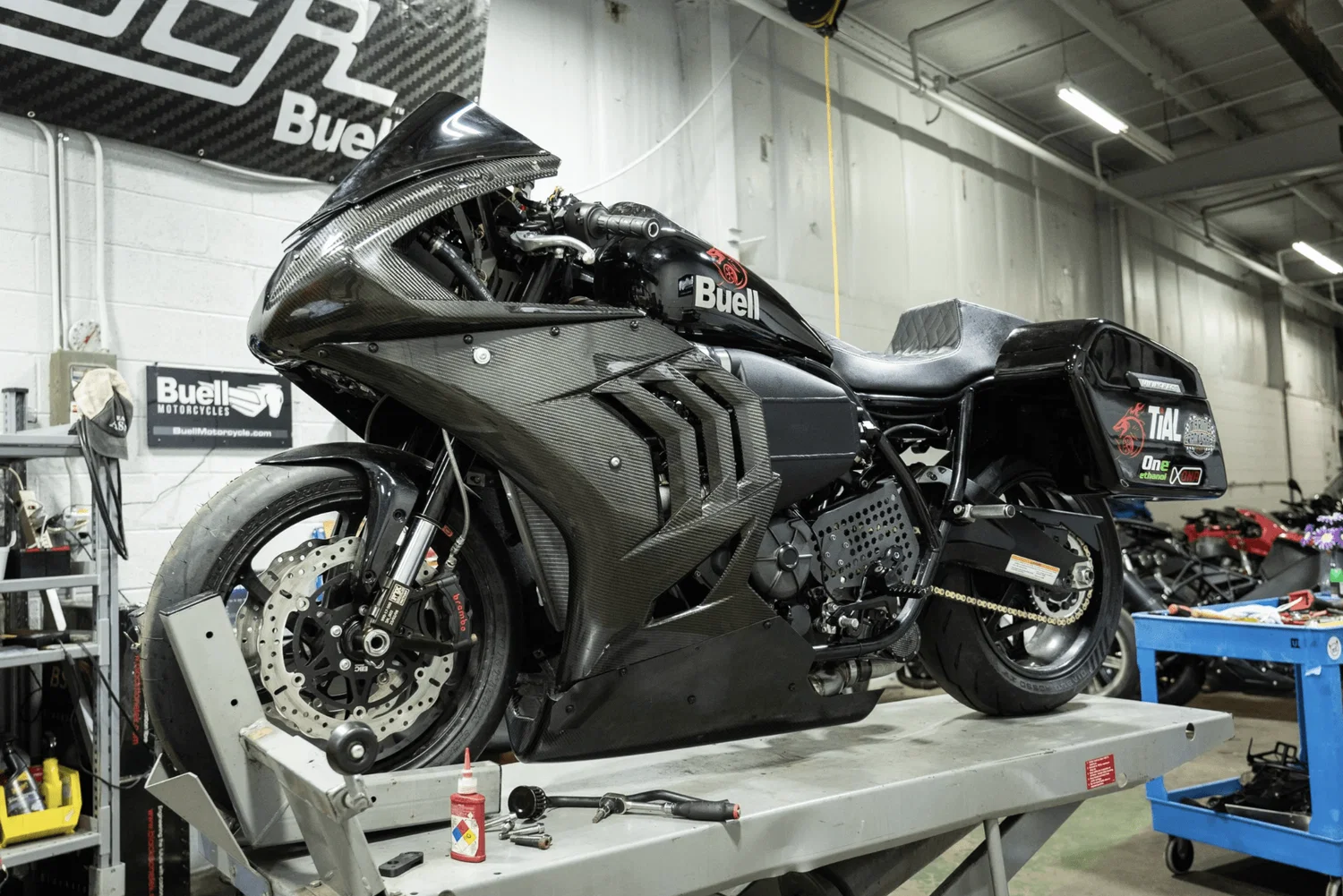
According to Buell, Leviathan’s behaviour changed dramatically as Stark pushed beyond 241kmh at the two-mile marker. From that point onward, the team spent several days working through a series of technical issues and setup revisions as it prepared the motorcycle for higher-speed runs.
Fourth gear introduced an even bigger hurdle. Engaging it produced rear-wheel speeds of more than 322kmh, despite the motorcycle itself travelling considerably slower. In effect, Stark had to learn how to control the bike while performing a rolling burnout at over 282kmh on the salt.
MORE ARTICLES
After eventually securing the B licence required to access Bonneville’s Long Course, the team gained five miles of acceleration instead of the shorter licensing distances used earlier in the week. It was during these runs that Leviathan achieved its best speed of 287.3km/h. The result needs to be viewed in context. Buell built Leviathan around a stated goal of exceeding 402km/h, with the turbocharged 1190cc platform claimed to produce more than 401bhp at the rear wheel and over 291Nm of torque. On paper, the performance potential is clearly there.
Bonneville, however, presents challenges that cannot be replicated on a dyno. Producing 400bhp is one thing; putting that power to the ground on salt while keeping the rear wheel under control at extreme speeds is something else entirely.
Buell also had to contend with the realities of developing a brand-new land-speed motorcycle in competition conditions. Technical issues required ongoing corrections throughout the event, while Stark was simultaneously adapting to a machine whose behaviour changed dramatically as speeds climbed.