


- 0.4kg lighter than before
- Comes with three selectable sensitivity modes
- Compatible with MyRide app
Alpinestars has unveiled its latest iteration of motorcycle airbag technology: the Tech-Air 5 Plasma. Positioned as the Italian brand’s lightest and most comfortable self-contained airbag vest to date, the Plasma represents more than two decades of data collection and development. In essence, the company attempts to refine a proven formula rather than reinvent it.
The Plasma replaces the outgoing Tech-Air 5 and is available in sizes XS through 4XL. While the concept remains familiar, the updates are substantive. Revised sensing hardware and refreshed software are paired with a claimed 0.4kg weight reduction over its predecessor, a significant figure in a product designed to be worn for hours at a time.
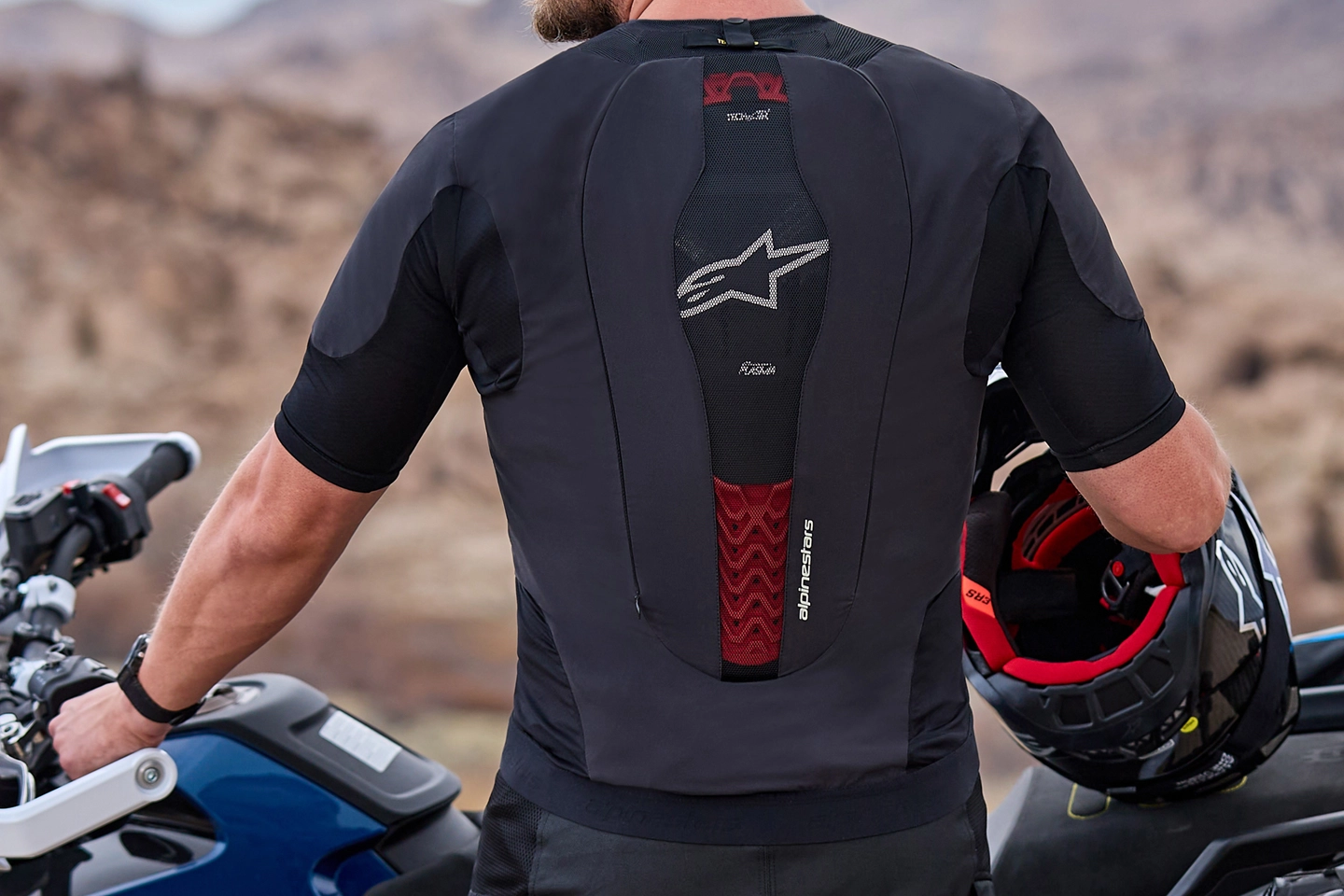
At its core sits a six-sensor array comprising tri-axial accelerometers and a tri-axial gyroscope. These continuously monitor rider movement, feeding information into an AI-driven algorithm. That algorithm, in turn, draws on a crash database that stretches back to 2004, when Alpinestars began systematically collecting telemetry and incident data from its MotoGP programme. The result is a system shaped by millions of kilometres of riding and thousands of recorded crash scenarios.
That depth of data has allowed engineers to fine-tune deployment sensitivity across three selectable riding modes: Street, Race and Off-Road. Each adjusts the algorithm’s response parameters to better suit the environment, acknowledging that a slide on loose gravel differs markedly from a high-speed tarmac incident.
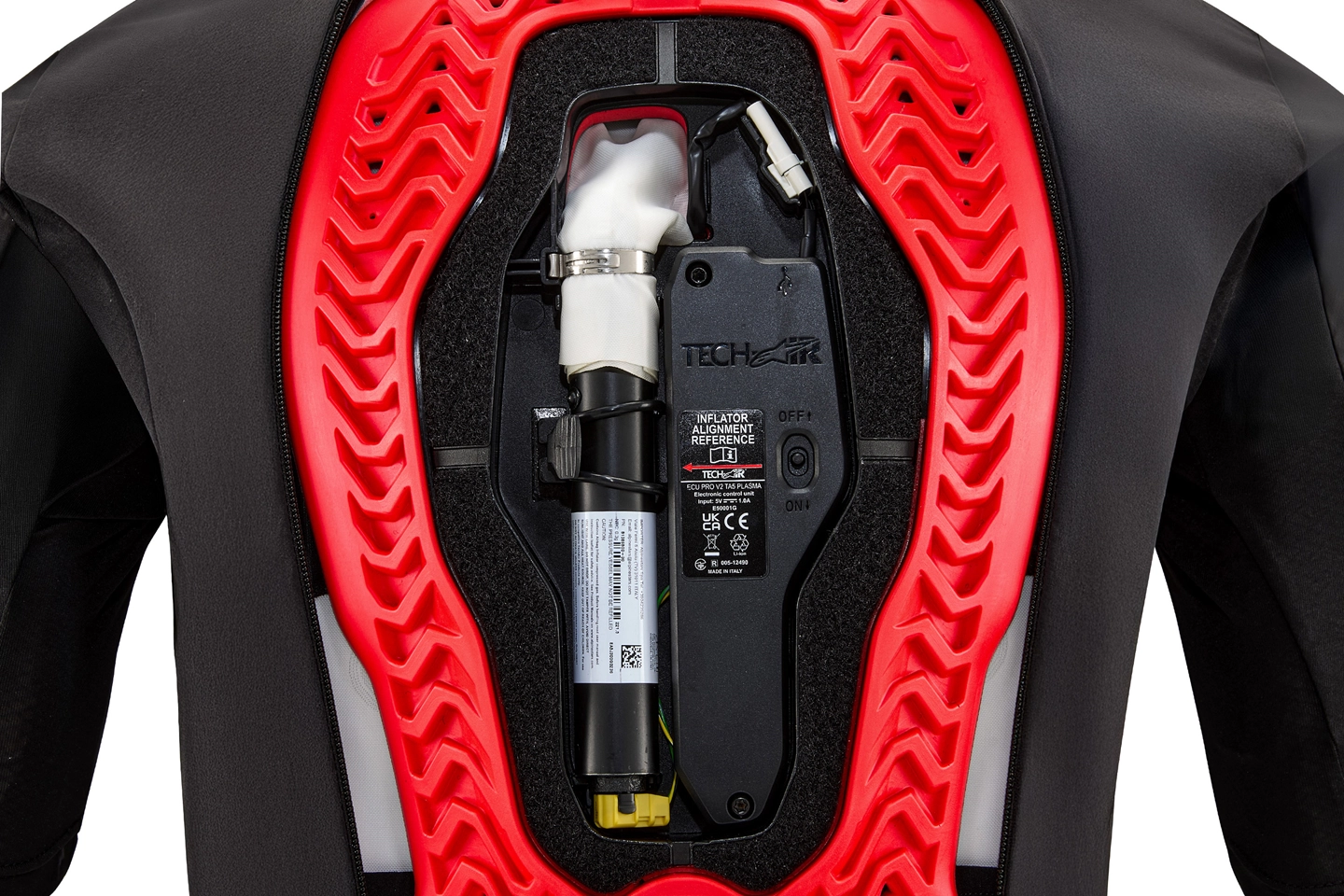
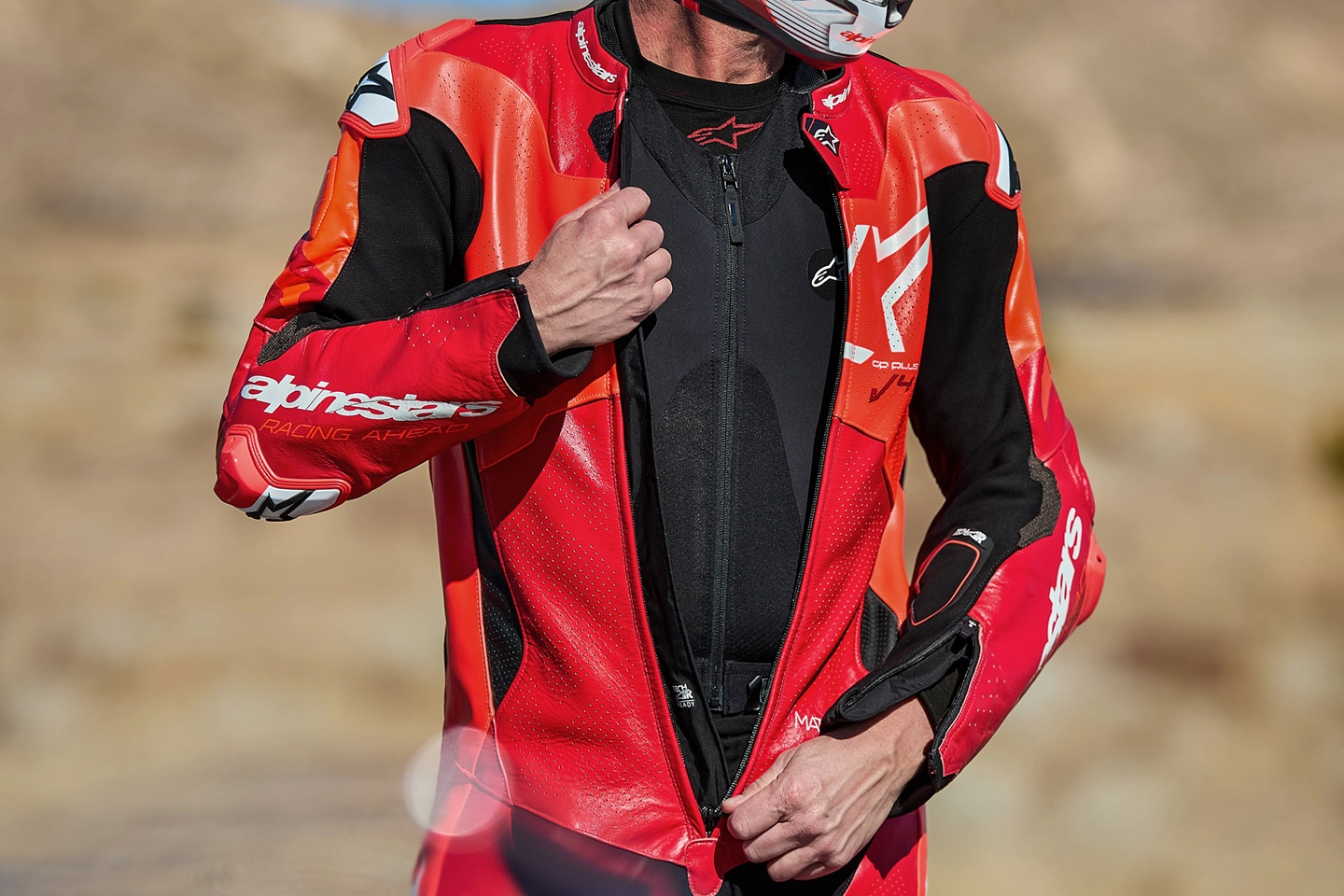
When the system detects a crash event, inflation is triggered within 20 milliseconds. Activation itself is straightforward: zip the vest closed and secure the magnetic front flap. An LED indicator and haptic vibration confirm the system is armed, while additional vibration alerts signal mode changes or deactivation.
As expected, connectivity forms part of the package in 2026. A companion app provides access to system diagnostics, battery status and firmware updates. It also incorporates a “MyRide” feature for recording and mapping routes, alongside digital access to the user manual.
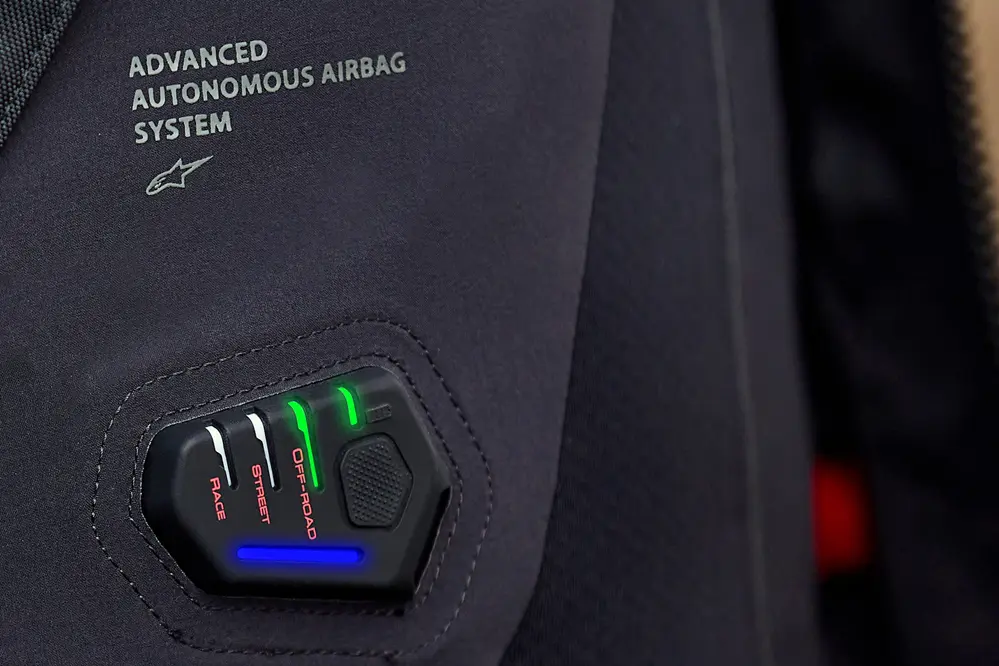
Power is supplied by an integrated lithium-ion battery offering up to 30 hours of riding time per charge. Charging is handled via a USB-C port housed within the LED display module. Weighing 1530g in total, the Plasma is more than 25 per cent lighter than the previous Tech-Air 5, making it the lightest airbag system in Alpinestars’ current line-up.
Reduced mass is only part of the story. The Plasma is also slimmer and more flexible, designed to sit comfortably beneath a compatible riding jacket, albeit without a back protector installed. That packaging does, however, result in slightly less coverage than some alternatives, including Alpinestars’ own Tech-Air 7 and Tech-Air 10 systems.
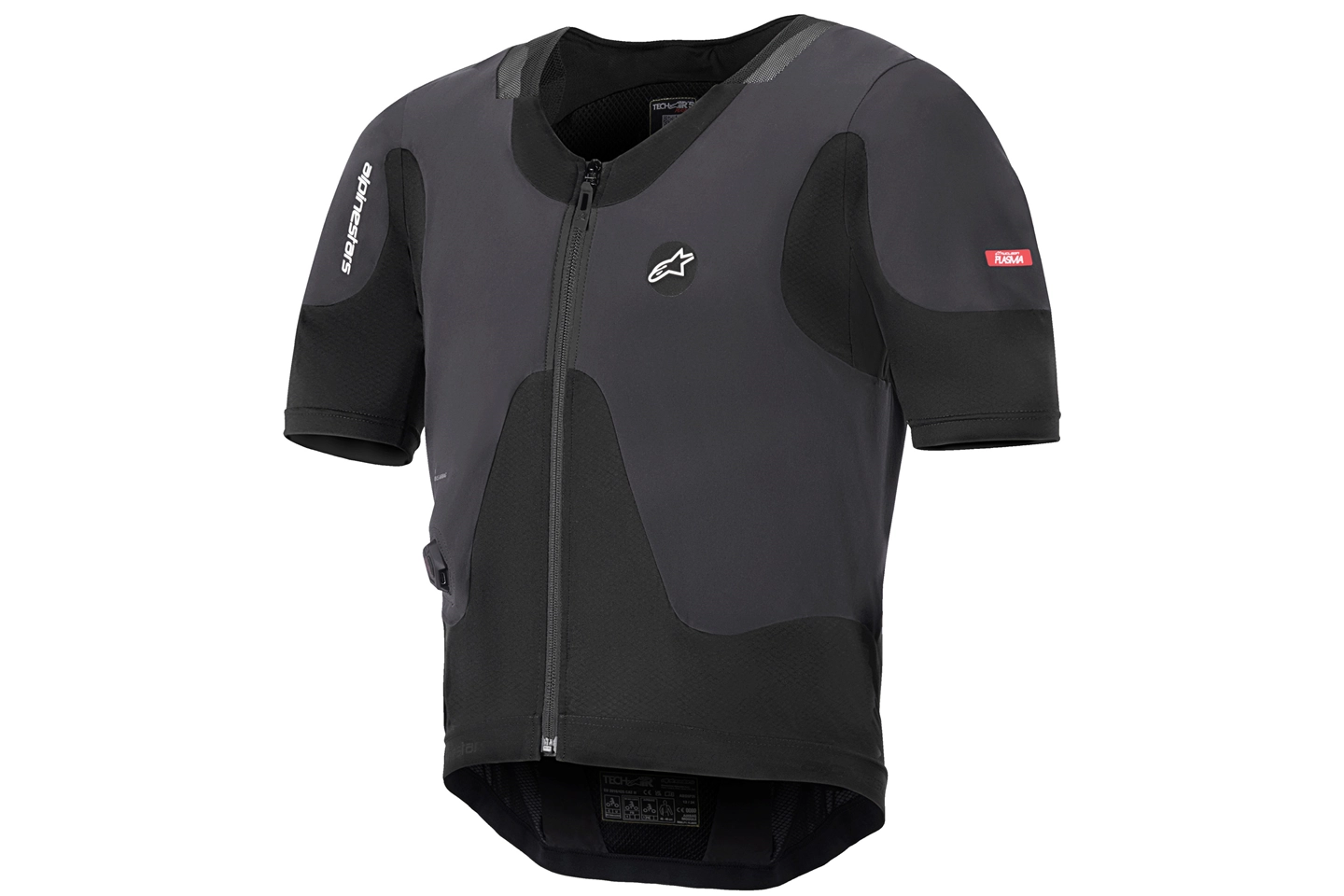
Breathability remains a challenge for any airbag vest, but the Plasma attempts to address this with integrated airflow channels and perforations across the shoulders and rear airbag structure. In terms of certification, it incorporates a Level 1 back protector, while the airbag itself meets EN1621-4:2013 Level 1 standards, a protocol assessing protection against narrow-object impacts using methodologies comparable to conventional armour testing.
Alpinestars recommends a service interval of every two years or 500 hours of riding, with full system replacement advised after 10 years. Taken as a whole, the Tech-Air 5 Plasma is less about headline-grabbing innovation and more about incremental refinement. Lighter, slimmer and underpinned by an expanding dataset, it reflects the broader evolution of motorcycle airbag technology, from niche race equipment to an increasingly viable everyday safety layer for road riders.