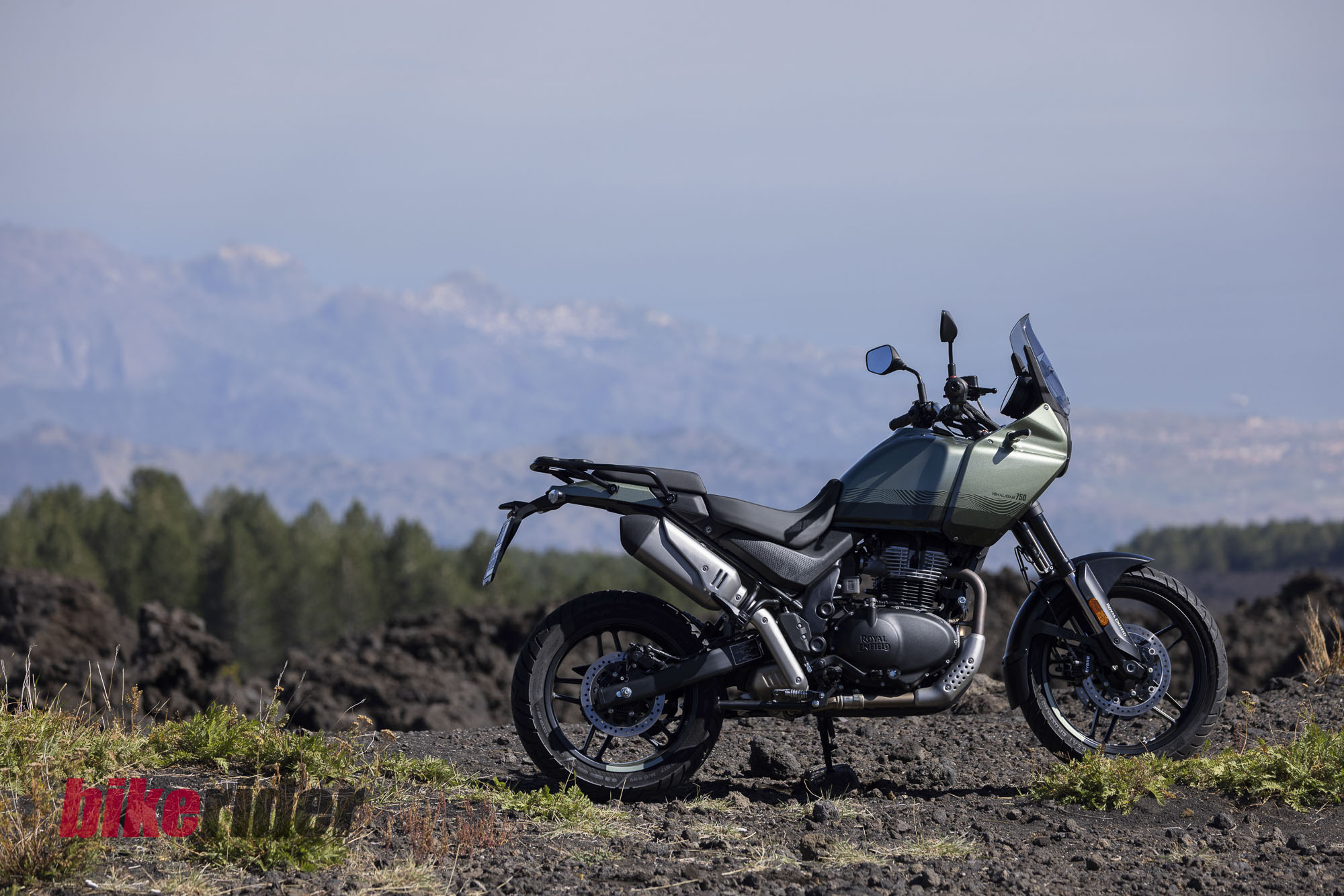


FIRST RIDE | ROYAL ENFIELD HIMALAYAN 750
Royal Enfield’s larger twin-cylinder adventure bike promises more torque, better touring ability and straightforward technology. Adam heads to Sicily to find out whether it delivers.
- The 743cc twin puts the emphasis on usable torque and relaxed touring rather than high-rev thrills.
- Comfort and reassuring low-speed balance stand out after a day on Sicily’s twisting roads.
- The dirt riding was only a first taste; NZ pricing and a more demanding local test remain key parts of the picture.
A Himalayan with a difference
The Himalayan 450 has given Royal Enfield some proper adventure-bike credibility. A mountain goat of a thing, it makes a convincing case for keeping adventure riding manageable: a willing single-cylinder engine, genuine off-road ability and no requirement to be a Dakar rider to enjoy it. But add a passenger, a week’s luggage and a decent stretch of highway, and you can see where a bigger sibling might come in handy.
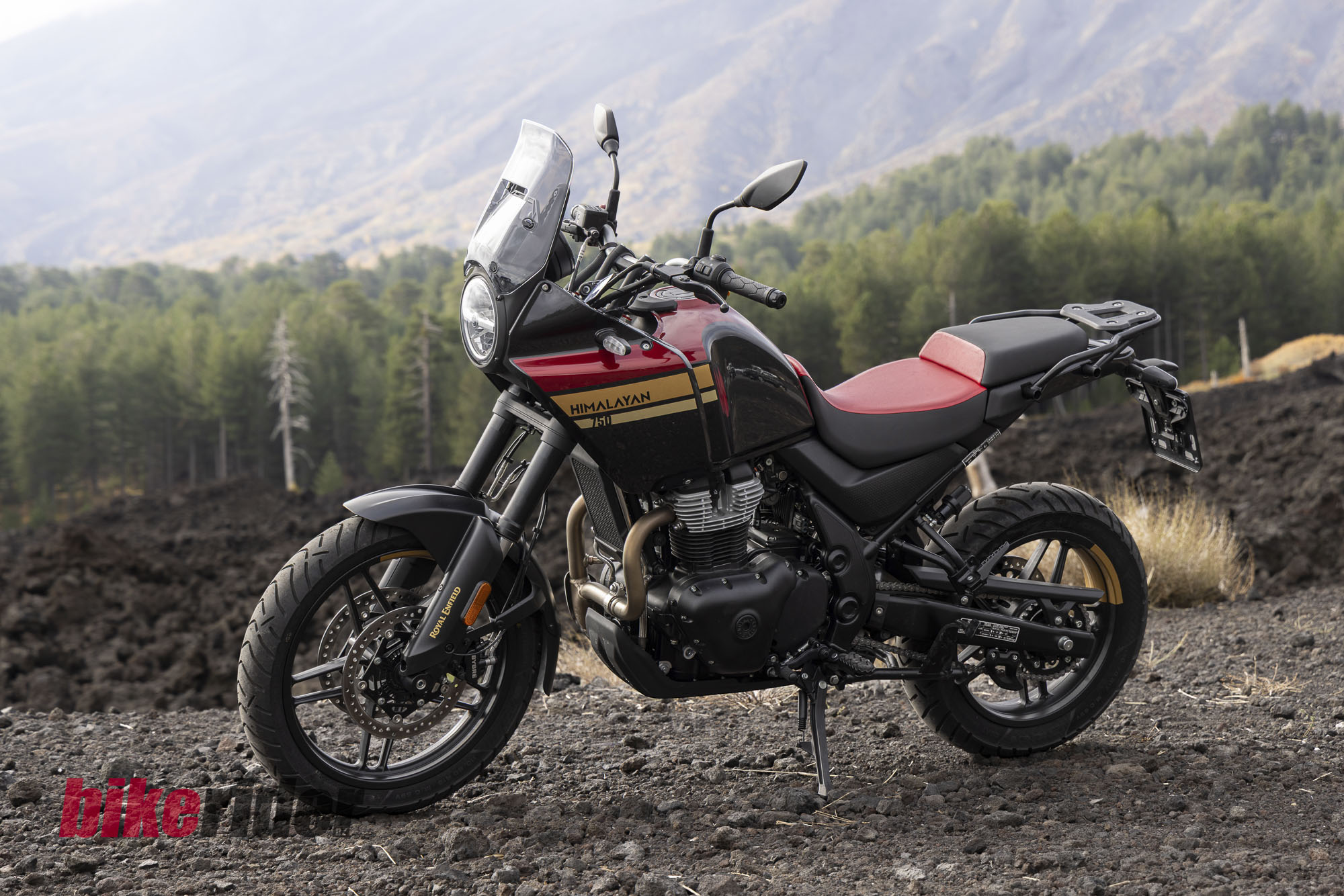
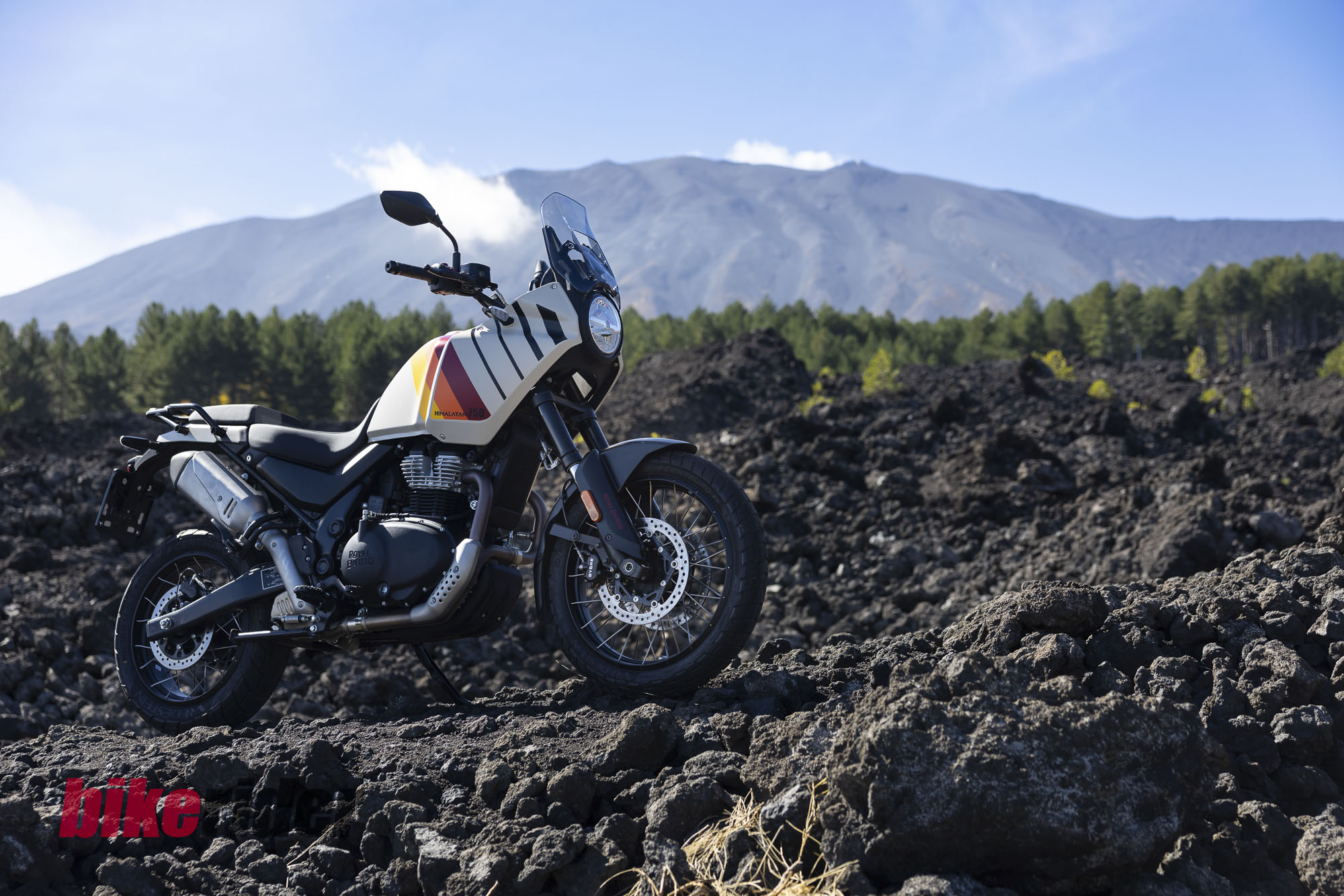
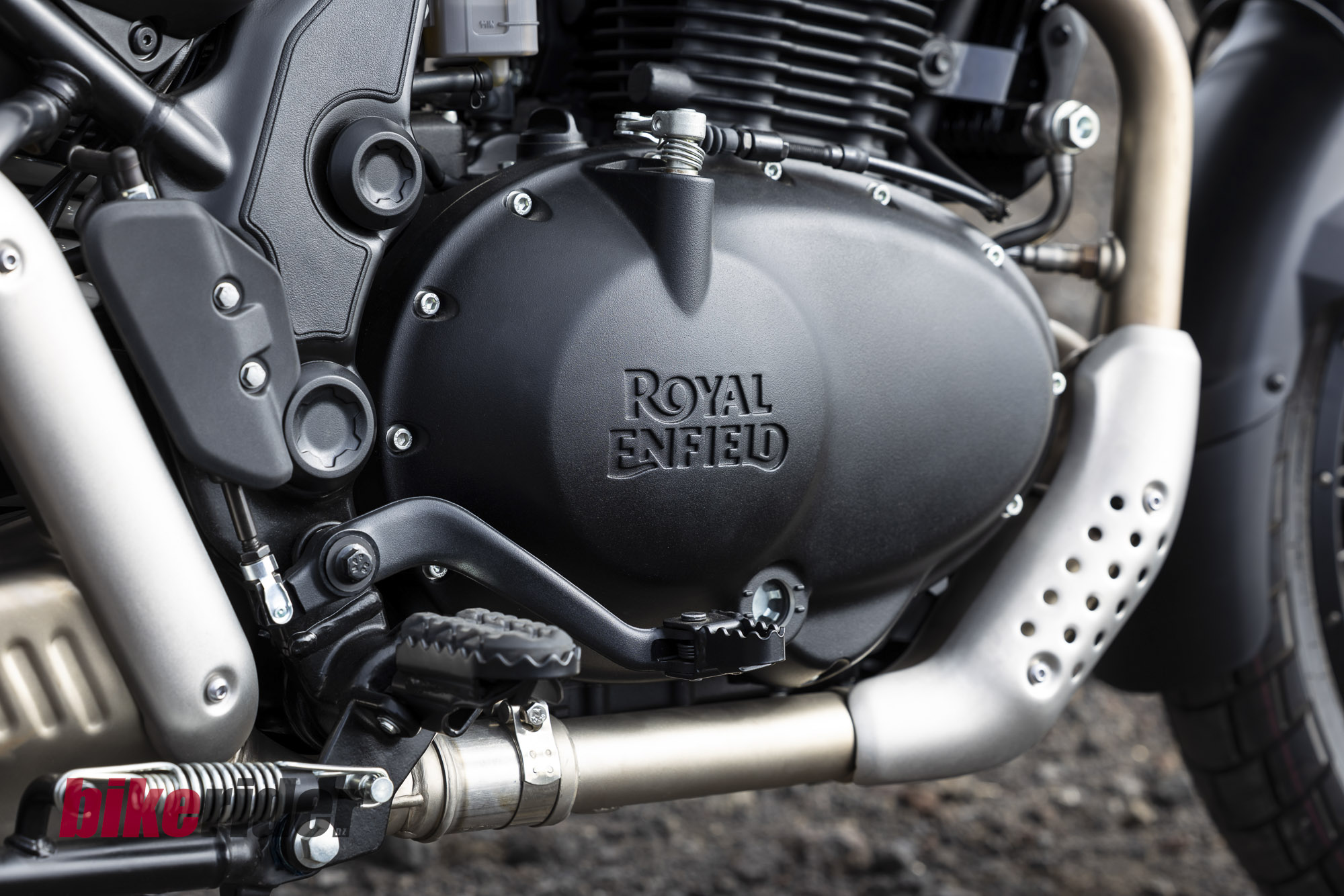
That’s where the Himalayan 750 enters the picture. Its 743cc air/oil-cooled parallel-twin produces 40.5kW (54.3hp) and 63Nm, with Royal Enfield claiming 90 per cent of that torque is available from 3,500rpm. Those figures tell you plenty about the intention here. This is an engine built to pull without needing to have its neck wrung at every opportunity.
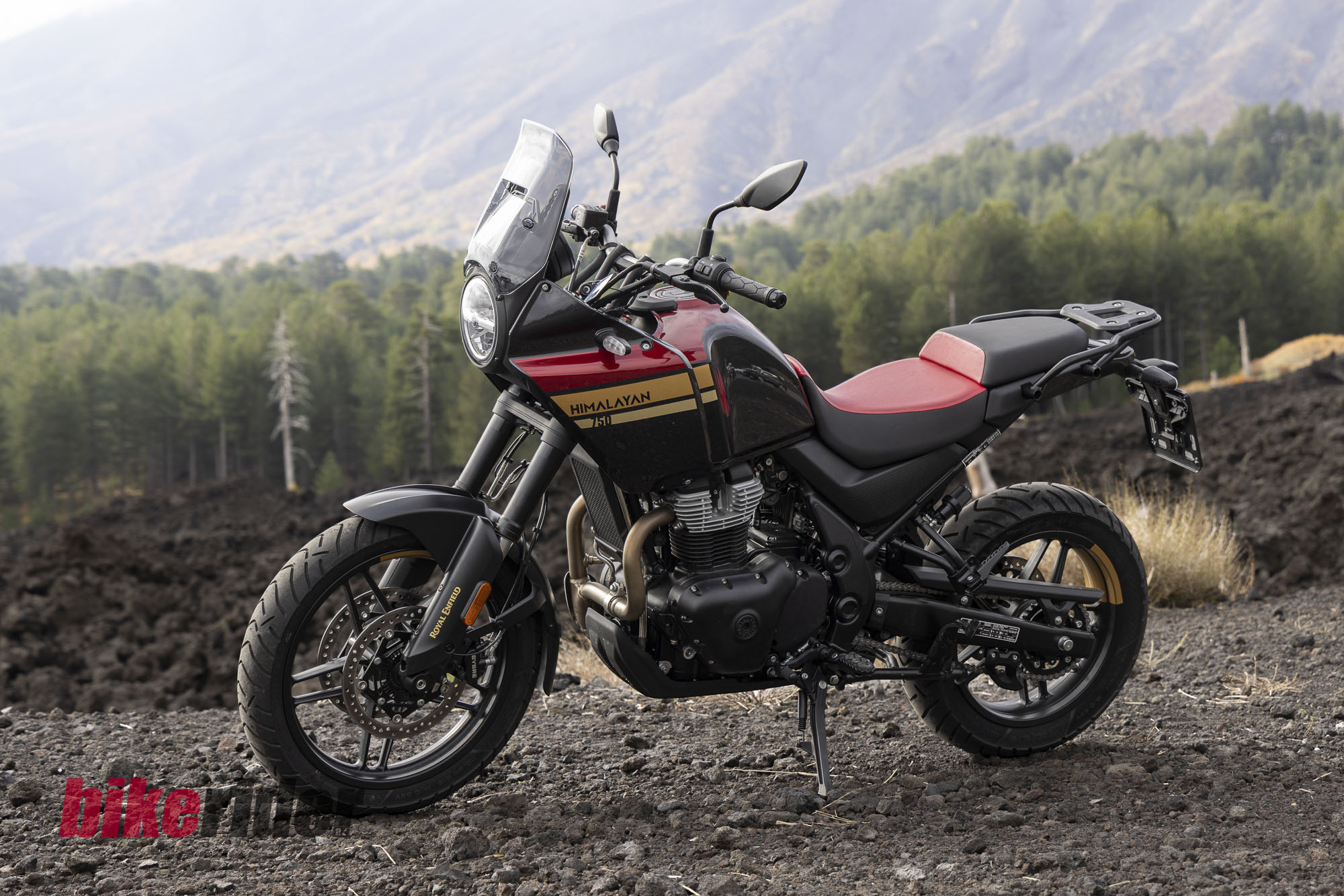
The rest of the package points towards covering bigger distances, too. There’s a 19-inch front and 17-inch rear wheel combination, tubeless tyres, an adjustable screen and cruise control, while cornering ABS and lean-sensitive traction control bring a level of electronic assistance we haven’t traditionally associated with Royal Enfield. The Himalayan formula is growing up, with more emphasis on the miles between the trails.
Apparently, the idea began with a few engineers putting a 650 twin into a Himalayan-style frame and liking the result. There’s something appealing about that sort of development process. But turning a promising experiment into a motorcycle people will load up and take away for a fortnight is another matter.
MORE ARTICLES
Royal Enfield invited us to Sicily to find out how it had come together. A day of mountain switchbacks and a little off-road riding would give a first taste of whether the bigger Himalayan could deliver that extra touring ability while retaining the approachable character that makes the smaller bike appealing.
An engine made for the middle of the rev range
The new twin’s output might not be exactly earth-shattering, but it’s complemented by a broad torque curve, with the bulk of the pulling power available well below peak revs.
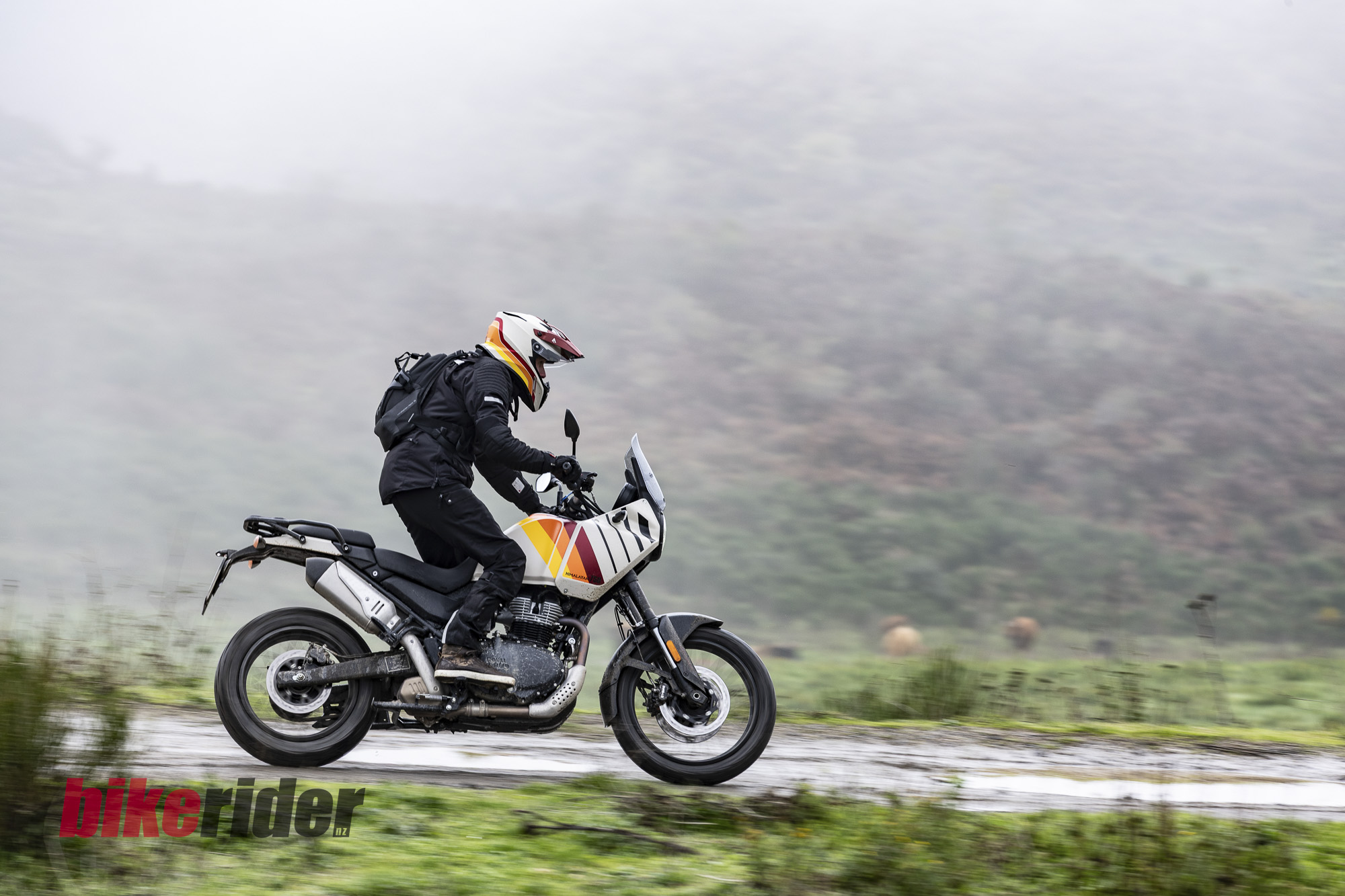
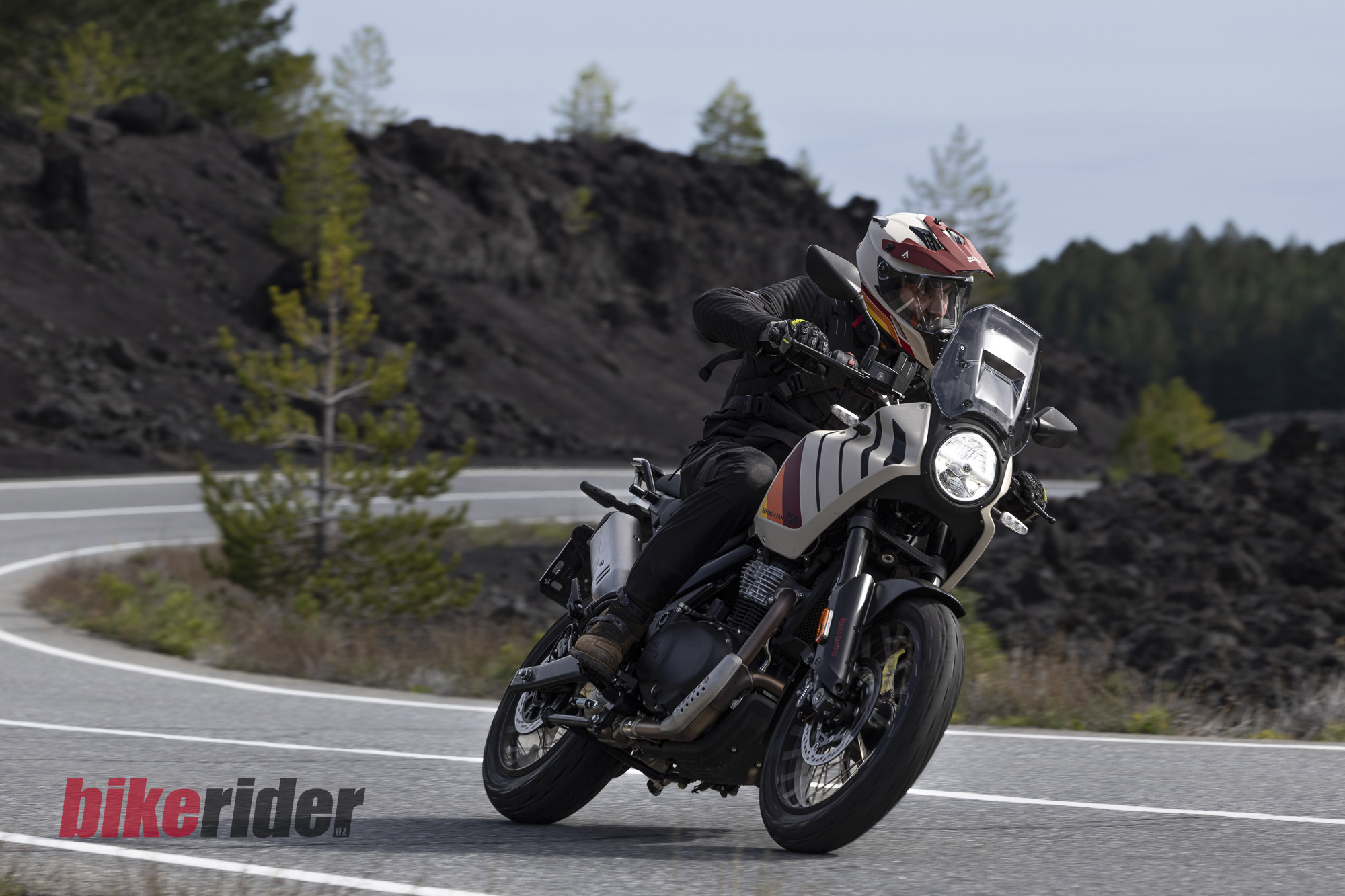
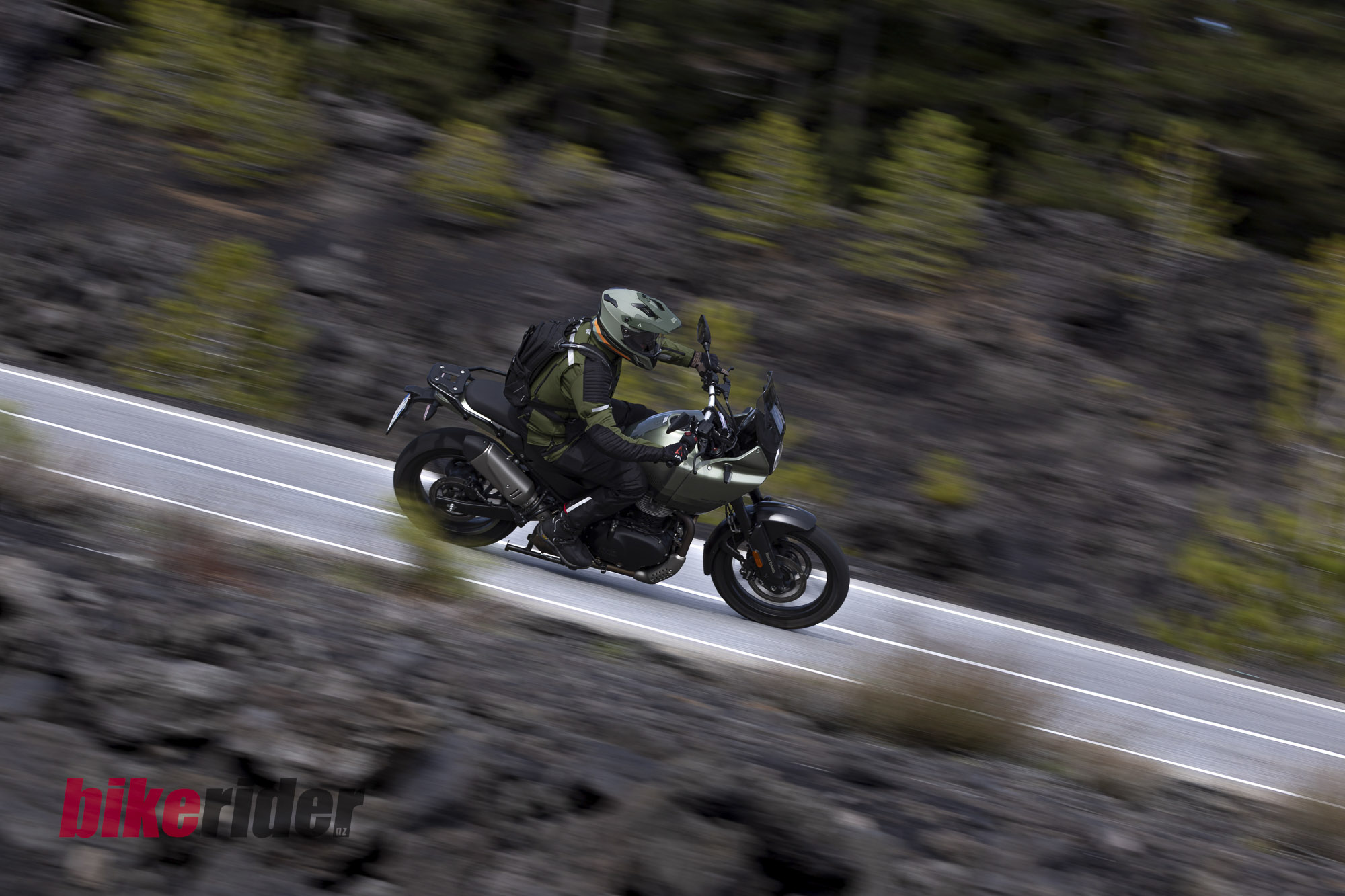
It is not an engine to brag about in the pub, but that misses the point. Through Sicily’s constant bends, the Himalayan is happiest left in a higher gear, letting its midrange do the work. Fifth or even sixth can be enough as you roll through corners without chasing the redline.
“Rather than trying to attack every corner, the Himalayan rewards a more relaxed approach.”
Try attacking every hairpin with hard braking and aggressive acceleration and the experience becomes less convincing. There isn’t the over-rev or top-end excitement of a more sporting middleweight. But Royal Enfield has not built a supersport in adventure clothing.
Heavier on paper than it feels
The weight figure quoted at the launch was 223kg ready to ride, with 90 per cent fuel in the tank and the centre stand included. What surprised me was how low that weight seems to sit. At slow speeds it feels reassuringly balanced, almost BMW GS-like, and the accessible seat makes it easier to dab a foot down when necessary.
“It feels considerably more agile than the weight figure might suggest.”
Once moving, steering is fluid and predictable, the chassis holds a line well, and the bike feels more agile than its published mass suggests.
Comfort and touring credentials
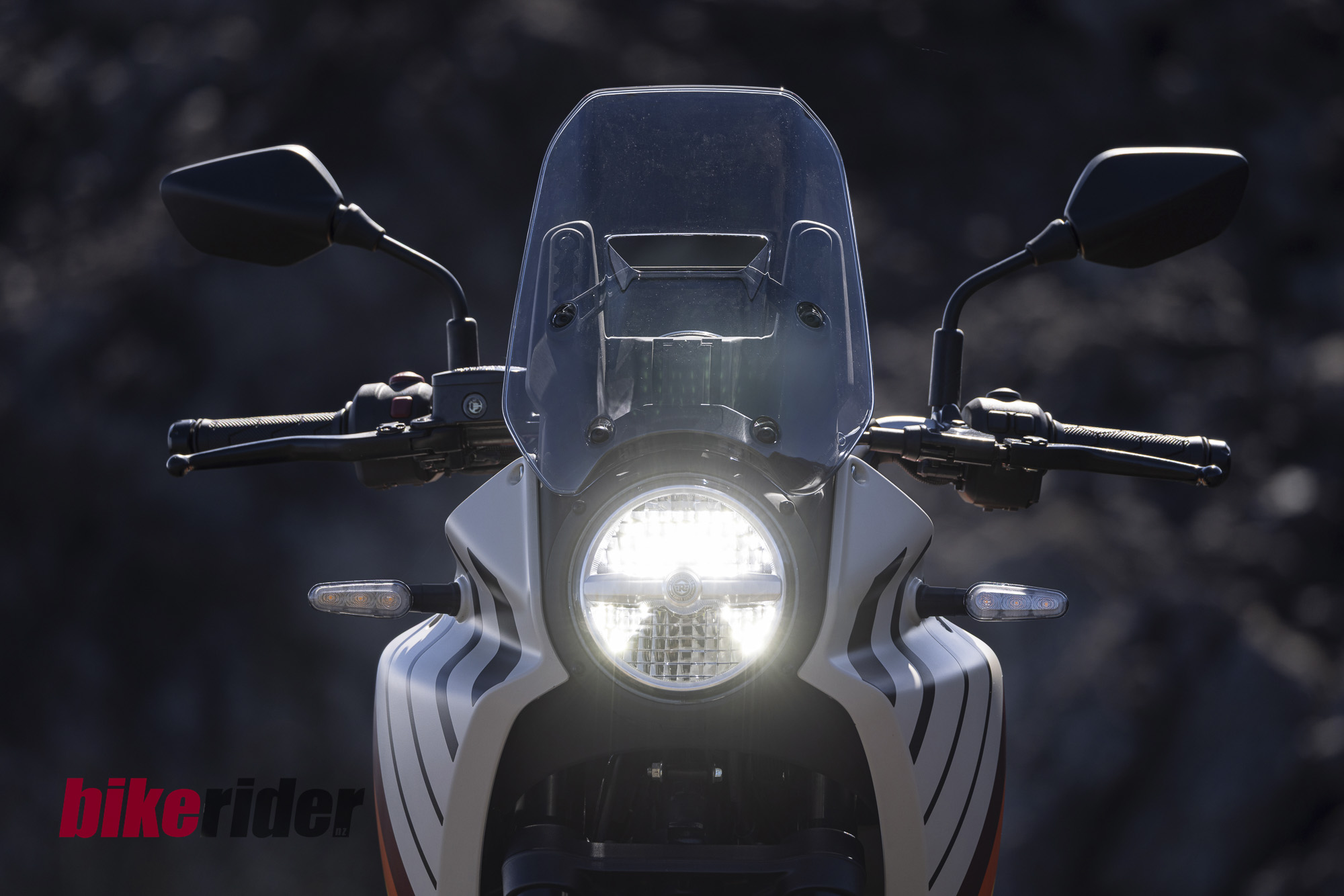
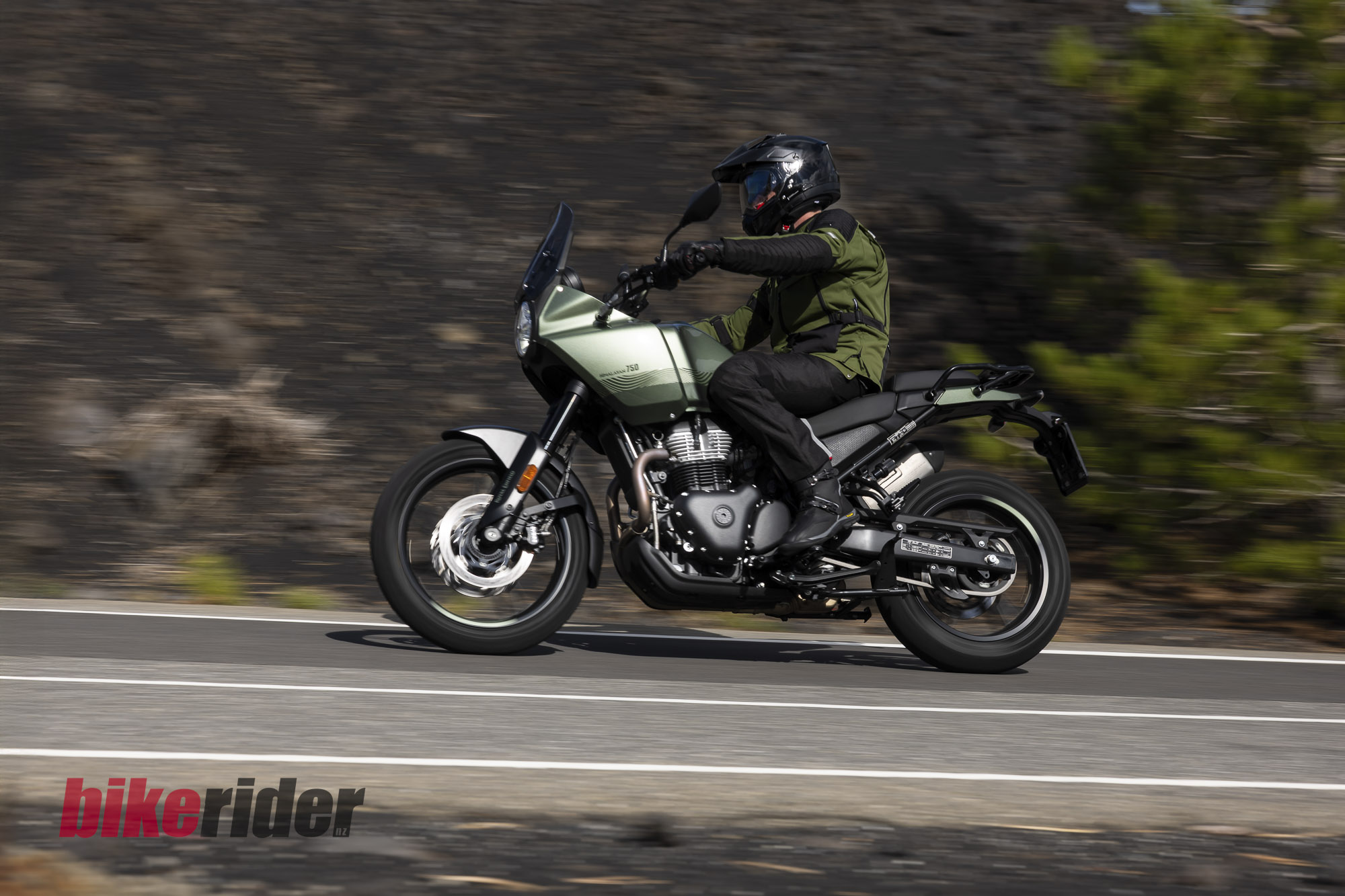
A full day of riding produced no real complaints about comfort. The riding position is upright and purposeful, with a manually adjustable screen that worked especially well for me as I’m not the tallest guy in the world. During the evening run back to base, I ran the screen fully raised, and the wind protection was good enough that I could ride with my goggles lifted, which was useful as I had tinted lenses and couldn’t see a thing. Taller riders will need to judge the screen for themselves, but out of the box it seems to be a pretty good long-distance touring set-up.
There is a sizeable-looking pillion perch and a substantial grab handle, which should make this bike appeal to riders who like someone else to join them on a trip. There’s also some really nice optional luggage that has been designed in partnership with GIVI, so this really is a bike that Enfield expects riders to load up and do big distances. The centre stand is standard, which is great for loading up and maintenance, while heated grips are optional — something Kiwi riders will notice in winter.
Cruise control is included, although the twisty Sicilian route offered us little opportunity to assess it. The tank holds 17.8 litres and Royal Enfield claims that’s big enough for a range approaching 400km. And with an ergonomic package that certainly feels capable of long days, I reckon you could fill up, have a pie and settle in for another decent stint. Whether that claimed range stacks up will need a longer test.
Electronics without the overwhelm
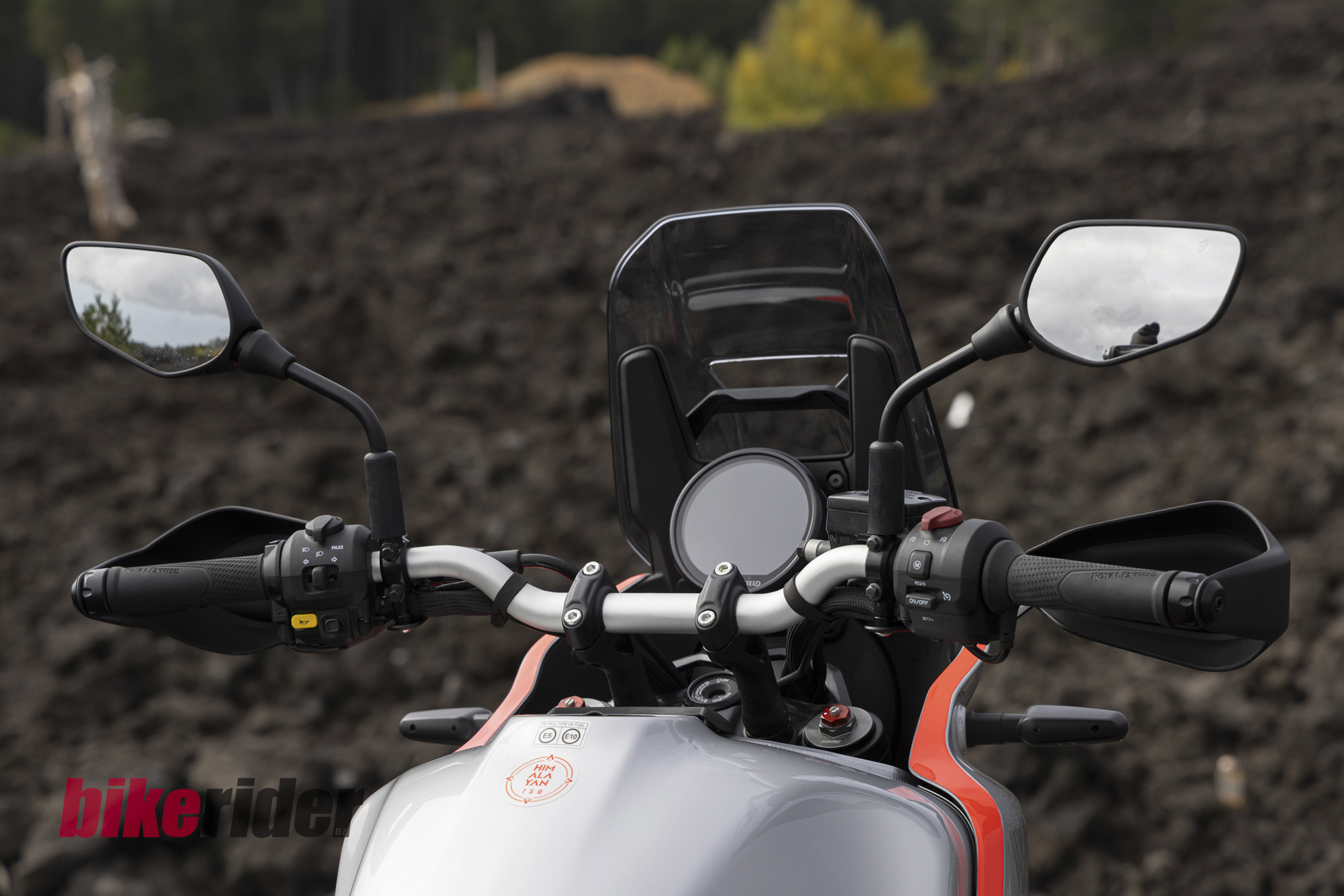
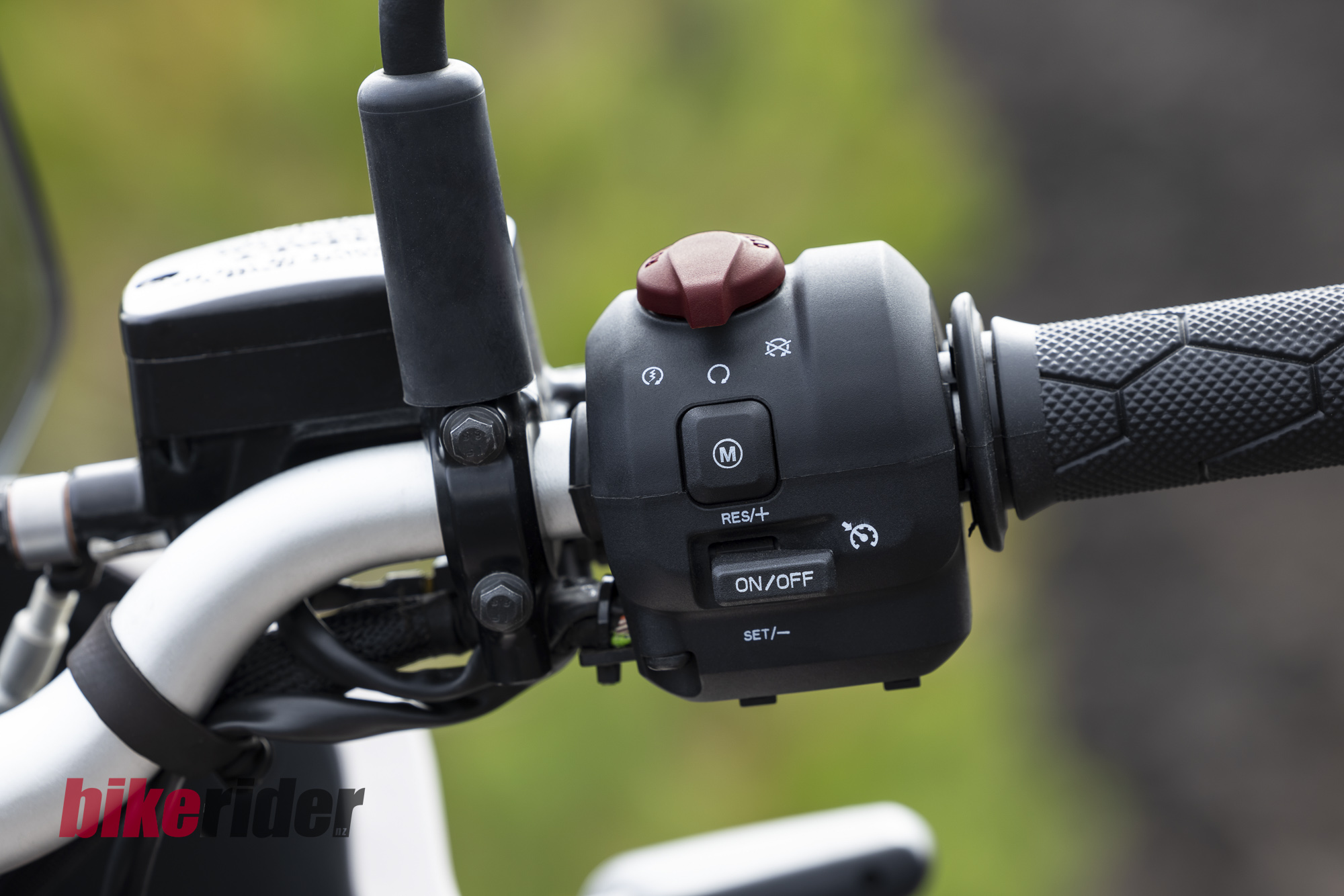
This is a sizeable technological step for Royal Enfield, with the equipment list including cornering ABS, lean-sensitive traction control, tyre-pressure monitoring, multiple riding modes and a TFT display. It is, however, all designed to be usable, and while there are Road, Sport, Rain, Trail and Custom modes, the emphasis is on a useful amount of adjustment without a screen full of obscure settings.
One irritation is that disabling the rear ABS and changing the traction-control settings for dirt riding requires the bike to be stopped, so there’s no running from road to gravel and flicking between modes seamlessly. Thankfully, returning to the road configuration can be done on the move.
A taste of off-road potential
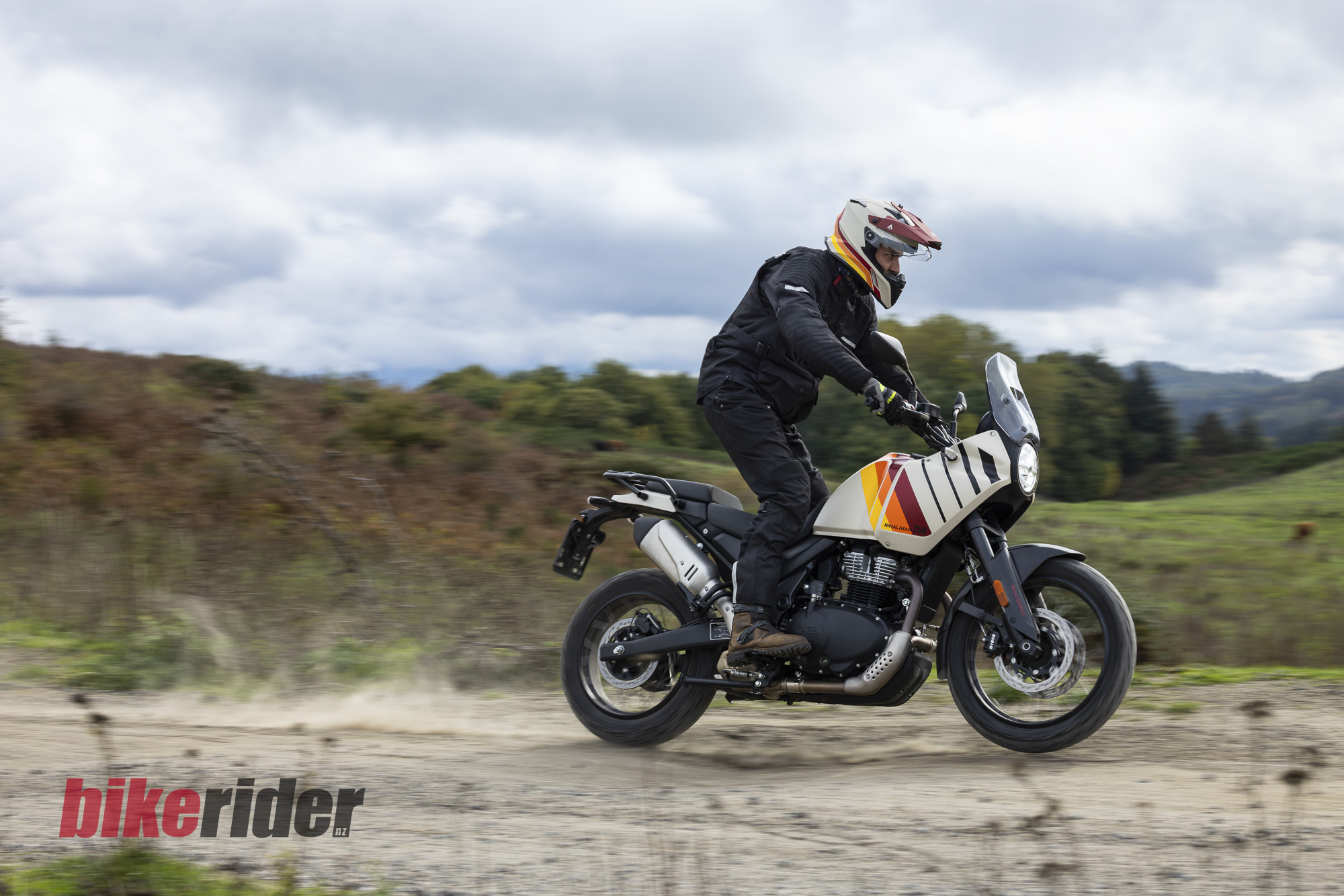
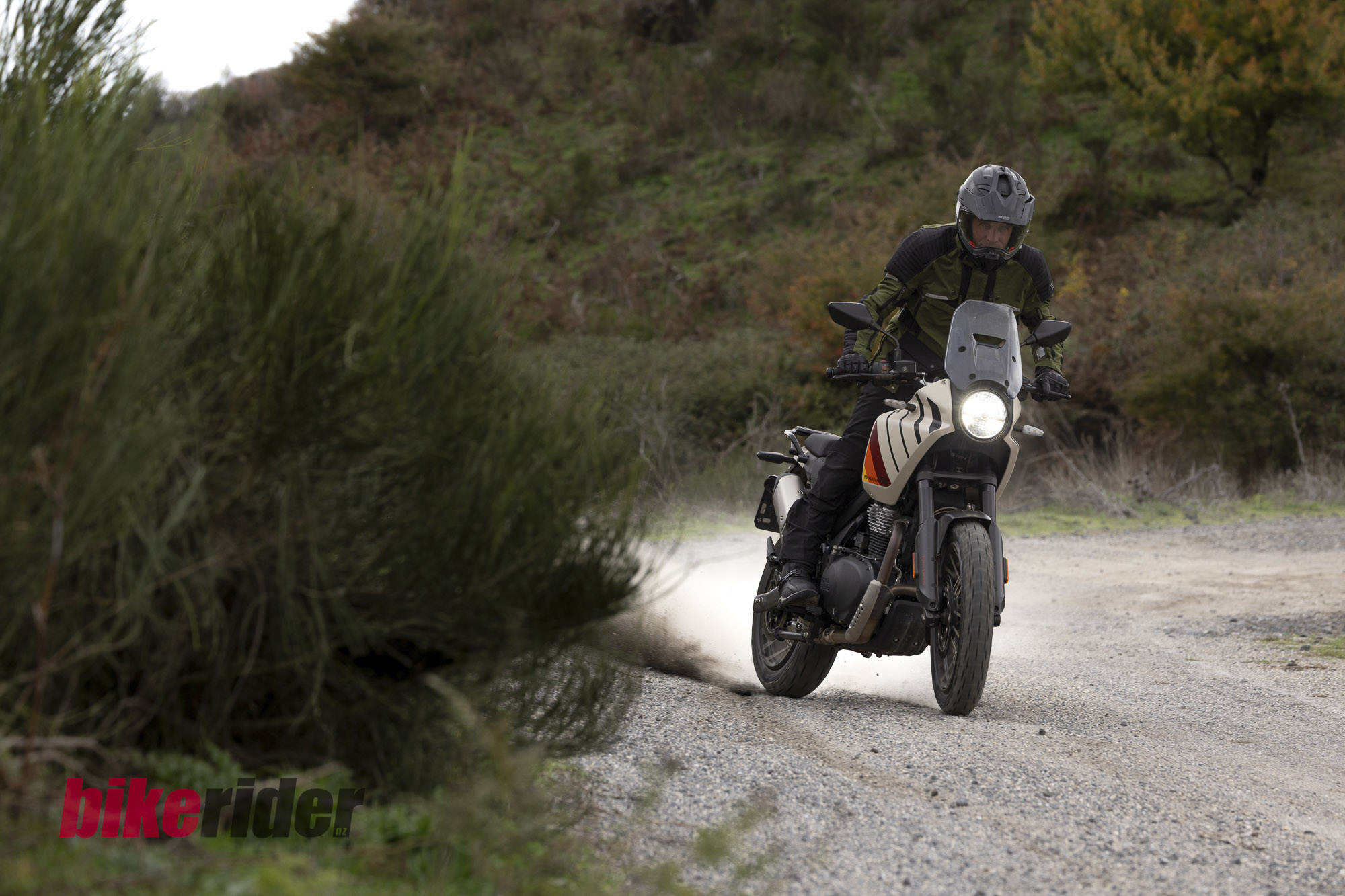
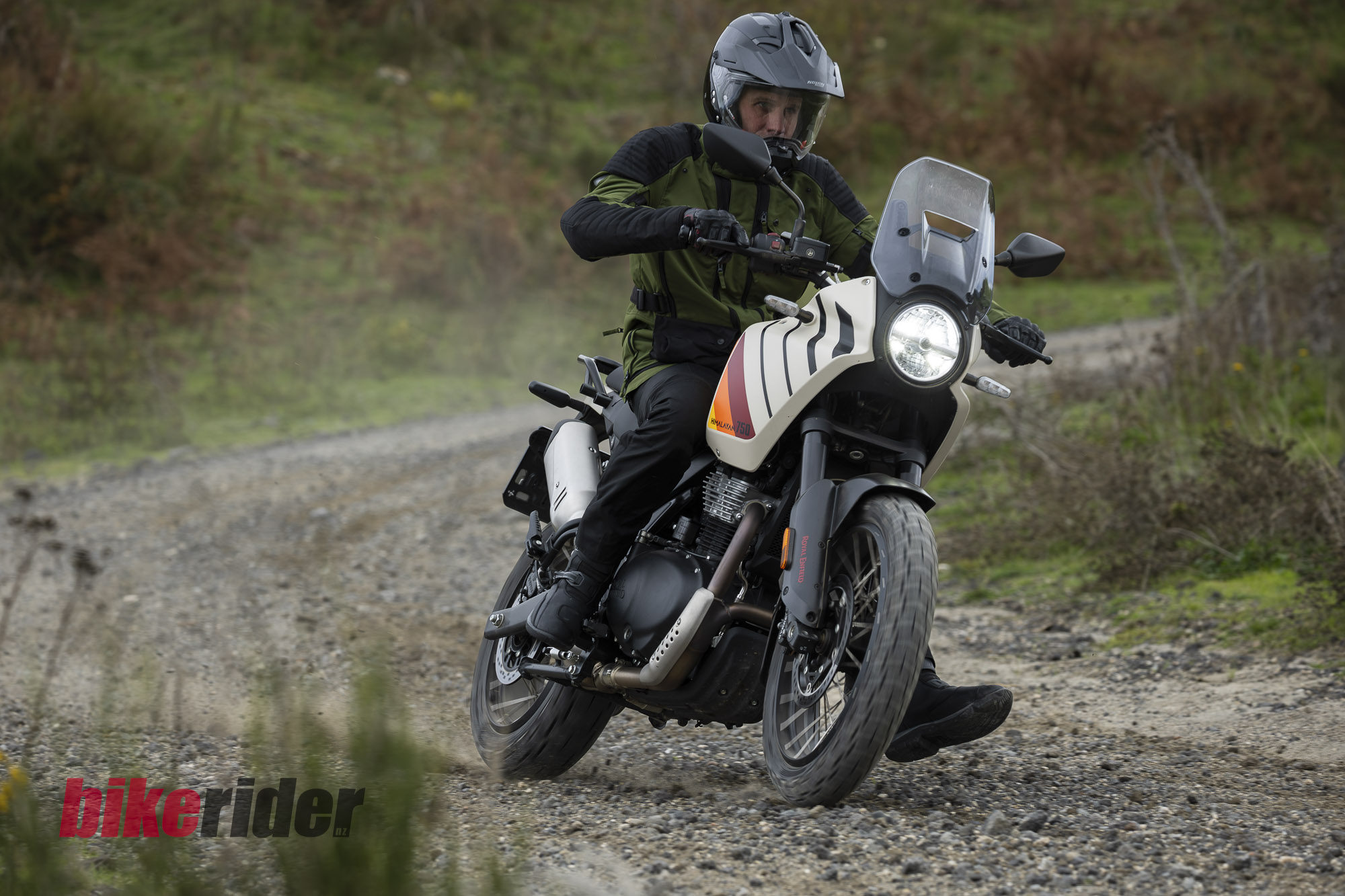
During the launch we got to experience the new Himi 750 on some dirt, but it was on the standard road-biased tyres, so it wasn’t a full test of what the new bike will be like off-road. I’d expect swapping the CEATs for a set of Metzeler Karoos to add a bit more off-road ability, but unfortunately there wasn’t a bike available with that option.
At a gentle pace, the low-feeling mass and good balance helped, meaning you could pick your way through obstacles standing on the pegs at walking pace. It was as the speeds rose on the road that the characteristics changed, with the Himi becoming less willing to turn in a hurry. The handling is what I’d describe as stable, with the long wheelbase, weight and tyre choice all contributing.
Where does it fit — and what will it cost?
The unanswered question for New Zealand is the retail price. I expect it will sit somewhere above the smaller adventure machines such as the KTM 390 Adventure, BMW F 450 GS and Kawasaki KLE500, but below larger-capacity midweights such as the Honda Transalp when it comes to pricing.
And if Royal Enfield gets the pricing right, the Himalayan 750’s comfort, predictable handling, useful torque and relatively uncomplicated technology could be a strong combination. We still want to test it with luggage and a passenger, on proper off-road tyres, and on the kind of varied roads Kiwi owners will actually ride.
“Get one to New Zealand, fit some more suitable off-road tyres, load it with luggage and see how it handles our roads.”
BRM verdict
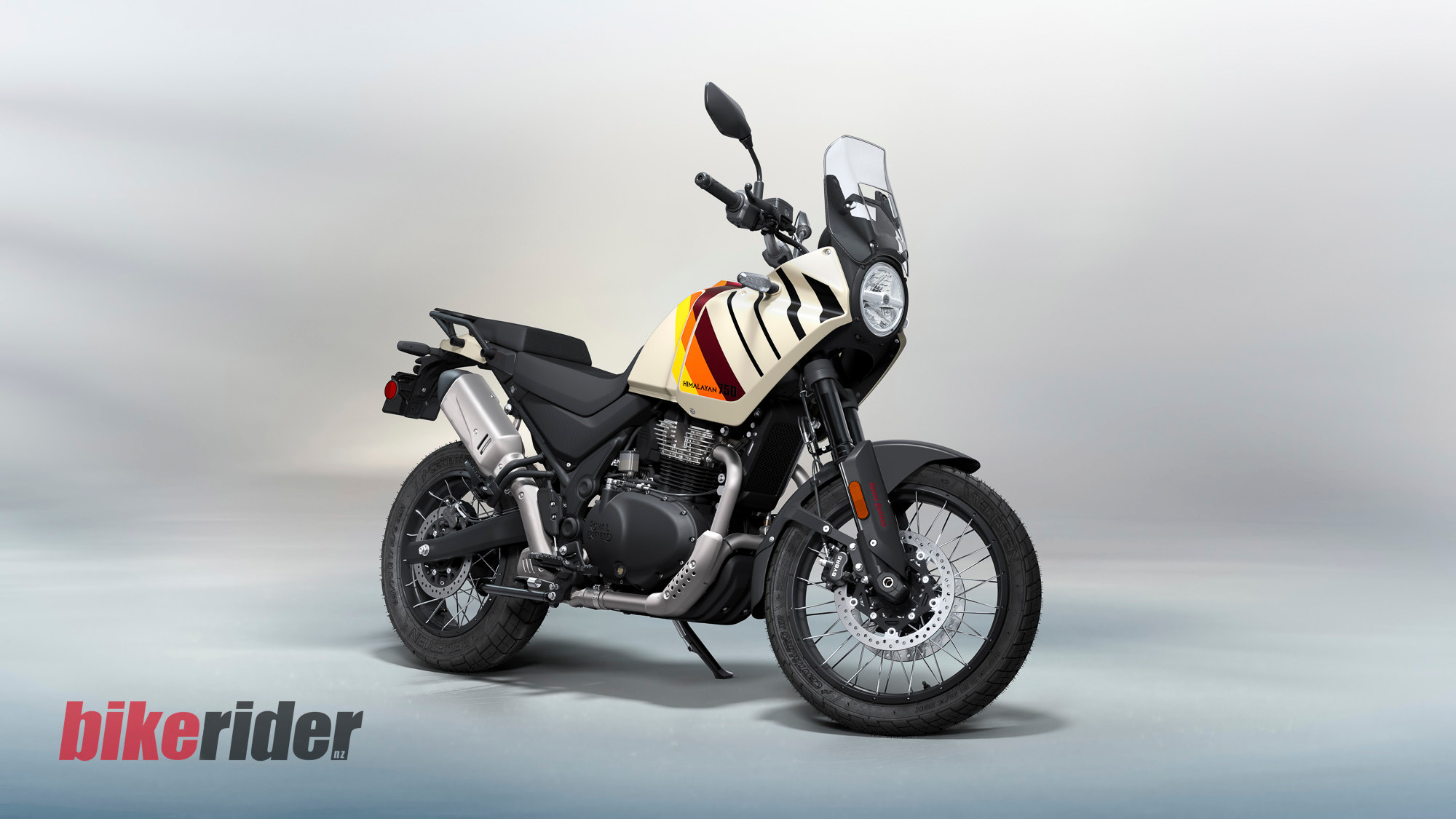
The Himalayan 750 is an attractive, robust-feeling, easy-going adventure tourer. Its engine is smooth and useful rather than thrilling; its handling is stable and surprisingly manageable; and its comfort is the standout after a long day. The weight, tyre feedback and limited high-rpm excitement are genuine trade-offs, but they are not necessarily deal-breakers for its intended rider.
Read more: Royal Enfield Himalayan 750 revealed: specifications and touring equipment.

Himalayan 750 photo gallery