
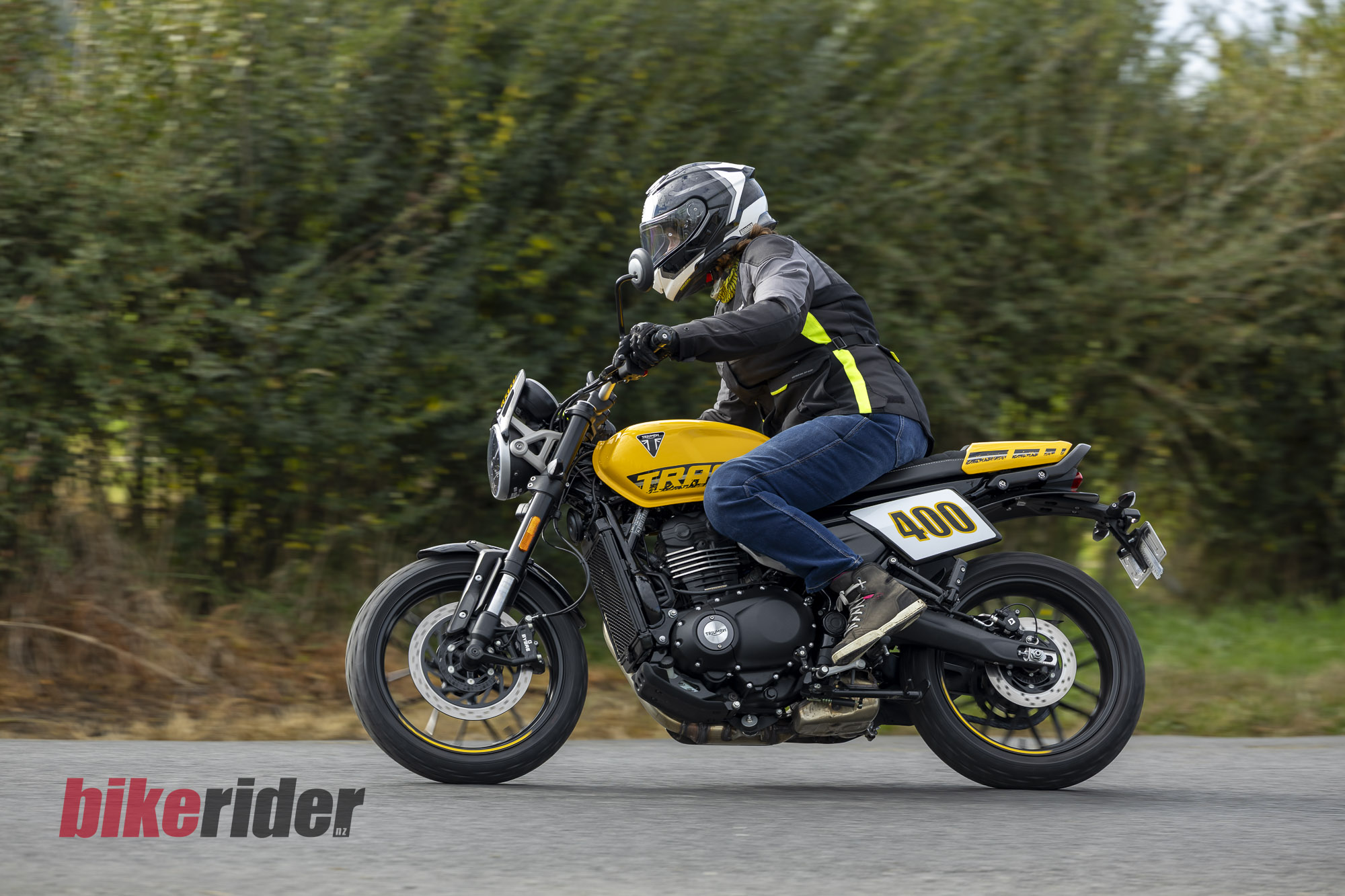
- Triumph has expanded its successful 400 range with the new Tracker and Thruxton, each bringing a distinct personality to the learner-approved platform.
- A revised TR-Series single gains five percent more power, giving both models a sharper, more eager character without sacrificing everyday usability.
- The biggest surprise? Despite expecting to favour the Tracker, it was the café racer-inspired Thruxton that stole the show with its engaging chassis and classic styling.
The Speed and Scrambler 400 proved Triumph could build premium small-capacity motorcycles. Now the new Tracker and Thruxton arrive with sharper styling, more power and very different personalities—but which one is the pick of the bunch?
QUICK FACTS
Triumph Tracker & Thruxton 400
Two sporty new additions to Triumph’s successful 400 platform. The Tracker blends flat-track styling with everyday usability, while the Thruxton revives the classic café racer in learner-approved form.
Price
From $9,995 + ORC
Engine
398cc liquid-cooled DOHC single-cylinder
Power
42PS (41.4hp) @ 9,000rpm
Torque
38Nm @ 7,500rpm
Transmission
6-speed with slip & assist clutch
Seat Height
790mm
Wet Weight
176kg (Thruxton)
Fuel Capacity
13 litres
More Choice, More Character
When Triumph launched the Speed 400 and Scrambler 400 X, the British manufacturer did more than simply enter the learner-approved market. It created a pair of motorcycles that immediately resonated with riders looking for premium quality, modern performance and genuine Triumph character at an accessible price point.
The success of those bikes has been remarkable. Not only have they become some of Triumph’s biggest global sellers, but they’ve also brought a whole new generation of riders into the brand. Young riders, returning riders and those downsizing from larger motorcycles have all discovered that 400cc can be more than enough when done properly.
MORE ARTICLES
Now Triumph is expanding that formula even further with the arrival of the Tracker 400 and Thruxton 400. While both are based on the same platform as the Speed and Scrambler, neither feels like a simple styling exercise. Instead, Triumph has used the opportunity to create two motorcycles with distinctly different personalities, aimed at riders who want something a little more focused.
The new models also help fill gaps that existed within the 400 range. The Speed 400 remains the all-round roadster and arguably the most versatile of the family, while the Scrambler 400 X caters to riders looking for adventure-bike styling and occasional gravel-road capability. The Tracker and Thruxton take the platform in a sportier direction, one inspired by American flat-track racing and the other by Britain’s rich café racer heritage.
Same Platform, Different Attitudes
Of the two, the Tracker 400 is perhaps the surprise package.
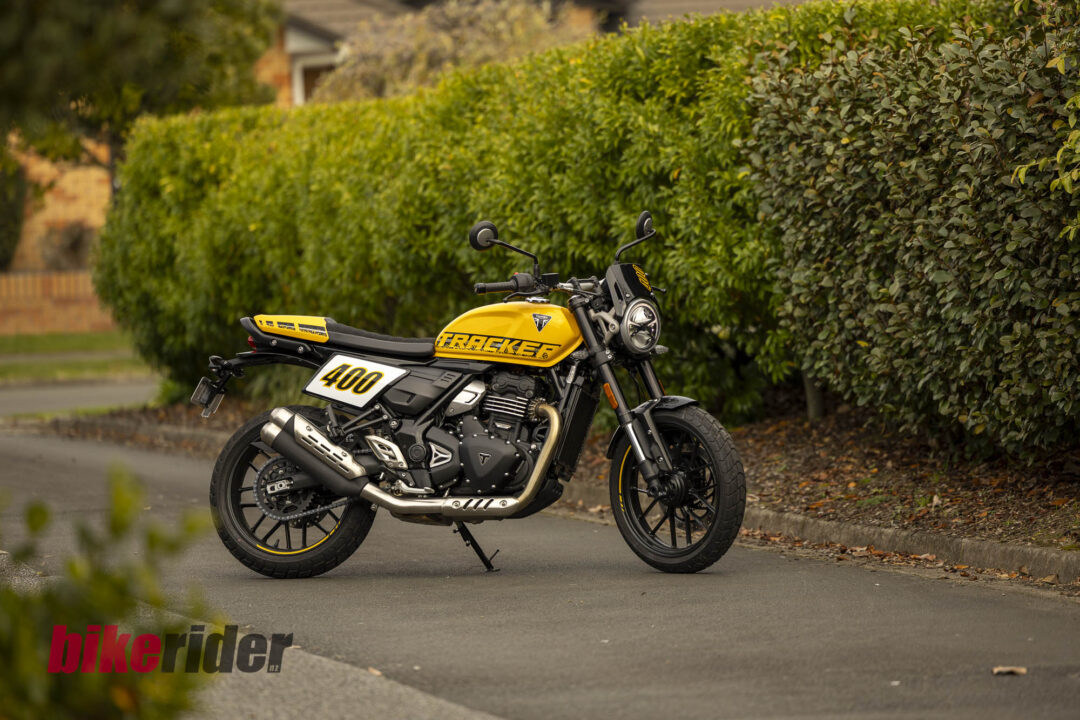
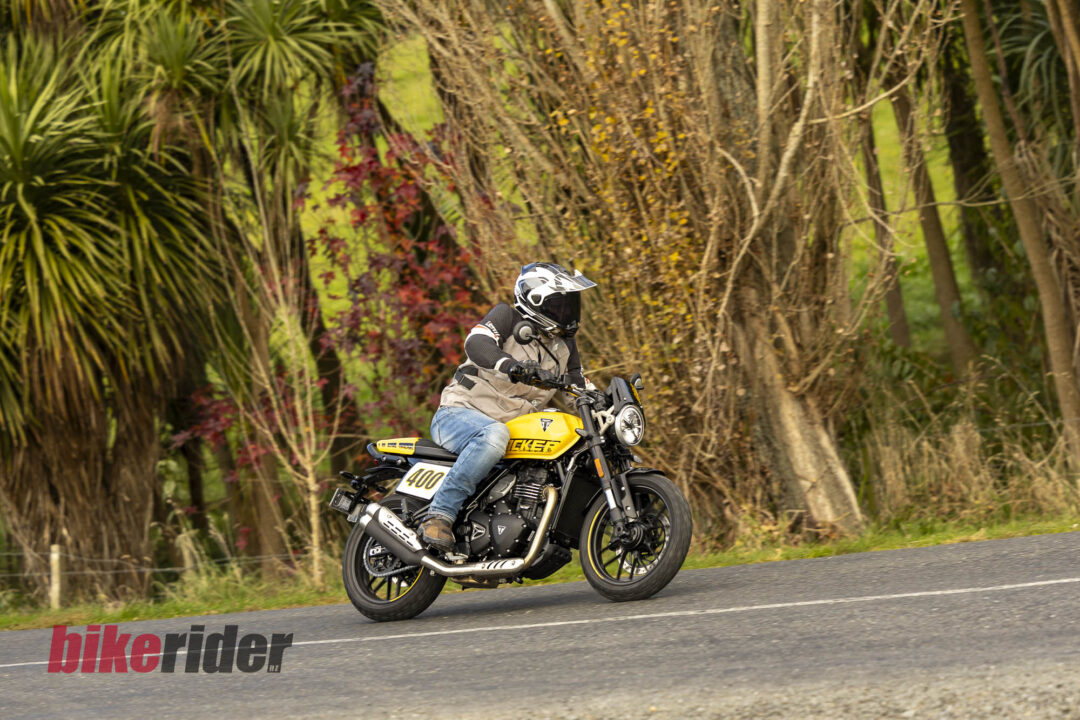
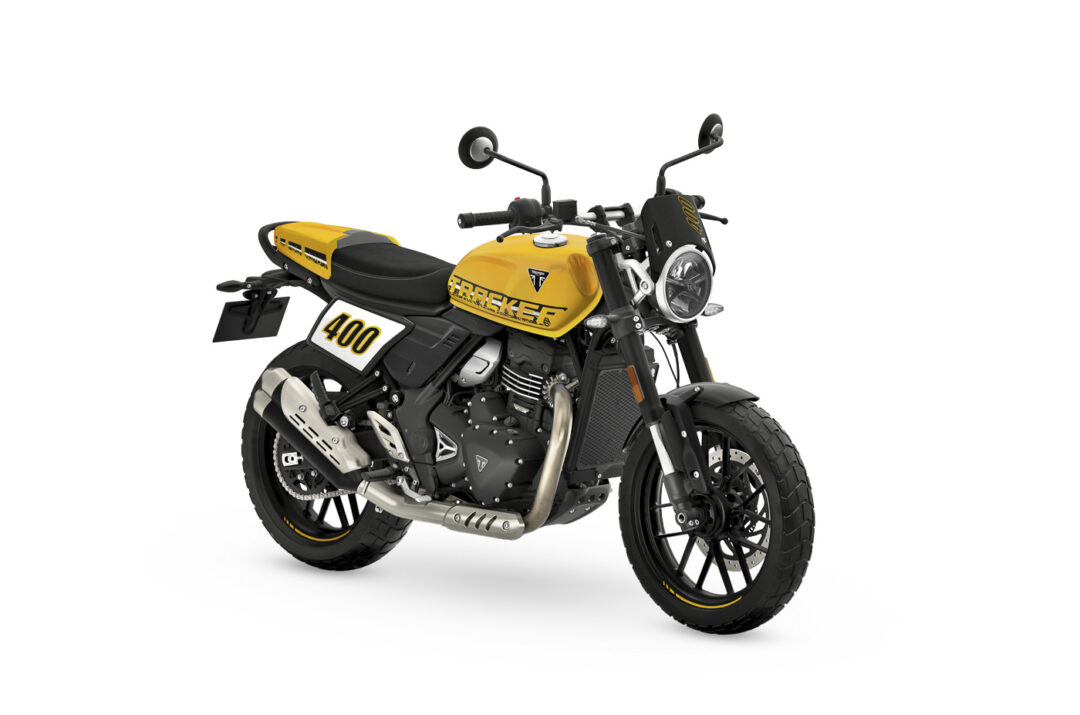
Drawing inspiration from flat-track racers, it features a wide handlebar, repositioned footpegs, a tracker-style seat unit, number board and flyscreen, plus Pirelli MT60 RS tyres that give it an aggressive, urban-hooligan stance. Triumph has also revised the ergonomics to create a more active riding position, with the rider sitting further forward and more engaged with the front end.
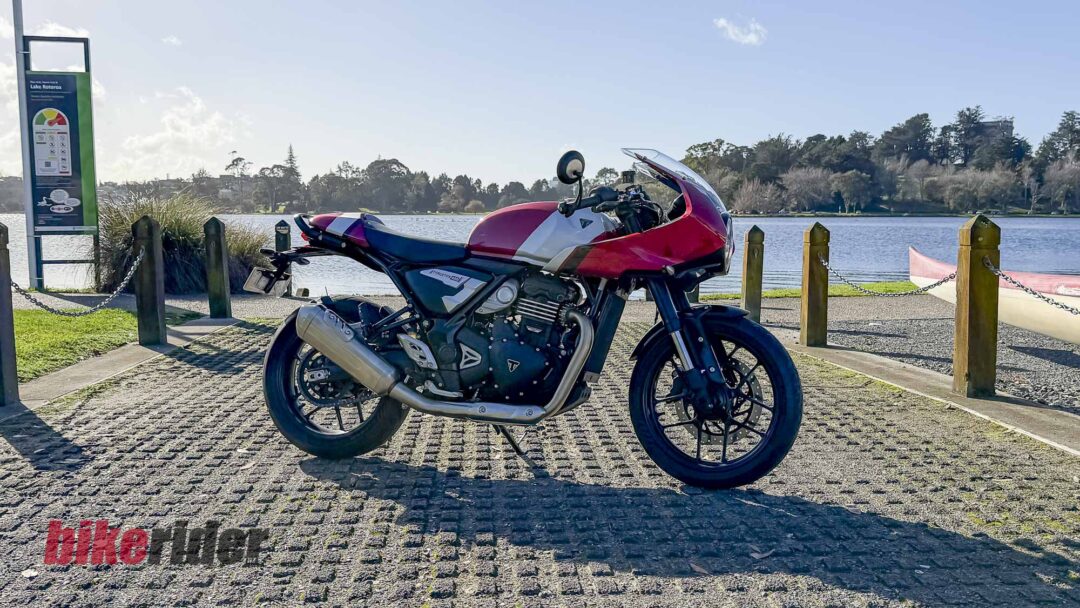
The Thruxton 400 heads in a very different direction.
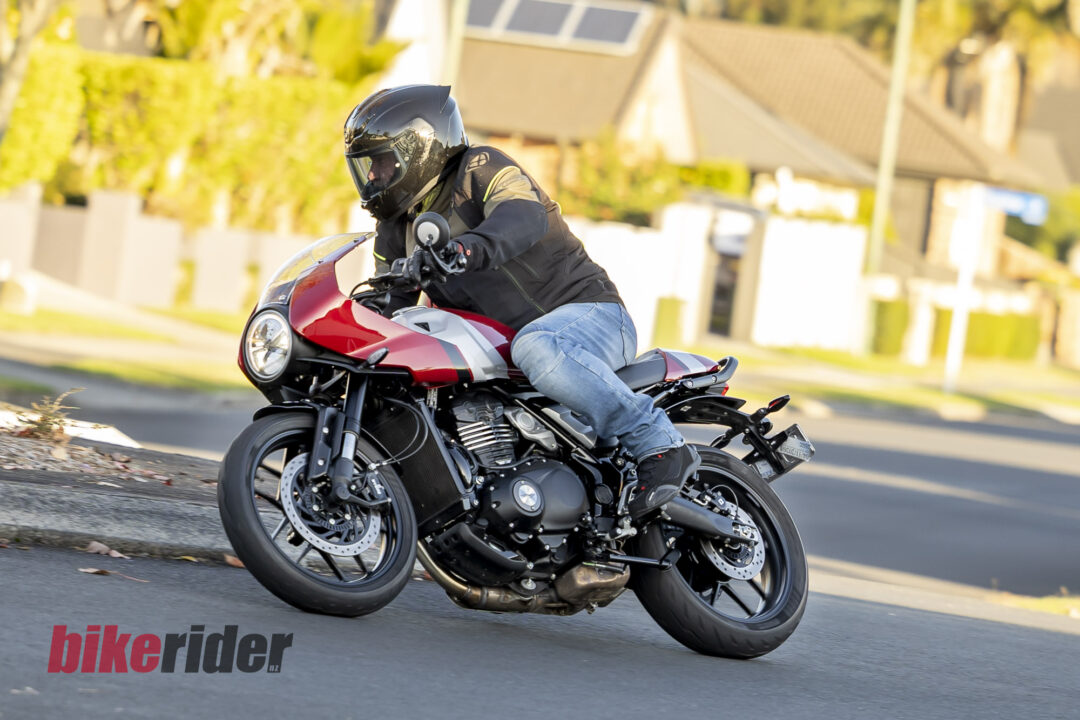
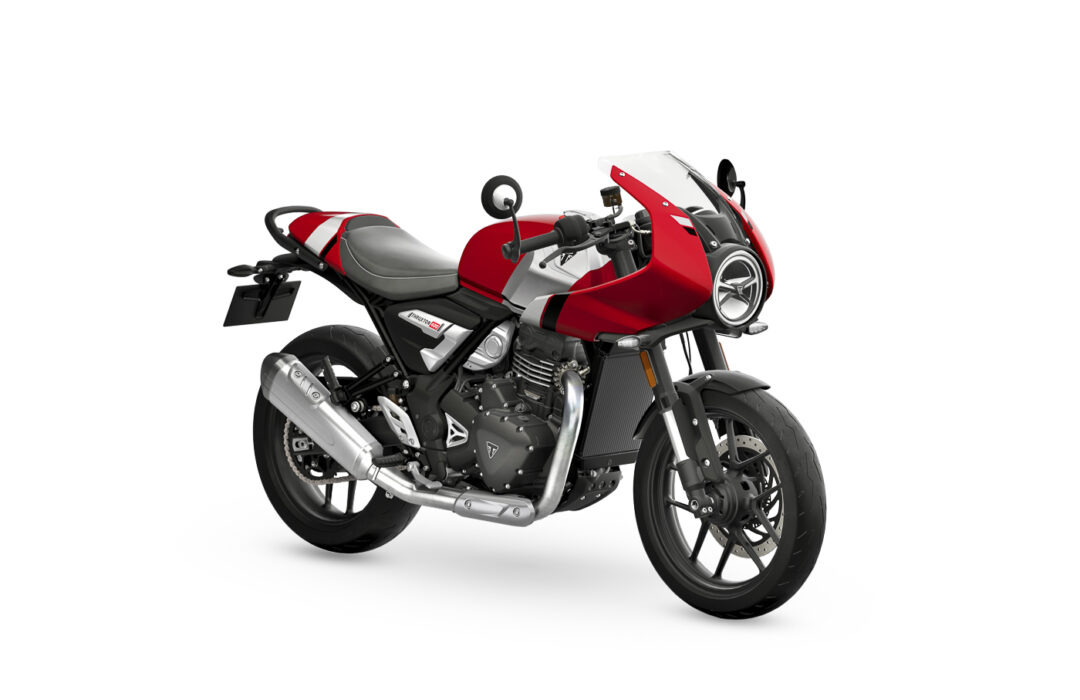
Carrying one of Triumph’s most iconic model names, it channels the spirit of the original Thruxtons with clip-on handlebars, rear-set footpegs, a sculpted fairing and a much sportier riding position. It’s the closest thing newer riders can get to Triumph’s larger Thruxton models, but without the price tag, weight or intimidation factor of a bigger-capacity machine.
Despite sharing the same chassis architecture and core mechanical package, the two bikes couldn’t look more different. One encourages elbows-out aggression and supermoto-style antics, while the other invites you to tuck in behind the screen and imagine you’re heading to the Ace Café circa 1965.
A More Potent TR-Series Engine
Perhaps the most interesting development isn’t what you can see, but what sits beneath the tank.
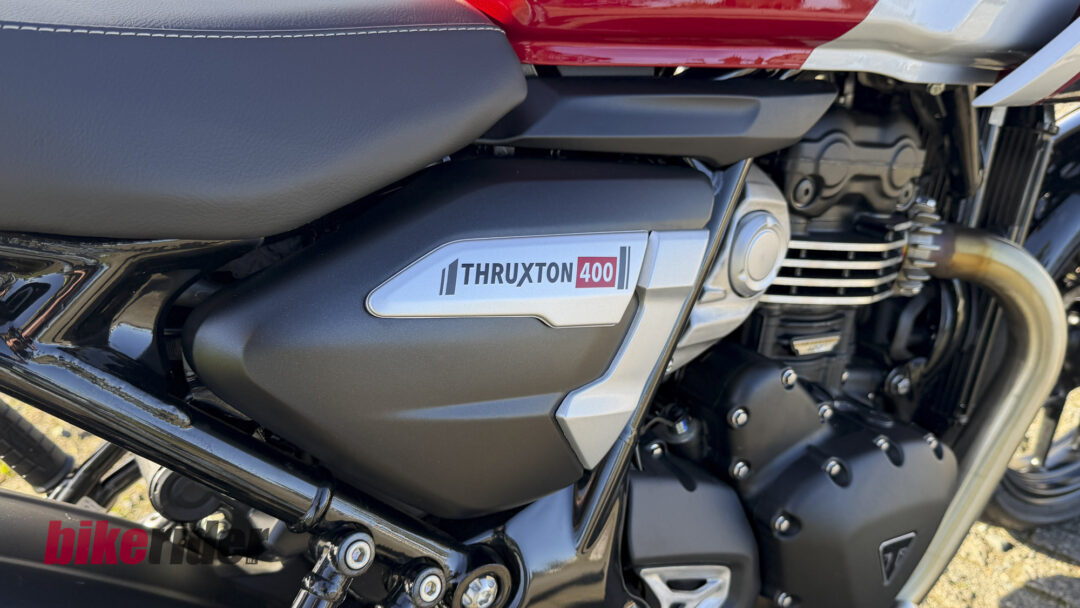
Rather than simply dropping the existing 398cc single-cylinder engine into the new models unchanged, Triumph has given both the Tracker and Thruxton a more performance-focused version of its TR-Series motor. The liquid-cooled DOHC single now produces 42PS (41.4hp), representing a five per cent increase in peak power over the Speed 400 and Scrambler 400 X. Peak power also arrives higher in the rev range at 9,000rpm, while the engine benefits from a higher rev ceiling and stronger top-end performance. The improvements have been achieved through a revised camshaft profile and updated engine mapping.
Interestingly, Triumph has deliberately chosen not to roll these changes across the entire 400 range. The Speed 400 and Scrambler retain their more relaxed engine character, while the Tracker and Thruxton have been tuned to reward riders who are prepared to chase the upper reaches of the rev counter. Torque remains broadly unchanged, but it arrives slightly later, reinforcing the sportier nature of both machines.
On paper, the gains may seem modest. On the road, however, they contribute to motorcycles that feel sharper, more responsive and more eager to be ridden hard.
And that’s exactly the point. These aren’t simply new body kits for the existing 400s. They’re designed to inject a little more attitude, a little more excitement and a lot more character into what was already one of the most successful middleweight platforms on the market.
More Than Styling
Heading into Triumph NZ, and I was lucky enough to be able to grab both the new models at the same time, giving me a bit of an insight into the differences between the two bikes. And while I was looking forward to riding both, it was the more upright Tracker that I gravitated towards first, with its upright riding position and the Racing Yellow colour of the press bike catching my eye like a shiny object attracts birds.
The unique aspect of both bikes is that they still look, feel and ride like a Triumph. The fit and finish is spot on, the dash is smart, the switchgear quality and the performance typically Triumph strong. And that was a bit of a surprise, with the pre-launch info explaining that the new tune should give these models a bit more fun at the top end. Well, they get that, but it doesn’t appear to be at the detriment of anything down the bottom, with both bikes pulling hard from low in the revs.
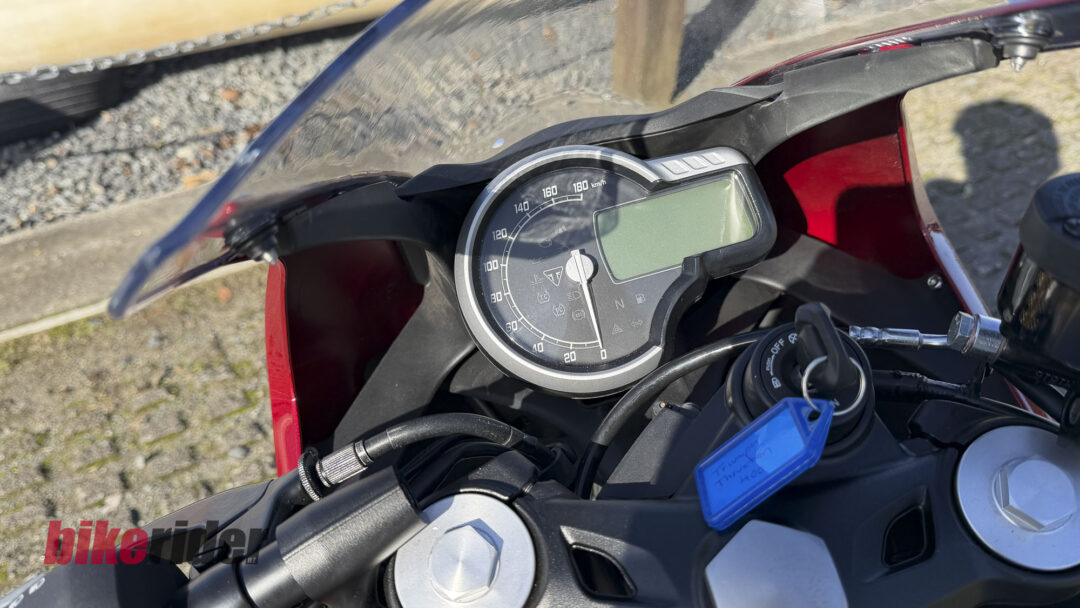
Being single cylinders rather than a parallel twin, which is commonplace in some of the competitors’ machines, there’s loads of instant punch making hasty getaways from traffic lights and the like a piece of cake. The bulk of the performance comes from 4,000rpm on the LCD dash to around 8,000. Apparently, peak power is 9,000rpm, but it didn’t feel like there was much benefit from holding onto the revs that much longer, with another cog on the six-speed gearbox producing more rewards by dropping the revs back down into the meat of the torque. Being a single-cylinder, there’s naturally a little vibration, although nothing too dramatic, and it’s not the sort of high-frequency vibes that put fingers to sleep. Instead, you’re just very aware there’s a single-cylinder shooting up and down beneath you.
Tracker: Urban Mischief
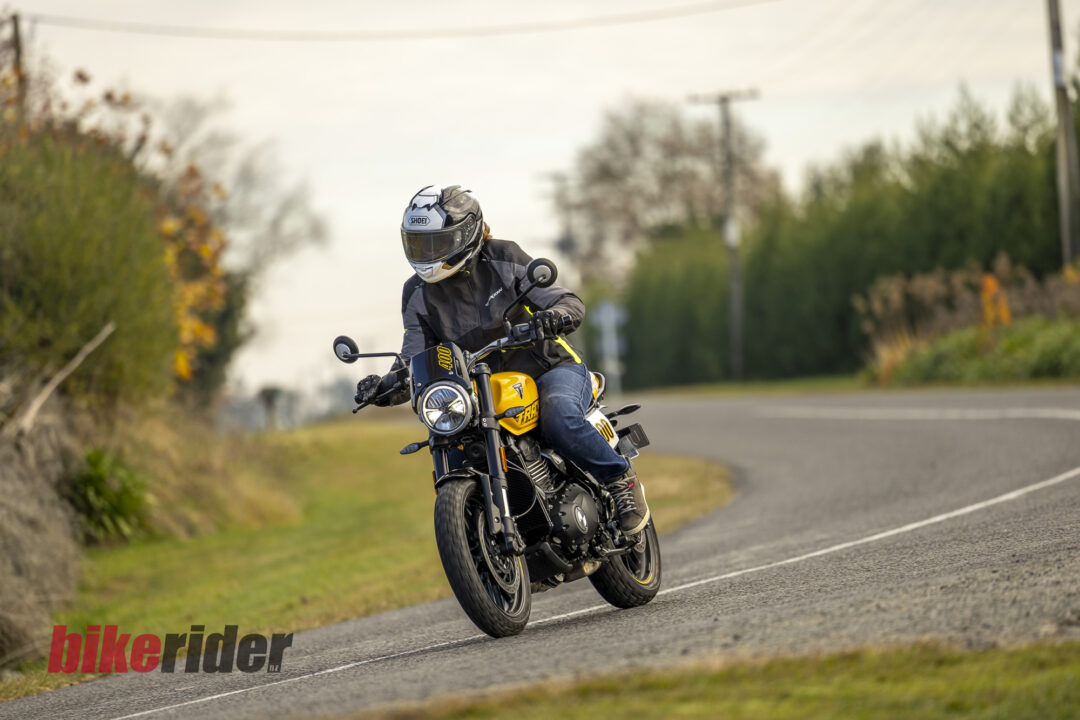
Riding the Tracker is a heap of fun, with the wide handlebars offering plenty of leverage to flick the bike around, making it a perfect tool for blasting around town. And touches like the rolled saddle, twin exhausts (which actually produce a cool note), rear seat cowl, and small fly screen all give the bike a much higher-quality look and feel than the price tag suggests. Even the fact that it comes with decent Pirelli rubber instead of cheap Chinese items adds to the package. Okay, it doesn’t feature the throaty growl of the bigger Triumph nakeds, but those twin cans do a pretty good job of making the little single sound gruntier than it is. After a couple of trips attacking Auckland traffic, motorway cruises and a Sunday spin to Cambridge, I was sold on the Tracker. In fact, I was so certain that this was the one I was destined to like, I hadn’t even ventured onto the Thruxton. Oh, what do I know…
Thruxton: The Surprise Package
It didn’t take long before I was feeling the weight in my wrists and thinking that I should have adjusted the angle of the controls before jumping on the Thruxton. Instead, I’d decided to just suck it up and get on with riding the sportiest-looking 400 in the range, although it was hardly surprising that inner-city commuting wasn’t where it was going to excel. What the ride did demonstrate is just how easy both these bikes are to ride. The seat is within easy reach of the floor, meaning tiptoes won’t be called into action for anyone other than the shortest riders. And the flexible powerplant means there’s performance almost everywhere in the rev range, making nipping into gaps, away from possible trouble and for simply having fun a matter of just rolling on the throttle. The little mill just spins up, and the bike leaps forward.
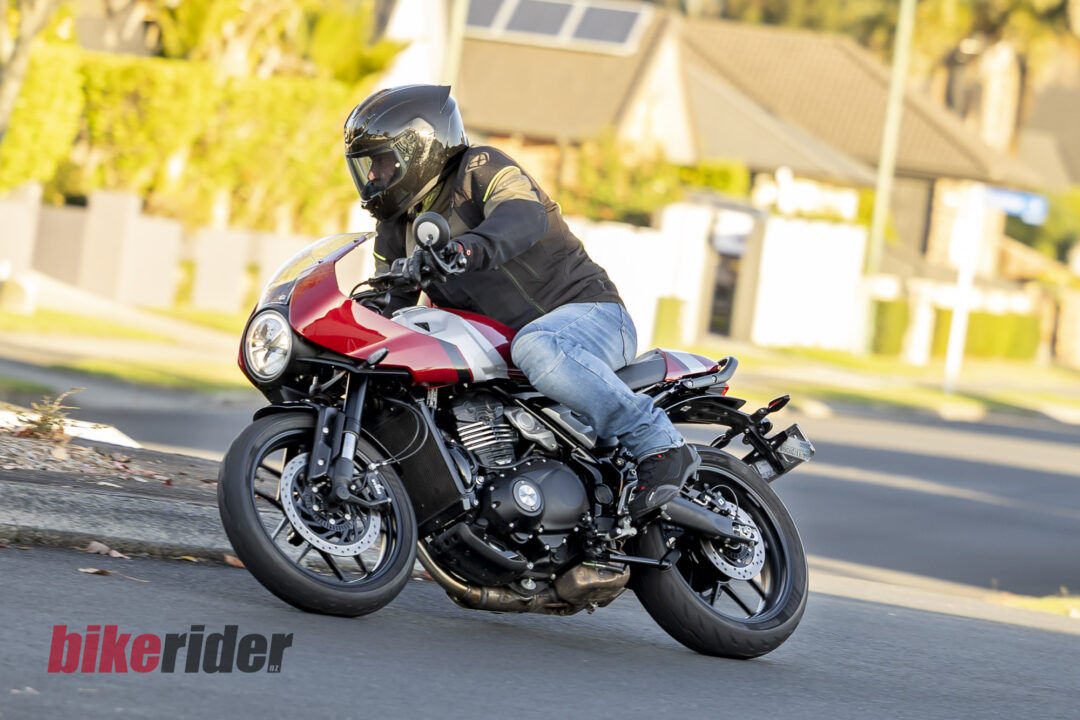
Doing the all-important shop window check and the Thruxton also looks really cool, and I also didn’t appear to look like a monster perched on top – the bike is reasonably sized. The screen is low, the suspension relatively firm, and the tank slim, all of which will give the Thruxton rider a sporty ride without being overly focused. And it’s a real head-turner, with many pedestrians and other road users giving me a glance or a cursory nod to sort of say, they know I was on something special. Yet, unbeknown to them, I was on a learner-legal machine that you can buy for under $10k! That’s pretty cool.
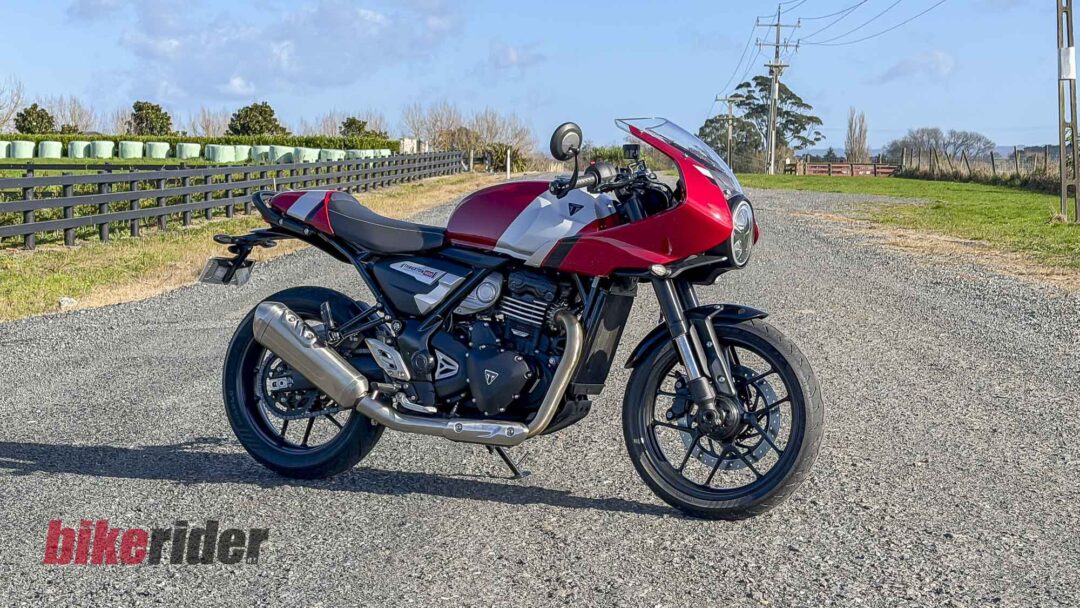
The Thruxton’s traffic-busting ability is hampered slightly by the bar-end mirrors, making it a bit trickier to pick through the traffic if you like to work your way to the front of a queue. Although once you know the width, it’s not really a drama with the occasional weave of the bars, all that I found was required to avoid wing mirrors. But it was once the town finished and the country roads opened up that I suddenly found myself liking the Thruxton even more. And dare I say it, more than the Tracker!
There’s something about riding fast on a bike with a small engine. It takes work, planning and a commitment to keep corner speed up, yet you’re never doing the ludicrous speeds that are achievable on bikes with a bigger capacity. Hold onto the throttle and the Thruxton will eventually reveal 160km/h on the analogue clock, but it takes a while to get there. Instead, making progress while keeping the Thruxton on or around the legal limit was an afternoon of entertainment that far exceeded what I thought would be possible on a 400cc four-stroke.
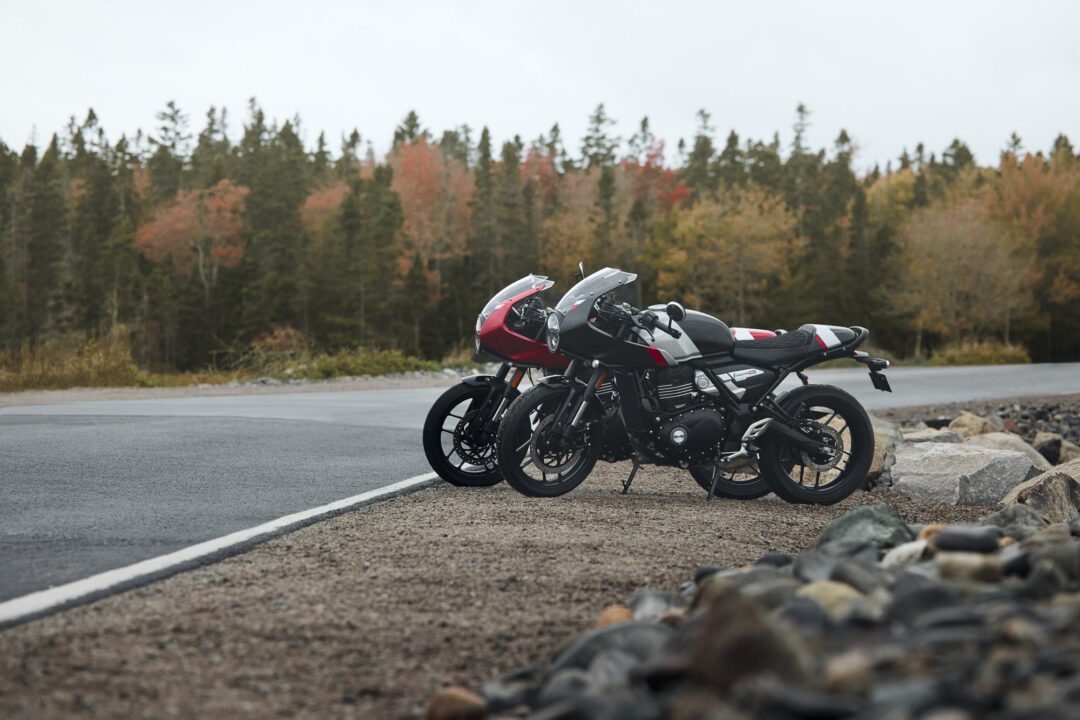
The chassis and suspension of the Thruxton just seem to work, in that it’s not too firm that you’re bouncing out of the saddle, but it also doesn’t tie itself in knots when you’re pushing on. As an entry into the world of sportsbikes, the Thruxton is a star performer, encouraging you to play with the six-speed box to keep the single on the boil while carving through turns tucked behind the fairing. The tank is so low that it feels almost like it’s not there, although the Le Mans style cap is a nice touch, as is the red and silver colourway that’s just class. The single disc up front isn’t the sharpest in the world, but there’s only 176kg of bike to stop along with whatever you’ve stuck on top, so it doesn’t need to be. There’s even traction control, which can be deactivated, although that’s probably more of a Tracker or 400 XC thing rather than useful for the Thruxton.
Two Bikes, Two Winners
I was a little surprised there were going to be two more versions of Triumph’s 400cc machines joining the family, as chances are, they were likely to cannibalise sales from the other models. But what you’ve got in fact is four very distinctive models, well, five if you also include the Scrambler XC. I really expected the Tracker was going to be my pick of the lot, but a couple of days on the Thruxton changed that. Yes, it’s a pain in town, but then so is any sportsbike. And, in fact, it’s reasonably manageable around town, it’s just a pain on the wrists. But I reckon it’s worth it when you (a) look in a shop window (vain, I know!) or (b) head out of town. Then the Thruxton really comes into its own.
Triumph has done a great job of getting such different bikes from essentially the same package. Yes, the Tracker and Thruxton get an additional 5% of max output, and they are bikes that encourage you to use the revs, but the Speed and Scambler 400 also like their cylinder to be buzzing. The Scrambler is an easy choice – if you like a bit of gravel, then that’s the one. Town work and your choice is between the Speed and the Tracker. For getting into your sporty groove, there’s really only one – the Thruxton 400. You won’t be disappointed.
Paul's Pick
Both bikes have a quality feel, look great and feature plenty of character. I climbed onto the Tracker convinced it would be my favourite. It’s practical, playful and full of character. But after a couple of days on the Thruxton, my opinion changed completely. Around town it’s a little tougher on the wrists, but get it onto a winding road and it comes alive. It proves you don’t need big horsepower to have a huge amount of fun, and that’s why it’d be the one I’d take home.Key Differences
| Tracker 400 | Thruxton 400 |
| Wide handlebars | Clip-on handlebars |
| Upright riding position | Sportier riding position |
| Flat-track styling | Café racer styling |
| Better in town | Better on twisty roads |
| Urban hooligan | Weekend sports ride |
| Paul’s Pick: ⭐⭐⭐⭐☆ | Paul’s Pick: ⭐⭐⭐⭐⭐ |
Specifications
| Triumph | Tracker & Thruxton 400 |
|---|---|
| Price | $9,995 + ORC |
| Engine | 398cc liquid-cooled DOHC single-cylinder |
| Power | 42PS (41.4hp) @ 9,000rpm |
| Torque | 38Nm @ 7,500rpm |
| Transmission | 6-speed with slip & assist clutch |
| Fuel System | Bosch electronic fuel injection with ride-by-wire throttle |
| Frame | Hybrid spine/perimeter tubular steel frame |
| Front Suspension | 43mm USD forks, 140mm travel / Thruxton: 135mm* |
| Rear Suspension | Gas monoshock, preload adjustable, 130mm travel |
| Front Brake | 320mm disc, radial four-piston caliper, ABS / Thruxton: 300mm* |
| Rear Brake | 230mm disc, single-piston caliper, ABS |
| Front Wheel | 17-inch cast aluminium |
| Rear Wheel | 17-inch cast aluminium |
| Tyres | Tracker: Pirelli MT60 RS / Thruxton: Pirelli Diablo Rosso IV* |
| Handlebars | Tracker: Wide upright bars / Thruxton: Clip-ons |
| Footpegs | Tracker: Mid-mounted / Thruxton: Rear-set |
| Seat | Tracker: Flat tracker seat / Thruxton: Café racer seat with rear cowl |
| Bodywork | Tracker: Number board & flyscreen / Thruxton: Bikini fairing & solo tail |
| Mirrors | Tracker: Conventional / Thruxton: Bar-end |
| Exhaust | Tracker: Twin high-level silencers / Thruxton: Twin low-level silencers |
| Seat Height | 790mm / Thruxton: 795mm |
| Fuel Capacity | 13 litres |
| Wet Weight | Tracker: 179kg | Thruxton: 176kg |
| Electronics | Ride-by-wire, switchable traction control, dual-channel ABS |
| Colours | Tracker: Racing Yellow, Storm Grey | Thruxton: Competition Green, Lava Red/Silver |
| Warranty | 2 years, unlimited kilometres |