

- Likely to be based on a 451cc parallel-twin engine
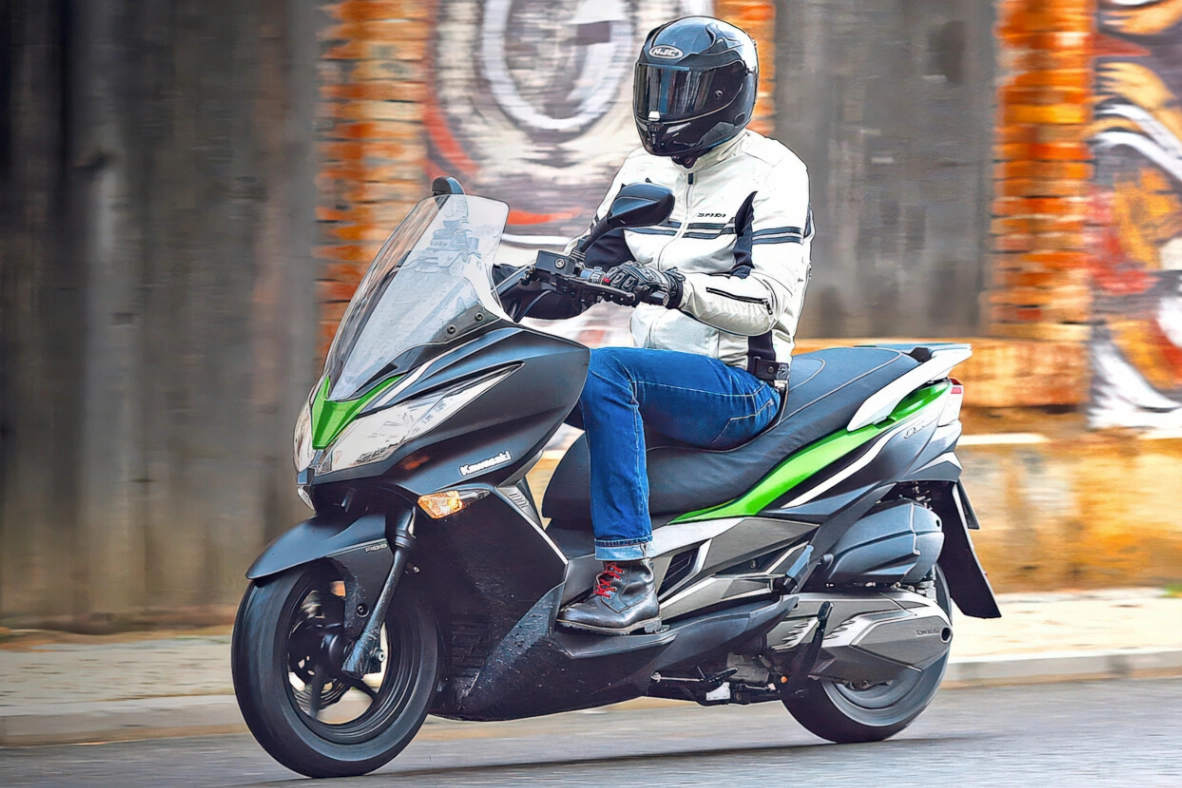
- Appears to have maxi-scooter styling
- Official product still a few years away
Kawasaki appears to be exploring a hybrid maxi-scooter, according to newly published patent documents.
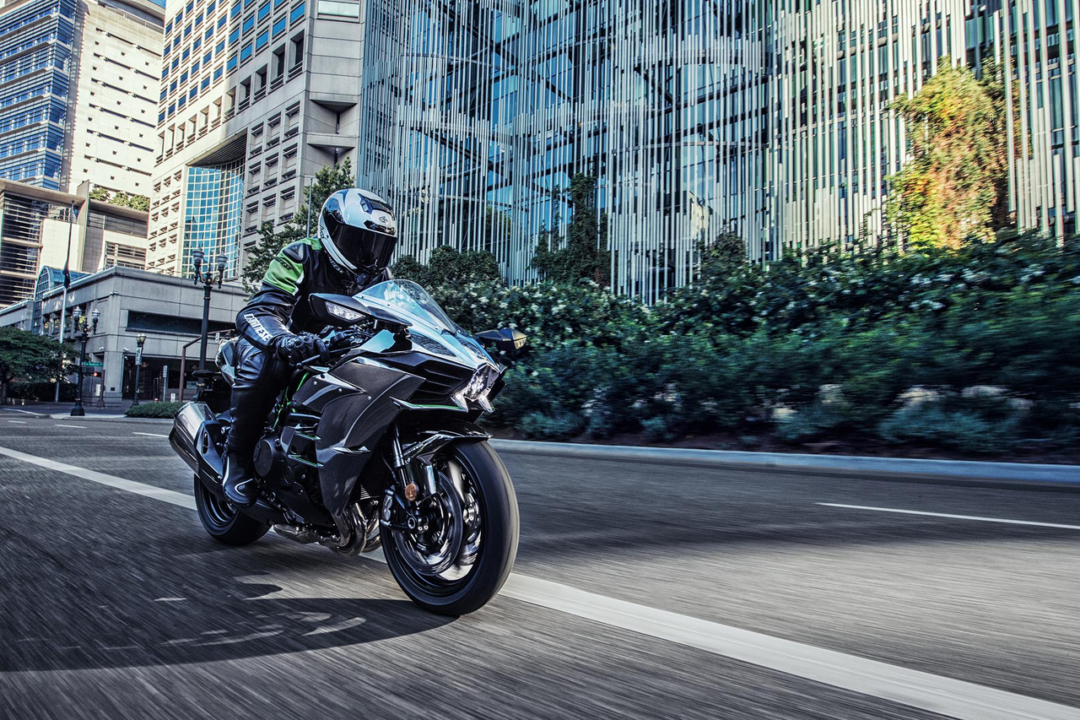
Hybrid powertrains are becoming increasingly common in the car world, combining electric efficiency with the convenience of traditional refuelling. While the idea has been slower to gain acceptance among motorcyclists, development activity in the two-wheel space continues to grow. Kawasaki currently leads the segment with the Ninja 7 Hybrid and Z7 Hybrid, the most advanced production hybrid motorcycles available. Rivals such as Yamaha are also working on similar technology, and Kawasaki’s own hybrid range now looks set to expand further.
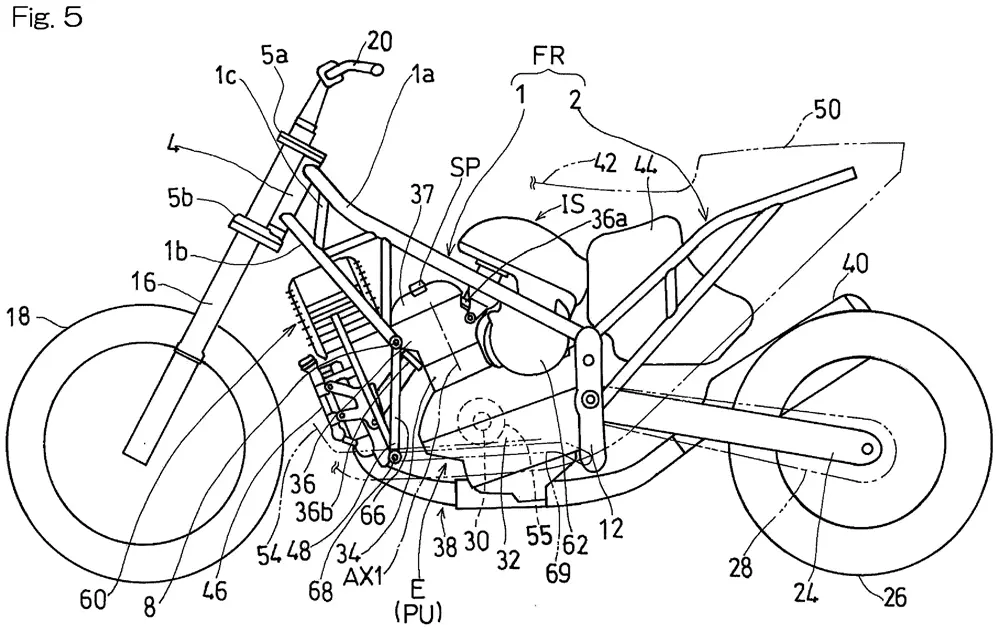
Previous patent filings have already hinted at new hybrid models using the same core components, a 451cc parallel-twin engine, semi-automatic transmission, electric motor, and battery pack — rearranged to suit different formats. Adventure and cruiser concepts, believed to be the Versys 7 Hybrid and Eliminator 7 Hybrid, have already surfaced. This latest filing adds a maxi-scooter to that growing list.
In this scooter layout, the key mechanical elements remain largely unchanged but are repositioned to suit the new format. The engine stays in place, meaning there is no traditional step-through design, but the fuel tank is relocated under the seat, giving proportions similar to the Honda X-ADV.nThe battery pack, which sits under the seat on the Ninja 7 and Z7 Hybrid, is moved forward to sit transversely in front of the engine’s cylinder head, an area normally occupied by the radiator. To accommodate this, the radiator is shifted lower, and the frame is extended forward, pushing the front wheel further ahead.
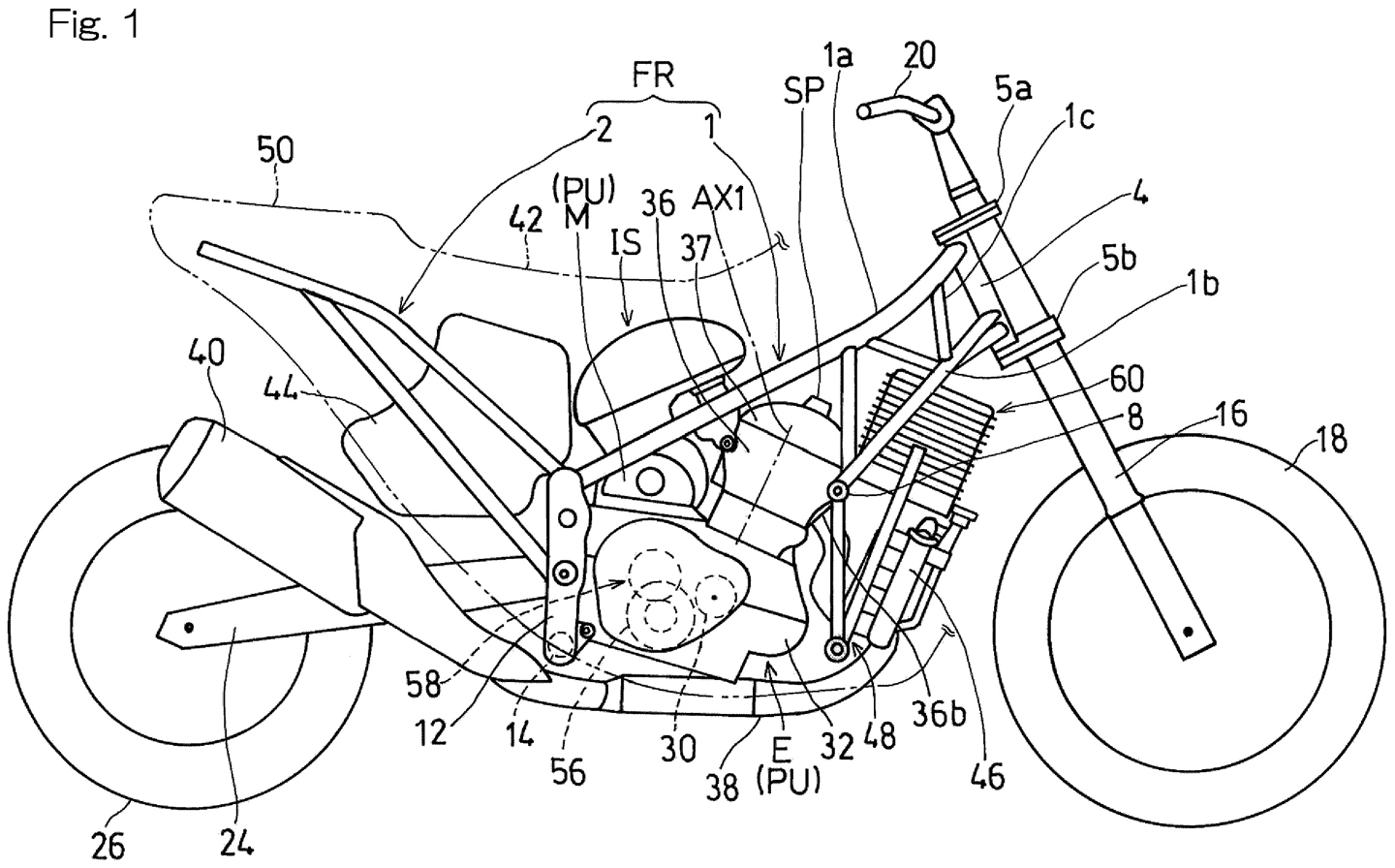
The patent drawings also reveal practical scooter-focused features. The under-seat fuel tank has a curved cut-out to allow space for a helmet storage compartment, while long footboards run from near the swingarm pivot to the front of the radiator, enabling a relaxed, feet-forward riding position.
Although Kawasaki’s current hybrid motorcycles have not been major sales hits, applying the technology to a commuter-focused maxi scooter could make more commercial sense. Maxi scooters already command premium prices, making it easier to absorb the added cost of hybrid hardware.
MORE ARTICLES
With more cities introducing clean-air zones, a hybrid scooter capable of running in zero-emissions mode when needed, while still offering long range and everyday usability, could appeal to urban riders looking for a practical middle ground.